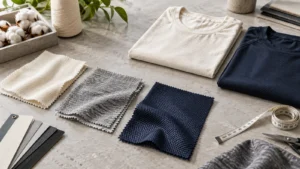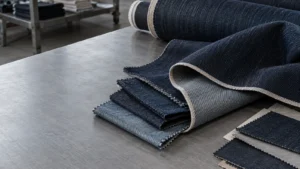
Viscose fabric is made from regenerated cellulose fiber. Cellulose from a plant source is processed into a solution, formed into fiber, spun into yarn, and then knitted or woven into fabric. In United States labeling guidance, rayon is the generic name used in the domestic rules, while viscose is an ISO name permitted for the same fiber family. The final fabric is not defined by the fiber name alone: yarn, construction, GSM, finish, blend, and garment design all change how it feels and performs.
For sourcing, softness is only the first check. The proposed viscose fabric also needs the drape, dimensional stability, recovery, color performance, care route, and abrasion behavior required by the product. This guide explains the material first, then turns it into a fabric brief and a sample approval plan.
What is viscose fabric?
Viscose fabric is a textile made from viscose fiber, a regenerated cellulosic fiber. The word describes the fiber route, not one fixed fabric construction. A light woven blouse fabric, a fluid jersey, a brushed lounge layer, and a viscose blend activewear top can all contain viscose while behaving very differently.
The fiber is often associated with a smooth hand, fluid drape, good dye uptake, and a comfortable feel against the skin. Those are useful starting expectations, not a performance guarantee. A fabric buyer still needs to confirm the knit or weave, yarn structure, weight, width, finish, blend percentage, and finished-garment measurements.
The distinction matters because a quote that says only "viscose fabric" leaves several decisions open. A practical fabric brief should state the fiber content, construction, target GSM, usable width, color standard, stretch direction if relevant, finish, and the product in which the material will be used. The broader types of fabric guide can help a new product team organize those construction choices.
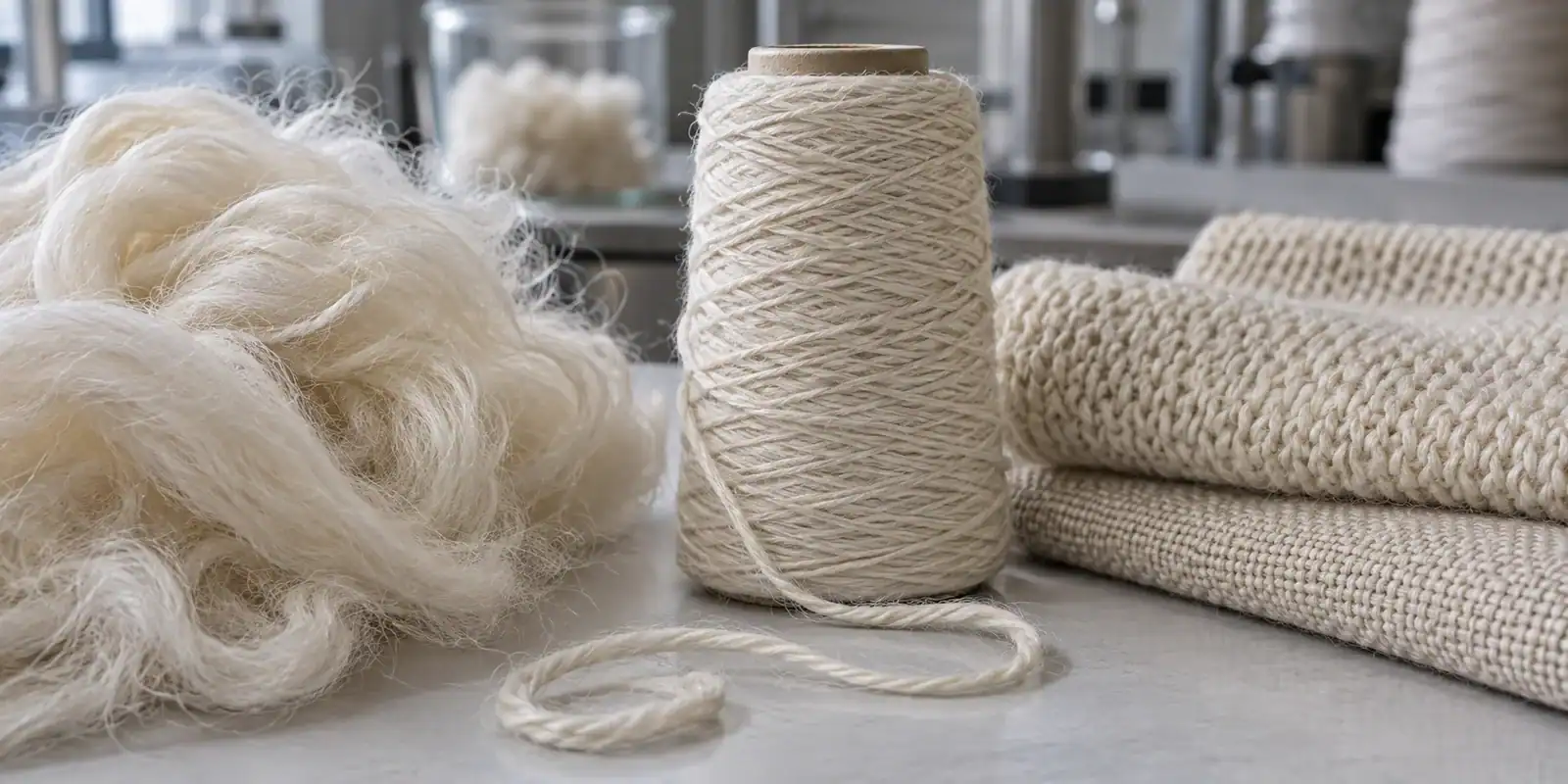
The short version is this: viscose identifies the regenerated cellulose fiber, while viscose fabric is the result of combining that fiber with a yarn and a fabric structure. If the article, swatch card, or supplier quote uses only the fiber name, ask for the missing construction details before comparing prices or approving a sample.
Viscose is a regenerated cellulose fiber, not a plant fiber
Viscose begins with cellulose from a plant-based feedstock, commonly wood pulp, but it is not a natural plant fiber in the same sense as cotton or linen. The cellulose is dissolved and regenerated into a new textile fiber. Textile Exchange describes viscose and rayon as regenerated and purified cellulose made from plant sources, and groups viscose with other man-made cellulosic fibers.
It is also not the same category as a fully synthetic fiber such as polyester or nylon. Synthetic fibers are formed from synthetic polymers. Viscose is made by changing plant cellulose into a spinnable material and then forming it back into cellulose fiber. In consumer language, it may be called semi-synthetic. In a technical apparel brief, "regenerated cellulosic fiber" or "man-made cellulosic fiber" is usually clearer.
This classification prevents two common mistakes:
- Plant-derived does not mean untreated, chemical-free, or automatically lower impact.
- Manufactured does not mean that the fiber will feel or perform like polyester.
Sourcing questions should therefore separate material identity from sustainability evidence. Ask what fiber name and percentage will appear on the label, what feedstock or certification documents are available for the exact route, and whether any environmental claim applies to the fiber, the yarn, the fabric, or the finished product. The FTC fiber-labeling guidance is a useful reference for the difference between generic fiber names and descriptive claims.
How the viscose process becomes a fabric
The generic viscose route can be understood as a sequence from cellulose to yarn. Industrial details vary by producer and product, so the sequence below is a purchasing map rather than a claim about every viscose mill.
- Cellulose feedstock is prepared as dissolving pulp.
- The pulp is converted into a viscous solution through a chemical process.
- The solution is filtered and conditioned so it can be formed consistently.
- It is pushed through a spinneret to create fine streams of material.
- The streams are regenerated, washed, and processed into continuous filament or staple fiber.
- The fiber is dried, cut or collected, spun into yarn, and sent to knitting or weaving.
- The fabric is dyed, printed, finished, inspected, and cut into the garment program.
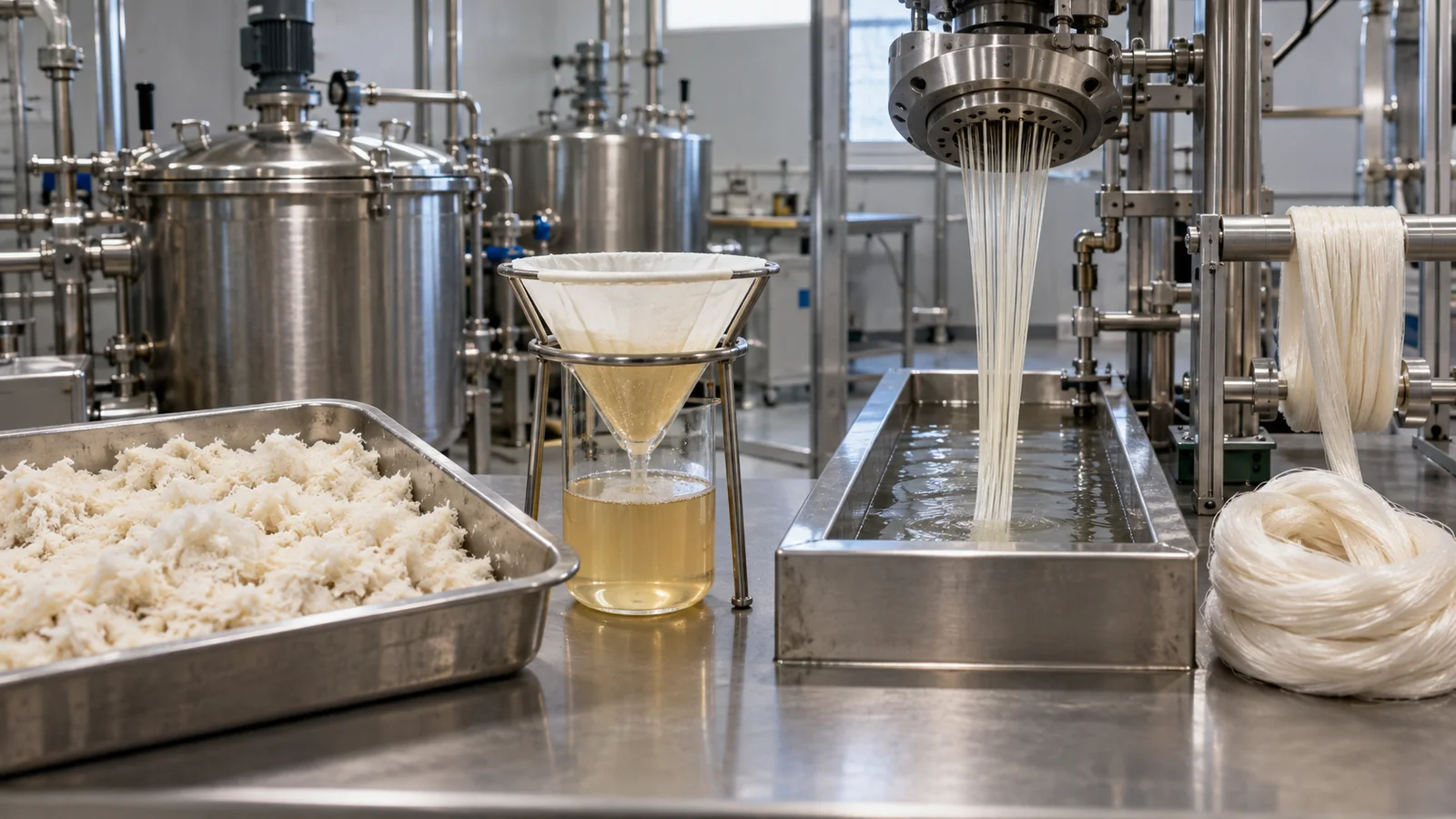
The last steps explain why two viscose fabrics can have different prices and different risks. Fiber fineness, staple length, yarn twist, spinning method, knitting or weaving, dyeing, softening, brushing, and finishing all affect the final result. A supplier may also offer a branded or certified fiber route with documentation that does not apply to generic viscose.
For procurement, the process creates a documentation boundary. A claim about viscose content can be checked against the fiber composition. A claim about a branded process, certified feedstock, chemical recovery, or environmental performance needs its own supporting document. Do not carry a mill-level claim into a garment listing unless the exact material and supply chain support it.
Viscose fiber, viscose fabric, and garment are three different things
The phrase "viscose fabric" compresses several technical decisions. Use four layers when moving from a search question to a production brief.
| Layer | What to record | Why it matters |
|---|---|---|
| Fiber content | Viscose percentage and any other fibers by weight | Sets the material identity and label discussion |
| Yarn | Spun or filament yarn, yarn count, twist, and visible effect | Changes surface, strength, opacity, and hand feel |
| Fabric construction | Knit or woven structure, gauge or ends and picks, width, GSM, and finish | Controls stretch, drape, coverage, stability, and appearance |
| Finished garment | Pattern, seams, trims, care route, fit, and decoration | Determines the behavior the customer actually experiences |
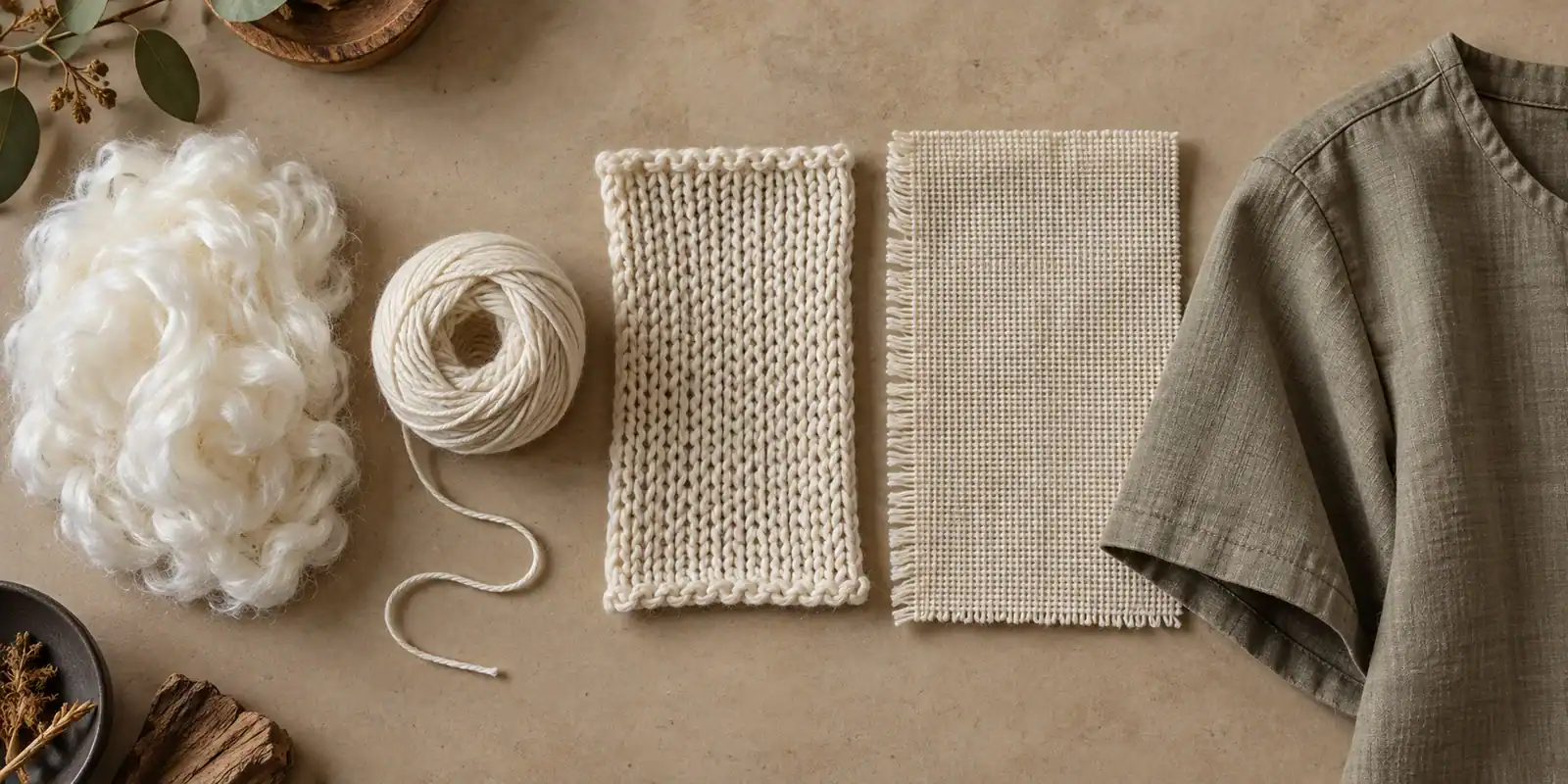
This is why "100% viscose" is not a complete specification. It does not tell a factory whether the buyer wants a stable woven shirt, a fine jersey, a heavier lounge layer, or a fabric that must recover after repeated stretch. It also does not tell the pattern team whether the garment needs lining, seam reinforcement, or a different care instruction.
When a supplier sends a viscose swatch, attach the swatch to the correct product brief. Record the fabric code, color, composition, GSM, width, construction, finish, and intended style. If the swatch is approved, keep the approved reference with the measurement chart and sample comments so the bulk team has one source of truth.
What does viscose fabric feel like?
Viscose is often selected for a soft, smooth, fluid hand. It can drape well and accept color evenly, which makes it useful for garments that rely on movement rather than a rigid silhouette. The exact feel still depends on the fiber, yarn, construction, finish, and weight.
These properties are useful as questions for a sample review:
- Softness: Is the face smooth enough for the intended skin contact, and does the finish remain acceptable after care testing?
- Drape: Does the fabric fall as the sketch expects, or does the weight create unwanted cling or transparency?
- Absorbency: Does the fabric take up moisture in a way that feels comfortable for the product, and does it dry quickly enough for the use case?
- Wet behavior: Does the fabric lose strength, stretch out, or change dimensions when wet?
- Recovery: If the fabric is used in a stretch garment, does the recovery come from elastane, knit structure, or both?
- Surface appearance: Does the fabric crease, pill, fuzz, or show abrasion in the areas that matter to the garment?
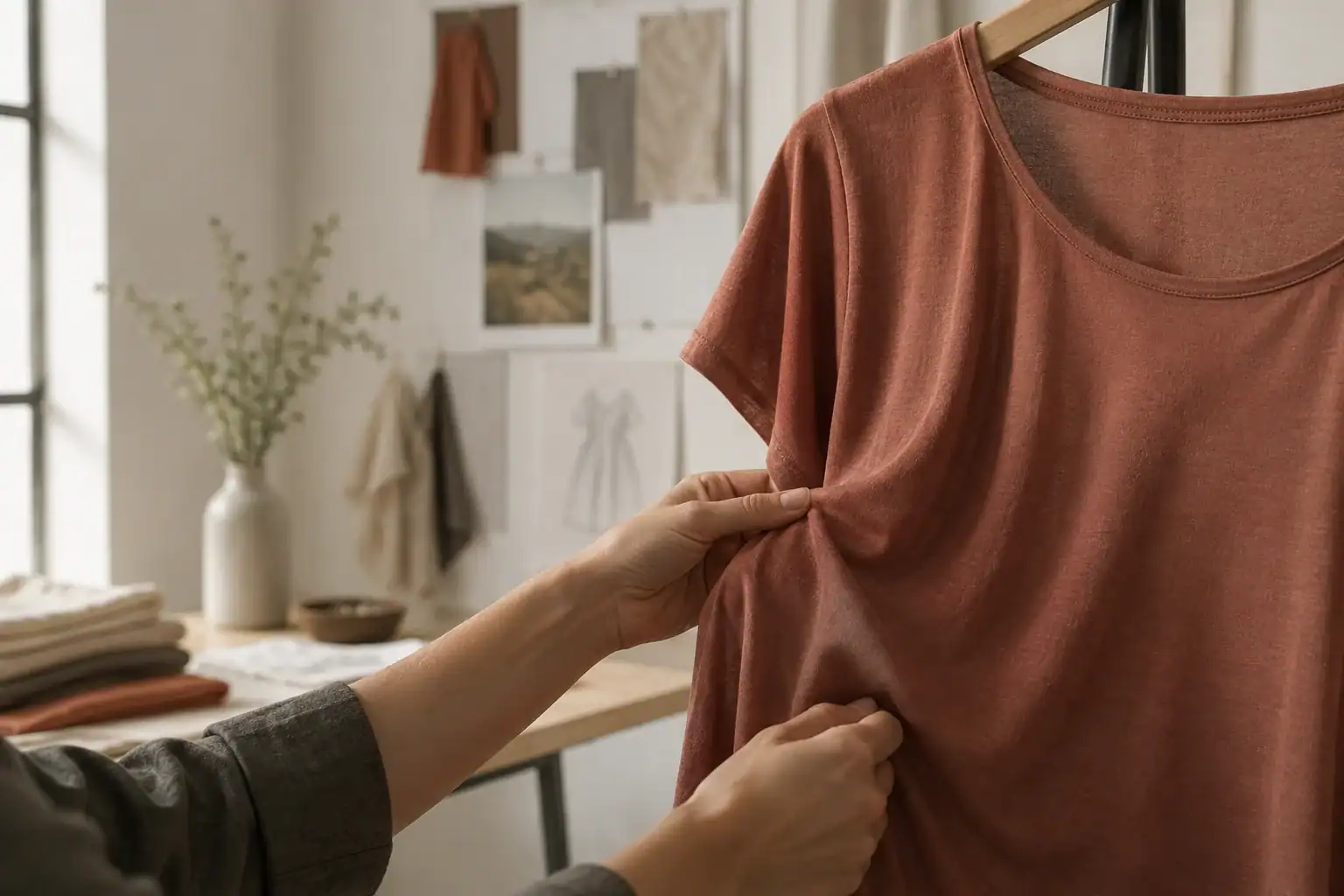
Do not use "silky" as the whole specification. It is a useful descriptive word for a hand feel, but it does not establish opacity, strength, recovery, colorfastness, dimensional stability, or care performance. A buyer should attach measurable checks to any sensory description that affects approval.
Viscose also should not be described as moisture-wicking by default. Absorbing moisture and moving moisture away from the skin are different behaviors. If the product is promoted for exercise, ask for the intended moisture-management method and test it on the finished garment or the relevant fabric construction.
Where is viscose fabric used in clothing?
Viscose is a flexible material choice because it can be made into different yarns and fabric constructions. The right use depends on the product brief, not on a universal list of "best" garments.
| Garment or product | Why a team may consider viscose | What to confirm before approval |
|---|---|---|
| Fluid tops and blouses | Soft hand, drape, and color response can support a relaxed silhouette | Opacity, seam behavior, shrinkage, and wash appearance |
| Dresses and skirts | Movement and fall can suit a flowing pattern | Weight, lining need, bias stretch, and finished length stability |
| Lounge and lifestyle layers | Comfortable hand and easy drape can support low-pressure wear | Pilling, recovery at cuffs, care route, and color change |
| Lightweight jersey garments | A soft knit can work for an easy fit or layering piece | GSM, spirality, stretch, recovery, and seam strength |
| Blended activewear or studio pieces | A blend may add stretch, strength, or a softer hand to a base fabric | Sweat, abrasion, wet strength, drying, and shape recovery |
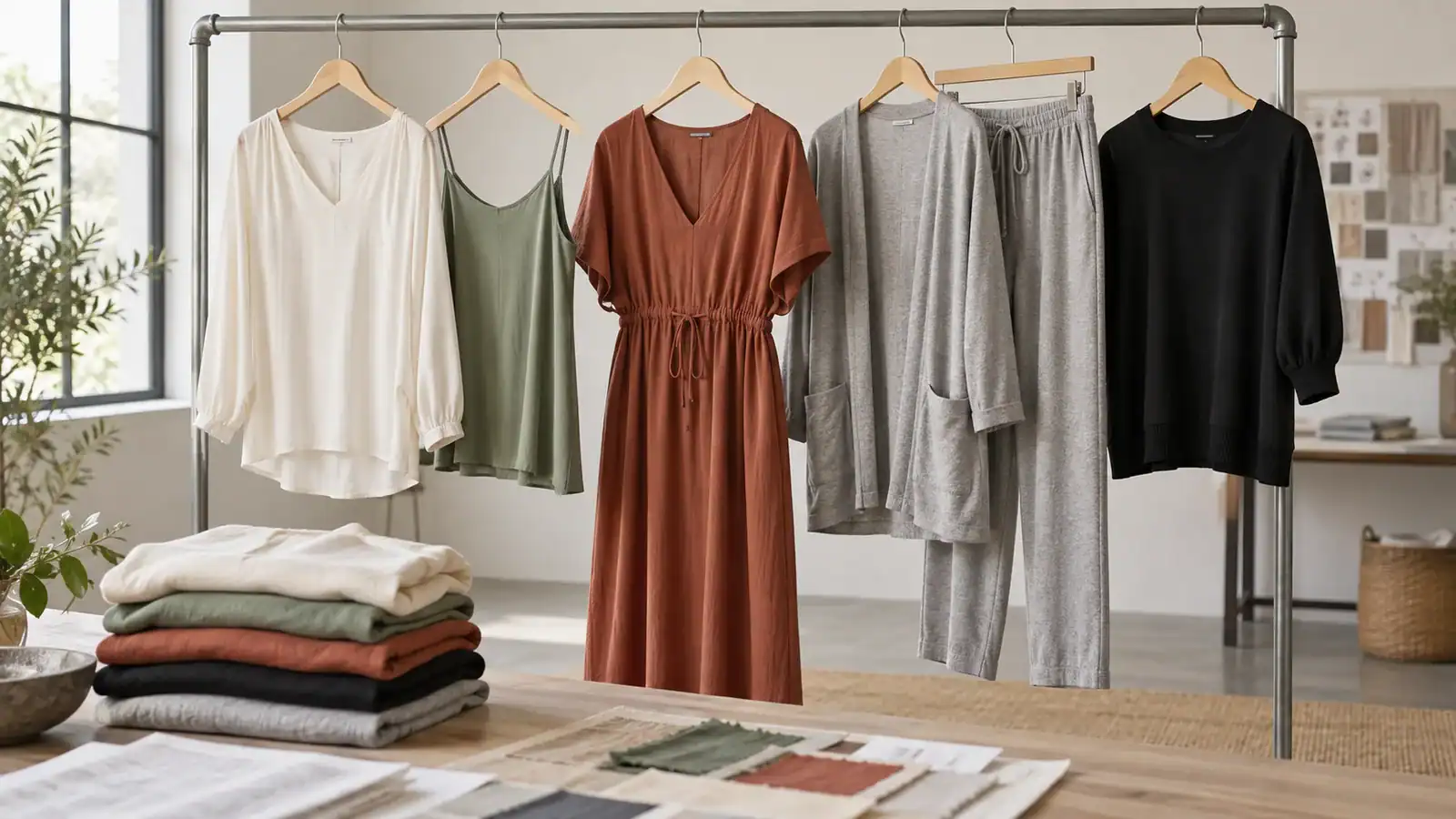
For a private-label range, keep the use case tied to the product promise. A fabric selected for a relaxed travel top does not automatically meet the needs of compression leggings. The buyer should approve the actual style, not only a loose fabric category.
How viscose blends change the buyer decision
Blending changes the balance between hand feel, stability, stretch, strength, drying, cost, and care. The blend percentage is only the first field. The construction and finish still need approval.
| Blend route | Potential reason to test it | Trade-off or test question |
|---|---|---|
| Viscose and cotton | Can balance a soft hand with a more familiar cotton character | Does the combined fabric shrink, twist, or lose the intended drape after care? |
| Viscose and elastane | Can add stretch to a soft jersey or fitted panel | Is recovery sufficient after repeated extension, and do seams stay stable? |
| Viscose and polyester | Can change durability, dry-down, and shape behavior | Does the hand still match the brief, and do the fibers behave differently in dyeing or care? |
| Viscose with another regenerated cellulosic fiber | Can tune softness, drape, surface, or strength within the same broad family | Are the names and percentages documented correctly, and does the finished fabric meet the same care expectation? |
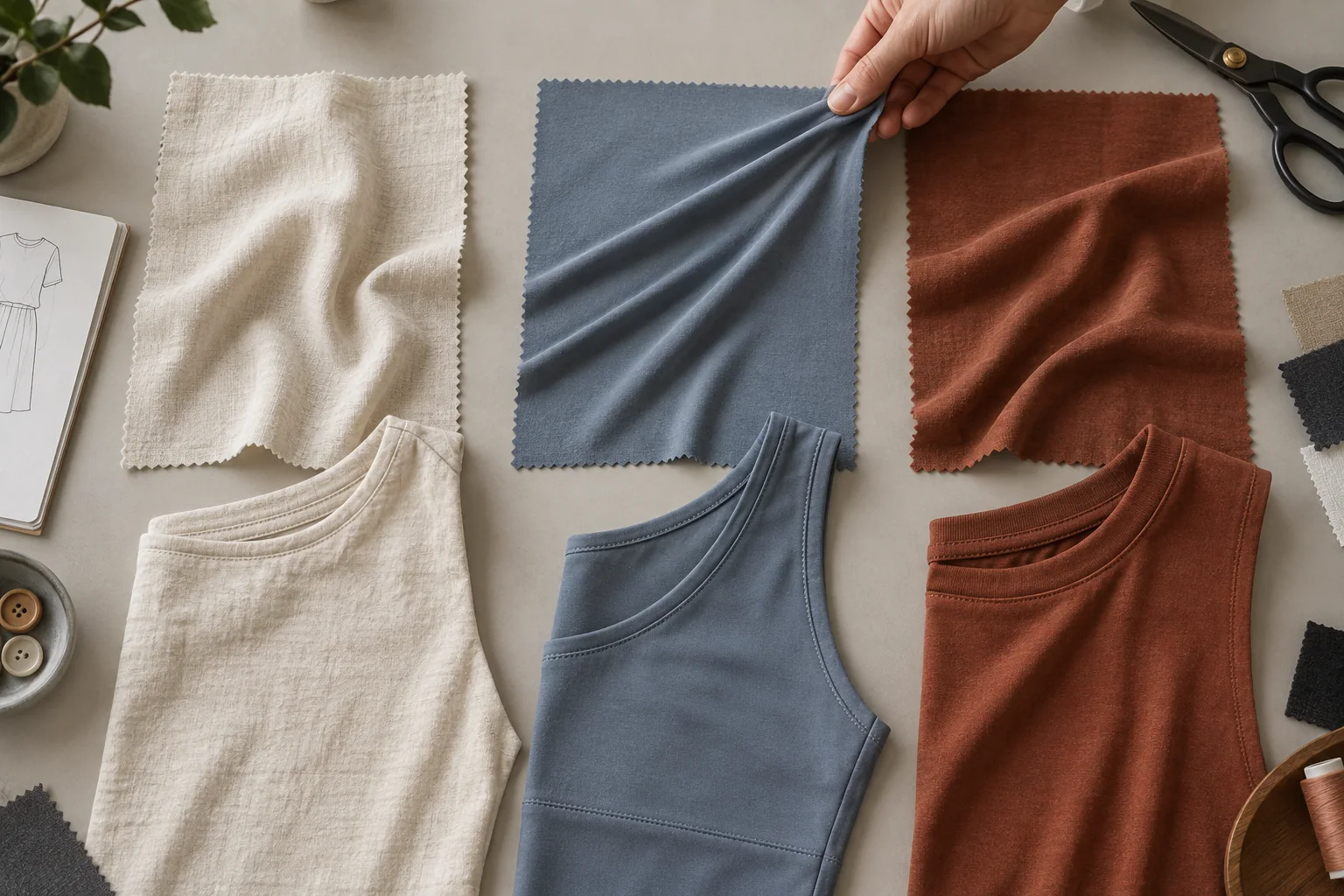
The right blend is the one that solves a product problem without creating a larger one. If a buyer wants more stretch, ask whether the real need is extension, recovery, fit ease, or pattern mobility. If the buyer wants quicker drying, measure the finished construction instead of assuming that a polyester percentage will solve it. If a buyer wants a softer hand, check whether the finish changes after laundering.
Is viscose good for activewear?
Viscose can be suitable for some activewear-adjacent products, studio layers, low-impact garments, and lifestyle pieces, but it is not an automatic activewear choice. Its soft hand and moisture absorption can be appealing. High-sweat, high-abrasion, or high-stretch products also need reliable recovery, drying behavior, wet strength, seam performance, and dimensional stability.
Use this decision rule:
- Choose viscose as a candidate when softness, drape, and a relaxed or low-impact use case are central to the brief.
- Test a viscose blend when the garment needs stretch, recovery, or additional durability that the selected construction may not provide alone.
- Be cautious when the product promise depends on fast drying, repeated high extension, heavy abrasion, or strong shape retention.
- Approve the finished garment after movement, care, and appearance testing, not from a fiber label or a studio hand feel alone.
The best fabric for activewear guide gives a broader comparison framework. Use it alongside the product’s activity level, fit, body coverage, decoration, and care promise.
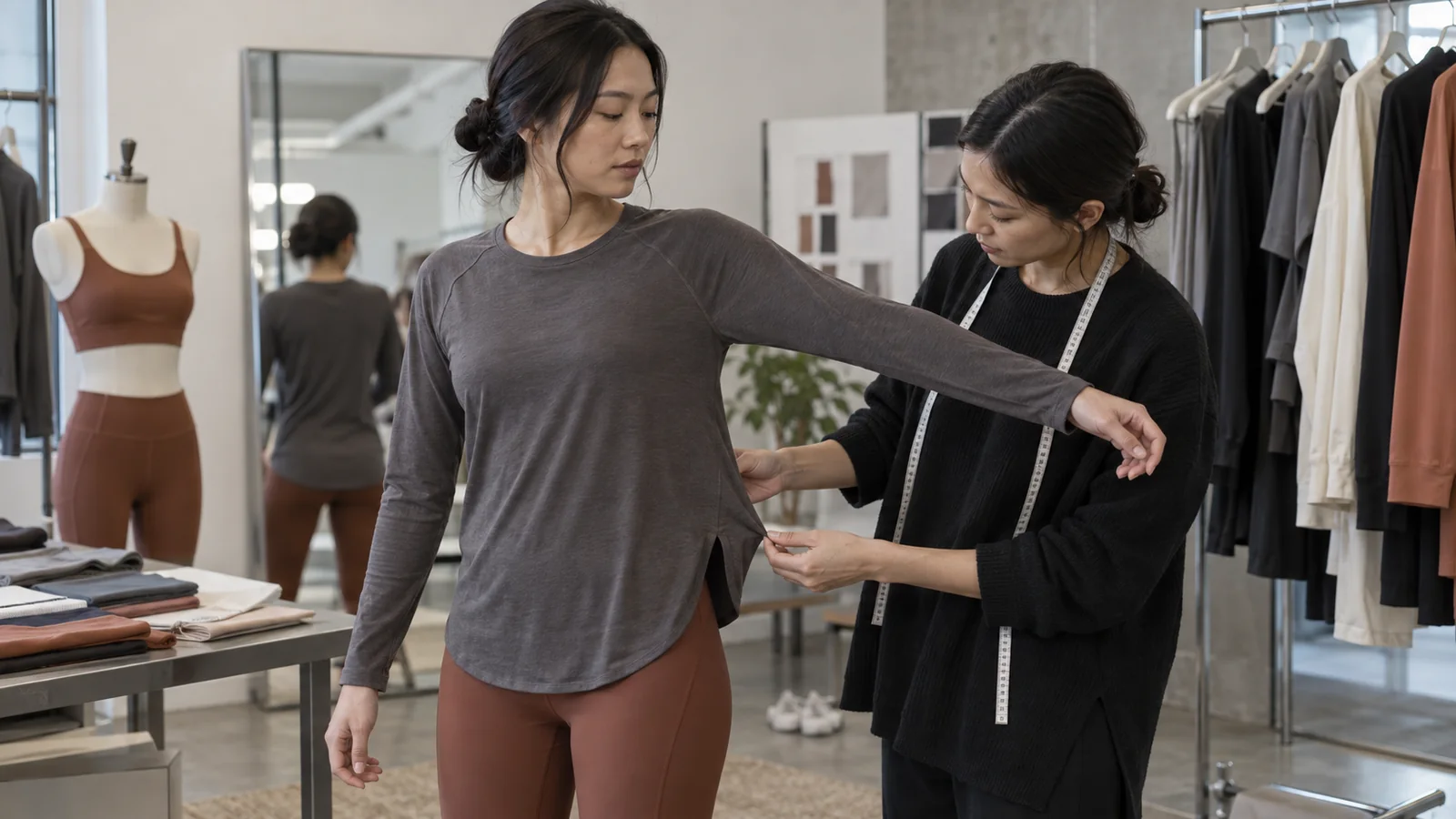
The sample review should include reach, bend, rotation, and repeated stretch where those movements occur in the product. Check the neckline, armhole, waistband, gusset, hem, and printed or decorated areas. These locations often reveal recovery and seam problems before a buyer commits to a full size range.
Viscose fabric GSM, width, and construction
GSM means grams per square meter. It helps a buyer compare fabric weight, but it does not describe the whole material. A heavier viscose fabric may still drape differently from a lighter fabric because construction, yarn, finishing, and blend are different.
The GSM meaning guide explains the measurement in more detail. For a viscose RFQ, pair GSM with the fields below.
| Specification field | Buyer question | Why the sample must confirm it |
|---|---|---|
| Composition | What are the fiber names and percentages by weight? | Confirms the label basis and blend route |
| Construction | Is it jersey, rib, interlock, fleece, woven plain weave, twill, or another structure? | Changes stretch, opacity, surface, and stability |
| GSM | What is the target and acceptable tolerance? | Affects coverage, drape, warmth, and consumption |
| Usable width | What width remains after finishing and defects are excluded? | Affects marker efficiency and garment yield |
| Stretch and recovery | In which direction does it extend, and how much recovery is required? | Protects fit and reduces bagging risk |
| Finish | Is the surface soft, brushed, peached, compacted, or otherwise treated? | Finishing can change hand, care, and appearance |
| Color and appearance | Which color standard, print, or wash effect is required? | Helps control shade, crocking, and repeatability |
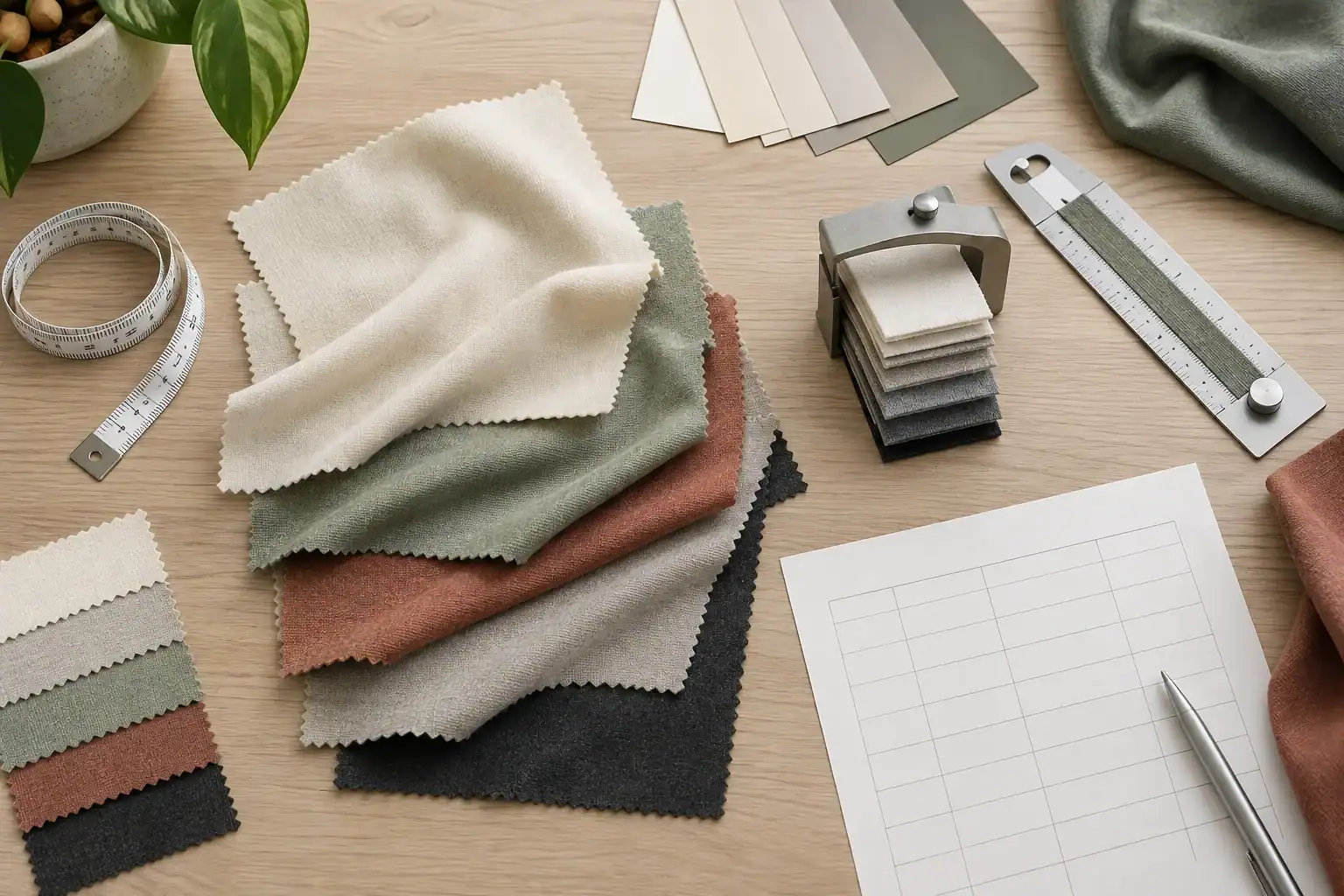
If a buyer has only a reference garment or a photo, state what is known and what is still open. A supplier can review the target, but a quotation should not silently convert a visual reference into an assumed GSM, composition, or construction.
Viscose fabric quality checkpoints before sampling
Before cutting a full garment sample, compare the proposed swatch with the brief using the same light, tools, and reference conditions. Record observations instead of relying on memory.
- Fiber content: Confirm the proposed percentages and naming for the destination market.
- Surface and hand: Compare softness, smoothness, luster, fuzz, and drape with the approved reference.
- Construction: Inspect knit loops or woven structure, edge curl, slubs, holes, and uneven density.
- Dimensions: Record width, GSM, length, and any relaxation change after the fabric rests.
- Color: Check shade against the approved standard and note any face-to-back or roll-to-roll difference.
- Stretch behavior: Measure extension and recovery in the direction used by the pattern.
- Wet behavior: Observe dimensional change, surface change, and strength after the intended care simulation.
- Garment compatibility: Check seams, labels, trims, print, embroidery, and pressing on the actual sample.
The checkpoint list is a screening tool, not a laboratory pass result. Set acceptance limits before testing so a sample can be approved, revised, or rejected for a stated reason.
How to specify viscose fabric in an RFQ
A usable RFQ gives the product team enough information to quote the same problem. It does not need to be perfect on the first message, but open decisions should be named.
| RFQ field | Useful buyer input |
|---|---|
| Product | Garment type, intended activity, fit, coverage, and target customer |
| Fiber route | Viscose percentage, blend options, and whether a named or certified route is required |
| Construction | Knit or woven structure, texture, finish, and reference swatch or garment |
| Weight and width | Target GSM, acceptable range, usable width, and opacity expectation |
| Performance | Stretch, recovery, shrinkage, colorfastness, pilling, abrasion, and moisture requirements |
| Color and decoration | Color standard, print or embroidery, labels, trims, and packaging assumptions |
| Size and fit | Measurement chart, grade rules, tolerances, and fit model information |
| Order context | Sample quantity, expected size range, estimated bulk quantity, destination market, and timing assumptions |
| Approval plan | Who approves the fabric, sample, care route, decoration, and pre-production standard |
If a supplier proposes a substitute fiber, record the change explicitly. "Similar hand feel" is not enough when the change affects labeling, shrinkage, color, price, or care. Ask for a revised composition, revised swatch, and revised sample comment so the approval trail stays clear.
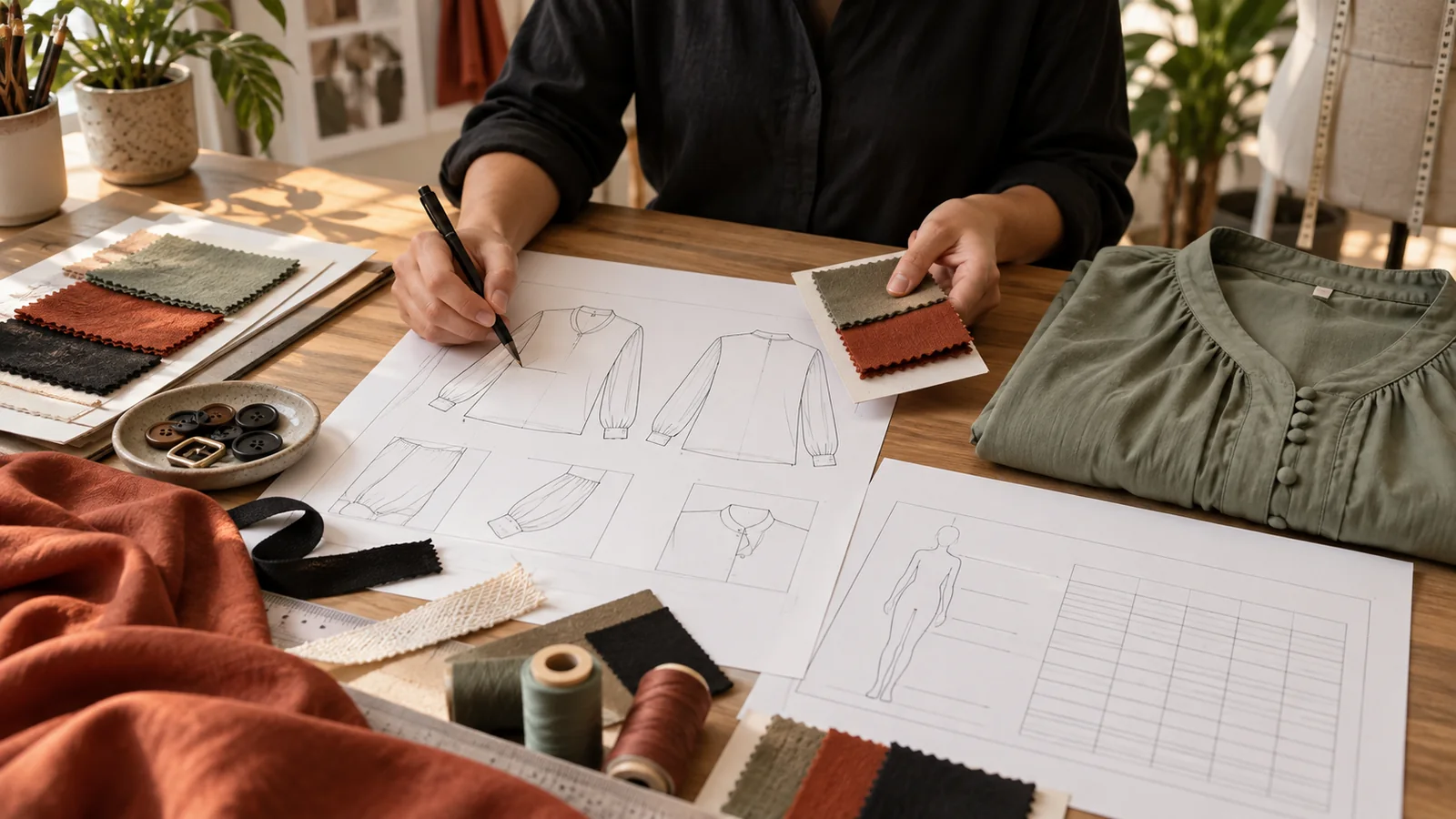
Care labels and shrinkage: what a buyer should verify
Viscose garments can change dimensions, surface, or shape during care. The result depends on the fiber route, construction, finishing, pattern, seams, and the chosen wash and dry method. There is no universal care instruction that can be copied onto every viscose garment.
The FTC Care Labeling Rule requires covered apparel manufacturers and importers to provide regular care instructions and to have a reasonable basis for the instructions. Its guidance points to reliable evidence, which can include testing the product or a fair sample. For a viscose garment, the care review should cover the finished product and its components together, not only an isolated fabric swatch.
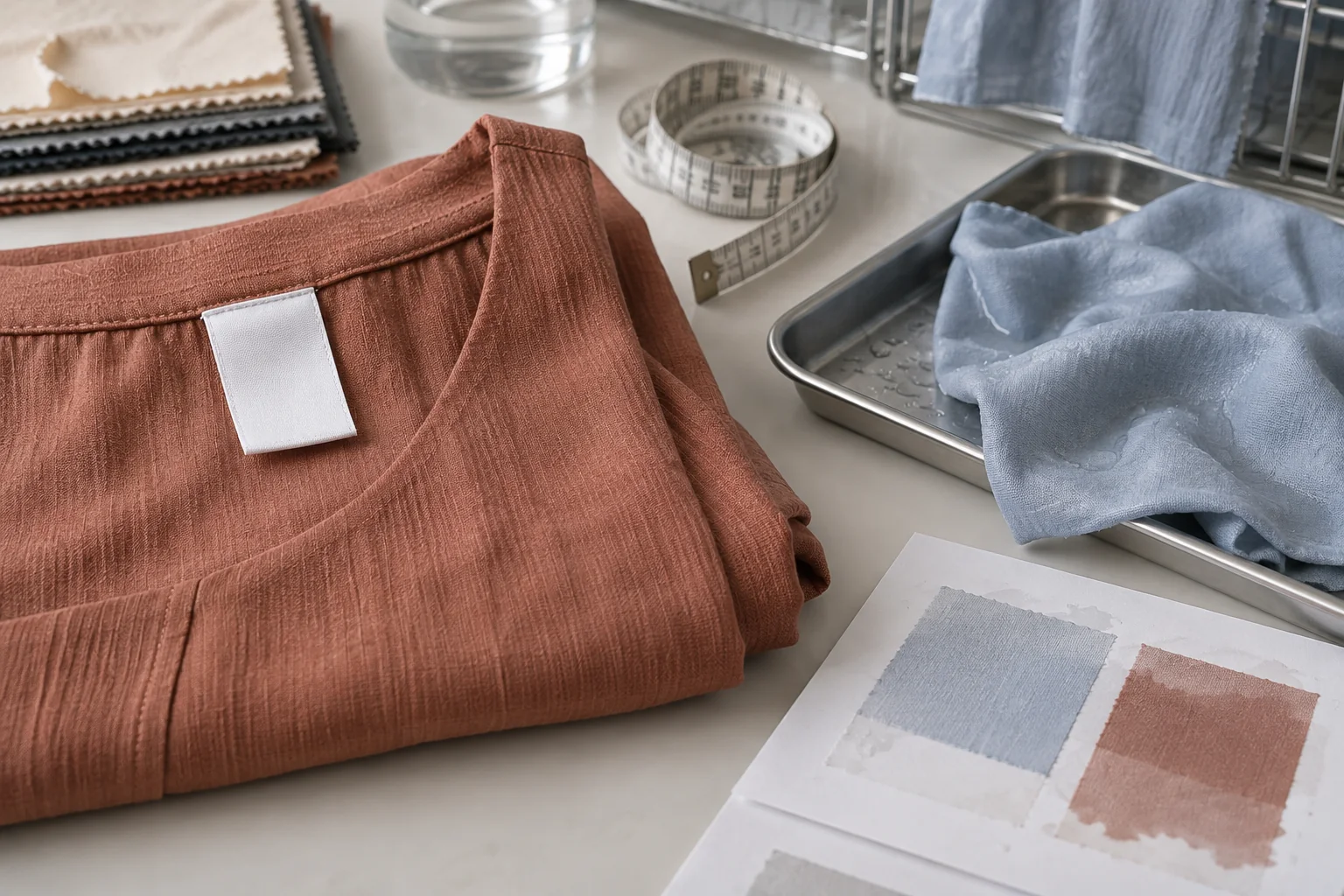
Before finalizing the label, check:
- length and width change after the intended wash and dry route;
- twisting, spirality, seam puckering, and hem distortion;
- color change, color transfer, and rubbing behavior;
- surface fuzz, pilling, or loss of finish;
- trim, print, embroidery, label, and elastic compatibility;
- whether the care instruction remains realistic for the customer and market.
Do not call a garment "washable" or "easy care" because the fabric feels stable in the showroom. Connect the wording to evidence and keep the tested sample, method, date, and acceptance limit in the product file.
How to test a viscose garment sample
The test plan should follow the risk of the product. A relaxed top, a fitted studio piece, and a decorated sweatshirt need different emphasis. AATCC publishes textile test methods and procedures covering areas such as dimensional change, appearance, abrasion, and colorfastness. A method name is not a pass result, so the buyer still needs to define the method and limit.
Use this sample approval sequence:
- Document the starting point. Record composition, fabric code, GSM, width, color, sample size, and the measurement chart version.
- Check the garment before care. Measure critical points, inspect seams and trims, and photograph the sample under consistent light.
- Simulate use. Test the movements, stretch cycles, contact points, or abrasion zones that match the product promise.
- Run the agreed care route. Use the proposed wash, dry, iron, or professional-care method and record the settings.
- Measure change. Compare dimensions, recovery, appearance, color, surface, seams, print, and trims against the acceptance limits.
- Review the size range. Confirm that the approved material and construction can be graded without creating a different fit problem at another size.
- Close the approval loop. Mark the sample approved, revise the brief, or request another round with a written reason.
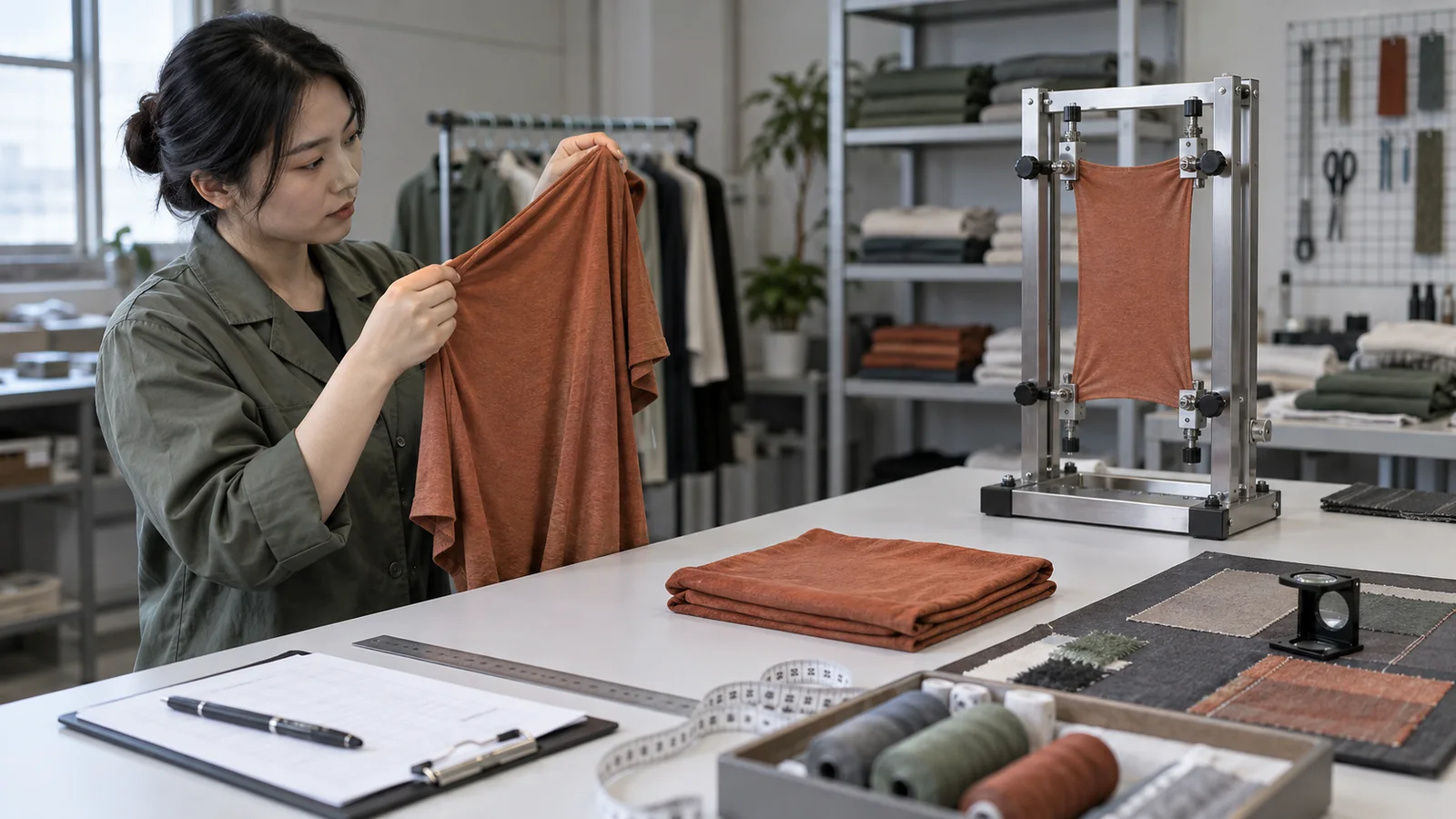
The approval record is as important as the test itself. Keep the accepted swatch, sample photos, measurement sheet, care result, decoration comments, and buyer sign-off together. That record helps the production team understand what "approved viscose fabric" means for the actual garment.
Viscose, rayon, modal, and lyocell: names buyers confuse
Fiber names are not interchangeable marketing shortcuts. They describe related materials or naming systems, but each proposed route should be documented against the exact product.
| Term | What it tells the buyer | What it does not prove |
|---|---|---|
| Viscose | A commonly used international name for the predominant form of rayon and a regenerated cellulosic fiber route | A specific GSM, construction, finish, sustainability profile, or test result |
| Rayon | The generic fiber term used in United States textile labeling context for this family | That every rayon fabric has the same hand, strength, or care behavior |
| Modal | A different regenerated cellulosic fiber type with its own process and performance profile | That the fabric can be substituted for viscose without a new sample |
| Lyocell | Another regenerated cellulosic fiber type made through a different process | That a lyocell claim or branded route applies to a viscose fabric |
The what is modal fabric article and what is lyocell article cover those neighboring fibers separately. Use the names in the same way you use any technical specification: match the composition, documentation, construction, and finished-garment test to the exact offer.
When should a brand choose viscose fabric?
Viscose is a reasonable candidate when a product needs a soft hand, fluid movement, color response, or a comfortable lifestyle feel. It is less suitable as a default answer when the garment’s main promise depends on high recovery, fast drying, severe abrasion resistance, or stable performance under repeated wet use.
Choose viscose as a candidate when:
- the silhouette benefits from drape rather than a rigid shape;
- the buyer values a smooth hand and a comfortable next-to-skin surface;
- the product is a lifestyle, lounge, relaxed, or low-impact layer;
- the team is prepared to define care, shrinkage, and appearance limits;
- a suitable blend or construction can solve the performance requirement.
Pause and test more aggressively when:
- the product is tight, highly elastic, or repeatedly extended;
- the fabric will face heavy rubbing, sweat, or frequent laundering;
- the garment uses complex trims, decoration, or contrasting panels;
- the proposed care label is stricter than the sample evidence supports;
- the supplier cannot state composition, construction, GSM, width, and finish clearly.
The decision should be made at garment level. A fabric that looks excellent as a hanging swatch can still fail at a waistband, armhole, printed panel, or side seam. The right answer is the material and construction combination that meets the product brief after testing.

How DTS can turn a viscose idea into a sample
An early fabric question becomes useful when it arrives with enough context for a technical review. Send the target product, intended activity, reference image or garment, viscose composition preference, construction, GSM range, color direction, fit chart, decoration, quantity assumptions, destination market, and the test concerns that matter most.
DTS can use that brief to organize the material discussion around the garment rather than treating "viscose" as a complete answer. For a new or uncertain concept, the sampling and prototyping service is the relevant next step for reviewing the sample path and documenting revisions. Exact fabric availability, construction, MOQ, timing, price, and compliance requirements must be confirmed against the project brief.
Ask for a material and sample review that records the proposed composition, construction, GSM, width, color, fit, care route, decoration, quantity assumptions, and acceptance criteria. That gives the quotation and sample team a clear starting point without treating a general fiber description as a finished specification.
Frequently asked questions
Viscose fabric is made from regenerated cellulose fiber that is spun into yarn and knitted or woven into fabric. The fiber name does not define the final GSM, construction, finish, blend, or garment performance.
Viscose starts with plant-derived cellulose but is chemically processed and regenerated into fiber. In technical apparel language, it is usually described as a regenerated or man-made cellulosic fiber rather than a natural plant fiber or a fully synthetic polymer fiber.
Viscose and rayon are closely related naming terms for this fiber family. United States labeling uses rayon as the generic name, while FTC guidance recognizes viscose as an ISO name permitted for the predominant form of rayon. Confirm the correct label wording for the destination market.
It can work well for some lightweight, breathable-feeling, fluid garments, but the answer depends on construction, weight, color, opacity, care, and the intended activity. Approve the actual garment rather than assuming every viscose fabric has the same summer behavior.
It can be considered for lifestyle activewear, studio layers, and lower-impact products where softness and drape matter. High-sweat or high-abrasion activewear needs separate testing for drying, recovery, wet strength, seams, and dimensional stability.
Viscose garments may change dimensions during care, but the amount depends on fiber, construction, finishing, pattern, seams, and the wash and dry route. Measure the finished sample before and after the proposed care process and set an acceptance limit.
Neither fiber is universally better. Viscose may suit a softer, more fluid hand, while cotton may suit a different hand, structure, or product promise. Compare the exact construction, blend, care behavior, price, and test result for the garment you plan to sell.
Request the fiber percentages, construction, GSM, usable width, finish, color standard, stretch and recovery targets, care expectation, sample method, and acceptance limits. Also ask for any branded, certified, or sustainability documentation that is relevant to the exact material.