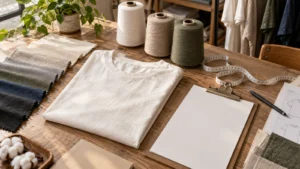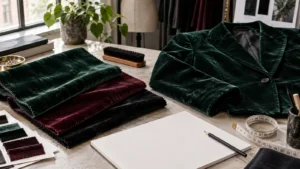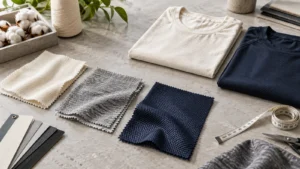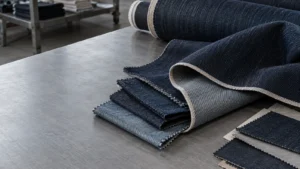
Velvet fabric is a textile with a raised pile that catches light and changes shade as the surface direction changes. The pile may sit on a woven or knitted ground, and the fiber can be cotton, rayon, polyester, silk or a blend. That is why the word "velvet" alone is not enough for an apparel quote. A buyer still needs the pile route, ground construction, fiber content, GSM, width, stretch, nap direction, finish and care plan.
This guide explains what velvet fabric is, how common velvet types differ, where it fits in an apparel range, and what to lock in before sampling or bulk production.
What is velvet fabric?

Velvet is identified by its short, dense pile. In a classic woven construction, extra pile yarns connect or rise above a ground cloth. The loops are cut, then the surface is sheared or finished to create a more even face. Other products use knitted grounds, stretch yarns, embossing or a crushed finish. The surface name stays similar, but the garment behavior can change a great deal.
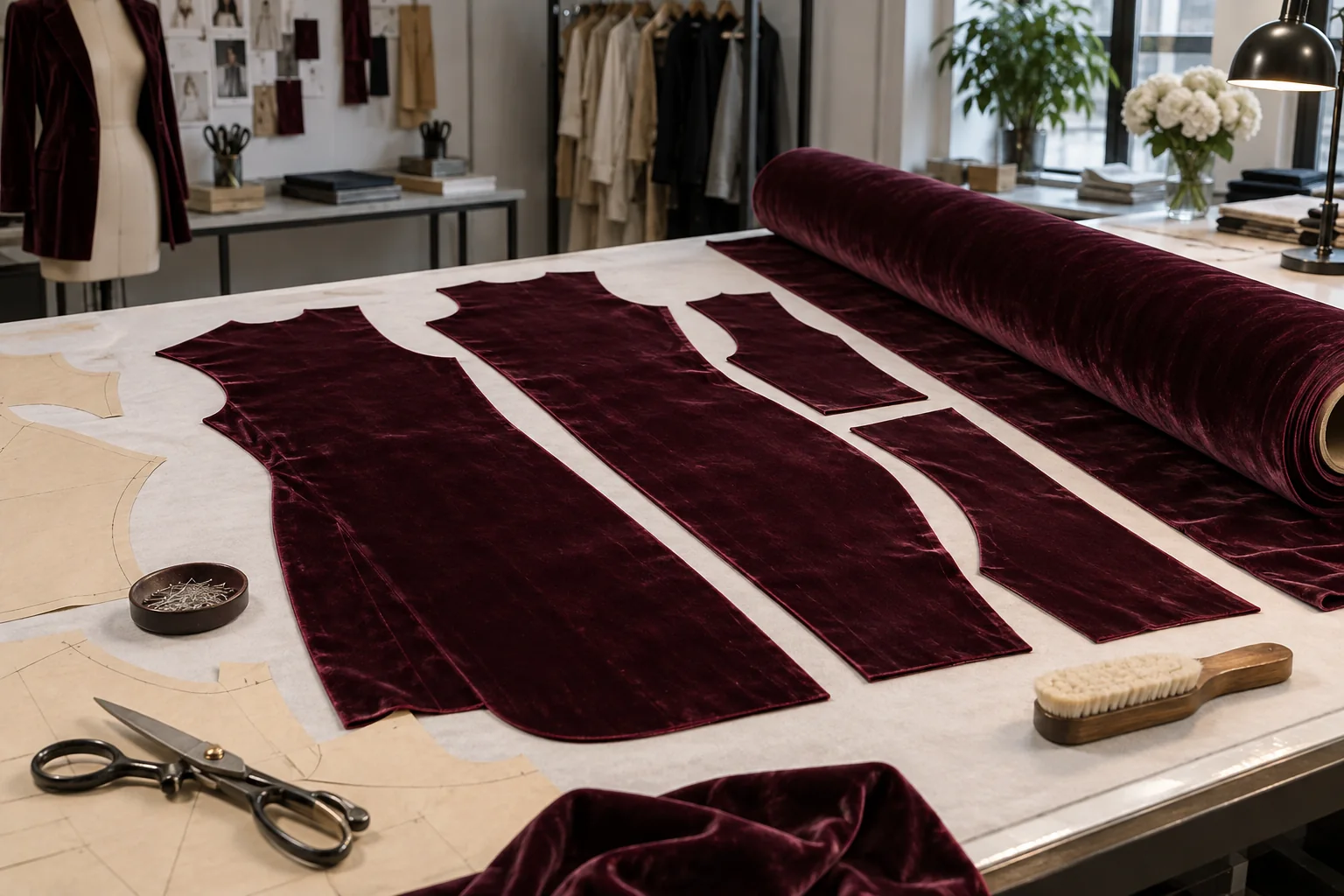
The pile creates two practical effects. First, it gives the fabric a soft hand and a light-reflecting surface. Second, it creates a nap. The pile leans in a preferred direction, so a panel can look lighter or darker when it is turned around. A cutting plan that ignores nap direction can produce visible shade differences between garment panels.
| Buyer field | What it describes | What it does not prove |
|---|---|---|
| Velvet | A raised pile surface and its finished appearance | Fiber content, stretch, durability or care route |
| Fiber content | Cotton, rayon, polyester, silk or a blend | Pile height, backing stability or garment recovery |
| Ground construction | Woven or knitted base that supports the pile | Final hand feel after dyeing, brushing or washing |
| Pile and nap | Surface height, density, direction and light response | That every color will have the same shade behavior |
| GSM and width | Weight and usable fabric planning information | Finished-garment fit or shrinkage after laundering |
For a commercial apparel program, treat velvet as a construction family. Request a physical swatch and a sewn test panel before choosing a supplier route.
How is velvet fabric made?
The classic velvet route starts with a ground structure and a raised pile system. The pile is formed above the ground, then cut, leveled and finished. A mill may use a double-cloth method, where two fabric layers are connected by pile yarn and separated after weaving. Some velvet products use a knitted base, especially when stretch and body movement matter.
Finishing can include dyeing, brushing, shearing, pressing, embossing, crushing or a burnout process. Each step changes the face. A dense smooth pile may read as formal and directional. A crushed face creates irregular highlights. A burnout effect removes pile or exposes the ground in selected areas. These names describe a route, not a universal performance level.
When reviewing a supplier sample, ask four simple questions:
- Is the face woven or knitted?
- Is the pile cut, crushed, embossed or partly removed?
- Does the ground stretch in one direction or both?
- Does the supplier expect the garment to be cut with one nap direction?
The answers belong in the fabric brief. They should not live only in a chat message or a sample-room memory.
What are the main types of velvet fabric?

Velvet types are often classified in three ways: by fiber, by ground construction and by surface finish. A product can fit more than one category. For example, stretch velvet may have a polyester and elastane pile on a knitted ground, while crushed velvet may be made from a synthetic blend with a pressed surface.

| Velvet route | Surface or construction cue | Apparel decision to make |
|---|---|---|
| Cotton velvet | Dry, substantial hand with a visible pile | Check weight, stiffness, seam handling and wash appearance |
| Rayon or viscose velvet | Fluid drape and strong light response | Check pile crush, shade variation and care sensitivity |
| Polyester velvet | Broad range of weights, sheen and care routes | Confirm fiber content, finish and the intended use claim |
| Silk or silk-blend velvet | Soft hand and fluid movement | Confirm cost, delicate handling and the approved care route |
| Stretch velvet | Pile on a stretch ground, often with elastane | Test stretch, recovery, growth and seam distortion |
| Crushed or panne velvet | Pressed or irregular pile direction | Approve the exact surface because shade changes are part of the look |
| Burnout or devore velvet | Selected pile or ground areas are removed | Check transparency, edge stability and wash durability |
| Embossed velvet | Pattern pressed into the pile | Check repeat alignment, pressure marks and production consistency |
The best type depends on the product brief. A fitted performance-inspired top needs recovery and seam stability. An evening jacket may care more about drape, shade direction and pressing behavior. A lounge set may need a softer hand and a more forgiving care route.
Velvet, velour, velveteen and plush: what is the difference?

Related fabric names are often used loosely in product listings. Buyers should compare the actual construction instead of relying on the label.
| Fabric name | Useful working distinction | Buyer risk if the label is used alone |
|---|---|---|
| Velvet | A short raised pile, commonly associated with a directional cut-pile face | The word does not state fiber, stretch, pile height or backing |
| Velour | Often a knitted or soft pile fabric with a more flexible, casual hand | A velour route may drape and recover differently from woven velvet |
| Velveteen | Usually a cotton-based pile fabric with a shorter, firmer face than classic velvet | The surface can look similar in a photo but behave differently in sewing and wear |
| Plush | A broader description for a soft, often longer pile surface | Plush may be intended for home textiles, toys or trim rather than apparel |
| Fleece | A brushed or napped fabric family, usually without a velvet-style cut pile | A soft hand does not mean the same light response, nap or backing |
If a product page says "velvet," ask for the fabric composition, construction and close-up of the face and reverse. The comparison sample should be the same color and close to the target weight. Color and pile direction can make two different fabrics look more alike than they are.
Is velvet fabric stretchy?
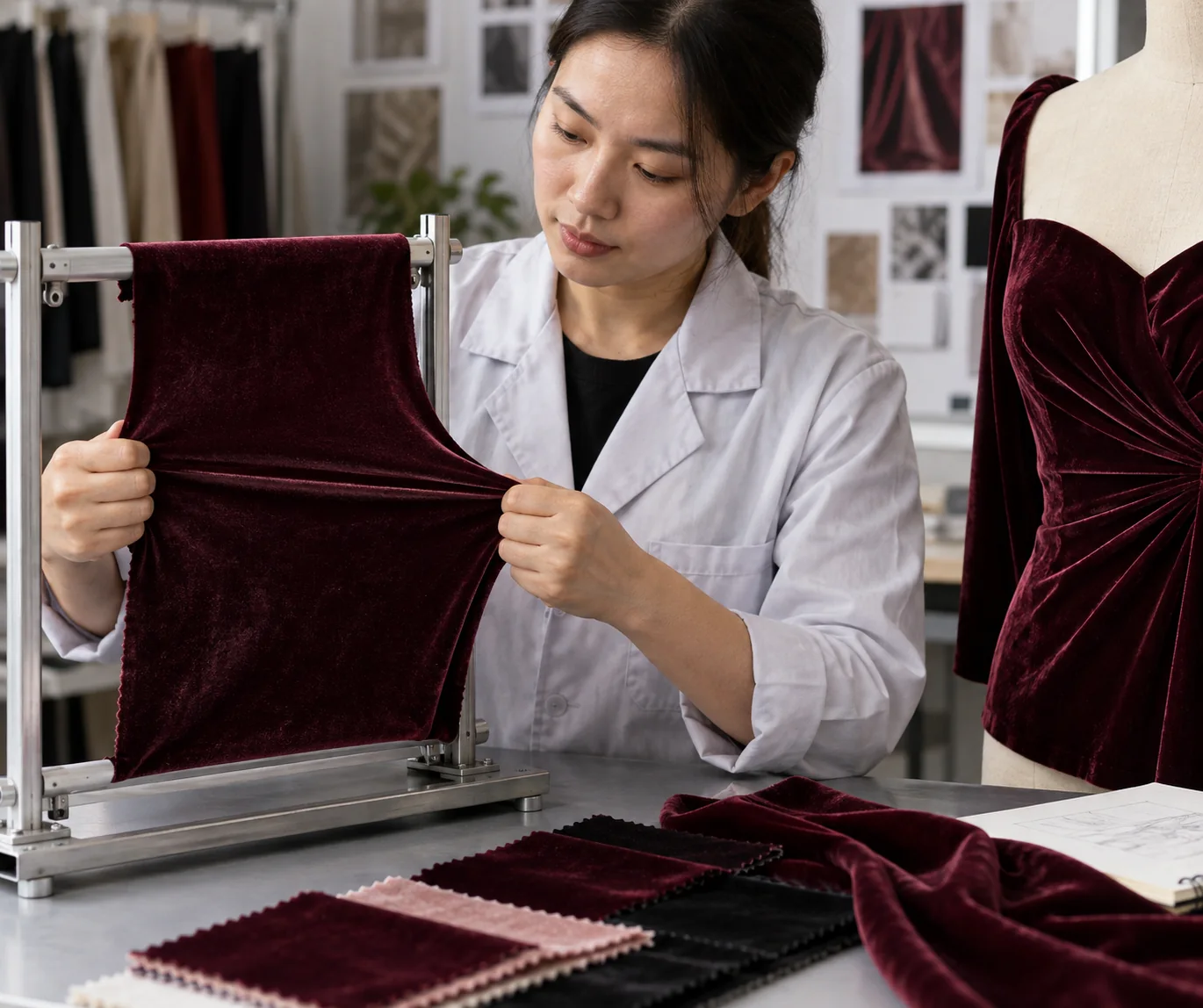
Some velvet fabrics stretch. Many do not. Stretch comes from the ground construction and fiber mix, not from the word velvet. A knitted ground or elastane blend may create useful movement, while a stable woven velvet may have little natural extension.
For a close-fitting garment, test the fabric in the direction that the pattern uses. Record:
- extension at the planned load;
- recovery immediately after release and after a rest period;
- growth after repeated movement;
- pile appearance while the fabric is stretched; and
- seam and hem behavior on the actual garment panel.
A stretch velvet that feels comfortable on a hand swatch may still grow at elbows, knees or seat seams. If the brief is for gym, dance or performance use, compare the fabric with a technical stretch option rather than assuming that softness equals movement performance.
What does velvet fabric feel like and how does it behave?
Velvet often feels soft because the pile reduces direct contact with the ground cloth. The visible surface can look deep, bright or shaded depending on the angle of the pile and the light. These traits are useful for fashion products, but they also create development risks.
Common behavior to check includes:
- Directional shade: panels cut against the nap may look lighter or darker.
- Pile crushing: pressure from folding, pressing, packaging or wear can flatten the surface.
- Marking: fingerprints, seams and handling can temporarily change the reflection.
- Heat sensitivity: excessive heat or direct pressing can damage or flatten the face.
- Drape: fiber, pile height and ground construction together control movement.
- Breathability: a dense pile and backing may feel warmer than a smooth fabric of the same weight.
- Seam bulk: thick pile can affect seam turn, topstitching and edge definition.
Do not approve velvet from a single flat photograph. Photograph the swatch with the pile brushed in both directions, then inspect the reverse and a sewn seam.
What GSM and width should buyers specify?
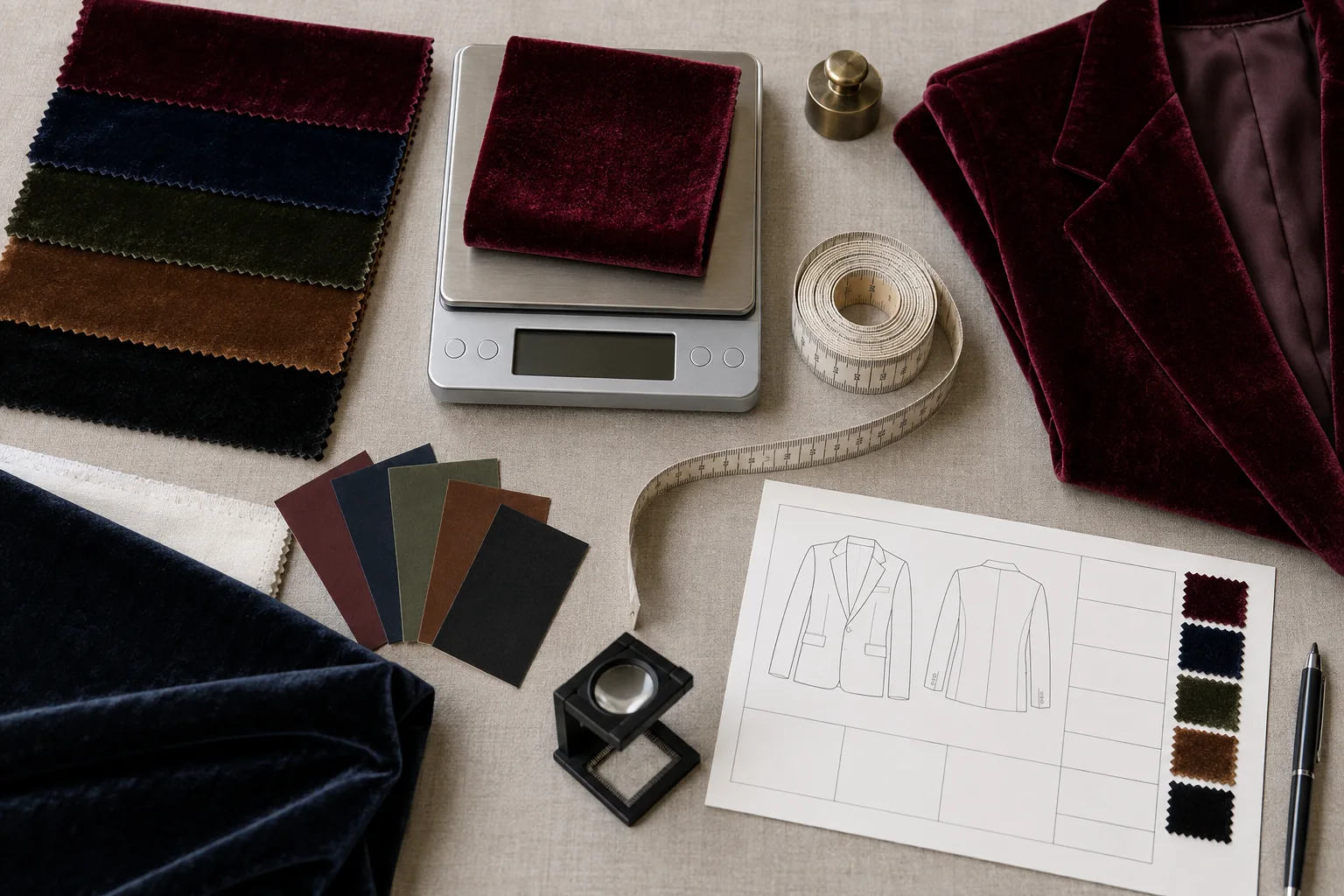
GSM means grams per square meter. It helps compare fabric weight, but it does not describe pile density, ground strength or finished-garment performance by itself. Two velvet fabrics with similar GSM can have different pile heights, backing stretch and drape.
Width matters just as much for a directional fabric. Nap direction may require every pattern piece to face the same way, which can increase fabric consumption. Usable width after selvage, brushing or defect removal should be confirmed before costing.
| Product direction | Fabric discussion to start with | Checks that still matter |
|---|---|---|
| Fitted fashion top | Stretch ground or stable velvet depending on fit and closure | Recovery, seam distortion, pile crush and lining behavior |
| Jacket or blazer | Medium or structured velvet with enough body for the pattern | Nap alignment, seam bulk, pressing, collar roll and abrasion |
| Relaxed tracksuit or lifestyle set | Soft pile or velour-like route with controlled stretch | Pilling, wash appearance, growth and color transfer |
| Skirt or dress | Weight and drape must match the silhouette and lining | Opacity, shade direction, seam strength and finished length |
| Trim or panel detail | Stable face with a consistent pile and clean cut edge | Fraying, edge stability, color matching and attachment method |
Record GSM as a target with an agreed tolerance. Record usable width separately. Then calculate the marker using the actual nap direction rather than treating velvet like a non-directional plain weave.
What is velvet fabric used for in apparel?
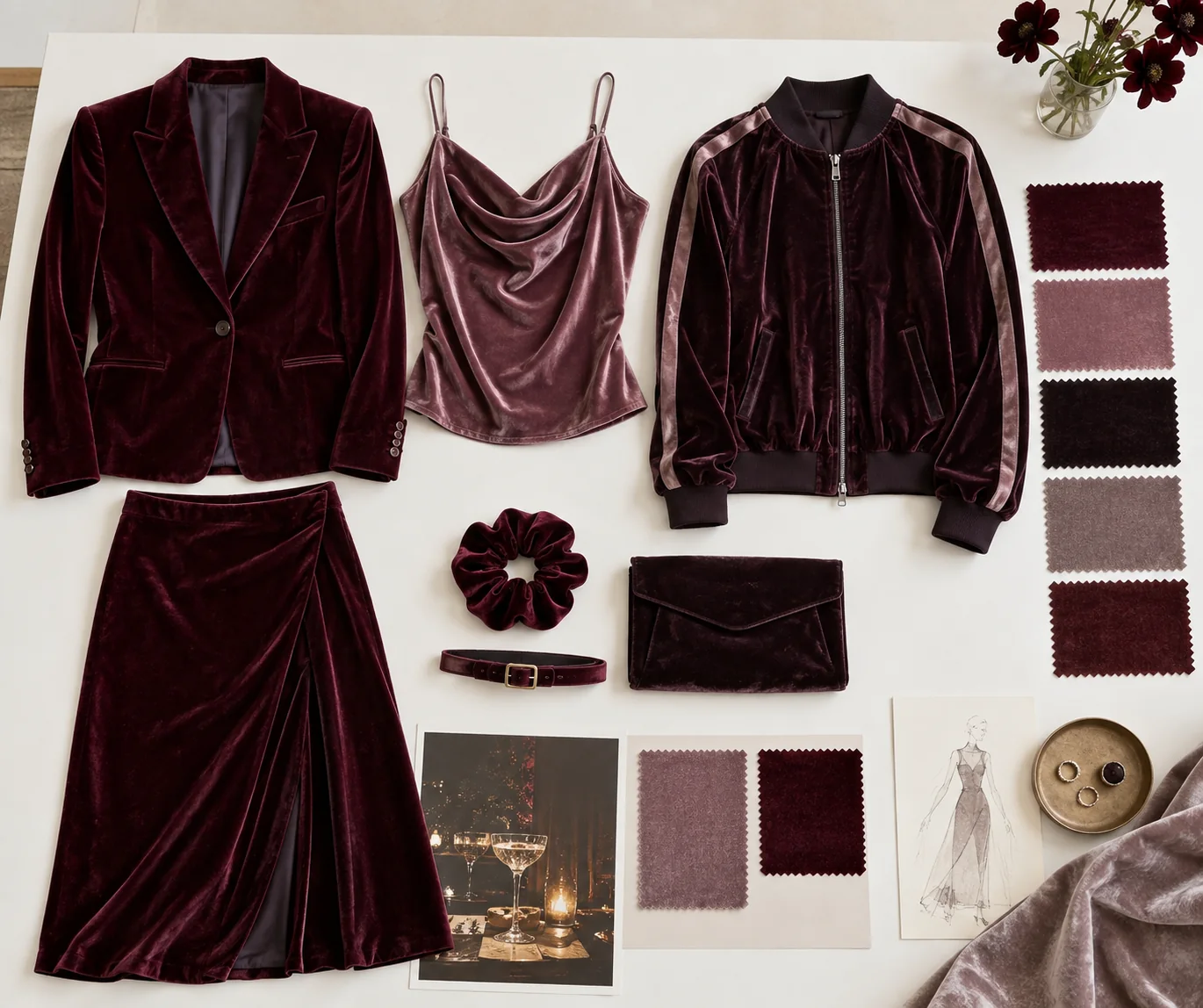
Velvet is commonly selected when surface depth and a soft hand are part of the product direction. Apparel uses can include:
- jackets, blazers and overshirts;
- evening tops, dresses and skirts;
- relaxed tracksuit jackets and lifestyle sets;
- stage, dance and occasion garments where stretch velvet fits the movement brief;
- collars, cuffs, panels and small accessories; and
- selected home-textile items such as cushions or light upholstery.
The last category needs a separate performance conversation. Upholstery velvet may be much heavier or more abrasion-focused than a fashion velvet. Do not substitute one for the other because both have a soft pile.
For an activewear range, velvet may work for a lifestyle capsule, warm-up layer, coordinated set or statement panel. It is not automatically a good fit for high-output training. Check moisture handling, heat retention, stretch, recovery, abrasion and care before making a performance claim. The DTS Activewear fabric guide provides a useful comparison point for fabrics built around training performance.
How should velvet fabric be cared for?
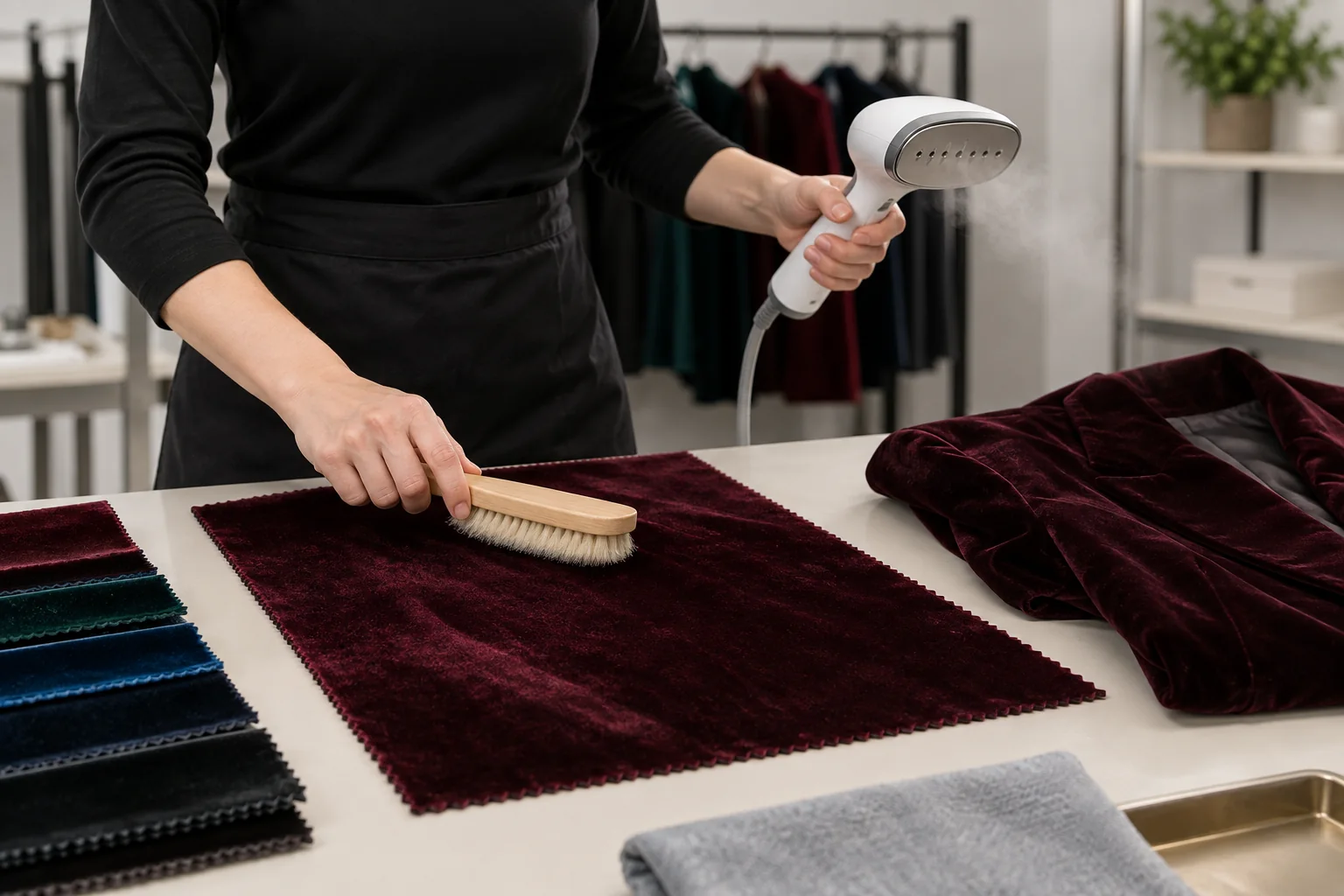
Care depends on fiber, backing, dye, finish and garment construction. A care instruction that works for one velvet can damage another. The final label should follow the approved test route for the finished product, not a generic internet recommendation.
Before bulk approval, document:
- the permitted wash or dry-cleaning route;
- water temperature, agitation and drying method where applicable;
- whether the garment should be turned inside out;
- how to restore or protect the pile after washing;
- steaming or pressing limits;
- dimensional change after the agreed cycle; and
- color transfer, shade change and pile appearance after care.
Avoid direct high heat on the pile unless the approved care procedure specifically allows it. Pressing from the wrong side, using a protective cloth or steaming without flattening the face may be part of the handling method, but the supplier should confirm the route on the actual fabric and garment.
The United States FTC textile labeling guidance is a reminder that fiber content, country of origin and responsible business information must be reviewed for covered products. Care instructions and performance claims need their own evidence path.
How to specify velvet fabric in a tech pack

The fabric section of a tech pack should tell a sample room what must stay consistent. Use a physical standard where possible and state which characteristics are allowed to vary.
| Specification field | What to state | Why it protects the buyer |
|---|---|---|
| Fiber content | Exact fiber percentages and approved tolerance | Prevents a velvet name from hiding a different blend or label claim |
| Ground construction | Woven or knit, base structure and stretch direction | Connects the fabric to fit, recovery and sewing behavior |
| Pile | Pile height or hand target, face appearance and density | Gives the sample team a surface standard to compare |
| Nap direction | Required cutting direction and whether all panels must face one way | Reduces shade mismatch between garment pieces |
| GSM and usable width | Target, tolerance and width after selvage or defect allowance | Supports costing, marker planning and repeat production |
| Finish | Smooth, crushed, embossed, burnout, brushed or other route | Prevents a finish change from being treated as a minor substitution |
| Color standard | Approved lab dip, shade band and face or reverse reference | Controls light response and shade differences across lots |
| Stretch and recovery | Direction, test method and acceptance range when relevant | Protects fitted garments from growth and seam distortion |
| Care and labeling | Tested care route and market labeling review | Connects the sample to customer instructions and compliance |
Add a close-up face photo, reverse photo and a cut-edge photo to the approval record. A velvet swatch without these views is easy to misread.
What should buyers test before bulk approval?
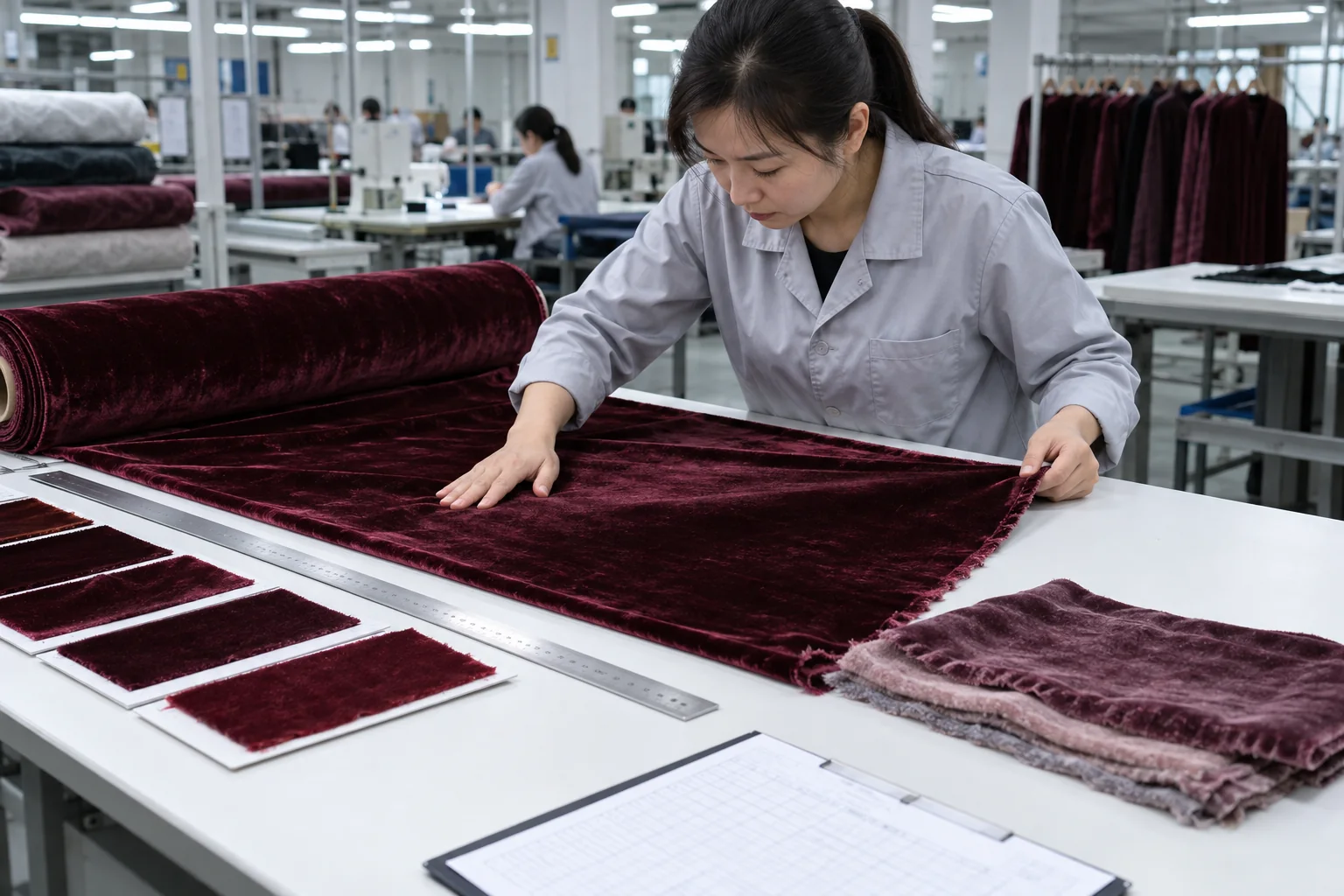
Testing should follow the garment’s actual failure risks. A velvet blazer, stretch dance top and relaxed lounge set need different evidence. Use the following list as a planning conversation, not as a fixed universal laboratory package.
- Confirm fiber content against the approved material specification.
- Check GSM, usable width, pile direction and face appearance against the retained standard.
- Measure dimensional change after the intended wash or care route.
- Check shade change, color fastness and transfer for the selected color and finish.
- Test stretch and recovery when the ground or garment requires movement.
- Inspect seam slippage, seam strength, seam bulk and edge stability on the sewn construction.
- Review pilling, pile flattening, abrasion and pressure marks for the expected wear scenario.
- Inspect a finished garment after laundering, folding, packing and unpacking.
Do not insert a test value into a purchase specification until the method, sample conditioning and acceptance range are agreed. For a repeat program, retain the approved face standard and a finished-garment reference so a later fabric lot can be compared with something physical.
A practical velvet sampling workflow
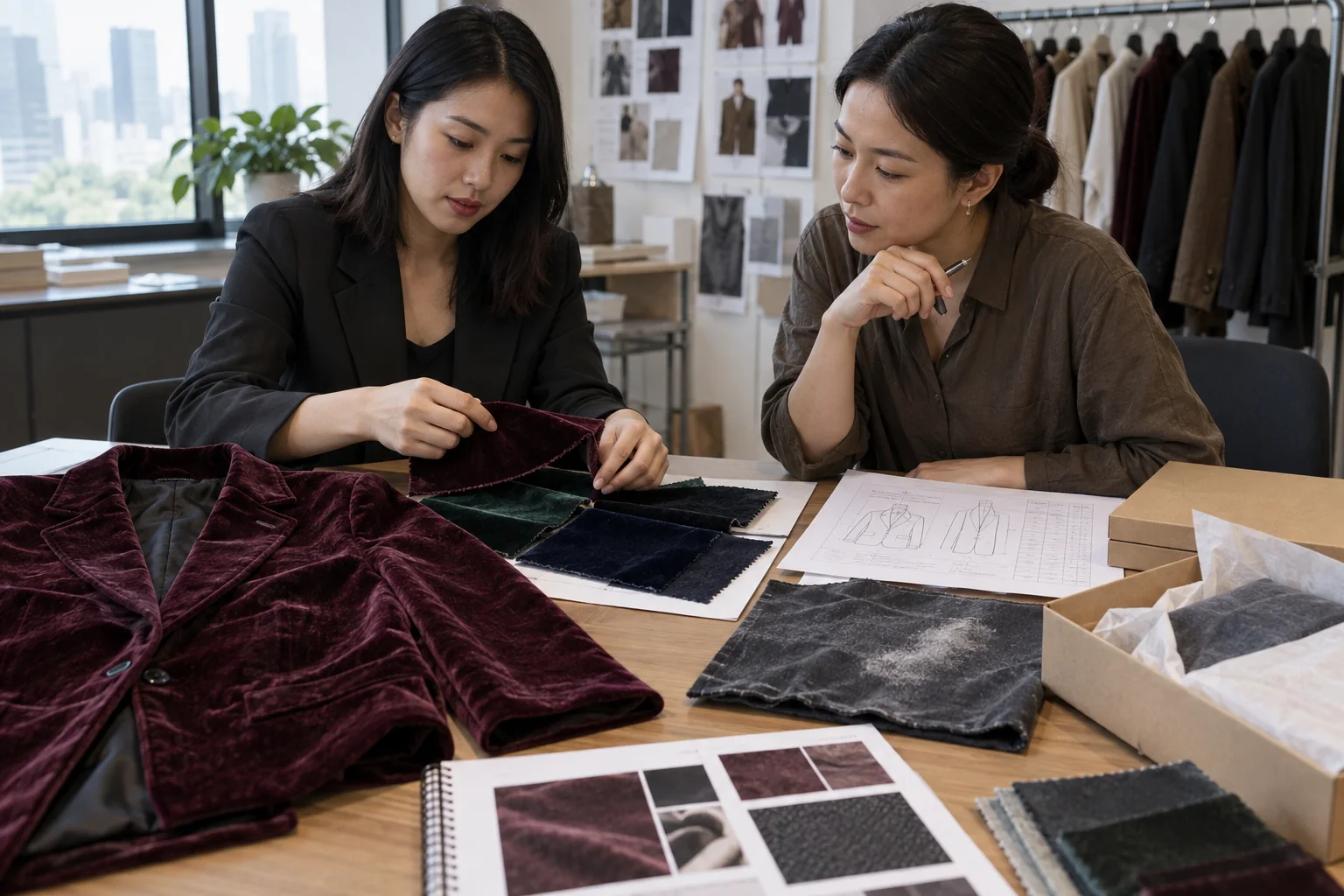
Velvet is easier to control when the approval path is staged. A useful sequence is:
- Brief review: confirm product use, fit, season, price position, fiber route, stretch need and care expectation.
- Swatch shortlist: compare the relevant smooth, stretch, crushed or blended routes by pile, ground, GSM, width and finish.
- Color and surface approval: approve the lab dip or shade standard with the pile brushed in the production direction.
- Proto sample: make the garment and check nap alignment, drape, seams, closures, lining and movement.
- Care review: run the intended care route and inspect pile, shade, measurements and packaging appearance.
- Pre-production standard: retain the approved swatch, face and reverse photos, garment measurements, label wording and inspection points.
- Bulk inspection: compare production fabric and finished garments with the retained standard before release.
If the buyer changes the fiber, pile, finish or backing after the proto sample, treat it as a new material decision. A small wording change can create a different fabric.
Common velvet fabric sourcing mistakes
The most expensive velvet mistakes usually happen before the first bulk cut.
- Buying by name only: "velvet" does not define fiber, pile height, stretch or care.
- Ignoring nap direction: a marker that turns pattern pieces can create obvious shade differences.
- Approving a photo instead of a swatch: pile density and reverse construction are hard to judge on a screen.
- Using a fixed GSM without a product reason: weight must connect to fit, drape, opacity and the intended use.
- Confusing apparel and upholstery routes: similar softness does not mean similar weight, abrasion or sewing behavior.
- Skipping the sewn panel: seam bulk, pile crush and pressing marks may only appear after construction.
- Changing finish after approval: brushing, crushing, embossing or washing can change the surface and dimensions.
- Assuming stretch equals performance: confirm recovery, moisture behavior, heat retention and care for training products.
Frequently asked questions
Velvet fabric can be made from cotton, rayon, polyester, silk or a blend. Velvet is defined mainly by its raised pile and finished surface, so the fiber content must be confirmed separately in the material specification and label review.
Some velvet is stretchy because it uses a knitted ground or elastane blend. Stable woven velvet may have little natural stretch. Test extension and recovery on the actual fabric and sewn garment before approving a close fit.
Velvet can feel warmer than a smooth fabric because its pile adds surface depth and can hold more air. The final result depends on pile, GSM, backing, lining, fit and climate. Do not treat the fiber name alone as a thermal rating.
Velvet usually refers to a short, directional pile surface, often on a woven ground. Velour is often associated with a softer knitted or flexible pile route. The terms can be used loosely, so compare construction, stretch, backing and care on the actual swatch.
Crushed velvet has a deliberately irregular or pressed pile direction that creates changing highlights. It should be approved for its exact surface and shade behavior because the irregular reflection is part of the design.
It can work for a lifestyle or fashion tracksuit when the pile, stretch, recovery, wash route and pilling behavior fit the brief. For high-output training, compare it with a tested performance fabric before making moisture or durability claims.
The correct route depends on fiber, ground, dye and finish. Follow the supplier’s tested care method for the actual garment, and check dimensional change, color, pile appearance and pressure marks before finalizing the care label.
Ask for fiber content, ground construction, pile or finish description, GSM, usable width, nap direction, stretch and recovery where relevant, color standards, care route, sample options and the inspection points that will be used before bulk release.
Velvet fabric selection for your next apparel brief
Velvet works when the raised surface is part of the product decision, not just a word in a product title. Start with the garment use. Then lock the fiber, ground, pile, nap direction, GSM, width, finish, care route and acceptance evidence before sampling. If the product needs rapid moisture movement, strong recovery or easy care, compare velvet with a technical alternative instead of forcing the wrong material into the range.
Send the product type, target fit, velvet route, fiber preference, pile or hand-feel reference, color direction, size range, quantity and care expectation to the DTS Activewear inquiry and NDA team. A clear brief makes it easier to review the fabric route, sample plan and production specifications.