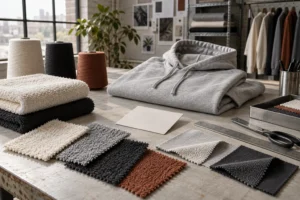
Spandex is a manufactured elastomeric fiber made from a long-chain synthetic polymer with at least 85% segmented polyurethane. It supplies stretch and recovery to a garment, but it is not a complete fabric recipe. The base fiber, knit or woven structure, yarn, GSM, finish, and garment pattern decide whether the result feels soft, supportive, opaque, breathable, or stable after washing. CottonWorks describes spandex as a segmented polyurethane fiber used in small amounts with other fibers, while the US definition appears in 16 CFR 303.7.
For an apparel buyer, the useful question is not simply "How much spandex is in this fabric?" It is "What movement, recovery, hand feel, and care behavior does this specific fabric and garment need?" This guide answers that question and turns it into a clearer sample brief.
What spandex is at the fiber level
Spandex is a fiber, not a single finished fabric. A mill can use spandex filament in a knit or woven construction, then combine it with nylon, polyester, cotton, a cellulosic fiber, or another base material. The finished textile inherits properties from the whole system.
That distinction matters when a supplier says "spandex fabric." The phrase may describe a nylon-spandex jersey, a polyester-spandex interlock, a cotton-spandex rib, or a stretch woven fabric. These materials can have very different surface appearance, weight, recovery, opacity, and sewing behavior even when the spandex percentage is similar.
CottonWorks notes that spandex has very high elongation, at least 200% and sometimes more, and that apparel commonly uses it in small amounts with other fibers. High elongation helps a garment accommodate movement. It does not tell you how quickly the fabric returns after a long stretch, how much it grows during wear, or how it behaves after heat and laundering.
The US regulatory definition is also useful for product teams. The US textile rule defines spandex as a manufactured fiber whose fiber-forming substance contains at least 85% segmented polyurethane. That describes fiber identity. It does not establish a target GSM, stretch percentage, recovery percentage, or garment performance claim.
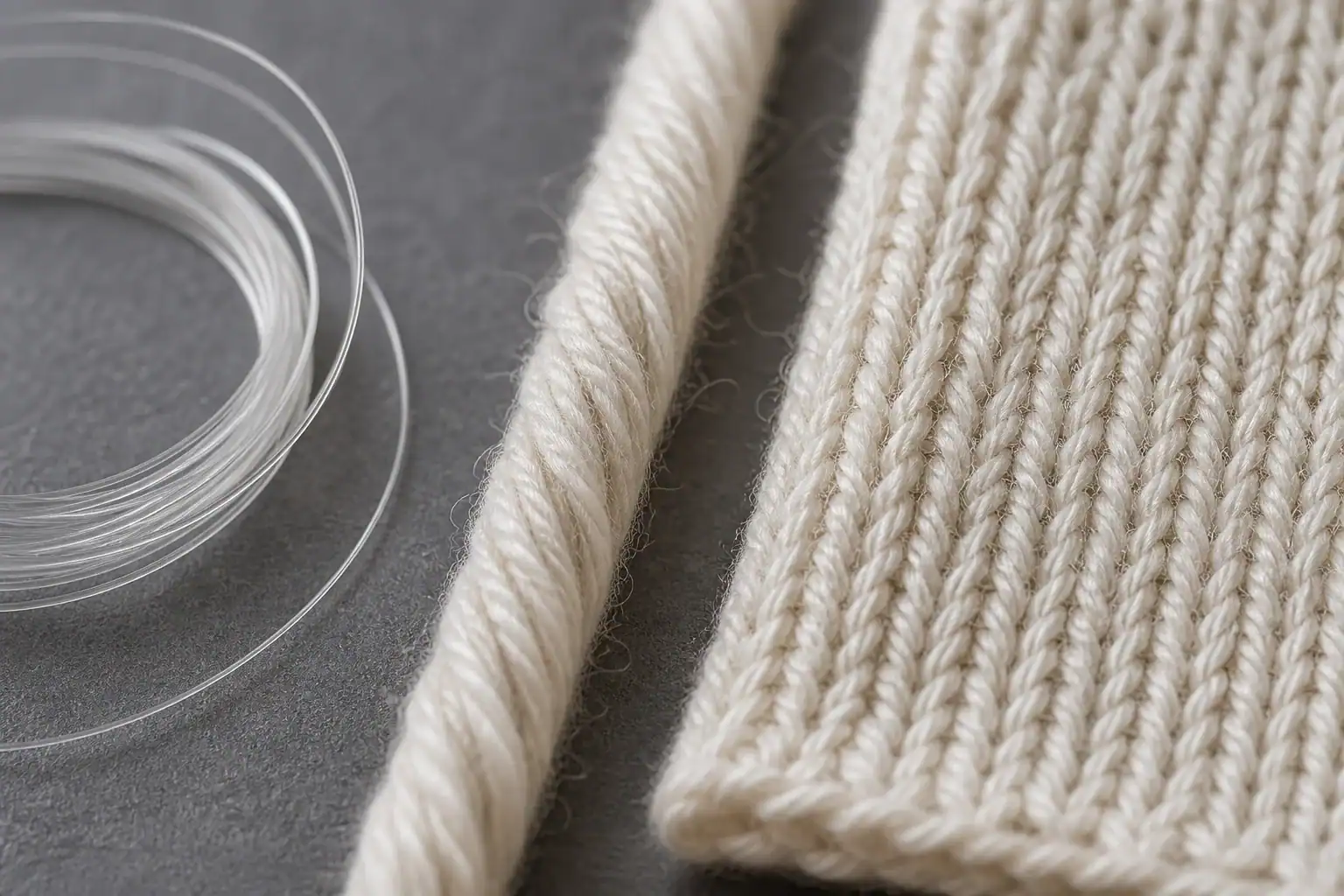
When a buyer evaluates a fabric, keep four layers separate:
- Fiber: the material identity, such as spandex, nylon, polyester, cotton, or elastane.
- Yarn: how the filament or staple fibers are formed and combined.
- Fabric: the construction, weight, width, finish, stretch direction, and surface.
- Garment: the pattern, seams, lining, trims, grading, care route, and actual fit.
Most sourcing mistakes happen when a team specifies only the first layer and expects the supplier to guess the other three.
Spandex, elastane, and Lycra are not the same label term
In everyday apparel language, spandex and elastane usually point to the same family of stretch fiber. The regional wording differs. US textile labeling commonly uses the generic name "spandex." European textile rules list "elastane" as the fiber name. Regulation (EU) No 1007/2011 lists elastane as an elastofibre composed of at least 85% segmented polyurethane.
Lycra is different because it is a commercial fiber trademark, not a universal name for every spandex filament. A fabric should not be described as Lycra simply because it stretches. The buyer should confirm whether the named trademark is authorized for the exact fiber, fabric, garment, and marketing use.
The Federal Trade Commission explains that a fiber trademark used in advertising needs the generic fiber name close to it. The practical handoff for a product team is simple:
- Write the generic fiber name and percentage in the material specification.
- Record the destination market before finalizing labels and product copy.
- Treat a trademark as a separate authorization and documentation question.
- Do not use a supplier’s shorthand as the finished garment’s legal label without checking the applicable market rule.

This distinction also helps AI search and human buyers understand the page. "Spandex," "elastane," and "Lycra" are related terms, but they do not carry the same commercial or labeling meaning.
What spandex changes in a finished fabric
Spandex mainly changes how a fabric responds when a wearer moves or when a garment is pulled over the body. Buyers normally care about five related outcomes: extension, recovery, growth, power, and comfort.
Extension is the amount of movement the fabric can accommodate
Extension is the increase in length or width when a defined force or percentage is applied. It should be measured in both directions when the fabric may be used for a close-fitting garment. A fabric can stretch widely across the body while offering much less lengthwise extension.
Recovery is how well the fabric returns
Recovery is the return toward the starting dimension after the load is removed. Good recovery supports a cleaner fit over repeated wear. It is a fabric and construction outcome, so it can change with the base fiber, knit structure, yarn tension, finishing, garment pattern, and wash route.
Growth is the warning sign after prolonged wear
Growth describes the extra length or width that remains after a fabric has been held under stress and released. A legging that looks correct on a fresh sample may become longer at the knees or seat if the material grows during use. ASTM D2594 covers stretch and fabric growth for knitted fabrics with low power, and its scope explains why prolonged stress matters for form-fitting apparel.
Power is the resistance the wearer feels
Two fabrics may have a similar stretch percentage but feel very different. One may pull easily and feel light. Another may resist movement and feel supportive. That resistance is relevant to compression garments, sports bras, waistbands, and close-fitting leggings. Ask for a defined test condition or a side-by-side sample rather than using the word "compression" as a loose description.
Comfort includes the base fabric and the pattern
Spandex cannot make every textile comfortable. A polyester-spandex fabric, a cotton-spandex rib, and a nylon-spandex tricot can each move differently against the skin. Seam placement, lining, garment ease, heat retention, surface friction, and care instructions also shape the wear experience.
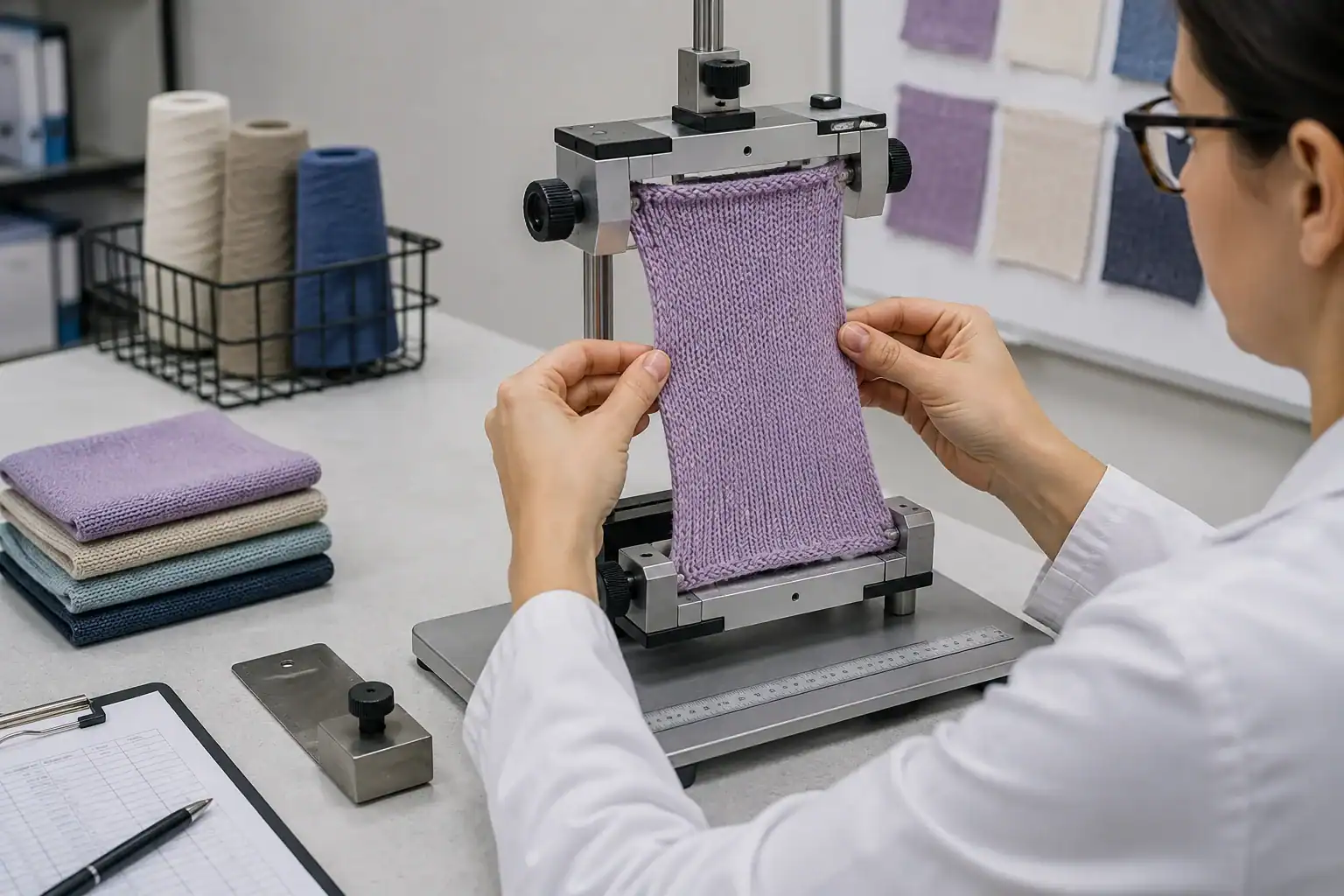
The common 2-way and 4-way labels are useful starting descriptions, not acceptance criteria. Confirm which direction stretches, how much load was used, whether the number was measured on the fabric or garment, and how much recovery remained after a defined hold time.
Common spandex blends and when to sample each one
The base fiber often matters as much as the spandex. Use the blend as a starting hypothesis, then approve the actual fabric and garment.
Nylon-spandex
Nylon-spandex is a common route for close-fitting activewear, leggings, swimwear, and performance intimates. Buyers often choose it when they want a smooth surface, a soft hand, and substantial stretch. The final result still depends on the nylon type, filament construction, knit, finish, and weight. Ask for the exact fabric construction, not only "nylon spandex."
Polyester-spandex
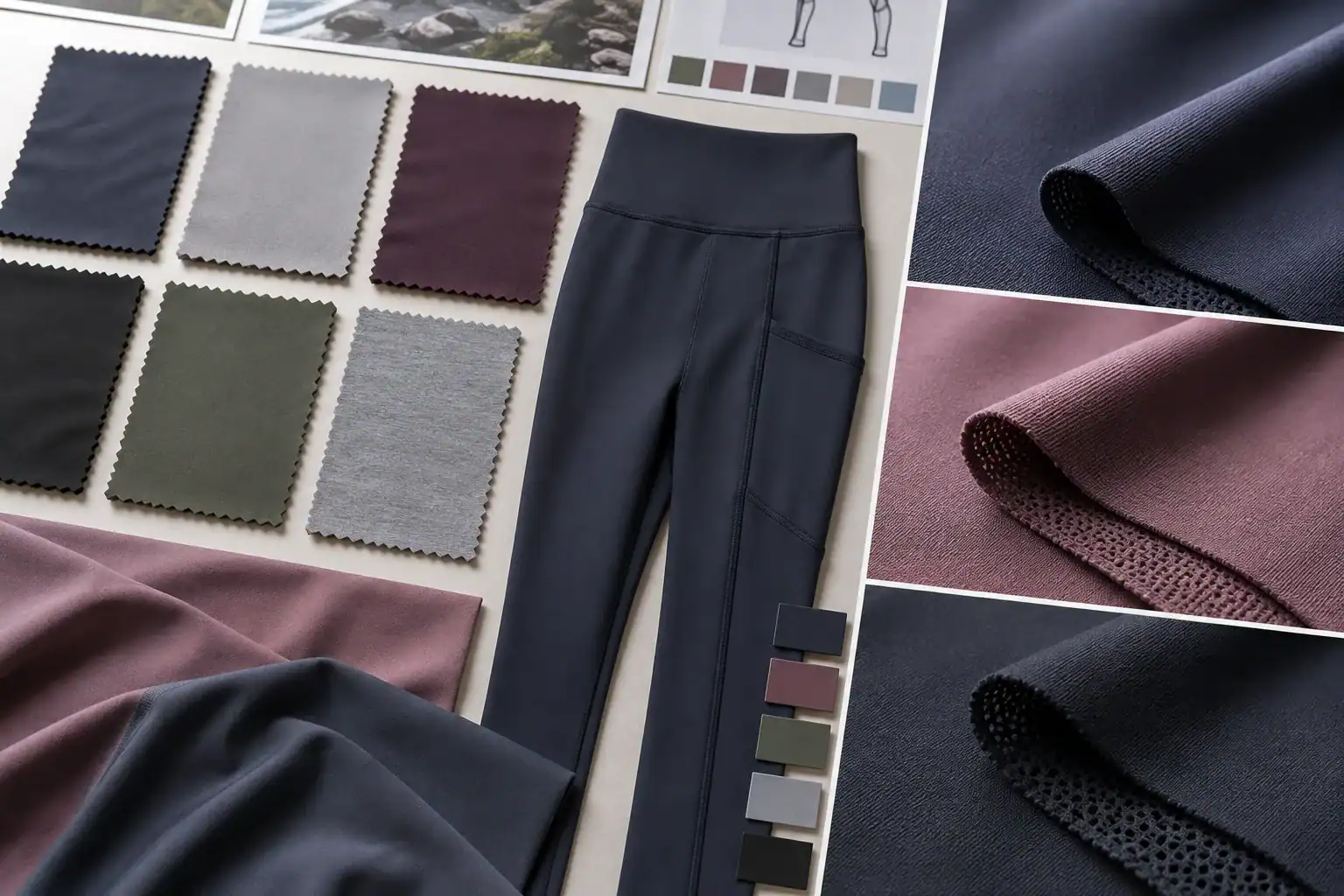
Polyester-spandex is often considered for training tops, printed performance garments, swim-adjacent programs, and products that need a synthetic base. Dyeing, printing, surface finish, yarn choice, and fabric density affect the result. Check colorfastness, surface appearance, pilling, odor-management requirements, and recovery after washing when those points matter to the product.
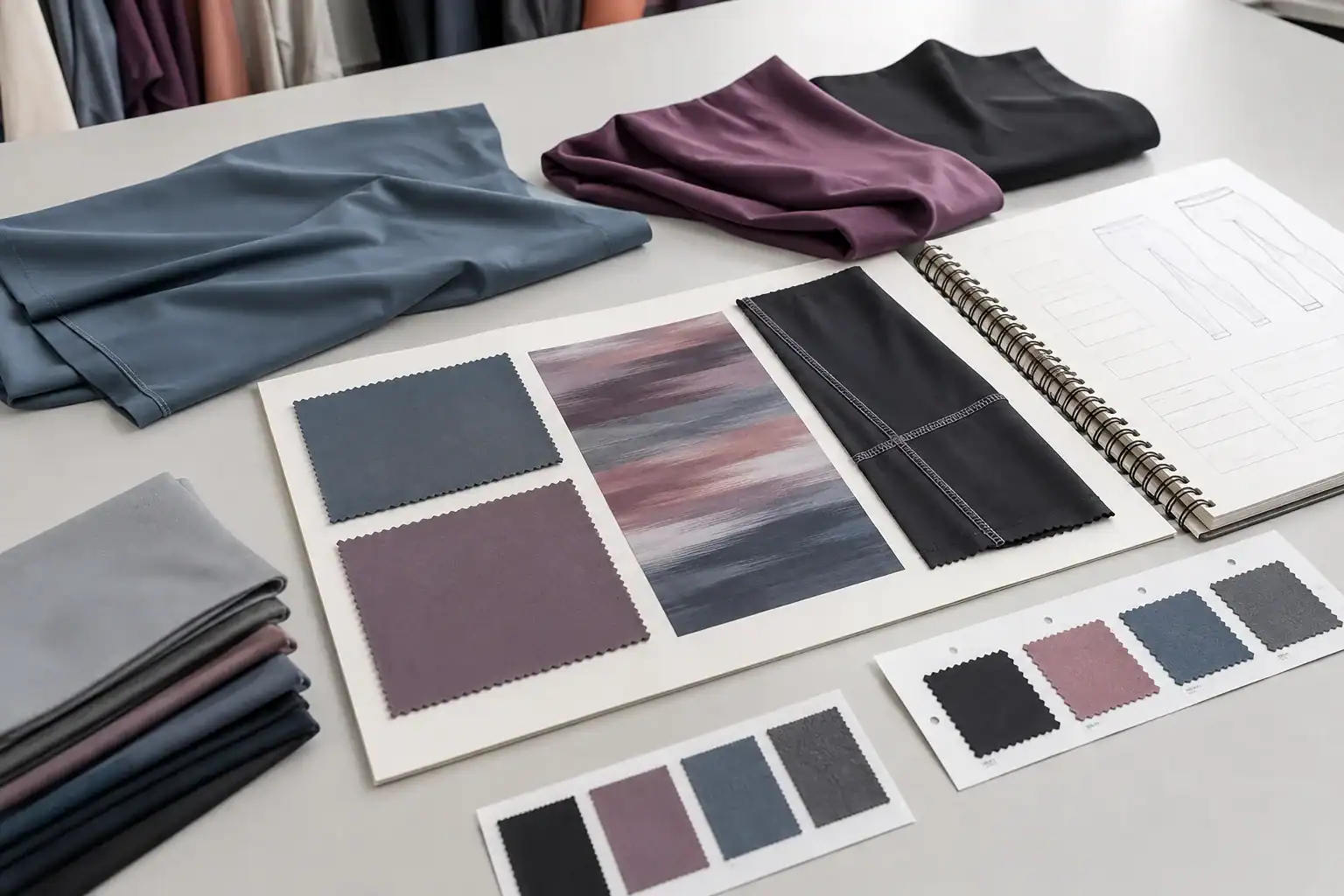
Cotton-spandex
Cotton-spandex can give a familiar hand feel with added movement. It may fit tees, tanks, underwear, casual bottoms, and light gym styles. Cotton can also change more during laundering than a fully synthetic base, so dimensional change and care testing deserve attention. A 95% cotton and 5% spandex sample is a starting comparison point, not a universal formula.
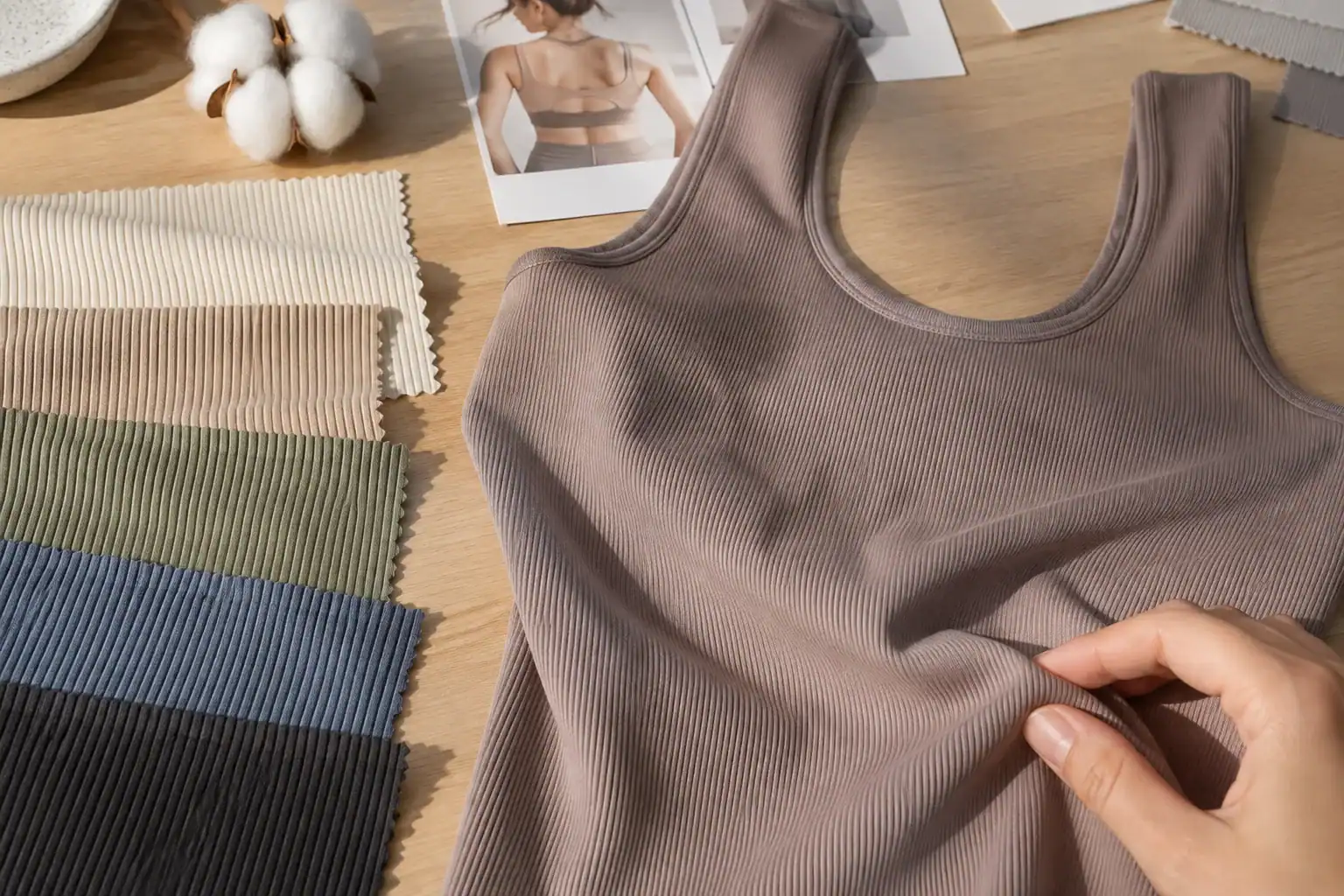
Modal or viscose with spandex
Modal or viscose blended with spandex can suit products that value a soft, fluid hand and drape. It may not be the right route for every high-abrasion or high-support use. Confirm recovery, pilling, wet strength, color behavior, and care performance on the intended construction before selecting it for a repeat program.
If your team is comparing several activewear fibers, use the DTS activewear fabric guide as the broader internal reference, then ask for samples that match the garment brief. The goal is to compare finished options under the same use case, not to crown one fiber as the best for every product.
How much spandex should a garment use?
There is no single correct spandex percentage for all activewear. A legging, a loose tank, a compression short, and a cotton fashion tee place different demands on the fabric. Pattern dimensions and fabric construction can change the fit even when the fiber percentage stays the same.
For development, ask the supplier to compare several composition points in the same construction. A team might request 95/5 cotton-spandex, 88/12 polyester-spandex, and 75/25 nylon-spandex as sample options when the product brief ranges from light movement to close body fit. These are comparison points for sampling, not industry standards, DTS guarantees, or automatic recommendations.
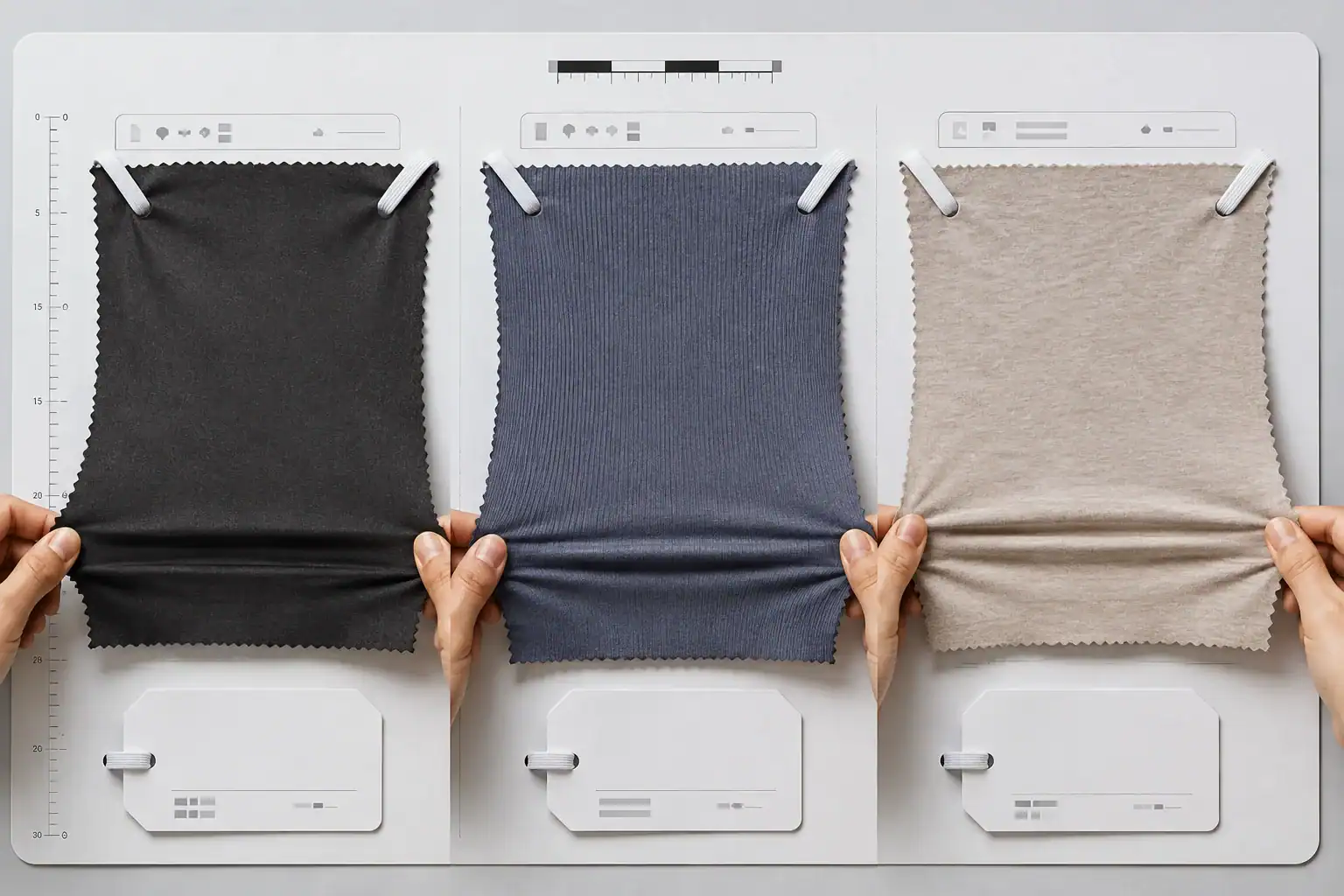
Use this selection rule:
- Start with the garment’s movement and support requirement.
- Select a base fiber and construction that can deliver the hand feel, surface, and care route.
- Add the lowest spandex level that can meet the agreed extension and recovery targets.
- Test opacity, growth, pilling, color, and dimensional change on the actual fabric.
- Approve the finished garment, since seams and pattern tension can change the result.
When comparing percentages, keep the knit type, GSM, width, finish, and test conditions as consistent as possible. Otherwise, a better-looking result may come from a different construction rather than from the fiber ratio.
Match the spandex fabric to the garment
Leggings and yoga bottoms
Check crosswise and lengthwise stretch, opacity at full extension, recovery at the knees and seat, waistband stability, pilling, and wash behavior. A fabric that feels comfortable on a hand swatch may become transparent or grow when the garment is worn.
Sports bras and support garments
Support comes from fabric power, lining, pattern, elastic, seam engineering, and size grading. Spandex percentage alone cannot establish a support level. Ask for a garment sample and define where the fabric should stretch and where the construction should resist movement.
Training tees, tanks, and stringers
These garments may need easier movement and a softer hand than a compression product. The base fiber, mesh or jersey construction, moisture behavior, and decoration method may matter more than adding a high percentage of spandex. Link the fabric choice to the DTS moisture-wicking fabric guide when sweat management is part of the brief.
Swimwear and dancewear
Test the complete use environment. Water, chlorine, salt, sun, body oils, repeated extension, and care temperature can affect the material. Use a destination-specific test plan and do not assume that a fabric suitable for a dry gym garment will meet a swimwear brief.
Cotton-rich streetwear and casual garments
A small amount of spandex can help a fitted cotton product move and recover. The amount of ease, rib structure, wash route, and desired silhouette should be written into the sample comments. For weight decisions, use the DTS GSM meaning and fabric weight guide rather than describing a fabric as simply "heavy" or "light."
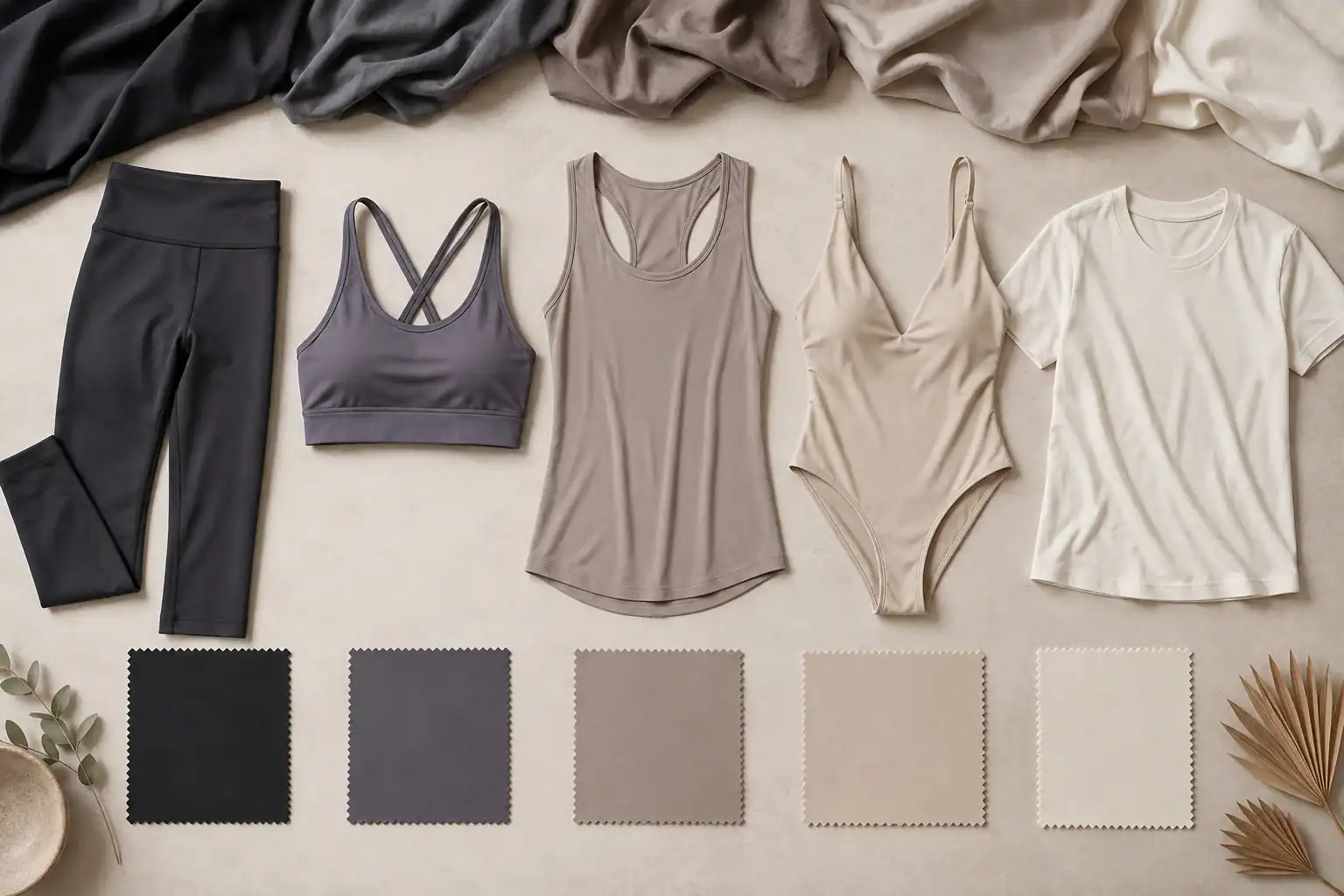
A spandex fabric test plan before bulk production
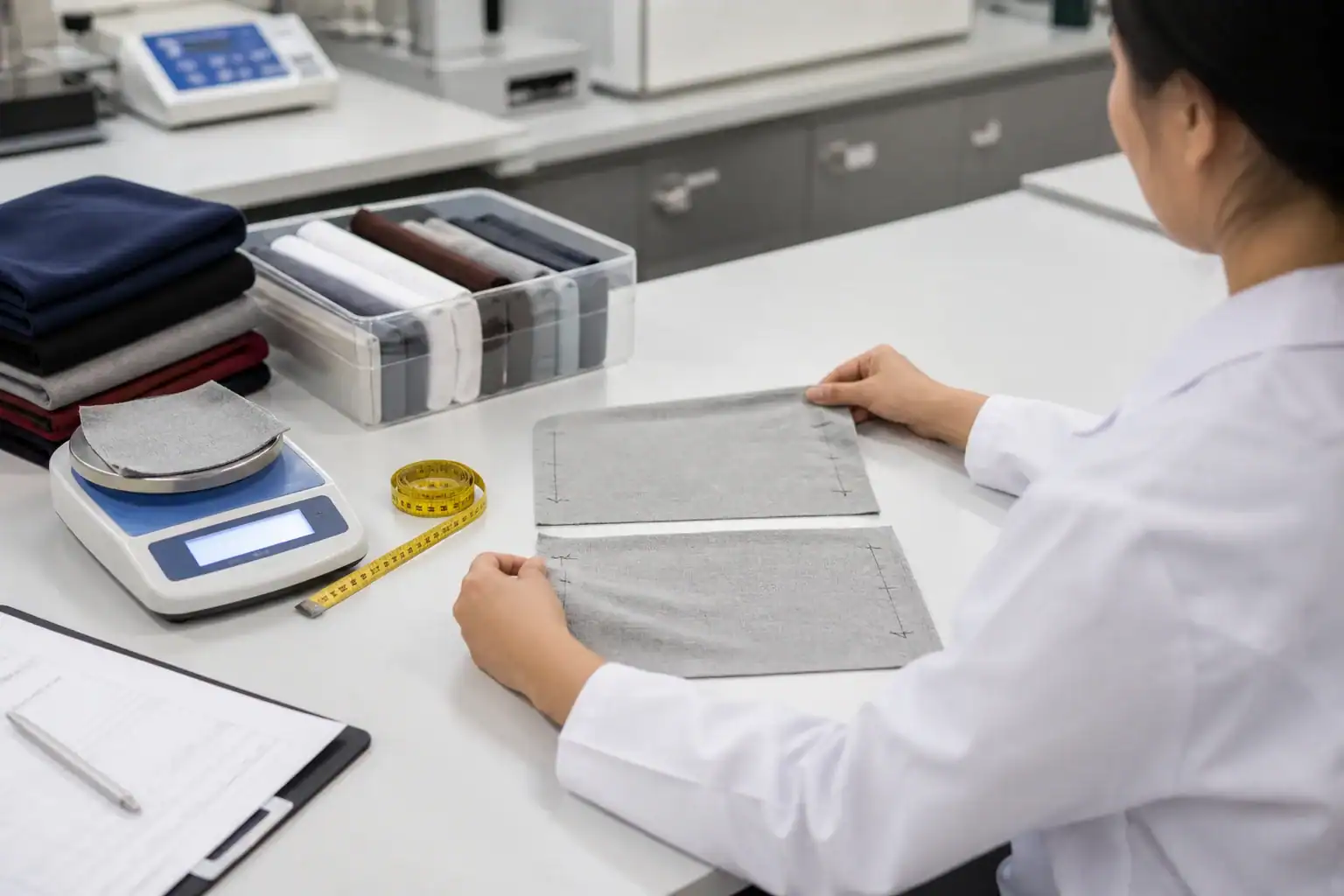
Testing should answer the failure modes that would create returns, fit complaints, or a failed approval. Start with a written comparison between the lab swatch, the washed swatch, and the finished sample.
Stretch, growth, and recovery
Choose a method that fits the fabric and application. ASTM D2594 explains stretch measurement and growth after a defined extension, while the ASTM page also warns that this method is not recommended by itself for commercial shipment acceptance because interlaboratory precision is limited. That qualification is useful: a test number needs a method, a sample plan, and an agreed acceptance rule.
Record at least:
- Direction tested: course, wale, crosswise, lengthwise, or warp and weft as applicable.
- Initial dimension and applied extension or load.
- Hold time, release time, and recovery measurement point.
- Growth after repeated or prolonged extension.
- Whether the result came from fabric, panel, or finished garment.
Dimensional change after care
Wash and dry samples using the intended care route. AATCC TM187 describes an accelerated procedure for fabric dimensional change and compares length and width marks before and after a programmed cycle. AATCC also lists garment dimensional-change methods in its standard methods index. The selected method should match the product and market requirements.
Weight, width, appearance, and surface
Measure finished GSM and usable width after finishing. Check opacity at the garment’s expected extension, surface uniformity, colorfastness, pilling or abrasion requirements, print or dye migration, and seam appearance. A fabric can pass a stretch check and still fail a visual or sewing review.
Finished-garment confirmation
Cut and sew the intended sample before final bulk approval. Review fit across the size range, seam recovery, waistband roll, pocket distortion, logo placement, and changes after care. If the finished garment uses lining, elastic, mesh, or panels with different stretch directions, test those combinations together.
Tech-pack fields that make a stretch-fabric quote usable
A supplier can quote more accurately when the brief describes the finished material and garment instead of saying only "stretch fabric." Add these fields to the tech pack or request:
- Fiber composition and allowed tolerance for each component.
- Fabric construction, knit type, weave, finish, usable width, and target GSM.
- Stretch direction and the agreed extension or load condition.
- Recovery or growth acceptance after the chosen hold and care cycle.
- Hand feel, surface appearance, opacity, lining, and color requirements.
- Shrinkage or dimensional-change limit by direction.
- Pilling, abrasion, colorfastness, perspiration, chlorine, or saltwater tests when the end use requires them.
- Needle, stitch, seam, binding, elastic, and decoration constraints for the garment.
- Care-label route and destination-market labeling review.
- Sample approval date, revision comments, measurement tolerances, and the standard that bulk production must match.

The DTS tech-pack customization page is the right internal route when a moodboard, reference garment, or incomplete specification needs to become a production-ready brief. Keep the fabric decision tied to the garment measurements and sample comments so that bulk production has a clear reference.
US and EU label checks for spandex content
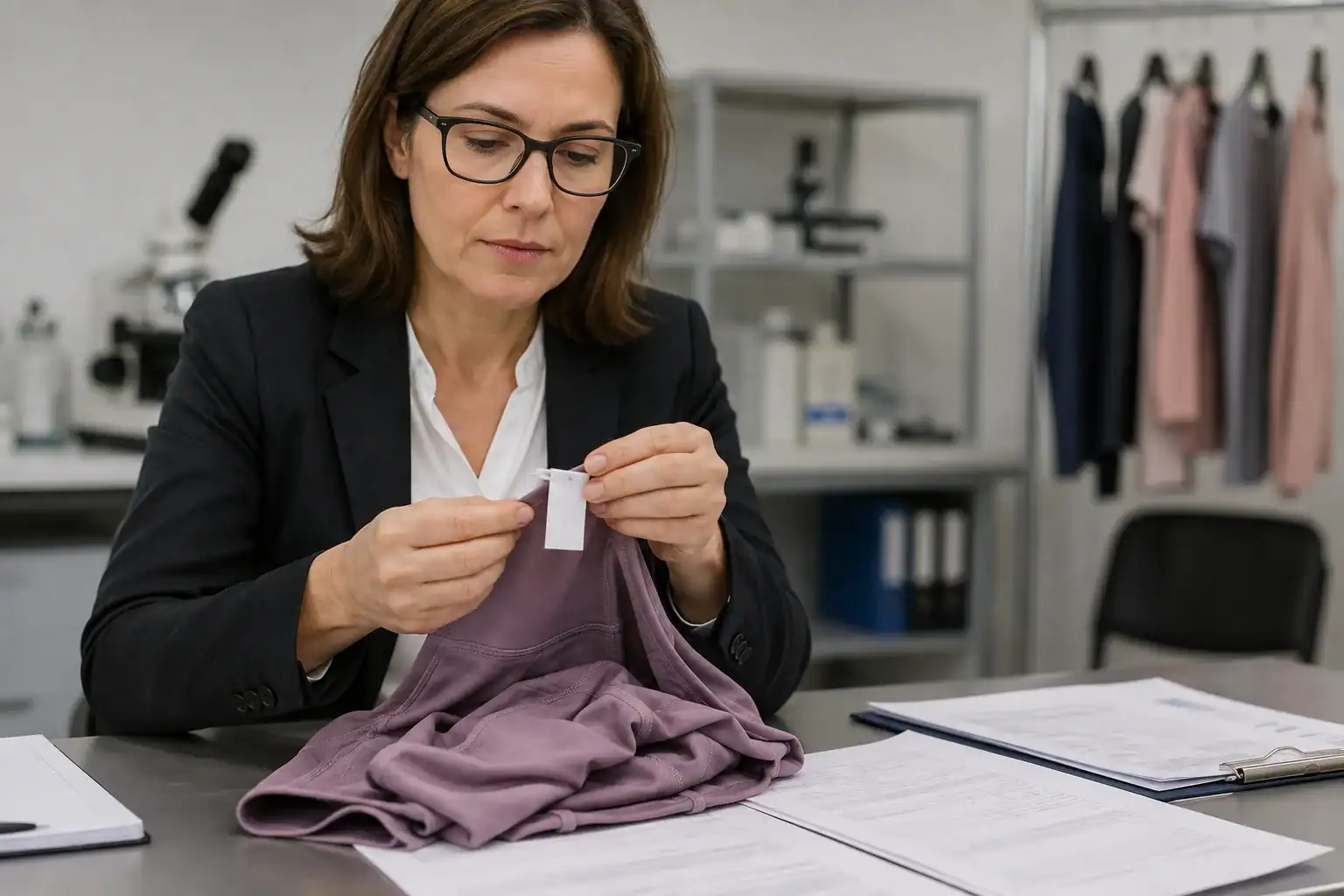
For US-bound apparel, the FTC’s textile guidance says labels need fiber content, country of origin, and the company name or Registered Identification Number of the manufacturer, importer, or another responsible firm. The FTC labeling guide also explains how a fiber trademark and its generic name should appear together when the trademark is used.
For EU-bound apparel, the textile regulation uses the name "elastane" and requires fiber composition information in the prescribed form. EUR-Lex provides the regulation and its Annex I fiber names. Confirm the current obligations for the destination market, the product route, and the party placing the garment on that market before printing labels.
The buyer handoff should include three separate records:
- The technical fiber composition and tolerance for the approved fabric.
- The commercial authorization for any trademarked fiber name used in marketing.
- The final label and advertising copy reviewed for the destination market.
This separation prevents a supplier catalog term from becoming an unverified performance claim or a label error.
When to request a fabric and garment review
Request a review before bulk production when the fabric choice affects fit, recovery, opacity, support, or care performance. The review should include the garment category, target user, movement requirement, base fiber preference, composition options, GSM range, color or print route, decoration, size range, care label, target quantity, and delivery window.
DTS presents designer consultation, sampling and prototyping, and custom apparel development paths for buyers who need help moving from an idea or tech pack to a physical sample. Exact fabric feasibility, MOQ, lead time, testing scope, and production terms still need project-specific confirmation.

Use this short inquiry brief:
- Product: leggings, tank, tee, short, bra, swim style, or another garment.
- Movement: light stretch, repeated body movement, close fit, support, or compression.
- Fabric request: base fiber, spandex range to compare, construction, GSM, width, finish, and color.
- Acceptance: stretch directions, recovery or growth method, opacity, care route, and appearance checks.
- Production: size breakdown, decoration, label, packaging, quantity, and target delivery window.
- Review path: sample comments, revision count, approval sample, and bulk reference.
Frequently asked questions
Spandex is a manufactured fiber whose fiber-forming substance contains at least 85% segmented polyurethane under the US generic definition. In a garment, it is usually combined with another fiber and a fabric construction rather than used as the entire textile.
They usually refer to the same stretch-fiber family in apparel discussions, but the preferred generic name varies by market. US labeling commonly uses spandex, while EU textile rules use elastane. Confirm the destination-market wording before finalizing labels.
Lycra is a commercial fiber trademark. Spandex is the generic US fiber name. A product team should verify trademark authorization and use the generic fiber name where the applicable labeling or advertising rule requires it.
Spandex is a fiber. "Spandex fabric" is a broad trade phrase that can describe different nylon, polyester, cotton, or cellulosic constructions containing the fiber. Ask for the construction, GSM, width, stretch, recovery, and finish.
There is no universal percentage. The right starting point depends on the garment, fit, fabric construction, support requirement, and care route. Compare a small set of composition options in the same construction, then approve the washed fabric and finished garment.
It can be, but the base fiber, knit openness, fabric weight, finish, garment coverage, and moisture behavior matter. Check air movement, surface comfort, drying behavior, and care performance on the intended sample instead of judging suitability from the spandex percentage alone.
Recycling depends on the fiber system and process. Textile Exchange notes that elastane can be difficult to separate from blended products, which creates a recycling challenge. If recycled content or end-of-life claims matter, request the relevant chain-of-custody and material evidence for the exact product.
At minimum, define stretch and recovery or growth, dimensional change after care, GSM and width, opacity at extension, surface appearance, pilling or abrasion where relevant, colorfastness, seam behavior, and the finished garment’s fit. Select methods and acceptance limits that match the intended product and market.
Turn the fiber question into an approval-ready sample
Spandex adds movement to apparel, but the fiber name is only the first line of the specification. A buyer gets a safer decision by defining the garment use, comparing the base fiber and construction, setting stretch and recovery checks, reviewing care behavior, and approving the finished sample before bulk production.
Send the garment category, fabric target, composition options, measurement sheet, decoration, quantity, and destination market through the DTS inquiry and NDA path. A focused brief gives the supplier something testable to quote and gives the buyer a clear standard to approve.