
Production
Move approved samples into bulk apparel production with clearer scheduling, material control, in-line QC and shipment preparation. DTS Activewear supports custom activewear and streetwear buyers through production planning, workmanship checks, packing review and order communication before delivery.
Bulk Apparel Production for Custom Orders
For Activewear Brands
For E-Commerce Sellers
For Startups and New Collections
Production Line Stages Buyers Should Confirm
Production File Confirmation
Material and Trim Preparation
Check fabric lot, color direction, shrinkage expectation, trims, zippers, drawcords, labels, hangtags and packaging materials before bulk use.
Cutting and Sewing Coordination
Decoration and Finishing
Final QC and Packing Release
FROM SPECIFICATION TO FINISHED PRODUCT
Craftsmanship That Speaks for Your Brand
Customization is a chain of decisions. Review each layer with the team so the final product remains consistent with the approved sample.
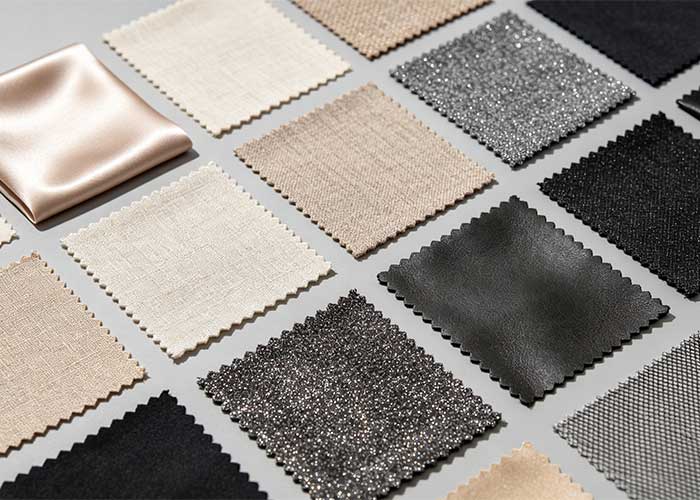
Fabric & Function
Select fabric by hand feel, weight, stretch, recovery, moisture management and target price.
- Cotton and cotton blends
- Performance polyester and elastane
- Client-approved sustainable options
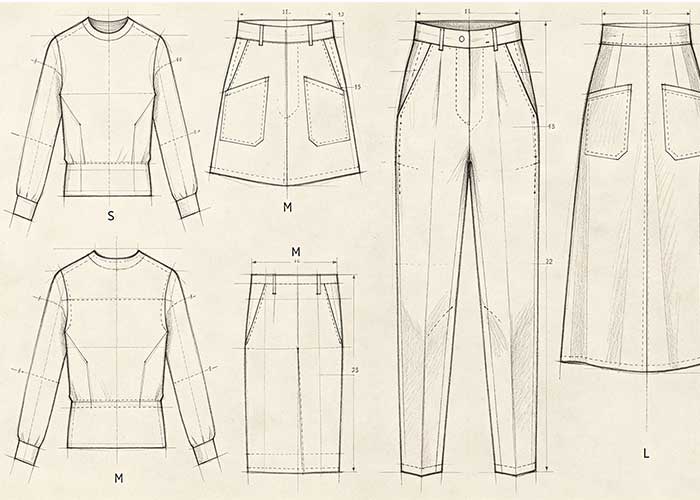
Fit & Pattern
Translate the reference silhouette into measurable pattern and grading requirements.
- Oversized, regular and athletic fits
- Size chart review
- Sample measurement comments
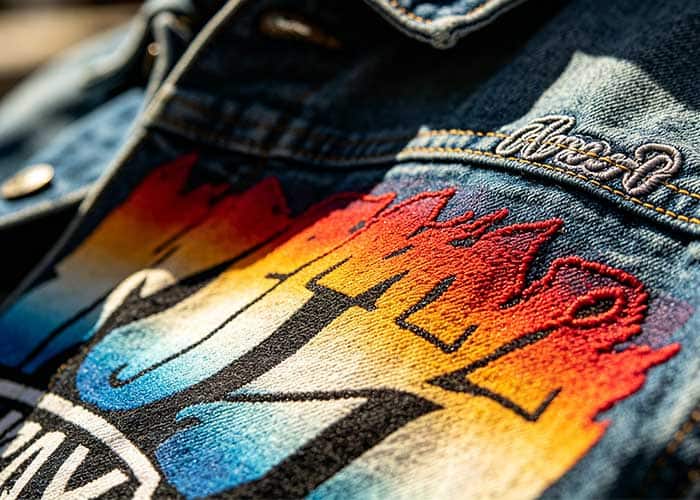
Printing & Embroidery
Match decoration method to artwork, fabric, order quantity and wash expectations.
- Screen, DTG and puff printing
- Embroidery and woven applications
- Placement and color confirmation
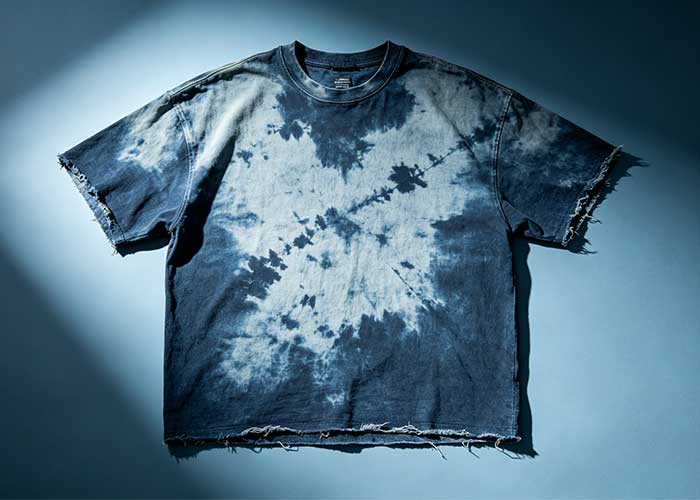
Washing & Finish
Develop surface character without losing control of shrinkage, color and hand feel.
- Acid and vintage wash options
- Garment finishing review
- Pre-production approval standard
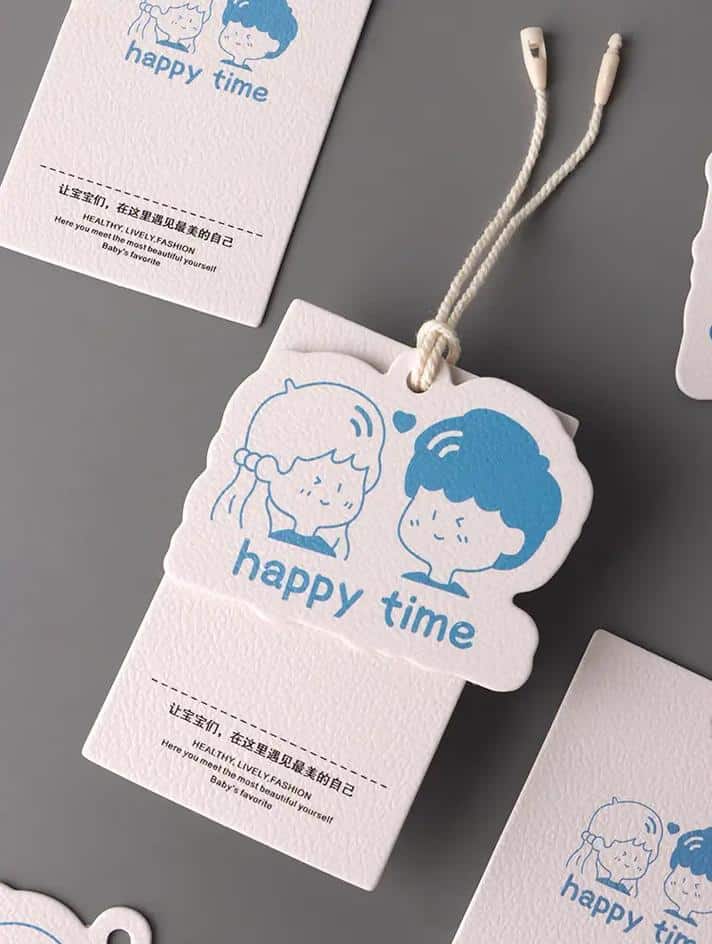
Labels & Branding
Build a consistent branded product instead of applying a logo as an afterthought.
- Woven labels and care labels
- Hang tags and size marks
- Placement confirmed in the tech pack
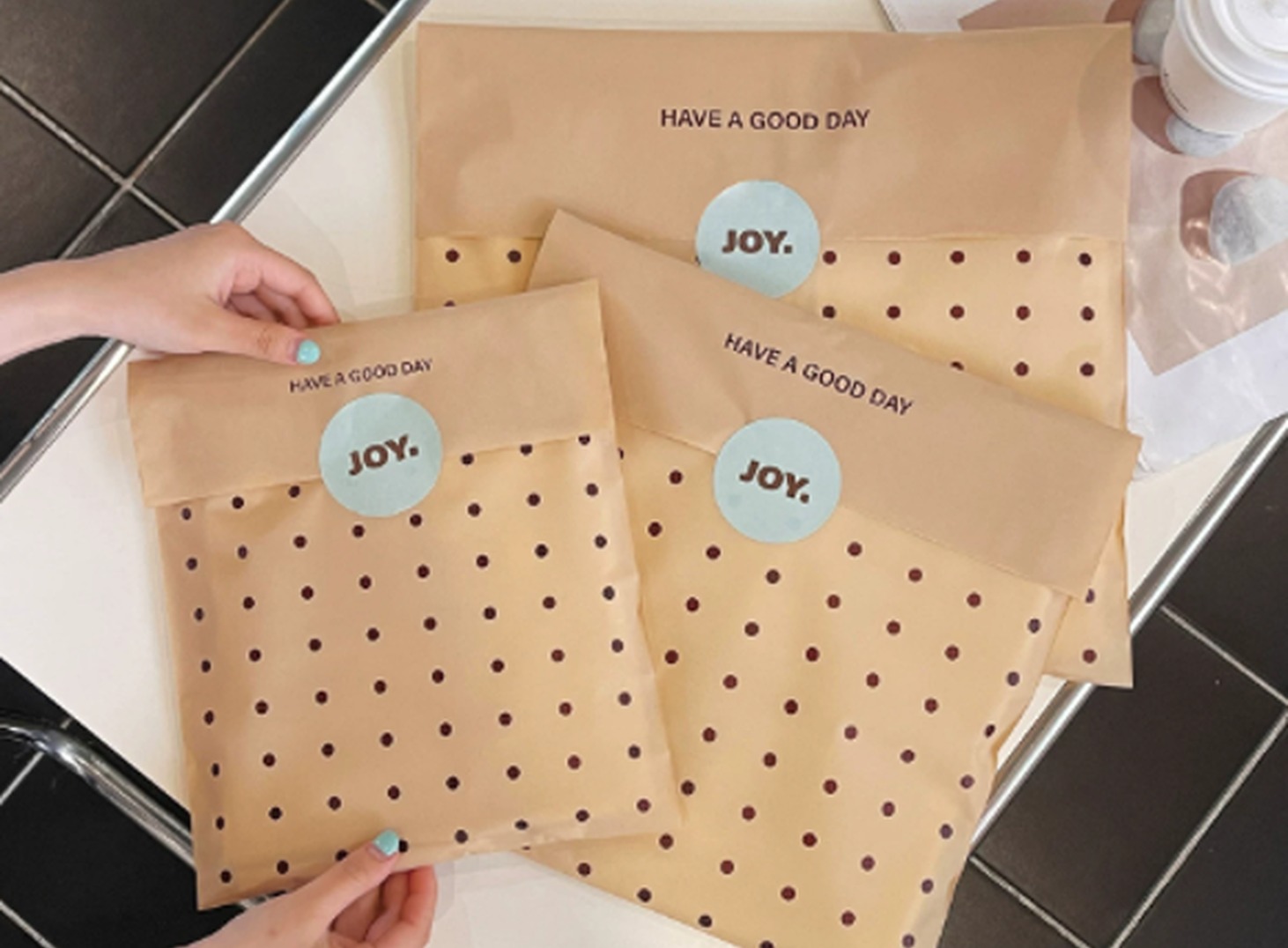
Packaging
Confirm how each SKU is folded, bagged, labeled and packed before shipment.
- Individual polybag options
- Barcode and carton marks
- Retail or e-commerce packing needs
Need a specific process?
Send the target product type, artwork, fabric direction and quantity for review.
Inside the Apparel Production Workflow
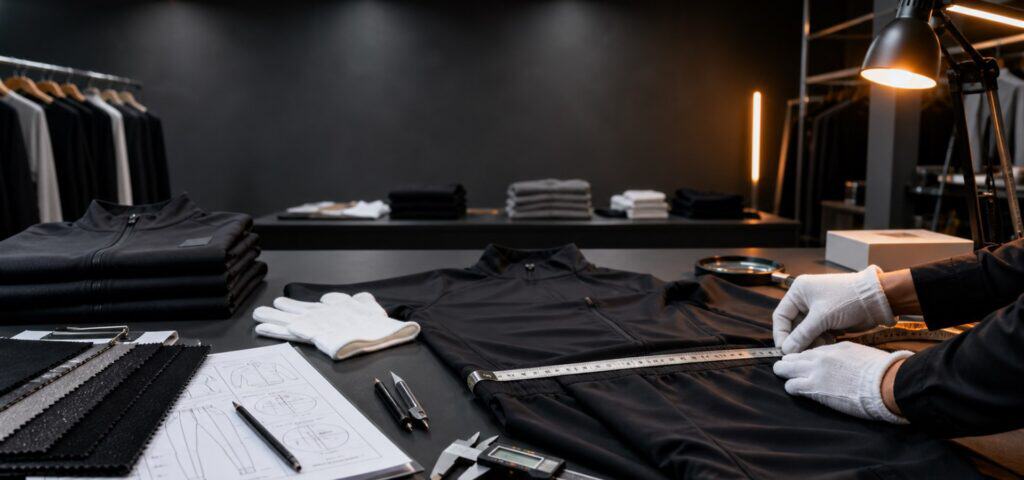
The following images are AI-generated process illustrations used to explain common apparel workflow stages. They are not presented as photographs of DETOSUN facilities.
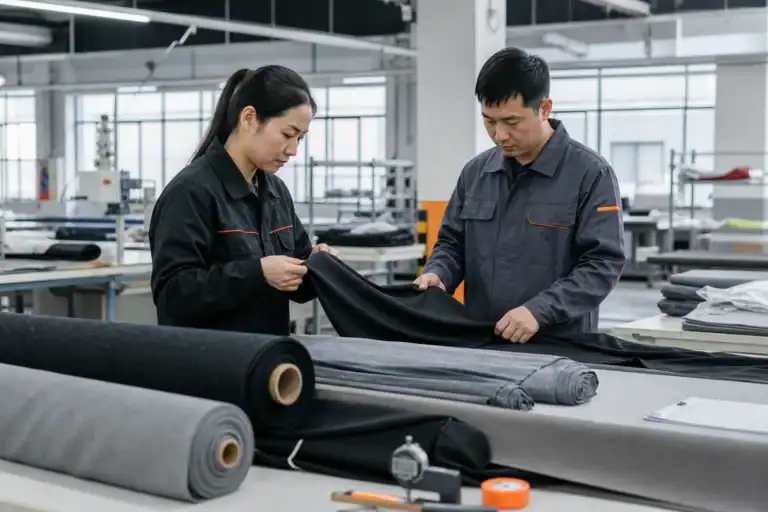
Fabric & Material Inspection
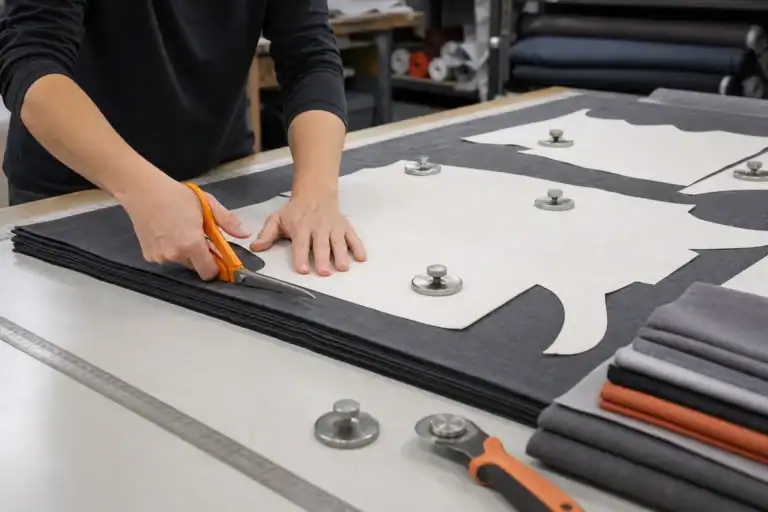
Illustrative view of fabric weight, color and material checks before cutting.
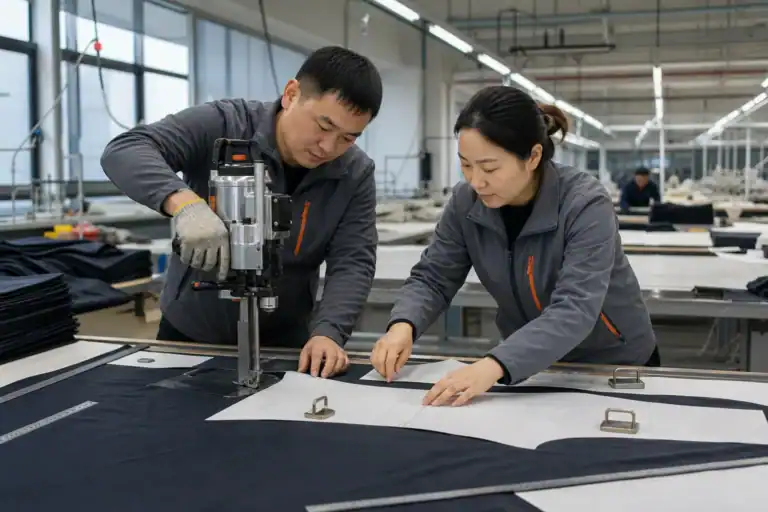
Pattern Placement & Cutting
Illustrative view of pattern alignment and controlled garment-panel cutting.
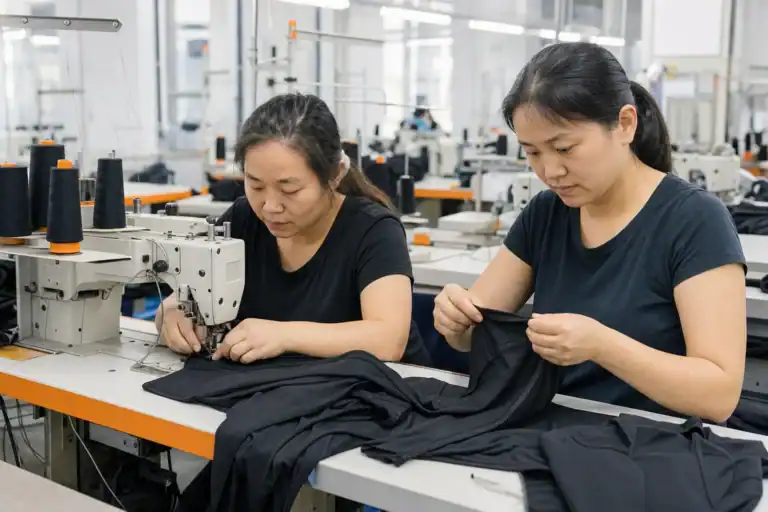
Industrial Sewing
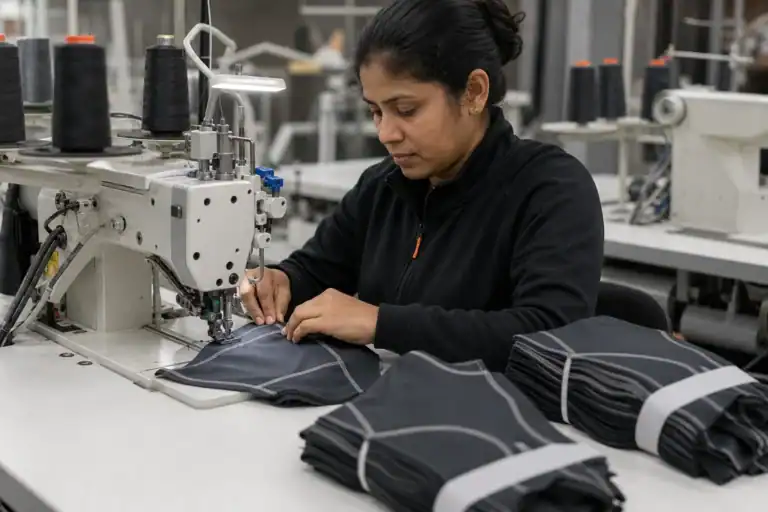
Illustrative view of seam construction and panel alignment for stretch garments.
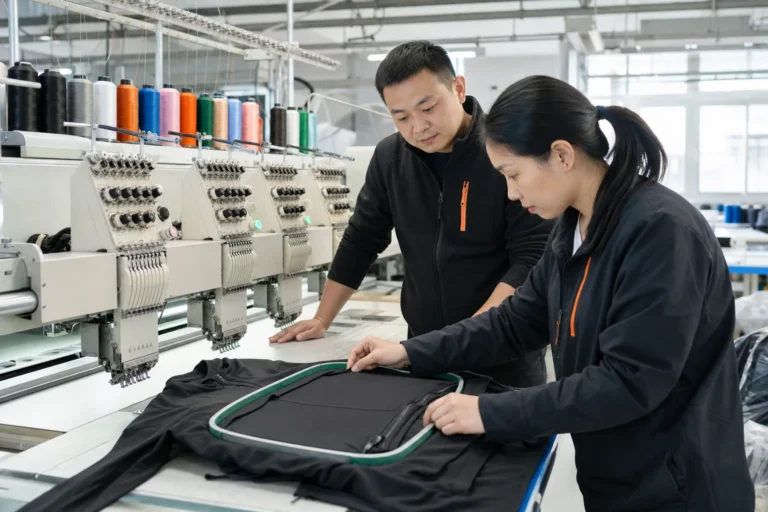
Decoration Setup
Illustrative view of embroidery placement and thread setup before decoration.
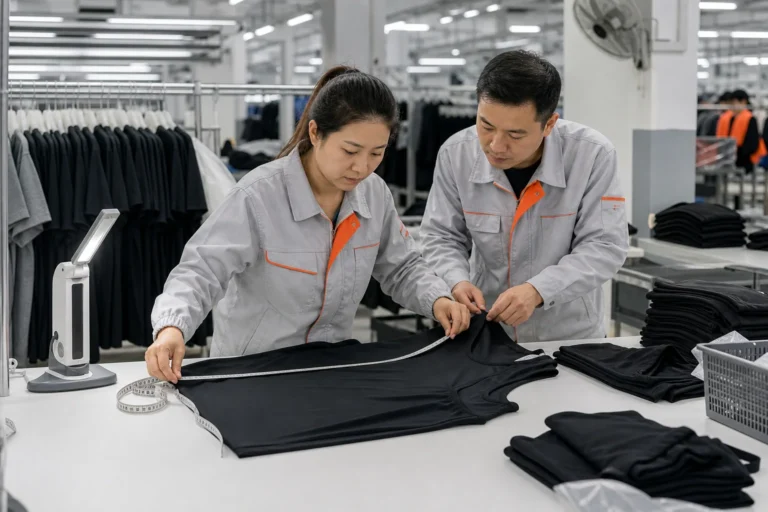
Final Garment QC
Illustrative view of measurement, seam and finishing checks before packing.
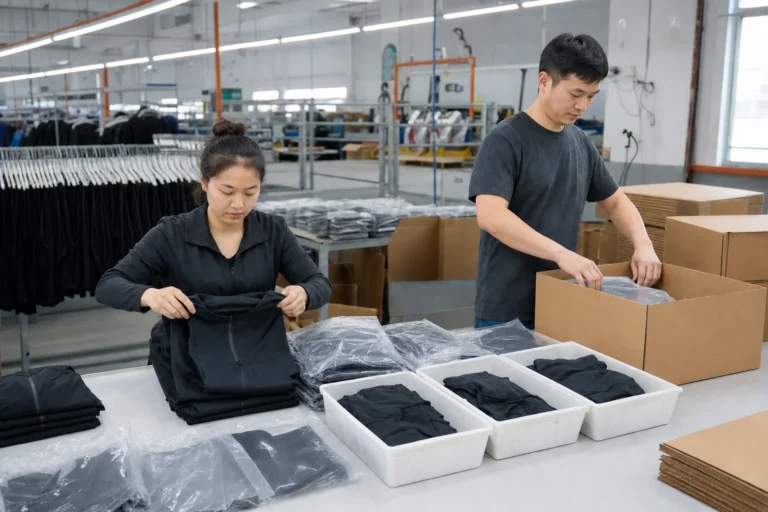
Folding & Packing
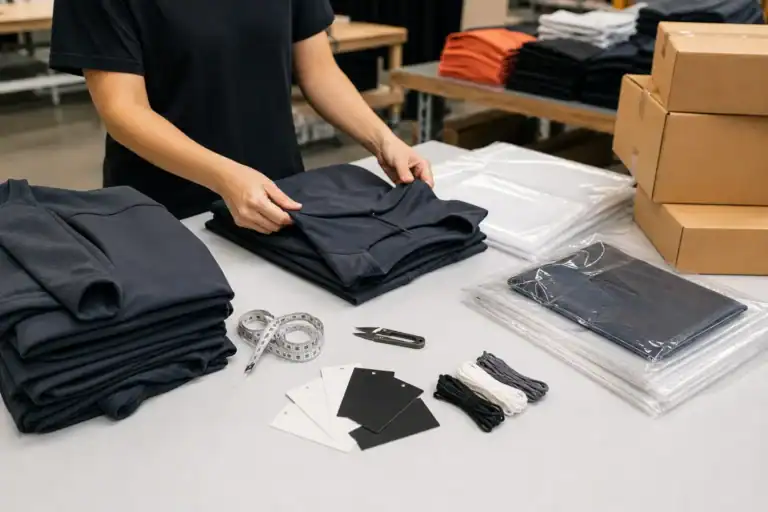
Illustrative view of final folding, bagging and carton preparation.
Production Planning Without Unverified Capacity Claims
Order Quantity
Schedule Window
Capacity Data
Risk Notes
QC Built Into Bulk Production
Incoming Check
In-Line Check
Final Check
What to Send Before Bulk Production Starts
Approved Sample Record
Tech Pack and BOM
SKU and Packing List
QC and Inspection Rules
Production Readiness Checklist Before Cutting
PP Sample Approval
Bill of Materials Lock
Size and Color Breakdown
QC Acceptance Standard
Production Risk Control by Stage
MAT
Material Risk
CUT
Cutting Risk
SEW
Sewing Risk
DEC
Decoration Risk
PKG
Packing Risk
Buyer Communication During Bulk Production
Before Production Starts
During Production
Before Shipment
Decoration, Washing and Finishing Control
Printing Control
Embroidery Control
Wash and Finish Control
Label Control
Documents Buyers Can Ask for During Production
Production File
Material Record
QC Record
Packing Record
Shipment Handover
Verified Factory Data
Production Planning Matrix for Buyer Review
Order Structure
Material Status
Process Complexity
QC Level
Packaging Needs
Delivery Plan
BULK PRODUCTION ROUTE
Plan Apparel Manufacturing Around an Approved Specification
For B2B buyers, apparel manufacturing and garment manufacturing are controlled handovers from an approved sample to finished goods. Start with the measurement chart, material and trim record, artwork version, SKU breakdown, quality standard and packing instructions. If the reference sample still needs revisions, review the sampling stage before asking for bulk production.
When comparing an apparel manufacturing company, a private label clothing manufacturer or a cut and sew manufacturer, ask how the supplier records pattern, fabric, decoration, labels and packing decisions. A written production file makes it easier to compare tech pack customization notes with the physical sample.
Review the documented scope of apparel manufacturing companies, full service clothing manufacturers and garment production companies before assigning a purchase order. Confirm which steps are included in the project brief and which inputs remain buyer-supplied; do not rely on a generic factory-size or capacity statement.
Match the Quote Request to the Production Route
When you are ready to contact a production partner, include style category, approved sample, tech pack or BOM, size and color breakdown, estimated quantity, artwork, decoration method, inspection rules and packing requirements. Buyers comparing private label apparel manufacturers or cut and sew manufacturers can use the same checklist for quotation review and production release. This gives procurement teams a common record when shortlisting clothing manufacturing companies.
A custom clothing production brief can state whether the requirement is small batch apparel manufacturing, full package apparel manufacturing or cut and sew apparel manufacturing. These labels describe the route to evaluate; exact feasibility, MOQ, pricing and schedule still require project-specific confirmation.
For apparel manufacturing process planning, map incoming materials, cutting, sewing, decoration, inspection and packing. Bulk manufacturing clothing often needs SKU-level quantity and packaging data, while garment mass production adds coordination for size ratios, repeatable workmanship and shipment handover. Use the existing quality-control review and delivery-support pages when those topics need a separate owner.
What is apparel manufacturing? In a buyer context, it is the controlled conversion of an approved specification into finished garments. What is a cut and sew manufacturer? It is a supplier that cuts fabric panels and assembles them to a pattern and construction brief; confirm the exact scope before ordering.
Production FAQ
Bulk production should start after sample approval, material and trim confirmation, artwork approval, order quantity confirmation, payment terms and production schedule review.
For Production, production planning should begin from an approved specification, confirmed quantities by SKU, material and trim availability, packing rules and the required delivery window. Ask for separate timing for sampling, material preparation, bulk manufacturing, inspection and transit. Any estimate should be reconfirmed after design or quantity changes.
A rough direction can be discussed, but final MOQ and lead time should be confirmed after reviewing garment type, fabric source, decoration method, quantity, packing requirements and season schedule.
Use the Production sample as an approval gate rather than only a visual reference. Review measurements and tolerance, fit on the intended body or size form, fabric and color, construction, decoration, trims, labels and packing. Consolidate comments into one dated list and record every accepted change before costing confirmation or bulk production.
QC can include incoming material checks, in-line workmanship review and final inspection. AQL level, sample size, defect list and reporting format should be confirmed per order.
Quality control works best when the approved sample, measurement chart, color and artwork references and packing specification are available at each checkpoint. For Production, confirm incoming-material checks, in-line review, final inspection scope, defect classification and escalation contacts. An inspection report should identify the order, SKU, quantity checked, findings and disposition.
Packing requirements such as barcode labels, size stickers, SKU sorting, polybags, carton marks and packing list format can be reviewed before production release.
Packing and logistics requirements affect costing, production release and receiving accuracy. Define the trade term, destination, shipment method, SKU sorting, labels, polybags, carton quantities, marks and required commercial or warehouse documents for Production. Buyer-supplied compliance text and barcodes should be approved before printing, and final carton data should match the packing list.
Add verified factory area, line count, current monthly capacity, peak-season lead time and confirmed MOQ only after the client provides current operational data.
The most useful next step for Production is a documented review of what is approved, what is still optional and what evidence is missing. Combine the technical brief with commercial requirements such as quantity, price direction, destination and launch timing, then use the same record for quotation, sampling, production and quality checks.