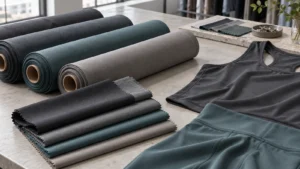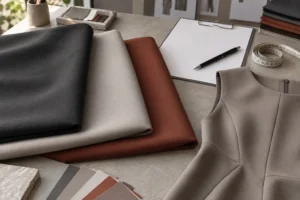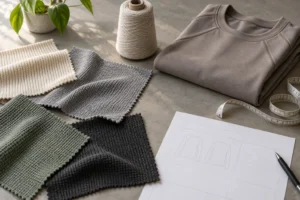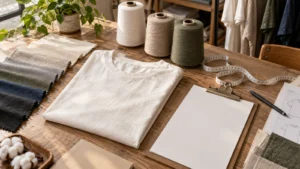
For most activewear, polyester-elastane or nylon-elastane blends work best. The right choice depends on garment, sweat level, stretch, hand feel, printing, and target price.
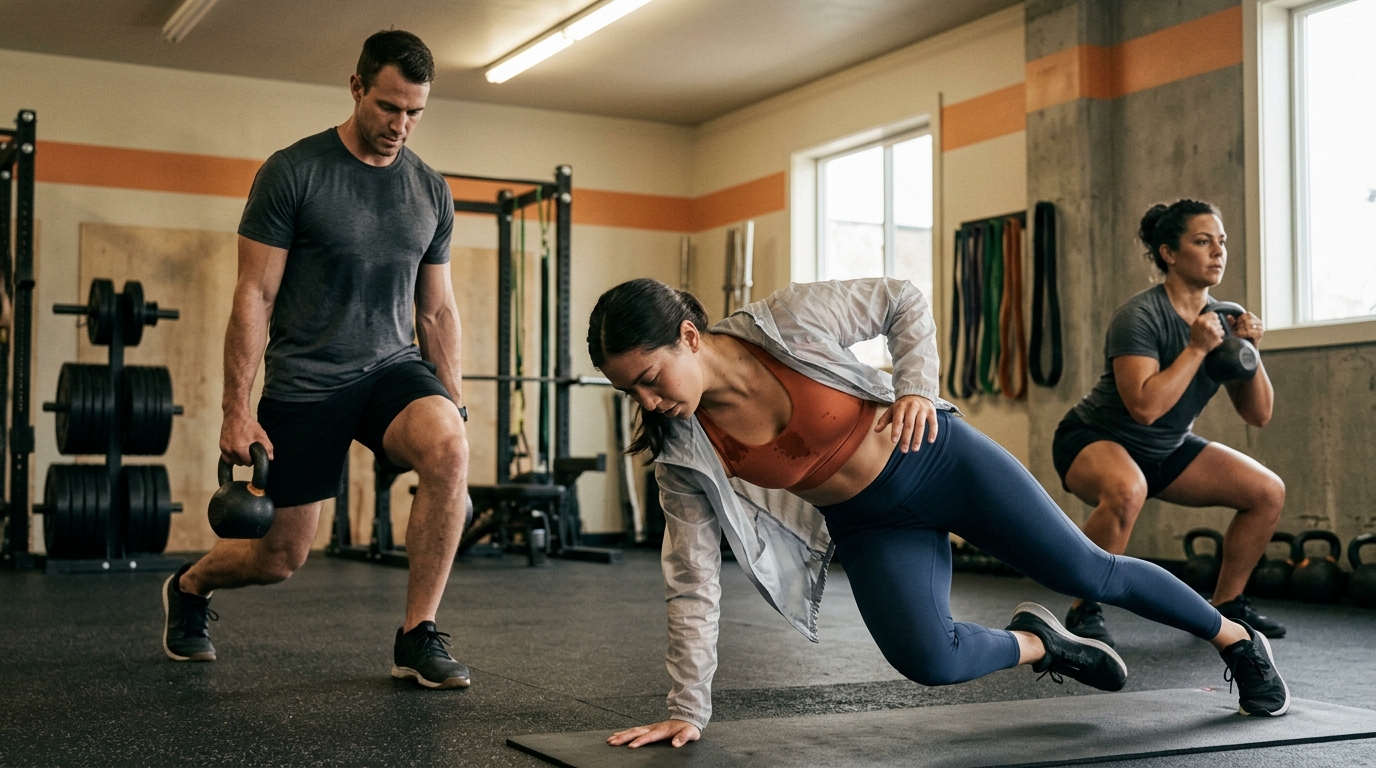
The best fabric for activewear is not one fiber with a magic set of properties. A running top, a squat-proof legging, a relaxed jogger and a cold-weather base layer ask the fabric to do different jobs. Even two fabrics with the same 80/20 fiber label can behave differently because their yarn, knit, weight, dyeing and finish are different.
That distinction matters when you are building a product line. A brand buyer does not need a longer list of fiber names. You need a usable specification: composition, fabric construction, weight, stretch direction, recovery, finish, color method, testing plan and target cost. Those details decide whether a sample feels deliberate or like a generic blank.
This guide explains how to choose the best fabric for activewear at product level. It also covers the checks that should happen before bulk cutting, because a good hand feel in a small swatch does not prove that the finished garment will recover, stay opaque or keep its color after washing.
What makes a fabric work for activewear?
A useful activewear fabric must manage sweat, move without permanent distortion, tolerate friction and washing, and feel appropriate for the intended activity.
Fiber content is only the starting point. The finished fabric has to perform as a system. Yarn shape affects capillary movement. Knit density affects airflow and coverage. Elastane percentage affects stretch, but construction and heat history affect recovery. A surface finish can improve the first wear and fade after repeated laundering if the underlying structure is weak.
Moisture movement is not the same as absorbency
Cotton absorbs liquid into the fiber. That can feel comfortable at rest, but a saturated cotton shirt becomes heavier and dries slowly. Polyester absorbs little moisture into the fiber itself, yet a well-engineered polyester knit can move liquid along yarn and fabric channels to increase the evaporation area.
That is why the phrase “moisture wicking” needs a test method behind it. The AATCC TM195 method for liquid moisture management evaluates water resistance, repellency, absorption and transport across knitted, woven and nonwoven fabrics. It also states that fabric geometry and internal structure influence the result. In other words, a polyester label alone does not prove wicking.
A practical sample check is simple. Place equal drops of water on the face and back of two swatches, then watch the spreading direction and time. This is not a replacement for a laboratory report, but it quickly reveals whether a supplier’s “quick dry” swatch behaves differently from an untreated control. If both drops sit in the same tight bead for several minutes, the claim needs a closer look.
When comparing the best fabric for activewear, ask how moisture performance was measured and whether the tested fabric matches the proposed bulk quality.
Stretch must return, not merely extend
Four-way stretch means the fabric extends across both length and width. It does not automatically mean good recovery. A legging fabric can stretch easily in the hand and still bag at the knee after an hour because the elastane, knit stability or heat setting is inadequate.
For fitted activewear, record both stretch and recovery. Mark a measured section, extend it to the agreed load or percentage, release it, then measure the residual growth after a set rest period. The buyer and supplier should agree on the method. Otherwise, one side may judge stretch by hand while the other reports a number from a different load and direction.
Elastane also changes sewing behavior. High-stretch fabrics can wave at seams, tunnel under coverstitching or recover unevenly around elastic insertion. Fabric approval and seam approval should happen together for sports bras, cycling shorts and compression garments.
The best fabric for activewear must recover in the finished garment, not just stretch impressively when someone pulls a loose swatch across a desk.
Durability is a combination of failures
Activewear is exposed to repeated rubbing from thighs, benches, backpacks, mats and hook-and-loop accessories. Abrasion is only one part of durability. Pilling, snagging, color change, print cracking, elastane degradation and seam growth can end the useful life sooner.
The ASTM D4966 Martindale abrasion method is widely used to compare textile abrasion resistance, but ASTM cautions that laboratory abrasion results should not be treated as a direct prediction of real wear life without a proven correlation. That warning is useful for buyers. A large cycle count can support comparison between similar fabrics, yet it does not replace wear trials in the intended garment.
Rub a dark and a light sample together after dampening one of them. Stretch printed areas several times. Sit, squat and kneel in the sample under strong side light. These small actions often expose color transfer, whitening, print fracture and opacity problems before a formal report arrives.
Durability is part of the best fabric for activewear decision because customers experience pilling, shine and bagging as product failures, regardless of the fiber label.
Comfort depends on the activity
Softness is not a universal quality score. A brushed fabric can feel luxurious for studio wear but retain more heat during intervals. A slick nylon face can reduce rubbing in leggings but look too shiny for a casual collection. A lightweight open knit improves ventilation yet may show sweat patterns or lose coverage.
The best fabric for activewear should therefore be judged against a product brief, not against an isolated swatch rack.
| Performance question | What to specify | Common failure to check |
|---|---|---|
| How will sweat leave the skin? | Wicking direction, drying target, mesh placement | Wet cling, slow drying, visible sweat map |
| How far must it stretch? | Length and width stretch plus recovery method | Knee bagging, rolling waist, seam waving |
| Where will it rub? | Abrasion and pilling requirement by end use | Fuzzing, shine, broken filaments |
| How much coverage is needed? | Weight, knit density, color and stretch opacity | See-through panels during movement |
| How often will it be washed? | Wash method, dimensional change and color requirement | Shrinkage, twisting, fading, odor retention |
Compare the main activewear fibers and blends
Polyester blends suit fast-drying value products, nylon blends suit softer premium pieces, and natural or cellulosic fibers fit lower-intensity uses with different care needs.
The fiber decision sets the broad performance range. The blend and construction decide where the fabric lands inside that range. When comparing quotes, ask suppliers to identify the generic fiber names and percentages rather than relying on a marketing name.
A useful best fabric for activewear comparison therefore evaluates the finished quality, not a generic list of polyester, nylon and cotton benefits.
Polyester and polyester-elastane
Polyester is the common workhorse for training tops, teamwear, shorts and many leggings. It dries quickly because the fiber absorbs relatively little water. It also accepts disperse dyes and works well with sublimation when the fabric and artwork are designed for that process.
The tradeoffs are hand feel and odor retention. Low-quality polyester can feel harsh or plastic. Hydrophobic fibers can retain oily soils from skin, so wash chemistry and fabric finish affect odor performance. An antimicrobial treatment should not be treated as permanent unless the supplier provides a supported claim and a wash-durability result.
A common starting point for a fitted top is polyester with roughly 5 to 12 percent elastane. Training tights may use about 15 to 25 percent elastane, depending on knit, weight and compression target. These are development ranges, not pass criteria. Two 75/25 fabrics can have very different power and recovery.
Polyester also gives brands a practical decoration option. Sublimation can create vivid all-over graphics without laying a thick film on the surface. It is most predictable on light-colored polyester. Dark grounds, blended fibers and high elastane content require testing because color, stretch and heat can change the result.
Nylon and nylon-elastane
Nylon often feels smoother and denser than comparable polyester. It is a strong choice for premium leggings, sports bras and fitted sets where hand feel and abrasion resistance matter. It can produce deep colors and a clean, slightly lustrous surface.
Nylon is not automatically cooler, more breathable or more durable in every construction. A dense nylon interlock can hold more heat than an open polyester jersey. Some nylon fabrics also show water marks or color variation more readily. Ask to see the chosen color on the actual quality, not just a generic lab dip card.
For a legging, a nylon-elastane blend around 75/25 or 80/20 is a common development starting point. The buyer should still evaluate stretch opacity, waistband rolling, seam recovery and pilling. A soft hand can distract from weak recovery during the first fitting.
Cotton and cotton blends
Cotton works well for pump covers, warm-up tops, relaxed gym T-shirts and low-intensity studio pieces. It feels familiar, prints well and does not have the slick surface some customers associate with performance synthetics.
For high-sweat sessions, 100 percent cotton can become wet and heavy. A cotton-polyester blend balances hand feel and drying speed, while a small elastane percentage can improve shape retention. The exact blend should reflect the product position. A heavyweight oversized tee may intentionally prioritize drape and opacity over rapid drying.
If the brand sells both lifestyle and performance items, do not force the same fabric story across the whole collection. A cotton-rich product can be the right answer for street-to-gym wear even when it is not the best fabric for activewear used in endurance training.
Merino, modal, lyocell and bamboo-derived viscose
Fine merino wool can regulate temperature and manage odor well in base layers. It is useful for hiking, travel and cooler conditions, but cost, abrasion resistance and care requirements need attention. A blend with synthetic fibers may improve durability while changing the natural-fiber positioning.
Modal and lyocell can create a soft, fluid hand for yoga tops, lounge pieces and low-impact apparel. Their drape can be an advantage in relaxed silhouettes and a weakness where compression or firm recovery is required.
“Bamboo” needs careful wording. The FTC’s business guidance on bamboo textiles states that rayon or viscose made from bamboo must be labeled with the correct generic fiber description unless the textile is made directly from actual bamboo fiber. The FTC also warns sellers to support antibacterial and environmental claims. A supplier’s hangtag mockup is not substantiation.
Elastane supports the main fiber
Elastane, also called spandex, supplies extension and recovery. It is normally blended with polyester, nylon, cotton or a cellulosic fiber. More elastane is not always better. A high percentage can increase compression and recovery, but it can also raise cost, complicate dyeing, reduce breathability in a dense construction and make heat-sensitive decoration more demanding.
Decide how much stretch and holding power the garment needs. A relaxed T-shirt may need none. A fitted tank might need a modest amount. A sports bra or cycling short needs a more controlled balance of power, recovery and comfort.
| Fiber or blend | Strongest use | Main caution | Typical product direction |
|---|---|---|---|
| Polyester | Fast drying, colorfast graphics, value | Odor retention and variable hand feel | Training tees, jerseys, shorts |
| Polyester-elastane | Movement plus accessible cost | Heat sensitivity and print testing | Fitted tops, leggings, teamwear |
| Nylon-elastane | Soft hand, abrasion resistance, premium feel | Heat retention in dense knits, color variation | Leggings, bras, cycling shorts |
| Cotton or cotton blend | Familiar touch, printability, casual styling | Water retention and slower drying | Pump covers, warm-ups, athleisure |
| Merino blend | Temperature and odor management | Cost, care and abrasion | Base layers, travel, outdoor wear |
| Modal or lyocell blend | Softness and drape | Lower holding power in relaxed structures | Yoga tops, lounge, light studio wear |
Match fabric to the activewear product
Choose fabric by garment function first, then adjust composition, weight and finish for the target customer, climate, price and decoration method.
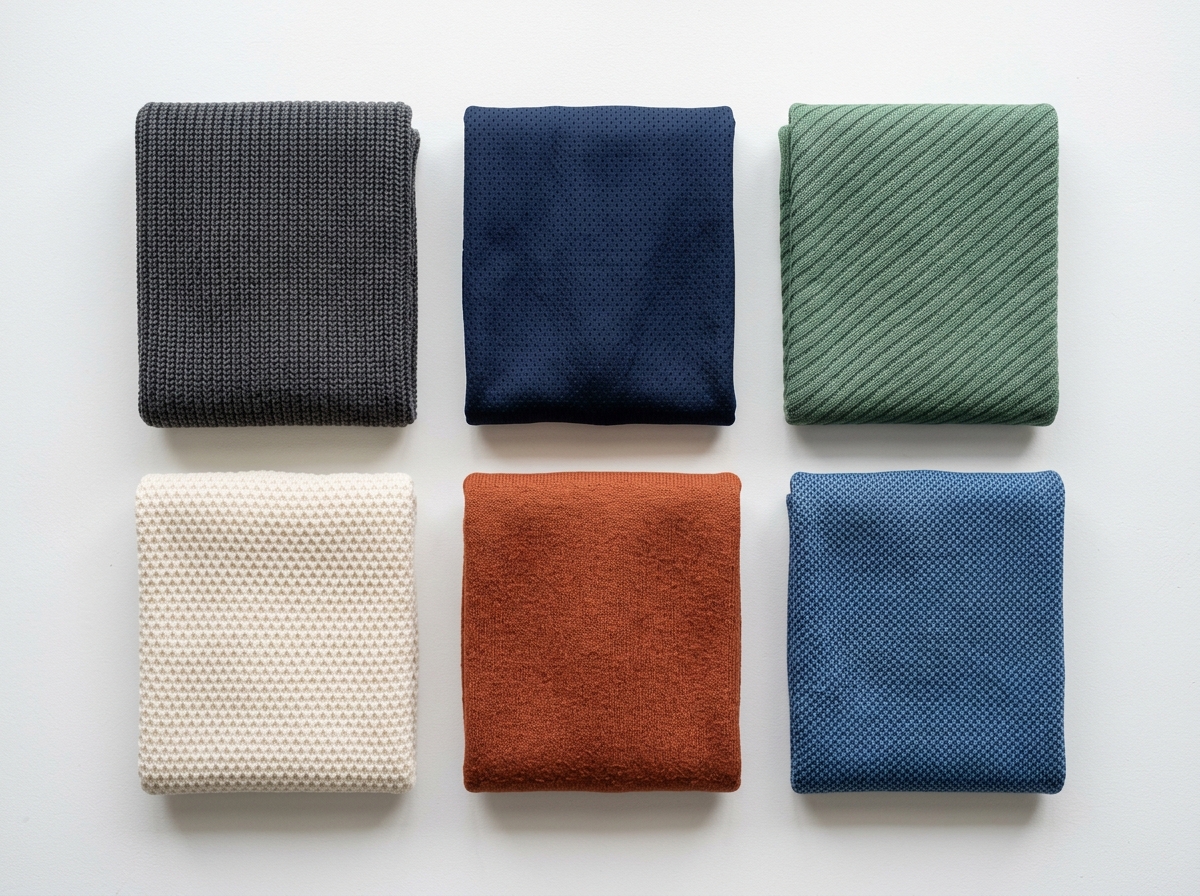
A fabric library becomes easier to manage when each quality has a job. Instead of keeping fifty near-duplicate swatches, build a short approved group for light tops, fitted bottoms, supportive products, relaxed layers and weather-facing pieces.
This product-first approach prevents the best fabric for activewear discussion from collapsing into one answer for every style in the collection.
Training T-shirts and tank tops
Lightweight polyester jersey is a reliable starting point for high-sweat training tops. A range around 120 to 180 GSM often gives enough coverage without excessive heat, though pale colors and open structures need an opacity check. Add elastane when the silhouette is fitted or the neckline and armholes require more recovery.
For a relaxed training top, mechanical stretch from the knit may be enough. Removing unnecessary elastane can simplify cost and recycling claims, but the pattern still needs enough movement. Test the sample by reaching overhead and across the body. If the hem lifts sharply or the shoulder binds, the problem may be pattern ease rather than fiber.
Cotton-rich tops belong in lower-intensity, bodybuilding and lifestyle ranges where customers want a substantial hand and relaxed silhouette. The custom T-shirt product direction can use a different fabric brief from a race shirt without confusing the brand, as long as the end use is clear.
A tank top exposes binding and armhole quality. Before approving a fabric for a custom tank top, sew the actual binding construction. A stable body fabric can still ripple when paired with binding that has different stretch and recovery.
Leggings and cycling shorts
Leggings demand more from the fabric than almost any other activewear product. The material must stretch deeply, recover, resist rubbing, cover under tension and support flat seams or bonded details. A common starting range is 220 to 300 GSM with 15 to 25 percent elastane, but the pass decision should come from the sample.
Perform the squat check in every color. Dark shades can hide openness that becomes obvious in pale or saturated colors. Print can also change coverage. Stretch the printed panel over a form and look for white grin-through between yarns.
Compression cannot be specified by GSM alone. A 250 GSM fabric with firm power may feel more supportive than a 290 GSM fabric with soft extension. Record the force and recovery method if compression is a sales feature. Otherwise, describe the fit as supportive or fitted rather than making a medical-style claim.
The waistband deserves its own review. Foldover construction doubles fabric layers and can increase heat. Encased elastic changes recovery. A curved waistband may gap if the fabric has too much easy stretch. Wear the sample through squats, seated work and a short walk instead of judging it only in front of a mirror.
Sports bras and fitted tops
Sports bras need controlled stretch, recovery, lining compatibility and moisture movement. The support level depends on pattern, elastic, cup or pad structure, seam placement and fabric power. Fiber content alone cannot establish low, medium or high support.
Test the shell and lining together. Two moisture-managing fabrics can create a slow-drying package when laminated, doubled or combined with thick foam. Removable pad pockets also need stable openings that do not curl after washing.
If the product uses bonded edges or heat-applied logos, confirm temperature and pressure on the exact color. Elastane and finishes can react to heat, and dark fabric can show press marks. Keep an approved panel with the production standard so the factory and buyer are comparing the same result.
Shorts and joggers
Running shorts may combine a lightweight woven shell, knit brief and mesh ventilation. Gym shorts often use a stretch knit with more body. The choice depends on whether the product needs airflow, pocket support, abrasion resistance or a clean lifestyle silhouette.
Joggers can range from light technical interlock to cotton-rich French terry. The custom jogger range should separate training joggers from recovery and travel styles. A phone in the pocket is an effective sample test. If the pocket bags drag the side seam or the fabric sags, the construction needs more support.
Brushed fleece needs a pilling and shedding check. Smooth technical knits need snag and shine checks at the seat and knee. Wash the full garment with its zippers, cords and transfers attached because trims can damage fabric in ways a loose swatch test will not show.
Outdoor and variable-weather pieces
Outdoor activewear may require wind resistance, water repellency, thermal insulation or UV-related performance. Those functions come from fabric structure, membranes, coatings and finishes, not from a generic polyester label.
Ask whether the performance is inherent or finish-dependent. If a water-repellent result comes from a surface treatment, define the test before and after the agreed number of washes. If UV protection is claimed, request the relevant report for the exact color and construction. Dark colors and dense fabrics often behave differently from light, open versions.
| Product | Practical starting point | Development checks | Decoration fit |
|---|---|---|---|
| Training tee | 120-180 GSM polyester or polyester-elastane jersey | Drying, odor, neckline recovery, sweat visibility | Sublimation, screen print, transfer |
| Legging | 220-300 GSM nylon-elastane or polyester-elastane | Squat opacity, recovery, pilling, waistband roll | Stretch transfer, tested screen print |
| Sports bra | Firm stretch knit with compatible lining | Support construction, seam comfort, drying | Small transfer, reflective detail |
| Running short | Light stretch woven or knit with mesh | Chafing, pocket load, snagging, wet cling | Transfer, sublimation on polyester |
| Jogger | Technical interlock or cotton-rich knit | Knee bagging, pocket sag, pilling, shrinkage | Embroidery, screen print, transfer |
| Base layer | Polyester blend or merino blend | Thermal comfort, odor, seam friction, care | Low-profile transfer or knit branding |
Composition is only half the specification
A production-ready fabric brief also defines weight, construction, stretch, finish, color process, usable width and tolerance, because composition alone cannot control performance.
An email that asks for “80/20 nylon spandex” invites a broad range of submissions. One supplier may send a dense double knit, another a light jersey and another a brushed quality. All can have the same fiber percentages. The buyer should describe the physical target as clearly as the composition.
Composition helps narrow the search for the best fabric for activewear, but construction, finish and measurable tolerances turn that choice into a production specification.
Use GSM as a control, not a quality score
GSM means grams per square meter. It is useful for controlling weight and comparing similar constructions. It does not tell you softness, compression, airflow or durability by itself.
For each quality, set a target and tolerance that the mill or factory can maintain. Confirm how and when weight is measured because moisture conditioning and finishing affect results. A sample that is slightly outside target may still perform well, but unexplained variation across rolls can create shade, cutting and fit problems.
Do not chase a heavier number to create a premium impression. Extra weight can make a garment hotter and slower to dry. Premium leggings often feel valuable because of surface quality, recovery, color depth and pattern engineering, not because they are the heaviest option in the room.
Name the knit or woven construction
Jersey is light and flexible. Interlock is generally more stable and offers better coverage. Rib provides visible texture and high stretch but may grow differently by direction. Mesh increases ventilation while reducing coverage. French terry and fleece suit warm-up and lifestyle layers.
Construction names can be used loosely in trading conversations, so keep a sealed or signed reference swatch. Include close-up photos with the tech pack if the project moves between teams. A written “interlock” description is less useful than a physical standard tied to an approved code.
Usable width also affects price. A lower cost per kilogram can become a higher garment cost if the usable width is narrow or the fabric has large edge defects. Ask for usable cuttable width, not only total roll width.
Specify stretch by direction and recovery
Write length stretch and width stretch separately. Include the method, load and rest period when the number matters. If the garment needs four-way movement, state that requirement and connect it to a sample action such as squat, lunge or overhead reach.
Recovery deserves its own limit. A fabric that extends 100 percent but returns poorly can create loose knees and a rolling waist. For ribbed styles, test growth after both movement and laundering because the textured structure may relax differently from a flat knit.
Finishes should solve a defined problem
Wicking, quick-dry, brushed, peached, cooling, antimicrobial and water-repellent finishes all sound useful. Each adds cost or process complexity. Start with the wearer problem and ask whether construction can solve it before adding a chemical finish.
If a finish is necessary, request its durability condition. “Passes wicking” on an unwashed swatch is a different claim from performance after repeated home laundering. Define the wash stage used for testing and keep the same method in development and production.
Match dyeing and decoration to the fiber
Polyester is well suited to sublimation, but the heat process can affect elastane-rich fabrics and can reveal migration problems in dark grounds. Nylon needs dye and heat-transfer testing specific to the selected quality. Cotton accepts several print methods but can shrink or change hand after curing.
Embroidery adds concentrated weight and needle penetration. A light stretch jersey may need backing, reduced stitch density or a smaller design. The site’s advanced apparel techniques overview is a useful commercial next step, but the decoration should still be tested on the exact fabric quality before bulk approval.
Do not approve fabric and artwork in separate silos. The finished decorated panel is the meaningful standard.
How brand buyers should choose and test fabric
Start with the garment’s use case, shortlist two or three constructions, test them in finished samples, then lock a measurable standard before bulk cutting.
The fastest way to lose time is to request many swatches without a decision framework. A small, controlled shortlist gives the product team enough contrast to judge tradeoffs without turning development into a fabric catalog exercise.
Choosing the best fabric for activewear becomes faster when each candidate is judged against the same garment, price and testing brief.
Build the brief from the wearer backward
Write down the activity, intensity, climate, silhouette, coverage, expected retail position and decoration before asking for fabric. A useful brief for leggings might read:
- High-rise training legging for strength and studio sessions
- Matte surface with firm but comfortable recovery
- Full coverage in the lightest planned color during a deep squat
- Compatible with flat seams and a small heat-transfer logo
- Target weight and composition range to be confirmed after swatch review
- Wash, pilling, colorfastness and dimensional-change reports required before bulk approval
This gives a supplier something to solve. “Send your best activewear fabric” does not.
For brands planning a wider range, the sports, fitness and yoga brand page provides a natural place to move from education into a product discussion without forcing a generic sales pitch into the article.
Compare a small set under the same conditions
Select two or three candidates that represent meaningful tradeoffs: value polyester, premium nylon and perhaps a lower-impact option. Cut equal swatches. Condition them in the same room. Compare weight, thickness, stretch, recovery, touch, opacity and drying behavior.
Then sew simple panels or the actual garment. Loose swatches hide seam behavior. A fabric that looks opaque on the table may open at the seat. A soft brushed face may grab during cutting. A high-power knit may look excellent but feel restrictive at the waistband.
Write comments against sample codes, not colors or descriptions. “Black soft one” becomes useless when the next package arrives. Codes should follow the quality from swatch to fit sample, lab dip, pre-production sample and bulk report.
Test the failures that customers will notice
Laboratory plans should match the garment and selling claims. Common checks include fiber content, fabric weight, stretch and recovery, dimensional change, colorfastness to washing and rubbing, pilling, abrasion, bursting strength and moisture management.
The ISO 105-C06 laundering colorfastness standard explains that a single test can approximate one domestic or commercial laundering, while specified multiple tests can approximate up to five launderings under defined conditions. That does not mean five laboratory cycles predict the full product life. It does show why buyers should record the exact method instead of accepting “colorfastness passed” without conditions.
Pilling and abrasion results also need context. A polished number cannot rescue a poor end-use match. Set a benchmark using an approved fabric or a product that performs acceptably in the market, then compare the candidate under the same method.
The best fabric for activewear is the quality that passes the relevant product checks, not the quality with the longest list of unrelated laboratory results.
Run wear and wash trials on finished garments
Give samples to wearers who match the target user. Ask them to use the product for the intended activity and record heat, wet cling, chafing, waistband movement, pocket behavior, opacity and odor. A ten-minute fitting session rarely reveals these issues.
Wash the garments according to the proposed care label. Measure key points before and after washing. Check twisting, seam puckering, transfer edges, logo cracking and pad movement. Photograph samples under the same lighting.
One practical detail saves arguments: keep one approved sample unwashed and one approved sample washed to the agreed cycle. The pair shows both initial appearance and expected change. Seal and label them with date, sample code and approval status.
Lock the standard before bulk production
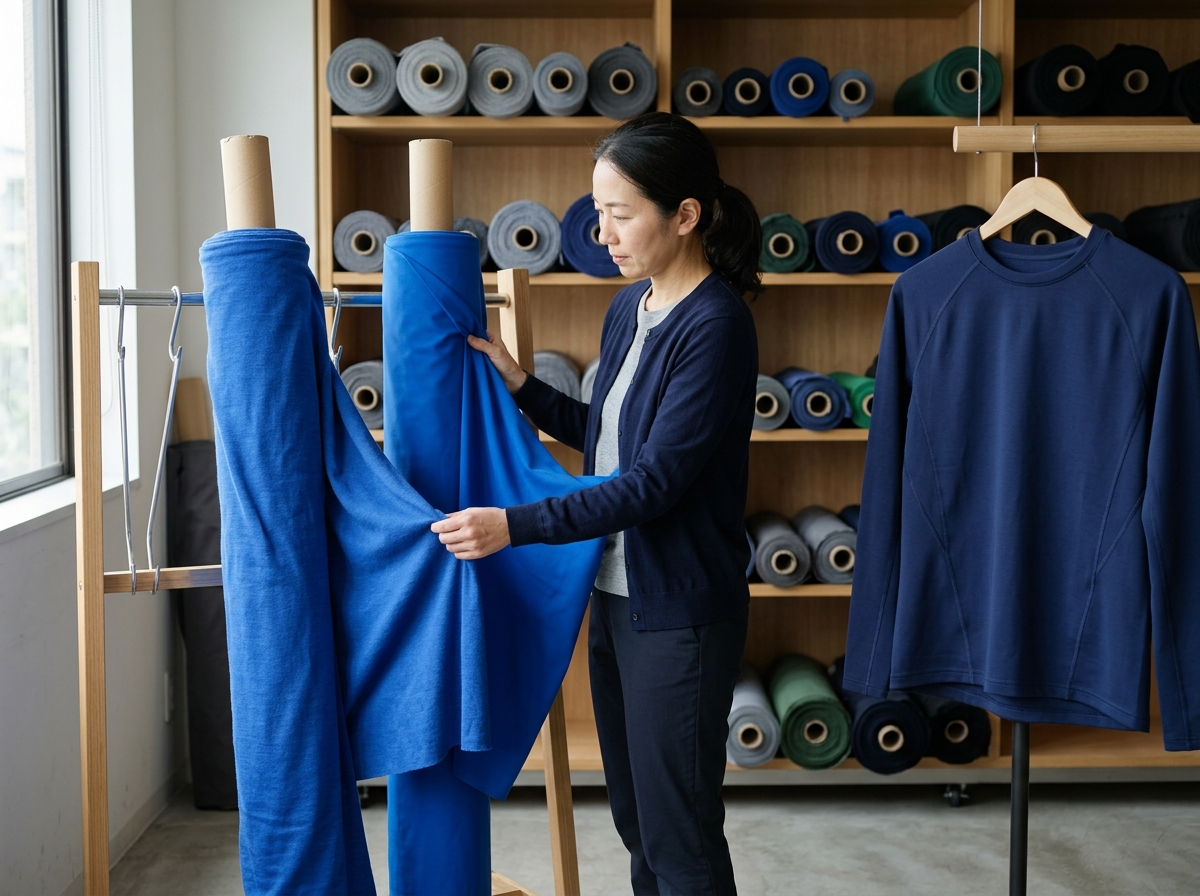
The final fabric approval should identify supplier code, composition, construction, target GSM and tolerance, usable width, stretch and recovery requirement, finish, color reference, test methods and accepted report values. Attach the approved swatch and decorated panel.
The sampling and prototyping process should be used to resolve fabric, pattern, seam and decoration together. If a material changes after the pre-production sample, recheck fit and performance rather than treating it as an invisible substitution.
During incoming inspection, compare roll shade, weight, width, hand feel and defects against the approved standard. Where the order or risk justifies it, use independent testing on production material. A pre-production report from a different lot is useful evidence but not proof that every delivered roll is identical.
Make sustainability claims you can support
Choose lower-impact materials with traceable documents, then describe only the attribute that the evidence proves instead of turning one feature into a broad environmental promise.
Recycled polyester can reduce reliance on virgin feedstock and may fit products already designed around polyester performance. It does not automatically prove lower total impact for every product, nor does it solve microfiber release, dyeing, finishing or end-of-life questions.
Sustainability can influence the best fabric for activewear choice, but the marketing claim must stay inside the boundary of the available evidence.
The Textile Exchange explanation of the Recycled Claim Standard says RCS verifies and tracks recycled raw material through the supply chain. It does not cover chemical use or broader social and environmental production criteria. Buyers should therefore state the supported claim precisely: verified recycled content or tracked recycled material, not a vague claim that the whole garment is environmentally friendly.
Ask which documents will be available for the exact order. Depending on the program, that may include a scope certificate, transaction certificate, composition report or supplier declaration. Do not place a certification logo in artwork until its use has been confirmed for the business, product and transaction.
Natural fibers also involve tradeoffs. Cotton absorbs moisture and may not suit high-sweat performance. Merino has useful temperature and odor behavior but costs more and needs careful sourcing and care. Cellulosic fibers can provide softness, yet the raw material source and manufacturing process matter.
Material selection should start with product longevity and real use. A durable item that customers wear often may be a better product decision than a weak fabric chosen for a fashionable claim. The evidence still needs to match the wording.
Activewear fabric trends for 2026 and beyond
The useful 2026 trends are better traceability, more product-specific material engineering, improved moisture testing and cautious development of lower-impact stretch systems.
Trend sections often turn into forecasts without decisions. Buyers need to know what to request now and what should remain in trial status.
In 2026, the best fabric for activewear brief increasingly includes traceability and claim documentation alongside stretch, hand feel and wash performance.
Traceability is moving closer to transaction level
Brands are asking for more than a fiber percentage on a hangtag. They want to connect claimed materials to certified suppliers, production lots and transaction records. This creates extra documentation work, but it also makes vague recycled claims harder to pass through the supply chain.
For a small brand, the practical move is to choose one or two traceable qualities and learn the document flow before applying the claim across a whole collection. Confirm minimum order, color limitations and certificate availability before the marketing team builds a launch around the material.
Fabric development is becoming product-specific
The market is moving away from one generic “performance” fabric for every garment. Brands increasingly distinguish a cool, dry training quality from a soft studio quality, a firm compression quality and a substantial lifestyle quality.
That makes fabric naming and internal standards more useful. A brand can assign clear roles to each approved quality and reduce random substitutions. The customer may never see the internal code, but they notice when a second production run feels different from the first.
Moisture claims are becoming easier to measure
Objective moisture testing continues to develop. This gives buyers better options than judging a marketing finish by touch. The test should still match the product question. A vertical wicking result, a drying-time result and a liquid-management classification describe related but different behavior.
Keep the claim narrow. “Tested for liquid moisture management using [method]” is defensible when the report matches the fabric. “Keeps every athlete dry” is not.
Lower-impact stretch remains a development problem
Elastane is difficult to separate in many blended fabrics, and high-performance alternatives are still developing. Some products can reduce elastane through knit engineering or use mechanical stretch. Others need the recovery and support that elastane supplies.
Do not remove stretch fiber simply to make a cleaner material story if the garment then bags, fails early or becomes uncomfortable. Trial alternatives against the same fit, wash and recovery requirements. Performance should be measured, not assumed from the feedstock description.
Frequently asked questions
The best answers depend on the garment and activity, but a few practical rules help buyers narrow the fabric choice quickly.
There is no universal best fabric for activewear, so each answer below connects the fiber choice to a specific product requirement.
What material do professional athletes wear?
Professional athletes wear product-specific blends, most often polyester or nylon combined with elastane where stretch and close fit are required.
A match jersey, running singlet, compression tight and recovery hoodie use different materials. Teamwear often favors lightweight polyester because it dries quickly and accepts sublimated graphics. Compression products use stretch blends. Outdoor athletes may add merino or membrane-based layers for temperature and weather.
The practical bottom line: specify the sport, garment and climate before copying a material from a professional uniform.
Is cotton or Dri-FIT better for the gym?
A Dri-FIT type polyester fabric usually suits high-sweat training, while cotton suits relaxed lifting, warm-ups and customers who prefer a natural hand.
Dri-FIT is a branded performance system, not a generic fiber name. Comparable products can use different polyester yarns, structures and finishes. Cotton absorbs more moisture and dries more slowly, but some gym users prefer its feel and heavier drape.
The practical bottom line: choose polyester for sweat movement and cotton or cotton blends when touch and casual styling matter more than drying speed.
Is nylon or polyester better for activewear?
Nylon often wins on softness and premium hand feel, while polyester often wins on drying, sublimation compatibility and accessible cost.
Leggings and sports bras commonly use nylon-elastane when the brand wants a smooth, dense touch. Training tops, teamwear and printed shorts often use polyester. Construction can reverse expectations, so compare actual swatches rather than choosing from fiber reputation.
The practical bottom line: shortlist both when the product can support either, then approve through garment testing and costing.
How much spandex should activewear contain?
Relaxed tops may need zero to 8 percent elastane, while fitted leggings and bras often start around 15 to 25 percent.
Those percentages are development ranges. Knit structure, yarn size, heat setting and fabric weight change the result. More elastane can increase recovery and compression, but it can also affect cost, heat response and breathability.
The practical bottom line: specify stretch and recovery performance instead of treating the elastane percentage as the final requirement.
What GSM is best for leggings and gym shirts?
Gym shirts often start around 120 to 180 GSM, while leggings often start around 220 to 300 GSM, subject to construction and coverage.
Light colors may require more density than dark colors. A firm 240 GSM interlock can cover better than a loose 280 GSM jersey. GSM also affects heat, drape and drying time.
The practical bottom line: use GSM to control an approved construction, then check opacity, comfort and recovery on the finished sample.
What fabric tests should buyers request before bulk production?
Request tests that match the product risk: composition, weight, stretch, recovery, shrinkage, colorfastness, pilling, abrasion and moisture management where claimed.
Sports bras may need additional support and elastic checks. Leggings need stretch opacity and seam recovery. Printed products need color migration, adhesion and cracking checks. Weather claims need the relevant water, wind or UV method.
The practical bottom line: attach test methods and acceptance criteria to the approved fabric code before production starts.
Do recycled activewear fabrics perform like virgin materials?
Recycled fabrics can meet the same product targets, but each quality still needs testing for hand feel, strength, color, stretch and consistency.
Recycled content describes feedstock, not guaranteed performance. Yarn source, processing, knit construction and finishing affect the finished fabric. Availability, color and document requirements can also change cost and minimum order.
The practical bottom line: test recycled and virgin candidates against the same product specification, then verify the recycled claim separately.
Turn the fabric choice into a production-ready brief
The right fabric decision ends with a measurable brief and an approved garment, not a fiber name copied from a competitor’s product page.
That is the working definition of the best fabric for activewear: a quality that fits the intended product and can be approved with repeatable evidence.
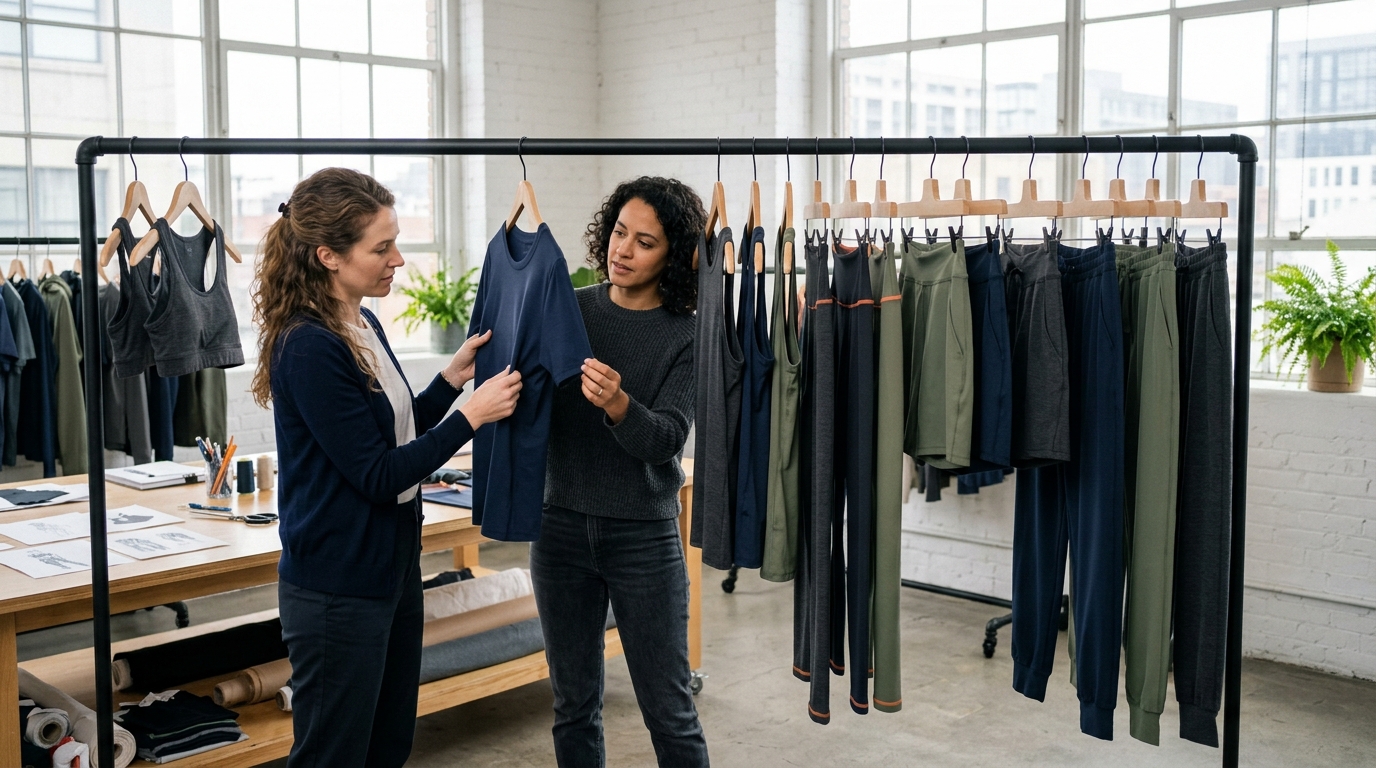
Start with the wearer and product. Define composition range, construction, target GSM, stretch, recovery, surface, finish, color method, decoration, usable width and testing needs. Compare a small shortlist, sew the actual sample, wash it, wear it and record the result against a stable code.
If exact capabilities, minimum order, lead time or certification availability have not been verified, leave them out of the product promise until the supplier confirms them for the chosen fabric and order. That keeps the brief useful and prevents the marketing copy from getting ahead of production.
For a fabric review, send the garment type, target use, reference image, preferred hand feel, expected price position, color plan and tech pack. The specific next step is simple: Send Your Fabric Brief and Tech Pack for Review.
Related Articles
These six pages connect fabric selection with product development, sampling and decoration choices on the same site.