
Delivery & Support
Delivery & Support
Keep the order controlled after production: packing confirmation, shipment handover, delivery documents, arrival feedback and reorder support. DTS Activewear helps buyers close the bulk order cleanly and keep the production file ready for the next drop or replenishment.
Delivery Planning Before Goods Leave the Factory
Packing Confirmation
Shipment Method Review
Trade Term Alignment
Shipping Handover Workflow
Final Packing Check
Document Preparation
Freight Handover
Arrival Feedback
Order Closeout and Reorder File
Packing and Warehouse Receiving Details
SKU Identification
Carton Rules
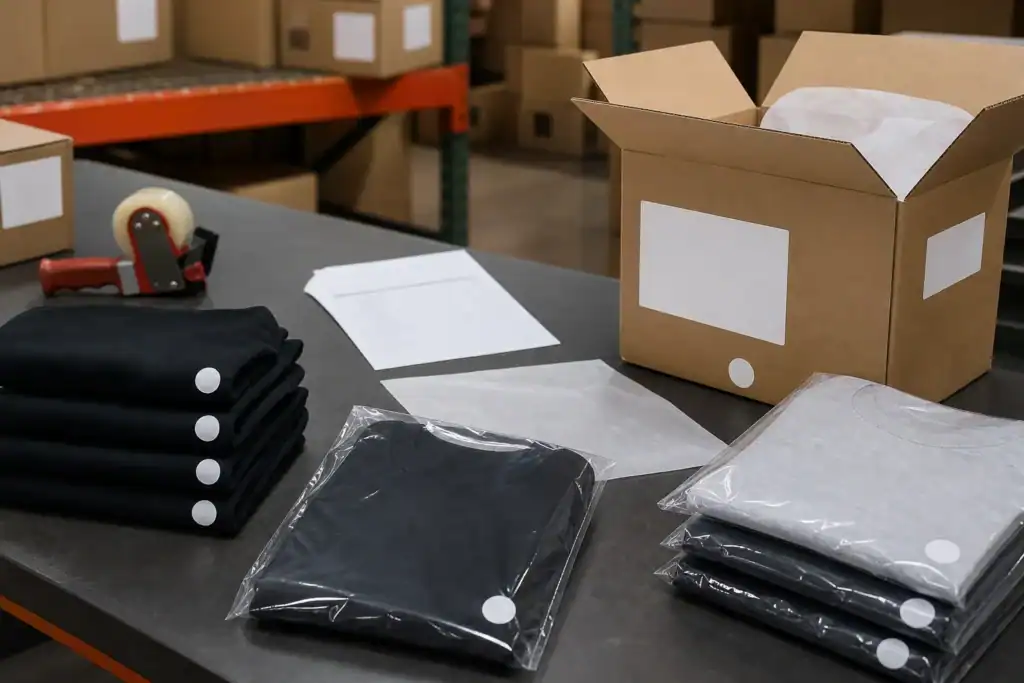
Polybag and Inner Pack
Warehouse Notes
Delivery Documents Buyers May Request
Packing List
Commercial Invoice
Carton Mark File
QC Release Notes
Freight Handover Record
Reorder Improvement Notes
Post-Delivery Support Without Overpromising
Receiving Feedback Review
Issue Evidence Collection
Cause and Prevention Notes
Reorder and Next Drop Support
Keep Approved Files
Review Sell-Through Feedback
Update Reorder Specs
Plan Timing Earlier

Shipping Support Matrix for Buyers

For Brand Launches

For E-Commerce Sellers

For Distributors
DELIVERY HANDOVER CHECKLIST
Plan Shipping Around the Apparel Order File
For a buyer, apparel logistics and apparel fulfillment begin with a documented handover, not an assumed carrier promise. Confirm what DTS is responsible for after production, which party books freight, and which destination and receiving details belong in the order file. The delivery-support scope and any third-party storage or fulfillment responsibility are confirmed per order.
Teams comparing clothing fulfillment or clothing fulfillment services should align the production file, packing rules, delivery window and receiving contact before release. When buyers compare apparel fulfillment companies or a custom apparel fulfillment route, ask each supplier to state whether it covers production handover, storage, pick-and-pack or only freight coordination. Scope, trade term and responsibility stay project-specific.
Clothing logistics planning works best when carton sequence, SKU and size labels, and warehouse notes are attached to the same approval record. If a brand is considering custom clothing packaging, define the bag or box format, artwork, barcode, inner-pack rule and carton mark in writing. Packaging decisions should be checked against destination requirements and the buyer’s own warehouse instructions.
Match Packaging, Documents and Shipping Questions
Buyers researching apparel packaging or packaging for apparel can use the packing checklist to specify fold method, polybag or inner-pack requirement, size sticker, barcode, carton mark and carton dimensions. For requests that mention apparel packaging bags or apparel shipping bags, add material, dimensions, closure, label placement, pack count and buyer warehouse limits to the brief. These terms describe a packing requirement to review; they do not by themselves confirm a product, material or environmental claim. Final availability and packing execution are confirmed per order.
An apparel supply chain file should preserve the approved sample, production comments, inspection notes, carton data and shipment reference. For an apparel industry supply chain, the useful checkpoint is a versioned handover record; supply chain management in apparel industry projects should also separate factory, forwarder and receiving responsibilities.
When documenting packaging clothing for shipping or packaging for clothing shipping, record the destination, trade term, carton sequence, gross and net weight, packing list and receiving appointment. A simple buyer checklist helps answer how to pack clothing for shipping without promising one method for every order.
For teams asking how to package clothing for shipping, start with SKU identification, approved labels, protective packing, carton marks and the receiving instructions supplied by the buyer. If the question is how to ship clothing, compare air, sea, courier or a buyer-nominated forwarder against the agreed deadline and documents; confirm cost and timing for the specific order.
Delivery & Support FAQ
Shipping support can be discussed per order. The final arrangement depends on trade term, destination, freight method, buyer forwarder, delivery deadline and document requirements.
For Delivery & Support, provide a packing guide that lists label artwork and position, care content supplied by the buyer, barcode format, size and color identifiers, folding method, polybag requirements, units per carton, carton marks and destination-warehouse rules. Confirm these details before production release so packing checks use the same SKU and document references.
Common files may include commercial invoice, packing list, carton data, carton marks, shipment reference and buyer-required supporting files. The exact document set should be confirmed before the shipment date.
For Delivery & Support, provide a packing guide that lists label artwork and position, care content supplied by the buyer, barcode format, size and color identifiers, folding method, polybag requirements, units per carton, carton marks and destination-warehouse rules. Confirm these details before production release so packing checks use the same SKU and document references.
Barcode labels, size stickers, SKU sorting, polybag rules, carton marks and packing list format can be reviewed before packing when the buyer provides warehouse requirements.
For Delivery & Support, provide a packing guide that lists label artwork and position, care content supplied by the buyer, barcode format, size and color identifiers, folding method, polybag requirements, units per carton, carton marks and destination-warehouse rules. Confirm these details before production release so packing checks use the same SKU and document references.
The buyer should provide photos, carton numbers, SKU details, quantity, size, color and receiving notes. DTS can help classify whether the issue relates to production, packing, logistics or receiving process.
For Delivery & Support, provide a packing guide that lists label artwork and position, care content supplied by the buyer, barcode format, size and color identifiers, folding method, polybag requirements, units per carton, carton marks and destination-warehouse rules. Confirm these details before production release so packing checks use the same SKU and document references.
After delivery, the order file can be updated with fit feedback, QC notes, packing feedback, SKU changes and material notes so the next production run starts with clearer information.
For a repeat Delivery & Support order, reference the approved sample and preserve the bill of materials, measurement chart, color standard, artwork, labels, packaging and SKU mapping from the previous run. Reconfirm fabric lot availability, shade, trims, quantities and delivery date because materials and schedules can change even when the style code is unchanged.