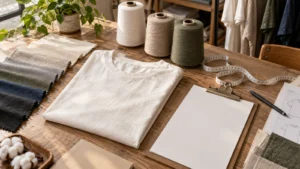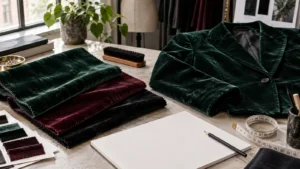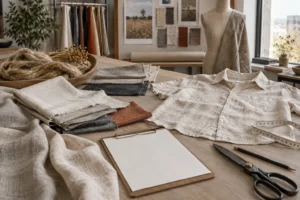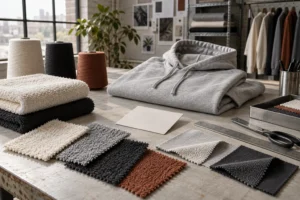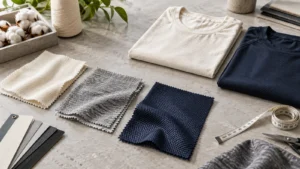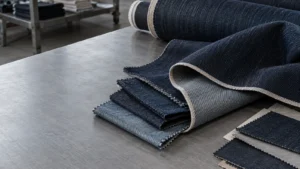
Modal fabric is a textile made with modal, a regenerated cellulosic fiber. The fiber name does not define one fixed fabric weight, knit, weave, blend, finish, or garment performance. For a buyer, the usable specification combines fiber content with construction, GSM, width, stretch and recovery, finish, care route, and finished-garment test results.
If a supplier quotes only "modal," the quote is incomplete. The same fiber can be knitted into a fluid jersey, a more stable interlock, a rib, or a blended construction. Those choices change drape, opacity, recovery, shrinkage, pilling, decoration, and the way the finished garment feels after washing.
What modal fabric is at the fiber level
Modal is a manufactured cellulosic fiber made by regenerating cellulose into a textile fiber. In plain language, the raw material may begin as cellulose, but the fiber used in the garment is created through a manufacturing process. That is why modal is not the same thing as an unprocessed natural fiber, even when a supplier describes its raw-material origin.
Modal identifies a fiber category. It does not tell you whether the final fabric is knitted or woven, light or heavy, brushed or smooth, single-fiber or blended, or suitable for a specific sport. ISO 2076 provides a framework for generic names for man-made fibers, and the FTC Textile Fiber Rule covers how fiber content is disclosed for covered products in the United States.
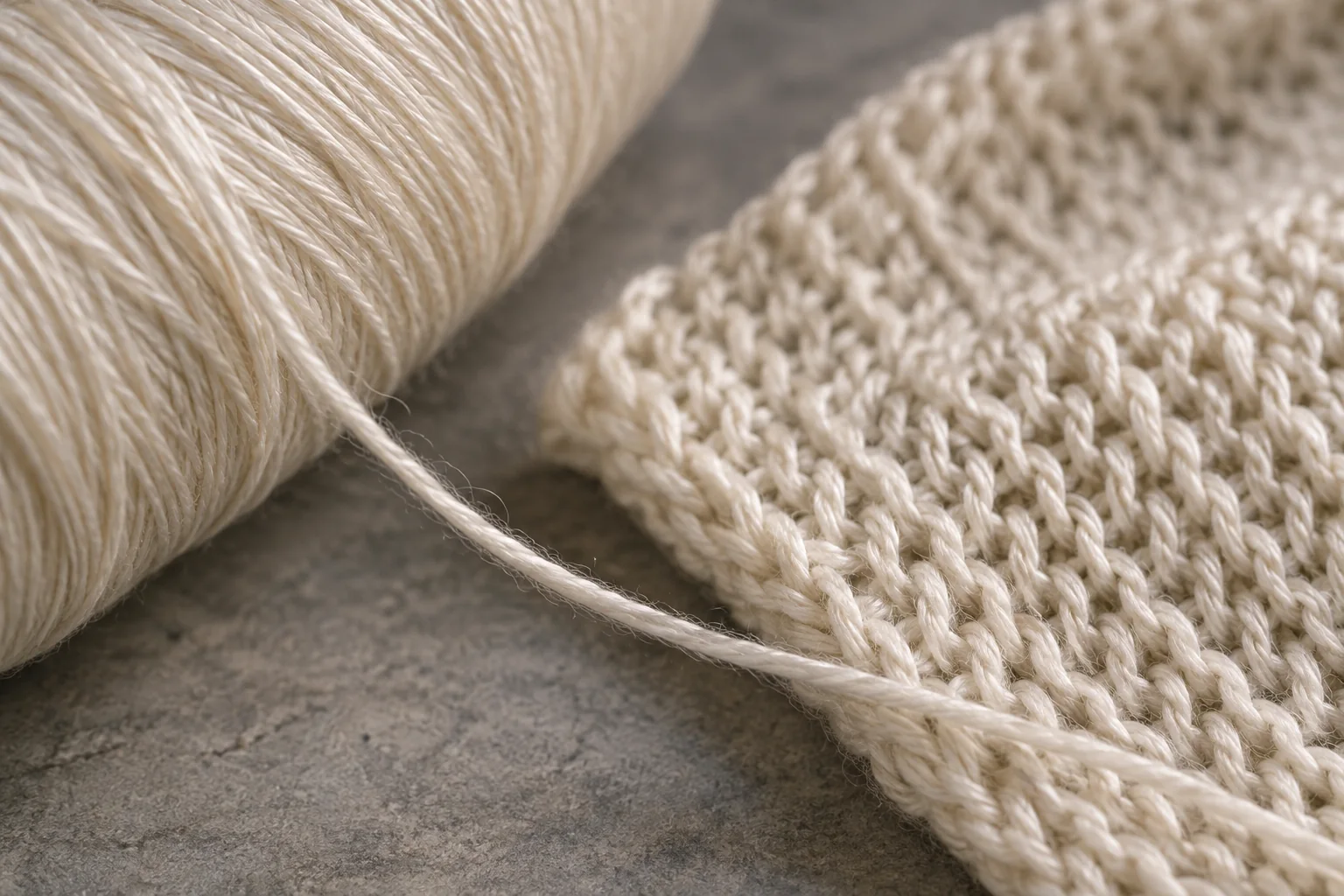
For product development, separate four layers in the specification:
- Fiber content: modal, cotton, elastane, polyester, or another confirmed component.
- Fabric construction: jersey, rib, interlock, woven, or another structure.
- Fabric parameters: GSM, usable width, thickness, stretch, recovery, and finish.
- Finished garment: pattern, seams, trims, decoration, wash route, fit, and actual use.
This separation prevents a common mistake. A buyer may approve a very soft modal swatch and then receive a garment that feels different because the blend, knit density, dyeing, finishing, pattern tension, or care route changed.
Modal, rayon, viscose, lyocell and TENCEL are not interchangeable labels
Modal is commonly discussed alongside rayon and viscose because they belong to the regenerated-cellulose family. That does not mean the names can be swapped freely on a label or product page. A fiber name describes a material category, while a trademark describes a branded product or program with its own documentation.
Use this naming map as a starting point, not as a substitute for supplier paperwork:
- Rayon is a broad family term used for regenerated cellulosic fibers in many markets.
- Viscose is a specific regenerated-cellulose route and a common generic name in textile labeling.
- Modal is a recognized generic name associated with a particular fiber category and performance direction.
- Lyocell is another regenerated-cellulose fiber category with its own process and label name.
- TENCEL is a Lenzing brand. TENCEL Modal refers to a branded modal fiber, not to all modal sold by every supplier.
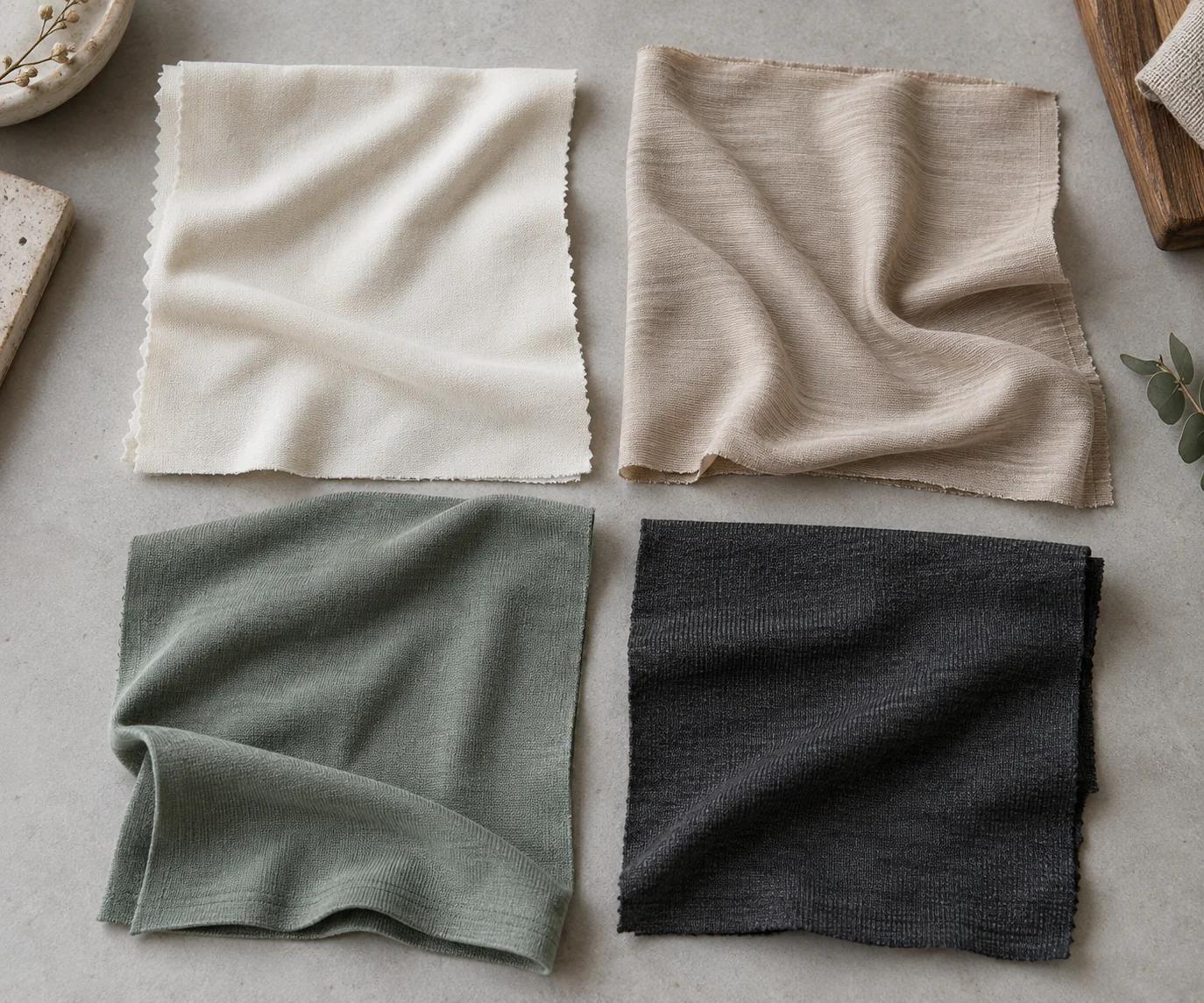
The FTC fiber guidance lists Modal among ISO names permitted for manufactured-fiber identification and explains that a trademark does not replace the generic fiber name. For a buyer, the safe workflow is simple: ask for the exact composition, the destination-market label wording, and the document that supports any branded or specialty claim.
What modal fabric feels like and what changes the result
Modal is often chosen for a smooth hand, soft next-to-skin feel, fluid drape, and a comfortable lightweight garment. Those are useful reasons to investigate it, but they are not guaranteed outcomes from the word modal alone.
Hand feel changes with:
- Yarn size and spinning quality.
- Knit or weave construction and loop density.
- GSM, width, thickness, and finishing route.
- Cotton, elastane, polyester, or other blend components.
- Dyeing, softening, brushing, calendaring, or other finishing work.
- Pattern tension, seam allowance, lining, and the pressure of trims.
- Washing, drying, steaming, and storage between sampling and production.
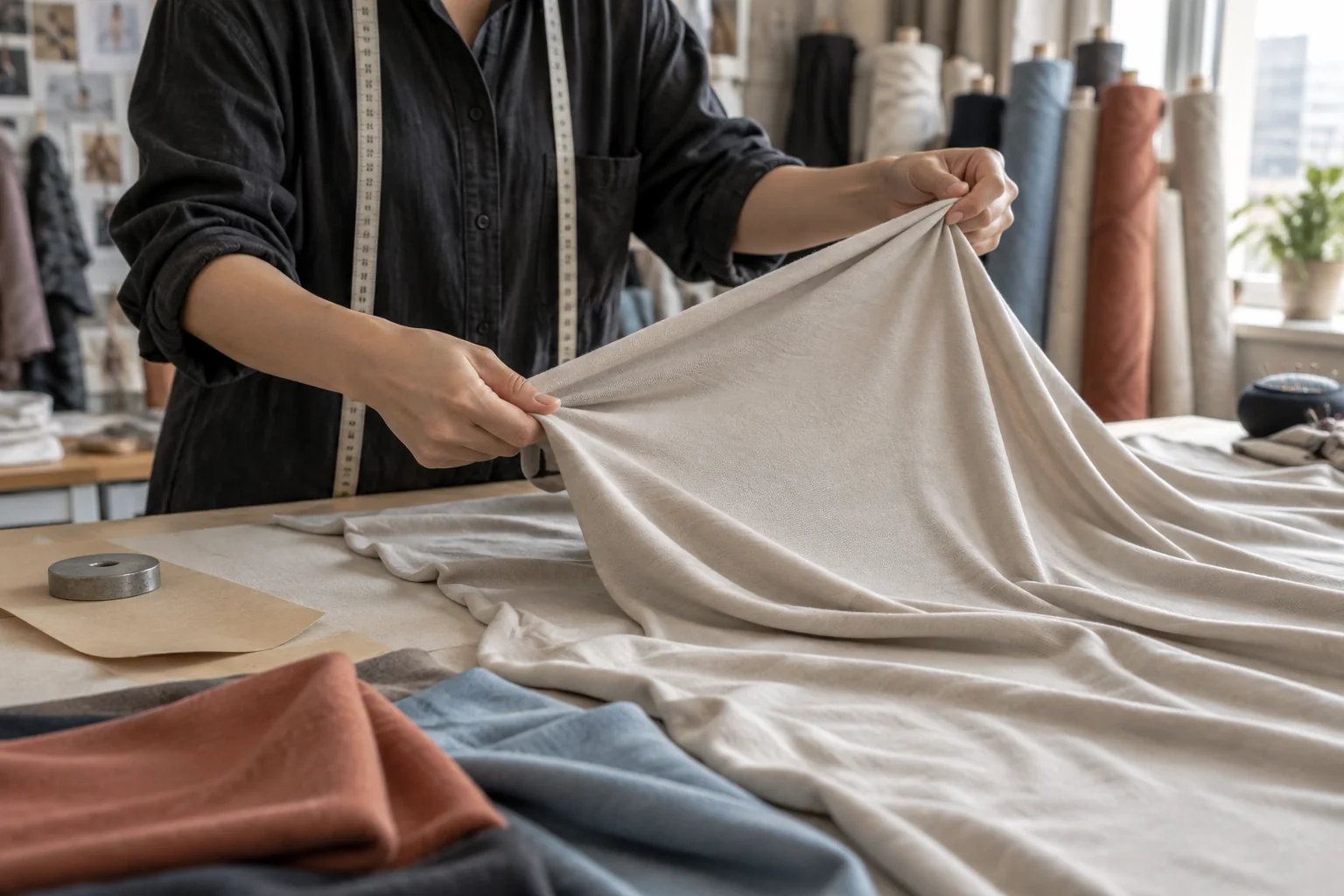
When reviewing a swatch, do more than rub the surface. Let it hang over an edge, stretch it across the direction of movement, release it, and compare the face and reverse. Record whether the fabric clings, rolls, grows, recovers, turns sheer under tension, or changes hand after a controlled wash.
Modal blends and construction choices
There is no single best modal blend. Choose the blend by the garment job and the failure the buyer needs to avoid.
Cotton-modal
Cotton-modal blends can combine a familiar cotton hand with modal softness and drape. Confirm the ratio, yarn construction, shrinkage allowance, color behavior, and wash instructions. A cotton-rich route may feel substantial but can behave differently from a lightweight modal jersey in drying and dimensional change.
Modal with elastane
Adding elastane can improve stretch and recovery for close-fitting tops, underwear, yoga pieces, and fitted panels. It also introduces a recovery and care question. Test the actual waistband, neckline, underarm, and hip areas rather than relying on a small swatch stretch test.
Modal with polyester
A polyester component may be selected to change strength, drying behavior, cost, or shape retention. The result still depends on the percentage, yarn arrangement, knit, finish, and garment pattern. It should not be described as moisture-wicking or quick-drying without a product-specific test.
Single-fiber modal
A single-fiber route may deliver a clear fiber story, but it does not remove construction or care risk. Check opacity, recovery, seam behavior, wash change, and decoration compatibility on the finished product.

Where modal works in apparel and where it is a poor fit
Modal is a strong candidate when the buyer values a soft next-to-skin hand, fluid drape, light layering, and comfort at rest or during low-to-moderate output. Common product directions include tees, underwear, base garments, loungewear, recovery pieces, lightweight yoga tops, and relaxed travel apparel.
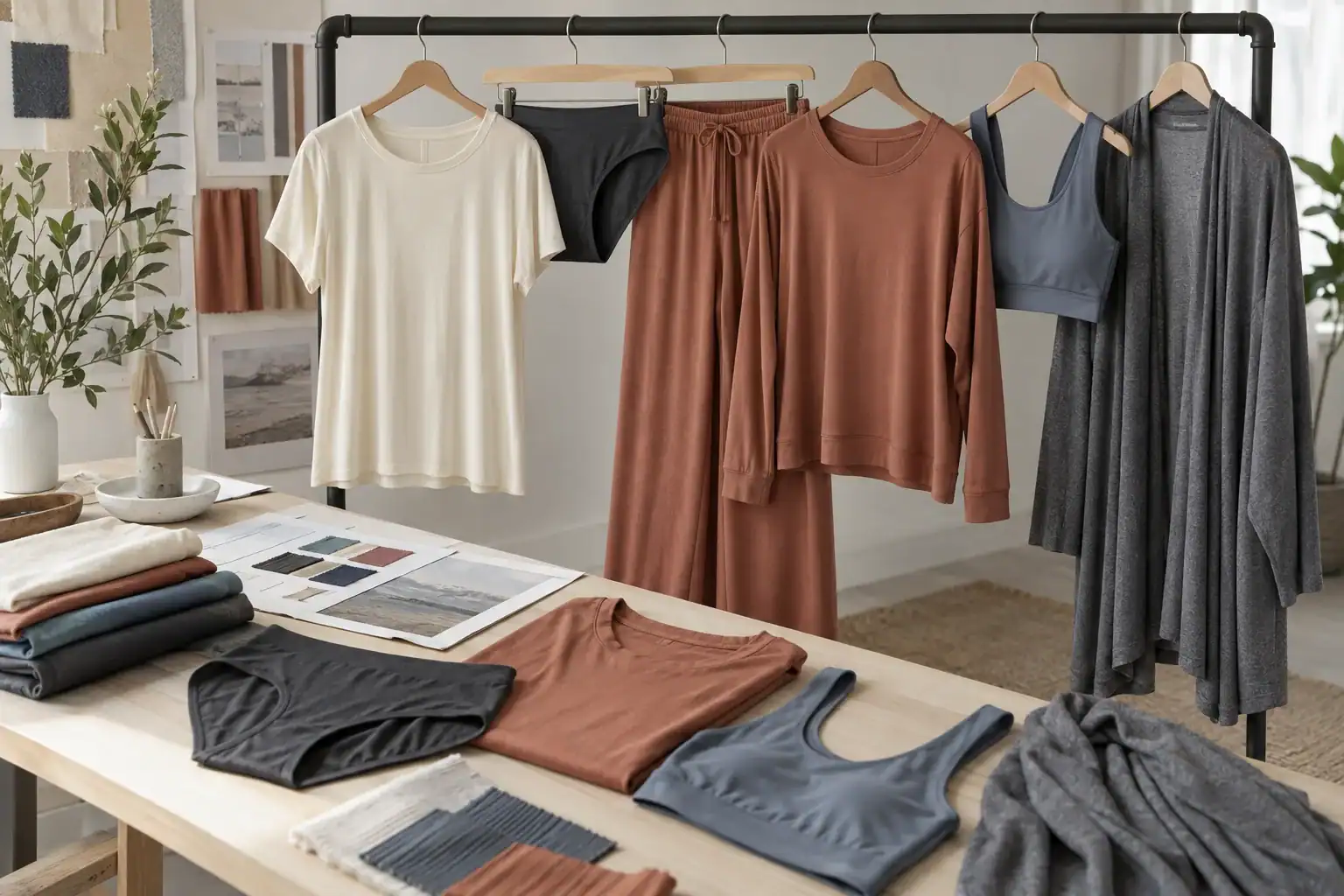
Modal may be a poor starting point when the product needs maximum abrasion resistance, a firm structured body, strong compression recovery, very fast drying under heavy sweat, or a highly stable outer layer. In those cases, compare the brief with a performance polyester, nylon, mesh, or another construction. The site’s best fabric for activewear guide can help frame the garment around sweat, stretch, support, and recovery instead of choosing a fiber by reputation.
Choose by activity and garment zone. Modal may work well in the body of a comfort-led top but be less suitable for a high-friction pocket, compression panel, or hard-wearing training short. A blend or a different fabric in a specific zone may be more useful than forcing one material across the whole collection.
Modal vs cotton, polyester and lyocell
The comparison below describes decision tendencies, not guaranteed test results. The same fiber can perform differently in different constructions.
| Decision point | Buyer read |
|---|---|
| Soft next-to-skin hand | Modal and lyocell are often worth sampling first. Cotton varies by grade, and polyester depends strongly on yarn and finish. |
| Fluid drape | Light modal and lyocell knits often drape well. Cotton and polyester can range from fluid to structured depending on construction. |
| Heavy-sweat training | Polyester is often easier to engineer for drying and wicking. Modal, cotton, and lyocell need a garment-level moisture and care review. |
| Shape recovery | Blend, knit, and elastane matter more than the fiber name alone. Measure growth and recovery at the actual garment zones. |
| Best first question | Does the hand, care route, and tested performance fit this garment? |

If the purchase decision is about a specific product, compare finished samples rather than fiber descriptions. The jersey clothing material guide is a useful adjacent reference when the modal candidate will be used in a tee, base layer, or other knit garment.
Does modal shrink, pill, stretch or lose shape?
It can, but the answer depends on the construction and care route. A modal garment may change length, width, surface, or recovery because of fiber blend, loop structure, finishing, garment tension, dyeing, or laundering. Pilling also depends on friction, fiber properties, yarn and fabric construction, finishing, and use conditions.
Turn each vague concern into a check:
- Shrinkage: measure length and width before and after the intended wash and dry route.
- Stretch and recovery: record extension, release behavior, and growth at the garment zones that carry tension.
- Pilling: choose a method, wash route, rating scale, and acceptance limit with the buyer and lab.
- Colorfastness: match laundering, crocking, perspiration, and other exposure checks to the destination and use.
- Seam behavior: inspect puckering, seam slippage, neckline growth, and panel distortion.
- Surface change: compare the hand, sheen, fuzz, and opacity before and after care.

The AATCC standards index lists test methods for colorfastness, absorbency, abrasion, laundering, and related textile checks. The ASTM textile standards index is another starting point for selecting a method. A method name is not an acceptance limit, and a lab result is not a promise that every finished style will behave identically.
Is modal sustainable? Use a claim ladder
Modal questions often mix raw-material origin, chemistry, manufacturing process, brand program, and garment-level impact. Separate those claims before they reach a product page.
- Fiber identity: confirm that the material is actually modal and record the generic fiber content.
- Source statement: ask what cellulose source and production route the supplier is documenting.
- Process evidence: identify whether the claim belongs to a branded fiber program or a verified supplier process.
- Product claim: connect the evidence to the exact fabric, garment, market, and transaction. Do not apply a branded claim to generic modal automatically.
- Disposal or biodegradability claim: require exact evidence and market-appropriate wording instead of inferring it from plant-derived cellulose.
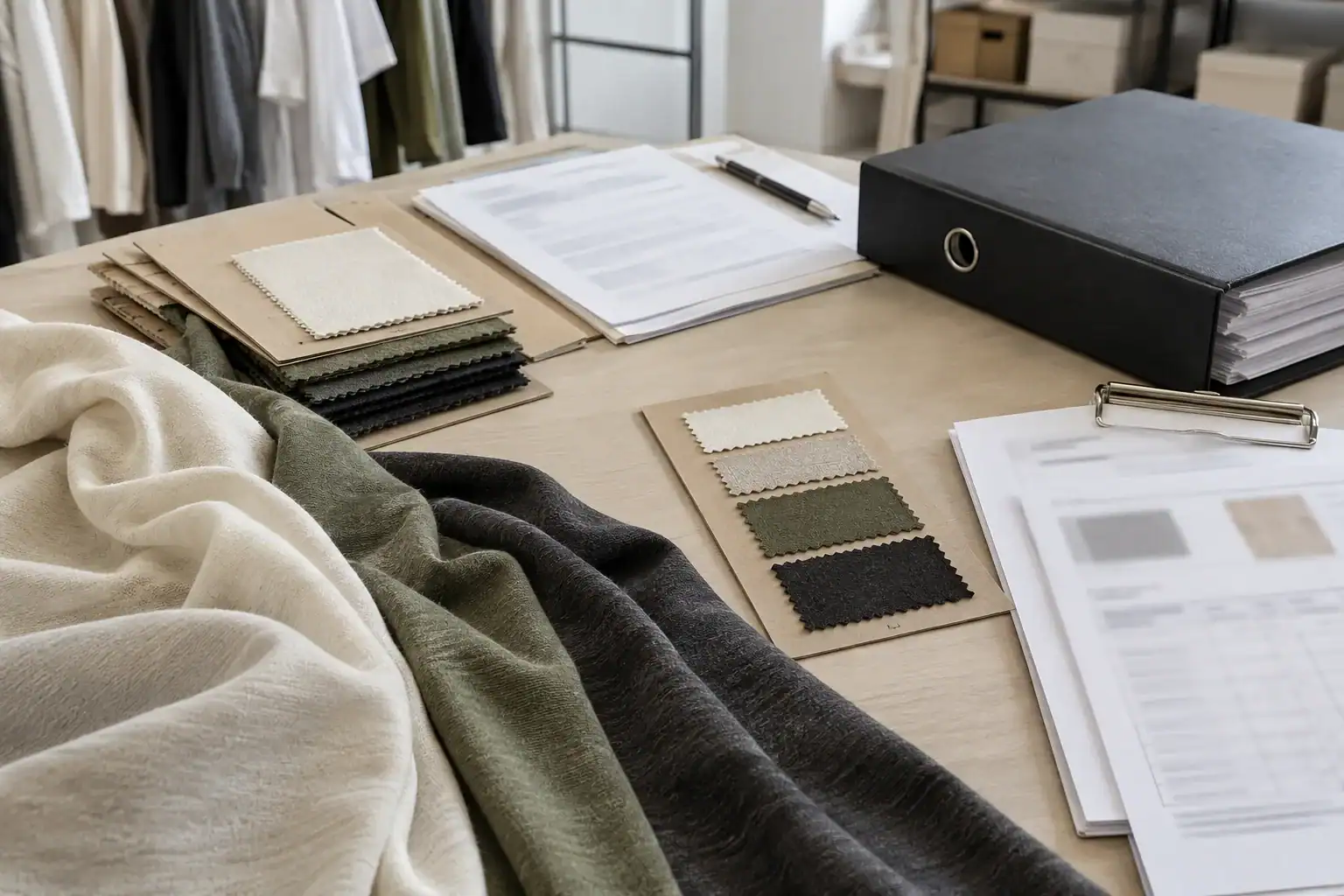
Lenzing’s TENCEL Modal information describes its own branded fiber and process claims. It should be read as brand-specific evidence, not as a blanket statement about every modal fabric. If a buyer needs a sustainability claim, request the document that applies to the exact fiber, supplier, product, and market.
Modal tech-pack fields that make a quote usable
Send a brief that lets a supplier quote, sample, and test the same product you intend to sell. Include:
- Garment type and use: tee, underwear, base layer, loungewear, yoga top, recovery piece, or other.
- Fiber composition, blend tolerance, and whether a branded fiber is required.
- Knit or weave construction, face and reverse, and target hand feel.
- GSM, usable width, thickness, opacity, stretch direction, and recovery expectation.
- Color standard, dye route if relevant, and shade approval method.
- Pattern zones with high tension, friction, or seam movement.
- Shrinkage, pilling, abrasion, colorfastness, and moisture tests that matter to the product.
- Decoration method, label placement, trims, lining, and packaging requirements.
- Care route, drying restriction, country of sale, and label language.
- Swatch reference, sample comments, approval status, revision date, and owner of the final decision.
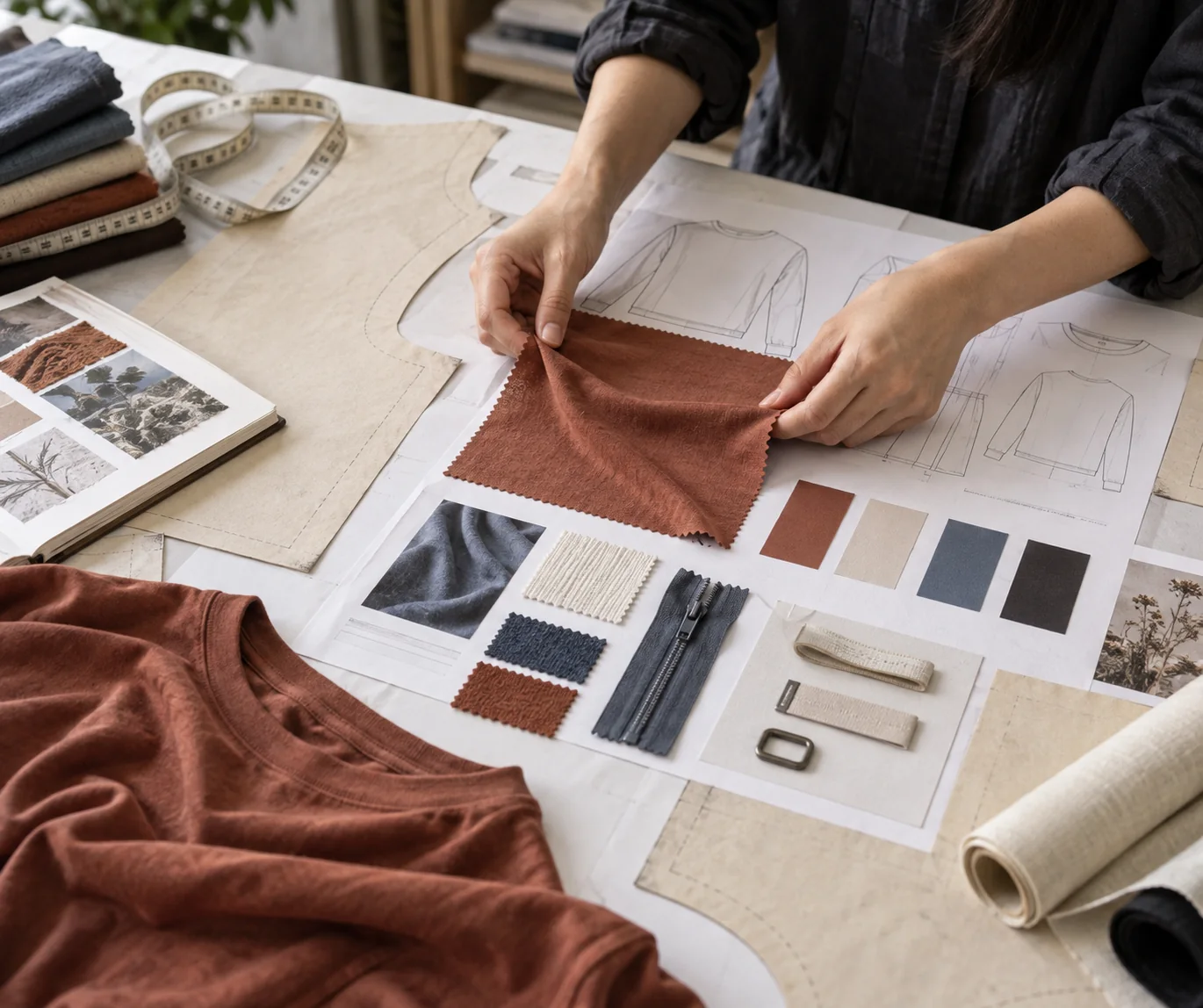
Use the tech-pack customization page when measurements, fabric direction, labels, decoration, or packaging need to be organized before sampling. A clearer brief usually reduces avoidable quotation and revision loops, but exact feasibility still depends on the submitted product information.
Labeling and sourcing checks for modal apparel
For covered textile products sold in the United States, the FTC requires fiber content information using generic names and percentages by weight, with fibers generally listed in descending order of predominance. The rules also address country of origin and the responsible manufacturer, importer, or marketer identity.
Before approving a modal label or product page, confirm:
- The production composition matches the approved fabric and the final garment.
- Modal, rayon, viscose, elastane, polyester, cotton, and other fibers are named according to the destination-market rules.
- Percentages are supported by the final material record, not only a preliminary swatch message.
- A trademark appears with the required generic fiber name where applicable.
- Care instructions match the tested wash and drying route.
- Sustainability or recycled-content wording is supported by evidence for the exact claim.
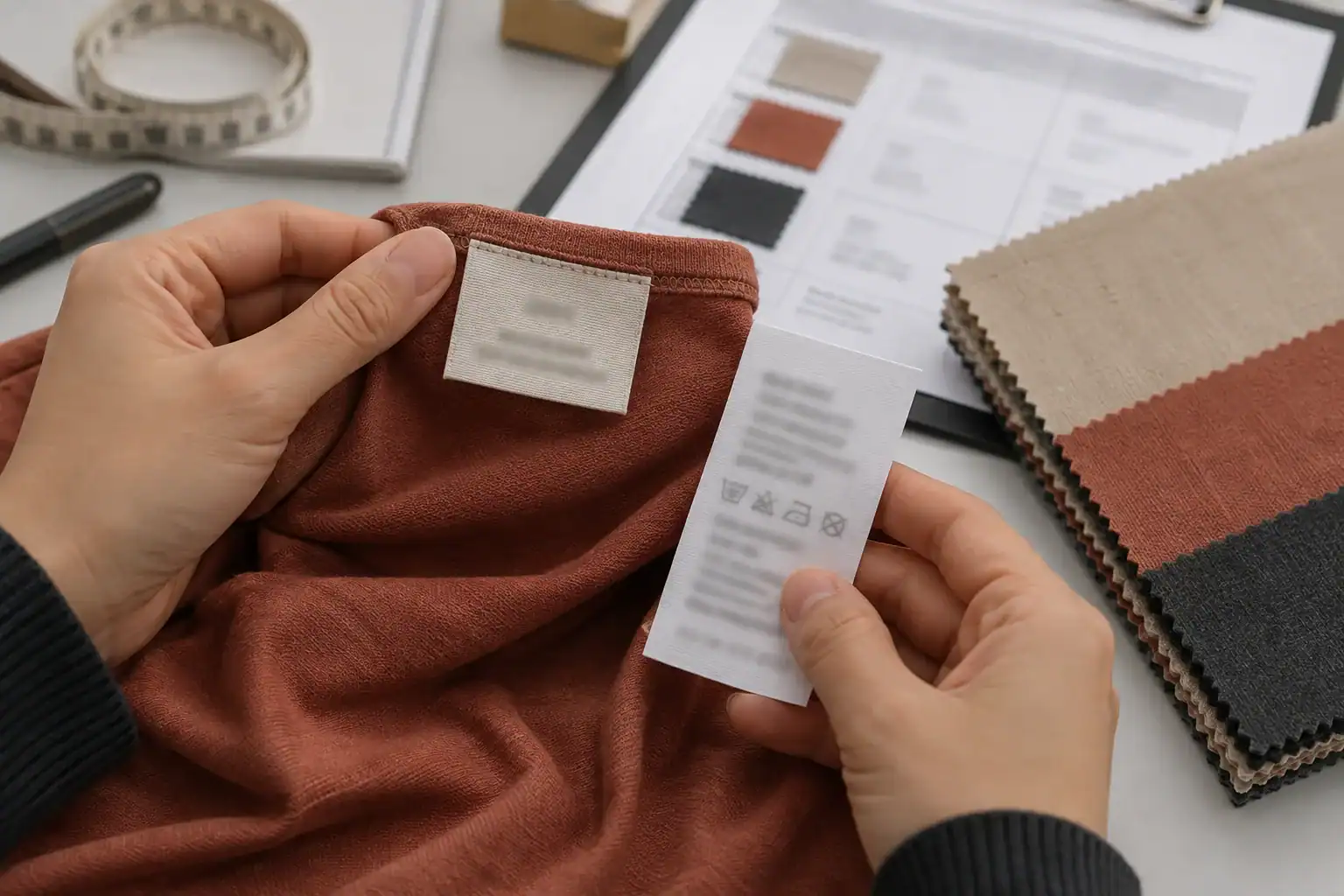
The FTC labeling guide is a useful starting point, but it is not a substitute for destination-market compliance advice. Keep the supplier declaration, approved swatch, lab report, care instruction, and final label version connected in the product file.
A modal sample approval sequence before bulk production
Use a staged approval rather than approving the fiber name in isolation:
- Brief review: confirm the garment job, wearer, activity level, target hand, construction, and destination market.
- Swatch review: record composition, GSM, width, stretch, recovery, opacity, drape, and surface after handling.
- First sample: make the actual garment with the intended pattern, seams, trims, and decoration.
- Care review: wash and dry the sample using the planned consumer route, then compare measurements, hand, color, and fit.
- Targeted testing: select dimensional change, pilling, colorfastness, moisture, abrasion, or other methods that address the real risk.
- Revision record: log the exact change to fiber blend, GSM, pattern, finish, label, or care instruction.
- Bulk gate: approve the final swatch, garment sample, measurement tolerance, decoration standard, packaging, and document set together.
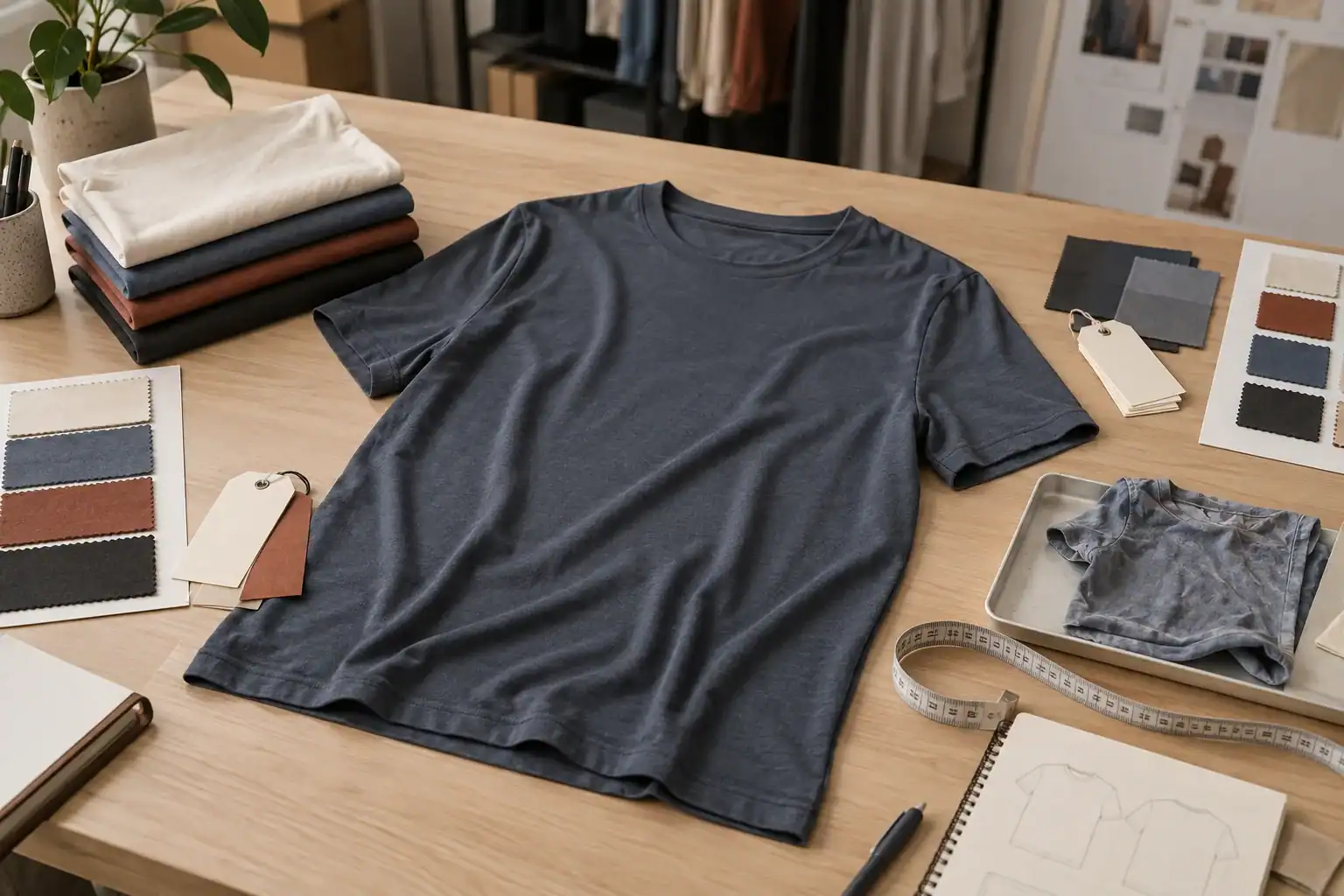
The sampling and prototyping page is the relevant next step when a buyer needs to turn a modal direction into a physical garment and record revisions before bulk production.
Frequently asked questions
Modal is a manufactured, regenerated cellulosic fiber. Its raw material may be cellulose, but the textile fiber is produced through a manufacturing process. Check the exact fiber name and composition rather than using a simple natural or synthetic label as the whole explanation.
Modal is commonly discussed as part of the rayon family, but the names should not be swapped automatically on a label or product claim. Confirm the generic fiber name, market rules, and supplier documentation for the exact material.
Some modal constructions can feel light and comfortable, but breathability depends on knit density, GSM, finish, blend, garment fit, and use. Test the finished garment when airflow or sweat management affects the product decision.
Modal can suit comfort-led tees, yoga, recovery, base garments, and lower-to-moderate output products. It may not be the best single fabric for high-output training, high abrasion, compression, or very fast drying. Compare it with a performance construction against the actual brief.
Dimensional change depends on fiber blend, construction, finishing, pattern, and care route. Measure the actual fabric or garment before and after the intended wash and drying process instead of relying on a universal shrinkage promise.
Pilling depends on fiber, yarn, construction, finishing, friction, and care. Ask for the method, wash route, rating scale, and acceptance limit, then inspect the finished garment in the zones that will rub.
TENCEL is a brand name. TENCEL Modal is a branded modal fiber, while generic modal can come from other suppliers and programs. Keep the brand evidence and generic fiber declaration separate.
Request composition, GSM, usable width, construction, stretch and recovery, care route, test expectations, a physical swatch, and a finished-garment sample. Add label and sustainability documentation when those claims are part of the product brief.
Turn a modal fabric idea into a testable sample
The most useful modal inquiry includes the garment type, activity level, target hand, fiber direction, GSM comparison, width, stretch and recovery, color, decoration, care route, destination market, and the tests that matter. Add a measurement sheet or tech pack when fit, labels, trims, or packaging affect approval.

Send the brief through the DTS inquiry and NDA path for a fabric and product development review. The purpose is to confirm the right material route and sample plan for the actual garment, not to approve a fiber name in isolation.