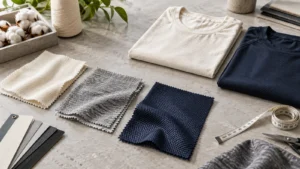
Polyester fabric is a textile made with polyester fiber, most commonly PET, or polyethylene terephthalate. The fiber can be spun as filament or staple yarn, then knitted or woven into fabrics with very different weights, surfaces, stretch, drape, and heat response. That is why a smooth lining, a mesh training top, a fleece sweatshirt, and a crisp woven shell can all be called polyester fabric while behaving nothing alike.
For an apparel buyer, the useful question is not simply whether a material contains polyester. The useful question is which polyester construction can meet the garment’s fit, moisture, decoration, care, and durability requirements. This guide explains the fiber in plain language, then turns the name into a specification and a sample approval plan.
What is polyester fabric?
Polyester fabric is a finished textile made from polyester fibers or yarns. In apparel, the term usually points to PET based polyester, a synthetic polymer that is melted and formed into textile filaments or staple fibers. Those fibers become yarn, and the yarn becomes a knit or woven construction.
That last step matters. Polyester is the fiber identity. It is not one fabric construction. A 100% polyester single jersey, a 100% polyester Oxford weave, and a 100% polyester fleece can have different hand feel, air movement, surface shine, abrasion behavior, and care limits.
The simplest buyer definition is:
> Polyester identifies the fiber family. Polyester fabric is the result of combining that fiber with yarn, construction, weight, finish, and garment design.
The types of fabric guide is useful when a product brief needs to separate fiber choice from knit or woven structure. A supplier quote that says only "polyester fabric" is a starting point, not a complete material offer.
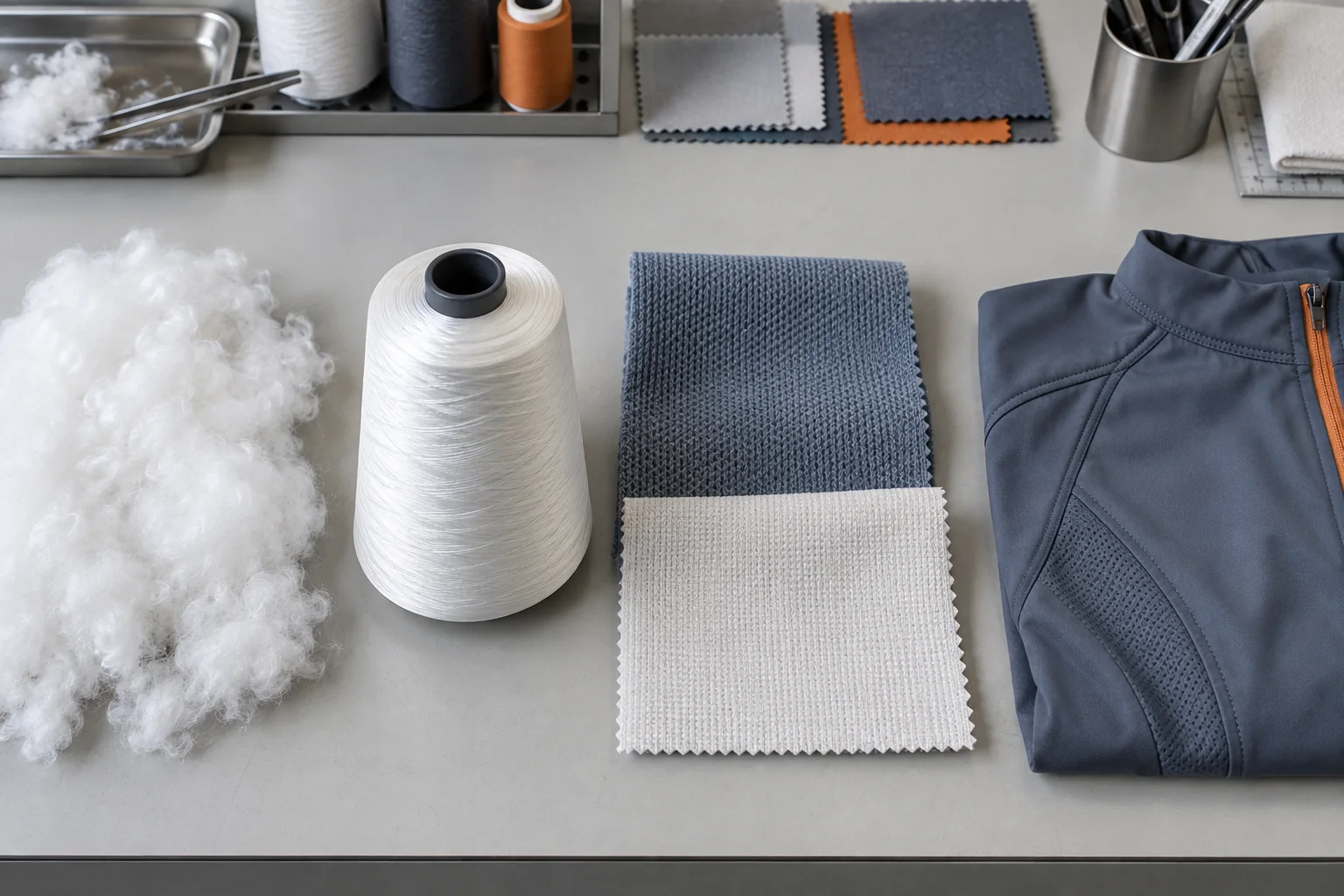
For a quote-ready request, record at least the fiber percentage, construction, target GSM, usable width, color, finish, stretch direction if applicable, intended product, decoration method, care route, and acceptance checks. The more a style depends on recovery, opacity, or printed color, the less useful a fiber name is on its own.
How polyester becomes a textile
The general route from polymer to garment has several stages. The exact chemistry and machinery vary by producer, so this is a sourcing map rather than a claim about every mill.
- A polyester polymer, commonly PET, is prepared for textile production.
- The polymer is melted and pushed through fine openings to form continuous filaments.
- The filaments are cooled, drawn, and given the yarn properties required for the product.
- The material is kept as filament yarn or cut into staple fibers for spinning.
- Yarn is knitted or woven into a construction such as jersey, interlock, mesh, twill, fleece, or lining.
- Dyeing, printing, heat setting, brushing, coating, or other finishing changes the surface and behavior.
- The fabric is inspected, cut, sewn, decorated, labeled, and tested as part of the garment program.
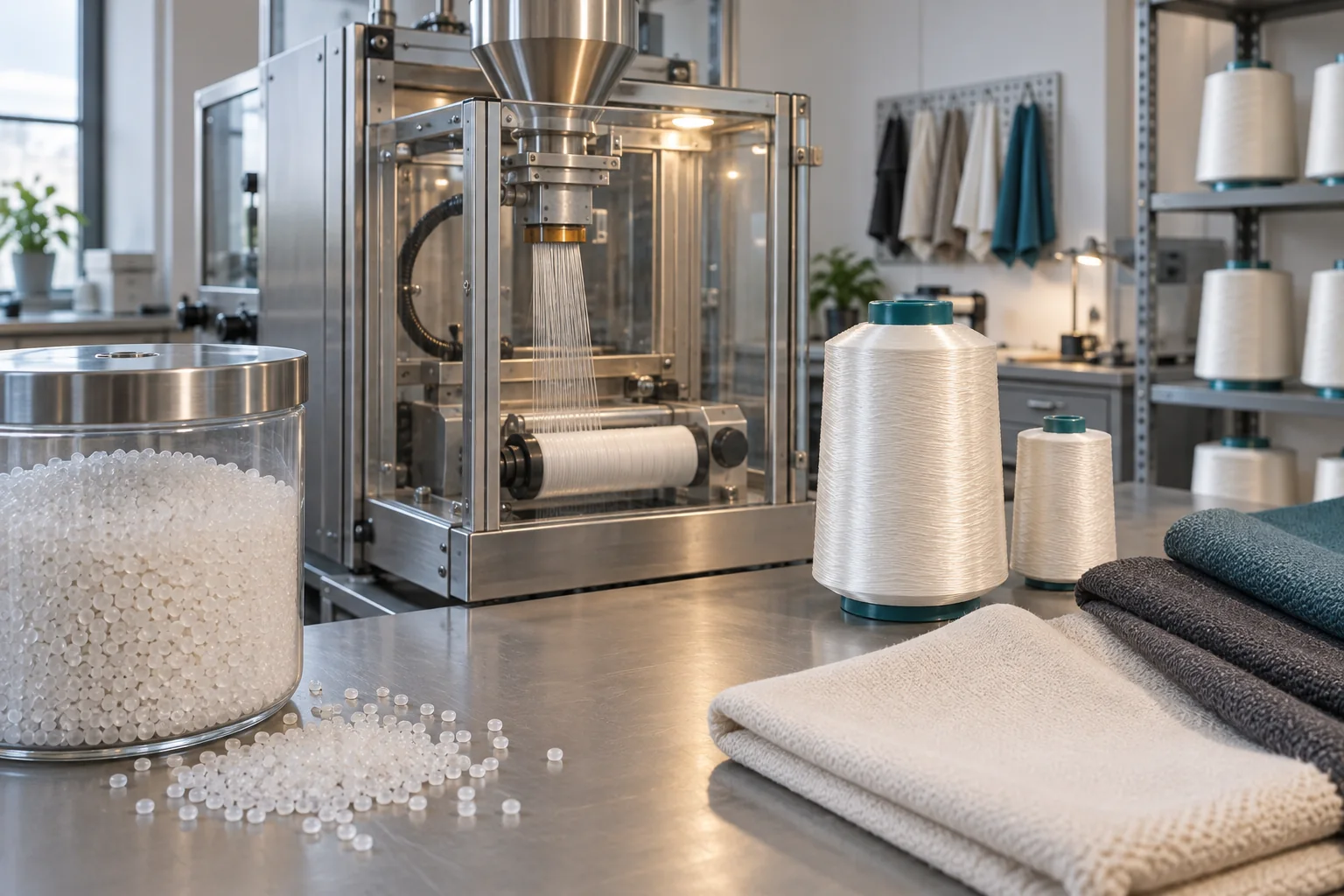
This sequence explains why two polyester fabrics can have different prices even when their labels look similar. Yarn type, filament profile, twist, knit density, weave, weight, dye route, and finishing all add decisions. A fine microfiber and a coarse spun yarn may share the same fiber family while creating very different customer experiences.
The process also creates a useful evidence boundary. A composition claim belongs to the fiber content. A claim about recycled feedstock, a branded fiber, a special finish, or a tested performance result needs separate documentation for the exact material and product. Do not transfer a mill or fabric claim to a finished garment listing without checking the supplied material.
Polyester fiber, yarn, fabric, and garment are different layers
Use four layers when translating a material conversation into a product file.
| Layer | What to record | Why the layer matters |
|---|---|---|
| Fiber | Polyester percentage and other fibers by weight | Sets the material identity and label discussion |
| Yarn | Filament or staple, yarn count, twist, texture, and surface effect | Changes softness, strength, shine, pilling risk, and print response |
| Construction | Knit or woven structure, density, GSM, usable width, and finish | Controls stretch, drape, coverage, air movement, and stability |
| Garment | Pattern, seams, trims, decoration, fit, and care route | Determines what the customer actually feels and sees |
A request for "100% polyester" answers only the first layer. It does not tell a factory whether the product needs a firm woven body, a lightweight mesh panel, a brushed fleece interior, or a stretch knit with high recovery. It also does not tell the pattern team how much the finished garment may change after laundering.
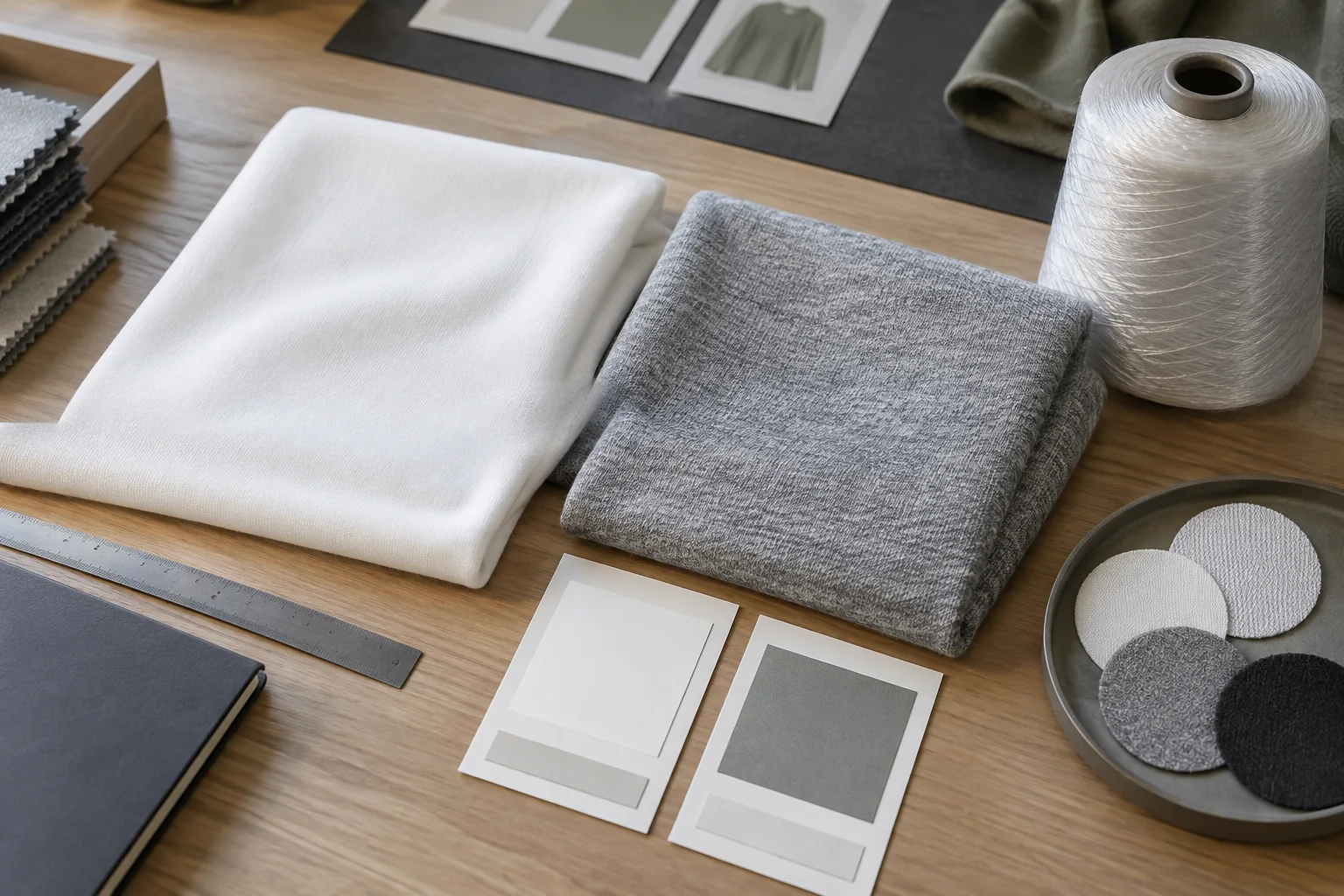
Keep the approved swatch with the construction details and the measurement chart. If a sample is approved, keep the fabric code, color reference, test notes, and sample comments together. That record gives the bulk team a practical reference for what the word polyester means in this particular style.
What polyester fabric feels like
Polyester does not have one universal hand feel. A filament knit may feel smooth and cool. A brushed fleece may feel soft and warm. A textured yarn may feel dry or slightly crisp. A dense woven may feel firm, while a lightweight mesh may feel open and airy.
The fiber itself absorbs little moisture compared with many natural fibers. That can help a garment dry quickly, but it does not automatically make the fabric moisture wicking or comfortable in every climate. Construction, surface area, finish, garment fit, and the path for moisture to leave the garment matter too.
During sample review, assess the actual garment against these questions:
- Does the face feel suitable for the intended skin contact?
- Does the fabric stay opaque at the intended stretch and under the planned lighting?
- Does the garment feel clammy, hot, or rough during the movements it is designed for?
- Does the surface attract lint, show oil marks, pill, snag, or become shiny at contact points?
- Does the hand feel survive the proposed wash and dry route?
- Is the finish doing the work, or is the underlying construction already appropriate?
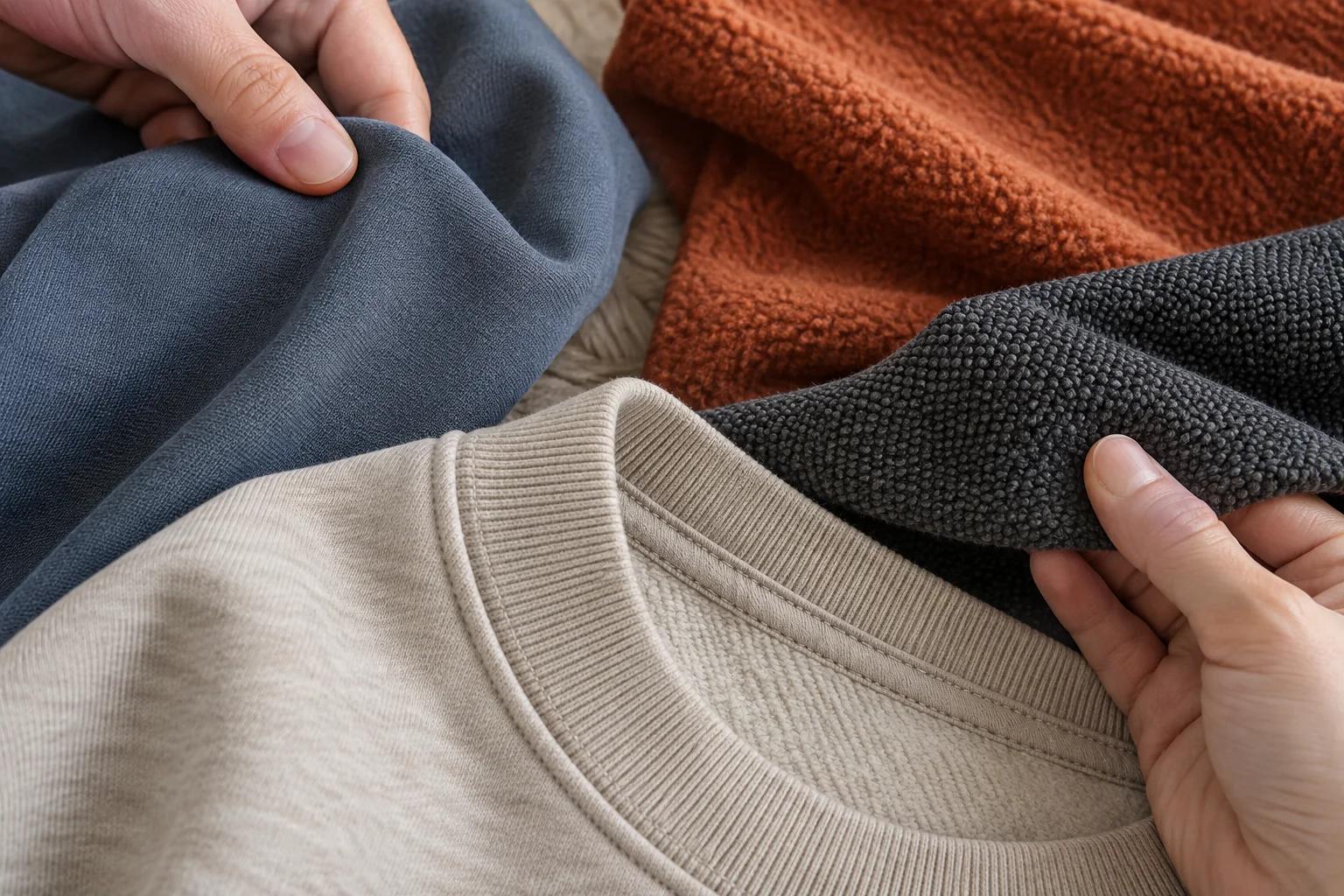
Words such as soft, dry touch, cooling, breathable, or quick drying can help describe a product direction. They should not replace a material specification. If one of those words affects approval or marketing, connect it to a test method, sample condition, or agreed visual and tactile standard.
The University of Georgia textile reference lists several common polyester tendencies, including wrinkle resistance, strength, easy care, static buildup, lint attraction, and sensitivity to excessive heat. These tendencies are useful screening questions, not promises for every polyester fabric. Yarn, construction, finish, color, and garment engineering can change the result.
Which construction is used for the product?
Construction often changes the garment more than the fiber name does. Start with the product job, then select the construction that can deliver the required shape, movement, coverage, and decoration.
| Construction route | Typical apparel role | Buyer checks |
|---|---|---|
| Single jersey | Tees, lightweight tops, team shirts, casual activewear | GSM, spirality, opacity, stretch, recovery, and print behavior |
| Interlock or double knit | Fitted tops, leggings, base layers, stable panels | Weight, face and reverse, recovery, thickness, and seam bulk |
| Mesh or open knit | Ventilation panels, training tops, lining areas | Open area, snag risk, transparency, seam support, and wash stability |
| Fleece | Sweatshirts, hoodies, warm layers, joggers | Brushing, pilling, loft, shrinkage, color, and hand feel after care |
| Woven plain, twill, or ripstop | Shells, shorts, pants, uniforms, and utility garments | Tear strength, seam slippage, stiffness, coating, and dimensional change |
| Tricot or warp knit | Smooth sport panels, lining, swim-adjacent or fitted garments | Stretch direction, run resistance, recovery, and surface shine |
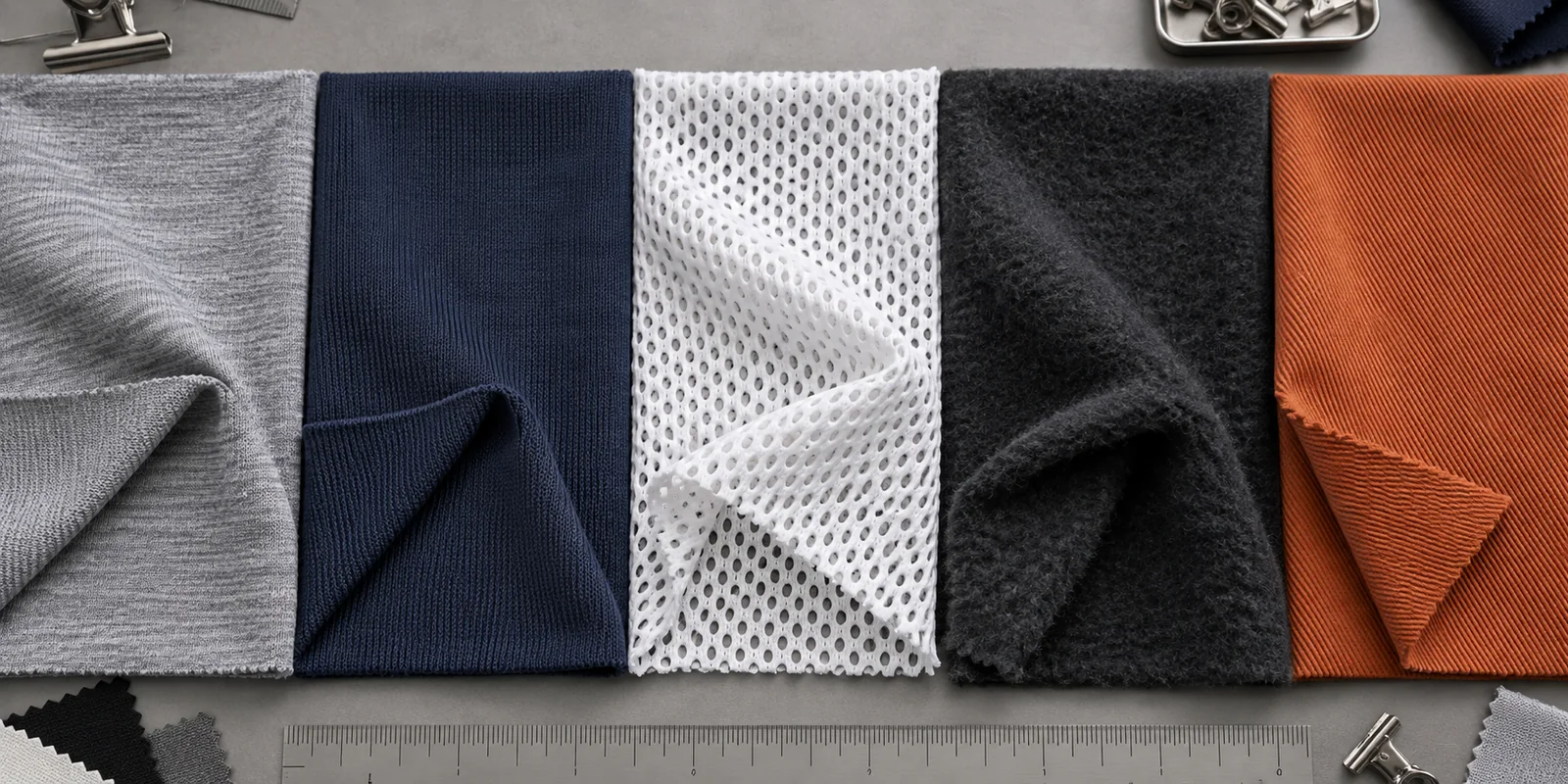
For a knit, record the stretch and recovery in each relevant direction. For a woven, record whether the product needs mechanical give, elastane, a gusset, or a different pattern allowance. For mesh, check the garment under movement, not only as a flat swatch. Open structures can look stable on a table and behave differently at an armhole, side seam, or pocket opening.
Construction also affects sewing. A slippery filament knit may need different handling from a stable interlock. A coated woven may require a different needle, seam allowance, or pressing approach. These are reasons to approve the actual sample rather than choosing from a fiber percentage alone.
Common polyester fabric types in apparel
The following names describe common starting points. They are not universal grades, and different suppliers may use the same word for different constructions.
- Filament polyester: Continuous filaments can create smooth, even surfaces and are common in jerseys, linings, technical knits, and printed sportswear. Denier, cross section, texture, and knit density still need to be specified.
- Spun polyester: Short fibers are spun into yarn. The result can feel more like a natural-fiber fabric and may be chosen for tees, uniforms, or casual garments. The yarn can have a different surface, hairiness, and pilling profile from a filament yarn.
- Microfiber polyester: Fine fibers create a dense, smooth surface. This term says something about fineness, not a guaranteed weight, finish, or performance rating.
- Polyester mesh: Open knit or woven structures allow more air movement and can be used for panels, linings, and lightweight tops. Opacity, snags, seam support, and decoration need close review.
- Polyester fleece: A knitted base is brushed to raise the surface. Warmth and softness may improve, but brushing also changes loft, pilling risk, shedding, and the way the garment looks after use.
- Polyester twill or ripstop: Woven structures can support workwear, utility styling, shorts, and outer layers. The final hand depends on yarn size, density, finish, and any coating.
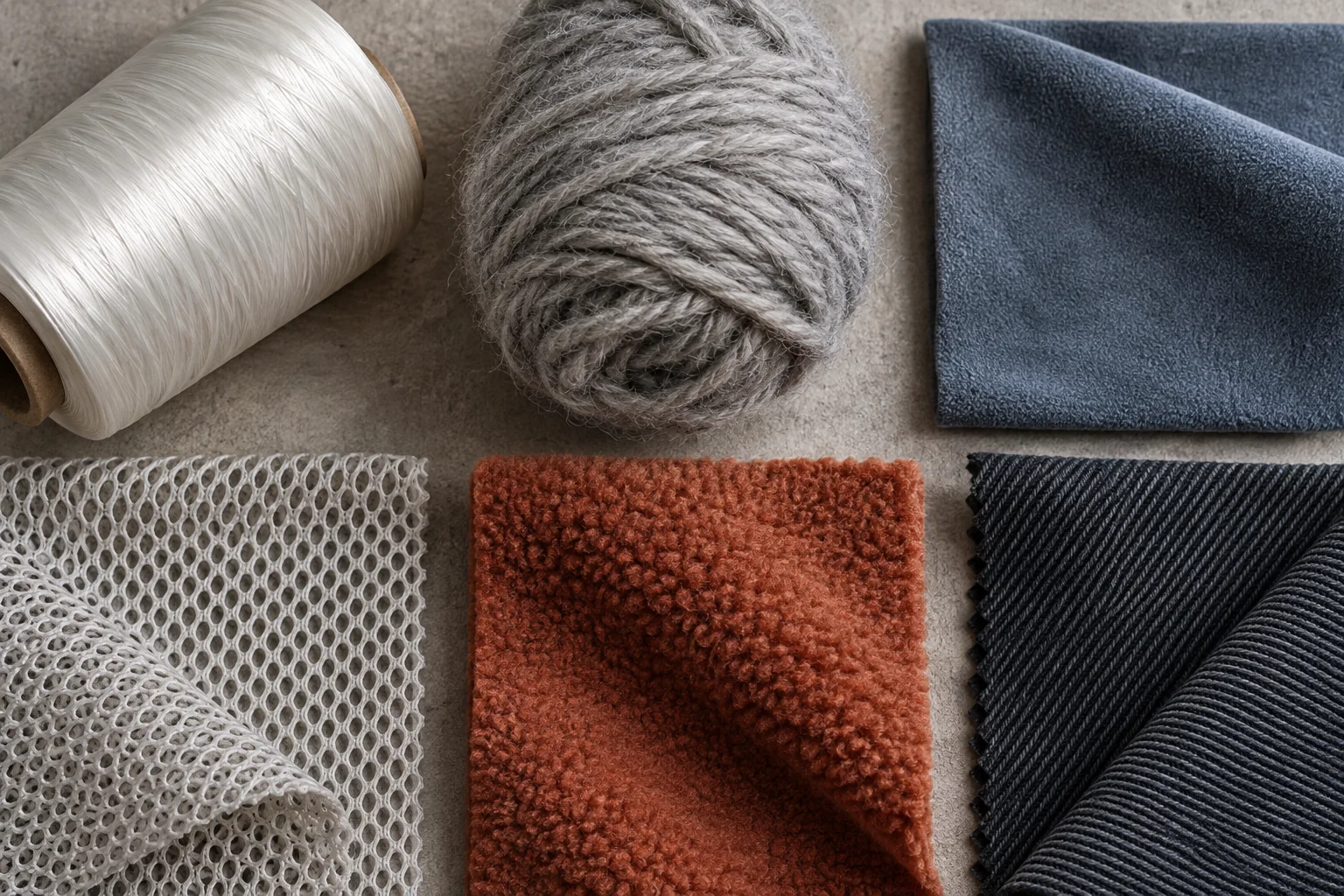
When a supplier uses a commercial fabric name, ask what it means in measurable terms. A name such as performance knit or premium polyester may describe a useful direction, but it does not replace composition, construction, weight, width, stretch, finish, and test details.
Why apparel teams choose polyester
Polyester is often considered because it solves practical product problems. The reasons are specific, not universal:
- Shape retention: Many polyester constructions resist wrinkling and can hold a heat-set shape, which helps some uniforms, shells, and repeatable size programs.
- Fast drying potential: Low moisture absorption can reduce the time moisture remains in the fiber, but drying speed still depends on construction, fit, airflow, and finishing.
- Color and decoration options: Polyester is widely used in printed and dyed apparel. The correct dye or print process depends on fiber, surface, color, temperature, and the desired result.
- Durability options: Yarn and construction can provide useful abrasion resistance for sports, work, or repeated wear. The finished garment still needs seam and trim review.
- Range of surfaces: The same fiber family can be made into matte, smooth, brushed, textured, sheer, firm, or stretch materials.
- Care practicality: Many polyester garments are easy to launder, but heat and the exact finish still set the boundary.
These are selection reasons, not blanket claims. A 100% polyester fabric can still fail because it is too shiny for the brand, too warm for the climate, too transparent at stretch, too slippery for the pattern, or too unstable after decoration.
Where polyester can go wrong
Polyester has predictable questions that a buyer should answer before bulk approval.
Moisture is moved, not magically removed. A hydrophobic fiber does not guarantee a dry feeling. A close-fitting, low-airflow garment can still feel wet. Check the whole fabric and garment system.
Heat can change the result. Excessive ironing, pressing, tumble drying, heat transfer, or curing can distort thermoplastic fibers or alter a finish. Set a safe process with the factory and decoration team.
Oil and odor can become a wear problem. Low absorbency can help with water drying, but body oils and odor management are separate issues. If odor control is part of the product promise, ask for the exact finish and evidence rather than assuming the fiber provides it.
Static and lint can affect appearance. The same surface that looks clean in a studio can attract lint in shipping or wear. Check dark colors, brushed surfaces, and packaging contact points.
Pilling is a system issue. Fiber length, yarn construction, knit density, finishing, rubbing, and laundering all matter. A supplier’s generic statement about anti-pilling is not a pass result.
Sublimation has boundaries. Sublimation programs are typically suited to polyester-rich surfaces, but color, fabric construction, heat, and decoration settings still need a strike-off or sample review. A print that looks correct on a flat panel may shift when the fabric stretches or is sewn.
Write these risks into the sample plan. The point is not to reject polyester by default. The point is to discover the failure mode while the pattern, material, and decoration can still be changed.
How to choose polyester for activewear
Activewear buyers usually need to balance sweat, movement, coverage, recovery, abrasion, and branding. The best fabric for activewear guide can help organize the wider fiber decision, while this section focuses on polyester-specific checks.
| Product job | Polyester direction to investigate | Sample questions |
|---|---|---|
| Printed team shirt | Jersey or another stable printed knit | Does the color stay even, and does the fabric remain comfortable during movement? |
| High-motion training top | Stretch knit or panelled construction | Does it recover after repeated reach, bend, and arm movement? |
| Lightweight ventilation panel | Mesh or open knit | Is the opening appropriate, and does it snag or distort at the seam? |
| Warm gym layer | Brushed fleece or dense knit | Does the inside remain comfortable without excessive heat or pilling? |
| Training short or utility short | Woven polyester, sometimes with stretch | Does the fabric support the pocket, waistband, and movement without seam slippage? |
| Low-impact lifestyle activewear | Soft knit or blended construction | Does hand feel remain acceptable after the planned care route? |
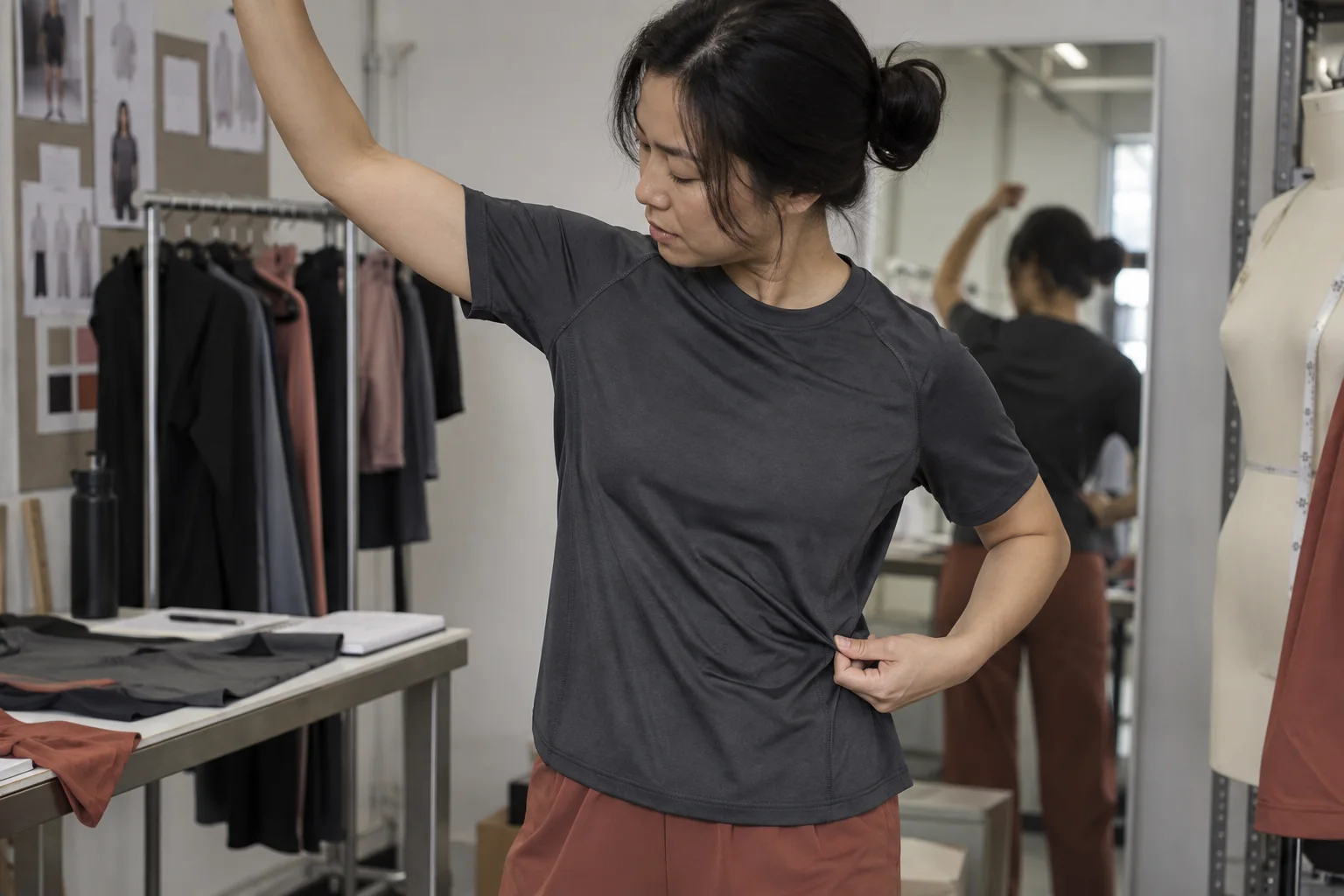
For fitted garments, measure opacity at the intended extension, not only at the relaxed state. Check recovery after a repeatable stretch cycle. Record whether recovery comes from the knit structure, elastane, or both. If the garment will be photographed or sold in strong studio lighting, inspect shine and transparency under that light.
Do not use quick dry or moisture wicking as interchangeable phrases. If either term appears in the product brief, specify how it will be evaluated and which part of the garment is covered by the claim. A finish on one panel does not automatically describe every component.
How to choose polyester for streetwear and teamwear
Streetwear and teamwear often put more pressure on color, surface, decoration, silhouette, and repeatability than on one narrow performance metric. Polyester can support a crisp woven short, a printed jersey, a satin-like panel, or a brushed layer. The construction and finish decide the visual language.

For a printed program, check the base color, print edge, stretch, wash appearance, and whether the artwork needs to cover seams or curved panels. For embroidery, check backing, needle marks, puckering, and the support provided by the fabric. For heat transfer, check temperature sensitivity and adhesion on the exact finish.
For a relaxed streetwear silhouette, weight and drape often matter more than the fiber label. A light polyester jersey may collapse where the sketch needs structure. A dense fabric may hold shape but make the garment hot or stiff. A woven with a coating may create the desired surface while changing seam construction and care.
The product file should also distinguish the visible body fabric from lining, rib, elastic, pocketing, thread, labels, and trims. Those components can change the feel and performance even when the body is listed as 100% polyester.
100% polyester versus blends
Blending changes the balance between hand feel, moisture response, stretch, recovery, care, and appearance. It does not create a universally better fabric.
| Blend direction | Why a team may investigate it | What needs checking |
|---|---|---|
| Polyester with cotton | Familiar hand, casual appearance, and a balance of synthetic and cellulosic behavior | Shrinkage, color behavior, drying, pilling, and the exact ratio by weight |
| Polyester with elastane | Stretch and recovery for fitted or movement-focused garments | Extension, recovery, heat exposure, growth, and opacity under stretch |
| Polyester with nylon | A different surface and strength balance for selected technical or fashion uses | Hand feel, abrasion, color, snagging, and supplier composition evidence |
| Polyester with rayon or viscose | Softer or more fluid hand for lifestyle pieces | Wet behavior, dimensional change, care, drape, and seam support |
| 100% polyester | One main fiber route with a wide range of constructions and finishes | Construction, yarn, GSM, finish, heat, moisture, care, and decoration |
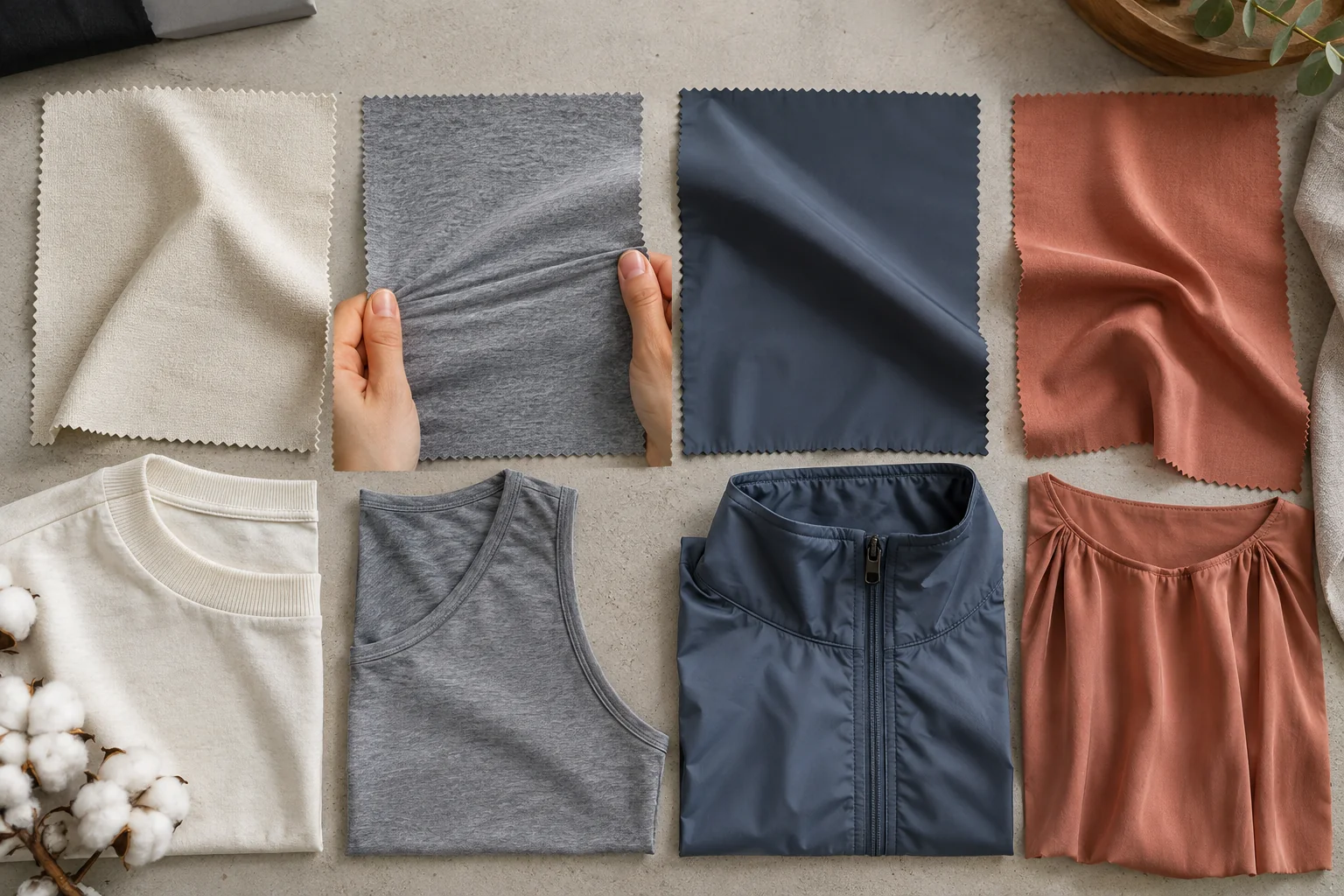
Ask for the exact fiber percentages by weight, not a casual blend name. The supplier should also identify which component is the face, which is the ground, and which material is used in trims or panels when they behave differently.
The right blend is the one that solves the product’s most important problem without introducing a larger one. Adding elastane may improve movement while increasing heat sensitivity. Adding cotton may improve hand feel while changing drying and shrinkage. Adding a fluid cellulosic fiber may improve drape while requiring more care control.
GSM, width, stretch, and finish
GSM means grams per square metre. It gives a fabric weight per area, not a complete description of thickness, quality, warmth, or finished garment weight. The GSM meaning in clothing guide explains why the number should be recorded with construction and use.
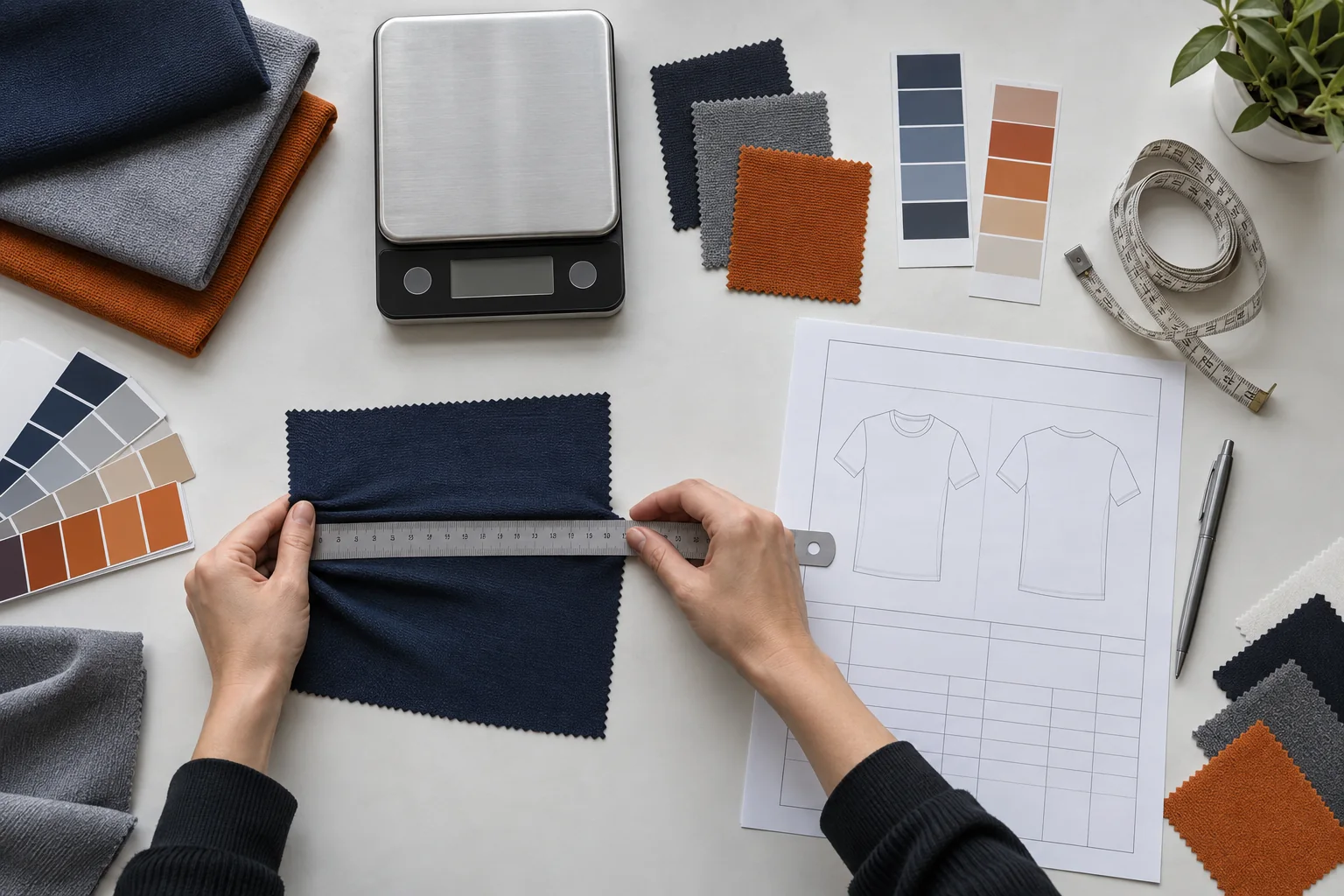
When a polyester fabric is quoted, record:
- Finished GSM: State the target or range and the test basis. ASTM D3776 covers methods for measuring fabric mass per unit area, but the selected option and conditioning still need to be agreed.
- Usable width: A roll width that includes unusable selvedge is not the same as a cutting width. Width affects marker efficiency and cost.
- Stretch and recovery: Record direction, extension, recovery time, and the garment area in which the stretch matters.
- Finish: Note brushing, peaching, wicking treatment, coating, calendaring, softening, heat setting, or another finish when present.
- Color and surface: Record a color standard, sheen expectation, face and reverse, and any print or dye route.
- Care: State the proposed wash, dry, iron, and storage route. Heat can change a polyester surface or finish.
If a fabric has the same GSM as another fabric, do not assume it has the same thickness or hand. Yarn, density, loft, and construction can make equal-weight fabrics feel and perform differently.
How to write a polyester fabric specification
A short, complete specification is easier to quote than a paragraph of adjectives. Use this order:
- Product and use: for example, a fitted training top, loose streetwear tee, or woven gym short.
- Fiber composition: polyester percentage and any blend component by weight.
- Construction: jersey, interlock, mesh, fleece, twill, ripstop, lining, or another named structure.
- Weight and width: target GSM, tolerance if approved, and usable width.
- Performance needs: stretch, recovery, opacity, moisture handling, abrasion, pilling, or dimensional change.
- Appearance: color standard, matte or shiny direction, face and reverse, brushing, texture, and print route.
- Garment details: fit, seams, panels, trims, labels, decoration, and care route.
- Approval rules: sample, test method, acceptance limit, and who signs off.
Here is a format a product developer can adapt:
| Specification field | Example request wording | Open item to confirm |
|---|---|---|
| Product | Fitted polyester training top for repeated movement | Activity, climate, and size range |
| Composition | Polyester-rich stretch knit with the exact ratio shown on the quote | Final fiber percentages and documentation |
| Construction | Smooth knit body with a ventilation panel if required | Knit structure and panel joining |
| Weight | Target GSM to be confirmed after swatch review | Tolerance and test basis |
| Performance | Recovery and opacity required at the planned extension | Test method and acceptance limit |
| Decoration | Print or logo method matched to the approved surface | Artwork coverage, heat, and wash behavior |
| Care | Consumer care route based on the tested garment | Label wording and market requirements |
The example leaves unknowns visible on purpose. Do not fill them with a supplier’s assumption. The tech-pack customization service can help turn a moodboard, sketch, reference garment, or incomplete specification into a reviewable production brief.
Sample approval tests that answer buyer questions
Testing should follow the garment’s risk. A loose printed tee, a fitted legging, and a brushed hoodie do not need the same emphasis. AATCC publishes textile test methods and evaluation procedures across areas such as colorfastness, appearance, fiber analysis, and moisture management. A method name is not a pass result, so the buyer still needs an agreed sample, condition, and limit.
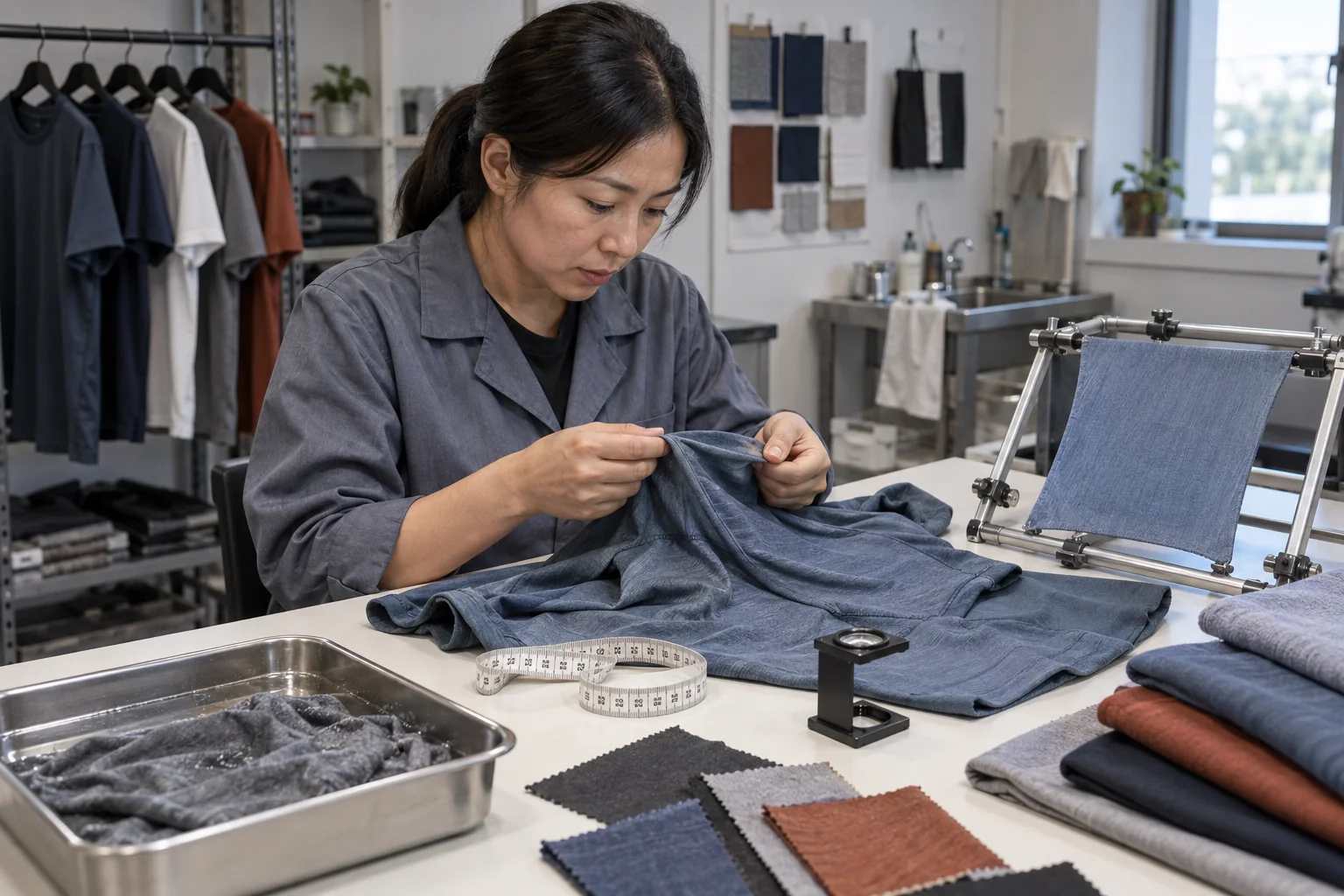
| Buyer question | Useful check | Decision after the check |
|---|---|---|
| Will the garment keep its size? | Measure critical points before and after the agreed care cycle | Accept, revise the material, or revise the pattern and care route |
| Will a fitted panel stay opaque? | Inspect relaxed and extended states under intended lighting | Change weight, construction, color, lining, or fit if needed |
| Will the fabric recover? | Repeat a defined extension and recovery observation | Confirm recovery target or change knit and elastane choice |
| Will decoration survive? | Wash, rub, stretch, or heat test the decorated sample | Confirm artwork and process or change the decoration method |
| Will seams remain stable? | Inspect seam puckering, slippage, skipped stitches, and distortion | Adjust construction, stitch, support, or fabric |
| Will the surface keep its look? | Review pilling, snagging, shine, lint, and brushing after use simulation | Confirm finish or choose a different surface |
| Will the care label be realistic? | Test the proposed care route on the finished garment | Write the label from evidence, not from the swatch impression |
Use a simple approval record with the fabric code, composition, GSM, width, color, pattern version, sample date, test method, result, photos, and decision. The sampling and prototyping page is the natural next step when a product team needs to compare a material direction before bulk production.
Care labels and US fiber disclosure
For garments sold in the United States, the Federal Trade Commission’s textile guidance explains that covered textile products generally need fiber content, country of origin, and the identity of the manufacturer or responsible marketer. The fiber statement uses generic fiber names and percentages by weight. Check the current rule for the exact product and sales situation.
The FTC Care Labeling Rule also requires manufacturers and importers of covered clothing to provide care instructions or warnings that are supported by a reasonable basis. The label should match the finished garment, not an idealized fabric swatch. Decoration, lining, elastic, labels, coatings, and seams can change the safe care route.
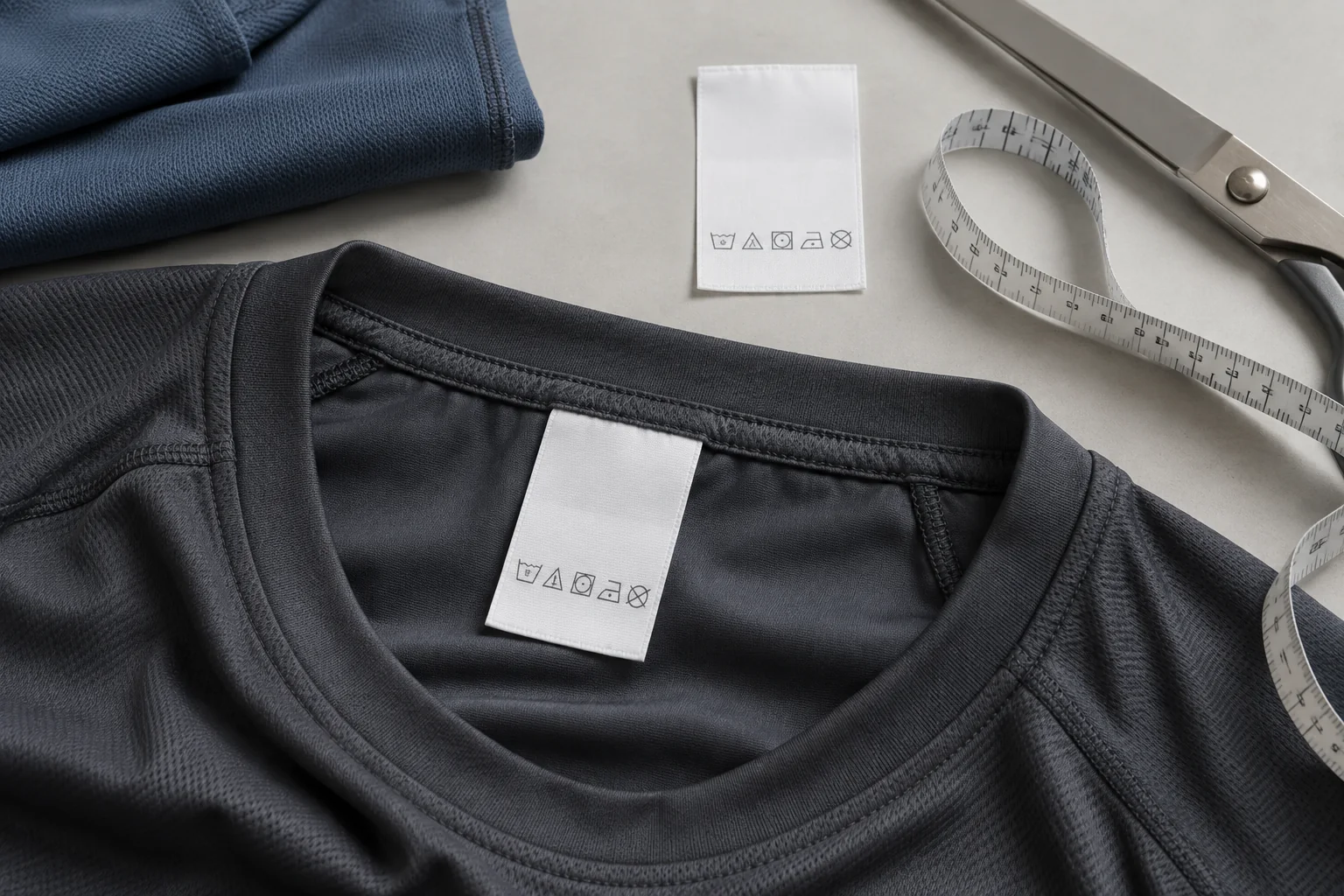
Before approving label copy, confirm:
- fiber percentages for the finished garment and any separately identified sections;
- country of origin and responsible company information for the destination market;
- wash, dry, iron, bleach, and professional-care instructions;
- whether heat transfer, print, coating, elastic, or trim changes the safest instruction;
- whether the product is consumer apparel or falls within a different regulatory situation;
- whether sustainability or performance wording has evidence for the exact material.
Do not use the phrase easy care as a substitute for a test. Do not label a garment as moisture wicking, recycled, or performance certified because a supplier used the phrase in a quotation. Match each statement to the material and document that supports it.
Virgin polyester and recycled polyester
Virgin polyester uses newly produced polymer feedstock. Recycled polyester, often called rPET, uses recycled PET inputs. Textile Exchange describes mechanical recycling as melting and re-extruding plastic, while chemical recycling breaks polymer material down and reforms it into a new yarn route. The specific feedstock, process, and chain-of-custody documentation still need to be checked.
The label recycled polyester is not the same as a blanket sustainability claim. A buyer should ask:
- What percentage of the exact fabric is recycled polyester?
- Is the claim about fiber, yarn, fabric, or finished garment?
- What documentation covers the supplied material and the destination-market claim?
- Does the recycled route change color, hand feel, strength, recovery, or surface?
- Does the product require a named certification, and is that certification actually available for this order?
Textile Exchange lists recycled polyester as a preferred synthetic category in its glossary, but a category description does not prove a particular product’s content or certification. Keep the fiber evidence, claim wording, and product file connected. If the documentation stops at a generic supplier statement, narrow the public claim to what can be verified.
Polyester versus cotton: choose for the garment
Polyester and cotton are often compared as if one must win. The better question is what the garment needs to do and what trade-off the customer will accept.
| Decision factor | Polyester may suit when | Cotton may suit when | What to confirm in the sample |
|---|---|---|---|
| Drying | The product needs low moisture retention and quick drying potential | A more absorbent, familiar hand matters more than rapid drying | Wet feel, drying time, airflow, and fit |
| Shape | Wrinkle resistance and shape retention are priorities | A natural hand and a different drape are central to the product | After-care measurements and appearance |
| Decoration | A synthetic-compatible print or dye route fits the artwork | A cotton-compatible print route and hand feel fit the design | Color, hand, wash result, and stretch |
| Heat | The process can stay within the material’s heat limits | The product or process favors a different heat response | Pressing, curing, drying, and storage conditions |
| Hand feel | Smooth, technical, brushed, or structured surfaces are wanted | A familiar, soft, or dry natural hand is wanted | Face, reverse, seams, and next-to-skin feel |
| Blending | The team wants to tune performance with another fiber | A cotton-rich product direction is more important | Exact ratio, shrinkage, pilling, and care |
The same garment may use both fibers in different parts, such as a polyester outer body with a cotton-rich contrast or a synthetic lining. Compare the full garment, not only the body swatch. For a new private-label product, a controlled swatch and sample review is more useful than a universal ranking of fibers.
The specification line that prevents most polyester surprises
The most useful polyester request is short enough to read and complete enough to test:
> Product use, fiber composition, construction, target GSM, usable width, stretch and recovery, surface and finish, color route, decoration, care route, and sample acceptance checks.
That line forces the conversation away from vague labels. It also gives a sourcing manager a way to compare two quotes without pretending that similar percentages mean identical fabric.
Before moving to bulk, make sure the approved sample, swatch, measurement chart, artwork, care direction, and comments point to the same material reference. If a revision changes the fabric, record it. A small unrecorded change in yarn, finish, or GSM can become a visible change in fit, shine, opacity, or wash result.
Turn a polyester concept into a production-ready sample
If polyester is being considered for a new tee, training top, hoodie, short, or streetwear layer, send the product use before asking for a fabric recommendation. Include the reference image or garment, intended activity, fit chart, composition direction, construction, GSM range, color, decoration, quantity assumptions, destination market, and the failure risks that matter most.
DTS Activewear presents custom apparel development, tech-pack review, fabric and trim selection, sampling, production coordination, and quality-control review for B2B apparel programs. The useful next step is a brief that lets the team assess the garment and material together. Exact fabric availability, MOQ, timing, price, compliance documents, and test requirements must be confirmed for the project.
Use the confidential design and apparel inquiry path to send the polyester fabric direction, product type, construction, GSM target, stretch or opacity concern, decoration plan, and sample questions. That gives the quotation and sample team enough context to recommend a review path without treating a general fiber name as a finished specification.
Frequently asked questions
Polyester fabric is made from polyester fiber or yarn, most commonly PET based polyester in apparel. The fiber is formed into filament or staple material, spun or processed into yarn, and knitted or woven into fabric.
Strictly speaking, polyester is a fiber family. Polyester fabric is the finished textile created when polyester yarn is knitted or woven and then dyed or finished. The fiber name does not identify one universal fabric construction.
Breathability depends on construction, thickness, openness, finish, garment fit, and airflow. A lightweight mesh may feel more airy than a dense fleece made from the same fiber. Do not infer breathability from the word polyester alone.
Polyester fiber absorbs relatively little moisture compared with many natural fibers. That can support quick drying in some constructions, but it does not guarantee moisture wicking or a dry feeling. Review the fabric and finished garment under the intended activity.
It can be a good candidate for many activewear products because it offers a wide range of knits, wovens, surfaces, colors, and decoration routes. The final choice still depends on movement, recovery, opacity, heat, moisture, abrasion, care, and the product promise.
The amount of dimensional change depends on yarn, construction, heat setting, finishing, pattern, seams, and the wash and dry route. Measure the finished sample before and after the proposed care process instead of using a universal shrinkage assumption.
Recycled polyester is still polyester fiber, but it is produced with recycled PET inputs rather than only newly produced feedstock. The recycled percentage and any certification or chain-of-custody claim need documentation for the exact material.
Request fiber percentages, construction, GSM, usable width, stretch and recovery, color and finish, decoration compatibility, care route, sample method, and acceptance limits. Also ask for evidence supporting any recycled, performance, or certification wording used in the offer.