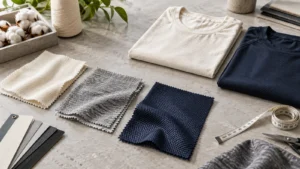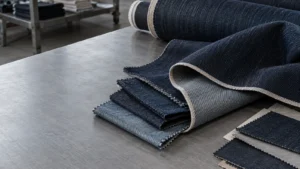
If you are asking what is Tencel fabric, the most accurate short answer is that TENCEL is a registered fiber brand, not one generic fabric construction. In apparel sourcing, the name usually refers to TENCEL branded lyocell or modal fibers made by Lenzing AG. The final fabric can be knitted or woven, smooth or textured, light or heavy, and blended with other fibers.
That distinction matters when a buyer compares fabric cards. A fabric described only as Tencel fabric may still leave unanswered questions about whether it contains TENCEL Lyocell or TENCEL Modal, what the generic fiber declaration should say, which percentage is present, how the yarn was made, and how the finished fabric behaves after dyeing and laundering. The brand name is not a substitute for a complete material specification.
This guide explains what Tencel means, how branded lyocell and modal differ, where the material can fit in an apparel range, and how a sourcing team can verify fiber identity, claims, construction, tests, and care behavior before bulk production.
What is Tencel fabric?
In procurement language, TENCEL is a Lenzing AG brand used for selected lyocell and modal fibers. The generic fiber family is regenerated cellulosic fiber: cellulose from a natural source such as wood is dissolved and converted into textile fiber through a manufactured process. The fiber then becomes yarn, fabric, and a garment through normal textile production steps.
Tencel fabric is therefore better described as fabric made with TENCEL branded fibers than as a single fabric type. The construction may be jersey, interlock, rib, woven twill, denim, fleece, or another route. The fiber may be used alone or blended with cotton, polyester, elastane, linen, or another declared component.
| Term on a buyer document | What it identifies | What it does not prove |
|---|---|---|
| TENCEL | A branded fiber route associated with Lenzing AG | The exact fiber type, percentage, fabric construction, or test result |
| TENCEL Lyocell | A branded lyocell fiber direction | The garment’s final hand, weight, stretch, or care response |
| TENCEL Modal | A branded modal fiber direction | That the fabric is made from 100 percent modal or has a fixed GSM |
| Lyocell | The generic fiber name used for a lyocell fiber | That the fiber is a TENCEL branded product |
| Modal | The generic fiber name used for a modal fiber | The producer, brand route, or sustainability evidence |
| Tencel fabric | A common search and trade phrase | A complete fiber declaration or construction specification |
For an apparel quote, write the brand and generic fiber fields separately. For example, request the generic fiber content, identify whether branded fiber verification is required, and then specify the finished construction, weight, width, hand, stretch, shade, care route, and test plan. This reduces the risk of approving a soft cellulosic fabric that is not the material route the product team intended.
Is Tencel natural or synthetic?
TENCEL fibers sit between the everyday categories of natural and synthetic. Their raw material is cellulose from wood or another declared cellulosic source, but the fiber does not grow in a ready-to-use form. It is regenerated through an industrial process, so the technically useful category is man-made cellulosic or regenerated cellulosic fiber.
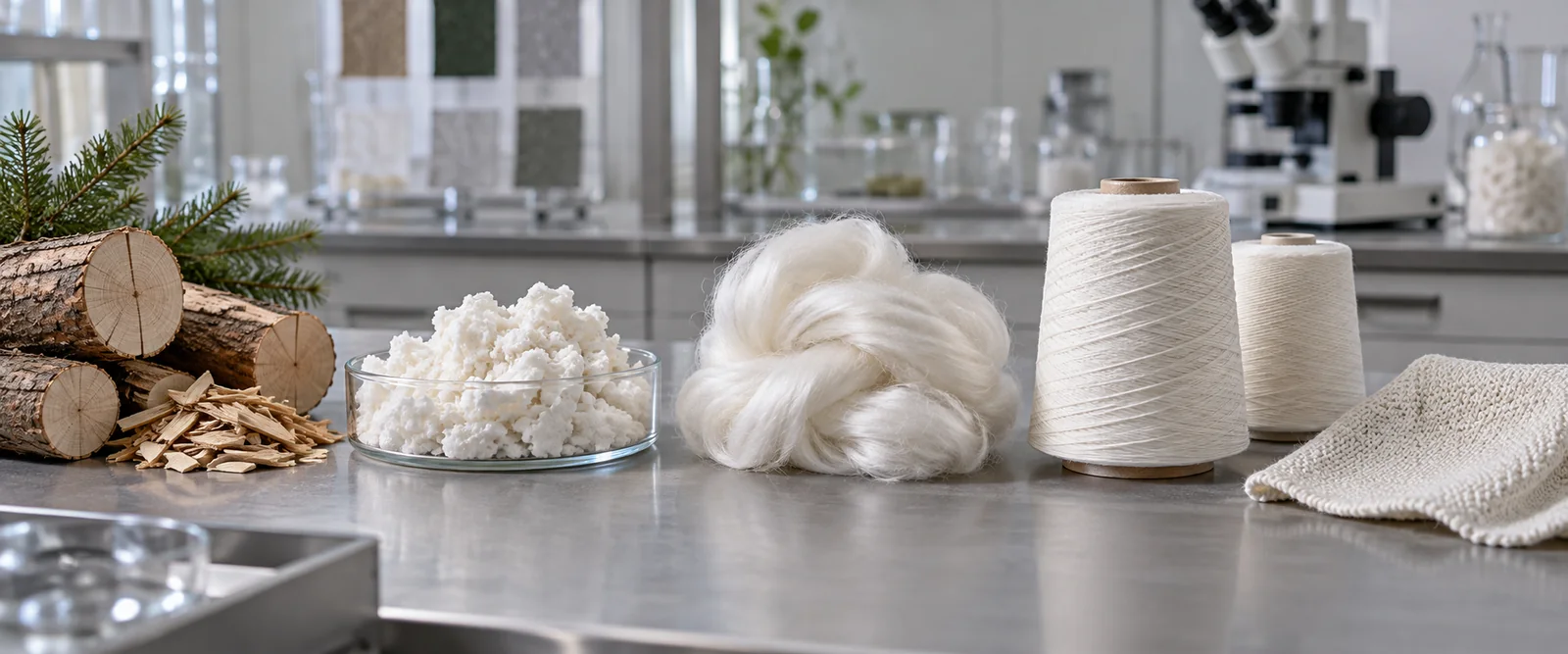
The simplified route looks like this:
- A controlled or certified raw material source is selected according to the product and supplier documentation.
- Cellulose is prepared as dissolving pulp with the quality needed for fiber production.
- The pulp is dissolved and processed into a spinning solution.
- The solution is formed into filaments, washed, dried, and prepared as staple fiber or another yarn input.
- Spinning, knitting or weaving, dyeing, finishing, and garment production create the final product.
Lenzing describes TENCEL Lyocell as using a closed-loop production route with high solvent recovery. That is a product-specific manufacturing claim, not a blanket statement that every cellulosic fabric has the same environmental profile. A buyer should connect environmental language to the exact fiber, producer, certification, chain of custody, and finished product evidence.
TENCEL should also not be treated as automatically biodegradable, compostable, plastic-free, cool, odor resistant, or stretchable. Those outcomes depend on fiber type, blend, dyes, finishes, fabric construction, garment design, use conditions, and the evidence supporting the claim. Use the generic fiber name and the applicable labeling rules for the target market.
What are TENCEL Lyocell and TENCEL Modal?
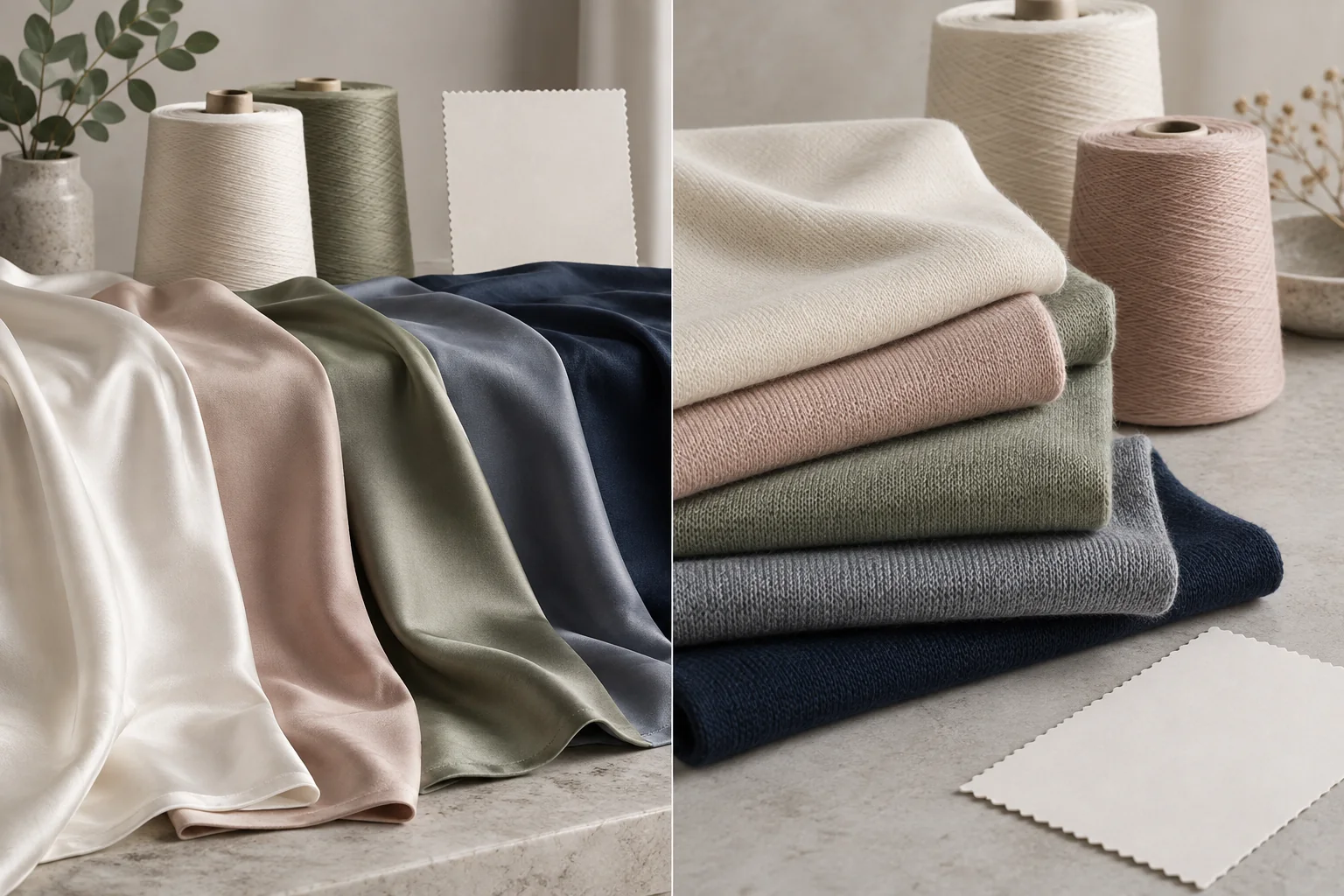
TENCEL Lyocell and TENCEL Modal are two distinct branded fiber directions. Both are regenerated cellulosic, but their process routes and product positioning are not interchangeable. Lyocell is often selected for a smooth hand, drape, and strength profile. Modal is often selected for soft next-to-skin comfort and a stable soft hand through repeated care. These are useful starting points, not fixed performance guarantees for every fabric mill.
| Fiber direction | Useful starting description | Buyer questions before approval |
|---|---|---|
| TENCEL Lyocell | Branded lyocell route often chosen for smoothness, drape, moisture comfort, and a stronger cellulosic performance profile | Is the branded fiber identity documented, and does the finished fabric meet the required strength, shrinkage, pilling, and hand targets? |
| TENCEL Modal | Branded modal route often chosen for softness and next-to-skin comfort | Is the fabric intended for close-contact wear, and does the finished lot retain its hand, color, and dimensions after the planned care route? |
| Lyocell with another producer | Generic lyocell fiber used in a fabric specification | What producer, process, certifications, and fiber declaration apply, and why is the generic route appropriate for the product? |
| Modal with another producer | Generic modal fiber used in a fabric specification | Is the modal percentage verified, and how does the supplier control softness, pilling, shrinkage, and shade? |
| Blended cellulosic fabric | Lyocell or modal combined with cotton, polyester, elastane, or another declared fiber | Which component drives the claim, how are percentages declared, and how do the fibers behave together after finishing? |
The word Tencel on a quote should therefore be followed by a brand and fiber check. Ask for the supplier’s fiber declaration, lot or transaction evidence when branded content is required, and the exact fabric construction. If the buyer only needs a lyocell-like hand, a generic lyocell route may be a different commercial decision from a product that specifically requires TENCEL branded fiber.
What does Tencel fabric feel like and how does it perform?
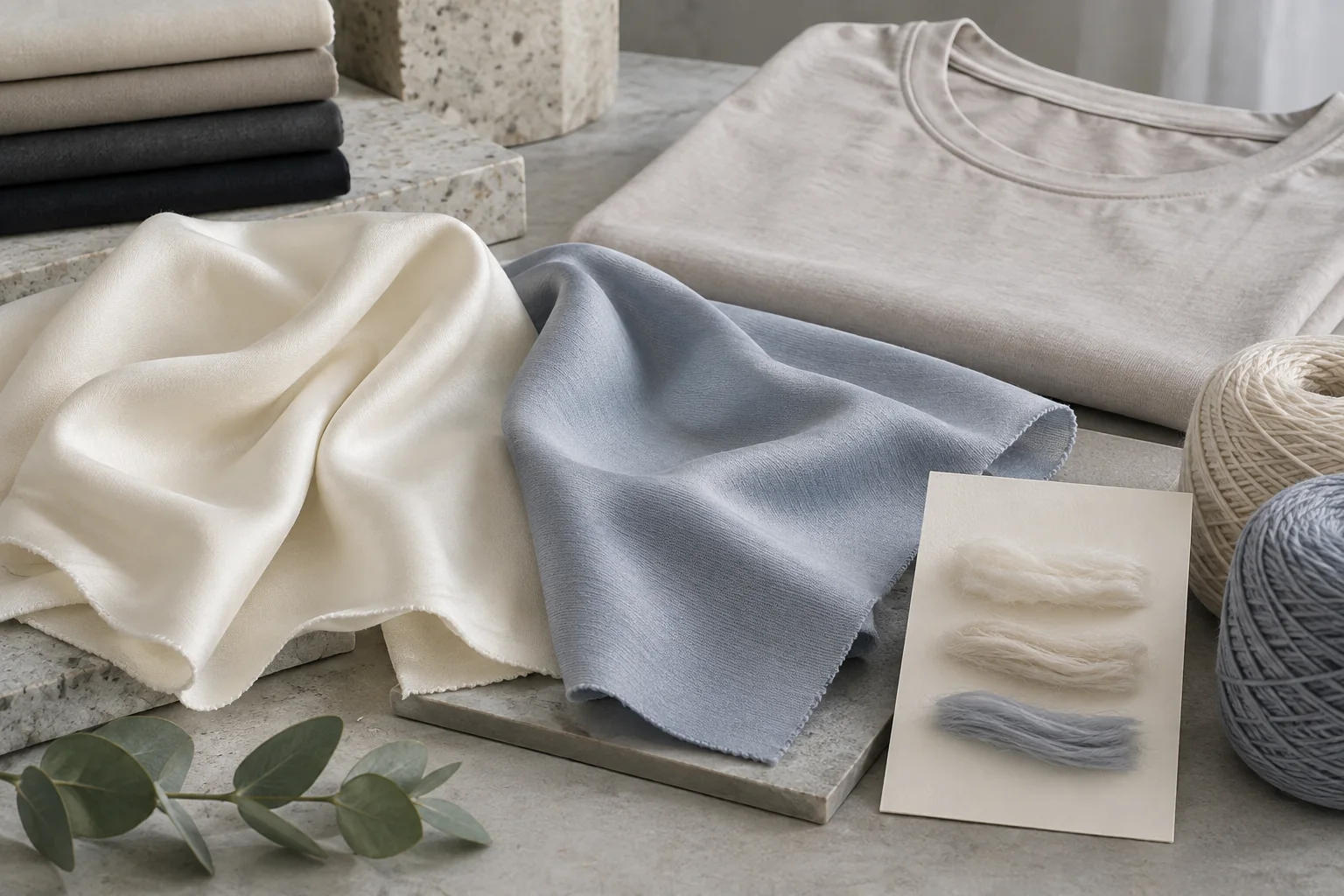
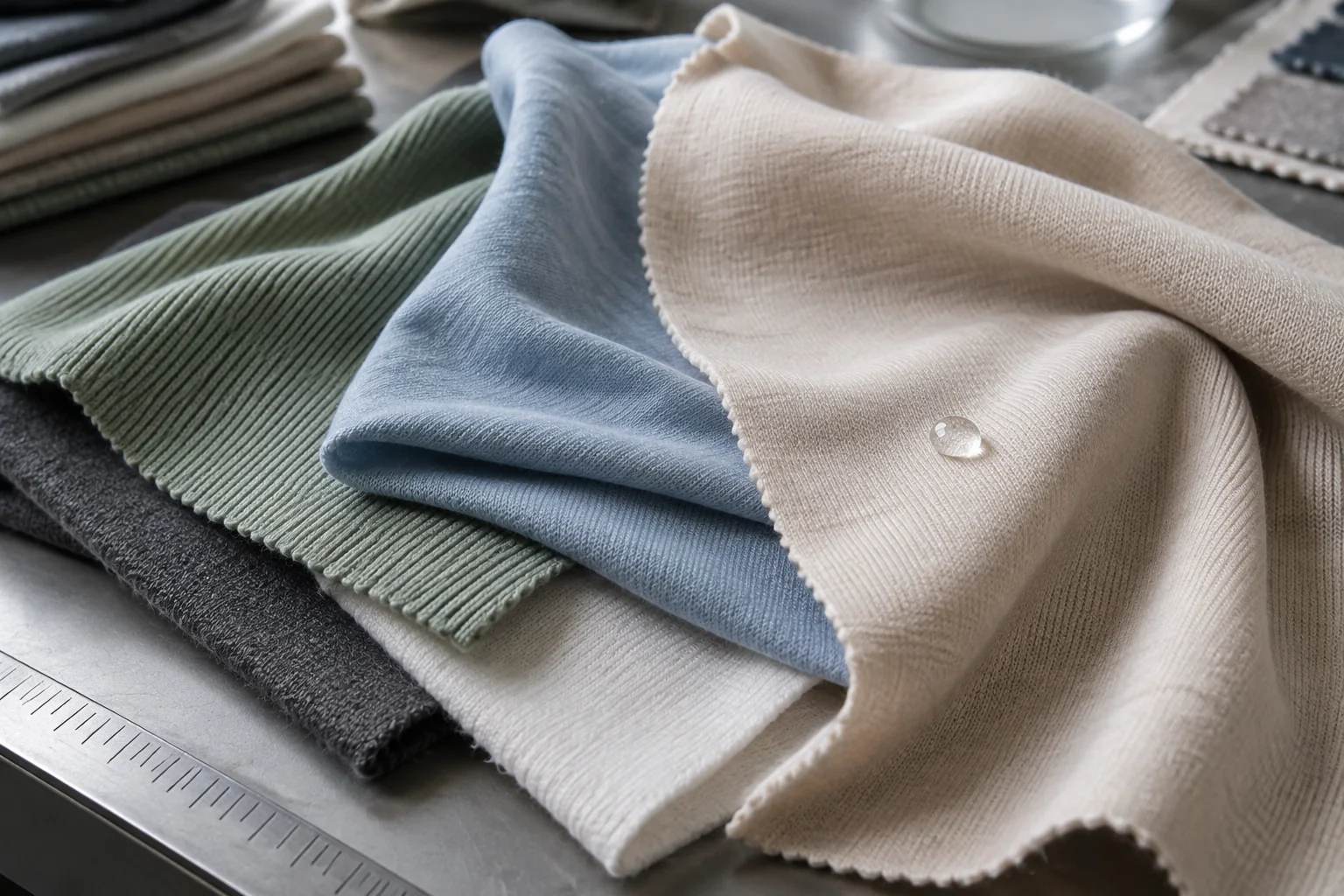
Many Tencel fabrics feel smooth, soft, and fluid, but the final hand depends on the fiber route, yarn, gauge, weave, finishing, weight, and blend. The same branded fiber can be made into a lightweight drapey jersey, a structured woven, a brushed knit, or a blended performance fabric with a different feel.
| Buyer concern | What a Tencel direction may support | What still needs to be checked |
|---|---|---|
| Soft hand | Smooth and comfortable next-to-skin wear in suitable yarn and finish combinations | Hand after laundering, pilling, seam comfort, and hand variation between lots |
| Moisture comfort | Moisture interaction and a dry feeling in some constructions and finishes | Absorption, spreading, drying time, vapor comfort, fit, and garment openings |
| Drape | Fluid movement in lightweight woven or knit routes | GSM, yarn, construction, finishing, bias behavior, and pattern engineering |
| Strength and processing | A high-tenacity direction can support yarn and fabric processing stability | Breaking or bursting strength, seam behavior, abrasion, and end-use wear |
| Color and appearance | Smooth surfaces can show clean color and a subtle sheen | Shade consistency, colorfastness, crocking, surface change, and finish durability |
| Stretch | A blend with elastane or a suitable knit can add extension | Fiber content, extension force, recovery, repeated cycles, and heat setting |
Tencel is not a performance shortcut. A soft hand does not prove high abrasion resistance. Moisture comfort does not prove rapid drying. A branded fiber does not make every construction suitable for high-output training, compression, swim, or heavy workwear. Select the fabric against the garment job and use test data to settle the decision.
Where is Tencel fabric used?
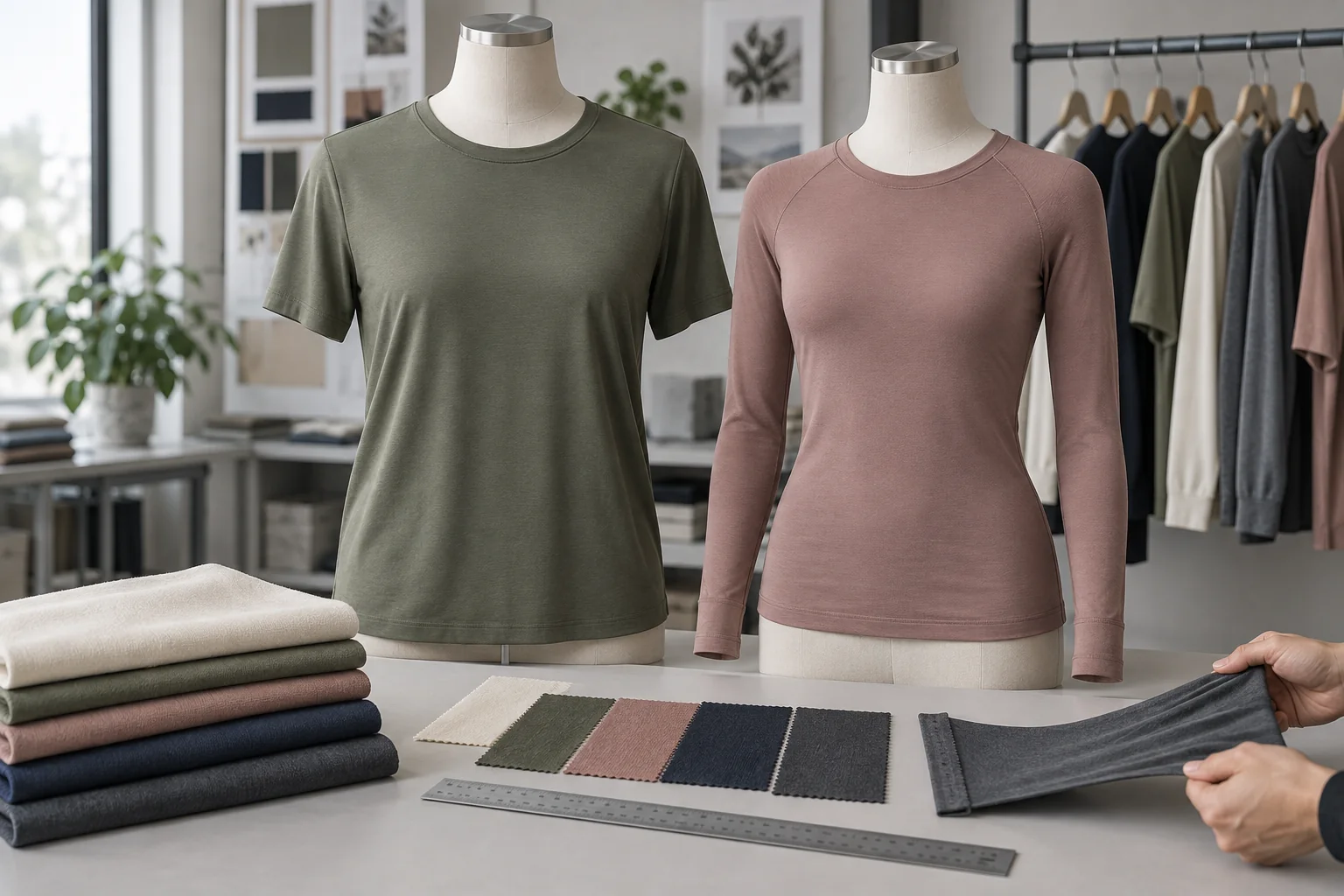
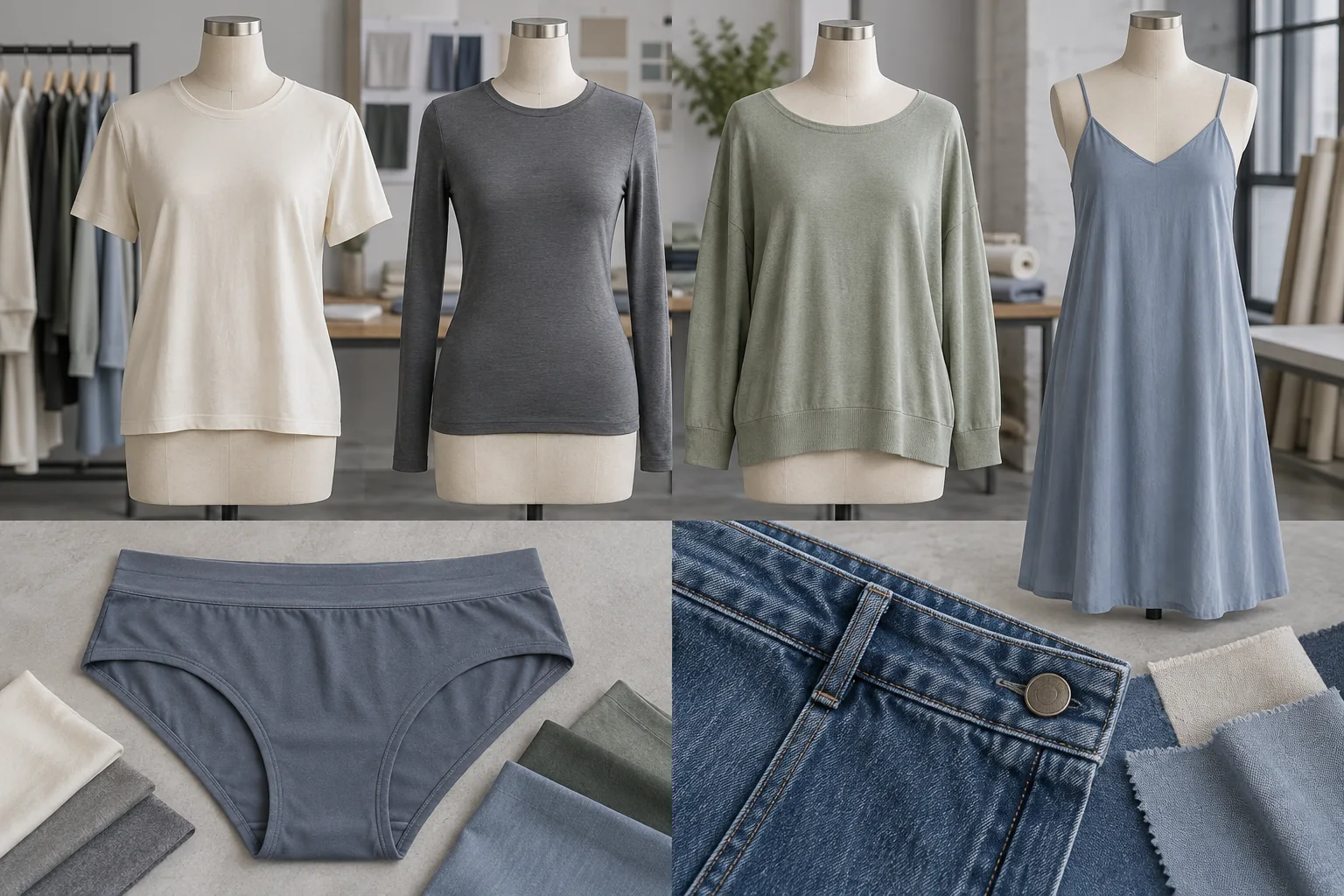
TENCEL branded lyocell and modal fibers can be used in a broad apparel range, including tees, base layers, underwear, lounge, lightweight tops, denim, dresses, and selected activewear styles. The correct application depends on fabric construction and the required balance of hand, drape, recovery, durability, care, and price.
| Product direction | Why a buyer may consider it | Main development risks |
|---|---|---|
| Premium tee or top | Soft touch, smooth surface, and a more fluid hand than some standard cotton jerseys | Pilling, shrinkage, show-through, neckline stability, and shade variation |
| Base layer or next-to-skin style | Comfort and moisture interaction can be valuable close to the body | Seam comfort, drying behavior, recovery, odor claims, and care response |
| Lounge or intimate apparel | Softness and drape can support a comfortable product position | Stretch, support, pilling, colorfastness, and repeated laundering |
| Light dress or woven top | Fluid movement and a smooth surface can suit a drapey silhouette | Slippage, seam distortion, crease behavior, opacity, and shrinkage |
| Denim or casual blend | A cellulosic component can change hand and drape in a blended construction | Blend accuracy, tear or abrasion performance, shade development, and care labeling |
| Selected activewear | A soft cellulosic route may suit low to moderate intensity, lifestyle, or studio pieces | Sweat load, dry time, stretch recovery, surface wear, and the limits of any cooling or odor claim |
For high-intensity activewear, compare Tencel fabrics against polyester, nylon, cotton blends, and elastane blends using the actual activity and care route. A yoga top, a running tee, a studio layer, and a recovery garment do not ask the fabric to do the same job.
Tencel vs lyocell, modal, cotton and polyester
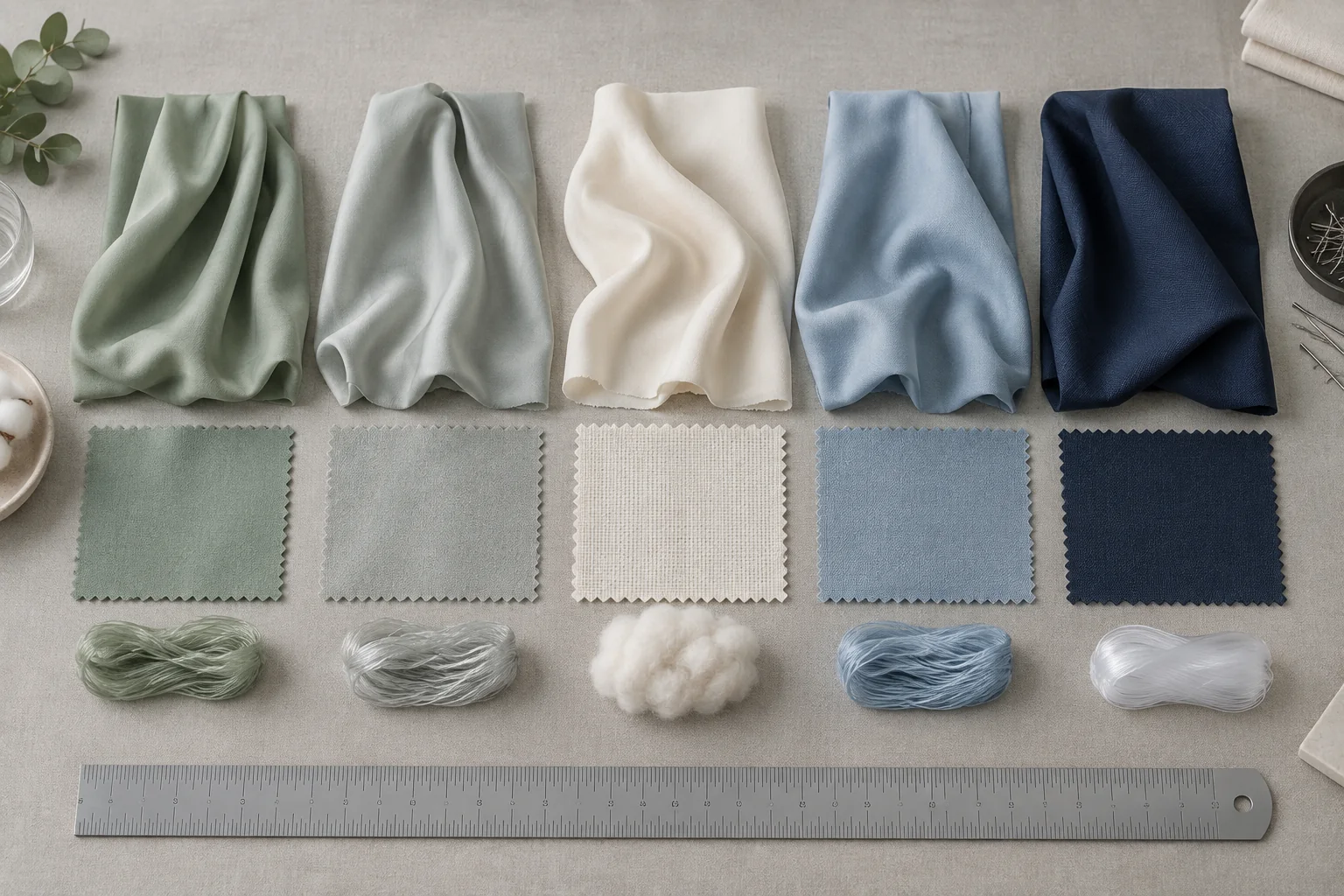
The most common misunderstanding is treating Tencel and lyocell as perfect synonyms. TENCEL identifies a branded fiber route; lyocell and modal are generic fiber names. A fabric can be lyocell without being TENCEL branded. A fabric can contain TENCEL branded fiber without being 100 percent TENCEL fiber. Cotton and polyester are separate fiber directions that can be blended with cellulosics.
| Material direction | Generic identity | Typical buyer reason to compare it | Decision checks |
|---|---|---|---|
| TENCEL Lyocell | Branded lyocell | Smooth hand, drape, moisture comfort, and brand-specific sourcing evidence | Brand verification, fiber percentage, construction, durability, care, and claim support |
| Generic lyocell | Lyocell | Similar fiber family without the same brand requirement | Producer, process, certificates, hand, strength, pilling, and price |
| TENCEL Modal | Branded modal | Soft next-to-skin hand and a branded modal route | Brand verification, modal content, wash response, pilling, and shade |
| Cotton | Natural cellulosic staple fiber | Familiar hand, broad supply base, and a different cost and care profile | Shrinkage, colorfastness, hand, pilling, and moisture behavior |
| Polyester | Synthetic fiber | Easy-care, color, strength, and performance directions for some products | Heat comfort, static, moisture, abrasion, pilling, and fiber disclosure |
| Blend | Two or more declared fiber types | Balance hand, recovery, care, durability, and cost | Exact percentages, dye route, differential shrinkage, testing, and labeling |
Use this comparison to make the inquiry more precise, not to declare one fiber universally superior. A sourcing brief should say which quality matters most, how that quality will be measured, and which compromise is acceptable if the first sample misses the target.
What should a buyer specify for Tencel fabric?
The phrase Tencel fabric is too broad for a final purchase order. A useful brief separates identity, construction, finish, garment use, claim evidence, and acceptance testing. It also distinguishes a request for branded fiber from a request for a generic lyocell or modal hand.
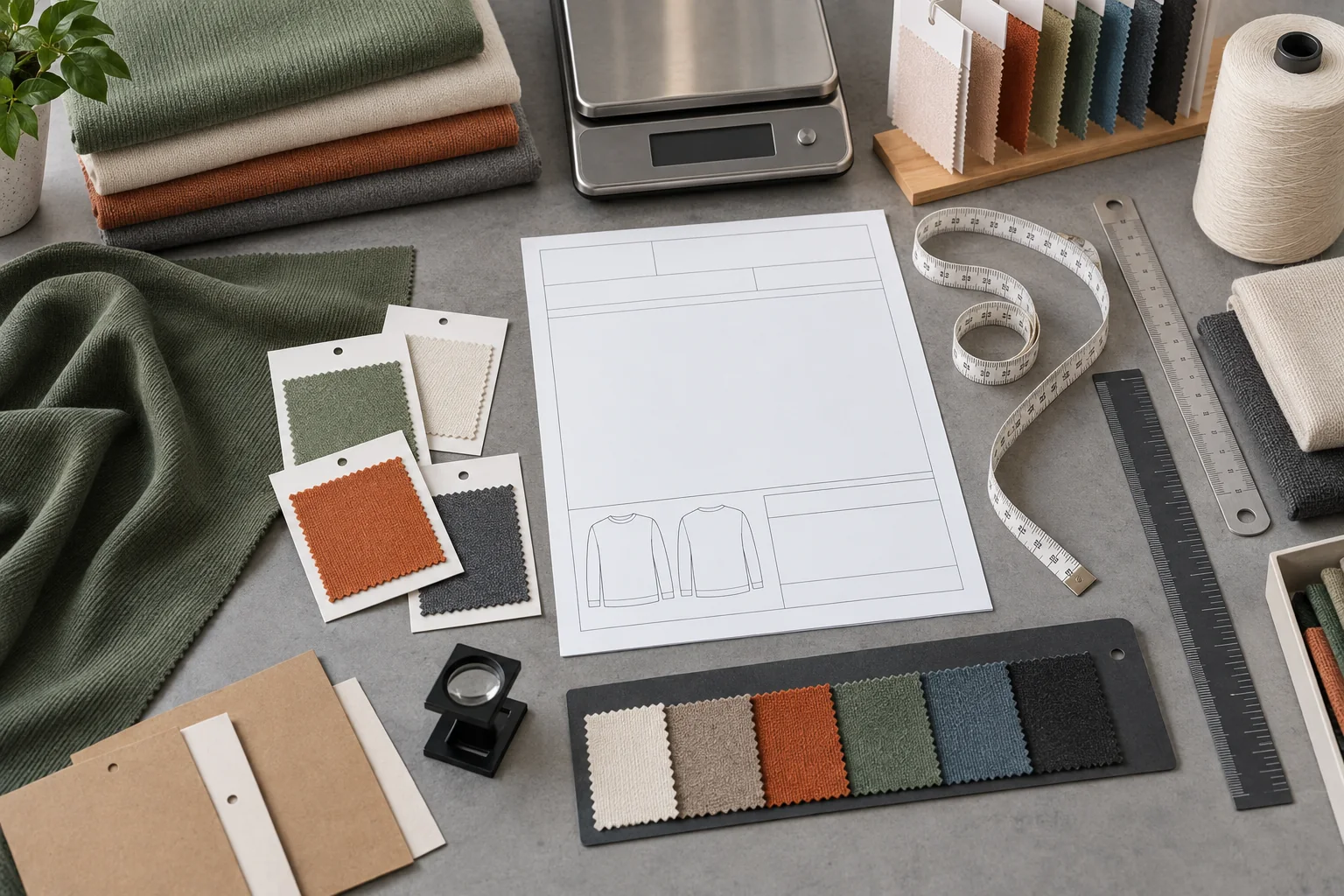
| Tech pack field | What to record | Why it matters |
|---|---|---|
| Brand and generic fiber | TENCEL branded fiber if required, plus lyocell or modal and the percentage | Prevents brand names from replacing the legal or technical fiber declaration |
| Yarn | Spun or filament route, yarn count, twist, and supplier reference | Changes hand, strength, drape, hairiness, and surface consistency |
| Construction | Jersey, interlock, rib, woven, denim, fleece, or another structure | Determines thickness, stretch, stability, drape, and garment behavior |
| Finished weight and width | Target GSM, tolerance, usable width, and edge condition | Controls yield, coverage, cost, and marker planning |
| Stretch and recovery | Direction, extension, force, recovery time, and repeated cycles | Connects the fabric to fit, movement, and size stability |
| Finish and shade | Softener, brushing, wicking treatment, heat setting, color standard, and lot control | Finishing can change hand, shrinkage, shade, moisture behavior, and claims |
| Traceability and claims | Certificate, branded fiber evidence, chain of custody, and approved marketing wording | Makes sustainability and brand language auditable instead of decorative |
| Care and decoration | Wash, drying, ironing, printing, embroidery, transfer, and seam requirements | Shows whether the fabric survives the actual product route |
If the supplier cannot fill a field, mark it as pending confirmation. Do not replace an unknown fiber percentage, GSM, or lead time with a generic industry assumption. A clear unanswered field is safer than a confident but unverified number.
How should a buyer verify Tencel claims?
The verification step is important because the word Tencel can appear in casual product copy even when the commercial document does not identify the fiber route. The buyer should ask what the seller is promising and what document supports each promise.
Use a simple evidence chain:
- Record the exact branded and generic fiber wording on the quotation, sample card, tech pack, and intended label.
- Ask whether the supplier is claiming TENCEL branded content or only a generic lyocell or modal fiber.
- Request the relevant certificate, transaction document, chain-of-custody evidence, or supplier declaration for the exact material route.
- Match the evidence to the fiber percentage and lot used in the approved sample, not to a different stock fabric.
- Review all environmental, biodegradability, comfort, cooling, odor, or low-impact language with the target market’s requirements.
- Keep the approved wording with the fabric standard and repeat the check if the mill, yarn, blend, or finish changes.
Lenzing’s public material explains its own branded fiber routes and sourcing credentials. That evidence can help a buyer understand what to ask for, but a supplier should not copy a brand claim into a product listing unless the actual fiber and permission requirements are satisfied. If the final label needs a generic fiber name, use the name required by the destination market and the real composition.
How should Tencel fabric be tested?
Testing should be selected from the product risk, not from the popularity of a fabric name. A soft tee, a close-fitting base layer, and a high-sweat training top need different acceptance priorities. Test both the fabric and a sewn sample because the garment can introduce collar, seam, print, fit, and care risks that are invisible in a flat swatch.
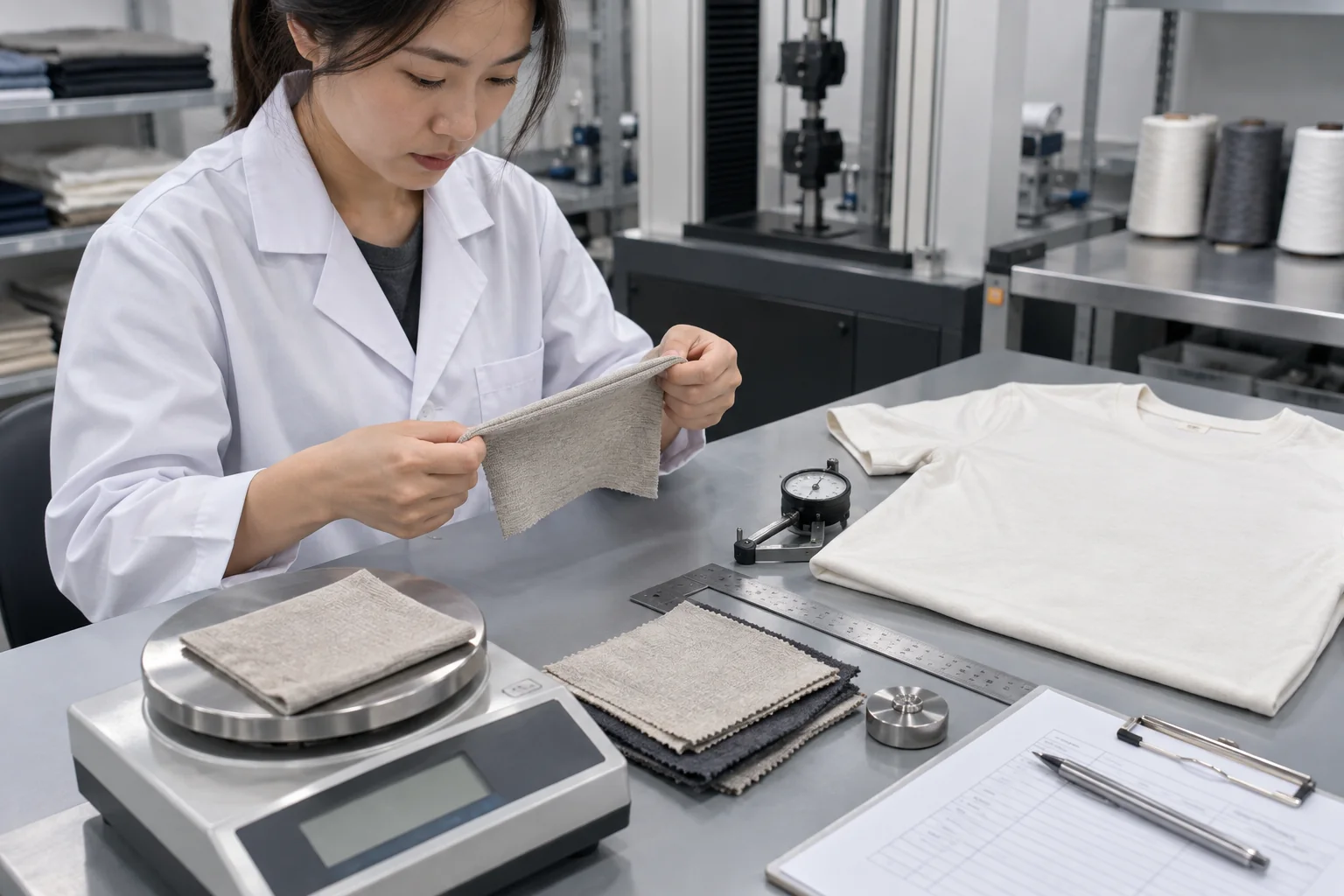
| Test area | Buyer question | Practical evidence to request |
|---|---|---|
| Fiber identity and content | Is the material the branded or generic route stated in the brief? | Fiber declaration, supplier evidence, and lot-linked documentation |
| Mass and width | Can the lot be cut to the approved yield and coverage? | GSM and usable width readings from multiple locations |
| Dimensional change | Will the body, neckline, length, or width move after care? | Before and after measurements using the agreed laundering procedure |
| Stretch and recovery | Does the fabric return after movement and repeated extension? | Direction, extension, force, recovery interval, and cycle results |
| Pilling and abrasion | Will the surface remain acceptable in the intended use? | Method, conditioning, cycles, rating, and specimen photographs |
| Colorfastness | Will color transfer or change during wear and care? | Wash, rubbing, perspiration, light, or other relevant results |
| Moisture behavior | Does the fabric absorb, spread, and dry in the way the product needs? | Defined moisture method, test conditions, and comparison sample |
| Finished garment | Do fit, seams, decoration, labels, and care instructions remain acceptable? | Laundered garment review and signed sample approval |
Named references may include ASTM D3776 for fabric mass per unit area, AATCC TM135 for dimensional change after home laundering, AATCC TM195 for liquid moisture management, and ASTM D4966 for Martindale abrasion resistance. The method edition, conditioning, specimen, cycles, rating, and acceptance limit must be agreed in the purchase specification. A test method name is not a pass result.
How does Tencel fabric behave after care?
Care behavior depends on the fiber direction, yarn, construction, dyeing, finishing, garment pattern, and wash instructions. Some cellulosic fabrics can change in length or width, develop a different hand, or show surface change after repeated laundering. Blends may react differently because the components shrink, relax, or take color at different rates.
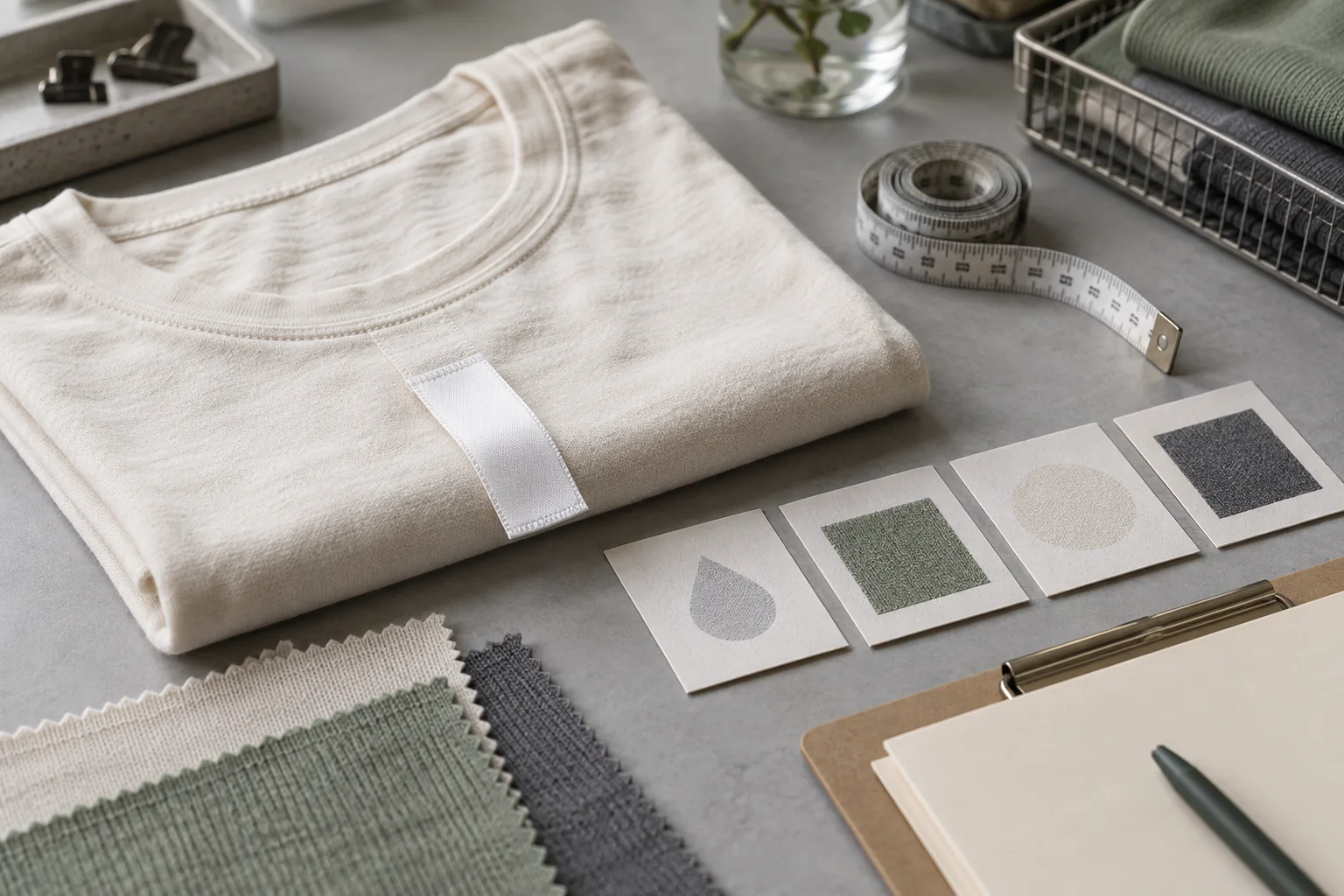
Before approving care copy, check the complete sewn style:
- Measure length, width, neckline, cuffs, and other fit-critical areas before and after the agreed wash route.
- Compare the hand and drape after care instead of approving only the first-sample feel.
- Inspect pilling, fuzz, seam torque, print adhesion, embroidery puckering, shade change, and surface sheen.
- Check whether the care label is suitable for the target market and the actual fiber blend.
- Repeat the review if the mill changes yarn, construction, finish, dye route, or fiber percentage.
The goal is not to promise that Tencel never changes. The goal is to establish a realistic care route and acceptance range for the final product, then communicate it clearly to the customer.
How should a buyer decide whether Tencel is right?
Tencel can be a strong direction when the product needs a soft cellulosic hand, fluid drape, selected moisture comfort, or a branded fiber story supported by documentation. It may be a poor fit when the product requires a very specific high-abrasion result, firm compression, rapid drying under heavy sweat, or a low-cost commodity construction. Those decisions belong to the product brief and test plan.

For a quote or sample request, send the garment type, target wearer, activity, fiber route, blend percentage, construction, finished GSM, usable width, stretch need, color, decoration, care route, quantity, and required evidence. This gives a manufacturer enough context to suggest a fabric that can be tested instead of responding to a brand name alone.
Frequently asked questions
No. TENCEL is a registered brand used for selected Lenzing lyocell and modal fibers. Lyocell is the generic fiber name. A fabric can be lyocell without being TENCEL branded, so a buyer should record both the generic composition and the brand requirement.
TENCEL fibers start with cellulose from a natural source such as wood, but they are regenerated through a manufactured process. The useful technical category is man-made cellulosic or regenerated cellulosic fiber, not an untreated natural fiber.
They are two branded fiber directions with different process routes and typical product positioning. TENCEL Lyocell is often considered for smoothness, drape, moisture comfort, and strength, while TENCEL Modal is often considered for soft next-to-skin comfort. The finished fabric still needs its own testing.
It can suit low to moderate intensity, lifestyle, studio, recovery, or soft base-layer products when the construction meets the brief. For high-sweat or high-abrasion use, compare it with polyester, nylon, and blends using drying, recovery, abrasion, pilling, and care tests.
Some Tencel fabrics can feel comfortable and manage moisture well, but breathability is not guaranteed by the name. Air movement depends on fiber, yarn, construction, weight, finish, fit, and garment openings. Test the finished fabric or garment under the intended conditions.
TENCEL fiber itself does not automatically make a fabric stretchy. Stretch may come from the knit construction, yarn arrangement, elastane blend, or garment engineering. Specify extension and recovery in the fabric brief and verify them after care.
No. Lyocell is a generic fiber name and TENCEL is a brand. If a buyer requires TENCEL branded content, ask for the supporting documentation and match it to the approved sample and lot. Do not use the brand name as a substitute for a generic fiber declaration.
Ask for the exact branded and generic fiber content, producer, construction, yarn, GSM, width, stretch and recovery, finish, shade standard, test plan, care route, claim evidence, and sample reference. Also confirm which fields are guaranteed and which remain subject to lab-dip or bulk-lot approval.