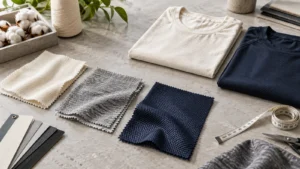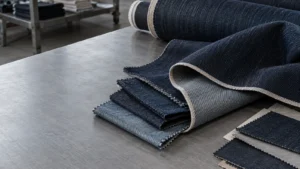
If you are asking what is twill fabric, the short answer is that twill is a woven construction, not a fiber. Warp and weft yarns are interlaced in a stepped pattern that creates the familiar diagonal line or rib on the fabric face. Cotton, polyester, nylon, wool, viscose and blends can all be made into twill, so the word twill alone does not tell a buyer the GSM, stretch, breathability, durability or care response.
That distinction matters in apparel sourcing. A supplier can offer cotton twill, polyester twill, nylon twill, stretch twill, denim, chino, gabardine or herringbone, but each option may behave differently because the fiber, yarn, construction, density, finish and weight are different. A useful fabric brief names the weave and the rest of the specification together.
This guide explains how twill is built, how common twill ratios differ, where twill fits in activewear and streetwear, and which fields and tests help a buyer approve the right fabric before bulk production.
What is twill fabric?
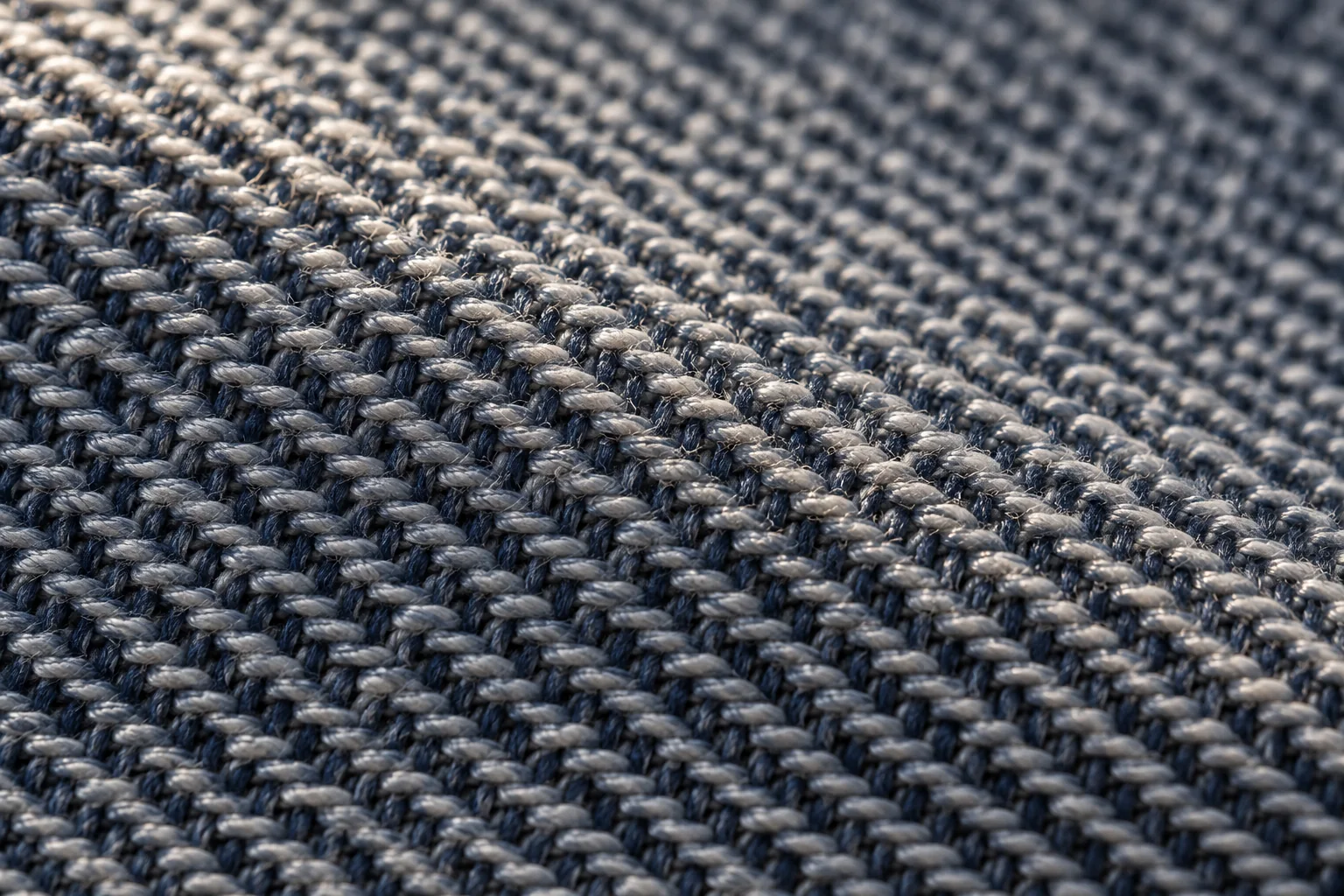
Twill is a woven fabric construction identified by diagonal lines formed when warp and weft yarns cross with a staggered interlacing sequence. CottonWorks describes twill weaves by the diagonal twill line on the fabric, while the U.S. National Park Service places twill alongside plain and satin as a basic woven structure.
The word describes how the yarns are organized. It does not identify one raw material or one finished performance level. A 100 percent cotton twill, a polyester uniform twill and a nylon stretch twill may all show a diagonal line while having different hand, weight, recovery, heat comfort, abrasion response and care instructions.
| Term on a buyer document | What it identifies | What it does not prove |
|---|---|---|
| Twill | A woven interlacing family with a stepped diagonal effect | Fiber content, GSM, width, stretch, finish or test result |
| Cotton twill | Twill made with a cotton-based fiber declaration | That it has a fixed weight, shrinkage or colorfastness level |
| Polyester twill | Twill made with polyester or a declared polyester blend | That it is automatically cool, quick drying or snag resistant |
| Stretch twill | A twill construction with extension from fiber, yarn or elastane | The direction, force, recovery or performance after laundering |
| Denim, chino or gabardine | A trade or product description often associated with a twill route | One universal weave ratio, weight or finishing recipe |
| 2/1, 2/2 or 3/1 twill | A shorthand for the interlacing repeat | The finished garment’s complete behavior |
For a quotation, keep the weave field beside the fiber field. For example, write polyester and elastane woven twill, 2/1, target GSM, usable width, stretch and recovery rather than asking for twill fabric as if it were a complete product specification.
How does a twill weave work?
Woven fabric uses two yarn directions. Warp yarns run along the length of the fabric, and weft yarns run across the width. In a plain weave, the crossing sequence alternates frequently. In twill, the interlacing is offset from row to row. That step creates longer floats and a diagonal path across the face.
The diagonal may rise to the left or right, and its angle can change with the repeat, yarn size, density and finishing. A pronounced diagonal is easy to see on many denim and workwear twills. A fine suiting or lightweight twill may show a much subtler line.
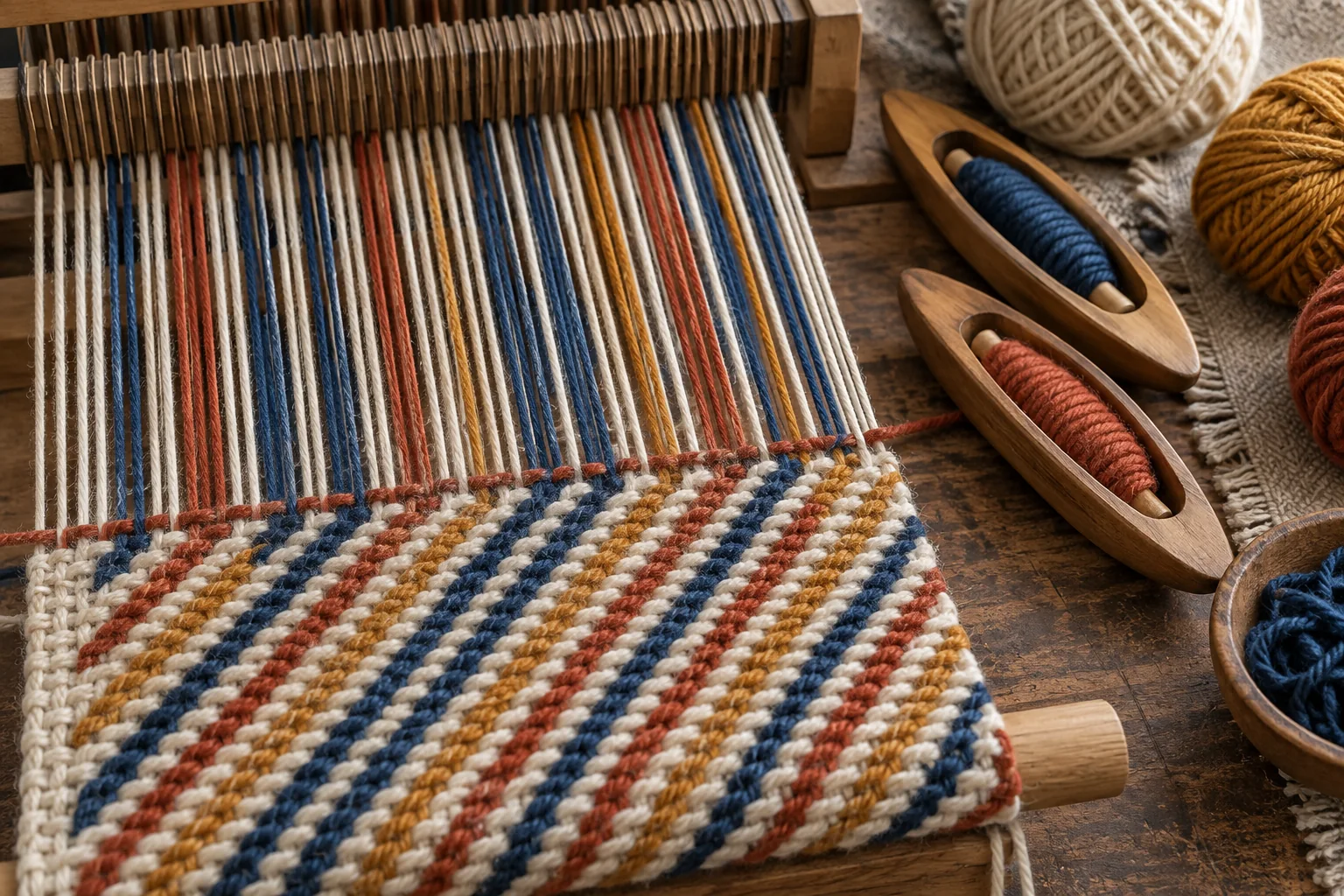
The notation is usually read as a ratio. The first number indicates how many yarns are passed over before the interlacing changes, and the second number indicates the under portion in that repeat. The exact convention can vary by technical document, so a sample or weave draft should accompany a critical specification.
| Twill notation | Simplified construction idea | Typical visual or development implication |
|---|---|---|
| 2/1 | Two-over and one-under repeat in a stepped sequence | A clear diagonal with a relatively simple repeat and many possible weight ranges |
| 2/2 | Balanced repeat with equal over and under counts | A balanced face and a regular diagonal; useful for many medium-weight woven routes |
| 3/1 | Longer floats on one face with a four-thread repeat | Frequently selected for heavier trouser fabrics; some denim, chino and gabardine constructions use this route |
| 1/2 or reverse twill | The prominence shifts between warp and weft direction | Changes face appearance, hand and the way the diagonal reads |
| Herringbone or chevron variation | The twill direction is broken or reversed in a planned repeat | Creates a V or zigzag effect rather than one continuous diagonal |
Longer floats can change drape, surface character and tear behavior, but they also change snag exposure and stability. Do not treat the ratio as a complete durability ranking. Fiber, yarn strength, density, weight, finish and garment construction still matter.
What are the common types of twill fabric?
Twill names can describe the weave repeat, the visual pattern, the raw material, the finish or the end use. This is why a buyer should ask the supplier to separate construction from marketing names.
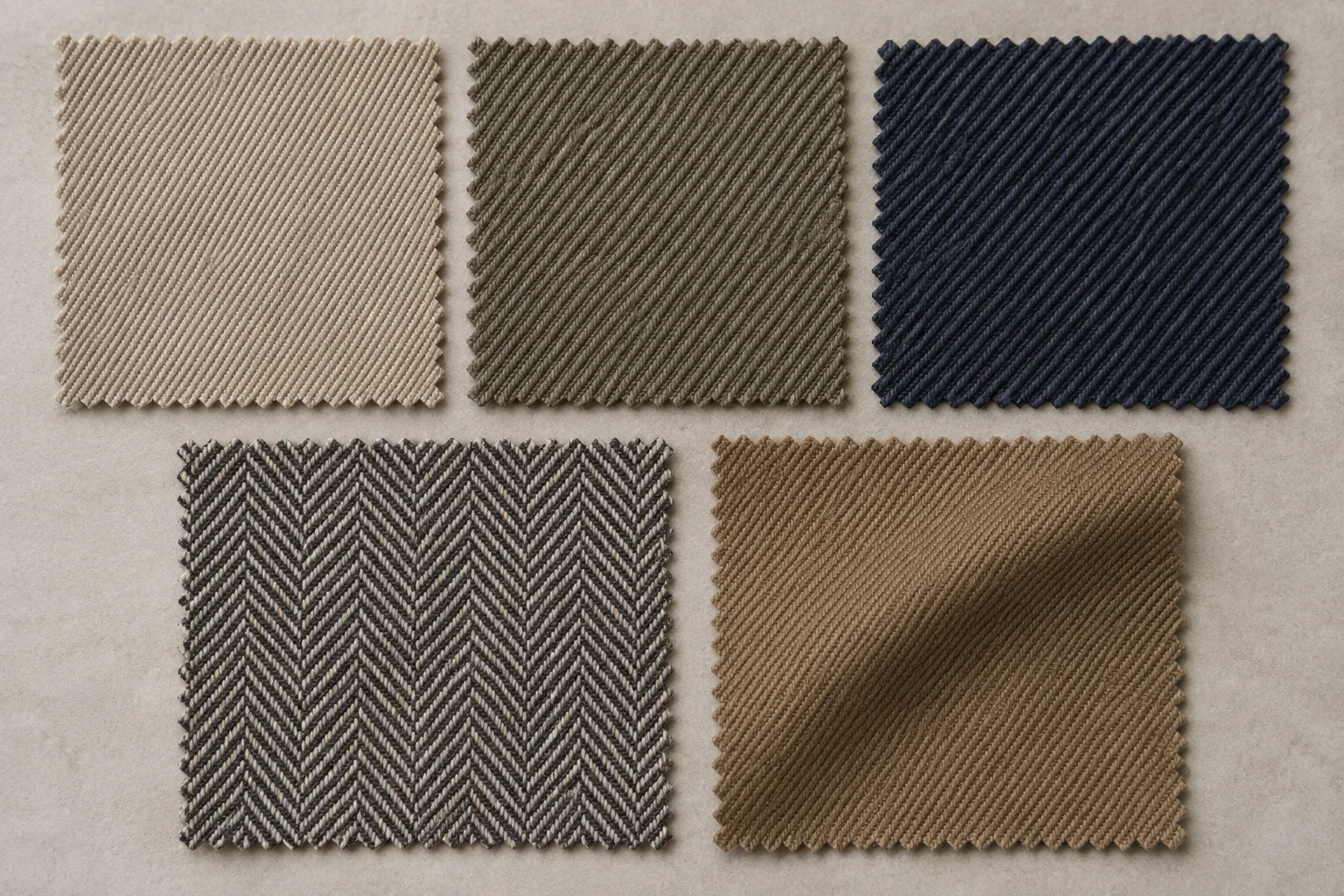
Common routes include:
- 2/1 twill for lighter woven products and many everyday fabric programs.
- 2/2 twill for a balanced construction with a regular diagonal effect.
- 3/1 twill for heavier bottom-weight fabrics and a more obvious face direction.
- Herringbone for an offset broken twill that forms a repeated V pattern.
- Chevron for a pointed reversal in the twill direction.
- Broken twill for a planned interruption that can change the visual line and reduce a continuous diagonal effect.
- Stretch twill where elastane, a stretch yarn or fabric engineering adds extension to a woven base.
- Brushed or finished twill where raising, coating, softening or other finishing changes the surface after weaving.
The same trade name can hide large differences. Ask for the construction, fiber declaration, yarn details, finished weight, usable width, finish and sample reference before comparing prices.
Which fibers can be used in twill?
Twill is compatible with many fiber directions. The fiber influences moisture interaction, heat response, color behavior, care, hand and price, while the weave influences surface structure, drape, stability and the way the fabric feels in use. The final result comes from both.
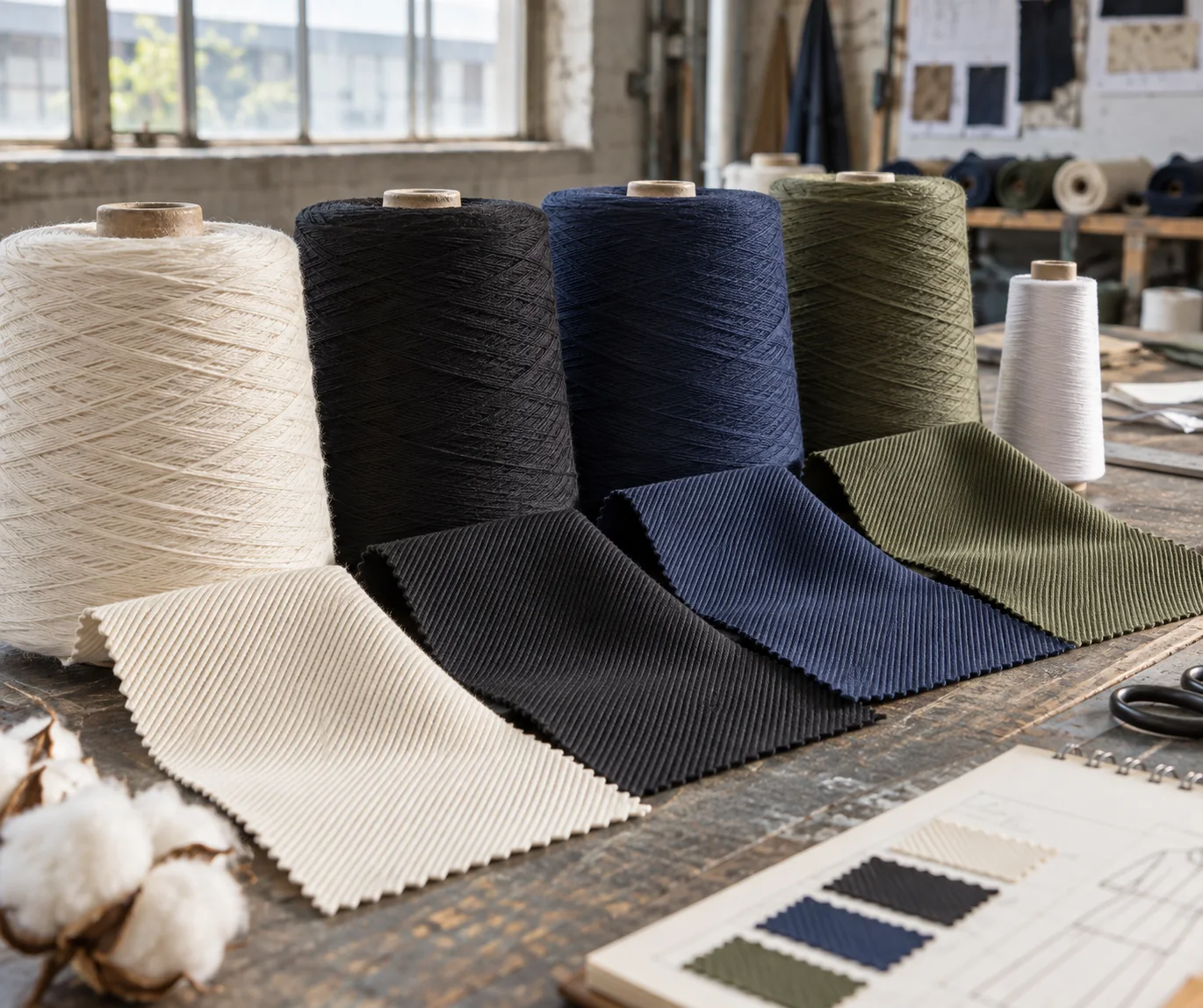
| Fiber direction | Why a buyer may consider it | Questions that remain open |
|---|---|---|
| Cotton twill | Familiar hand, broad apparel use and a natural cellulosic fiber direction | Shrinkage, colorfastness, moisture response, pilling, weight and care route |
| Polyester twill | Color options, easy-care potential and a synthetic performance route | Heat comfort, static, pilling, moisture behavior, fiber disclosure and finish durability |
| Nylon twill | Smooth hand, strength potential and a useful route for lightweight or technical products | Heat setting, abrasion, snagging, coating, recovery and laundering response |
| Cotton-polyester twill | A blend can balance hand, care and cost | Exact ratio, differential shrinkage, dye behavior and labeling |
| Twill with elastane | Extension and fit support for selected garments | Extension force, recovery, repeated cycles, heat exposure and elastane percentage |
| Wool, viscose or other blends | Different drape, softness, insulation or appearance goals | Fiber identity, care, pilling, strength, shade and market labeling |
The phrase breathable twill is not a complete performance claim. Air permeability and moisture comfort depend on yarn, density, weight, finish, garment openings, fit and the wearer’s activity. Request a defined test or a sewn-sample review when comfort matters.
Twill vs plain weave vs satin weave
Twill is one of the basic woven structures, but it is not automatically better than plain or satin. A buyer should compare complete fabric constructions at similar weights and for the same garment job.
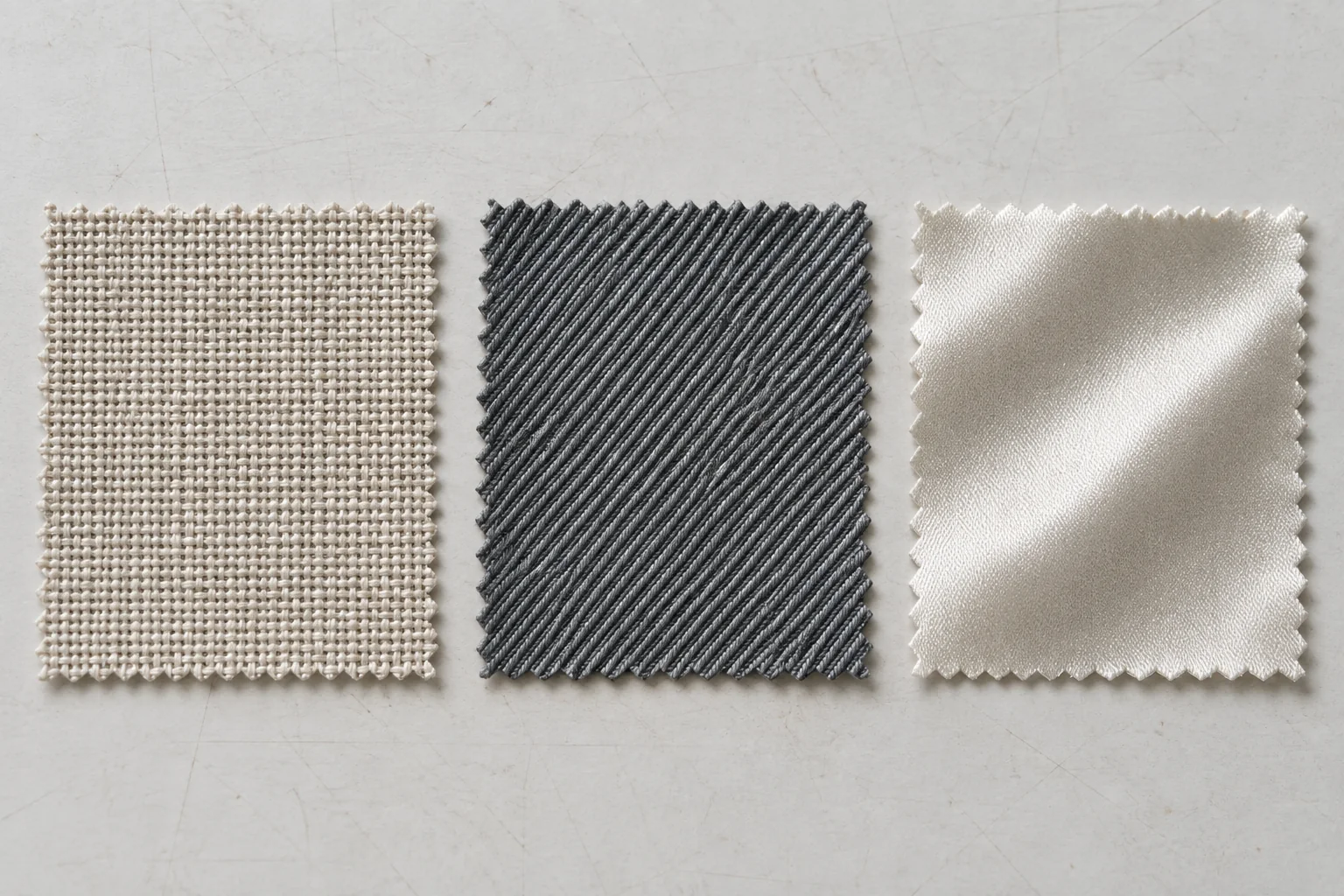
| Characteristic | Plain weave | Twill weave | Satin weave |
|---|---|---|---|
| Surface clue | Flat, even interlacing | Diagonal line or rib | Smooth face with longer floats and more sheen potential |
| Common repeat | Often 1/1 | Often 2/1, 2/2, 3/1 or a variation | Long floats arranged to reduce visible interlacings |
| Hand and drape | Can feel crisp or stable depending on weight and finish | Often has a softer fall or more directional surface at a comparable construction | Can feel smooth and fluid, but the surface may be more snag sensitive |
| Typical apparel routes | Shirting, lightweight tops, poplin and some canvas | Denim, chino, drill, gabardine, trousers, uniforms and structured streetwear | Linings, fashion surfaces and selected lightweight products |
| Buyer caution | Frequent interlacings do not guarantee low shrinkage or strength | Longer floats do not guarantee superior durability | Smooth appearance does not guarantee abrasion or snag performance |
The useful question is not which weave wins in general. Ask which structure can deliver the needed hand, stability, stretch, coverage, surface and care response at the target weight and cost.
Where is twill used in apparel?
Twill is common in trousers, cargo pants, uniforms, overshirts, jackets, workwear, denim and structured streetwear. Lightweight twill can be used for shirts or shorts. Stretch twill can work for fitted trousers, utility details or lifestyle garments where a woven surface is wanted but the pattern needs some movement.
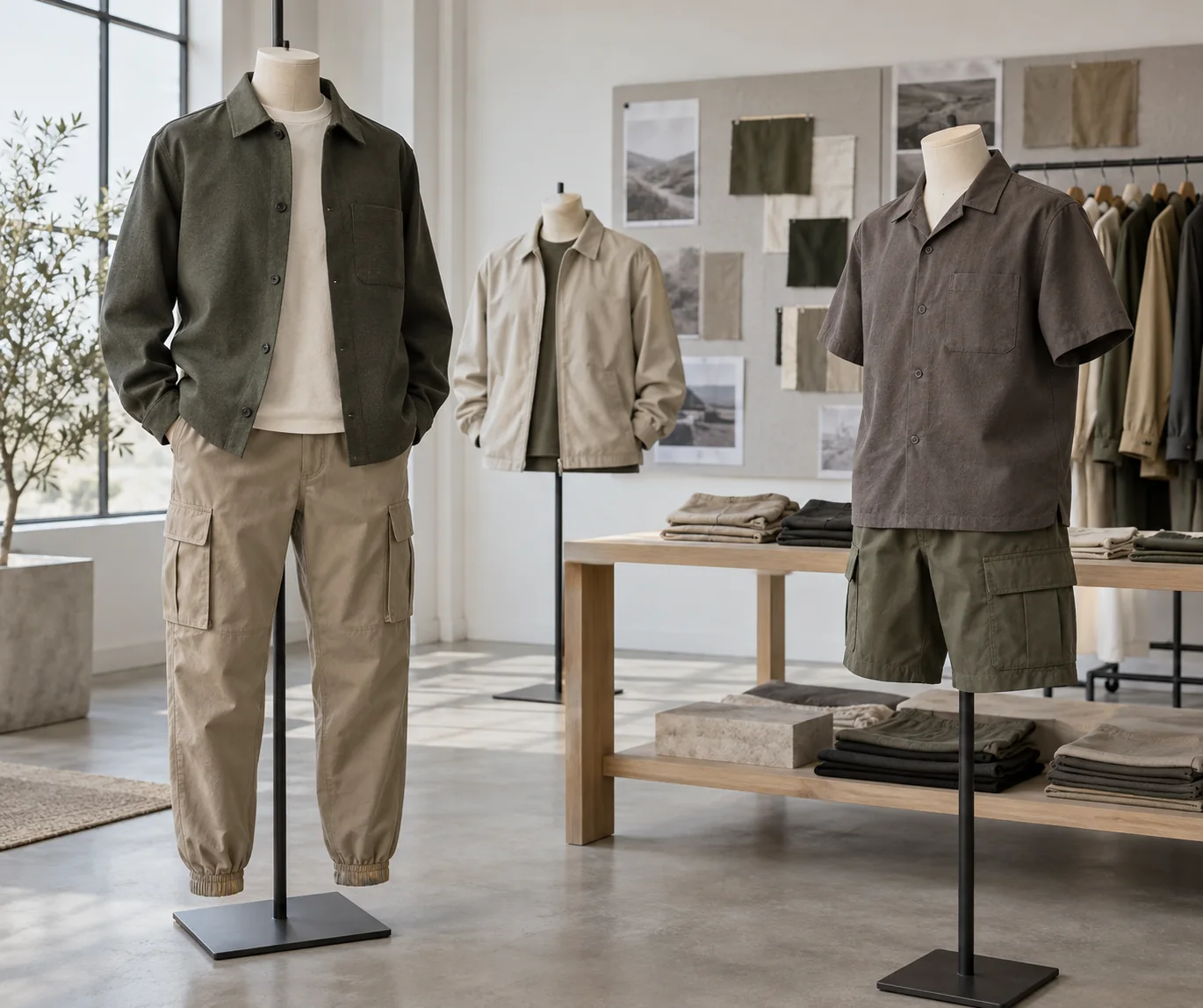
| Product direction | Why twill may fit | Main risk to check |
|---|---|---|
| Cargo joggers or utility pants | A directional surface and woven body can support pockets, panels and a structured silhouette | Weight, seam bulk, stretch recovery, pocket strain and abrasion |
| Streetwear overshirt or jacket | The face can give a more substantial look than a light plain weave | Drape, stiffness, collar behavior, shade and wash response |
| Uniform or workwear trouser | A suitable twill can support daily wear and a structured appearance | Tear, seam slippage, colorfastness, comfort and laundering |
| Training or lifestyle shorts | Lightweight or stretch twill can combine a woven look with movement | Heat comfort, range of motion, recovery and wet-weather drying |
| Denim or casual bottom | A heavier twill construction can create a recognizable surface and body | Weight, crocking, shrinkage, shade variation and fit change after care |
| Woven active-lifestyle layer | Twill can add structure to a jacket, overshirt or relaxed pant | Do not assume high-sweat suitability without testing the complete garment |
Twill is usually a stronger topic for structured apparel than for a close-fitting, high-sweat base layer. If the product’s main job is rapid drying, low cling or high stretch, compare twill with suitable knit constructions and specify the performance requirement directly.
Is twill fabric suitable for activewear?
It can be suitable for active-lifestyle, training-short, utility, warm-up, streetwear and outer-layer products when the construction matches the movement and climate. It is less likely to be the first choice for every high-intensity next-to-skin product because a woven twill may have lower stretch, more body and a different drying profile than a purpose-built knit.
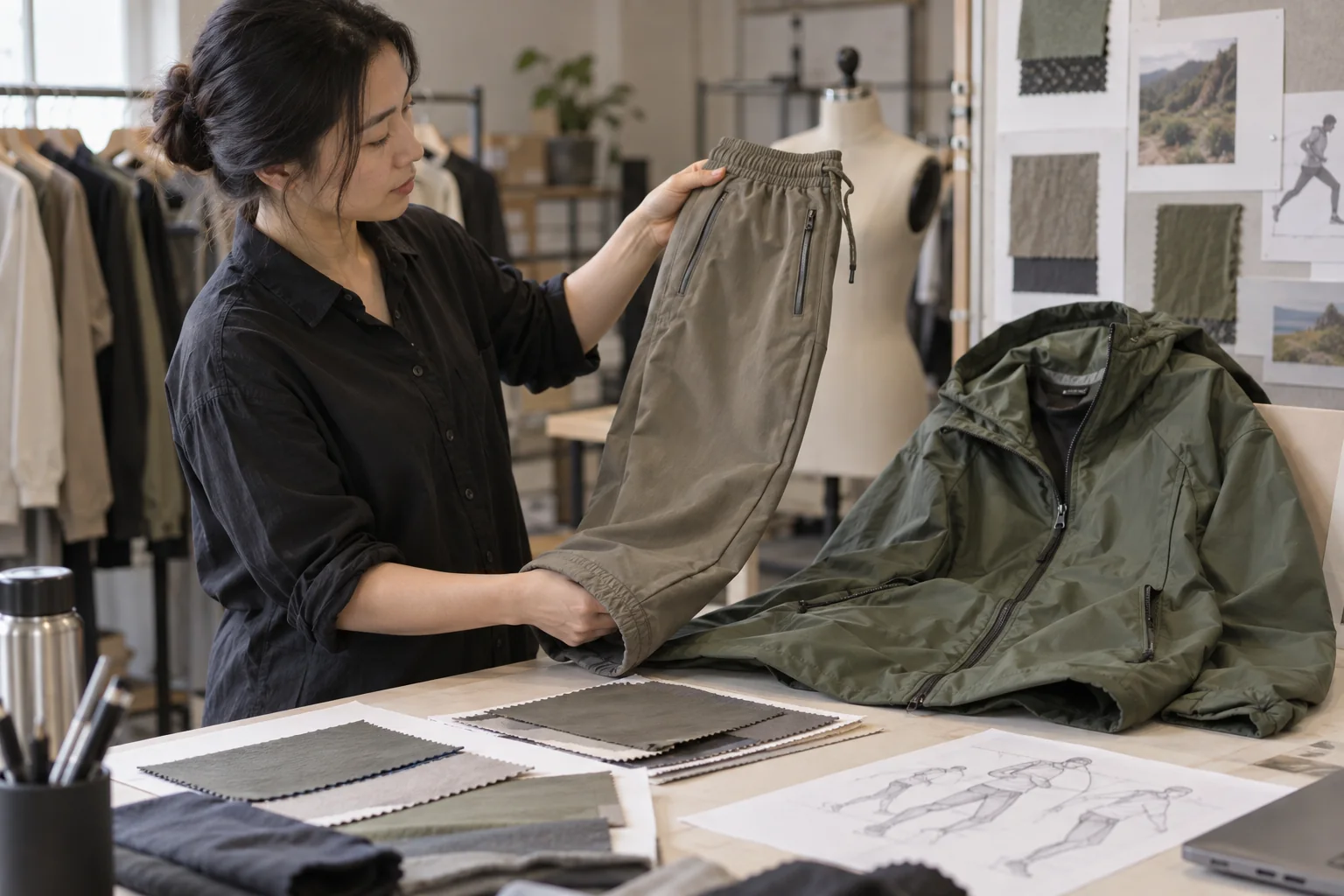
Use a decision rule based on the garment job:
- Choose a lightweight twill when the product needs a woven face and moderate structure without excessive bulk.
- Choose stretch twill only after defining extension, force, recovery and the direction of stretch.
- Choose a cotton or cotton blend route when hand and casual comfort matter, then verify shrinkage and care.
- Choose a polyester or nylon route when the product needs a synthetic fiber direction, then verify heat comfort, static, pilling and moisture behavior.
- Use a sewn sample for movement, pocket loading, seam comfort, pattern balance and care review.
Do not use twill as shorthand for durable, breathable, quick drying or premium. Those are separate questions that require a complete specification and evidence.
What should a buyer specify for twill fabric?
The request twill fabric is too broad for a purchase order. A production-ready brief should tell the supplier what the fabric is made of, how it is woven, how it should feel, where it will be used and how the finished lot will be accepted.
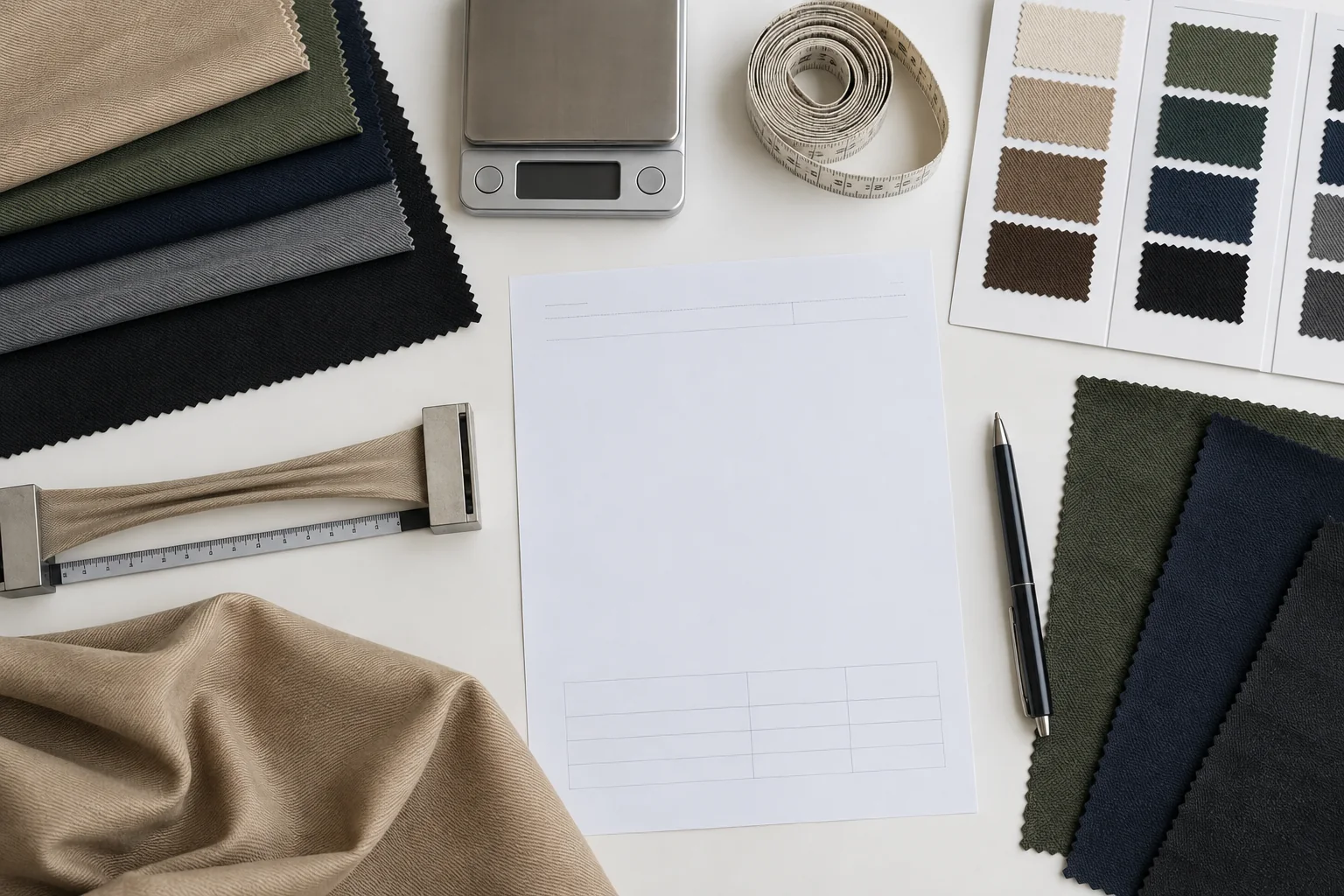
| Tech pack field | What to record | Why it matters |
|---|---|---|
| Fiber content | Exact fiber percentages and any branded fiber requirement | Controls labeling, care, claims and performance expectations |
| Weave construction | 2/1, 2/2, 3/1 or another verified repeat; face direction if relevant | Makes the word twill technically useful rather than descriptive only |
| Yarn and density | Yarn type, count, twist, ends, picks and supplier reference when available | Changes hand, coverage, surface and strength |
| Finished weight and width | Target GSM, tolerance, usable width and edge condition | Supports yield, marker planning, cost and fit consistency |
| Stretch and recovery | Direction, extension, force, recovery time and repeated cycles | Connects the woven fabric to movement and size stability |
| Finish and shade | Brushing, coating, softener, water treatment, color standard and lot control | Finishing can change hand, care, surface and shade behavior |
| End use and care | Garment type, activity, climate, wash route, drying route and decoration | Makes testing reflect the real product rather than a generic swatch |
| Acceptance evidence | Sample ID, approved hand, test method, tolerance and change-control rule | Helps the bulk lot match the approved development standard |
If a field is unknown, leave it for confirmation. Do not fill missing GSM, stretch, lead time, MOQ or test results with a generic industry assumption. A clear inquiry makes it easier for a manufacturer to propose a sample that can be evaluated.
How should twill fabric be tested?
Testing should follow the product risk. A lightweight stretch short, a heavy cargo jogger and a uniform trouser do not need the same acceptance limits. Use the fabric test to screen the material, then review a sewn sample for fit, seams, pockets, decoration and care.
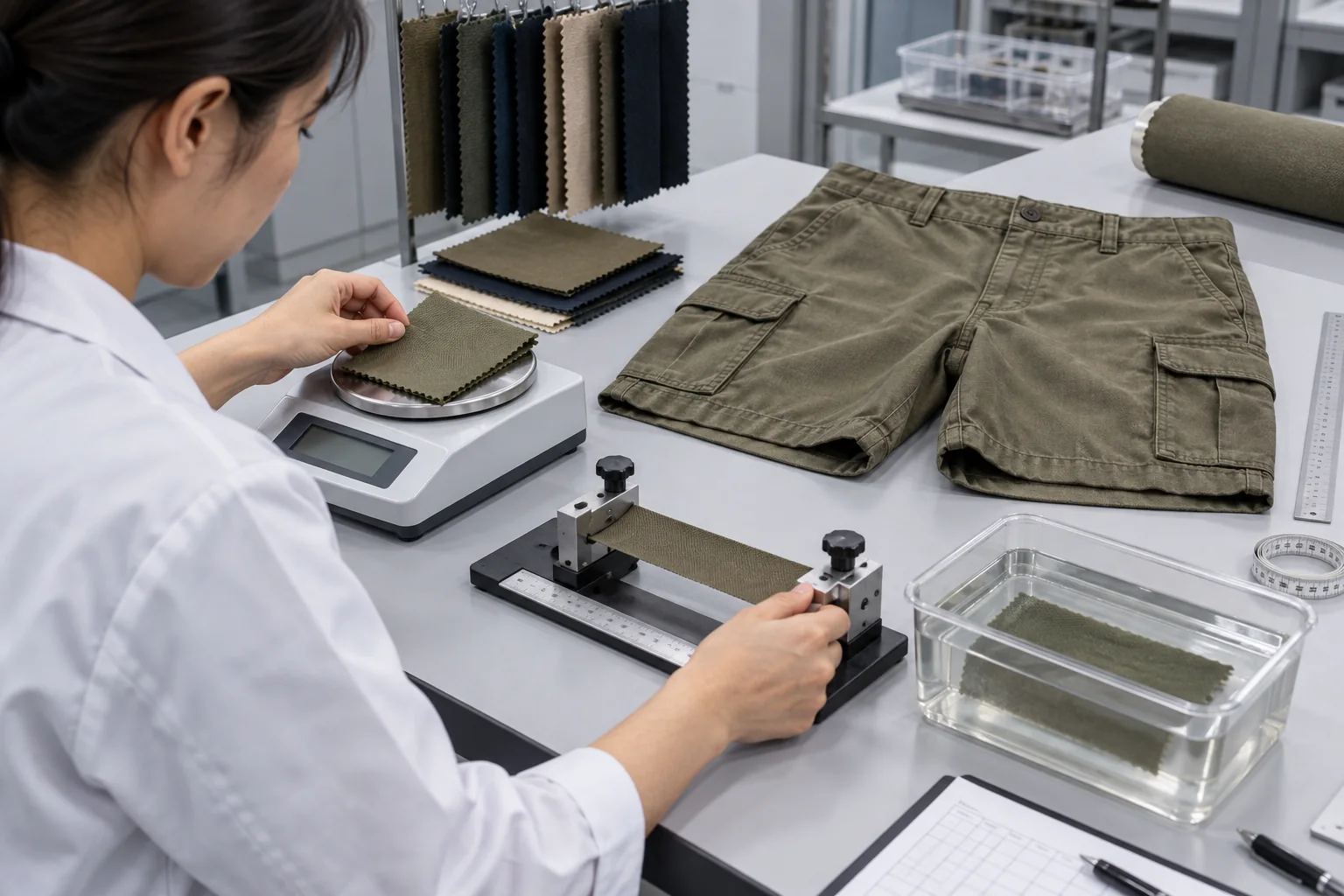
| Test area | Buyer question | Evidence to request |
|---|---|---|
| Mass per unit area | Is the fabric within the target weight and usable coverage? | Readings from agreed locations using the chosen method and conditioning |
| Width and construction | Can the marker and pattern use the usable width consistently? | Full-width readings, edge notes and construction or count record |
| Dimensional change | What happens to length and width after the planned care route? | Before and after measurements using an agreed laundering procedure |
| Skew and grain | Does the fabric or garment twist after laundering or relaxation? | Grain, skew and pattern-balance review on fabric and sewn sample |
| Abrasion and pilling | Will the face remain acceptable in the intended use? | Method, cycles, ratings, specimen photos and agreed limit |
| Tear and seam behavior | Can the fabric handle pocket, waistband and movement loads? | Tear, tensile or seam-related evidence matched to the garment risk |
| Colorfastness and crocking | Will shade transfer or change during wear and care? | Wash, rubbing, perspiration, light or other relevant results |
| Stretch and recovery | Does a stretch twill return after movement and care? | Direction, extension force, recovery interval and repeat-cycle results |
ASTM D3776 is a reference for measuring fabric mass per unit area. AATCC TM135 addresses dimensional changes of fabrics after home laundering. Other methods may be relevant for abrasion, pilling, moisture or colorfastness. The standard name is not a pass result: the edition, specimen, conditioning, cycles, rating scale and acceptance limit still need to be written into the buyer’s quality plan.
How should a buyer inspect twill during sampling and bulk?
The diagonal line makes twill easy to recognize, but visual recognition is not enough for bulk approval. Check the face and back, the direction of the line, the shade, the width, the edge, the surface, the hand and the behavior after relaxation or laundering.
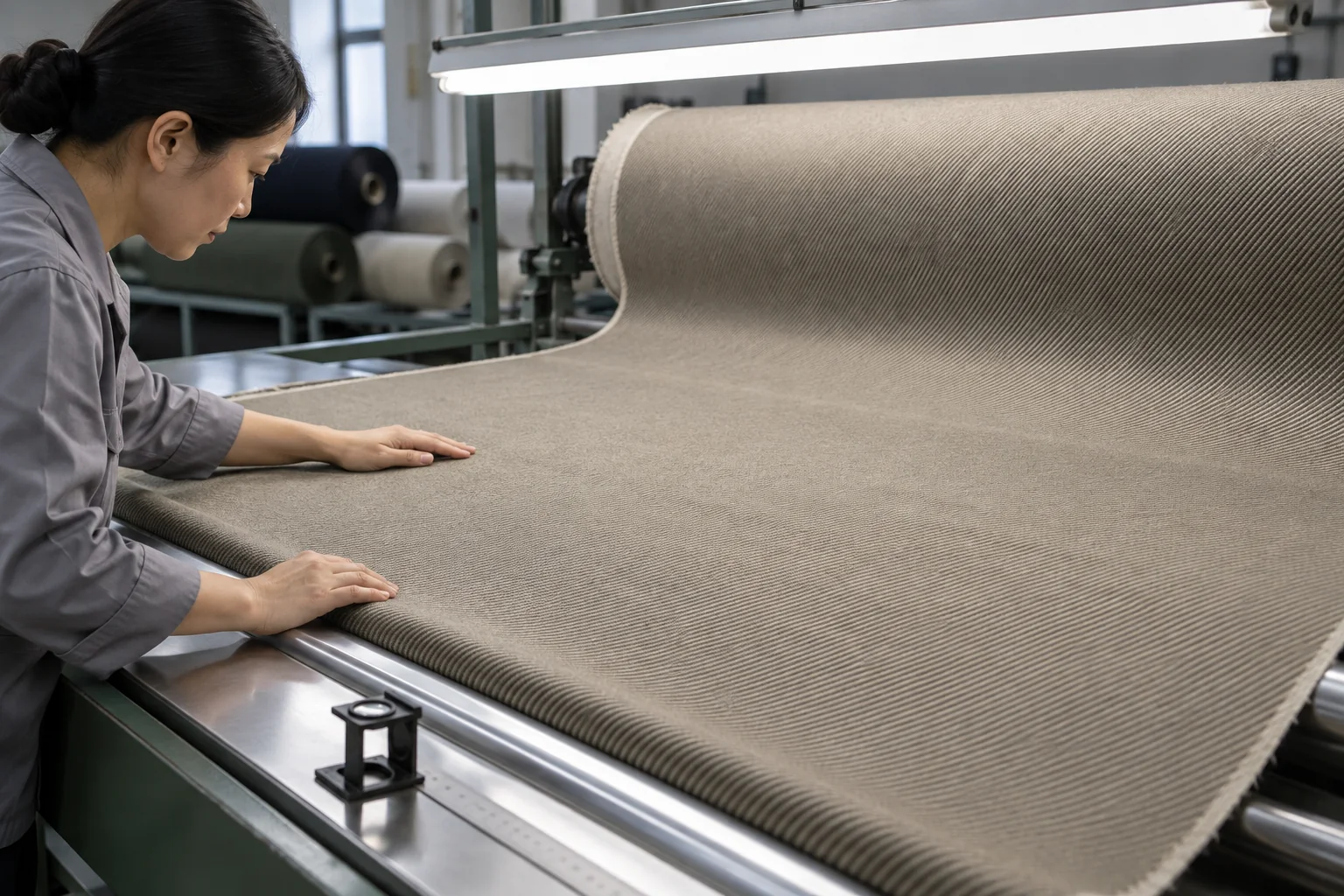
Use a repeatable inspection path:
- Compare the bulk roll with the approved swatch under the agreed light source.
- Check whether the diagonal angle, face direction and surface texture are consistent across the usable width.
- Measure width and GSM at multiple points instead of relying on one center reading.
- Look for bow, skew, streaks, slubs, broken yarns, shade bands, coating marks and visible finishing changes.
- Review pocket openings, waistbands, seams, topstitching and panel direction on the sewn sample.
- Run the agreed care route before locking care instructions, grading or final packaging.
If the twill line changes visibly across the roll or the garment twists after washing, record the condition as a quality issue and connect it to the construction, finishing or pattern route. Do not hide the problem by changing the product description.
How does twill fabric behave after care?
Care response depends on fiber, yarn, construction, dyeing, finishing, garment pattern and the wash and dry route. Some twills relax, shrink, soften, fade or change surface character after care. Blends can show differential movement, and elastane-containing twills may lose recovery when exposed to unsuitable heat.
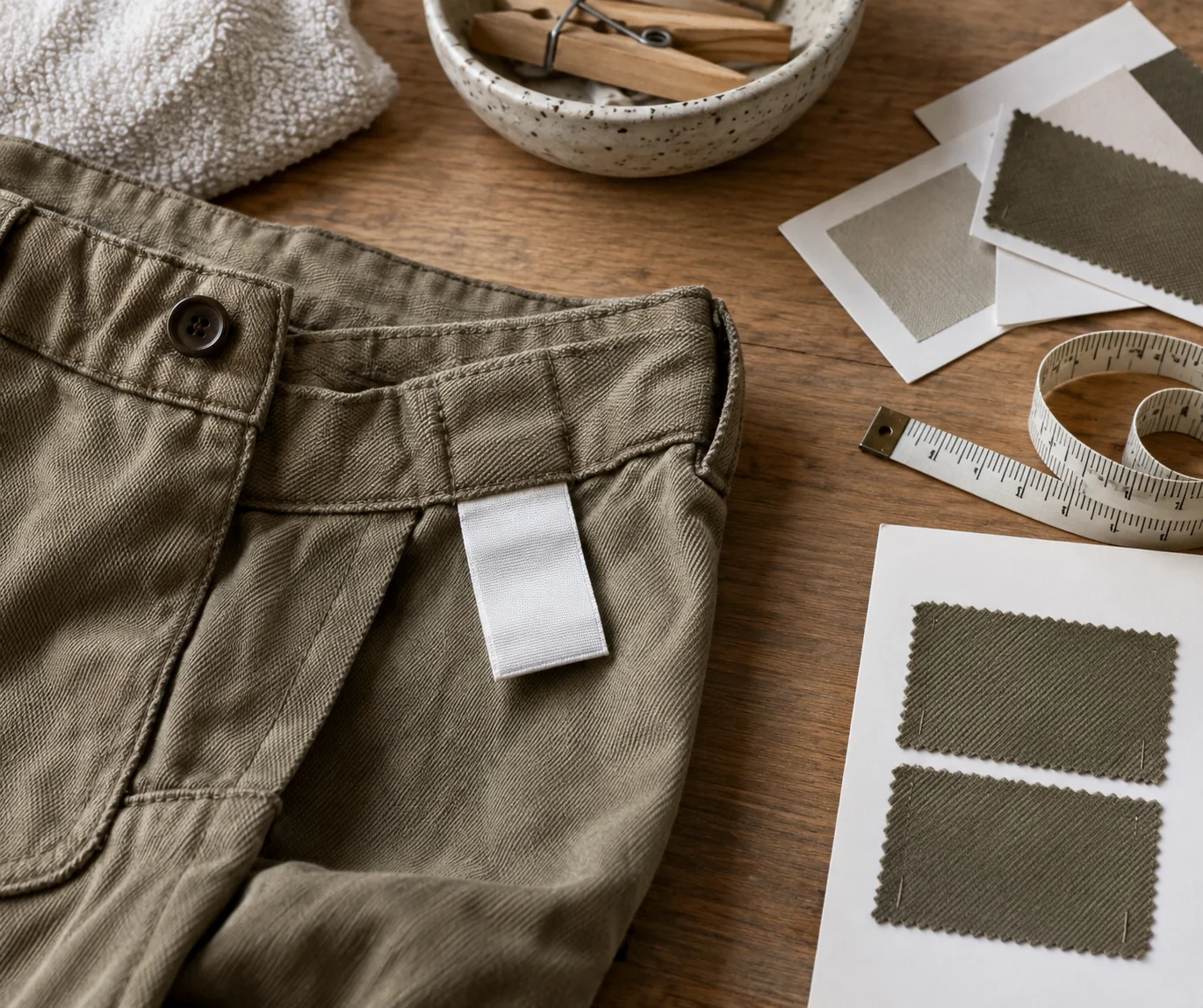
Before approving care copy:
- Measure fit-critical length and width before and after the agreed wash and dry route.
- Check shade, crocking, seam twist, pocket distortion and surface change.
- Compare the face direction and hand after care with the approved sample.
- Review heat exposure for elastane blends, coatings, prints and bonded details.
- Keep the actual fiber declaration and the final care route aligned with the destination market.
The goal is not to promise that every twill remains unchanged. The goal is to define a realistic care route and acceptance range for the finished garment.
How should a buyer decide whether twill is right?
Twill is a good starting point when the product needs a woven face, visible diagonal character, moderate structure, pocket support, a stable silhouette or a streetwear and utility look. It may be a poor fit when the main requirement is maximum next-to-skin stretch, very fast drying under heavy sweat or a soft circular-knit hand.
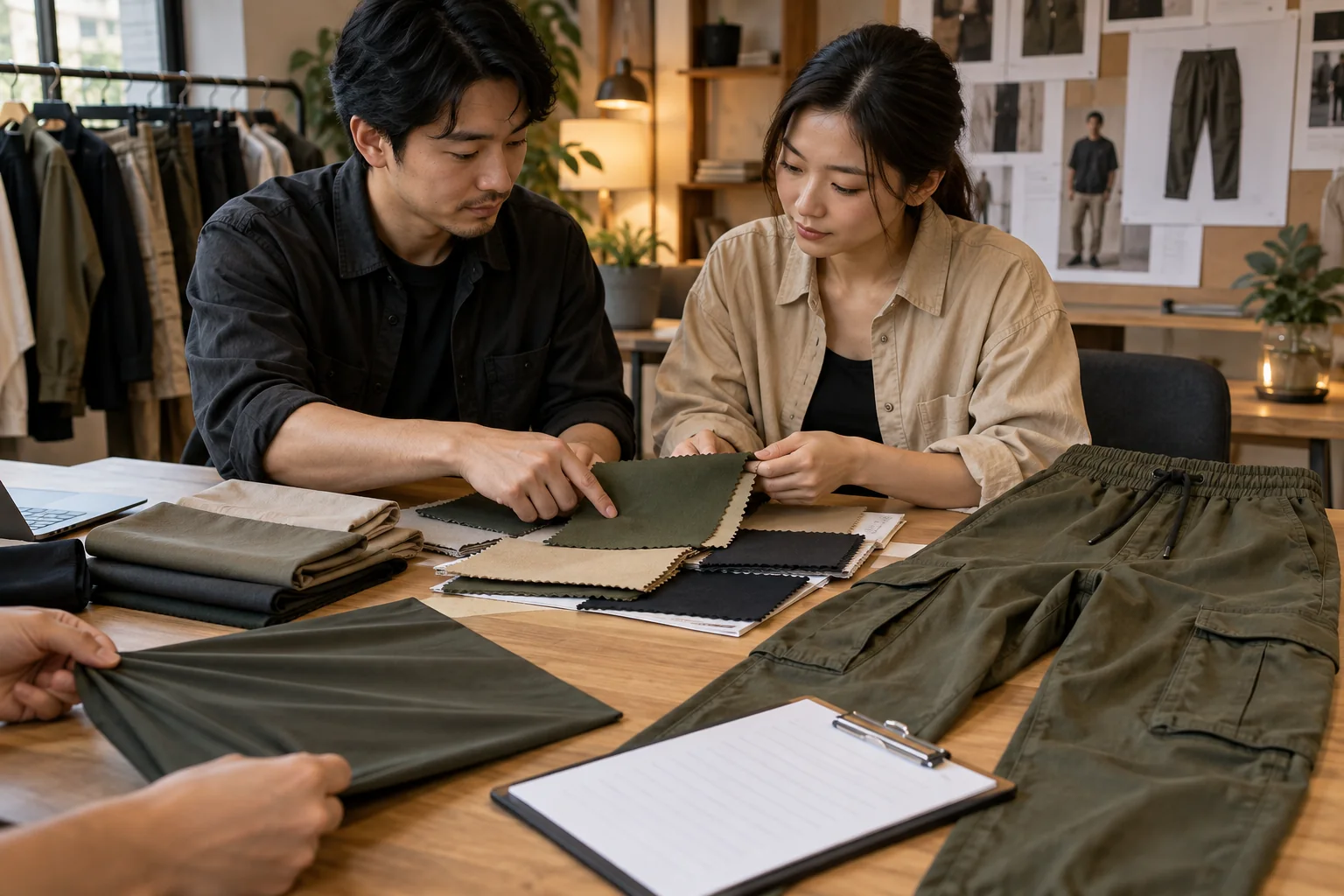
For a quote or sample request, send the garment type, target wearer, activity, fiber direction, blend percentage, twill ratio, finished GSM, usable width, stretch need, color, decoration, care route, quantity and required evidence. You can also link the request to the relevant fabric and trim library or tech pack customization service so the material decision is connected to the complete product brief.
Frequently asked questions
Not necessarily. Twill describes a woven construction. Cotton is one possible fiber, but polyester, nylon, wool, viscose, elastane blends and other fiber directions can also be woven into twill.
Twill is a woven construction made from warp and weft yarns. A knitted fabric is built from interlocking loops, so a fabric described as twill should be checked against the supplier’s construction record if the distinction affects the product.
Some twills are suitable for demanding wear because their construction, weight, yarn and finishing support the end use. The name alone is not proof of durability. Check abrasion, tear, seam and care performance for the complete fabric and garment.
They use different interlacing repeats. A 3/1 construction commonly has longer floats and is often selected for heavier trouser or workwear fabrics, including some denim, chino and gabardine routes. The finished result still depends on the fiber, yarn, density, weight and finish.
Breathability is not guaranteed by the word twill. Air movement depends on fiber, yarn, density, weight, finish, garment openings and fit. Use a defined test or a sewn-sample review for a comfort-led product.
It can suit training shorts, utility pieces, warm-up layers, streetwear and active-lifestyle garments when the construction matches the movement and climate. For high-sweat base layers, compare it with suitable knits and verify drying, stretch, recovery and comfort.
Basic twill does not automatically stretch. Extension may come from elastane, a stretch yarn, a looser construction or garment engineering. Specify direction, extension, force and recovery instead of assuming stretch from the fabric name.
Ask for the exact fiber content, twill ratio, yarn and density information, finished GSM, usable width, stretch and recovery, finish, shade standard, care route, test plan, sample reference and acceptance tolerances. Also confirm which MOQ, lead time and bulk conditions apply to the exact material and garment.