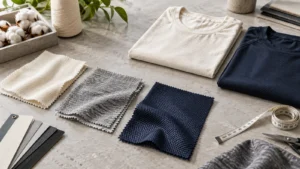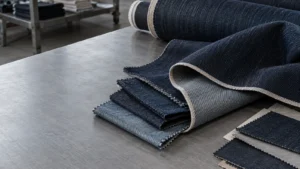
Performance fabric is not one fiber or one universal fabric recipe. It is a textile selected or engineered to deliver a defined behavior such as moisture movement, drying, stretch recovery, breathability, abrasion resistance, opacity, warmth, or protection during a specific use. Polyester, nylon, cotton, wool, regenerated cellulosics, elastane blends, knits, wovens, yarns, and finishes can all be part of a performance fabric program.
The practical answer to what is performance fabric is: a fabric whose composition, construction, finish, and garment design are matched to a measurable job. A lightweight training tee, a squat-proof legging, a compression top, a running shell, and a warm-up hoodie do not need the same performance profile. A fiber name on a quote is only the starting point.
This guide explains how to define performance fabric, separate fiber from construction and finish, choose a material direction for an activewear product, and build a sample and test brief that a supplier can actually quote. It is written for apparel brands, product developers, sourcing managers, importers, and private-label teams.
What is performance fabric?
Performance fabric is a textile developed, selected, or finished to meet one or more functional requirements beyond basic appearance. The requirement can relate to how liquid moves, how quickly a material dries, how it stretches and recovers, how it handles friction, how much air or light passes through it, how it protects the wearer, or how it keeps its appearance after care.
There is no single legal or technical fiber category called performance fabric. The phrase describes an intended result, not a guaranteed material identity. A polyester jersey with a moisture-management finish, a nylon-elastane interlock, a wool base layer, a coated woven shell, and a recycled-fiber training short may all be marketed as performance fabrics, but they should not be treated as equivalent.

For a buyer, the phrase should be expanded into five questions:
- What is the fiber content? Record generic fiber names and percentages, including stretch fiber and any recycled or specialty component.
- What is the construction? Identify jersey, interlock, rib, mesh, fleece, woven, laminated, coated, or another construction.
- What is the weight and density? Record GSM, usable width, thickness when relevant, and whether the result applies to the greige or finished fabric.
- What job must the fabric perform? Define sweat level, movement, climate, opacity, warmth, abrasion, support, or protection requirements.
- What proves the claim? Name the test, specimen state, conditioning, wash cycles, acceptance range, and whether the result is from fabric or finished garment.
| Layer of the specification | What it controls | Example buyer question |
|---|---|---|
| Fiber and blend | Yarn behavior, hand, strength, moisture interaction, care response | Is the generic fiber name and percentage documented for the target market? |
| Yarn and filament | Fineness, texture, capillary paths, strength, and surface character | Does the yarn support the intended hand and moisture movement? |
| Construction | Stretch, recovery, stability, airflow, coverage, and drape | Is the knit or woven structure suitable for the pattern and activity? |
| Weight and density | Substance, opacity, warmth, air movement, and marker efficiency | Is the GSM appropriate after dyeing and finishing, not just on a swatch? |
| Finish and treatment | Surface feel, wetting, friction, appearance, and care behavior | What treatment was applied, and how long should the effect remain? |
| Garment engineering | Seams, fit, panels, openings, trims, and decoration | Will the finished garment still perform at stress points and after washing? |
If a supplier quote says only performance material or sports fabric, ask for the full specification before comparing samples. The marketing term may describe a real function, but it does not replace composition, construction, or test evidence.
Performance fabric properties: what each term really means
Performance claims are often bundled together even though they describe different physical behaviors. Moisture wicking is not the same as absorbency. Quick drying is not the same as breathability. Stretch is not the same as recovery. A material can be strong but uncomfortable, breathable but transparent, or soft but unstable after laundering.
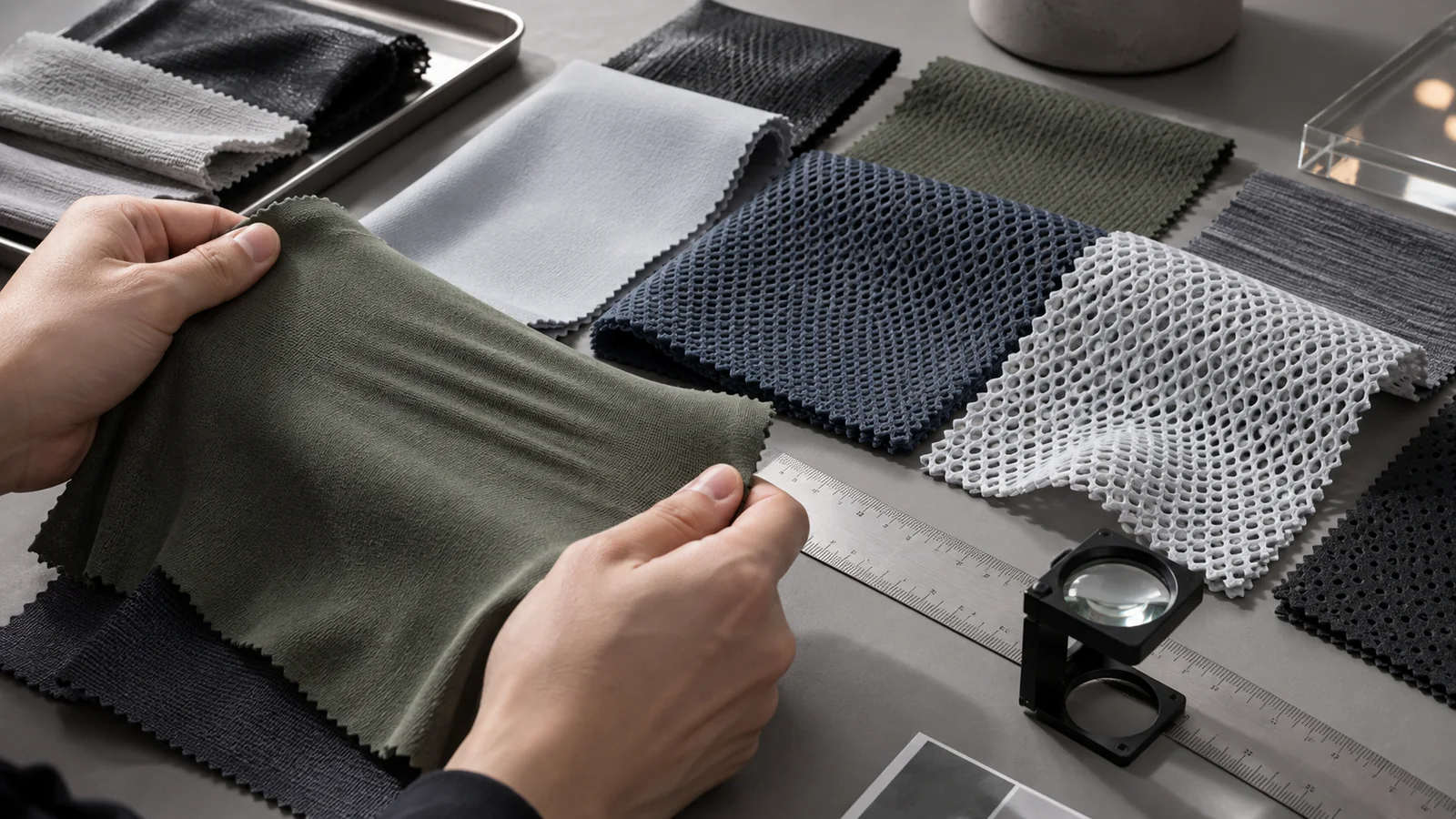
| Property or claim | What it describes | What it does not prove | Buyer check |
|---|---|---|---|
| Moisture wicking | Liquid movement away from one area and spreading across a surface | Fast drying, cooling, odor control, or comfort in every climate | Use a defined moisture-management method on the target construction |
| Quick drying | The rate or time at which moisture leaves a specimen or garment | Wicking direction, airflow, or low water absorption | Record liquid amount, temperature, humidity, airflow, and specimen state |
| Breathability | Air or water-vapor movement through the material or garment | Cool hand, drying speed, or comfort during all activities | Separate air permeability, vapor transmission, fit, and layering questions |
| Stretch | Extension under a defined force or condition | Shape retention after repeated wear | Measure direction, force, extension, and the recovery interval |
| Recovery | Return toward the original dimensions after extension | Compression level, comfort, or long-term durability | Test after repeated extension and after the planned care route |
| Abrasion resistance | Resistance to surface damage under a specified rubbing method | Pilling, seam failure, or real-world garment life | Match the test method and interpretation to the product risk |
| Pilling resistance | Tendency to form pills under a specified rubbing and evaluation method | Colorfastness, abrasion at seams, or snag resistance | Evaluate after the agreed cycles and after laundering |
| Opacity or coverage | How much light or body show-through occurs in a fabric or garment | Support, fit security, or coverage at every body angle | Check the finished garment under movement, stretch, and target lighting |
For example, the AATCC TM195 liquid moisture-management method describes objective measurements for liquid moisture management in knitted, woven, and nonwoven textiles. That is more useful than calling a swatch sweat-wicking without defining how the claim was assessed. The method is a reference point, not a promise that one test covers every garment or market claim.
How does performance fabric work?
Performance comes from the interaction of fiber, yarn, construction, finish, and garment geometry. Capillary pathways can move liquid along or through a textile. Knit loops can provide extension. A dense construction can improve coverage and reduce airflow. A finish can change surface wetting or hand. Panels, seams, openings, and fit can change the wearer’s experience even when the fabric roll is unchanged.
The same fiber can behave differently in two fabrics because the yarn size, filament shape, knit density, fabric weight, dyeing, finishing, and heat setting are different. The same fabric can also behave differently in two garments because the pattern, seam placement, lining, body tension, decoration, and care route are different.
Moisture movement and drying
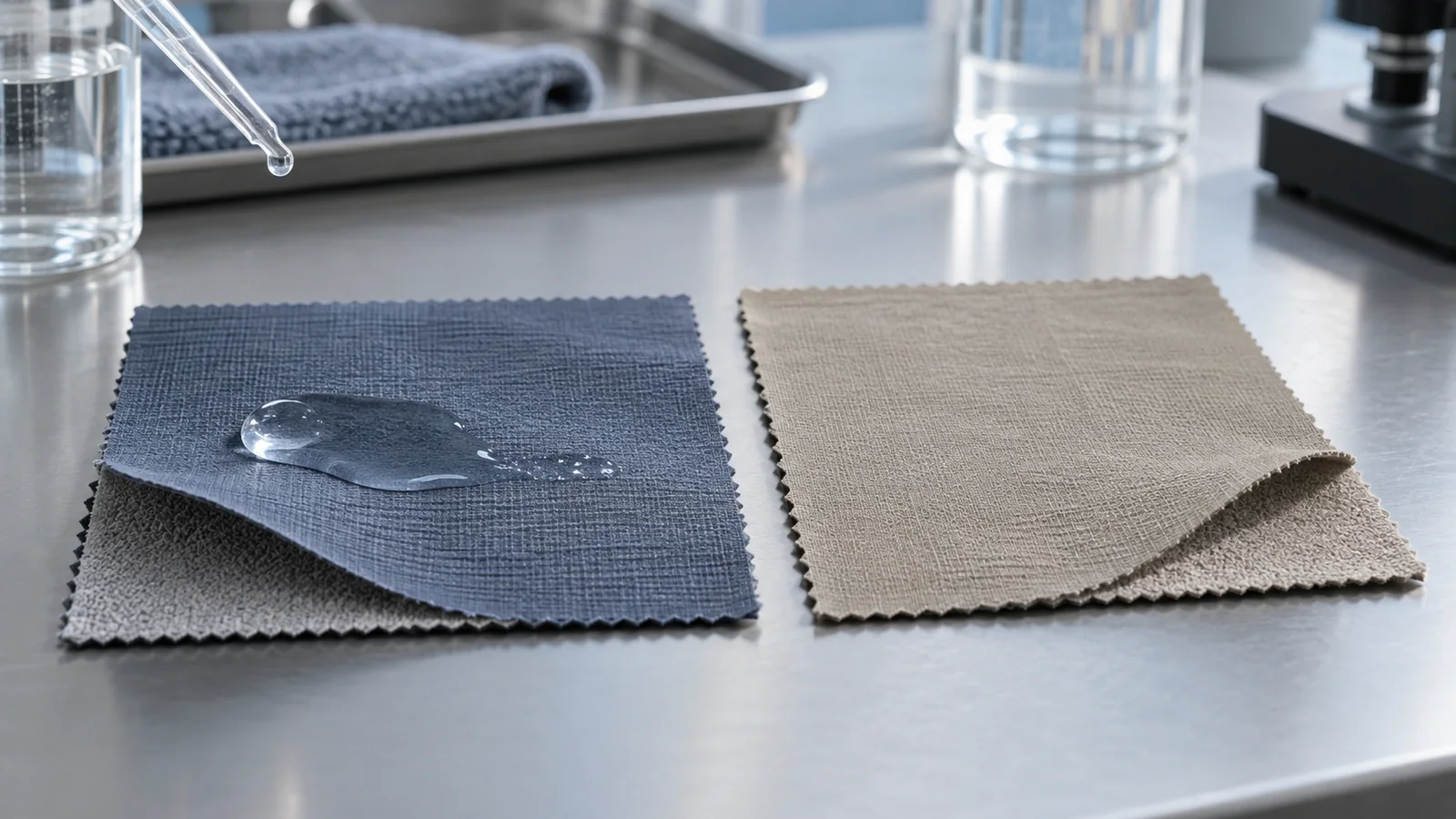
Moisture management usually involves more than one step: liquid contacts the skin-side surface, moves or spreads through capillary paths, reaches an evaporating surface, and then leaves through drying. Absorbency, wicking, spreading, drying time, and water-vapor transmission should be specified separately when the product depends on them.
A high-absorbency fabric may feel comfortable for a casual garment but can retain more liquid than a buyer expects in a high-sweat training style. An open mesh may allow air to pass but can create coverage or snag concerns. A dense fabric may look more secure but require a different drying and comfort trade-off.
Stretch and recovery
Stretch is the amount a fabric can extend under a defined load. Recovery is how much it returns after the load is removed and how that result changes after repeated cycles, heat, and laundering. Elastane content can contribute to extension and recovery, but percentage alone does not predict finished-garment behavior.
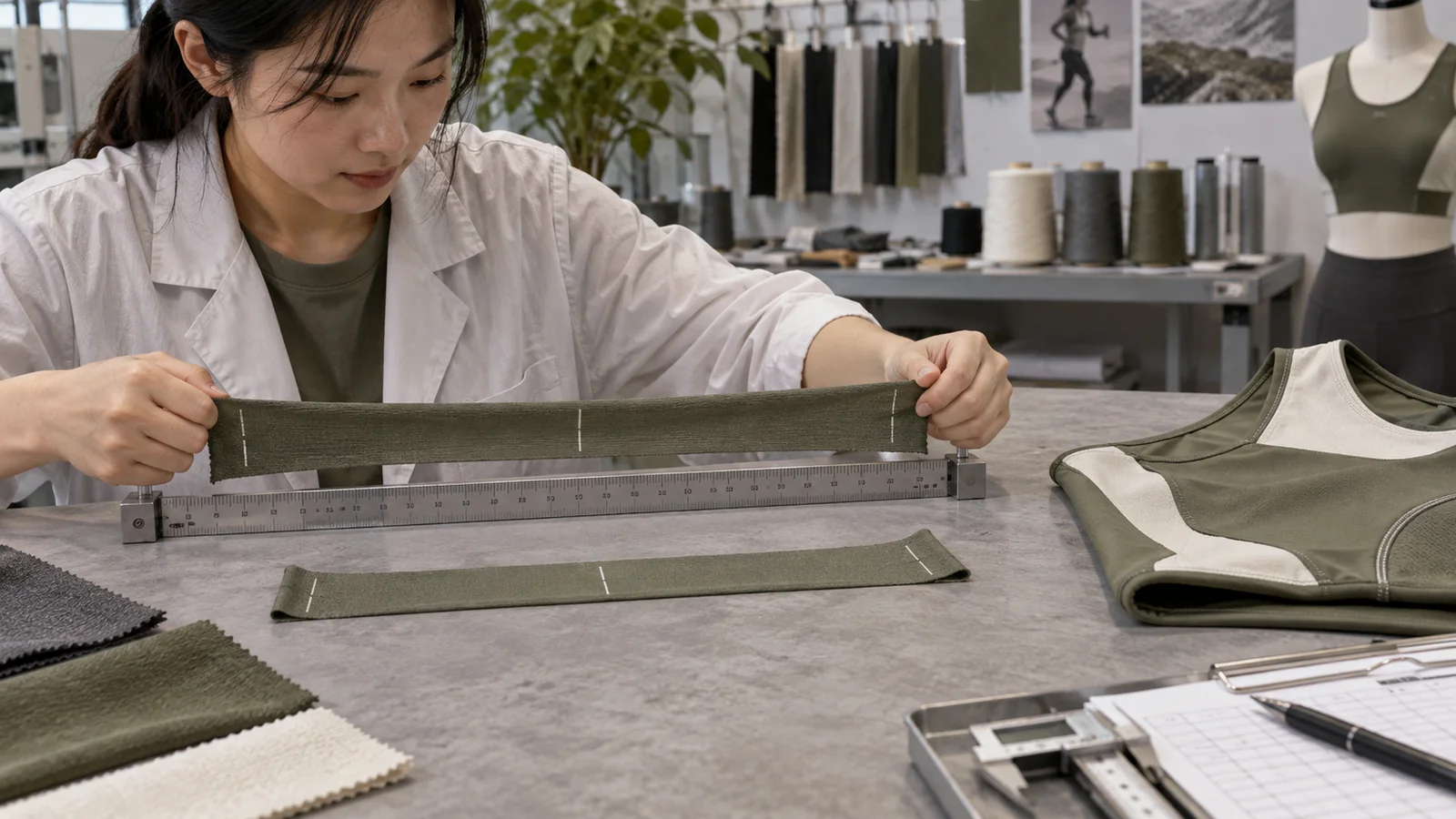
For leggings, fitted tops, waistbands, and compression panels, specify stretch direction, extension, power, recovery time, growth, and seam behavior. Test the fabric in the actual cut direction and inspect the sewn garment. A swatch that feels elastic in the hand can still grow at a waistband or lose opacity when stretched across a body.
Breathability and protection
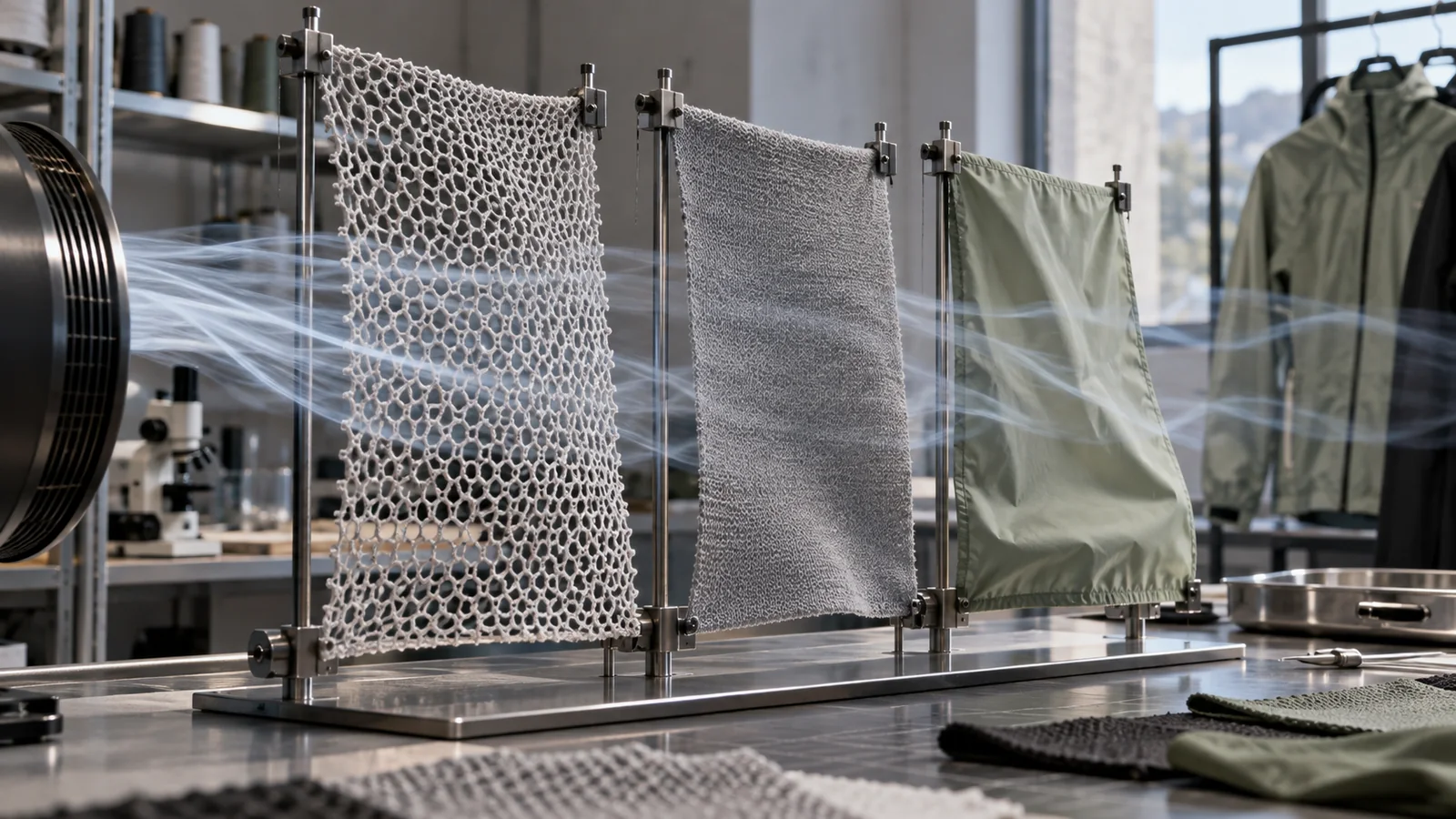
Breathability can refer to air movement, water-vapor transmission, or a wearer’s subjective comfort. These are related but not identical. A fabric can be air permeable but not comfortable if the garment is tight, lined, or worn in a humid environment. A coated shell can block wind or rain while reducing vapor transport.
Define what protection means for the product. Sun protection, wind resistance, water repellency, waterproofing, thermal insulation, and abrasion resistance are different requirements. Use a claim only when the material or finished garment has the relevant evidence and the destination-market wording has been reviewed.
Which fabrics are used for performance clothing?
Many fiber directions can be used in performance clothing. The best option depends on the product job, not on a universal ranking. In activewear, polyester and nylon blends are common starting points, while cotton, wool, regenerated cellulosics, and specialty fibers may be appropriate for comfort, lifestyle, outdoor, or low-impact applications. Elastane is often added where extension and recovery matter.
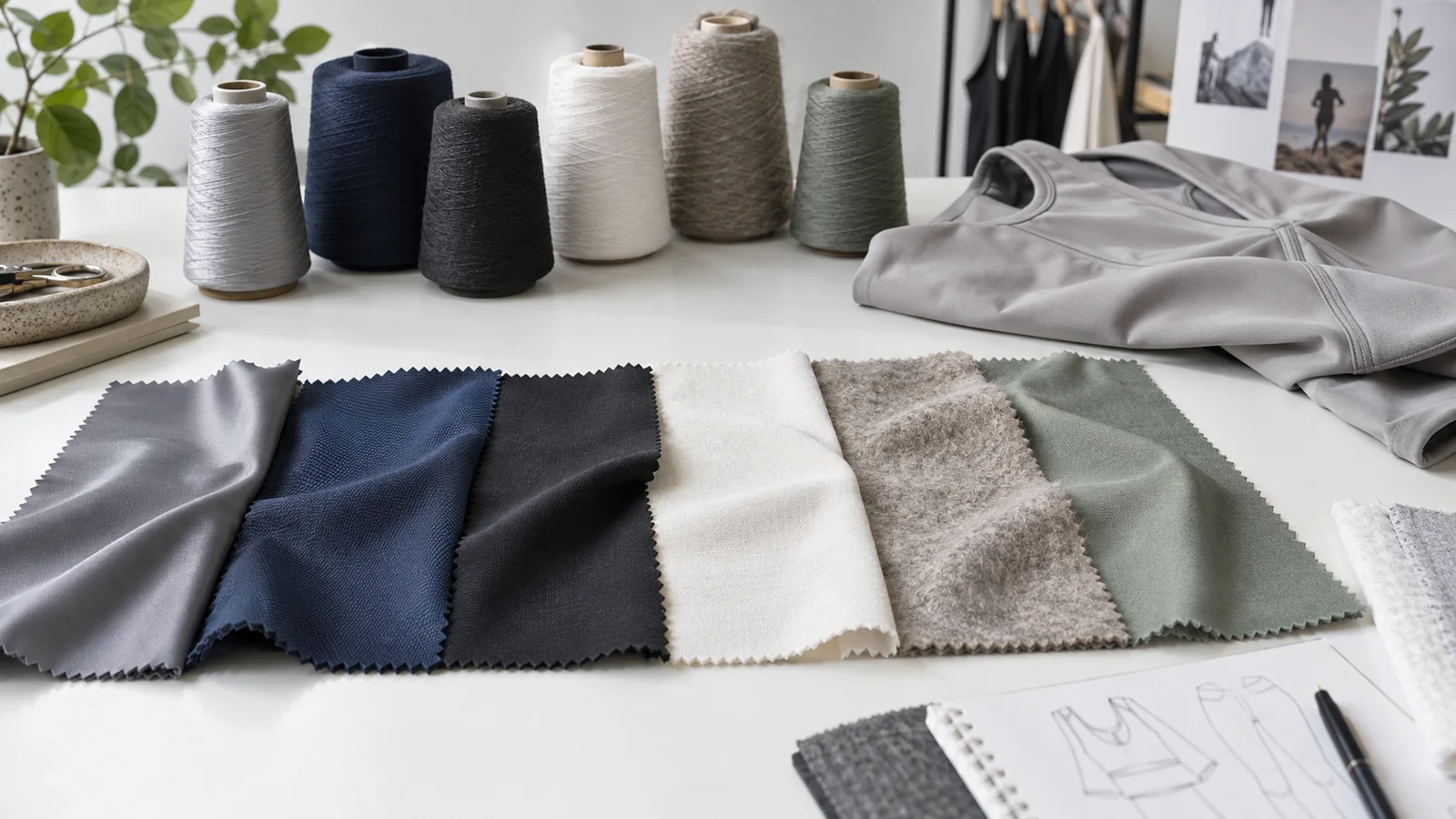
| Material direction | Why buyers investigate it | Questions that prevent overclaiming |
|---|---|---|
| Polyester or recycled polyester | Broad activewear use, color options, strength, and drying potential in suitable constructions | What are the exact content, hand, static behavior, heat response, and test results? |
| Nylon or recycled nylon | Smooth hand, strength, and useful stretch-blend options | How does it perform after abrasion, laundering, dyeing, and repeated extension? |
| Elastane blend | Added extension and recovery for fitted products | What are the stretch, power, recovery, heat, chlorine, and wash requirements? |
| Cotton or cotton blend | Familiar hand, comfort, and lifestyle positioning | How will absorbency, drying, shrinkage, colorfastness, and recovery fit the use? |
| Wool or wool blend | Thermal regulation, hand, and outdoor or base-layer applications | What are the care route, shrinkage, pilling, next-to-skin feel, and odor claim limits? |
| Regenerated cellulosic | Soft hand, drape, and comfort-led product positioning | What are the fiber route, wet strength, drying, pilling, care, and label details? |
The material comparison should be tied to a garment specification. The Best Fabric for Activewear buyer guide covers product-level selection. The Moisture-Wicking Fabric guide goes deeper into liquid movement and tests. This article is the umbrella definition: it explains why a performance claim must be connected to a job, construction, and proof plan.
Match performance fabric to the garment job
Start with the activity and garment, then choose a material direction. The table below is a development map, not a universal fabric prescription. Each style should be sampled and checked against the target fit, decoration, care instructions, and market claims.
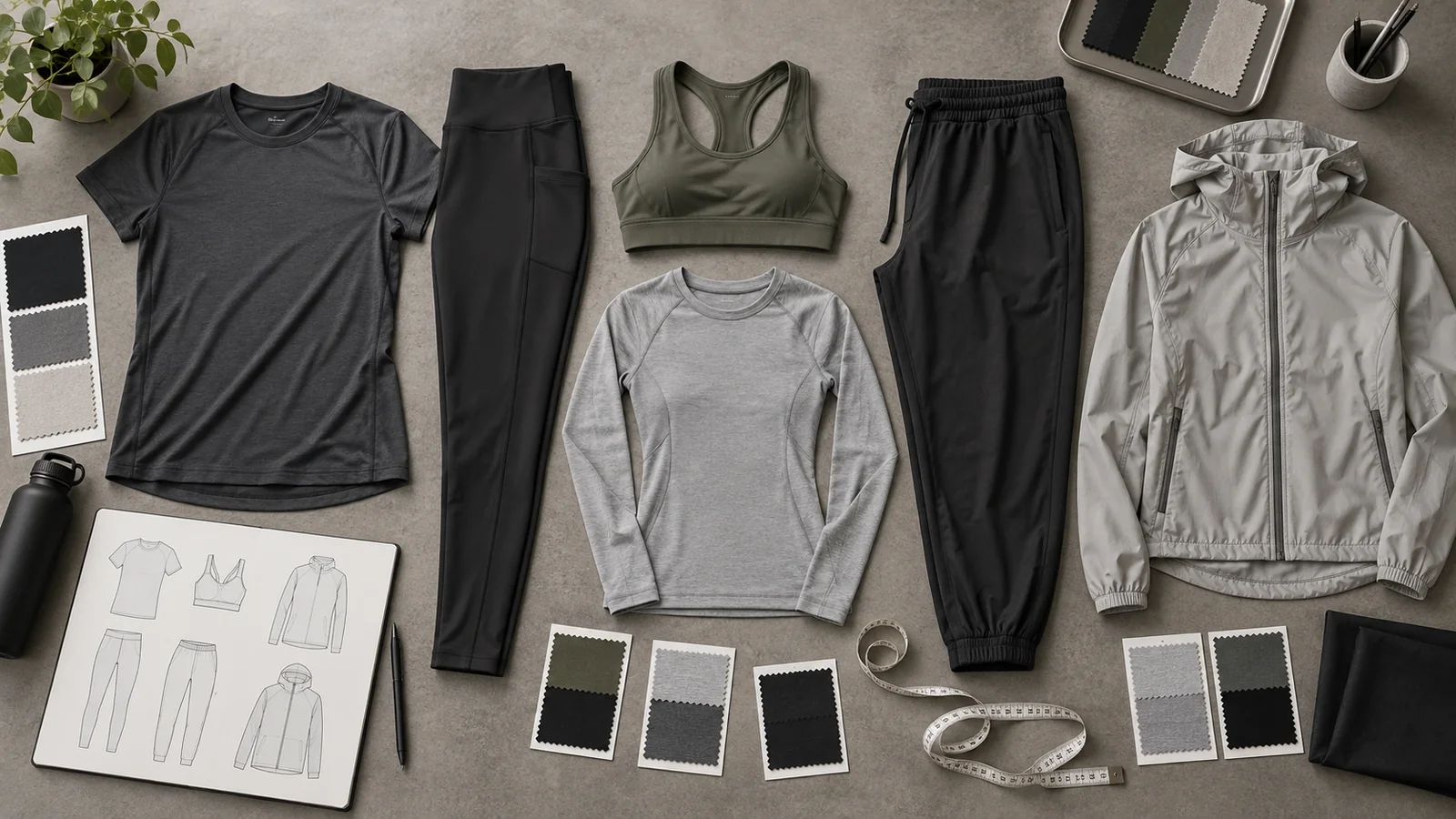
| Garment job | Performance priorities | Material directions worth sampling | Checks before approval |
|---|---|---|---|
| High-sweat training tee | Liquid movement, drying, comfort, colorfastness, and low cling | Polyester or blended jersey, engineered knit, or another documented quick-dry route | Moisture management, drying, odor wording, print response, and wash appearance |
| Running short | Low bulk, movement, drying, abrasion, and pocket stability | Lightweight woven, mesh-panel construction, or stretch woven | Tear and seam behavior, stretch, drying, lining, and pocket stress |
| Yoga legging | Stretch, recovery, opacity, soft hand, and low seam friction | Nylon-elastane or polyester-elastane knit, subject to the target hand | Four-way stretch, power, recovery, squat coverage, pilling, and wash growth |
| Compression top or bottom | Controlled extension, recovery, support, and seam stability | Dense stretch knit with a defined elastane system | Pressure intent, recovery after cycles, seam comfort, opacity, and fit |
| Base layer | Next-to-skin comfort, thermal balance, odor wording, and care | Fine jersey, merino blend, cellulosic blend, or engineered knit | Hand after washing, drying, pilling, shrinkage, and claim evidence |
| Warm-up hoodie or jogger | Warmth, comfort, dimensional stability, and abrasion | French terry, fleece, double knit, or stable blended knit | GSM, shrinkage, pilling, colorfastness, seam strength, and surface change |
| Lightweight shell | Wind or water protection, vapor movement, low weight, and seam design | Coated woven, laminated textile, or treated woven | Water or wind test, vapor behavior, seam construction, care, and coating durability |
Do not use one fabric across every product only to simplify sourcing. A shared color system or supplier relationship can be useful, but the performance brief should remain specific to the garment job.
Finishes and performance claims
Finishes can change a fabric’s initial hand, wetting, friction, appearance, or care response. Brushing, peaching, softening, wicking treatment, anti-pilling treatment, coating, lamination, bonding, heat setting, printing, and enzyme treatment should be recorded as part of the finished-fabric specification.
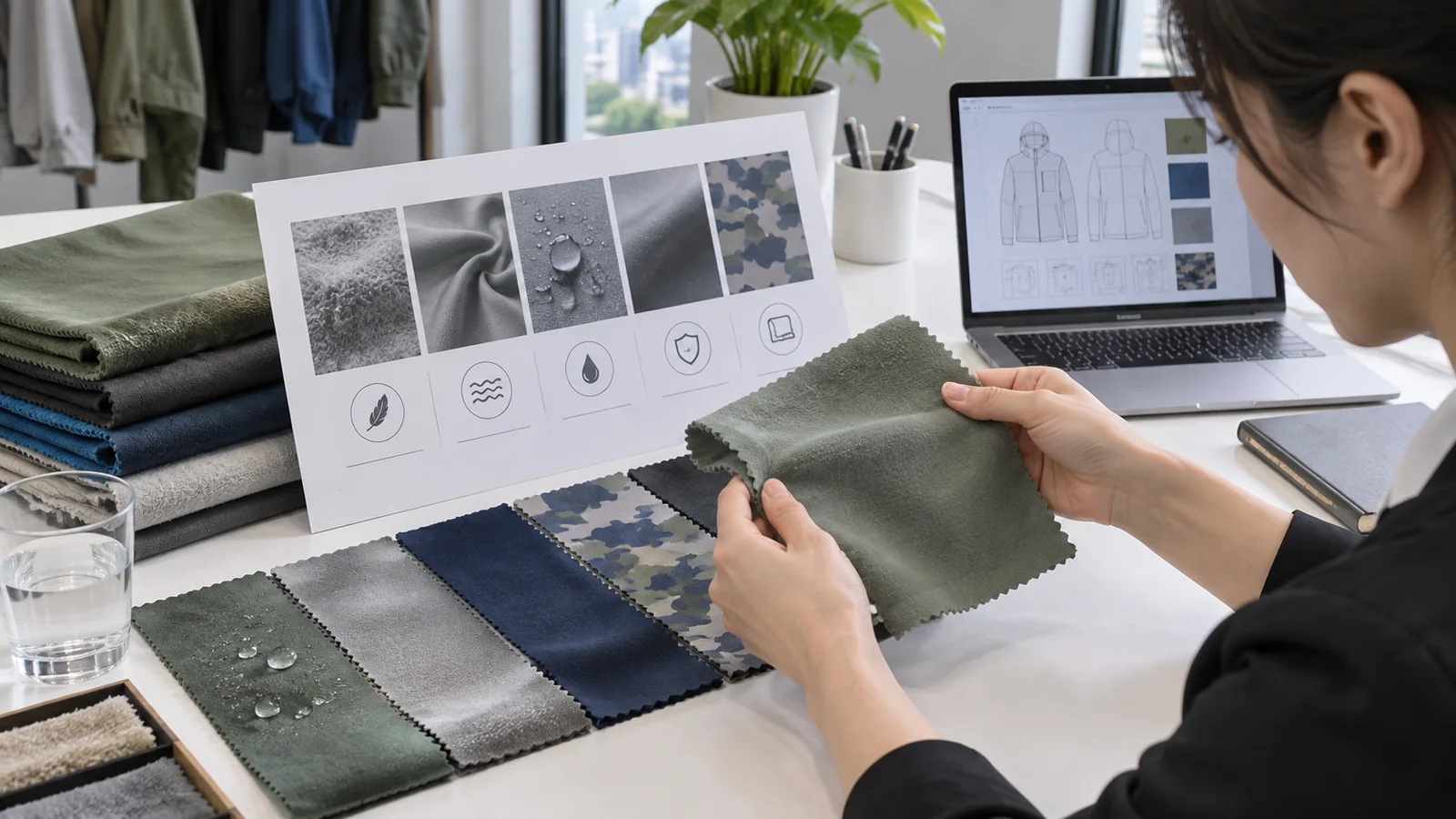
| Claim or finish language | What a buyer should clarify | Evidence to request |
|---|---|---|
| Moisture-wicking finish | Is the effect from the fiber, construction, finish, or combination? | Test method, sample condition, wash-state result, and approved claim wording |
| Quick-dry finish | What drying result is expected and under which conditions? | Drying method, liquid amount, environment, acceptance range, and retest plan |
| Anti-odor or antibacterial | Is the claim about a treatment, a test result, or a broad marketing phrase? | Organism, method, conditions, durability after care, and market review |
| UV or sun protection | Does the stated protection apply to the fabric or the finished garment? | Applicable test result, construction, color, stretch state, and claim scope |
| Water-repellent or waterproof | Is the requirement surface repellency, hydrostatic resistance, or both? | Test method, pressure or spray condition, seam coverage, and care durability |
| Recycled or lower-impact material | Which fiber component and supply-chain stage does the claim cover? | Fiber-content record, certification or chain-of-custody evidence when applicable, and approved wording |
Avoid turning a finish into a permanent promise. Ask what happens after the agreed laundering cycles, stretching, abrasion, sweat exposure, and decoration process. If an effect is important to the product’s positioning, write it into the technical brief and test plan rather than leaving it in a mood board.
What should be in a performance fabric specification?
A useful fabric specification lets a supplier understand what to quote and lets a buyer compare one sample with another. It should separate measurable requirements from preferences. Terms such as premium, breathable, technical, and high quality are not enough on their own.
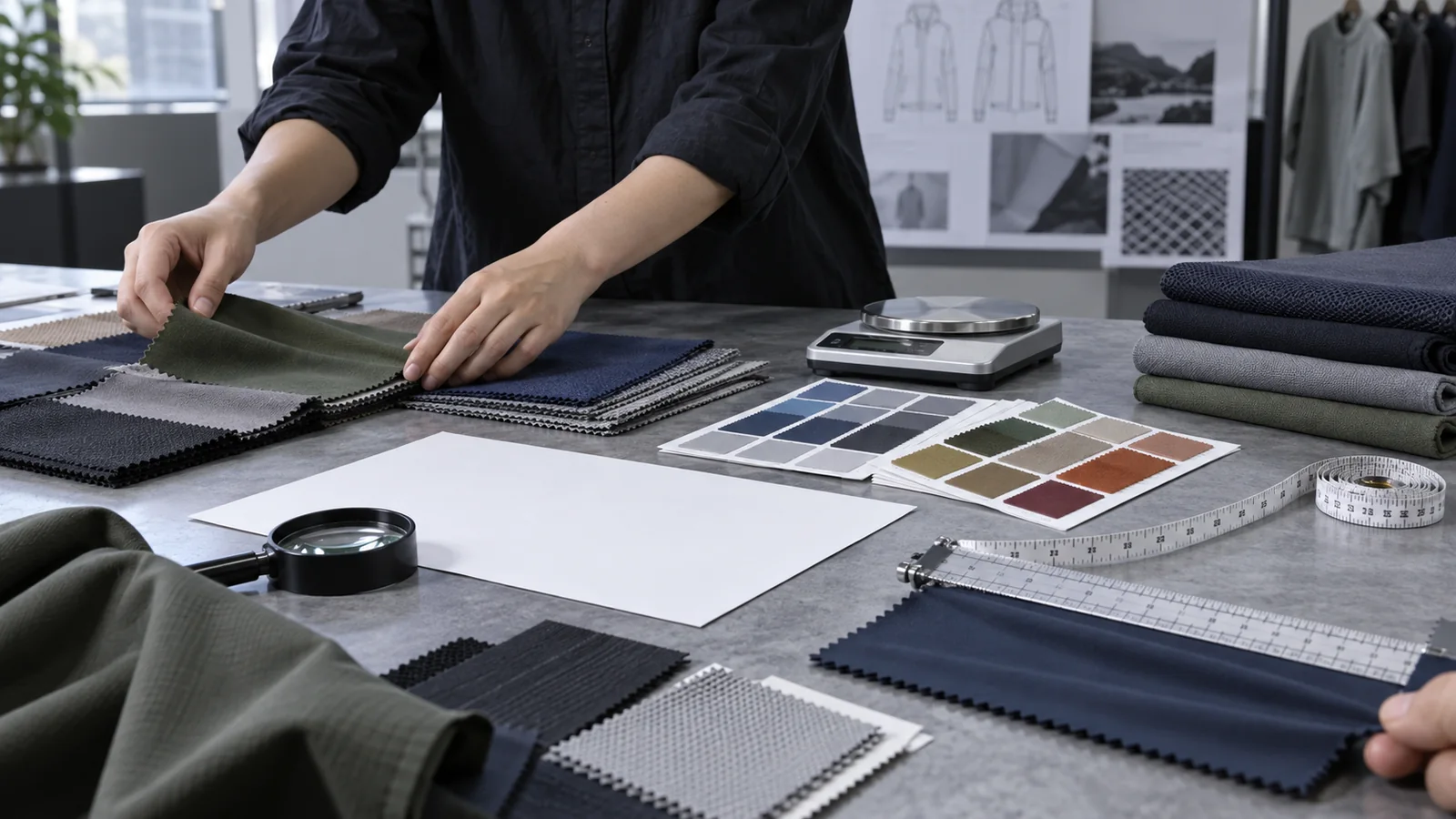
| Specification field | What to record | Why it matters |
|---|---|---|
| Fiber content | Generic fiber names and percentages by weight | Supports labeling, cost comparison, claims review, and repeatability |
| Construction | Knit or woven type, gauge or density when relevant, and surface structure | Influences stretch, coverage, airflow, hand, and stability |
| GSM and width | Target finished GSM, usable width, tolerance, and measurement condition | Affects pattern yield, opacity, drape, and quote comparison |
| Stretch and recovery | Direction, extension, force, recovery interval, and growth limit | Connects the roll specification to fit, support, and wear behavior |
| Moisture and drying | Required property, test method, specimen state, and wash condition | Prevents wicking, absorbency, and drying claims from being mixed together |
| Appearance and hand | Color, luster, surface, softness, opacity, and acceptable variation | Aligns the sample with the brand and final garment expectation |
| Durability and care | Pilling, abrasion, colorfastness, shrinkage, seam behavior, and care route | Protects the product against predictable use and aftercare risks |
| Decoration and trims | Print, embroidery, heat transfer, labels, elastic, lining, and bonding | Decoration can change stretch, moisture movement, hand, and failure points |
| Sampling and approval | Swatch size, sewn sample, wash cycles, revision rules, and sign-off owner | Creates a clear path from idea to repeatable production brief |
For US-facing textile products, the FTC Textile Fiber Rule explains that covered textiles need fiber-content and related disclosures. Label requirements vary by market and product, so use the actual fiber documentation and destination-market review. A commercial name such as performance fabric should not replace the generic fiber content on a technical file or label.
If you are preparing a quote, send the fabric job, garment category, target composition, construction preference, GSM range, stretch direction, color and decoration plan, care route, and required tests. DTS can review a fabric brief alongside the garment design and identify which details still need confirmation before sampling.
How to test performance fabric before bulk production
Testing should follow the risk of the garment. A base-layer tee and a coated running shell do not need the same test set. Start with the claims that appear in the product copy, then add the failure modes most likely to affect the fit, appearance, safety, or repeat purchase.
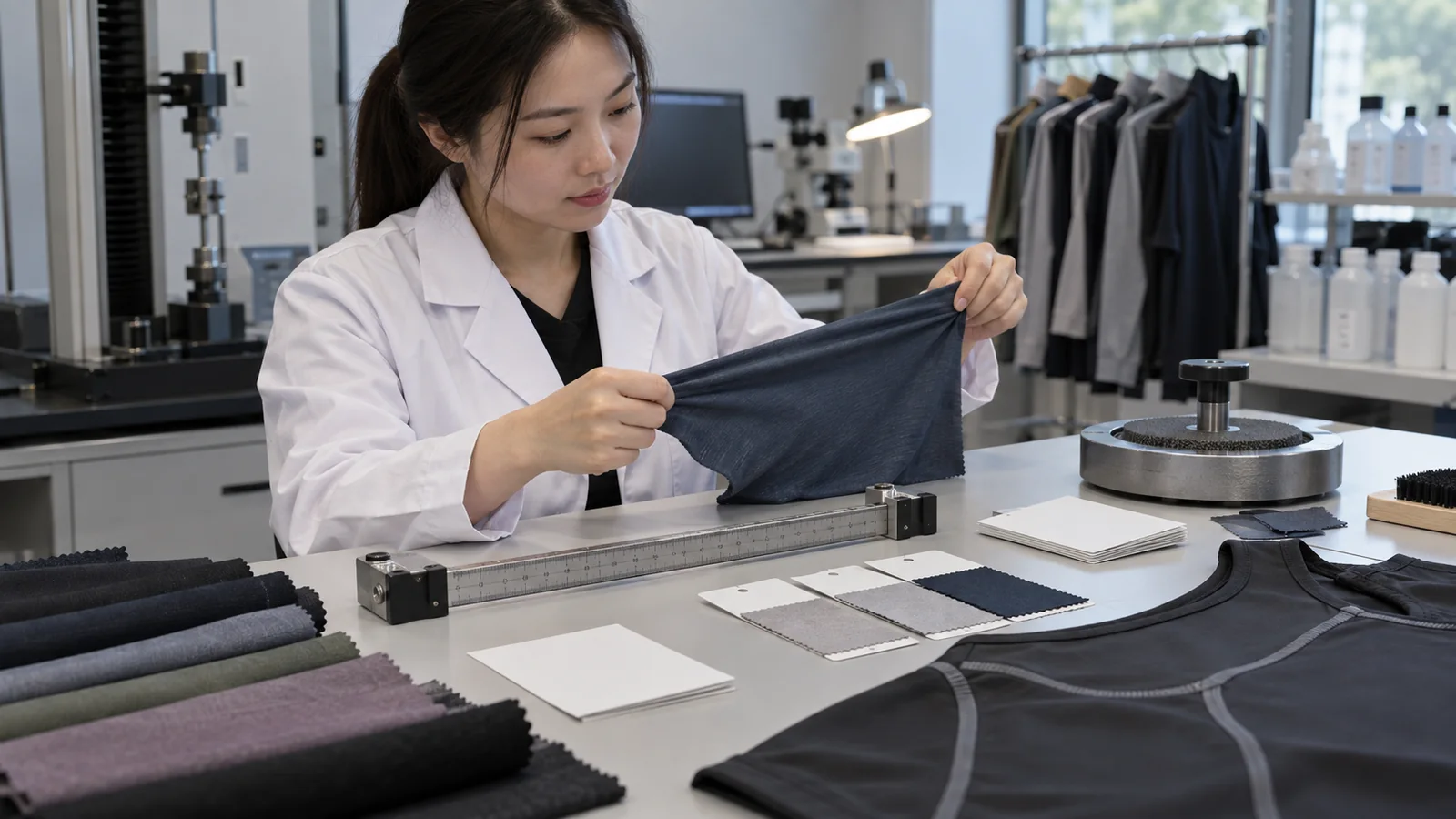
| Risk or decision | Fabric-level check | Finished-garment check | Approval question |
|---|---|---|---|
| Sweat and moisture claim | Moisture management, absorbency, spreading, or drying method matched to the claim | Wear or simulated-use review of sweat zones, seams, lining, and decoration | Does the result support the exact wording used in the product page? |
| Stretch fit | Extension, power, recovery, and repeated-cycle measurement | Fit, waistband growth, seam comfort, and body coverage in the final size set | Does the garment return to shape after movement and care? |
| Coverage and opacity | Light or stretch evaluation in the target construction | Squat, bend, movement, lighting, and size-range review | Is coverage acceptable in the positions customers will use? |
| Surface durability | Pilling, abrasion, snag, or finish durability as applicable | High-friction zones, printed areas, seams, and trims after care | Does the surface still meet appearance expectations after use? |
| Dimensional stability | Shrinkage, skew, spirality, width, and length after care | Finished measurements, hems, necklines, waistbands, and panels | Can the pattern and grading absorb the measured change? |
| Color and decoration | Colorfastness and shade variation under the intended route | Print, embroidery, heat transfer, and trim appearance after care | Are the garment and decoration approved as one system? |
ASTM D4966 abrasion testing is one example of a named textile test method, but its result should be interpreted in the context of the product and laboratory conditions. A single test does not guarantee a universal wear life. Record the method, specimen, cycles, conditioning, result, and acceptance rule so that a later sample can be compared fairly.
A practical sample-to-approval sequence
- Write the garment job and the claims the finished product must support.
- Request the fiber content, construction, GSM, width, stretch, recovery, finish, and care information for each candidate.
- Compare swatches for hand, coverage, stretch direction, surface, and color before choosing a sewn sample.
- Make a representative garment with the actual fit, seams, trims, decoration, lining, and labels.
- Run the agreed checks in the unwashed and washed states, and record the conditions.
- Review the result against the product copy, tech pack, size range, packaging, and destination-market label plan.
- Approve a named fabric specification and revision level before bulk cutting.
Care, repeatability and buyer handoff
Performance is not finished when a swatch passes a first inspection. Care instructions, heat exposure, detergent, stretching, abrasion, and decoration can change hand and function. A finish that feels excellent at sample stage may not remain the same after the customer’s normal care route.
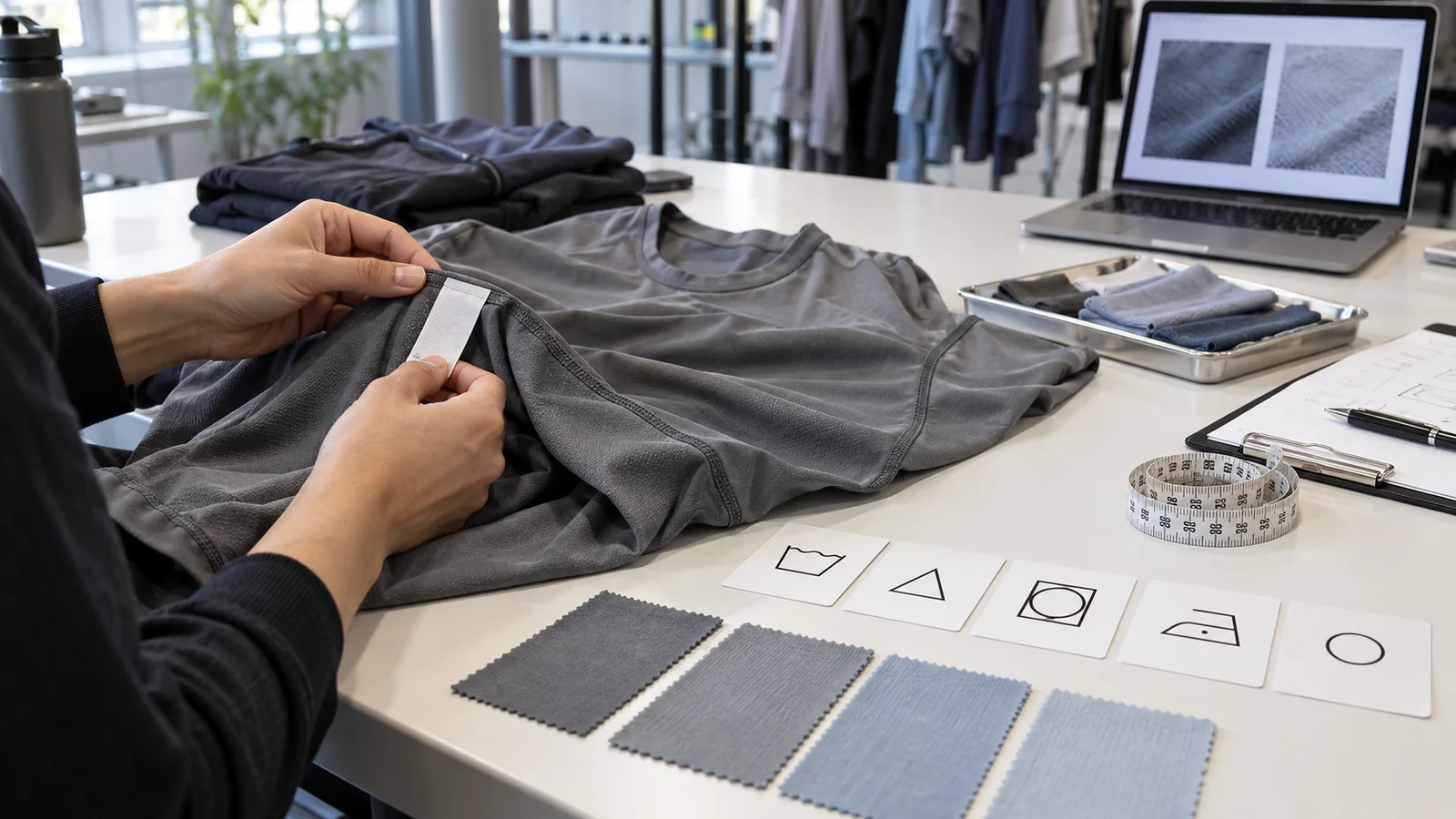
The care route should be part of the development brief. Record the expected wash temperature, drying route, pressing or heat limits, chlorine or salt-water exposure when relevant, and whether the approved result must remain after repeated cycles. Then check both the fabric and the garment: color, shrinkage, twist, pilling, stretch recovery, print, elastics, seams, and surface hand.
Repeatability also needs a document trail. Keep the fabric name, composition, construction, GSM, width, finish, color code, supplier reference, test report, approved swatch, sample date, and revision level together. If a supplier proposes a substitute yarn or finish, treat it as a new development question until the relevant properties are compared.
Use Tech Pack Customization to translate the chosen fabric behavior into garment construction, trims, measurements, and decoration. Use Sampling & Prototyping to review the sewn product before bulk decisions. The exact feasibility, MOQ, and timing must be confirmed against the final brief.
How to choose the right performance fabric
The right performance fabric is the one that meets the garment’s real requirements with a documented composition, construction, care route, and test result. A buyer can use this short decision path:
- Name the activity, climate, wearer movement, and garment category.
- List the top three failure risks, such as slow drying, loss of recovery, pilling, opacity, or seam stress.
- Select two or three material directions that can plausibly meet the job.
- Define the construction, GSM, width, stretch, recovery, finish, color, and decoration requirements.
- Separate mandatory test results from desirable hand-feel or styling preferences.
- Approve a sewn sample after care and movement checks, not only a loose swatch.
- Align the final claim wording, label information, care instructions, and technical file.

The phrase performance fabric is useful when it starts a precise conversation. It is weak when it is used as a substitute for fiber content, construction, testing, or a product-specific brief. For a new activewear style, define the job first, then let the material and garment evidence support the claim.
Frequently asked questions
No. Performance fabric is a functional description, not one fiber category. Polyester, nylon, cotton, wool, regenerated cellulosics, elastane blends, and specialty constructions can be used when they meet the intended garment requirements. The fiber content and construction still need to be documented.
There is no single best option for every activewear product. A high-sweat tee, yoga legging, compression style, and warm-up layer have different priorities. Compare fiber, construction, GSM, stretch, recovery, moisture behavior, opacity, durability, care, and finished-garment results for the specific job.
Polyester can be used in performance fabrics, but the fiber name alone does not prove moisture wicking, quick drying, comfort, or durability. Yarn, knit or woven construction, weight, finish, garment design, and test conditions affect the result.
Neither is universally better. Nylon may be selected for a smooth hand, strength, and stretch-blend behavior, while polyester may be selected for color options, broad activewear use, and drying potential in a suitable construction. Compare the actual fabric and finished-garment requirements rather than generic fiber reputations.
Not necessarily. Moisture wicking is one possible performance property. Performance fabric can also address stretch recovery, breathability, thermal balance, abrasion, opacity, wind or water protection, or another defined requirement. A buyer should state the exact claim and test method.
Match the test to the product claim and risk. Depending on the style, the plan may include moisture management, drying, stretch and recovery, pilling, abrasion, colorfastness, shrinkage, opacity, seam, or finish checks. Test the fabric and a representative finished garment when fit, decoration, seams, or body coverage affect the result.
Ask for generic fiber content, construction, GSM, usable width, stretch and recovery, finish, color and care information, available tests, sample reference, and any claim evidence. Also provide the garment job, target fit, decoration, care route, and market so the supplier can recommend a relevant construction rather than a generic sports fabric.
It depends on the fiber, construction, finish, garment design, and care route. A finish may change after laundering, and repeated extension can affect recovery or opacity. Define the wash state and number of cycles in the approval plan, then align the product copy and care label with the evidence.