Mesh fabric is a textile with a deliberately open construction that leaves visible spaces between yarns or knitted elements. Those openings can allow air to pass, reduce coverage, create visual texture, or lower the weight of a garment. Mesh is not one fiber and it is not one fixed performance grade. Polyester mesh, nylon mesh, elastane mesh, and blended mesh can all behave differently because the yarn, construction, opening, weight, finish, and garment design change the result.
For an apparel buyer, the useful definition is only the starting point. The practical question is whether a particular mesh construction gives the garment the required airflow, coverage, stretch, recovery, seam stability, decoration result, care behavior, and durability. This guide explains what mesh fabric means, then turns the term into a quote-ready specification and sample approval plan for activewear, teamwear, streetwear, and linings.
What is mesh fabric?
Mesh fabric is a knit or woven textile designed with an open or visibly spaced structure. The spaces may be regular holes, fine pores, geometric openings, or a three-dimensional spacer construction. The word mesh describes the relationship between yarns and openings. It does not, by itself, identify the fiber content, GSM, stretch level, softness, transparency, or tested breathability.
The simplest buyer answer is:
Mesh fabric is an open textile construction selected when a product needs controlled air passage, lower coverage, visual texture, stretch, or a lightweight panel.
The fiber and the construction are separate decisions. A polyester yarn can be knitted into a fine athletic mesh, a coarse jersey mesh, a spacer knit, or a dense fabric with no visible opening. A nylon yarn can also be engineered into several mesh structures. The same fiber name can therefore produce very different activewear results.
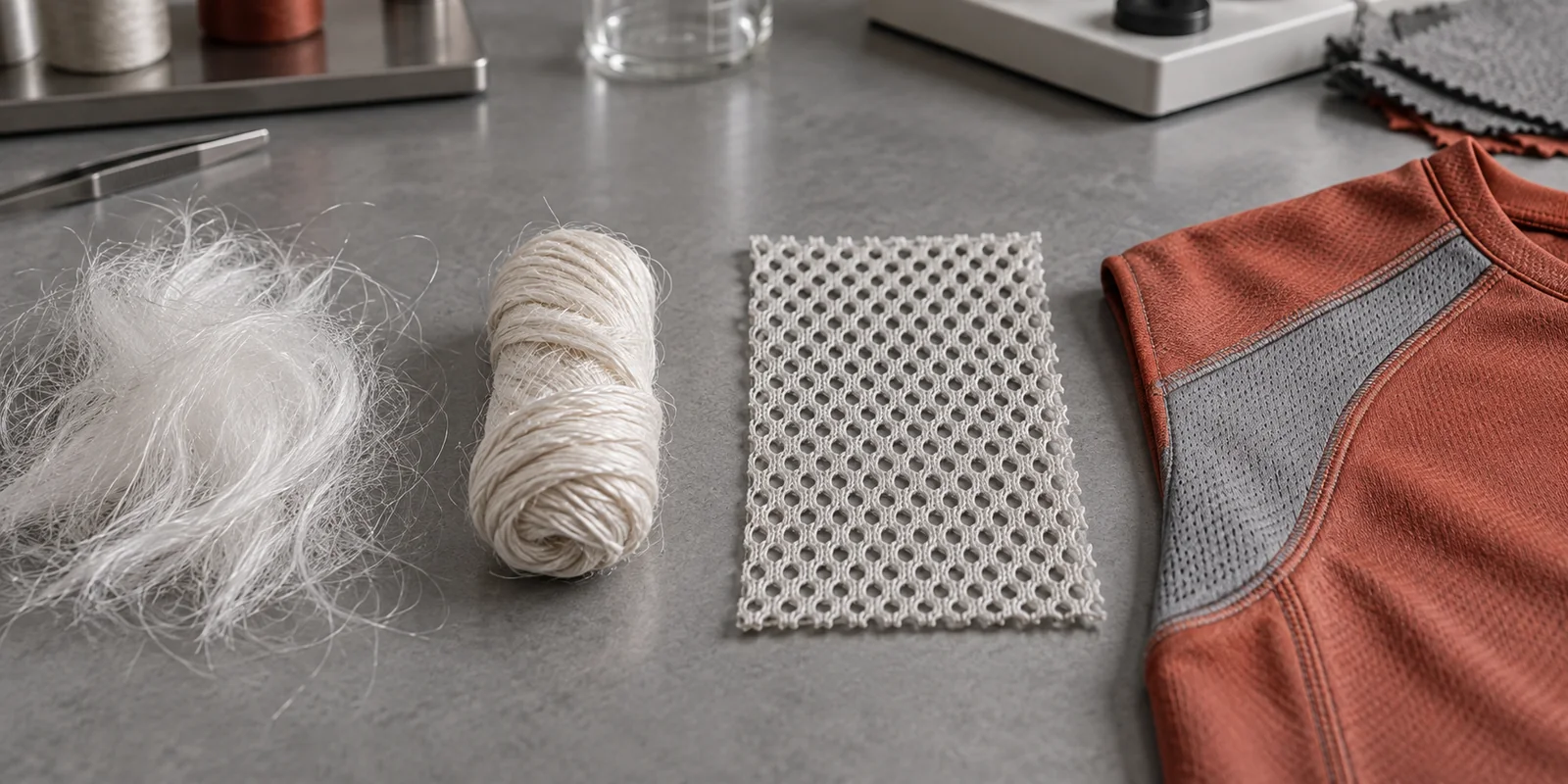
When a supplier says "mesh," ask which of these layers the word describes:
- Fiber: polyester, nylon, elastane, or a blend, recorded by percentage when known.
- Yarn: filament or spun yarn, yarn size, texture, and any special cross section or finish.
- Construction: weft knit, warp knit, spacer knit, woven mesh, opening geometry, and density.
- Garment: panel placement, lining, seams, stretch direction, decoration, and care route.
A product file that records only "black mesh fabric" is incomplete. It should also state the product job, target hand feel, intended stretch, coverage expectation, usable width, GSM range or target, color, finish, and the tests that will decide sample approval.
How mesh fabric is constructed
Mesh begins with a yarn system and an arrangement that creates openings. The production route differs by construction, but an apparel buyer can understand it through a practical sequence:
- The mill selects a fiber route and yarn suitable for the required hand feel, strength, stretch, and surface.
- The yarn is knitted or woven with a controlled spacing pattern instead of creating a fully closed fabric face.
- The structure is stabilized through dyeing, heat setting, finishing, or another process appropriate to the material.
- The finished fabric is inspected for opening consistency, width, weight, color, stretch, recovery, and visible defects.
- The garment team places the mesh where its openness supports the product job without creating unwanted transparency or seam weakness.
Construction controls the size and shape of the openings. A fine micro mesh can have a subtle texture and more coverage than a large-hole athletic mesh. A spacer knit can create a thicker three-dimensional layer with air space between faces. A power mesh can be relatively firm and elastic even though it has an open appearance. These are not interchangeable materials.
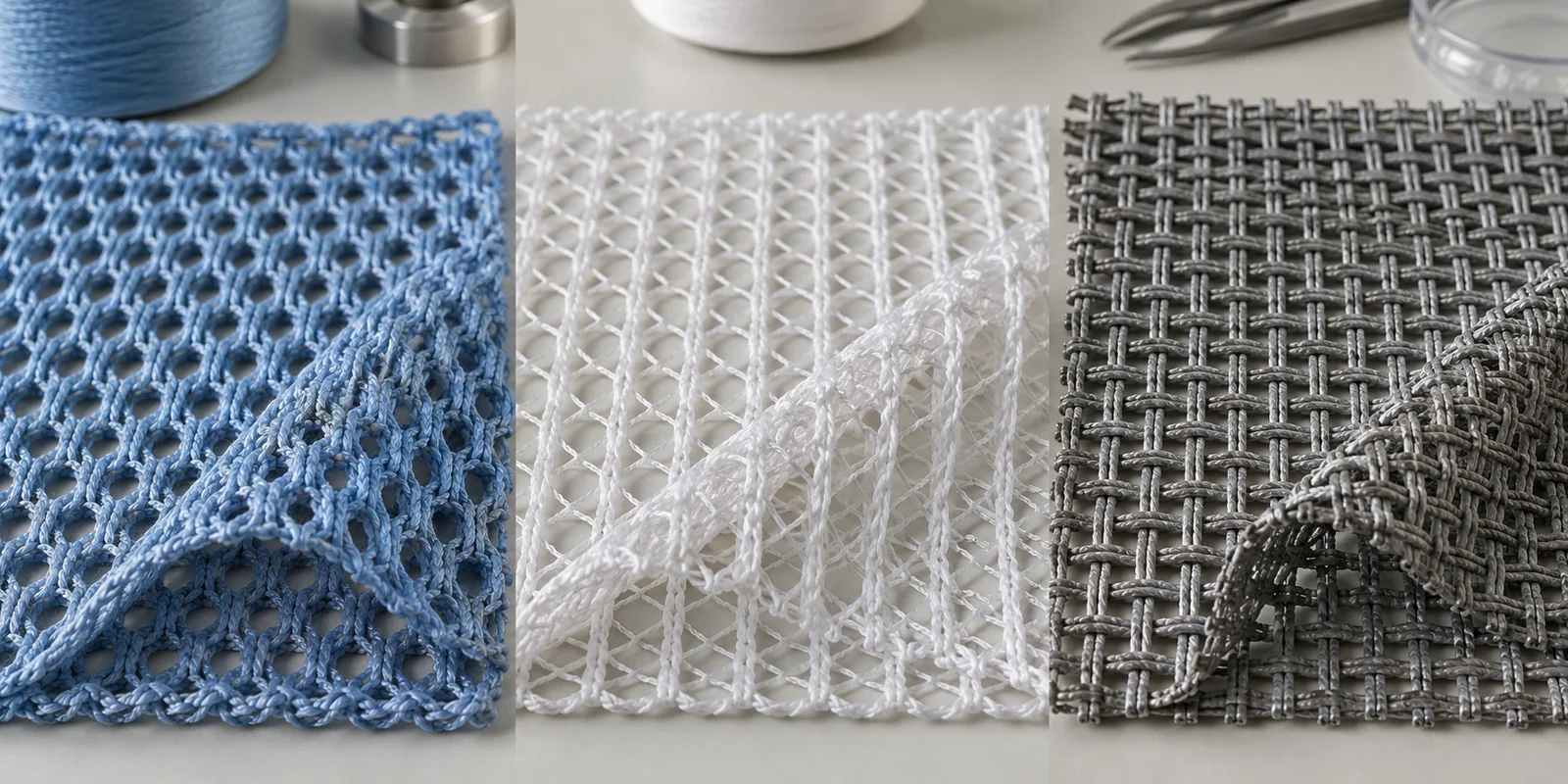
The buyer should distinguish at least three construction routes:
| Construction route | What it usually means | Questions for the sample |
|---|---|---|
| Weft knit mesh | Loops are formed across the fabric width and can provide useful stretch | How much does it extend and recover in each direction? Does an edge curl or distort? |
| Warp knit mesh | Yarns form a more stable vertical loop system and can support a cleaner surface | Does it run, snag, or lose shape when cut and sewn? Is the hand too firm for skin contact? |
| Woven mesh | Yarns cross at planned points to create a more fixed opening geometry | Does the fabric have enough drape, seam stability, and abrasion resistance for the garment? |
| Spacer or 3D mesh | Two fabric faces are linked by spacer yarns to create thickness and an air layer | Does the thickness work at seams, hems, and body movement? Does the face collapse under pressure? |
The term "mesh" may also appear in a supplier’s commercial name. Treat the name as a starting point, then request a swatch, construction description, weight, width, stretch data, and intended use. A visual sample is important because two fabrics with a similar opening can feel and sew very differently.
Mesh fabric versus net and perforated fabric
Mesh, net, and perforated fabric can look similar in a photograph, but a buyer should not assume they are the same product.
In apparel discussions, mesh often describes an engineered fabric construction with a repeatable opening pattern and a balance of coverage, air movement, and handling. Net often points to a more open or decorative structure, although industry usage is not perfectly uniform. Perforated fabric usually starts as a more closed sheet or fabric that has holes made by a separate process, such as laser cutting, punching, or a molded operation.
The distinction affects specification and production. A knitted mesh can stretch because of loops, yarn selection, or elastane. A perforated nonwoven or coated sheet may not respond the same way at a seam. A decorative net may need a lining because the opening is too large for direct skin contact. Ask the supplier to describe the actual construction rather than approving a name from a catalog.
For an activewear panel, confirm the intended function:
- Is the opening intended to move air, reduce weight, show a layer underneath, or create texture?
- Does the panel sit against skin, over a lining, or on the outside of a garment?
- Will the opening remain stable when stretched, washed, printed, embroidered, or sewn into a curved seam?
- Does the garment need to meet a coverage expectation under studio light, daylight, and movement?
This language keeps a fashion description from being mistaken for a technical specification.
Common types of mesh fabric for apparel
There is no single universal list of mesh types. The following names are useful working categories for product development, but the exact structure must still be checked with the mill or factory.
- Athletic or sport mesh: An open knit used for training tops, team shirts, practice bibs, and ventilation zones. The opening, weight, stretch, and surface can vary significantly.
- Birdseye mesh: A small repeat that can create a subtle textured appearance and more coverage than a large-hole mesh. The name describes a visual pattern, not a guaranteed composition.
- Micro mesh: A fine mesh with small openings, often selected when a product needs air movement with a cleaner visual surface. Opacity and air permeability still need testing.
- Power mesh: A firm stretch mesh used for support, shaping, inserts, pockets, or linings. Recovery, compression feel, and edge stability are key approval points.
- Spacer or 3D mesh: A thicker construction with a separated or cushioned face. It can provide structure and air space but may add bulk at seams.
- Jacquard or engineered mesh: A pattern is formed through the knit or weave rather than only through a printed graphic. Confirm repeat, placement, reverse appearance, and color control.
- Lining mesh: A lighter or finer mesh selected for internal comfort, separation, or reduced cling. The hand feel and snag resistance matter because it may touch the body or another garment layer.
- Woven mesh: A more fixed grid or open weave used in selected panels, pockets, utility garments, or accessories. Stretch may be limited unless the yarn or construction provides it.
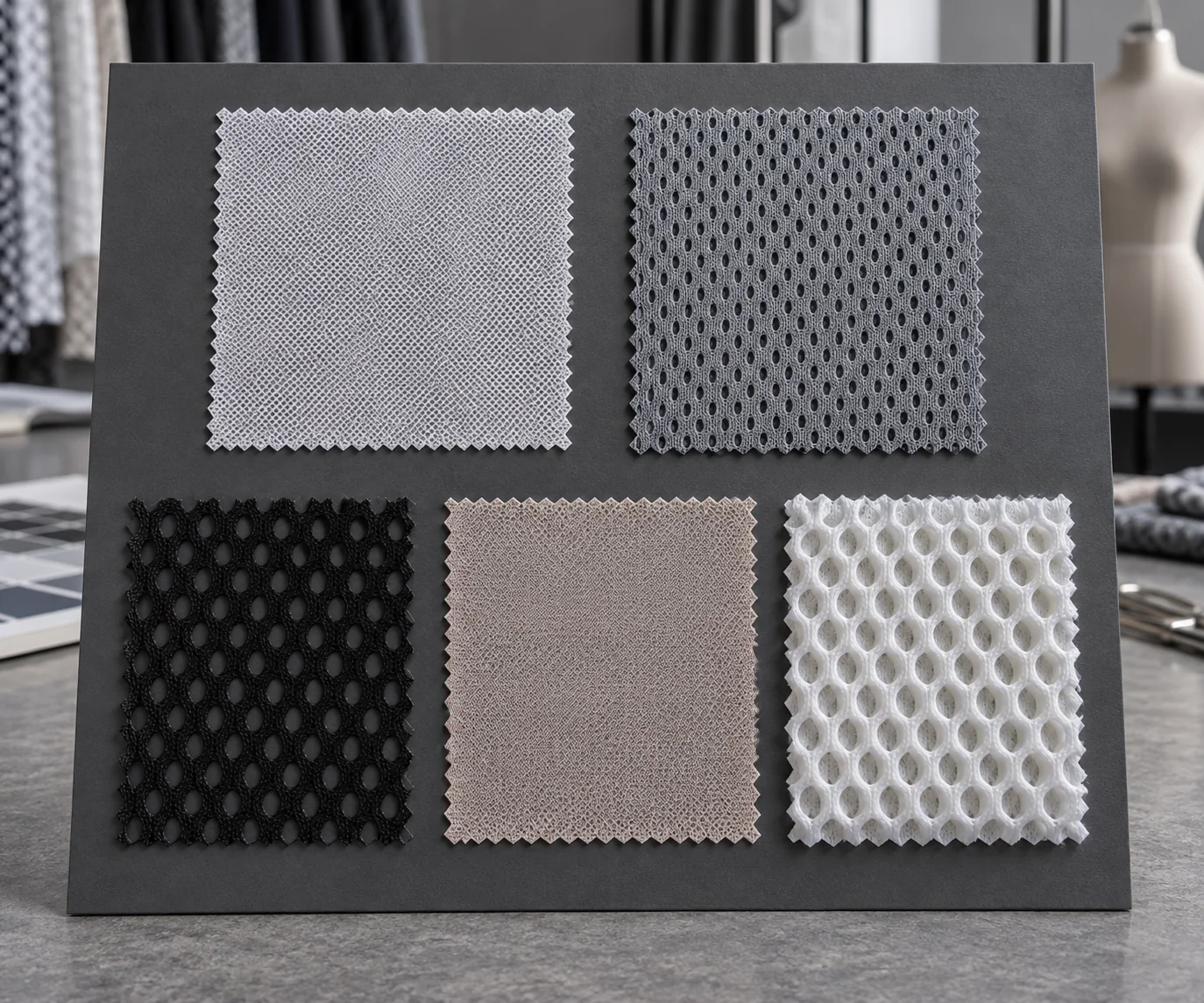
Use these names to organize a conversation, not to skip the technical fields. "Power mesh" can be too broad for a quote. The supplier should state the fiber content, construction, weight, width, stretch direction, recovery, finish, and any supporting test data for the exact option.
Polyester mesh versus nylon mesh
Polyester and nylon are common fibers for mesh, but fiber choice does not override construction. A dense nylon mesh and an open polyester mesh may have less in common than two polyester meshes with different structures.
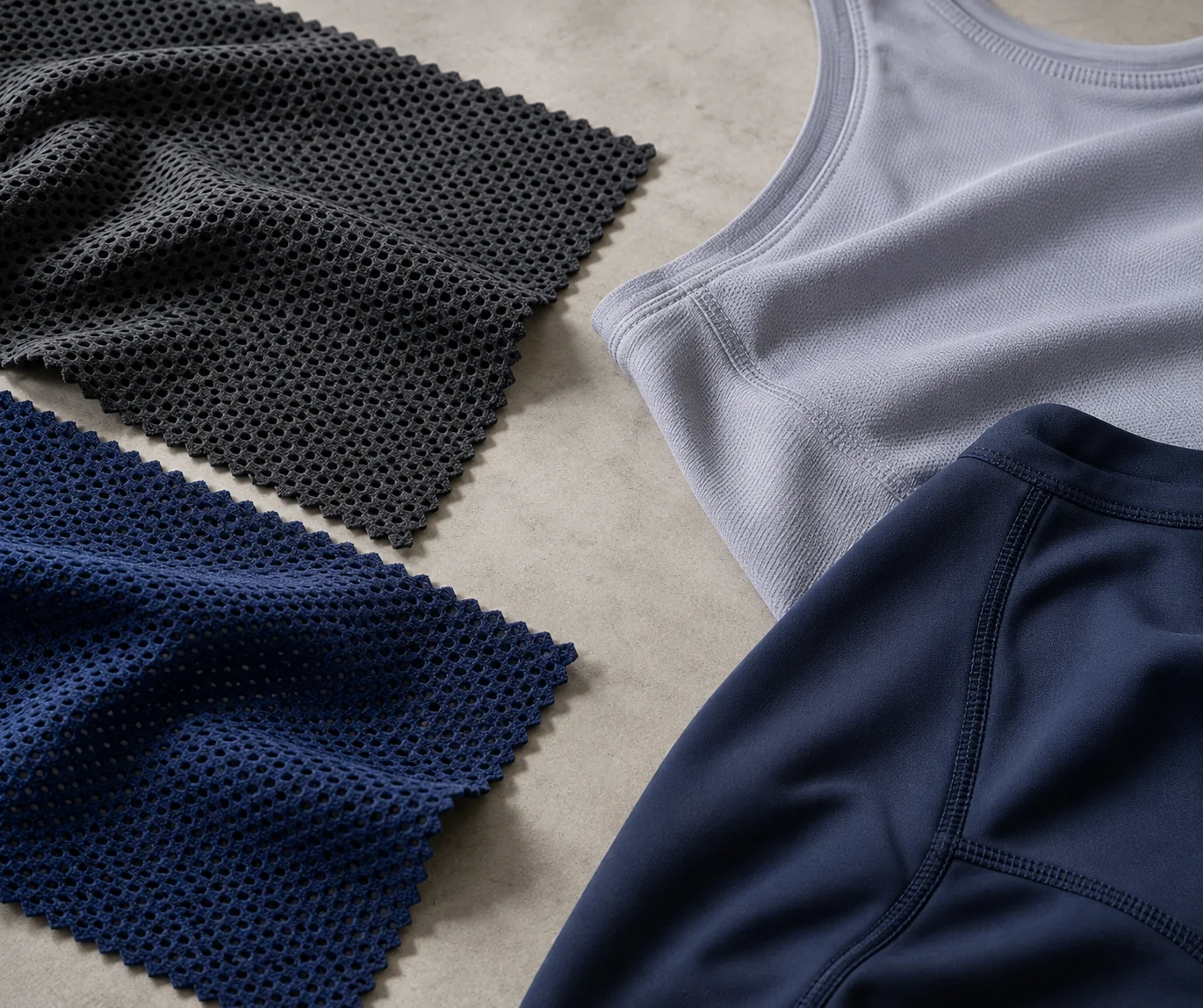
| Fiber route | Why a buyer may investigate it | What must be verified on the exact mesh |
|---|---|---|
| Polyester mesh | Broad range of yarns, structures, colors, and decoration routes for sports and private-label apparel | Fiber percentage, construction, dye or print route, heat response, hand feel, air movement, and coverage |
| Nylon mesh | Soft hand feel and a different balance of strength, stretch, and surface for selected technical or intimate applications | Fiber percentage, moisture behavior, recovery, abrasion, snagging, color, and compatibility with decoration |
| Polyester with elastane | Additional stretch and recovery for fitted panels or support zones | Extension, recovery after repeated movement, heat exposure, opacity, and growth after care |
| Nylon with elastane | Stretch-focused constructions where a smooth or soft hand is important | Recovery, chlorine or chemical exposure if relevant, surface change, seam stability, and care route |
| Fiber blend or layered mesh | A way to balance surface, support, cost, or garment function | Each component, the face and reverse, layer bonding, label content, and finished-garment behavior |
The table is a decision map, not a performance guarantee. If a product brief uses words such as cooling, moisture wicking, quick drying, odor control, or compression, connect each claim to a defined test, sample condition, or product standard. A fiber name alone cannot prove the finished garment claim.
Is mesh fabric breathable?
Mesh fabric can allow more air movement than a closed construction, but "breathable" is not a single material property. Air can pass through the openings, while moisture behavior also depends on yarn, finish, fabric thickness, garment fit, lining, seams, and the surrounding environment.
Air permeability is a useful technical measurement because it describes the flow of air through a textile under specified test conditions. ASTM D737 is a standard test method that covers air permeability for many textile fabrics, including knitted and layered fabrics. The method name does not create a pass result. The buyer still needs to agree on the test setup, sample location, direction if relevant, and acceptance range for the product.

Breathability and moisture management should be separated in a product brief:
- Air permeability: How readily air passes through the tested fabric under the stated conditions.
- Moisture movement: How liquid spreads, transfers, evaporates, or stays at the skin side.
- Drying behavior: How quickly a fabric or garment returns toward a target condition after wetting.
- Thermal comfort: How the wearer experiences heat and humidity in a complete garment during a specific activity.
An open mesh can improve ventilation in a side panel while a solid body fabric controls coverage. A lining can reduce the apparent air movement of the outer mesh. A close fit can make a breathable fabric feel warm if moisture has no path to leave the garment. Evaluate the fabric in the construction and garment position where it will actually be used.
Where mesh fabric is used in activewear
Mesh is useful when the designer wants to place openness where the body or product needs it. It does not have to cover the entire garment. Strategic panels can provide a balance between ventilation, coverage, branding, and support.
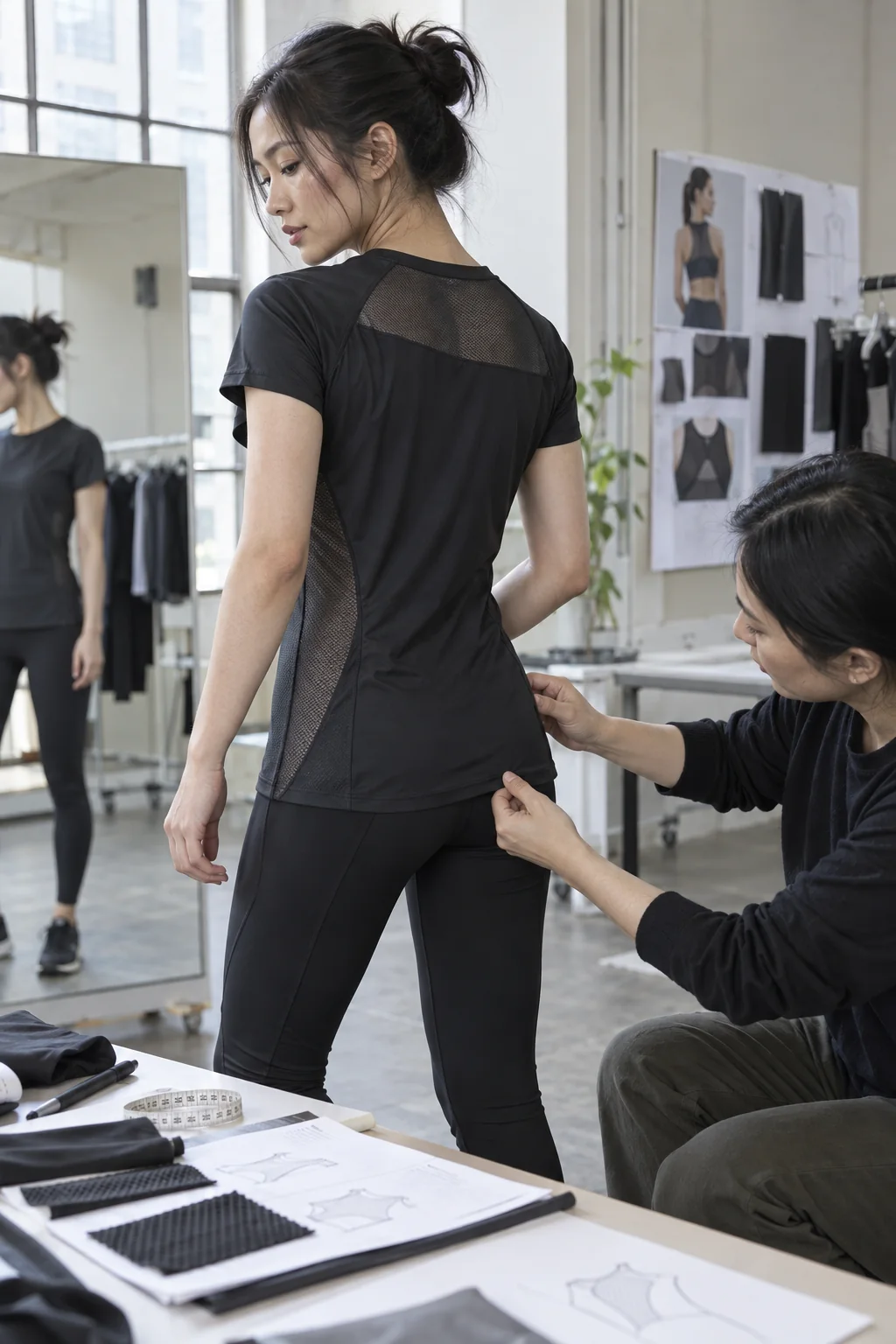
Common activewear uses include:
- Underarm, upper-back, side-body, and sleeve panels in training tops.
- Full or partial bodies for lightweight practice shirts and team jerseys.
- Inner layers or pocket bags in shorts and warm-up garments.
- Lining or separation panels where a solid face would feel too warm or clingy.
- Vent zones in running, gym, dance, and outdoor movement products.
- Decorative inserts in streetwear and fashion activewear where texture is part of the design.
The body map matters. A mesh that works at the upper back may be too transparent at the chest. A large opening that looks useful in a flat swatch may catch on a bag strap. A soft fine mesh may suit skin contact but lack enough support at a shoulder seam. Treat placement as part of the material decision.
The garment pattern should show whether mesh is a face fabric, insert, lining, or pocket component. That distinction affects seam allowance, needle selection, thread tension, support tape, and inspection points.
Transparency and coverage are separate from breathability
A fabric can be airy and still provide useful coverage if the opening is small, the yarn is dense, the color is dark, or a backing layer is used. Another fabric can have a fine visual texture but become highly transparent when stretched over the body.
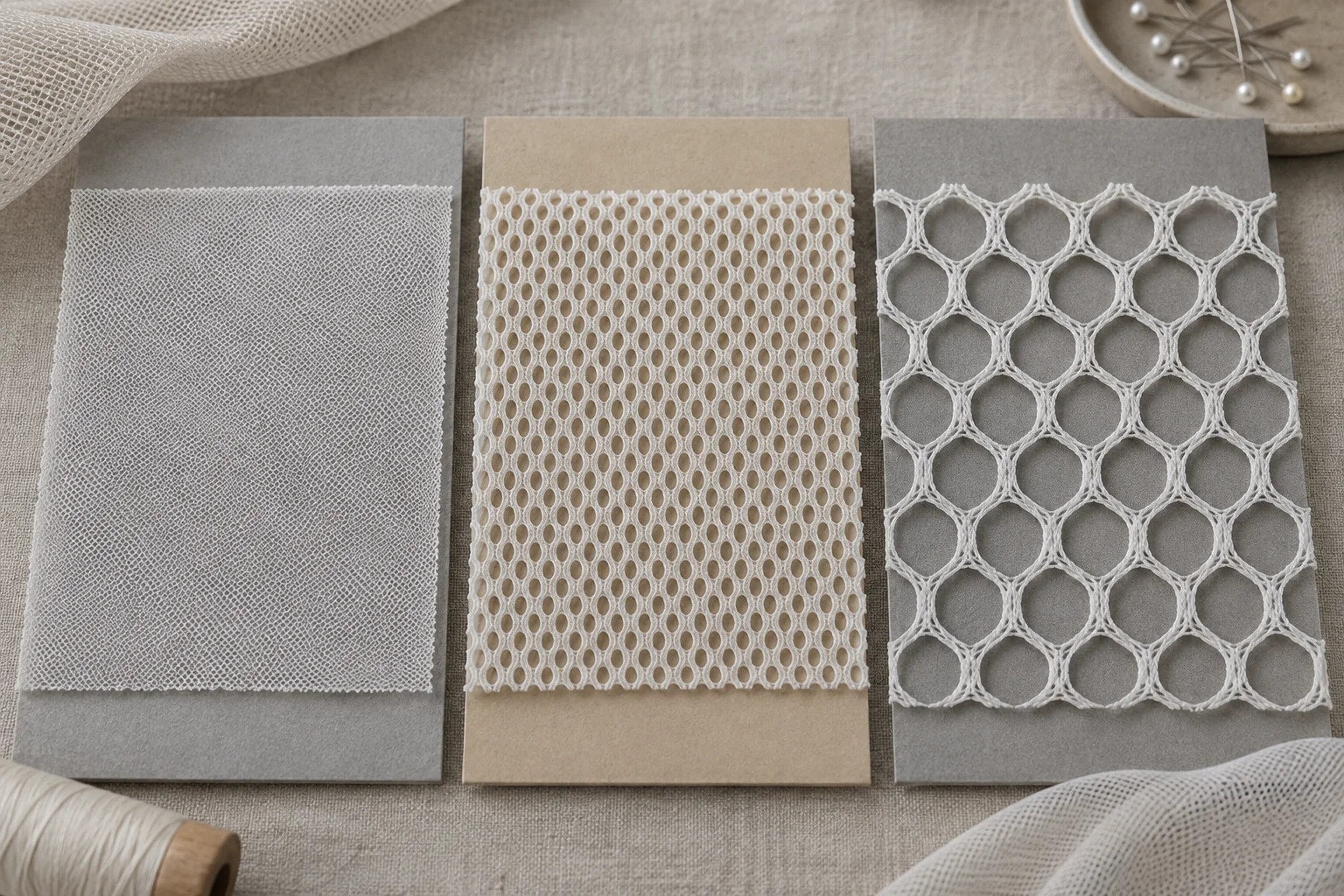
Check mesh coverage in at least four states:
- Relaxed and flat on a neutral background.
- Stretched to the intended garment extension.
- Placed over the skin-tone or base layer that will be used in the product.
- Viewed under the lighting used for fit review, photography, and retail presentation.
Record the result with the actual garment, not only a swatch. A lining may reduce transparency but also reduce airflow and change the hand feel. A printed graphic may increase visual coverage without changing the physical opening. Neither solution should be described as the same as a different mesh construction.
Stretch, recovery, and seam stability
Many mesh fabrics are knitted and may have useful stretch, but stretch is not automatic. Direction, loop structure, yarn elasticity, elastane content, finishing, and pattern tension all influence the finished product.
Ask the supplier or development team to distinguish:
- Relaxed width and length.
- Extension in the direction used by the pattern.
- Recovery after a repeatable stretch and rest period.
- Growth or bagging after movement and washing.
- Edge curling, laddering, or distortion after cutting.
- Seam appearance when the mesh is joined to a solid fabric.
Recovery is a garment-level issue. A mesh panel can recover on its own but still look wavy if the adjacent solid panel, elastic, or seam line behaves differently. Check the transition between materials, especially at armholes, necklines, pocket openings, and curved side seams.
Choosing mesh by product job
Start with what the garment must do, then choose a mesh family. This keeps the selection connected to a buyer outcome rather than to a fashionable fabric name.
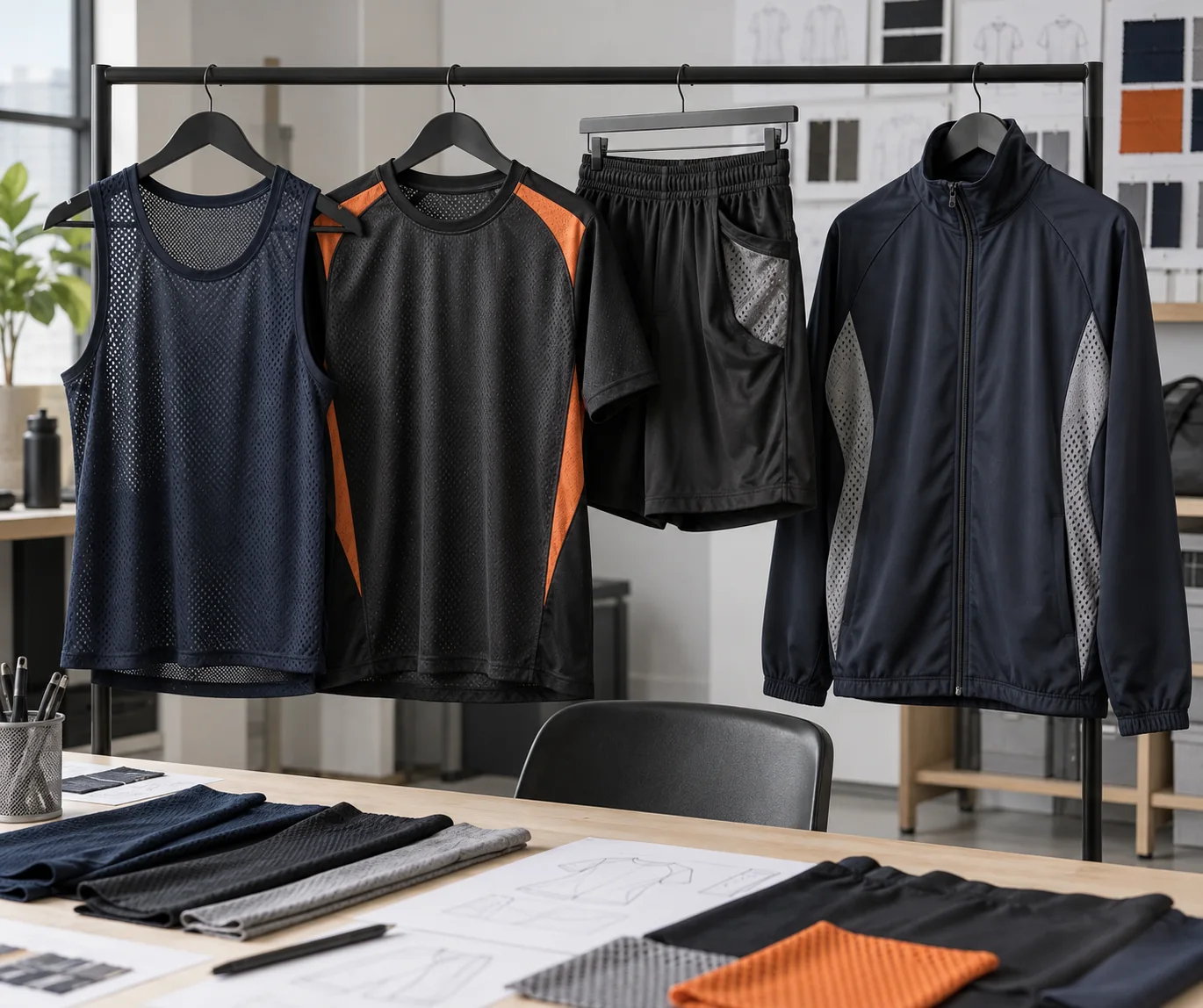
| Product job | Mesh direction to investigate | Main trade-off to resolve |
|---|---|---|
| Lightweight training top | Athletic, birdseye, or fine open knit | More airflow can mean less coverage or greater snag risk |
| Team jersey | Stable printed sport mesh or structured knit | A more open face may affect print edge, opacity, and seam support |
| Ventilation insert | Fine or medium mesh matched to a solid body | The panel must ventilate without looking accidental or failing at the join |
| Shorts lining or pocket | Fine lining mesh or stable woven mesh | Low bulk and comfort must coexist with abrasion and pocket security |
| Compression or support detail | Power mesh or stretch mesh with controlled recovery | Support must be tested without creating excessive pressure or distortion |
| Streetwear panel | Patterned, spacer, or contrasting mesh | Texture and transparency must remain consistent after decoration and care |
Do not specify the same mesh for every panel by default. The best body fabric for a jersey may be too transparent for a pocket lining. The best lining mesh may not have enough stability for a shoulder seam. Multi-material garments need a compatibility review before bulk approval.
Mesh fabric specification fields for a quote
The GSM meaning in clothing guide explains why weight is only one part of fabric selection. For mesh, opening and stability should be written alongside GSM because two fabrics at a similar weight can have very different coverage and handling.
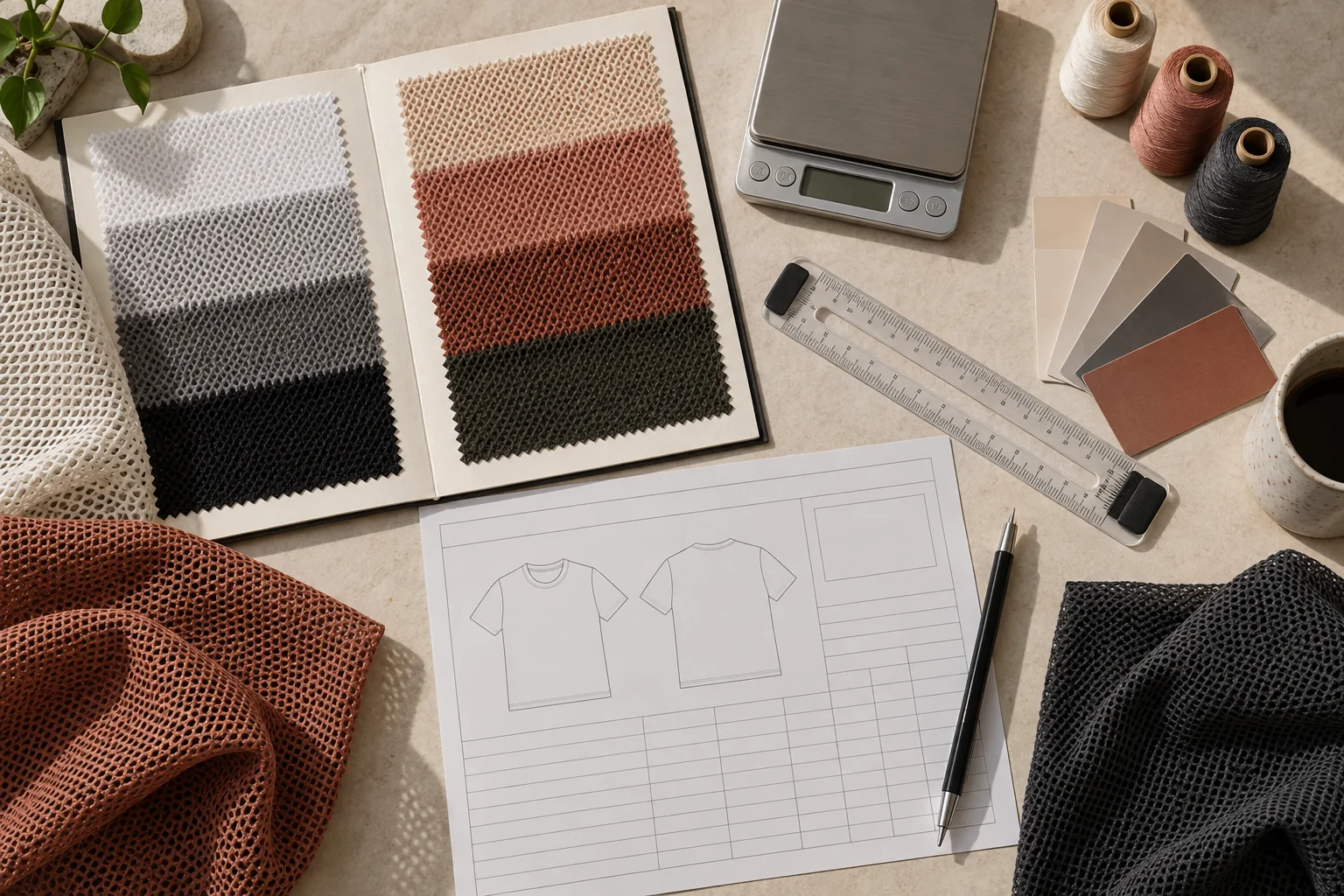
| Field | What to write in the brief | Why it matters |
|---|---|---|
| Fiber content | Fiber names and percentages by weight, if confirmed | Supports labeling, cost discussion, and material identity |
| Construction | Weft knit, warp knit, spacer, woven, or supplier construction code | Describes how the openings and stability are created |
| Opening or pattern | Visual repeat, opening size range, or approved swatch reference | Helps control coverage, airflow, and appearance |
| GSM and width | Target or range plus usable width | Affects pattern yield, drape, and garment weight |
| Stretch and recovery | Direction, extension target, recovery method, and time | Prevents a stretch label from being treated as a fit guarantee |
| Finish and surface | Matte, sheen, brushed, wicking finish, coating, or no added finish | Finishes can change hand feel, heat response, and claims |
| Color and decoration | Color reference, dye route, print, embroidery, transfer, or trim | Mesh may need a different decoration process from solid panels |
| Care route | Wash, dry, ironing, and special handling to be confirmed on sample | Connects the care label to the finished garment evidence |
| Test plan | Air permeability, opacity, stretch, seam, abrasion, snag, wash, or other checks | Gives sample approval a decision rule instead of a vague review |
If a specification is not yet known, write "to be confirmed by sample" rather than silently assuming a value. The approved swatch, color reference, construction code, and test notes should travel with the tech pack and purchase record.
Decoration and sewing considerations
Mesh changes the way decoration and construction need to be planned. An open face may not support the same print, embroidery, or transfer process as a closed jersey. Heat can also change a thermoplastic yarn or a finish, so the exact decoration route should be tested on the chosen mesh.
For printing, review ink coverage, edge definition, hand feel, stretch cracking, and the appearance of the opening after decoration. If the artwork crosses from mesh to solid fabric, inspect the color and surface transition. For embroidery, review backing, needle marks, puckering, and whether the opening stays stable around dense stitches. For heat transfer, confirm the temperature, pressure, dwell time, adhesion, and post-process appearance.
For sewing, check needle selection, thread tension, seam allowance, edge support, and the behavior of the mesh beside a denser material. Use the actual seam and not only a loose swatch. A mesh can look even on the table and still show needle holes, waviness, laddering, or seam slippage after movement.
How to test a mesh fabric sample
Sample approval should answer a product question. The purpose is not to collect a long list of test names. It is to reduce the risk of approving a fabric that later fails in fit, production, decoration, care, or customer use.
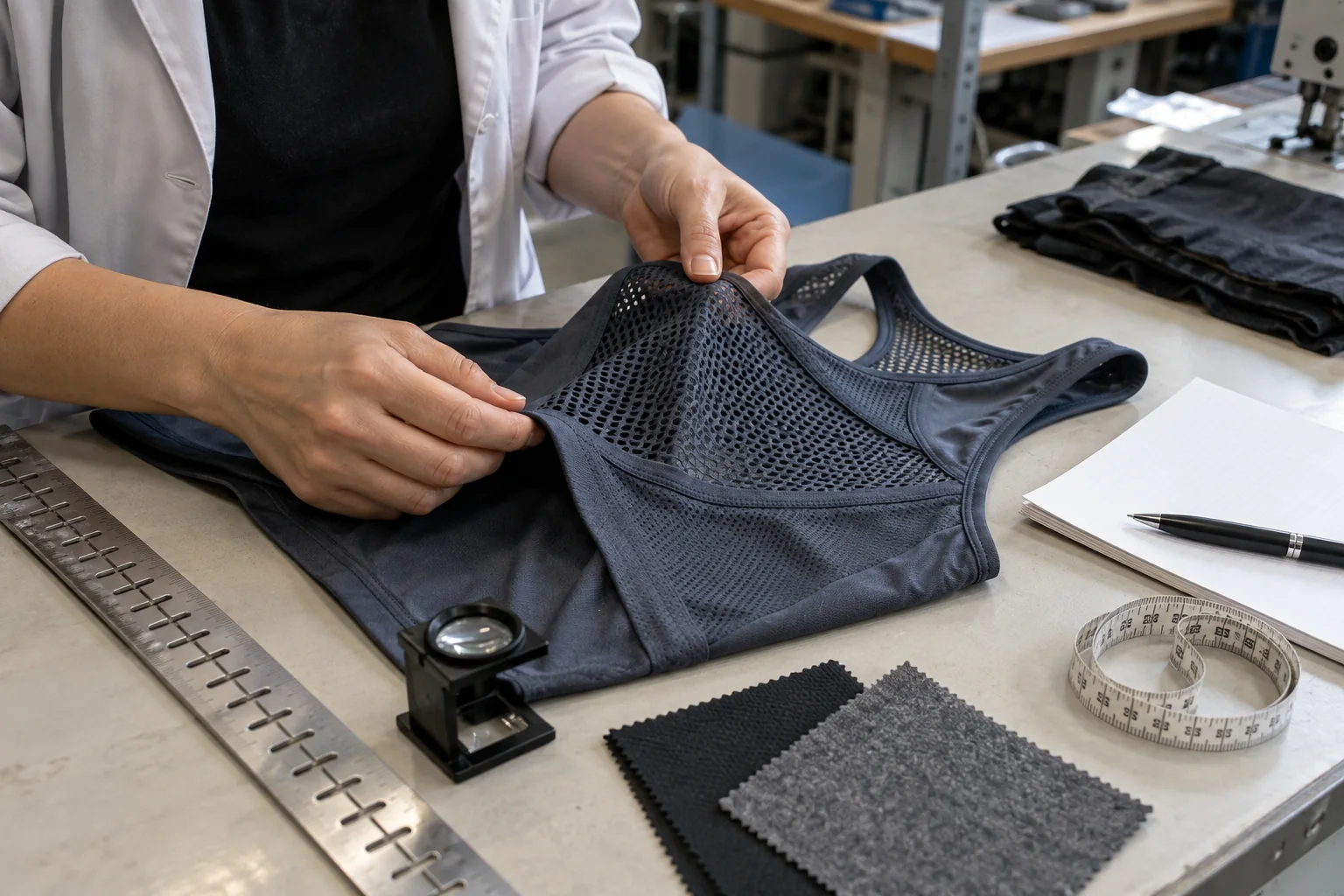
| Buyer question | Sample check | Record for the decision |
|---|---|---|
| Does the mesh move enough air? | Air permeability test under an agreed method and condition | Method, test area, direction if relevant, result, and acceptance range |
| Is coverage acceptable? | Relaxed and stretched visual review over the intended backing or garment layer | Lighting, extension, reviewer notes, and approved reference image |
| Does the panel fit? | Wear or form review through reach, bend, lift, and repeated movement | Fit notes, wrinkles, panel shift, and seam behavior |
| Does it recover? | Repeatable extension and rest check in the intended direction | Extension, recovery observation, elapsed time, and growth after movement |
| Will it survive production? | Cut edge, seam, needle, joining, and trim trial | Seam type, support method, needle or thread note, and defects |
| Does decoration work? | Print, transfer, or embroidery strike-off on the actual mesh | Color, adhesion, cracking, hand feel, distortion, and wash result |
| Does care change it? | Wash and dry trial following the proposed care route | Dimensions, opening appearance, color, surface, and hand feel |
| Can it handle use? | Abrasion, snag, pilling, or seam review based on the product risk | Test condition, visible change, and approved failure boundary |
ASTM D737 can be considered when air permeability is a meaningful acceptance question. Other test methods may be appropriate for stretch, dimensional change, abrasion, colorfastness, seam performance, or decoration. The method, laboratory, specimen conditioning, and acceptance range should be agreed before a result is used as a buying decision.
For a small development program, a practical sequence is:
- Approve the fiber, construction, color, hand feel, opening, and weight from swatches.
- Make a panel or garment sample with the intended seams, lining, trims, and decoration.
- Review fit, transparency, air movement, stretch, recovery, and surface under realistic conditions.
- Run the agreed care and risk checks on the finished sample.
- Freeze the approved material code, pattern version, artwork, construction notes, and test disposition before bulk production.
This sequence gives the buyer a record of what was approved, not just a supplier message saying that the fabric is breathable.
Common mesh fabric problems and how to prevent them
Mesh problems usually happen when an opening, fiber, finish, or garment position is treated as an isolated feature. Use the following failure modes as a pre-production review:
| Failure mode | Why it may happen | Preventive action |
|---|---|---|
| Too transparent at stretch | Openings enlarge, the color is light, or a lining was not included in the original review | Test the finished panel at intended extension and lighting |
| Snagging or laddering | The opening or yarn is vulnerable to hooks, trims, bags, or rough surfaces | Run a snag risk review and protect high-contact edges |
| Wavy seams | Stretch or feed differs between mesh and adjacent fabric | Test the actual seam and adjust support, sewing, or pattern balance |
| Loss of recovery | Heat, repeated extension, finish change, or construction growth affects the panel | Set the heat and care route, then repeat the recovery check |
| Print distortion | The opening and stretch do not support the artwork or process | Approve a strike-off on the exact mesh and inspect after movement and care |
| Unexpected heat or cling | Airflow, fit, lining, finish, and garment coverage interact differently than the swatch | Evaluate the full garment during the intended movement |
The correction is often a product decision rather than a simple material substitution. A smaller opening may improve coverage but reduce air movement. A backing layer may improve modesty but add weight. A more stable construction may sew better but feel less flexible. Write down which trade-off the product is willing to accept.
Care labeling and production records
Mesh care instructions should be based on the finished garment and the actual decoration and trim package. A supplier’s generic care suggestion is not enough if the garment includes heat-sensitive prints, elastane, bonded layers, elastic, or a contrasting fabric.
For products sold in the United States, the Federal Trade Commission apparel labeling guidance explains that most textile and wool products need labeling for fiber content, country of origin, and the identity of the responsible manufacturer or business. The FTC Care Labeling Rule guidance also addresses instructions for regular care on covered apparel. Confirm the requirements for the destination market and the exact product before finalizing labels.
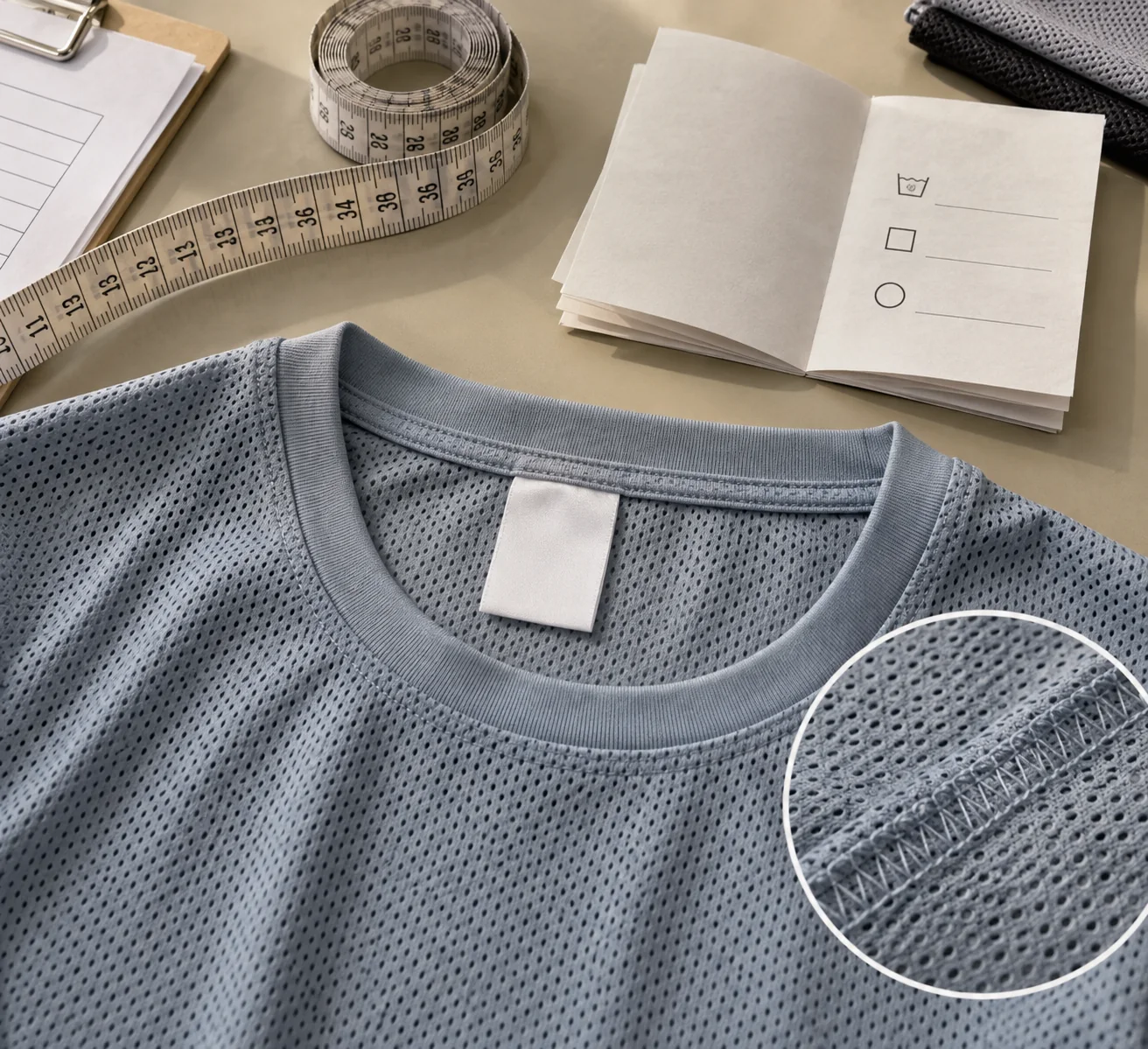
The production record should connect:
- Fiber content and component list.
- Approved mesh construction, color, width, and weight.
- Pattern and seam locations that use mesh.
- Decoration process and heat settings.
- Care wording or symbols approved for the finished garment.
- Post-care measurements, appearance notes, and any limitations.
Do not use a care label to hide an unresolved material risk. If the mesh changes substantially under a normal care route, the right response may be to change construction, decoration, or product instructions before bulk approval.
Mesh versus solid fabrics for activewear
Mesh is not automatically better than a solid fabric. It is useful when its open construction solves a specific product need. A closed jersey, interlock, woven polyester, cotton blend, or fleece may be a better choice for coverage, support, warmth, abrasion, or decoration.
| Material direction | Strength in product planning | Watch point |
|---|---|---|
| Open mesh | Air passage, low coverage, visual texture, and local ventilation | Transparency, snagging, seam stability, and decoration support |
| Solid jersey | Continuous surface, familiar drape, and broad print area | May retain more heat or need a separate ventilation panel |
| Interlock or double knit | More stable surface and coverage for fitted garments | Can add weight, thickness, and warmth |
| Woven polyester | Shape, surface definition, and utility styling | Limited stretch unless engineered, plus seam and drape checks |
| Cotton or cotton blend | Familiar hand and casual appearance | Drying, shrinkage, color, and moisture behavior need product-specific review |
| Spacer knit | Thickness, structure, and an air layer | Bulk, edge finishing, and fit at seams or folds |
The decision should follow the garment’s job. If the buyer wants a training top with a ventilated upper back, a mixed construction may be more useful than making the whole garment open. If the product needs a smooth body for a large print, mesh may belong only in side panels. If the product needs support, power mesh may need a solid lining or a different base fabric.
What to send in a mesh fabric RFQ
An inquiry is easier to answer when it contains the product use, construction need, and approval rules. The sampling and prototyping service can be part of the next step when a swatch alone cannot answer fit or seam questions.
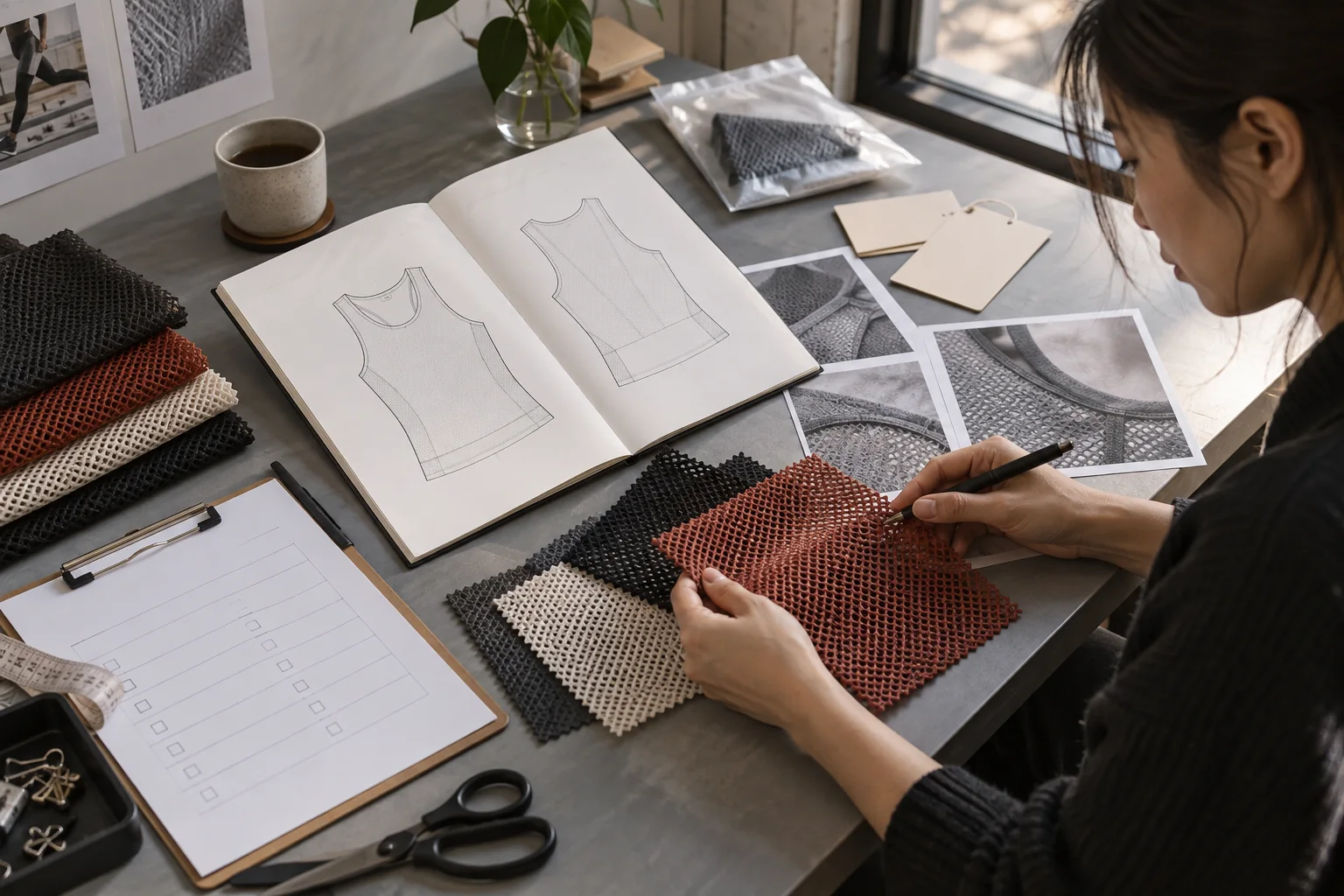
Send the following information when requesting a mesh fabric or custom activewear quote:
- Product type, intended activity, target customer, and selling market.
- Mesh location: full body, ventilation panel, lining, pocket, insert, or support zone.
- Preferred fiber direction or an approved reference swatch, if available.
- Target construction, opening appearance, GSM, width, color, stretch, and recovery.
- Fit notes, size range, pattern, artwork, decoration method, and seam requirements.
- Coverage expectation, lining plan, hand feel, and any product claims under consideration.
- Care route, packaging conditions, labeling destination, and required inspections.
- Sample questions and the result that will approve or reject the material.
The tech pack customization page is relevant when the material decision needs to be translated into pattern, construction, decoration, and inspection fields. A clear tech pack reduces the chance that "mesh" is interpreted as a different opening, weight, or stretch route at a later stage.
For a custom apparel inquiry, include the exact panel drawing and ask for a construction-specific recommendation. The useful output is not a generic promise of breathable fabric. It is an agreed mesh option, sample route, specification, and decision record that can be checked before bulk production.
Frequently asked questions
Mesh fabric can be made from polyester, nylon, elastane, or a blend, using a knit or woven construction with visible openings. The word mesh describes the open structure, so the fiber content and construction must be confirmed separately.
Mesh can allow more air passage than a closed fabric, but breathability depends on opening, yarn, weight, finish, garment fit, lining, and panel placement. Air permeability testing and finished-garment review are more useful than assuming a result from the word mesh alone.
It can be a strong candidate for training tops, team jerseys, ventilation panels, shorts linings, and selected support or streetwear details. The best choice depends on coverage, stretch, recovery, snag risk, seam behavior, decoration, care, and the intended activity.
Neither fiber is universally better. Polyester and nylon mesh can have different hand feel, strength, stretch, surface, decoration, and care behavior, while construction may have an even larger effect. Compare the exact swatch and finished sample against the product brief.
Some mesh is highly transparent and some fine or dense mesh provides more coverage. Transparency changes with opening size, color, stretch, lighting, backing, and lining. Check the finished garment in relaxed and stretched states over the intended base layer.
Some mesh stretches because it is knitted, contains elastane, or uses a construction with mechanical give. Woven mesh can be more stable and less elastic. Always record stretch direction, extension, recovery, and growth after movement or care.
Include fiber content, construction, opening or pattern, GSM, usable width, color, stretch and recovery, finish, decoration route, care route, and the tests or visual standards used for approval. Add a reference swatch and the exact garment position whenever possible.
Start with swatch review, then test the finished panel or garment for air movement, coverage, fit, stretch, recovery, seam stability, snag or abrasion risk, decoration, and care behavior. Agree on the method and acceptance range before treating a result as a buying decision.