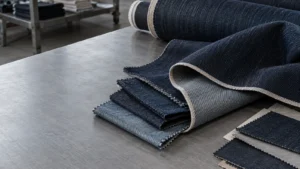
Fleece fabric is usually a knitted textile with a raised, brushed surface that traps air and changes the hand feel, warmth, bulk, and care behavior of the base fabric. The word fleece describes a fabric construction and finish, not one universal fiber recipe. For an apparel buyer, the useful specification is the combination of fiber content, knit structure, brushed side, GSM, width, stretch, surface finish, and tested garment behavior.
If a supplier quotes only "fleece," the quote is incomplete. Two fabrics can both be called fleece and still differ sharply in warmth, drape, pilling, moisture behavior, recovery, shrinkage, and sewing results. A strong sample brief turns the vague fabric name into a testable product decision.
What fleece fabric is at the material level
Fleece is a fabric, not a fiber. Many fleece fabrics use polyester, but cotton, rayon, recycled polyester, and blended constructions also appear in apparel. The base is commonly a knitted structure. A mechanical raising or brushing process pulls fibers or loops toward the surface, creating a soft pile or nap. Some fabrics are brushed on one side, while others are brushed on both sides.
That distinction matters because a fleece specification has at least four separate layers:
- Fiber content: polyester, cotton, rayon, recycled polyester, elastane, or another approved blend.
- Knit construction: the way yarns form the base fabric, including stability, stretch, and recovery.
- Surface treatment: brushing, raising, shearing, anti-pill treatment, wicking finish, or other finishing work.
- Finished garment: pattern, seam construction, lining, trims, decoration, care route, and actual fit.
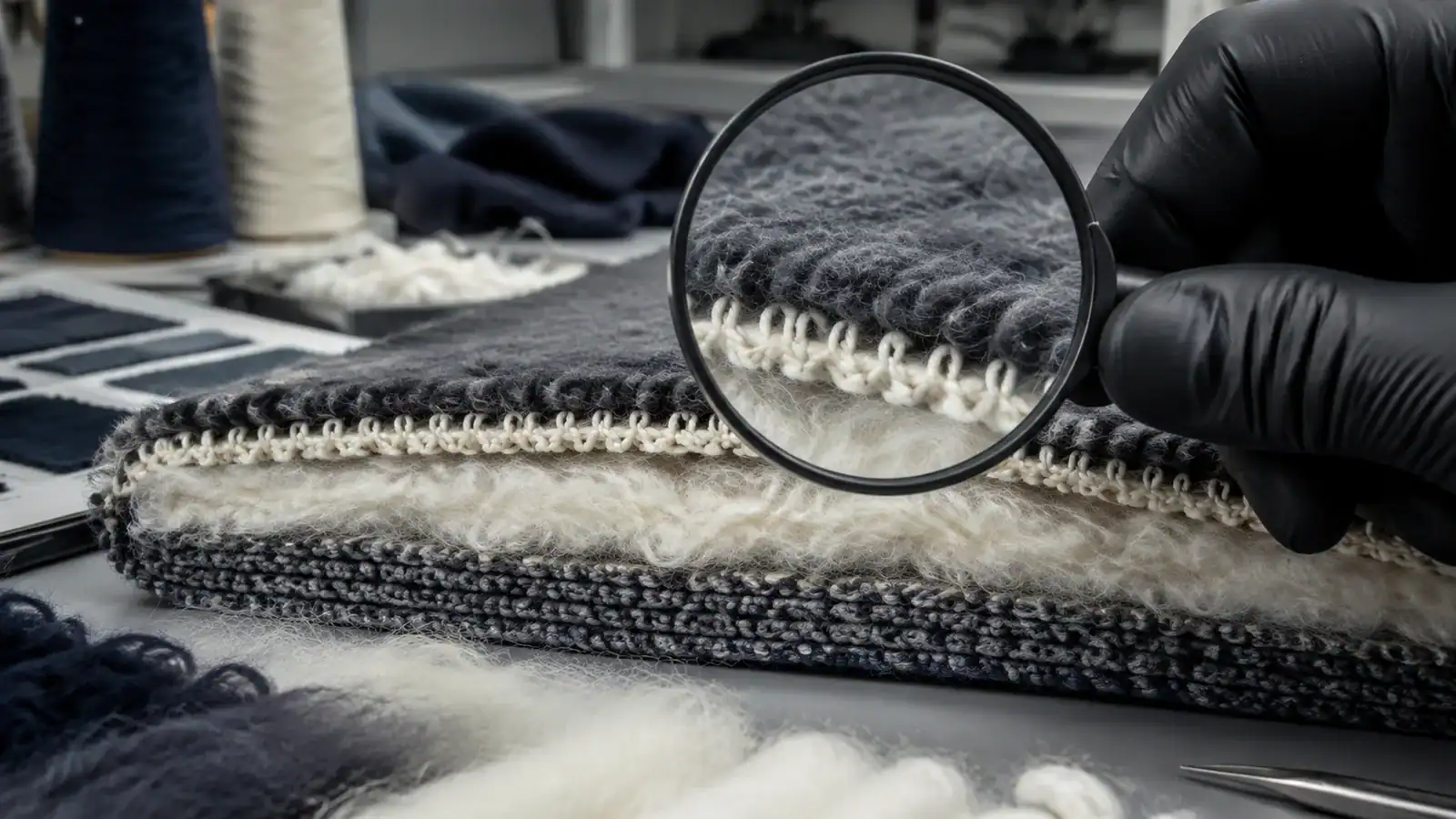
This is why a fleece name cannot replace a tech pack. A buyer choosing fabric for a hoodie is not only choosing softness. The buyer is choosing a surface, weight, air space, body, stretch response, and care risk that will interact with the garment design.
How fleece is made and why the surface changes performance
A typical fleece route starts with a knitted base. The fabric may use different yarns or plating arrangements to create a stable ground and a surface that can be raised. Brushing or raising opens the surface and creates loft. Shearing can even the nap. Additional finishing may change the hand, reduce loose fiber, manage pilling, or influence moisture behavior.
The surface is not a decoration added after performance is decided. It changes how the fabric feels and how it behaves. A higher or denser pile can increase perceived warmth and bulk. A closely sheared surface may look cleaner and pack more easily. A brushed interior can feel comfortable against a base layer, but it may also hold lint, affect print sharpness, or change after washing.
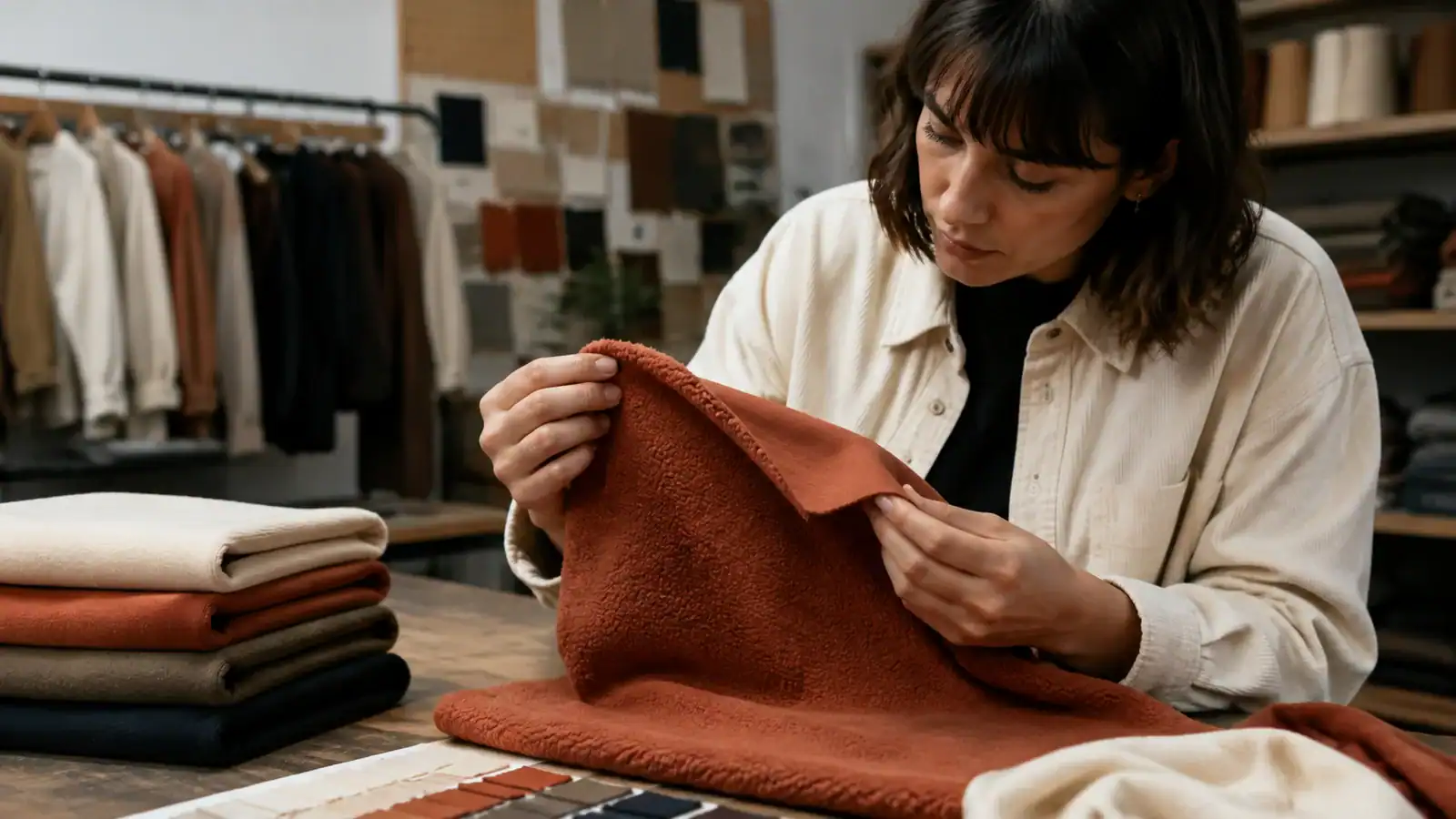
Record the following when reviewing a fleece sample:
- Which side is the face and which side is brushed?
- Is the nap direction consistent across the roll?
- Is the surface short, medium, long, looped, or sherpa-like?
- Does the back remain smooth, looped, or brushed?
- Does the surface shed loose fibers when rubbed or cut?
- Does the face change after laundering, steaming, printing, or embroidery?
The answers should be recorded with the sample, not kept as an informal impression in a chat message.
Fleece types a buyer should compare
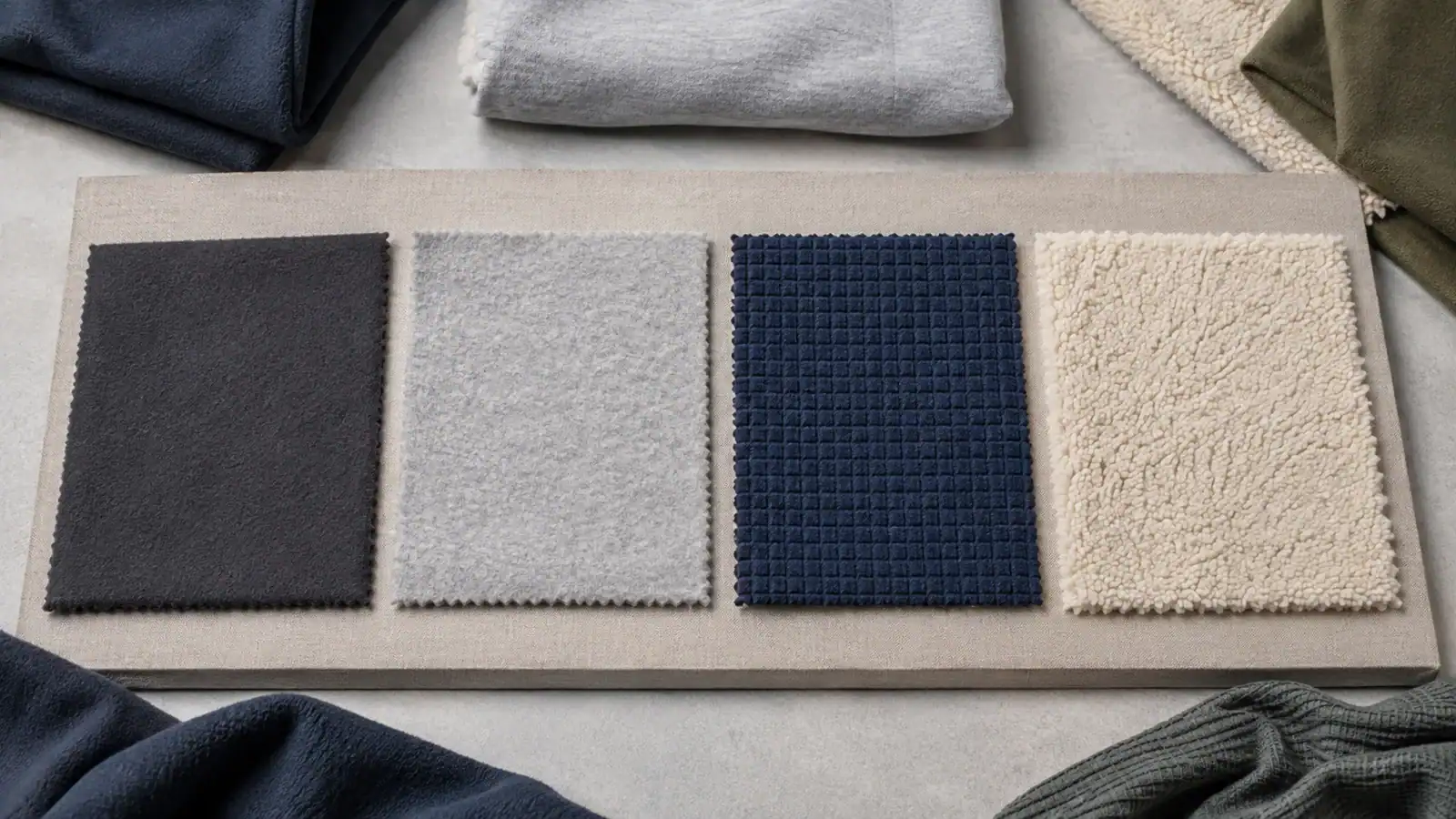
Names vary by supplier, so use a type name as a starting point and confirm the construction with a physical sample.
Microfleece
Microfleece generally has a fine, low-bulk surface. It can work as a light layer, lining, travel garment, or close-fitting warm-up piece when the hand, stretch, and air permeability fit the design. Do not assume every microfleece has the same GSM or warmth.
Polar fleece
Polar fleece is commonly used for soft midlayers, jackets, vests, blankets, and casual outdoor garments. It may be brushed on one or both sides. A buyer should compare loft, compression recovery, surface stability, and wash appearance rather than choosing by the word polar alone.
Sweatshirt fleece
Sweatshirt fleece often presents a smoother face with a brushed or looped interior. It is a natural candidate for hoodies, crewnecks, sweatpants, joggers, and relaxed sets. The face must still be checked for print, embroidery, abrasion, and seam appearance.
Grid fleece
Grid fleece uses a textured or channel-like surface that can reduce bulk and create open areas within the construction. It may be considered for technical layering, but the actual grid geometry and air movement depend on the fabric design. Request a swatch and a garment test before treating it as a performance solution.
Sherpa or berber-style fleece
Sherpa-style surfaces have a taller, wool-like appearance and a strong tactile effect. They can suit warm linings, jackets, and lifestyle pieces, but pile height, shedding, compression, and seam bulk need more attention than a short microfleece.
The phrase anti-pill fleece describes a performance target or finish direction, not a promise that pilling is impossible. Ask what test method, wash route, rating scale, and acceptance criteria will be used.
How GSM changes drape, warmth, and bulk
GSM means grams per square meter. It is useful for comparing fleece samples, but GSM alone does not determine warmth. Fiber type, thickness, pile height, air space, knit density, wind exposure, garment fit, lining, and layering all matter.
Use GSM as one line in a comparison set:
- Compare two or more samples at the same composition and width.
- Compare hand feel, thickness, loft, and drape beside the GSM result.
- Check whether the stated weight is before or after finishing and washing.
- Record width because a heavy fabric with a narrow usable width changes yield and cost.
- Review a finished garment because a fabric that feels warm as a swatch may feel bulky at cuffs, waistbands, hoods, or pocket bags.

Avoid writing "300 GSM equals winter warmth" in a tech pack. A safer note identifies the intended use, the comparison sample, the acceptable hand, the finished-garment fit, and the test or approval reference.
Polyester fleece, cotton fleece, and blends
Polyester fleece
Polyester fleece is widely used because it can be knitted, brushed, dyed, and finished into many surface weights. It may suit midlayers, hoodies, joggers, uniforms, and casual activewear. The buyer still needs to check static, odor behavior, print compatibility, pilling, and care instructions for the intended product.
Cotton-rich fleece
Cotton-rich fleece can offer a familiar natural hand and a substantial casual feel. It can also introduce more moisture absorption, drying differences, shrinkage risk, and color or surface changes after care. The cotton percentage, polyester percentage, yarn construction, and finishing route belong in the sample record.
Recycled polyester fleece
Recycled polyester is a fiber-content and sourcing claim that needs evidence. Do not use recycled language only because a supplier calls a fabric sustainable. Request the exact fiber composition, transaction or certification documents when required by the buyer, and the destination-market claim wording before using it in product copy or labels.
Stretch blends
An elastane or other stretch component may help a fleece garment move, but it also changes recovery, heat behavior, care, and label content. The right percentage depends on the garment pattern and intended movement. A small swatch stretch test is not a substitute for checking the finished waistband, cuff, knee, or underarm area.
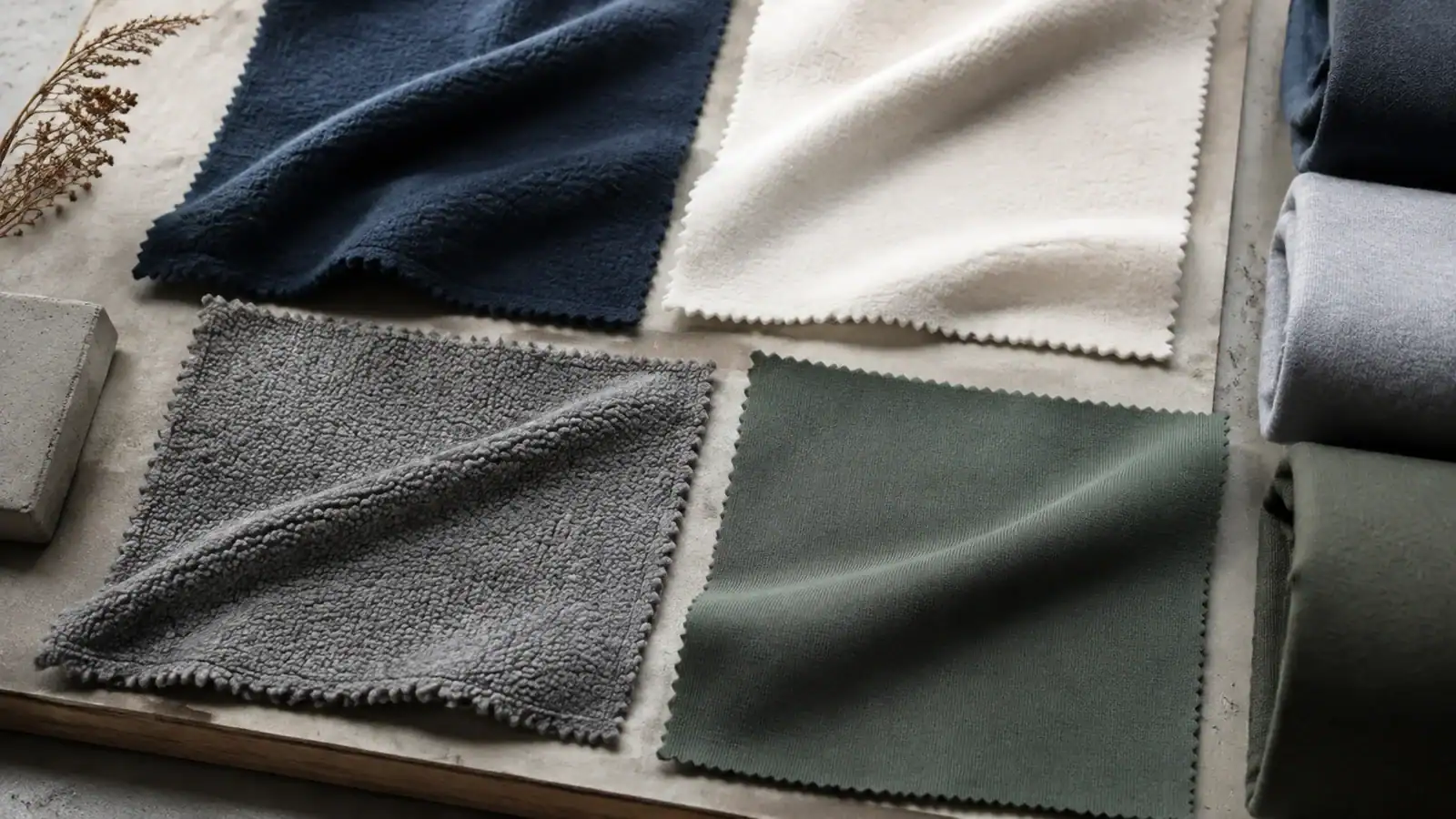
Is fleece breathable or moisture-wicking?
Fleece can move air and moisture differently depending on its knit density, pile, finish, garment fit, and layering system. Soft loft can help insulate, but a warm surface is not automatically a moisture-management fabric. A dense fleece may feel comfortable at rest and too warm during high-output exercise. A lighter or more open construction may move air better but provide less insulation.
For activewear, separate three questions:
- Warmth: does the fabric provide the intended insulation in the garment system?
- Moisture: where does perspiration go, and how quickly does the garment dry after washing or wear?
- Air movement: does the fabric and pattern allow enough ventilation for the activity?
Fleece is often more useful as a midlayer, warm-up, recovery, travel, or low-to-moderate output garment than as the only next-to-skin layer for hot conditions. Compare it with the site’s moisture-wicking fabric guide and best fabric for activewear guide when the brief prioritizes sweat transport or ventilation.
Where fleece works in activewear and casual apparel
Hoodies and crewnecks
Fleece can give a hoodie the body and soft interior buyers expect. Check hood weight, seam bulk, rib compatibility, zipper wave, print hand, and whether the brushed surface changes after repeated care. The site’s types of hoodies guide can help define the garment before fabric approval.
Joggers and sweatpants
For joggers, the fleece choice affects drape, knee growth, pocket shape, waistband recovery, and hem stability. Review the fabric on the actual rise, knee, cuff, and pocket construction. A heavy hand may look premium on a swatch and feel restrictive in a tapered pattern.
Warm-ups and midlayers
Light or grid-like fleece can be considered for warm-ups and layer systems when bulk and airflow are controlled. Test movement, layering over a tee, arm mobility, zipper operation, and packability.
Travel, lifestyle, and uniforms
Fleece can work well for coordinated sets, staff layers, creator merch, and casual uniforms when comfort, color consistency, decoration, and wash appearance are more important than high-output moisture transport.
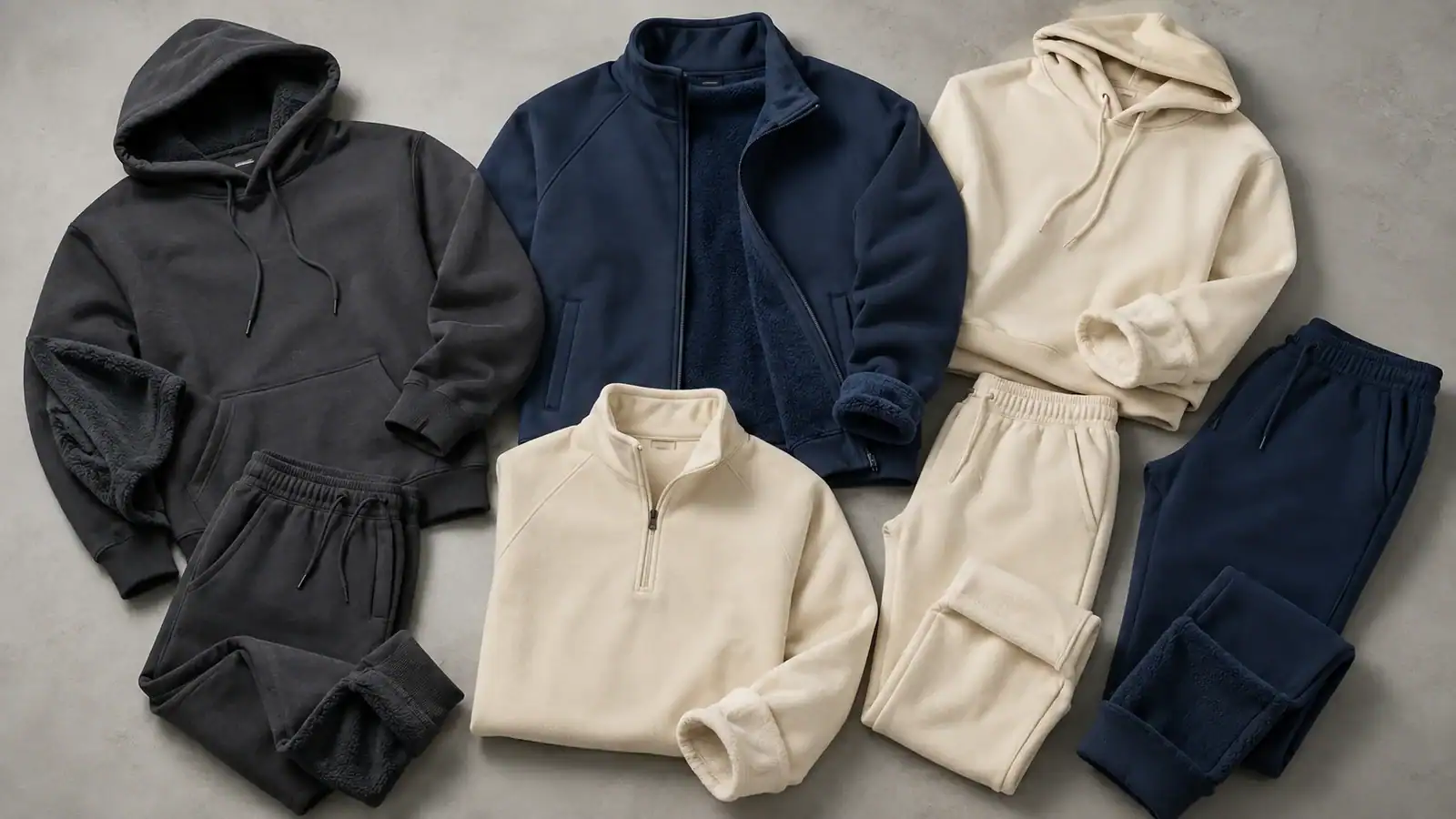
The right question is not "Is fleece good?" It is "Which fleece construction meets this garment’s movement, warmth, surface, and care requirements?"
Anti-pill fleece, shedding, and surface risk
Pilling is the formation of small fiber balls or surface changes caused by friction and loose fibers. ASTM notes that pilling depends on fiber or blend, fiber dimensions, yarn and fabric construction, finishing treatments, and use conditions. That is why a supplier’s single anti-pill phrase is not enough to approve a production fabric.
Review these risks separately:
- Pilling: visible pills after abrasion or laundering.
- Shedding: loose fibers released during cutting, sewing, washing, or wear.
- Matting: a raised surface losing loft or becoming compacted.
- Fuzz change: a face that becomes smoother, rougher, or uneven.
- Color change: surface reflection changing even when the base shade is close.
- Seam and trim friction: high-wear zones behaving differently from a flat swatch.
ASTM D3512 and ASTM D4970 are examples of pilling test routes, but a lab method does not remove the need to define the actual garment, care route, and acceptance standard. The ASTM textile standards index is a starting point for selecting relevant methods with a testing partner.
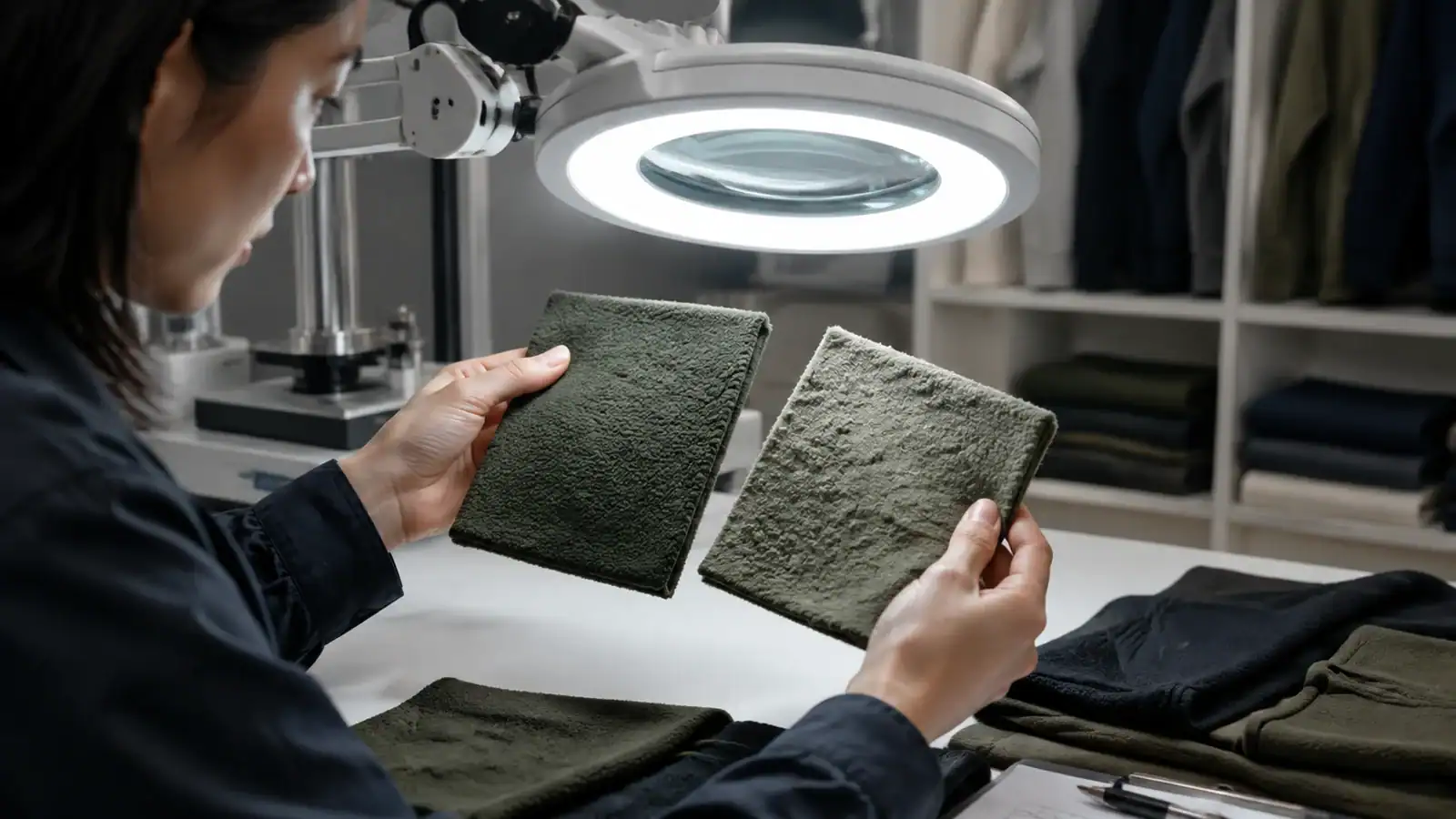
Fleece testing before bulk production
Build the test plan around the failure that would matter to the buyer. A practical sequence is:
- Composition and construction: confirm the fiber content, knit direction, brushed side, and finish against the approved swatch.
- GSM, width, thickness, and appearance: measure the physical fields that affect yield, warmth, drape, and cutting.
- Dimensional change: mark the fabric or garment, apply the intended care route, and compare length, width, skew, and appearance. AATCC TM135 and TM187 are relevant references in the method index and TM187 summary.
- Pilling and abrasion: choose a method and rating scale that match the garment’s wear zones and destination requirements.
- Colorfastness: review laundering, crocking, perspiration, and any special exposure relevant to the use.
- Moisture and drying: test only when the product brief makes moisture management a real requirement.
- Finished garment review: wash and wear the hoodie, jogger, warm-up, or other actual product. Check fit, cuffs, seams, pockets, print, embroidery, and surface change.
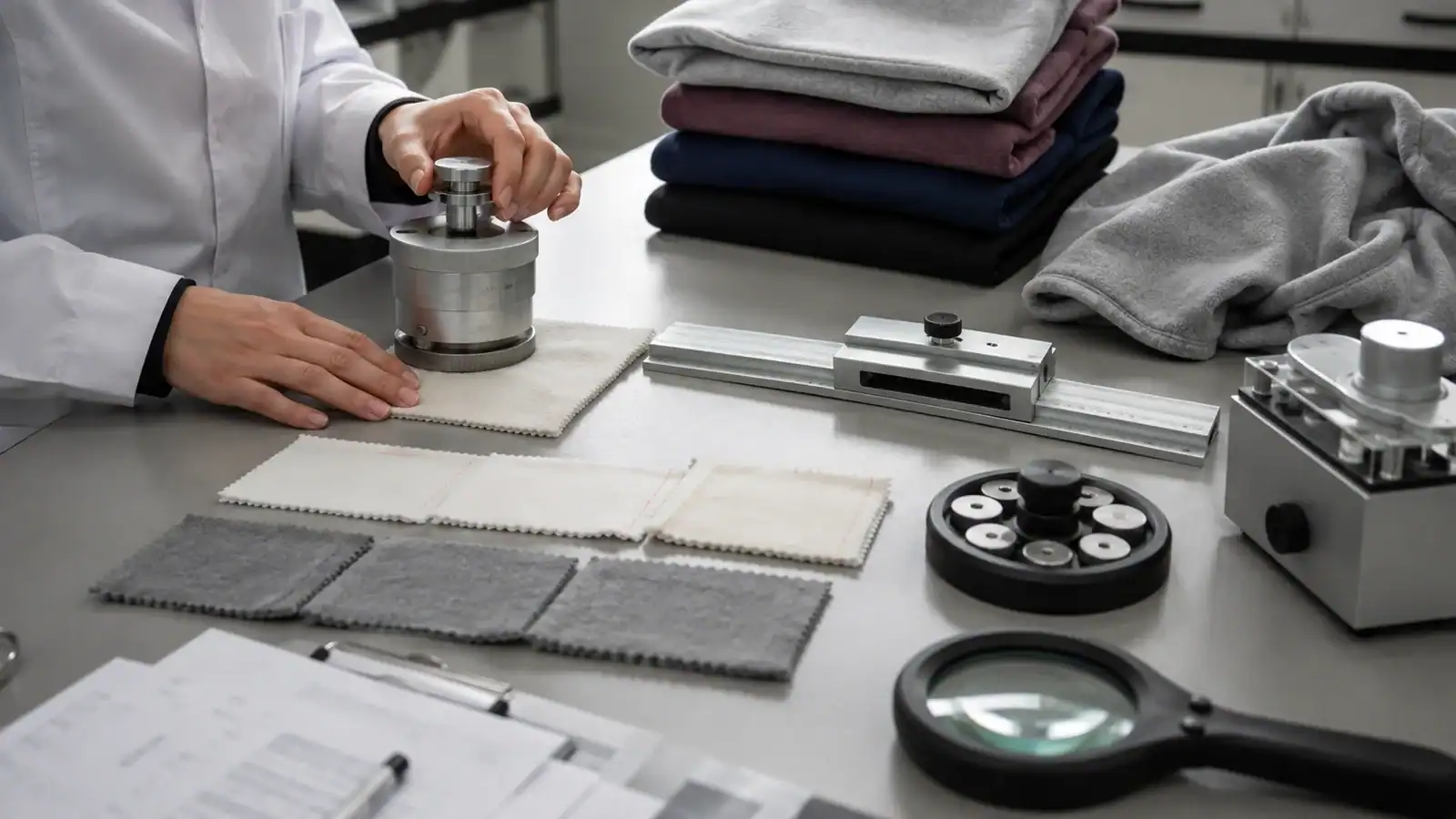
The AATCC standards index lists methods for dimensional change, colorfastness, abrasion, moisture management, and related checks. Choose the method with the buyer, testing lab, and destination market. A method name alone is not an acceptance limit.
Fleece tech-pack fields that make a quote usable
Send the supplier a brief that can be quoted and tested. Include:
- End use: hoodie, jogger, midlayer, warm-up, uniform, travel set, or other garment.
- Fiber composition and any stretch component.
- Knit direction and construction notes.
- Brushed side: face, back, both sides, or loopback.
- Surface: short nap, dense pile, grid, sherpa-style, smooth face, or other approved sample.
- Target GSM, usable width, thickness, and shade reference.
- Stretch and recovery requirements if the pattern needs movement.
- Pilling, abrasion, shedding, and dimensional-change test expectations.
- Care route, wash temperature, drying route, and any restricted process.
- Decoration method: screen print, transfer, embroidery, appliqué, or wash effect.
- Trim and construction notes for cuffs, waistbands, hoods, linings, and pocket bags.
- Sample comments, approval status, revision date, and the exact swatch or reference photo.
Use the tech-pack customization page when the brief needs measurements, fabric direction, trims, decoration, labels, or packaging fields organized before sampling.

Labeling and recycled-content checks
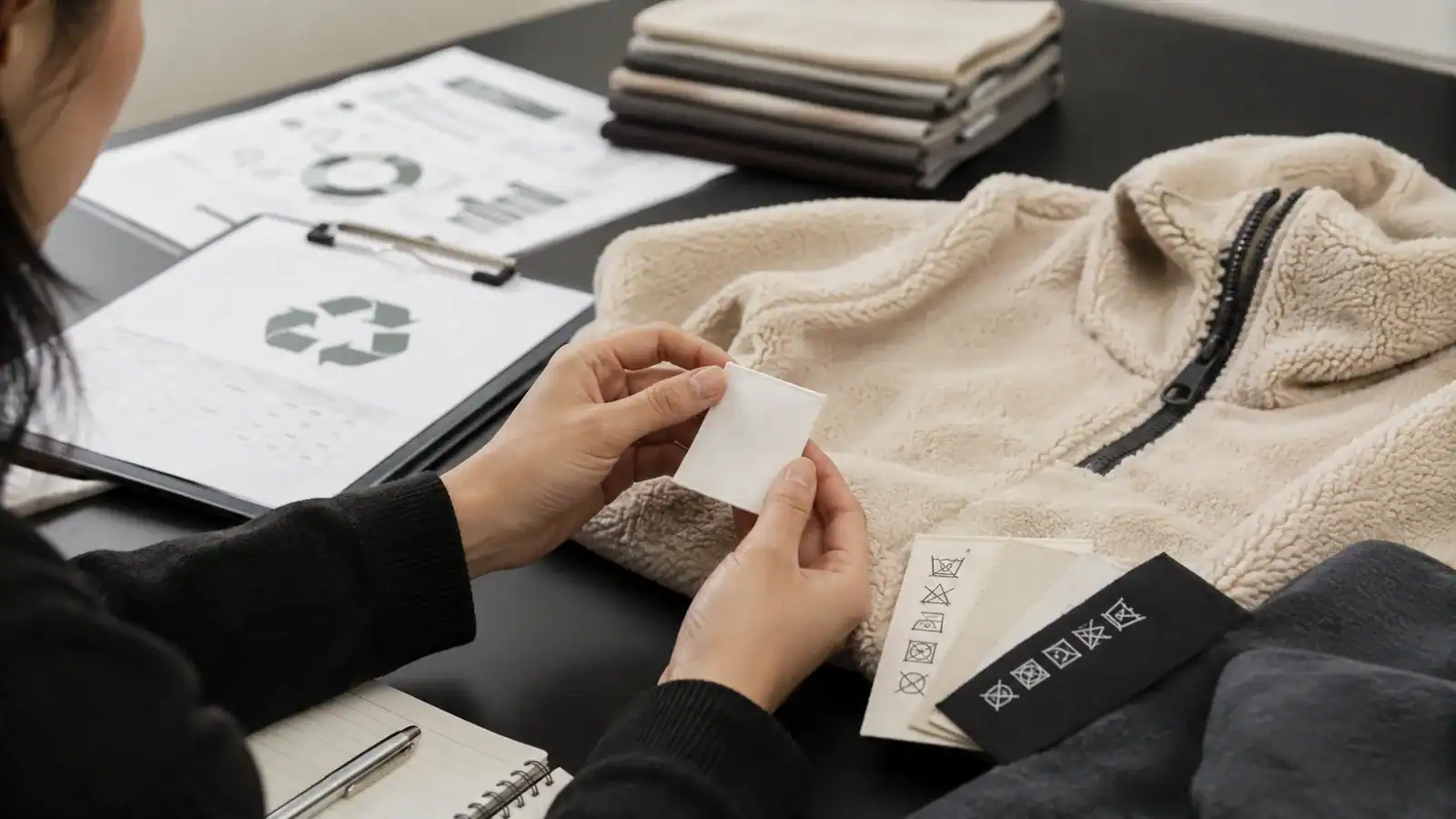
For US textile products, the Federal Trade Commission explains that required fiber content disclosures use generic fiber names and percentages by weight in descending order of predominance. Country of origin and the responsible business identity also matter for covered products. A fiber trademark or specialty claim does not replace the generic name and full content disclosure.
Before approving a label, confirm:
- The final garment composition matches the approved fabric and production material.
- The fiber names and percentages follow the destination-market rules.
- Recycled content wording is supported by supplier evidence when used.
- Any trademark or performance phrase is placed with the required generic fiber information where applicable.
- Care instructions match the fleece’s tested wash and drying route.
Read the FTC textile labeling guidance with the importer, legal reviewer, and destination market. This article is a sourcing guide, not a substitute for compliance advice.

When fleece is the wrong choice
Fleece may be the wrong starting point when the garment needs very low bulk, high ventilation, fast drying next to skin, a cool hand, or a smooth surface for close contact. It may also be wrong when the intended care route could flatten the pile, increase pilling, or change the garment shape.
Consider another fabric route when:
- The wearer generates high heat and needs continuous air exchange.
- The garment is designed as a hot-weather base layer.
- A smooth, low-friction surface matters more than insulation.
- The product must pack very small and the pile adds unwanted volume.
- The design needs high stretch and recovery across a close-fitting panel.
- The buyer cannot approve a wash, pilling, and finished-garment test plan.
That does not make fleece a poor fabric. It means the fabric must solve the actual use case. A jersey, mesh, lightweight polyester, or other moisture-focused construction may be a better starting point for a high-output product.
Frequently asked questions
Fleece is often made from polyester, but it can also use cotton, rayon, recycled polyester, elastane, or blends. The exact answer comes from the fiber composition and the knitted and brushed construction, not from the word fleece alone.
Fleece is a fabric construction and surface description. It is not one single fiber. A fleece fabric can use different fibers and finishing routes, so the supplier must provide composition, weight, width, and surface details.
Fleece can provide insulation because its raised surface and fabric structure create air space, but warmth depends on loft, GSM, fit, wind, layering, and use. Approve warmth through a garment sample rather than a name or weight alone.
Some fleece constructions allow useful air movement, while dense or tall-pile versions can feel warmer and less ventilated. Evaluate knit density, pile, garment fit, and the activity level together.
The names usually point to different surface and garment traditions, but supplier naming is not universal. Polar fleece often describes a soft brushed midlayer fabric, while sweatshirt fleece commonly has a smoother face and brushed or looped interior. Compare actual samples and construction fields.
Anti-pill fleece is fleece designed or finished to reduce visible pilling under a defined test or use condition. It does not mean pilling is impossible. Ask for the method, wash route, rating scale, and acceptance limit.
Yes, fleece can suit warm-ups, midlayers, recovery pieces, hoodies, joggers, and lower-output activewear. It may not be the best choice for every hot-weather or high-output base layer because warmth and moisture behavior are different requirements.
Confirm composition, GSM, width, thickness, dimensional change, pilling, abrasion, colorfastness, surface change, care behavior, and finished-garment fit. Add moisture, flammability, or decoration tests when the product brief and destination market require them.
Turn fleece selection into an approval-ready sample
The fastest way to make a fleece quote useful is to send a garment category, target hand, fiber direction, GSM comparison, brushed-side preference, color, decoration, care route, destination market, and the tests that matter. Add a measurement sheet or tech pack when fit, trims, labels, or packaging affect the approval.

Send the brief through the DTS inquiry and NDA path for a fabric and product development review. A sample can then be judged against the actual garment job instead of a vague fleece label.