Sweatpants can be classified by leg shape, fit, hem, rise, pocket layout, intended use, fabric, and finish. One pair may belong to several groups at once. A product described as “high-rise, wide-leg French terry sweatpants with cargo pockets” combines four useful decisions; “casual pants” does not.
The 36 types below are organized for apparel founders, product developers, merch teams, sourcing managers, and private-label buyers. Each entry identifies the visible feature and the specification detail that should be confirmed before sampling. The names describe common market and development language. They do not guarantee that every fabric, construction, finish, or feature is available for every project.
What counts as sweatpants?
Sweatpants are casual or athletic pull-on pants traditionally made from knitted sweatshirt fabrics such as French terry or fleece. Most use an elastic waistband, and many add a drawcord. The legs may be cuffed, open, straight, tapered, wide, or shaped for a specific activity. Modern products stretch the category into streetwear, travel, teamwear, and performance-led knits.
The boundaries are not fixed. Joggers usually describe a tapered leg with a close ankle cuff, while sweatpants are the broader family. Track pants often use smoother synthetic knit or woven materials and sport-led details, but retailers may group them with sweats. Lounge pants can use jersey, fleece, or other soft materials without following a classic sweatpant block.
That overlap makes drawings and measurements more important than the name. “Baggy jogger” says something about volume and hem shape, but it does not confirm rise, thigh width, knee width, inseam, waistband height, pocket construction, fabric weight, or grade rules.
DTS already has a broad guide to more than 100 sportswear types. This article narrows the scope to sweatpants and the details needed to turn a style name into a clearer product brief.
Six practical ways to classify sweatpants
- Fit and leg silhouette: relaxed, slim, skinny, tapered, straight, or wide.
- Volume and fashion shape: oversized, stacked, flared, bootcut, balloon, or drop-crotch.
- Hem, length, and rise: cuffed, open, adjustable, zipped, cropped, or high-rise.
- Pockets and visual details: side-seam, zipped, cargo, utility, paneled, or side-stripe.
- Intended use: lounge, training, warm-up, team, streetwear, or travel.
- Fabric and finish: French terry, brushed fleece, heavyweight cotton-rich knit, jersey, performance knit, or washed finish.
A useful specification normally selects at least one item from several groups. Start with the wearer and end use, then define the silhouette, construction, material, and approval checks.
Core fit and leg silhouettes
1. Classic relaxed sweatpants
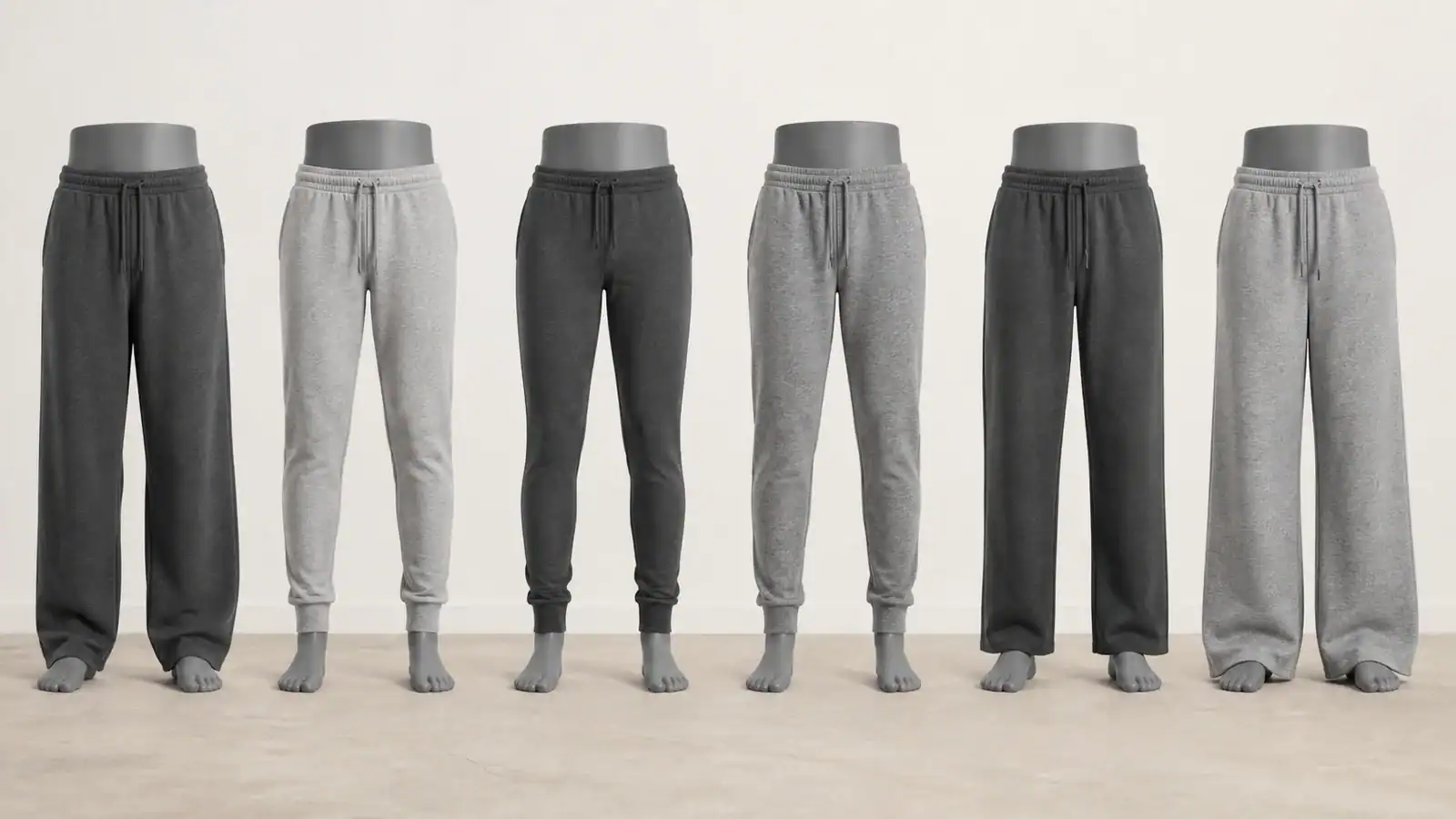
Classic sweatpants have room through the seat and thigh, a comfortable rise, an elastic waistband, and either a cuffed or open bottom. They suit basics, loungewear, team programs, and matching sets. “Classic” is not a measurement standard. Confirm waist relaxed and stretched, hip, front and back rise, thigh, knee, inseam, and bottom opening on a stated reference size.
2. Slim-fit sweatpants
Slim-fit sweatpants reduce ease through the thigh and lower leg without fitting like leggings. The sample must still allow sitting, squatting, and normal stride. Fabric stretch can help, but it cannot correct a poorly balanced pattern. State the target body measurements, garment measurements, ease, knee position, calf width, and whether the fit should remain slim across the whole size range.
3. Skinny sweatpants
Skinny sweatpants sit close from hip to ankle and normally need sufficient stretch and recovery. They are used in fashion-led, gym-to-street, and fitted casual programs. Check calf entry, ankle opening, seam extension, pocket bag show-through, and knee growth after wear. Do not assume that adding elastane automatically prevents bagging; knit construction and finishing also influence recovery.
4. Tapered sweatpants
Tapered sweatpants gradually narrow from thigh or knee toward the hem. They may finish with an open bottom, elastic, rib cuff, or zip. The taper line should be defined with garment measurements rather than a reference photo alone. Confirm thigh, knee, calf, and bottom widths, plus the point where narrowing begins. An aggressive taper can restrict movement or distort the side seam.
5. Straight-leg sweatpants
Straight-leg sweatpants maintain a relatively consistent visual line from thigh or knee to an open hem. They can look clean and structured in heavyweight fleece or drape more softly in terry and jersey. Specify whether “straight” means equal knee and bottom widths or simply no obvious taper. Shoe coverage, inseam, hem depth, and fabric shrinkage affect the finished break.
6. Wide-leg sweatpants
Wide-leg sweatpants carry more width through the thigh, knee, and bottom opening. They are common in relaxed streetwear, studio-to-street, and fashion-led sets. The extra sweep changes fabric consumption, drape, pocket position, and the chance of the hem contacting the ground. Confirm rise, outseam, leg width by point of measure, and whether the silhouette should fall straight or flare gradually.
Volume and fashion-led shapes
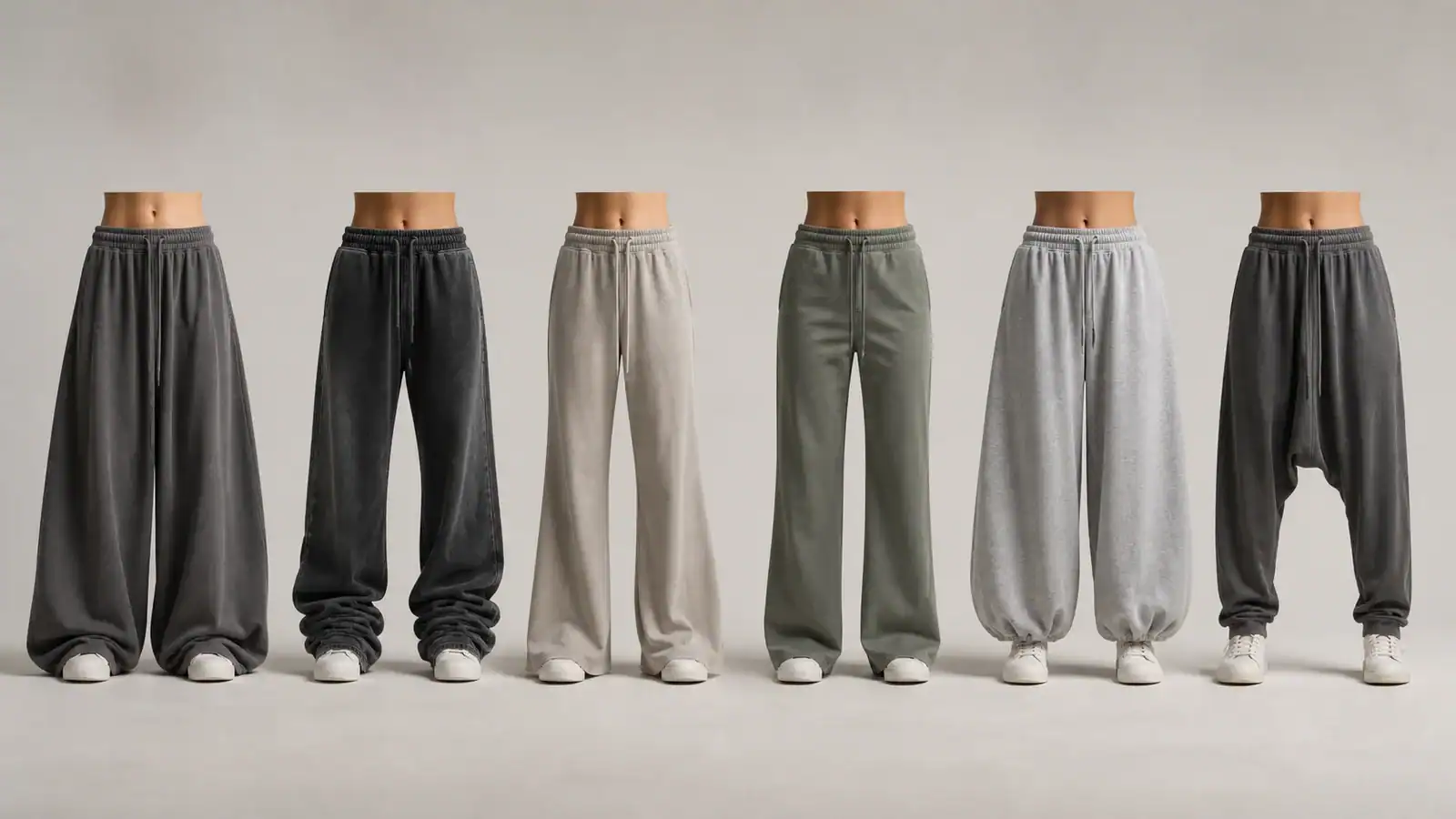
7. Oversized or baggy sweatpants
Oversized sweatpants add deliberate volume through the rise, hip, thigh, or leg. Simply grading up a standard pattern often makes the waistband, pocket, and rise wrong. Define where the extra volume belongs and where it should stop. Buyers should approve waistband fit, seat depth, thigh width, knee width, length, and pocket access on the intended wearer rather than judging the flat garment only.
8. Stacked sweatpants
Stacked sweatpants use extra lower-leg length and controlled width so fabric gathers above the shoe or ankle. The effect depends on wearer height, inseam, fabric stiffness, hem width, and footwear. Give a finished inseam and stack target for the reference size. Review multiple sizes because one fixed length addition may create too little stack on tall wearers and excessive bunching on shorter wearers.
9. Flared sweatpants
Flared sweatpants fit closer through the upper leg and widen from around the knee toward the hem. They appear in fashion, studio, and lifestyle collections. The flare start point, knee width, bottom opening, inseam, and hem depth control the silhouette. Stretch fabric may support a closer thigh, but the sample should be checked for knee distortion, seam twisting, and consistent flare across sizes.
10. Bootcut sweatpants
Bootcut sweatpants use a gentler lower-leg opening than a full flare, leaving room to sit over footwear. The difference is one of degree, so the tech pack should not rely on the word alone. Provide knee and bottom widths, the expansion point, intended shoe relationship, and front and back length. A heavy fabric can make a subtle bootcut look straight; a soft fabric may make it appear wider.
11. Balloon sweatpants
Balloon sweatpants add rounded volume through the thigh or leg, then gather or narrow toward the ankle. Some versions use darts, shaped side seams, or panel seams to control the curve. Specify where maximum width occurs, the ankle opening, and whether volume comes from the pattern or from gathers. Pocket placement must be reviewed because a large silhouette can make pockets swing or flare.
12. Drop-crotch sweatpants
Drop-crotch sweatpants lower the crotch point and deepen the rise for a deliberately slouched shape. The style can restrict stride if the drop, inseam, and thigh shaping are not balanced. Put front rise, back rise, total rise, crotch depth, thigh, and inseam in the measurement chart. A fit photo or approved reference sample is especially helpful because the market name covers mild and extreme versions.
Hem, length, and rise constructions
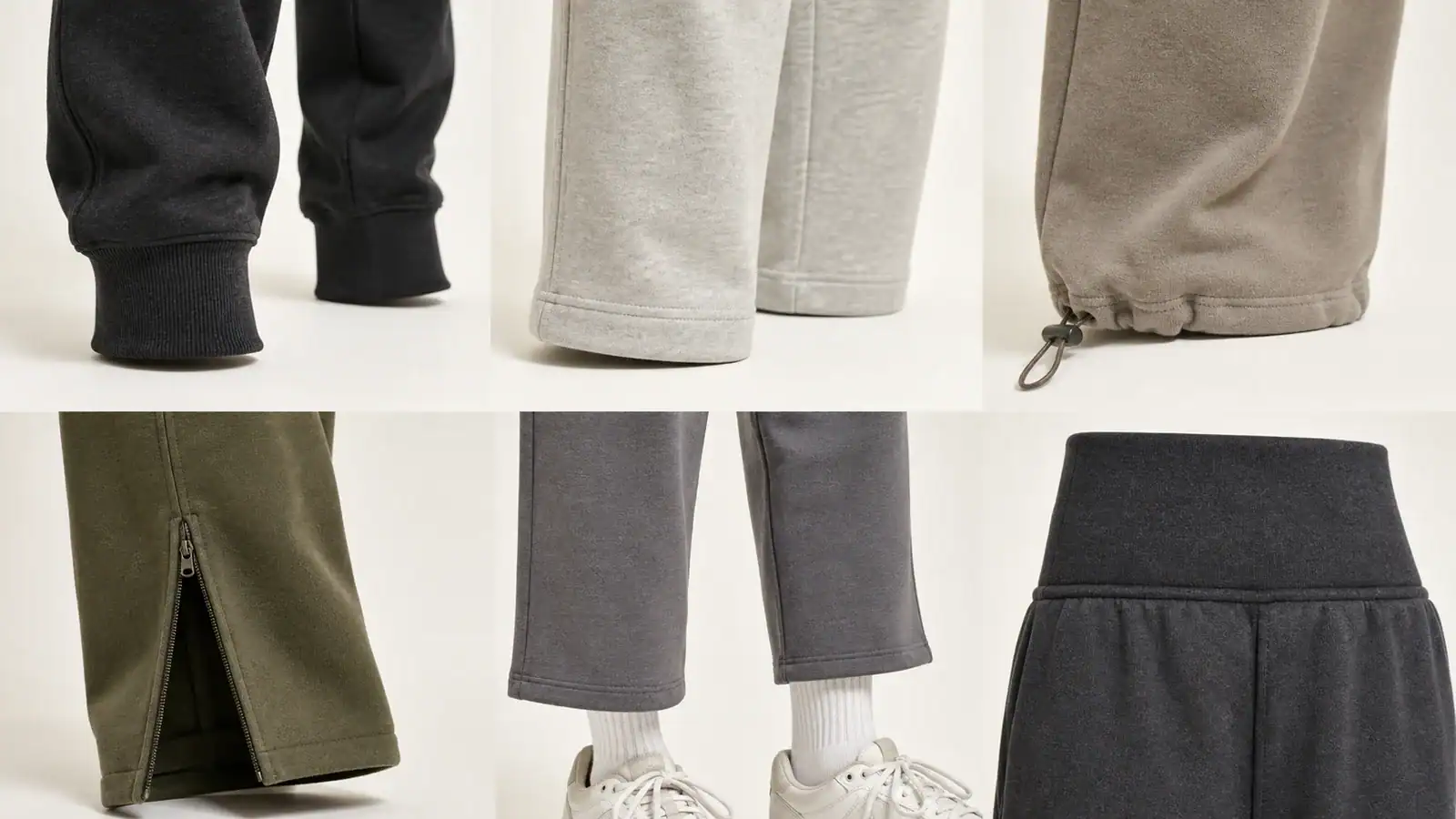
13. Rib-cuff joggers
Rib-cuff joggers taper into a separate knitted cuff at the ankle. The cuff may be self fabric, 1×1 rib, 2×2 rib, or another elastic construction. Specify cuff height, relaxed opening, stretched opening, recovery, attachment seam, and finished inseam. A cuff that is too tight is uncomfortable; one that grows after washing changes the intended jogger silhouette.
14. Open-hem sweatpants
Open-hem sweatpants finish with a turned or faced hem rather than an ankle cuff. They may be straight, wide, flared, or slightly tapered. Open hems work well when the buyer wants a cleaner line over footwear. Confirm bottom opening, hem depth, stitch type, inseam, and shrinkage allowance. The public market also uses “open-bottom sweatpants” for this construction.
15. Adjustable drawcord-hem sweatpants
Adjustable-hem sweatpants place a drawcord, elastic cord, or toggle near the ankle so the wearer can switch between open and gathered shapes. The cord path, exit point, stopper, loose-end control, and child-safety requirements depend on the market. Confirm whether the hardware must remain hidden, whether the hem opens fully, and how the gathered fabric should sit when tightened.
16. Zip-hem sweatpants
Zip-hem sweatpants add a zipper at the lower side seam or back leg to widen the opening. They can help a wearer pull the pant over footwear or create a styling feature. Define zipper length, direction, gauge, tape color, guard, stop position, and seam reinforcement. Review the open and closed shapes because the zipper can add stiffness and change how the leg hangs.
17. Cropped sweatpants
Cropped sweatpants finish above a conventional full length. The crop may end near the ankle, mid-calf, or below the knee, so a named length is not enough. Specify outseam and inseam from stable points, intended wearer height, hem type, and how length changes during grading. The waistband and rise also affect where the finished hem lands on the body.
18. High-rise sweatpants
High-rise sweatpants position the top waistband higher on the torso. They may be fitted, relaxed, wide-leg, or cuffed. Confirm front and back rise including or excluding the waistband, waistband height, elastic width, stretch, drawcord position, and target waist location. A high waistband should be checked for rolling, gaping, pressure, and pocket interference during movement.
Pocket and visual-detail types
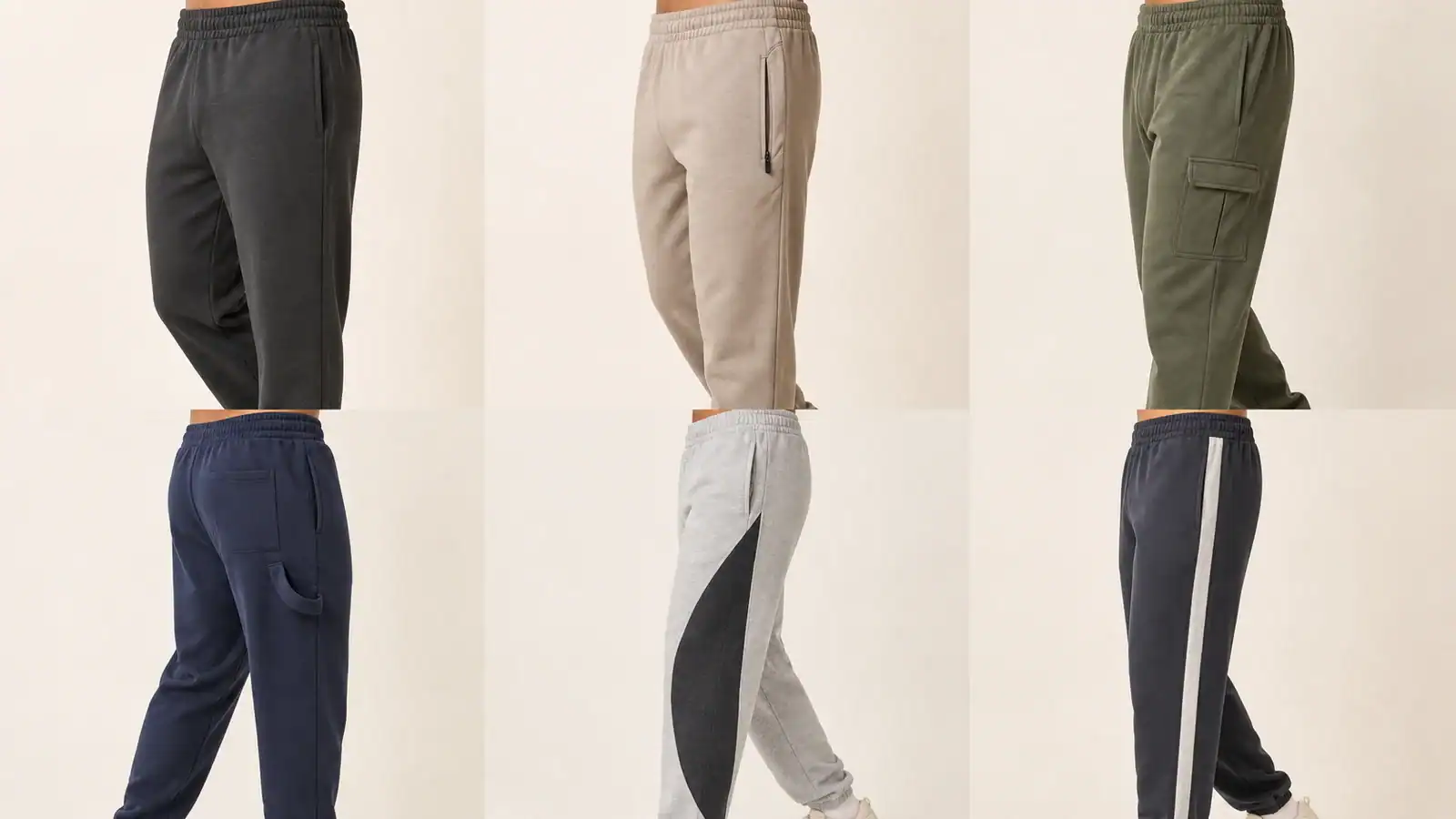
19. Side-seam-pocket sweatpants
Side-seam pockets place the opening along or close to the side seam for a clean front. They suit basics, lounge, team, and merch programs. Specify opening length and position, pocket-bag depth, bag material, attachment, and whether a phone must fit. A heavy pocket bag can distort a light garment, while a shallow bag can release items when the wearer sits.
20. Zip-pocket sweatpants
Zip-pocket sweatpants secure hand, back, or thigh pockets with zippers. They are useful in travel, training, team, and technical-looking products. Confirm pocket size, zipper length, direction, puller, guard, reinforcement, and whether the zipper should be visible or concealed. Test the filled pocket during movement; a phone-shaped template can expose sagging and uncomfortable placement early.
21. Cargo sweatpants
Cargo sweatpants add patch, bellows, flap, or zipped pockets at the thigh. The pocket may be functional or mainly visual. Its dimensions, depth, placement, closure, reinforcement, and symmetry need their own drawing. Heavy contents can pull a soft knit out of shape. Buyers developing this direction should define whether the base silhouette is straight, baggy, tapered, or cuffed before the cargo details are added.
22. Carpenter or utility sweatpants
Utility sweatpants borrow details such as tool pockets, hammer loops, knee panels, or reinforced patch shapes from workwear. These features add sewing operations and can create uneven weight on a soft knit body. Identify which details are functional, which are decorative, and what load they should carry. Confirm bar tacks, seam backing, pocket-bag material, and how loops behave after laundering.
23. Paneled or color-block sweatpants
Paneled sweatpants divide the leg with curved, diagonal, or straight seams, sometimes in contrasting colors or materials. Panels can shape the silhouette, create branding space, or add ventilation. The brief should show seam position, panel dimensions, grain or stretch direction, color mapping, and match points. Mixed fabrics must be reviewed for differential shrinkage, stretch, and color transfer.
24. Side-stripe or track-inspired sweatpants
Side-stripe sweatpants add tape, piping, an inserted panel, or printed artwork down the outer leg. They reference team and track styling while retaining a sweatpant fabric and waistband. Confirm stripe width, start and stop points, alignment across pockets, application method, stretch, and wash behavior. A sewn tape can restrict a stretchy side seam or twist if feed is uneven.
Purpose-led sweatpants
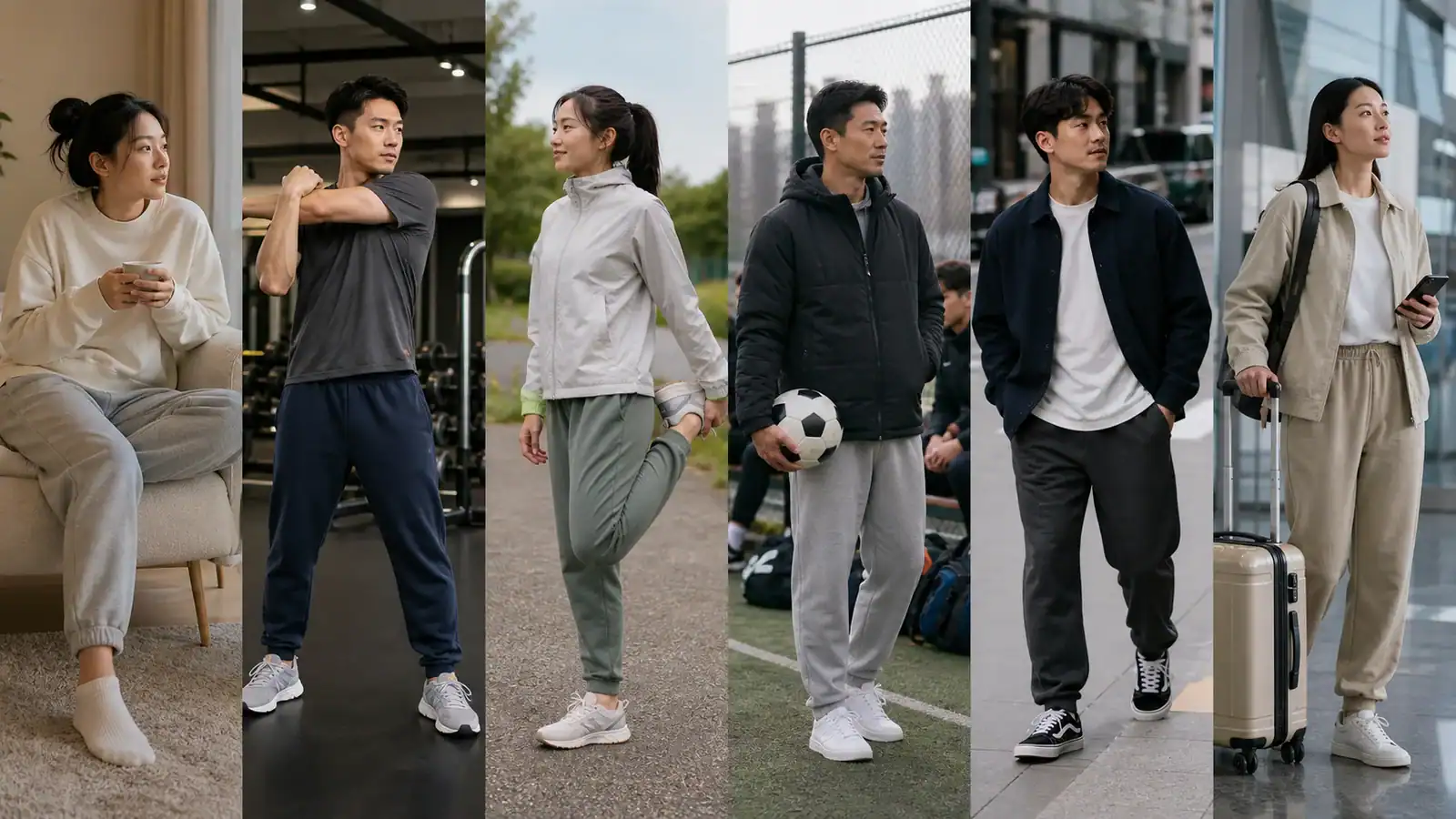
25. Loungewear sweatpants
Loungewear sweatpants prioritize a soft hand, easy fit, low-pressure waistband, and comfortable seams. They may use terry, fleece, jersey, or another soft knit. “Soft” should be compared with a physical reference rather than left subjective. Review waistband pressure, pocket bulk, inner surface, seam placement, heat, shrinkage, and appearance after repeated care.
26. Training sweatpants
Training sweatpants are planned around warm-up, gym movement, or travel to and from exercise. The silhouette may be tapered to reduce loose fabric, and pockets may need secure closures. Specify movement requirements, fabric stretch and recovery, ventilation, waistband stability, ankle entry, and intended climate. Performance terms such as moisture management need a defined method and target rather than a generic fabric label.
27. Running or warm-up sweatpants
Running and warm-up sweatpants are usually outer or transitional layers rather than compression tights. They may need quick removal over shoes, reflective details, secure pockets, or a lighter material. Confirm whether the garment is for active running, pre-event warm-up, sideline use, or recovery. That decision changes leg width, ankle opening, zipper need, fabric, and weather expectations.
28. Team sweatpants
Team sweatpants support coordinated colors, logos, player numbers, size ranges, and repeat ordering. A stable block and artwork-placement rules matter more than novelty. Confirm unisex or gendered fit, youth and adult ranges, logo method, name or number personalization, color standard, packaging, and reorder matching. The sample should be reviewed together with the intended team top if the products form a set.
29. Streetwear sweatpants
Streetwear sweatpants often use oversized, baggy, stacked, cargo, washed, or heavyweight directions. Those are separate specification choices, not one universal streetwear pattern. Decide the target silhouette first, then define fabric body, wash, graphics, embroidery, labels, and trim. Large decoration and heavy pockets can pull on a soft leg, so artwork and construction should be sampled on the actual base fabric.
30. Travel sweatpants
Travel sweatpants combine comfort with practical storage and a silhouette that can remain presentable during long wear. Common decisions include zip pockets, a stable waistband, lower-bulk seams, and fabric that recovers after sitting. Avoid unsupported “wrinkle-proof,” “odor-resistant,” or stain claims. Confirm the real use case, pocket contents, care route, climate, and any performance testing required.
Fabric and finish-led sweatpants
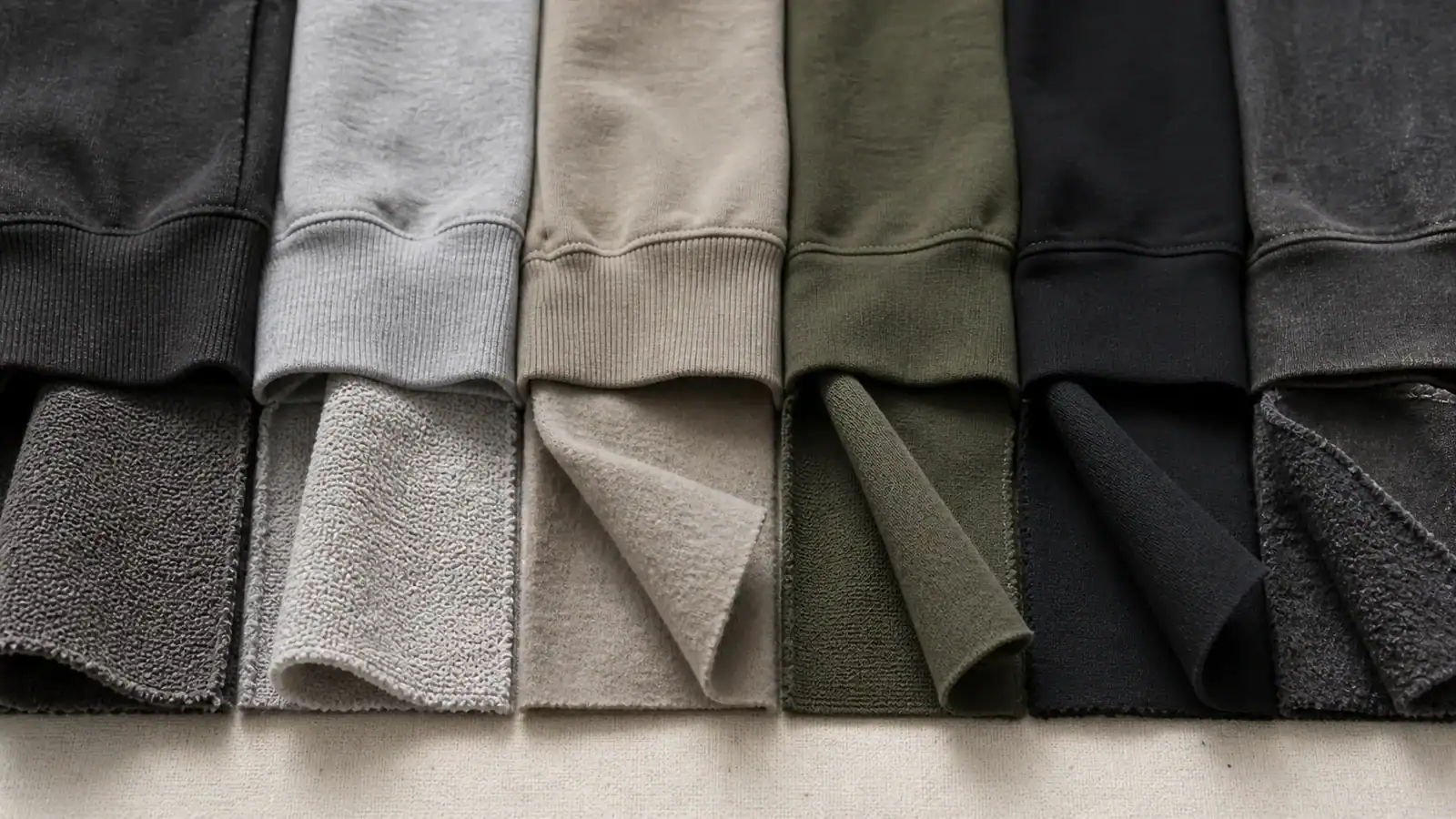
31. French terry sweatpants
French terry has a smooth knitted face and visible float loops on the technical back. CottonWorks notes that the industry uses the name for un-napped two-end fleece and that it comes in several weights suitable for sweatpants and layering garments. See its French terry and fleece construction reference. Specify composition, construction, weight, stretch, shrinkage, and loop appearance.
32. Brushed fleece sweatpants
Brushed fleece uses napping to raise the inner surface and create a softer, fuller hand. Two-end and three-end constructions can behave differently in stability and weight. “Fleece” does not confirm fiber, thickness, warmth, or quality. Approve a physical swatch and test the final color and finish for shrinkage, pilling, shedding, surface change, and seam performance.
33. Heavyweight cotton-rich sweatpants
Heavyweight cotton-rich sweatpants use a substantial terry or fleece body for structure and a dense hand. The exact weight does not guarantee durability or premium quality; yarn, knit density, finishing, and construction also matter. Confirm composition, finished weight, shrinkage, skew, recovery, shade, inner surface, and whether the fabric can support the planned pocket and decoration without excessive sagging.
34. Jersey sweatpants
Jersey sweatpants use a lighter single-knit or double-knit fabric instead of traditional fleece. They can suit lounge, warm-weather, layering, or lightweight travel products. Single jersey may curl, grow, or show pocket bags more readily than a stable double knit. Confirm opacity, stretch, recovery, weight, seam type, pocket-bag choice, and whether the silhouette needs extra ease to avoid knee and seat distortion.
35. Performance-knit sweatpants
Performance-knit sweatpants use polyester, nylon, elastane, or blended constructions selected for a defined activity. They may target stretch, drying, abrasion, warmth, or weather resistance, but fiber names alone do not prove those outcomes. Put the required claim, test method, target, and end use in the brief. Review seam extension, heat sensitivity, print compatibility, static, snagging, and pocket stability.
36. Garment-dyed or washed sweatpants
Garment-dyed, pigment-dyed, acid-wash, mineral-wash, or vintage-wash sweatpants use color and finishing to create variation and a worn-in appearance. Terminology and results vary by process. Approve a color range, contrast level, seam effect, hand feel, and shade tolerance with the actual fabric and trims. Washing can change dimensions, thread color, labels, drawcords, prints, and metal parts, so approve the finished garment rather than a fabric swatch alone.
Joggers versus sweatpants
Joggers are best treated as one sweatpants silhouette: the leg tapers toward a close ankle finish, often a rib or elastic cuff. Sweatpants are the larger category and can be cuffed, straight, wide, open-bottom, flared, or otherwise shaped. A jogger can be made in French terry, brushed fleece, jersey, or a performance knit; the name does not define the fabric.
In a product brief, “jogger” should trigger at least four follow-up decisions: how much the leg tapers, where the taper starts, what the ankle construction is, and how the wearer enters through the opening. It should not be used as shorthand for every elastic-waist casual pant.
How to choose the right type for a product line
Start with the customer and use rather than the most fashionable name. A lounge program may prioritize a relaxed fit, soft inner surface, and low-pressure waistband. A gym brand may need a tapered leg, secure pockets, movement review, and a lighter knit. A streetwear drop may place more value on volume, fabric body, wash effect, and large decoration.
Then answer these questions:
- What should the wearer be able to do in the garment?
- Where should the product sit on the waist, and how much ease should it have at hip, thigh, knee, and calf?
- Should the leg finish open, cuffed, adjustable, zipped, stacked, or flared?
- What must each pocket hold, and how should it close?
- What climate, hand feel, drape, stretch, warmth, or drying behavior is required?
- Which visual detail makes the product recognizable without damaging fit or function?
- What needs to be checked at sample stage and before bulk approval?
The style name narrows the options. A measurement chart, construction drawing, fabric reference, and approval standard make the choice actionable.
Waistband, pocket, seam, and decoration decisions
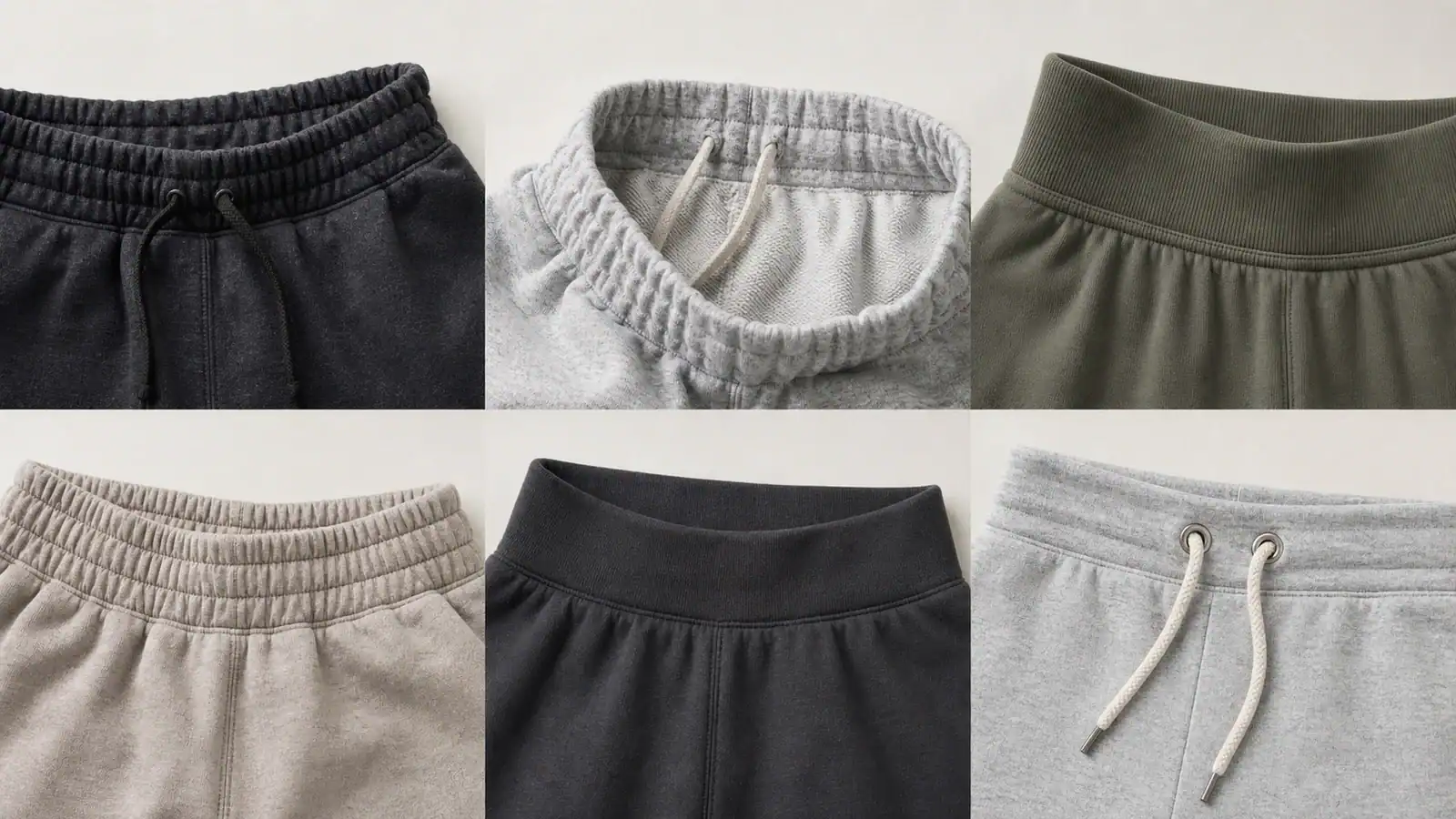
The waistband anchors the whole product. Define finished height, elastic width and quality, number of stitching rows, drawcord position, eyelet or buttonhole, inner or outer exit, cord length, and relaxed and stretched waist measurements. A soft body fabric can still feel uncomfortable if elastic pressure is wrong. The waistband should be reviewed after laundering and during movement.
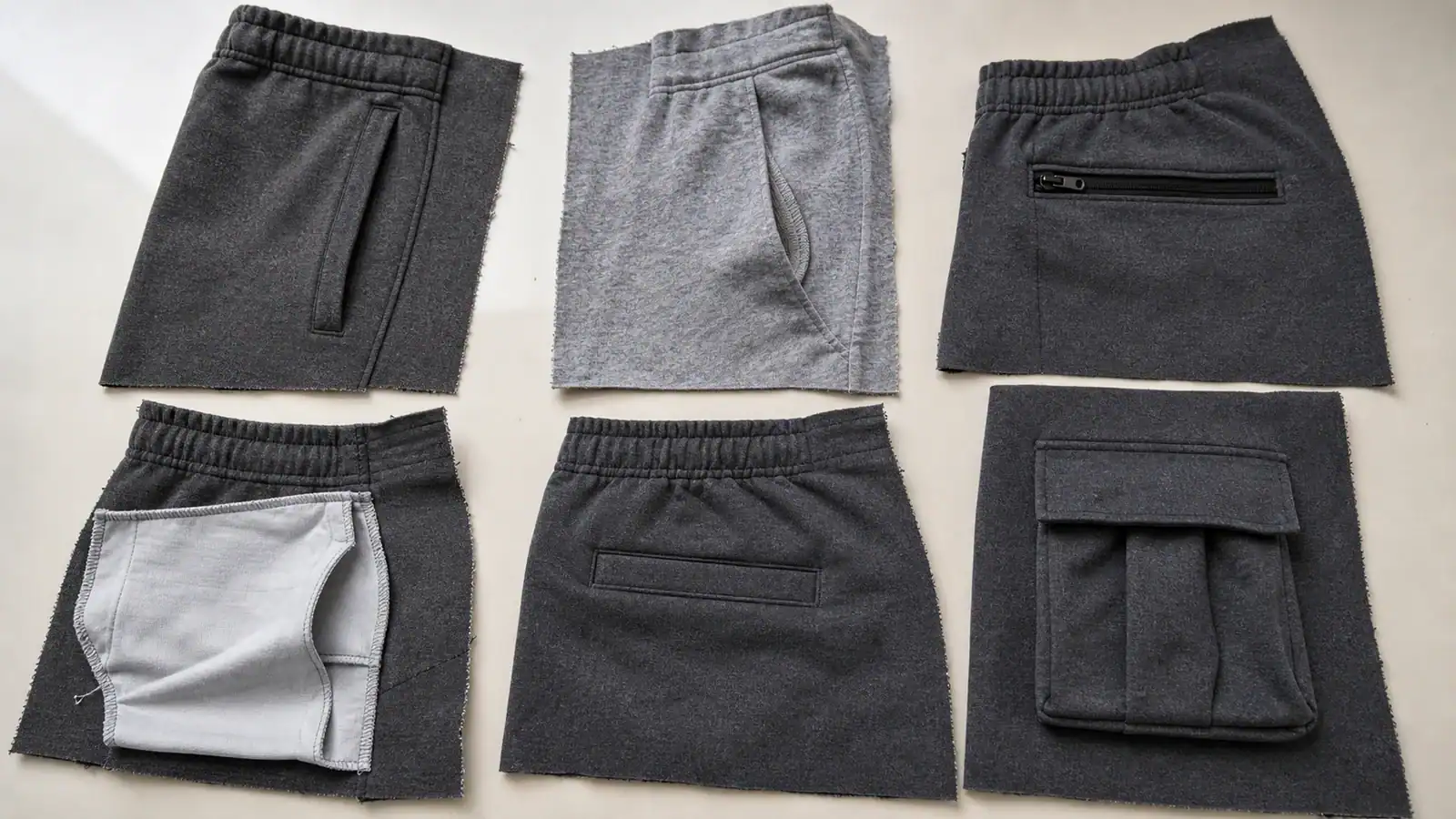
Pocket decisions should start with contents. A hand pocket, phone pocket, secure travel pocket, cargo pocket, and decorative welt do different jobs. Specify opening, bag dimensions, material, reinforcement, closure, drainage if relevant, and position from stable points. Review the garment with the intended object inside; otherwise pocket sag, bounce, gaping, and print interference may appear too late.
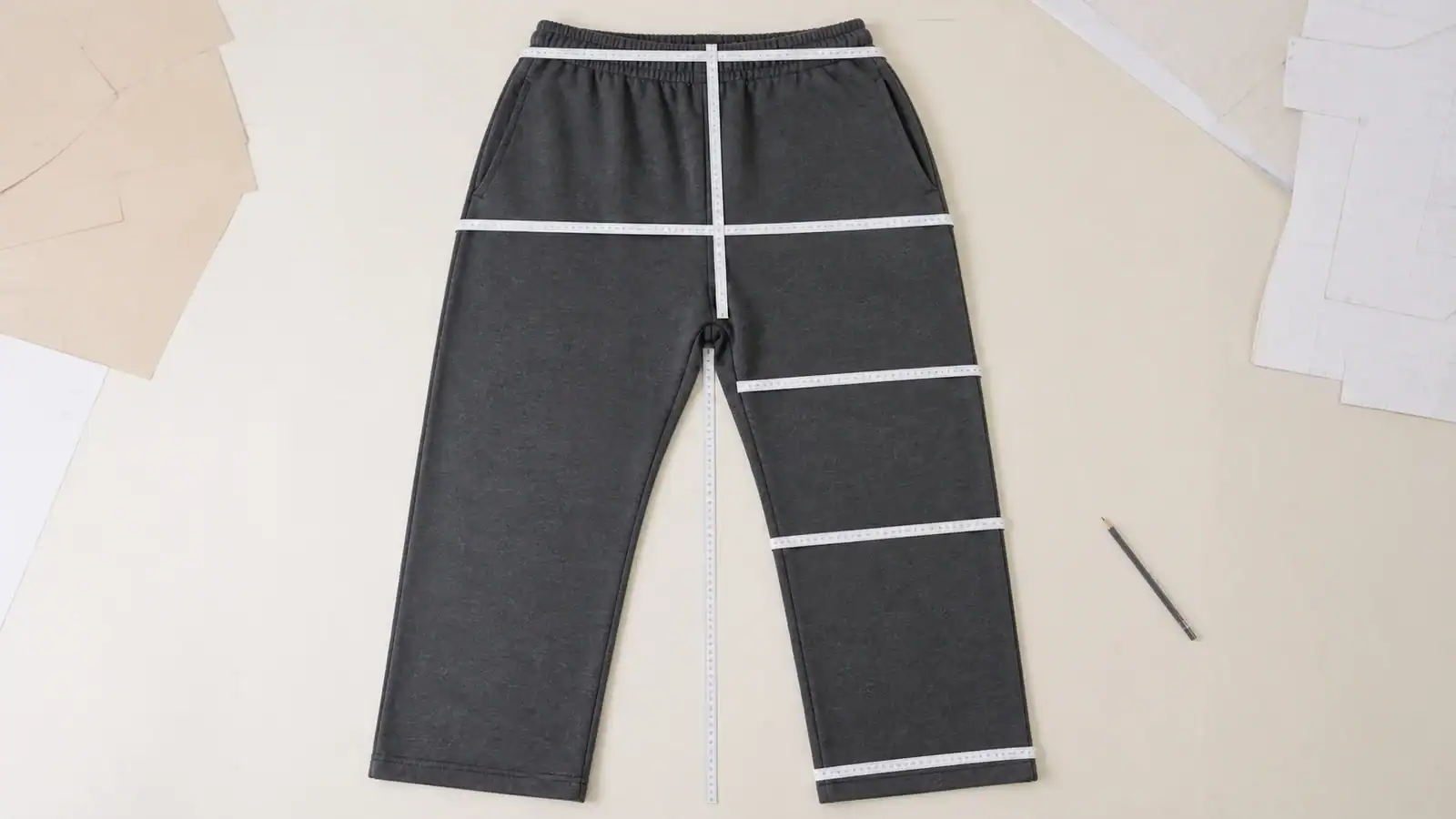
For fit, record waist relaxed and stretched, hip, front rise, back rise, total rise if used, thigh, knee, calf, inseam, outseam, bottom opening, cuff height, and key pocket positions. State whether widths are measured flat or around the body and whether the waistband is included. The tech pack customization route can help organize incomplete specifications before sampling.
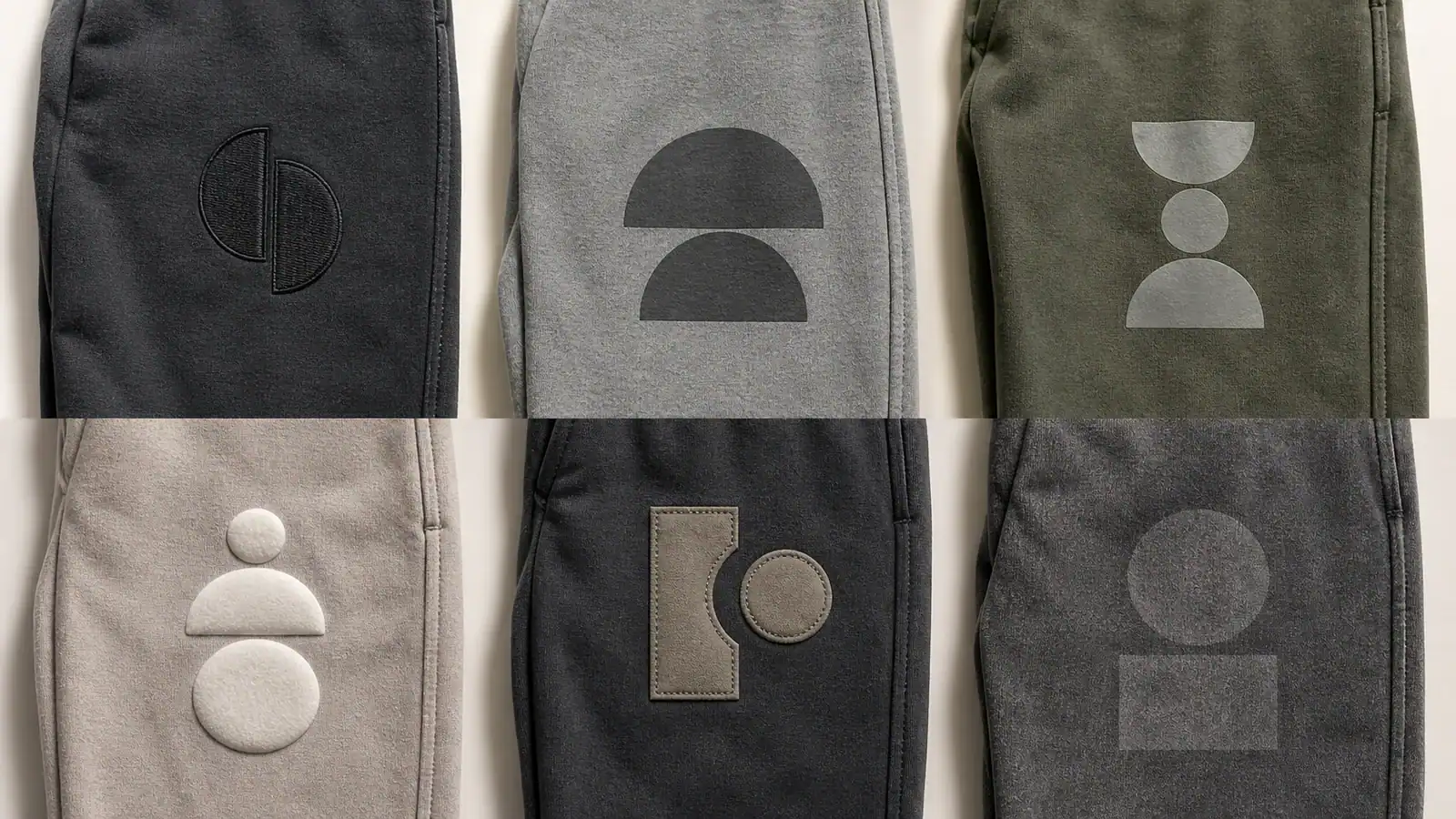
Decoration must be approved on the final fabric and color. Large screen prints can stiffen a soft leg. Dense embroidery can pucker or weigh down light jersey. Heat transfers must tolerate stretch and care conditions. Washes can alter thread, labels, drawcords, prints, and metal trims. Provide artwork, size, color, placement, process, backing, tolerance, and expected care route.
Testing should match the intended market and claims. AATCC TM150 addresses dimensional changes of garments after home laundering. ASTM explains that pilling is affected by fiber, yarn, fabric construction, finish, and care in its D3512/D3512M method. For U.S. consumer apparel, the FTC says manufacturers and importers need a reasonable basis for the instructions on a care label. Exact test methods and acceptance limits should be confirmed for the product and sales market.
What goes wrong when the specification is vague
- The sample is called “baggy,” but the volume appears only at the waist because hip, thigh, knee, and leg widths were never defined.
- A jogger cuff is too tight to pass over the heel or loses recovery after care.
- Stacked pants fit one model but fail across the size range because the inseam strategy was not graded.
- Cargo pockets pull the leg sideways because their weight, position, and backing were not reviewed.
- The knee bags after wear because fabric growth and garment ease were not evaluated together.
- A side stripe twists toward the front because panel alignment and feed were not controlled.
- The inseam and side seam torque after laundering because shrinkage and skew were not checked.
- A wash finish changes labels, cord color, or print contrast because approval covered only the body fabric.
Most of these failures start as missing information. A second sample is often needed not because the factory misunderstood a clear instruction, but because the first instruction never resolved the decision.
What to send before requesting a sample or quote
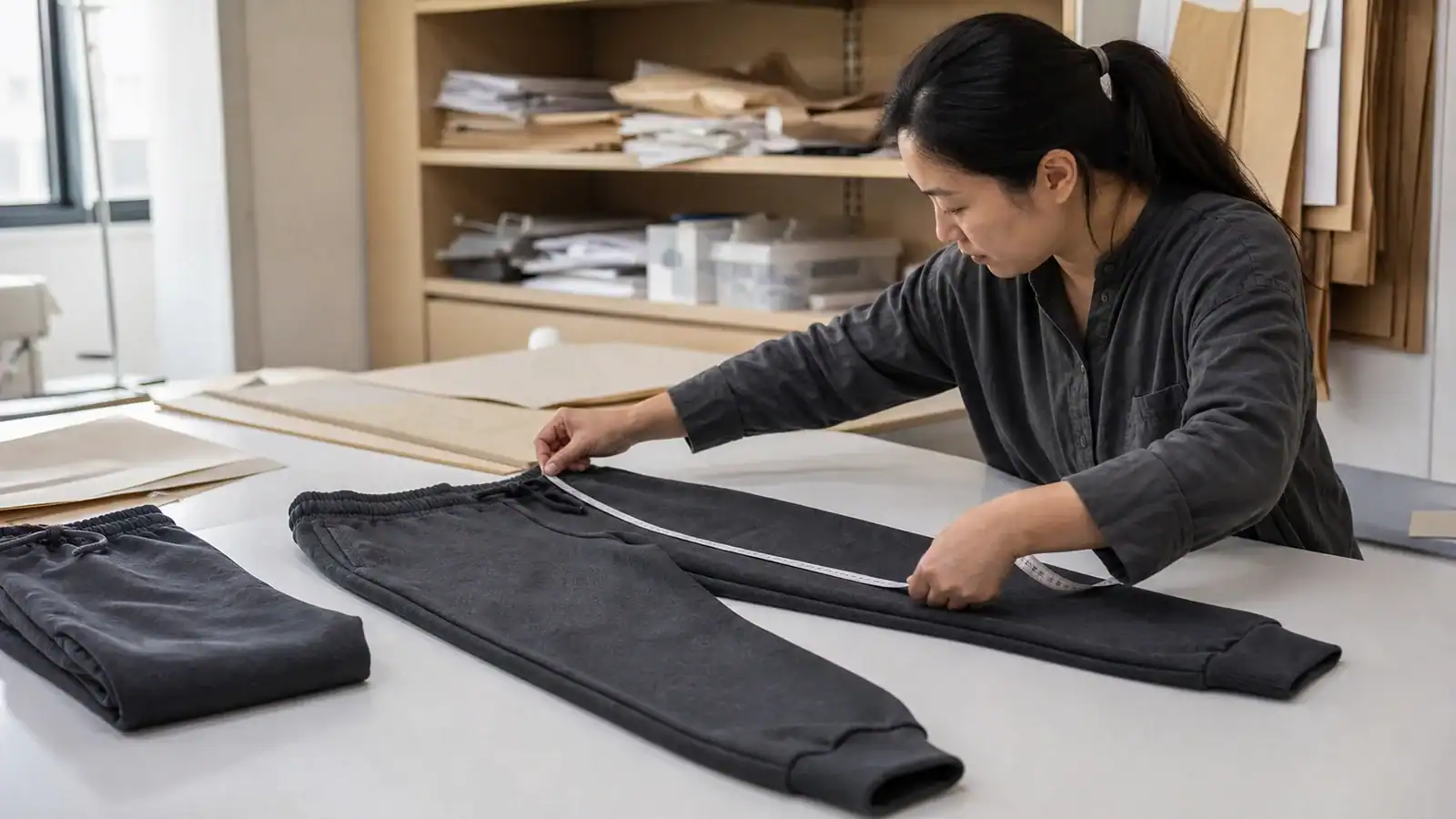
Prepare one review package with:
- front, back, and detail sketches or annotated reference images;
- notes stating what to follow and what to change from each reference;
- target wearer, activity, climate, price position, and sales channel;
- reference size and garment measurements for waist, hip, rise, thigh, knee, inseam, outseam, and bottom;
- silhouette, hem, rise, pocket, waistband, seam, and trim decisions;
- fabric direction including composition, construction, finished weight, stretch, recovery, hand feel, inner surface, color, and finish;
- artwork files, decoration process, size, placement, and color standards;
- labels, drawcord, hardware, packaging, colorways, size range, estimated quantity, destination, and required timing;
- required tests, documents, tolerances, and approval criteria for the exact product and market.
The sampling and prototyping process should compare the physical garment with the approved brief, not with memory or a moodboard alone. Before bulk approval, align measurement tolerances, workmanship, shade, decoration, labels, and packing through the relevant quality-control checks.
Frequently asked questions
The main groups are fit and leg silhouettes, volume-led shapes, hem and rise constructions, pocket and detail variants, purpose-led products, and fabric or finish-led products. Familiar names include classic relaxed, jogger, straight-leg, wide-leg, oversized, stacked, flared, cargo, training, French terry, and brushed fleece sweatpants.
Yes, joggers are commonly treated as a sweatpants style with a tapered lower leg and a close ankle finish. However, joggers can use terry, fleece, jersey, or performance fabrics. “Jogger” describes the silhouette more reliably than it describes the material.
Open-bottom sweatpants finish with a turned or faced hem and can fall over footwear. Joggers narrow toward the ankle and usually use a rib or elastic cuff. Both can be relaxed, slim, or otherwise shaped through the upper leg.
There is no universal best style. Choose from the customer and use case. Loungewear may need a relaxed fit and soft inner surface. Training products may need a tapered leg and secure pockets. Streetwear may use oversized, stacked, cargo, washed, or heavyweight directions. The sample should validate the intended fit and function.
French terry is commonly understood as an un-napped fleece construction with visible loops on the inside. Brushed fleece raises the inner surface through napping. Both are available in different fibers and weights, so the name alone does not define warmth, thickness, shrinkage, or quality.
Common points include waist relaxed and stretched, hip, front and back rise, thigh, knee, calf, inseam, outseam, bottom opening, cuff height, waistband height, and pocket placement. Add product-specific points for cargo pockets, panels, zippers, drawcord hems, flare, stack, or drop crotch.
Compare the garment with the approved dimensions, appearance, hand feel, seam shape, waistband and cuff recovery, color, decoration, labels, and trims. Testing and care procedures should match the intended market. Fabric-only results may not reveal problems created by the finished garment’s mixed components.
Yes. “High-rise oversized cargo sweatpants in garment-dyed French terry” combines rise, fit, pocket, finish, and fabric. That fuller description is useful, but it still needs drawings, measurements, material details, construction notes, artwork, and approval criteria.
Turn the style name into a sample-ready brief
A useful name reduces ambiguity; it does not replace the specification. Choose the wearer and use first, then lock the rise, fit, leg shape, hem, pockets, waistband, fabric, construction, decoration, size range, and approval checks.
For a custom program, review the custom sweatpants manufacturing options and send your reference images, tech pack, target quantity, colorways, size range, fabric direction, destination, and required timing. Exact feasibility, MOQ, lead time, tests, and compliance scope must be confirmed for the project.