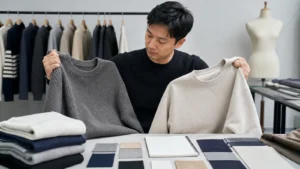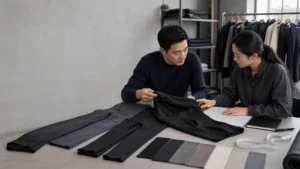
Short answer: a typical sweater is formed from yarn or a knitted structure, while a typical sweatshirt is cut and sewn from a knitted fabric such as French terry or fleece. The retail names are not absolute, and hybrid products exist. For a clothing brand, confirm the construction route first, then specify the fabric or yarn, fit, trims, wash expectations, care instructions, and sample approval points before comparing supplier quotes.
This distinction matters because the same casual product name can describe very different development work. A sweater brief may need yarn composition, gauge, stitch structure, shaping, and finishing details. A sweatshirt brief usually starts with a fabric specification, pattern pieces, seam construction, rib components, print or embroidery placement, and wash testing. If a buyer uses only the word "sweater," two suppliers may quote different products and both believe they have followed the request.
This guide translates the sweatshirt vs sweater question into a practical product-development decision. It is written for brands and buyers who need a clear path from product idea to supplier inquiry, sample review, and bulk approval.
What is the difference between a sweatshirt and a sweater?
A typical sweatshirt is a cut-and-sew garment made from a knitted fabric. The fabric is produced first, then pattern pieces are cut and assembled with seams. French terry and fleece are common examples of fabrics used for this route. CottonWorks describes French terry and fleece as knit-fabric constructions used in applications that include sweatshirts and sweatpants, with brushing or napping changing the surface of fleece. See the technical overview of single and double knits when deciding how much fabric detail belongs in your brief.
A typical sweater is shaped through knit construction. Yarn is turned into a fabric or garment structure through knitting, and the garment may be shaped through panels, linked pieces, or a more fully-fashioned method. The development conversation therefore includes yarn, gauge, stitch appearance, panel shape, stretch, recovery, and finishing. The Woolmark Company provides useful background on woollen knitting and the relationship between yarn processing and knitted garments.
The practical comparison is:
- Sweatshirt: normally a cut-and-sew route using prepared knit fabric, often with sewn rib trims.
- Sweater: normally a knit route using yarn and a knitted structure, with shaping and finishing that may differ from cut-and-sew work.
- Hybrid: a product can combine a knitted body, cut-and-sew panels, woven overlays, or sweatshirt-style trims.
- Retail vocabulary: sweater, jumper, pullover, knit top, and fleece top can mean different things in different markets.
For a purchase order or RFQ, replace the retail label with construction language. Write "cut-and-sew French terry crewneck with rib cuff and hem" or "knitted pullover with specified yarn, gauge, stitch, and linked shoulder" when those are the intended products. This makes the request easier for a supplier to interpret and easier for a quality team to inspect.
Why the construction difference matters to a clothing brand
Construction changes the information a supplier needs before sampling. It also changes where risk appears. In a sweatshirt, the main risks may sit in fabric shrinkage, seam twisting, rib recovery, print placement, and panel measurement. In a sweater, risk may sit in gauge consistency, stitch appearance, yarn behavior, shaping, linking, and surface pilling.
The difference also affects the development calendar. A cut-and-sew product can often begin with a fabric swatch and a clear pattern. A knitted product may need yarn or knit-down approval before a complete sample can show the intended appearance. Neither route is automatically better. The right route depends on the collection’s hand feel, silhouette, season, target price, decoration, and available development time.
Use this decision order:
- Name the intended construction.
- Define the material input, either fabric or yarn.
- Confirm the silhouette, size range, and key measurements.
- Specify trims, decoration, and finishing.
- Set sample tests and approval gates.
- Compare quotes only after the scope is comparable.
Brands that skip the first two steps often compare a lightweight sweatshirt with a heavy knit sweater as if they were equivalent products. The quote may look lower, but the product, fit, and customer experience are different.
Compare the fabric or yarn before you compare the quote
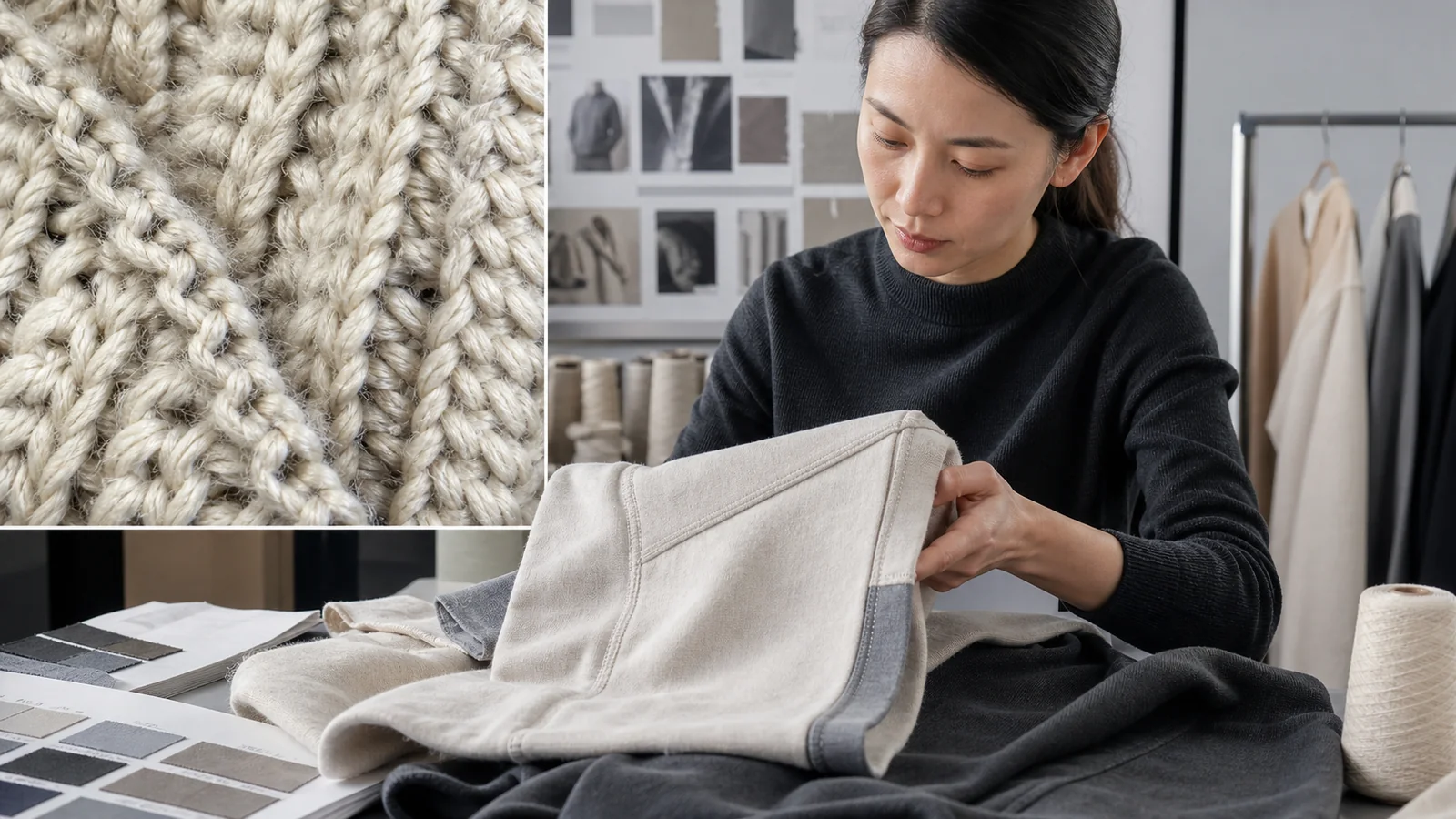
For a sweatshirt, describe the fabric in terms a mill or garment supplier can act on. Useful fields include fiber content, fabric construction, target weight or GSM, width, stretch direction, color standard, finish, brushing, shrinkage tolerance, pilling expectation, and wash method. If weight is important, use a target range and review the actual lab or production swatch instead of treating a single number as the whole specification. DTS’s guide to GSM meaning in clothing can help a new buyer understand why fabric weight must be read with construction and hand feel.
For a sweater, start with yarn and knit structure. Ask for fiber composition, yarn count or yarn description where relevant, gauge, stitch type, color method, panel or whole-garment construction, shaping, and finishing. If the brand wants a soft brushed appearance, a supplier should explain whether the effect comes from the yarn, the knit structure, a finishing process, or a combination. A close-up photo is useful, but it cannot replace a physical swatch or knit-down approval.
Avoid asking for "premium fabric" or "soft sweater material" without a measurable follow-up. Instead, send:
- the intended fiber or an approved blend range
- a reference swatch or product sample
- target weight or yarn description
- expected stretch and recovery
- surface finish and pilling requirement
- color standard or lab-dip process
- wash and shrinkage expectations
CottonWorks’ explanation of garment construction is a useful reminder that fabric handling, cutting, stitching, and finishing all influence the final garment. A supplier quote should say whether it includes fabric development, knit-downs, lab dips, testing, and finishing, rather than hiding those steps inside a vague unit price.

Choose warmth, hand feel and layering behavior
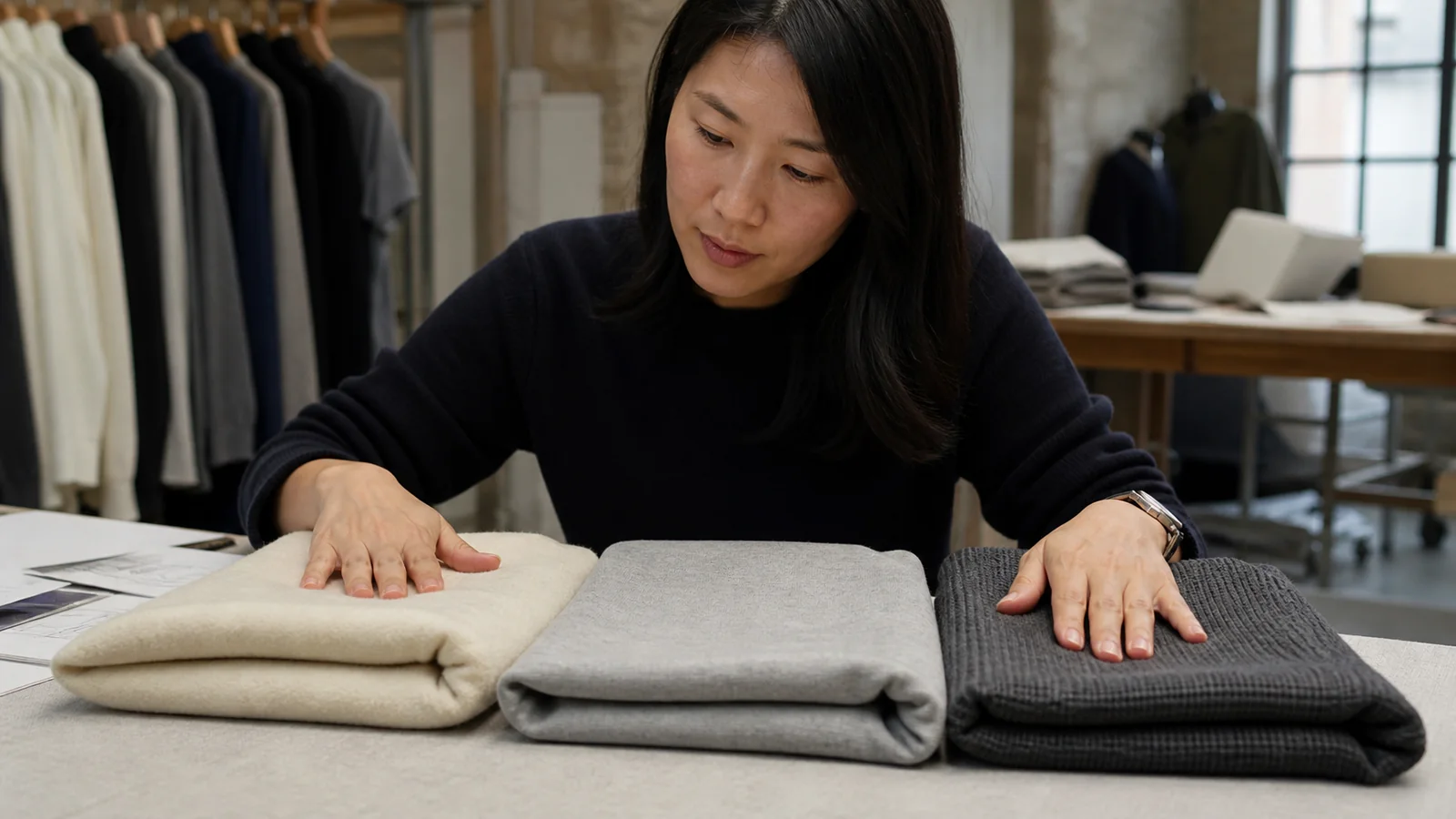
"Which is warmer, a sweatshirt or a sweater?" has no universal answer. Warmth depends on fiber, fabric or knit density, surface finish, garment weight, air space, fit, and layering. Brushed fleece may feel warmer against the skin than an unbrushed French terry of similar weight. A dense knit can block air differently from a loosely structured knit. A thin sweater may work as a light layer, while a heavy sweatshirt may be designed as an outer casual layer.
Describe the intended use instead of choosing a product name based on warmth alone. Tell the supplier whether the style is for indoor layering, travel, training warm-up, streetwear, winter merchandising, transitional weather, or a broad seasonal collection. Then define the desired hand feel:
- smooth or brushed inside
- dry, crisp, soft, lofty, or compact surface
- drapey or structured body
- light layering piece or substantial standalone top
- warm hand feel without excessive bulk
The intended layer also influences neckline and hem choices. A sweater worn over a collared shirt may need a different neckline depth and shoulder ease from a sweatshirt worn over a base layer. If the brand sells both products in one collection, show the supplier the neighboring styles so the warmth and fit hierarchy is clear.
Set fit, ease and silhouette expectations
The same size label can fit differently across a cut-and-sew sweatshirt and a knitted sweater. A sweatshirt pattern is usually controlled through pattern measurements, seam allowances, and fabric stretch. A sweater may be influenced by knit gauge, stitch density, panel shaping, yarn behavior, and linking. The buyer should approve a measurement chart and a physical sample for either route.
Define the silhouette with specific terms:
- regular, relaxed, oversized, cropped, or fitted
- dropped or set-in shoulder
- body length and sleeve length
- neckline opening and collar height
- hem width and cuff opening
- ease at chest, bicep, and upper arm
- intended layering size underneath
Use a fit model or a consistent dress form when reviewing samples. Record the garment measurements before and after washing or steaming, and separate a fit problem from a fabric-behavior problem. If the body grows after wash, changing the pattern alone may not solve the issue.
This is where a clear tech-pack customization process helps. The tech pack should show the product route, not just a sketch. A sweater technical pack should call out knit details and shaping. A sweatshirt technical pack should show pattern pieces, seam types, rib specifications, and decoration placement.

Inspect rib cuffs, hems and necklines
Small trim decisions can change the identity and performance of a warm top. A sweatshirt may use rib at the neck, sleeve cuff, and hem. A sweater may use a knitted rib edge, linked finish, folded hem, or a different neckline treatment. A hybrid style may intentionally borrow from both routes.
Ask the supplier to identify each trim and its construction. For a sweatshirt, confirm rib content, width, recovery, attachment method, topstitching, and color match. For a sweater, confirm whether the edge is knitted as part of a panel, attached as a separate component, or finished after linking. The buyer should also check whether the rib shrinks at a different rate from the body.
Review these points on the sample:
- neckline lies flat without pulling
- cuff opening returns after stretching
- hem does not flare or twist
- rib color matches the body under the target light
- seam or linking is clean on the inside
- decoration does not distort the trim
- measurement points are marked consistently
Do not approve a trim because it looks correct in a product photo. Stretch it, wash it if the sample stage allows, and compare it with the approved specification.
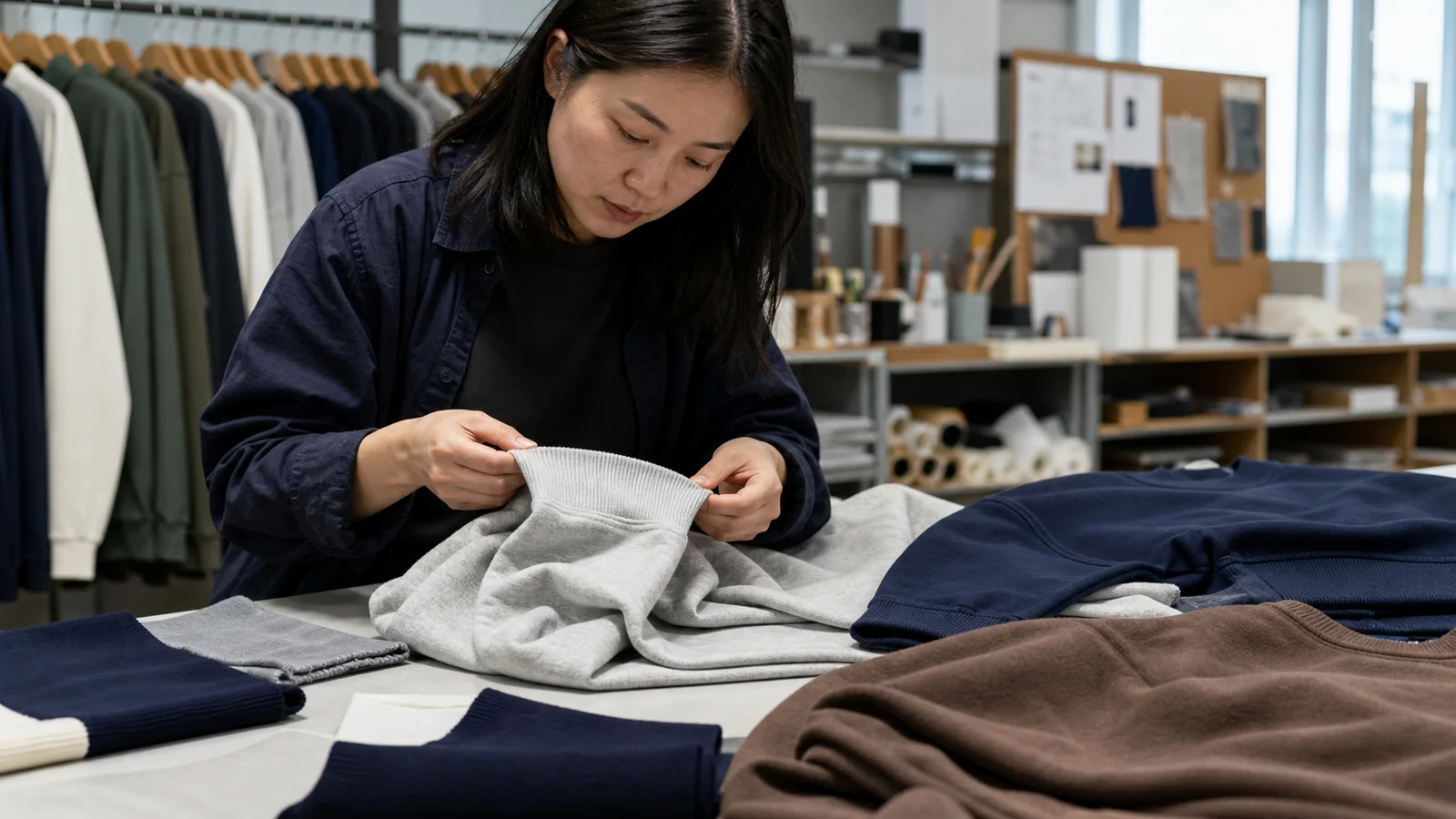
Decide which product route fits your collection
Choose the route that supports the product’s intended identity and development constraints.
A sweatshirt route may fit when the brand needs a recognizable cut-and-sew silhouette, fleece or French terry options, screen print or embroidery placement, a consistent pattern block, or a coordinated set with sweatpants. It may also suit a collection that needs repeatable fabric colors and straightforward panel measurements.
A sweater route may fit when the brand wants a visible knit texture, yarn-led color effects, shaped details, a softer or more dimensional surface, or a product that depends on gauge and stitch appearance. It may be a better match for a knitwear-led seasonal assortment.
A hybrid route may be appropriate when the design combines a knitted body with woven panels, sweatshirt-style ribs, appliques, or cut-and-sew details. In that case, describe every component and its join. Do not let the word "sweater" hide a multi-material construction that changes cost, testing, and quality risk.
If the collection needs a broader category map first, use DTS’s guide to types of sportswear as a related planning reference. This article’s narrower job is to choose and brief a warm-top construction.
Send a supplier brief that removes ambiguity
A good RFQ lets a supplier answer the same product question you are asking. Include a short product description, intended market, estimated quantity, size range, target delivery window, and the information below.
- Product route: sweater, sweatshirt, or hybrid.
- Construction: knitted, cut-and-sew, or a named combination.
- Material: fiber content, fabric or yarn direction, and approved alternatives.
- Surface: French terry, fleece, smooth jersey, knit stitch, brushed, compact, or another defined finish.
- Weight: target GSM for fabric or an agreed yarn and gauge direction for knitwear.
- Fit: size chart, silhouette, shoulder, body length, sleeve, cuff, hem, and neckline measurements.
- Trims: rib or knit edge, labels, drawcords, buttons, zippers, patches, and packaging components.
- Decoration: artwork, placement, technique, color count, and approval standard.
- Testing: wash method, shrinkage, pilling, colorfastness, seam, recovery, and measurement checks.
- Commercial scope: sample charges, development charges, MOQ, packaging, inspection, quote validity, and shipping terms to be confirmed.
Use the word "to be confirmed" for commercial details that depend on the final specification. That is more useful than filling an RFQ with assumptions. A supplier should be able to return a quote with clear exclusions, sample timing, and questions.

Build a tech pack for the right production method
The tech pack should help a developer make the sample and help a quality inspector judge it. Start with an identification page that states the intended route and the approved reference sample. Then separate construction details from appearance details.
For a sweatshirt, include front and back flats, pattern or measurement references, stitch and seam notes, rib details, fabric information, decoration artwork, label positions, and packaging notes. State whether the inside should be loopback, brushed, or another finish. If the garment is part of a set, identify matching color and wash expectations.
For a sweater, include front and back flats, yarn information, gauge, stitch or texture references, panel or whole-garment route, shaping, neckline, cuffs, hem, linking or finishing notes, and measurement points. A swatch or knit-down can prevent an argument about stitch appearance later.
Keep version control visible. The sample room should know which measurement chart, artwork, color, and trim approval is current. DTS’s sampling and prototyping page can be used as a next step when the product needs a structured sample discussion.

Approve samples with wash, pilling and measurement checks
Sample approval should answer more than "does it look right?" Check the product against the intended use and the written brief.
Before washing, inspect construction, measurements, symmetry, stitch or linking quality, trim attachment, decoration, and overall hand feel. After the agreed wash or care process, record body length, chest, sleeve, cuff, hem, neckline, and any other critical point. Photograph the same points for the supplier and keep the measurement sheet with the sample version.
For sweatshirts, pay attention to fabric shrinkage, seam twisting, rib recovery, fleece direction, pilling, and print or embroidery distortion. For sweaters, inspect gauge consistency, yarn pulls, pilling, shape recovery, shoulder or armhole behavior, panel joins, and edge finish. For either route, compare the garment after handling, not only straight from the package.
The test method should match the end market and the care label you plan to use. If a buyer asks for a performance claim, define the test and acceptance level before production. Do not turn one untested sample into a broad product promise.
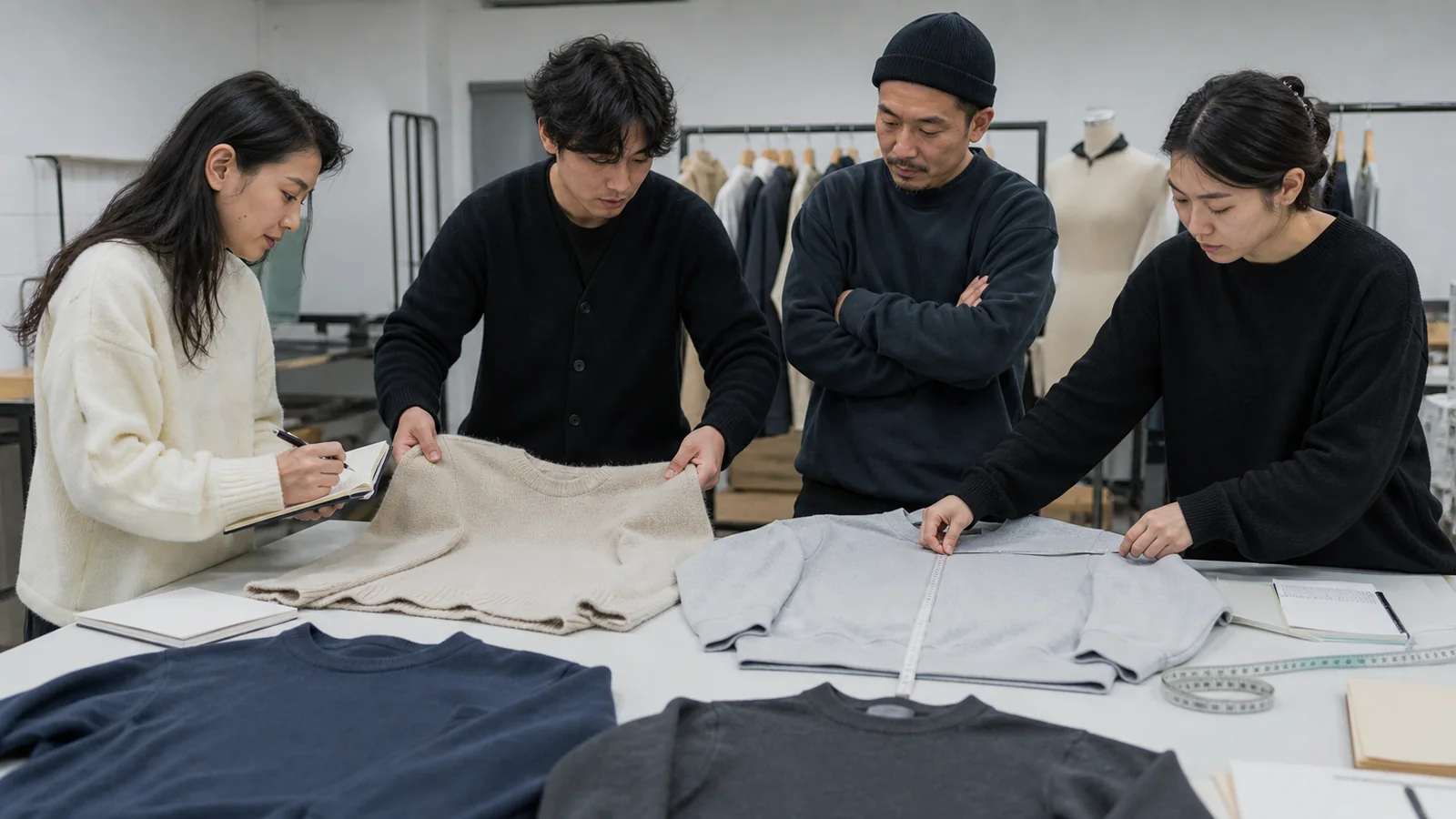
Use care and labeling requirements before bulk
Care advice is part of product development, not an afterthought. The final instruction depends on fiber, construction, trims, decoration, finish, and verified care behavior. A brushed sweatshirt, a delicate knit, and a mixed-material hybrid may need different handling.
For US-bound goods, start with the FTC apparel labeling resources and review the FTC guidance on complying with the Care Labeling Rule. The official Care Labeling Rule should be checked with the responsible compliance person for the target market and product.
Confirm the following before bulk approval:
- fiber content and country-of-origin information are assigned to the right product
- labels match the approved material and construction
- care wording reflects the tested garment, not a generic template
- decoration and trims tolerate the stated care method
- packaging protects the garment without creating unwanted pressure marks
- the supplier understands the final label version and placement
This article is not legal advice. Labeling rules can vary by market and product, so have the final label reviewed by the person responsible for compliance.

Compare supplier quality controls and quote scope
A lower quote is not comparable if it excludes the steps that protect the product. Ask each supplier to identify what is included in development, sampling, testing, inspection, packaging, and shipping. Then compare like with like.
For a sweatshirt, ask how the supplier controls fabric shade, GSM or weight range, shrinkage, cutting accuracy, seam quality, rib recovery, decoration placement, and final measurements. For a sweater, ask how it controls yarn lot, gauge, stitch appearance, panel dimensions, linking, pilling risk, edge recovery, and final measurements.
Ask for evidence that relates to the requested product. A general factory photograph does not prove the quality of a particular fabric or knit route. A completed sample, measurement record, test report where relevant, and clear inspection plan are more useful. DTS’s quality control resource can support the buyer’s next conversation about inspection and approval.
Keep commercial questions separate from technical approval. Confirm MOQ, sample charges, development charges, bulk price, packaging, lead time, and shipping terms only after the product scope is stable. Exact values should come from the supplier’s current quotation, not from a generic article.
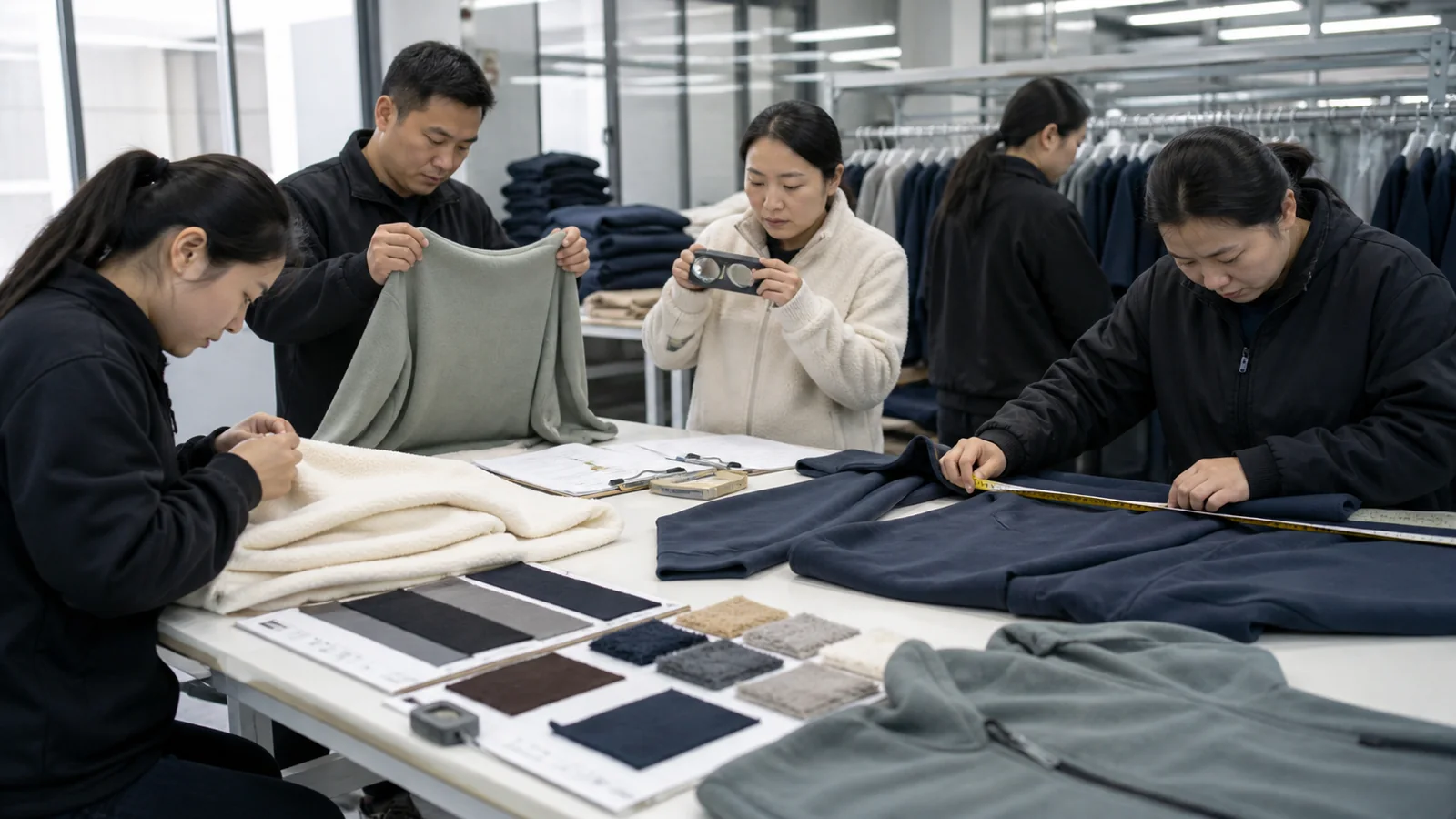
Use a sweater vs sweatshirt scorecard
Use a simple scorecard to keep the team focused on product fit and evidence. Score each route or supplier against the same fields, then add a note for the next action.
- Construction fit: does the proposed route match the intended product and decoration?
- Material clarity: are fabric or yarn, weight or gauge, finish, and alternatives defined?
- Fit control: can the supplier work from the approved measurement chart and sample comments?
- Quality evidence: are the relevant sample checks, testing, and inspection records available?
- Commercial clarity: are MOQ, development, sampling, packaging, and quote exclusions visible?
Use a three-level status such as ready, needs evidence, or not aligned. The score is a working decision tool, not a claim about a supplier’s overall capability. If two quotes have different construction routes, return to the brief before assigning a winner.

What should a brand develop first?
Develop the product whose construction supports the collection’s most important customer promise. If the customer expects a familiar fleece crewneck, a cut-and-sew sweatshirt brief may be the clearest starting point. If the customer expects visible texture, yarn-led color, and a shaped knit silhouette, a sweater route may be better. If both belong in the range, develop one reference style for each and define the difference in weight, fit, surface, and use.
Do not choose only by the search phrase or by a sample photograph. Choose by the product you can describe, test, label, inspect, and reorder. Once the route is clear, ask the supplier to confirm the fabric or yarn direction, sample plan, quote scope, and open questions.
If you want DTS Activewear to review a new product brief, send the intended construction, fabric or yarn direction, size range, quantity, target market, artwork or tech pack, and required sample timing. This gives the technical team enough context to route the inquiry.

Frequently asked questions
No. A typical sweatshirt is cut and sewn from knit fabric such as French terry or fleece. A typical sweater is formed through a knitted structure using yarn. Some products are hybrids, and retail vocabulary varies by market, so confirm construction and material in the product specification.
The main difference is usually the production route. A sweatshirt starts with prepared fabric and is assembled from cut pieces. A sweater starts with yarn and a knitted structure that may be shaped through panels or a fully-fashioned method. Fit, warmth, trims, and care depend on the exact material and construction.
French terry is a knit fabric commonly used for sweatshirts and sweatpants, so it normally points to a cut-and-sew sweatshirt route. A supplier should still confirm the fabric structure, weight, finish, and garment construction because a retail name alone does not define the entire product.
Neither is always warmer. Warmth depends on fiber, weight, density, surface finish, fit, and layering. Brushed fleece, dense knitwear, and lightweight French terry can behave differently. Specify the intended season and use, then approve the actual hand feel and sample behavior.
Yes. Sweatshirts are commonly cut and sewn from knit fabrics. The important distinction is that the fabric is made first and then assembled into a garment. Some designs may also combine cut-and-sew knit fabric with knitted trims or other components.
Include the construction route, fabric or yarn, fiber content, weight or gauge, finish, fit measurements, trims, decoration, size range, quantity, target market, testing expectations, packaging, sample requirements, and commercial items to be confirmed. Attach a reference sample, swatch, artwork, or tech pack whenever available.
Inspect construction, measurements, symmetry, hand feel, trims, and decoration before washing. Apply the agreed care method, then recheck measurements, shrinkage, pilling, seam or linking quality, recovery, and appearance. Record the result against the sample version and approval comments.
They can. Care instructions depend on the actual fiber, fabric or knit structure, trims, decoration, and verified care behavior. For US-bound goods, review the FTC apparel and Care Labeling Rule resources and confirm the final wording with the person responsible for market compliance.
Choose a sweatshirt or sweater by construction, not by the name alone
The safest answer to the sweatshirt vs sweater question is a product brief that removes the ambiguity. State whether the item is knitted, cut and sewn, or hybrid. Then define the fabric or yarn, fit, trims, decoration, testing, care, and commercial scope. When the supplier and buyer are quoting and approving the same product, the final decision is based on evidence instead of a loose retail label.