French terry fabric is a weft-knit loopback fabric with a relatively smooth face and unbrushed loops on the reverse. Those loops are left intact rather than brushed into a fuzzy nap. The construction gives French terry a soft hand, useful body, natural give and a more breathable feel than many brushed sweatshirt fabrics. It is commonly used for hoodies, sweatshirts, joggers, shorts, lounge sets and transitional activewear.
For an apparel buyer, “French terry” is a starting description, not a complete specification. Fiber content, finished GSM, usable width, loop height, stretch, recovery, shrinkage, colorfastness, surface finish and garment design can change the result. This guide explains what French terry fabric is, how it differs from fleece and woven terry cloth, and what to record before approving a private-label or custom apparel program.
What Is French Terry Fabric?
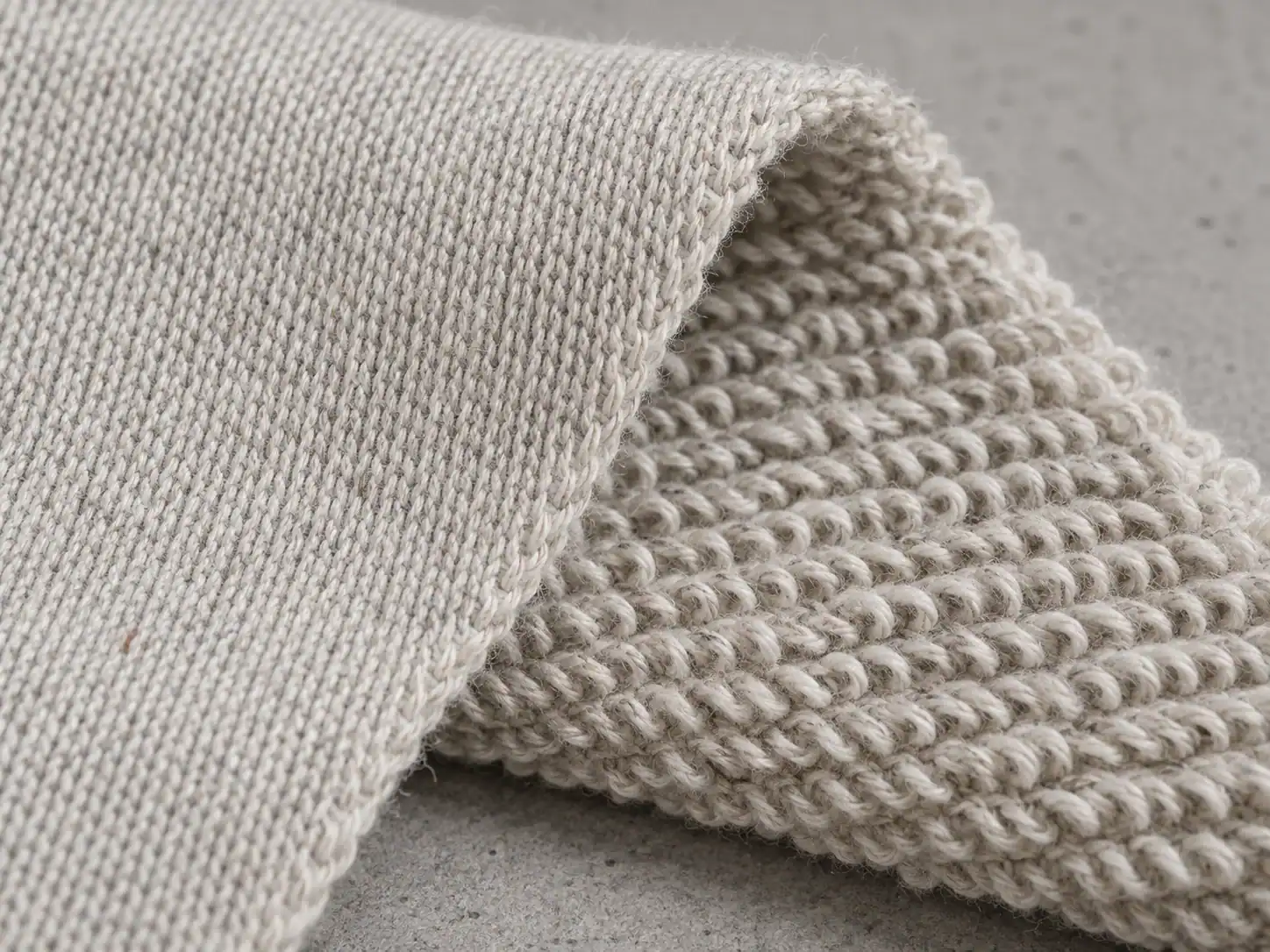
French terry fabric is a knitted sweatshirt fabric with two recognizable faces. The outer face is usually smooth and compact. The technical reverse carries short, uncut yarn loops. The loops add cushioning and texture without creating the raised, fuzzy surface associated with brushed fleece.
The name describes the construction, not one fixed fiber. Cotton, cotton-polyester, recycled polyester, modal blends and elastane-containing versions are all possible. A 100% cotton French terry, a cotton-polyester French terry and a stretch French terry can have different drape, recovery, care behavior and cost even when the fabric name is identical.
The Textile School overview of knitted fabrics places French terry within weft-insertion jersey and notes its one-sided loops, stretch and common use in sportswear and jogging garments. A commercial material glossary from SanMar also distinguishes French terry from other sweatshirt materials. For sourcing, the practical test is simple: turn the swatch inside out and verify the loopback surface instead of relying on the label alone.
| Buyer field | What it tells you | Why it matters before sampling |
|---|---|---|
| Construction | Smooth face with one-sided unbrushed loops | Controls handle, warmth, drape and garment identity |
| Fiber content | Cotton, polyester, nylon, modal, elastane or a blend | Changes care, recovery, labeling, dyeing and cost |
| Finished GSM | Mass per square meter after finishing | Influences coverage, structure, season and consumption |
| Stretch and recovery | Movement and shape return in each direction | Determines comfort, fit and risk of bagging |
| Finish | Garment wash, peaching, softener, coating or no special finish | Changes hand feel, appearance and durability |
| Usable width | Cuttable width after finishing and edge loss | Affects marker yield and quotation accuracy |
French terry is therefore best understood as a construction family. The approved swatch and technical record should define the actual product.
How French Terry Loopback Construction Works

French terry is generally made on a circular knitting machine using a ground structure and an additional yarn system that forms loops on the reverse. The outer side presents a flatter jersey-like appearance. The reverse keeps the loop yarns open and unbrushed.
This is the key difference between a loopback sweatshirt knit and a brushed sweatshirt knit. Brushing raises and often breaks the back loops into a nap. Leaving the loops intact creates a more textured reverse, usually with less loft and less trapped air. Loop size, stitch density, yarn type and finishing still vary from mill to mill, so two French terry swatches may not feel the same.
When checking a supplier sample, look at four details:
- Face smoothness: does the outside look clean enough for the intended print, embroidery or garment dye?
- Loop regularity: are the reverse loops even, stable and free from obvious pulled areas?
- Edge behavior: does the cut edge curl, shed or distort during handling?
- Surface balance: does the reverse feel soft and stable without looking brushed or matted?
The loopback also affects sewing. A heavier or looser loop structure can stretch at pocket openings, seams and hems. Matching rib at the neck, cuff and waistband can help control the silhouette, but the pattern and seam construction still need to be checked on the actual fabric.
French Terry vs Fleece vs Terry Cloth
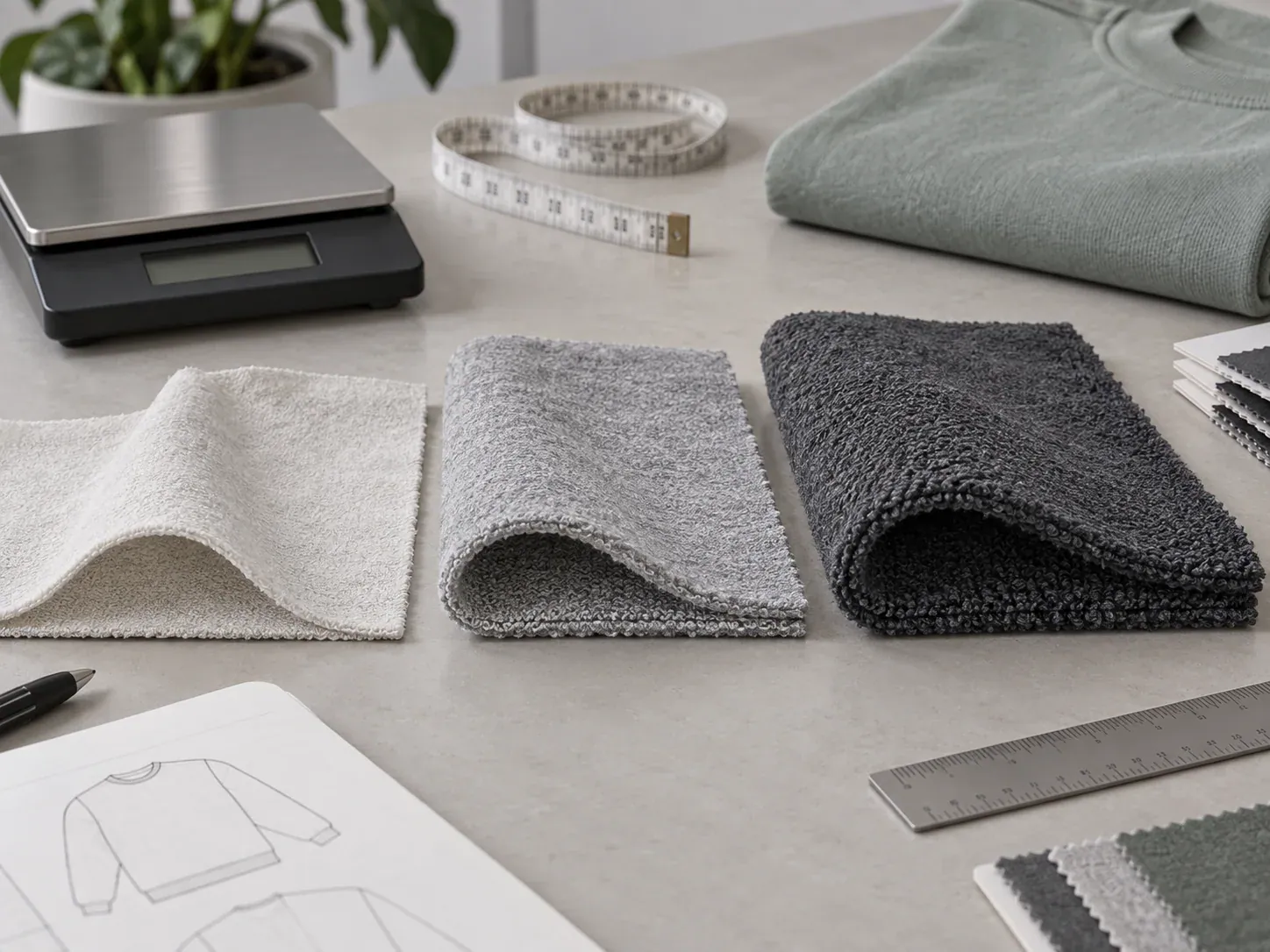
French terry, sweatshirt fleece and terry cloth are often grouped together because they all use looped or raised surfaces. They are not interchangeable. French terry is normally a knit with one-sided unbrushed loops. Brushed fleece is a knit whose reverse has been mechanically raised into a soft nap. Traditional towel terry is commonly a woven pile construction designed for absorbency, often with loops on both sides.
| Property | French terry | Brushed sweatshirt fleece | Woven terry cloth |
|---|---|---|---|
| Main construction | Knit loopback | Knit with brushed or raised reverse | Woven pile fabric |
| Reverse surface | Uncut loops | Fuzzy or napped surface | Loops on one or both faces |
| Typical feel | Soft, textured, less lofty | Plush, warm and insulating | Cushioned and absorbent |
| Stretch | Usually has knit give; confirm direction | Knit give; confirm recovery | Usually limited unless blended or specially built |
| Common apparel use | Hoodies, joggers, crews, shorts and light layers | Cold-weather hoodies and sweatshirts | Towels, robes, spa and beach products |
| Main buyer question | Is the loopback hand and weight right? | Is warmth worth the added bulk? | Is absorbency more important than stretch? |
The French terry comparison from KBM Fabrics describes the practical difference as loops versus brushing on the reverse. For towel terry, the Colortofabric comparison highlights the knit-versus-woven distinction and the very different end uses.
Do not select a material by the word “fleece” alone. Some suppliers use sweatshirt fleece as a broad commercial term for loopback fabric before brushing. Put the required reverse finish in the tech pack, request a physical swatch and photograph both sides of the approved reference.
Is French Terry Fabric Stretchy?
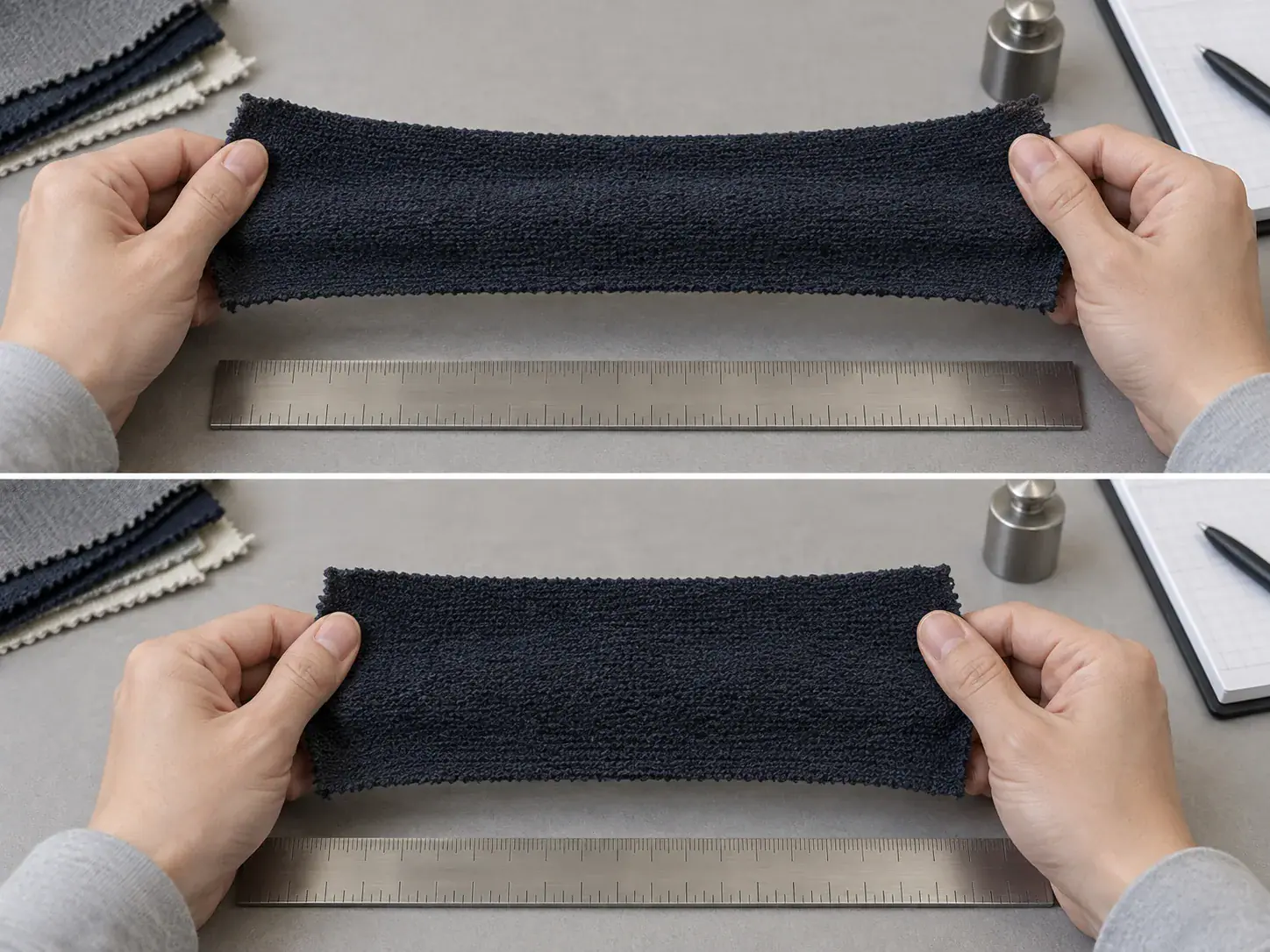
French terry fabric usually has some natural mechanical give because it is knitted, but it is not automatically a stretch fabric. The amount of movement depends on stitch structure, yarn, elastane content, finishing and direction. A cotton French terry can have comfortable crosswise give while remaining relatively stable in length. A stretch blend can move more, but it can also grow or lose shape if recovery is not controlled.
Measure the fabric in the direction used by the pattern. A buyer should record the test gauge, extension, hold time, release time and recovery interval. If the product is close-fitting, test the finished garment as well as the flat swatch. The hood, pocket, waistband, cuffs and seam direction can change the fit even when the fabric result looks acceptable on a table.
| Stretch field | What to record | Buyer decision |
|---|---|---|
| Direction | Coursewise, crosswise, lengthwise or both | Confirms how the fabric should be laid and cut |
| Extension | Percentage at an agreed load or gauge | Shows available movement without guessing from hand feel |
| Recovery | Shape return after release and rest | Indicates whether the garment can keep its intended fit |
| Growth | Permanent change after repeated extension | Flags knee, seat, elbow or waistband bagging |
| Garment check | Fit, seam torque, coverage and comfort | Connects flat-fabric data to the real product |
For a relaxed crewneck, moderate mechanical give may be enough. For fitted joggers, stretch shorts or activewear panels, specify the movement and recovery target instead of asking for a generic “stretchy French terry.”
French Terry GSM, Weight and Usable Width

GSM means grams per square meter. It is the finished fabric weight, not a direct measure of softness or quality. French terry can be made in lighter spring weights, midweight sweatshirt qualities and heavier structured versions. The same GSM can feel different when yarn size, loop depth, fiber blend and finishing change.
Use the intended garment and climate to choose a starting range. The ranges below are planning bands, not universal standards. The supplier should confirm the actual finished sample and tolerance.
| Planning band | Approximate finished GSM | Typical product direction |
|---|---|---|
| Lightweight | 180 to 240 GSM | Light crews, shorts, layering and warm-weather lounge |
| Midweight | 250 to 350 GSM | Everyday hoodies, joggers and transitional sweatshirts |
| Heavyweight | 360 to 450+ GSM | Structured streetwear, premium crews and colder layers |
Usable width matters just as much as GSM. Record whether the supplier quotes open width or tubular width, whether the selvage is included, how much edge is excluded and whether the roll should relax before cutting. A width loss of only a few centimeters can change marker efficiency and consumption on wide-leg joggers or oversized hoodies.
Ask for the finished GSM after the intended dyeing or washing route. Pre-finish weight, lab-dip weight and production weight are not automatically equivalent. Keep the tolerance in the purchase specification and recheck the bulk lot.
Is French Terry Breathable and Warm?
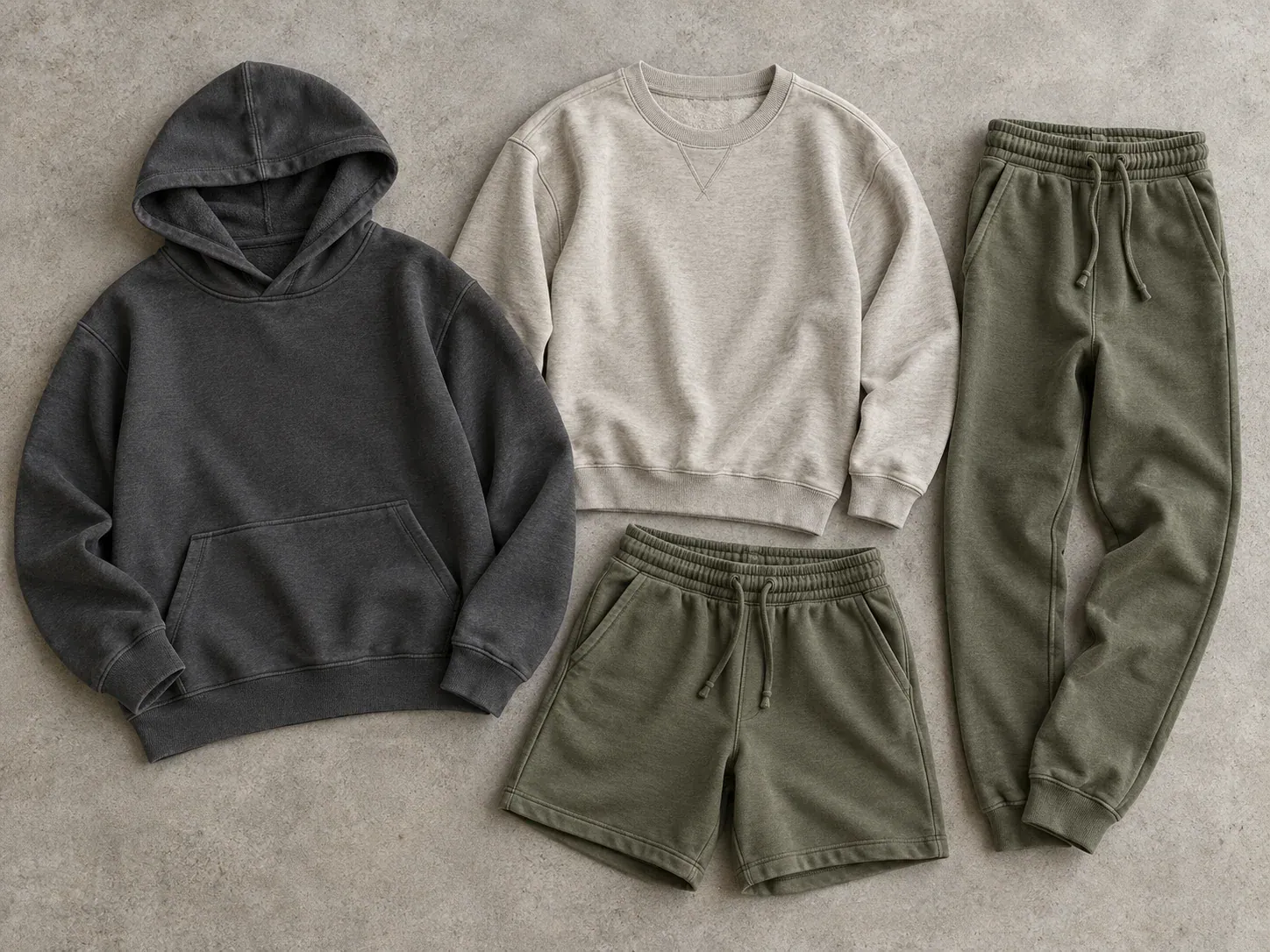
French terry is often more breathable and less insulating than brushed fleece because the reverse loops are left open instead of being raised into a dense nap. That does not mean every French terry is cool or airy. GSM, cover factor, fiber content, loop density, finish, garment ease and lining all affect comfort.
The loopback surface can hold a small amount of air and can absorb some moisture, while the smoother face gives a cleaner appearance. In a loose crewneck or jogger, that balance can work well for transitional weather, travel and moderate activity. In a close-fitting garment with a lining, the overall product may feel much warmer than the flat fabric suggests.
Separate three questions when writing a product brief:
- Does the material allow enough air or vapor movement for the garment?
- Does the surface move liquid moisture away from the skin as required?
- Does the finished garment feel comfortable during the intended activity?
Do not turn the construction name into an unsupported “breathable” or “moisture-wicking” claim. Use the relevant lab method or a controlled wear trial when the claim matters. The AATCC standard laundering and testing resources can help define repeatable care conditions, but the selected method and acceptance criteria should match the product.
French Terry Applications: Hoodies, Joggers and Activewear

French terry is commonly selected for apparel that needs a soft sweatshirt hand without the full bulk of a brushed interior. Typical applications include pullovers, zip hoodies, crewnecks, joggers, sweatpants, shorts, lounge sets, casual jackets and lightweight activewear.
For a hoodie, check the combination of body, hood, cuff and pocket construction. A midweight French terry can give the garment structure while remaining easier to layer than a very lofty fleece. For joggers and sweatpants, focus on knee growth, waistband recovery, pocket stretch, seam stability and leg drape. The DTS Activewear sweatpants range is a useful reference for the product category, but the fabric choice still needs a swatch and prototype review.
For activewear or athleisure, French terry can work in warm-up layers, travel sets, relaxed training pieces and panels where movement and texture are useful. It is not automatically the right choice for high-sweat compression garments. The weight, recovery, drying behavior and garment ventilation should match the activity.
For decoration, approve a print or embroidery strike-off on the actual face. A smooth face may print cleanly, while the reverse loop can affect backing, seam bulk or thread tension. If the garment is garment-dyed or washed, test decoration after the same route.
Care, Shrinkage, Pilling and Shape
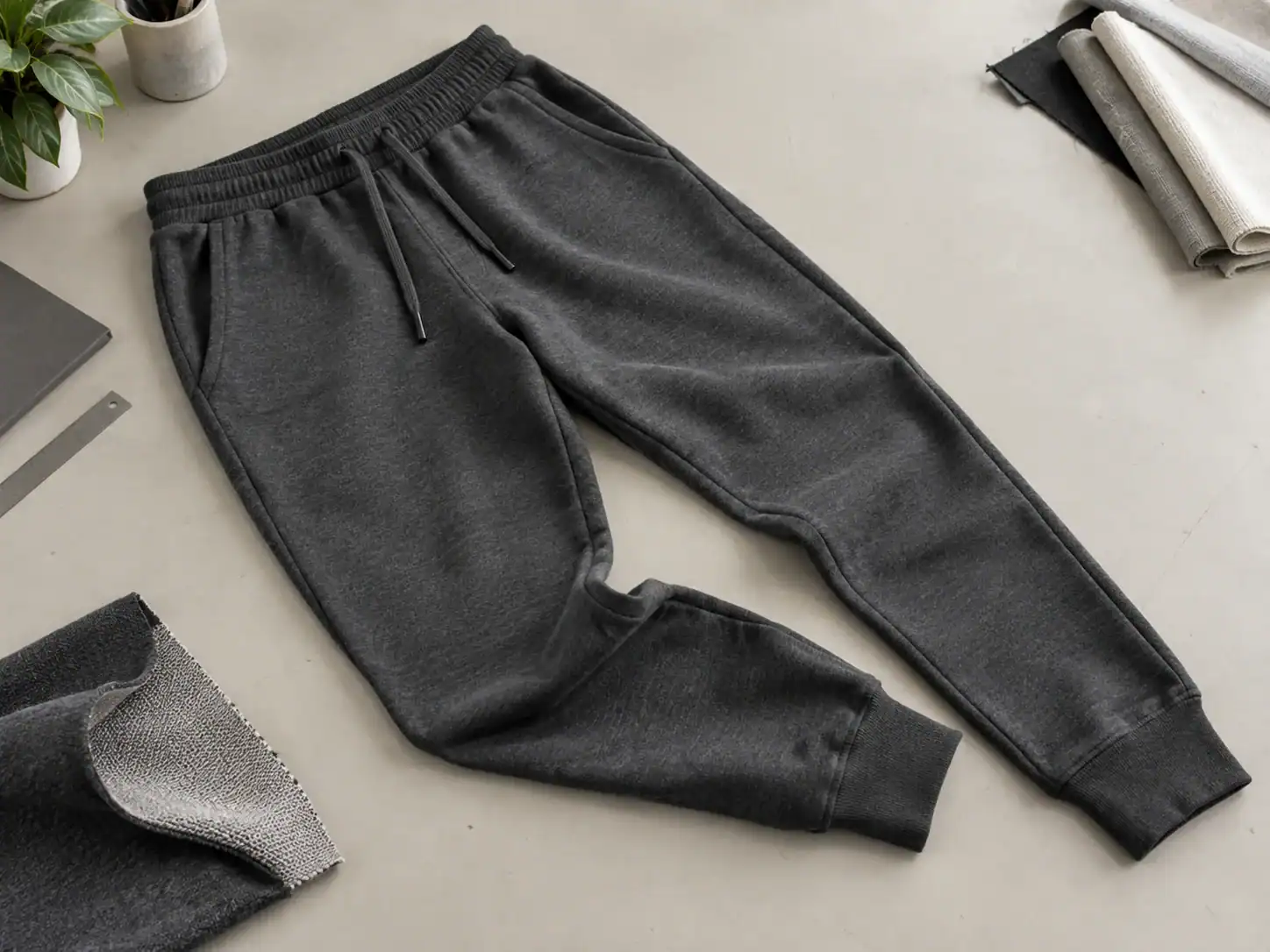
Care performance depends on fiber blend, yarn, construction, dye route, finish and the final garment. Cotton-heavy French terry may shrink or relax more than a polyester-rich blend. Elastane can be sensitive to repeated heat. A garment wash may soften the hand and reduce later dimensional change, but it is still a process that needs to be specified and checked.
Before approving care instructions, check:
- length, width, skew and spirality after the agreed wash and dry route;
- waistband, cuff and hem recovery on the finished garment;
- face and loopback appearance after repeated laundering;
- colorfastness to washing, perspiration and rubbing where relevant;
- pilling, fuzzing, snagging and abrasion at high-contact areas.
Pilling is not guaranteed by the words French terry, cotton or premium. It is influenced by fiber length, yarn twist, loose surface fibers, friction, washing and finishing. The loopback can also catch on rough hook-and-loop or sharp hardware. Keep the reverse clear of avoidable friction during sampling and packing.
Use the actual care route when judging shrinkage. If a lab method is required, AATCC TM135 is a named method for dimensional change after home laundering. The buyer and supplier should still agree the specimen, wash settings, drying route and acceptance limit before testing.
How to Specify French Terry in a Tech Pack

An effective French terry brief converts the fabric name into measurable fields. Start with the garment, not with a vague request for “soft sweatshirt fabric.” Include a reference image or swatch, then write the requirements that affect fit, hand, appearance and production.
What to Test Before Bulk Approval
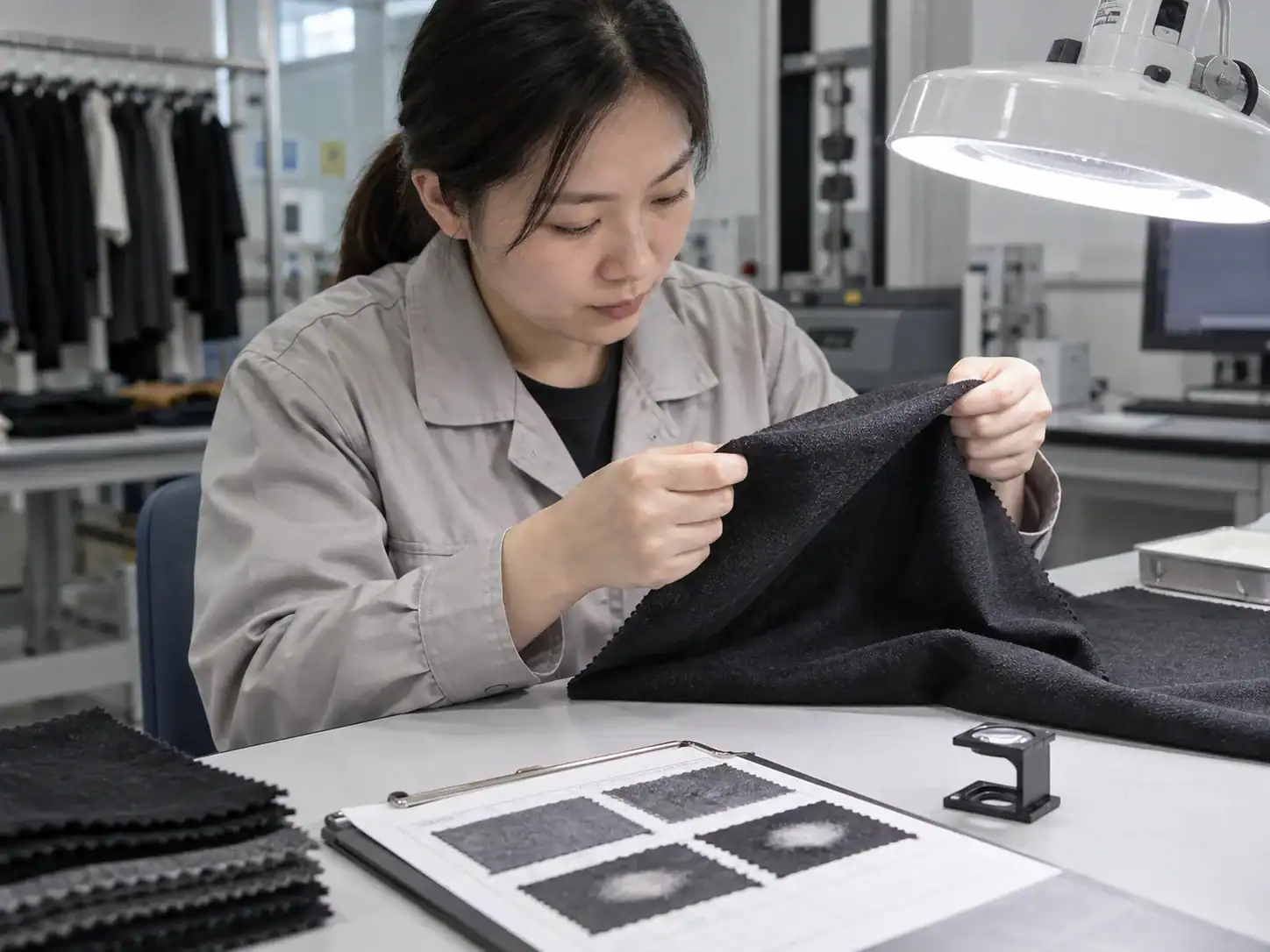
| Tech-pack field | Useful instruction | Evidence to request |
|---|---|---|
| End use and fit | Hoodie, jogger, short, crewneck or warm-up layer; relaxed or fitted | Pattern, reference garment and intended climate |
| Fiber content | Exact percentages and generic fiber names | Technical sheet and labeling review |
| Construction | French terry loopback, knit type and any gauge information | Swatch with face and reverse identified |
| Finished weight | Target GSM and tolerance after finishing | Measured sample or lot report |
| Usable width | Open or tubular width excluding unusable edge | Roll inspection record |
| Stretch and recovery | Direction, extension, recovery and growth method | Flat test plus garment fit review |
| Surface and finish | Unbrushed loops, garment wash, peached face, color or coating | Approved hand-feel and finish swatch |
| Care and tests | Wash, dry, dimensional change, pilling, abrasion and colorfastness needs | Test plan, report and retained sample |
Write “unbrushed loopback reverse” if that is the product requirement. If a brushed interior is acceptable, say so separately. This small wording choice prevents a supplier from quoting a visually similar but materially different fleece.
For help organizing the garment brief, see the fabric and trim library and tech pack customization service. A reference swatch, drawing, target quantity and intended care route will produce a more useful quote than a fabric name alone.
The right test plan follows the garment’s failure points. A relaxed crewneck may need a smaller plan than fitted joggers, but every bulk order should confirm that the supplied fabric matches the approved material. Do not use a test name as a substitute for an actual result.
A Practical French Terry Sampling Workflow

| Pre-bulk check | Evidence | Decision it supports |
|---|---|---|
| Fiber and construction | Composition review, swatch and technical sheet | Confirms identity and labeling direction |
| GSM, width and thickness | Measured lot sample with tolerance | Confirms coverage, yield and quotation assumptions |
| Stretch, recovery and growth | Agreed flat-fabric method plus prototype observation | Confirms fit and shape retention |
| Dimensional change | Wash and dry result for the intended care route | Confirms pattern stability and care instructions |
| Pilling, abrasion and snag risk | Agreed rating or rub result with inspection notes | Checks high-contact areas and surface life |
| Colorfastness and shade | Lab dip, approved standard and wash or perspiration check | Protects repeat-order consistency |
| Final garment review | Retained sample, measurement chart and approval comments | Connects fabric performance to the sewn product |
If the product will carry a performance statement, add the specific test or controlled wear evidence needed for that statement. Check face and reverse separately. A French terry fabric can pass a flat swatch review and still create trouble at a pocket, waistband, hem, printed panel or high-friction seam.
- Define the product. State the garment type, fit, season, activity, target customer and expected care route.
- Define the material. Record fiber preference, loopback construction, target GSM, tolerance, width, stretch, recovery and finish.
- Request comparable swatches. Ask for the face and reverse to be identified, with composition, weight, width and available colors.
- Make the first prototype. Check hand, drape, pocket opening, waistband, rib match, seam behavior and decoration on the real pattern.
- Wash and measure. Use the intended care route and record dimensional change, color, pilling, surface and shape.
- Approve the reference. Keep the signed or documented swatch, test record, color standard, measurement chart and revision notes together.
- Lock the bulk controls. Link the approved reference to the purchase order, inspection plan, packing route and retained sample.
The DTS sampling and prototyping workflow can be used when a brand needs help moving from an idea, tech pack or reference garment to a reviewable sample. The goal is not to make a material label sound precise. The goal is to make the approved product repeatable.
Common French Terry Sourcing Mistakes

- Treating French terry as a fiber instead of a knit construction.
- Accepting a brushed fleece quote when the design requires an unbrushed loopback reverse.
- Comparing two GSM values taken before different dyeing, washing or relaxation conditions.
- Assuming all French terry has the same stretch, recovery or warmth.
- Approving a flat swatch without checking the waistband, pocket, hood, cuff and seam on the garment.
- Calling the fabric breathable, moisture-wicking, anti-pilling or pre-shrunk without an agreed test or evidence.
- Ignoring usable width and edge loss when calculating consumption and cost.
- Approving one color and assuming a light, dark or heather color will behave identically.
- Sending a bulk order without keeping the approved swatch, lot tolerance and measurement record.
These mistakes are avoidable when the construction, measurement, test and approval records stay connected to the actual garment.
Frequently Asked Questions
Choose French terry by matching the loopback construction to the garment’s real use. Confirm the fiber blend, finished GSM, usable width, face and reverse, stretch, recovery, warmth, care route and surface durability. Then check the material in the actual pattern. A swatch can tell you what the fabric is; the prototype tells you whether it is right for the product.
How to Choose French Terry Before You Approve the Garment
French terry fabric is a knitted loopback fabric with a relatively smooth face and unbrushed loops on the reverse. It is commonly used for hoodies, sweatshirts, joggers, shorts and other casual or transitional apparel.
No. French terry keeps uncut loops on the reverse, while brushed sweatshirt fleece has a raised fuzzy nap. French terry is usually less lofty and more breathable, but the actual weight, warmth and hand depend on the fabric specification.
French terry usually has mechanical give because it is knitted, but it is not automatically a stretch fabric. Stretch and recovery depend on the stitch structure, yarn, elastane content, finish and test direction.
French terry is normally a knit with one-sided loopback used for apparel. Traditional terry cloth is commonly a woven pile construction designed for absorbency in towels, robes and spa products. Their stretch, weight and end uses are different.
French terry is available in a broad range. Lightweight qualities may be around 180 to 240 GSM, midweight qualities around 250 to 350 GSM and heavyweight versions above that. Treat these as planning bands and confirm the finished lot and tolerance.
It can be a strong choice for hoodies, joggers and sweatshirts when the weight, stretch, recovery, warmth, surface and care route match the design. Approve a physical swatch and sewn prototype before bulk production.
Cotton-heavy French terry can change dimensions if the care route is not controlled, and pilling depends on fiber, yarn, surface, friction and laundering. Test the actual fabric and garment using the agreed wash, dimensional and surface criteria.
Include the garment type, fit, fiber preference, loopback construction, finished GSM and tolerance, usable width, stretch and recovery needs, finish, color, quantity, care route, packaging and required tests. A reference swatch, drawing or tech pack will make the review more precise.
French Terry Quote Checklist
For a hoodie or crewneck, decide whether the design needs a clean midweight layer or a structured heavyweight hand. For joggers and sweatpants, prioritize recovery at the waistband, knees and seat. For activewear or travel sets, check movement, drying behavior and the effect of lining or layered panels.
Before requesting a French terry fabric or custom garment quote, prepare these fields:
- garment type, fit, size range and target market;
- fiber content preference and whether recycled or certified inputs are required;
- unbrushed loopback or brushed reverse requirement;
- finished GSM, tolerance, usable width and whether the fabric is open or tubular;
- stretch direction, recovery target and any growth limit;
- color, lab-dip standard, garment wash and decoration method;
- target quantity, sample quantity, packaging and delivery window;
- care instructions, labeling needs and tests required before bulk approval.
Send your reference swatch, drawing or tech pack through the DTS Activewear contact page to request a review. The more clearly the material and garment risks are described, the easier it is to compare samples and approve the right construction.