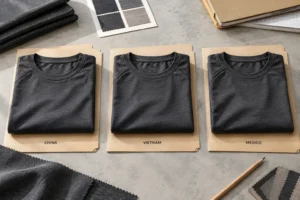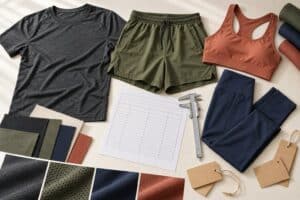
Jersey fabric is a weft-knit fabric made from interlocking loops. The word describes the knit construction, not one fixed fiber. A light cotton jersey, a polyester performance jersey and a cotton-spandex jersey can look related on a swatch while behaving very differently in stretch, recovery, drying, shrinkage and cost.
For an apparel buyer, “jersey” is only the starting point. Before sampling, record the structure, fiber content, finished GSM, usable width, stretch direction, recovery, finish, color standard and intended garment. This guide explains what jersey fabric is, how single jersey differs from interlock, and which checks help prevent a fabric mismatch in a custom T-shirt, activewear or private-label program.
What Is Jersey Fabric?
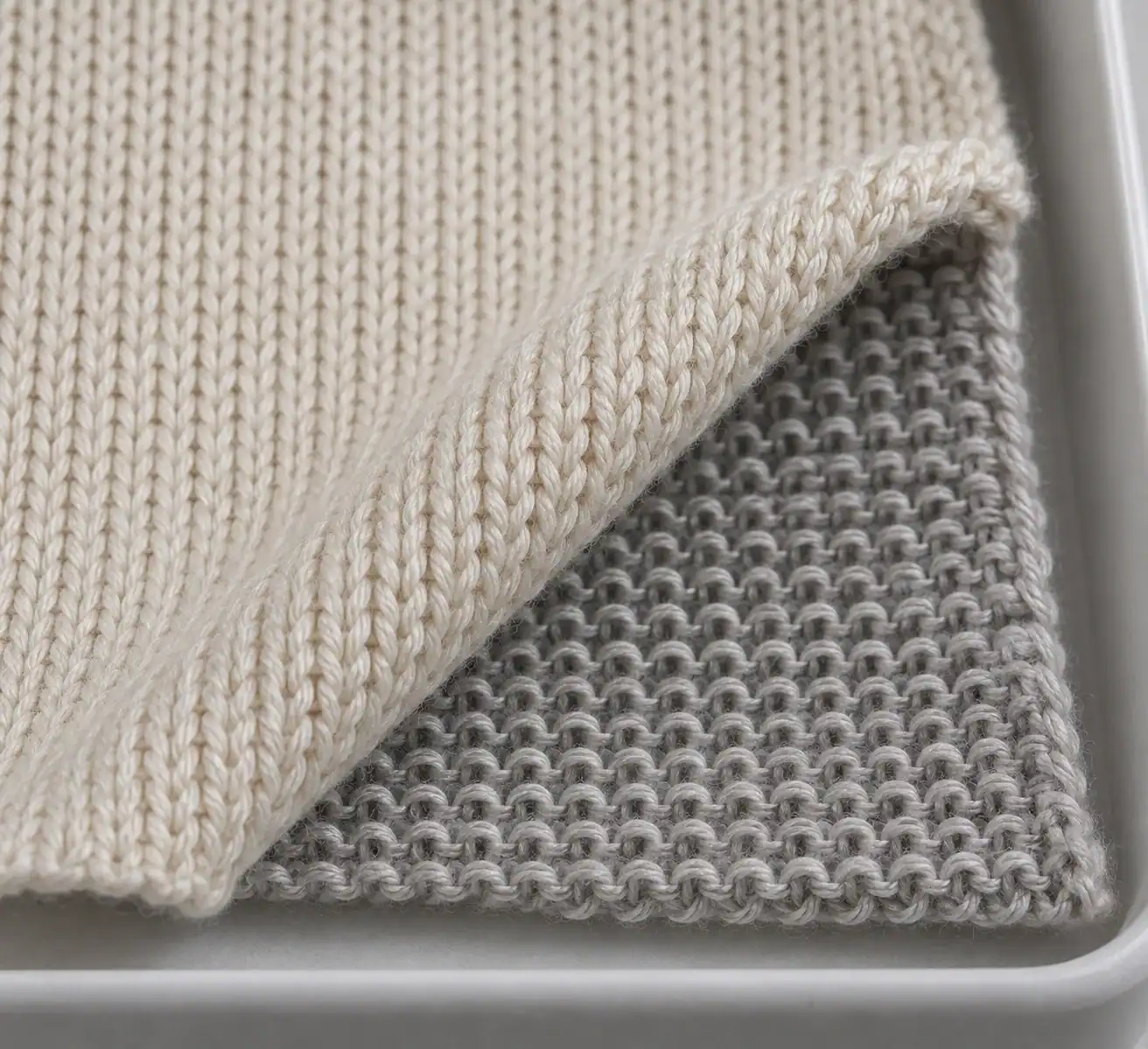
Jersey fabric is a plain weft-knit fabric made with a single set of knitting needles. The loops are pulled from the face toward the back, so the two sides normally look different. CottonWorks describes jersey as a plain knit with a face made from visible wales and a back made from rows of loop crowns. That construction gives jersey its familiar soft hand, natural crosswise give and tendency to curl or run when cut.
The name does not tell you whether the yarn is cotton, polyester, nylon, rayon, wool or a blend. It also does not tell you whether elastane is present. A supplier may call several different fabrics “jersey” because the loop structure is similar. The approved swatch and technical specification must define the actual material.
| Buyer field | What it tells you | Why it matters before sampling |
|---|---|---|
| Knit structure | Single jersey, double knit, interlock, jacquard or another variation | Controls stability, face and reverse, curl and drape |
| Fiber content | Cotton, polyester, nylon, rayon, elastane or a blend | Changes hand feel, care, drying, labeling and cost |
| Finished GSM | Mass per square meter after finishing | Influences coverage, opacity, season and fabric consumption |
| Stretch and recovery | Movement and shape return in each direction | Affects fit, comfort, neckline stability and bagging risk |
| Usable width | Cuttable width after finishing and edge loss | Changes marker efficiency and the quotation |
| Finish | Peaching, brushing, garment wash, softener or no special finish | Changes surface feel, appearance and later testing needs |
Jersey is therefore a construction family rather than a complete product description. If a quote says only “jersey fabric,” ask for the fiber percentage, structure, finished weight and physical reference before comparing prices. The CottonWorks jersey glossary is a useful construction reference, but the supplier’s approved sample still controls the production decision.
How Jersey Knit Structure Works

In a single jersey, one needle bed forms a continuous series of loops. The technical face shows vertical columns, often called wales. The reverse shows the rounded part of the loops, or courses. Because the yarn travels through loops rather than straight woven intersections, the fabric can extend more across the width than along the length.
This structure explains several behaviors that matter in production:
- the cut edge may curl toward the face or reverse;
- the fabric can run if a loop is broken or cut;
- width stretch is often greater than length stretch;
- a loose knit can grow during handling or relax after washing;
- yarn type, stitch density and finishing can change the result without changing the word “jersey.”
The face and reverse should be marked on the approved swatch. It is easy for a cutting room or decoration team to turn a light jersey the wrong way, especially when both sides have a similar color. For printed T-shirts, check the print result on the actual face. For reversible or double-sided designs, specify the required appearance on both sides instead of relying on a verbal description.
When reviewing a roll, inspect the wale direction, open width, edge curl and visible barre. A small swatch can look even while the roll has streaks, needle lines or tension changes. Ask how the fabric was relaxed before width and GSM were measured, because the measurement state affects the quote and the marker plan.
Single Jersey vs Double Jersey vs Interlock
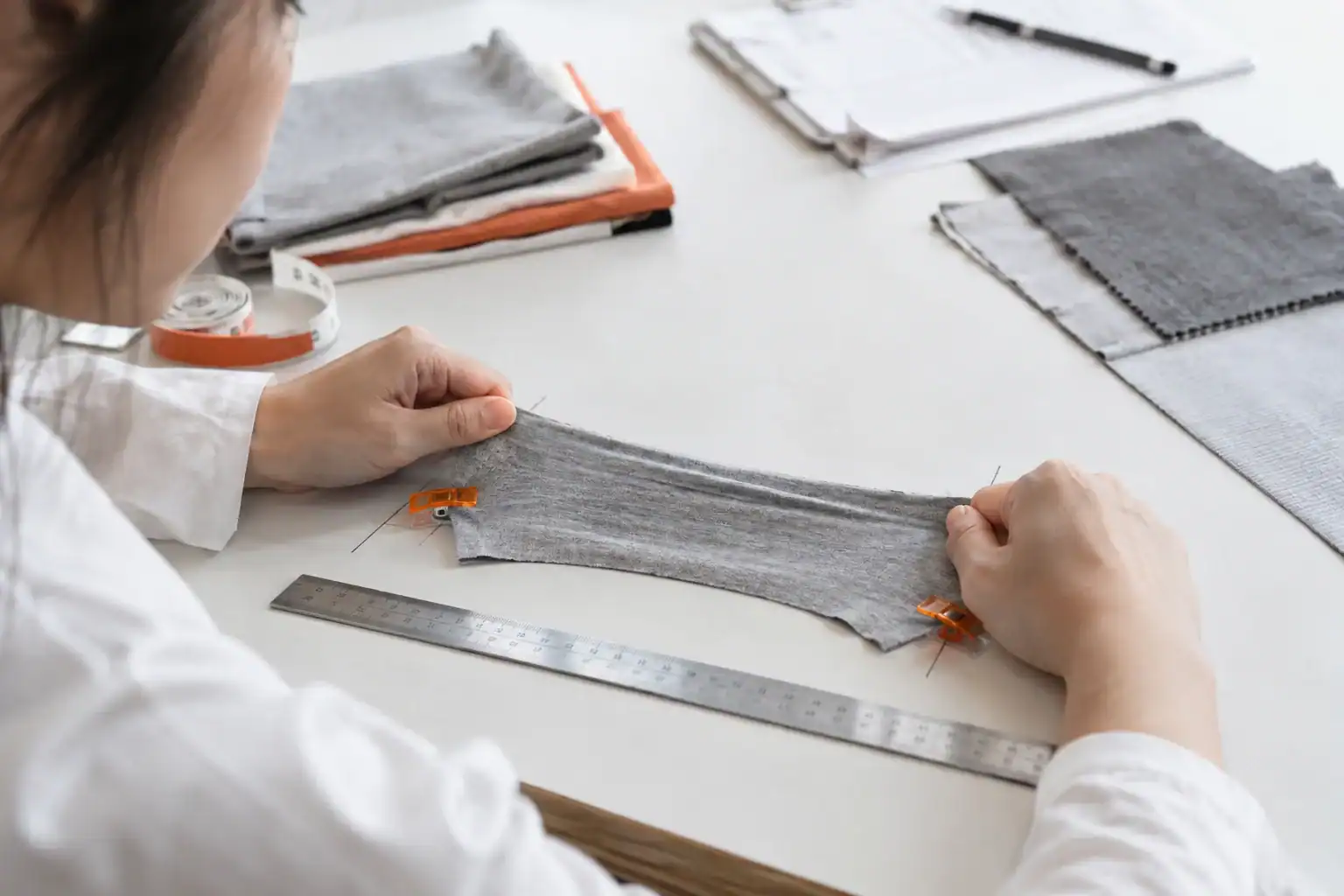
The phrase “double jersey” is used differently across suppliers, so the structure should be stated in the tech pack. Interlock is a double-knit construction made with two needle beds. It normally has a smoother appearance on both sides, more body and better dimensional stability than a light single jersey. It is not simply a heavier version of the same fabric.
| Construction | Face and reverse | Hand and stability | Common product direction | Buyer caution |
|---|---|---|---|---|
| Single jersey | Noticeably different sides | Soft, flexible and often drapey | T-shirts, base layers, light dresses and casual tops | Curling, opacity and growth need checking |
| Interlock | Similar smooth sides | Smoother, thicker and more stable | Polos, premium tees, babywear and structured activewear | Can feel warmer and consume more fabric |
| Rib knit | Ribs visible on the surface | High crosswise stretch and recovery when specified well | Collars, cuffs, waistbands and close-fit panels | Rib is not a substitute for single jersey |
| Jacquard jersey | Pattern built into the knit | Depends on yarn and pattern density | Patterned tops, fashion panels and branded details | Check reverse floats, snag risk and color repeat |
The CottonWorks guide to single and double knits shows why needle arrangement changes the fabric’s face, stability and edge behavior. Use that distinction when a buyer asks for a “premium jersey” or “thick jersey.” Those descriptions are not precise enough for a production quote.
For a soft, drapey T-shirt, single jersey may be the right starting point. For a cleaner two-sided surface or a more stable polo, interlock may be safer. A fitted garment may need a stretch jersey with elastane, while a relaxed garment may use a stable cotton-rich construction. The pattern, fit and finishing route decide the final choice together.
Is Jersey Fabric Stretchy?
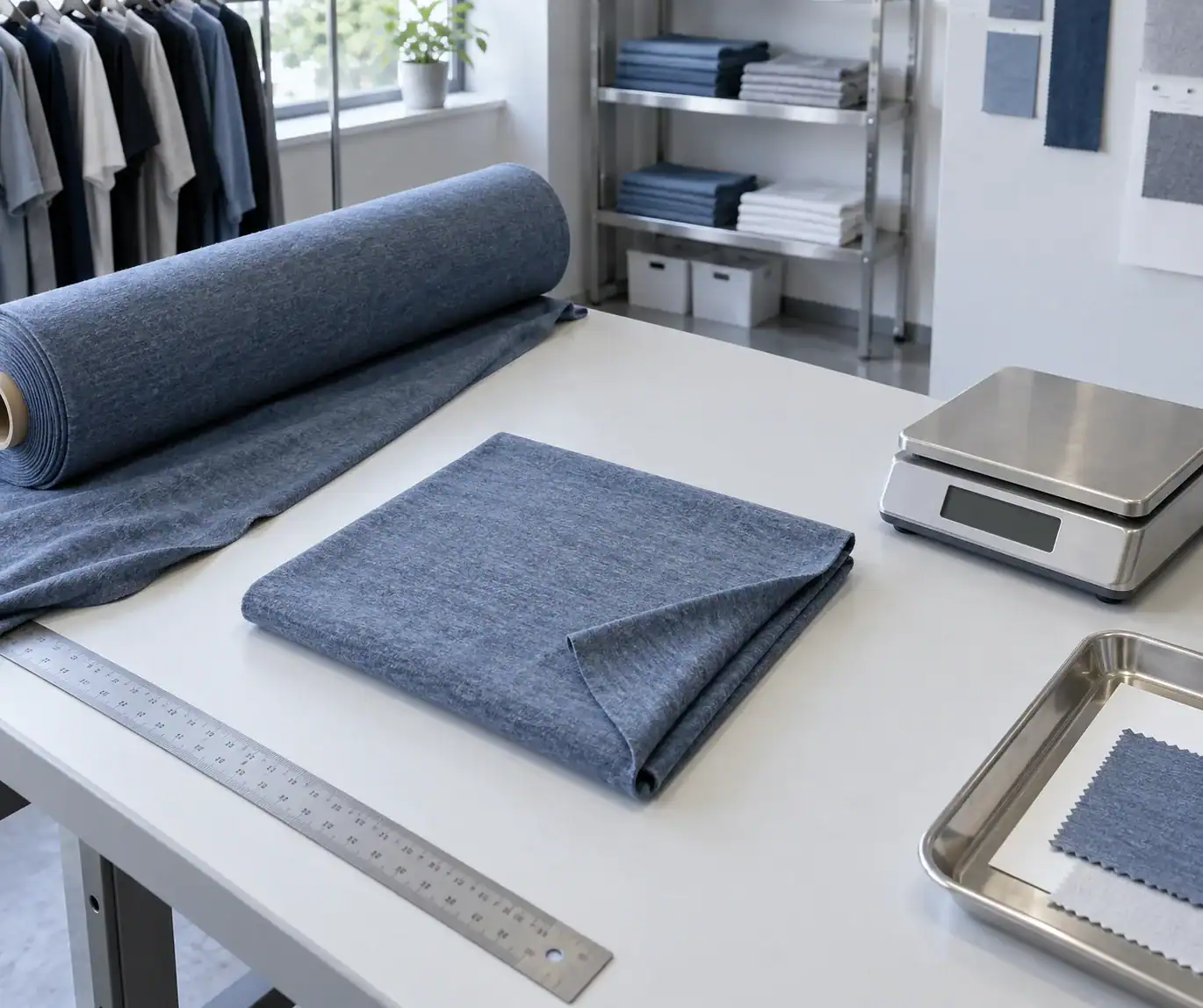
Jersey fabric usually has mechanical give because it is knitted, but it is not automatically a stretch fabric. A 100% cotton single jersey may stretch comfortably across the width and still have limited recovery. Adding elastane can improve extension and return, but the percentage, yarn, stitch density, fabric weight and finishing route all matter.
Measure the direction used by the pattern. A crosswise result does not predict lengthwise behavior, and a flat swatch does not fully predict the fit of a neckline, waistband or close-fitting panel.
| Stretch field | What to record | Buyer decision |
|---|---|---|
| Direction | Coursewise, walewise, crosswise or lengthwise | Confirms how the fabric should be laid and cut |
| Extension | Percentage at an agreed load or gauge | Shows available movement without relying on hand feel |
| Recovery | Return after release and a defined rest period | Indicates whether the garment can keep its intended fit |
| Growth | Permanent change after repeated extension | Flags bagging at a neck, elbow, knee or waistband |
| Garment check | Coverage, seam torque, comfort and fit | Connects flat-fabric data to the real product |
For an oversized tee, moderate mechanical give may be enough. For leggings, fitted tops or performance panels, specify stretch and recovery targets with the test method. Avoid a request that says only “soft and stretchy.” It gives the supplier too much room to choose a fabric that feels right in the hand but fails in wear.
Jersey Fabric GSM, Weight and Usable Width
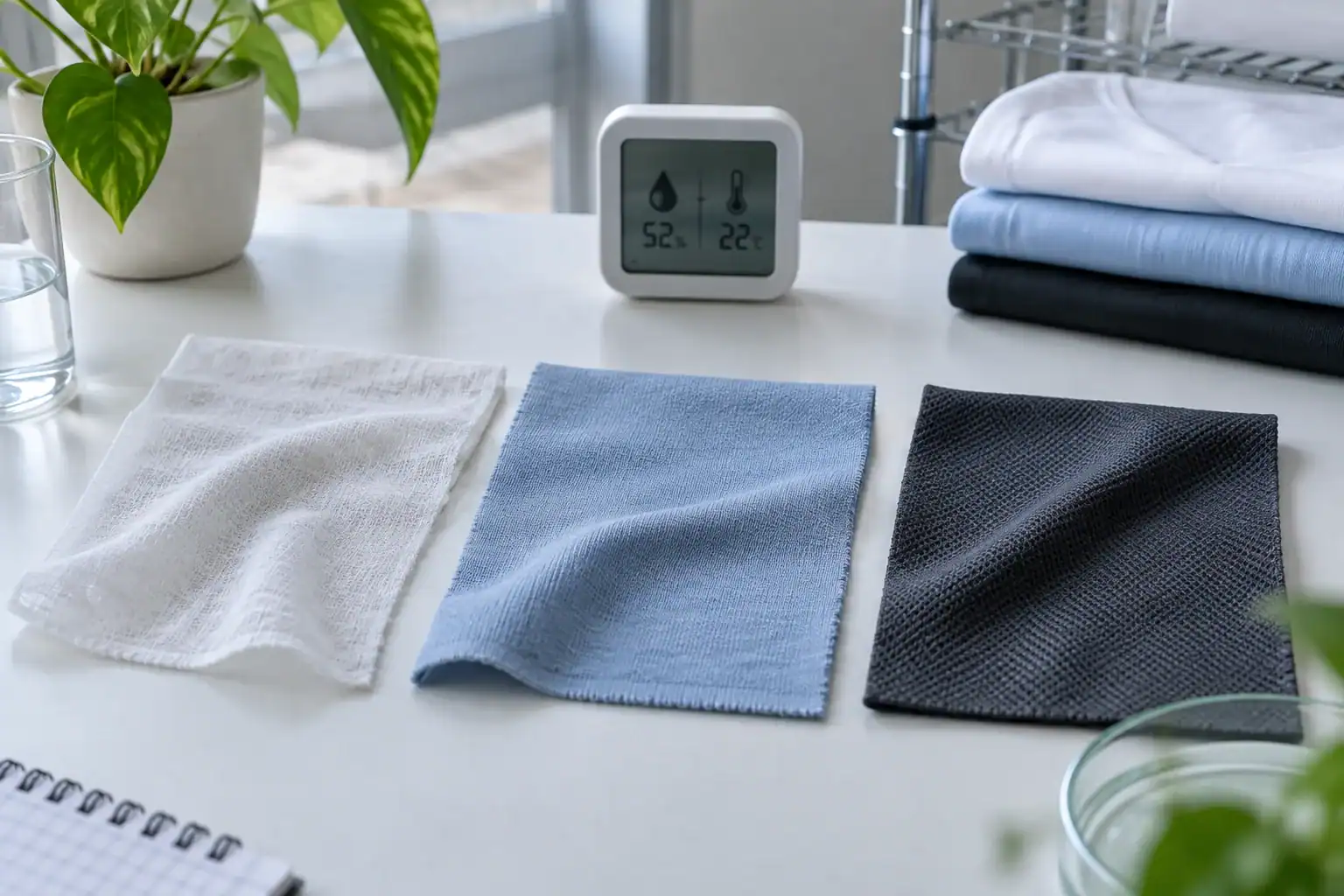
GSM means grams per square meter. It helps buyers compare fabric weight, but it does not measure softness, opacity, recovery or quality by itself. A compact polyester jersey and a loose cotton jersey can have the same GSM and produce different garments.
The ranges below are planning bands, not universal standards. Confirm the finished result after the intended dyeing, washing or relaxing route.
| Planning band | Approximate finished GSM | Typical product direction |
|---|---|---|
| Lightweight | 100 to 150 GSM | Summer tees, lining-like layers and light base garments |
| Midweight | 150 to 220 GSM | Everyday T-shirts, tops and relaxed activewear |
| Structured | 220 to 320+ GSM | Heavy tees, premium tops, interlock-like bodies and fashion layers |
CottonWorks fabric examples show that real jersey products can span several weights, including stretch and heather qualities. The buyer should treat a GSM number as a controlled field with a tolerance, not as a marketing adjective.
Usable width matters just as much. Record whether the supplier quotes open width or tubular width, whether the selvage is included, how much edge is excluded and how long the roll should relax before cutting. A small width difference can change marker efficiency on oversized tees, long sleeves and wide panels.
Ask for finished GSM after the intended process. A greige weight, lab-dip weight and bulk production weight are not automatically the same. Keep the tolerance in the purchase specification and recheck the production lot before cutting.
Is Jersey Fabric Breathable and Moisture Friendly?

Jersey can feel breathable and comfortable because it is a flexible knit, but “breathable” is not a fixed property of every jersey. Air permeability depends on cover, stitch density, yarn, fiber, finish and garment construction. A loose cotton jersey, a dense interlock and a treated polyester performance jersey can all be sold as jersey while managing heat and moisture differently.
Separate three questions in the product brief:
- Does air move through the material at the level required for the garment?
- Does the surface transport or absorb liquid moisture in the intended way?
- Does the finished garment feel comfortable during the actual activity?
| Buyer need | Fabric or garment factors to review | Verification route |
|---|---|---|
| Airflow | Cover, stitch density, mesh panels, lining and fit ease | Air permeability test or controlled wear trial |
| Sweat handling | Fiber, yarn, finish, surface contact and drying route | Moisture-management method matched to the claim |
| Summer comfort | Finished GSM, color, fit, sleeve opening and seam placement | Prototype review in the intended size range |
| Layering | Opacity, drape, recovery and friction against the next layer | Wear test with the actual garment combination |
The CottonWorks knit collection describes jersey as soft and breathable, while also distinguishing it from more stable interlock. That is useful direction, not a test result for every supplier’s fabric. If a product page will claim moisture management or quick drying, agree on the method and acceptance level before bulk approval.
Jersey Fabric Applications: T-Shirts, Activewear and Dresses
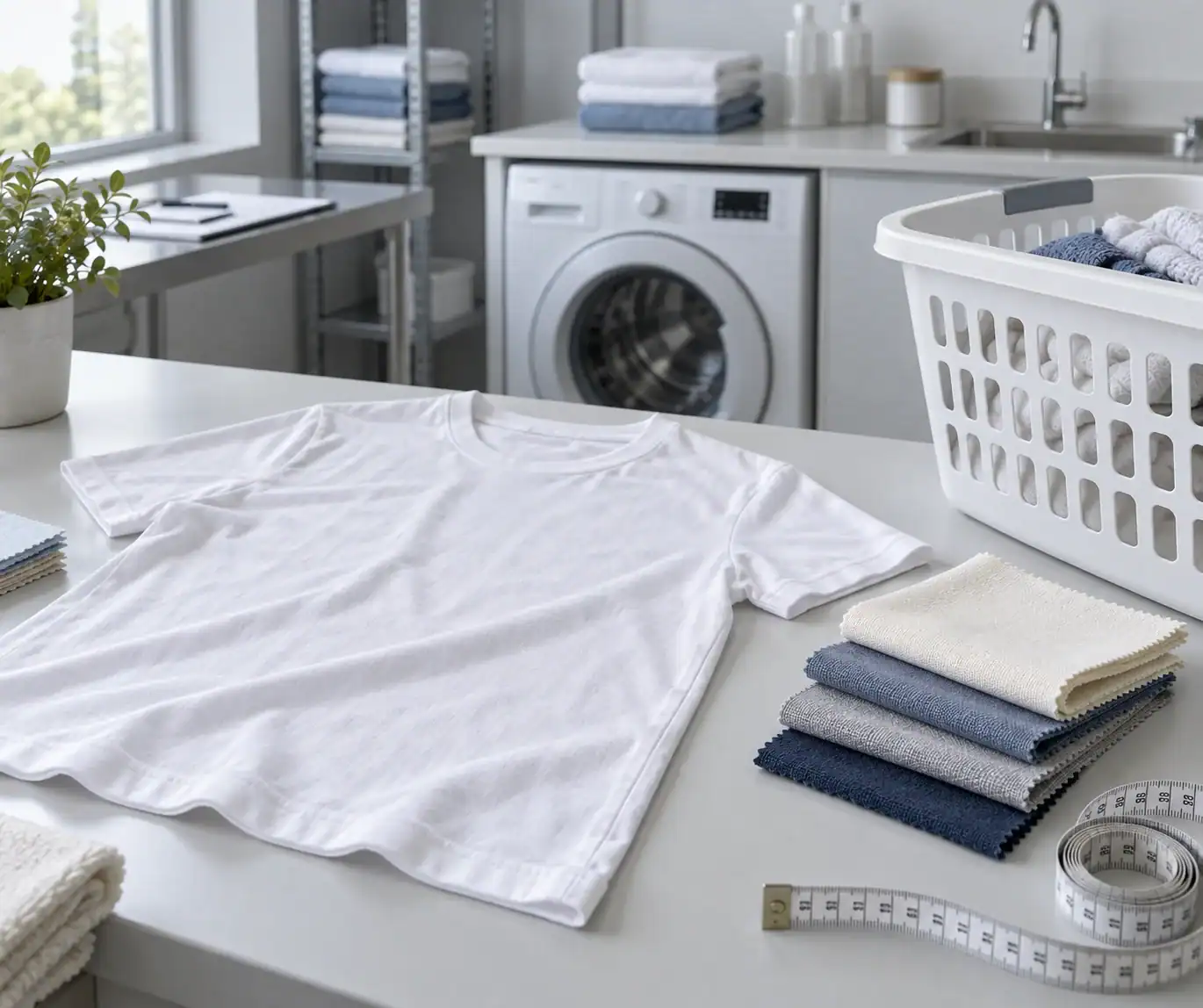
Jersey is widely used because it can combine a soft hand with movement. The right version depends on the garment rather than the name alone.
| Garment direction | Useful starting construction | What to check before approval |
|---|---|---|
| Everyday T-shirt | Cotton or cotton-blend single jersey | Opacity, neck recovery, shrinkage, print surface and twist |
| Quick-dry gym top | Polyester or nylon performance jersey | Drying behavior, colorfastness, pilling, odor strategy and seam comfort |
| Stretch close-fit top | Jersey with a controlled elastane percentage | Extension, recovery, cover under tension and wash stability |
| Dress or skirt | Drapey jersey or a stable double knit | Growth, seam weight, lining friction and hem behavior |
| Polo or polished basic | Interlock or another stable double knit | Two-sided appearance, collar support and finished weight |
For T-shirts, the DTS Activewear T-shirt category is a natural product bridge. For training tops, compare the fabric against the actual movement, decoration and wash route rather than selecting the lightest available option. A thin jersey may feel pleasant on a table and become transparent or distorted under tension.
For activewear, check fiber and structure together. Polyester jersey can dry quickly when engineered for that purpose, while cotton can feel comfortable but hold more water after heavy sweating. Nylon jerseys may offer a different hand and abrasion profile. These are material tendencies, not promises. The approved fabric and test record should support the final claim.
Jersey Fabric Care, Shrinkage, Spirality and Pilling

Care behavior depends on fiber blend, yarn, construction, dye route, finishing and the garment pattern. Cotton-rich jerseys may change dimensions when heat and moisture are not controlled. Elastane can lose performance when the care route is too hot. A softener or peaching finish can change the surface and the pilling result.
Before approving care instructions, check:
- length, width, skew and spirality after the agreed wash and dry route;
- neck, cuff, hem and waistband recovery on the finished garment;
- face appearance, shade change and print or embroidery after laundering;
- pilling, fuzz and snagging after the expected friction exposure;
- whether the care label matches the actual production finish.
The AATCC shrinkage resources list methods for dimensional changes in woven and knitted fabrics and garments. For surface change, ASTM identifies pilling methods such as D3511, D3512 and D4970. The buyer should select a method with the supplier and lab, then agree how the result will be judged.
Do not describe a jersey as “pre-shrunk” without defining the process and the remaining tolerance. A garment that passes a fabric test can still twist if the pattern, grain, sewing tension or panel direction is wrong.
How to Specify Jersey in a Tech Pack
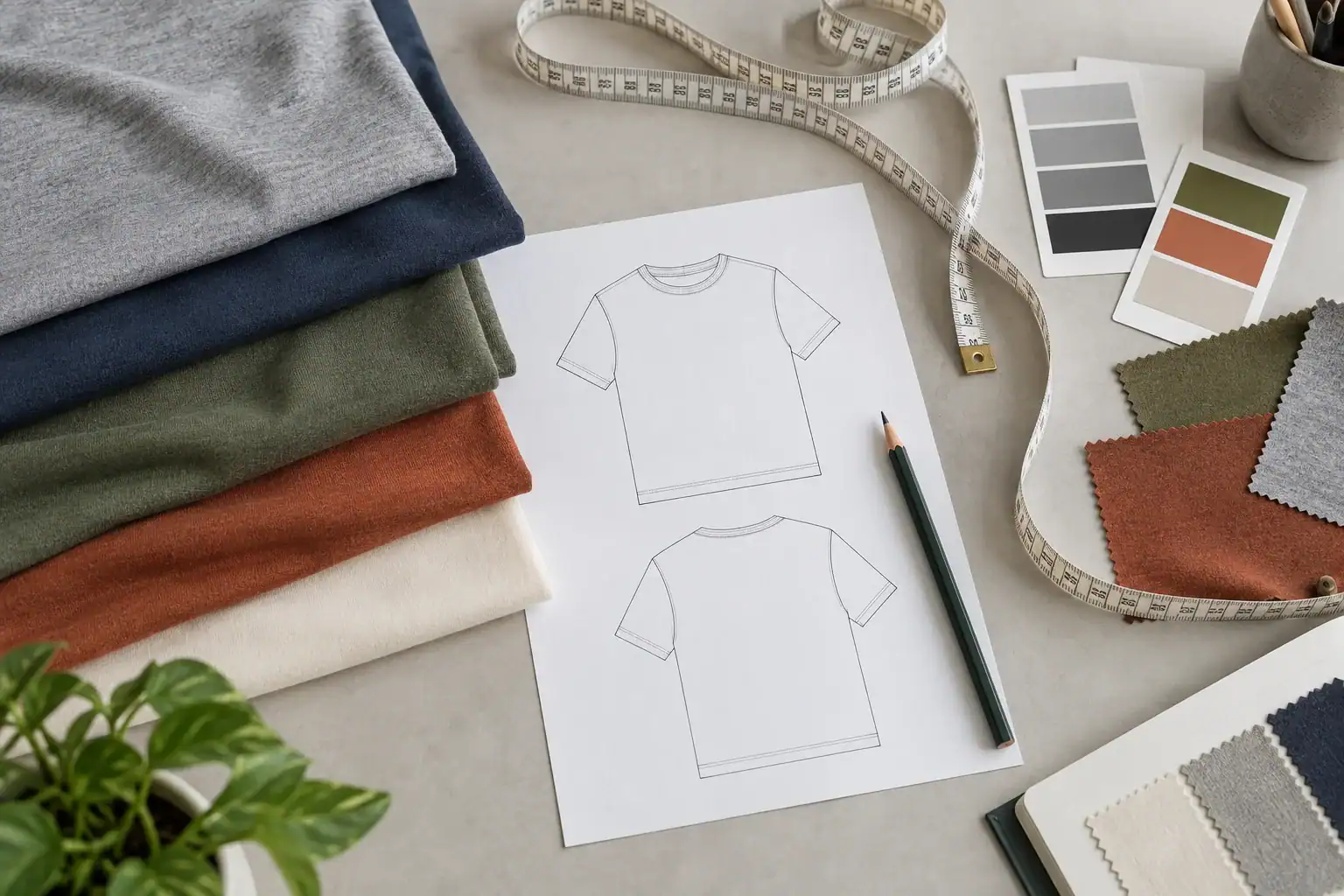
The tech pack should describe the material in a way that a mill, pattern maker, cutter and QC inspector can read the same way. Use the approved swatch as a reference, but do not make the swatch the only specification.
What to Test Before Bulk Approval

| Tech-pack field | Example of a useful instruction | Why it belongs in the record |
|---|---|---|
| Construction | Single jersey, face and reverse marked on the swatch | Prevents a supplier from substituting interlock or rib |
| Fiber | 95% cotton / 5% elastane, or another confirmed blend | Supports labeling, care and performance review |
| Finished GSM | Target value plus tolerance after finishing | Controls coverage, hand and consumption |
| Width | Usable open width with edge-loss rule | Makes the marker and quote comparable |
| Stretch | Direction, extension, load and recovery condition | Turns “stretchy” into a measurable requirement |
| Finish | Peached, washed, brushed or no special finish | Keeps the hand and surface route consistent |
| Color | Lab dip, physical standard or approved color reference | Reduces shade disagreement between sample and bulk |
| Tests | Dimensional change, pilling, colorfastness or other agreed checks | Connects claims to evidence before production |
Include the garment type, fit, size range, decoration method, order quantity and intended care route. If the product will be printed, embroidered or garment dyed, test the decoration on the same face and finish used in production.
Send the DTS Activewear tech-pack customization brief with the material questions visible. A clear input helps the supplier compare like with like and flag a risk before the first sample.
Testing should answer the risks that matter for the garment. A T-shirt may need different checks from a fitted training top. The supplier should confirm which test method, specimen condition and acceptance range will be used.
A Practical Jersey Sampling Workflow

| Risk | Useful check | What the buyer should record |
|---|---|---|
| Wrong weight or width | GSM and usable-width measurement | Finished condition, tolerance and measurement location |
| Fit change after care | Dimensional change and spirality | Wash route, drying route, before and after measurements |
| Neck or waistband growth | Extension and recovery on fabric and garment | Direction, load, hold time, release time and rest period |
| Surface damage | Pilling, abrasion, snagging or fuzz review | Method, cycle count, visual scale and acceptance limit |
| Color or decoration failure | Colorfastness and post-process print or embroidery check | Test route, shade standard and result for the actual color |
| Poor wear comfort | Prototype wear trial | Size, activity, duration, sweat level and comments |
AATCC TM187 describes an accelerated procedure for dimensional change that compares marked distances before and after programmed cycles. ASTM’s textile test standards include methods for pilling, abrasion, air permeability, bursting strength and fabric mass. These references help structure a conversation; they do not automatically set the right limit for your product.
Keep the approved swatch, lab report, sample photos and measurement sheet together. If a bulk lot differs from the approved reference, the team can identify whether the cause is yarn, knitting tension, dyeing, finishing or garment construction.
Use a short approval sequence so the fabric decision does not get buried inside garment comments:
- Send the garment type, fit, target use, fiber preference and reference image or swatch.
- Ask for two or three construction options, with fiber content, finished GSM, usable width and estimated tolerance.
- Compare face, reverse, opacity, hand, stretch and recovery on labeled swatches.
- Choose the closest option and request a lab dip or color standard before cutting the garment sample.
- Review the first sample for fit, neck and hem recovery, seam torque, coverage, drape and decoration.
- Wash and measure the sample using the intended care route. Record what changed.
- Approve the material and garment together, then keep the signed or photographed reference for bulk QC.
The DTS Activewear sampling and prototyping service can be the conversion step when a buyer needs to compare fabric and fit before committing to a larger order. Exact sample timing, MOQ and feasibility still depend on the brief.
Common Jersey Sourcing Mistakes

The most expensive errors usually start with a short material description:
- quoting “jersey” without stating the construction or fiber blend;
- using GSM as a stand-in for softness, quality or opacity;
- asking for a stretch fabric without a direction, load or recovery requirement;
- approving a flat swatch without checking the fabric in the actual pattern;
- ignoring edge curl, spirality or width loss before marker planning;
- assuming cotton, polyester and nylon jersey will share the same care behavior;
- calling a fabric moisture-wicking, quick-dry or anti-pilling without a matching test;
- checking one color and assuming heather, dark and light shades will behave identically;
- sending bulk production without keeping the approved swatch and tolerance record.
These mistakes are preventable when the construction, measurement, test and approval records stay connected to the garment.
Frequently Asked Questions
Choose jersey by matching the knit structure and fiber behavior to the garment’s actual job. Confirm the face and reverse, finished GSM, usable width, stretch, recovery, opacity, care route and surface durability. Then inspect the material in the sewn pattern. A swatch tells you what the fabric is. The prototype tells you whether it works for the product.
How to Choose Jersey Before You Approve the Garment
Jersey fabric is a weft-knit fabric made from interlocking loops. It is usually a single knit with a different face and reverse, and it can be made from cotton, polyester, nylon, rayon, elastane blends or other fibers.
Jersey usually has mechanical give because it is knitted, but the amount of stretch and recovery depends on the structure, fiber, elastane content, weight, finishing and test direction.
Single jersey is normally a lighter single-knit construction with visibly different sides. Interlock is a double-knit construction with smoother sides, more body and greater stability. The approved structure and GSM should be stated in the tech pack.
Jersey is available across a broad range. Light qualities may be around 100 to 150 GSM, everyday qualities around 150 to 220 GSM and structured qualities above 220 GSM. Treat these as planning bands and confirm the finished lot and tolerance.
Some jersey fabrics feel breathable, but airflow and moisture behavior depend on cover, stitch density, fiber, finish and garment construction. Use a relevant test or controlled wear trial for a product claim.
Jersey can work well for T-shirts, base layers, training tops and relaxed activewear when the weight, recovery, drying behavior, coverage and care route match the activity. Fitted products should be tested under tension and after laundering.
Cotton-rich jersey can change dimensions, and single jersey can twist or show spirality when yarn, knitting tension, finishing or garment construction is not controlled. Test the actual fabric and sample with the agreed wash route.
Include the garment type, construction, fiber content, finished GSM and tolerance, usable width, stretch and recovery needs, finish, color standard, quantity, care route, decoration and required tests. Add a reference swatch or tech pack when available.
Jersey Quote Checklist
For an everyday T-shirt, prioritize coverage, neck recovery, shrinkage, print surface and twist. For close-fit activewear, prioritize extension, recovery, drying behavior and comfort under movement. For a polished top, consider interlock or another stable double knit. The cheapest fabric is rarely the cheapest option after a failed sample, re-cut or bulk correction.
Before requesting a jersey fabric or custom garment quote, prepare these fields:
- garment type, fit, size range and intended activity;
- single jersey, interlock, rib or another confirmed construction;
- fiber content preference and elastane percentage if required;
- finished GSM, tolerance, usable width and relaxation condition;
- stretch direction, extension, recovery target and growth limit;
- color standard, lab dip, garment wash and decoration method;
- target quantity, sample quantity, packaging and delivery window;
- care instructions, labeling needs and tests required before bulk approval.
Send the reference swatch, drawing or tech pack through the DTS Activewear contact page to request a review. The more clearly the material and garment risks are described, the easier it is to compare samples and approve the right construction.