A youth shirt size chart is useful only when you know whether it lists body measurements or finished-shirt measurements. Match a child’s chest to a body chart, or compare a well-fitting shirt with a garment chart. Youth XS, S, M, L and XL vary by brand and style; age alone cannot confirm the fit.
Start with the size chart for the exact shirt you plan to order. The examples below separate garment dimensions from body measurements, show inches and centimeters, and explain the youth-to-adult crossover. For school, team and custom apparel orders, use the sample-check steps before approving the full quantity.
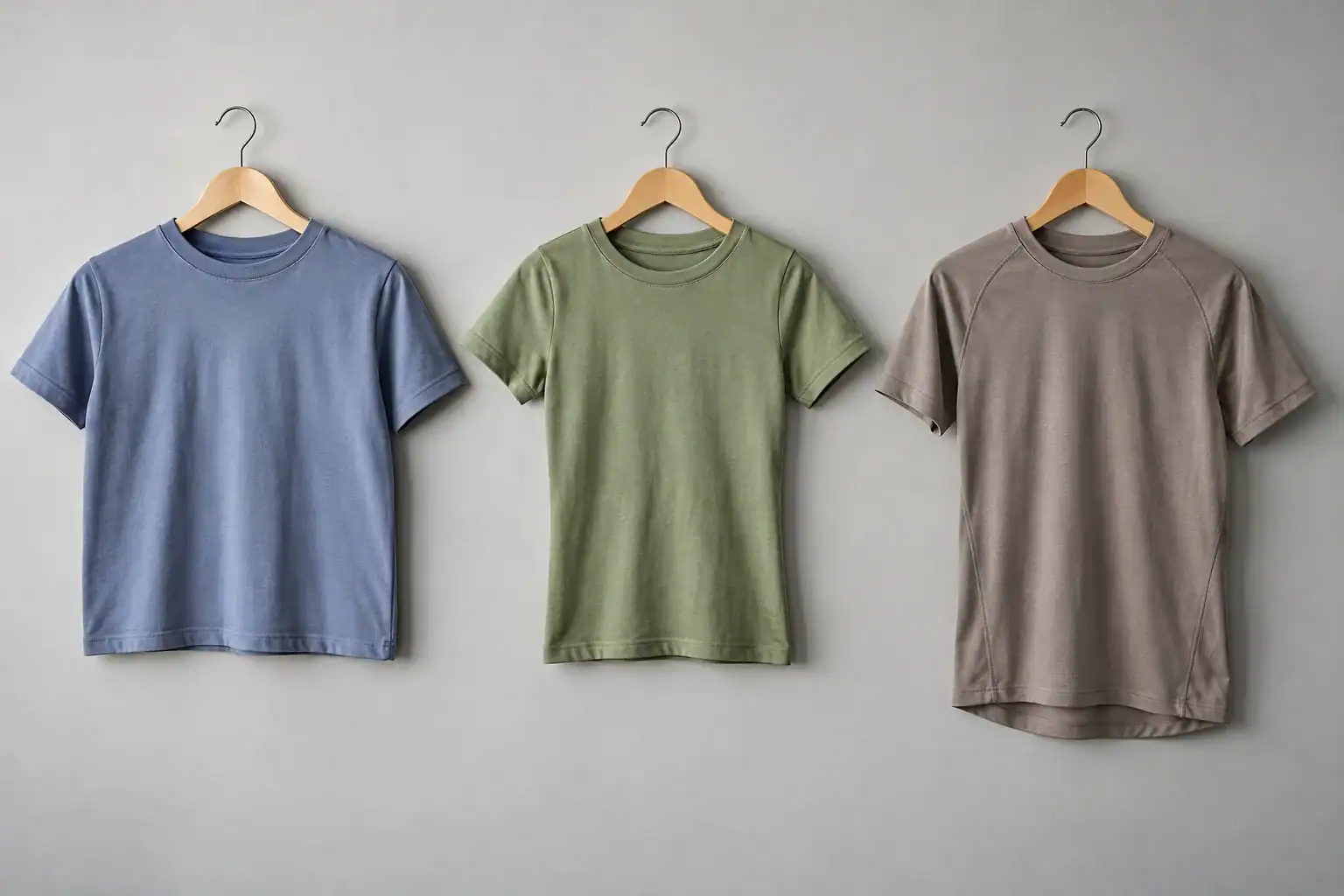
Illustrations are original AI-generated explanations of garments and measuring methods. They are not brand product photographs, scale drawings or test evidence; use the written specifications for numbers.
Youth shirt size chart: XS to XL in inches and cm
The following finished-shirt dimensions are for Gildan 5000B, using the youth sizing row in the brand’s US style and color guide. They are one style’s reference, not a universal youth standard. Width is measured across the flat shirt; it is not the child’s chest circumference. Centimeter values are calculated from inches and rounded to one decimal.
| Youth size | Width × length (in) | Width × length (cm) |
|---|---|---|
| XS | 16 × 20.5 | 40.6 × 52.1 |
| S | 17 × 22 | 43.2 × 55.9 |
| M | 18 × 23.5 | 45.7 × 59.7 |
| L | 19 × 25 | 48.3 × 63.5 |
| XL | 20 × 26.5 | 50.8 × 67.3 |
Compare both dimensions with a shirt that fits. If its width matches but its length does not, a different cut may work better than moving one size up. Confirm the current product specification and supplier’s measurement method before placing an order.

For a quick example, suppose a favorite shirt measures 18 inches across and 23.5 inches long. Those dimensions match the listed M in this example. That is a useful starting point for a sample, not a guarantee of fit in every youth medium.
Body chest and shirt width are different measurements
A body chart describes the wearer. A garment chart describes the clothing. Mixing them is an easy way to select the wrong size, especially when both use the word “chest.”
| Check | Where to measure | Use |
|---|---|---|
| Body chest | Around the torso | Compare with a body-size range |
| Flat shirt width | Across the shirt | Compare with a known good shirt |
| Shirt length | Shoulder point to hem | Check length and fit |
For a simple, symmetrical T-shirt, twice the flat width gives an approximate garment circumference. The difference between that circumference and the wearer’s chest is the available chest ease. Fabric stretch, seams and how the shirt hangs still affect fit.
Worked example: a shirt that is 17 inches wide has an approximate 34-inch circumference. On a 29-inch chest, the difference is 5 inches. This calculation describes room in that example; it does not prescribe 5 inches of ease for every child or every fabric. Compare the result with a comfortable shirt of similar construction.
Do not add an arbitrary allowance to the body measurement and then use a brand’s body chart. Its size recommendation already relates the body range to the brand’s intended fit. Use ease calculations when evaluating garment dimensions or developing your own specification.
How to measure for a youth T-shirt
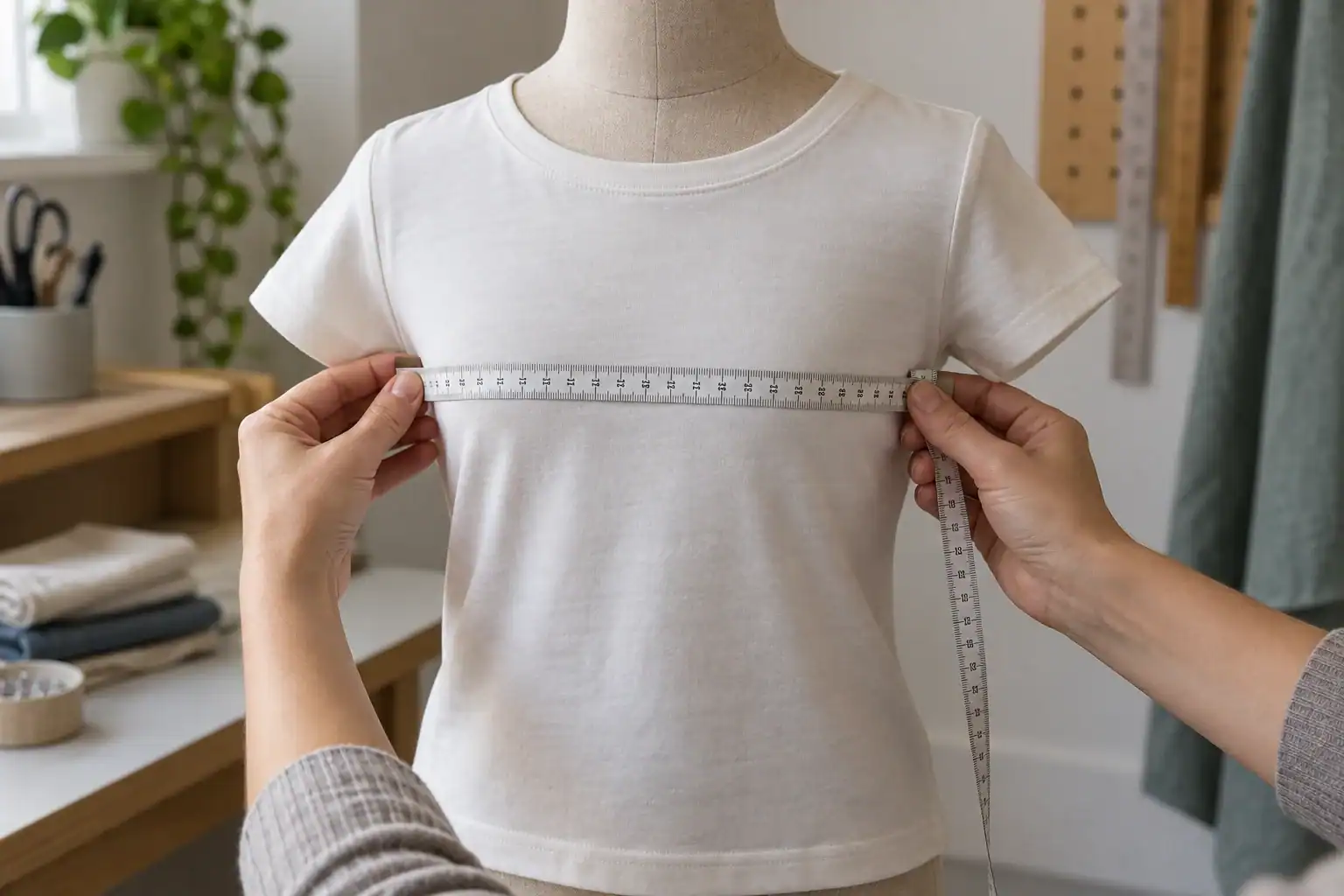
Use a flexible tape and a shirt the child already likes wearing. A flat table gives more consistent garment measurements than holding the shirt up. Smooth wrinkles gently without stretching the knit.
- Measure around the fullest chest with the tape level and comfortably touching the body. Keep the child’s arms relaxed while taking the reading.
- Lay the reference shirt flat. Measure its width at the point specified by the supplier, such as one inch below the armholes.
- Measure length from the specified starting point to the hem. HPS means high point shoulder, near where the shoulder meets the neckline; it is not the top edge of the collar rib.
- Record the unit, shirt style, size label and whether the reference shirt has been washed.
- Compare the measurements with the exact style’s current chart, then try a sample if fit or order quantity makes the decision important.
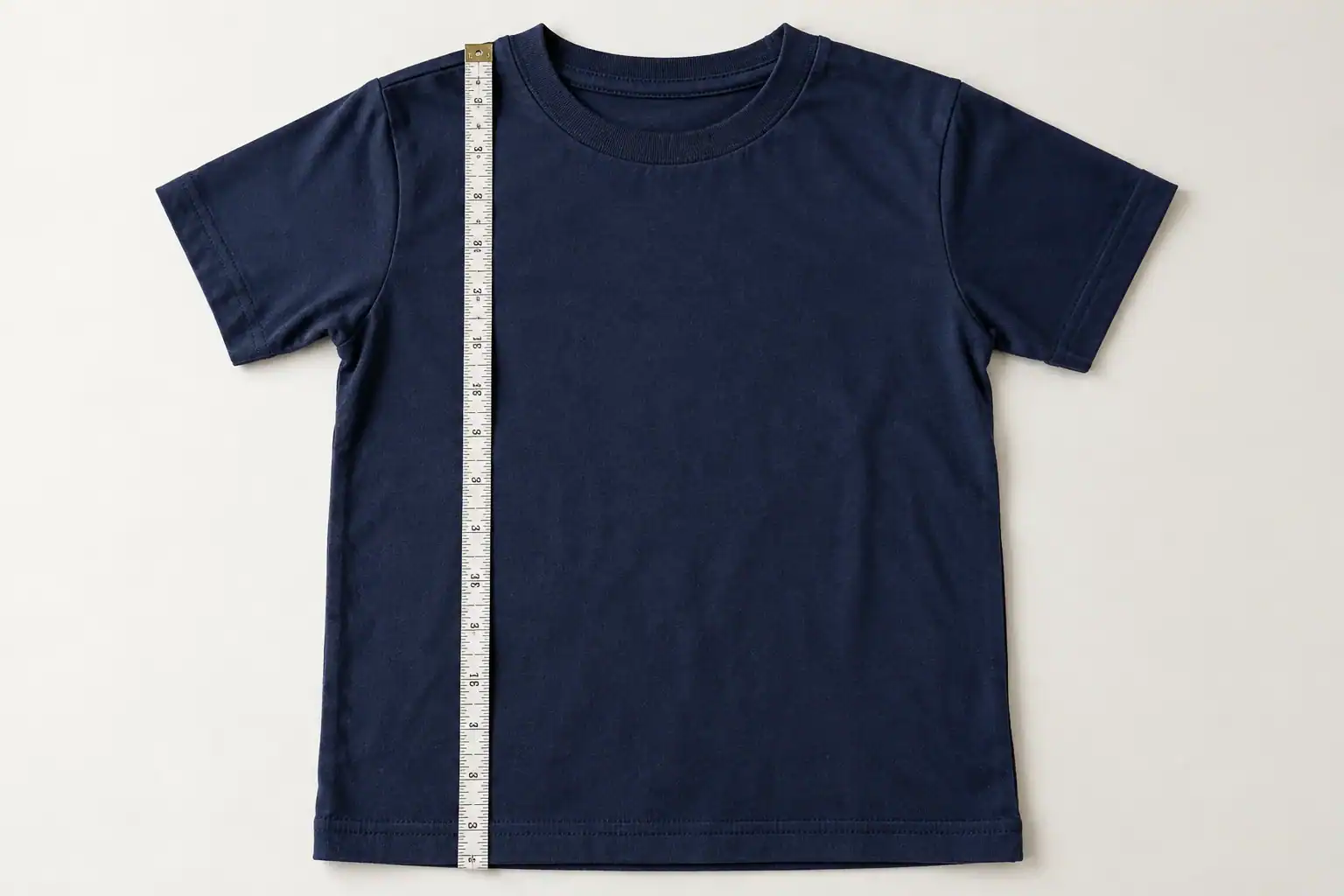
A supplier may measure length from a different point. Even a careful measurement becomes misleading if one person starts at the high shoulder and another starts at the center-back collar. Ask for a measurement sketch when the specification is unclear.
For an existing shirt, note what needs to change: “keep this width, add length” is more useful than “make it a little bigger.” It also helps distinguish a sizing issue from a different fit preference.
Convert inches to centimeters without changing the fit
Multiply inches by 2.54 to obtain centimeters. Divide centimeters by 2.54 to obtain inches. Convert each dimension separately, and retain the original measurement as the controlling value when you share a specification.
| From | Math | Result |
|---|---|---|
| 17 in width | 17 × 2.54 | 43.2 cm |
| 23.5 in length | 23.5 × 2.54 | 59.7 cm |
| 45 cm width | 45 ÷ 2.54 | 17.72 in |
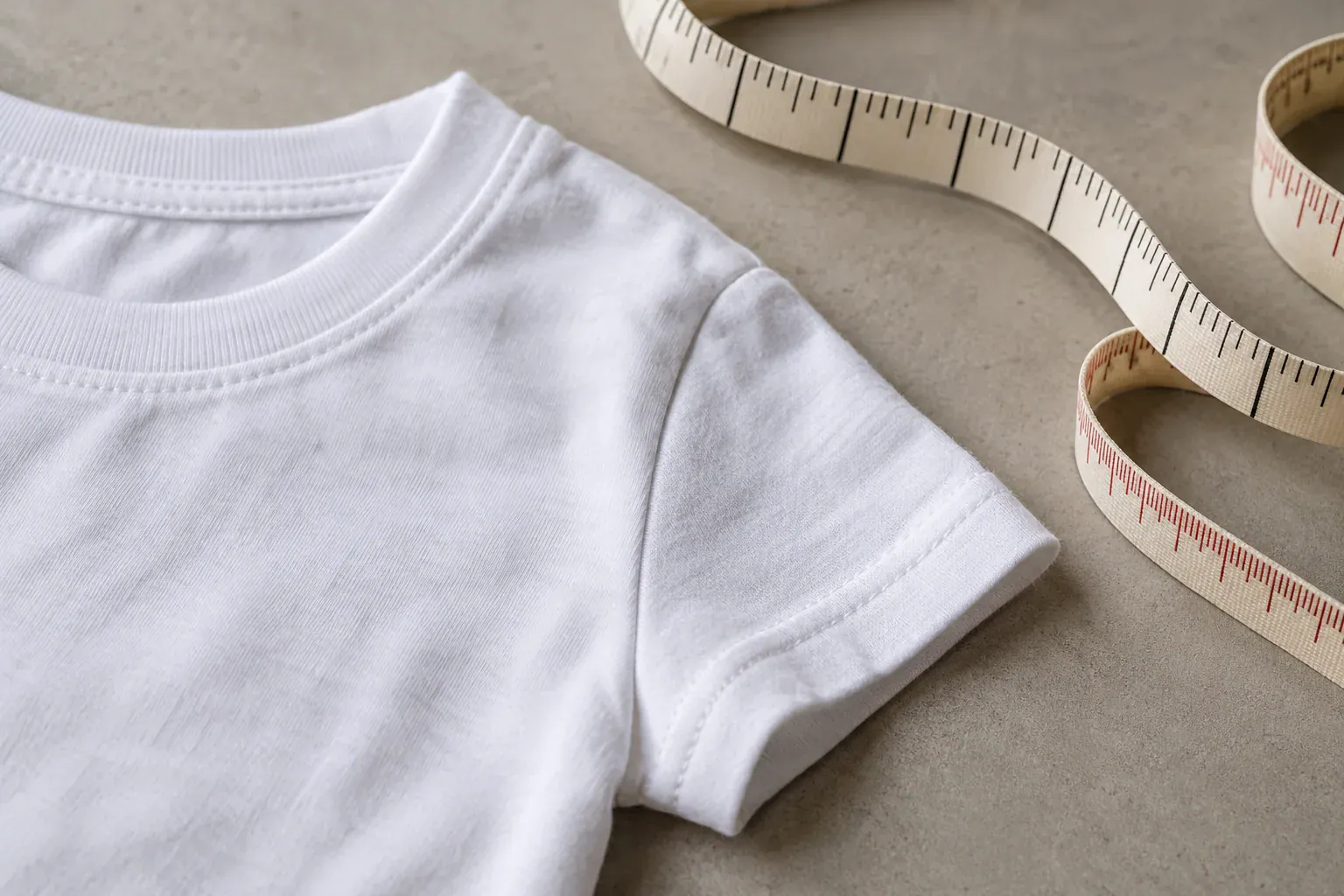
The small differences introduced by rounding are not production tolerances. A tolerance is a separately agreed acceptance range. On a bulk order, use one master unit and a documented tolerance for each point of measurement so the factory and inspector assess the same specification.
Youth sizes by age: read the label carefully
Numbers such as 10-12 or 18-20 can be numeric size labels, rather than ages. Do not turn a size 18-20 label into a claim that the garment is intended for an 18- to 20-year-old.
As a brand-specific body-fit example, Nike’s Kids Fit chart gives the following standard sizes. Its plus sizes use different ranges and are not included here.
| Nike size | Numeric size; age guide | Body chest (in) |
|---|---|---|
| XS | 6-7; 7-8 years | 24-25.5 |
| S | 8-9; 8-10 years | 25.5-27.5 |
| M | 10-12; 10-12 years | 27.5-30 |
| L | 14-16; 12-13 years | 30-33 |
| XL | 18-20; 13-15 years | 33-36 |
Use these ranges with Nike’s fit guidance. They are not the body measurements for the Gildan chart above. The distinction matters: merging two brands into a single chart can create a size recommendation that neither brand makes.
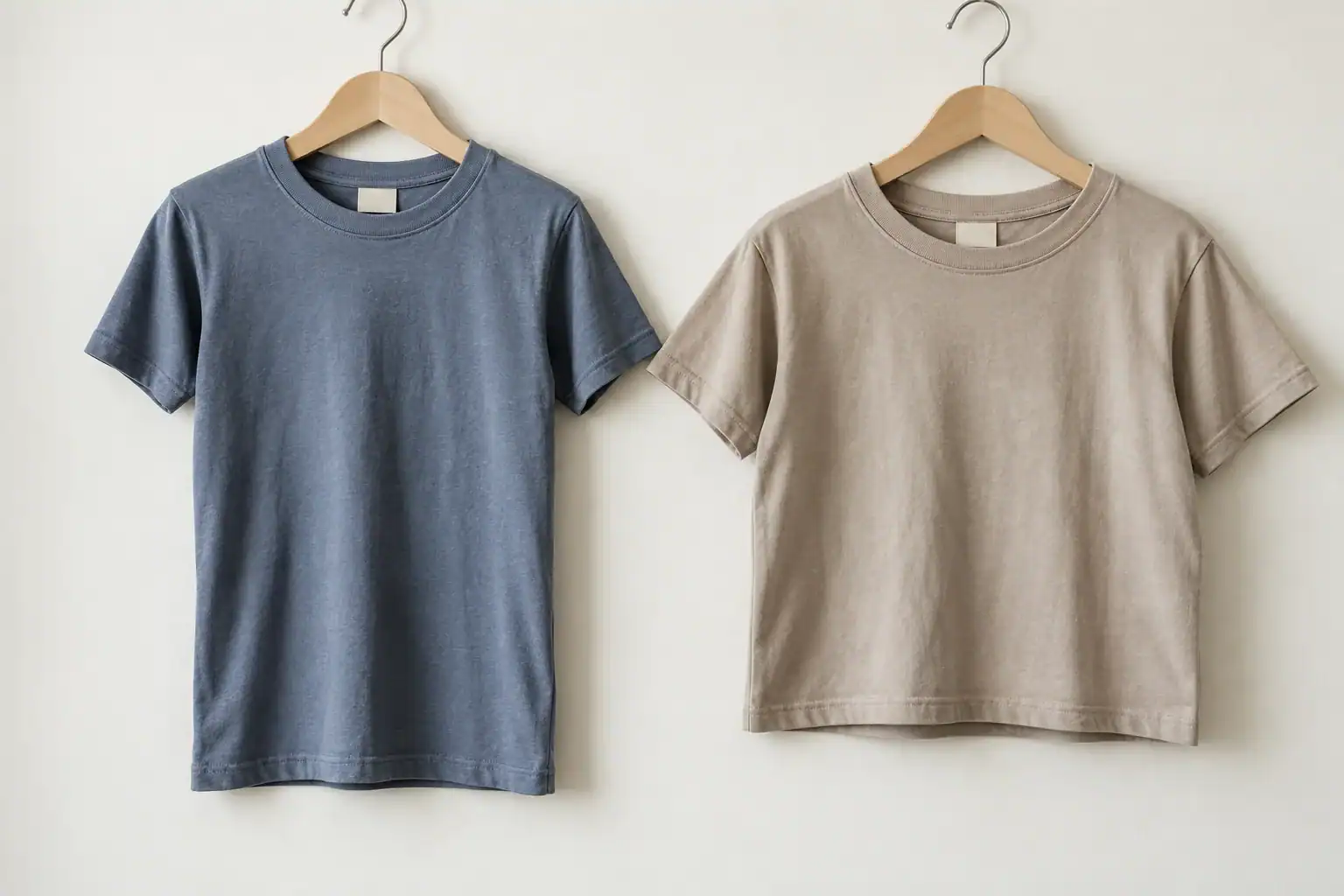
For a gift, a photo of the label from a favorite shirt is a useful clue. A width and length measurement from that shirt is better. For a whole class, collect individual selections after sharing the actual style chart instead of assigning one size to an age group.
What size are youth small, medium and large?
YS means youth small, YM means youth medium, and YL means youth large. YXS and YXL mean youth extra small and youth extra large. These abbreviations identify positions in a size range, not fixed dimensions across suppliers.
For the 5000B example above, small is 17 × 22 inches, medium is 18 × 23.5 inches, and large is 19 × 25 inches, measured as flat width × length. Keep the style name beside those numbers whenever you share them.
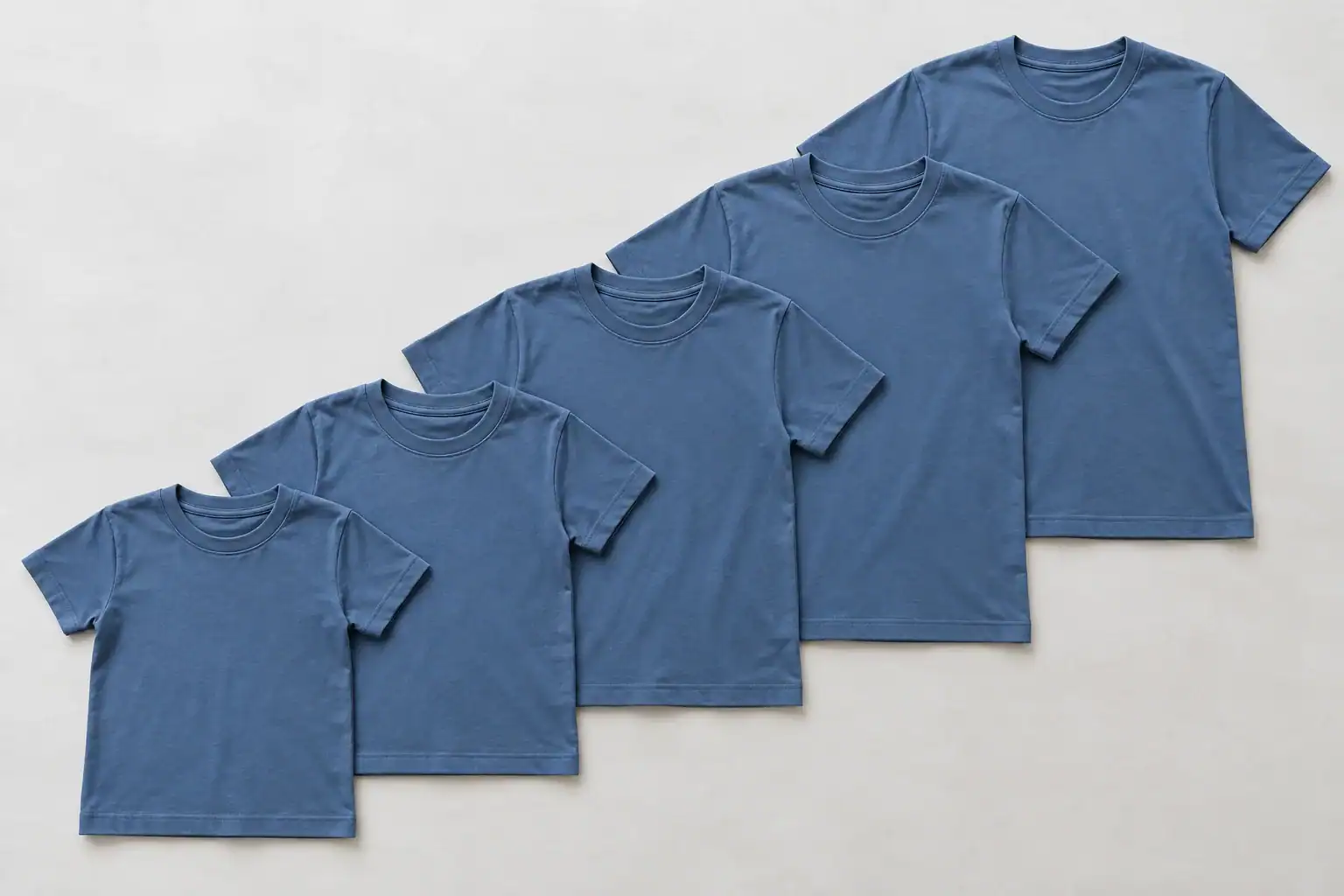
A practical way to choose is to make two checks:
- Does the width give the same or preferred room compared with the reference shirt?
- Does the length provide the needed coverage when the wearer sits, reaches and moves?
If the answers point to different sizes, investigate the cut. A taller child may need a longer style without more width. A broader child may need a roomier cut without a much longer hem. Choosing solely by a letter misses that distinction.
For online listings, display the style code and both measurements next to the size selector. “Youth medium” on its own gives a parent too little information to compare with an item at home.
Why youth shirt sizes differ between brands
Pattern shape, intended fit and size grading can differ even when the label is the same. Shoulder width, armhole depth and sleeve shape also affect comfort, so a width comparison is only part of the decision.
The official BELLA+CANVAS 3001Y measurement sheet provides a useful second example. Its youth medium is 16.25 inches wide and 22.125 inches long. Its youth XL is 18.25 inches wide and 24.375 inches long. The sheet defines width one inch below the armholes and length from HPS.
Those dimensions are different from the first chart. A size label alone is therefore insufficient for switching styles. Compare the specification, request a sample, and decide whether you want to preserve the old fit or intentionally change it.
For team reorders, write the supplier, style code and approved sample reference into the purchase record. “Same as last time” is not enough when stock substitutions or revised products are possible. If a replacement is proposed, ask for its dimensions before agreeing to the substitution.
Youth XL vs adult small: are they equivalent?
Youth XL and adult small are not reliably interchangeable. A similar chest width can hide a substantial difference in body length, shoulders or sleeve proportions.
Using the brand’s adult 3001 measurement sheet alongside its youth sheet illustrates the issue:
| BELLA+CANVAS style and size | Flat width (in) | Length from HPS (in) |
|---|---|---|
| 3001Y youth XL | 18.25 | 24.375 |
| 3001 adult S | 18 | 28 |
The adult S is 0.25 inches narrower but 3.625 inches longer in these published specifications. That is about 9.2 cm of additional length. Neither size is simply “bigger” in every direction. These are style-specific figures; confirm current specifications before ordering.
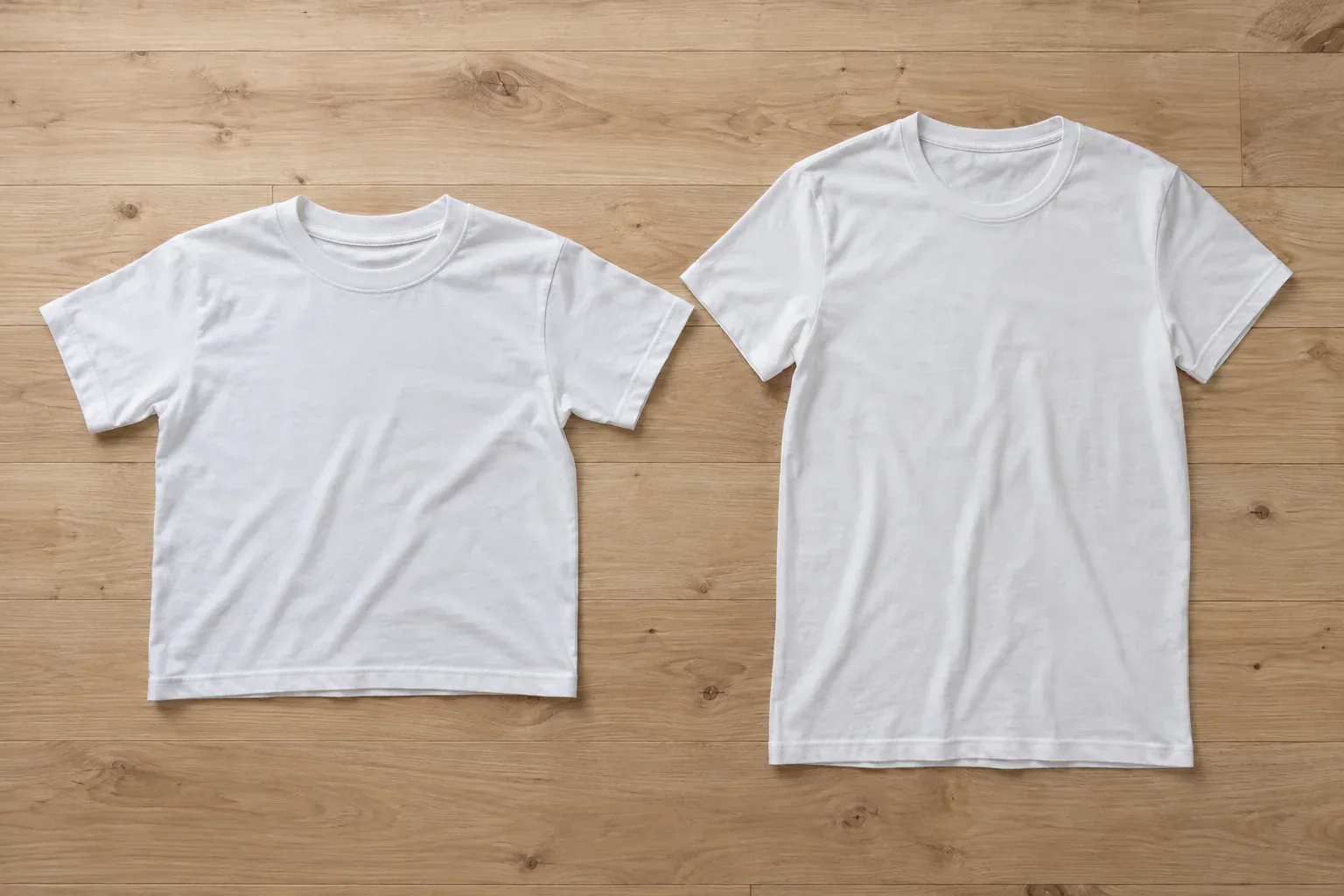
Choose by the dimension that is causing the problem. If the youth shirt is too short but its width feels right, investigate the adult cut and check shoulders and sleeves. If the youth shirt is already too loose, changing to another label without measuring may leave the same problem.
For an order spanning children and adults, treat the youth and adult styles as two size ranges. Show both charts on the order form and use distinct entries such as “Youth XL” and “Adult S.”
Between sizes, movement and washing
When the wearer falls between sizes, decide what the shirt needs to do. A loose event tee, a fitted training top and a shirt worn over another layer need different amounts of room. The words “regular,” “athletic” and “oversized” do not replace measurements.
Try the sample while the wearer sits, reaches forward and raises their arms. Look for restriction across the upper back, pulling at the armholes, a neckline that feels uncomfortable, or a hem that rises more than the wearer wants. If a larger size creates excessive length, try a different pattern instead.
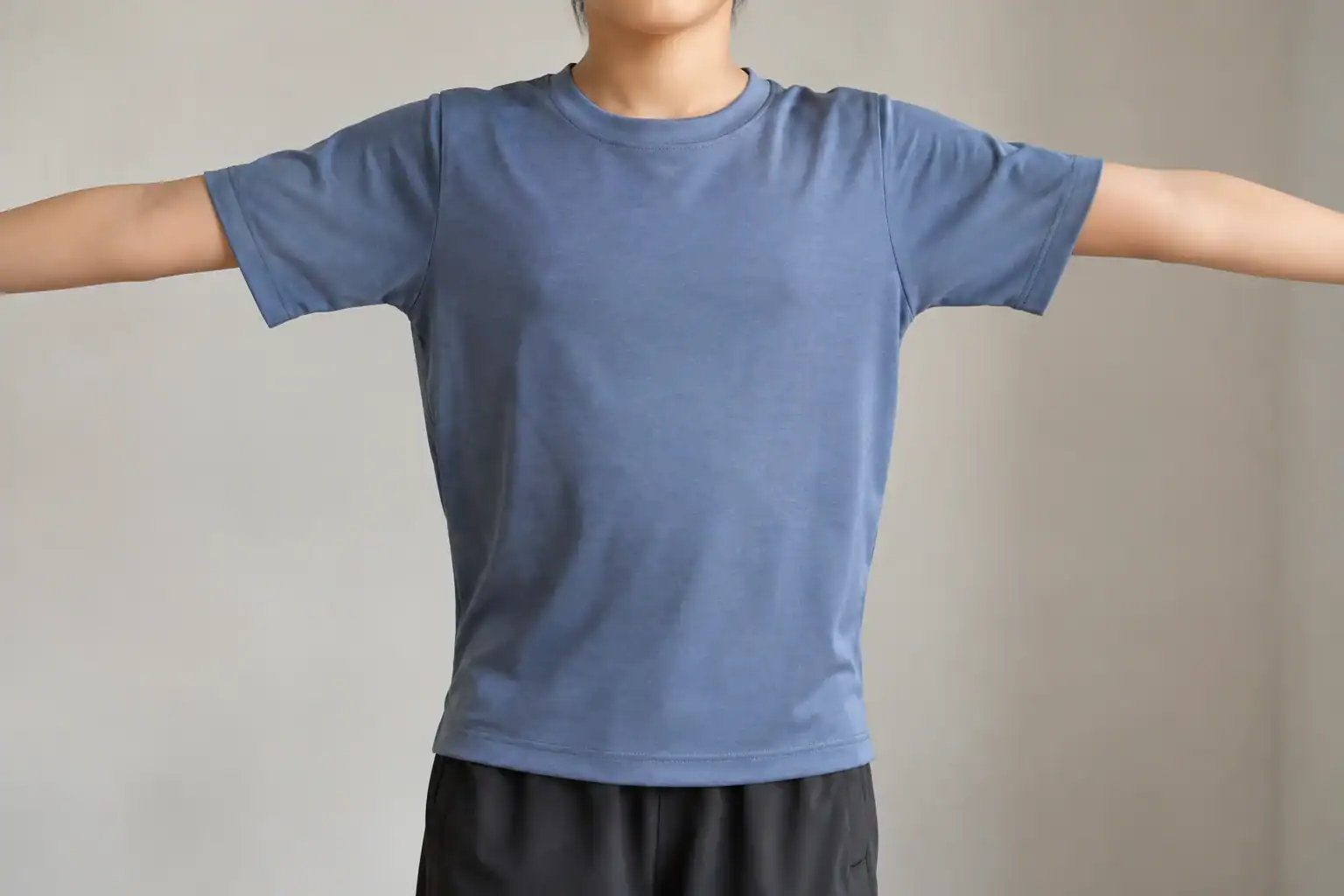
Growth room should be a deliberate preference. Buying larger may allow longer use, but an excessively long or loose garment may be inconvenient for its intended activity. Confirm that the child can comfortably wear the chosen fit now.
For washing, follow the care instructions for the garment. Do not apply an assumed shrinkage percentage to every cotton or blended shirt. During custom development, record the sample’s width and length, run the agreed washing and drying procedure, then measure it again. The cotton fabric guide explains related material choices.
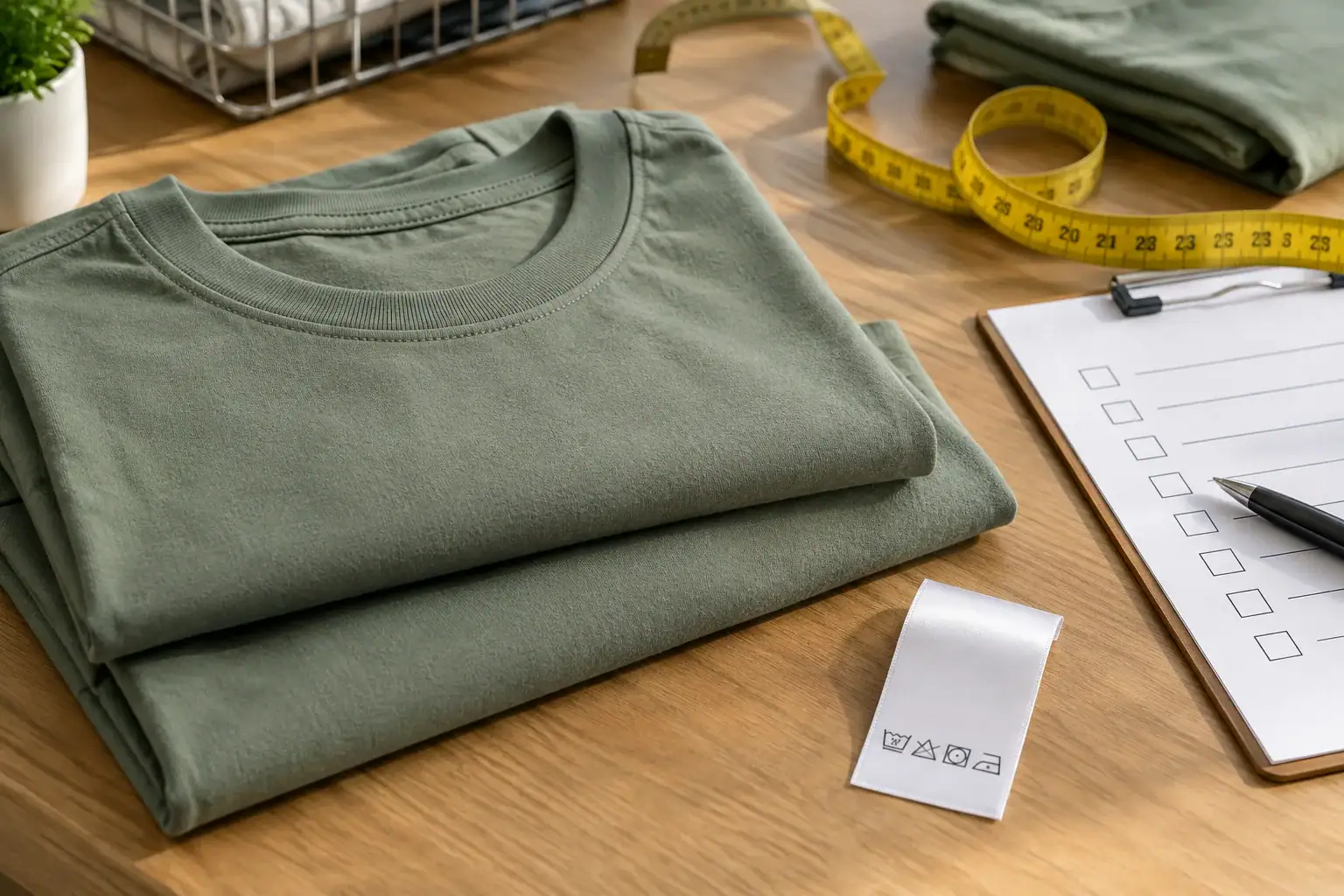
Keep shrinkage and production tolerance separate. Shrinkage concerns a change after treatment; tolerance concerns acceptance against the specification under stated measuring conditions. If the finished garment must fit after washing, state that requirement before approving the sample.
Build a youth size run for schools, teams and bulk orders
Collect selections for the actual shirt being ordered. Guessing the size distribution from age or copying another team’s quantities can create avoidable leftovers and exchanges.
Choose the style first, then share its chart and offer samples where practical. Collect each person’s selection before totaling the order. Set a confirmation date so late changes do not silently alter the production instruction.
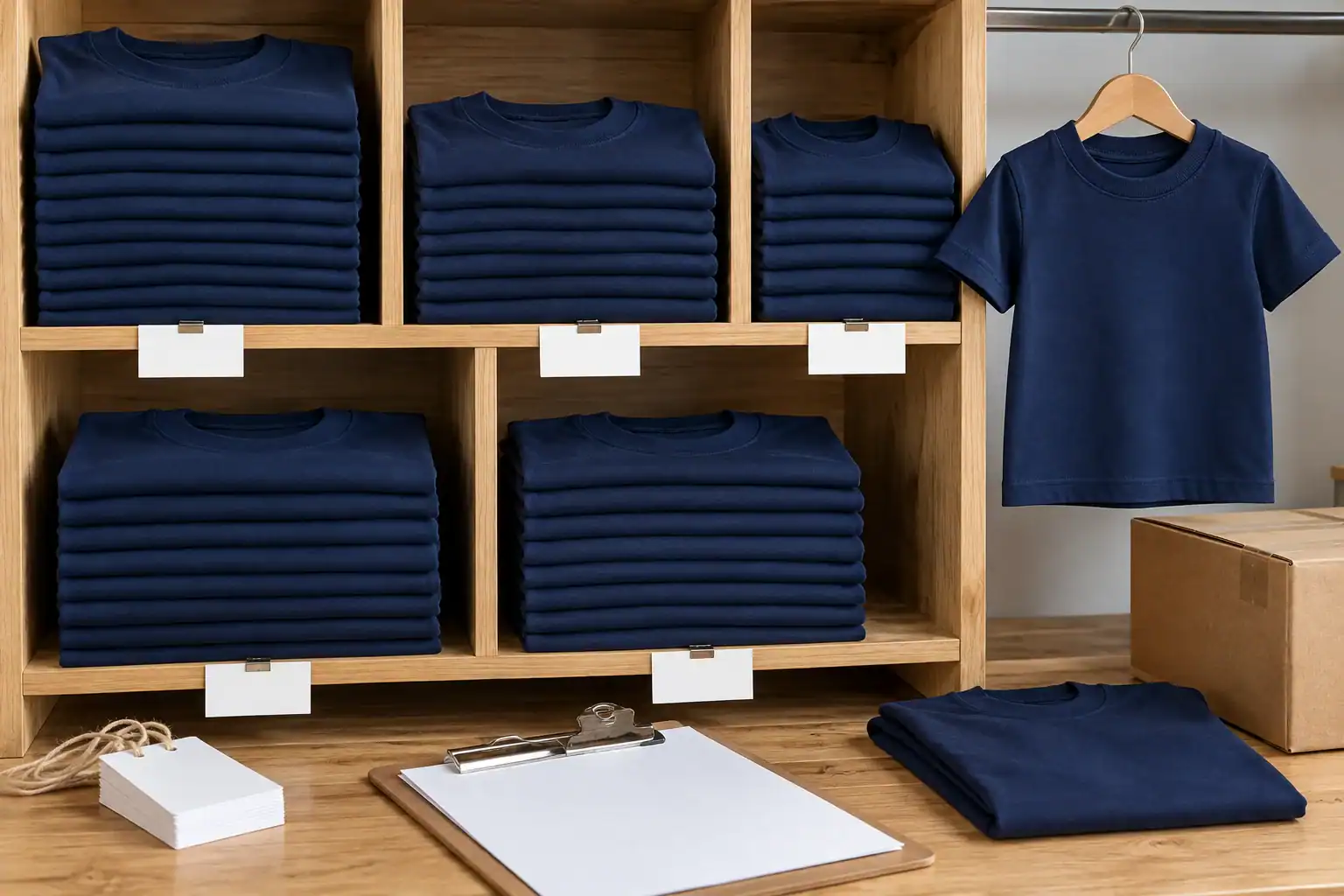
Record the following for each order line:
- Youth or adult range, exact style code, color and selected size.
- Quantity, including any separately approved spare garments.
- Decoration version, placement and any personalized name or number.
- The sample or specification revision used to approve fit.
Check the arithmetic before ordering. For example, 4 XS + 9 S + 12 M + 8 L + 3 XL equals 36 shirts. If two separately approved spare M shirts are added, the revised order is 38, with M increased to 14. This is an illustrative count, not a recommended size ratio.
Review artwork on the smallest garment in the run. A chest design that looks balanced on an adult shirt may approach the seams on a youth XS. Ask the decorator to confirm usable print area, placement and whether more than one artwork size is needed. There is no single print width that suits every youth shirt and decoration method.
For a new custom program, sampling and prototyping is the stage to resolve fit and artwork together. Keep the approved sample and size breakdown available during packing so the final quantities can be checked against the order.
Youth shirt sizing questions
What is a size 12 in youth shirts?
In a brand range that groups numeric sizes 10-12 under M, size 12 belongs to that youth-medium group. Check the exact brand chart because numeric groupings vary. The number is not a substitute for chest, height or garment measurements.
Is youth small the same as a toddler size?
Do not assume a direct conversion. Toddler and youth ranges may use different patterns and proportions. Compare the finished width, length, neckline and fit of the two exact styles, especially when a child is moving between ranges.
Can boys and girls use the same youth shirt chart?
They can use the same chart when the specific product is sold with a shared youth or unisex size range. If the brand supplies separate fit charts, use the chart for that product. Body measurements and preferred fit matter more than substituting a label from another range.
Should I size up every youth shirt?
No. First compare with a comfortable reference shirt and check the product’s fit guidance. Sizing up may add unwanted length or looseness. Use a sample to decide when the measurement range, layering requirement or intended activity makes the choice uncertain.
Can I use a T-shirt chart for a youth hoodie or polo?
Use the chart for the hoodie or polo itself. Layers, sleeve construction, fabric and collar design can change the intended fit. A shared letter label across a clothing range does not confirm identical dimensions.
What if the supplier does not provide a size chart?
Request finished width and length by size, a measurement sketch, the unit and the permitted tolerances. Ask for a sample when fit is important. Hold a large or personalized order until you have enough information to approve the garment.
Turn the chosen fit into a custom shirt specification
Once you have a fit you like, keep the reference garment and write down what should stay the same. For a custom youth program, specify flat chest width, HPS length, shoulder width, sleeve length, neckline and the requested size range. Add fabric composition, weight, decoration, wash conditions and measurement tolerances.
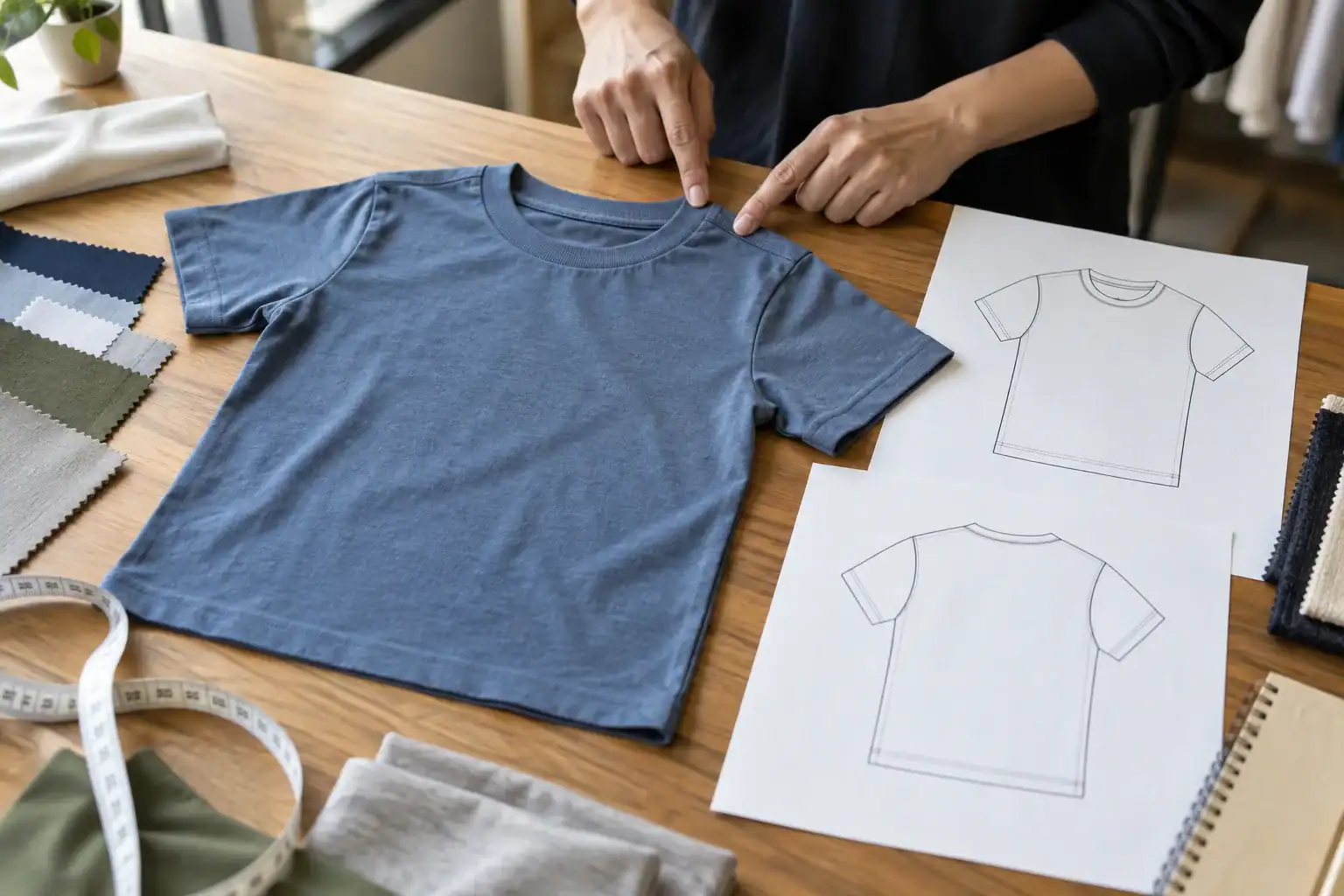
Check more than the middle size when approving a new range. A base-size sample can look right while the smallest or largest size needs adjustment. Ask how the dimensions change between sizes and review representative sizes before approving the full run.
DTS Activewear’s custom T-shirt and tech pack customization pages outline its apparel development options. For a youth-shirt inquiry, send your reference fit, intended size range, fabric, decoration, quantity by size and destination market. Ask the team to confirm the proposed youth construction, sampling requirements and order terms for your project. Brand charts in this guide are comparison references, not DTS production specifications.