Bamboo fabric is not one single fiber. It is a family of textiles connected by bamboo as a feedstock or by a processing claim. In commercial apparel, the fabric is often a regenerated cellulosic fiber made from bamboo-derived cellulose, then spun into yarn and formed into a knit or woven textile. The label alone does not tell you the construction, weight, stretch, finish, or finished-garment performance.
The practical answer to what is bamboo fabric is therefore: identify the actual generic fiber name, the bamboo processing route, the yarn and construction, and the performance data for the finished fabric. A soft bamboo-based jersey may work well for a base layer or lounge top, while a high-sweat legging may need a different construction, a stretch blend, and separate drying, recovery, pilling, and opacity checks.
This guide explains the material routes, honest properties, activewear use cases, label and sustainability claim checks, specification fields, and a sample-to-bulk workflow. It is written for apparel buyers, product developers, importers, and teams preparing a quote or tech pack.
What is bamboo fabric?
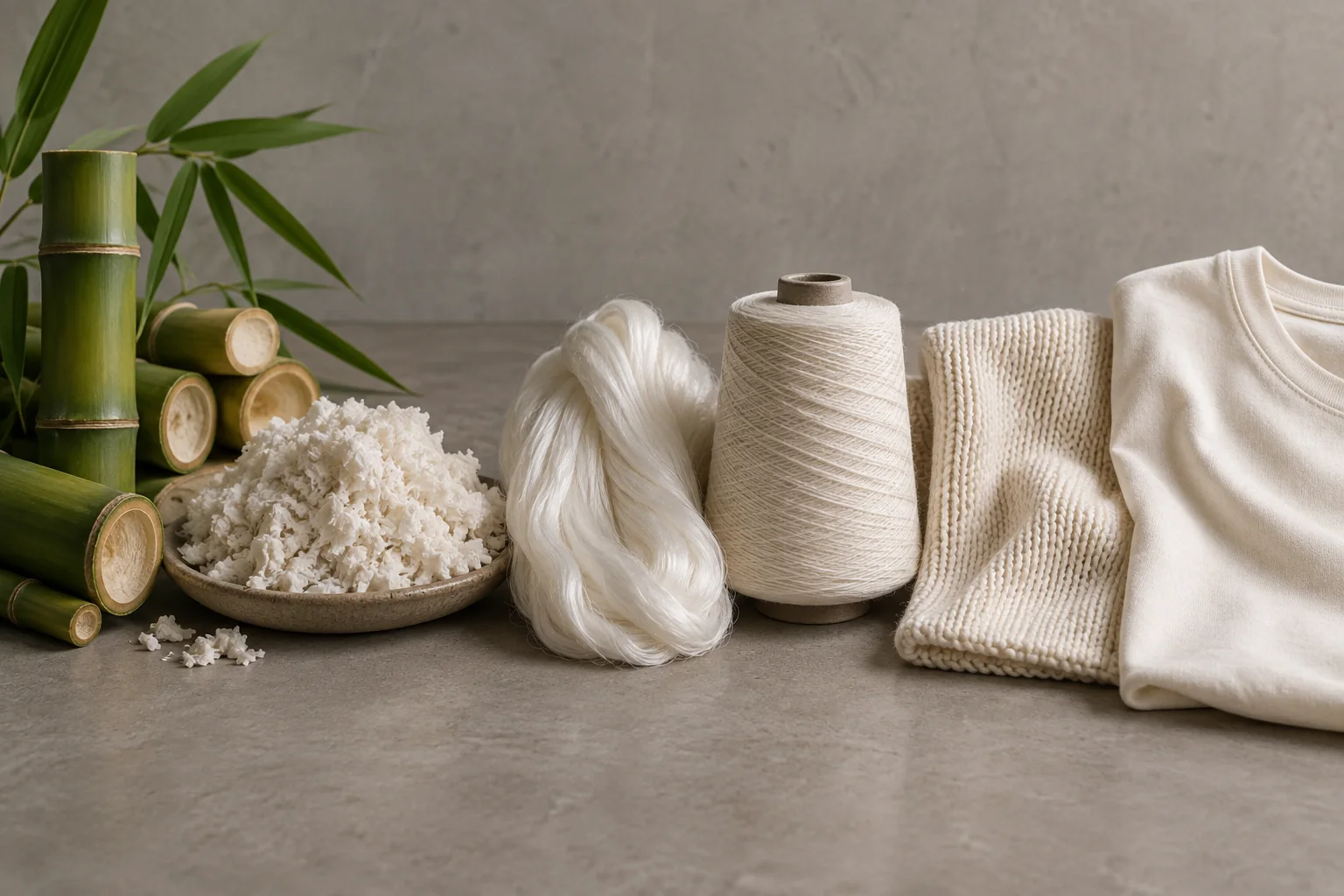
Bamboo fabric is a textile made with bamboo as the plant source for a fiber route, or in a smaller number of cases, with bamboo mechanically processed into a textile fiber. The most common commercial route is a regenerated cellulosic process that converts cellulose into a filament or staple fiber. That fiber is then made into yarn and a textile. The finished result is influenced by the process, yarn, knit or weave, density, blend, finish, dyeing, and garment construction.
For products sold in the United States, the Federal Trade Commission bamboo textiles guidance makes an important distinction: a textile made with rayon or viscose using bamboo as the plant source should be identified by its generic fiber name, such as rayon made from bamboo. A supplier or product page should not treat the word bamboo as a complete fiber-content disclosure. The final label and claim review still depends on the market and the actual material documentation.
Think of the name as four separate questions:
- Feedstock: Was bamboo the plant source, or is the claim using bamboo only as a broad marketing description?
- Fiber route: Is the material mechanically processed bamboo, rayon or viscose made from bamboo, or another regenerated cellulosic route?
- Construction: Is the yarn knitted into jersey, rib, interlock, fleece, or another structure, or woven into a stable fabric?
- Finished product: What are the GSM, width, stretch, recovery, finish, colorfastness, care route, and garment results?
If a quotation says only bamboo fabric, ask for the fiber-content statement and technical sheet before comparing price or performance. The word bamboo is a starting point for investigation, not a finished specification.
Bamboo fabric is a route, not a single material
The route affects how the fabric should be labeled, what environmental questions are relevant, and which tests belong in the approval plan. These routes are not interchangeable names for the same product.
| Route or label direction | What it usually describes | Buyer question before approval |
|---|---|---|
| Rayon or viscose made from bamboo | Regenerated cellulosic fiber using bamboo-derived cellulose as the source material | Is the generic fiber name stated correctly, and are the process and blend records available? |
| Bamboo lyocell or a lyocell-like route | Regenerated cellulosic fiber made through a different solvent and recovery approach, subject to the actual fiber documentation | Does the supplier document the generic fiber name and the specific route rather than using lyocell as a loose synonym? |
| Mechanically processed bamboo | Bamboo physically separated or refined into a fiber without the same regenerated route | Is the fiber soft and spinnable enough for the intended count, construction, and garment hand? |
| Bamboo blend | Bamboo-derived fiber combined with cotton, elastane, polyester, modal, or another fiber | What is the percentage of every component, and which component controls stretch, drying, strength, or care? |
| Bamboo fabric finish | A finished textile with brushing, softening, print, coating, or another surface treatment | Does the finish change hand, moisture behavior, pilling, colorfastness, or care after laundering? |
Bamboo viscose or rayon made from bamboo
Bamboo viscose and rayon made from bamboo describe a regenerated cellulosic direction, not a leaf or stalk woven directly into a T-shirt. Bamboo is processed to obtain cellulose, the cellulose is converted into a spinnable solution or fiber-forming material, and the resulting fiber is made into yarn. The exact manufacturing chemistry and controls should be confirmed from the supplier’s material documentation.
This route can produce a soft, smooth hand and useful drape. Those characteristics are reasons buyers often investigate it for tees, base layers, underwear, sleepwear, and relaxed garments. They do not prove that every bamboo viscose fabric is strong when wet, fast drying, pill resistant, or suitable for compression. The construction and finish still need approval.
Bamboo lyocell and closed-loop routes
Lyocell is a generic fiber name associated with a regenerated cellulosic route. A material can use bamboo as a source and still require precise wording about its generic fiber identity and manufacturing route. Do not assume that every supplier using the phrase bamboo lyocell has the same process, fiber documentation, or environmental evidence.
Textile Exchange describes man-made cellulosic fibers as a material family that includes viscose and lyocell. Its MMCF glossary is useful when a buyer needs to separate the material family from a specific product claim. For a purchase, the supplier’s fiber-content statement, chain-of-custody or certification documents when applicable, and finished-fabric tests are more useful than a broad adjective such as green or natural.
Mechanically processed bamboo
Mechanical processing aims to retain a more direct relationship between the bamboo plant and the textile fiber. In practice, the route can be harder to spin into a fine, soft apparel yarn at scale than regenerated routes. The hand, fineness, strength, blend requirement, and available constructions should be assessed on the actual sample.
If a product is promoted as directly made from bamboo fiber, ask how the fiber was separated, what generic fiber name is used on the label, and whether the claimed route is supported by the supplier’s records. The FTC guidance on avoiding misleading bamboo claims is a useful compliance reference for US-facing copy.
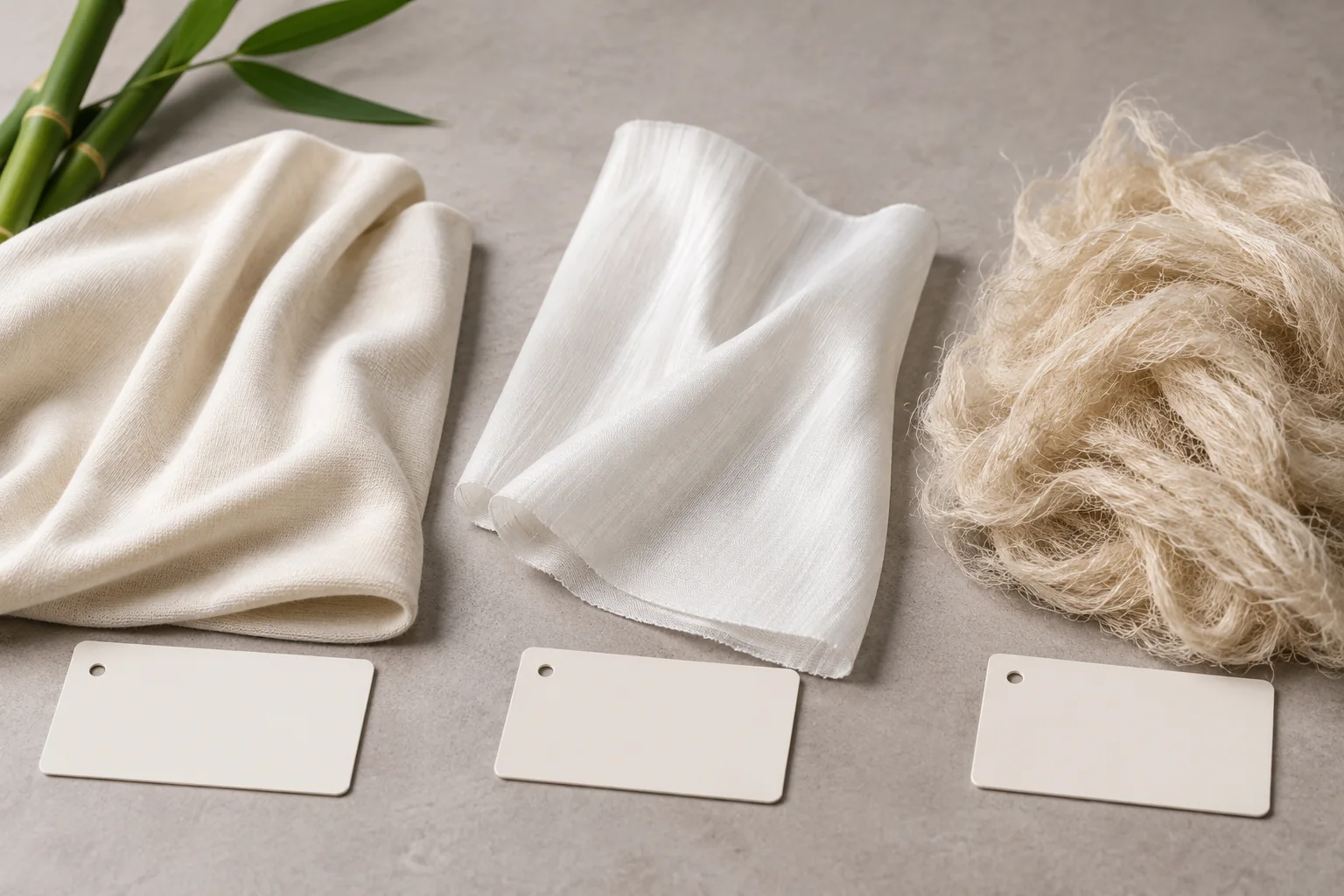
The short rule is simple: never compare a bamboo viscose jersey and a mechanically processed bamboo woven fabric as if the plant name makes them equivalent. Compare the documented route and the fabric construction.
How bamboo becomes a textile
The path from plant source to garment usually includes more decisions than a product page reveals. A useful development sequence is:
- Confirm the feedstock and the generic fiber identity in writing.
- Confirm whether the fiber is staple, filament, or blended with another fiber.
- Select a yarn count, twist, or filament arrangement for the target hand and strength.
- Choose knit or woven construction, density, GSM, width, and stretch direction.
- Apply dyeing, softening, brushing, wicking, anti-pilling, print, coating, or other documented finishes as needed.
- Cut and sew a garment that represents the final fit, seams, trims, labels, and decoration.
- Test the finished material and garment against the use case before confirming bulk production.
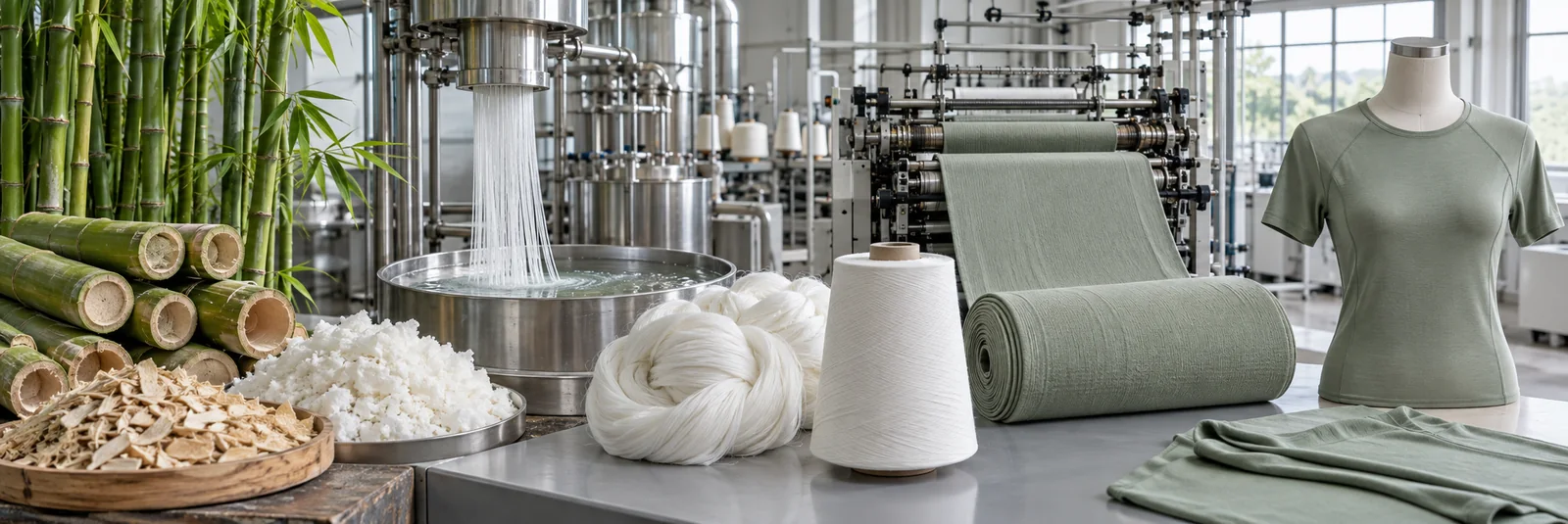
The fiber route matters because it can influence fineness, wet strength, absorbency, drape, and care sensitivity. The garment matters because seams, waistband tension, printing, heat, and repeated movement can expose weaknesses that are invisible in a loose swatch. A material approval should therefore contain both a fabric sample and a sewn sample whenever the product fit or performance is important.
What properties does bamboo fabric have?
Bamboo-based fabrics are often selected for softness, drape, and a comfortable surface. Regenerated cellulosic fibers can also manage moisture in a way that feels comfortable in some constructions. But a property associated with a fiber family is not a guaranteed result for every finished fabric.
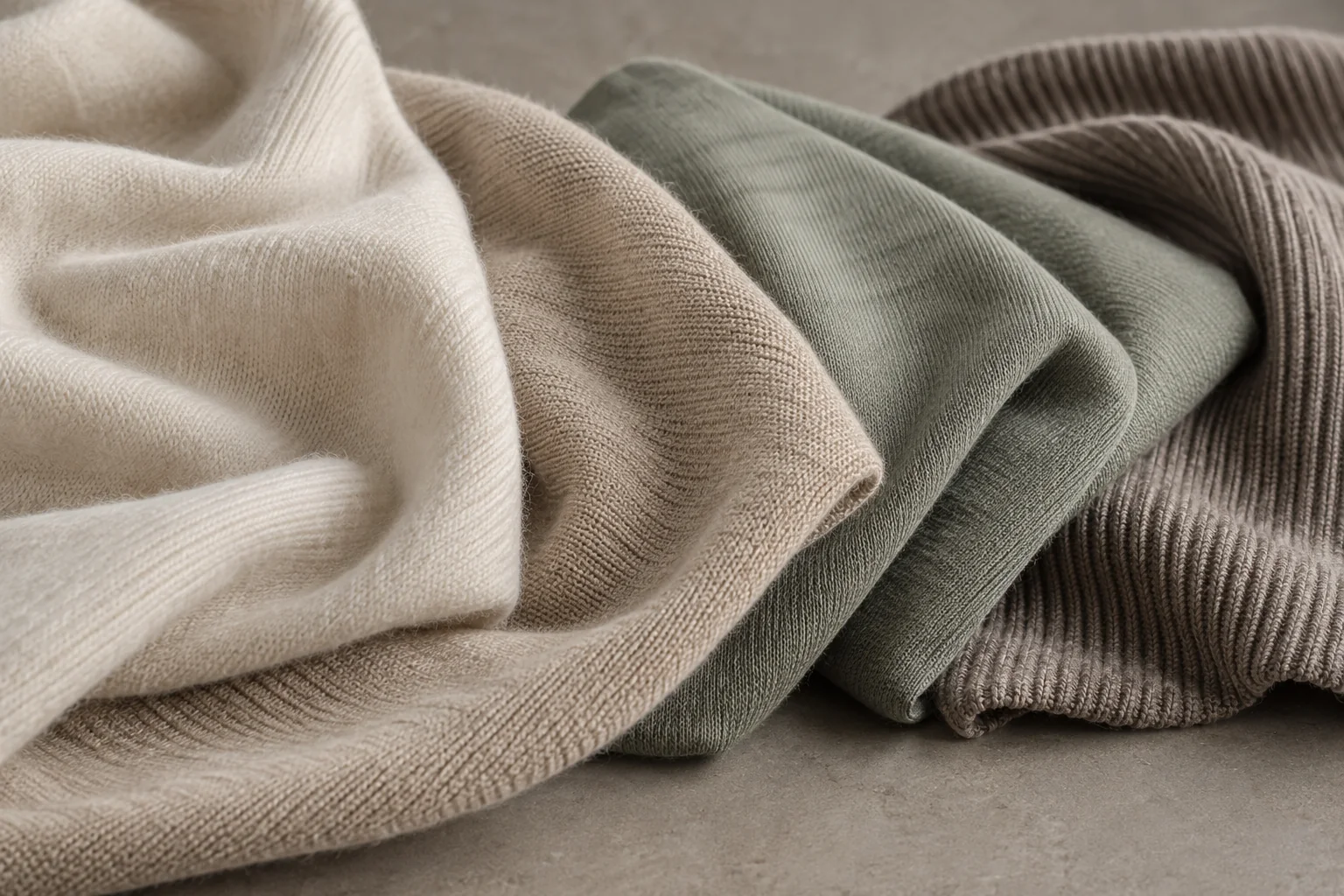
| Property buyers often discuss | What may be true in a suitable construction | What still needs verification |
|---|---|---|
| Soft hand | Fine regenerated cellulosic yarns and a suitable finish can feel smooth against skin | Softness after laundering, pilling, finish durability, and hand change from dyeing |
| Drape | Many lightweight bamboo-based knits and wovens can fall with a fluid hand | Recovery, seam behavior, opacity, and whether the drape suits the silhouette |
| Moisture comfort | Absorbent cellulosic fibers may take up moisture and feel comfortable in a light garment | Wicking, spreading, drying time, wet strength, and the exact test method |
| Breathability | Open knit construction, low density, and garment design can allow air movement | Air permeability, coverage, layering, and performance at the finished-garment level |
| Stretch | Knit loops or an elastane blend can create extension | Stretch direction, power, recovery, growth, seam stability, and wash change |
| Durability | A well-selected yarn and construction can support the intended wear cycle | Breaking strength, tear or seam performance, abrasion, pilling, and care exposure |
| Antibacterial behavior | A marketing claim may exist for a particular treatment or tested material | A defined test, stated conditions, and claim substantiation; do not infer it from bamboo alone |
The buyer’s job is to convert a comfortable-feeling swatch into a measurable material brief. If the fabric is for a high-use garment, add a wash cycle and wear simulation before approving a bulk color or trim package.
Is bamboo fabric good for activewear?
Bamboo-based fabric can be a good starting point for soft base layers, relaxed yoga tops, lounge-active crossover garments, and low-to-moderate intensity tees when the approved construction meets the garment brief. It is not automatically the best choice for every high-output product. A legging, compression top, or training short may need faster drying, stronger recovery, higher abrasion resistance, or different opacity than a soft bamboo jersey provides.
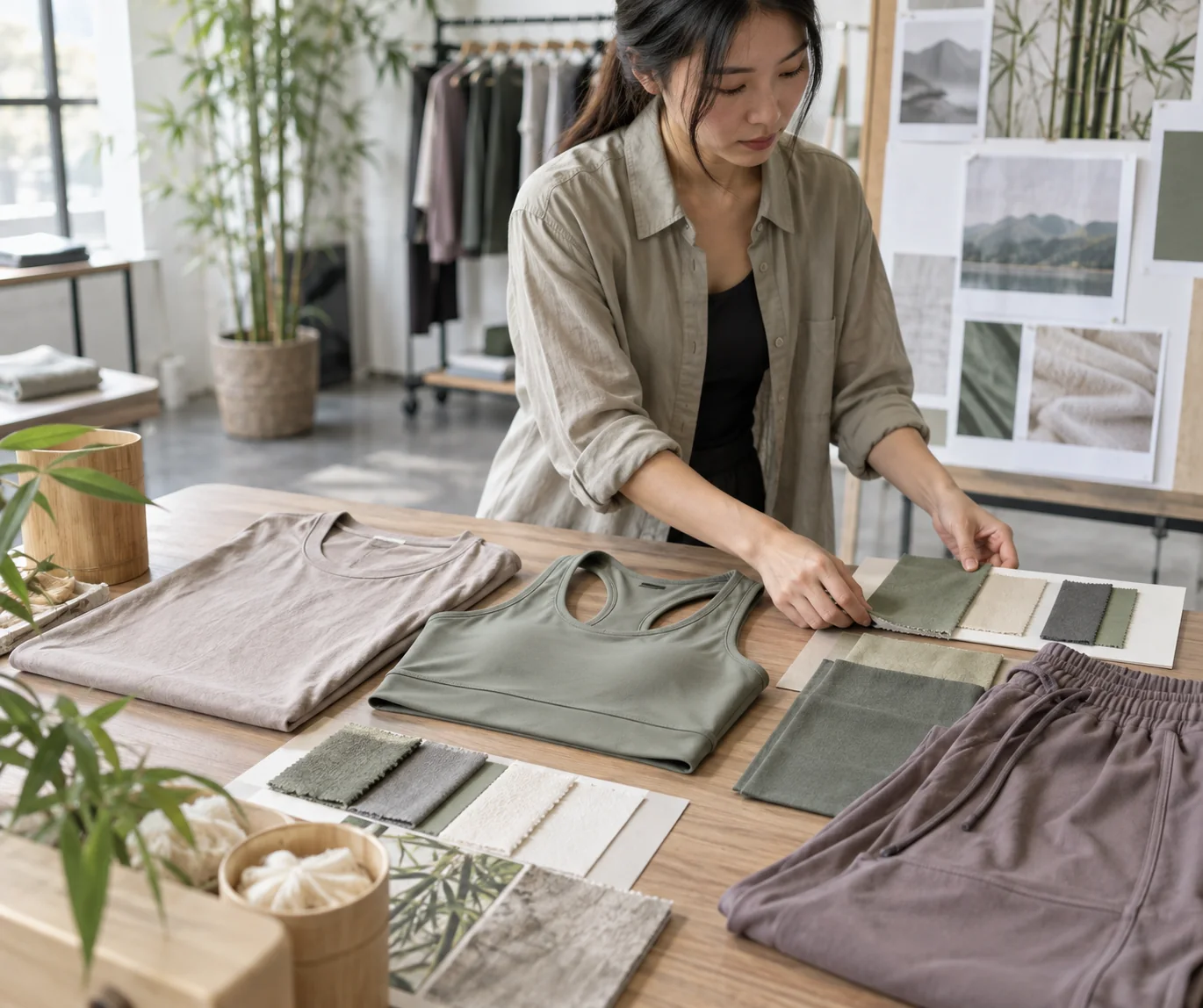
| Activewear job | Bamboo-based direction worth investigating | Checks before committing to a style |
|---|---|---|
| Soft base layer or everyday tee | Lightweight jersey or interlock with a comfortable hand | Opacity, pilling, shrinkage, neck recovery, sweat marks, and print response |
| Yoga or low-impact top | Soft stretch knit with enough recovery for the fit | Four-way stretch, recovery, seam comfort, bra coverage, and wash shape |
| Lounge-active crossover | Drapey bamboo blend with a stable neckline and hem | Growth, seam slippage, colorfastness, surface change, and care instructions |
| High-sweat training tee | Bamboo blend or engineered construction selected for drying and durability | Wicking, drying, odor claim evidence, abrasion, colorfastness, and finished fit |
| Fitted leggings or compression panel | A bamboo-based stretch blend only when recovery and opacity meet the target | Squat opacity, power, recovery, pilling, seam strength, waistband stability, and wash results |
| Lightweight woven short or overshirt | Stable bamboo blend or woven route with the required hand | Tear strength, seam slippage, movement allowance, wrinkle behavior, and pocket stress |
Use the Best Fabric for Activewear guide when the question is broad, then bring the chosen product job into a fabric-specific brief. The right fabric is the one that passes the job’s constraints, not the one with the most attractive plant story.
Bamboo fabric construction: knit, woven, blends and finishes
Fiber identity does not replace fabric construction. Knits are formed from loops, so they can provide extension and a soft hand, but they can also curl, grow, or lose shape when the density and finishing are not controlled. Wovens use crossing yarn systems and can be more stable, but they may require added stretch, a looser fit, or pattern ease for movement.
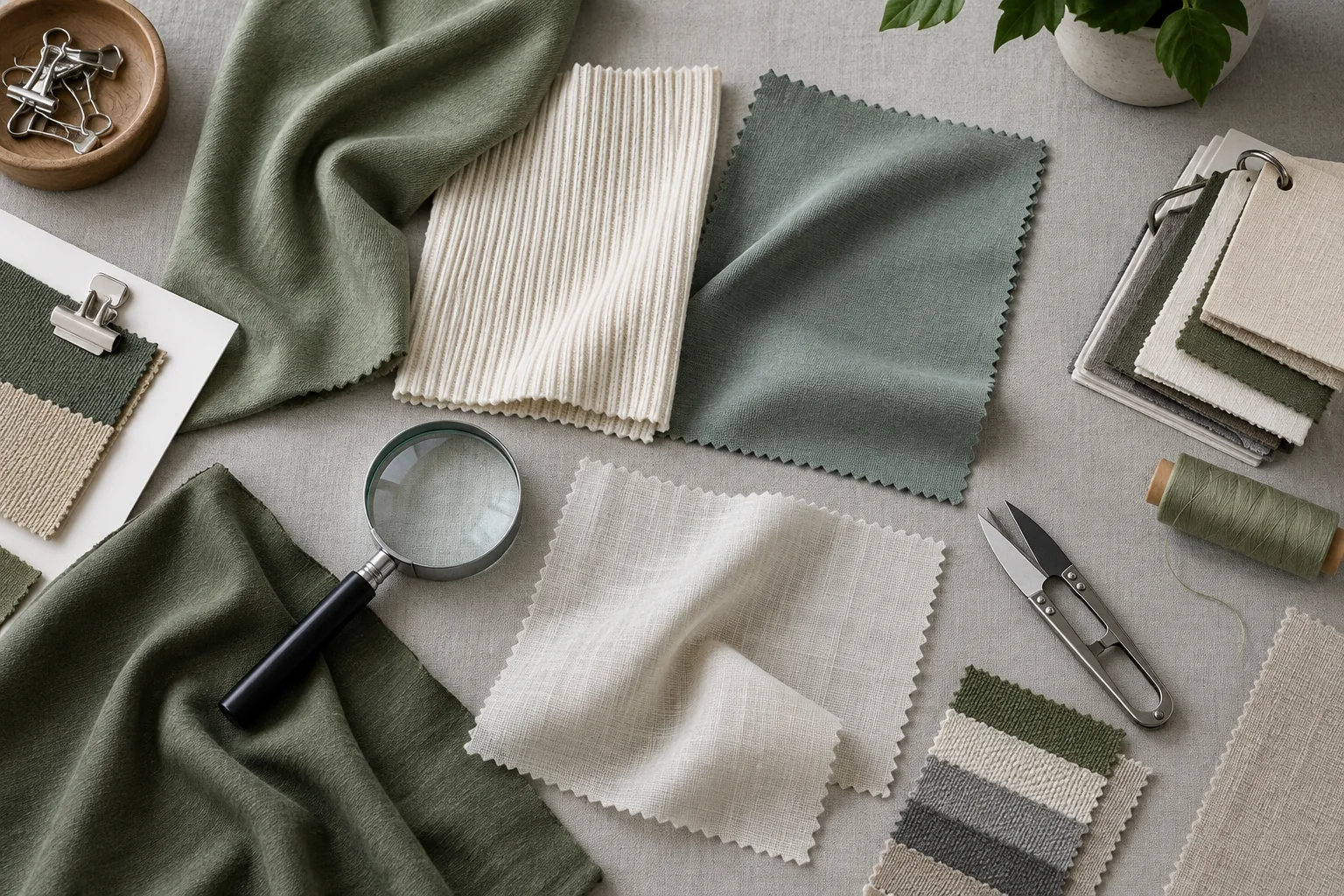
Ask for the construction instead of accepting a generic fabric name. Jersey, rib, interlock, fleece, double knit, woven plain weave, twill, and brushed surfaces will not behave the same way even if their fiber-content line contains the same bamboo-derived component.
Blends can solve a specific limitation. Elastane can improve stretch and recovery. Polyester can change drying, strength, and color behavior. Cotton can change hand, price, and shrinkage. Modal or another cellulosic fiber can change softness and drape. A blend is not automatically better; it is useful only when the percentage and finished performance fit the garment.
Finishes should be documented separately. Softening, brushing, wicking treatments, anti-pilling treatments, printing, coating, bonding, and heat setting can change hand, friction, moisture transport, colorfastness, and care. Approve the finished version rather than assuming that the greige or unfinished fabric represents the garment.
Bamboo vs cotton, modal, lyocell and polyester
Material comparisons are useful when they explain a decision. They become misleading when they rank whole fiber families without stating the construction, blend, finish, or test conditions.
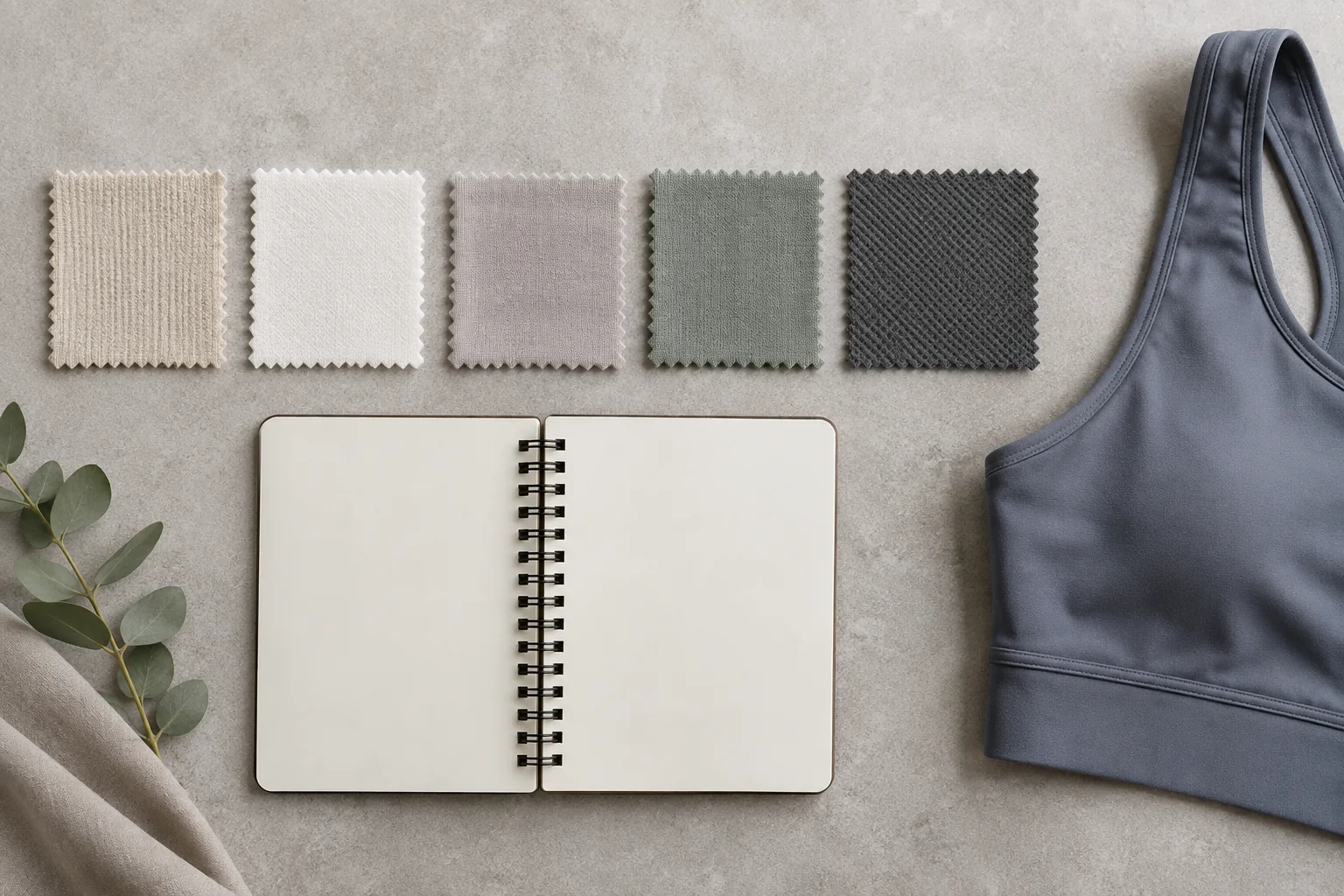
| Material direction | Common reason a buyer investigates it | Trade-off to examine | Better comparison question |
|---|---|---|---|
| Bamboo-derived regenerated cellulosic | Soft hand, drape, and a plant-source story | Route, wet strength, pilling, care, and claim wording can vary | Which documented fiber route and construction meet the garment job? |
| Cotton | Familiar hand, broad availability, and easy consumer understanding | Moisture retention, shrinkage, drying, and stretch depend on construction and blend | What are the wash dimensions, drying expectations, and recovery needs? |
| Modal | Soft drape and a smooth cellulosic hand | The exact fiber source, blend, finish, and durability still need documentation | Does the finished fabric hold shape and resist surface change for the style? |
| Lyocell | Soft hand, drape, and an established regenerated cellulosic category | Fiber route and supplier claim language must be specific | Is the generic fiber identity and process evidence clear for the destination market? |
| Polyester | Strength, color options, drying potential, and broad activewear use | Hand, static, heat response, and consumer positioning may be less suitable for some products | Which construction passes drying, colorfastness, comfort, and claim requirements? |
For an apparel line, the decision can be mixed. A buyer may use bamboo-derived jersey for a soft tee, polyester or a blend for a fast-dry training style, and a stronger stretch construction for leggings. The range architecture should follow product jobs rather than force every style into one fiber story.
Bamboo fabric claims: what a buyer can and cannot assume
The word bamboo often attracts claims about natural origin, sustainability, softness, biodegradability, breathability, or antibacterial performance. Some claims may be supportable for a specific fiber, finish, or supply chain. None should be copied into a product page or label without evidence for the actual material.

| Claim or wording | Why it needs care | Evidence to request |
|---|---|---|
| Natural bamboo fabric | The plant source does not identify the generic fiber name or processing route | Fiber-content statement, route description, and destination-market label review |
| Rayon made from bamboo | This is more specific, but the actual fiber content and supplier records still need to match | Composition record, supplier declaration, and the label text planned for the garment |
| Eco-friendly or sustainable | A broad environmental conclusion can cover farming, chemistry, energy, water, dyeing, transport, and end of life | A defined claim scope, chain-of-custody or certification evidence when applicable, and approved wording |
| Naturally antibacterial | The claim may refer to a treatment or a test result, not the bamboo feedstock itself | Test method, organism, conditions, pass criteria, validity, and whether the claim survives laundering |
| Moisture-wicking bamboo | Absorbency and wicking are not the same as fast drying, and the result depends on construction | Wicking, spreading, drying, and wash-state test results on the target fabric |
| Biodegradable bamboo fabric | End-of-life behavior depends on fiber, dyes, finishes, blends, and conditions | Material composition, test scope, environmental conditions, and qualified claim review |
The FTC’s consumer advice on bamboo fabrics explains why bamboo-derived rayon should not be described as if it were a mechanically extracted bamboo fiber. For an international program, add the destination market, the product label, packaging copy, hangtags, and ecommerce description to the review list. A claim that sounds harmless in a mood board can become a compliance issue in a finished product.
Avoid using antibacterial or sustainability language as a substitute for performance data. If the buyer needs odor management, test the finished garment under an agreed method. If the buyer needs lower-impact material evidence, define which stage and which documentation are in scope.
What to put in a bamboo fabric specification
A short material brief should be specific enough for a factory, mill, or development team to quote the same thing. The following fields prevent the plant name from becoming the whole specification.
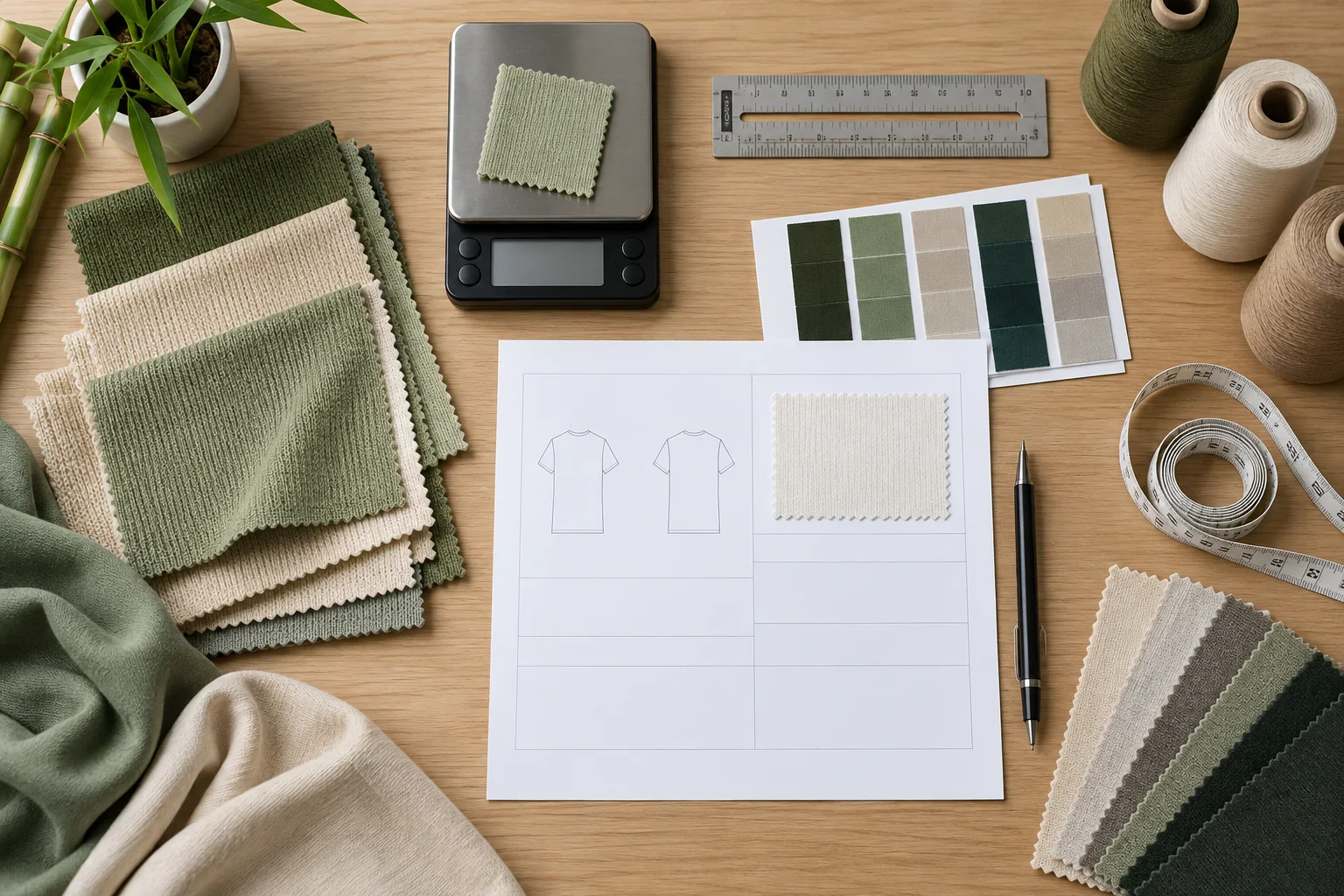
| Specification field | What to record | Why it changes the decision |
|---|---|---|
| Generic fiber name | Rayon, viscose, lyocell, cotton, polyester, elastane, or the documented combination | Fiber naming affects labeling, comparison, care expectations, and claim wording |
| Bamboo source and route | Bamboo-derived cellulose, mechanical route, or a documented blend direction | The route changes compliance questions and how the material should be described |
| Composition | Percentage of every fiber, including elastane and trims where relevant | A small percentage can control stretch, recovery, drying, or care behavior |
| Construction | Jersey, rib, interlock, fleece, woven, brushed, bonded, or other structure | Loop and yarn structure change extension, stability, coverage, and hand |
| GSM and usable width | Target weight, tolerance, finished width, and whether the number is before or after finish | Weight and width affect garment cost, opacity, drape, yield, and fit |
| Stretch and recovery | Direction, extension, power, recovery, and growth after wear or washing | Activewear fit depends on more than a simple stretch percentage |
| Finish and color | Softener, brushing, wicking, anti-pilling, coating, print, shade, and colorfastness target | The finished surface can change hand, moisture, durability, and care |
| Shrinkage and dimensional change | Length and width change after the selected care route | Pattern allowance and size grading depend on the finished fabric result |
| Pilling and abrasion | Test method, cycle or rating, face/back location, and target use | A soft surface can look attractive at first and still fail in wear |
| Care instruction | Wash, dry, iron, bleach, and warnings supported by evidence | The care label must match the approved garment and reasonable care basis |
| Decoration and trims | Print, embroidery, transfer, zipper, elastic, label, seam, and heat exposure | Decoration can change stretch, hand, wash durability, and seam stress |
Use the Tech Pack Customization service page when a product brief needs to translate into measurable garment and material fields. The goal is not to make the document longer; it is to make each line actionable.
How to sample and test bamboo fabric before bulk
Sampling should move from the least expensive evidence to the most product-specific evidence. A swatch can reject the wrong hand or weight quickly. A finished garment is needed for fit, seam, decoration, opacity, and care decisions.

| Check stage | What to inspect | Decision it supports |
|---|---|---|
| Document review | Generic fiber name, blend percentage, route, finish, claim language, and care direction | Whether the material can be described and compared correctly |
| Swatch review | Hand, drape, surface, color, width, GSM, stretch, recovery, and visible defects | Whether the fabric is worth turning into a sample |
| Dimensional check | Length and width before and after the agreed care route | Whether pattern and size assumptions remain usable |
| Performance check | Wicking, spreading, drying, opacity, pilling, abrasion, or strength as required | Whether the fabric fits the actual product job |
| Sewing trial | Cutting, curling, seam appearance, needle marks, skipped stitches, and trim response | Whether the material can be built consistently |
| Finished-garment review | Fit, movement, waistband, neckline, cover, print, labels, and wash appearance | Whether the approved fabric works as a product rather than a swatch |
| Pre-production approval | Final color, lot, construction, care label, packaging, and inspection plan | Whether bulk production has a defined reference point |
For strength testing, the ASTM D5034 grab test description explains a method used for many woven and nonwoven textiles, while also noting that high-stretch knits may need another approach. That is a useful reminder to match the test to the material and use case rather than collecting a number with no decision behind it.
For accelerated laundering and colorfastness decisions, AATCC TM61 is a reference point for an accelerated laundering procedure. The AATCC standard laundering guidance also shows why detergent, temperature, agitation, drying, and the number of cycles should be agreed before results are compared. These references are test-method guidance, not proof that a particular DTS sample has passed.
Use the Sampling and Prototyping path when the team needs to turn a bamboo fabric idea into a sewn sample with a defined approval list. Confirm exact MOQ, lead time, available route, testing scope, and bulk terms against the project brief and sample result.
Which garments can use bamboo fabric?
Bamboo-based fabrics are commonly considered for soft tees, base layers, underwear, sleepwear, yoga garments, lounge-active styles, and lightweight everyday apparel. A supplier should still confirm the exact quality and construction for each style. The same composition can behave differently when made as a fine jersey, a dense interlock, a rib collar, or a brushed fabric.
For a custom T-shirt, review the neckline, shoulder seams, body opacity, hem recovery, print area, and wash dimensions. For a custom tank top, add armhole recovery, bra coverage, sweat appearance, and movement comfort. A lower-body style may need higher recovery, lower growth, stronger seam performance, and tighter pilling controls than a relaxed tee.
Do not select a fabric by garment category alone. Select it by contact with skin, movement, sweat, abrasion, stretch, decoration, care, and the buyer’s target price and delivery requirements.
How should bamboo fabric be cared for?
Care depends on the actual fiber route, construction, dye, finish, and garment. A soft bamboo-based fabric may change in hand or dimensions when exposed to heat, aggressive agitation, or unsuitable drying. The approved care instruction should follow evidence from the finished garment rather than a generic assumption about bamboo.
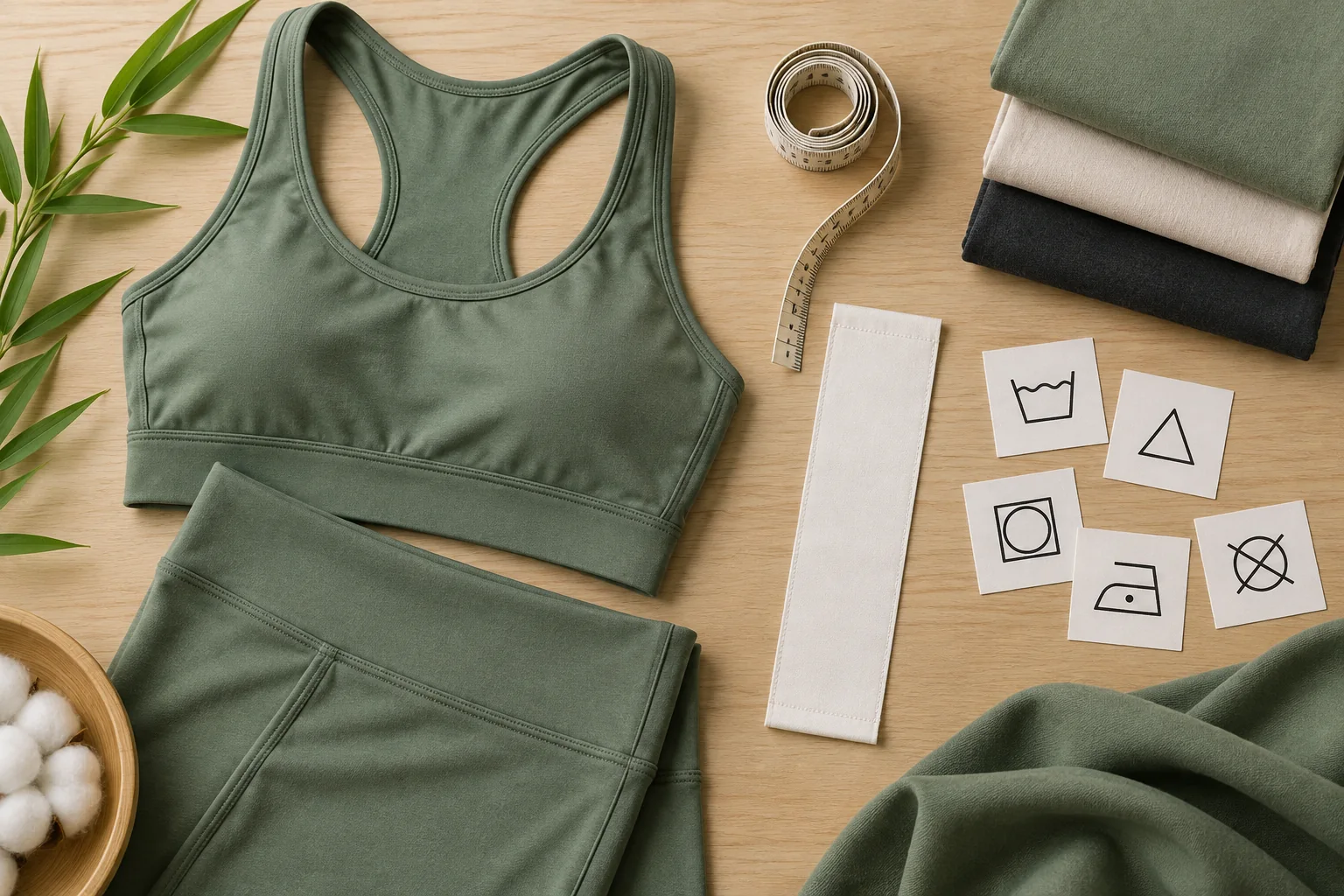
The FTC Care Labeling Rule is a useful US reference for care instructions supported by a reasonable basis. In a development file, record the selected wash and dry route, dimensional change, colorfastness, surface appearance, print or trim response, and any warning that a consumer needs to keep the garment within the tested conditions.
If care is a commercial concern, put the care route into the original RFQ. A fabric that looks perfect only under a delicate process may not be appropriate for a uniform, activewear line, or customer base that expects easy home care.
From a bamboo fabric question to an approvable sample
The fastest useful inquiry is not a vague request for bamboo fabric. It is a structured request that states the garment, target hand, fiber route, composition direction, GSM, stretch, color, finish, destination market, claim requirements, and sample questions. Attach a sketch or tech pack when available, and explain whether the fabric is for a tee, base layer, yoga top, lounge-active piece, or another job.

Before a quote is treated as a production decision, ask for the generic fiber name, blend percentage, route description, finished construction, available test records, care direction, sample plan, and any project-specific constraints. A clear brief lets the development team identify what can be confirmed now and what needs a sample or laboratory check.
Use the NDA-first apparel inquiry path for confidential concepts. DTS Activewear can review the product job, material direction, reference swatch, garment details, and development questions. Exact material feasibility, MOQ, lead time, pricing, testing scope, and available documentation are confirmed against the project, not assumed from the word bamboo.
Use the process, not the plant name, to approve bamboo fabric
Bamboo fabric can be a sensible choice when the route, generic fiber name, construction, claims, care, and finished-garment results are clear. The best buying decision is not the one with the most attractive material story. It is the one that turns a bamboo-based idea into a documented brief, a representative sample, and a measurable approval reference for bulk production.
Frequently asked questions
Bamboo is a natural plant source, but commercial bamboo fabric may be a regenerated cellulosic fiber rather than a mechanically extracted plant fiber. Use the generic fiber name and documented route to describe the textile accurately. A plant source does not by itself describe the chemistry, finish, construction, or finished-garment behavior.
Not exactly. Bamboo fabric is a broad commercial description, while bamboo viscose or rayon made from bamboo identifies a regenerated cellulosic direction. A complete specification should still state the generic fiber content, blend percentage, construction, GSM, finish, and care route.
It can feel comfortable and allow air movement in a suitable lightweight knit or open construction, but breathability is not guaranteed by the plant source. Check air permeability, fabric density, garment layering, and the use case. A dense or brushed fabric can behave differently from a lightweight jersey.
Bamboo-based fabric can suit soft base layers, yoga tops, tees, and lounge-active garments when the construction passes the brief. High-sweat, compression, or abrasion-heavy products may need a blend or another construction with stronger drying, recovery, opacity, and durability evidence.
Do not assume that it is. An antibacterial claim needs a defined test, stated conditions, pass criteria, and evidence that relates to the actual material or finish. If the claim is important to the product, review it with the destination-market compliance team and test the finished garment when appropriate.
There is no universal answer from the fiber name alone. The comparison can include cultivation, processing chemistry, energy, water, dyeing, transport, blend content, durability, care, and end of life. Ask which impact claim is being made, what evidence supports it, and whether the wording applies to the finished product.
Specify the generic fiber name, bamboo source or route, composition, knit or woven construction, GSM, usable width, stretch and recovery, finish, color, shrinkage, pilling or abrasion target, care, decoration, destination market, and the sample or test result needed for approval.
Start with document and swatch review, then check dimensions, stretch and recovery, colorfastness, pilling, strength or seam behavior, moisture performance, opacity, and care as the garment requires. Sew a representative sample before final approval so that fit, decoration, trims, and wash appearance are evaluated together.