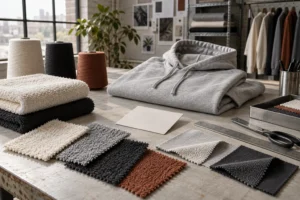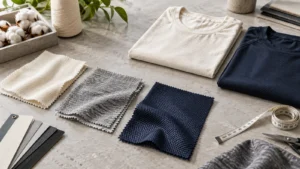
Nylon fabric is a textile made from synthetic polyamide fibers. The word nylon identifies the fiber family, but it does not fully describe the finished fabric. Knit or woven construction, yarn form, GSM, finish, color, stretch, recovery, and garment design determine how a nylon fabric feels and performs.
For an apparel buyer, the useful answer to what is nylon fabric is this: nylon is often selected when a product needs a smooth hand, good strength, abrasion resistance, light weight, or a flexible base for a stretch blend. It is not automatically breathable, moisture-wicking, opaque, or suitable for every garment. Those claims must be checked on the actual fabric and finished sample.
This guide moves from the fiber definition to the decisions behind a quote: how nylon differs from polyester, how blends change the product, which fabric fields belong in a tech pack, and which checks should happen before bulk production.
What is nylon fabric?
Nylon fabric is made by forming nylon, a synthetic polyamide fiber, into yarn and then building that yarn into a knit or woven textile. Nylon can be used alone or blended with other fibers. The National Institute of Standards and Technology fiber guide describes nylon as a man-made fiber used alone and in blends, with strength and abrasion resistance among its important contributions.
The definition is simple, but a fabric name is not a complete specification. Two fabrics can both be called nylon and still differ in surface, thickness, opening, stretch, opacity, drying behavior, and sewing response. A nylon jersey for a fitted top is not interchangeable with a woven nylon for training shorts or a firm nylon-elastane fabric for leggings.
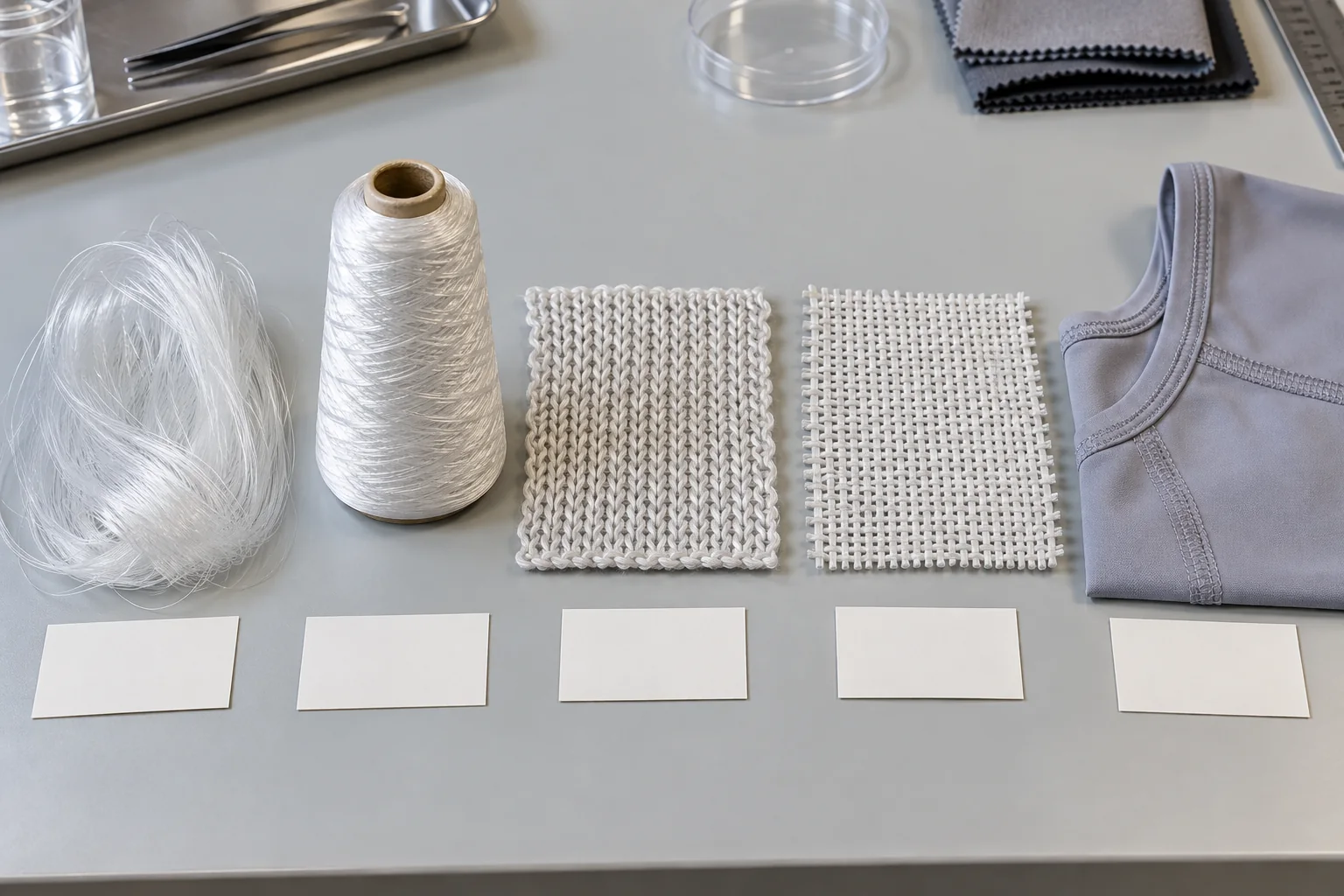
When a supplier writes only "nylon fabric" on a quotation, separate the name into these four layers:
- Fiber identity: Nylon or polyamide, recorded with the documented fiber content and any blend.
- Yarn: Filament or spun yarn, yarn size, texture, and any documented special construction.
- Fabric construction: Knit or woven route, density, surface, GSM, usable width, and stretch direction.
- Garment result: Panel placement, fit, lining, seam design, decoration, care route, and the buyer’s acceptance criteria.
For US apparel labeling, the Federal Trade Commission textile labeling guidance lists nylon among the generic fiber names used for fiber-content disclosures. The destination market and final product details still need a compliance review. Do not use a supplier nickname as a substitute for the documented fiber content.
| Specification layer | What it tells the buyer | What it does not tell the buyer |
|---|---|---|
| Fiber identity | Which polymer fiber or blend is present | The fabric weight, opening, hand feel, or finished-garment fit |
| Yarn | How the fiber is formed and presented to the fabric machine | The final stretch, opacity, or seam behavior by itself |
| Fabric construction | How the yarns create a knit or woven surface | The result after dyeing, finishing, printing, sewing, and washing |
| Garment design | Where the fabric is used and what the wearer experiences | The properties of an untested fabric lot or a different construction |
Why nylon feels strong, smooth, and different from polyester
Nylon is often chosen for a smooth surface and a strong, durable feel. NIST identifies strength and abrasion resistance as key contributions of nylon in fiber and blend applications. That does not mean every nylon fabric will outlast every polyester fabric. Yarn size, fabric density, finishing, garment stress, seam design, and care all affect the result.
Nylon also interacts with moisture differently from polyester. The ASTM D1909 standard publishes commercial moisture-regain values for textile fibers, but the standard explains that actual regain can deviate from the listed commercial values. In practice, a fiber’s moisture behavior is not the same thing as a finished fabric’s wicking or drying result.
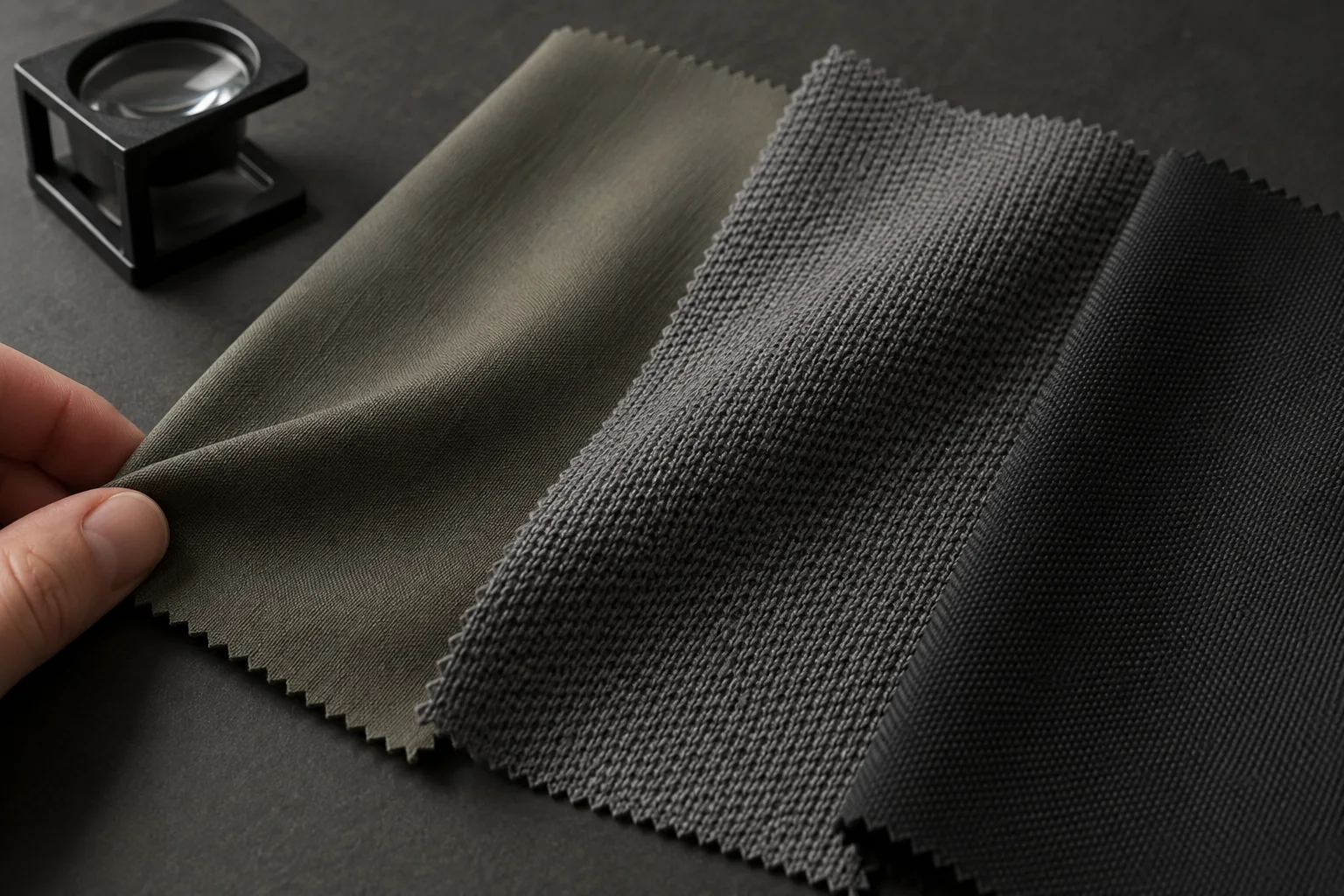
For activewear, avoid turning fiber reputation into an unqualified product promise. A nylon fabric may feel comfortable and durable, while a particular polyester construction may dry faster or hold color better for a given product. Compare the finished fabrics under the same test conditions.
| Property to review | Possible buyer benefit | What needs verification |
|---|---|---|
| Strength and abrasion resistance | Better fit for garments exposed to rubbing or repeated movement | Fabric construction, seam placement, abrasion method, and project acceptance level |
| Smooth or soft surface | More comfortable hand feel against skin or under layers | Actual swatch, finish durability, pilling, and wash change |
| Moisture interaction | Can influence comfort and drying behavior | Fiber blend, yarn, knit structure, finish, wicking test, and drying test |
| Light weight | Useful when the garment needs low bulk or packability | GSM, usable width, opacity, tear behavior, and seam stability |
| Dye and decoration response | Can support a clean product appearance | Color approval, crocking, heat exposure, print route, and wash result |
| Stretch base | Can support movement when construction or elastane provides extension | Stretch direction, power, recovery, growth, and finished-garment fit |
The What Is Polyester Fabric guide is a useful companion when the decision is between nylon and polyester. Use it to compare the fiber families, then return to the actual fabric data rather than choosing from the label alone.
Nylon fabric types buyers may encounter
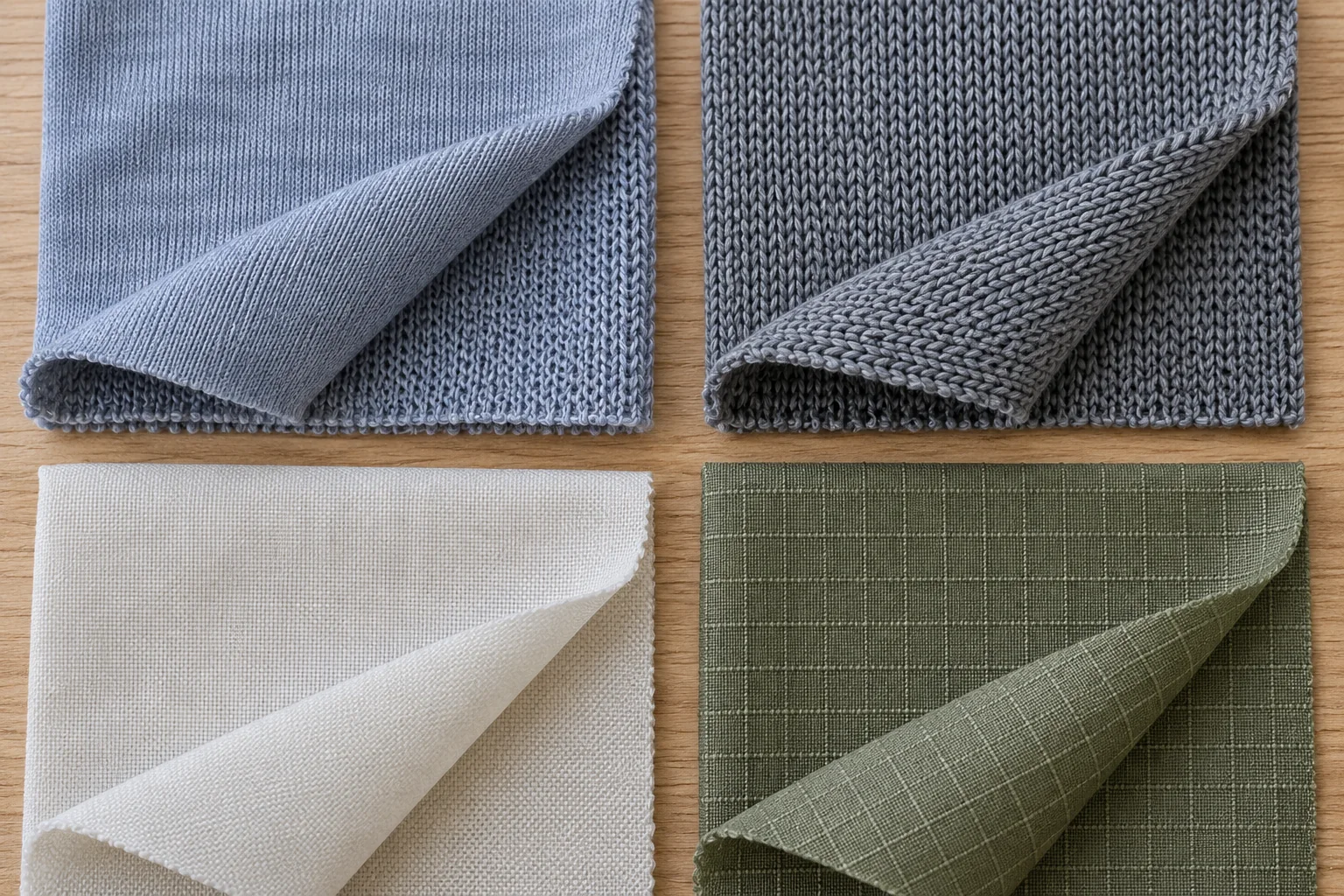
The phrase nylon fabric can describe several construction routes. The first practical split is knit versus woven. A second split is the surface and stability created by yarn choice, density, finishing, and any added elastane or backing.
Knitted nylon
Knitted nylon is built from loops. Depending on the knit structure and yarn, it can provide a soft hand and useful extension for close-fitting garments. Loop structure can also allow the fabric to curl, grow, snag, or lose shape if the construction and finishing are not appropriate for the product. Do not approve a knit only because a small swatch feels stretchy.
Woven nylon
Woven nylon uses crossing yarn systems and can provide a more stable surface for shorts, lightweight outer layers, panels, or utility details. A woven fabric may have little natural stretch unless the construction or blend adds it. Check drape, tear behavior, seam slippage, crease recovery, and movement allowance for the finished garment.
Nylon with finishes or surface effects
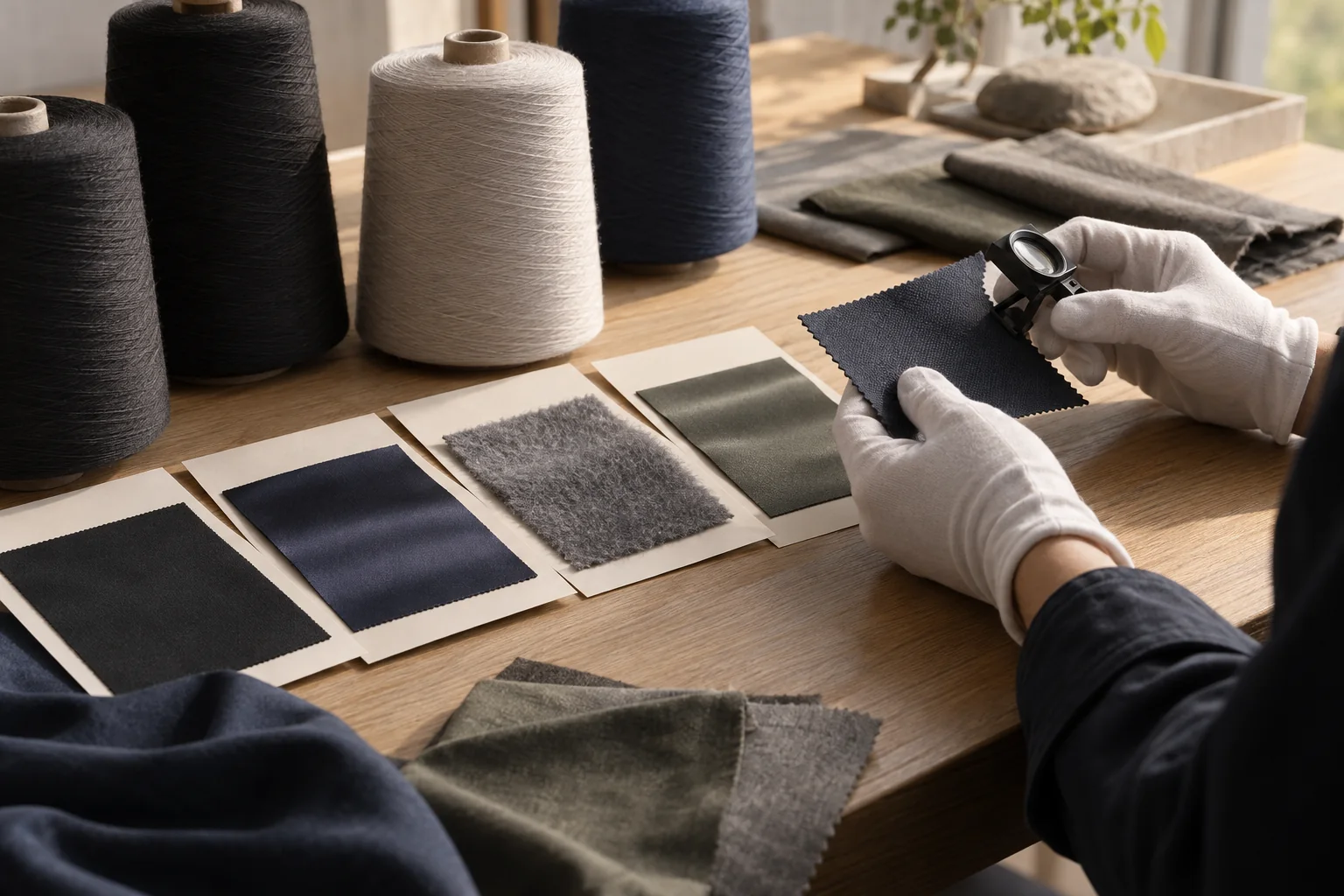
A finish can change luster, hand feel, water interaction, surface friction, or appearance. A coating, brushing, bonding layer, or print can change the behavior that a buyer associated with the base nylon. Record the finish as a separate field and include the finished version in approval.
| Construction route | Where it may fit | Buyer risk if the name is used alone |
|---|---|---|
| Stretch knit nylon | Fitted tops, leggings, sports bras, and flexible panels | Extension may be high but recovery, opacity, or seam stability may be insufficient |
| Stable knit nylon | Tops, lining panels, lightweight layers, or structured details | A stable surface may feel too firm or lack movement comfort |
| Woven nylon | Training shorts, wind-resistant layers, pockets, and utility details | Low stretch, noise, crease behavior, or seam stress may not suit the design |
| Fine or textured nylon surface | Fashion details, lining, or a distinct hand-feel direction | Surface effect may change after wash, heat, printing, or rubbing |
| Nylon with coating or backing | A product that needs a specified surface or barrier direction | Coating can alter hand, breathability, drape, care, and seam handling |
Ask for a swatch and a construction description before treating a trade name as a material choice. The same word can refer to different constructions from different suppliers.
Nylon vs polyester for activewear
Nylon and polyester are both common synthetic fibers for sportswear, but "which is better" has no universal answer. Nylon may be the stronger direction when the brief prioritizes a smooth hand, abrasion resistance, or a premium next-to-skin feel. Polyester may be the better direction when a specific fabric construction, color route, drying behavior, decoration process, or cost target is more important. The finished fabric and garment decide the result.
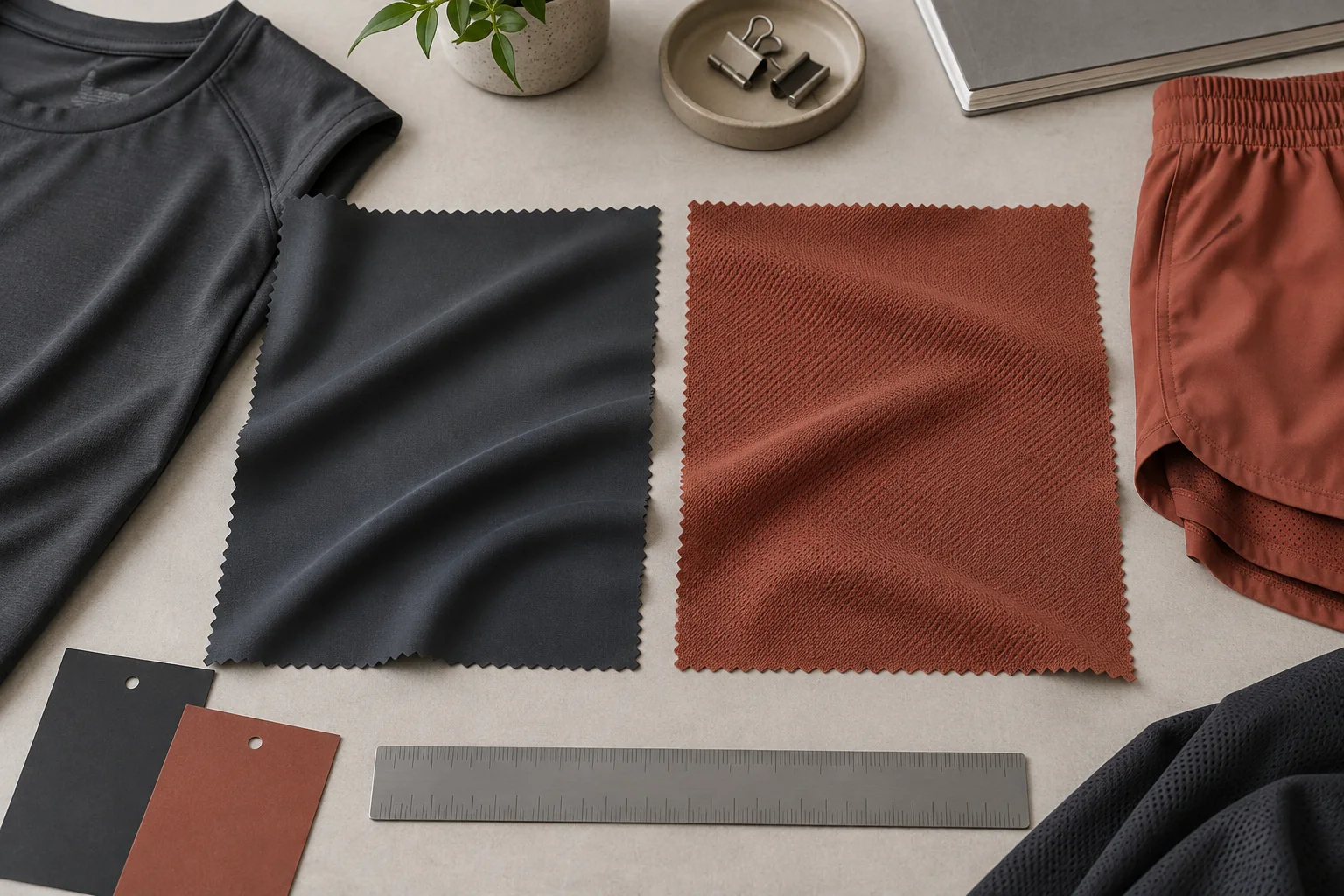
Treat the comparison as a decision matrix, not a scorecard. A nylon fabric with a weak construction can perform worse than a well-engineered polyester fabric. A dense nylon-elastane knit can feel very different from a lightweight woven nylon, even though both carry the nylon name.
| Decision factor | Nylon-first direction | Polyester-first direction | What to compare in the sample |
|---|---|---|---|
| Hand feel | Smooth, soft, or low-friction surface is central to the brief | A technical or structured surface is acceptable | Face and back hand, skin contact, seam comfort, and wash change |
| Repeated rubbing | The garment has high contact or abrasion zones | The selected polyester construction already has suitable wear evidence | Abrasion method, seam design, pilling, snagging, and visual change |
| Moisture management | Comfort depends on the exact nylon blend and structure | The selected polyester fabric has a tested moisture route | Wicking, spreading, drying, and test conditions rather than fiber name |
| Stretch garment | Nylon is paired with the required stretch system | Polyester is paired with the required stretch system | Extension, power, recovery, growth, and fit after care |
| Decoration | A specific print, embroidery, or heat route must work on the surface | The decoration route is already matched to the selected surface | Adhesion, strike-through, color, hand, and wash result |
| Product identity | The brand wants a smooth or premium fabric story | The brand wants a technical or uniform fabric story | Approved swatch, composition, appearance, and claim wording |
For a broad product selection question, compare this article with Best Fabric for Activewear. That page covers the wider activewear decision; this article focuses on turning nylon into a complete material brief.
How nylon blends change the product
The blend is often more important than the fiber headline. Nylon can be combined with elastane or spandex to add extension and recovery, or with another synthetic fiber to tune hand, stability, appearance, or cost. The correct composition depends on the product job and has to be confirmed on the actual approved fabric.
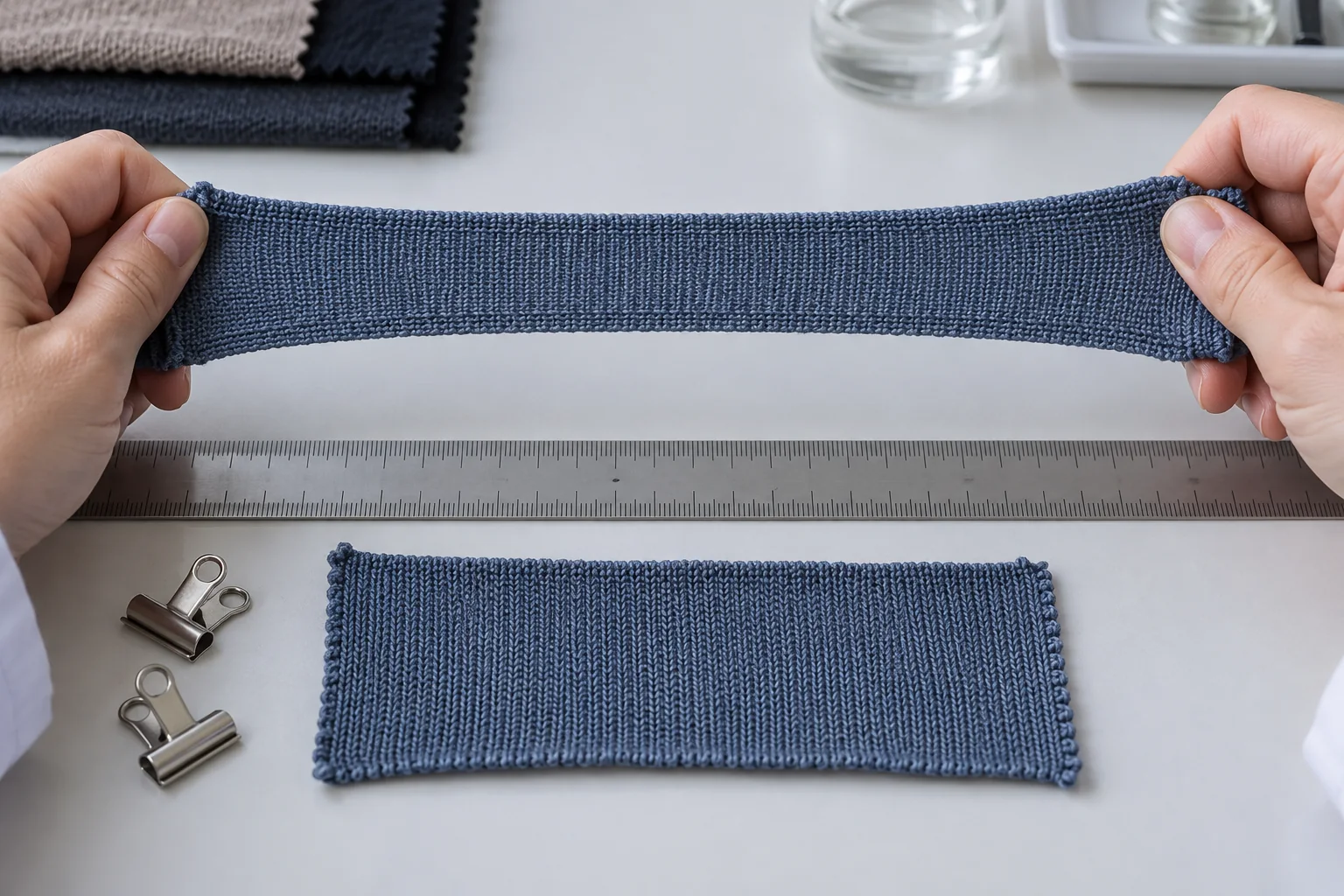
When a supplier uses both "spandex" and "elastane" in conversation, record the exact documented fiber content and the naming required for the destination market. A blend percentage without a construction, GSM, stretch direction, and recovery expectation is still incomplete.
| Blend route | What it may contribute | Questions to answer before approval |
|---|---|---|
| Nylon with elastane or spandex | Extension, body movement, and recovery potential | What are the fiber percentages, stretch directions, power, recovery, and care limits? |
| Nylon with polyester | A balance of surface, stability, and fiber characteristics | Which fiber is on the face, what is the construction, and how are moisture and color claims tested? |
| Nylon alone | A clear single-fiber direction with a defined hand and structure | Does it have enough stretch, opacity, drape, and recovery for the garment? |
| Nylon with a backing or lining layer | A changed hand, coverage, or handling direction | Is the layer bonded, sewn, or separate, and how does it behave after washing? |
| Nylon with a surface finish | A changed visual or tactile result | Is the finish durable, and does it affect print, embroidery, heat, care, or skin contact? |
The What Is Spandex guide explains the stretch-fiber side of the decision. Use the two pages together when a nylon activewear brief includes a target fit, compression direction, or recovery requirement.
Choose nylon by garment job, not by fiber name
Start with the product job and the stress points. A leggings brief may need stretch, recovery, opacity, and a stable waistband. A training-short brief may need light weight, movement allowance, pocket stability, and controlled drying. A lightweight outer layer may prioritize woven stability and surface behavior instead.
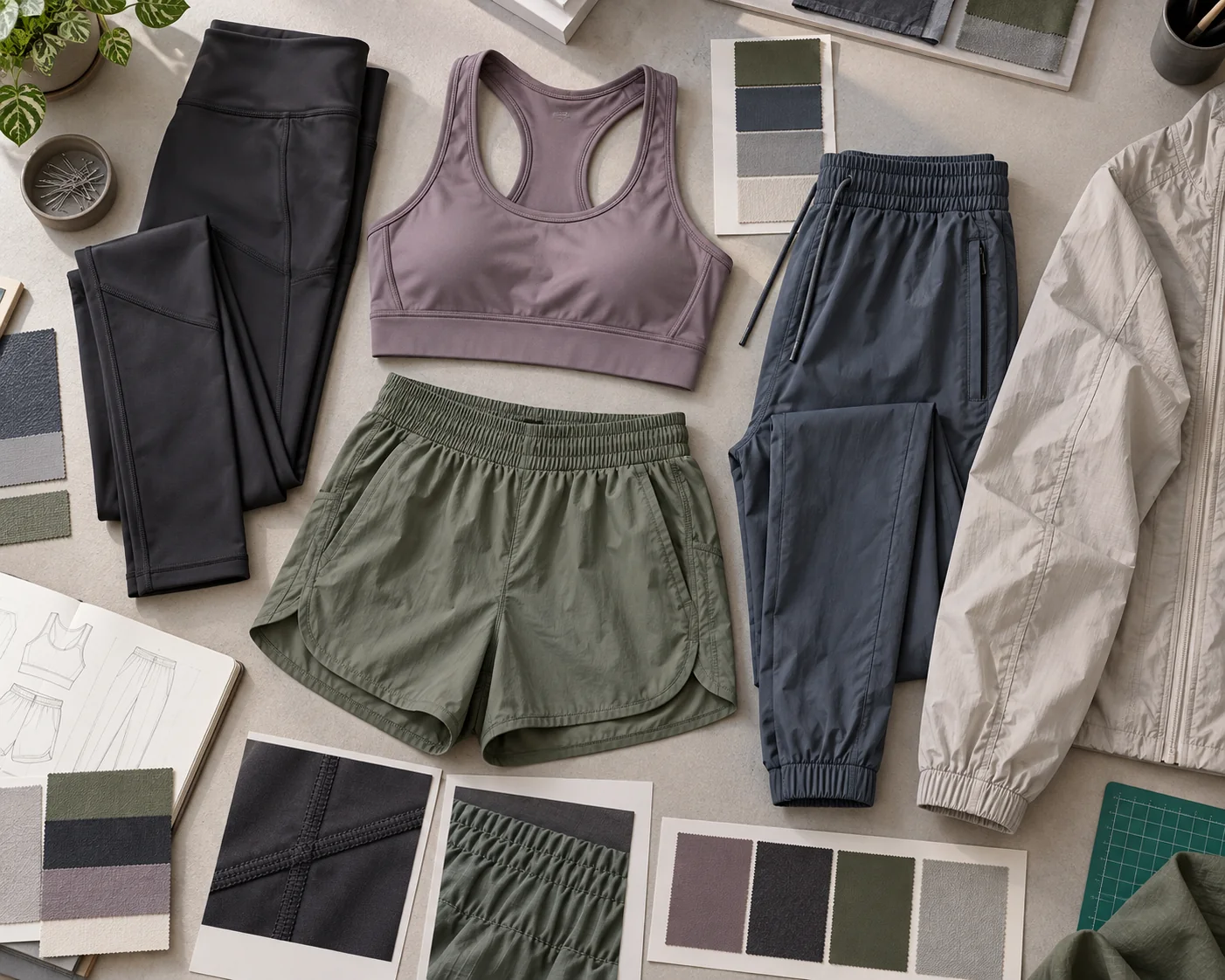
The site has separate product paths for custom training shorts and custom joggers. The product link is only the next conversation step. The final fabric direction still depends on the buyer’s drawing, target fit, color, decoration, quantity, and approved sample.
| Product job | Useful nylon direction to investigate | Confirm before sampling |
|---|---|---|
| Close-fitting leggings or yoga bottoms | Stretch knit nylon with a defined recovery and coverage target | Stretch and recovery, opacity under movement, pilling, waistband behavior, and care |
| Sports bra or fitted training top | Soft stretch surface with stable support zones | Skin comfort, support construction, lining, recovery, seam pressure, and decoration |
| Training shorts | Lightweight woven or knit option matched to the cut | Drape, movement, pocket strength, lining, drying behavior, and seam stability |
| Lightweight jacket or outer layer | Woven nylon direction with the required surface and movement allowance | Noise, crease behavior, surface finish, pocket construction, and care route |
| Ventilation or contrast panel | Nylon knit or open structure selected for the panel job | Coverage, edge stability, stretch direction, snagging, and attachment seam |
| Streetwear detail or utility pocket | Stable nylon surface or a documented coated route | Hand, appearance, seam handling, abrasion points, and print or embroidery response |
Do not promise that a single nylon quality can serve every style in a collection. A shared fabric family can simplify development, but the buyer should approve the role of each construction in each garment.
What to put in a nylon fabric specification
An actionable specification lets a supplier quote the same product the buyer is imagining. It also gives the sample and quality teams a reference for deciding whether a later lot is still acceptable.
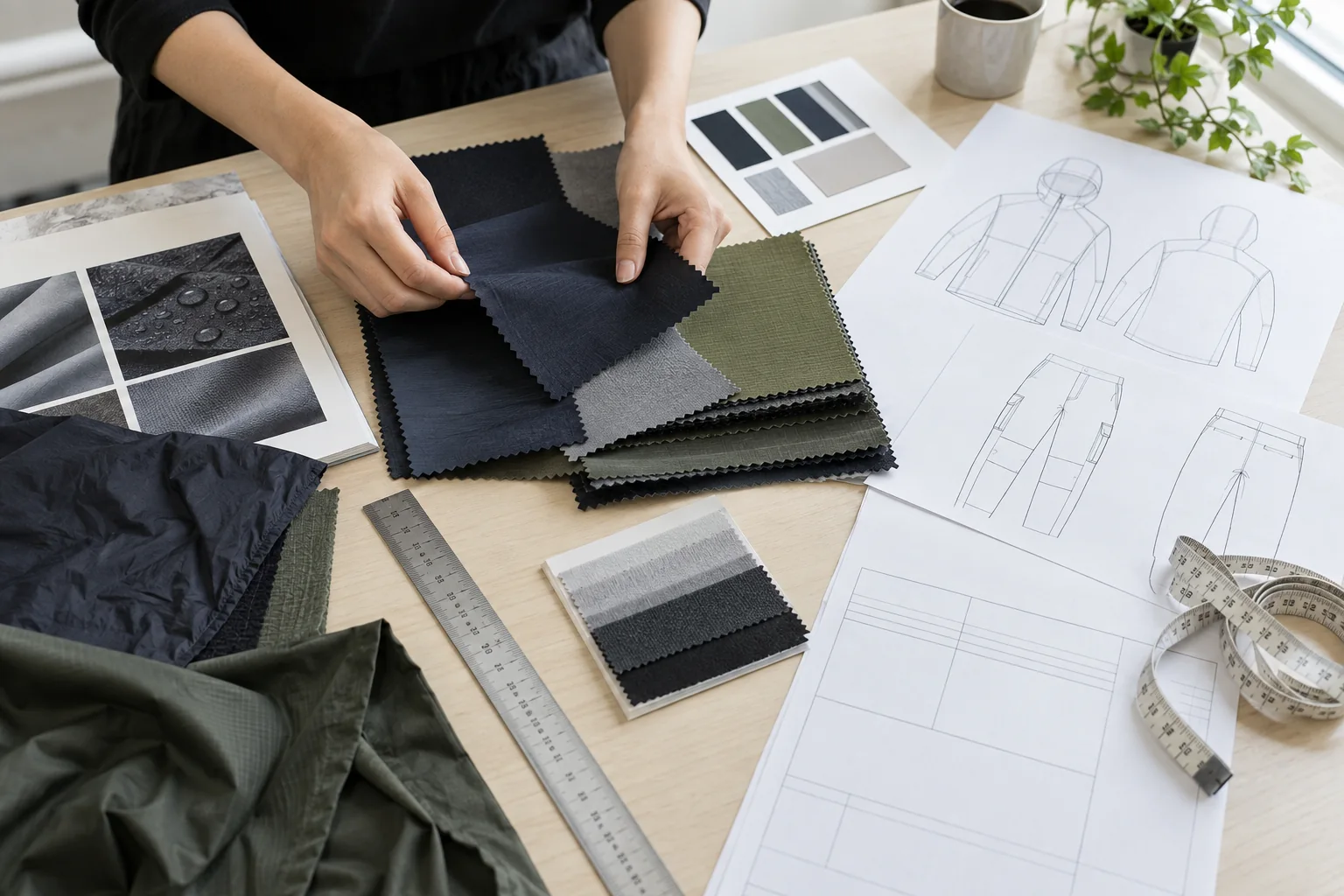
Include these fields in the material section of the tech pack:
- Fiber content and the documented fiber naming for the destination market.
- Knit or woven construction, plus the fabric face and back.
- Yarn or surface details when they affect hand, shine, texture, or strength.
- Target GSM, usable width, color, and finish.
- Stretch direction, extension method, power, recovery, and growth limits when relevant.
- Opacity, pilling, snagging, abrasion, tear, and seam requirements for the product job.
- Decoration route, test artwork, placement, and any heat or pressure limitation.
- Wash, drying, ironing, and label requirements after the garment is approved.
- Swatch ID, sample version, comments, and the approval owner.
- Inspection method, tolerance, defect classification, and the point at which a lot is held for review.
The GSM Meaning in Clothing buyer guide can help your team separate fabric weight from fiber identity. GSM is useful, but it cannot replace composition, construction, stretch, or sample evidence.
| RFQ field | A usable request describes | Why it changes the decision |
|---|---|---|
| Composition | Documented nylon or polyamide content and any blend percentage | Fiber naming affects labeling, hand, performance expectations, and comparison |
| Construction | Knit or woven route, face, back, and surface | Construction changes stretch, drape, opacity, and sewing response |
| Weight and width | Target GSM, acceptable range, usable width, and roll presentation | Weight and width affect fit, yield, costing, and cutting decisions |
| Stretch system | Direction, extension, power, recovery, and growth method | A stretch claim without a method cannot control a finished garment |
| Finish and color | Dye, surface finish, luster, hand, color standard, and lot control | Finishes and color routes can change touch, appearance, and care behavior |
| Performance checks | The property to test, method, condition, and acceptance rule | The team can compare like with like and avoid vague "performance" claims |
| Decoration and care | Print or embroidery route plus the approved care direction | Decoration and care can change the fabric after production and washing |
If a field is not known at the quotation stage, state the open question and make it a sample approval item. A clear unknown is safer than a guessed specification.
Sampling and testing before bulk
The shortest safe path is usually swatch review, fabric test, prototype, finished-garment test, and documented approval. The exact sequence changes with the product and destination market, but the principle stays the same: test the claim on the construction that the customer will receive.
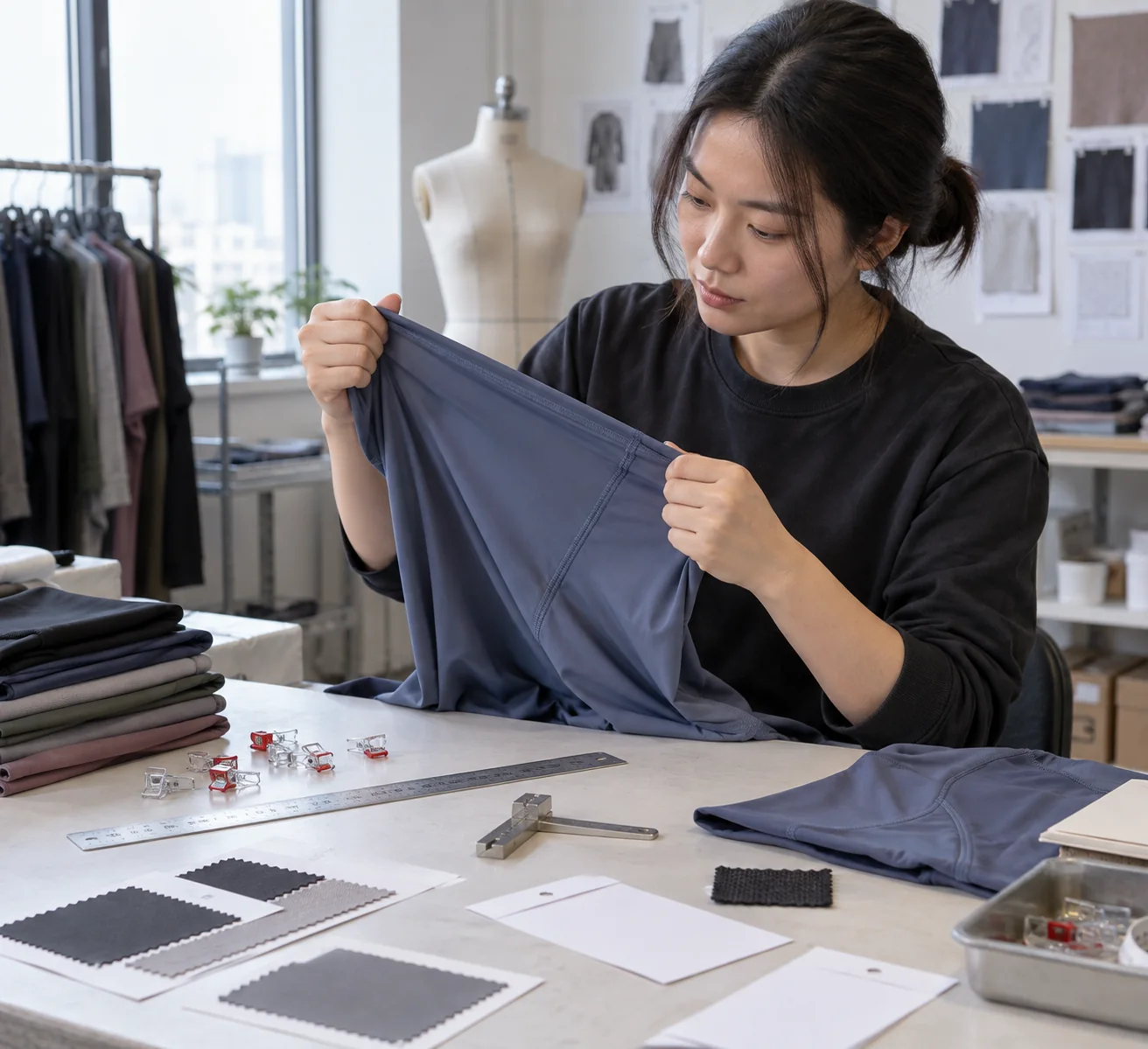
Start with a swatch, then approve the garment
Use the swatch to check composition records, face and back, hand, GSM, width, color, stretch, recovery, and visible defects. Then make a representative garment or panel. A small fabric piece cannot show waistband pressure, seam placement, pocket load, print distortion, lining interaction, or fit after care.
Use tests that answer a buyer question
- Will rubbing change the surface? The ASTM D4966 abrasion method can support relative abrasion investigation, but ASTM notes that Martindale results should not be treated as a direct prediction of actual wear life or as a standalone acceptance test for commercial fabric shipments. Agree the project method and acceptance rule before testing.
- Will liquid move through the textile as expected? The AATCC TM217 summary describes vertical and horizontal wicking image analysis. Use a defined test when the product will carry a moisture-management claim.
- Will the fit remain stable? Measure extension, power, recovery, growth, and garment dimensions before and after the agreed care cycle.
- Will the decoration survive? Test the actual ink, embroidery, transfer, heat, pressure, and placement on the selected nylon construction.
- Will the bulk reference remain clear? Record a signed or otherwise controlled swatch ID, sample version, comments, and the measurement points that decide approval.
The Sampling and Prototyping service is the natural next step when the fabric choice depends on fit, stretch, or decoration rather than a swatch alone. Use the Quality Control page to connect the approved material brief to inspection questions.
Care labels, labeling and marketing claims
Nylon care is not a one-line rule that can be copied from a fiber chart. Dye, finish, elastane, print, lining, seam construction, and the most sensitive component can change the safe care route.
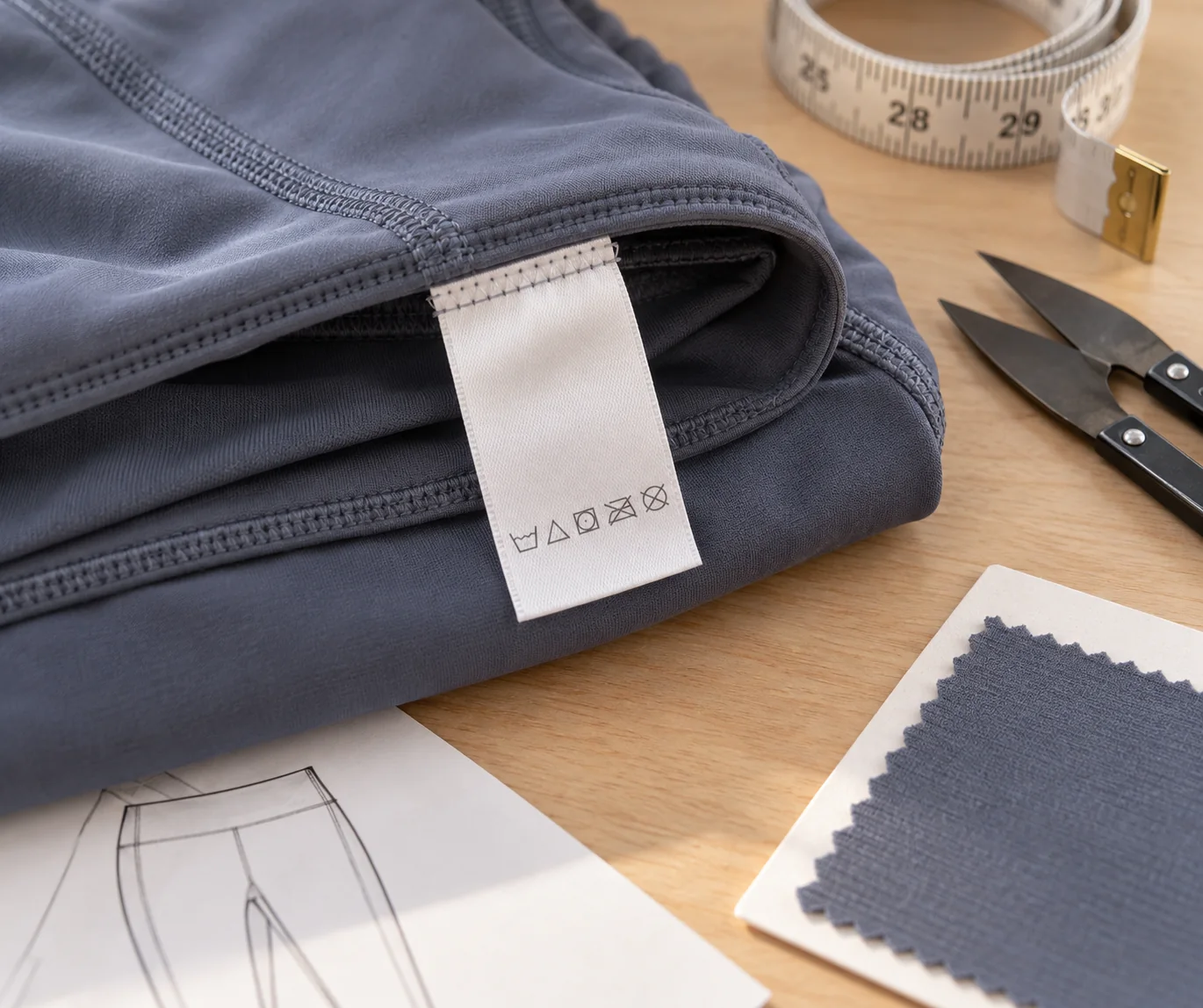
For US apparel, the FTC Care Labeling Rule requires manufacturers and importers to provide care instructions supported by a reasonable basis. The rule covers washing, drying, ironing, bleaching, warnings, and related terminology. The care label should therefore follow the approved finished garment and reliable care evidence, not a generic nylon assumption.
Keep these claims separate in your product file:
- Fiber claim: what the documented composition says.
- Construction claim: how the textile is knitted, woven, finished, or layered.
- Performance claim: what a defined test or controlled comparison supports.
- Care claim: what the finished garment can safely tolerate under the stated method.
If the fabric has not been tested for a claim, use neutral wording in the product copy and make the test part of development. "Nylon" is a material identity, not proof of a specific drying time, breathability level, UPF value, compression level, or wear life.
A nylon fabric RFQ that a factory can act on
A useful RFQ does not need a long story. It needs enough detail to distinguish one nylon route from another and enough product context to plan a sample.
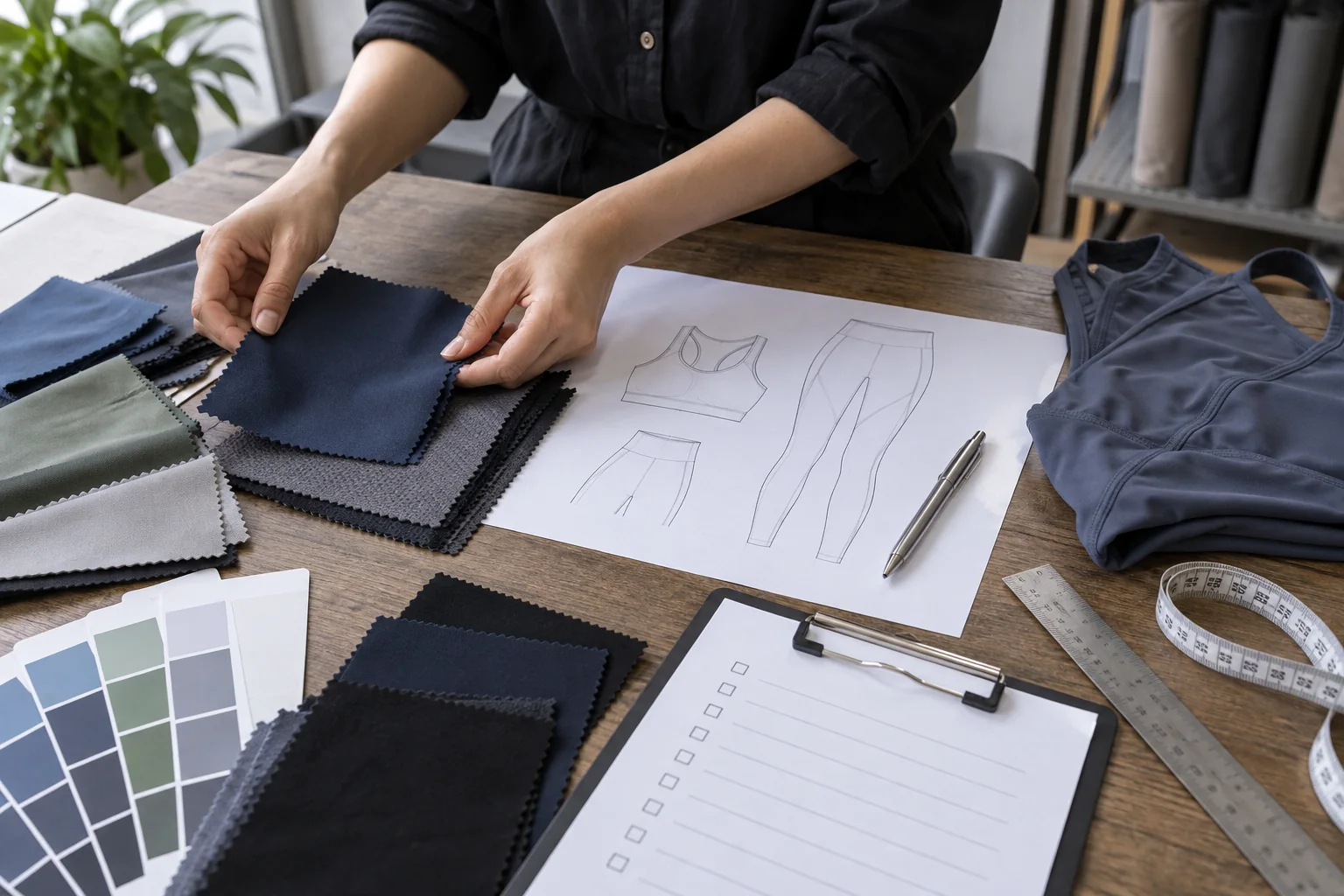
Send the following in one brief:
- Garment type, target wearer, activity, climate, and intended sales market.
- Reference image, sketch, existing garment, or panel drawing.
- Fiber direction, blend requirements, hand feel, surface, and target GSM.
- Stretch, recovery, opacity, lining, and fit requirements by panel.
- Color standard, decoration route, labels, trims, and packaging direction.
- Quantity by style, color, and size, with the fact that exact MOQ and quotation depend on the reviewed brief.
- Sample questions, test requests, care concerns, and the decision date.
- Any confidentiality or NDA requirement before sharing original artwork or construction details.
For confidential concepts, use the NDA-first apparel inquiry path and identify the nylon questions that need a technical review. The purpose of the first exchange is to narrow the material route, not to promise a fixed blend, price, lead time, MOQ, or test result before the project is reviewed.
Nylon fabric decision: make the fiber name earn its place

Use nylon when the brief genuinely benefits from its documented fiber and construction combination. A smooth hand, abrasion-focused product job, light weight, or a nylon-stretch direction may be a sound starting point. The decision becomes reliable only after the team records construction, GSM, stretch and recovery, finish, decoration, care, and the tests that matter for the garment.
From nylon idea to an approvable sample
DTS Activewear can connect a nylon material question to designer consultation, tech-pack review, sampling and prototyping, product development, and quality-control checkpoints already presented on the site. Send the garment job, reference swatch, target hand, composition direction, GSM, stretch and recovery needs, decoration plan, destination market, and sample questions. Exact material feasibility and project terms are confirmed against the brief and approved sample.
Frequently asked questions
Yes. Nylon is a synthetic polyamide fiber. The finished fabric may be knit or woven and may be used alone or in a blend, so "synthetic" does not by itself describe its weight, stretch, hand, or performance.
Nylon belongs to the polyamide fiber family, but the label or supplier record should use the documented fiber name required for the destination market. Ask for the composition record instead of assuming that a commercial name explains the full fabric.
It can be a strong option for activewear when the construction matches the garment job. Review hand feel, abrasion exposure, stretch, recovery, opacity, moisture behavior, decoration, and care on the actual fabric and finished sample. Nylon alone is not a guarantee of breathability or moisture wicking.
Neither is universally better. Nylon may suit a smooth, abrasion-focused, or stretch-led brief, while a particular polyester construction may suit a drying, color, decoration, or stability requirement. Compare matched constructions and defined test conditions rather than fiber names.
Some nylon fabrics stretch because of knit construction, yarn arrangement, elastane or spandex, or a combination of these factors. Woven nylon may have little natural stretch. Specify direction, extension, power, recovery, and growth, then verify them on the finished garment.
Nylon fabric may allow comfortable air movement or moisture transport, but those results depend on construction, blend, finish, garment design, and test method. Use a defined wicking or drying test for a performance claim. Do not infer the result from the word nylon alone.
At minimum, record fiber content, knit or woven construction, face and back, GSM, usable width, color, finish, stretch and recovery, opacity, decoration route, care direction, sample ID, and acceptance criteria. Add product-specific risks such as pilling, snagging, abrasion, seam slippage, or pocket load.
Start with a documented swatch, then review a representative garment or panel. Check dimensions, stretch and recovery, hand, opacity, color, decoration, seams, care change, and the performance properties that support the product claim. Keep the approved fabric ID and sample comments as the bulk reference.