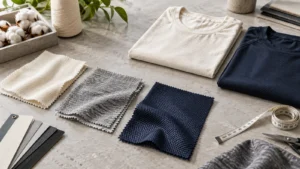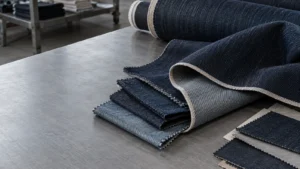
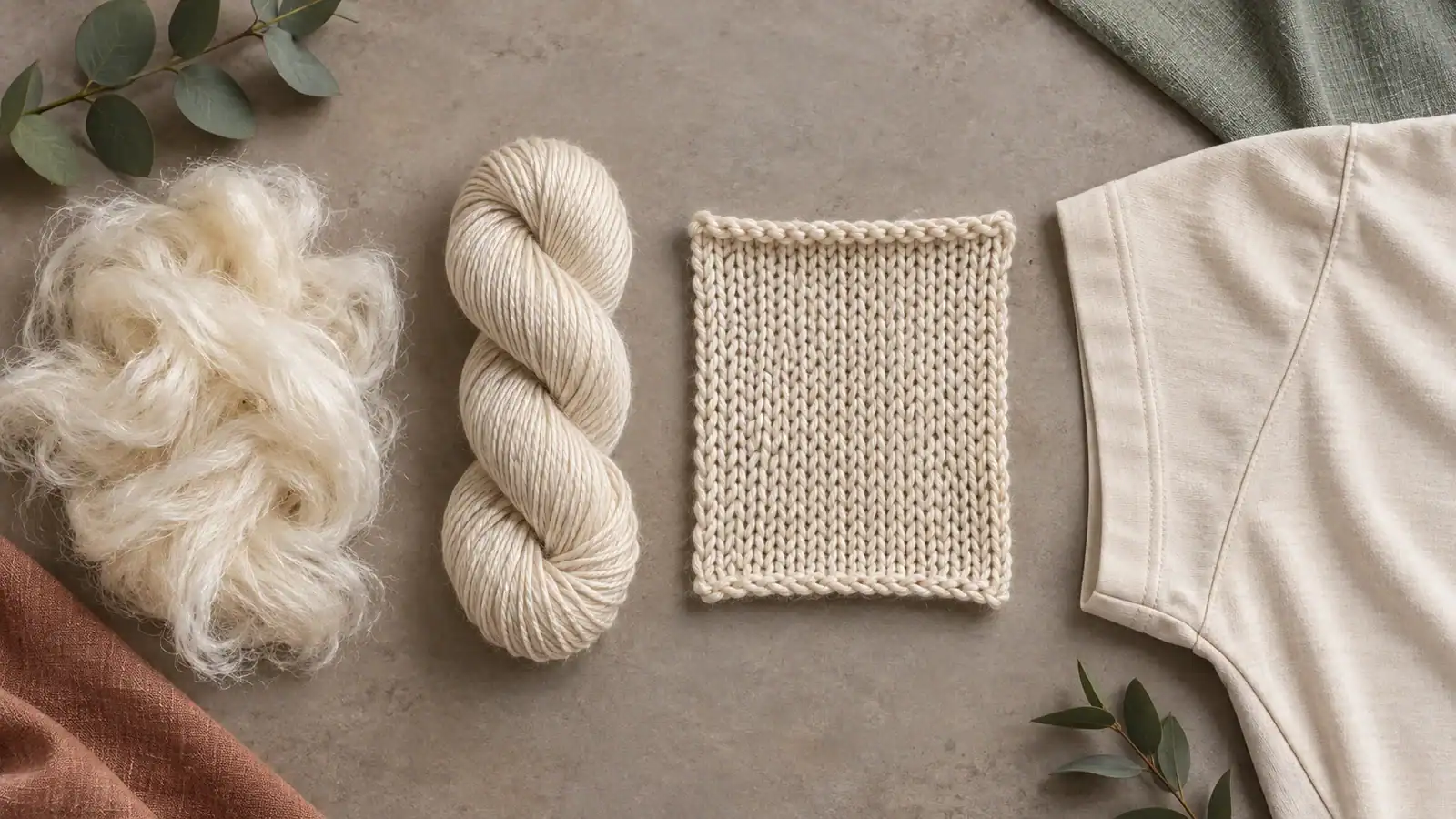
Lyocell is a regenerated cellulosic fiber made by dissolving cellulose and forming it into new fibers. It is a fiber name, not a complete fabric specification. The finished material may be jersey, interlock, rib, woven, or a blend with elastane or another fiber. For an apparel buyer, the useful question is whether the chosen construction, weight, recovery, finish, and care route fit the garment.
That distinction matters when a brand is choosing a fabric for a T-shirt, base layer, lounge set, or light activewear piece. A swatch can feel excellent and still fail after washing, stretching, decoration, or size grading. This guide explains what lyocell means, where it fits, what to put in an RFQ, and which sample checks should happen before bulk production.
What is lyocell?
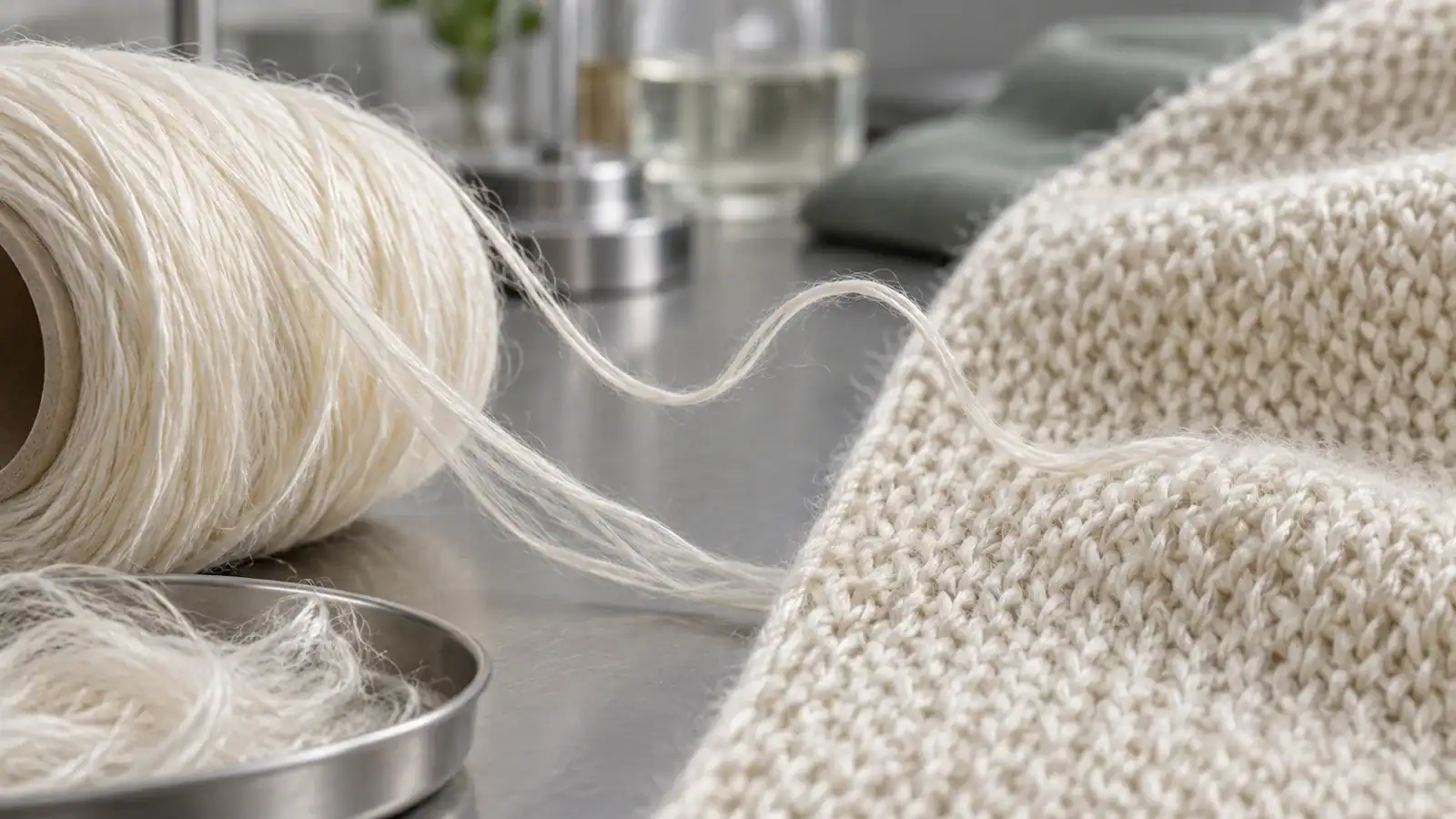
Lyocell is the generic name for a type of regenerated cellulose fiber. Cellulose is processed into a solution, then regenerated as a continuous filament or staple fiber that can be spun into yarn. The Federal Trade Commission’s notice on lyocell recognizes lyocell as a generic fiber name and distinguishes the fiber category from a brand name.
In a clothing specification, lyocell answers the fiber-content question. It does not answer the questions a factory needs for development:
- Is the fabric knitted or woven?
- What is the GSM and usable width?
- Does it need stretch in one direction or two?
- Should the surface be smooth, brushed, peached, or dry?
- What fit, activity level, decoration, and care route must the garment support?
TENCEL is a brand name used by Lenzing for selected fibers, including TENCEL Lyocell. It is not a generic replacement for every lyocell fiber. Lenzing’s TENCEL Lyocell product information describes properties and process claims for its branded fiber. If a buyer is ordering unbranded lyocell, the material name, blend percentage, supplier documentation, and test plan should stand on their own.
For a broader view of how fiber names, constructions, and finishes fit together, see the types of fabric guide.
How is lyocell made?
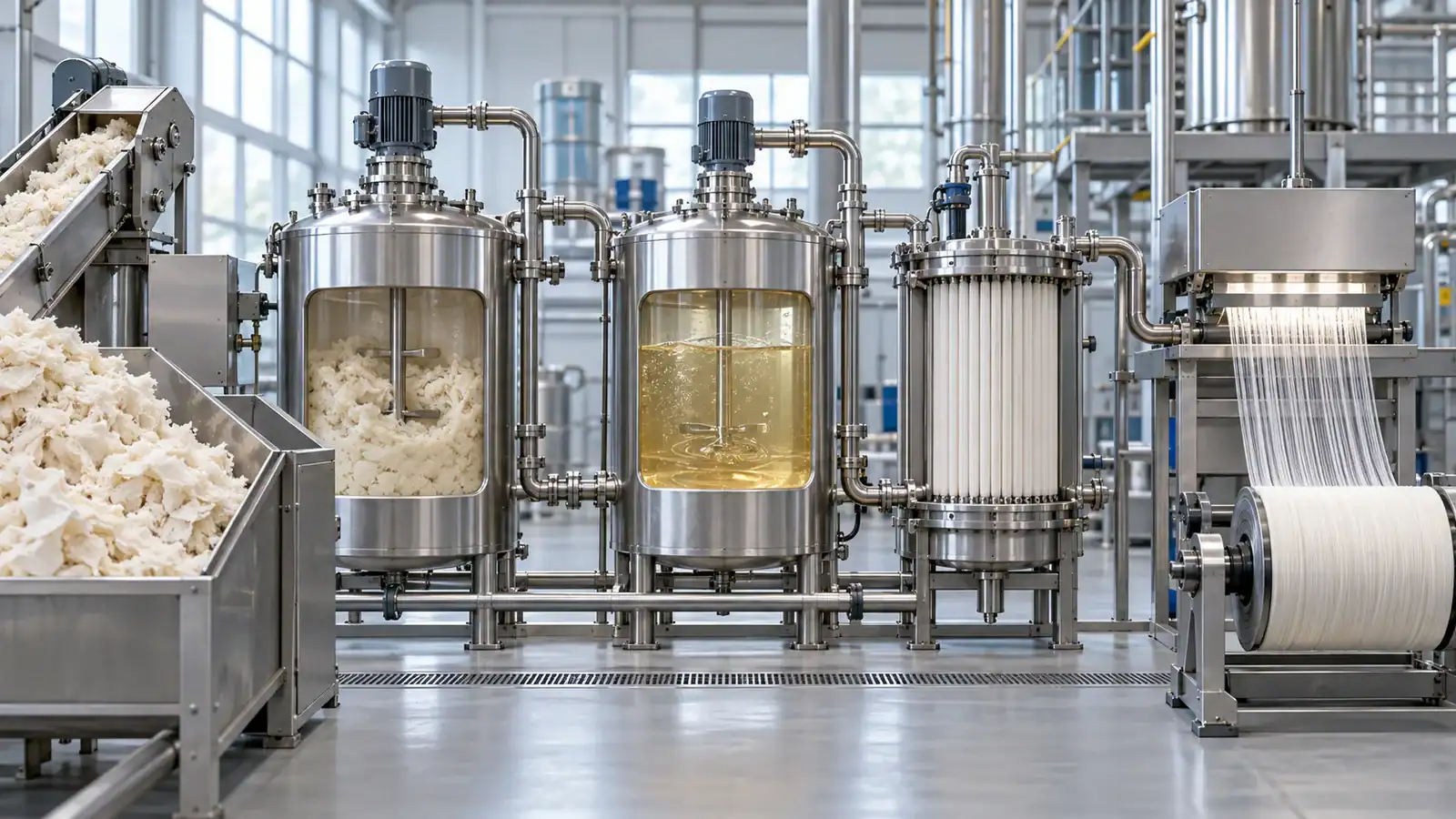
The general route starts with cellulose, often from wood-based pulp. The cellulose is dissolved, filtered, and pushed through fine openings to form filaments. Those filaments are washed, dried, and prepared as yarn or staple fiber. The exact chemistry, pulp source, equipment, and recovery system depend on the producer.
This is where careful wording matters. A general lyocell definition should not borrow every environmental or process claim from one branded product. Lenzing states that its TENCEL Lyocell process uses a closed-loop system with more than 99.8 percent solvent recovery. That is useful evidence about that branded route. It is not a blanket specification for all lyocell sold in the market.
For sourcing, ask for the documentation that matches the actual fiber in the proposed fabric. The request may include:
- Generic fiber name and percentage by mass.
- Brand name, if the supplier is offering a branded fiber.
- Blend components and elastane percentage, if any.
- Yarn or fabric construction and finish.
- Available test reports or declarations that apply to the delivered material.
This record helps the buyer keep a product page, care label, hangtag, and supplier quotation consistent. In the United States, the FTC Textile Fiber Rule requires certain textile products to disclose generic fiber names and percentages, along with responsible business and origin information. The exact labeling path depends on the product and market, so the final label should be reviewed for the destination country.
Lyocell fiber versus lyocell fabric
Calling a material lyocell fabric skips several decisions. The fiber can be turned into very different fabrics, and the garment can behave differently again after dyeing, finishing, cutting, sewing, and washing.
| Layer | What it describes | What a buyer should confirm |
|---|---|---|
| Fiber content | The generic fiber and percentage in the material | Lyocell percentage, other fibers, and any branded fiber claim |
| Construction | The way yarns form a knit or woven material | Jersey, interlock, rib, twill, plain weave, width, stretch direction, and stability |
| Finish | The surface or performance treatment applied to the material | Softener, brushing, peaching, sheen, coating, wash effect, and expected change after care |
| Garment specification | The pattern and construction that turn fabric into clothing | Fit, seam, waistband, pocket, lining, decoration, size grading, and tolerance |
A 95 percent lyocell and 5 percent elastane jersey may suit a soft fitted top. A lyocell woven fabric with no elastane may suit a fluid shirt but behave poorly in a close-fitting legging. The fiber name is the starting point. The construction and garment job decide the result.
What does lyocell feel like in clothing?
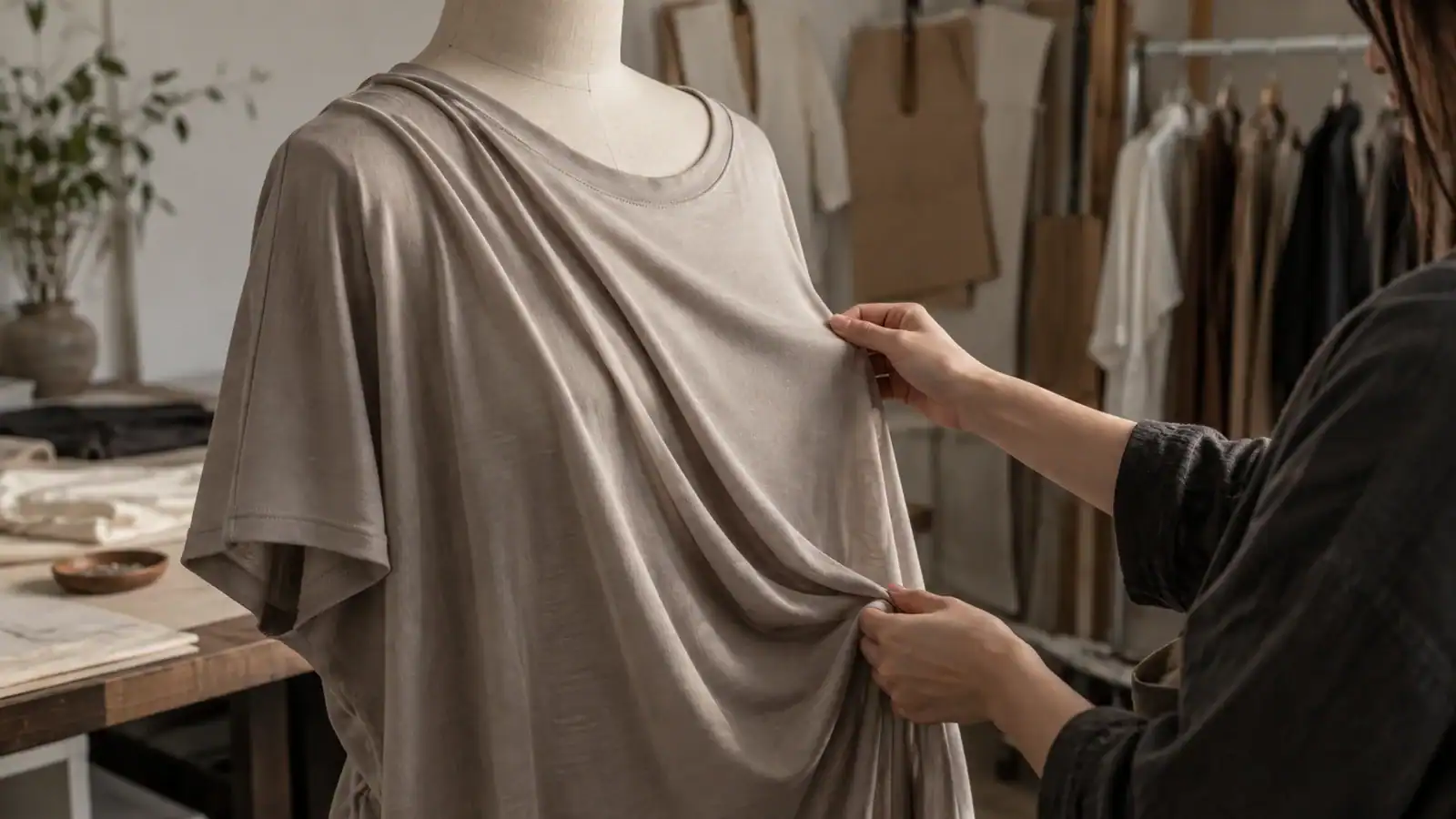
Many lyocell fabrics are chosen for a smooth hand, soft contact with the skin, and fluid drape. Those qualities can make a lightweight top or lounge garment feel less stiff than a compact synthetic fabric. They can also change how the garment hangs, how it takes print, and how it looks at a seam.
The hand feel is not fixed by the word lyocell. Yarn size, knit density, blend, dyeing, softener, brushing, and finishing all matter. A buyer should describe the target by behavior rather than writing only "premium lyocell." Useful notes include:
- Soft against the skin, with a clean surface.
- Fluid drape rather than a crisp stand.
- Low or moderate surface shine.
- Comfortable stretch at the garment’s movement points.
- A stable face that does not twist or ripple after washing.
Compare the reference swatch with the first sample under the same light. A fabric that feels soft in a folded swatch may look too limp in a long body panel. Another fabric may feel slightly firmer but keep a better neckline, hem, or waistband. The garment decides which trade-off is acceptable.
Where is lyocell used in clothing?
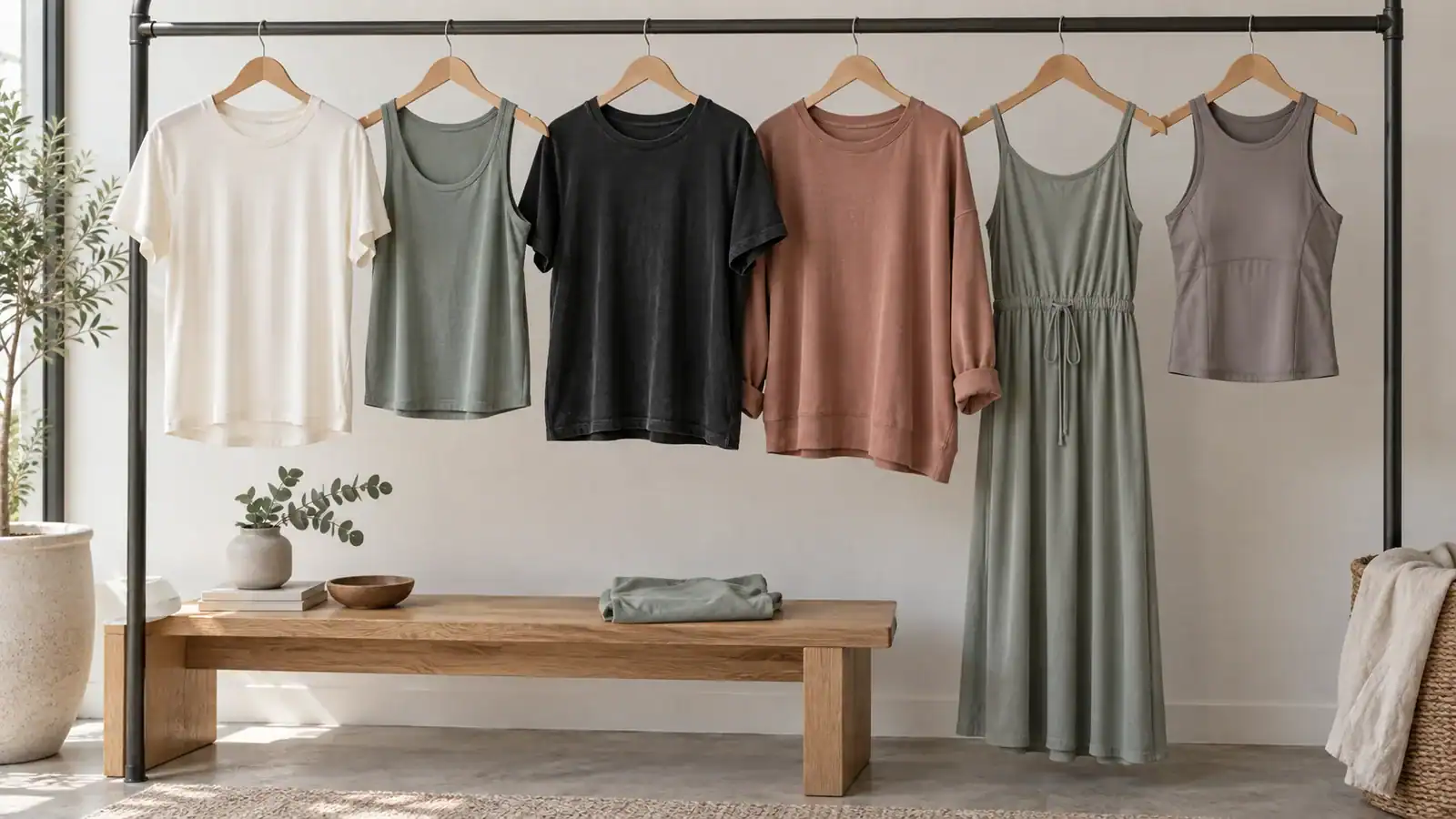
Lyocell works best when softness, drape, and a comfortable next-to-skin feel are part of the product brief. The following applications are reasonable starting points, not automatic approvals:
- T-shirts and tanks that need a soft hand and a relaxed or lightly fitted shape.
- Base layers and lounge tops where comfort comes before strong compression.
- Travel and everyday separates that benefit from fluid movement and a neat surface.
- Light dresses, skirts, or woven tops where drape matters more than rigid structure.
- Blended activewear pieces for low to moderate activity when the fabric passes movement, recovery, opacity, and wash checks.
The pattern still controls much of the experience. A soft fabric can become uncomfortable when the armhole is too tight, the neckline loses recovery, or the seam allowance creates bulk. A fluid fabric can also need a different hem, stabilizer, or decoration method from a firmer jersey.
If a product will be worn for running, high-output training, repeated backpack abrasion, or strong support, the buyer should begin with the activity requirement. Lyocell may be part of the blend, but the brief should not assume that a comfortable fiber will supply every performance property by itself.
Lyocell blends with cotton, elastane, and polyester
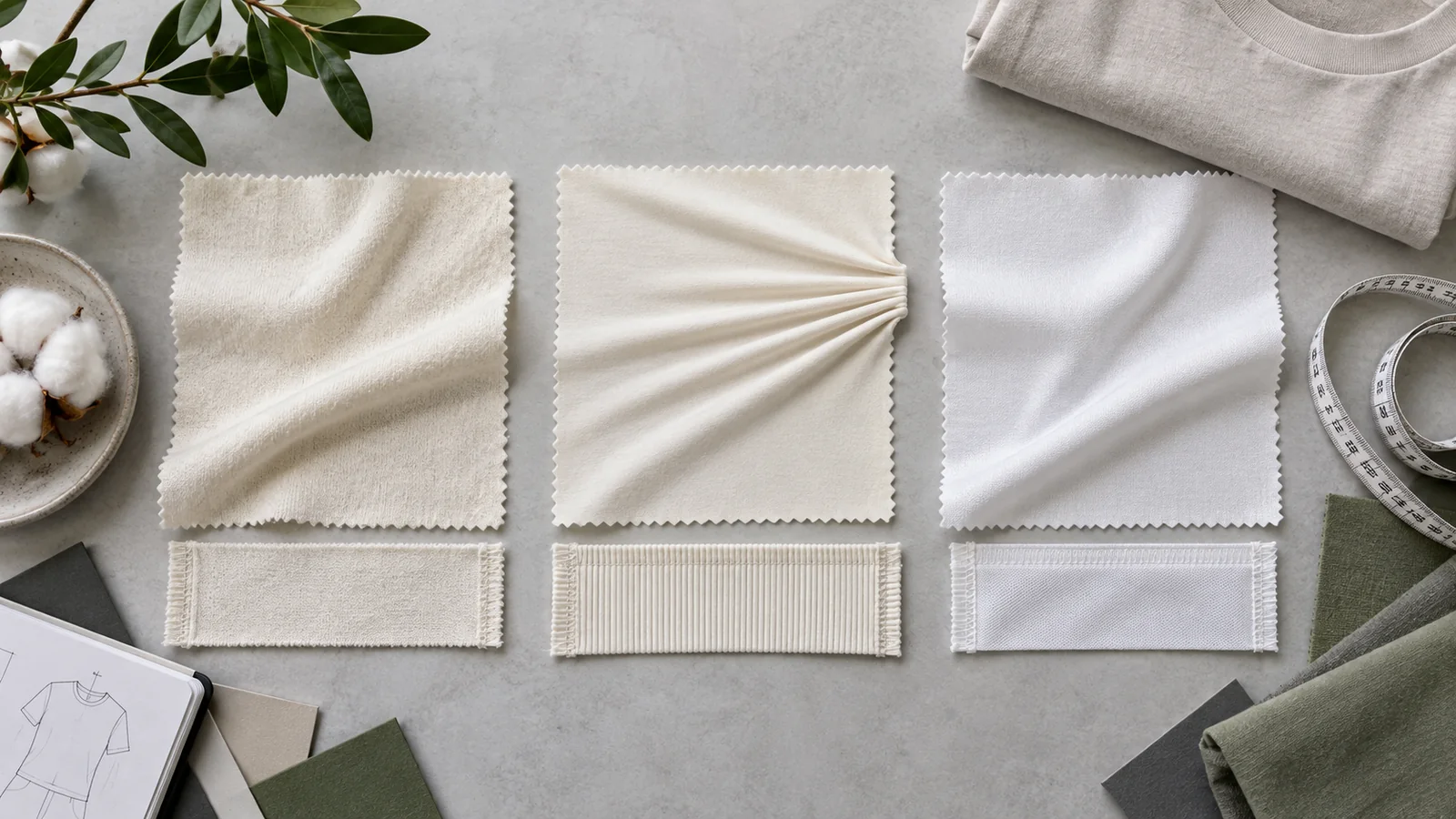
Blending changes the balance between hand feel, recovery, drying behavior, durability, appearance, and cost. It is better to define the garment problem first and then compare blend routes than to ask for the highest lyocell percentage by default.
| Blend route | Why a buyer may consider it | Checks before approval |
|---|---|---|
| Lyocell and cotton | Familiar natural hand feel with a softer, more fluid direction | Shrinkage, surface change, colorfastness, drape, and drying expectations |
| Lyocell and elastane | Stretch and closer fit for tops, base layers, or selected activewear | Recovery, elastane percentage, chlorine or heat exposure, seam strain, and opacity |
| Lyocell and polyester | A way to adjust surface, durability, care, or drying behavior | Pilling, static, hand feel, moisture behavior, color migration, and claim wording |
| Lyocell, cotton, and elastane | A soft stretch route for casual fitted garments | Fiber percentages, size stability, waistband or neckline recovery, and wash result |
There is no universal best blend. Cotton can make a fabric feel familiar but may change shrinkage and drying behavior. Elastane can improve recovery but creates its own heat, chemical, and aging considerations. Polyester can improve some care or durability targets while changing hand feel and static. The finished sample needs to prove the balance.
For comparison with another regenerated cellulosic fiber, read what modal fabric is. For stretch-specific terminology, the spandex guide is a useful companion.
Is lyocell good for activewear?
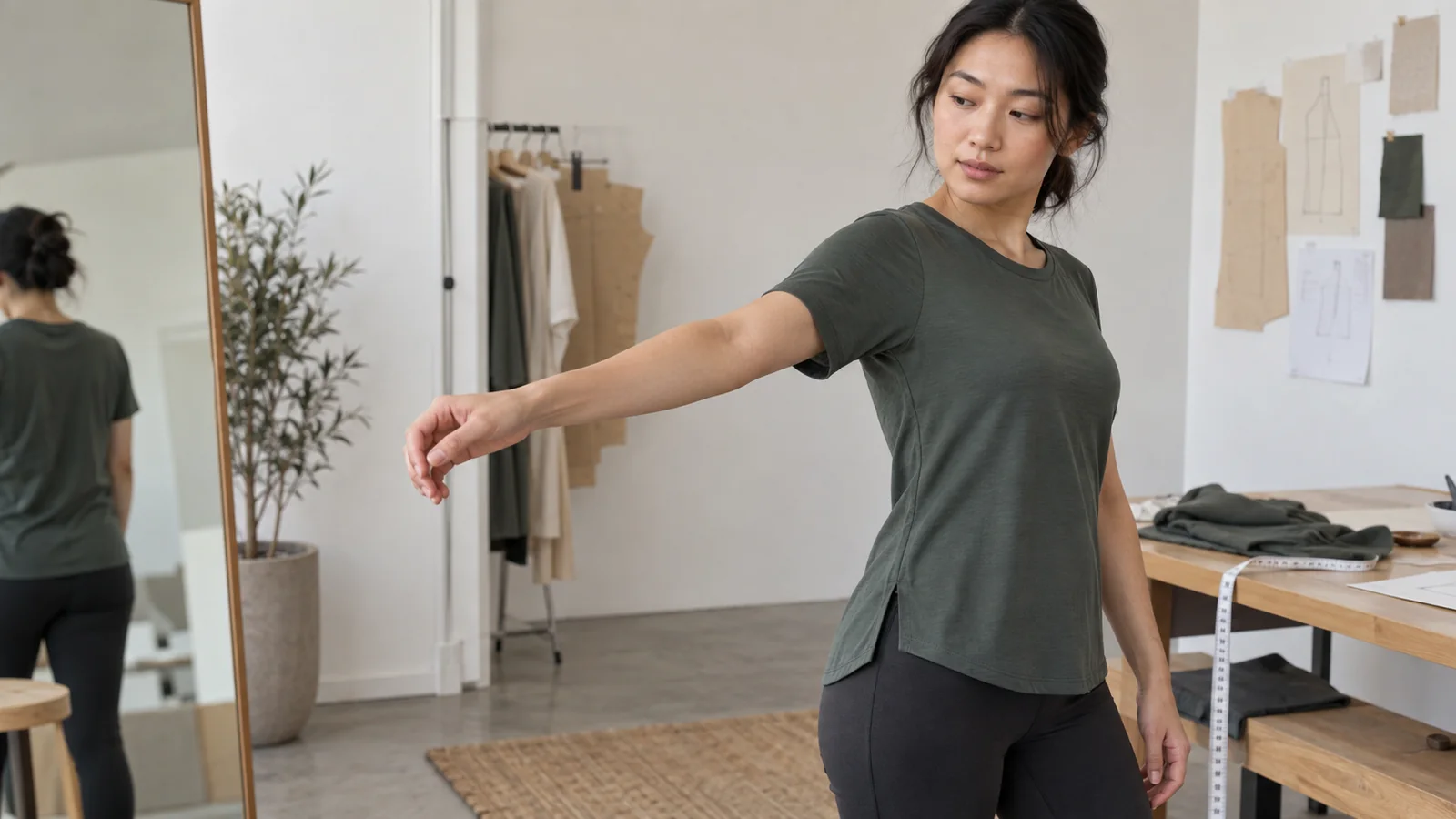
Lyocell can work in activewear, but the answer depends on the activity, support level, garment shape, and test plan. It is often a sensible candidate for soft studio tops, light base layers, travel-to-training pieces, or low to moderate activity where comfort and drape matter. It needs more scrutiny in high-compression tights, hard-wearing training shorts, or garments exposed to frequent sweat, friction, and aggressive laundering.
Use this decision rule:
- If the garment is comfort-led and the activity is moderate, test a lyocell knit or blend.
- If the garment must stay close to the body, check stretch direction, recovery, opacity, seam comfort, and size grading.
- If the garment must dry quickly or handle repeated abrasion, compare lyocell with a suitable synthetic or blended route using the same test conditions.
- If the garment carries a performance claim, define the claim and evidence before marketing copy is written.
The activewear fabric selection guide covers broader questions such as moisture management, stretch, durability, and activity fit. Lyocell should be judged against those requirements, not against a generic promise that it is naturally suitable for sport.
What should be in a lyocell fabric specification?
A useful fabric brief lets a supplier quote the right material and lets the buyer compare samples without relying on memory. Record the following fields:
- Fiber composition by percentage, including the generic name and any branded fiber name.
- Knit or woven construction, yarn or fabric reference, usable width, and target GSM.
- Stretch direction, target extension if known, and recovery expectation after repeated extension.
- Surface finish, hand feel, sheen, brushing, peaching, coating, or wash effect.
- Color standard, dye route, contrast details, and any colorfastness requirement.
- Garment type, climate, activity level, fit direction, lining decision, and decoration method.
- Care route, measurement points, dimensional tolerance, pilling expectation, and approval method.
GSM should support the garment, not replace the rest of the brief. A lightweight tee and a structured travel pant need different body, coverage, drape, and seam behavior. The GSM meaning in clothing guide explains how weight can affect warmth, opacity, drape, and perceived body. Ask for the actual measured range and method used, then check the delivered fabric rather than approving the nominal number alone.
If the buyer has a moodboard but no fabric reference, describe the desired behavior and send a garment or swatch. The development team can then suggest a construction and blend for review. The final choice should be recorded in the tech pack after the sample confirms the feel and fit.

How should lyocell garments be cared for?
Lyocell garments can change in size, surface, or drape when the wash and dry route does not match the fabric and construction. The risk is not solved by writing a generic care instruction. Blend percentage, knit density, finish, dye, print, elastic, trim, and seam construction all influence the final label.
Before the care label is approved:
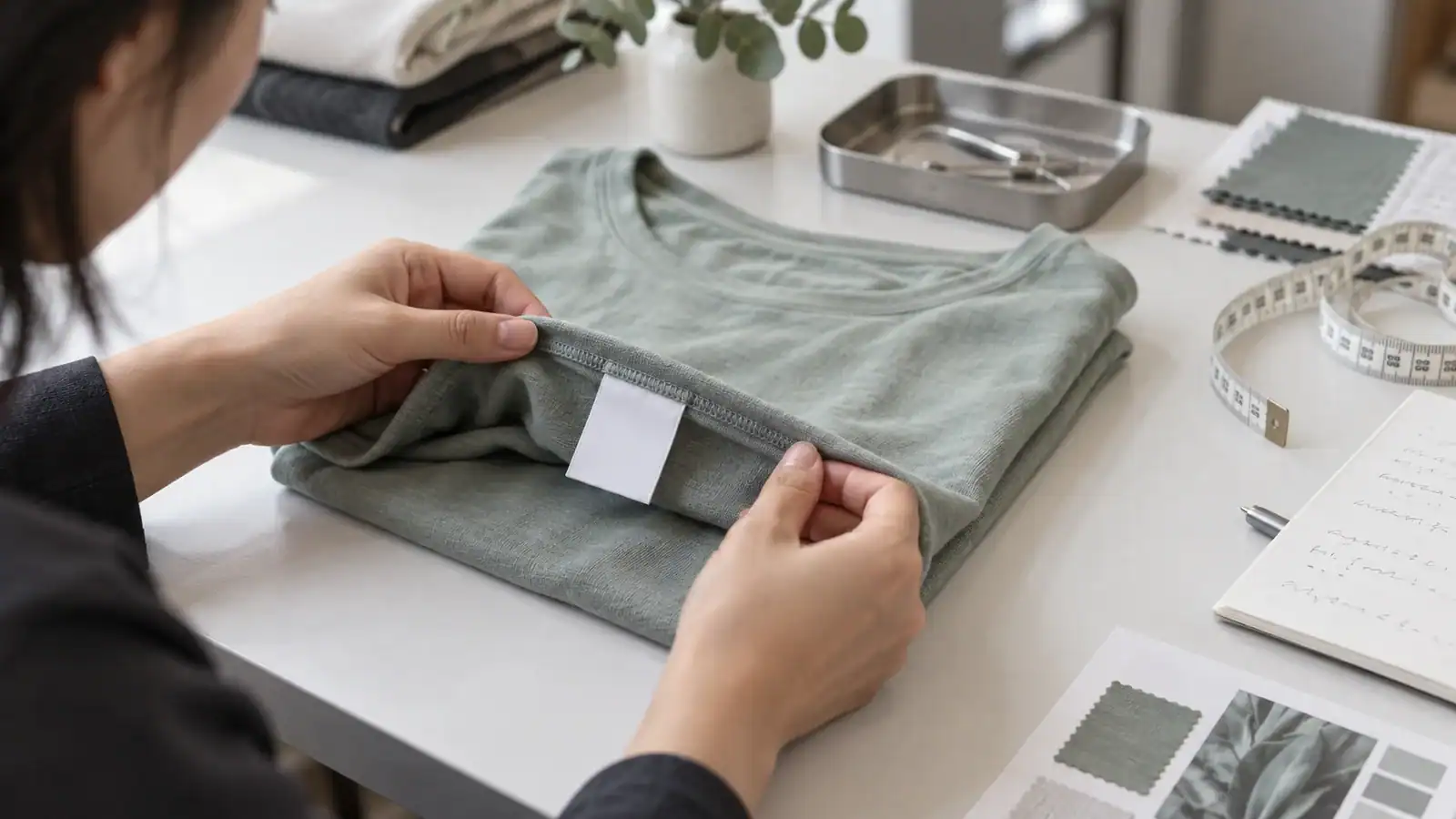
- Wash the finished garment, not only the raw fabric swatch.
- Measure key points before and after the proposed care route.
- Check twisting, seam puckering, surface roughness, pilling, color change, and print or trim behavior.
- Compare the result in the intended size range, especially for fitted styles.
- Make sure the label language matches the tested garment and destination-market rules.
The FTC care-labeling guidance gives the buyer a reference for checking whether the proposed instruction is supported by the garment’s actual care behavior. If the garment includes a transfer print, bonded panel, elastic, coating, or contrast fabric, test that complete combination. A base fabric result cannot automatically stand in for the finished product.
What should a buyer test before approving lyocell fabric?
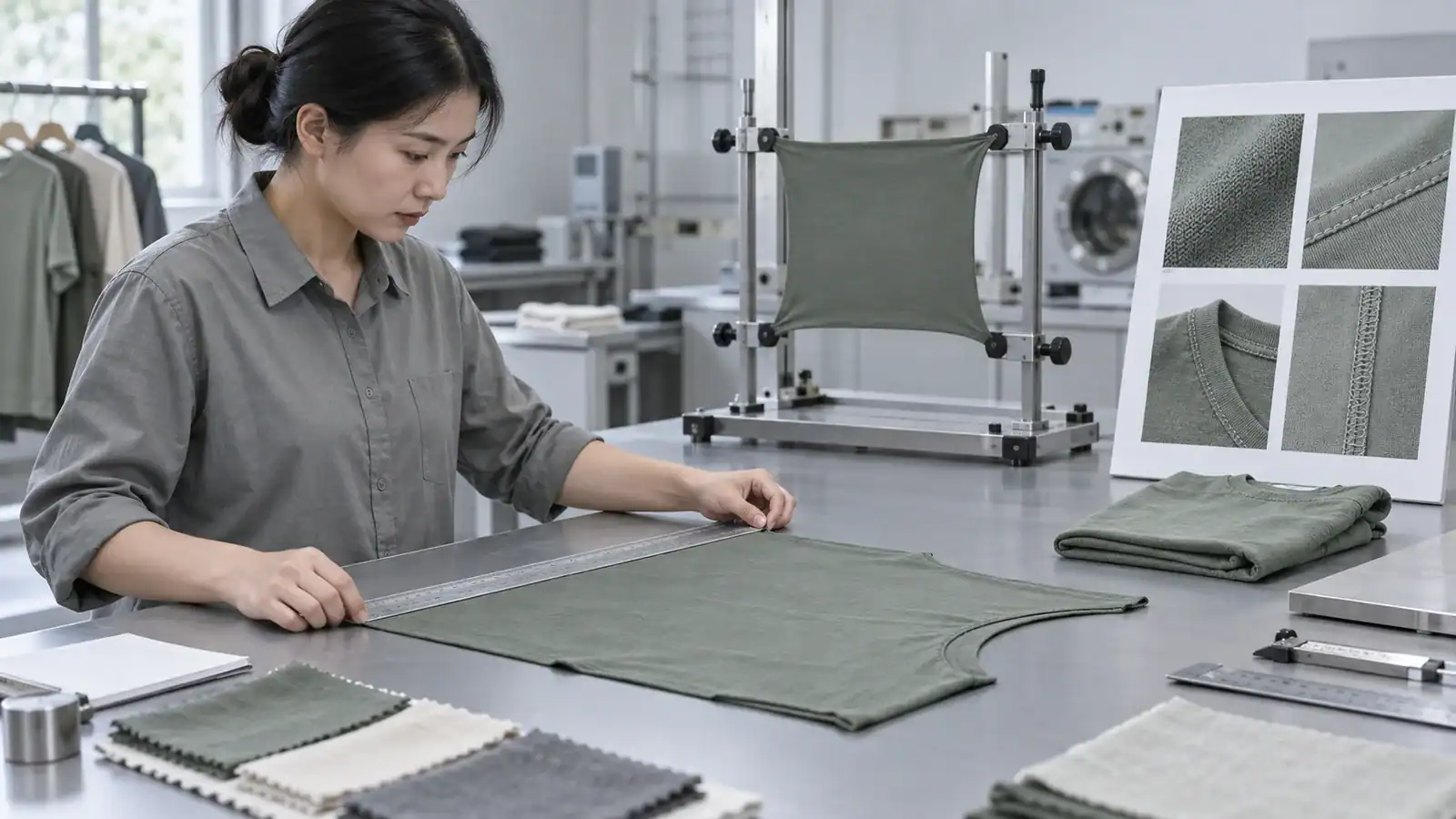
The first sample should answer a buyer’s practical question: will this garment keep the intended hand, shape, coverage, and appearance after use? A short review under controlled conditions is more useful than a long list of untested claims.
| Check | What to do | Decision point |
|---|---|---|
| Hand feel and drape | Compare the approved swatch and sewn garment under the same light | Does the finished garment still feel and hang as intended? |
| Stretch and recovery | Extend the fabric and key garment areas repeatedly, then measure return | Does the neckline, waistband, knee, or hem recover enough for the fit? |
| Dimensional change | Measure the agreed points before and after the proposed wash route | Is the change within the style tolerance? |
| Appearance and pilling | Inspect face, seams, color, and surface after wear or wash simulation | Does the material develop fuzz, shine, twist, or unwanted texture? |
| Opacity and coverage | Check the actual size and movement positions in intended lighting | Does the garment remain suitable for the use and color? |
| Seam, trim, and decoration | Review stitching, labels, prints, embroidery, closures, and elastic | Does any detail create bulk, pressure, peeling, or distortion? |
| Colorfastness and transfer | Use the buyer’s planned test route for the color and trim combination | Does color stay acceptable during care and contact? |
| Size grading | Review key points across the agreed size range | Does the design intent survive grading, not just the base size? |
The AATCC standards list provides current textile test methods covering areas such as colorfastness, dimensional change, appearance after laundering, and moisture management. Choose a method and acceptance limit that match the buyer’s market and claim. A method name by itself is not a pass result.
Use a repeatable sample sequence:
- Approve a swatch with written notes on hand, color, construction, and target use.
- Review the first sewn sample for fit, seam behavior, stretch, coverage, and decoration.
- Wash or wear the sample using the proposed route and record measurements and visual changes.
- Make the revision decision in the tech pack, including what changed and what still needs evidence.
- Approve bulk only after the final material, size set, care route, and inspection points are consistent.
How to write a lyocell RFQ
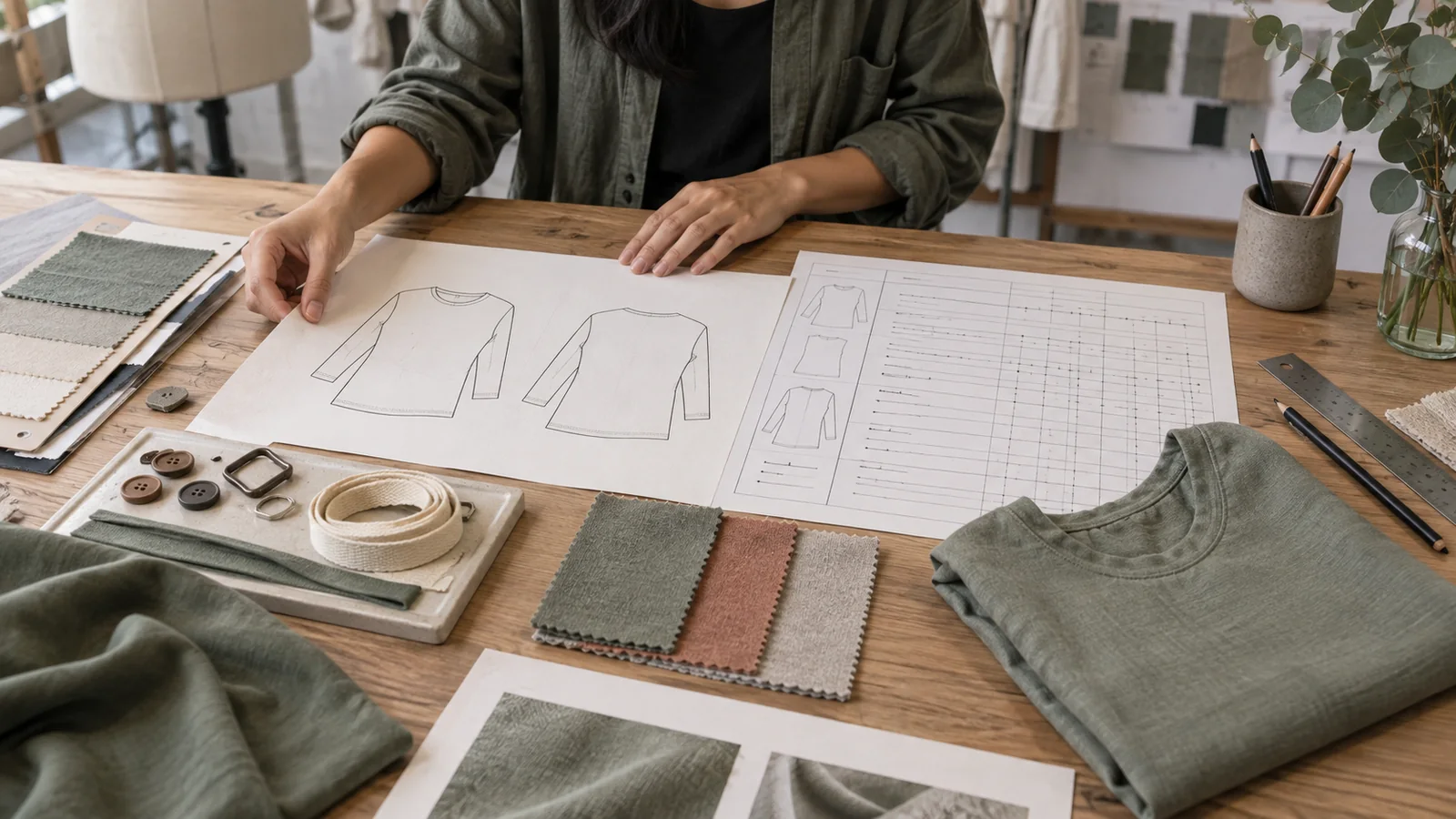
An RFQ for lyocell apparel should describe the finished garment and the decisions that affect the quote. A fiber name alone leaves too much room for different fabrics to be compared as if they were equivalent.
Send the supplier:
- Product type, reference image or garment, intended wearer, climate, activity, and target use.
- Fiber composition and acceptable blend range, including whether a branded fiber is required.
- Construction, GSM range, usable width, stretch direction, recovery target, hand feel, and finish.
- Measurement chart, size range, grade rules, critical tolerances, and fit comments.
- Seams, panels, gusset, waistband, pocket, lining, closure, reinforcement, and decoration details.
- Color references, artwork, label information, packaging request, folding method, and carton marks.
- Planned quantity by style, color, and size, plus the desired sample and revision route.
- Questions the quotation must answer, including available material options, sample assumptions, packaging options, inspection points, and information still needed.
The DTS tech-pack customization service is relevant when a buyer has a concept or incomplete specification that needs technical review. Keep the RFQ honest about what is fixed and what is open for recommendation. A supplier can compare options more clearly when the buyer separates a non-negotiable fiber claim from a preferred hand feel or target weight.
When is lyocell the wrong starting point?
Lyocell may be the wrong first material when the garment’s primary job conflicts with its untested behavior. That does not make the fiber bad. It means the brief should start from a different requirement.
Consider another construction or a blend first when:
- Strong compression and high recovery must remain stable through repeated wear.
- The garment will see heavy abrasion from equipment, rough work, or frequent bag contact.
- The main promise depends on very rapid drying and the chosen lyocell route has not shown that behavior.
- A structured outer layer needs crisp hold, stable edges, or low drape.
- The surface must withstand a demanding decoration process that the proposed fabric cannot support.
Run a matched comparison instead of arguing from fiber labels. Use similar GSM, the same garment pattern, the same care route, and the same inspection points. The best option is the one that meets the buyer’s use case with acceptable appearance, cost, care, and risk.
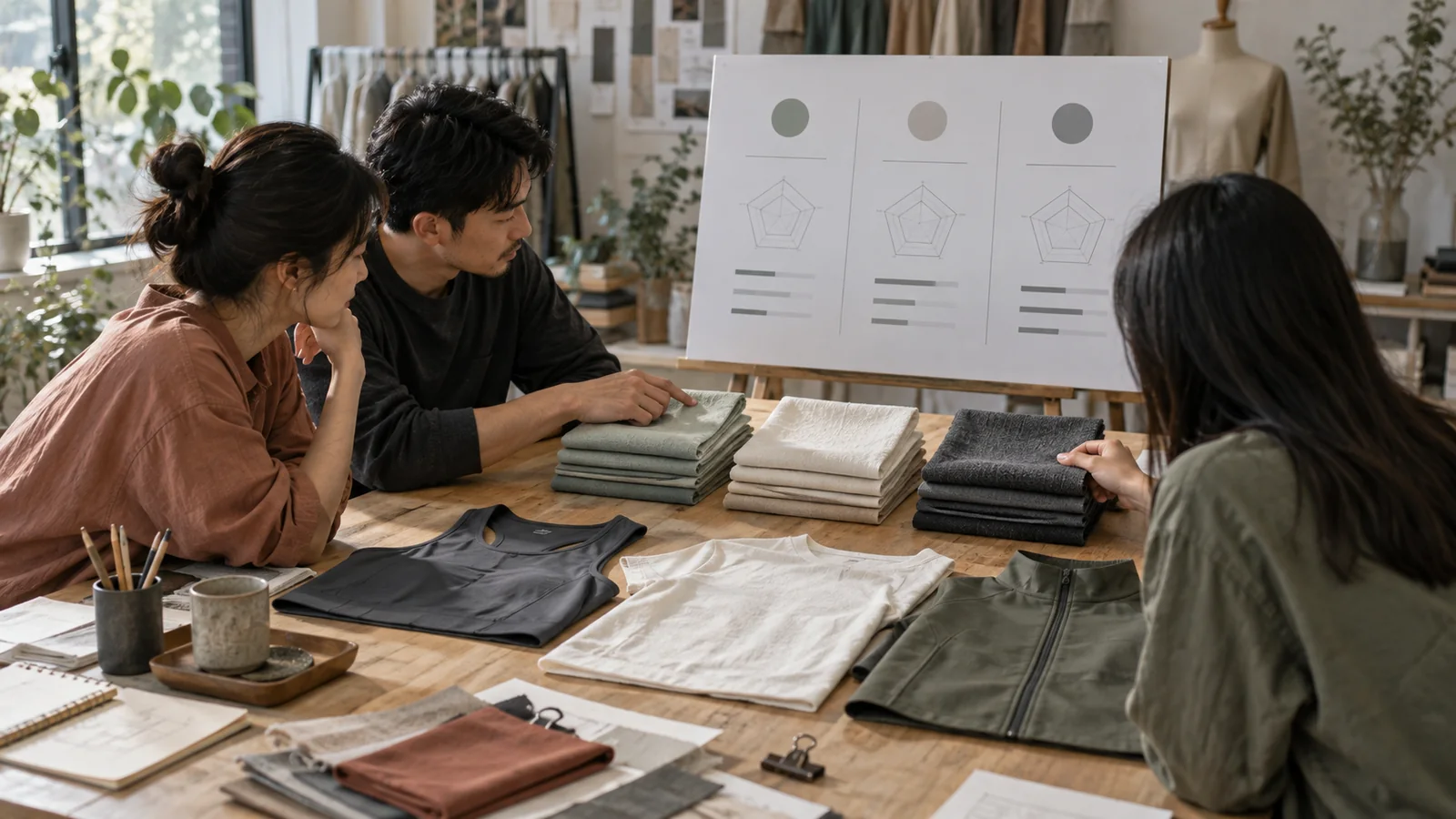
From a lyocell brief to an approved sample
Once the material direction is clear, the next task is to turn it into a garment that can be reviewed. DTS Activewear’s current service pages describe support with designer consultation, fabric and trim selection, tech-pack review, sampling, OEM or ODM coordination, labels, packaging, and quality-control steps. The exact route depends on the product brief and should be confirmed for the project.
When requesting help, send the garment type, fiber or blend target, construction, GSM range, fit chart, color, decoration, quantity assumptions, destination market, and the tests that matter. That gives the development team a specific question to answer. The DTS sampling and prototyping service is the practical next step when the fabric, fit, or construction still needs physical review.
The right lyocell order starts with the garment, not the label
Lyocell tells you what the fiber is. It does not tell you whether a particular T-shirt, lounge set, or activewear sample will keep its shape, survive care, or meet the customer’s expectations. Start with the garment job, define the construction and blend, record GSM and recovery targets, then test the finished sample. That sequence gives a supplier a clearer RFQ and gives the buyer something concrete to approve.
Frequently asked questions
Lyocell is a regenerated cellulose fiber. It is made by dissolving cellulose and forming it into new fibers, which can then be spun into yarn and made into knitted or woven fabric.
Lyocell starts with cellulose, commonly from wood-based pulp, but the cellulose is dissolved and regenerated into fiber. Textile labeling treats lyocell as a generic manufactured fiber category rather than an unprocessed natural fiber.
No. Lyocell is a generic fiber name. TENCEL is a Lenzing brand used for selected fibers and products. A supplier should identify the actual generic fiber content and any brand claim separately.
It can suit soft studio tops, light base layers, travel-to-training pieces, and other comfort-led garments. High-compression or high-abrasion activewear needs matched testing for recovery, opacity, drying behavior, seam durability, and care stability.
Lyocell garments can change dimensions during care, but the result depends on construction, blend, finish, pattern, and wash or dry route. Test the finished garment and set the care label from that result.
Neither fiber is always better. Lyocell may provide a softer or more fluid direction in some fabrics, while cotton may offer a familiar hand and different cost or care behavior. Compare the actual blend and finished garment against the use case.
Specify fiber percentages, any branded fiber requirement, construction, GSM, width, stretch and recovery, finish, color, garment use, fit, decoration, care route, tolerance, test plan, and sample approval process.
Review hand feel, drape, fit, movement, stretch recovery, opacity, seams, trims, decoration, dimensional change, surface appearance, colorfastness, and size grading. Use a consistent wash or wear route and record the decision in the tech pack.