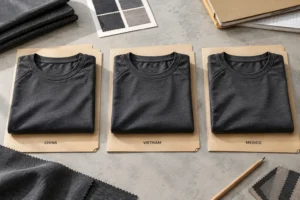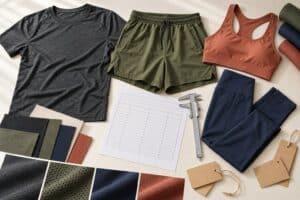
GSM means grams per square metre. In clothing, it tells you the mass of a defined area of fabric. It does not tell you the total weight of a finished garment, the fabric’s thickness, or its overall quality.
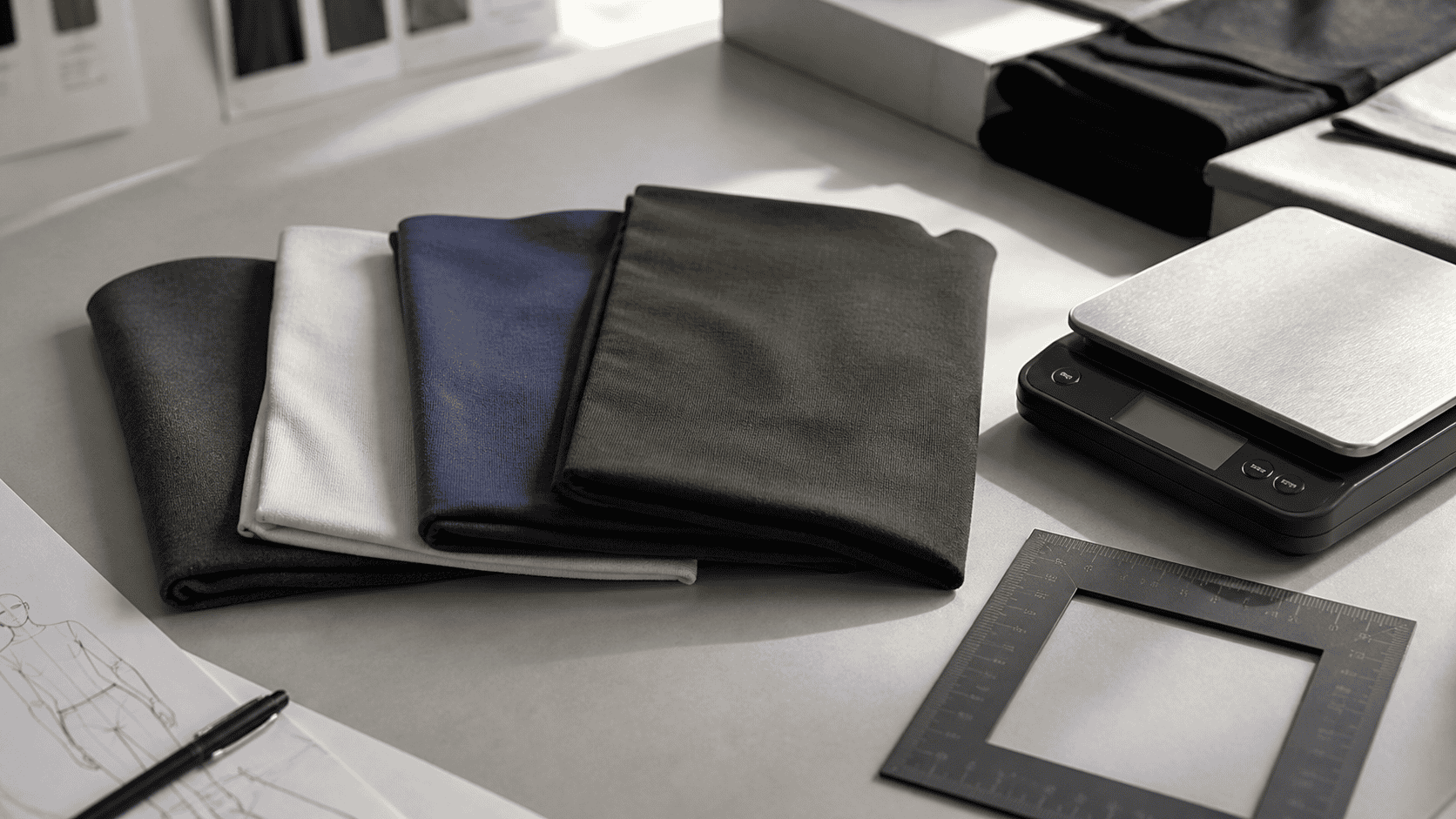
For an apparel buyer, GSM is a fast way to compare fabric samples and translate a vague request such as lightweight or premium weight into a number that a supplier can quote and sample. It is also a common bridge between metric supplier specifications and US apparel documents that use ounces per square yard.
This guide explains the definition, the GSM-to-oz/yd² conversion, practical planning bands for common garments, and a simple way to check a swatch before you approve a sample. The ranges below are development starting points, not universal standards. Fiber content, knit or woven construction, stretch, finishing, width, and the actual use case still need to be reviewed together. For broader fiber and performance decisions, see DTS Activewear’s activewear fabric buyer’s guide.
What does GSM mean in clothing?
GSM is short for grams per square metre, also written as g/m². The measurement answers one narrow question: how many grams does one square metre of the fabric weigh under the stated test conditions?
Short answer: a 200 GSM fabric has a mass of about 200 grams per square metre. It will usually feel more substantial than a 120 GSM fabric made with a similar construction, but the number alone cannot tell you whether it is softer, stronger, more breathable, more opaque, or better for a particular product.
In a buyer brief, GSM is therefore a control variable. It gives the factory a measurable starting point, but it should sit beside the rest of the fabric specification:
- Composition: for example, polyester, nylon, cotton, elastane, or a defined blend.
- Construction: jersey, interlock, rib, French terry, fleece, woven, mesh, or another construction.
- Width: usable width and whether the quoted weight is measured on the full width or a sample area.
- Finish: brushed, peached, enzyme-washed, silicone-finished, coated, moisture-managed, or untreated.
- Performance: stretch and recovery, opacity, air permeability, moisture movement, pilling, dimensional change, and colorfastness where relevant.
That is why two fabrics with the same GSM can produce very different garments. A compact nylon-elastane interlock and a loosely knitted cotton jersey may both be 220 GSM, but they will not have the same hand feel, recovery, drape, or warmth.
What GSM measures and what it does not
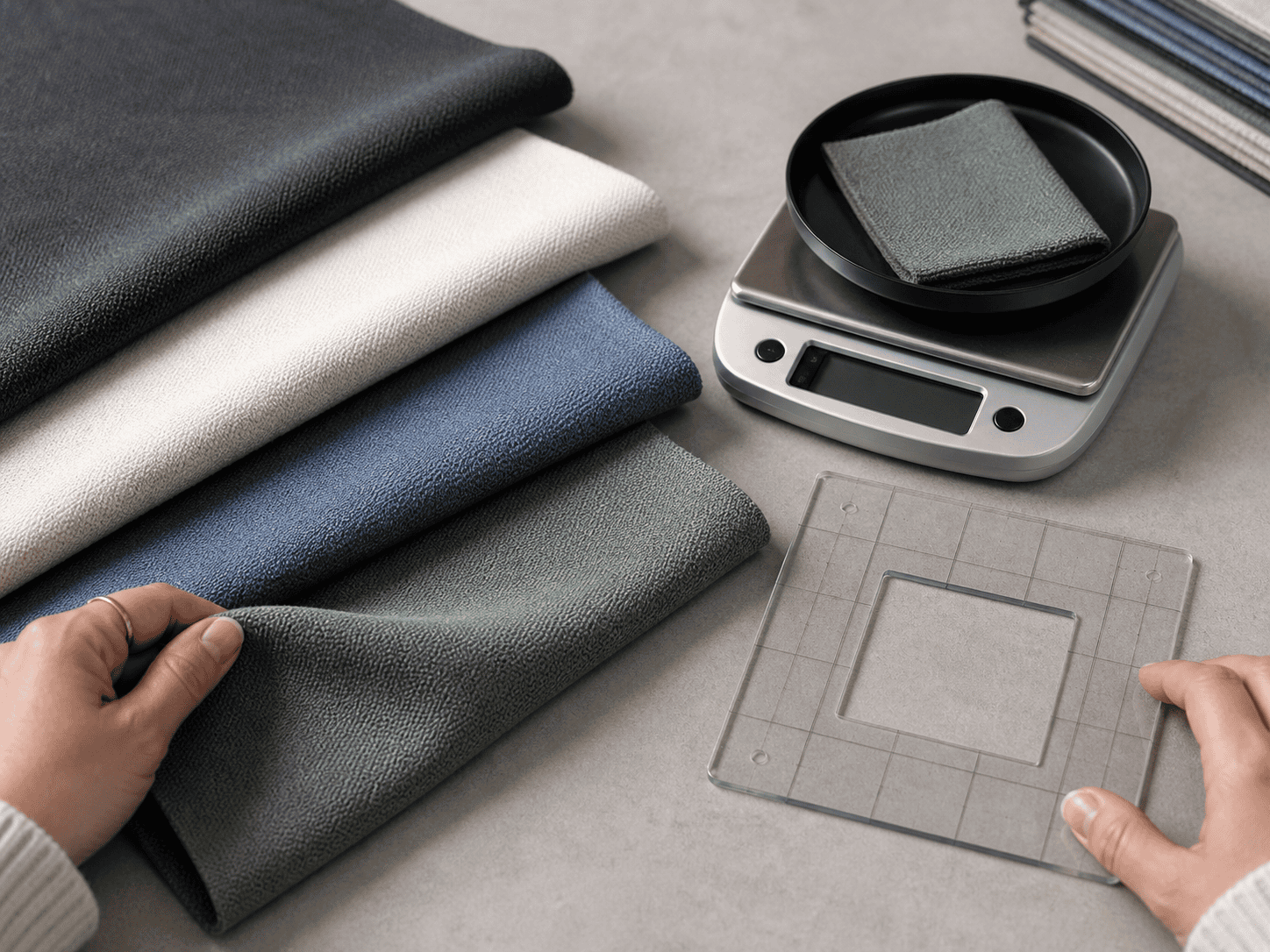
GSM measures fabric mass per area
The basic relationship is:
GSM = sample mass in grams ÷ sample area in square metres
If a 10 cm × 10 cm sample weighs 2.0 grams, its area is 0.01 m² and the calculated mass per area is 200 GSM. A sample twice as large should weigh approximately twice as much if it comes from the same fabric and is handled under the same conditions.
GSM does not measure fabric thickness
Thickness depends on yarn, loop or weave geometry, compression, loft, finishing, and how the material recovers after handling. A lofty brushed fleece can feel thicker than a compact fabric at a similar GSM. Conversely, a dense technical knit may feel substantial without looking bulky.
GSM does not measure the finished garment weight
A T-shirt’s final weight includes the fabric used in the body and panels, seam allowance, cutting waste, rib, elastic, labels, drawcords, zippers, prints, embroidery, and packaging if you are calculating a shipped unit. GSM is only one input to that calculation.
GSM does not prove quality
Higher GSM can support opacity, structure, or warmth in some constructions, but it can also reduce breathability, increase material consumption, and change the way a garment moves. Lower GSM can support a light, fast-drying product, but it may need a better construction or lining to achieve the required coverage. A higher number does not automatically mean a better fabric.
GSM to oz/yd² conversion chart
International fabric documents commonly use GSM. US-oriented spec sheets may use ounces per square yard, written as oz/yd² or oz/yd2. They describe the same type of area-based mass in different unit systems.
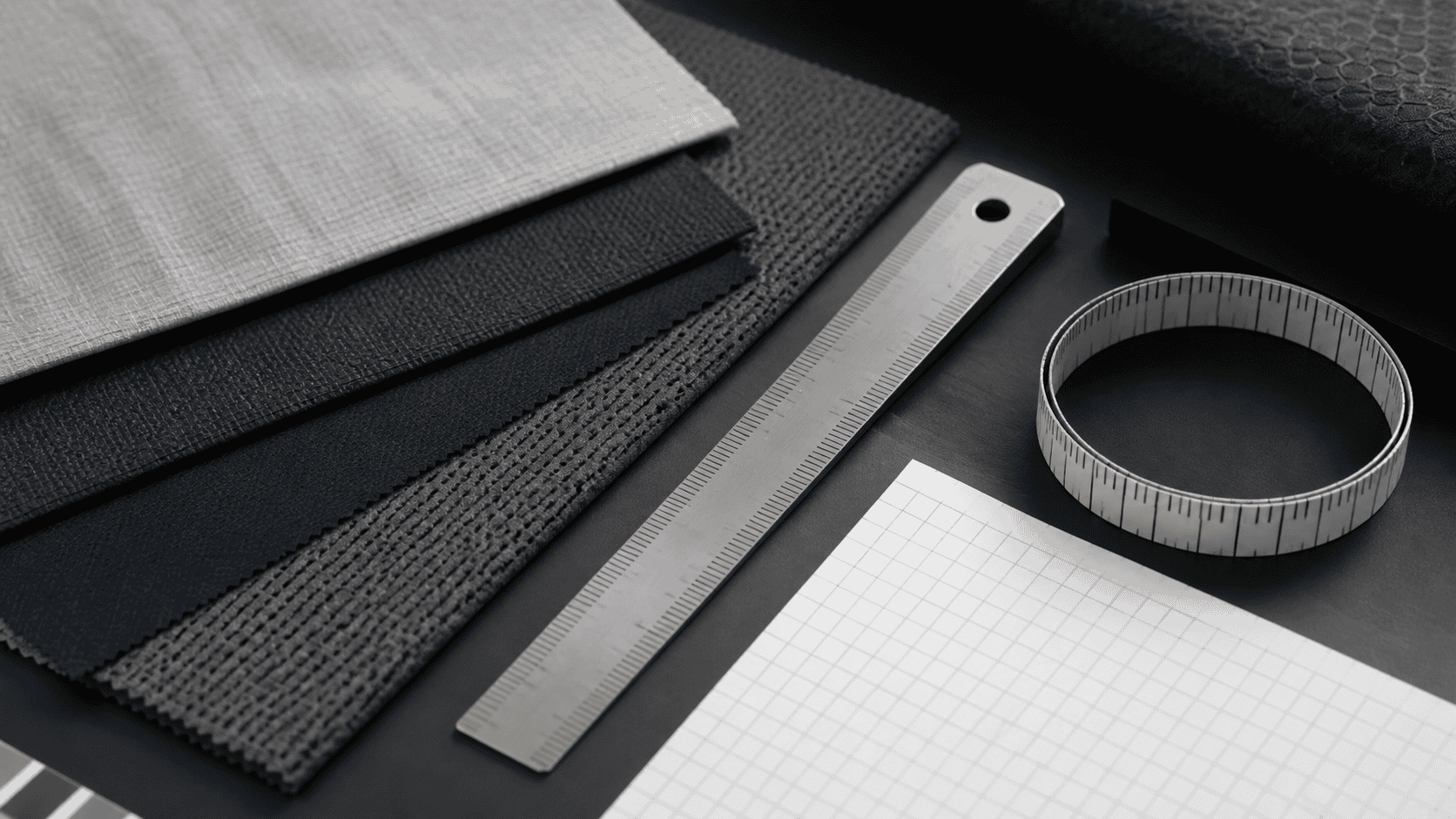
The practical conversion factors are:
- GSM to oz/yd²: GSM ÷ 33.906.
- oz/yd² to GSM: oz/yd² × 33.906.
The factor comes from the relationship between one avoirdupois ounce and one square yard expressed in square metres. The conversion changes the unit, not the underlying fabric measurement. For a standard-method discussion of mass per unit area, see ISO 3801 and ASTM D3776/D3776M.
| GSM (g/m²) | Approx. oz/yd² | Quick reading |
|---|---|---|
| 80 | 2.4 | Very light |
| 100 | 2.9 | Light |
| 120 | 3.5 | Lightweight |
| 140 | 4.1 | Light to regular |
| 160 | 4.7 | Regular |
| 180 | 5.3 | Regular to midweight |
| 200 | 5.9 | Midweight |
| 220 | 6.5 | Midweight |
| 240 | 7.1 | Midweight to substantial |
| 260 | 7.7 | Substantial |
| 280 | 8.3 | Heavy midweight |
| 300 | 8.8 | Heavyweight |
| 320 | 9.4 | Heavyweight |
| 340 | 10.0 | Heavyweight |
| 360 | 10.6 | Very heavyweight |
| 400 | 11.8 | Very heavyweight |
Rounding note: the chart is a communication aid, so values are rounded to one decimal place. Your purchase specification should retain the unit, target, tolerance, test method, and approved reference swatch rather than relying on a rounded conversion alone.
Lightweight, midweight, and heavyweight fabric bands
Buyers often use the terms lightweight, midweight, and heavyweight before a fabric is selected. Those labels are useful for an early conversation, but they are not universal technical classes. A 220 GSM open mesh, a 220 GSM interlock, and a 220 GSM fleece-backed knit will not behave in the same way.
| Planning band | Approximate reference | Typical development question |
|---|---|---|
| Lightweight | About 100 to 160 GSM | Will it stay breathable and comfortable in warm conditions without becoming too sheer? |
| Regular to midweight | About 160 to 240 GSM | Does it balance coverage, movement, drape, and everyday durability? |
| Substantial | About 240 to 320 GSM | Does it provide structure or coverage without making the product too warm or rigid? |
| Heavyweight | About 320 to 420 GSM | Is the extra mass intentional for warmth, structure, streetwear shape, or a premium hand feel? |
Use these bands to frame a sample discussion, not to approve a fabric in isolation. If a supplier describes a fabric as midweight, ask for the exact GSM, composition, construction, usable width, finish, and tolerance. The phrase is not comparable across suppliers until it becomes a measurable specification.
Buyer shortcut: if two quotations use different units, convert both to GSM or both to oz/yd² before comparing. Then compare construction and finish. A unit conversion can remove a communication problem, but it cannot make two different fabrics equivalent.
What GSM is common for different clothing products?
There is no single correct GSM for a garment category. The right starting point depends on the intended movement, climate, coverage, silhouette, layering, decoration, and price position. The table below gives development planning ranges that help a buyer start a brief; it is not a promise of a fixed DTS material program.
| Garment use | Planning starting band | What to check with GSM |
|---|---|---|
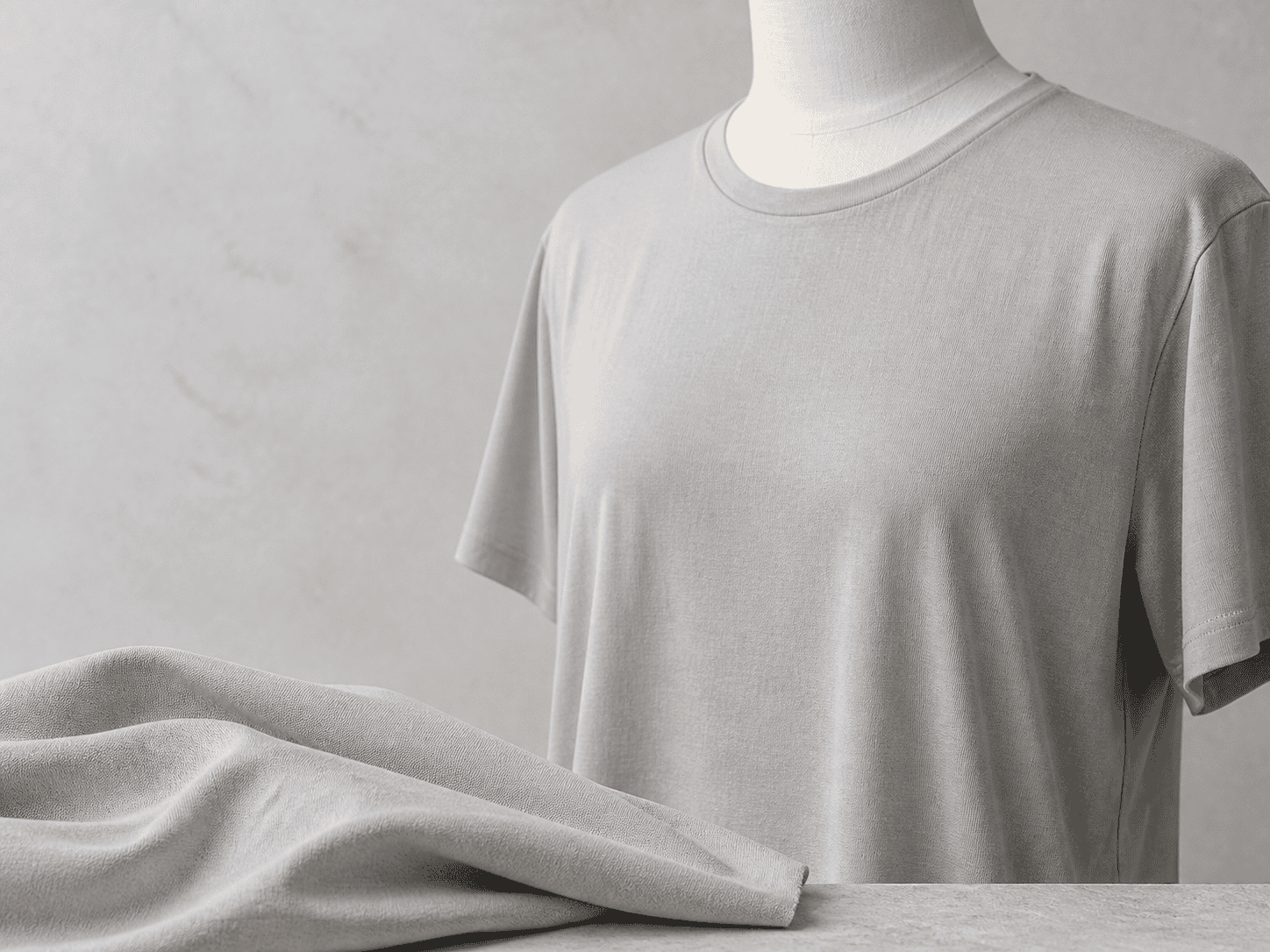
| Lightweight tees and tanks | About 120 to 180 GSM | Opacity, drape, print show-through, seam stability, and warm-weather comfort. |
| Performance tees | About 140 to 200 GSM | Moisture movement, drying behavior, stretch, color, and decoration compatibility. |
| Training shorts | About 140 to 240 GSM | Shell weight, liner weight, pocket construction, opacity, and movement during activity. |
| Leggings and compression bottoms | About 180 to 300 GSM | Coverage under stretch, recovery, pilling, seam appearance, and waistband stability. |
| Lightweight joggers | About 220 to 300 GSM | Drape, knee bagging, pocket shape, waistband recovery, and seasonal positioning. |
| French terry sweatshirts | About 260 to 360 GSM | Loopback structure, warmth, shrinkage, hand feel, and decoration on the face side. |
| Fleece hoodies and sweatpants | About 300 to 420 GSM | Brushed depth, bulk, seam handling, wash change, and shipping-weight impact. |
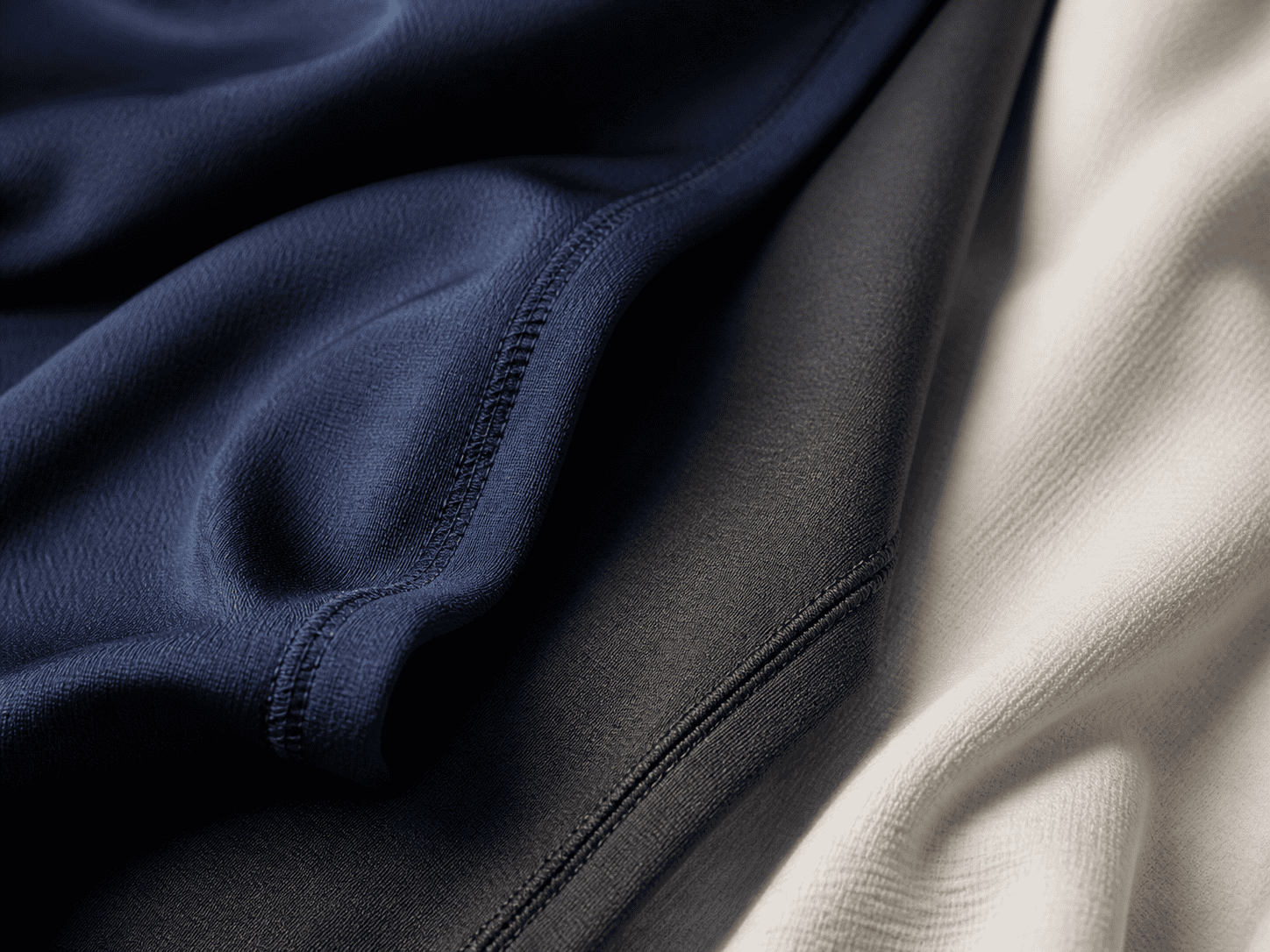
When you ask for a quote, separate the fabric layers. A lined short may have a shell GSM and a different liner GSM. A hoodie may have a body GSM, rib GSM, and brushed or unbrushed finish. A leggings brief may need a target GSM before and after a finish or wash process. Writing one number without clarifying the layer can create an avoidable sampling error.
Examples of how the same GSM can make different products
- A 180 GSM jersey may suit a lightweight tee, while a 180 GSM mesh may be selected for ventilation panels.
- A 240 GSM compact stretch knit may be used for opaque bottoms, while a 240 GSM French terry may be used for a lighter sweatshirt.
- A 340 GSM fleece may create a structured winter hoodie, but a 340 GSM woven outer fabric will not have the same stretch or interior warmth.
The construction and intended use should therefore lead the decision. GSM helps you compare the candidates; it does not replace a physical sample.
Is higher GSM always better?
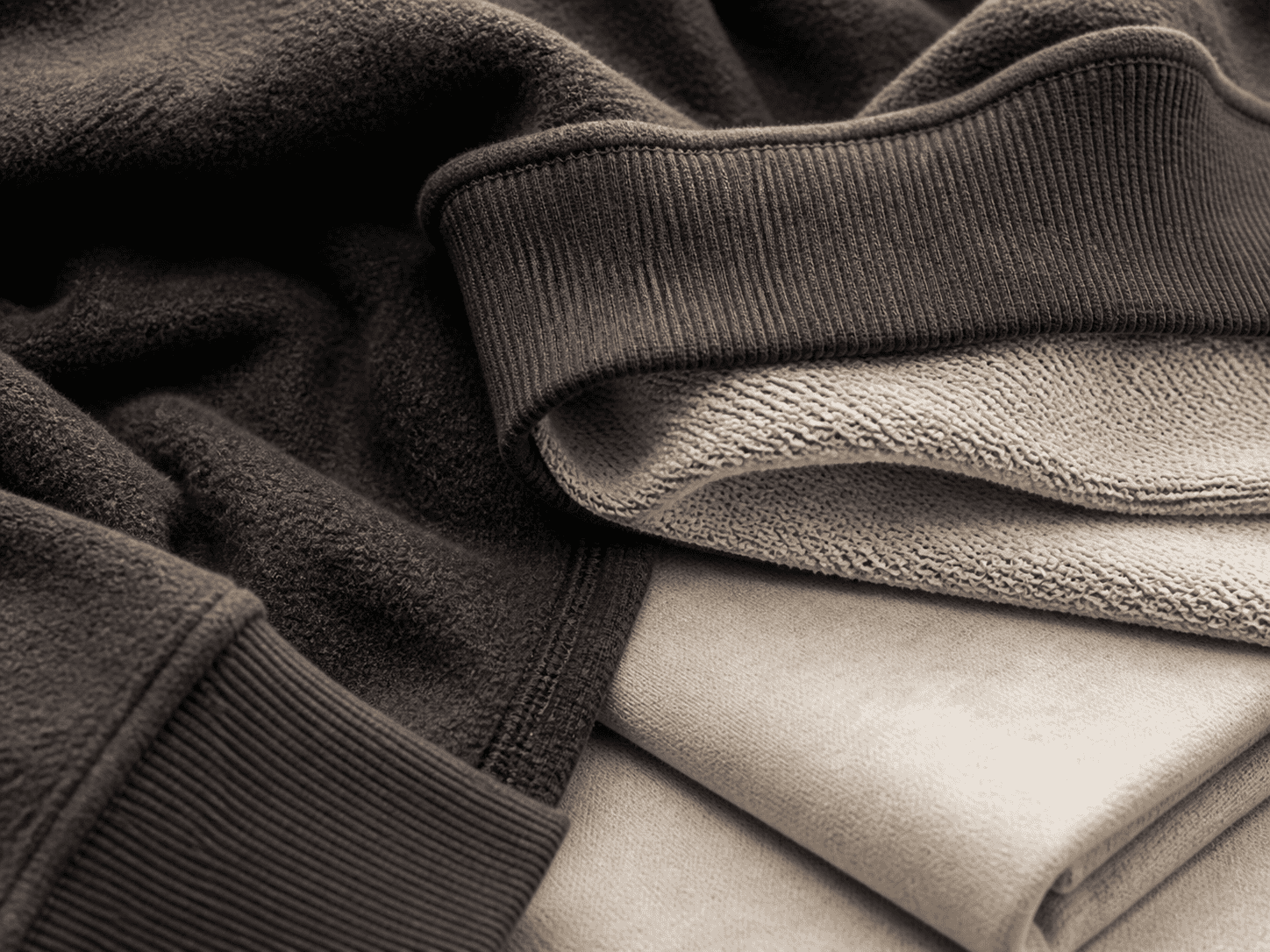
No. A higher GSM may be the right choice when the product needs structure, coverage, warmth, or a more substantial hand feel. It may be the wrong choice when the product needs quick drying, low bulk, high airflow, or a light packable result.
| If GSM increases | It may help with | It may also change |
|---|---|---|
| More mass per area | Coverage, body, opacity, warmth, and structure. | Breathability, drying time, fabric consumption, and freight weight. |
| More material in a brushed or fleece construction | Softness, loft, insulation, and a fuller hand feel. | Bulk, pilling risk, seam handling, and wash behavior. |
| More compact knit or woven construction | Shape stability, surface smoothness, and reduced show-through. | Stretch comfort, air permeability, and the way the garment drapes. |
For an activewear line, ask the product question first: what should the wearer feel, and what should the garment do? Then use GSM as one of the measurable controls. A lighter fabric can be correct for a running tee; a heavier fabric can be correct for a supportive legging or a winter layer. Neither is automatically more premium.
How to specify GSM in an apparel tech pack
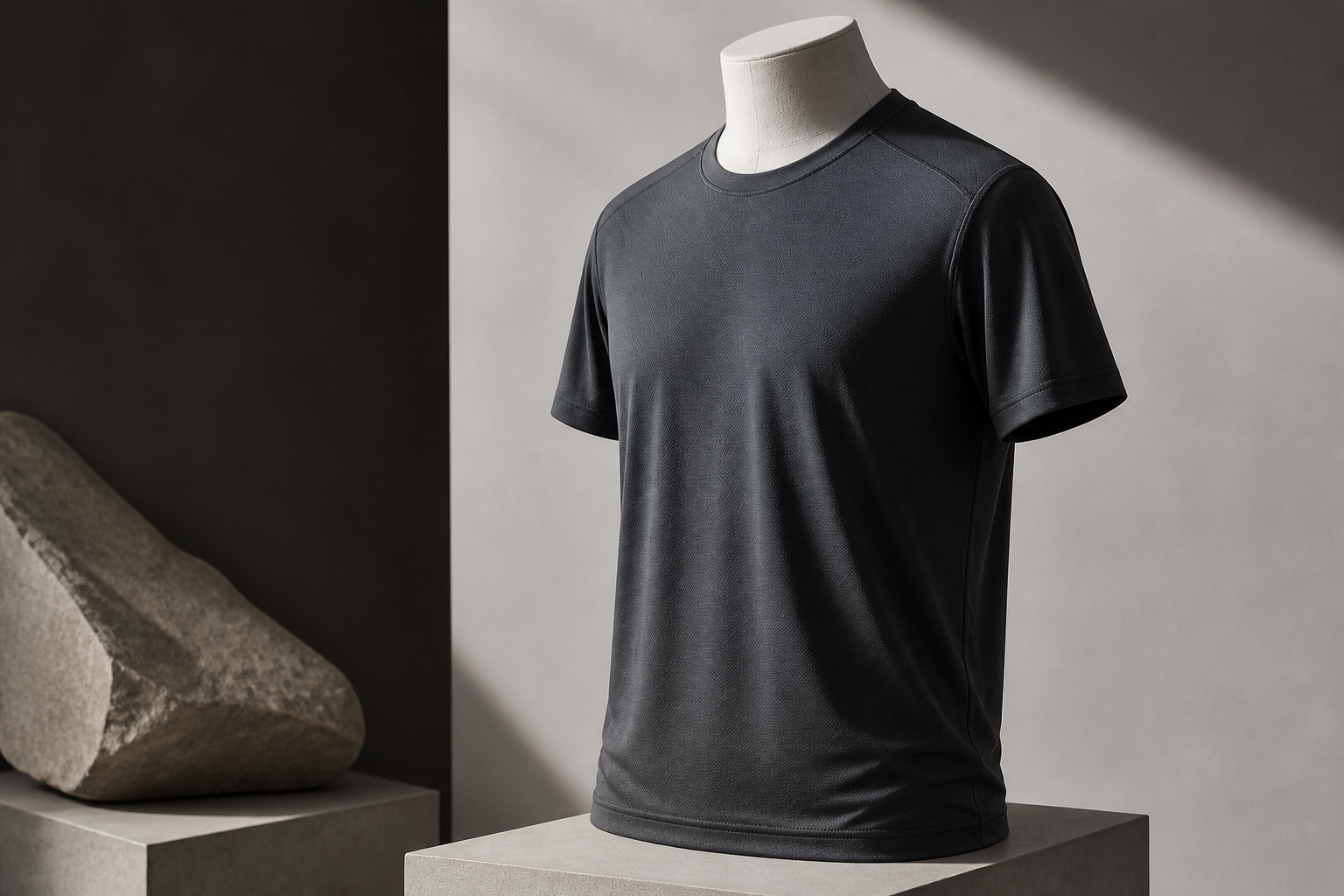
A supplier should not have to guess what medium-heavy performance fabric means. A quote-ready fabric line can be written like this:
Fabric: [composition] [construction], target [GSM] g/m², tolerance [confirm with supplier], usable width [target], [finish], [stretch/recovery requirement], color [reference], for [garment panel].
For example, a development brief might specify polyester-elastane interlock, a 220 GSM target, a tolerance to be confirmed against the approved swatch, four-way stretch, opacity under intended stretch, and a moisture-management requirement to be reviewed during sampling. The buyer has now separated measurable weight from performance requirements.
Include these fields beside the GSM target
- Unit and target: state GSM or oz/yd² and avoid mixing units within the same table.
- Tolerance: set a numeric tolerance only after the supplier confirms what can be controlled for that construction and finish.
- Fabric identity: name the composition, construction, color, finish, and supplier reference or swatch code.
- Use case: identify the garment panel, season, activity, and expected coverage or drape.
- Performance checks: list the tests or observations that matter, such as stretch recovery, pilling, dimensional change, opacity, or moisture movement.
- Approval anchor: keep the approved swatch, sample comments, and revision number together so bulk production is compared with the same reference.
DTS can review an incomplete brief and help turn a fabric idea into a production-ready specification through the tech-pack customization route. Exact fabric availability and testing scope still need to be confirmed against the project.
How to check fabric GSM from a swatch
A supplier data sheet is a useful starting point. If the number affects your quote comparison or product positioning, verify the method and the sample rather than comparing a hand-cut scrap with a formal test result as if they were identical.
Simple development check
- Identify the sample: record the fabric name, color, finish, lot or swatch code, and whether it is before or after a wash or finishing step.
- Use a known area: a GSM cutter or a carefully measured square makes the calculation easier. Avoid selvedge, seams, decorations, and visibly distorted areas.
- Condition the sample consistently: moisture and handling can influence mass. If the result will be used for a formal comparison, use the agreed method and conditions.
- Weigh the sample: use a scale with enough resolution for the sample size. Record the actual mass, not only the rounded GSM.
- Calculate: divide grams by square metres. For a 10 cm × 10 cm sample, multiply the measured grams by 100.
- Repeat and average: take specimens from more than one location when the fabric is wide, patterned, brushed, coated, or visibly variable.
- Record the method: keep the sample dimensions, scale resolution, conditioning note, result, and date with the fabric record.
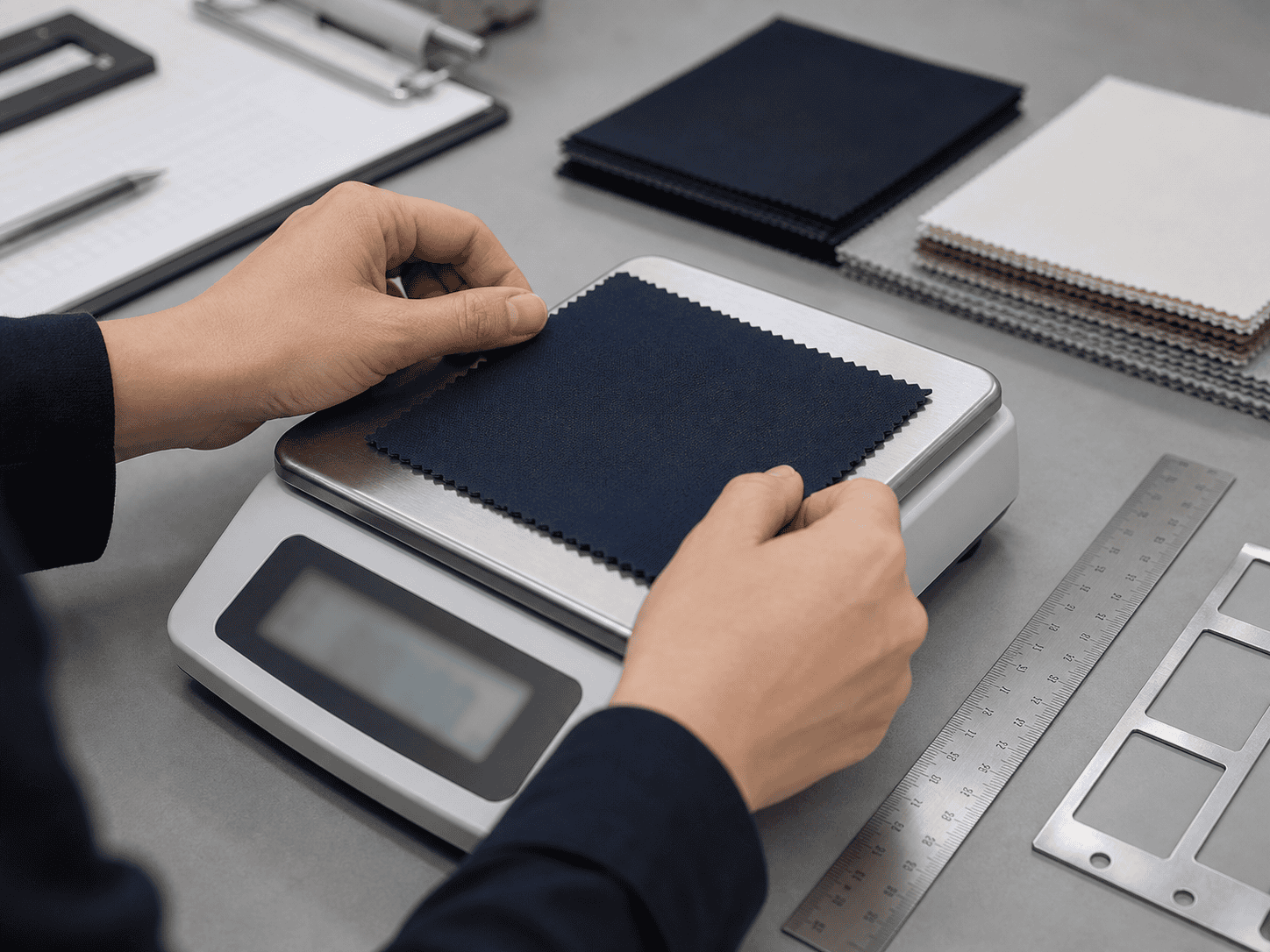
For a formal or contractual result, ask the supplier or testing partner which method applies. AATCC TM135, for example, addresses dimensional change after home laundering rather than GSM. It illustrates why a fabric-weight number should be kept separate from post-wash performance. GSM before and after a process can be a different development question and should be labelled clearly.
How to interpret a difference between the data sheet and the swatch
A small difference does not automatically mean the supplier is wrong. Possible explanations include sample conditioning, finishing, dyeing, fabric variation, measurement location, rounding, or a mismatch between the quoted construction and the received swatch. Ask the supplier to explain the method and compare like with like before rejecting a fabric or approving a bulk order.
Common GSM mistakes in apparel sourcing
1. Treating GSM as a quality score
Weight is only one property. A lighter fabric with good recovery, coverage, and wash stability may outperform a heavier fabric that pills or loses shape.
2. Comparing different constructions as if they were identical
Jersey, interlock, mesh, rib, French terry, fleece, and woven fabrics can share a GSM while delivering different stretch, thickness, air movement, and drape. Always record construction.
3. Confusing fabric GSM with garment weight
A buyer may want a shipping carton weight or finished-piece weight, while the supplier is quoting fabric GSM. These are different calculations. Confirm which one is needed for costing, packaging, or customer information.
4. Forgetting color and finish
Dyeing, brushing, coating, washing, and other finishing steps can change handle and mass. A black finished fabric and a greige reference should not be assumed equivalent without checking.
5. Writing approximately 200 GSM without a control point
An approximate figure can mean different things to different suppliers. Put the target, unit, tolerance, test method, and approved swatch in the same record.
6. Letting the number replace a wear test
GSM cannot tell you whether a legging is opaque under stretch, whether a tee dries quickly, whether a waistband recovers, or whether a hoodie shrinks acceptably. Those questions require the right physical or laboratory checks.
Frequently asked questions about GSM in clothing
What is a good GSM for a T-shirt?
For early development, many T-shirt briefs begin somewhere around 120 to 200 GSM, depending on whether the goal is a very light summer tee, an everyday retail basic, or a structured oversized style. Treat that as a starting band. Composition, knit construction, opacity, drape, print method, and target market decide the final choice.
What GSM is good for activewear?
Activewear development may use light to midweight fabrics for tees, tanks, and running products and more substantial fabrics for leggings, support products, or layers. Rather than choosing a single activewear GSM, define the activity, coverage, stretch, recovery, breathability, and intended climate, then use GSM to narrow the sample options.
Is 200 GSM heavy for clothing?
Usually, 200 GSM is better described as a regular or midweight reference for many apparel fabrics, but the answer depends on construction. A 200 GSM mesh, jersey, interlock, and fleece-backed fabric can feel very different. Use the number with the construction name and a physical swatch.
How do I convert GSM to ounces?
To convert GSM to ounces per square yard, divide GSM by 33.906. For example, 220 GSM is approximately 6.5 oz/yd². To convert back, multiply oz/yd² by 33.906. Round for communication, but keep the unrounded calculation in the working specification when precision matters.
Does higher GSM mean thicker fabric?
Not necessarily. Higher GSM means more mass per square metre, but thickness also depends on yarn, loops, weave, loft, finish, and compression. A compact high-GSM knit may be thinner than a lofty lower-GSM fleece.
How should GSM appear in a tech pack?
Write the unit, target, tolerance, construction, composition, finish, usable width, panel or garment use, performance checks, and approved swatch reference. If a tolerance or test method is not yet agreed, mark it for supplier confirmation instead of inventing a number.
Can I calculate the finished garment weight from GSM?
You can make an early estimate by multiplying fabric GSM by the approximate fabric area used, then adding allowances for panels, cutting waste, trims, and decoration. It is not the same as a finished-piece weight until the actual pattern, size, construction, and components are known.
Turn a GSM choice into a sample-ready brief

GSM becomes commercially useful when it removes ambiguity from a conversation. Start with the garment’s job, choose a planning band, convert units if necessary, and write the target beside construction, composition, finish, and performance requirements. Then approve the actual swatch and sample against a written record.
DTS Activewear can review the fabric and product decisions as part of a broader development brief. If you are still comparing materials, use the fabric and trim library. If you are ready to convert the choice into a physical prototype, see sampling and prototyping. For the production handoff, keep the agreed reference connected to the quality-control process.
Have a GSM target, supplier swatch, moodboard, or incomplete tech pack? Send the brief through DTS’s inquiry and NDA route so the team can confirm the exact material, sampling, MOQ, and production questions for your project.

Related Articles
- Best Fabric for Activewear: A Brand Buyer’s Guide
- How to Choose a Hoodie Manufacturer: 12 Checks Before Sampling
- How to Find a Low MOQ Activewear Manufacturer
- How to Start an Activewear Brand: 12 Practical Steps
- Types of Sportswear: Names, Uses and Fabrics
- Types of Tank Tops: Styles, Names and Buyer Specs