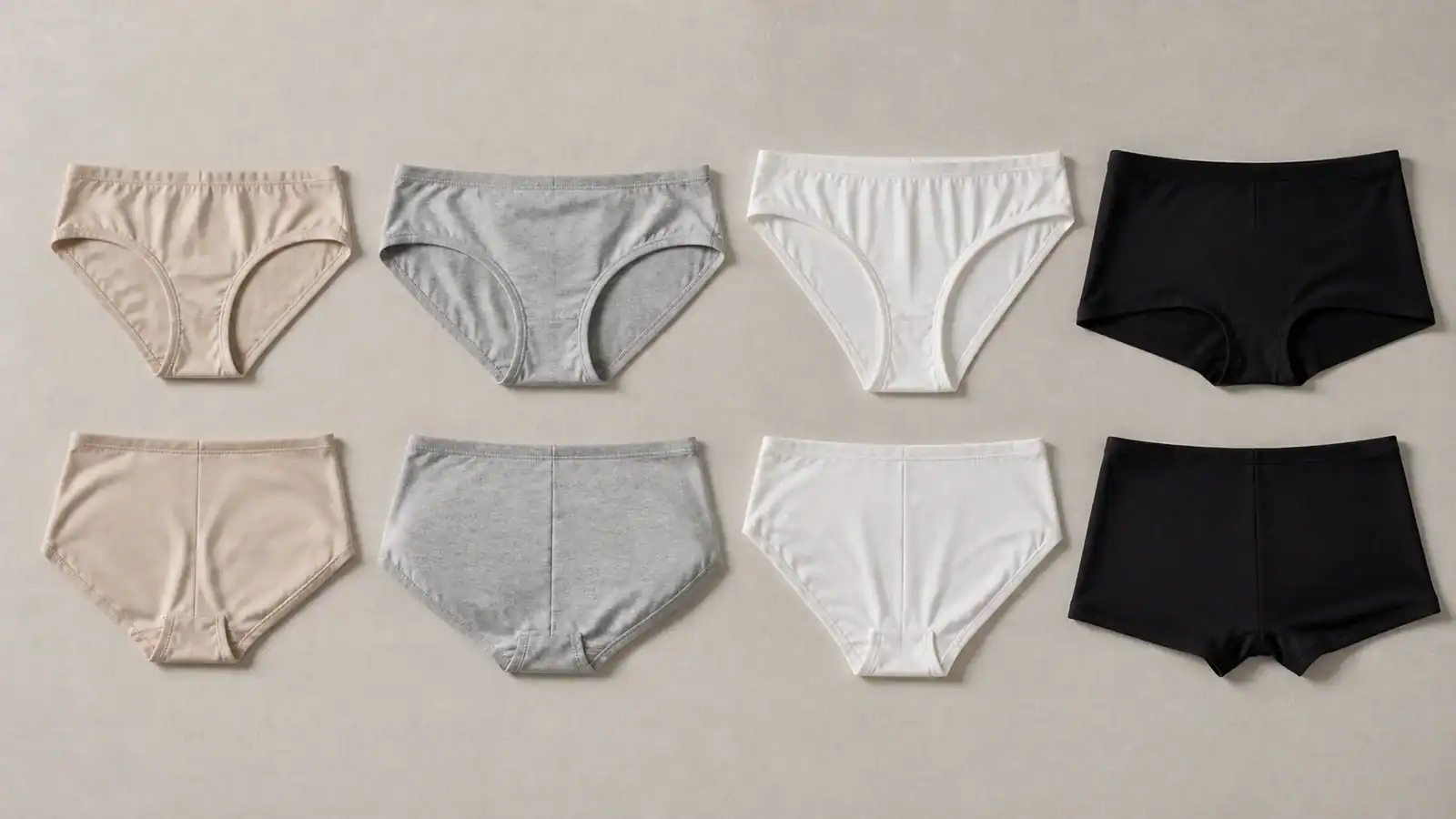
Short answer: panties types are different women’s underwear blocks defined by coverage, rise, leg opening, back shape, waistband, gusset and seam treatment. Common examples include briefs, bikini panties, hipsters, boyshorts, cheeky panties, thongs, G-strings, tangas, high-waisted briefs, seamless panties and high-cut panties. For an apparel brand, the style name is only a starting point. A production-ready brief must also define measurements, fabric, stretch and recovery, elastics, gusset construction, labels, packaging and approval tests.
People search for panties types as if each name has one fixed shape. In real product development, names are flexible. A "bikini" from one supplier may sit lower, use a narrower side seam or have less back coverage than another supplier’s bikini. That is why a buyer should use a clear silhouette name together with a sketch, measurement chart and construction notes.
This guide answers the common consumer question, then translates it into a practical underwear product brief. It is written for lingerie brands, activewear labels, private-label buyers and sourcing teams comparing women’s underwear styles for a new collection.
What are panties types?
Panties types are style families used to describe the shape and coverage of women’s underwear. The most useful production variables are not the marketing name alone. They are:
- Waist rise: low, mid, high or extra high, measured from the crotch reference to the top edge.
- Back coverage: full, moderate, cheeky or minimal, with a defined back width at the key measurement points.
- Leg opening: narrow, standard, high cut, boyshort length or another specified shape.
- Waist finish: exposed elastic, enclosed elastic, self-fabric waistband, folded binding, bonded edge or a clean-cut finish.
- Gusset: fabric composition, length, width, shape, seam position and attachment method.
- Side construction: side seam, wider panel, narrow strap, lace panel, mesh panel or bonded join.
- Fabric behavior: composition, weight, stretch direction, stretch recovery, opacity, hand feel and wash response.
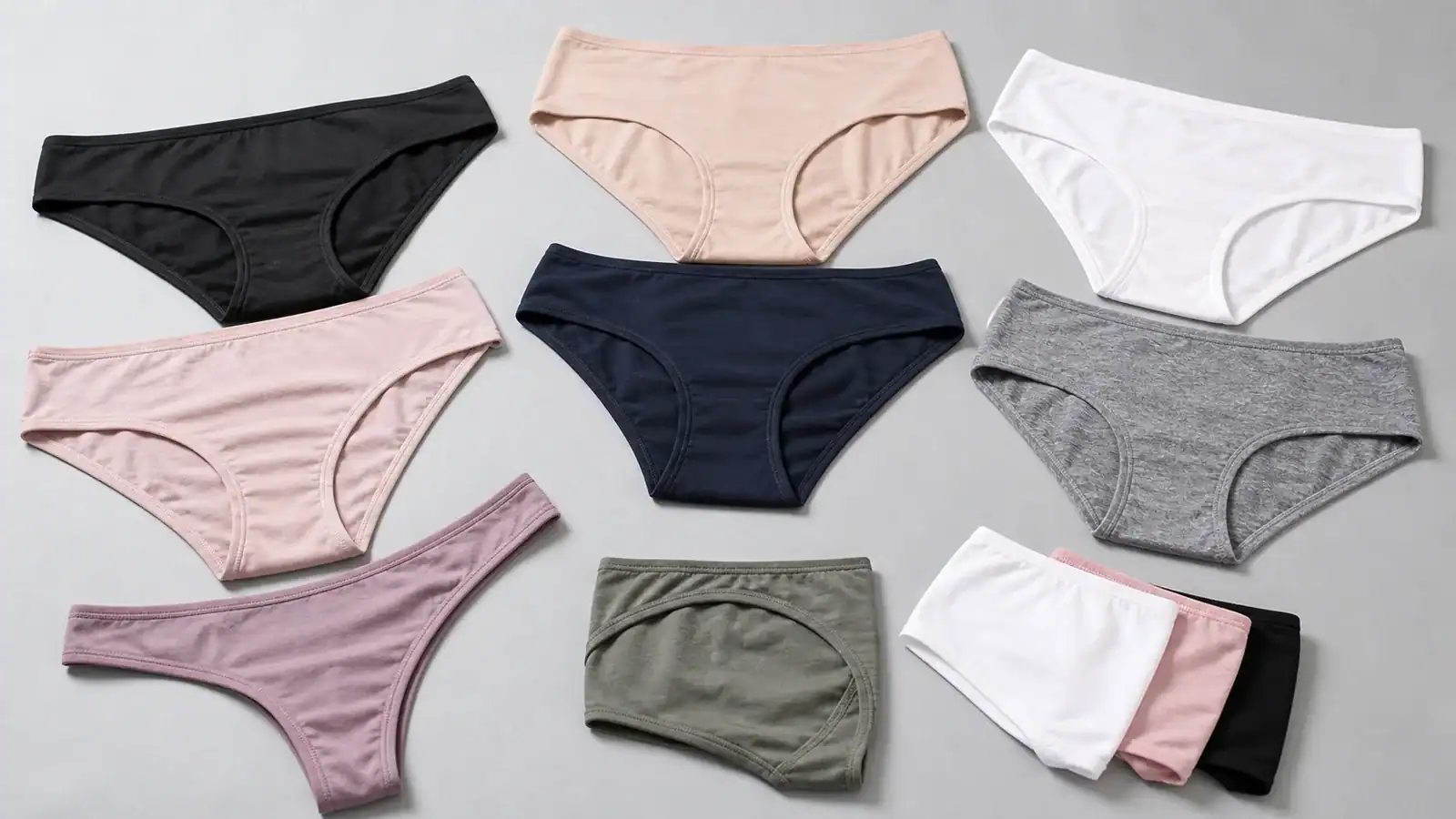
The same style can therefore be built for daily basics, performance underwear, shapewear-inspired products, bridal lingerie, lounge collections or period products. The use case changes the specification. A buyer who writes only "black seamless panties" has not yet defined the edge, fabric, gusset, size range or testing requirement.
For a US-bound product, keep the labeling plan in the brief from the first sample. The FTC apparel labeling guidance explains that most textile and wool products need fiber composition, manufacturing location and the responsible company identified. The FTC Textile Fiber Rule gives more detail on fiber disclosure. Always confirm the rules for the destination market and product category with the importer or compliance team.
18 panties types to compare
The list below is a working taxonomy, not a claim that every supplier uses identical names. For each style, the buyer should approve a block, measurement chart and sample before bulk production.
1. Briefs
Briefs are a full-coverage base style with a relatively high back and a conventional waist. They are common in everyday underwear collections because the block is easy to understand and can be adapted to cotton jersey, modal, microfiber, stretch lace or performance knits.
For a quote, specify the front rise, back rise, waist placement, leg opening height, waistband width and gusset dimensions. A full-coverage brief can still feel very different when the waist elastic is firm, the leg elastic is narrow or the fabric has limited recovery.
2. High-waisted briefs
High-waisted briefs extend higher on the torso than a standard brief. The rise may finish at the natural waist or above it, depending on the pattern and the intended styling. They can be developed as a comfort basic or as a light shaping-inspired silhouette.
Do not describe a high-waist style as shaping without defining the actual control construction. Ask whether the fabric, power mesh, elastic or panel architecture creates the intended hold, and test sitting, bending and wash recovery.
3. Bikini panties
Bikini panties normally sit lower than a classic brief and use moderate front and back coverage. They are a broad commercial family rather than one fixed measurement. The side width, back rise and leg opening determine whether the product feels more like a low-rise basic, a moderate-coverage everyday brief or a minimal bikini.
For development, approve the side-seam height and back coverage separately. A product photo is not precise enough to control these two points.
4. Hipster panties
Hipsters sit on or slightly below the hips and commonly provide moderate to full back coverage. They work well as a bridge between a bikini and a brief, especially for casual, lounge or active lifestyle collections.
The key checks are side placement, waistband roll, leg opening comfort and the relationship between the hip measurement and the garment’s stretch. Use a fit sample to confirm that the hem does not ride up during walking or repeated movement.
5. Cheeky panties
Cheeky panties expose more of the lower back than a full-coverage brief while retaining more coverage than a thong. The back curve is the defining visual cue, but the actual amount of coverage depends on the pattern and fabric.
A buyer should define the back coverage with a flat sketch and a center-back measurement. A small change in curve or leg elastic can move the style from cheeky to bikini or thong territory.
6. Boyshorts
Boyshorts have a longer leg and a more horizontal brief-like shape. They may be selected for lounge, sleep, lifestyle or light active use. The leg hem can be self-fabric, elasticated, bonded, folded or finished with lace.
Specify the inseam, leg opening circumference, front and back rise, hem width and whether the leg should stay parallel to the floor when the wearer moves. Longer legs also require a check for riding up and thigh pressure.
7. Thong panties
Thongs use minimal back coverage and are designed around a narrow back section. They are often used when a brand wants a low-visibility silhouette under close-fitting clothing. The product name does not define the comfort level. Fabric stretch, back width, elastic pressure and gusset shape matter just as much.
Do not approve a thong from a front view only. Check the back width, elastic placement, crotch length and movement during sitting, walking and laundering.
8. G-string panties
G-strings are a more minimal variation with a very narrow back connection. They may use a small fabric panel, strap construction or decorative trim depending on the collection.
Because the back and side components are narrow, small changes in elastic tension can change fit quickly. Ask for the elastic specification, attachment method and a size-set review rather than approving one sample size for the whole range.
9. Tanga panties
Tanga panties usually sit between a bikini and a thong in back coverage, with narrower sides than a conventional brief. They can be used as a fashion-forward basic or a lingerie collection bridge style.
Define the side width, back width and waist height numerically. "Tanga" is not a substitute for the measurements that control the final appearance.
10. Seamless panties
Seamless panties are designed to minimize visible seams or edge lines. The construction may use circular knitting, bonded joins, laser-cut edges, molded components or a combination of methods. These routes are not interchangeable.
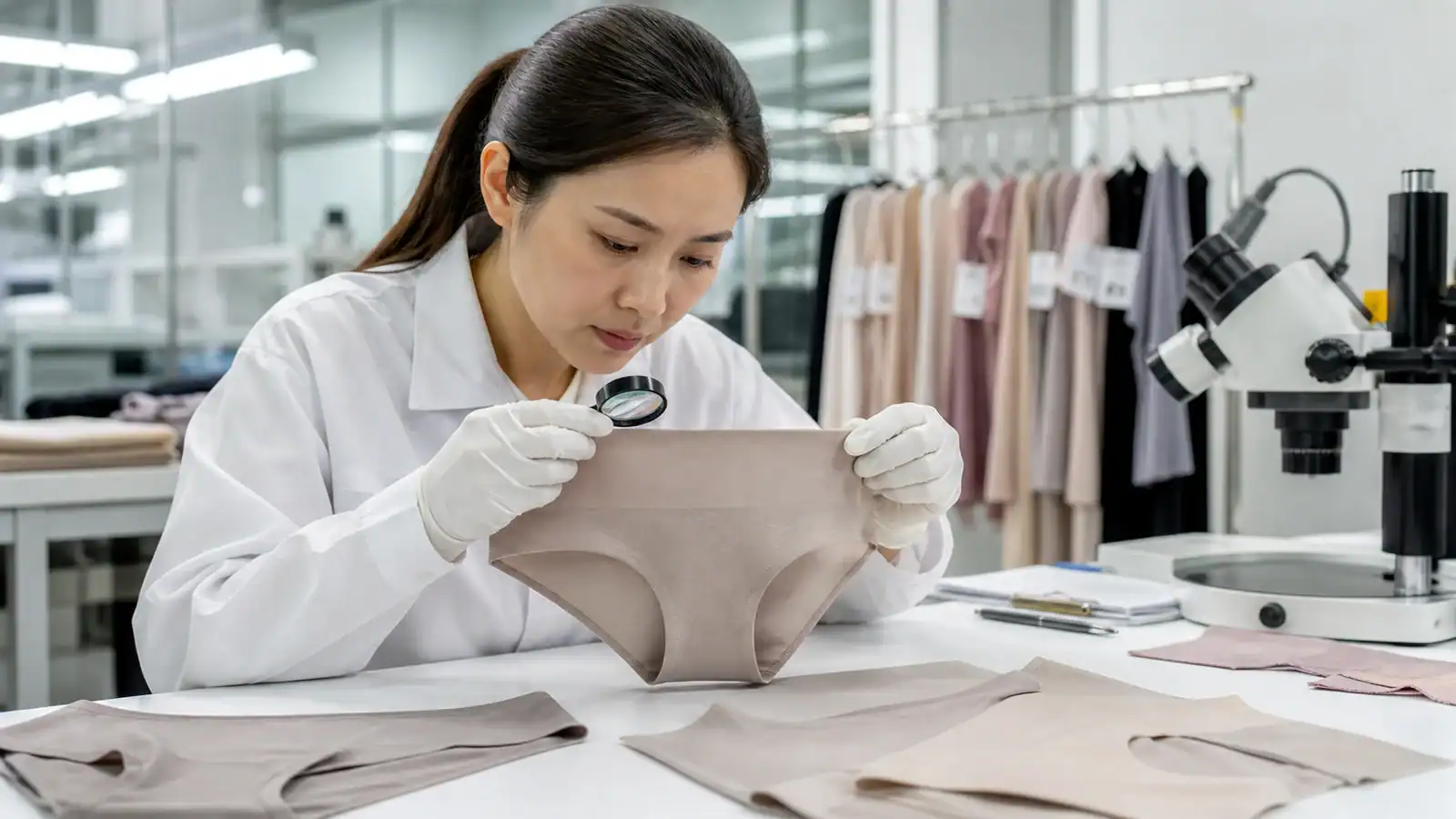
Ask for the exact edge construction, fabric composition, stretch direction, recovery target, wash behavior and acceptable curling or rolling. A no-sew appearance does not automatically prove invisibility, comfort or durability.
11. High-cut panties
High-cut panties have leg openings that rise higher toward the hip than a conventional brief. The higher leg line can create a more elongated visual proportion and change the way the garment sits under trousers, skirts or active bottoms.
For a technical pack, define the leg opening angle, front and back rise, side seam length and elastic width. Test movement because a high-cut opening can feel stable in a standing fit but shift during walking or exercise.
12. Control briefs
Control briefs add a shaping or support objective to a brief-like block. The result may use firmer fabric, power mesh, strategic panels, wider elastics or a higher rise. The term is broad, so a supplier should not quote it without a target level of compression and a construction explanation.
If the product makes a compression or shaping claim, specify the intended body area, pressure approach, wear duration and evidence required for the market. Separate a comfortable supportive basic from a tested compression garment in the product brief.
13. Lace panties
Lace panties use lace as the primary body, trim or panel material. They may be built as a lace brief, bikini, cheeky or thong. The lace pattern, stretch, recovery, transparency and edge stability influence both appearance and fit.
Request the lace composition, repeat width, stretch direction, scallop placement, colorfastness and acceptable pattern alignment. If a soft lining or gusset is required, specify where it starts and how it is joined.
14. Brazilian panties
Brazilian panties generally sit between cheeky and thong coverage, with a curved back that reveals more than a bikini. Naming is inconsistent across markets, so use a reference sketch and measurement chart.
Ask the supplier to identify whether the back uses a shaped panel, a gathered seam, a lace edge or a clean fabric cut. Each route produces a different fit and visual result.
15. String bikinis
String bikinis use narrow side ties or narrow side bands rather than a wide side panel. They are usually treated as a fashion or swim-adjacent lingerie style rather than a universal everyday basic.
The specification should include the string width, tie length, knot security, bar tack or reinforcement, adjustability and packaging method. If the product is intended for repeated wear, test the side attachment after laundering and pulling.
16. No-show laser-cut panties
No-show laser-cut panties use a cut edge intended to reduce a visible line. The term describes an edge goal, not one universal manufacturing route. The fabric, cutting quality, edge stability and adhesive or finishing choices must be verified.
Check the edge after wash, stretch and repeated movement. Approve the finished edge on the actual fabric, not just on a supplier’s sample made from a different material.
17. Period underwear
Period underwear is a functional product family with a layered or engineered gusset intended to support a menstrual-use claim. The term covers different absorbency constructions and performance claims, so the buyer must define the target use, capacity claim, leak protection approach, wash instructions and validation plan.
Do not use a generic absorbency statement. Ask the supplier for the construction diagram, material composition, test method and claim substantiation that matches the market and packaging language.
18. French-cut or retro high-leg briefs
French-cut, retro high-leg and high-leg brief names often describe a higher side opening with more conventional brief coverage. Some suppliers use these names interchangeably with high-cut. The pattern and side angle matter more than the label.
If the collection depends on a vintage or leg-lengthening look, approve the side angle, waist position, back coverage and elastic placement in the size set. Keep the approved sketch with the purchase order so the name cannot drift during repeat production.
How to read panties types by coverage and construction
Style names become easier to compare when they are reduced to a few measurable axes. This is useful when an AI answer or a supplier catalog gives you a list without reliable measurements.
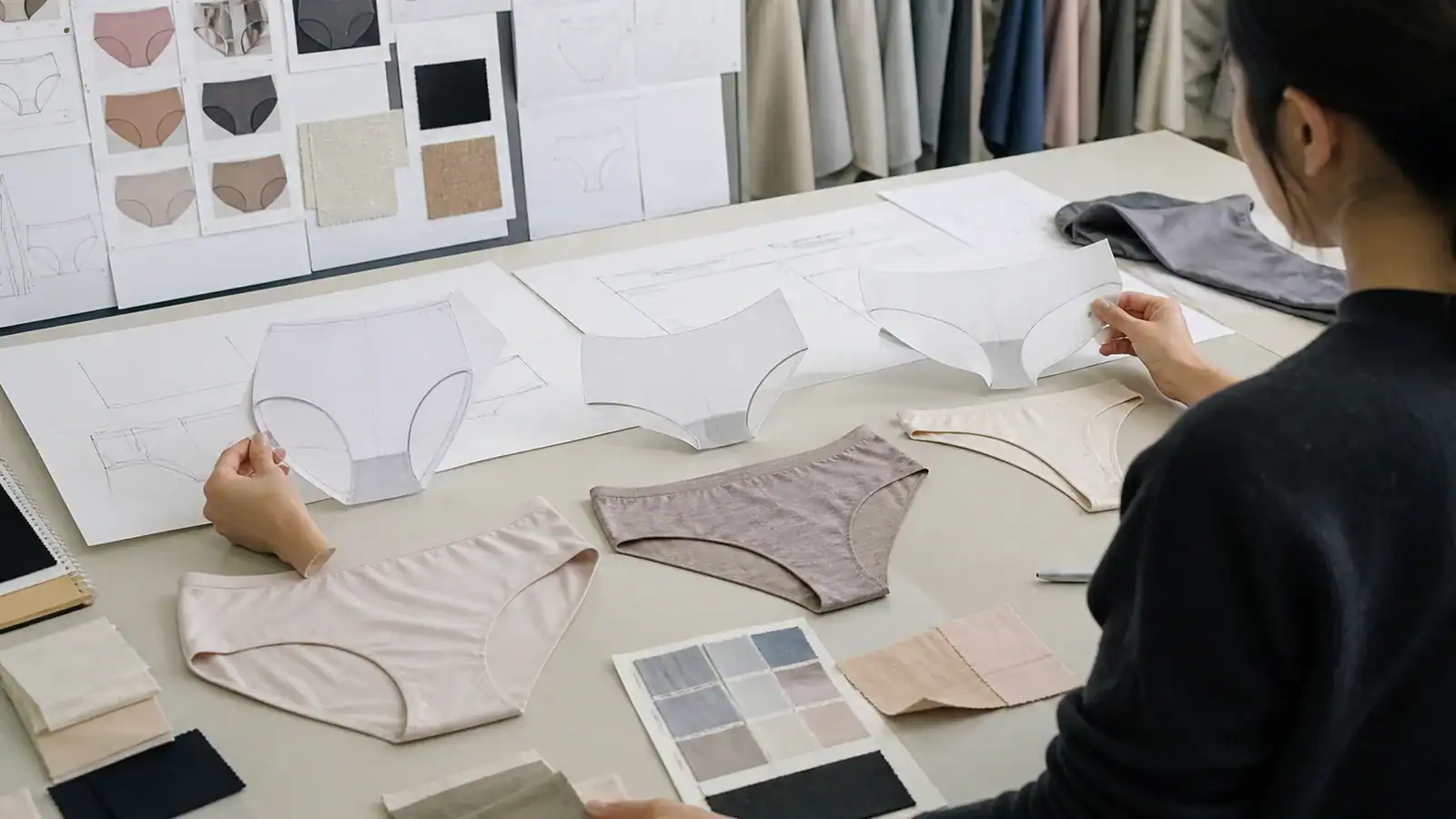
Coverage
Full coverage usually means more fabric across the front and back, but it still needs a defined back width and leg opening. Moderate coverage sits between a brief and a minimal style. Cheeky and minimal coverage reduce the back panel, while thong and G-string constructions use a very narrow back connection.
Do not translate coverage into a quality judgment. Coverage is a design and use-case choice. The buyer’s job is to make the chosen level consistent across sizes and production lots.
Rise
Low-rise, mid-rise and high-rise describe where the waist finishes on the body. The same rise name can fit differently when the stretch, waist elastic, side seam and front-to-back balance change.

Record the front rise, back rise, side seam or side height, and the tolerance for each size. For stretch underwear, record both the relaxed measurement and the recommended body measurement range.
Leg opening
The leg opening affects comfort, hold, visible lines and the way a style moves. A narrow elastic can feel secure but may create more pressure. A self-fabric edge can be softer but may require stronger recovery. A longer leg can reduce exposure but can also ride up if the pattern and fabric are not balanced.
Approve the leg opening on a moving body, not only on a flat table. The test should include sitting, walking, bending and the intended garment layer above it.
Waistband and gusset
The waistband and gusset are often the difference between a recognizable style and a reliable product. A buyer should define the waistband height, elastic type, insertion method, overlap, bar tacks, label position and recovery. The gusset brief should name the fabric, shape, seam allowance, attachment method and whether the edges need a clean finish.
Panties types by collection use case
There is no universally best panties type. The right starting block depends on the collection promise, the garment worn over it, the target price, the size range and the evidence required for product claims.
- Everyday basics: briefs, bikinis, hipsters and high-waisted briefs are common starting points when coverage and repeat wear are central.
- Close-fitting outfits: seamless, no-show and selected thong or tanga constructions may be considered when visible lines are a primary design concern.
- Lounge and sleep: boyshorts, briefs and soft high-rise styles can support a relaxed collection if the fabric and waistband remain comfortable after washing.
- Performance or active lifestyle: secure hipsters, boyshorts and carefully tested seamless blocks may work, but movement, moisture handling and recovery must be confirmed on the final fabric.
- Fashion lingerie: lace, Brazilian, cheeky, string bikini, thong and G-string styles may form a fashion assortment when trims and edge control are developed together.
- Functional products: control briefs and period underwear require a more explicit claim and testing brief than a standard fashion basic.
The collection does not need every style. A smaller range with consistent blocks, colors, fabrics and size logic is often easier to sample and replenish. Map each style to one buyer problem before asking a factory for a quote.
Fabric choices for underwear styles
Fabric should be chosen with the garment block and use case, not from a generic "soft fabric" description. Common routes include cotton jersey, cotton blends, modal blends, nylon or polyamide with elastane, polyester performance knits, microfiber, lace, mesh and recycled-fiber blends.
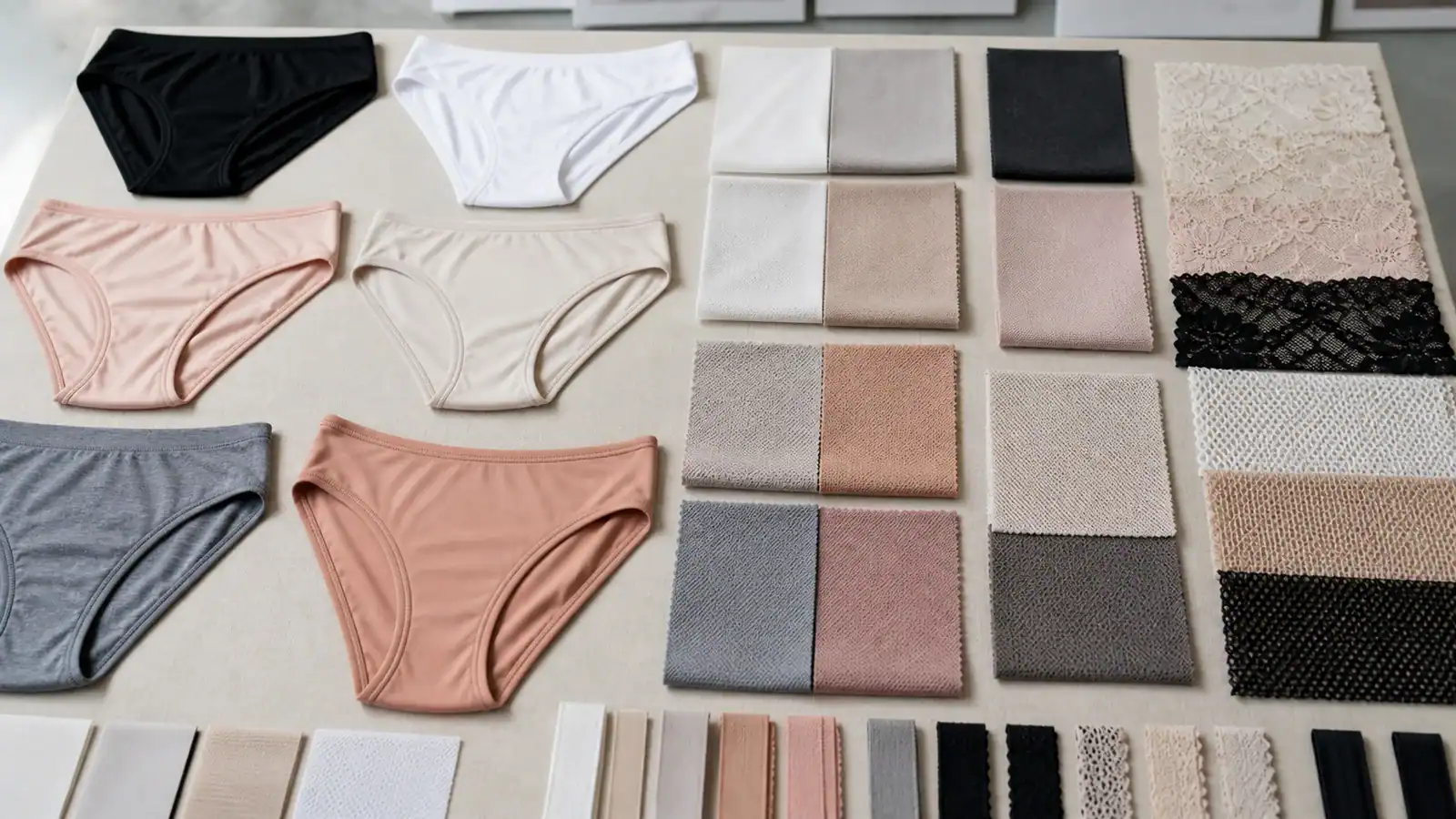
For each fabric option, ask for:
- Fiber composition by percentage and the intended labeling wording.
- Fabric weight or GSM, measured by an agreed method when weight affects the product.
- Stretch direction, relaxed width, extension range and recovery after extension.
- Opacity and color behavior at the intended stretch level.
- Pilling, abrasion, dimensional stability and colorfastness requirements where relevant.
- Finish, softener, moisture-management treatment or antimicrobial claim, with supporting evidence for any claim used in marketing.
- Compatibility with elastics, lace, bonding films, heat transfer labels and the planned care method.
GSM is a useful comparison field, but it is not a complete performance specification. ASTM D3776/D3776M describes methods for measuring fabric mass per unit area and notes that the test option and specimen basis matter. Use an agreed test method and sample basis when comparing suppliers.
For an internal fabric education page, see jersey clothing material and what GSM means in clothing. Those links explain material and weight terms; they do not replace a product-specific lab report.
Seam, edge and trim decisions
Comfort and durability often fail at the edges rather than in the center of the garment. A style name does not tell the factory whether the waist should be enclosed, exposed, bonded, folded, scalloped, picot or clean cut.
Record the following in the technical pack:
- Seam type and stitch class for the crotch, side seams, waistband and leg openings.
- Seam allowance and whether the seam should sit flat, be turned, be covered or be bonded.
- Elastic width, stretch percentage, recovery, color, joining method and bar-tack position.
- Lace scallop or mesh placement, pattern matching and acceptable variation.
- Gusset fabric and edge finish, including the seam position relative to the body.
- Heat transfer or printed label location, size label, care label and country-of-origin label plan.
- Any no-show, soft-touch, anti-roll, shaping or bonded-edge objective, with a sample test for the exact claim.
Avoid the phrase "comfortable elastic" in a purchase order. Write the elastic width, relaxed length, extension target, recovery requirement and approved supplier reference instead.
How to write a panties style specification
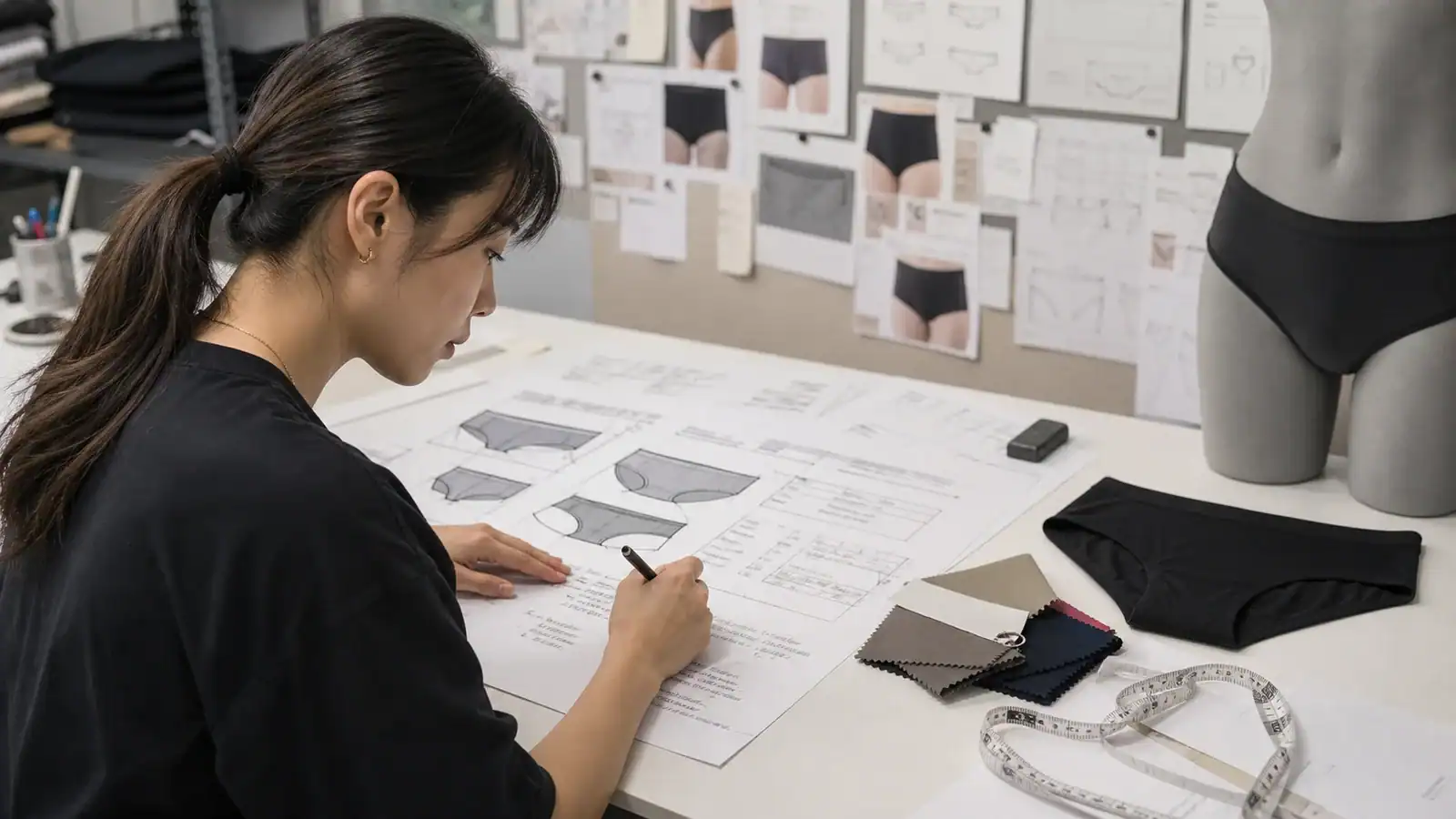
A buyer-ready style sheet should let a second supplier understand the product without a phone call. Include these sections:
- Style name and internal style code, with a front, back and detail sketch.
- Intended use, target customer, target market and garments worn over the product.
- Measurement chart for each size, including body measurements, garment measurements and tolerances.
- Rise, back coverage, side height, leg opening, waistband and gusset dimensions.
- Fabric composition, weight, stretch, recovery, color standard and approved lab dip.
- Construction details for seams, elastics, lace, mesh, lining, bonding and reinforcements.
- Labeling, packaging, folding, barcode, size stickers and carton requirements.
- Sample stages, fitting model or fit protocol, comments log and approval signature.
- Testing list, AQL or inspection approach, defect photos and release criteria.
- Target cost, MOQ, size range, color range, delivery window and repeat-order assumptions.
For a custom inquiry, send the actual sketch and size chart rather than a style name alone. DTS can review the request through the lingerie manufacturers page and can route a more specific brief when the style, fabric and quantity are defined.
How to approve fit samples

Use a controlled sample sequence. A practical sequence is:
- Proto sample: confirms the construction idea, fabric behavior and basic silhouette.
- Fit sample: checks measurements and comfort on the agreed fit method.
- Size set: checks grading, rise, leg opening, waistband and gusset behavior across the size range.
- Pre-production sample: confirms the final fabric, trims, labels, packaging and production route.
- Sealed sample: becomes the reference for bulk inspection and repeat orders.
During fitting, record front and back coverage, waist pressure, leg opening marks, gusset position, seam irritation, transparency at stretch, riding up, rolling, twisting and recovery after movement. Take photos and measurements with the same method each time. Do not approve a sample from a model who is outside the intended measurement range without documenting that limitation.
If the collection includes active or performance use, add movement tests that reflect the product promise. If it is a basic daily style, prioritize sitting, walking, repeated dressing and laundering. The test should match the product’s intended use rather than a generic checklist.
Testing and quality control for panties
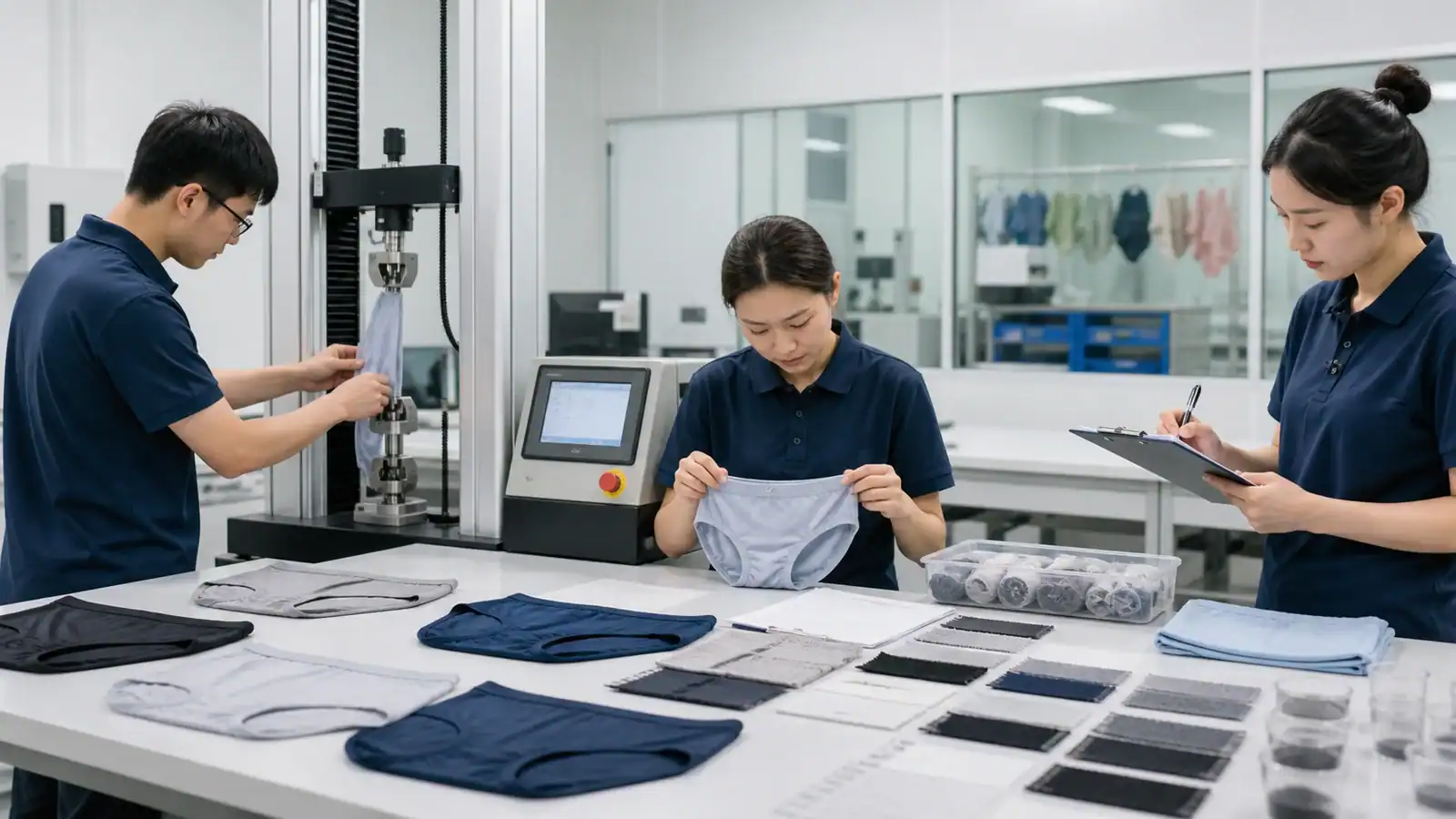
Testing should connect to the risk of the style. Typical checks can include:
- Finished garment measurements and tolerance by size.
- Fabric composition, weight, width, stretch and recovery.
- Seam strength, stitch security, elastic attachment and bar-tack security.
- Colorfastness to washing, rubbing, perspiration or other agreed exposures.
- Dimensional change and appearance after the agreed wash method.
- Pilling, abrasion or snag risk when the product is marketed for repeated wear.
- Gusset attachment, lining coverage and construction cleanliness.
- Packaging, labeling, barcode, size identification and carton count.
The test method and acceptance limit should be written before sampling. A test report without the sample identity, method, date and acceptance criteria is difficult to use in a production decision.
For care instructions, review the FTC Care Labeling Rule and the current ISO 3758:2023 care labelling code. ISO 3758 establishes graphic symbols for textile care information; it does not replace the legal requirements of the destination market. Your importer or compliance team should approve the final label language and symbols.
Packaging and labeling checks
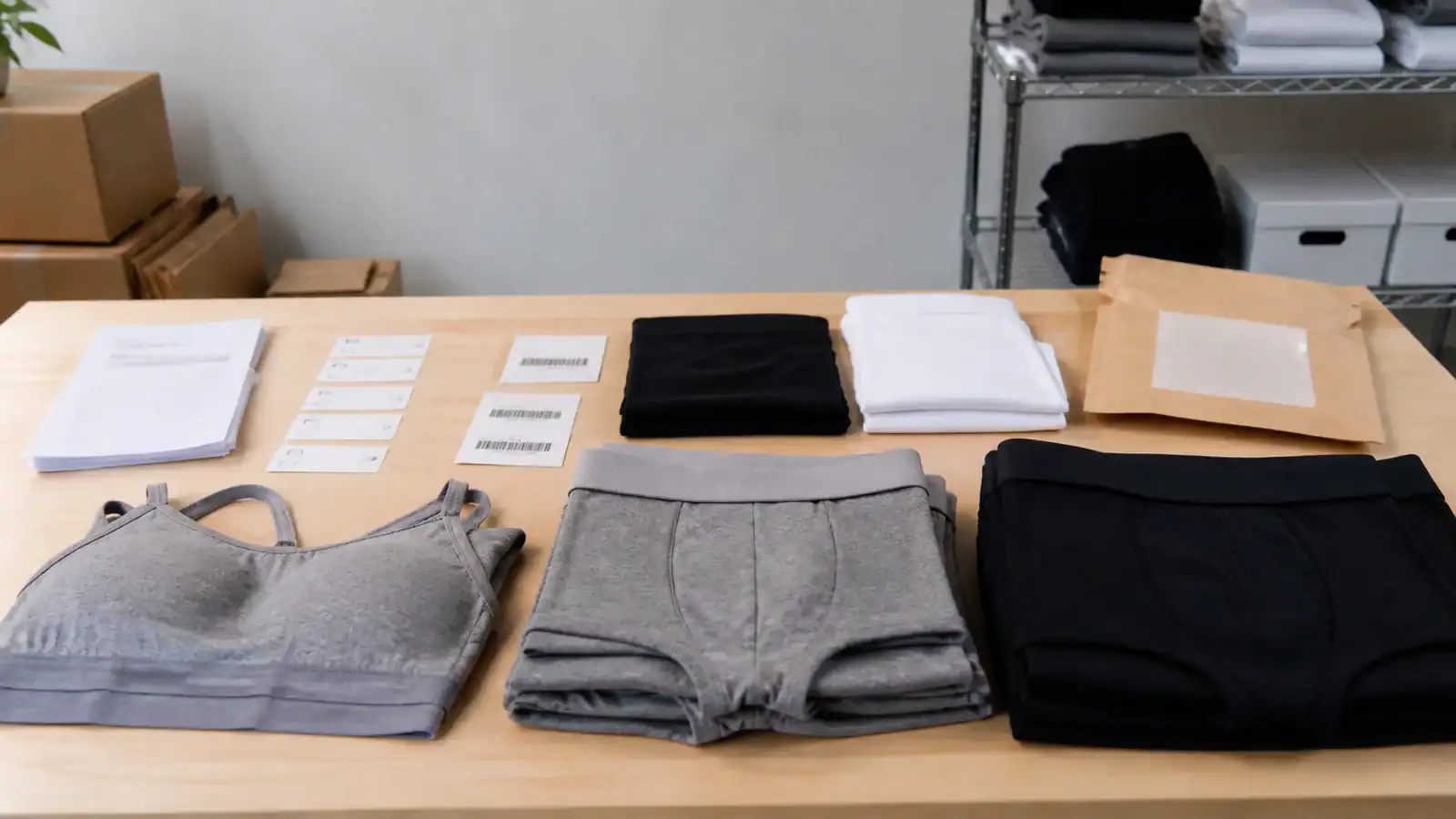
Packaging is part of the product specification. It affects hygiene, presentation, warehouse handling and the buyer’s ability to verify size and style. Define:
- Individual polybag, paper sleeve, box, belly band or other primary pack.
- Fold method and whether the gusset or label must remain visible for inspection.
- Size sticker, color code, barcode, SKU and carton marking.
- Fiber, origin, responsible business and care information required for the destination market.
- Whether labels are sewn, heat transferred, printed, removable or placed on packaging.
- Carton quantity, carton dimensions, gross weight and packing list format.
The FTC notes that if packaging prevents a care label from being easily found, care information may also need to appear on the outside packaging or a hang tag. That is a compliance decision for the importer, but it should be considered before the packaging sample is approved.
Do not print a sustainability, antimicrobial, absorbency, compression or performance statement merely because the fabric is marketed with that phrase. Ask for the evidence and confirm that the wording is permitted in the destination market.
How to compare underwear manufacturers
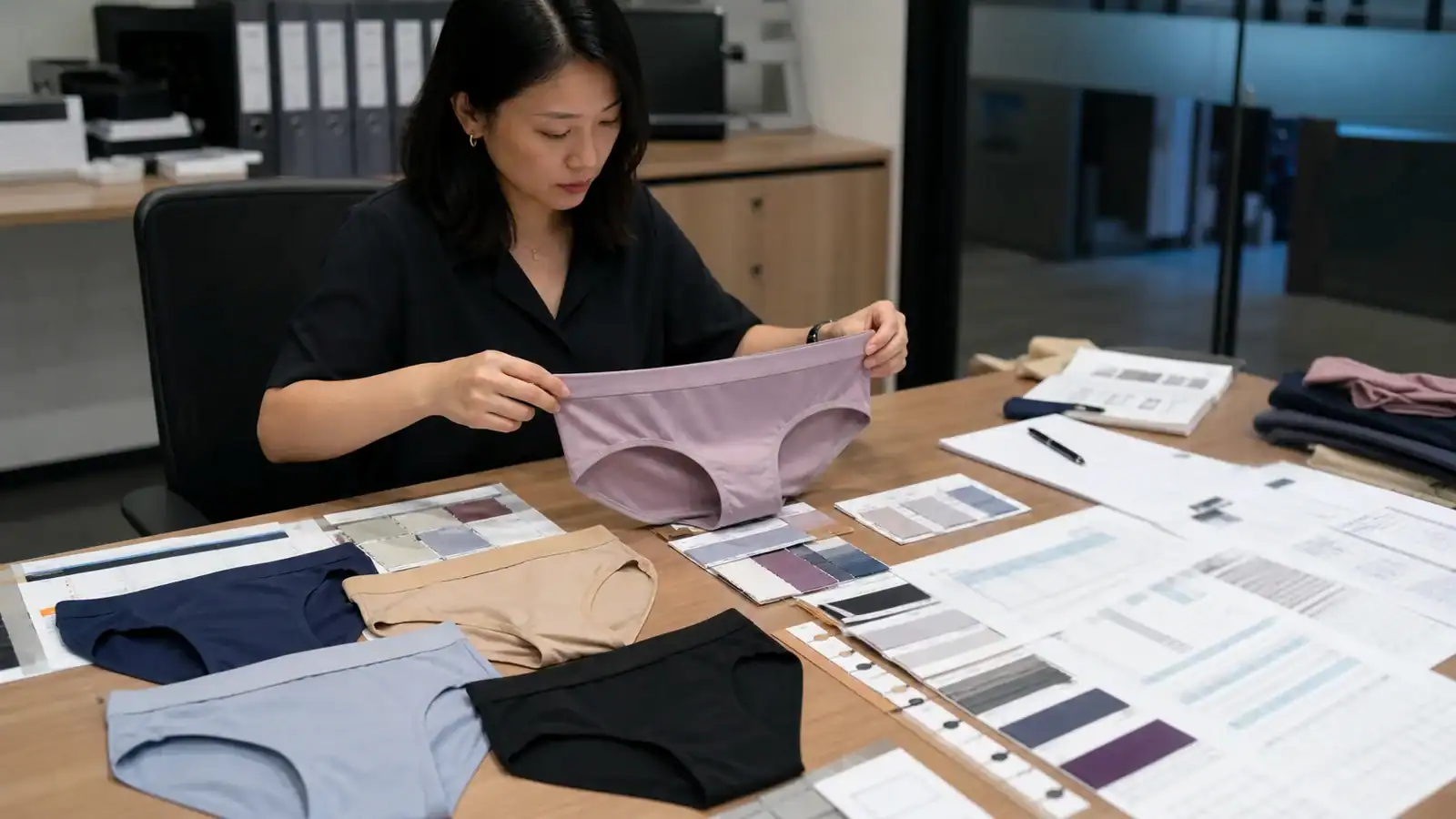
Compare suppliers against the same brief. A useful scorecard includes:
- Style coverage: can the supplier make the specific block, edge, gusset and trim combination?
- Development support: can the team review sketches, measurements, patterns and comments in English or the working language?
- Material evidence: can the supplier provide composition, fabric weight, stretch and recovery information for the actual fabric?
- Sample control: are proto, fit, size-set, pre-production and sealed samples tracked separately?
- Quality plan: are measurements, seams, elastics, labels, packing and appearance checked before shipment?
- Compliance support: can the supplier provide the documents and labeling inputs needed by the importer?
- Commercial fit: are MOQ, color count, sample charges, lead time, payment terms and repeat-order rules clear?
- Communication: are open questions answered with specifications rather than broad claims?
Use the same scorecard for every factory. A low sample price is not a low total cost if the block must be corrected repeatedly or the final edge and labeling are not controlled.
For a wider sourcing process, see how to find garment manufacturers. For a direct route, use sampling and prototyping before confirming bulk production.
How to prepare a panties manufacturing inquiry

The most reliable way to choose among panties types is to start with the wearer problem and then build the style around measurable decisions. A clean request to a supplier should answer:
- Which coverage and rise does the collection need?
- Which garments will be worn over the product?
- What fabric composition, weight, stretch and recovery are acceptable?
- Which waistband, leg edge, gusset and seam treatments are required?
- Which market will receive the product, and what labels or claims need review?
- What size range, color range, MOQ, target cost and delivery window are realistic?
- Which sample stages and tests are required before production release?
If you have a sketch, reference sample, size chart or fabric idea, request a custom quote and include the style code, target quantity and delivery country. A supplier can give a more useful answer when the request describes the product instead of asking only for a list of panties types.
Frequently asked questions
Briefs, high-waisted briefs, bikini panties, hipsters, cheeky panties, boyshorts, thongs, G-strings, tangas, seamless panties and high-cut panties are common style families. The exact shape varies by supplier, so compare a measurement chart and sample rather than the name alone.
Bikini panties commonly use a lower rise and moderate coverage, while hipsters are designed to sit on or slightly below the hips and often provide more side or back coverage. The boundary is not universal. The side height, rise and back width in the approved block decide the actual difference.
Start with a secure brief, hipster, boyshort or seamless block when coverage, movement and low bulk matter. The right choice depends on the activity, fabric, elastic, edge and wearer’s preference. Test the final garment during movement and washing before making a performance claim.
Seamless panties are developed to reduce visible seams or edge lines through knitting, bonding, laser cutting, molded construction or another specified route. Ask for the exact construction and test stretch recovery, edge rolling, durability and wash appearance on the final fabric.
There is no universal best fabric. Cotton and cotton blends may suit everyday basics; modal, microfiber, nylon or polyamide with elastane, lace and performance knits may suit different hand-feel and design targets. Choose after comparing composition, stretch, recovery, opacity, care and test evidence for the intended use.
Send the style name with a front and back sketch, measurements, size range, fabric composition, weight, stretch, recovery, waistband, leg opening, gusset, seams, labels, packaging, MOQ, target cost, delivery window and sample stages. Include photos only as reference; the technical pack should control production.
The number depends on the product and risk. Many programs use a proto, a fit sample, a size set, a pre-production sample and a sealed sample. A product with a new edge, functional gusset, special claim or wide size range may need additional checks. Define the gates before the factory starts.
The required information depends on the destination market and product category. For products sold in the United States, review fiber content, country of origin, responsible business identity and care information with the importer or compliance team. The FTC apparel and care-labeling guidance is a useful starting point, not a substitute for market-specific legal review.
Plan panties styles around the wear test, not the product name
Panties types are useful for discovery, but a production decision must end with a controlled sample. Choose the coverage, rise, leg opening, fabric and edge construction that support the collection. Then confirm fit, recovery, labeling, packaging and quality criteria with evidence. That process gives your team a repeatable underwear product instead of a style name that changes from supplier to supplier.
When you are ready, send the style brief to DTS Activewear for a custom underwear manufacturing review.