Short answer: To choose a custom legging manufacturer, define the use case, silhouette, fit block, fabric performance and construction first. Then compare factories by technical capability, send the same RFQ to each candidate, approve a written sample gate, and check how the approved product will be controlled in bulk.
Leggings are easy to describe and surprisingly easy to get wrong. A product can look correct on a hanger but feel restrictive when someone moves, turn transparent under tension, lose its shape after washing, or fit differently from one size to the next. Those failures usually start before bulk production, when the buyer compares factory names and unit prices before defining the product.
The right custom legging manufacturer should be able to discuss the actual garment: the rise, waistband, gusset, seam construction, fabric behavior, grading, decoration, sample revisions and order assumptions. A catalog full of leggings is a starting signal, not proof of production fit.
What does a custom legging manufacturer make?
A custom legging manufacturer develops or produces leggings to a buyer’s product brief. Depending on the route, the work may include pattern development, fabric sourcing, grading, cutting, sewing or knitting, printing, labels, packing, inspection and bulk production.
The word custom covers several different projects:
- A private-label project starts from a factory style or existing block. The buyer changes branding, colors, selected details or packaging while accepting more of the original construction.
- An ODM project starts from a factory design or development base. The manufacturer may propose a silhouette, fabric or construction that the buyer then adjusts.
- An OEM or custom cut-and-sew project starts from the buyer’s tech pack, reference garment, sketch or measurements. The buyer usually expects more control over fit, fabric, seams and branding.
- A seamless project uses a knit construction and has different development questions around yarn, knitting tension, compression zones and finishing. A cut-and-sew factory is not automatically a seamless specialist.
Ask which steps happen in-house and which are subcontracted. A business can coordinate a complete project without owning every machine, but the quote should make that route clear. You are buying a controlled process, not a label on a sample.
Define the legging before you compare factories
Start with a one-page brief. It can be shorter than a finished tech pack, but it should expose the choices that change the pattern, fabric, sample work and price.
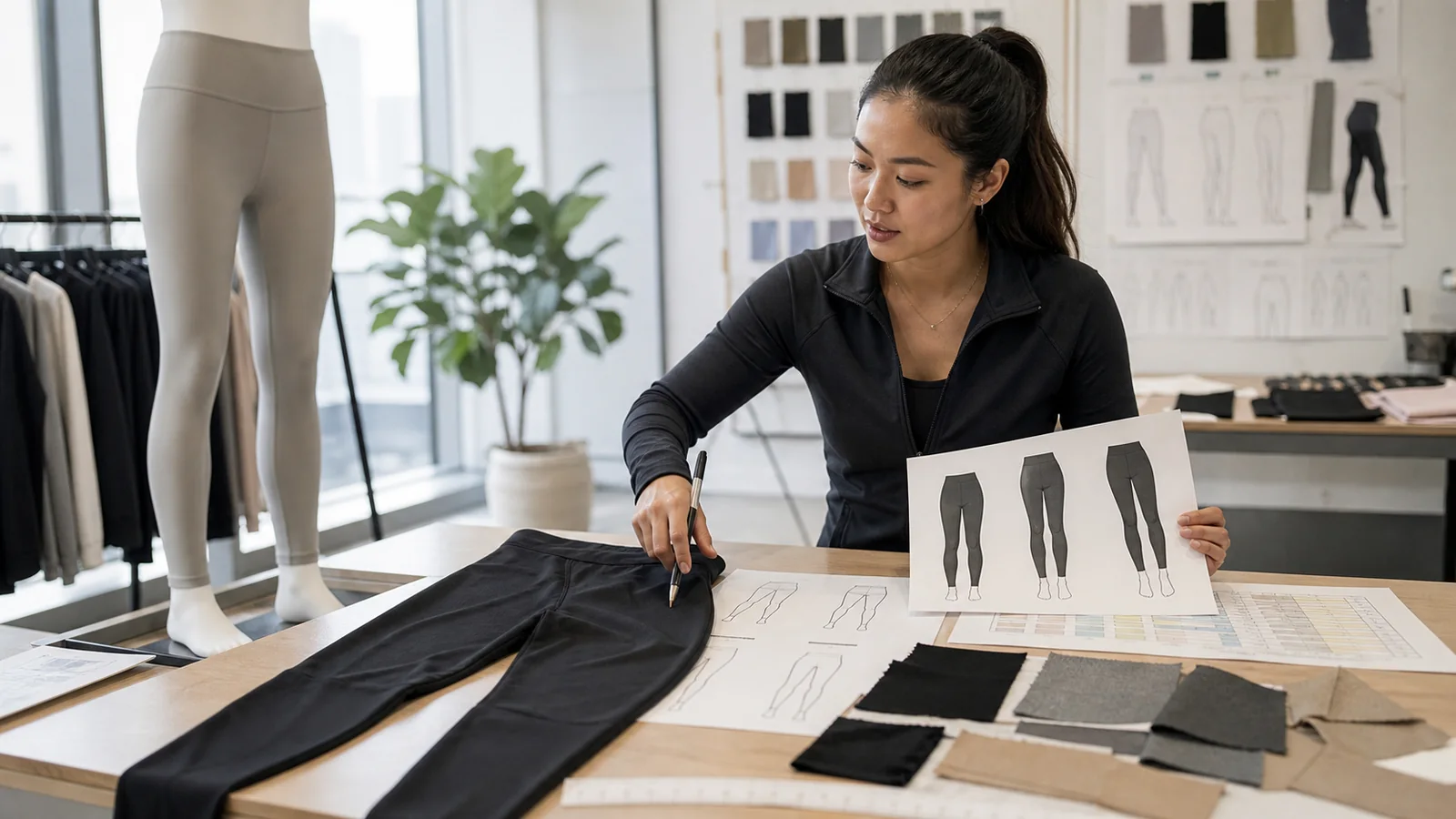
Write down:
- Intended use: yoga, training, running, dance, lounge, everyday athleisure or a compression-focused product.
- Silhouette: high waist, mid rise, 7/8 length, full length, flare, bootcut, capri, seamless or a matching-set bottom. The site’s leggings types guide can help organize the starting vocabulary.
- Fit direction: compressive, supportive, relaxed, second-skin, sculpting or soft. These are not interchangeable descriptions. Ask what the words mean in measurements and fabric behavior.
- Base size and size range: identify the size used for the first fit sample, the grading range and any extended sizes that need a separate review.
- Construction: front seam or no front seam, gusset shape, panel count, pocket, waistband height, drawcord, hem finish, coverstitch, flatlock or bonded detail.
- Quantity: units by style, color and size, not only a grand total. State whether the first order is a test run or a repeat program.
- Branding: logo method, placement, care label, hangtag, packaging, barcode and any special trims.
- Timing: target sample date, revision window and bulk delivery period. Keep the dates realistic if fabric or color is not yet confirmed.
Separate fixed choices from open questions. For example, you may know that the legging must be opaque during a deep squat but not know whether the factory’s available fabric or your nominated fabric is the better route. That is a useful question to send, not a reason to hide the unknown.
Choose the production route that matches your brief
The best manufacturing route depends on how much of the product is already defined and how much control the buyer needs.
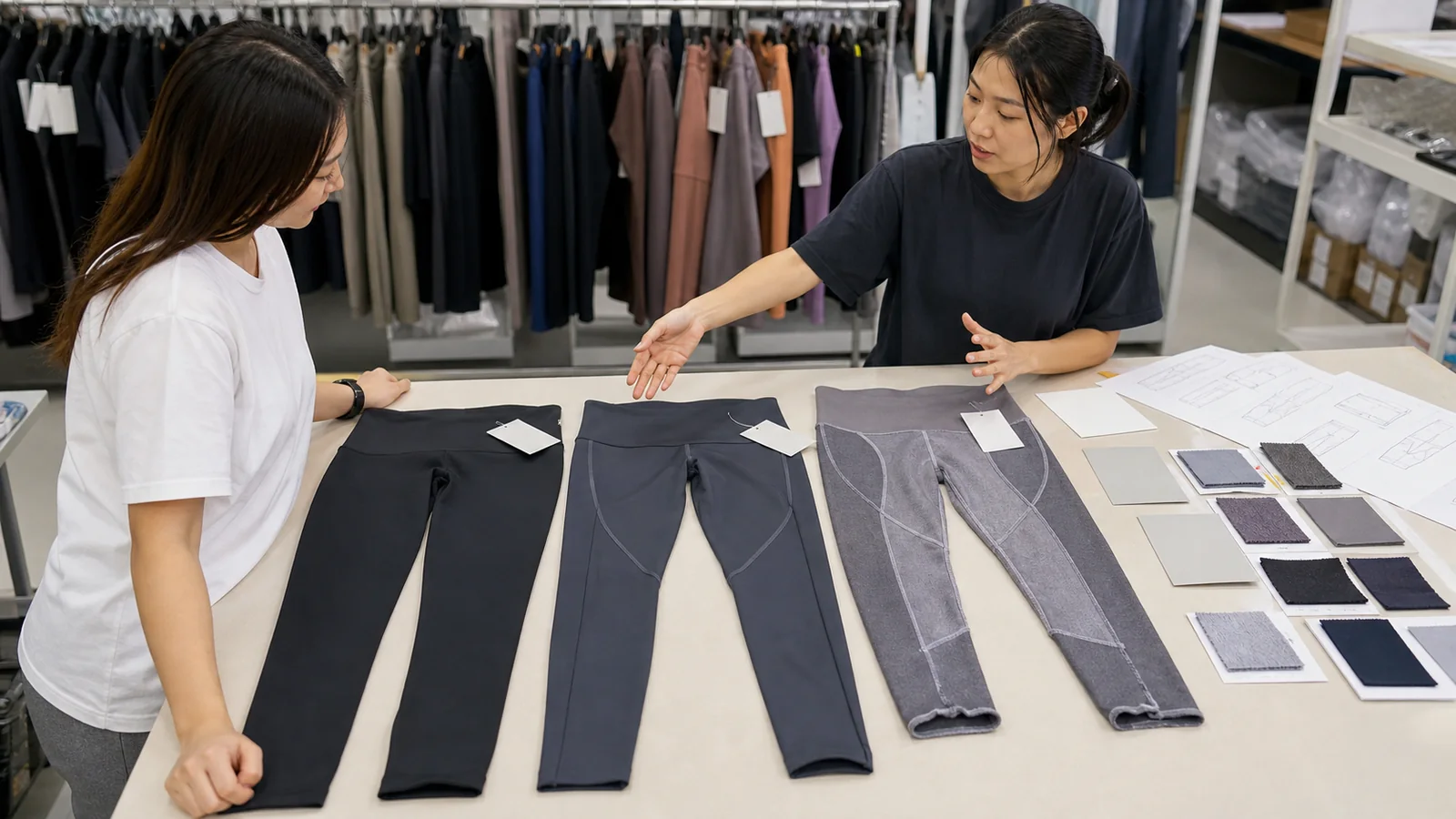
Use private label when speed and a proven base style matter more than a unique fit. It can suit a small launch that needs branded labels and selected color or packaging changes. Confirm which parts cannot change. A factory style may have a fixed waistband, fabric or size block even when the website calls the project custom.
Use ODM when the manufacturer has a useful development base and the buyer wants help shaping the product. Ask who owns the pattern, which elements are shared with other customers, and what happens if the design needs a deeper change.
Use OEM or custom cut and sew when the fit, construction, fabric or artwork is central to the product. This route can take more development work. It also gives the buyer a clearer place to specify what must be approved before bulk.
Use a seamless specialist only when the garment’s knit construction is part of the product decision. Ask about yarn, knitting, dyeing, compression zones, waistband behavior and finishing. Do not assume that a factory that can sew a stretch legging can reproduce a seamless knit program.
For a wider comparison of production routes, see the fitness clothing manufacturer guide. The choice should follow the product brief, not the lowest stated MOQ.
Check technical fit, not only a leggings catalog
Before requesting a full quote, ask each factory to answer the same technical questions. A useful reply contains reasons and limits. It does not only say yes.
Check whether the team can discuss:
- Similar fabric behavior: four-way stretch, recovery, brushed or smooth hand feel, low shrinkage, opacity and color stability.
- Similar construction: wide waistband, curved or straight yoke, gusset, pocket, flatlock, coverstitch, bonded seam, print, embroidery or heat transfer.
- Similar grading: the target size range, body proportions, inseam options and the way measurements change between sizes.
- Similar use case: low-impact yoga is not the same brief as running, lifting or high-compression training.
- Similar decoration and trim: logo position, silicone label, heat transfer, drawcord, elastic, care label and packaging.
- Similar order model: development sample, private label repeat, seasonal capsule, small first run or larger replenishment.
Ask for evidence that matches the answer. That may be a sample with the relevant construction, a measurement chart, a sample-room video, a blank test report, a process explanation or a reference that the buyer is allowed to inspect. A photo of a finished legging does not prove that the same factory controls the fabric, pattern and bulk line.
Specify fabric performance before sampling
Fabric is one of the most expensive places to leave a question unanswered. Composition alone does not tell you how a legging will feel or behave.
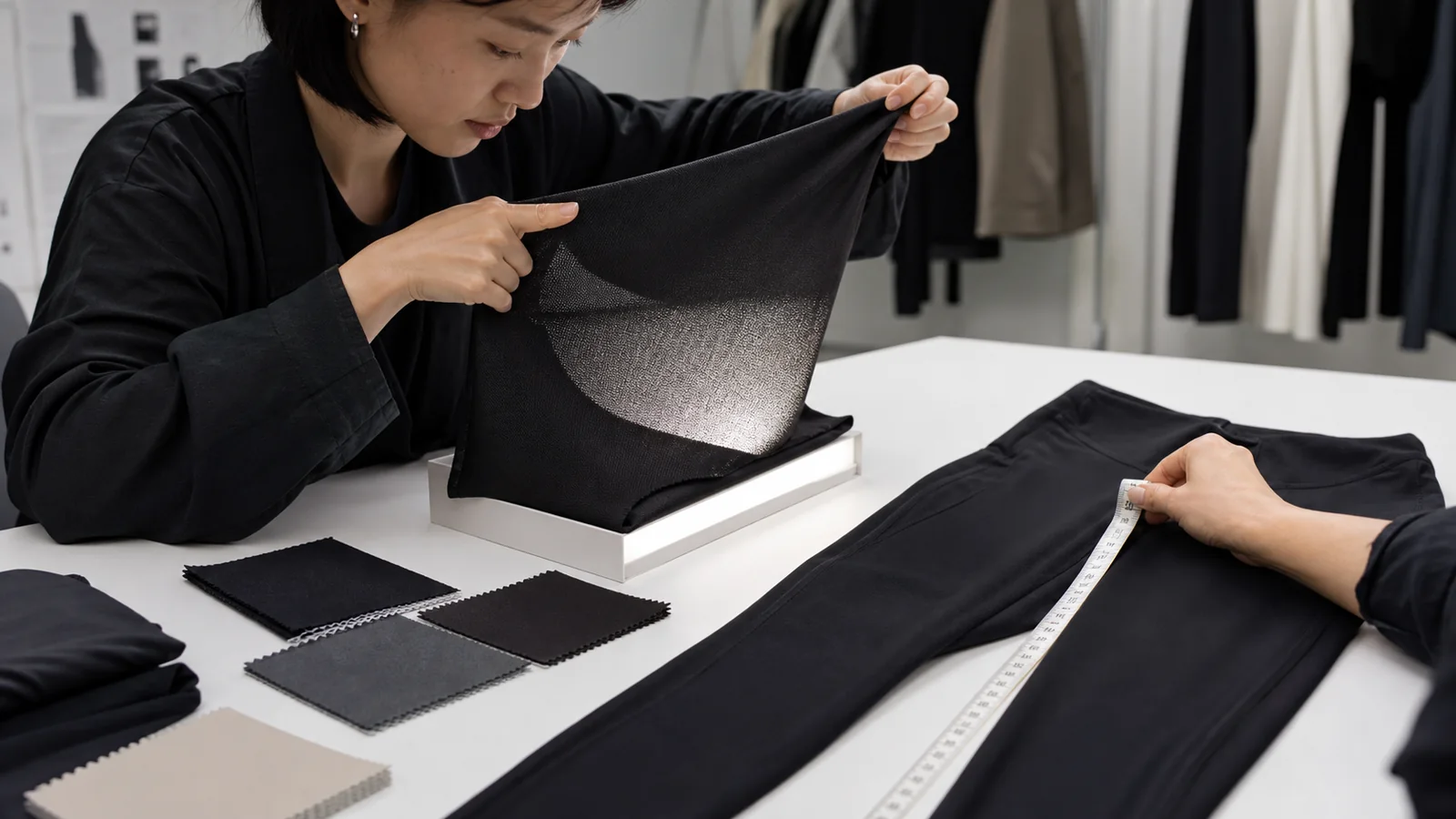
Ask the custom legging manufacturer to state or confirm:
- Fiber composition and whether the material is stock, nominated or custom developed.
- Finished GSM or another agreed weight measure. The GSM meaning in clothing guide explains why weight needs to be discussed with the construction and use case, not treated as a quality score by itself.
- Stretch direction, stretch amount and recovery after tension.
- Opacity under the movement and lighting conditions that match the product’s use.
- Hand feel, surface finish, pilling expectation, moisture behavior and warmth where relevant.
- Color matching, dye route, print compatibility and whether the same fabric source can be repeated for bulk.
- Shrinkage, spirality or shape change after the agreed wash or care process.
The best fabric for activewear guide can help organize the fabric conversation, but it does not replace a sample. Ask for a fabric swatch first, then ask how the fabric in the swatch will be identified and controlled when the sample and bulk order are made.
Do not use "squat proof" as the entire specification. Turn it into a test question: which fabric, weight, color, stretch condition, size and lighting will be reviewed, and who records the result?
Lock the waistband, rise, gusset and seam plan
The fit problems buyers notice are often construction problems rather than logo problems. A high waistband can roll, a rise can feel too short, a gusset can create pressure, and a seam can irritate the wearer even when the leg shape looks right.
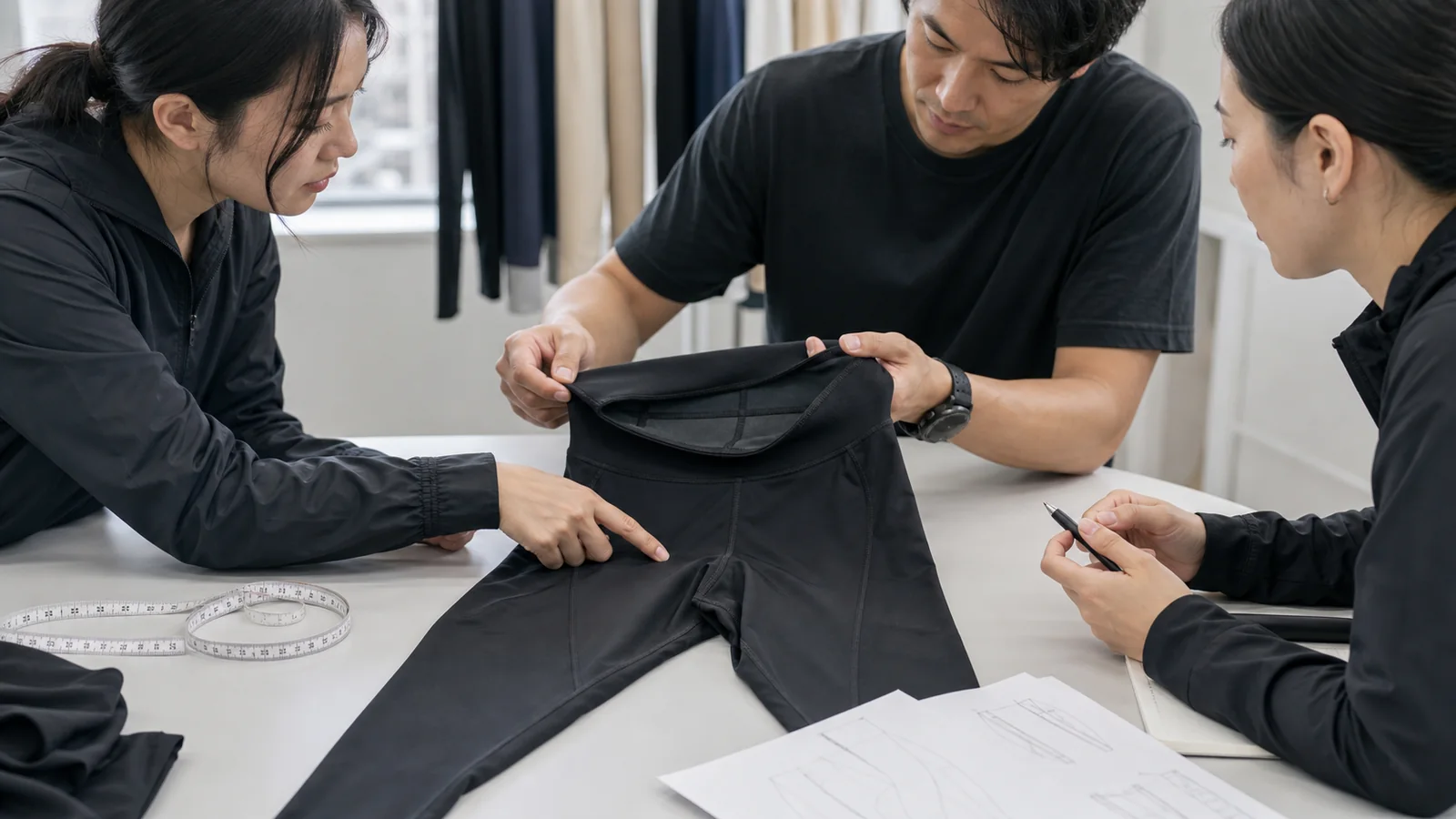
Give the manufacturer a construction brief that covers:
- Waistband height, width, elastic or self-fabric structure, top edge finish and intended support.
- Front rise, back rise, crotch depth and the relationship between the waistband and the body curve.
- Gusset shape, fabric direction and seam placement. If the product has no front seam, say so and show the intended finish.
- Inseam, outseam, leg opening and hem treatment for each length.
- Panel lines, pocket location, lining, reinforcement and points where stretch must not be restricted.
- Stitch type, seam allowance, thread, needle mark risk and any bonded or heat-sealed detail.
If you do not have a technical drawing, use a reference garment and mark the areas that must change. Ask the manufacturer to return the assumptions before the first sample. This turns an image into a production conversation.
Send a legging RFQ that can be compared
Send the same brief to each candidate. A factory should not have to guess whether one quote includes a sample, labels, packaging or a custom color.
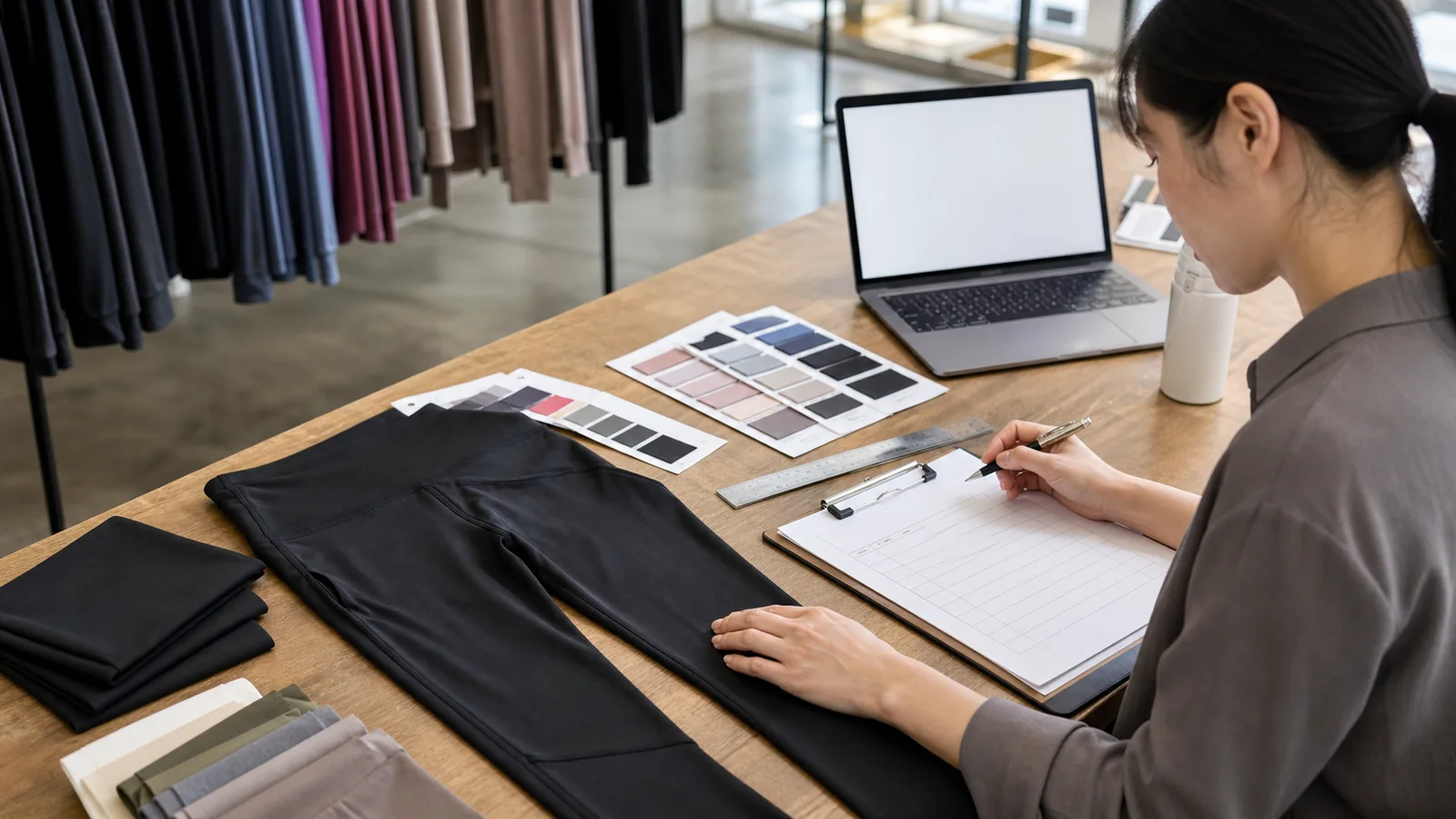
Ask for a reply in these groups:
- Product: legging type, use case, fit direction, size range, inseam, waistband and special construction.
- Material: composition, GSM, stretch and recovery information, stock or custom fabric, color options and test assumptions.
- Development: sample fee, sample starting point, pattern or tech-pack work, number of revisions, sample lead time and approval method.
- Bulk: MOQ per style and color, size split, unit price basis, production lead time, payment terms and material commitment.
- Decoration and packing: logo method, labels, hangtags, polybags, cartons, barcodes and any separate setup charge.
- Control: who makes the sample, who makes the bulk, inspection steps, substitution approval, measurement tolerances and documentation.
- Logistics: destination, shipping basis, carton assumptions, export documents and what is excluded from the quote.
Ask the factory to list what is not included. A lower unit price may simply omit the sample revision, custom dye, label, packing or freight assumption that another factory has already included.
Review the tech pack or reference package
A complete tech pack can make a quote more precise, but not every brand starts with one. You can begin with a sketch, reference garment, product image, measurement chart and written construction notes. The difference is how clearly you label the unknowns.
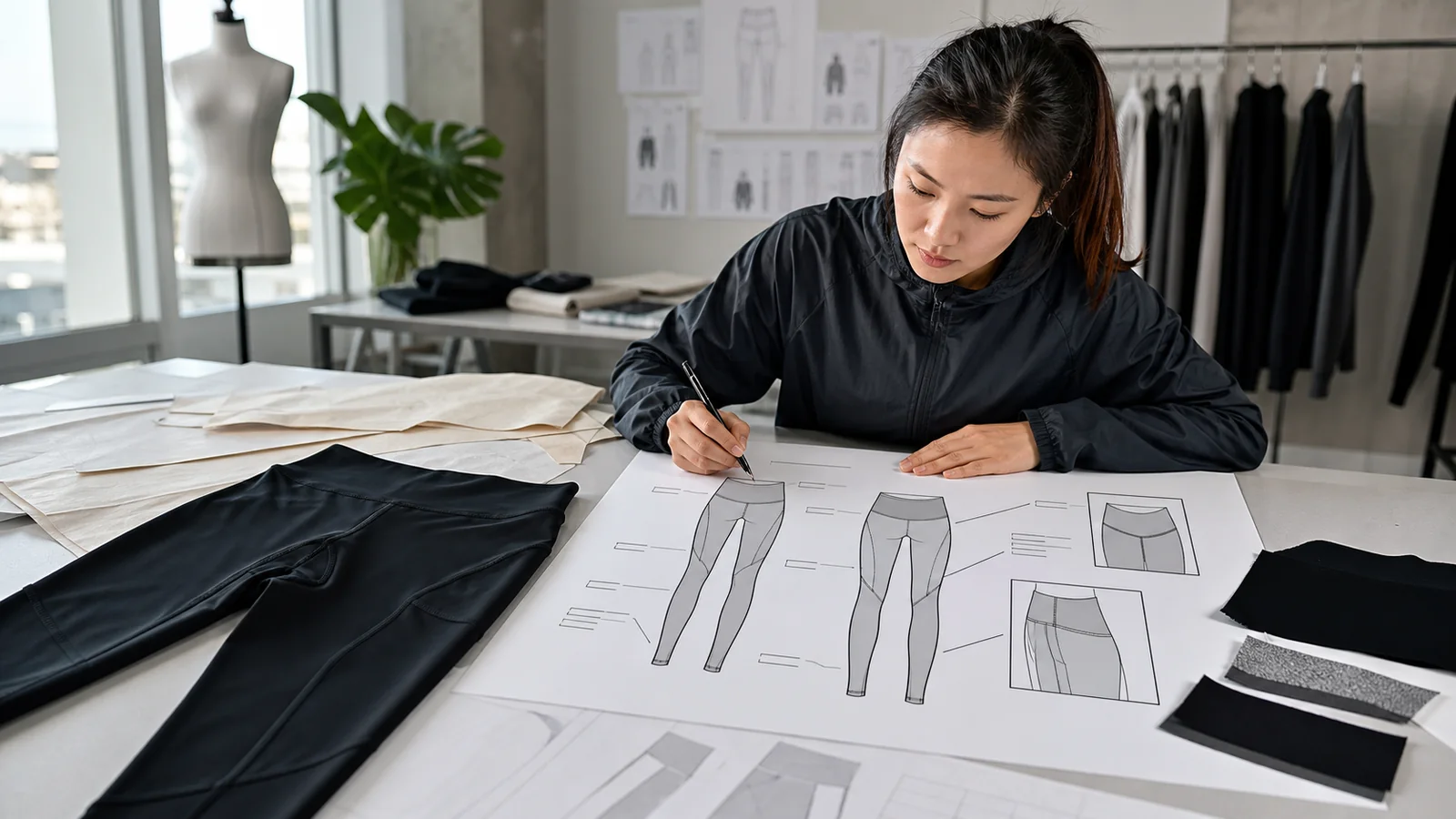
If you have a tech pack, check that it names:
- Flat drawings, front and back views, detail callouts and construction notes.
- Base-size measurements, tolerances, grading direction and points of measure.
- Fabric composition, target GSM, color references and stretch requirements.
- Waistband, gusset, seams, hems, pockets, labels, decoration and packaging.
- Sample comments, revision numbers and what is approved versus still open.
If you do not have a tech pack, send a controlled first package. Include the product purpose, reference images, a sample or sketch, the measurements you know, the details you do not know, the target quantity and the destination market. Ask the manufacturer to return a list of missing decisions before developing a sample.
For buyers who need help turning references into a clearer development file, DTS has a tech pack customization page. That link is a process route, not a substitute for confirming the final garment specification.
Approve the sample against a written gate
Do not approve a legging sample with a message that only says "looks good." Record what was reviewed and what remains open.
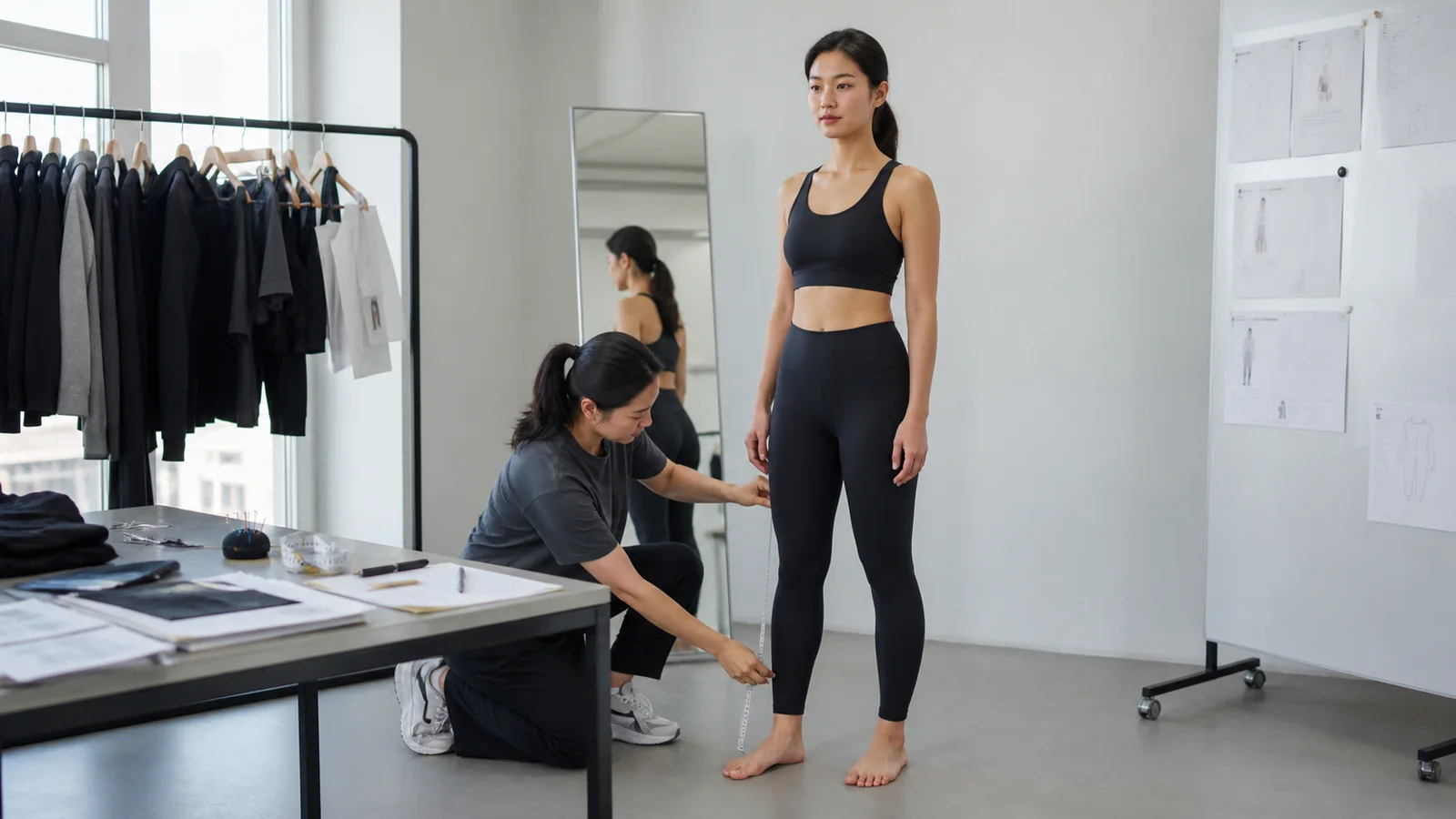
A useful sample review covers:
- Fit on the intended body shape, including waist, rise, hip, thigh, knee and hem balance.
- Measurements against the chart, with tolerances and the size that was measured.
- Fabric hand feel, stretch, recovery, opacity, color and surface after movement.
- Waistband stability, gusset comfort, seam placement, stitch quality and hem finish.
- Logo, label, trim, pocket, packaging and any detail that changes the customer experience.
- Wash or care review when the product claim or fabric risk requires it.
Give the sample one of three outcomes:
- Pass: the sample and written specification can move toward bulk pricing and production planning.
- Revise: list the exact change, the person responsible and the next approval date.
- Stop: the fabric, fit, route or factory response is not workable enough to justify another round.
Keep the approved sample or a controlled record of it. If the manufacturer proposes a fabric or trim substitution later, treat that as a new approval question. A bulk order should not quietly drift away from the sample that earned approval.
Test the performance points customers will notice
You do not need to invent a laboratory claim for every legging. You do need a review plan that matches the way the product will be worn.
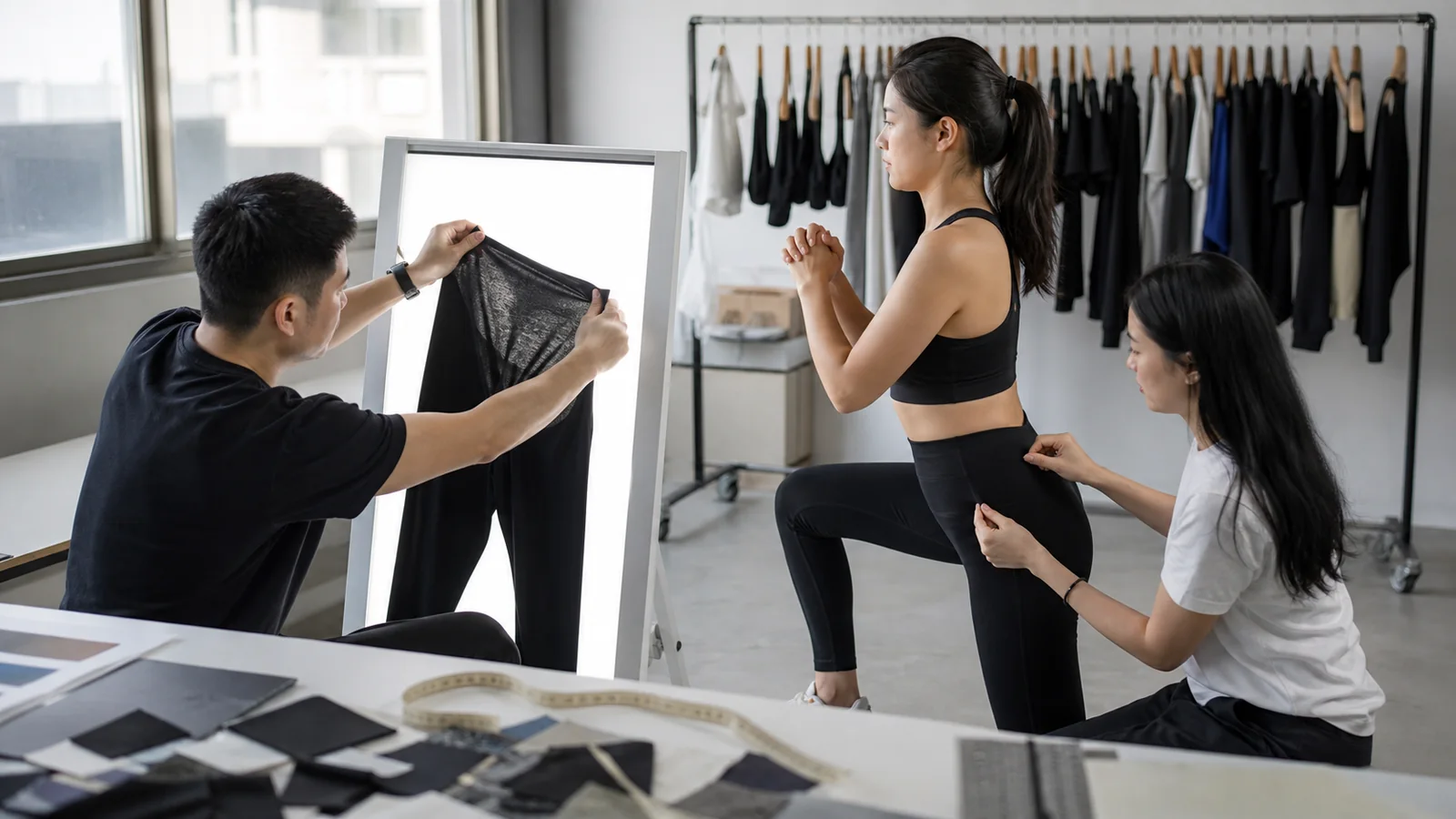
For a movement-focused legging, the review may include:
- Deep squat, lunge, bend and stride checks for opacity, seam strain and waistband movement.
- Repeated stretch and release checks for recovery at the waistband, knee and seat.
- Sitting and walking checks for pressure points, rolling, riding up and fabric shine.
- Wash and dry review for shrinkage, color change, pilling, print adhesion and shape recovery.
- Size-set review when the product will be sold across several sizes. One perfect base size does not prove the grading.
- Light-color review under the same conditions in which the customer is likely to wear the product.
Ask the manufacturer to state what was tested, on which sample, using which method and with what result. If the factory has no formal report, record the buyer’s own sample observations without presenting them as a certification.
Verify quality and bulk controls
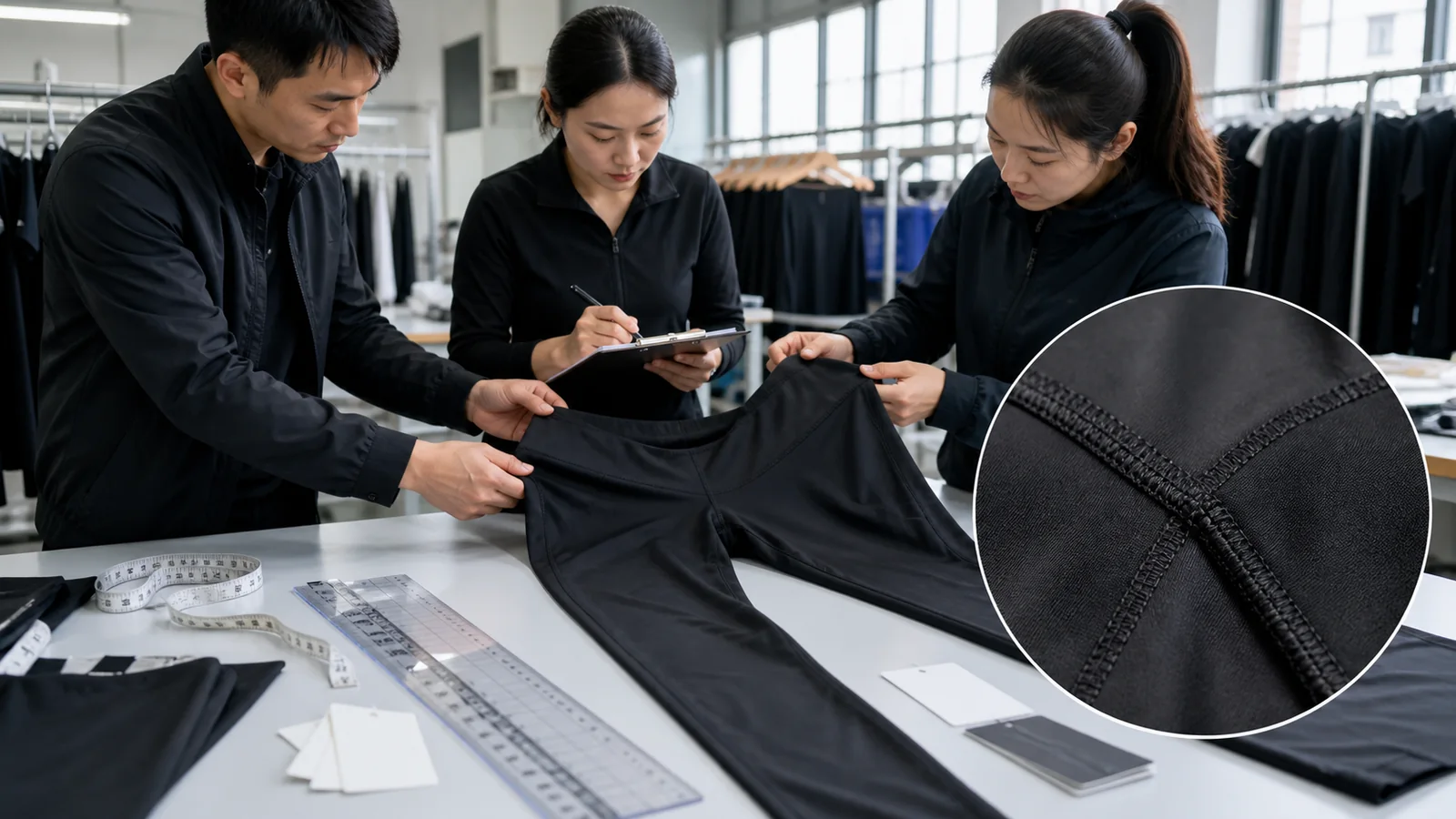
Quality control should connect the approved sample to the finished order. Ask how the factory keeps the fabric, color, pattern, measurements, construction and trims aligned after the development stage.
Clarify:
- How the approved sample, measurement chart and construction notes are stored and referenced.
- How incoming fabric is identified by composition, color, GSM or batch when those fields matter.
- Which measurements are checked during cutting, sewing and final inspection.
- How seam defects, holes, skipped stitches, shade variation, waistband distortion and print errors are recorded.
- What happens when a material, trim or construction change is proposed.
- Whether packing, labels, carton marks and quantities are checked before dispatch.
For US-bound textile products, the FTC apparel labeling guidance explains that most textile and wool goods generally need a fiber-content statement, a made-in location and identification of the responsible business. Care instructions are addressed by a separate FTC care-labeling rule. Confirm the exact labeling and packaging requirements for the market where the leggings will be sold.
Compare MOQ, lead time and landed cost
MOQ is not one number. Ask whether it applies per style, color, fabric, print, size or total order. A manufacturer may offer a low quantity for stock fabric and a different minimum for custom dyeing or a new knit program.

Compare the quote in this order:
- Product fit: can the factory make the requested legging with the required construction and size range?
- Development: what sample work, pattern changes and revisions are included?
- Materials: are the quoted fabric, color, GSM, trims and labels the same as the brief?
- Bulk terms: what MOQ, size split, lead time, payment schedule and material commitment apply?
- Landed cost: what are packing, freight, duty, inspection and rework assumptions?
- Risk: how much evidence do you have that the bulk process will match the approved sample?
The lowest unit price is not automatically the lowest project cost. A cheap first quote can become expensive if the sample needs several extra rounds, the fabric changes after approval, or the order has to be relabeled and reworked.
Red flags that should stop a legging project
Some warning signs are general supplier problems. Others are specific to leggings.
- The factory uses "squat proof" or "premium" as a promise but will not state the fabric, weight or review method.
- MOQ is quoted without saying whether it applies per color, style or size.
- The team cannot explain who owns the pattern, who makes the sample or who will control bulk.
- A sample photo is offered, but no measurement chart or revision process is available.
- The factory agrees to every requested fabric, construction and delivery date without asking technical questions.
- The quote changes the waistband, gusset, fabric or logo method without calling out the substitution.
- The sample looks acceptable on a hanger but is not reviewed during movement.
- Care labels, country-of-origin information, packaging or destination-market requirements are treated as an afterthought.
- Payment instructions, trading entity or subcontracting route are unclear.
One red flag may need clarification. Several together should move the factory out of the active shortlist.
Use a manufacturer scorecard
A scorecard keeps an attractive price or polished website from dominating the decision. Use a simple 0 to 5 score for each field, then note the evidence behind the score.
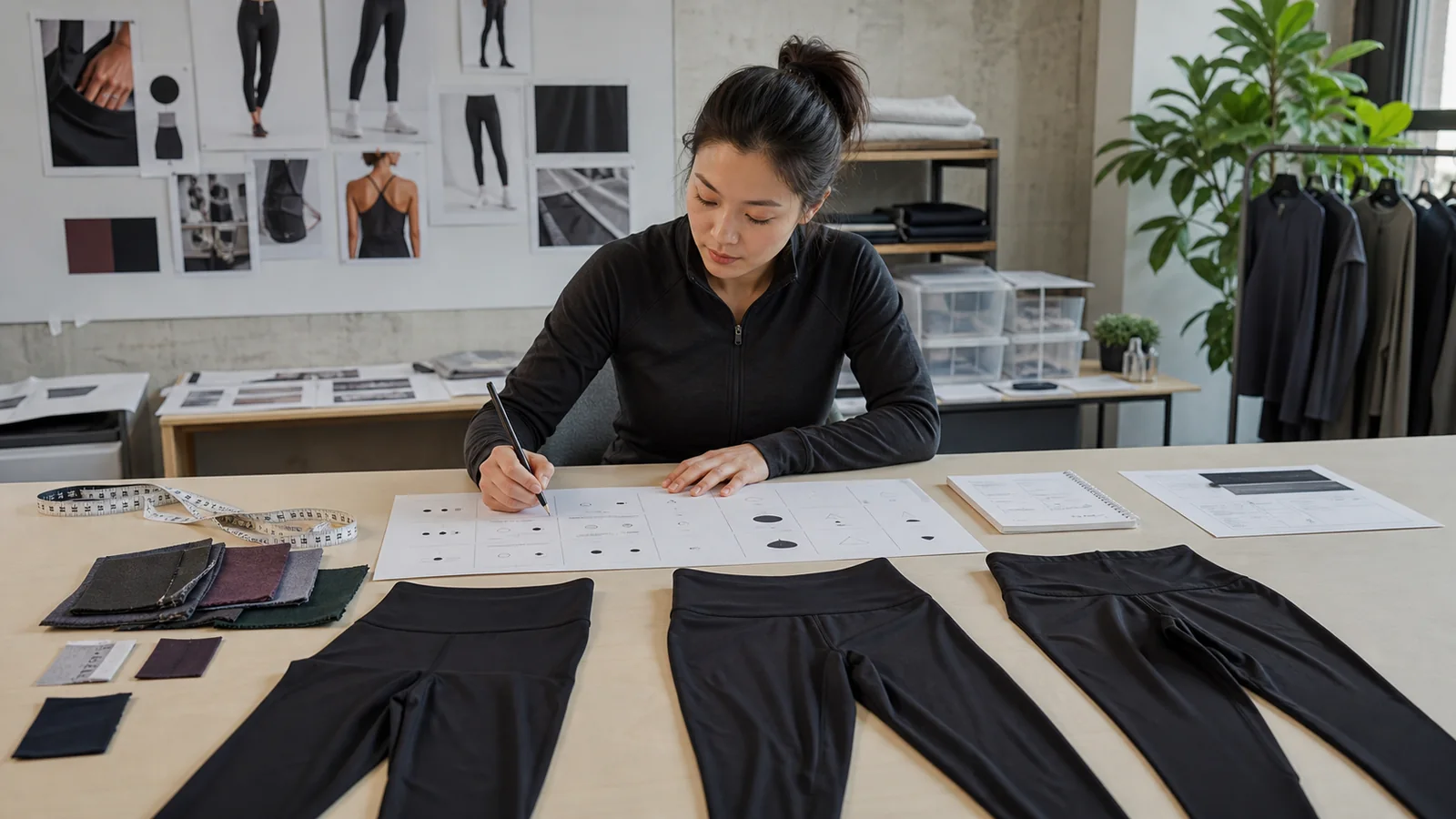
Suggested fields:
- Product and construction fit: 25 percent.
- Fabric and performance understanding: 20 percent.
- Sample process and revision control: 20 percent.
- Bulk quality and substitution control: 15 percent.
- MOQ, cost and lead-time fit: 10 percent.
- Communication and commercial clarity: 10 percent.
Do not award a high score because the supplier makes a confident claim. Write "sample inspected," "measurement chart received," "subcontracting explained" or "still unverified" beside the score. The score is a decision aid, not a certification.
Send the inquiry package
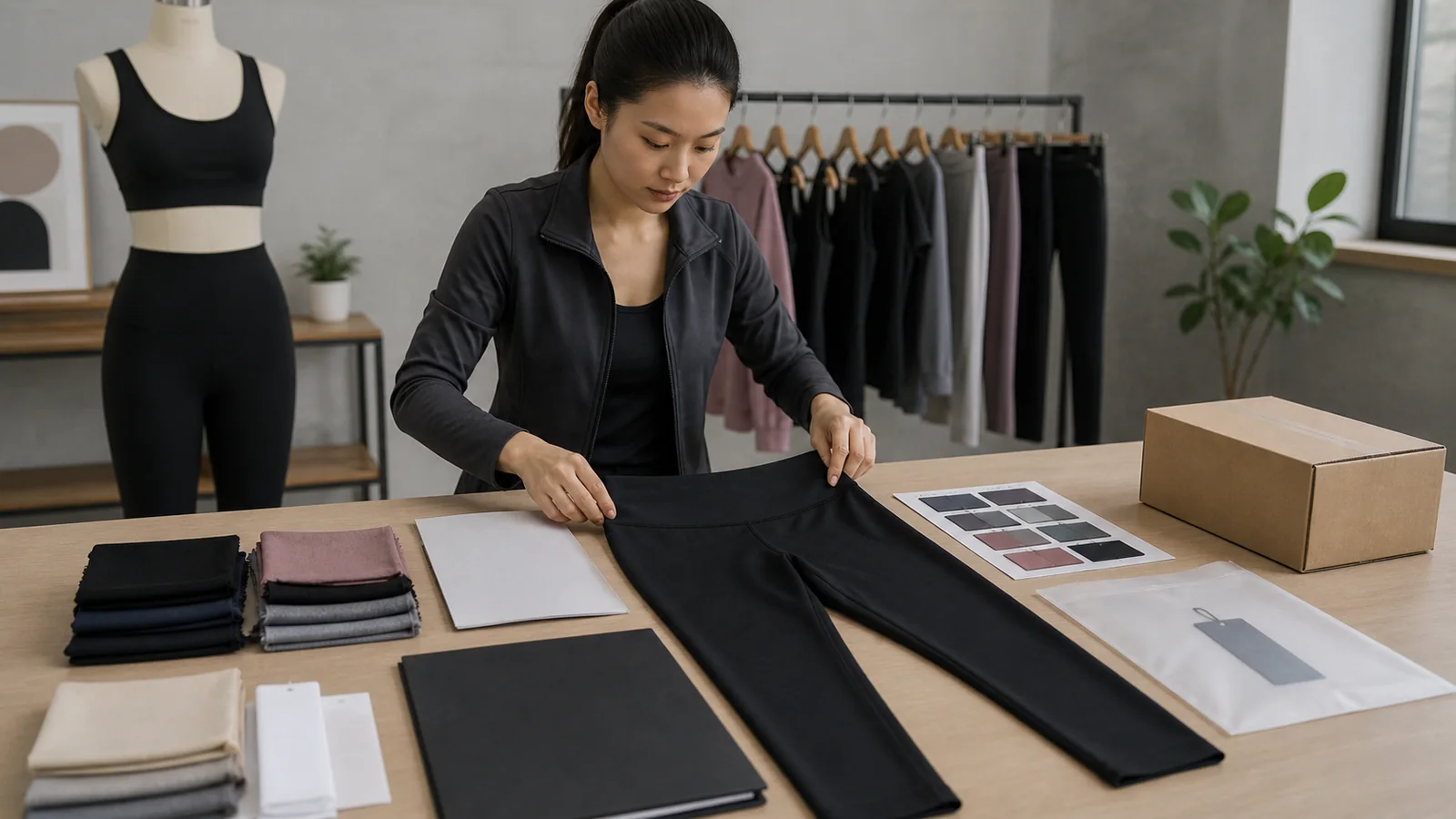
Once you have a clear brief, send the same package to the shortlist. A complete first inquiry should contain:
- Legging type, use case and fit direction.
- Sketch, reference garment, image board or tech pack.
- Base size, measurement chart, size range and inseam.
- Fabric composition, GSM target, stretch, recovery, opacity expectation and color direction.
- Waistband, rise, gusset, seam, pocket, hem and decoration details.
- Quantity by style and color, target sample date, bulk window and destination.
- Label, packaging and documentation needs.
- Questions about sample cost, revision policy, MOQ, lead time and quality records.
If you are ready to send a project brief, use the DTS Activewear inquiry and NDA route. Include the product direction and the decisions that are still open so the reply can focus on the actual legging rather than a generic catalog.
What changes by legging type and brand stage?
The same factory may be a good fit for one legging program and a poor fit for another.
- Yoga and lounge leggings often place more weight on hand feel, comfort, recovery and a stable waistband. The brief still needs a clear opacity review if the color is light or the garment is worn in deep stretches.
- Training and running leggings may need stronger attention to sweat, movement, pocket placement, seam comfort, recovery and repeated washing.
- Compression leggings need a clear definition of support level, panel behavior, fit tolerance and who is qualified to review the result. Do not use a medical or therapeutic claim without appropriate evidence and approval.
- Seamless leggings need a factory that understands knit structure, yarn, tension and finishing. Do not route a seamless program only because a cut-and-sew supplier offers a similar photo.
- A startup may begin with a proven stock fabric and a focused style count to reduce development risk. A larger brand may justify custom color, custom fabric, a size set and a repeatable bulk program.
The appropriate manufacturer is the one that matches the product risk and the buyer’s level of control. More customization is not automatically better if the team cannot support the extra development work.
Frequently asked questions
A custom legging manufacturer can develop the garment around your fit, fabric, construction and measurement requirements. A private-label supplier usually starts from an existing style and adds branding or selected changes. Some businesses offer both routes, so ask what can actually change and who owns the pattern.
Include the use case, legging silhouette, base size, size range, inseam, fabric direction, GSM target, stretch and opacity expectation, waistband, gusset, seams, quantity by style and color, branding, sample timing, bulk timing and destination. Mark each field as fixed, proposed or unknown.
Check the actual sample under tension and movement, not only on a flat table. Review the fabric and color in a deep squat or similar movement, note the lighting and size, and record the result. If the manufacturer uses the term as a claim, ask which fabric, weight, stretch condition and test method support it.
There is no single best fabric. Choose based on use case, hand feel, stretch, recovery, opacity, weight, moisture behavior, color, wash expectations and cost. Ask for a swatch and a sample in the intended construction before treating a fabric recommendation as approved.
There is no universal MOQ. Ask whether the minimum is counted per style, color, fabric or total order, and whether stock and custom fabrics have different rules. A workable first order is one that fits the brand’s cash plan while still allowing enough samples and sizes to validate the product.
No, but a clear tech pack can reduce assumptions. You can begin with a reference garment, sketch, images, measurements and written construction notes. Tell the manufacturer what is unknown and ask for a list of decisions required before sampling.
Plan for at least one review round and leave room for revisions when fit, fabric or construction is new. The number depends on the starting information, the complexity of the legging and the quality of the first pattern. Ask the factory to state what each sample includes and how revisions affect timing and cost.
Yes. Approve fit, measurements, fabric, opacity, waistband, gusset, seams, trims, labels and packaging requirements before bulk. Keep a written record of the approved version and require approval for substitutions or material changes.
Choose a custom legging manufacturer by evidence, not the lowest quote
A strong shortlist is not the one with the most product photos. It is the one that can explain the garment, show how the sample will be reviewed, state what the quote includes, and preserve the approved decisions through bulk production.
Send the same legging brief to several candidates. Compare technical answers before price, approve the sample against written criteria, and keep every open question visible. That process gives a new brand a better chance of finding a manufacturer that fits the actual product rather than a generic activewear catalog.