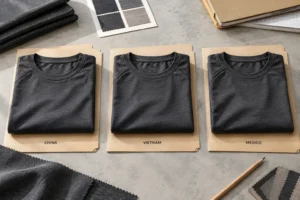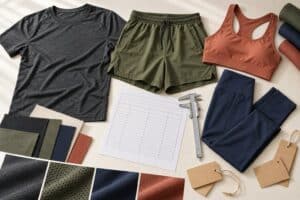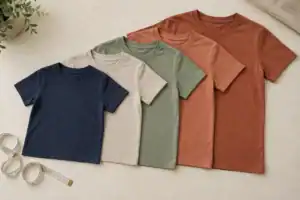
Looking for the right name for a top? This guide covers 60 common garment labels, from T-shirts and polos to blouses, tanks, hoodies and tunics. It then adds 52 design choices across neckline, sleeve, fit and length. Use the lists to identify a style, compare similar tops and write a clearer product brief.
The count is a practical glossary, not an industry standard. Retailers use some names differently, and a single top can combine several options. A cropped raglan tee with a crew neck, for example, appears in more than one list because the lists describe different design dimensions.
All visuals in this article are AI-generated illustrations. They are not DTS inventory, supplier-approved samples, factory evidence, or test results.
How this 112-point types of tops guide works
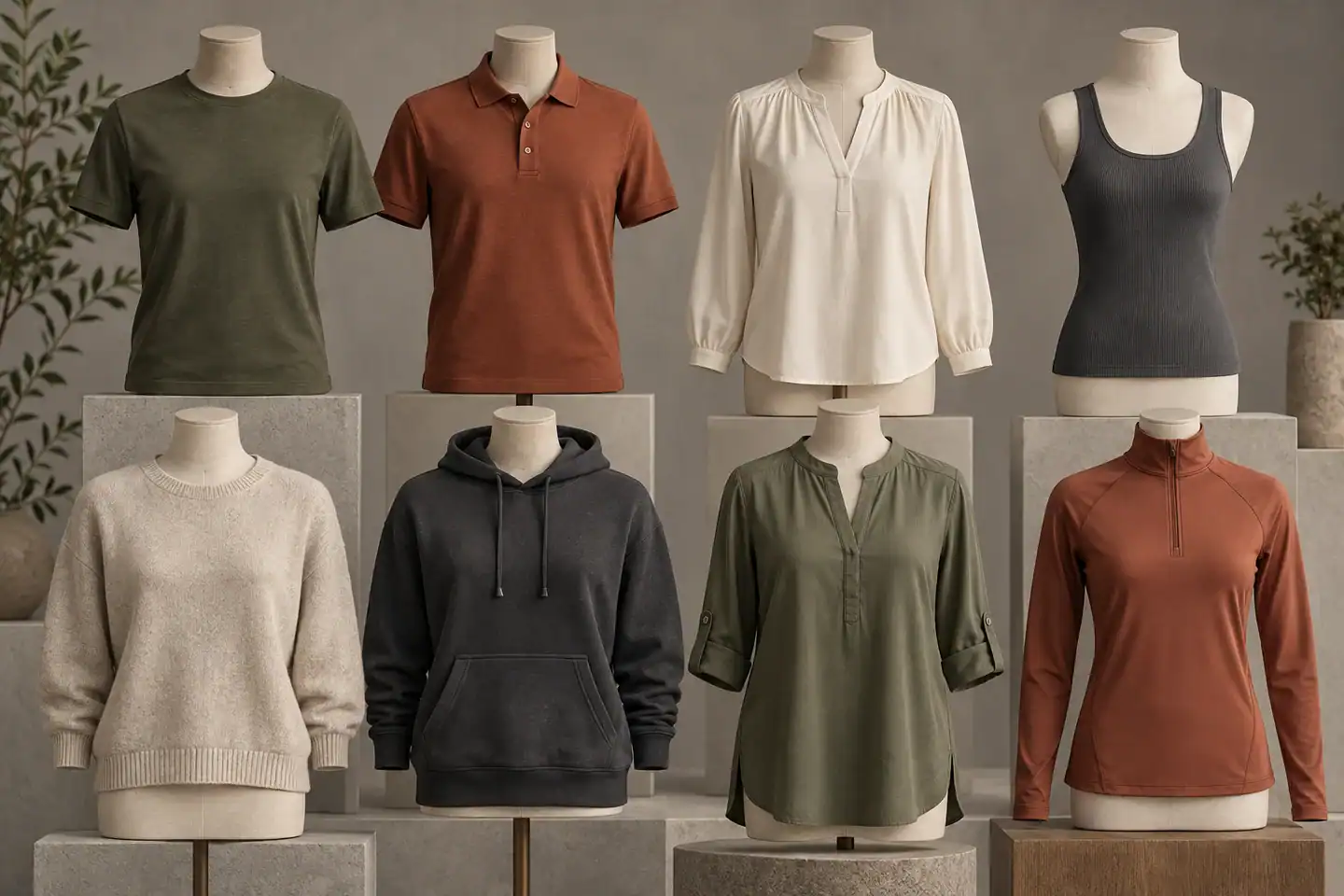
The guide counts 60 market names for top garments, plus 52 configurable design options: 13 neckline or collar details, 13 sleeve or armhole details, 13 fits or silhouettes, and 13 length or hem details. The options cross over. They are useful starting points for browsing or product development, not 112 mutually exclusive products.
“Top” is a broad retail term for a garment worn on the upper body. It can refer to a standalone shirt, a knit layer, a performance garment or a one-piece bodysuit. Names vary by retailer, region and collection, so check the product photos and construction details when the label is ambiguous.
60 common types of tops by garment family
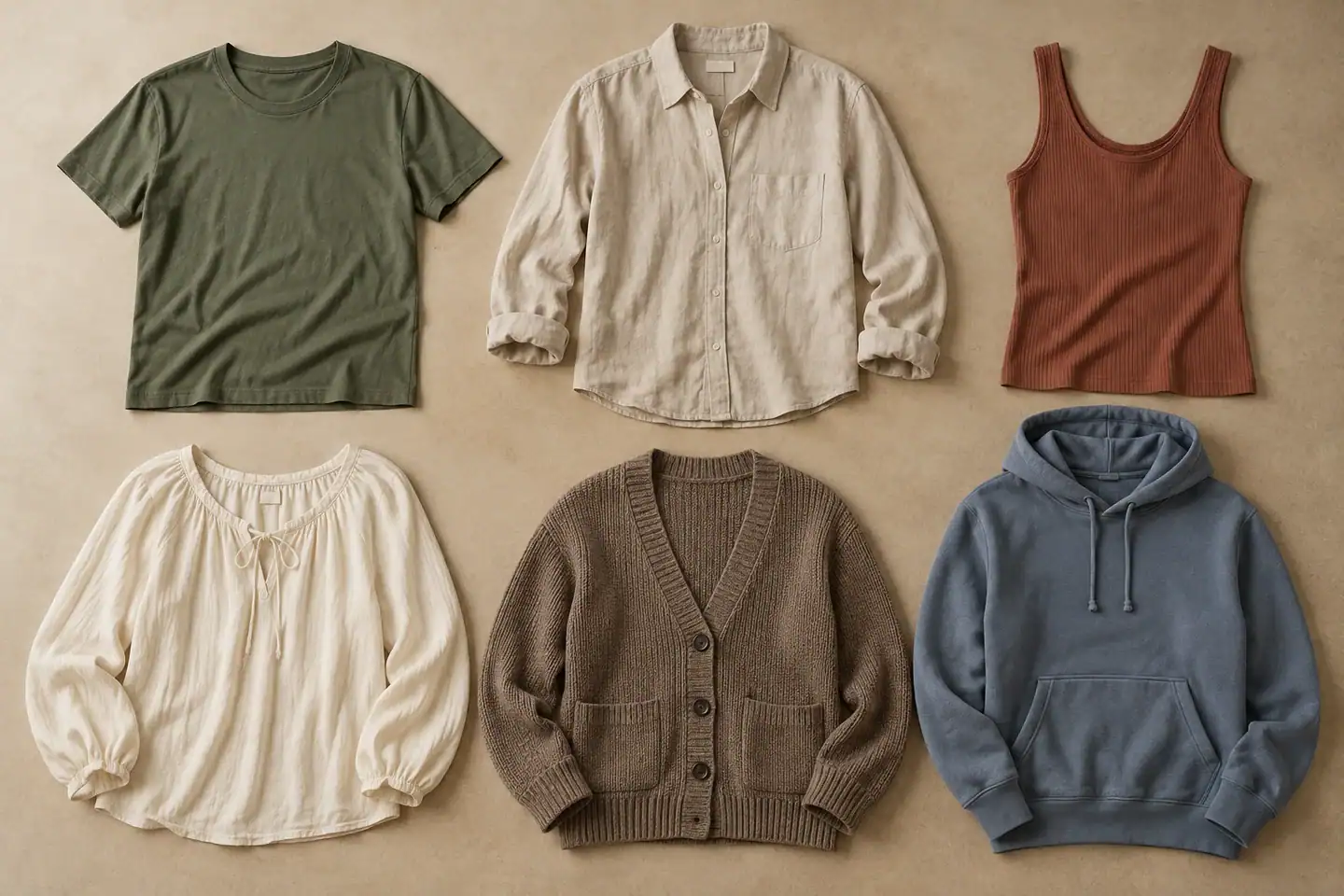
These names describe familiar garment families. Some overlap by design or market category. A polo, for example, can be a casual shirt, a uniform top or part of a sportswear range.
Jersey tees
Crew-neck T-shirt, V-neck T-shirt, scoop-neck T-shirt, raglan T-shirt, pocket tee, longline tee.
Collared and placket tops
Polo shirt, rugby shirt, Henley shirt, button-down shirt, camp-collar shirt, popover shirt.
Sleeveless tops
Tank top, racerback tank, muscle tank, camisole, shell top, halter top.
Blouses
Button-front blouse, wrap blouse, tie-front blouse, peasant blouse, smock blouse, tunic blouse.
Knit tops
Crew-neck sweater, V-neck sweater, cardigan, sweater vest, mock-neck sweater, turtleneck sweater.
Sweatshirts and light layers
Crew-neck sweatshirt, pullover hoodie, zip-up hoodie, quarter-zip pullover, track jacket, lightweight zip jacket.
Fashion silhouettes
Crop top, off-shoulder top, one-shoulder top, peplum top, babydoll top, bodysuit.
Activewear tops
Sports bra, longline sports bra, racerback training top, compression top, fitted training tee, long-sleeve training top.
Uniform and work tops
Uniform polo, work shirt, flannel shirt, utility shirt, scrub top, chef jacket.
Draped and occasion tops
Tunic top, kaftan top, kimono top, poncho top, cape top, wrap top.
The list is deliberately broad. It includes casual, work, occasion and activewear terms so readers can recognize the language used across clothing catalogs. Inclusion here does not mean every style is available from one supplier.
Types of activewear and sports tops

Common activewear tops include training T-shirts, racerback tanks, sports bras, longline sports bras, compression tops, long-sleeve training tops, quarter-zips and lightweight warm-up jackets. These labels describe garment form. They do not prove a fabric is quick-drying, moisture-wicking, compressive or suitable for a particular sport.
For an overview of sportswear categories, see types of sportswear. For a closer look at sleeveless designs, see types of tank tops. When comparing a performance top, check the actual fabric composition, stretch and recovery, coverage, seam placement, lining, care instructions and any test method behind a performance claim.
13 neckline and collar types

Neckline changes how a top frames the wearer, layers under jackets and sits around a collarbone or base layer. These are common names, but the exact curve, depth and opening should be shown on the design or sample.
- Crew neck. A close, rounded opening.
- V-neck. An opening that narrows toward the chest.
- Scoop neck. A wider, deeper rounded opening.
- Square neck. A straight-edged opening with defined corners.
- Boat neck. A wide opening that runs toward the shoulders.
- Sweetheart neck. A shaped opening with a dipped center.
- Cowl neck. A draped neckline with soft folds.
- Keyhole neck. A small cutout near the neckline.
- Mock neck. A short raised collar that does not fold over.
- Turtleneck. A taller neck that folds or stands at the neck.
- Polo collar. A soft collar paired with a front opening.
- Spread collar. A collar with points set farther apart.
- Mandarin or band collar. A short upright collar band.
A collar and neckline are related but not identical. A polo collar sits around an opening; a crew neck describes the opening shape. When sending a brief, include a clear front sketch and the opening measurement if the shape is important.
13 sleeve and armhole types
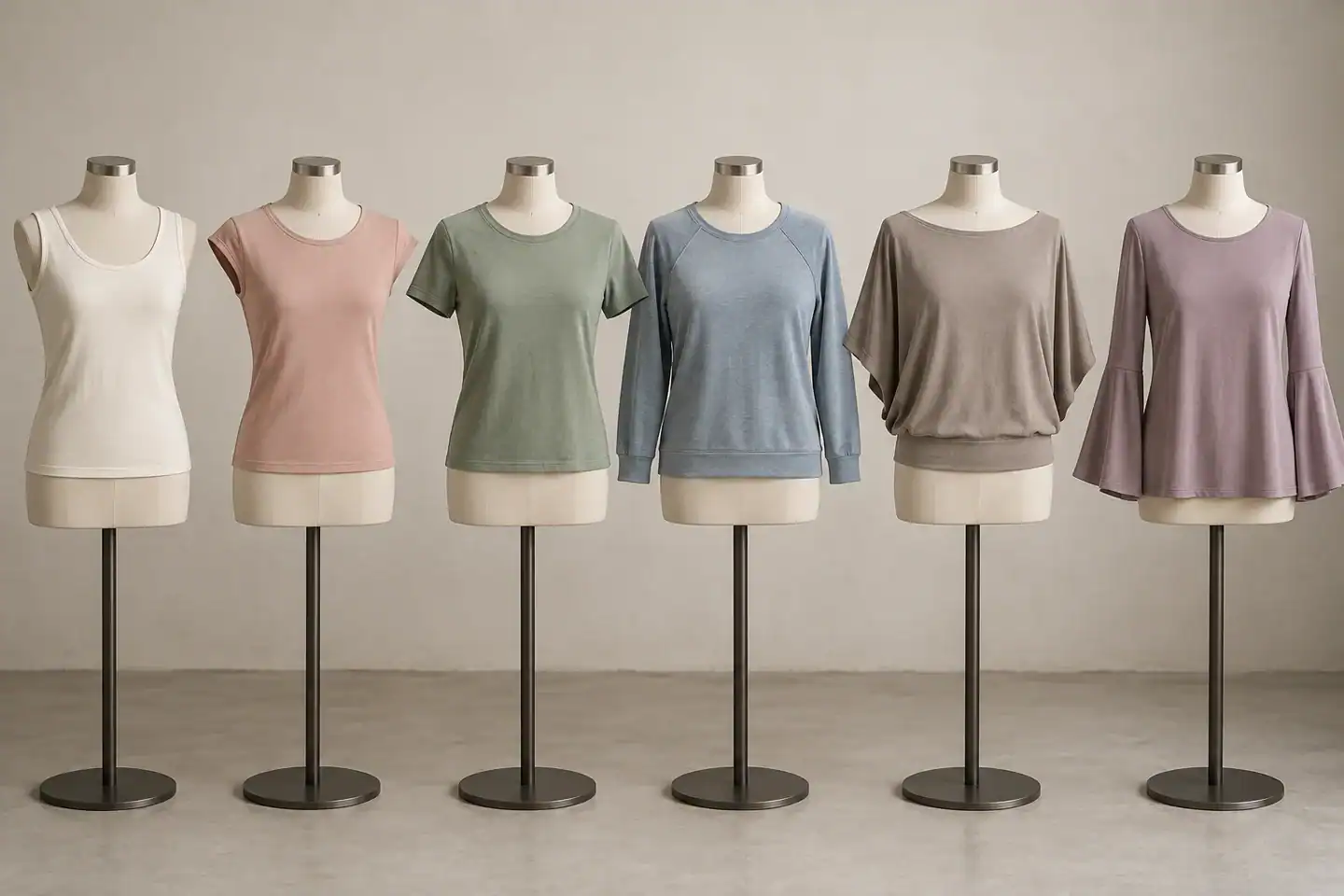
Sleeve terms cover both coverage and construction. A cap sleeve is short; a raglan sleeve is identified by its seam running toward the neckline. Armhole depth and shoulder width affect movement and fit, so a name alone may not communicate the full pattern.
- Sleeveless. No sleeve, with the shoulder and armhole finished at the opening.
- Cap sleeve. A short sleeve that covers the top of the shoulder.
- Short sleeve. A sleeve ending above the elbow.
- Elbow sleeve. A sleeve ending around the elbow.
- Three-quarter sleeve. A sleeve ending between elbow and wrist.
- Long sleeve. A sleeve extending to the wrist area.
- Raglan sleeve. A sleeve panel that runs diagonally toward the neckline.
- Dolman sleeve. A sleeve cut with a deep, relaxed armhole.
- Drop-shoulder sleeve. A shoulder seam placed below the natural shoulder point.
- Bishop sleeve. A fuller sleeve gathered into a narrower cuff.
- Bell sleeve. A sleeve that widens toward the opening.
- Batwing sleeve. A broad sleeve joined with a deep underarm curve.
- Thumbhole cuff. A long cuff with an opening for the thumb.
For a sleeveless top, specify armhole depth, binding or facing, and coverage. For a long sleeve, note cuff shape and finished sleeve length. If the garment is intended for repeated movement, review these points during wear testing rather than relying on the label alone.
13 fit and silhouette types
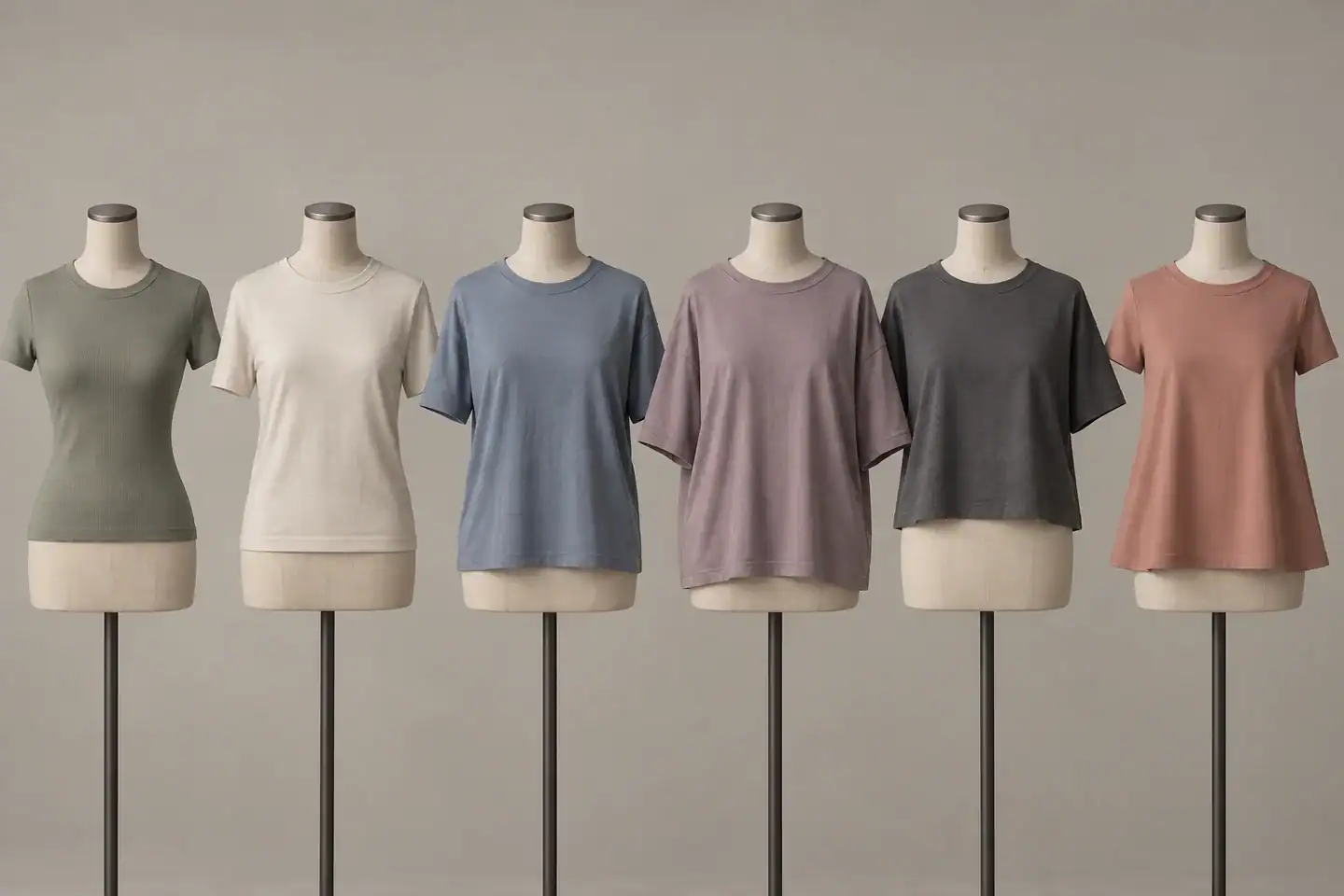
Fit labels are relative to a brand’s block and target size range. “Relaxed” from one collection may measure differently from “relaxed” in another. Use a measurement chart, reference garment or approved sample to make the intended shape clear.
- Slim fit. Narrower through the chest and body.
- Regular fit. A balanced shape with moderate ease.
- Relaxed fit. Additional ease through the body.
- Oversized fit. Deliberately generous body and shoulder volume.
- Boxy fit. A straighter body with a broad, less tapered shape.
- Body-skimming fit. Follows the body without a compression intent.
- Compression fit. Designed to fit close; performance must be verified for the use case.
- Cropped silhouette. A shorter body proportion.
- Longline silhouette. A longer body proportion.
- Straight silhouette. Similar width through chest and hem.
- A-line silhouette. Body widens gradually toward the hem.
- Swing silhouette. A loose body with movement and flare.
- Peplum silhouette. A shaped body with a flared section at the waist.
The fit description should match the body measurements and garment ease in the spec. A useful brief states the fit intent, then supplies finished garment measurements at agreed points such as chest, body length, shoulder and hem width.
13 top lengths and hem options
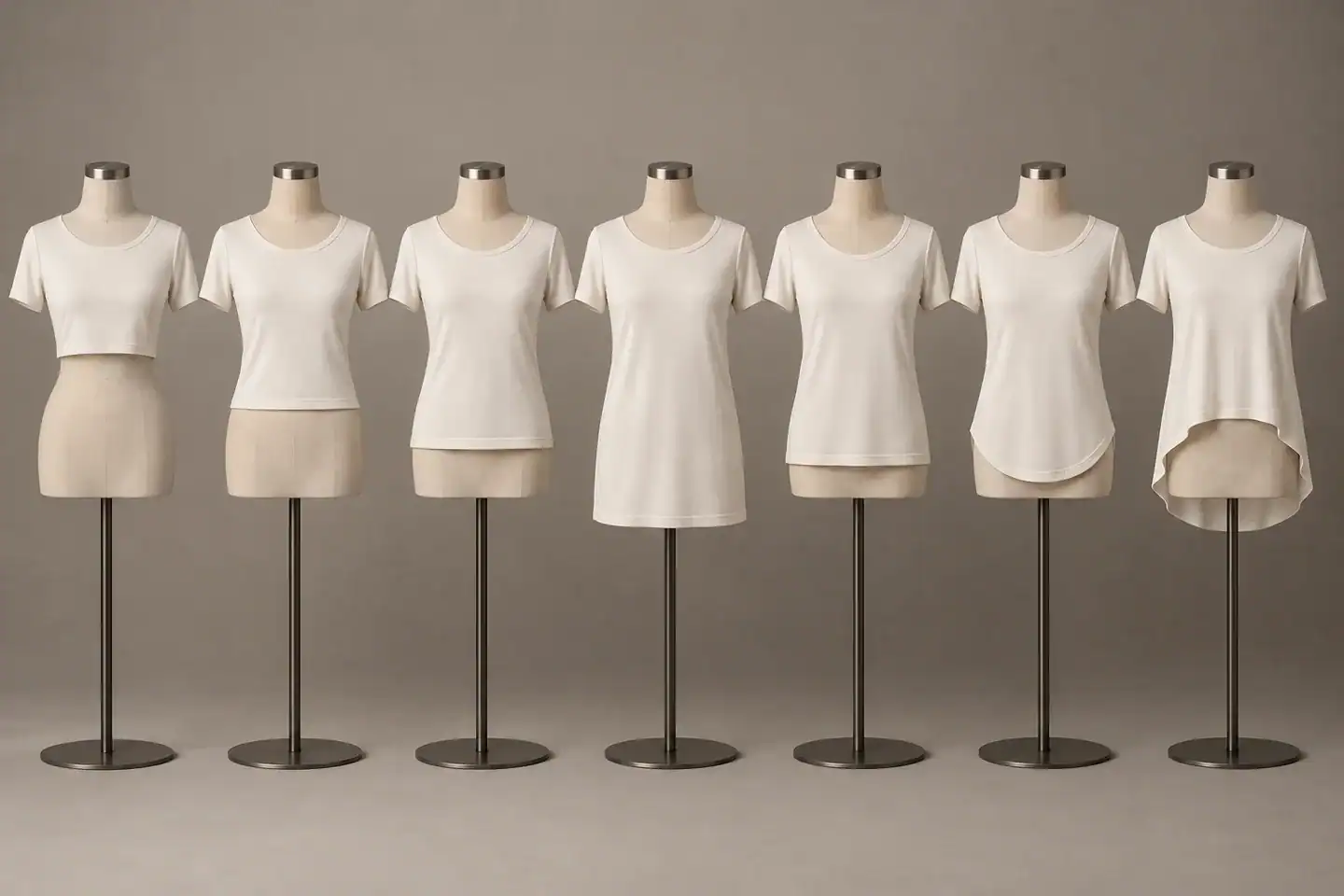
Length names are helpful for comparison, but the wearer’s proportions and garment size affect where a hem falls. For production, define length from a consistent point on the garment and record it by size.
- Cropped length. A shorter body that ends above the usual waist or hip point.
- Waist length. A body ending around the waist.
- High-hip length. A body ending near the upper hip.
- Hip length. A body ending around the hip.
- Low-hip length. A body ending below the fullest hip area.
- Tunic length. A longer body intended to extend over the hips.
- Straight hem. A level lower edge.
- Curved hem. A hem shaped with a gradual curve.
- Shirttail hem. A longer curved front and back hem, often with shorter sides.
- High-low hem. A front and back hem with different lengths.
- Side-slit hem. A hem with an opening at one or both side seams.
- Banded hem. A lower edge finished with an attached band.
- Drawcord hem. A lower edge that can be adjusted with a cord.
For high-low or side-slit hems, include front and back lengths or the slit depth. For cropped designs, show the intended body coverage on the fit model or reference sample. This avoids relying on a broad label such as “cropped” alone.
Fabric, construction and finish choices change the result

Two tops with the same silhouette can feel and perform differently because of fabric weight, fiber blend, stretch, recovery, surface texture and construction. Jersey, rib knit, fleece, mesh and woven fabrics are common starting points, not interchangeable specifications.
For a product brief, identify the fabric by composition and construction where known. Add target weight, stretch direction, recovery, opacity, hand feel, color standard, seam type, stitch details, trims and decoration method. Confirm test methods and acceptance limits for shrinkage, colorfastness or performance claims before treating a claim as a product fact.

A simple comparison sample can make trade-offs easier to see. Ask what changes between the reference fabric and the proposed option, and record any substitutions before approving a sample. Before selling in the United States, verify fiber-content, origin and business-identification labeling against the FTC Textile Fiber Rule and the FTC’s textile and wool labeling guide. Care instructions for covered apparel are addressed separately by the FTC Care Labeling Rule. Applicability depends on the product and sale context.
How to choose a top and describe it clearly
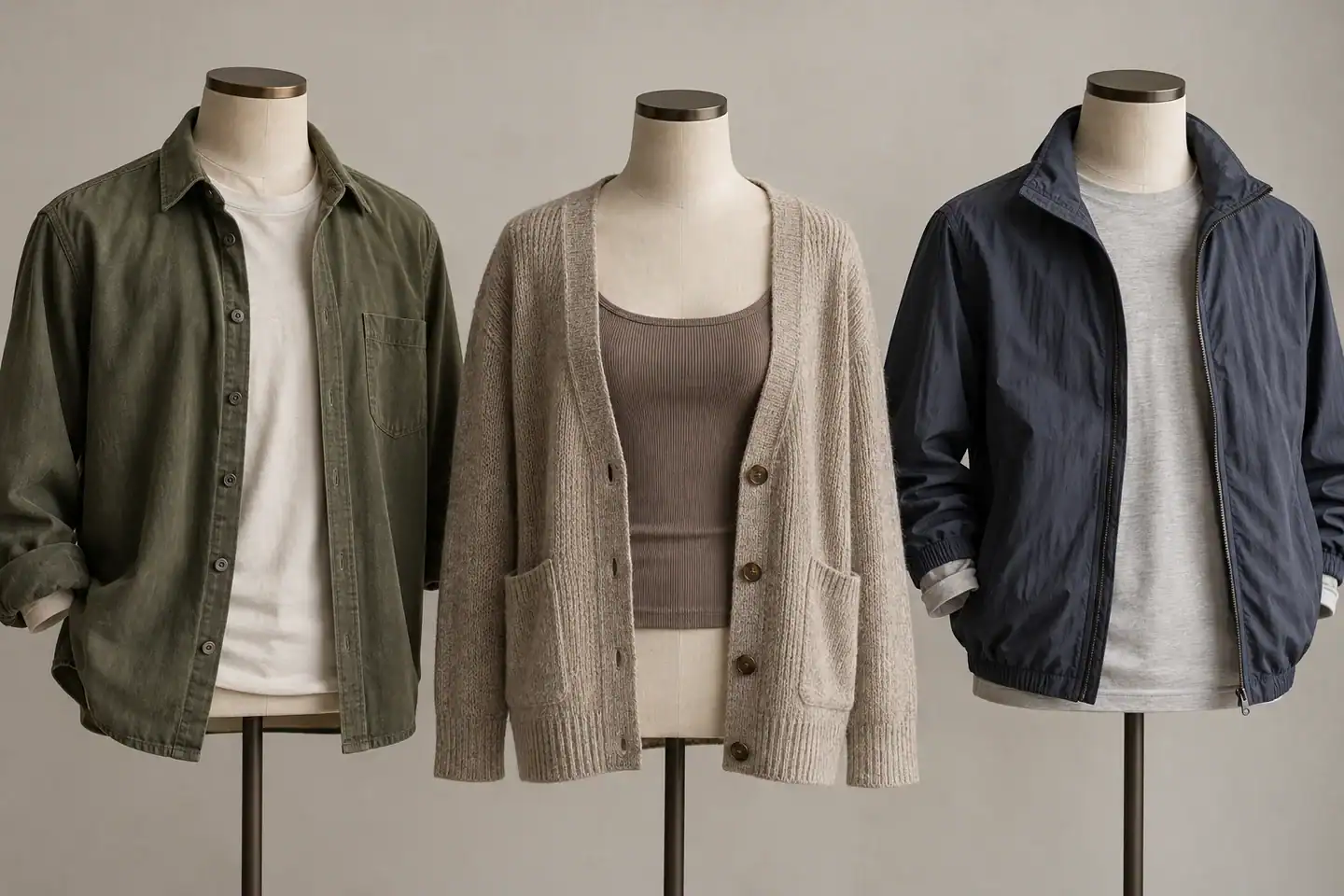
Start with the use case, then name the garment family and the details that matter. For everyday wear, opening, coverage and layering may be priorities. For uniforms, durability, repeatability, color matching and care instructions may matter more. For training, fit, movement, seam placement and any verified fabric performance may be relevant.
A useful description might read: “Relaxed crew-neck training tee, short raglan sleeves, hip-length body, side-seam construction, specified knit and print placement.” It gives a reader more information than “performance top.” Treat claims such as UV protection, anti-odor or moisture management as evidence-based product claims, with a named method and result where required.

For a sourcing or product-development conversation, pair the name with a front and back sketch, measurement chart, size range, material details, color references, artwork placement, label and packaging notes. ASTM’s apparel sizing committee overview lists terminology and body-measurement standards; use an agreed sizing reference with your supplier rather than assuming that every brand shares one fit block.
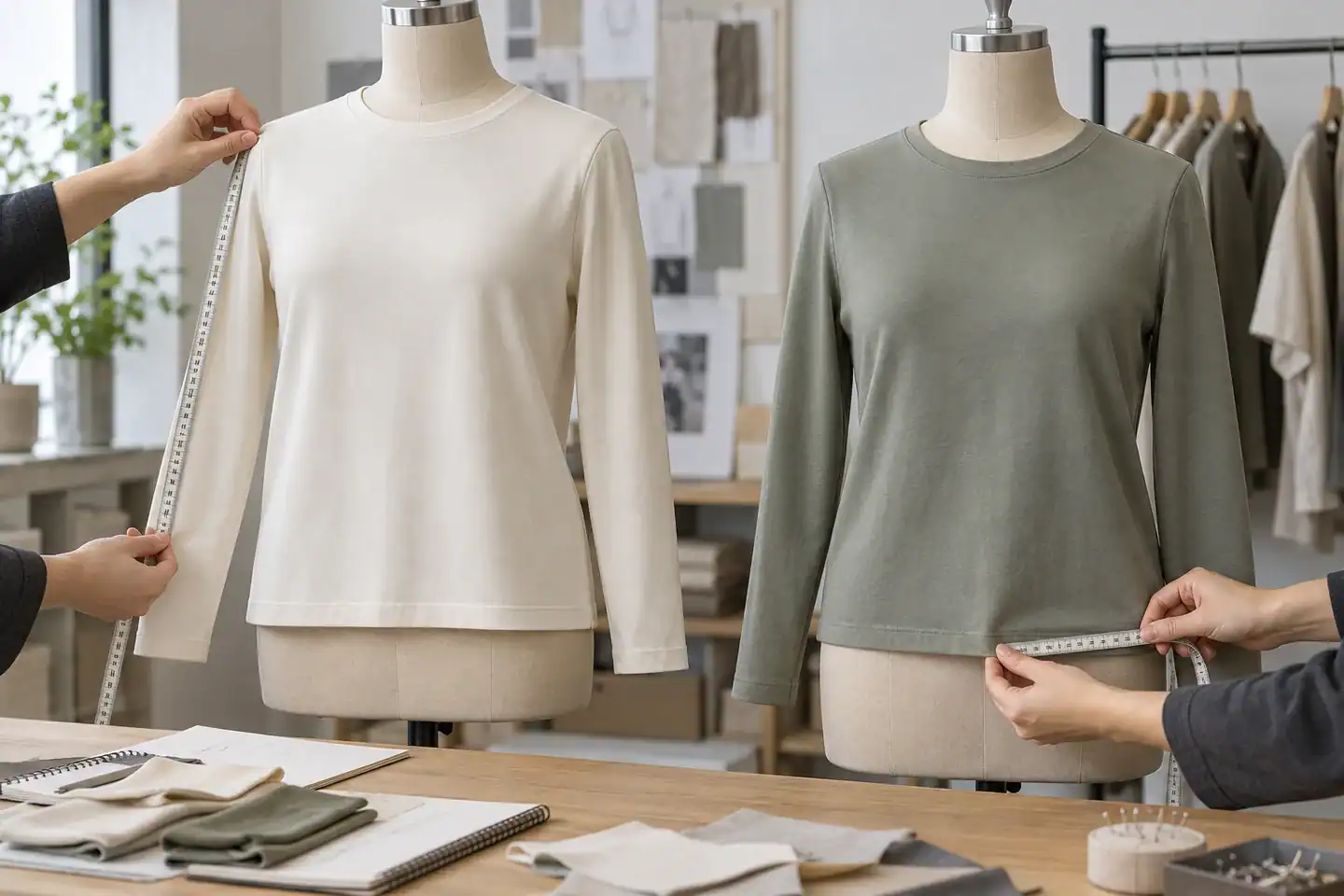
Review the sample against the written spec. Check measurement points, neckline shape, armhole coverage, seam quality, color, print position, label details and care instructions. Record each approved change so the next sample or bulk reference is unambiguous. DTS can review a tech pack and customization brief or support a sample and prototype discussion; project details need confirmation before any production commitment.
Types of tops questions buyers ask
What are the most common types of tops?
Common types include T-shirts, polos, button-front shirts, blouses, tanks, camisoles, sweaters, cardigans, sweatshirts, hoodies, crop tops, tunics and sports tops. Catalog terms overlap, so compare neckline, sleeve, fit, fabric and construction as well as the name.
How do blouse and shirt names differ?
Usage varies. “Shirt” often describes a garment with a collar, buttons or a structured woven construction, while “blouse” often describes a softer or more decorative top. Retailers do not apply the terms consistently, so check the actual garment details.
Is a tank top the same as a camisole?
Both are sleeveless, but a camisole often has narrow straps and a lighter or more underlayer-oriented design. A tank top typically has broader shoulder coverage. The boundary varies by market and product, so review the strap width, neckline, fabric and intended use.
Which top styles are used for activewear?
Training tees, tanks, sports bras, longline sports bras, compression tops, long-sleeve tops, quarter-zips and warm-up jackets are common activewear forms. The style name alone does not establish performance. Ask for material and test details relevant to the intended activity.
What should a buyer include when requesting a custom top quote?
Share a sketch or reference garment, top type, size range, finished measurements, fabric and color requirements, construction and trim details, decoration placement, labels, packaging and target market. State which details are fixed and which can change. A supplier can then confirm feasibility and the next sample steps.
Are there universal top sizing standards?
Apparel brands do not all use the same fit block. State the sizing system or measurement reference, provide body or finished-garment measurements, and approve a sample against the intended fit. Keep the size chart and production tolerance tied to the specific program.
Turn a top style into a clear product brief
A useful type name is only the starting point. Add the fit, neckline, sleeve, length, fabric, construction, decoration and measurement details that make the garment recognizable. Then use an approved sample and written change record to keep development aligned.
Send your design or tech pack through DTS customization review, ask about sampling and prototyping, or contact the team with the product family and target specifications. Availability, minimums, pricing and timing depend on the project and need direct confirmation.