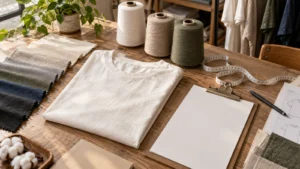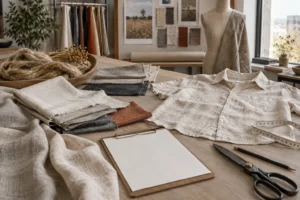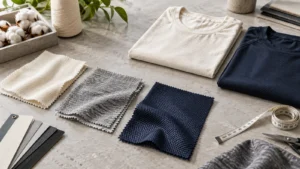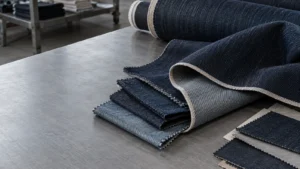
Linen fabric is a textile made from flax bast fibers. It is valued for a cool hand feel, moisture absorption, quick drying, strength and a distinctive natural texture, but it has limited stretch and a clear tendency to crease. For an apparel buyer, the useful question is not simply whether linen is "good." It is whether the fiber, weave, weight, blend, finish and care route match the garment brief.
This guide explains what linen fabric is, how its construction changes performance, when to choose linen over cotton, and which fields should be confirmed before sampling or bulk production.
Linen fabric in one sentence
Linen is a natural cellulosic textile made from the stem fibers of the flax plant. The fiber is relatively strong and absorbent, but it is not naturally elastic, so the final result depends heavily on yarn, weave, fabric weight, finishing and garment pattern.
For a brand or sourcing team, linen is usually a strong candidate for warm-weather shirts, relaxed trousers, resort apparel, overshirts, dresses, lightweight sets and selected casual pieces. It is less suitable when the product needs high stretch recovery, tight compression or aggressive moisture transport during high-output training. A linen-blend or a different fiber route may be a better fit in those cases.
What is linen fabric made from?
True linen fabric starts with flax, a plant whose usable textile fibers sit in the stem. The fibers are separated from the woody stem, prepared into strands, spun into yarn and then woven or knitted. The exact route changes the yarn character, surface, strength, drape and cost.
The George Washington University Textile Museum fiber guide describes linen as a flax-based natural fiber valued for strength, moisture handling and appearance, while also noting its low elasticity and tendency to wrinkle. The LSU Rural Life Museum’s linen overview explains the basic bast-fiber route from flax stem to textile. These references are useful boundaries: linen describes the fiber origin, not one universal fabric construction.
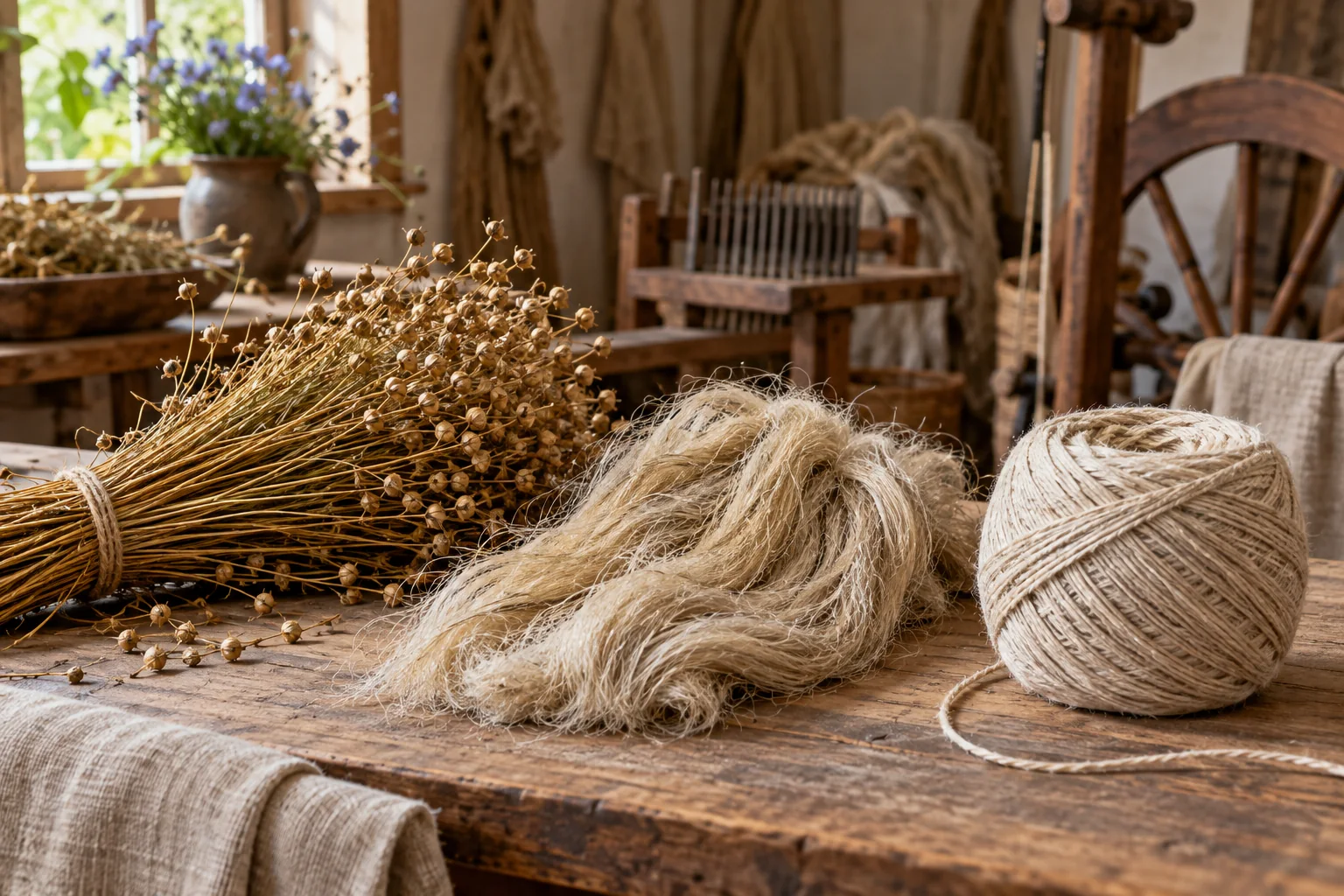
That distinction matters when a supplier says "linen fabric." Ask whether the specification means:
- 100% flax linen;
- a linen-cotton, linen-viscose, linen-polyester or linen-elastane blend;
- a knitted linen fabric rather than a woven fabric;
- a linen-look fabric made from another fiber; or
- a finished fabric whose texture is linen-like but whose fiber content is different.
The name alone does not confirm fiber percentage, weight, width, shrinkage or finished-garment behavior.
How is linen fabric constructed?
The fiber is only the starting point. Construction controls how much air can move through the fabric, how transparent it appears, how it drapes, how it resists abrasion and how it changes after laundering.
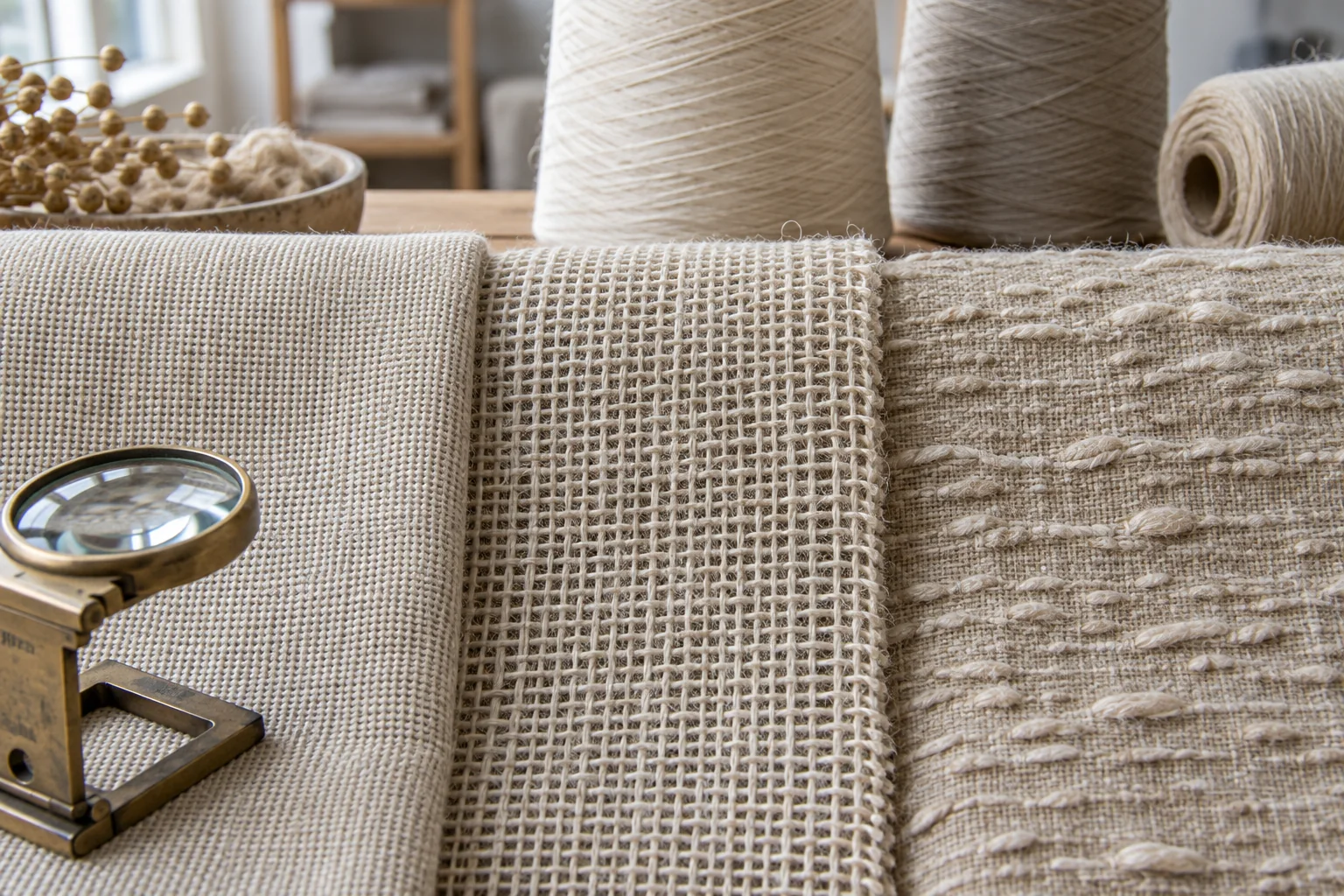
Common construction decisions include:
| Construction variable | What it changes | Buyer question |
|---|---|---|
| Yarn size and spinning | Surface texture, strength, opacity and hand feel | Is the target crisp, smooth, slubby or brushed? |
| Plain weave | Stability, recognisable linen texture and everyday versatility | Does the garment need a clean surface or visible natural character? |
| Open or loose weave | Airflow, transparency and relaxed drape | Will the product require lining or a second layer? |
| Twill or heavier weave | Structure, durability and more body | Is the fabric for trousers, overshirts or a utility layer? |
| Knit construction | Stretch potential, softness and casual drape | Does the style need recovery, or would a woven fabric be more stable? |
| Finish and wash | Softness, color appearance, shrinkage and surface character | Is the finish repeatable after laundering and bulk production? |
Do not approve a linen fabric from a swatch photograph alone. A similar shade can look completely different when the fabric has a loose weave, a heavier GSM, a washed finish or a different yarn count.
What are the main types of linen fabric?
The most useful way to group linen fabric for apparel is by construction and end use rather than by decorative names. The same fiber can become a very different product depending on weight, yarn, weave and finish.
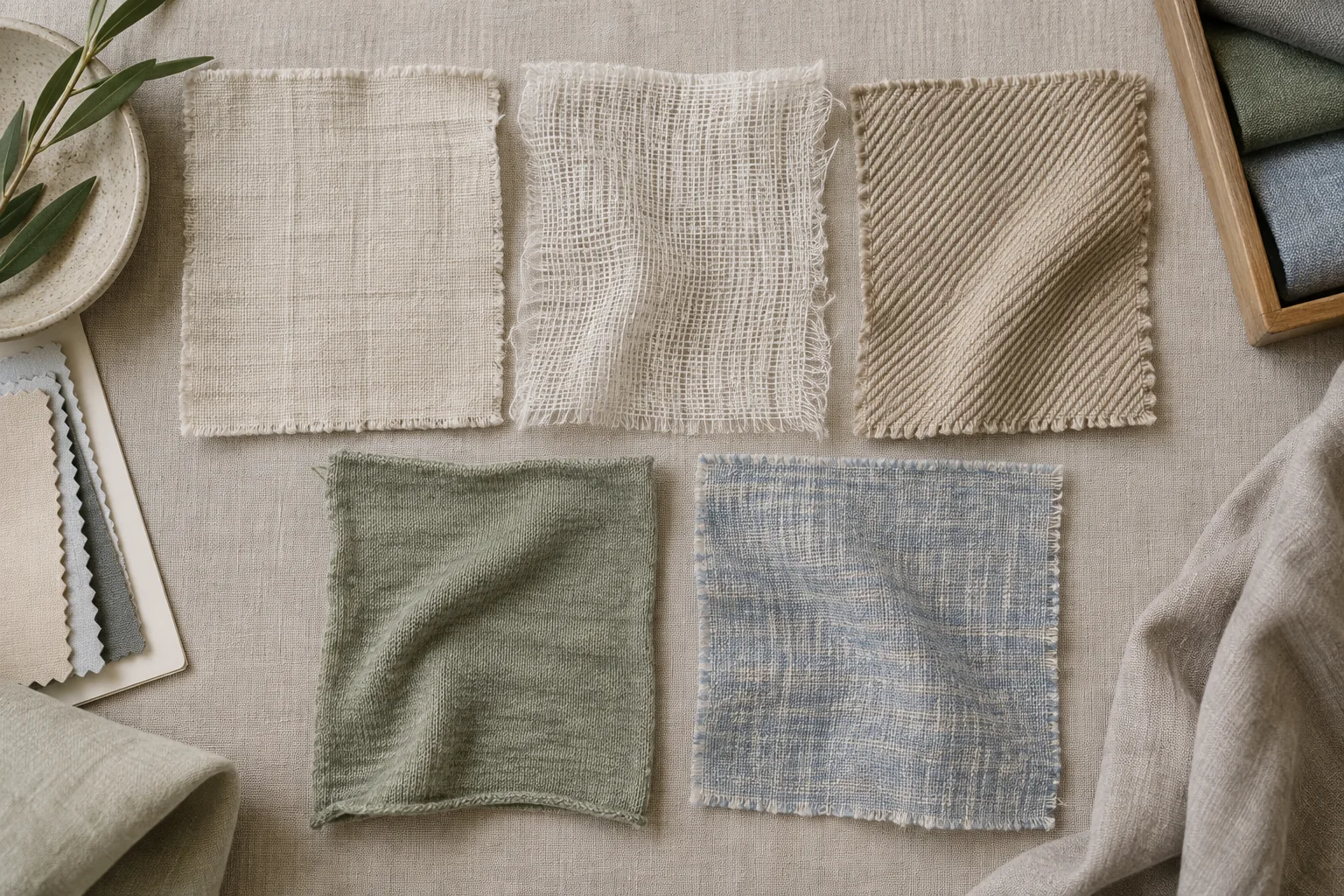
| Linen fabric route | Typical hand feel and behavior | Suitable product directions |
|---|---|---|
| Lightweight plain-weave linen | Airy, textured and often slightly transparent | Summer shirts, blouses, relaxed dresses and resort layers |
| Medium-weight linen | More opaque with useful body and natural texture | Overshirts, trousers, coordinated sets and casual jackets |
| Heavy linen or linen canvas | Firm, structured and more durable | Utility overshirts, structured accessories and outer layers |
| Linen gauze or loose weave | Open, soft and highly breathable | Layered tops, scarves and relaxed warm-weather pieces |
| Linen twill | More diagonal structure and a different drape from plain weave | Trousers, overshirts and workwear-inspired apparel |
| Linen jersey | Knit comfort with linen texture, depending on blend and construction | Casual tops and relaxed knit programs where stretch is controlled |
| Linen blend | Balances linen character with another fiber’s softness, recovery or easy care | Commercial programs that need a more predictable wear and care profile |
The best choice depends on the garment’s failure risk. A thin open weave may feel cool but become see-through. A heavier fabric may solve opacity but lose the light summer hand. A blend may reduce creasing or improve recovery, but it changes the product claim and the label declaration.
Pure linen, linen blends and linen-look labels
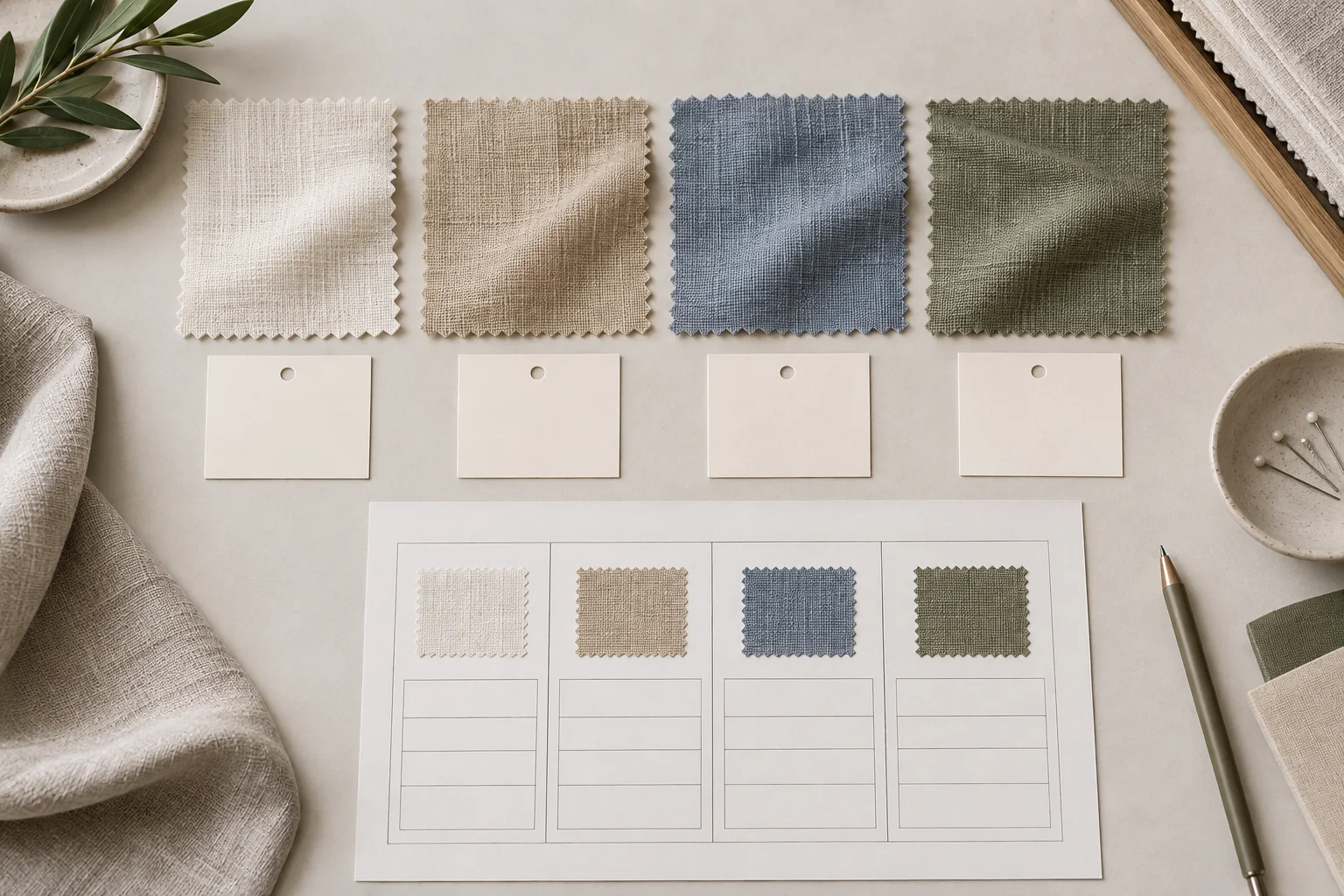
The fiber-content decision should be made before the sample is cut. Pure linen gives the strongest linen identity, but buyers may need to accept more creasing, lower stretch and a more pronounced texture. Blends can be more practical when the brief prioritizes softness, recovery, dimensional stability, price control or easier care.
The FTC textile labeling guidance requires covered textile products sold in the United States to identify fiber content, country of origin and the responsible business name or Registered Identification Number. The exact label and market requirements still need a compliance review for the finished product and destination market.
Use the following decision rule:
- Choose pure linen when the natural texture, breathability and material story are central to the product and the customer accepts creasing.
- Consider linen-cotton when you want linen character with a softer, familiar hand and a more balanced everyday garment.
- Consider linen-viscose when drape and softness matter more than a crisp linen surface.
- Consider linen-polyester when crease recovery, abrasion resistance or care convenience is important, subject to the intended product claim.
- Consider linen-elastane only when the required stretch level and recovery have been tested on the actual construction.
Do not write "linen" in a product title and assume that a blend can be described the same way as 100% linen. Confirm the composition and the approved label wording with the responsible compliance team.
Is linen fabric breathable?
Linen can feel cool and breathable because fiber properties, yarn arrangement and open constructions can support air movement and moisture handling. However, "linen" is not a performance guarantee. A dense weave, heavy finish, lining, dark color, tight fit or multi-layer construction can change the wear experience.
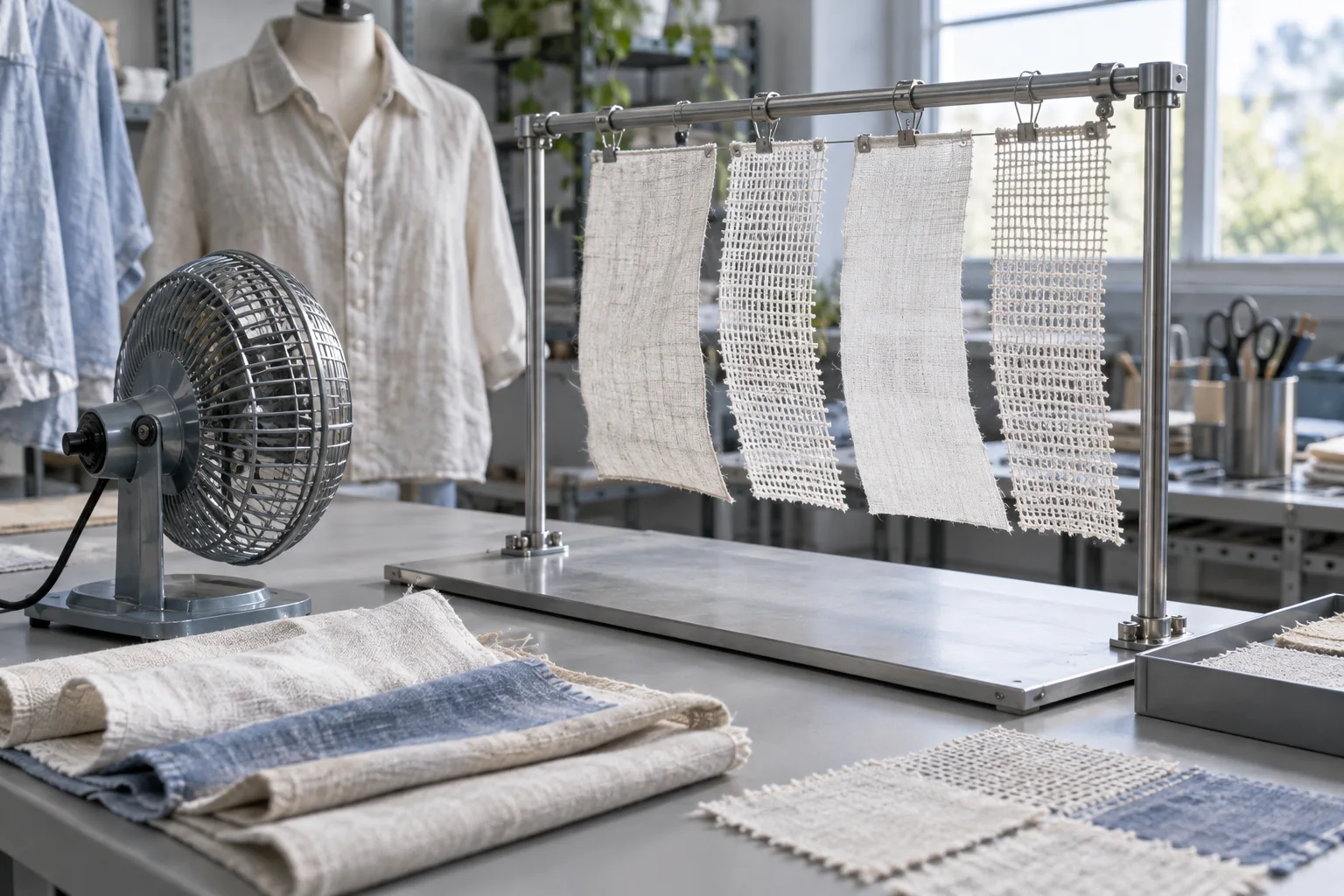
The University of Georgia textiles guide lists linen’s strengths as cool wear, moisture handling, quick drying and natural luster, while also flagging wrinkling and care sensitivities. Treat those properties as selection hypotheses that need to be confirmed on the exact fabric, not as fixed product promises.
For an activewear or travel collection, separate three questions:
- Can air pass through the construction at the intended fit and layer count?
- Does the fabric absorb moisture without becoming uncomfortably heavy?
- After washing and wearing, does the garment keep an acceptable shape and appearance?
If the product will be used for intense training, linen may not be the first choice. A technical synthetic or a cotton-blend performance fabric may move and dry moisture more predictably. If the product is a relaxed summer layer, linen’s texture and airflow may matter more than rapid sweat transport.
Linen vs cotton: which should buyers specify?
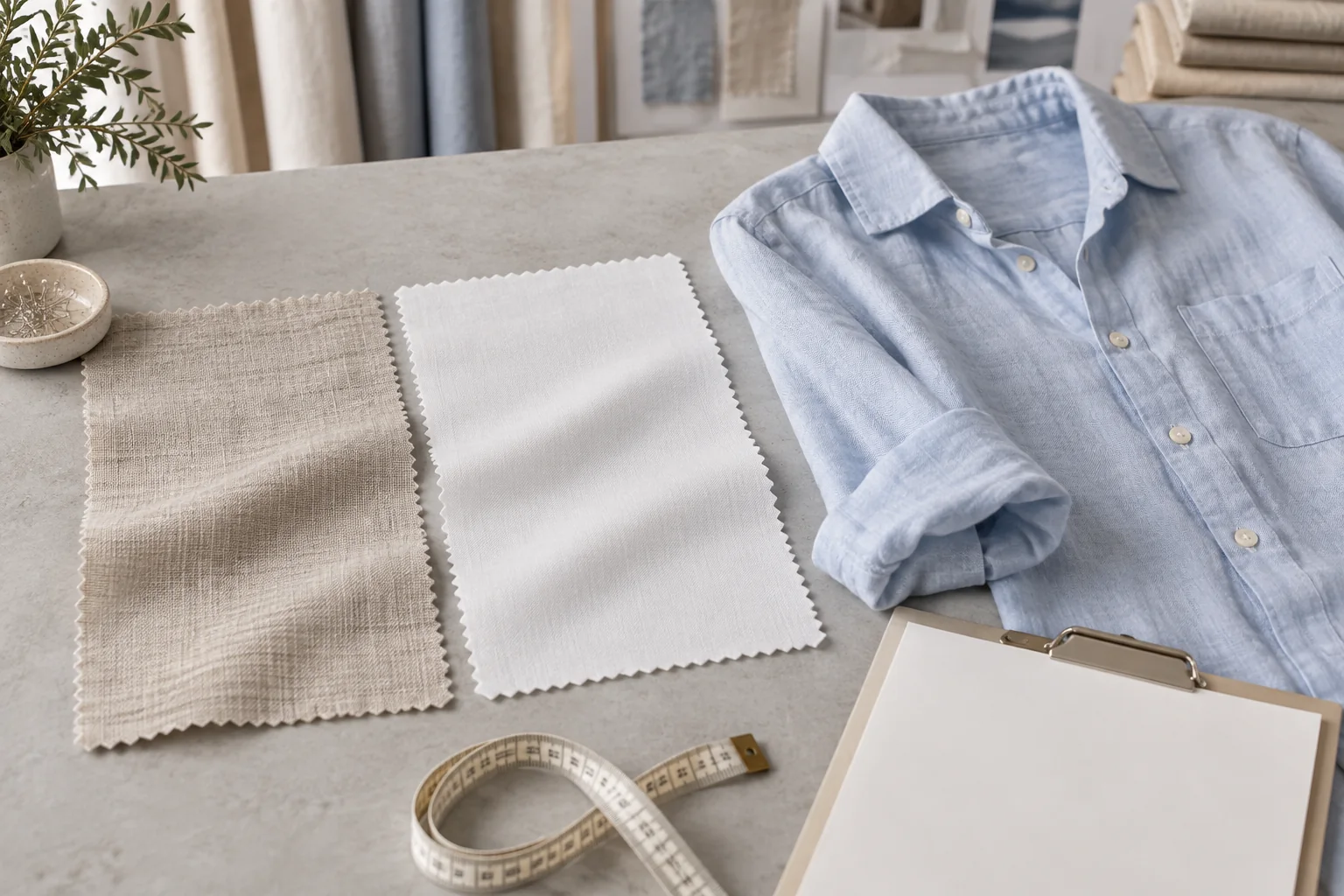
Linen and cotton are both natural cellulosic fibers, but they do not create the same garment. The best choice depends on the customer’s tolerance for creasing, the planned fit, the care route and the desired surface.
| Buyer priority | Linen is often a better starting point when | Cotton is often a better starting point when |
|---|---|---|
| Hot-weather hand feel | A dry, textured and airy character is part of the product direction | A softer, more familiar surface is the main requirement |
| Stretch and recovery | The pattern is relaxed and little stretch is needed | The garment needs a stable knit or a more forgiving everyday hand |
| Wrinkle tolerance | Natural creasing is acceptable or part of the look | The product needs a smoother appearance after wear |
| Drape | A relaxed, natural drape is desired | A wider range of stable, brushed or compact constructions is needed |
| Brand positioning | The material story and visible texture are important | Cost, familiarity and broad commercial versatility lead the brief |
| Care expectations | The customer can follow a controlled care route | Easy-care performance is a primary purchase trigger |
The comparison should be made on matching construction rather than fiber names alone. A loose linen can be more breathable than a dense cotton, but a lightweight cotton can be more opaque or softer than a coarse linen. Ask for matching swatches by target GSM, width, finish and color before making a final decision.
What does GSM mean for linen fabric?
GSM means grams per square meter. It is a useful weight reference, but it is not a complete quality score. Two linen fabrics with the same GSM can have different yarns, openness, finish, opacity, hand feel and shrinkage.
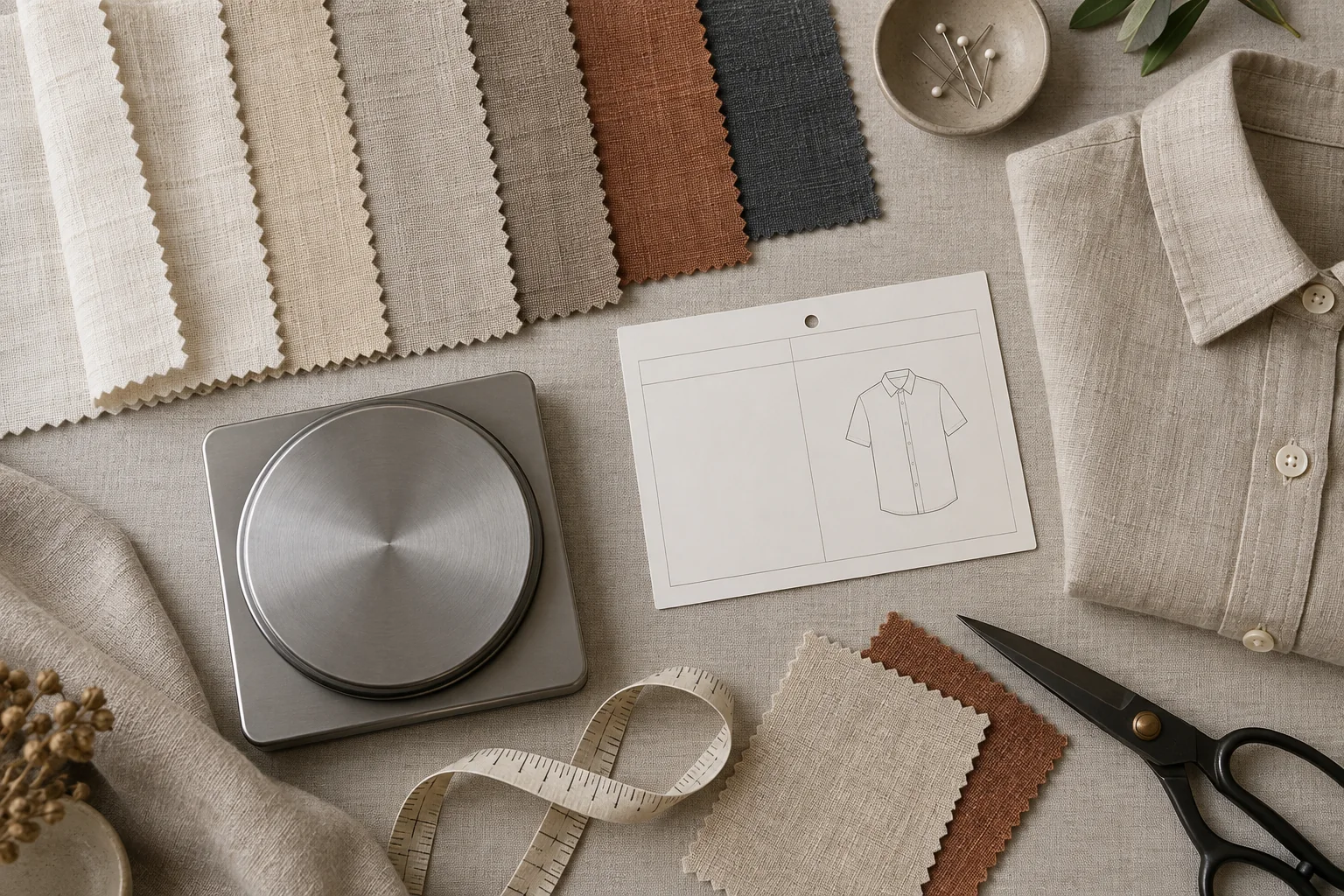
For a buyer brief, connect GSM to the product job rather than choosing a number in isolation.
| Product direction | GSM discussion to start with | Checks that still matter |
|---|---|---|
| Lightweight summer shirt | Lower-weight linen or an open construction may support airflow | Opacity, seam strength, shrinkage and color fastness |
| Relaxed blouse or dress | Light to medium weight depending on lining and drape | See-through risk, recovery at stress points and wash appearance |
| Casual trousers | Medium weight with enough body for the pattern | Bagging, dimensional change, abrasion and pocket stability |
| Overshirt or light jacket | Medium to heavier construction for structure | Seam slippage, abrasion, garment wash and collar behavior |
| Linen-blend knit top | Weight must be read with knit structure and stretch | Stretch, growth, recovery, pilling and care label route |
Record GSM as a target and tolerance in the tech pack. The accepted test method, conditioning and sampling point should be agreed before comparing results.
What products use linen fabric?
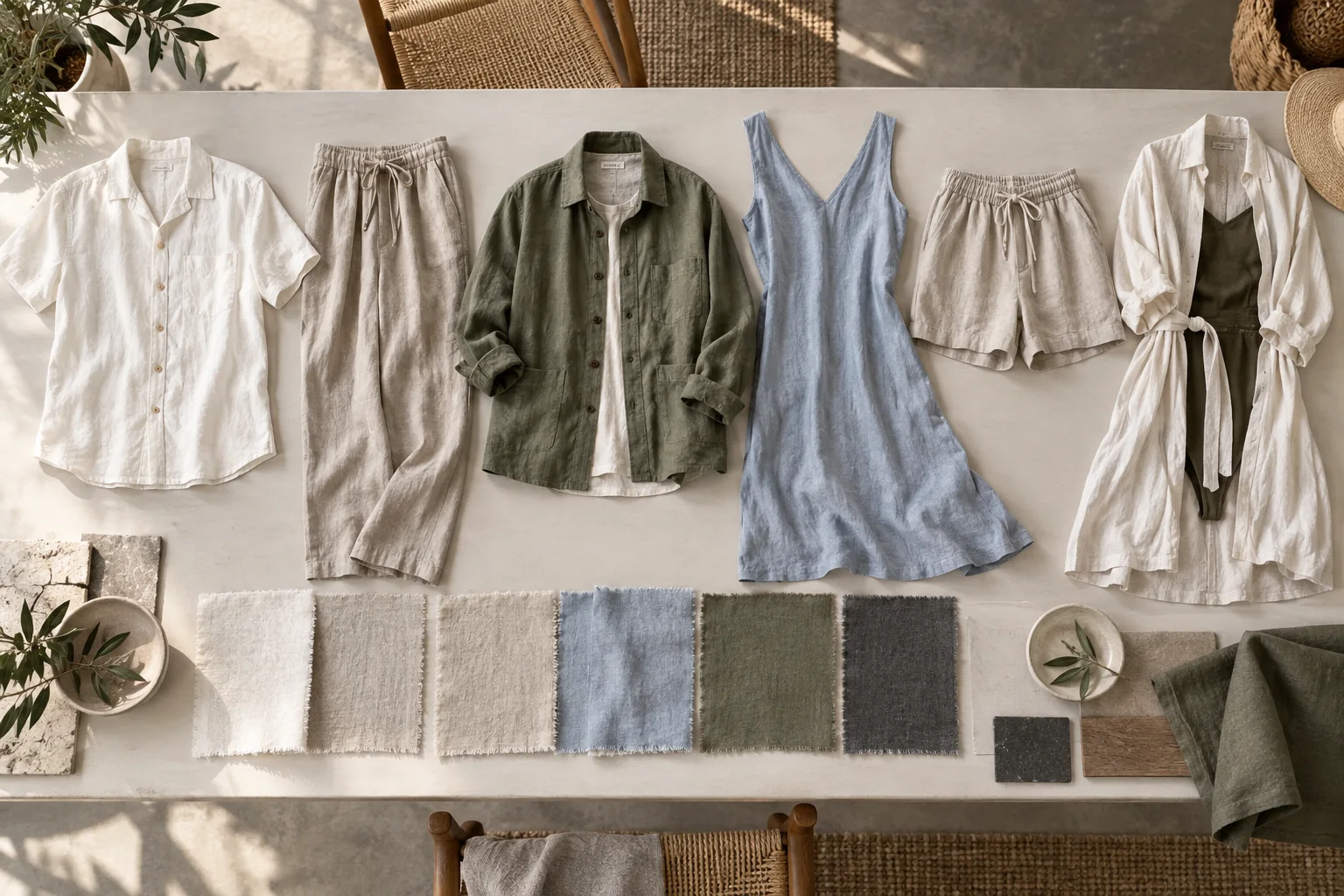
Linen fabric is commonly considered for garments that benefit from a relaxed natural surface and warm-weather comfort. Typical product directions include:
- shirts, camp-collar shirts and blouses;
- relaxed trousers and wide-leg pants;
- shorts and co-ordinated summer sets;
- dresses, skirts and resort layers;
- overshirts and lightweight jackets;
- casual loungewear and selected travel apparel; and
- linen-blend jersey or woven pieces where the construction supports the intended fit.
For gym wear, ask whether linen’s lower stretch and moisture behavior fit the activity. It can suit a relaxed warm-up layer or lifestyle collection, but a close-fitting training short or compression legging normally needs a different construction and tested recovery. The existing fabric guide for activewear buyers can help separate lifestyle comfort from high-output performance requirements.
How should buyers plan linen care and shrinkage?
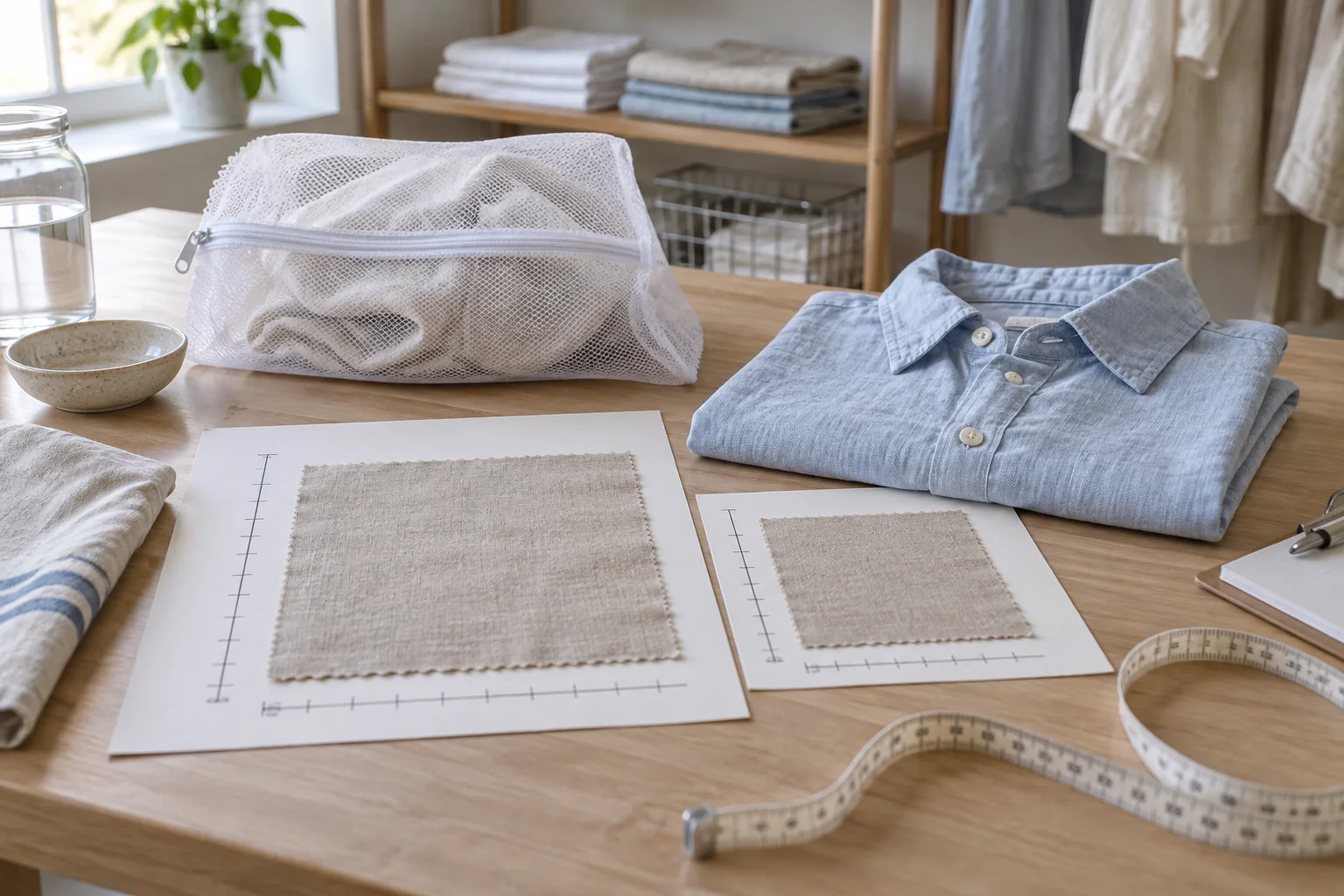
Linen care is not a footnote. Washing, drying, pressing and garment finishing can change dimensions, texture, color appearance and customer expectations. Care decisions should be built into the sample plan before the final label is approved.
Ask the supplier to document:
- the recommended wash and dry route;
- whether the fabric or garment is pre-washed or garment-washed;
- dimensional change after the agreed laundering cycles;
- the acceptable appearance of creasing and surface change;
- color fastness and transfer risks for the target shade; and
- whether the final label instructions match the tested route.
If the customer wants a relaxed washed look, approve that look on a washed sample rather than on an unwashed fabric cutting. If the product needs a crisp appearance, define how much pressing or finishing is realistic for the customer at home.
How to specify linen fabric in a tech pack
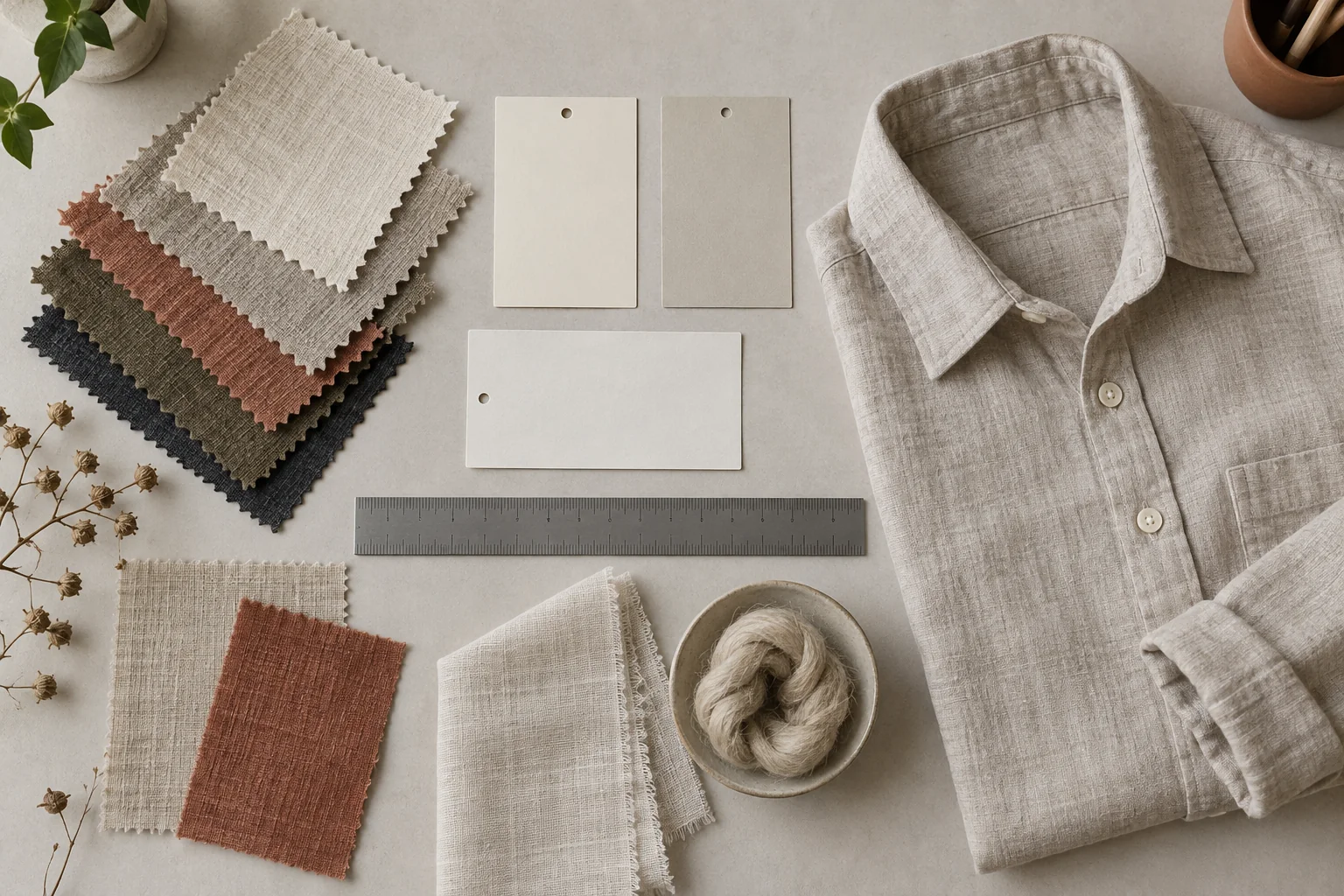
The more specific the fabric brief, the less room there is for a sample to drift from the intended product. Use the tech pack customization and specification review page when the brief needs a structured review.
Include these fields:
| Specification field | What to state | Why it protects the buyer |
|---|---|---|
| Fiber content | Exact percentages and permitted tolerances | Prevents a 100% linen claim from being confused with a blend |
| Construction | Woven or knit, weave direction and special structure | Connects the fabric to drape, stretch and stability |
| Yarn and texture | Yarn character, slub allowance and surface target | Controls the visual identity and hand feel |
| GSM and width | Target, tolerance and usable width | Supports costing, marker planning and fit consistency |
| Color and finish | Lab dip, wash effect, softening or other finish | Avoids approval based on an unrepresentative swatch |
| Shrinkage | Test route, direction and acceptance range | Protects finished measurements and grading |
| Performance tests | Selected tests and the agreed method | Prevents vague claims such as "breathable" from replacing evidence |
| Care and labeling | Intended care route and market labeling review | Connects the sample to the eventual customer instruction |
If the order uses multiple colors, do not assume one color has the same shrinkage or appearance as another. Approve representative shades and retain the accepted standard.
What should buyers test before bulk approval?
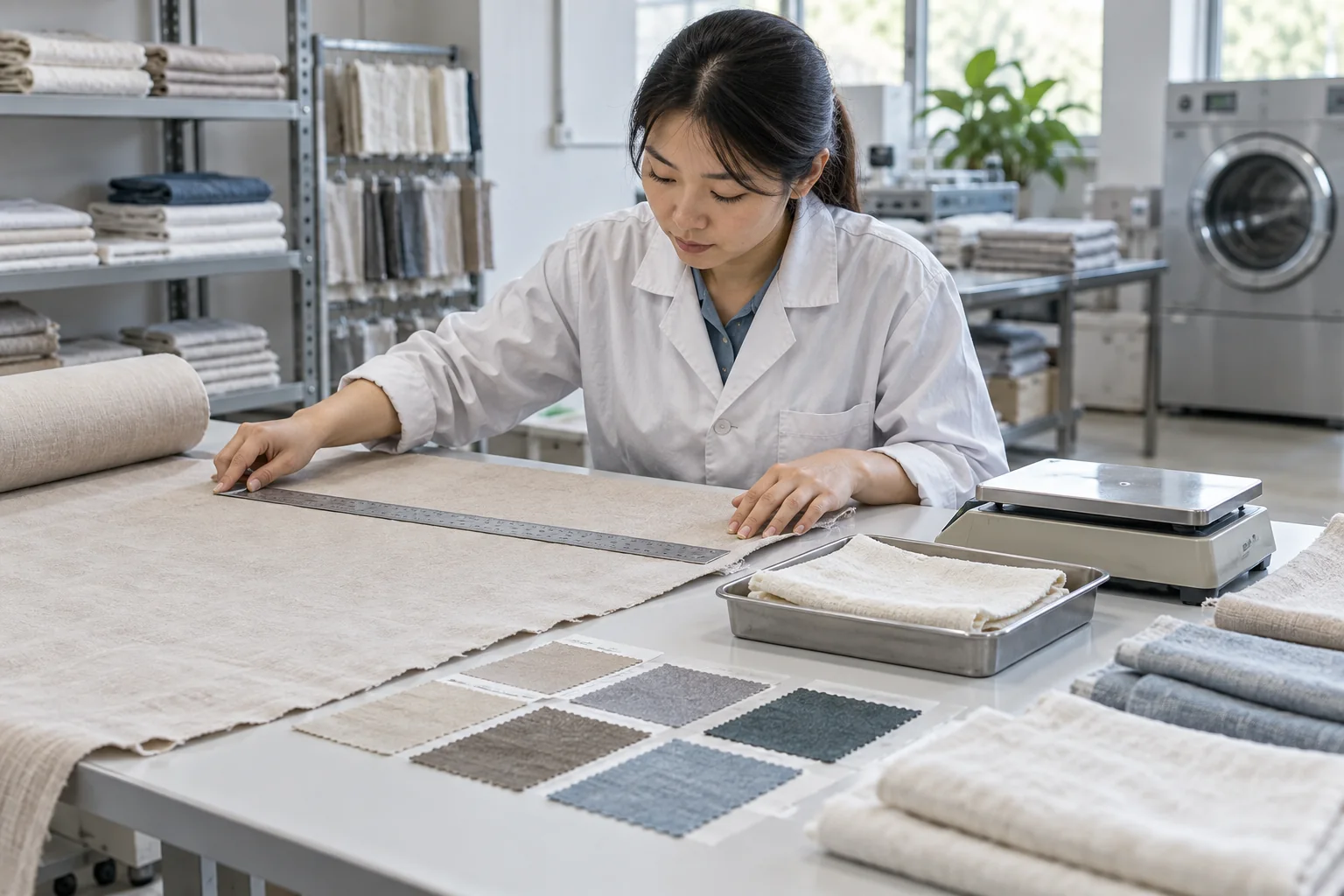
The test list should reflect the product’s risks. A lightweight linen shirt and a structured linen trouser do not need the same evidence package.
At minimum, discuss:
- Fiber-content confirmation against the approved composition.
- GSM, usable width and fabric appearance against the approved standard.
- Dimensional change after the intended wash and dry route.
- Color fastness appropriate to the product, color and care method.
- Seam slippage, seam strength or abrasion where the construction creates risk.
- Stretch and recovery for any linen knit or elastane blend.
- Pilling or surface change where the garment will experience repeated rubbing.
- Finished-garment measurements after laundering rather than fabric measurements before cutting.
Do not insert a test value into the buyer specification unless the method, laboratory or internal procedure and acceptance range are confirmed. The FTC labeling guide is a useful reminder that fiber identification and labeling are compliance questions, while fabric performance claims need their own evidence path.
A practical linen sampling workflow

Use a staged approval path so that a low-cost fabric change does not become a late fit or labeling problem.
- Brief review: confirm product use, fit, target season, fiber route, target hand feel and care expectation.
- Swatch shortlist: compare at least the relevant pure-linen and blend routes by construction, weight, width and finish.
- Lab dip and fabric approval: approve color, texture and surface after the intended finish or wash.
- Proto sample: make the garment in the proposed fabric and check drape, opacity, seams, closures and movement.
- Wash review: launder the garment through the agreed route and record dimensional change and appearance.
- Pre-production standard: retain the approved swatch, garment measurements, label wording, packaging notes and inspection points.
- Bulk inspection: compare production fabric and finished garments with the approved standard before release.
This sequence gives the buyer a traceable decision record. It also helps the manufacturer distinguish a requested material change from a workmanship failure.
Common linen sourcing mistakes
The most expensive linen mistakes usually happen before the first bulk cut.
- Treating every linen fabric as equivalent: fiber origin does not define weave, GSM, finish or opacity.
- Approving from a photograph: the final hand feel, transparency and drape need a physical swatch and garment sample.
- Using a fixed GSM without a product reason: weight must be connected to fit, climate, opacity and care.
- Ignoring blend wording: a linen-look or linen blend needs exact composition and compliant label language.
- Skipping wash testing: shrinkage and surface change can alter both measurements and customer expectations.
- Using linen for high-stretch performance by default: the pattern, knit construction and recovery evidence need to support that decision.
- Changing the finish after approval: softening, washing or pressing can change the approved appearance and dimensions.
- Linking a lifestyle promise to an untested claim: describe the intended hand feel and use case, then verify performance on the actual fabric.
Frequently asked questions
True linen fabric is made from flax plant bast fibers. A product described as linen may also be a blend, so buyers should confirm the exact fiber percentages in the specification and label review.
Linen can feel cool and breathable, especially in a suitable open or lightweight construction. The actual result also depends on weave, GSM, finish, fit, lining and layers, so confirm the finished garment rather than relying on the fiber name alone.
Neither is universally better. Linen can offer a dry texture and warm-weather character, while cotton can provide a softer and more familiar hand across many constructions. Compare matching weights, weaves, finishes and care routes.
Woven linen has limited natural stretch and recovery. A linen knit or linen blend can behave differently, but the required stretch and recovery should be tested on the actual construction and garment.
Linen can change dimensions during laundering, especially when the fabric has not been pre-washed or when the care route is aggressive. Establish the test method and acceptance range before approving the bulk standard.
There is no universal best GSM. A lightweight shirt may prioritize airflow and drape, while a structured overshirt may need more body and opacity. Specify the target together with width, construction, finish, shrinkage and opacity requirements.
It can be considered for relaxed lifestyle activewear, warm-up layers or resort-oriented products. It is not automatically suitable for compression or high-output training because stretch, recovery and moisture transport may not match the brief.
Start with the supplier’s material specification and label declaration, then agree on the appropriate fiber-content verification route for the product and market. Keep composition, country of origin and responsible business information aligned with the compliance review.
Linen fabric selection for your next apparel brief
Linen works best when its natural texture, airflow and relaxed appearance are deliberate parts of the product. Start with the use case, then lock fiber content, construction, GSM, width, finish, care and acceptance evidence before sampling. If the buyer wants more stretch, faster drying or easier care, compare a blend or a different fabric family instead of forcing pure linen into the wrong garment.
Send the product type, target fit, fiber preference, GSM or hand-feel reference, color direction, size range, quantity and care expectation to the DTS Activewear inquiry and NDA team. A clear brief makes it easier to review the fabric route, sample plan and production specifications.