Choosing a fitness clothing manufacturer is not only a matter of comparing unit prices. The same supplier may offer stock garments, private-label decoration, OEM cut-and-sew production, or ODM development. Each route gives the buyer a different level of control over fit, fabric, branding, sample approval, and reorders.
For a fitness brand, gymwear label, teamwear program, or e-commerce collection, the first useful comparison is the supplier’s working model. Can the company develop from your tech pack? Can it recommend a fabric without quietly changing the fit? Can it keep an approved sample as a production reference? Can it explain what the quotation includes?
This guide turns those questions into a practical supplier-screening process. It covers the product brief, OEM and ODM choices, fabric and construction, sampling, testing, quotation terms, labeling, packing, quality control, and the information to send when requesting a quote.
What a fitness clothing manufacturer should control
The phrase fitness clothing manufacturer sounds specific, but it can describe very different businesses. A direct factory, a development-led supplier, a trading company, and a wholesale catalog seller may all use similar language online.
The important question is not whether a supplier lists leggings, tank tops, shorts, or gym shirts. It is which parts of the product and order the supplier can actually control, explain, and document.
For a custom fitness wear program, look for clear ownership of these decisions:
- product construction, pattern changes, and size grading;
- fabric selection, composition, GSM, stretch, recovery, and surface behavior;
- sample sewing, fit comments, revisions, and approval records;
- decoration, labels, hangtags, trims, and retail or e-commerce packaging;
- in-line checks, final inspection, measurement tolerance, and packing checks;
- quotation assumptions, quantity breaks, lead-time triggers, and reorder references.
A supplier does not need to perform every step in one building to be useful. It does need to tell you what is handled in-house, what is sourced from a partner, and where the buyer’s approval is required. A large product gallery cannot answer those questions by itself.

Decide which supply model fits the project
The wrong supply model creates friction before the first sample. A buyer who needs an original fit may be sent a catalog style with a new logo. A buyer who wants a fast test may spend time building a complete tech pack for a product that already exists. Define the development route before comparing suppliers.
Wholesale or ready-style supply
Wholesale is useful when the buyer wants existing garments, limited color choices, and a faster path to product selection. The main checks are actual stock status, size availability, color consistency, decoration limits, packaging, and whether the shown sample matches the shipped product.
This route may work for a test collection or a simple gym merchandise order. It is less suitable when the buyer needs a unique pattern, a precise performance claim, or a repeatable fit across several styles.
Private label
Private label usually starts with an existing style or supplier base. The buyer then adds a brand label, hangtag, logo, color selection, packaging, or other controlled changes. It can shorten development, but the buyer should still approve the actual garment rather than assume that a label change creates a new product.
Ask whether the supplier can change fabric, measurements, trims, and decoration independently. If not, record the style as a decorated stock product instead of calling it a fully custom garment.
OEM production
OEM is a good fit when the buyer owns the product direction. The input may be a tech pack, graded measurement chart, reference garment, artwork file, approved fabric, or a detailed construction brief. The manufacturer converts that information into patterns, samples, and production.
OEM requires more buyer decisions up front. Missing information about seam type, elastic width, lining, pocket construction, logo position, or wash behavior usually appears later as a quotation assumption or sample revision.
ODM development
ODM can suit a buyer who wants supplier input on a starting style, fabric, fit, or construction. It is not automatically faster or cheaper. The buyer must still define which parts may be changed and which parts remain part of the supplier’s base design.
For an ODM project, ask how the selected style will be differentiated. Confirm whether the pattern, artwork, trims, and development files are exclusive to your project, shared across customers, or simply adapted from a standard catalog item. Put the answer in writing before approving bulk production.
Start with the product lane, not the supplier list
Fitness clothing covers garments with very different stress, fit, and comfort requirements. A running singlet, compression short, yoga legging, training T-shirt, and warm-up hoodie should not be evaluated with one generic specification.
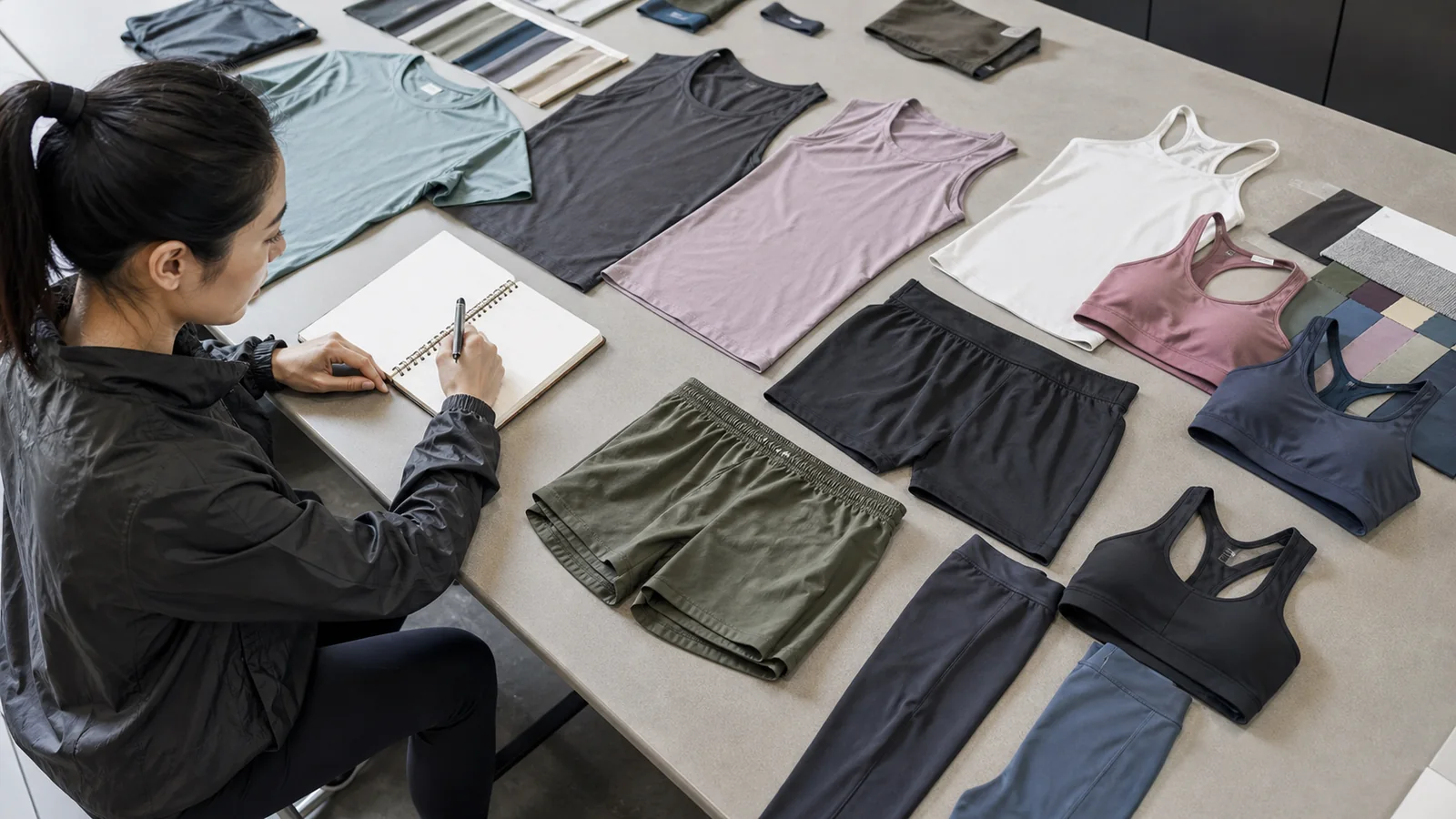
Define the first product lane by activity and use:
- running and outdoor training, where weight, ventilation, chafe control, and movement matter;
- gym and strength training, where seam strength, range of motion, and abrasion may matter more;
- yoga, studio, or recovery wear, where opacity, hand feel, stretch, and recovery need close review;
- teamwear and branded gym merchandise, where size ratios, decoration, repeat colors, and packing affect the order;
- warm-up, athleisure, or street-active styles, where silhouette, GSM, surface, and wash appearance may lead the decision.
Then define the garment details. A useful first brief names the style, intended activity, target wearer, fit, size range, fabric direction, color plan, decoration, labels, packaging, quantity, destination, and approval expectations. The more specific the product lane, the more useful the supplier’s recommendation becomes.
The existing types of sportswear guide can help organize the product category. This article has a different job: it uses the selected category to screen the manufacturer and control the development path.
Compare fabric by behavior, not by fiber name
A fabric name does not tell you how a garment will perform in use. Polyester, nylon, elastane blends, jersey, interlock, mesh, rib, and brushed constructions can all be suitable in different products. The composition is only the starting point.
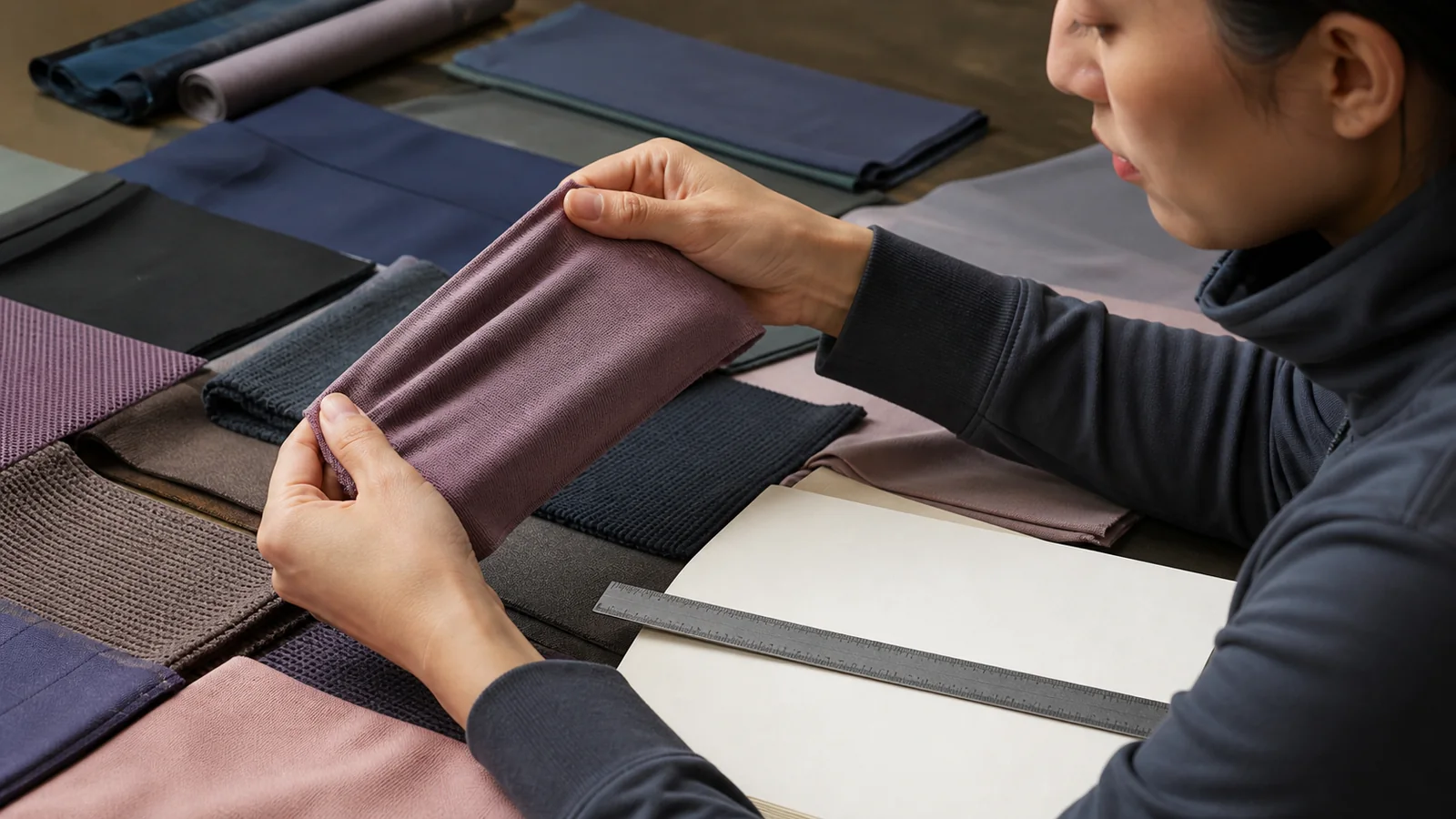
Ask the manufacturer to describe and, when needed, confirm:
- fiber composition and any functional yarn or finish;
- target GSM and the method used to measure it;
- stretch direction, extension, and recovery expectation;
- opacity under the intended garment tension and lighting;
- moisture behavior, drying expectation, pilling risk, and colorfastness;
- surface feel, compression level, and compatibility with the decoration method;
- dimensional change after the agreed care process.
GSM is a useful comparison field, but it should not become a quality promise. ASTM D3776/D3776M covers methods for measuring fabric mass per unit area, and the method or option used can affect how a result is interpreted. Record the test method with the specification instead of comparing one number without context. See the ASTM D3776 standard page for the scope of the method.
Stretch and recovery need the same discipline. ASTM D2594 describes stretch and fabric growth for certain knitted fabrics under low tension, while other support or high-power applications may need a different test method. The manufacturer’s test suggestion should match the garment’s actual use. The ASTM D2594 description explains that applicability depends on the fabric and end use.
If the project needs a moisture-management claim, specify the claim and test plan before production. AATCC TM195 can be included in a laboratory plan for wicking and drying behavior, but a fabric result is not the same as a finished-garment performance guarantee. Use the AATCC TM195 page to confirm the current method scope with the laboratory or supplier.
For a broader fabric overview, link the buyer to the best fabric for activewear guide. The manufacturer should still recommend the actual swatch against the garment construction, activity, and target price.
Verify the supplier before requesting a full quote
Supplier verification is not a request for a polished company presentation. It is a check that the business can answer product-specific questions with a consistent process.
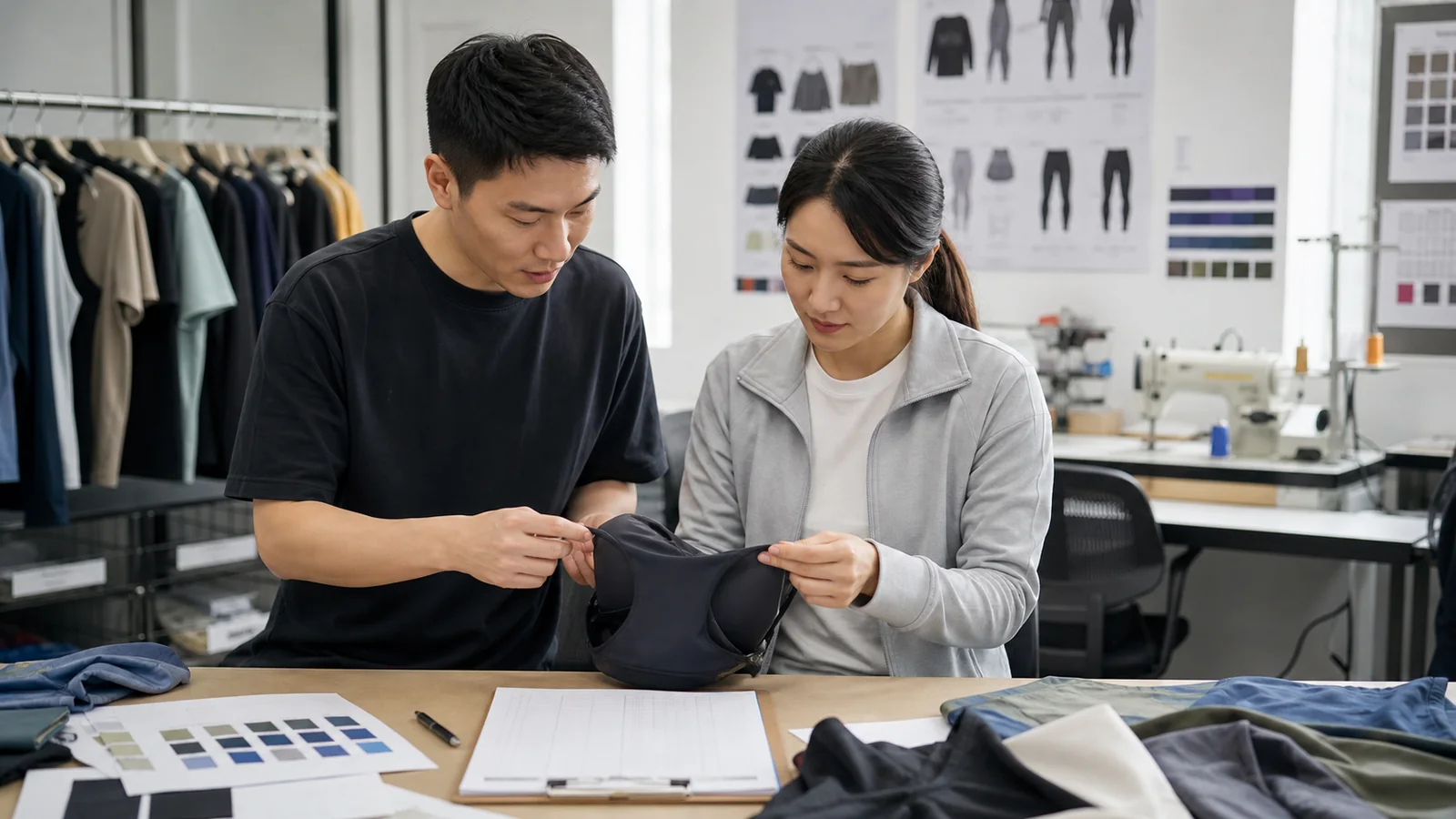
Use a short screening call or written checklist and ask:
- Which fitness garments do you develop regularly, and which ones are only catalog items?
- Who reviews patterns, measurements, and fit comments?
- Which fabrics can you source or develop for this product lane?
- Where are samples sewn, decorated, inspected, labeled, and packed?
- What information is needed before a sample price can be confirmed?
- What is included in a bulk quotation, and what is excluded?
- How are approved samples, comments, and revision records stored?
- How are measurement tolerances and workmanship limits agreed?
- Which documents or tests can be supplied for this exact product and market?
- What project details must be confirmed before any MOQ or lead-time statement is reliable?
The answers do not need to sound impressive. They need to be specific and consistent. Treat factory ownership, certifications, capacity, export history, customer names, lead time, and MOQ as project evidence questions. Do not convert a general website statement into a guarantee for your product.
Send a tech pack that leaves fewer decisions hidden
A tech pack does not need to be perfect before the first supplier conversation. It does need to show which decisions are fixed and which decisions are open for recommendation.
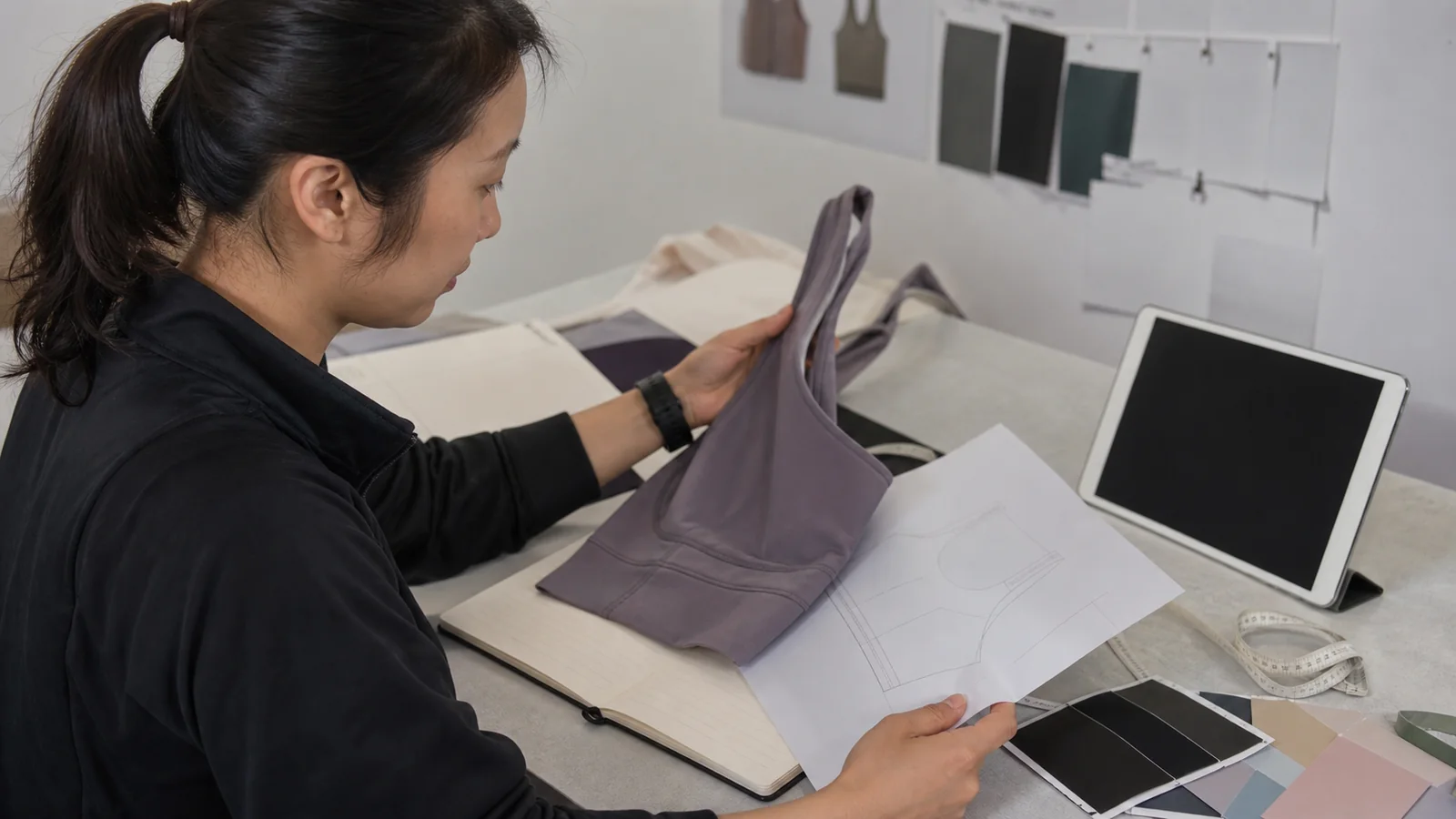
Include the following where available:
- front, back, and detail views;
- measurements, tolerance, size range, and grading direction;
- fabric composition, GSM range, stretch, recovery, and color references;
- seam construction, stitch type, hem, waistband, binding, lining, and pocket details;
- artwork files, print or embroidery method, logo size, and placement;
- labels, care information, hangtags, packaging, folding, and carton requirements;
- quantity by style, color, and size, plus the destination market;
- sample comments, approval owner, target date, and open questions.
The tech pack customization page is a useful conversion route when the specification is incomplete. A supplier should flag gaps instead of guessing silently. Each open point should have an owner, a decision date, and a reference version.
Treat the sample as a decision gate
The sample is not only a photo opportunity. It is where the buyer checks whether the factory understood the product brief.
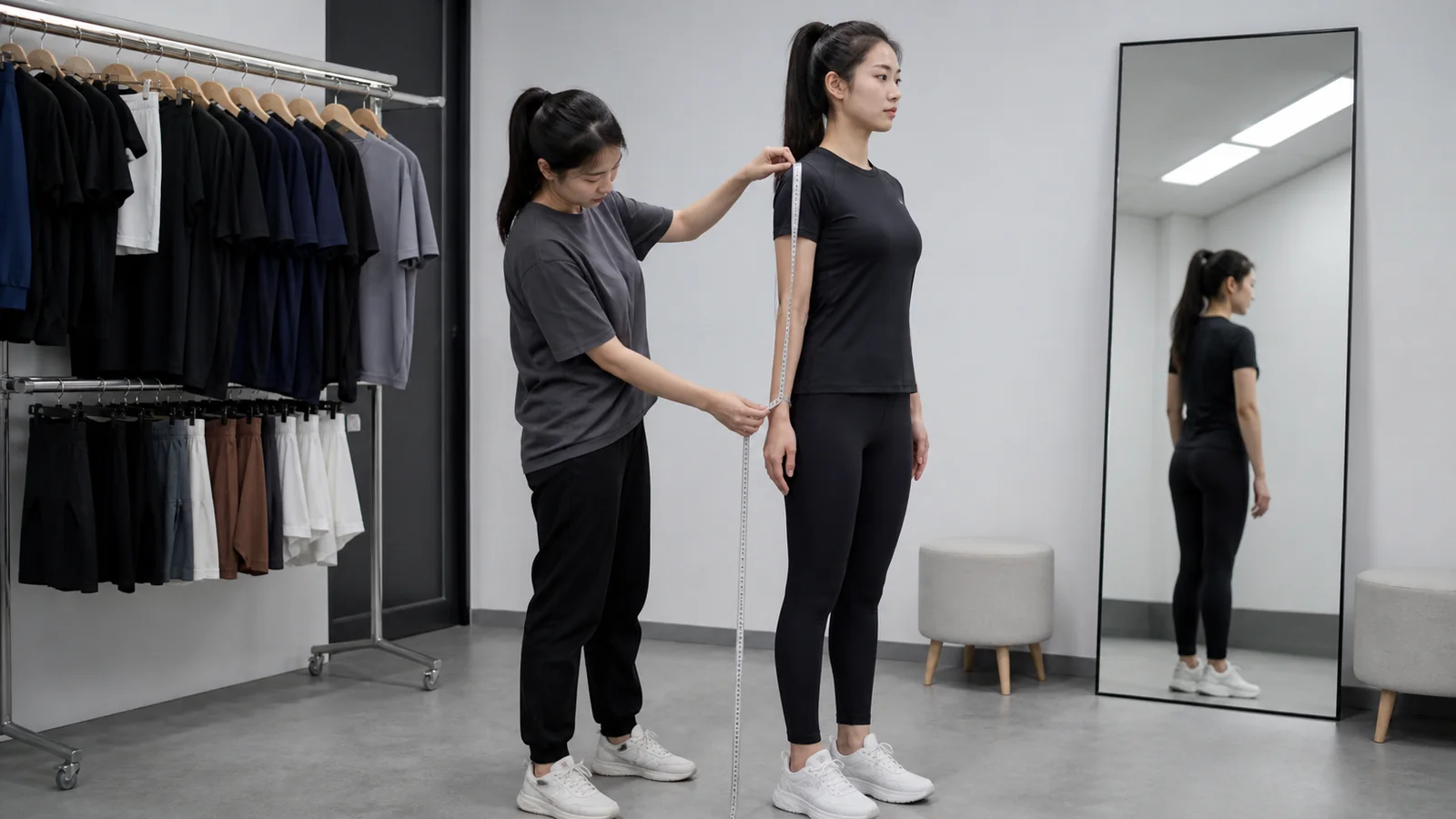
Review the sample in a fixed order:
- Compare the fabric composition, hand feel, weight, stretch, recovery, and opacity with the approved direction.
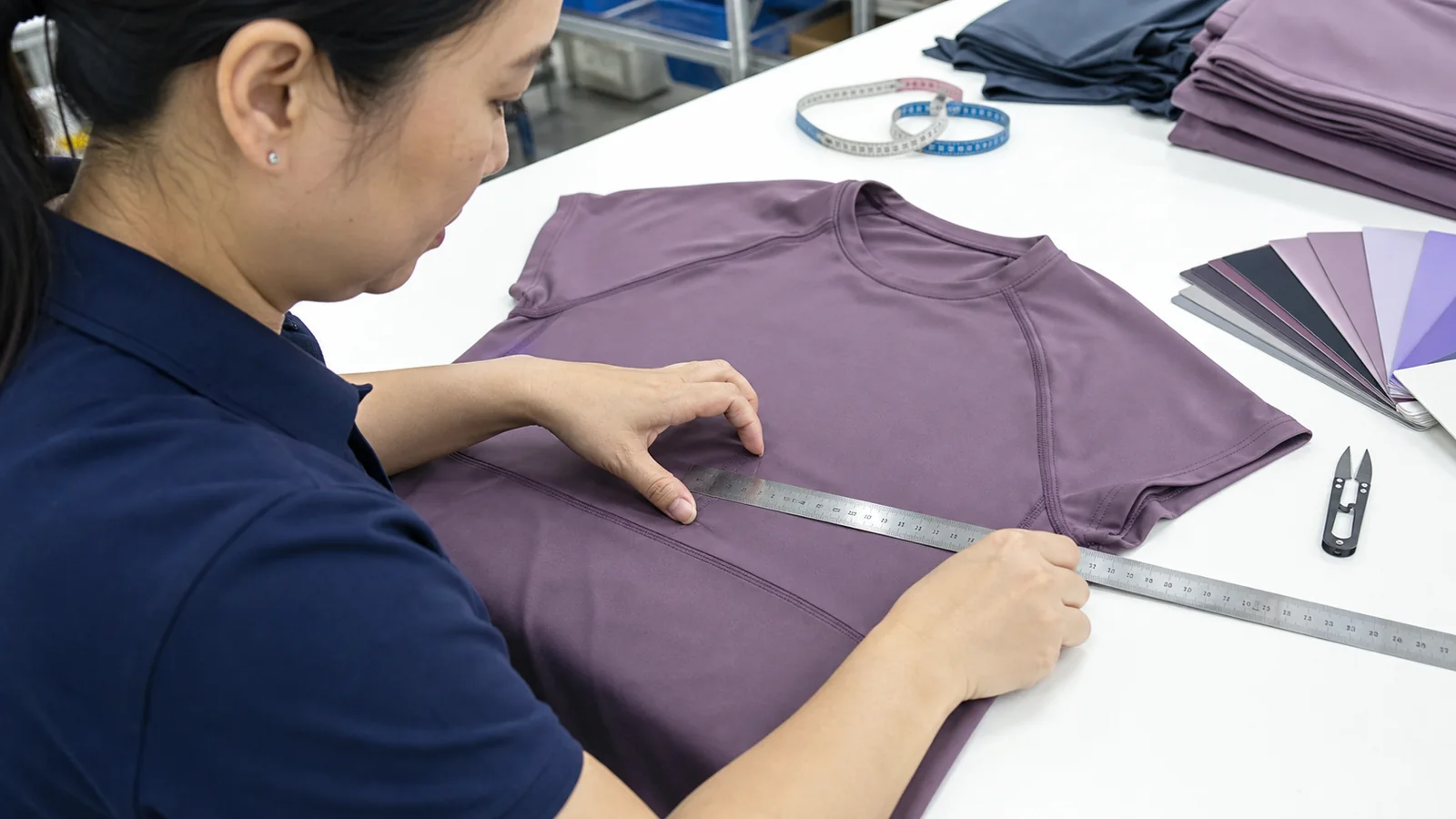
- Measure the garment on a flat surface using the same points as the tech pack.
- Check the fit on the intended body or fit model, including movement positions relevant to the activity.
- Inspect seams, needle marks, skipped stitches, thread tension, hems, elastic, panels, and stress points.
- Check decoration size, position, color, adhesion, embroidery density, and surface distortion.
- Review labels, care information, hangtags, folding, polybags, and any sample packaging.
- Record each change as accepted, rejected, or open for the next revision.
The sampling process should end with an approval record, not only a chat message saying the sample looks good. Keep the approved garment, measurement chart, fabric swatch, artwork version, and written comments together. The sampling and prototyping service can be used to route a project that needs structured development support.
Build a product-specific test plan
Testing should follow the garment’s risk. A basic cotton gym T-shirt, a compression legging, and a moisture-management running top do not need the same test list.

Discuss the relevant checks before bulk approval:
- fiber composition and fabric mass;
- colorfastness against the intended care and use conditions;
- pilling, abrasion, seam appearance, or print durability where relevant;
- stretch, recovery, dimensional change, and spirality for knitted products;
- opacity and coverage at the intended stretch;
- moisture-management or drying tests when a specific claim is planned;
- needle, sharp-object, chemical, or safety requirements when required by the product or market;
- packaging and label review for the destination market.
For United States consumer apparel, the Federal Trade Commission explains that most textile products need fiber content, country of origin, and responsible company identification on the label, and that care instructions are also required under the Care Labeling Rule. Read the FTC apparel and labeling guidance and care-labeling guidance with the importer or compliance owner. This article is not a legal opinion, and the applicable market should be confirmed for the exact product.
Do not add a certification logo or test claim to a product page or label until the scope, product, document, and market have been verified. A supplier may have a general certificate that does not cover the garment you are ordering.
Compare quotations on the same product definition
The cheapest quotation is often the one with the most missing assumptions. Ask every fitness clothing manufacturer to quote the same product brief and show the same cost fields.
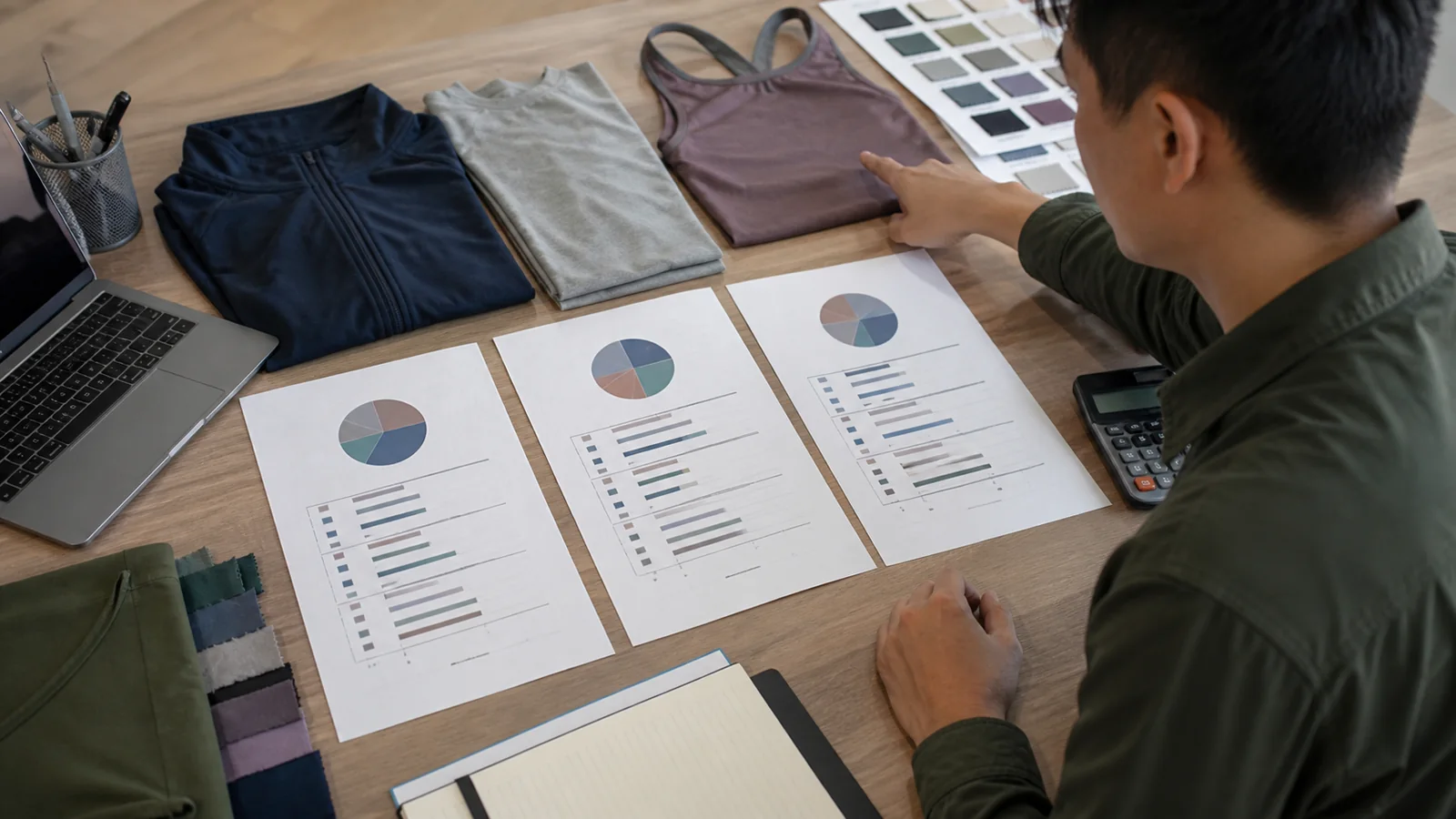
Request separate lines or clear notes for:
- sample cost, revision cost, and courier assumptions;
- fabric, trims, labels, decoration, packaging, and accessories;
- price basis, currency, quantity breaks, and size or color ratios;
- tooling, pattern, grading, artwork, or development charges;
- inspection scope, rework policy, and replacement terms;
- shipping basis, destination assumptions, and export documents;
- production lead-time trigger, approval deadline, and reorder conditions.
Then ask the supplier to list exclusions. Does the quote include custom fabric? Is the quoted garment based on a stock pattern? Is the logo method included? Are hangtags, barcodes, and carton marks included? Is the sample price refundable or credited? These details change the landed cost and the project schedule.
Use one approved sample and one written specification as the comparison anchor. Do not compare a fully custom legging with a decorated stock legging simply because both are described as activewear.
Confirm labels, packaging and reorder controls
Brand presentation is part of the product specification. A garment can pass a fit review and still arrive with the wrong label, missing care information, damaged decoration, or inconsistent packing.
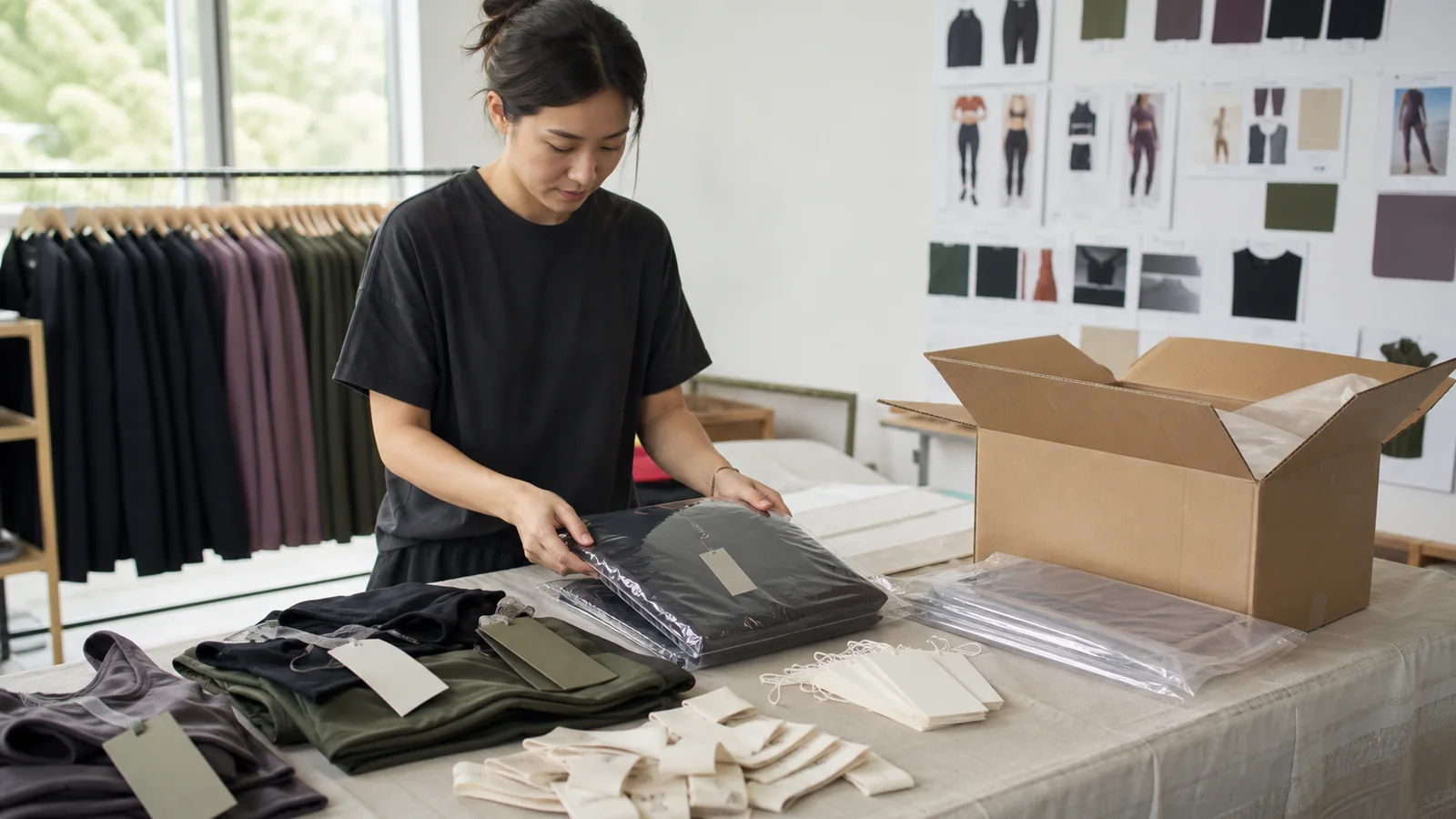
Confirm:
- main label, size label, care label, and country-of-origin information;
- hangtag artwork, barcode or SKU data, and attachment method;
- folding method, tissue, polybag warning, carton quantity, and carton marks;
- size and color assortment by carton or order line;
- spare labels, replacement units, and handling of damaged packaging;
- the packaging reference to be used for repeat orders.
The packaging method should be visible in the approval record. If the collection will be reordered, save the label files, measurement chart, approved swatch, decoration artwork, folding photos, and carton plan in one controlled folder.
Lock the production handoff before bulk cutting
The gap between sample approval and bulk production is where many avoidable changes occur. A production coordinator may receive an old artwork file, a verbal measurement change, or a fabric substitute that was never approved by the buyer.
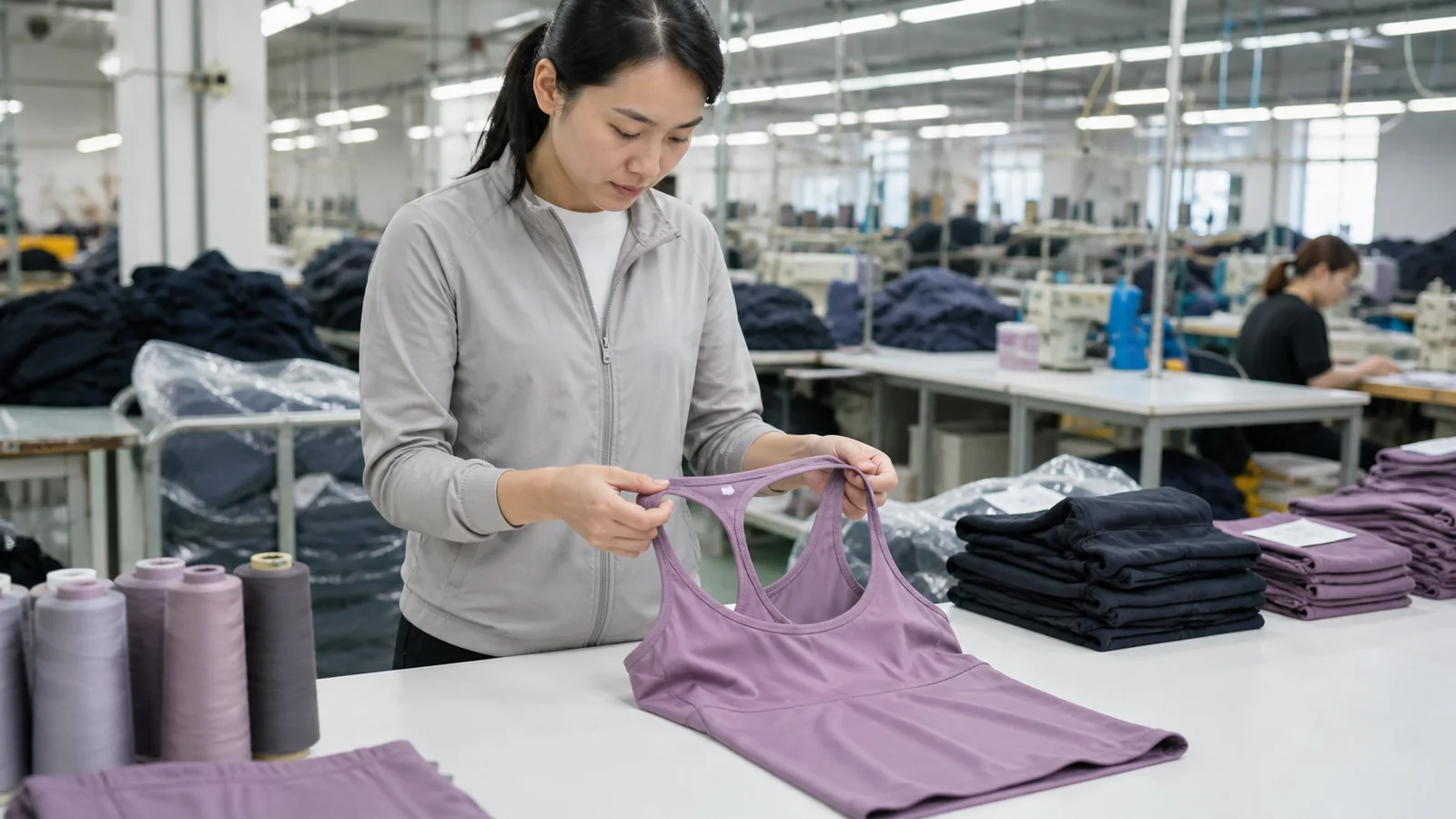
Before bulk work starts, confirm a handoff pack containing:
- the approved sample or reference sample number;
- final tech pack and measurement tolerance;
- approved fabric, color, trim, and decoration references;
- label, packaging, folding, and carton instructions;
- quantity by style, color, and size;
- inspection checkpoints and the person who approves exceptions;
- confirmed delivery basis and documents;
- revision history showing what changed since the last sample.
If a substitute is required, stop and record the change. A replacement fabric or trim can affect weight, stretch, color, decoration, shrinkage, and cost. The supplier should explain the impact and obtain approval before using it in bulk production.
The quality control page can help organize the inspection discussion. The exact acceptance criteria still belong in the project documents.
Prepare an inquiry that a manufacturer can answer
The first message to a supplier should be concise, but it should not be vague. A useful inquiry lets the manufacturer decide whether it is an OEM, ODM, private-label, or wholesale fit before quoting.

Send:
- the product name and intended activity;
- reference images or a tech pack;
- fabric direction and any approved swatch;
- measurements, size range, and fit notes;
- decoration, labels, trims, and packaging requirements;
- quantity by style, color, and size;
- destination country and target delivery window;
- sample expectations and approval owner;
- test, labeling, or compliance questions;
- the questions you want the supplier to recommend rather than assume.
Ask for a reply that states what the supplier can confirm now, what needs a sample, and what requires business or compliance review. A clear response is more useful than a long list of product photos.
For confidential designs, use the inquiry and NDA route and submit only the files needed for the next decision. DTS presents custom activewear, gym wear, streetwear, and private-label development support, but project-specific fabric, MOQ, lead time, testing, and production feasibility still need confirmation against the brief.
Frequently asked questions
A manufacturer develops or produces garments for a buyer, while a wholesaler generally sells existing products for resale. Some businesses offer both. Ask whether the supplier can change patterns, fabric, measurements, decoration, labels, and packaging, or whether it only supplies a catalog style.
Choose wholesale for existing products with limited control, private label for branding an existing or lightly adjusted style, ODM when you want supplier development input, and OEM when you need the supplier to produce from your specifications. The best route depends on how much of the product is already defined and how much fit or design control you need.
The quote should identify the garment basis, fabric, decoration, labels, packaging, quantity, size and color ratio, sample charges, development fees, lead-time trigger, shipping assumptions, inspection scope, and exclusions. A unit price without those fields is not a comparable manufacturing quote.
Ask for product-specific development, sampling, labeling, packing, and quality-control information. Check documents for scope and date, approve an actual sample, and keep written records of the final specifications. A catalog, factory photo, or general certification statement is not proof of every capability.
There is no single best fabric. Choose based on activity, fit, stretch, recovery, opacity, hand feel, weight, care, decoration, and price. Request an actual swatch and evaluate the finished garment, because fabric behavior can change after dyeing, printing, sewing, and washing.
For custom or fit-sensitive products, a sample should be treated as a decision gate. Check measurements, fabric, fit, seams, decoration, labels, care information, and packaging before bulk approval. A stock garment may use a shorter approval process, but the actual color, size, and decoration should still be verified.
Fabric availability, color count, size breakdown, custom trims, decoration, pattern development, sample revisions, packaging, testing, and production scheduling can all affect MOQ and lead time. Confirm the project-specific terms instead of treating a general website range as a fixed offer.
DTS supports custom activewear, gym wear, streetwear, and private-label apparel development from a buyer brief, reference garment, sketch, or tech pack. Send the product details, quantity, destination, and approval needs through the inquiry route so feasibility, sampling, and quotation questions can be reviewed together.
Turn supplier research into a controlled production brief
A suitable fitness clothing manufacturer should make the buyer’s decisions clearer, not hide them behind a generic catalog. Start with the product lane, choose the supply model, define fabric and fit, approve a sample, align the test and label plan, and compare quotations on the same product definition.
The next step is a brief that includes the garment, activity, specification, quantity, destination, and open questions. That gives a manufacturer something concrete to review and gives the buyer a record against which the sample and bulk order can be checked.