There is no single official list of bra types because most names describe one feature, not a complete garment. A bra can be molded, underwire, plunge, racerback, and intended for running at the same time. The clearest way to compare the different types of bras is to separate six design decisions: cup coverage, cup construction, frame and band, straps and closure, sports support, and special use.
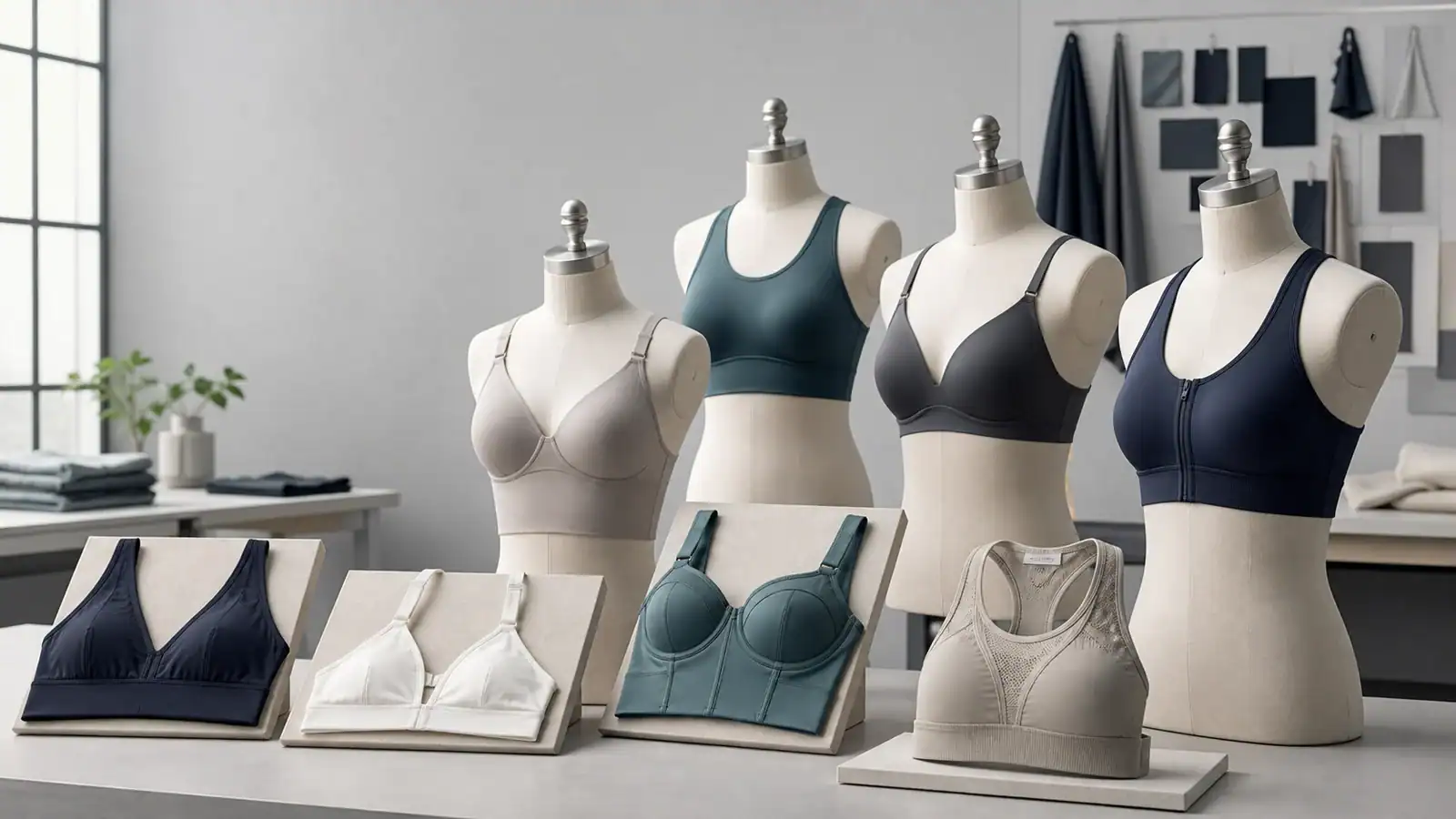
This guide maps 36 commonly used names to those six design axes. It works as a visual glossary for shoppers, but the second half is written for apparel brands: how to turn a familiar style name into a tech pack, sample brief, and approval plan that a product-development team can actually use.
The commercial sourcing route remains separate. Brands looking for supplier qualifications, inquiry steps, and confirmed product scope should use the lingerie manufacturer page. The terminology below does not mean every listed style, component, test, or size range is available from every factory. Feasibility must be reviewed against the exact project.
36 types of bras at a glance
The six groups below answer different questions. Coverage tells you how high the cup reaches. Construction tells you how the cup is shaped. Frame describes what sits under and around the cup. Strap and closure names explain how the garment goes on and stays in place. Sports names describe a support approach or intended activity. Special-use names describe a wearer need or use context.
| Design axis | Six common types | What it helps define |
|---|---|---|
| Cup coverage and neckline | Full-cup, demi, balconette, plunge, triangle, shelf | Upper-cup coverage, neckline, center front, and strap position |
| Cup construction and shaping | T-shirt, unlined, padded, push-up, minimizer, spacer | Shape, thickness, lining, projection, and surface appearance |
| Frame and band | Underwire, wire-free, bralette, longline, bustier, bandeau | Support architecture below and around the bust |
| Straps, back, and closure | Strapless, convertible, racerback, halter, front-closure, backless | Garment access, shoulder route, back visibility, and adjustability |
| Sports support | Compression, encapsulation, combination, low-impact, high-impact, zip-front | Support approach, activity, access, and fit checks |
| Life stage and special use | Nursing, maternity, post-surgical, training, lounge, seamless | Access, sensitivity, comfort, discretion, and wearer context |
A style brief can borrow one term from several rows. For example, “wire-free seamless racerback sports bra” is more informative than “sports bra,” but it still leaves the fabric, measurements, elastic, support evidence, and size grading open.
Start with bra anatomy, not the retail name
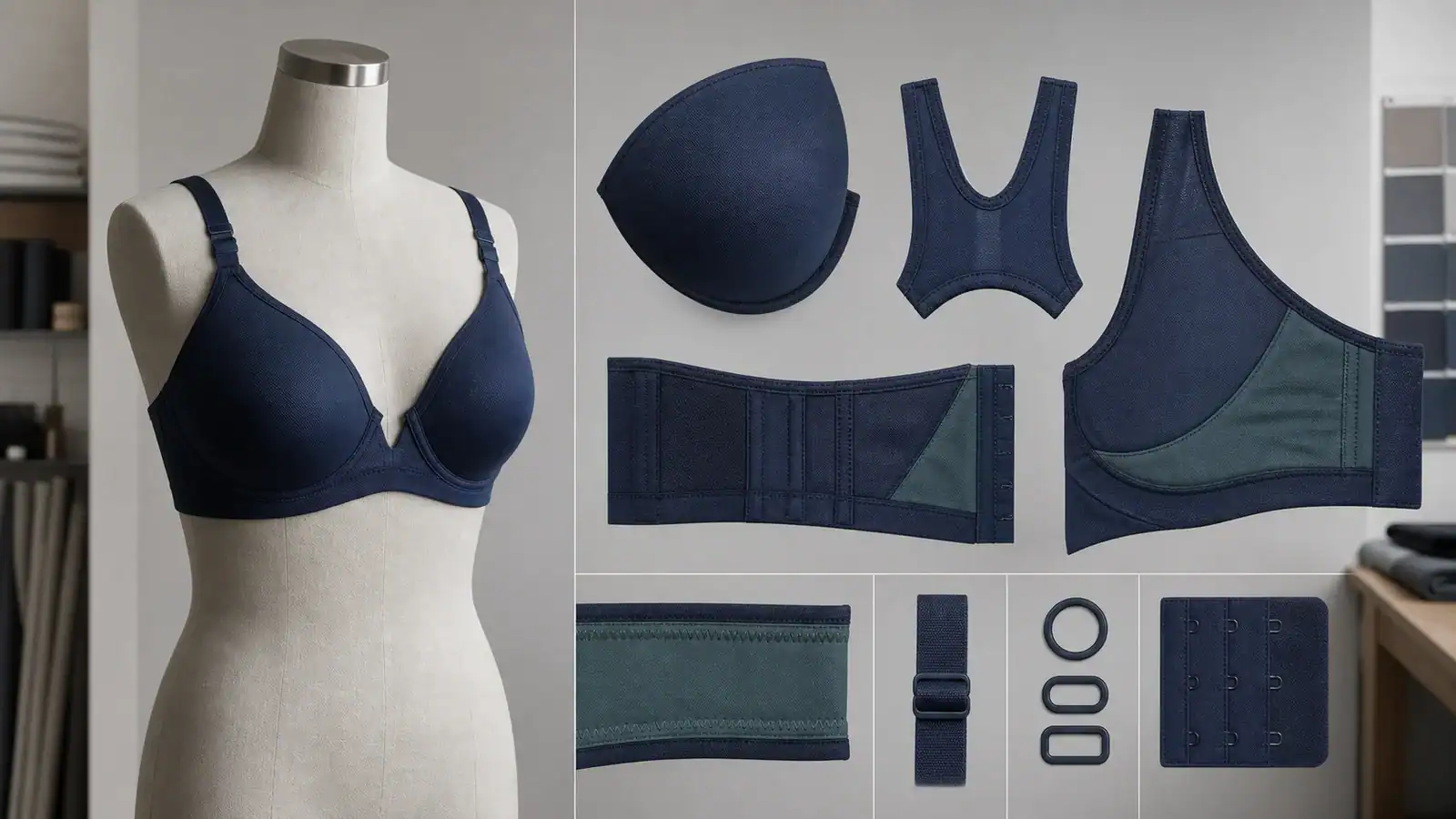
Two brands can sell garments under the same style name while using different patterns and components. That is why a buyer should identify the working parts before comparing samples.
- Cup: contains and shapes the breast. It may be cut-and-sewn, molded, lined, padded, or built from several layers.
- Bridge or center gore: joins the cups at center front. Its width and height influence neckline, separation, and wire position.
- Cradle or frame: surrounds the lower cup and may hold wire channels. Some frameless styles connect the cup directly to the band.
- Wing and underband: wrap around the torso and provide much of the garment’s anchoring. Elastic modulus, width, recovery, and seam construction matter.
- Straps: stabilize the upper garment and adjust fit. They should not be treated as the only source of support.
- Closure and hardware: hook-and-eye, zipper, clasp, rings, sliders, and adjusters affect access, durability, appearance, and recyclability.
Body measurements also need defined terminology. ISO 8559-1:2017 supplies anthropometric measurement definitions for clothing size profiles, but it does not create one universal bra sizing system. A brand must still state its market, size notation, points of measure, fit model, and grading logic.
Cup coverage and neckline types
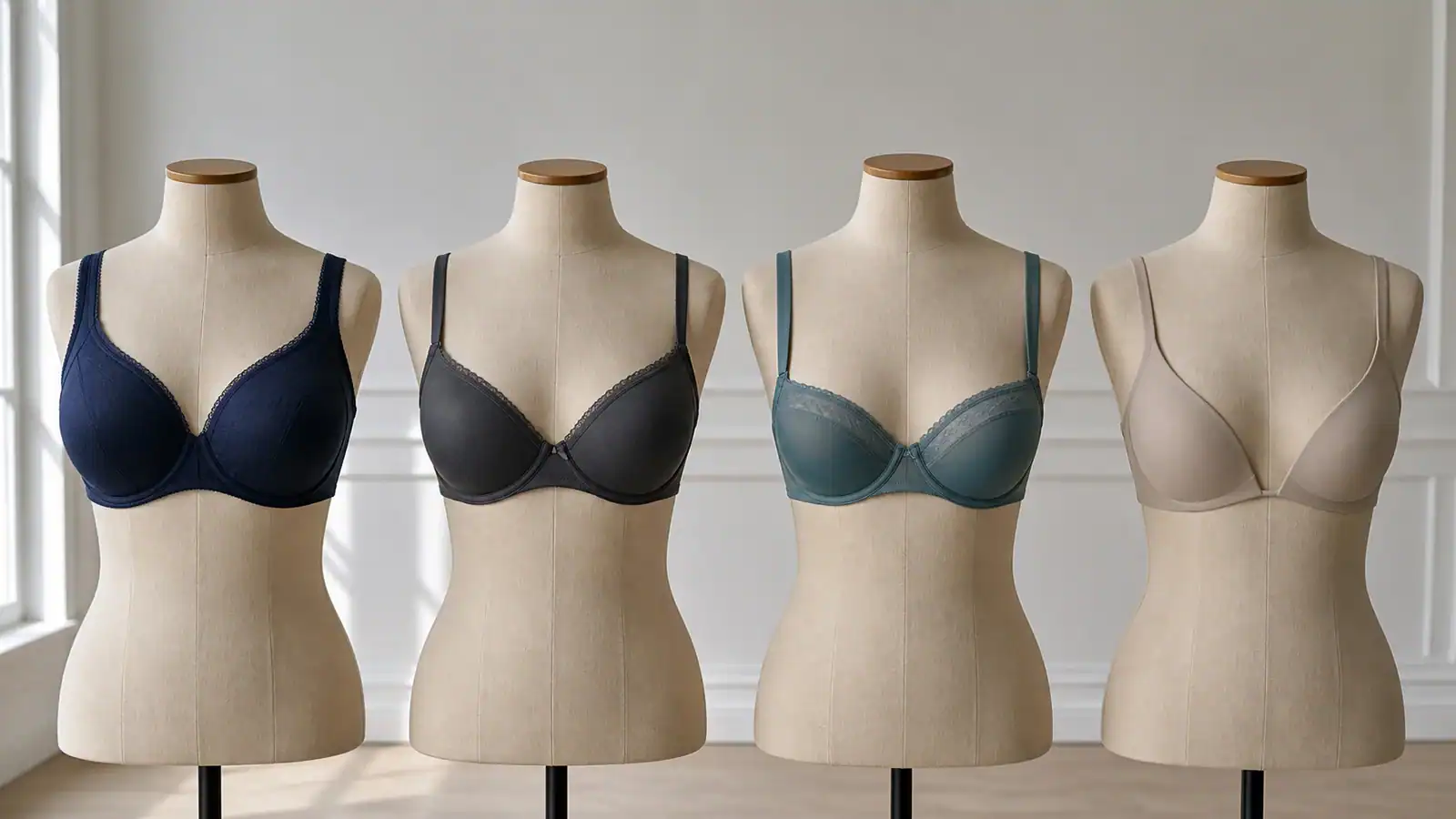
Coverage terms are the first source of confusion because retailers do not use them consistently. A reference photo helps, but cup-edge height, center-front depth, strap position, and size-set measurements remove the ambiguity.
| Type | Typical shape | Buyer specification to lock |
|---|---|---|
| 1. Full-cup bra | Higher cup edge with broad breast coverage. | Upper-cup height, neckline curve, strap point, cup seam, and edge finish. |
| 2. Demi bra | Partial coverage, usually with a lower upper-cup line. | Coverage percentage is not standardized; specify cup-edge height by size. |
| 3. Balconette bra | More horizontal neckline, often with wider-set straps. | Center-front height, strap spacing, cup lift direction, and neckline stability. |
| 4. Plunge bra | Low center front with a V-shaped neckline. | Bridge height, wire or frame shape, cup containment, and center-front stability. |
| 5. Triangle bra | Triangular cups with a light, simple neckline. | Base width, apex position, dart or seam, lining, and whether cups are fixed or sliding. |
| 6. Shelf or half-cup bra | Very low cup or lower-cup support with limited upper coverage. | Exact coverage, edge stability, intended market, and approved fit reference. |
Demi and balconette are not interchangeable specifications
A balconette is often sold as a kind of demi, but the names alone do not settle the pattern. “Demi” usually signals reduced coverage. “Balconette” usually adds a straighter neckline and wider strap placement. A development brief should describe the visible line and measurements instead of asking a sample room to interpret the label.
Cup construction and shaping types
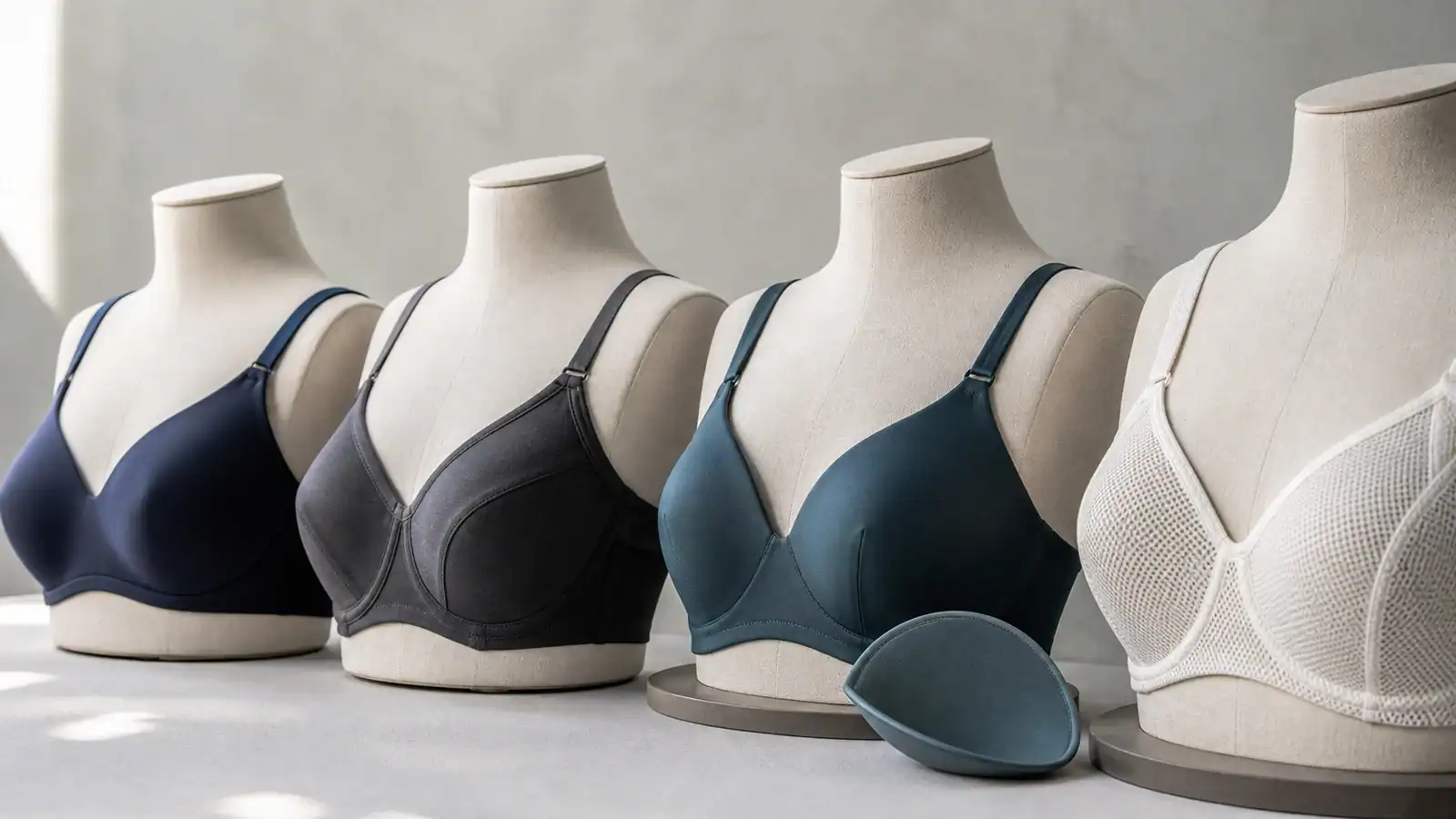
Cup construction changes shape, opacity, thickness, drying, pack volume, and size grading. It also changes tooling and sampling. A molded cup may require a form and heat-setting route that a cut-and-sewn cup does not.
| Type | How it is commonly built | Buyer caution |
|---|---|---|
| 7. T-shirt or molded bra | Seam-free cup surface formed to a three-dimensional shape. | Confirm mold shape, foam or fabric, thickness, size range, recovery, and heat response. |
| 8. Unlined bra | Single or lightly layered cup without foam padding. | Check opacity, seam profile, stretch direction, edge support, and nipple coverage expectations. |
| 9. Padded bra | Foam, fiberfill, or removable inserts add thickness and coverage. | State pad material, thickness, position, pocket access, migration control, and care route. |
| 10. Push-up bra | Graduated padding and pattern shape redirect breast tissue. | Define insert geometry, cup volume, neckline containment, and fit across the size range. |
| 11. Minimizer bra | Pattern distributes breast volume across a wider area. | A retail name does not prove a numerical reduction; avoid unverified size claims. |
| 12. Spacer bra | Light three-dimensional spacer textile creates a smooth cup with air space. | Specify spacer thickness, molding route, edge bonding or sewing, recovery, and drying needs. |
For an activewear range, smooth molded or spacer constructions may sit beneath fitted tops, while unlined or cut-and-sewn cups can reduce bulk. Material choice must be evaluated as a system. The activewear fabric guide is a broader starting point, not a substitute for testing the finished bra.
Frame and band types
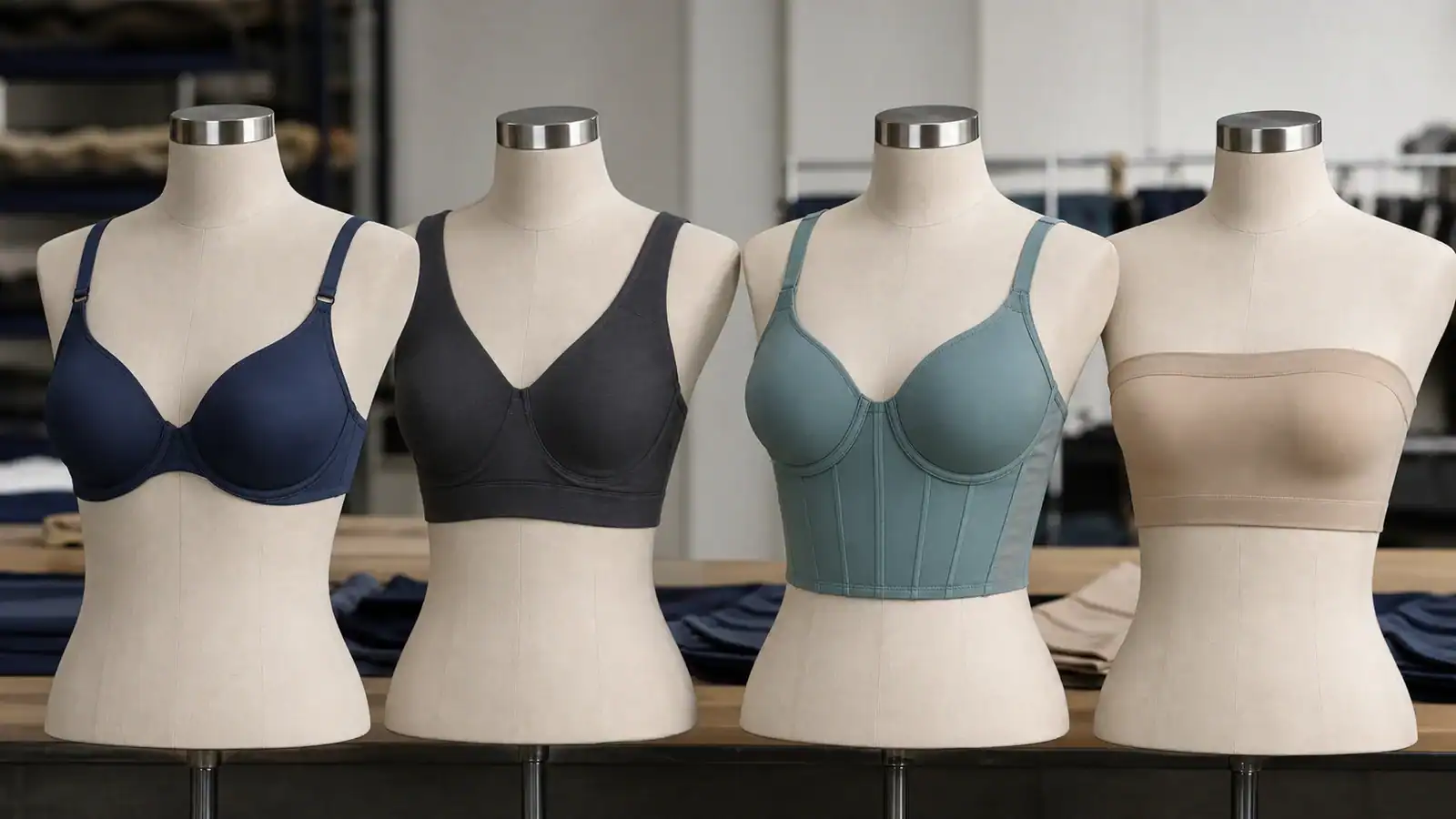
| Type | Defining feature | Development questions |
|---|---|---|
| 13. Underwire bra | Shaped wire sits in channeling below and around each cup. | Wire shape, length, gauge, tip protection, channeling, cup fit, and market requirements. |
| 14. Wire-free bra | Uses pattern, fabric, elastic, seams, and optional bonded support without wire. | Band anchoring, cup separation, side support, recovery, and fit by size. |
| 15. Bralette | Light frame, often wire-free, with soft cup construction. | Pull-on or closed back, lining, adjustability, coverage, and intended support claim. |
| 16. Longline bra | Band extends farther down the torso than a standard bra. | Extension length, boning or reinforcement, roll-up control, closure, and torso grading. |
| 17. Bustier or corset-style bra | Structured body extends below the bust, sometimes toward the waist. | Boning, panels, waist shaping, closure, mobility, and whether “corset” is only a styling term. |
| 18. Bandeau bra | Straight or shaped pull-on band with no conventional straps. | Top-edge stability, grip elastic, side seams, removable pads, and anti-roll construction. |
The underband is not a decorative strip. Width, stretch, recovery, plush backing, seam allowance, and closure extension affect fit across the entire size set. If a style is pull-on, the band must also pass over the wearer’s shoulders or hips without permanent growth.
Strap, back, and closure types
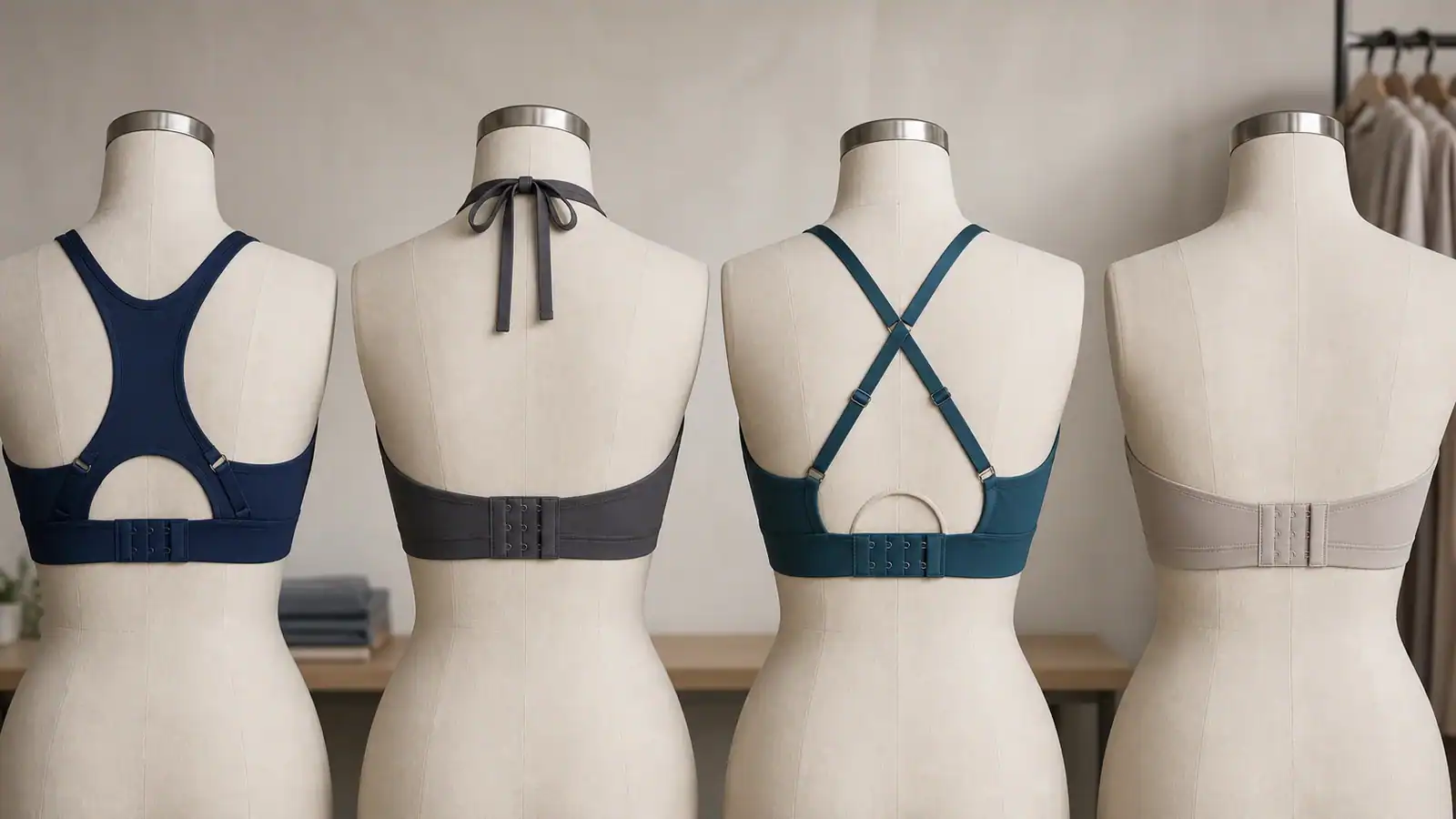
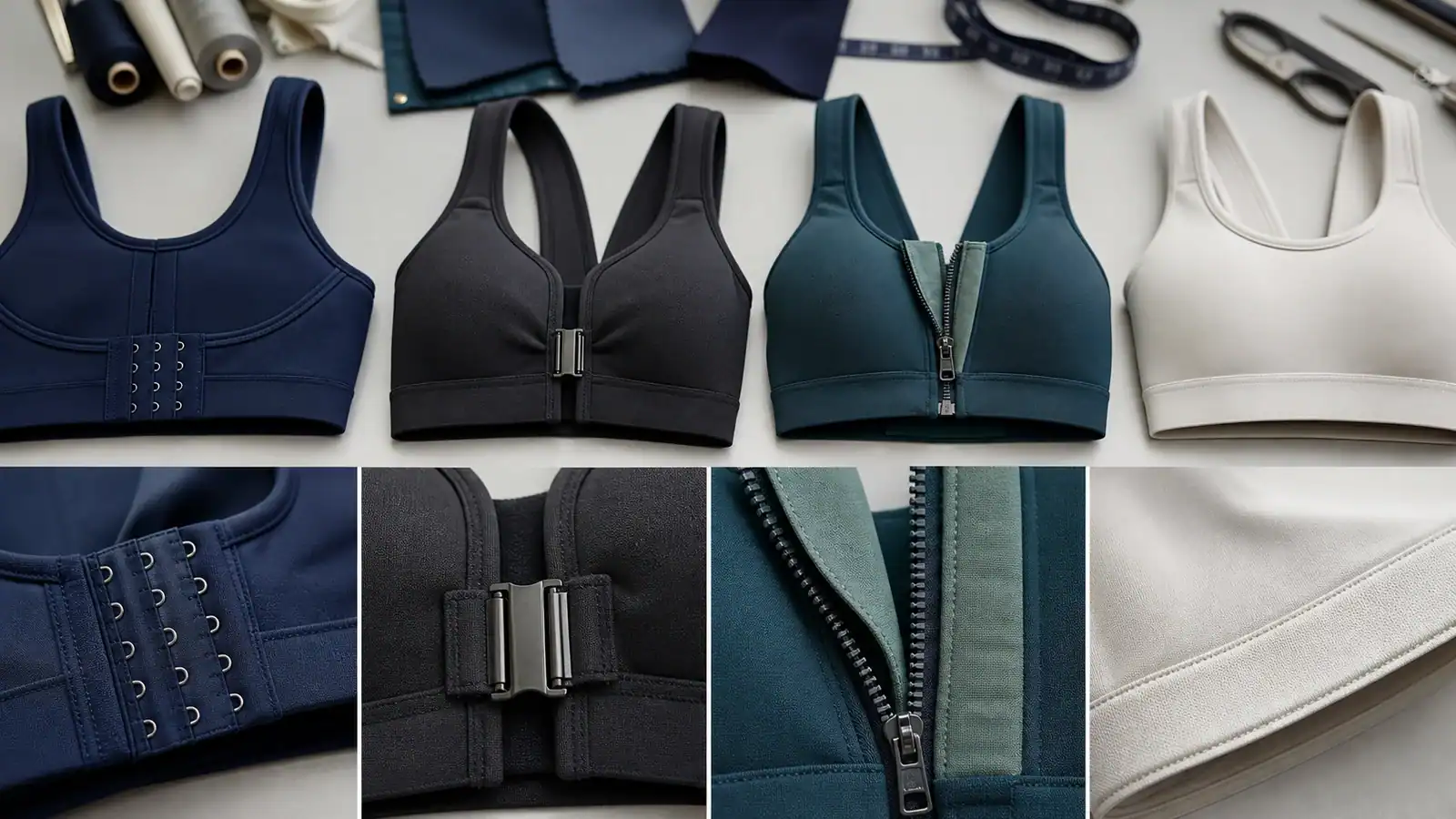
| Type | Typical use | What to specify |
|---|---|---|
| 19. Strapless bra | Open-shoulder garments or styling without visible straps. | Top and bottom edge control, grip material, side support, optional straps, and wear test. |
| 20. Convertible or multiway bra | Straps detach or move into straight, cross-back, halter, or one-shoulder positions. | Attachment points, strap length, hooks, hardware orientation, and each approved configuration. |
| 21. Racerback bra | Straps meet or cross between the shoulder blades. | Back opening, strap pressure, neckline, armhole clearance, and pull-on stretch. |
| 22. Halter bra | Straps route around or toward the neck. | Neck comfort, adjustability, cup stability, closure, and intended wear duration. |
| 23. Front-closure bra | Clasp or zipper opens at center front. | Closure strength, skin guard, locking behavior, cup alignment, and replacement availability. |
| 24. Backless or adhesive bra | Minimal visible back for low-back garments. | Adhesive chemistry, skin-contact review, care, reuse claim, packaging, and destination-market compliance. |
Backless and adhesive products are a specialized category. A conventional cut-and-sew activewear factory may not be the right supplier. Brands should confirm material safety documentation, use instructions, shelf life, packaging, and claims with qualified partners before development.
Sports bra types and support systems
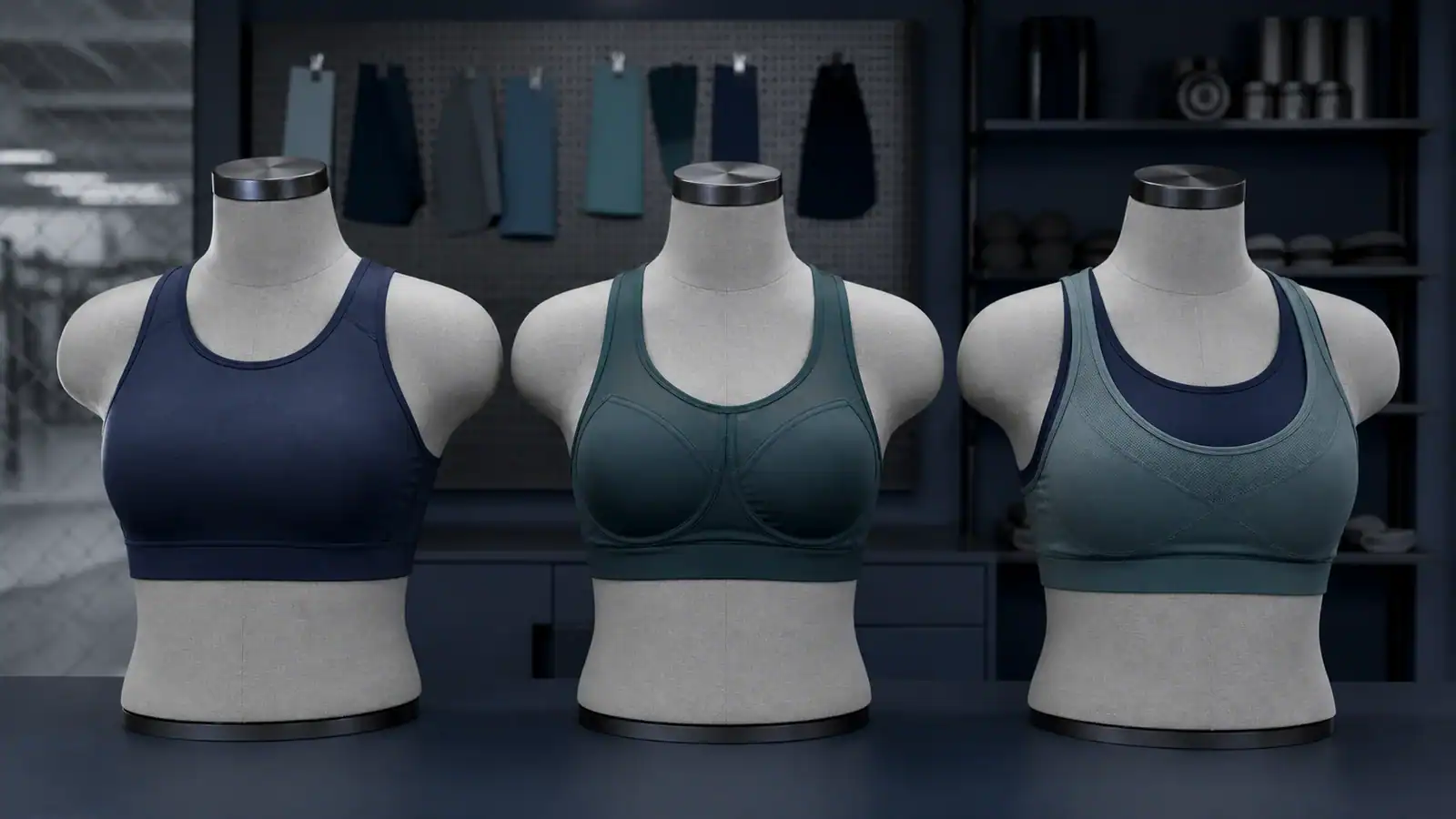
Sports bras deserve their own group because the garment must balance movement control, breathing, heat, sweat, chafe, access, and repeated laundering. The UEFA Sports Bra Guide distinguishes compression, encapsulation, and combination structures and gives practical fit checks for band, cups, straps, and movement.
| Type | Construction idea | Buyer review |
|---|---|---|
| 25. Compression sports bra | Holds breast tissue closer to the chest wall, often in a pull-on crop shape. | Size inclusivity, breast containment, neckline, underband, bounce, and donning effort. |
| 26. Encapsulation sports bra | Uses separate cup structures around each breast. | Cup sizing, wire or wire-free frame, separation, cup edge, and movement in multiple directions. |
| 27. Combination sports bra | Combines individual cup support with an outer compression layer or panel. | Layer interaction, heat, drying, bulk, seam position, and size grading. |
| 28. Low-impact studio bra | Designed for activities such as mobility work or lower-movement training. | Do not infer support from fabric softness; define activity, coverage, and fit. |
| 29. High-impact running bra | Developed for repeated multidirectional movement during running or similar activity. | Support evidence, chafe, adjustability, band stability, strap pressure, and wet-condition fit. |
| 30. Zip-front sports bra | Front zipper improves access and can pair with compression or encapsulation. | Zipper lock, skin guard, bottom stop, backing, cup alignment, and wash durability. |

“High impact” is a claim, not a pattern piece
A label printed on a hangtag does not establish measured support. University of Portsmouth researchers tested 98 sports bras and found that support labels did not consistently predict measured performance. Their work also shows that style, cup design, underband, straps, and fit influence the result. The practical lesson is simple: define the wearer and activity, then evaluate the finished garment instead of awarding support from the silhouette alone.
The direct research record is available through the university’s sports bra performance publication page. A brand planning a support claim should agree on the test design, sample sizes, wearer panel, conditions, and acceptance rule with a suitable laboratory or specialist. DTS has not supplied a universal support certification in this article.
Life-stage and special-use bra types
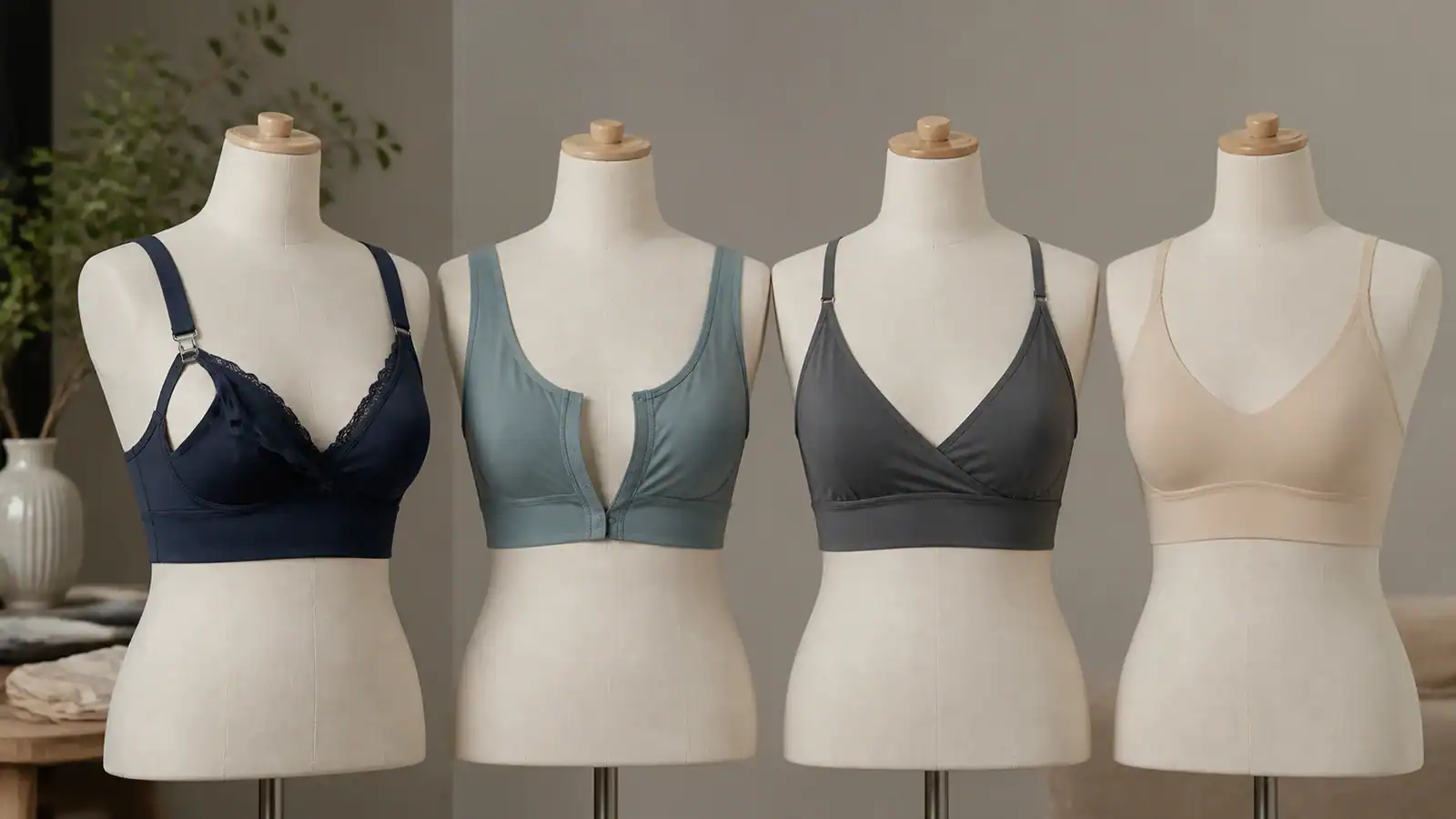
| Type | Common design need | Important boundary |
|---|---|---|
| 31. Nursing bra | Drop cup, pull-aside panel, or other access for breastfeeding. | Closure security, one-hand use, support when open, material care, and size change. |
| 32. Maternity bra | Adjustability and comfort for body changes during pregnancy. | Extended hooks, stretch, cup growth, underband pressure, and fitting guidance. |
| 33. Post-surgical or mastectomy bra | Soft seams, front access, pockets, or specialist support after surgery. | Medical and clinical needs vary. Development requires specialist input and market-specific review. |
| 34. Training bra | Light coverage and simple fit for early bra wear. | Age-appropriate design, soft materials, labeling, sizing, and destination requirements. |
| 35. Lounge or sleep bra | Soft, low-bulk support for rest or extended casual wear. | Pressure points, breathability, seams, hardware, care, and realistic support language. |
| 36. Seamless or second-skin bra | Minimal visible seams using circular knitting, bonding, molding, or clean-cut edges. | “Seamless” may still include joining operations; specify process, edge, bonding, and recovery. |
Post-surgical and mastectomy products should not be treated as ordinary fashion variants. Clinical recommendations, pocket position, prosthesis compatibility, skin sensitivity, pressure, access, and local medical-device or consumer-product rules may apply. A qualified specialist should define the brief.
Materials and components that change the result
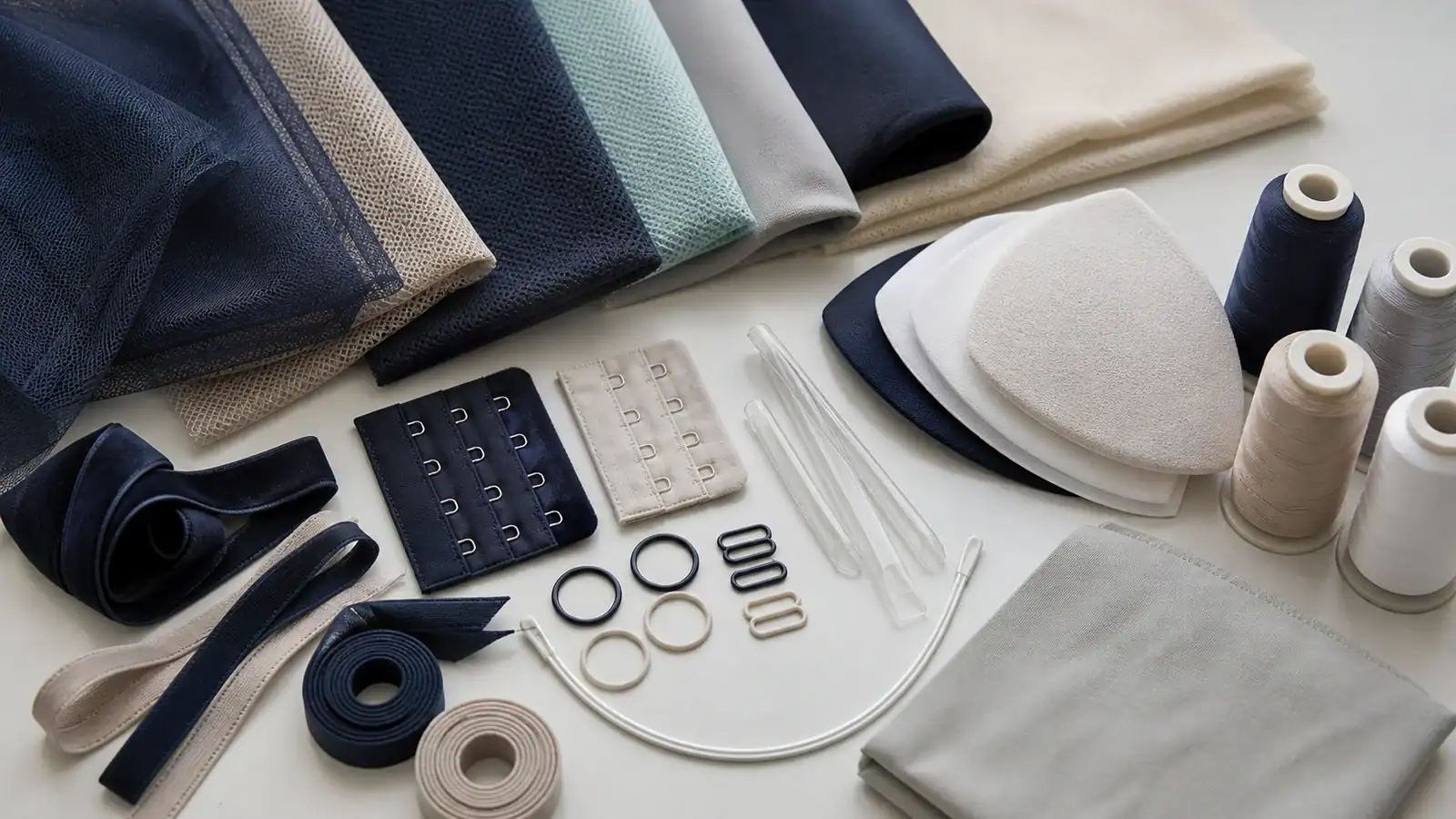
“Nylon and spandex” is not a complete material specification. The same fiber percentages can appear in a soft jersey, a firm power mesh, a stable tricot, or a high-stretch circular knit. Each behaves differently at the cup, cradle, wing, and strap.
| Component | Common choices | What to approve |
|---|---|---|
| Cup and body | Jersey, tricot, lace, mesh, molded fabric, spacer, foam laminate | Composition, construction, GSM, stretch, recovery, opacity, hand, and color |
| Wing and lining | Power mesh, stable tricot, jersey lining, bonded laminate | Modulus, recovery, edge stability, pilling, and skin feel |
| Underband and edge elastic | Plush-back, fold-over, picot, knitted or woven elastic | Width, elongation, recovery, plush side, seam ratio, and after-care behavior |
| Straps | Elastic strap, self-fabric, bonded strap, padded strap | Width by size, adjustability, extension, hardware match, and pressure |
| Closure and hardware | Hook-and-eye, zipper, clasp, rings, sliders, wire, channeling | Material, finish, strength, corrosion, skin contact, colorfastness, and replacement source |
If moisture management is part of the brief, test the assembled layers. A cup with foam, lining, elastic, and a large heat transfer will not behave like an uncovered fabric swatch. The moisture-wicking fabric guide explains why transport, drying, airflow, and vapor need separate requirements.
Stretch and recovery also need a stated method and acceptance plan. ASTM D2594/D2594M-21 measures stretch and growth in knitted fabrics, but its scope notes limitations for acceptance testing and points to other methods for higher-stretch applications. Buyers should select methods with the supplier or laboratory rather than paste one standard into every tech pack.
How to specify a bra in a tech pack
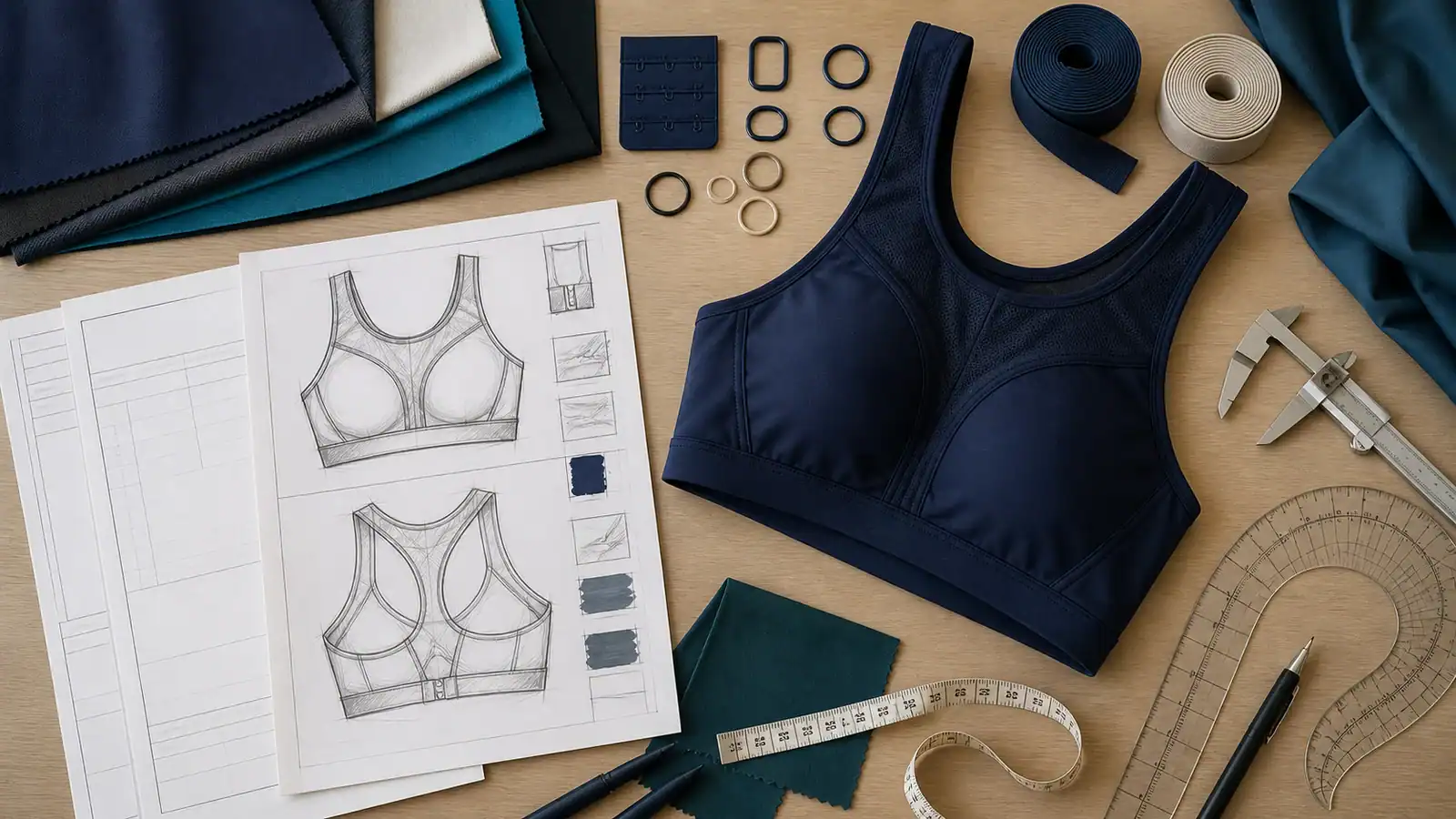
“Make a balconette sports bra” is a direction, not a production specification. Start with the design axes, then record the decisions that another person would otherwise have to guess.
Sample-ready brief: [wearer and activity], [coverage and neckline], [cup construction], [frame and band], [strap and closure], [materials and color], [size system and grade], [support or comfort requirement], [test and care state], [approved reference and revision].
Include these measurement and construction decisions
- Market and size system: identify destination, notation, base size, fit model, and body-measurement basis.
- Points of measure: define cup height and width, bridge, cradle, wing, underband, strap, neckline, armhole, closure, and garment length where relevant.
- Pattern and seam map: show cup panels, lining, darts, bonding, channeling, elastic application, seam type, topstitching, and edge finish.
- Material bill: assign a code to every fabric, lining, foam, elastic, wire, closure, ring, slider, label, thread, and packaging component.
- Stretch orientation: mark direction on each pattern piece and state whether measurements are taken relaxed or extended.
- Grading: show which components change by size, including elastic width, strap width, hook rows, cup layers, and support panels.
- Tolerance and evidence: set measurable tolerances, test conditions, care cycles, and the approved sample revision.
The tech-pack customization service is the appropriate next step when a brand has sketches, competitor references, or a physical sample but has not documented these details. Exact development scope and cost are confirmed after review.
Sampling and fit review
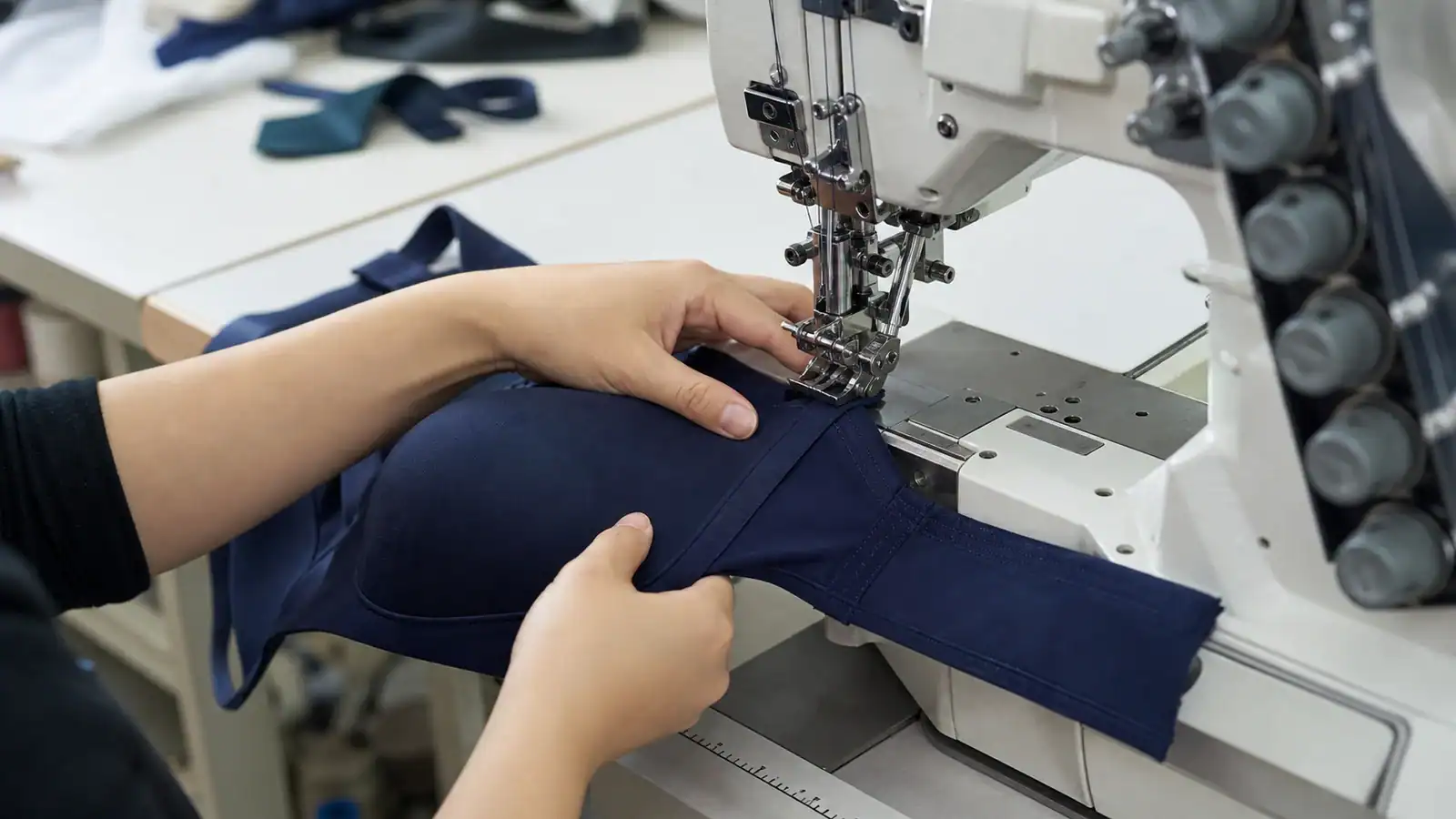
Bras are sensitive to small construction changes. A few millimeters at the bridge or strap point can alter containment. A different elastic lot can change underband tension. Foam may react to molding heat, and a zipper guard can become a pressure point when the wearer bends.
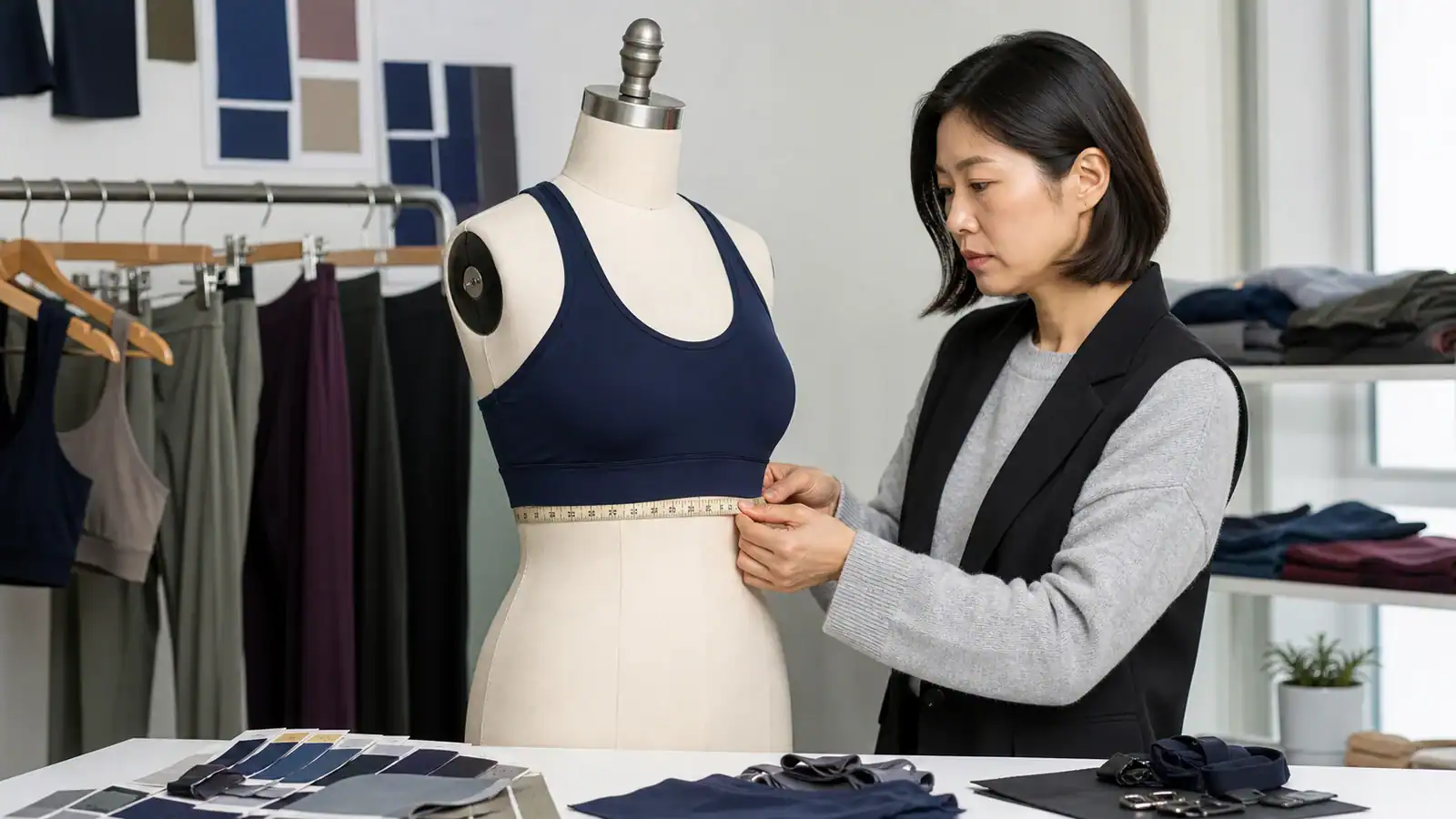
Static fit checks
- The band sits level and stays anchored without painful pressure.
- Cups contain the intended breast tissue without cutting in, gaping, folding, or unintended compression.
- The bridge, wire, or frame follows the approved position for that construction.
- Straps remain stable and adjustable without carrying the entire load.
- Closures lie flat, stay secure, and do not contact skin with sharp edges.
Movement and wear checks
- Use the movements expected in the target activity, not a generic stretch pose.
- Check bounce, band movement, cup shift, strap pressure, chafe, rolling, and access.
- Repeat key checks when the garment is warm or damp if that matches real use.
- Review more than the base size. Component widths and support architecture may need size-dependent changes.
- Record comments by sample revision so a correction is not lost between rounds.
The sampling and prototyping process explains the broader development route. Test methods, wearer panels, fit sessions, MOQ, timing, and material availability remain project-specific.
Common mistakes when choosing a bra type
Using one name as the whole brief
“Bralette” does not tell a factory the coverage, cup layers, band tension, strap width, closure, or support target. Break the style into the six design axes and add measurements.
Copying a reference without defining what matters
A buyer may like the neckline of one reference, the strap of another, and the fabric hand of a third. Mark those priorities. Otherwise the development team cannot know which feature is intentional and which is incidental.
Assigning support from a marketing label
Low, medium, and high impact are useful merchandising shorthand, but they are not a universal test result. Define activity, size range, fit criteria, evidence, and claim approval.
Approving only the base size
A proportional grade may not preserve containment, strap comfort, underband stability, or cup volume at the ends of the range. Review selected sizes across the range and allow construction changes when evidence supports them.
Testing a swatch but selling a layered garment
Foam, lining, elastic, print, bonding, and seams alter stretch, drying, heat, and comfort. Approve materials first, then verify the finished sample.
Publishing claims before evidence is ready
Support, medical, skin-contact, recycled-content, antimicrobial, cooling, and sustainability claims need evidence suitable for the destination market. Keep placeholders in product copy until the documentation is approved.
Buyer checklist before requesting a sample
- Name the wearer, use, activity, coverage, and support expectation.
- Select one option from each relevant design axis instead of relying on one retail name.
- Provide front, back, and construction references, plus details that must not be copied.
- State the market, size system, size range, base size, and planned fit review.
- List fabrics, linings, foam, elastic, straps, closures, hardware, labels, and packaging.
- Define points of measure, tolerances, stretch orientation, and grading rules.
- Separate support, stretch, moisture, colorfastness, durability, and care requirements.
- Confirm which claims need laboratory, wearer, compliance, or legal review.
- Identify target quantity, colorways, destination, sample timing, and launch timing.
- Keep each sample round linked to comments, measurements, and an approved revision.
Frequently asked questions
How many types of bras are there?
There is no fixed official count because bra names describe overlapping features. One garment can be a molded, underwire, plunge, racerback sports bra at the same time. This guide groups 36 commonly used names by cup coverage, cup construction, frame and band, straps and closure, sports support, and special use.
What are the main types of bras?
The most useful starting groups are full-cup, demi, balconette, plunge and triangle by coverage; molded, unlined, padded and spacer by cup construction; underwire, wire-free, bralette and longline by frame; strapless, racerback and convertible by strap configuration; and compression, encapsulation and combination for sports support.
What is the difference between a demi bra and a balconette bra?
Both usually provide less upper-cup coverage than a full-cup bra. Demi describes partial coverage, while balconette usually adds a more horizontal neckline and wider-set straps. Retail naming is not standardized, so buyers should specify cup height, neckline shape, strap position and an approved sample rather than rely on the name alone.
What is the difference between compression and encapsulation sports bras?
Compression styles hold the breasts closer to the chest wall, often with a pullover construction. Encapsulation styles use separate cup structures around each breast. Combination styles use both approaches. The name does not prove a support level; fit, size, materials, band, straps and the finished garment must be evaluated.
Does a high-impact label prove that a sports bra provides high support?
No. Support labels are not a universal technical standard, and bras with the same retail label can perform differently. A buyer should define the intended activity and size range, review fit across representative wearers, agree on a relevant test plan and approve the final construction before making a support claim.
What measurements belong in a bra tech pack?
Record the size system and body-measurement basis, cup and cradle dimensions, bridge width and height, wing and underband measurements, strap length and placement, closure size, elastic widths, seam and edge finishes, stretch direction, material codes, hardware, tolerances and grading rules. Add clear points of measure and an approved reference sample.
Can the same bra style use underwire or wire-free construction?
Often yes. Plunge, full-cup, demi and sports silhouettes can be developed with different frame systems, but the pattern, support, materials, channeling, comfort and fit will change. Treat the frame choice as a separate specification rather than assuming it is fixed by the style name.
What should a brand send before requesting a custom bra sample?
Send the target wearer and activity, reference images or a physical sample, size range, intended support and coverage, cup and band construction, materials and trims, colorways, artwork, destination markets, target quantity and timing. The manufacturer still needs to confirm feasibility, MOQ, testing, compliance, cost and lead time for the exact project.
Turn the style name into a reviewable product brief
A list of types of bras helps a team agree on vocabulary. A reliable sample comes from the details underneath that vocabulary: construction, measurements, materials, evidence, and revision control.
Send your bra reference, size range, materials, target quantity, and launch plan for review. DTS can identify missing development inputs before sampling. Product scope, materials, MOQ, testing, compliance, price, and lead time will be confirmed for the actual inquiry.
Related articles
- Types of Sportswear: Names, Uses and Buyer Guide
- Best Fabric for Activewear: A Brand Buyer’s Guide
- Moisture-Wicking Fabric: Meaning, How It Works and Tests
- Different Leggings Types: Styles, Names and Buyer Specs
- Types of Tank Tops: Styles, Names and Buyer Specs
- GSM Meaning in Clothing: Fabric Weight Chart and Buyer Guide