Choosing a hoodie manufacturer is easier when every supplier is quoting the same product. Without a fixed brief, one factory may price a decorated stock blank, another may assume a private-label base style, and a third may quote a fully custom cut-and-sew hoodie. The numbers look comparable, but the garments are not.
This guide turns supplier selection into a 12-point buyer checklist. It covers production model, factory fit, quote inputs, fabric, measurements, construction, decoration, labels, sampling, quality control, compliance and shipment planning. It is written for apparel brands, gym-wear labels, streetwear teams, merch programs and procurement buyers preparing a custom hoodie project.
The aim is not to find the lowest line on a quotation. It is to find a supplier that can explain what is included, make a sample that matches the written specification, and repeat the approved result in bulk. If you are still defining the wider collection, DTS’s sportswear types guide can help separate hoodie, sweatshirt, track top and other adjacent product categories before the RFQ is written.
The 12-point hoodie manufacturer checklist at a glance
- Choose the production model: decorated blank, private label, or custom cut and sew.
- Confirm which operations the supplier performs and which are subcontracted.
- Send one quote-ready RFQ package to every candidate.
- Specify fabric construction, composition, weight, face, back and finish.
- Define the fit block and measurement architecture.
- Detail the hood, neckline, drawcord and closure.
- Lock pockets, cuffs, hem rib and seam construction.
- Match decoration method to fabric, artwork and placement.
- Confirm labels, trims, folding and packaging.
- Normalize quotations before comparing price.
- Approve a physical sample against written criteria.
- Agree on quality, compliance, packing and shipment records before bulk.
A supplier does not need to fit every business. It needs to fit the product, quantity, development stage, approval process and destination market for this order.
Checks 1 and 2: Choose the production model and verify capability
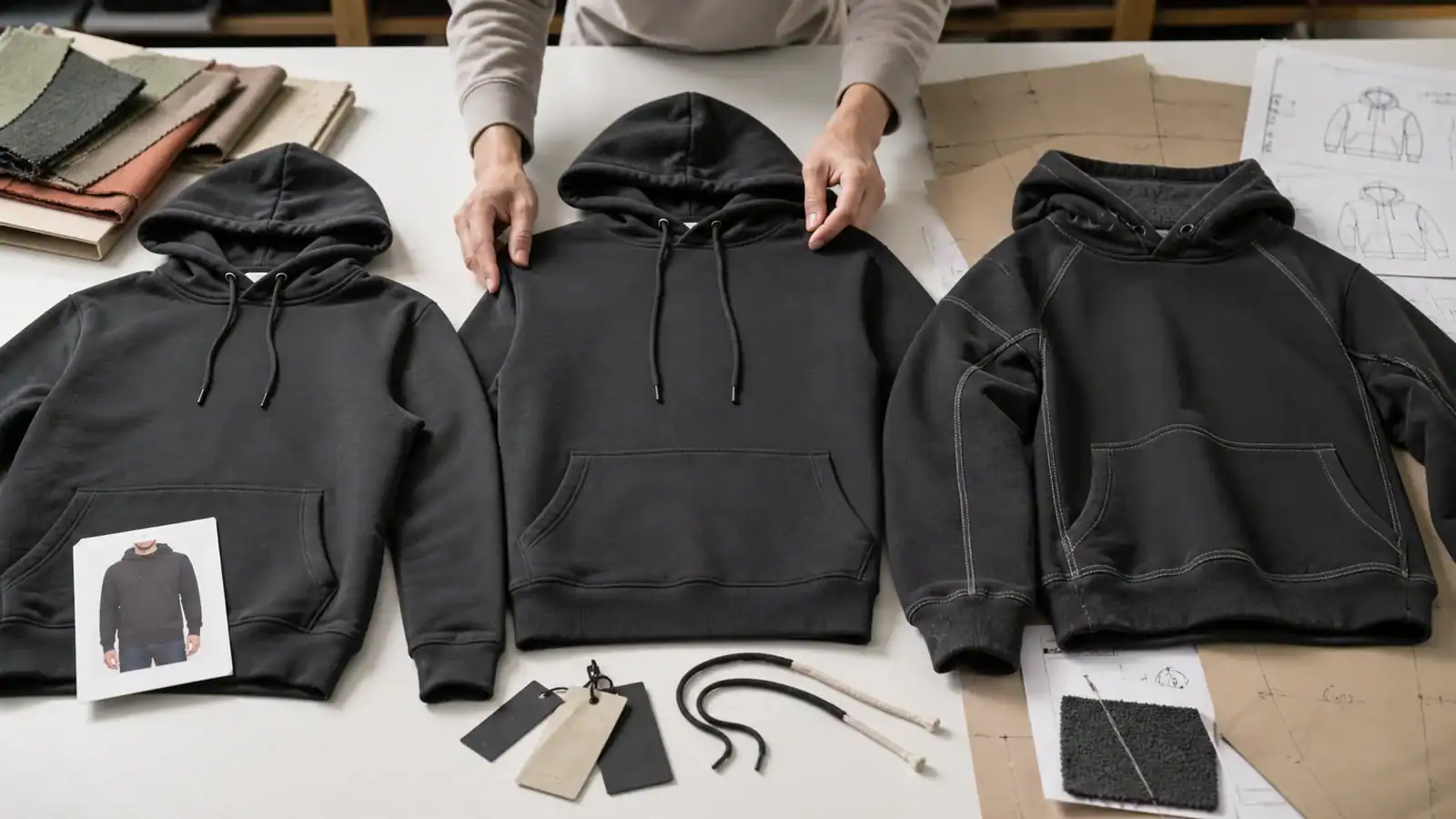
Start by deciding how much of the hoodie must be custom. This single decision changes pattern work, fabric sourcing, sample scope, minimums, timing and price.
Decorated stock blank
A decorated blank is a ready-made hoodie with printing, embroidery, patches or transfers added later. It can suit a simple merch test or a program where speed matters more than proprietary fit. The buyer chooses from the blank supplier’s existing fabric, colors, measurements and construction.
Ask who supplies the blank, whether the same style and color will remain available for repeat orders, and whether the decoration shop is quoting the garment and decoration together. A good first sample should use the actual blank, color and decoration process, not a substitute.
Private-label base style
A private-label route starts with an existing factory block or catalog style. The buyer may change color, labels, drawcord, decoration, packaging and selected construction details. It offers more brand control than a stock blank, but it is not automatically a fully custom garment.
Ask which parts can change without a new pattern, which changes create a new development charge, and whether another buyer can use the same base block. Confirm whether fabric colors are stock, dyed to order or subject to mill minimums.
Custom cut and sew
Custom cut and sew starts from the buyer’s measurements, pattern direction and component specification. It is the appropriate route when fit, fabric, panel shape, pocket geometry, hood volume, wash effect or trim design must be proprietary. It also creates more decisions for the buyer to approve.
Do not accept the phrase “fully custom” without a scope. Ask whether the supplier controls pattern making, grading, marker planning, fabric sourcing, cutting, sewing, decoration, washing, labeling, packing and inspection. Subcontracting is common and not automatically a problem. What matters is visibility, responsibility and an approval path for every operation.
Evidence to request before shortlisting
Request evidence that matches your hoodie, not a general company presentation:
- recent hoodie samples with a similar fabric weight, fit and construction;
- close photos of hood seams, neckline finishing, zipper setting, pockets, cuffs and interior workmanship;
- a sample measurement report or inspection form with sensitive client data removed;
- the proposed sample flow and the person responsible for technical questions;
- a clear list of in-house and outsourced processes;
- options for buyer inspection or an agreed third-party inspection;
- current documents relevant to the factory, material and destination market, with scope and validity available for review.
Capability should be verified for the exact project. A factory that makes lightweight performance tops may not be the best match for a structured heavyweight streetwear hoodie, and the reverse is also true.
Check 3: Send one quote-ready hoodie RFQ
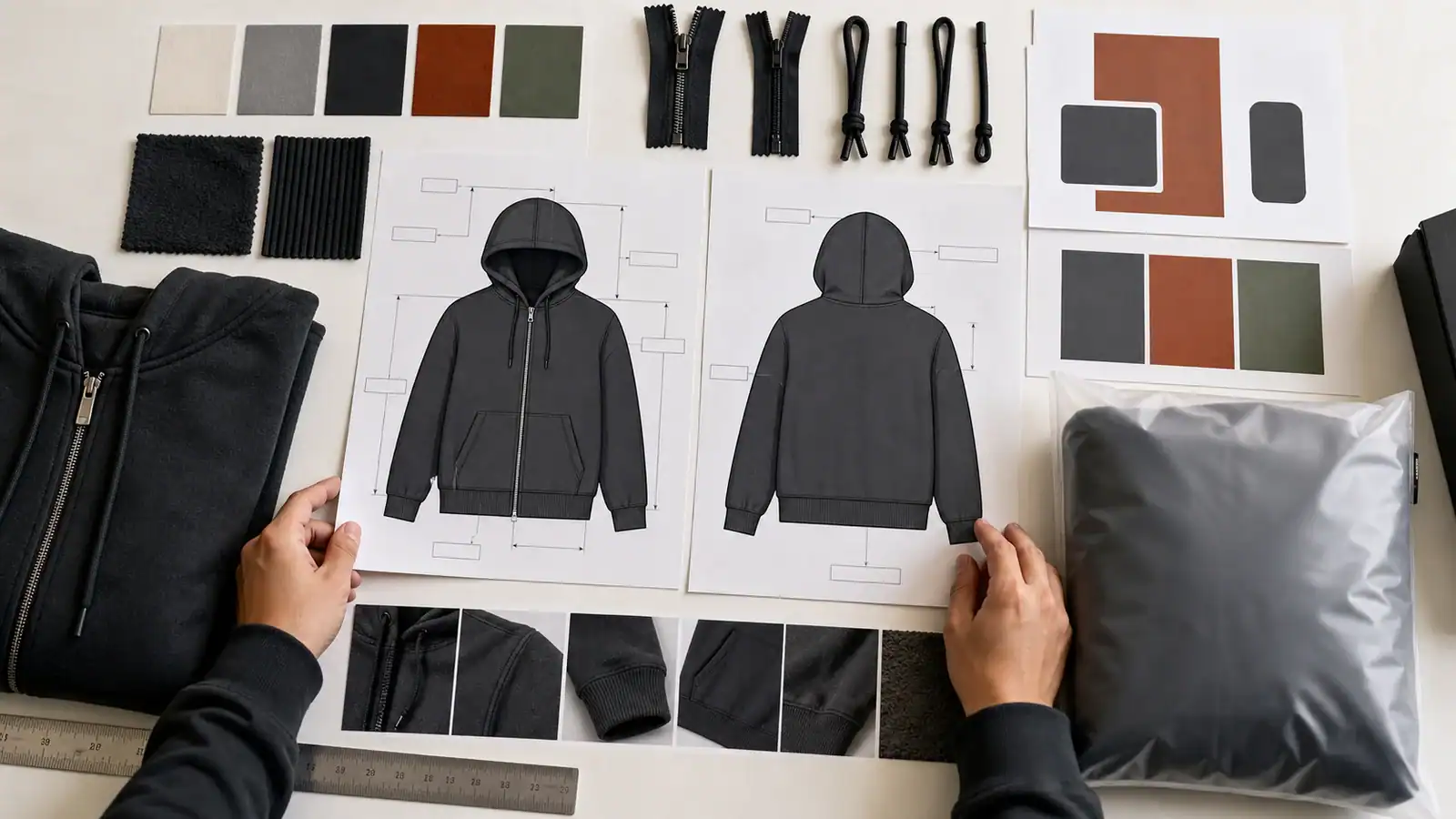
A hoodie manufacturer can only quote what the buyer defines. A reference photo plus a logo does not explain whether the garment is a stock blank, a modified base style or a new cut-and-sew development.
Prepare one RFQ package and send the same version to every supplier. Include:
- front, back and detail flat sketches;
- target wearer, market, use and price position;
- reference size and intended fit;
- measurement chart with points of measure and tolerances to be agreed;
- fabric construction, composition, target weight, color and finish;
- rib, drawcord, eyelet, zipper, pocket, label and other trim details;
- artwork files, colors, dimensions and placement coordinates;
- size range, grade direction, colorways and estimated quantity by size and color;
- sample types required and the approval sequence;
- folding, polybag, carton, barcode and shipping-mark requirements;
- destination country, required documents, target delivery window and quotation terms.
Mark uncertain fields as open decisions instead of leaving them invisible. The supplier can then price confirmed items, list alternatives, and identify the assumptions that still affect cost.
If the file is incomplete, organize the missing information through a tech pack customization review before comparing final quotations. Version the document so every comment, sample and price refers to the same revision.
Check 4: Lock fabric construction, weight and finish
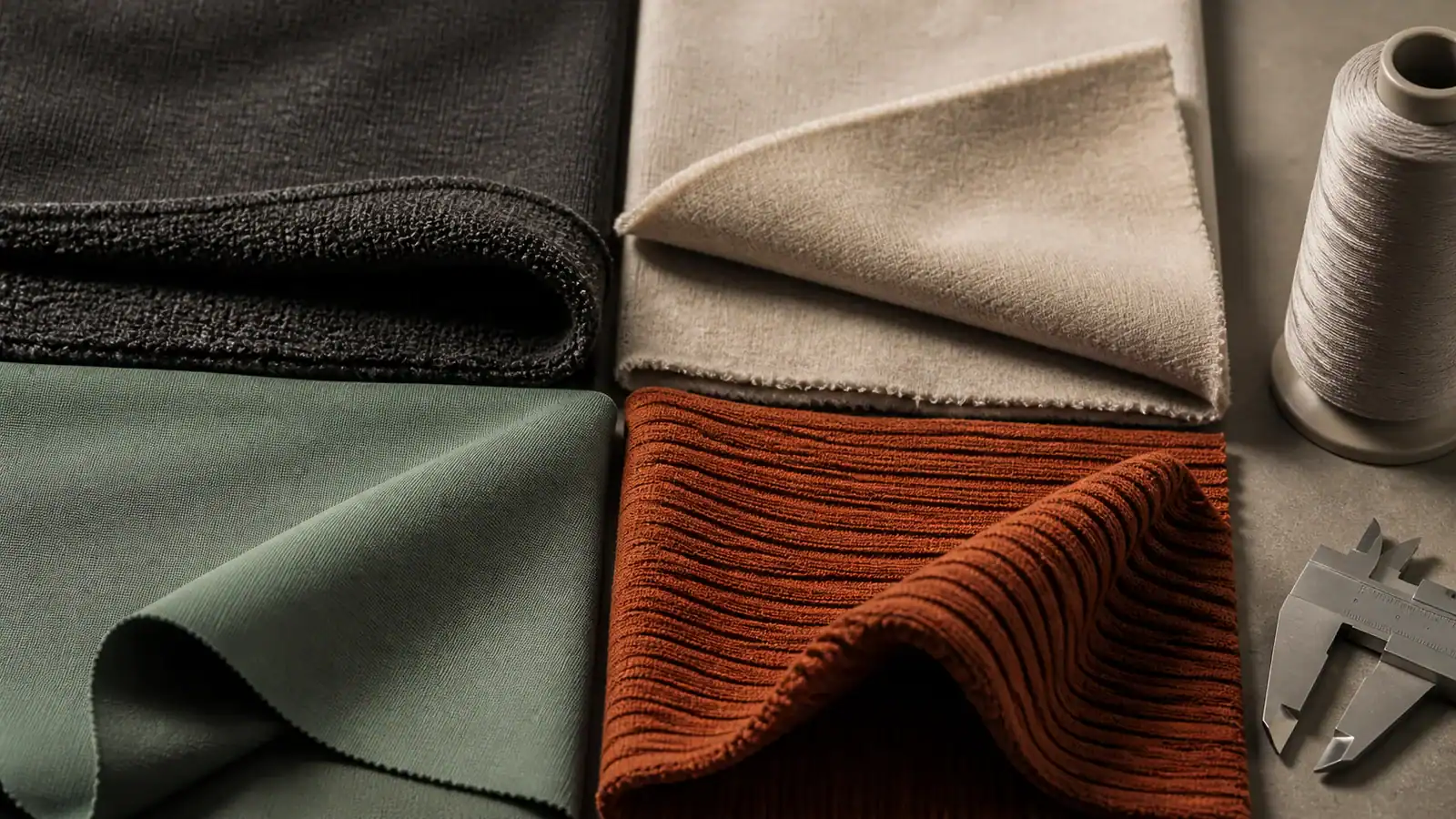
“Cotton hoodie” is not a complete fabric specification. Two fabrics with a similar fiber label can differ in knit structure, weight, surface, back treatment, stretch, recovery, shrinkage, pilling, color behavior and hand feel.
For the shell fabric, specify or approve:
- knit construction, such as loopback terry, brushed-back fleece or another defined structure;
- fiber composition and how it will be verified for labeling;
- target weight and an agreed acceptance method;
- face appearance and interior treatment;
- width, stretch direction and recovery needs where relevant;
- color source, such as stock shade, lab dip, yarn-dye or garment dye;
- wash, brushing, sueding, enzyme or vintage finish if used;
- required performance checks for the actual product and market.
Also define rib separately. Cuff and waistband rib needs compatible weight, stretch, recovery, color and attachment behavior. A good-looking body fabric can still produce a weak hoodie if the rib bags out, twists, shrinks differently or does not recover after wear.
Ask the factory to label every submitted swatch with composition, construction, weight, color reference and finish. Keep the approved swatch with the sealed sample or approval record. The activewear fabric guide provides a broader framework for comparing composition, structure, weight and testing language.
Check 5: Define fit with measurements, not adjectives
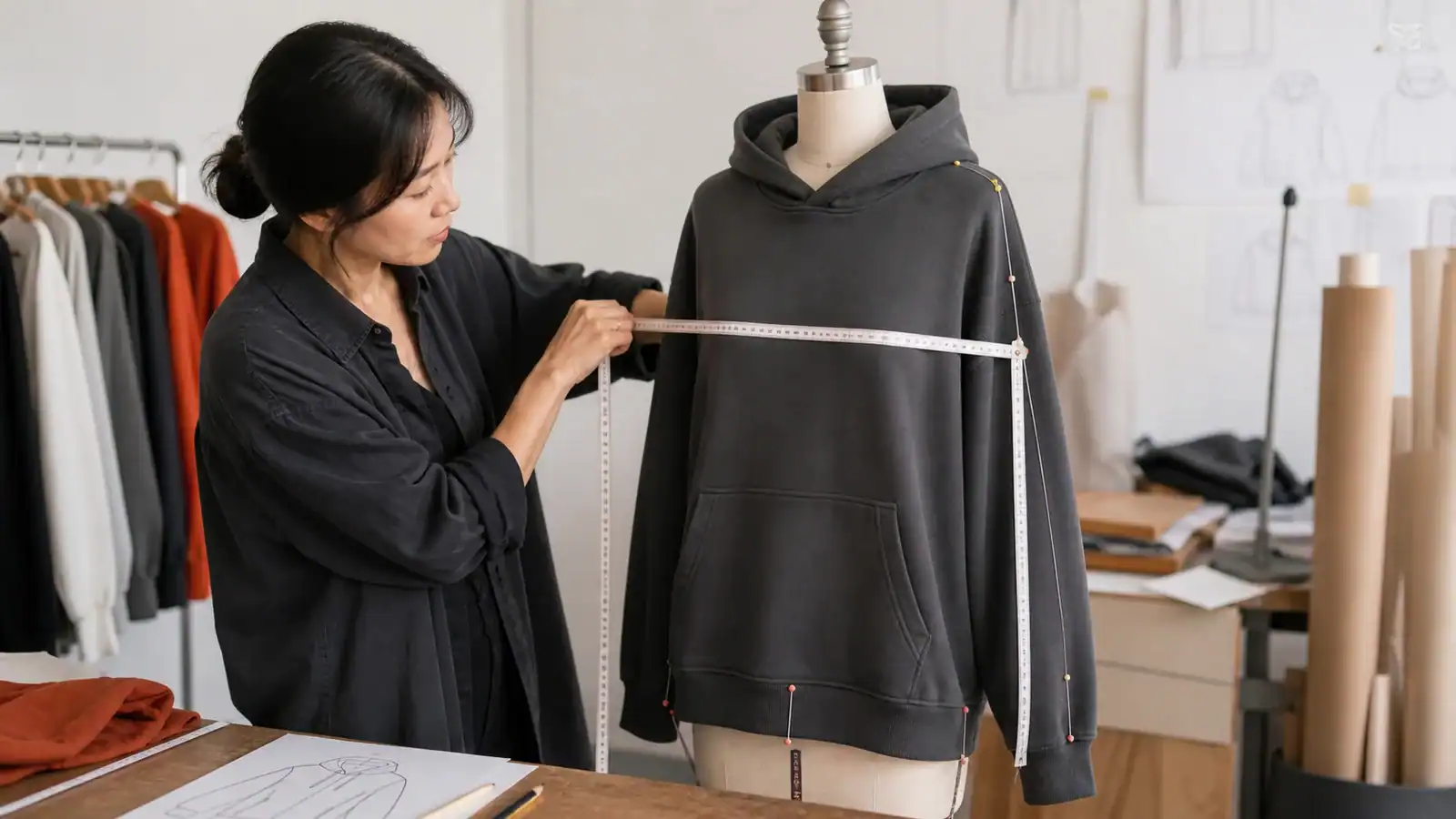
Relaxed, oversized, boxy, athletic and cropped are useful design directions, but they are not measurable standards. Each supplier may interpret them differently.
Choose a reference size and define the fit through points of measure. Common hoodie fields include:
- chest width at a stated distance below the armhole;
- body length from a defined shoulder point;
- shoulder width or dropped-shoulder position;
- sleeve length using the correct start and end points;
- bicep, elbow and cuff opening;
- armhole depth and shape;
- bottom opening before and after rib attachment;
- hood height, hood width, opening and overlap;
- pocket width, height, opening and placement;
- zipper length for a zip style.
Use a diagram for every non-obvious measurement. State whether measurements are taken flat, relaxed, stretched or after a defined conditioning or wash step. Ask how the factory proposes to grade the style across the full size range, especially when the design has a dropped shoulder, cropped body, very wide chest or large hood.
Fit approval should include movement and appearance on the intended wearer. Check hood balance, neckline comfort, sleeve reach, pocket access, hem behavior and whether the garment pulls backward or forward. Photograph the approved fit from consistent angles and record every accepted measurement change.
Check 6: Specify the hood, neckline, drawcord and closure
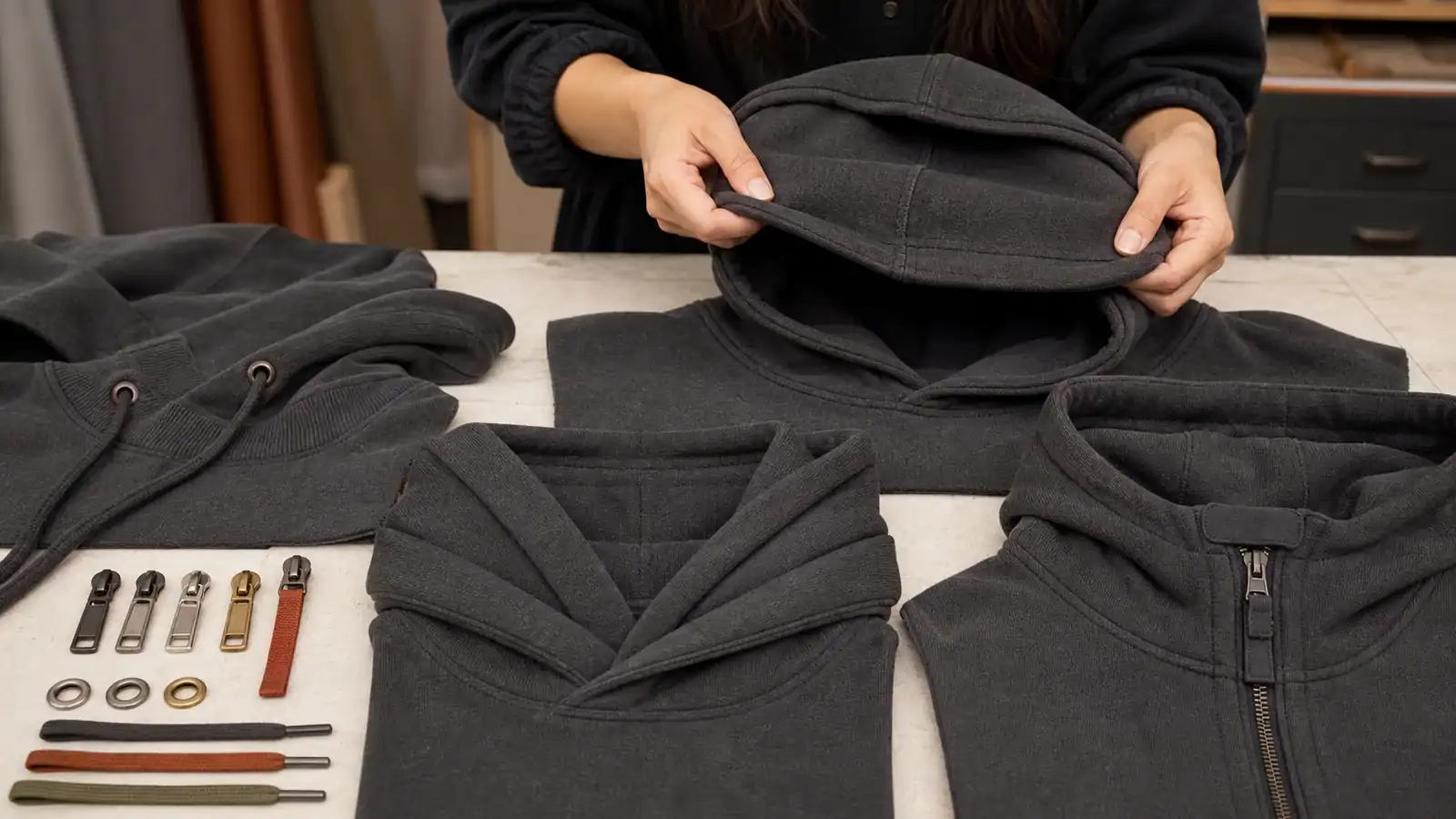
The hood is often the most visible construction area and one of the easiest places for a sample to look wrong. “Double-layer hood” still leaves open questions about panel count, lining material, seam placement, opening shape, overlap, drawcord channel and topstitching.
Confirm:
- one-piece, two-piece or multi-panel hood;
- single or double layer;
- self-fabric or contrasting lining;
- hood height, width, depth and face opening;
- center seam and topstitch details;
- neckline overlap or crossover construction;
- drawcord type, diameter, color, length and end finish;
- eyelet material, size, finish, backing and placement;
- zipper type, gauge, tape color, puller, guard and top stop for zip hoodies;
- reinforcement where hardware or cord channels stress the fabric.
If the product is children’s upper outerwear for the United States, drawcord design needs specific safety review. The US Consumer Product Safety Commission states that hood and neck drawstrings on children’s upper outerwear in sizes 2T to 12, or equivalent, present a substantial product hazard and gives requirements for certain waist and bottom drawstrings. Treat children’s compliance as a product-specific legal and testing workstream, not a trim choice. See the CPSC drawstring business guidance and confirm the applicable rules with qualified compliance support.
Check 7: Detail pockets, cuffs, hem rib and seams
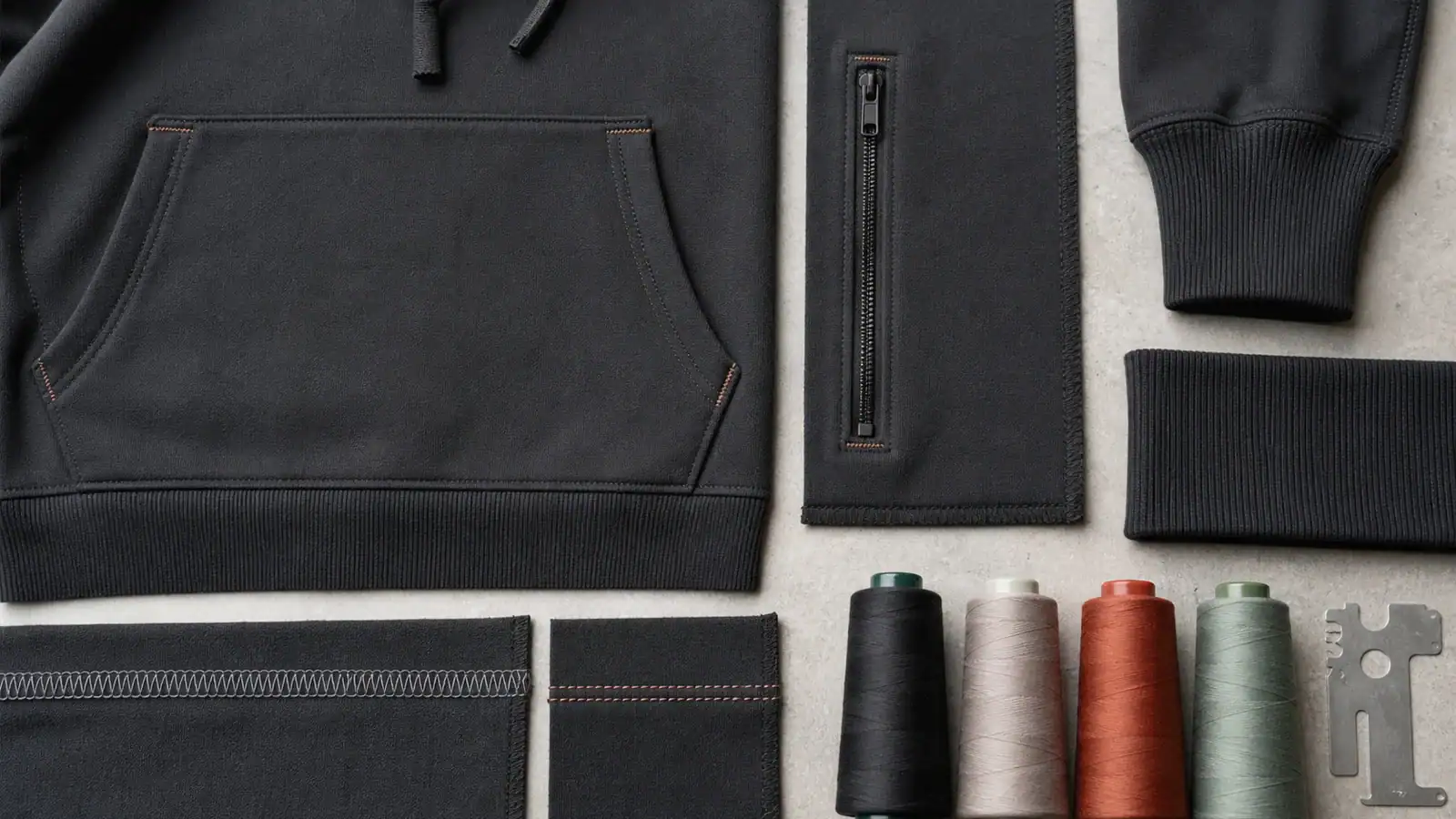
Small construction choices affect appearance, wear and production time. A kangaroo pocket can sag, twist or sit unevenly if its geometry, grain direction, opening reinforcement and attachment method are not defined. Zip pockets add zipper sourcing, pocket-bag construction and tolerance questions.
For pockets, specify type, dimensions, opening length, position, pocket-bag material, reinforcement and stitching. For cuffs and hem, specify finished depth, rib structure, stretch, recovery and seam allowance. If the rib is intended to pull in the body or sleeve, show the target finished opening rather than leaving the ratio to interpretation.
Record seam and stitch expectations where they matter:
- overlock width and seam allowance;
- coverstitch, twin-needle or single-needle topstitch placement;
- shoulder tape or other stabilization;
- bartacks at pocket openings or stress points;
- clean finishing at zipper ends and hood joins;
- acceptable thread color and contrast rules;
- inside workmanship that should be visible during inspection.
Avoid writing “reinforce all seams.” Identify the actual stress points and the required result. The factory can then recommend a construction method and build it into the sample approval record.
Check 8: Match decoration to fabric and placement
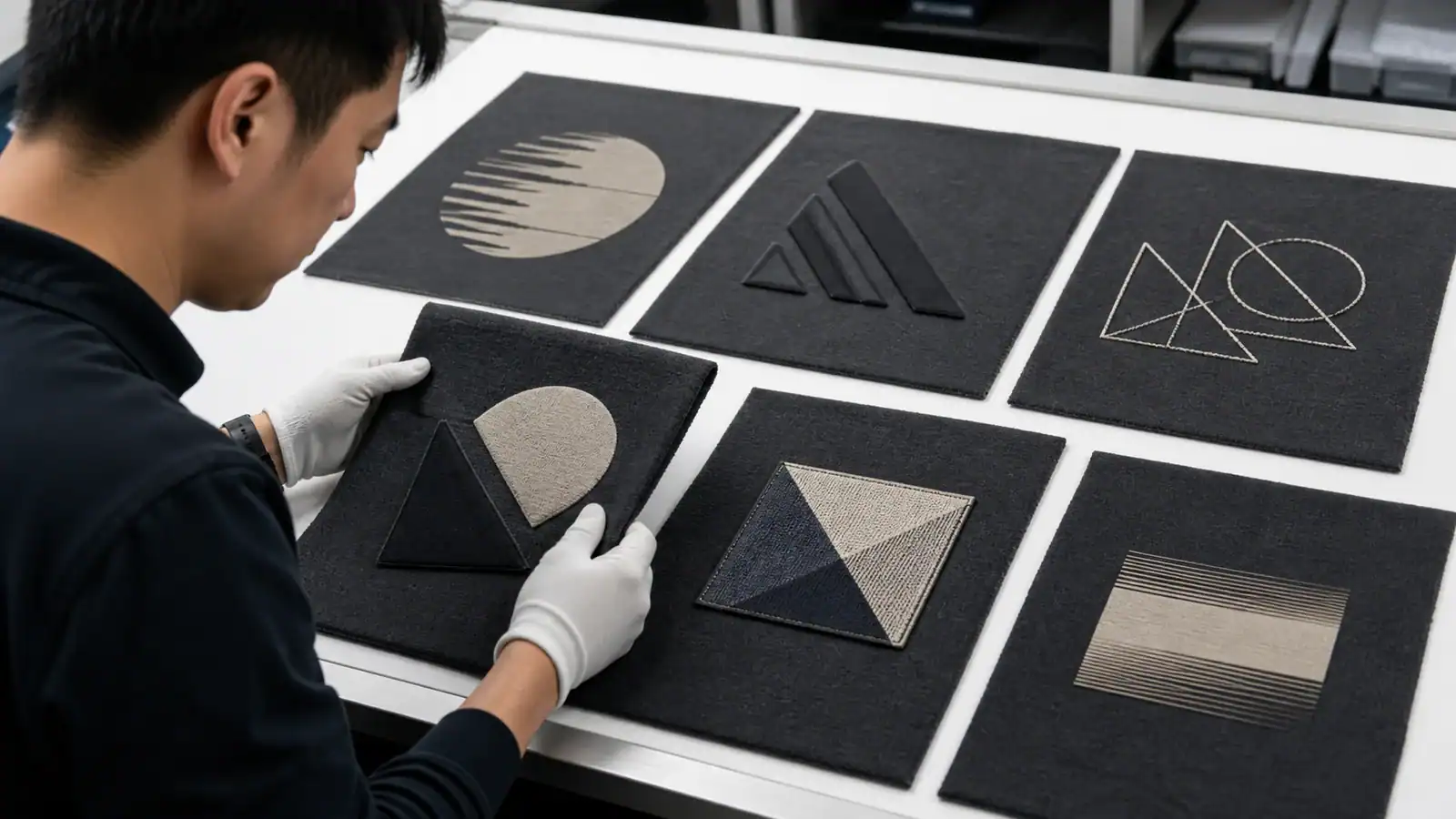
Decoration should be developed with the garment, not added as a final note. Fabric surface, stretch, thickness, dye or wash treatment, seam position and backing can change the result.
Give the hoodie manufacturer production artwork and define:
- decoration method;
- final artwork dimensions;
- location from named seams or points of measure;
- color references and whether a strike-off is required;
- print hand feel, coverage or raised-effect target where relevant;
- embroidery thread, backing, density direction and edge finish;
- placement tolerance to be agreed;
- appearance after the approved wash or finishing process;
- acceptance checks for the first sample and bulk.
Large embroidery can stiffen or distort a fabric. Puff effects depend on ink system, screen setup, heat and fabric behavior. A print crossing a pocket or zipper needs an intentional production plan. Garment dye or wash processes can also change artwork and thread appearance.
Request a strike-off or test panel when the decoration is complex, then approve it together with the garment sample. Keep color, hand feel, dimensions and placement in the approval notes. Do not approve from a compressed phone photo alone when texture or color is a purchase criterion.
Check 9: Confirm labels, trims and packaging
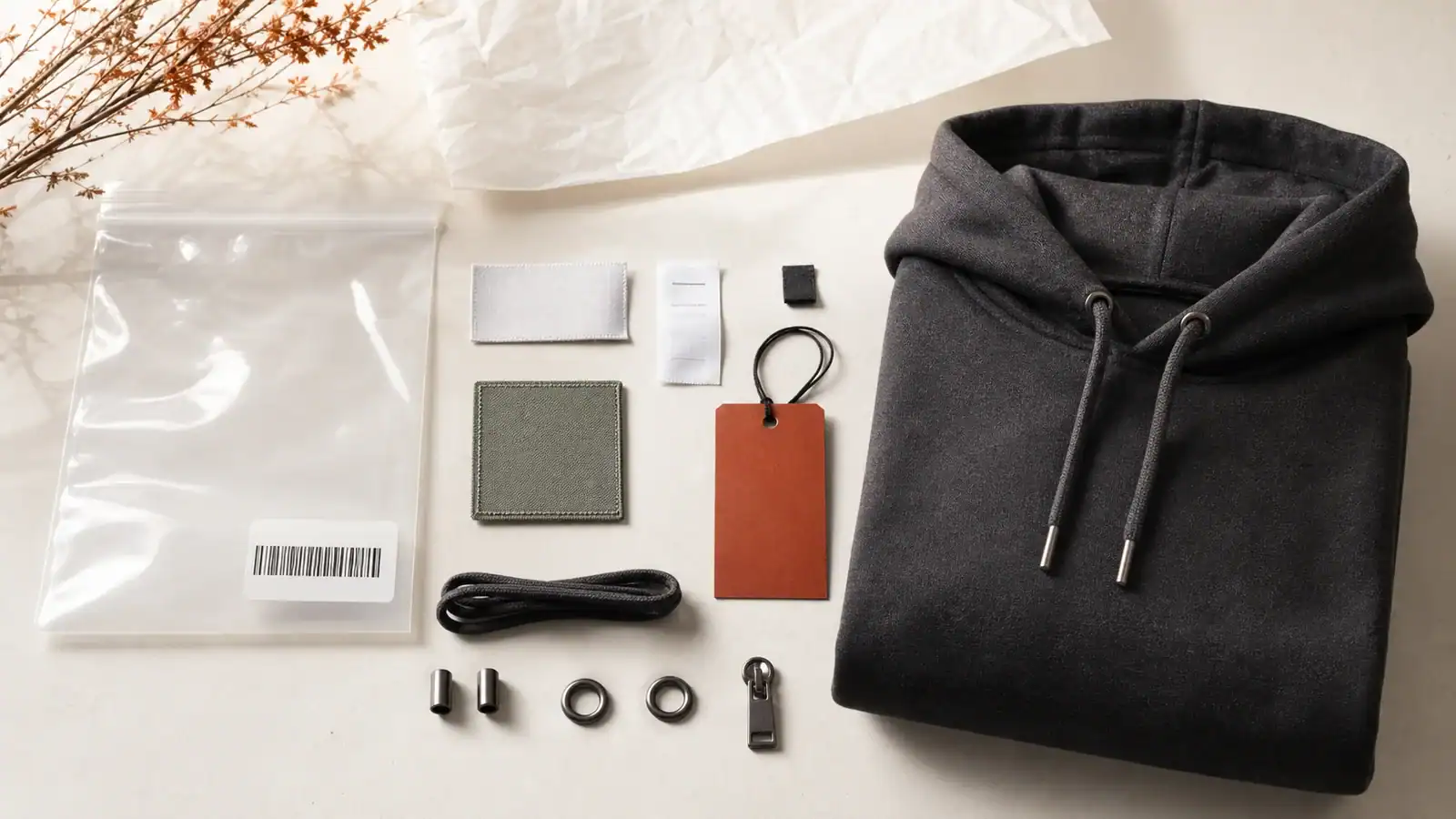
Private-label details create extra suppliers, minimums and approvals. Define them early so the quotation includes the actual program.
The trim and packaging list may include:
- main label and its attachment method;
- size tab;
- fiber, origin and care information;
- drawcord and cord ends;
- eyelets or grommets;
- zipper and custom puller;
- patches, badges or appliques;
- hangtag, string and safety pin or alternative attachment;
- barcode or SKU sticker;
- tissue, insert, polybag or other individual pack;
- fold method and presentation;
- carton dimensions, assortment, marks and protection requirements.
For products sold in the United States, the FTC explains that most textile and wool products need labeling for fiber content, country of origin, and the identity of the manufacturer or another responsible business. Care labeling is covered by a separate rule. Review the FTC textile labeling guidance and confirm the current requirements for the exact product and sales market.
Ask the supplier to show final label artwork before production. The buyer should check spelling, fiber names and percentages, origin wording, care instructions, RN or company identity where applicable, size, placement and durability. Packaging claims and sustainability statements also need evidence; do not add a certification logo or environmental claim based only on a sales message.
Check 10: Normalize quotations before comparing price
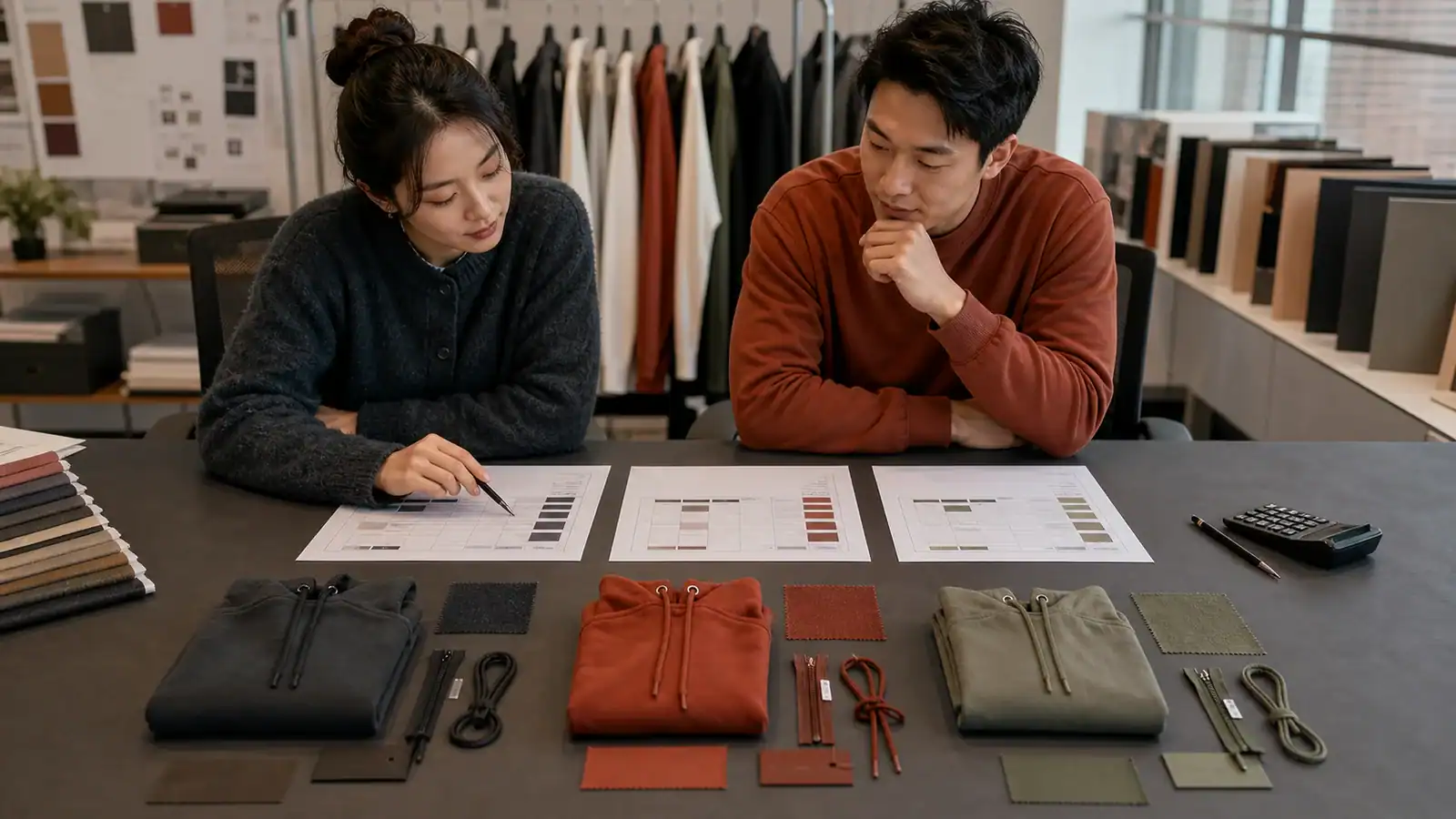
A useful quote tells you what the number buys. Before ranking suppliers, normalize every offer to the same product revision, quantity split, incoterm and destination.
Create a comparison sheet with:
- style and tech pack revision;
- production model;
- quantity by color and size;
- shell and rib fabric specification;
- included decoration, labels, trims and packaging;
- sample types, sample charges and refund rules if any;
- pattern, grading, mold, screen, digitizing or setup charges;
- unit price and price breaks;
- material or color minimums;
- payment terms;
- production term based on an agreed starting event;
- packing assumptions;
- shipping term, named place and excluded costs;
- inspection scope and responsibility;
- quotation validity and open assumptions.
If one supplier is much cheaper, find the missing scope before treating it as a saving. The quote may use a lighter fabric, a stock block, fewer labels, simpler packaging, a different decoration process or an ex-factory term. Ask every supplier to revise unclear assumptions in writing.
MOQ is also multi-layered. Garment MOQ, fabric mill MOQ, custom color minimum, rib or zipper minimum, decoration setup and packaging minimum may all differ. A supplier may accept a small garment order only if the buyer uses stock fabric and standard trims. Confirm the exact combination that the price covers.
Check 11: Approve the sample against a written record
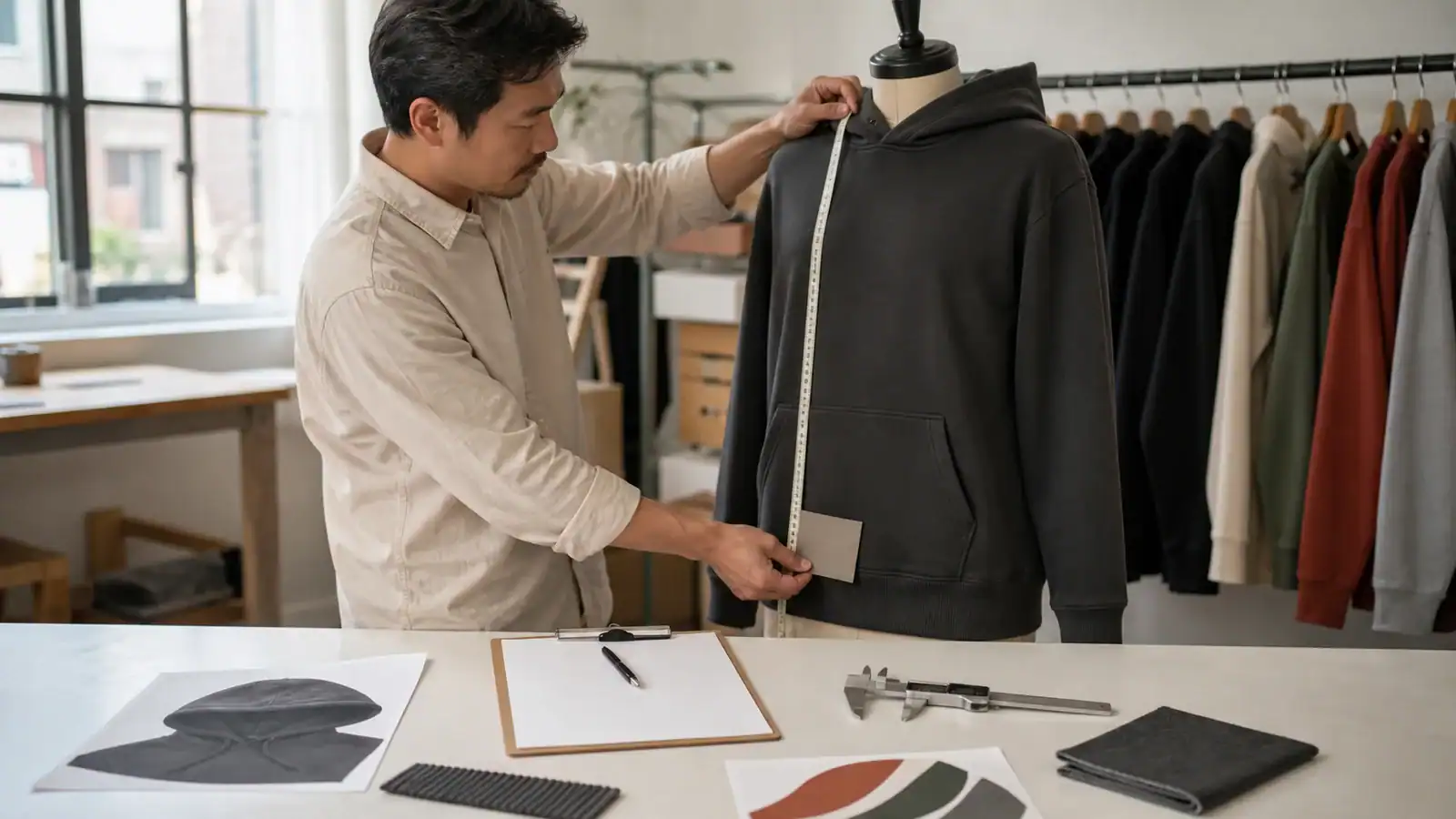
The sample is where the supplier’s interpretation becomes visible. Review it against the current tech pack and approved components, not memory.
Check at least:
- overall silhouette and fit on the intended wearer;
- measurements using the agreed method;
- shell fabric, rib, lining and approved swatches;
- color in suitable lighting against the reference standard;
- hood shape and neckline balance;
- zipper operation, pocket position, cuff and hem behavior;
- seam appearance and inside workmanship;
- decoration color, size, placement, hand feel and distortion;
- label content and placement;
- garment finish, odor, marks and damage;
- folding and individual packaging;
- performance or wash checks required for the product.
Write comments by location and result. “Hood too small” is less useful than a marked photo plus the affected measurement and desired change. Separate mandatory corrections from preferences. Give each revised sample a version and keep an approval record with photographs, measurements and component references.
The sequence may include prototype, fit, size set, decoration test, pre-production and shipment samples, but names vary by supplier. Define what each sample must prove, who approves it, and whether bulk can start before written approval. DTS’s sampling and prototyping process shows how buyer comments can be organized before production.
Check 12: Agree on quality, compliance and logistics before bulk
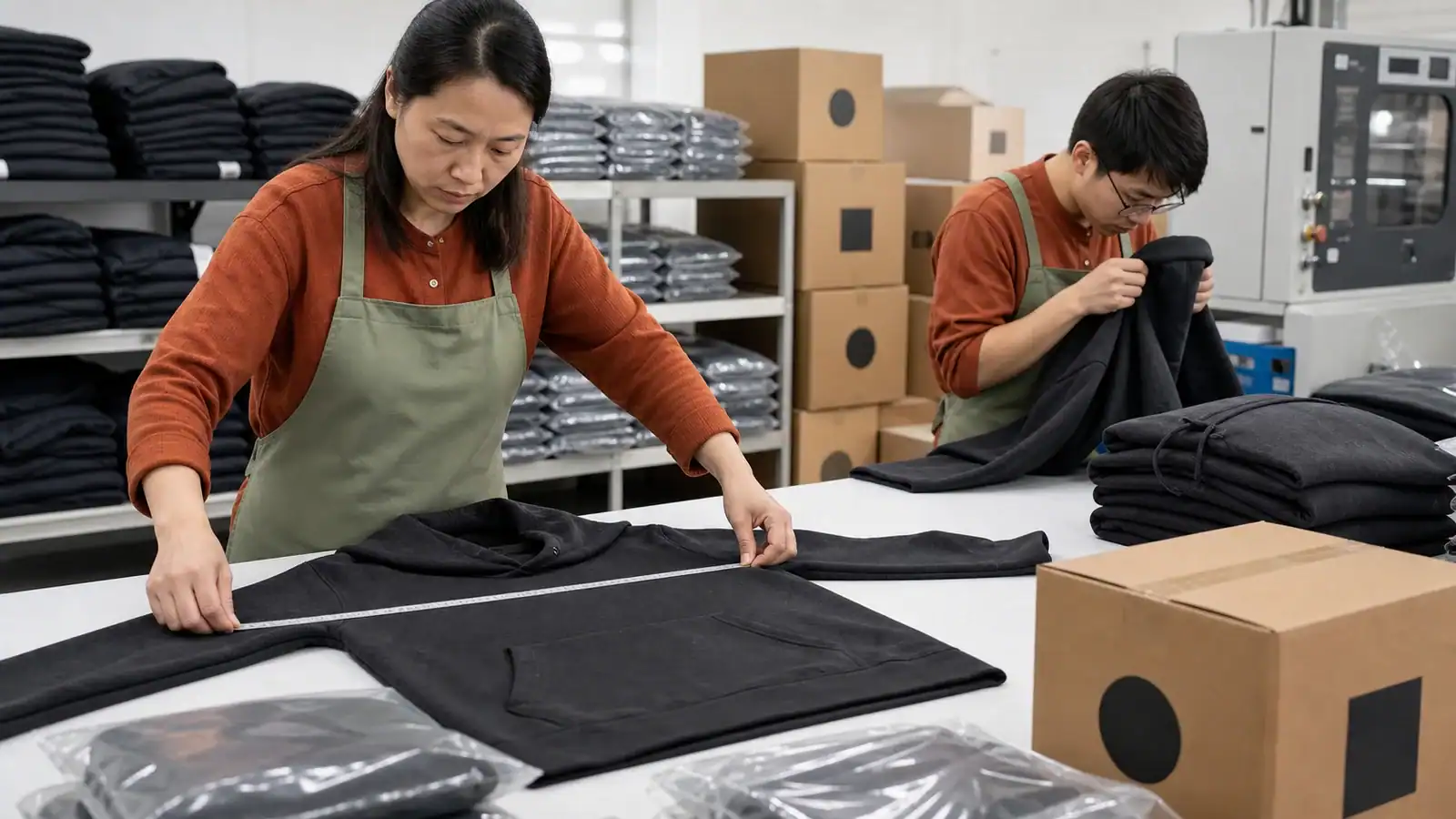
Quality planning should begin before the purchase order. The approved sample is an important reference, but the order also needs written acceptance criteria and inspection records.
Discuss:
- incoming fabric and trim checks;
- shade grouping and lot control;
- first-piece or pilot approval;
- in-line workmanship and measurement checks;
- decoration and wash controls;
- measurement tolerance and defect classification;
- final inspection method and sampling plan;
- needle, sharp-object or metal-control requirements where applicable;
- required test reports and their product, color and validity scope;
- label, barcode, assortment and carton checks;
- packing list, carton marks and shipment-release documents;
- process for handling a failed check or approved deviation.
Ask what records the factory will provide and what the buyer or third party must inspect. The DTS quality-control overview can be used as a discussion framework, but the checkpoints, tolerances, sample plan and test scope must be agreed for the actual hoodie order.
Compliance is not a generic badge. It depends on product, fiber claims, wearer, destination, sales channel and buyer requirements. Request documents that match those facts, check the issuing body and scope, and use qualified advice where legal interpretation is needed. Do not assume that a factory audit proves product compliance or that one fabric report covers every color and finish.
Finally, define when the production clock starts, what buyer approvals can pause it, who books freight, which shipping documents are required, and how late changes affect timing. Lead time, MOQ and shipping cost should remain project-specific until the supplier confirms the final product and order plan.
A simple hoodie manufacturer scorecard
Score suppliers only after the same RFQ and questions have been answered. A practical scorecard can weight the areas below according to your project:
- product match and evidence from similar hoodies;
- technical response quality;
- completeness and transparency of the quote;
- fabric and trim sourcing fit;
- pattern, fit and sample capability;
- decoration and finishing control;
- quality plan and inspection access;
- document and compliance response;
- communication, ownership and revision control;
- total landed cost and commercial terms;
- realistic timing for sample, approval, production and delivery;
- ability to support a repeat order with the same approved references.
A supplier with the lowest unit price may rank lower once missing setup charges, weak sample control, unclear materials or unsuitable timing are included. Record the reason for each score and the evidence used. This makes the decision easier to revisit if quantity, fabric or launch timing changes.
What to send before requesting a hoodie quotation
Prepare a compact sourcing package:
- Brand and project summary, target market and use.
- Hoodie flats or clear reference images with change notes.
- Production model: blank decoration, private label or cut and sew.
- Reference size, measurement chart and fit direction.
- Shell, rib and lining requirements.
- Hood, closure, pocket, cuff, hem and seam details.
- Decoration artwork and placement.
- Labels, trims and packaging.
- Size range, colorways and quantity split.
- Destination, timing, required tests and quotation terms.
If confidential artwork or a proprietary block is involved, agree on the information-sharing process before sending full files. The inquiry and NDA route can be used to submit project details for review. Exact hoodie capability, material availability, MOQ, sample scope, lead time, testing, compliance and price still require confirmation for the specific project.
Frequently asked questions
A hoodie manufacturer may make the garment itself through a private-label or custom cut-and-sew process. A printing company may decorate ready-made blanks without changing the fabric, pattern or construction. Some businesses offer both. Ask who supplies the garment and which operations are included.
Private label can suit a project that accepts an existing base block and focuses on color, branding and selected details. Custom cut and sew is better when the fit, fabric, panels, hood, pocket, wash or trim system must follow a unique specification. Compare the development work, approvals, minimums and repeat-order needs.
Send flats or references, measurements, fabric direction, construction details, artwork, labels, packaging, size range, colorways, quantity split, destination, timing and required tests or documents. Ask the supplier to list every assumption and exclusion.
Separate garment MOQ from material, custom color, rib, zipper, decoration and packaging minimums. Confirm whether the quoted minimum uses stock fabric and standard trims or includes fully custom materials. Compare the exact color and size split, not one headline number.
The required sequence depends on the project. Buyers may need a prototype, fit sample, size set, decoration strike-off, pre-production sample or shipment sample. Define what each one proves and do not release bulk until the agreed approval has been documented.
Commonly missed fields include hood shape, neckline overlap, rib recovery, pocket reinforcement, zipper specification, inside seam finish, decoration placement, label content, shrinkage behavior and packing assortment. Convert every critical detail into a measurable or visually approved criterion.
FTC guidance says most textile products require fiber content, country of origin and the identity of the manufacturer or another responsible business, with care labeling covered by a separate rule. Requirements depend on the product and business role, so confirm current rules and placement for the specific hoodie.
Use one version-controlled specification, approve physical samples, define inspection access and acceptance criteria, confirm documents and payment milestones, clarify shipping terms, and keep decisions in writing. Country alone does not determine quality; the working controls and supplier fit matter more.
Turn the checklist into a sample-ready brief
Shortlist suppliers only after your product route and RFQ are clear. The best response is usually the one that identifies open decisions, explains tradeoffs, shows relevant evidence and connects every price to a defined scope.
Send the same brief to each candidate, compare written answers, approve material and decoration references, and judge the physical sample against the current specification. This gives the selected hoodie manufacturer a fair chance to produce the intended garment and gives the buyer a record for bulk inspection and repeat orders.