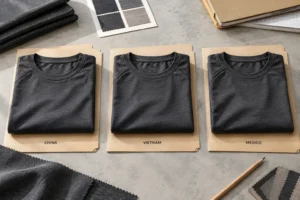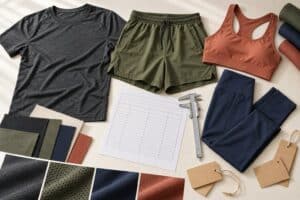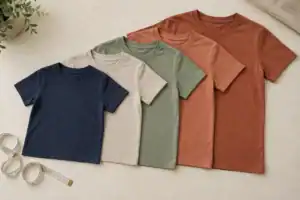
Wool fabric is an apparel textile made with wool fiber. It may be knitted or woven, used on its own or blended, and finished in many ways. Those choices change the fabric’s feel, weight, stretch, care needs, and wear behavior; the words “wool” or “Merino” alone do not define a production-ready quality. For an apparel buyer, start with the garment and wearer: a close-fitting base layer, an insulating mid-layer, and a structured jacket need different fabric behavior. Then specify the construction, weight, finish, care target, and checks that will decide whether the sample is acceptable.
All article visuals are AI-generated illustrations. They do not depict DTS stock, supplier-approved samples, factory conditions, or tested results.
What is wool fabric?
Wool fabric is a textile made from wool fibers that have been processed into yarn and then formed into a knit or woven structure. A finished quality may contain wool alone or a declared blend, and it can be brushed, felted, softened, or treated for a specific care requirement.

That is why “wool fabric” describes a material family rather than one fixed hand or performance. The name does not tell a buyer whether a sample will feel smooth against skin, stretch enough for movement, keep its dimensions after washing, or resist pilling in a high-friction area.
A sourcing brief should record four separate details:
- Fiber content: the fiber names and percentages in the finished fabric.
- Yarn preparation: how the fibers are aligned and spun.
- Construction: how the yarns form loops or interlace.
- Finish: any process that changes the surface, color, handle, or care behavior.
Write these details beside the garment use, then judge them on the same sample. A generic material name is a starting point, not an approval standard.
Why can two wool fabric swatches behave differently?
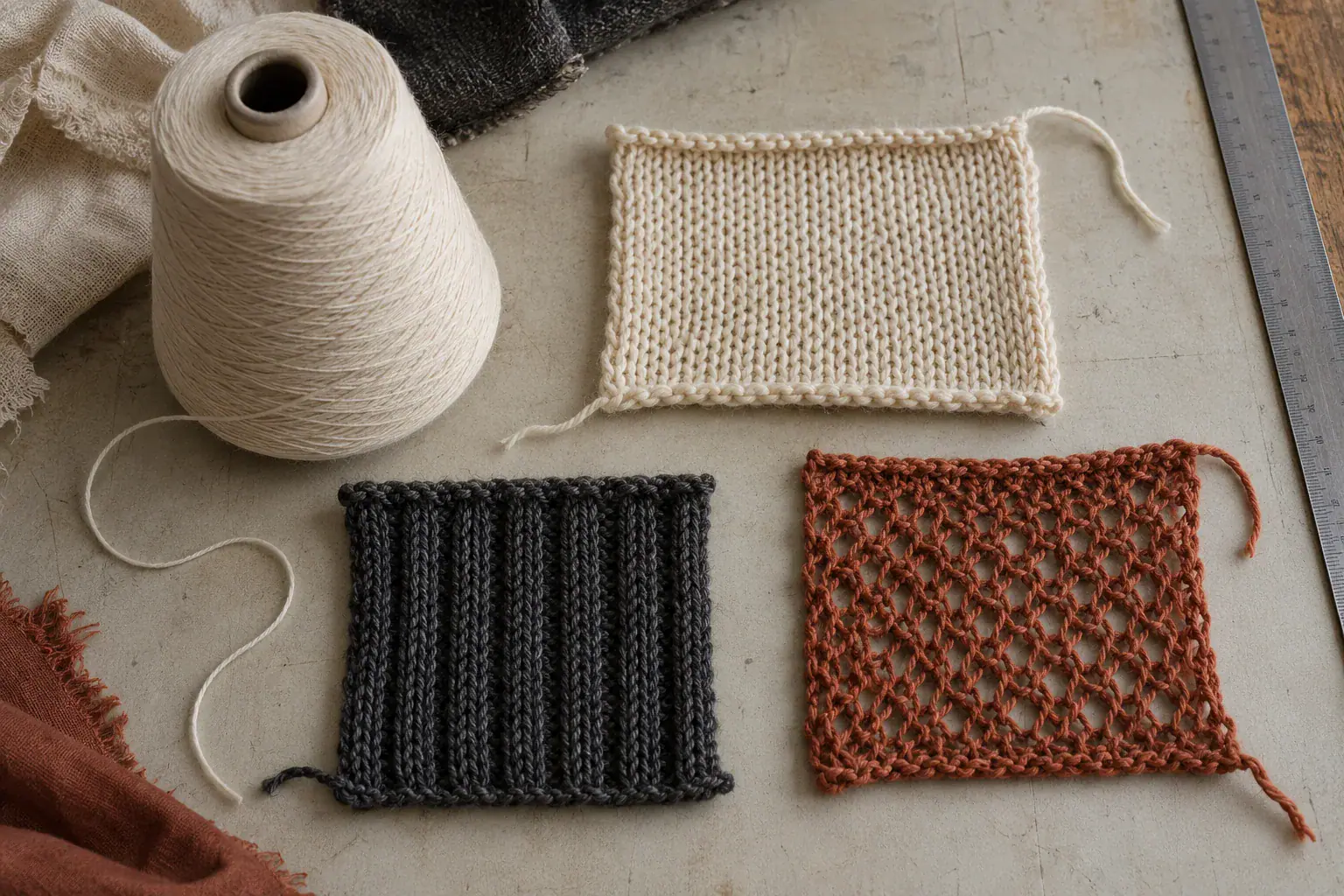
Two swatches can carry the same wool percentage and still feel unlike one another. A fine yarn in a compact knit will not drape like a lofty yarn in a brushed surface. Fiber selection, yarn size and twist, stitch or weave density, finishing, and the blend all affect the result.
Use a short selection sequence to keep those variables in order:
- Name the garment job. State where the fabric sits on the body, how much movement it needs, and what the wearer will do in it.
- Choose a construction to test. Decide whether the sample should be a knit or woven, light or substantial, smooth or textured.
- Set measurable targets. Record composition, finished weight, usable width, stretch and recovery where relevant, and care instructions.
- Approve a reference sample. Test the proposed color and finish, then compare later samples and bulk fabric against that signed or coded reference.
This order prevents a common sourcing problem: approving a fabric because the hand feels right before checking whether it works in the actual garment.
Which wool type fits the garment brief?
“Merino” names a wool source associated with Merino sheep; it does not, by itself, specify a fabric weight, knit, finish, or wash result. “Wool blend” is also incomplete unless the other fiber names and percentages are stated. If a particular source or fiber property matters to the product, put it in the brief and request evidence for the proposed quality.

Think about the fabric role before choosing a label:
- For a soft next-to-skin layer, compare the actual hand and surface of the submitted quality. Request the fiber description and any fineness information the supplier can substantiate.
- For a sweater or relaxed layer, compare yarn bulk, knit structure, surface texture, and how the garment hangs after care testing.
- For a structured jacket or trouser, evaluate stability, drape, seam behavior, and abrasion in the intended construction.
- For a cost- or care-led product, compare a wool blend with alternatives on the finished garment rather than assuming the fiber percentage predicts the result.
Ask the mill or supplier to state what a marketing term means in the offered fabric. If it cannot be tied to a composition, construction, or testable property, it is not a useful acceptance criterion.
Woolen vs worsted: what changes for apparel?
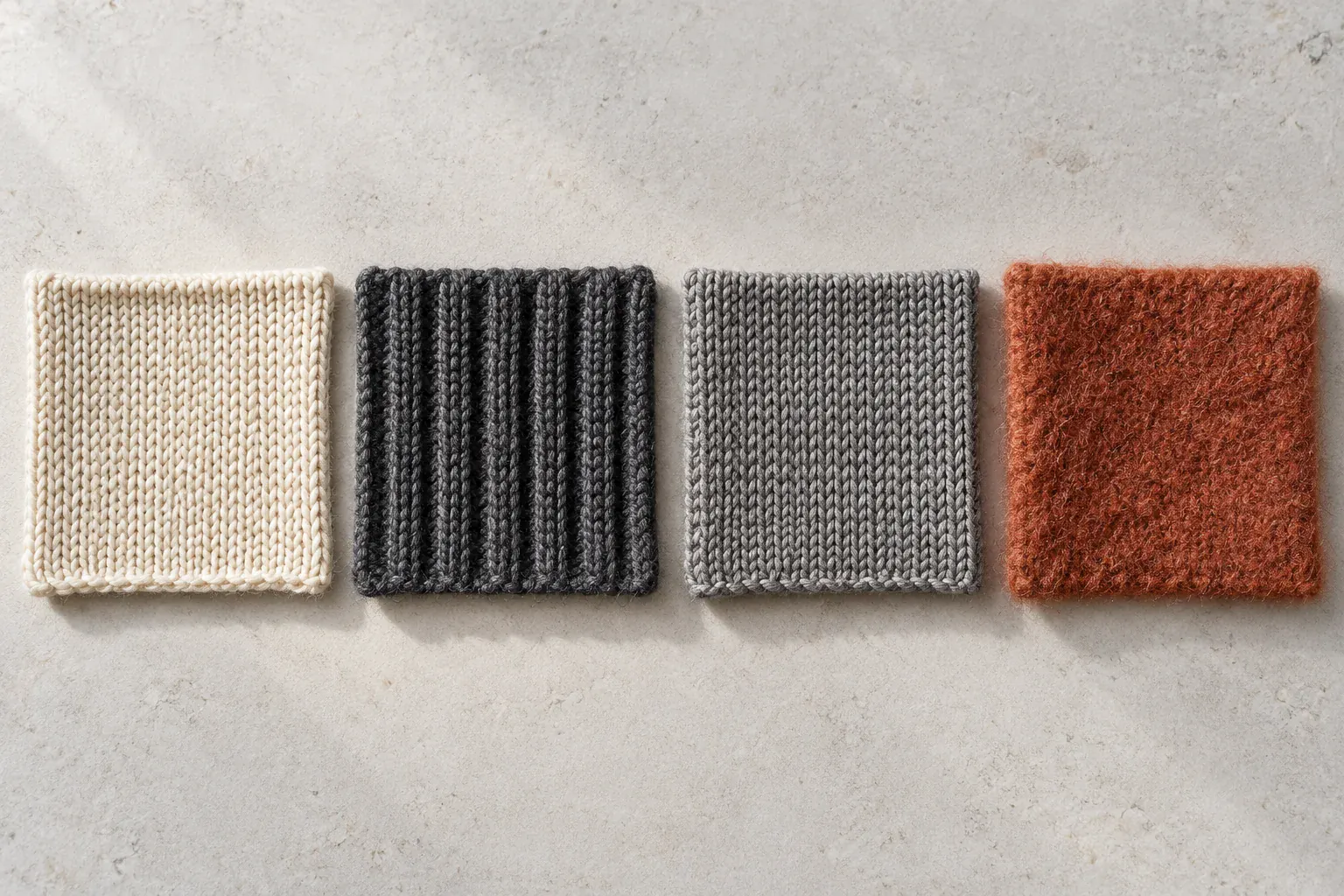
Woolen and worsted describe yarn preparation routes, not two animal fibers. The International Wool Textile Organisation explains that worsted processing uses longer fibers and combing to produce smooth, fine yarns, while woollen processing commonly uses shorter fibers and produces bulkier yarns. The intended garment and fabric structure still determine the finished result. IWTO’s woollen and worsted overview describes how both routes can lead to knit or woven apparel fabrics.
Choose the yarn route based on the surface and body the garment needs:
- Worsted yarns are worth comparing when the brief calls for a cleaner surface, lighter cloth, or more defined structure.
- Woollen yarns are worth comparing when the brief calls for a fuller, more textured or insulating surface.
Do not approve from the process name alone. Ask for a physical swatch, then confirm weight, construction, finish, drape, and care behavior. Woollen-spun yarn can be knitted as well as woven; worsted-spun yarn can also become either construction.
Should you choose wool knit or woven fabric?
Knitted and woven wool solve different pattern and movement problems. A knit forms loops, so stretch can come from the structure as well as from any added elastic fiber. A woven interlaces yarns and often holds a more stable outline, though its flexibility depends on the weave, yarn, and finish.
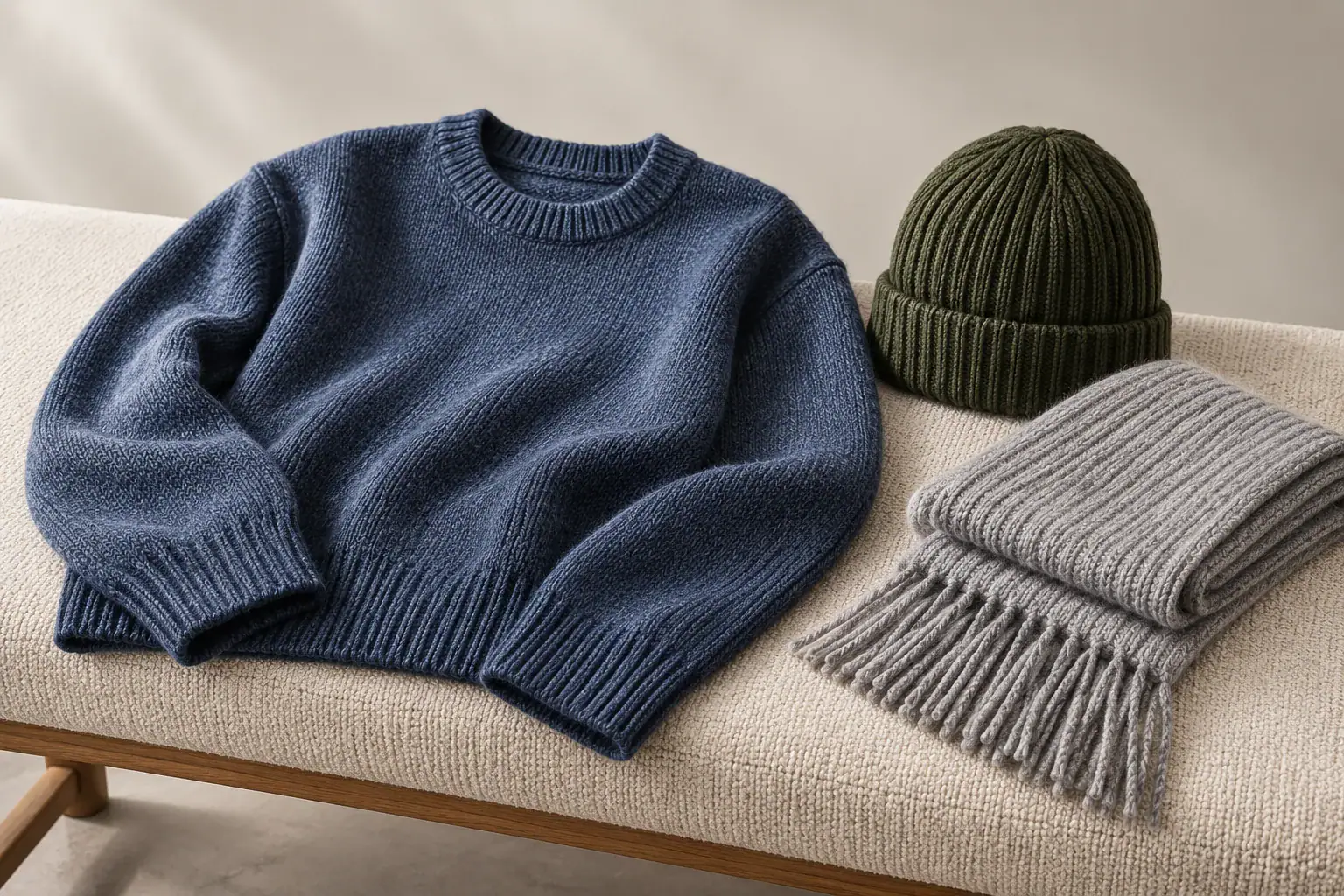
Use a knit sample when the garment needs give, a softer hand, or a close fit. Check stretch and recovery in both directions if the pattern depends on them. Rib, jersey, and interlock can differ in thickness, edge curl, and growth, so name the construction or attach an approved swatch.
Use a woven sample when the pattern depends on a sharper silhouette, a stable panel, or a structured drape. Check seam slippage, fraying, pressing response, and the garment’s movement at key joints. These checks are more useful than treating “woven wool” as a quality grade.
What wool fabric types are used in apparel?
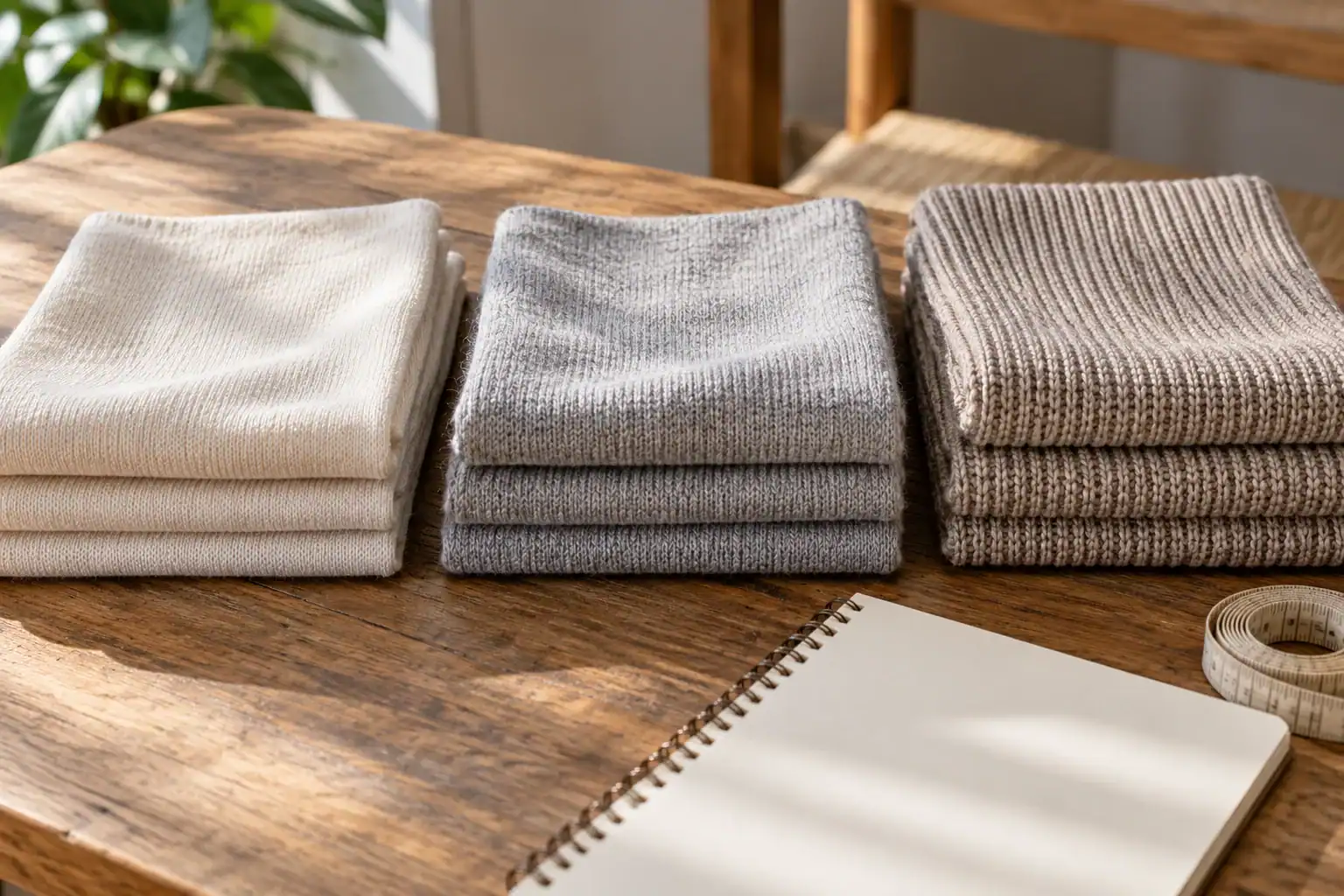
Fabric names often describe construction or surface rather than fiber source. That distinction helps buyers compare like with like:
- Jersey, rib, and interlock are knit structures. They can make tees, base layers, dresses, and mid-layers, depending on yarn and weight.
- Flannel is a woven fabric commonly given a brushed surface. Confirm the face, weight, shedding, pilling, and care on the proposed quality.
- Twill and suiting cloth describe woven structures used where a more stable drape is required. The fiber blend and finish still matter.
- Boiled wool is a wool fabric deliberately fulled or felted to change its density and surface. Check how much stretch remains and how the cut edge behaves.
- Felt is a nonwoven sheet of matted fibers rather than yarns interlaced or knitted into fabric.
Use the name that describes the feature you need, then attach a physical reference. If a supplier uses a trade name, record its construction and finish in the tech pack so a replacement sample can be checked against the same target.
What does wool fabric do well, and where does it fall short?
Wool fiber can contribute warmth, moisture-vapor management, and natural resilience, but a finished fabric’s performance depends on its yarn, construction, finish, blend, and garment design. Woolmark describes Merino as helping manage moisture vapor and temperature; treat those as fiber-level tendencies, not guaranteed results for every wool garment. Woolmark’s Merino fiber overview explains the claims and the role of fiber structure.

Turn each desired benefit into a check:
- If comfort next to skin matters, evaluate hand feel and irritation on the intended wearer group.
- If the fabric should return after movement, measure stretch and residual growth using an agreed method.
- If it will be washed often, test dimensional change, surface change, and color on the specified care cycle.
- If it will rub against a bag, bench, or another layer, include pilling or abrasion checks suited to that contact.
The same trade-off applies to care. Some wool qualities are designed for easier washing; others need more controlled care. Never infer a wash method from the fiber name. Confirm the proposed care claim on the actual finish and test the garment with its trims attached.
Is wool fabric good for activewear?

Wool can be a candidate for base layers, mid-layers, travel apparel, and outdoor pieces where the brief values comfort across changing conditions. It is not automatically the best choice for every training top or high-sweat garment. Cost, drying expectations, abrasion, wash frequency, stretch recovery, and skin feel all need to be considered on the actual fabric.
Put these checks in the activewear sample plan:
- moisture movement using a stated test or a defined wearer trial;
- stretch and recovery in the directions used by the pattern;
- seam comfort and yarn or surface damage at rubbing points;
- shrinkage, color change, and pilling after the intended care cycle;
- warmth and comfort during the activity and climate the product targets.
If the brief is built around sweat management, compare the wool sample with the brand’s current performance fabric under the same conditions. Our activewear fabric buyer guide explains why fiber labels alone do not establish performance. A “moisture-wicking” claim also needs a test method and a defined fabric state, such as before or after washing.
Should you use wool alone or in a blend?
Start with the failure you are trying to prevent. A blend changes hand, cost, stretch, drying behavior, abrasion, care, and labeling. No generic ratio guarantees that a garment will be softer, stronger, easier to wash, or more suitable for exercise.

Compare candidate qualities this way:
- Wool alone: assess the desired hand and temperature comfort against the care, durability, and cost requirements.
- Wool with polyester or nylon: check whether the blend improves a specific need such as recovery or wear resistance, and confirm that the finished feel still suits the product.
- Wool with cotton or a cellulosic fiber: evaluate drape and moisture handling in the finished fabric, then test shrinkage and color change.
- Wool with elastane: measure stretch and recovery after the agreed wash sequence; the percentage alone cannot predict power.
Ask suppliers for samples at similar weight and construction, so you can compare like with like. If the preferred quality depends on a performance claim, ask which method and conditions support it.
What wool fabric details belong in a buyer tech pack?

A wool fabric brief should let another supplier submit a comparable sample without guessing. Include what is known and mark what needs supplier confirmation:
- fiber names and percentages, including any required wool or source designation;
- yarn preparation or yarn description, if it is a decision factor;
- knit or weave construction, surface finish, and face/back orientation;
- target finished weight, usable width, color, and an agreed tolerance;
- stretch and recovery targets if the pattern depends on movement;
- care instructions and any finish-dependent claim;
- required tests, the method, sample condition, acceptance limit, and retest rule;
- the garment style, placement, intended activity, and approved reference sample.
If a value is not yet established, use “confirm with supplier” rather than inventing a target. A tech pack should control the decision, not disguise a missing requirement. The DTS tech pack customization service is the relevant starting point when a brand needs to clarify garment specifications; the fabric and trim library explains the site’s material-development pathway.
How should buyers test and approve a wool fabric sample?
Approve the quality in stages. A small swatch can screen hand and color, but it cannot show how seams, trims, garment shape, or repeated care will affect the product.
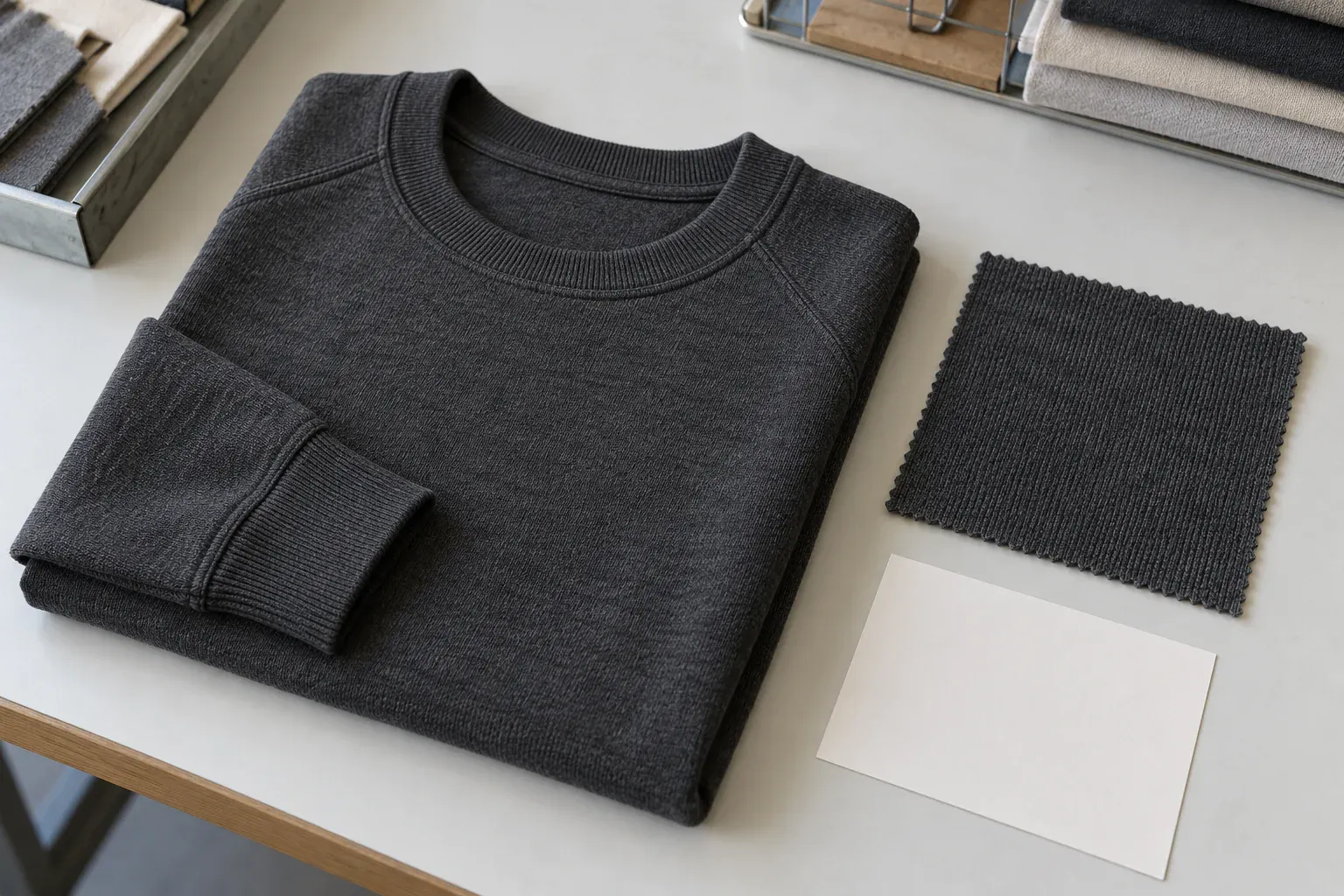
- Identify the sample. Record supplier, composition, construction, finish, color, weight, and sample date.
- Review fabric behavior. Check the surface, stretch, recovery, dimensional stability, pilling, and color behavior against agreed methods.
- Make the garment sample. Use the proposed pattern, seam, lining, elastic, print, and trims.
- Run the use and care checks. Test the finished garment under realistic movement and the care instructions planned for sale.
- Lock the reference. Save an approved swatch or garment, write down the pass criteria, and require later submissions to match it.
IWTO lists methods for wool-fiber, yarn, and fabric measurements in its Red Book, with separate rules for sampling and certification. IWTO wool testing resources can help identify a testing pathway. A method name alone is not an acceptance limit; agree on the condition and threshold for the specific product. DTS describes its sampling and prototyping process and quality control approach; ask which checks apply to the requested project.
What must a wool garment label disclose in the US?
For a U.S. wool product, check the Wool Products Labeling Act and its rules for the specific item and sales stage. FTC guidance says covered wool-product labels generally need the fiber composition, the country of processing or manufacture, and an identifier for the responsible company. Requirements can depend on the product and how it is sold, so have the responsible importer or legal reviewer confirm the final label and online product copy. FTC guidance on textile and wool labeling explains the disclosures and scope.
During development, keep the supplier’s composition statement, country-of-origin information, care recommendation, and any supporting test or certification record with the approved sample. Do not use a fiber name, “Made in” statement, or certification mark as a marketing claim until the business has verified that the finished item qualifies.
Wool fabric questions buyers ask
Wool fabric is made from yarn formed from wool fibers and then knitted or woven. A finished quality may use wool alone or a declared blend, with construction and finishing affecting its final behavior.
Merino is a more specific wool-source term. It does not specify the finished fabric’s weight, construction, finish, or care behavior, so a buyer should request those details separately.
Some wool fabrics can help manage moisture vapor, but breathability varies with the fabric structure, weight, finish, and garment. Ask for a result tied to the proposed quality if airflow is a requirement.
It can change dimensions or felt under some combinations of moisture, heat, and agitation. Follow the proposed care instructions and test the exact fabric and finished garment before making a care claim.
It can work in selected base-layer, mid-layer, travel, or outdoor products. For high-sweat or frequently washed styles, compare it with alternatives on drying, recovery, abrasion, care, and wearer comfort.
Ask for fiber percentages, source or yarn details relevant to the brief, construction, finished weight and tolerance, finish, usable width, care instructions, available test evidence, sample availability, and the bulk-quality reference process.
Lock the sample to the intended garment
A useful wool fabric decision ends with a sample that matches the garment brief and written limits. Confirm the fiber claim, construction, weight, surface, care, and test plan before approving a production reference. If one of those items remains open, record it as a question for the supplier instead of filling in a guessed value.