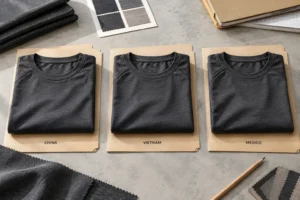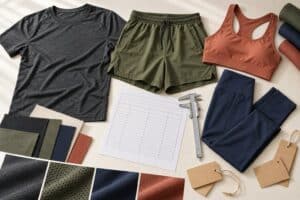
There is no single clothing HS code for all activewear. Start with the actual garment: knit T-shirts commonly lead to heading 6109, knit trousers or shorts to 6103 or 6104, woven trousers or shorts to 6203 or 6204, and brassieres to 6212. Those are research starting points, not complete U.S. entry codes. Confirm the garment’s construction, fiber composition, wearer category and applicable legal notes before selecting its full HTSUS classification.
A supplier’s code can help start that review. It does not establish what a U.S. importer should declare. For a new collection, the useful task is to connect each style to its physical specification, then check the classification and entry-date charges before approving the purchase order.
Reviewed October 16, 2026. This guide concerns newly manufactured apparel imported into the United States. Images are original AI-generated editorial illustrations, not photographs proving DTS facilities, testing or customs services.
Which clothing HS code should you check first?
The international HS identifies goods at six digits. Countries add their own detail; U.S. import reporting uses a full 10-digit HTSUS number. A four-digit heading narrows the product family, while a six-digit subheading narrows it further. Neither should be mistaken for a completed U.S. declaration. The International Trade Administration explains the distinction between HS, U.S. import HTS and export Schedule B codes.
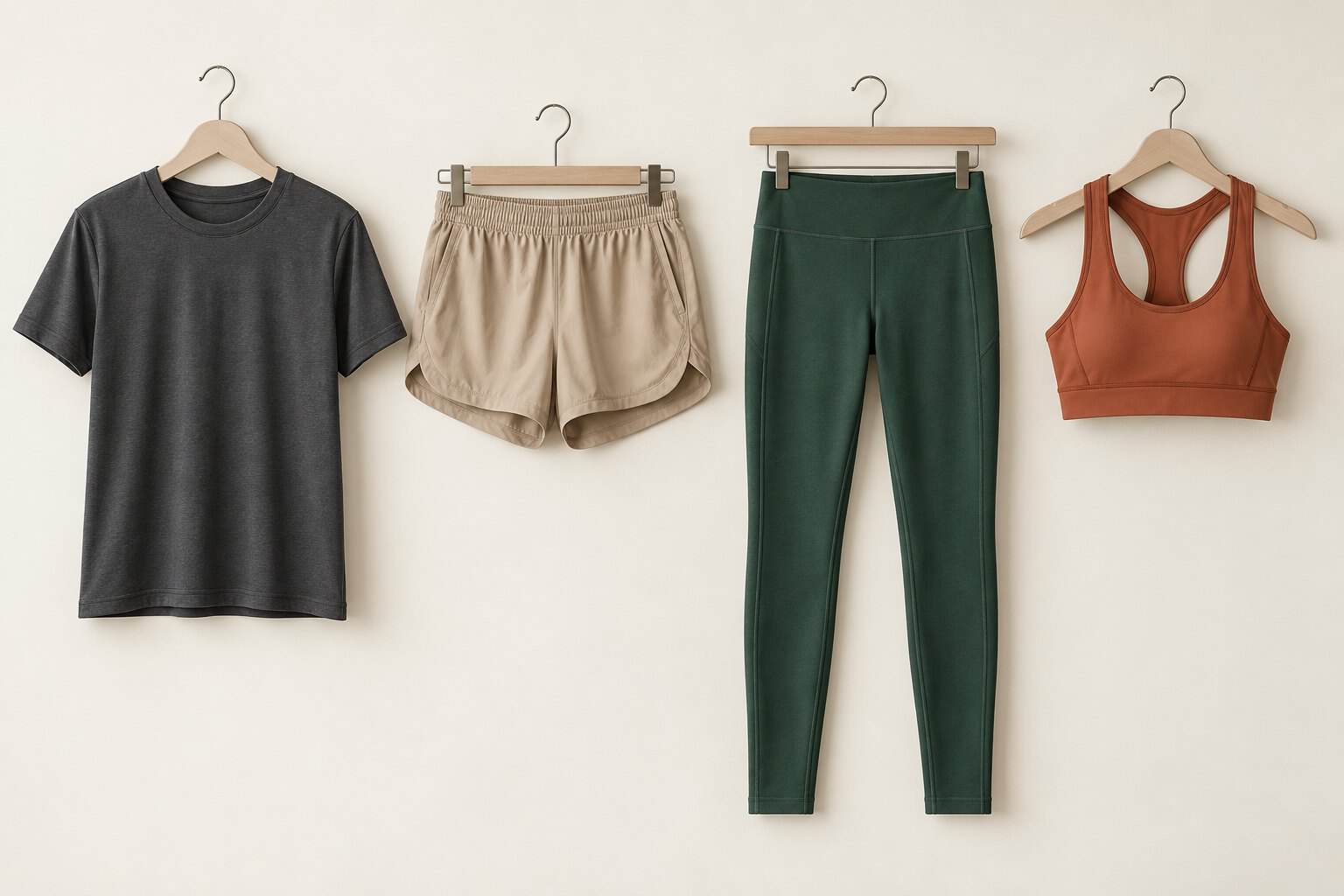
Use these garment families to begin a search in the official schedule:
- Knit T-shirts and qualifying singlets: check 6109. Cotton and other textile materials branch further; construction still matters.
- Knit trousers and shorts: examine 6103 for men’s or boys’ garments and 6104 for women’s or girls’ garments, subject to the relevant notes.
- Woven trousers and shorts: examine 6203 or 6204, again subject to garment and wearer requirements.
- Knit sweatshirts and pullovers: investigate 6110 rather than assuming that every gym top is a T-shirt.
- Brassieres: examine 6212, including its brassiere subheading 6212.10. This family can include knit garments.
- Qualifying tracksuits: investigate 6112 for knit articles. Selling separate pieces together does not by itself establish tracksuit treatment.
Search these headings in the current USITC Harmonized Tariff Schedule. Read the descriptions above and below the candidate line, including exclusions and notes. A keyword-search result is only an entry point into that hierarchy.
This guide is for new clothing. A search result for worn-clothing heading 6309 should not be reused for newly manufactured activewear. Accessories, footwear and coated or specialized garments also need their own review.
Check knit versus woven, then read the exceptions
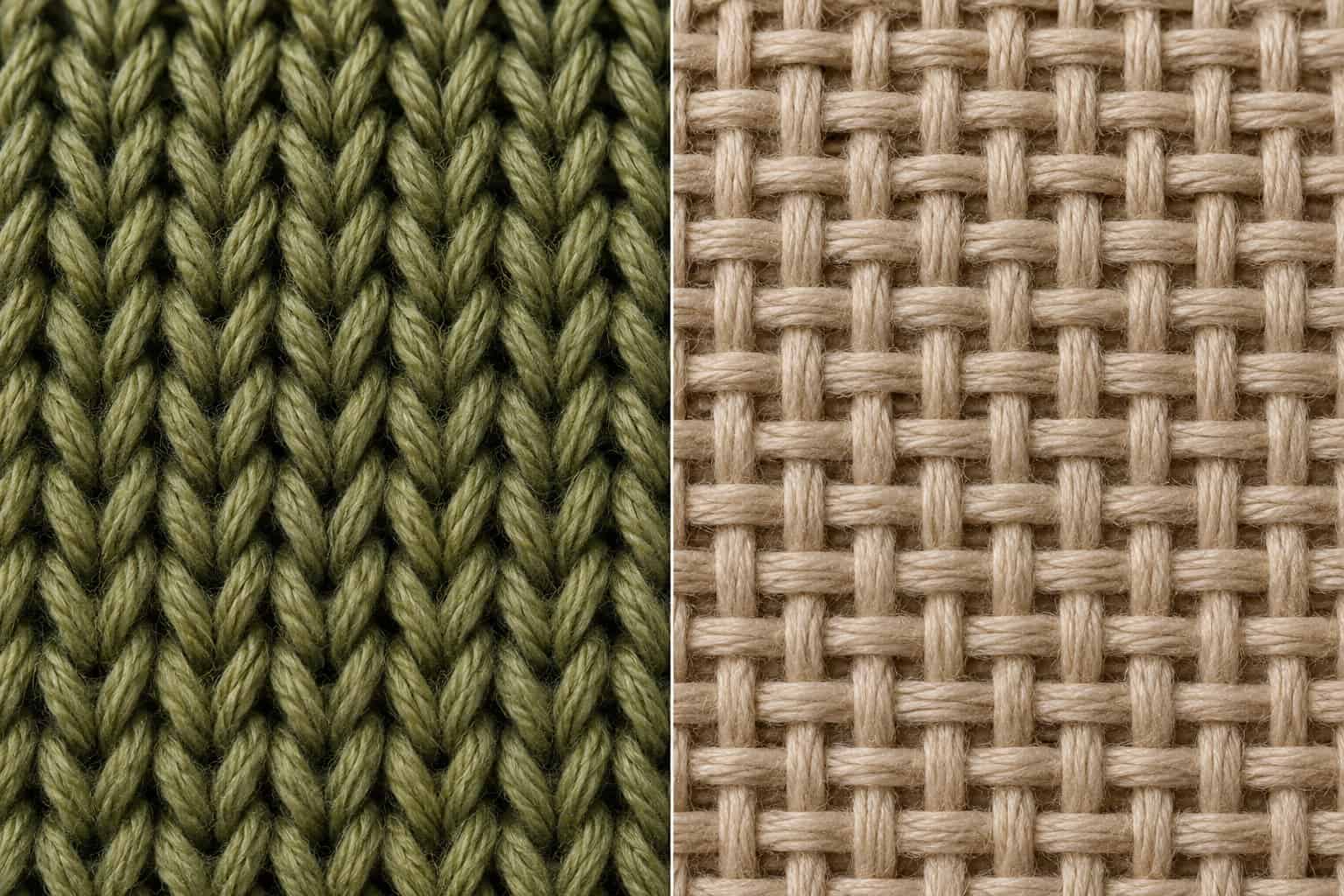
Many apparel searches begin with Chapter 61 for knitted or crocheted garments and Chapter 62 for garments that are not knitted or crocheted. Fabric stretch alone cannot settle that distinction. A woven fabric can stretch because of its yarn composition or construction; a knit can feel quite firm.
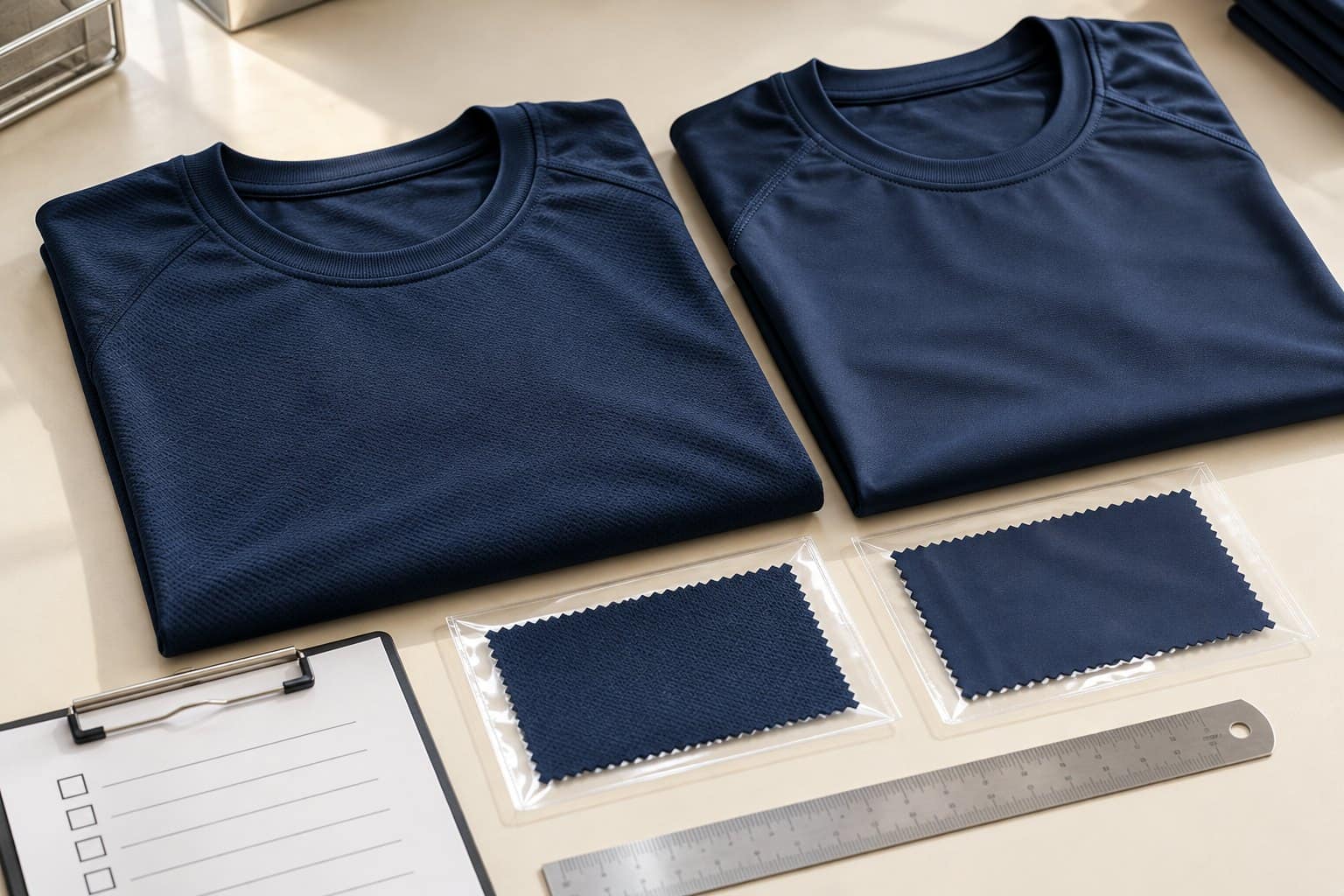
Ask the supplier to identify the fabric structure explicitly. Compare that statement with a swatch, technical specification and the finished garment. If the style mixes a woven shell, knit panels and a lining, send the construction details for review rather than choosing the chapter from whichever material is easiest to see.
There are exceptions to the simple chapter shortcut. Heading 6212 expressly covers its specified support articles whether or not knitted or crocheted. That is why a knit sports bra should not automatically be placed in Chapter 61. The legal wording takes priority over the broad fabric shortcut.
In the purchase file, keep two fields: fabric structure and proposed tariff classification. Treating them as separate decisions makes an exception visible instead of hiding it inside a generic description such as “stretch gym wear.”
What fiber evidence should support the code?
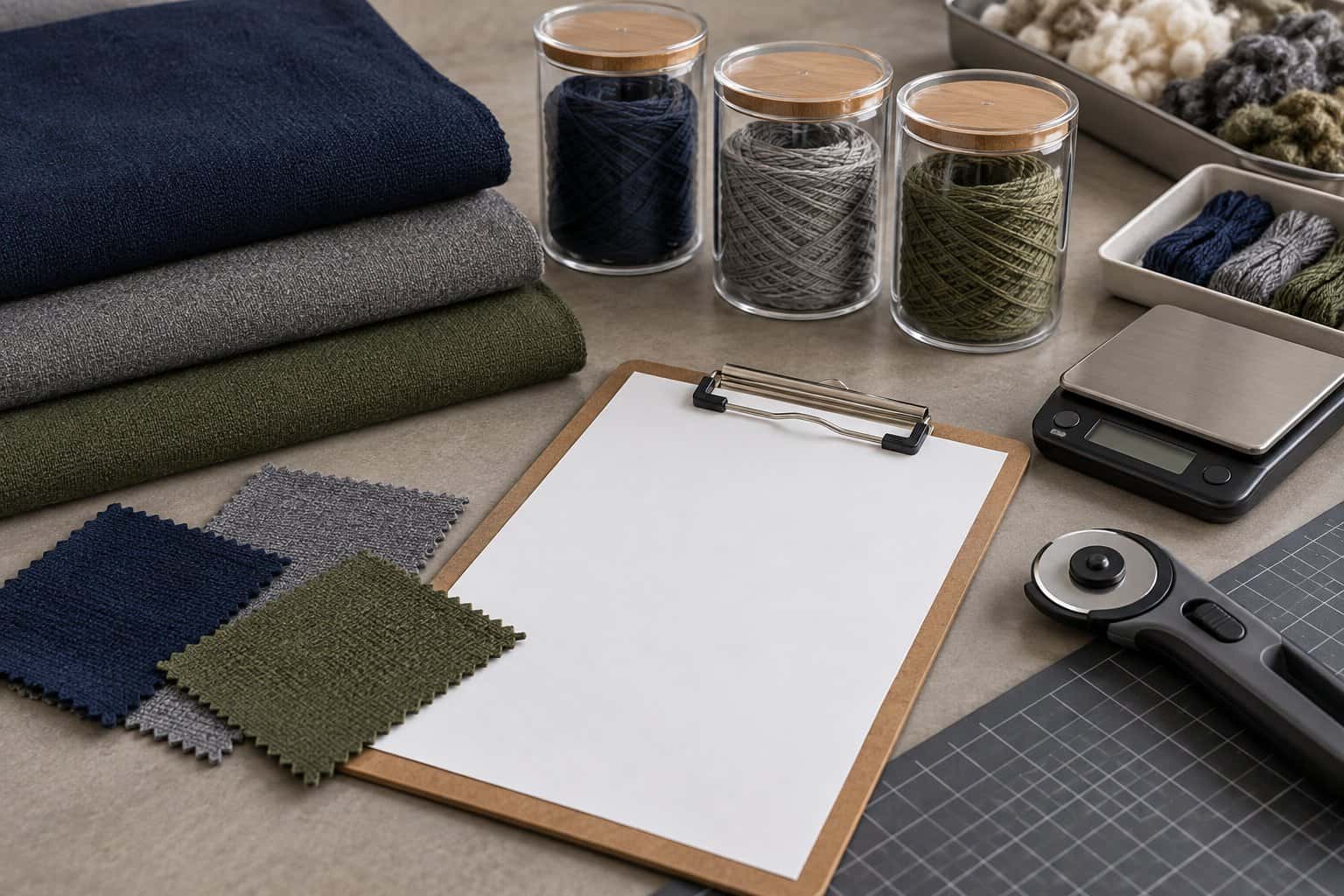
Record the actual fiber percentages by weight and identify which garment components they describe. “Polyester blend” omits the proportions. “Nylon/spandex” omits them too. A supplier’s marketing name or fabric hand feel is a poor substitute for a composition record.
Fiber splits can affect the available tariff branches, but the applicable textile rules must be read for the actual article. Avoid a universal rule that the largest percentage always decides every garment. Mixed components, coatings and particular legal notes can require more analysis.
Ask for a material specification tied to the style and approved fabric, and discuss composition testing when the record is uncertain or commercially significant. A test report is useful only when its sample identity matches what will be produced. Do not quietly change the declared composition to reach a cheaper tariff line.
If a fabric is replaced after sampling, reopen the classification review. Keep the earlier composition in the revision history and record the replacement. This lets purchasing distinguish a genuine material change from an unexplained mismatch between the label, invoice and technical file.
T-shirt HS codes: describe the garment beyond its name
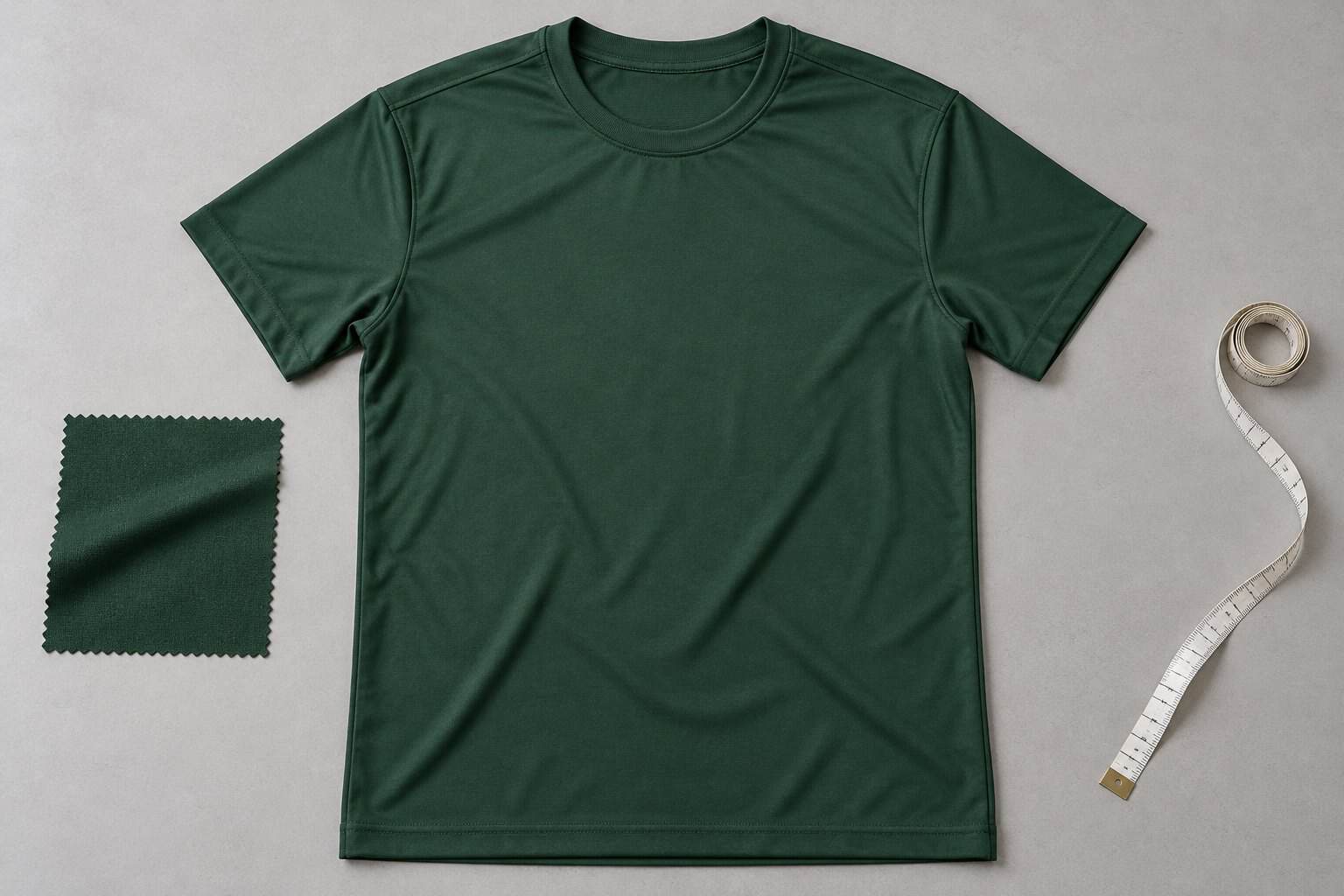
Heading 6109 is a useful starting point for qualifying knitted or crocheted T-shirts and singlets. At the six-digit level, 6109.10 concerns cotton, while 6109.90 concerns other textile materials. Further U.S. subdivisions remain to be checked. These examples do not assign a final code to every garment sold as a performance tee.
Photograph the neckline, sleeve, bottom hem and any opening or closure. Record the fabric construction and composition. If the product has features that may place it in another garment category, ask the reviewer to explain why 6109 still applies or why another heading is appropriate.
Use a consistent style reference across the sample, tech pack, quotation and commercial invoice. “Men’s short-sleeve crewneck T-shirt, knitted fabric, confirmed fiber percentages, style reference” gives the reviewer more usable information than “sportswear.” Complete the missing facts before filing.
For brands developing custom tees, the classification review should use the same approved specification as the production order. A fabric or construction change can make an old reference code unreliable even when the collection name stays the same.
Training shorts: separate shell, liner and wearer details
Training shorts may be knit or woven. A lightweight woven running short and a knit gym short therefore need separate starting searches, even when they share a waistband, logo and retail description.
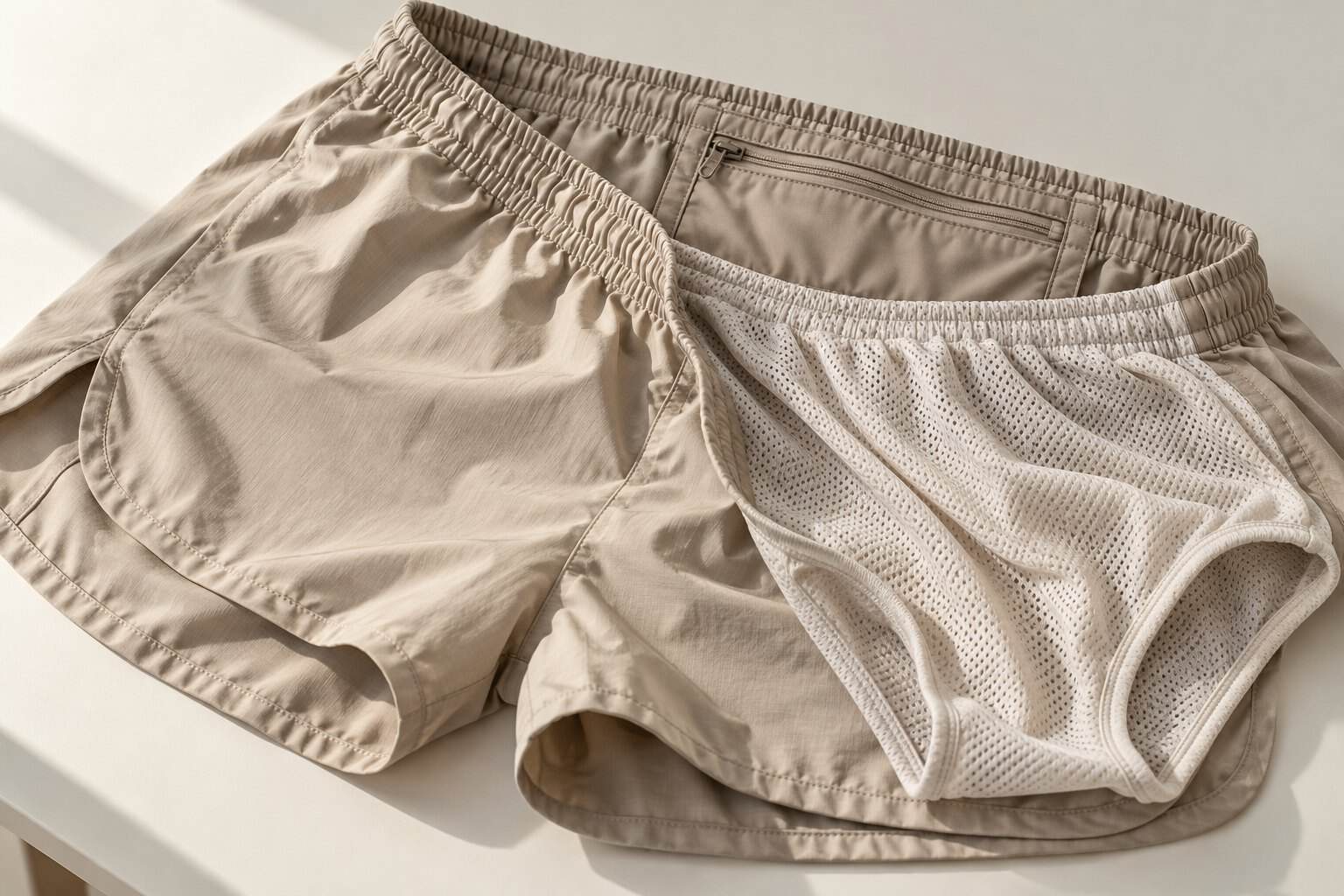
Document the shell material, liner construction, pockets, openings and intended wearer category. Tell the reviewer whether a liner is permanently attached or a separate garment. Do not assume that a two-in-one design can be classified from the shell alone, or that every piece in a retail pack receives the same code.
For ordinary trousers and shorts, 6103/6104 and 6203/6204 are useful heading families to investigate according to construction and wearer. Special designs still require the applicable notes and full descriptions. Swimwear, for example, should not be treated as ordinary training shorts merely because both have a short leg.
When requesting custom training shorts, send the supplier a shell-and-liner specification, not just a reference photo. The same information improves both the manufacturing quote and the later customs review.
Leggings: do not copy a code from a similar photograph
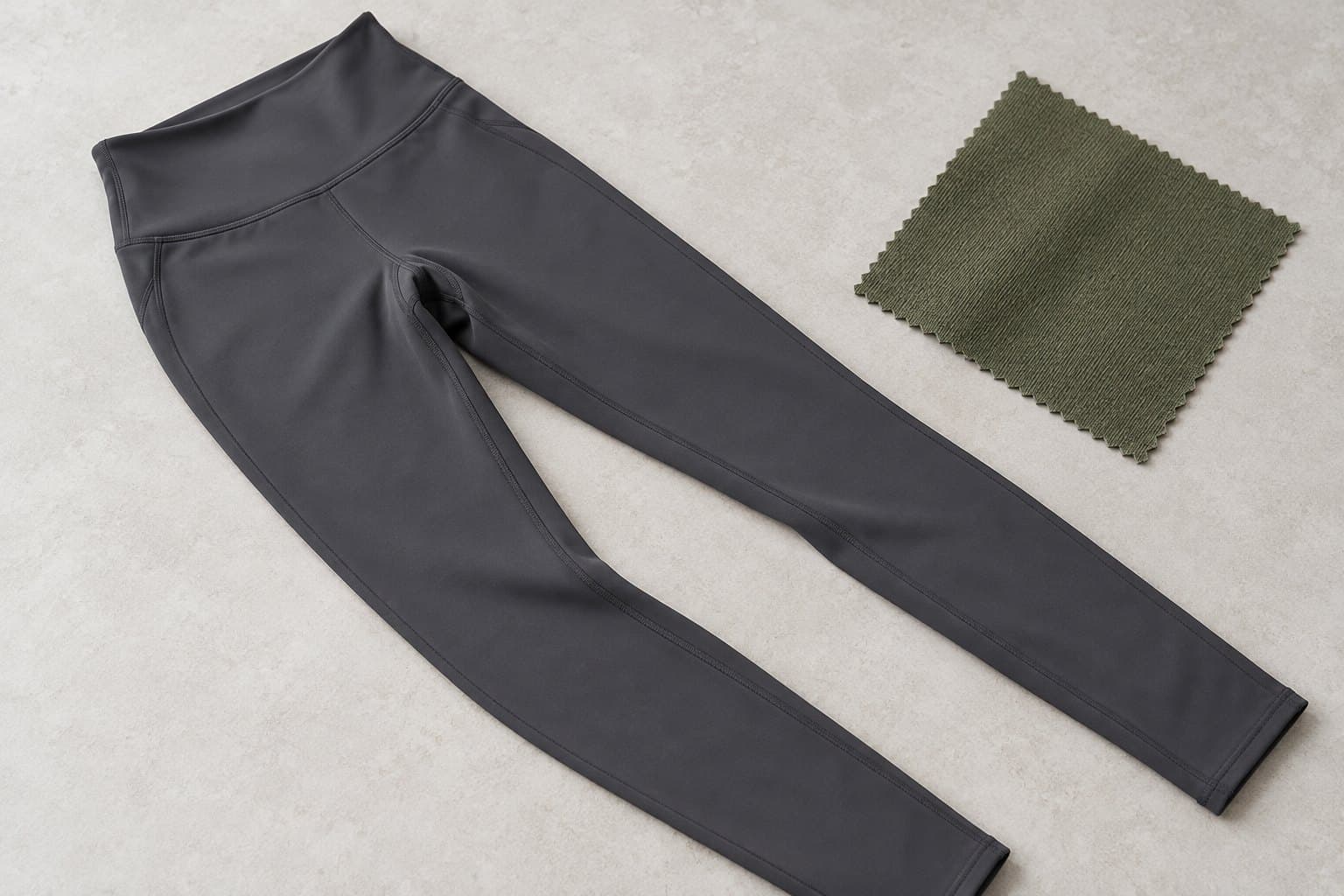
“Leggings” is a retail description, not enough information to complete classification. A reviewer needs to distinguish the actual garment from hosiery and other possible categories using its construction and the relevant legal provisions. Knit trouser headings may be candidates for some athletic leggings; they are not a universal answer.
Provide front, back and inside photographs, a waistband close-up, leg and foot construction, seams, coverage, fabric composition and the intended wearer. Include a physical sample when requested. If a supplier offers an old ruling or entry as support, compare its described facts against your style rather than comparing the product names alone.
Keep the proposed code and its supporting explanation together. A spreadsheet containing only a 10-digit number gives the next buyer no way to tell whether the classification still fits after a design change.
You can use the different leggings types guide to define the product brief, but a product-style guide does not replace a tariff classification review. Agree the finished-garment facts first, then ask the customs reviewer to resolve the code.
Sports bras, crop tops and matching sets need separate decisions
A sports bra and a short athletic top can look similar on a product grid. Their classification depends on what the articles actually are. Heading 6212 is the starting point for brassieres; it expressly includes relevant articles whether or not knit. A crop top should not receive a bra code just because it is short or marketed for yoga.
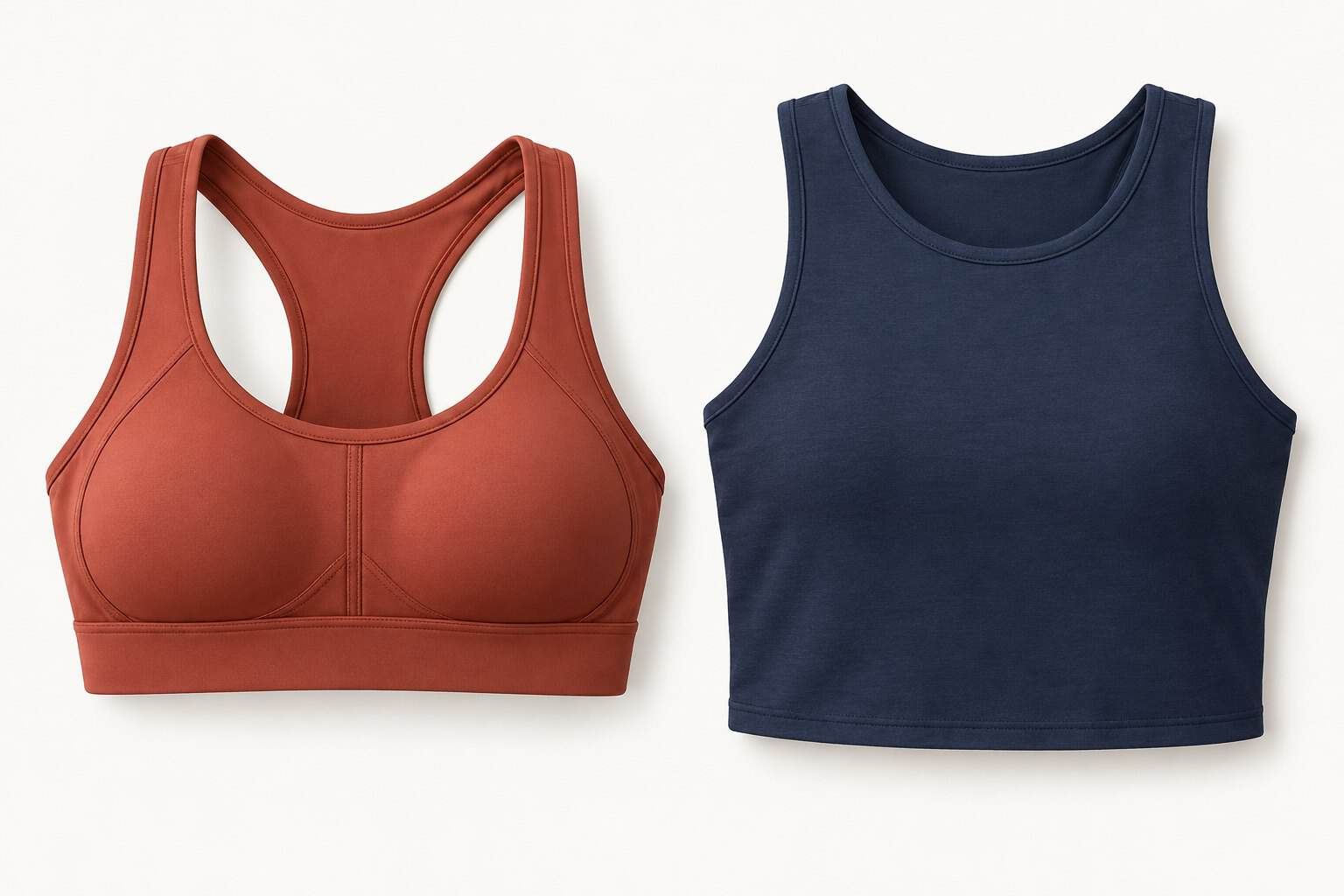
Show the support construction, cups or internal layers, band, straps, coverage and finished shape. Where a top combines features, ask the reviewer to consider the complete article. Avoid promising a classification based only on a removable pad or a product-page label.
Keep a matching bra and leggings identifiable as separate styles in the technical file. Then have the reviewer apply the relevant apparel and set rules. Matching colors, one retail price or one polybag do not automatically establish one classification for the entire outfit.
When pieces can change independently, preserve their individual specifications and records. The customs treatment must then be decided from the actual goods and applicable rules.
Build a classification record for each style
Create a style-level record before the order reaches shipment preparation. It should let a new colleague trace the proposed code back to the garment, rather than relying on a supplier email that says “same as last time.”
Keep these fields together:
- Style reference, garment description and approved specification revision.
- Knit or woven structure, component descriptions and fiber percentages.
- Wearer information and any construction features relevant to the classification.
- Front, back and detail photographs, plus the approved sample reference.
- Proposed full HTSUS number, reasoning and any ruling relied on.
- Country-of-origin evidence, planned entry date and rate-review date.
- Customs-value calculation and separately identified duties and fees.
Origin and classification are distinct determinations. A shipping address alone does not establish apparel origin. Provide the production information the broker needs to review it, especially where fabric manufacture, cutting, sewing or other operations occur in different countries.
For a collection containing several constructions, group genuinely comparable styles for review but retain each style’s identity. If two products receive one code, the file should explain why their differences do not change that classification.

Can a classification error consume 10% of gross profit?
It can under particular assumptions. The percentage is a calculation, not an industry-wide loss estimate. Misclassification may produce underpayment or overpayment; it does not always mean the importer paid too much.
Consider a hypothetical order with $10,000 customs value, $20,000 sales revenue and $5,000 expected gross profit after the costs already included in the buyer’s plan. Assume all units sell at the planned price and every other cost stays unchanged.
If a classification correction increases the applicable ad valorem duty by 5 percentage points, applied to that same $10,000 value, the extra duty is $500. Gross profit falls from $5,000 to $4,500. The decrease is 10% of expected gross profit because $500 divided by $5,000 equals 10%.
Gross margin falls from 25% to 22.5%, a decline of 2.5 percentage points. That is different from saying the margin rate fell by 10 percentage points. It is also different from applying 5% to the $20,000 retail revenue.
For a simple scenario check, use: extra duty = confirmed customs value multiplied by duty-rate difference, then share of expected gross profit lost = extra duty divided by expected gross profit. The second calculation requires positive expected gross profit. Specific or compound duties and charges using a different base need their own calculation.
All figures here are invented planning inputs. They are not current activewear duty rates, a DTS quotation or evidence that changing a code will save money. Once the correct treatment is confirmed, enter the actual amounts in the clothing landed cost calculator.

Ask the broker to separate classification from total entry cost
A correct ordinary apparel code does not by itself establish the full amount payable. Ask for the classification, customs-value basis, origin, expected entry date and each applicable duty or fee as separate items. Have the broker identify any additional provisions and confirm whether a claimed exclusion or preference actually applies.
For China-origin goods, CBP’s Section 301 guidance explains why additional provisions need their own review. Do not turn a percentage copied from a previous shipment into a standing rate for the whole collection. Other current measures also need entry-date verification.
The USITC information page listed 2026 HTS Revision 21, published October 9, 2026, at this guide’s review. Check the current release announcement again when preparing the entry. A saved schedule proves what you consulted, not that no later change applies.
Using a broker does not transfer all responsibility away from the importer. CBP’s tips for new importers state that the importer of record remains responsible for the entry’s correctness and applicable duties, taxes and fees. Keep the review and supporting records accessible to the importing business.

When should you consider a binding ruling?
Consider asking about an advance ruling when a meaningful classification uncertainty remains after reviewing the garment and official provisions. A hybrid top, an unusual support construction or a recurring high-value style may justify resolving the issue before repeated orders multiply the exposure.
Prepare a clear description, construction and composition details, photographs and any samples requested. Explain the specific classification question and the candidate provisions. Follow CBP’s electronic ruling request requirements, including required disclosures and sample instructions, rather than treating a generic product photo as a complete application.
A published ruling on another garment is useful research. Check whether its facts match yours and whether later action affects it. It should not be copied into your file as if CBP had reviewed your own sample. Ask the broker or adviser to explain the relevance and limitations of any ruling used.
Record who will track the request and how its outcome will be incorporated into the purchasing and entry records. Do not promise a response time or clearance outcome without a basis for that specific case.

Recheck the record before repeat orders
Repeat orders are where an old classification can become detached from a revised garment. A purchasing team may keep the same style name while the fabric, liner or support construction changes. The supplier’s invoice can then repeat a code that was never reviewed against the replacement.
Before releasing a reorder, compare the current specification with the version used for the earlier review. Flag changes to fiber percentages, fabric structure, garment construction, wearer details, production locations and shipment timing. Some changes affect classification; others may affect origin or applicable charges instead.
Give the reviewer the change list and ask which determinations need updating. Preserve the answer with the revised file. Even where the physical garment is unchanged, verify entry-date measures rather than assuming the previous shipment’s total rate remains available.
If you discover a past error, keep the relevant entries and evidence and obtain advice on the correction route and deadlines. Do not assume an automatic refund, use a guessed time limit or silently switch future codes without investigating the earlier treatment.
Clothing HS code questions buyers ask
What is the HS code for sportswear clothing?
Sportswear spans several garment categories. Identify the article first, then its construction and material. A tee, shorts and bra may start in different heading families. The word “sportswear” alone does not establish a complete code.
Is the supplier's HS code the same as my U.S. HTS code?
It may identify a useful international starting point, but national subdivisions differ. Have the full U.S. import code checked against your actual product. Do not assume a supplier’s export declaration number is interchangeable with the U.S. entry number.
Is there one HTS code for a polyester activewear collection?
No. Polyester composition does not make tees, shorts, sweatshirts and bras the same type of article. Review garment construction and the applicable provisions as well as fiber content. Keep the classification evidence by style.
Can an AI tool choose the final code?
An AI-generated suggestion can help organize a search, but it is not a CBP determination. Check the official hierarchy, legal notes and product facts. Resolve uncertainty with a qualified reviewer or the applicable ruling process before relying on the number in an entry.
Does a lower-duty code mean the classification is better?
No. Choose the classification supported by the actual merchandise and rules. Compare costs only after that decision. A cheaper code for a different garment is not an available saving for the product you are importing.
Can DTS provide the customs classification decision?
DTS’s relevant role is apparel development and production information. Request a clear product specification, material and construction details, and the appropriate order documentation. Have your customs broker or adviser confirm classification, origin and entry charges; this guide does not establish that DTS provides customs brokerage.
Confirm the garment facts before approving the order
Review the code before the goods are packed. Match the approved sample to its material and construction record, resolve the full import classification, and calculate the order using verified charges. Keep those decisions together so the next production revision or reorder triggers a deliberate check.
A code is hard to review later if its supporting facts are missing. A style file with a sample reference, review explanation and current cost inputs gives purchasing a usable basis for approval.
Prepare a clearer apparel specification with DTS
If your product file lacks shell-and-liner details, fiber percentages or a consistent style description, start with tech pack customization. Send DTS the garment reference, available material specification, construction requirements and planned size-and-color quantities. Request a product and packing quote based on that same brief, then pass the confirmed garment information to your customs reviewer. This separates the manufacturing quotation from the import classification and charge calculation while keeping both tied to the same product.