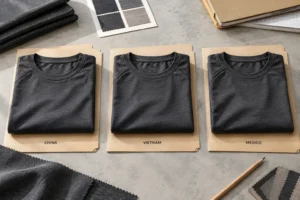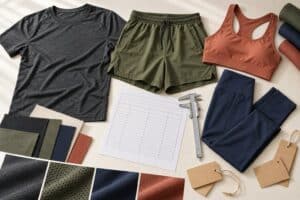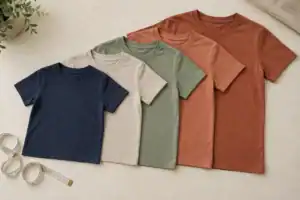
Muslin fabric is usually a plain-weave cotton fabric made in a range of fine, open, bleached, unbleached, and utility weights. For an apparel buyer, the word muslin is only a starting label. Confirm fiber content, yarn, weave density, GSM, usable width, finish, shrinkage, and end use before approving a sample.
This guide explains what muslin fabric is, how it behaves in garments, when it works as a toile or final fabric, and which specifications a brand should send to a supplier.
What Is Muslin Fabric?
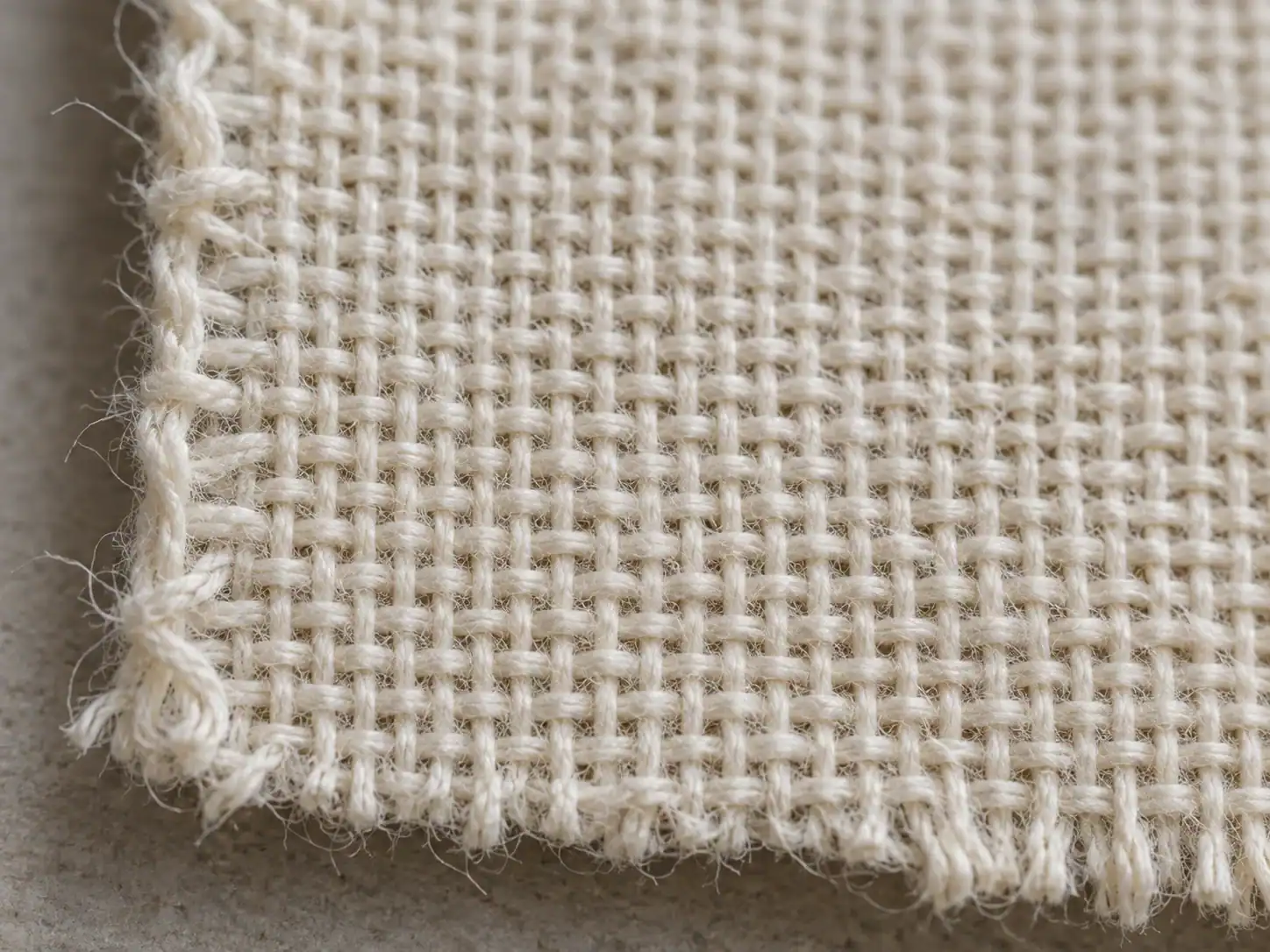
Muslin fabric is a woven cloth traditionally associated with cotton and a plain weave. The fabric name can describe very different constructions, from a light, gauzy cloth to a firm utility fabric used for pattern work, draping, or test garments. That variation is why a supplier quotation should never rely on the word muslin alone.
In common apparel sourcing language, muslin usually refers to a simple cotton cloth with an even surface and little built-in stretch. It may be bleached, unbleached, dyed, printed, brushed, or finished for a particular hand feel. Regional naming also matters. A fabric sold as muslin in one market may be described as calico, cotton gauze, toile fabric, or a lightweight plain weave in another.
| Attribute | What the buyer should confirm | Why it matters |
|---|---|---|
| Fiber content | Cotton, cotton blend, or another declared fiber | Affects care, feel, testing, and labeling |
| Construction | Plain weave, yarn count, density, and balance | Helps predict stability, opacity, and seam behavior |
| Weight | Finished GSM or mass per unit area | Influences drape, coverage, and production yield |
| Finish | Bleached, unbleached, dyed, softened, or coated | Changes hand feel, shade, shrinkage, and use |
| Intended use | Toile, sample, lining, shirt, lounge piece, or final garment | Sets the right acceptance criteria |
Muslin is therefore better understood as a fabric family and trade description than as one fixed specification. The CottonWorks overview of plain weaves explains why plain weave is stable and widely used, while a commercial buyer still needs the supplier’s actual construction and test data.
How Muslin Fabric Is Woven

Most muslin is based on a plain weave. In a basic one-over, one-under structure, warp yarns run lengthwise and filling yarns run across the width. The frequent interlacing points create a relatively stable surface, although an open or very lightweight construction can still distort during washing, cutting, or sewing.
Plain weave does not tell you the whole story. Two fabrics can both be plain weave and feel completely different because of yarn size, twist, density, finishing, and GSM. A firm utility muslin may hold a pattern shape, while a loose double gauze may feel soft and move with the body.
| Weave or construction cue | Typical behavior | Buyer question |
|---|---|---|
| Balanced plain weave | Even face and back, stable surface | Is the warp and filling density balanced after finishing? |
| Open plain weave | More air movement and transparency | What lining or opacity treatment is required? |
| Dense plain weave | More coverage and body | Will it remain comfortable in the intended climate? |
| Double-layer gauze | Soft hand and extra loft | Are the layers joined consistently across the roll? |
The weave should be checked on a physical swatch rather than inferred from product photography. Ask for the finished fabric width, a close-up of both sides, and a small cut that has been conditioned or washed in the same way as the proposed production fabric.
Muslin Fabric Types: Single Layer, Double Gauze and Utility Grades
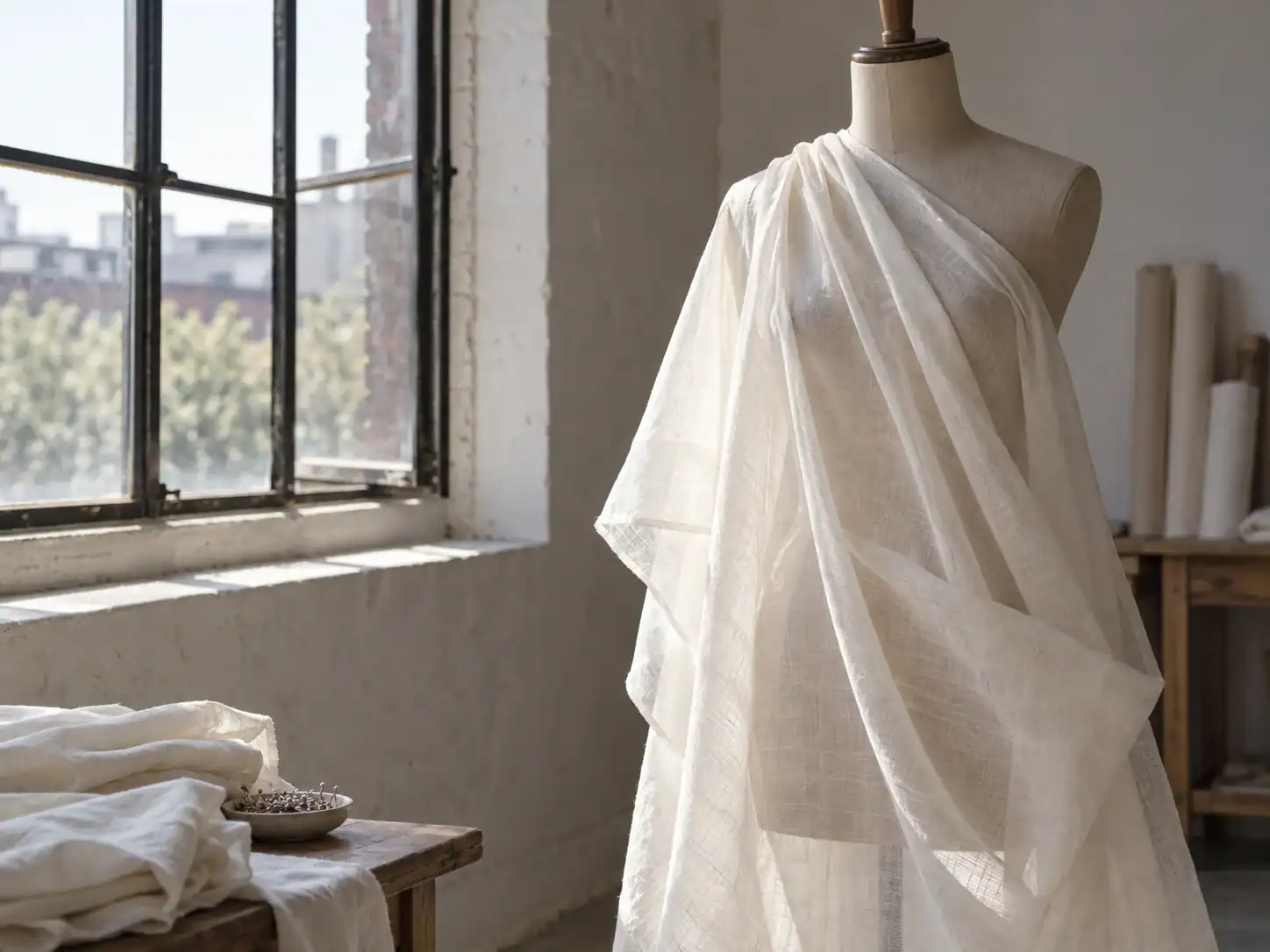
Muslin types are usually separated by construction, weight, finish, and intended use rather than by one universal grading system. A single-layer muslin may be fine and semi-sheer, while a heavier utility grade can be used for test garments, pressing, pattern manipulation, or low-cost prototypes.
| Type or trade description | Useful for | Watch before approval |
|---|---|---|
| Fine or gauzy single layer | Lightweight tops, drape studies, soft accessories | Transparency, seam durability, and shrinkage |
| Unbleached utility muslin | Toiles, first prototypes, pattern checks | Shade variation, loose yarns, and surface marks |
| Bleached or finished muslin | Cleaner presentation samples and light garments | Chemical finish, yellowing, and post-wash hand |
| Double gauze or double layer | Soft casual styles, babywear, loungewear | Layer alignment, snagging, and seam bulk |
| Firm sample muslin | Draping, block development, and test garments | Whether its stiffness represents the final fabric |
For pattern work, a muslin or toile is often a test garment made to check shape and balance. It does not automatically mean the same fabric will be used in the final garment. A toile that is much stiffer, lighter, or less slippery than the production fabric can give misleading fit feedback.
Is Muslin Fabric Breathable and Lightweight?
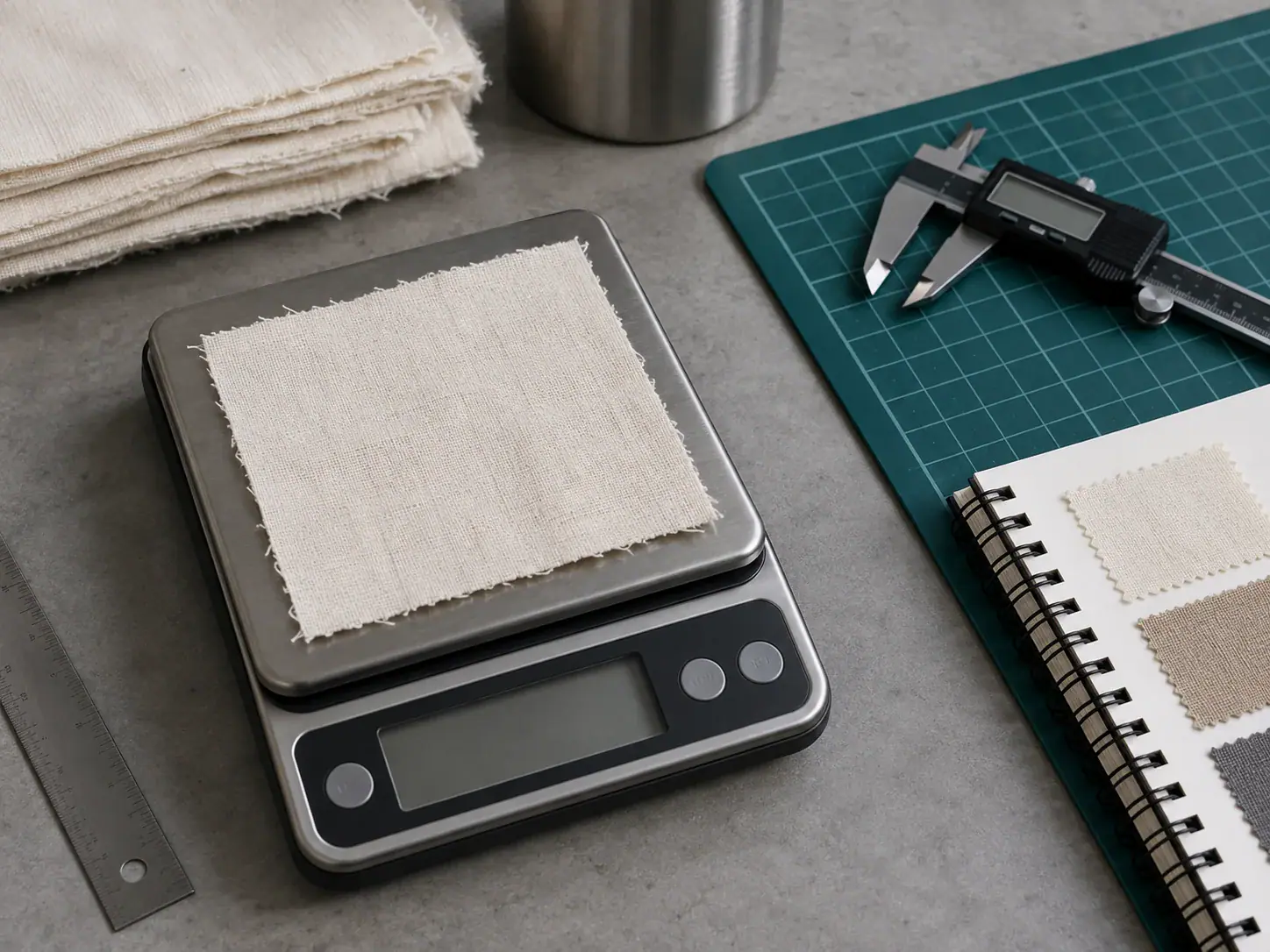
Many lightweight muslins feel breathable because their low mass and open construction allow air to pass through the cloth. That does not mean every muslin has the same airflow, absorbency, or drying behavior. Yarn density, finish, layers, and garment design all change the result.
For a summer shirt, loose blouse, sleepwear piece, or relaxed lounge garment, a lighter muslin may provide a comfortable hand and easy drape. For a lined garment, the open surface may be useful as a design choice but still require a lining or facing. For activewear, muslin is usually a development or casual-wear fabric rather than a substitute for a tested stretch performance fabric.
| Buyer goal | What to verify | Practical decision |
|---|---|---|
| Airier summer garment | GSM, cover factor, and airflow or hand comparison | Request a conditioned swatch and a wear test |
| Soft lounge style | Surface hand, drape, and wash recovery | Compare before and after laundering |
| Semi-sheer design | Opacity at the intended color and light | Test the actual shade, not only white fabric |
| Sweat-facing product | Moisture behavior and drying time | Use a performance fabric if the brief requires wicking |
Breathability is therefore a property to validate, not a slogan to attach to the fabric name. The AATCC standards directory lists test methods for moisture management and related textile performance when a measurable claim is required.
Muslin Fabric GSM, Weight and Usable Width

Muslin does not have one fixed GSM. Fine cloth, double-layer gauze, firm toile cloth, and utility muslin can sit in very different weight bands. Use a planning band only to start a conversation, then approve the finished fabric by measured mass, width, and hand.
| Planning description | Indicative use | Specification to request |
|---|---|---|
| Light and open | Drape study, airy top, soft lining | Finished GSM, cover, and opacity |
| Light to medium | Shirt, relaxed blouse, lounge sample | GSM, usable width, and shrinkage |
| Medium utility | Toile, block test, or structured sample | GSM, stiffness, and seam behavior |
| Layered or heavier | Double gauze or more substantial casual style | Total GSM, layer attachment, and bulk |
These are planning descriptions, not universal industry grades. For a commercial quotation, use the ASTM D3776/D3776M fabric mass test reference as a reminder that fabric weight should be measured by a stated method and sample basis. Also request usable width after finishing. A roll that meets GSM but loses width after washing can change marker efficiency and garment yield.
Is Muslin Fabric Stretchy?
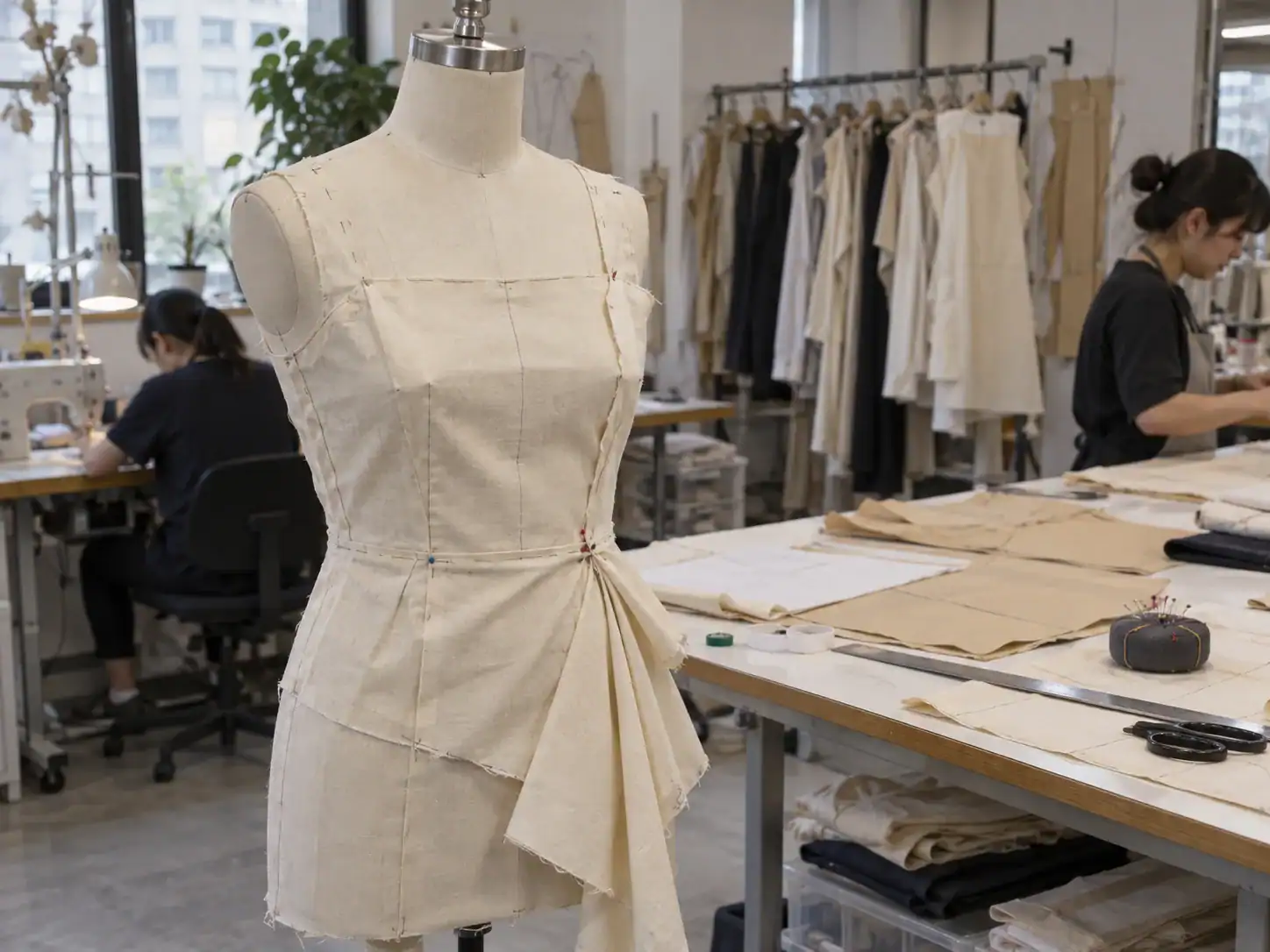
Standard muslin has little mechanical stretch because it is a woven plain-weave fabric. It can move slightly on the bias, and a loose construction can feel flexible, but that is different from the controlled recovery expected from a knitted activewear fabric or an elastane blend.
If a muslin style needs movement, specify the fit ease, grain direction, seam allowance, and any blend or finish that creates extra comfort. Do not approve a woven sample by pulling it across the width and calling that stretch. Measure the actual extension and recovery if stretch is part of the product brief.
For a fitted tank, compression short, or performance legging, muslin may be useful for a first shape check but is usually not the final material. A jersey fabric guide can help compare a knit structure with the woven behavior of muslin.
Muslin Fabric Uses in Apparel and Sampling

Muslin is especially useful when a buyer needs a low-risk way to check shape, balance, proportion, or construction before using a more expensive final material. Designers and sample rooms may use it for draping, toiles, pattern corrections, early fit samples, and construction tests.
Possible final-garment uses include relaxed shirts, lightweight tops, loungewear, sleepwear, babywear, summer pieces, linings, and garments where a natural plain-weave look is part of the brief. The right choice depends on opacity, durability, care, and the desired visual hand.
| Project stage | Why muslin can help | What it cannot prove by itself |
|---|---|---|
| Draping | Shows the relationship between pattern shape and cloth movement | Final drape if production fabric is different |
| First toile | Reveals balance, ease, neckline, and seam placement | Final shade, hand, and performance |
| Construction sample | Helps test pockets, facings, gathers, or trims | Bulk workmanship on the final lot |
| Final casual garment | Can provide a light, natural woven appearance | Stretch recovery or moisture management unless tested |
When the sample is intended only as a toile, label it clearly in the tech pack. If the buyer wants a muslin final garment, approve a production-representative swatch and wash it before approving fit.
Muslin vs Cotton: What Is the Difference?

Cotton describes a fiber. Muslin describes a fabric name that is traditionally associated with cotton and plain weave. A cotton fabric can be jersey, twill, denim, poplin, fleece, or muslin depending on its construction and finishing. Muslin is therefore not a replacement word for every cotton fabric.
| Term | What it identifies | What still needs to be specified |
|---|---|---|
| Cotton | A natural fiber family | Yarn, weave, weight, finish, and color |
| Muslin | A plain-weave fabric name, often cotton | Fiber percentage, density, GSM, width, and finish |
| Cotton gauze | An open cotton construction or trade label | Layer count, openness, and seam stability |
| Cotton toile | A test garment or sample use context | Whether the cloth represents the final fabric |
This distinction matters in buyer conversations. If the brief says “100% cotton muslin,” the supplier should still confirm whether the cloth is single layer, double gauze, bleached, unbleached, open, dense, or finished. For a broader explanation of cotton fiber choices, see the cotton fabric guide.
Muslin Fabric Care, Shrinkage and Dimensional Stability
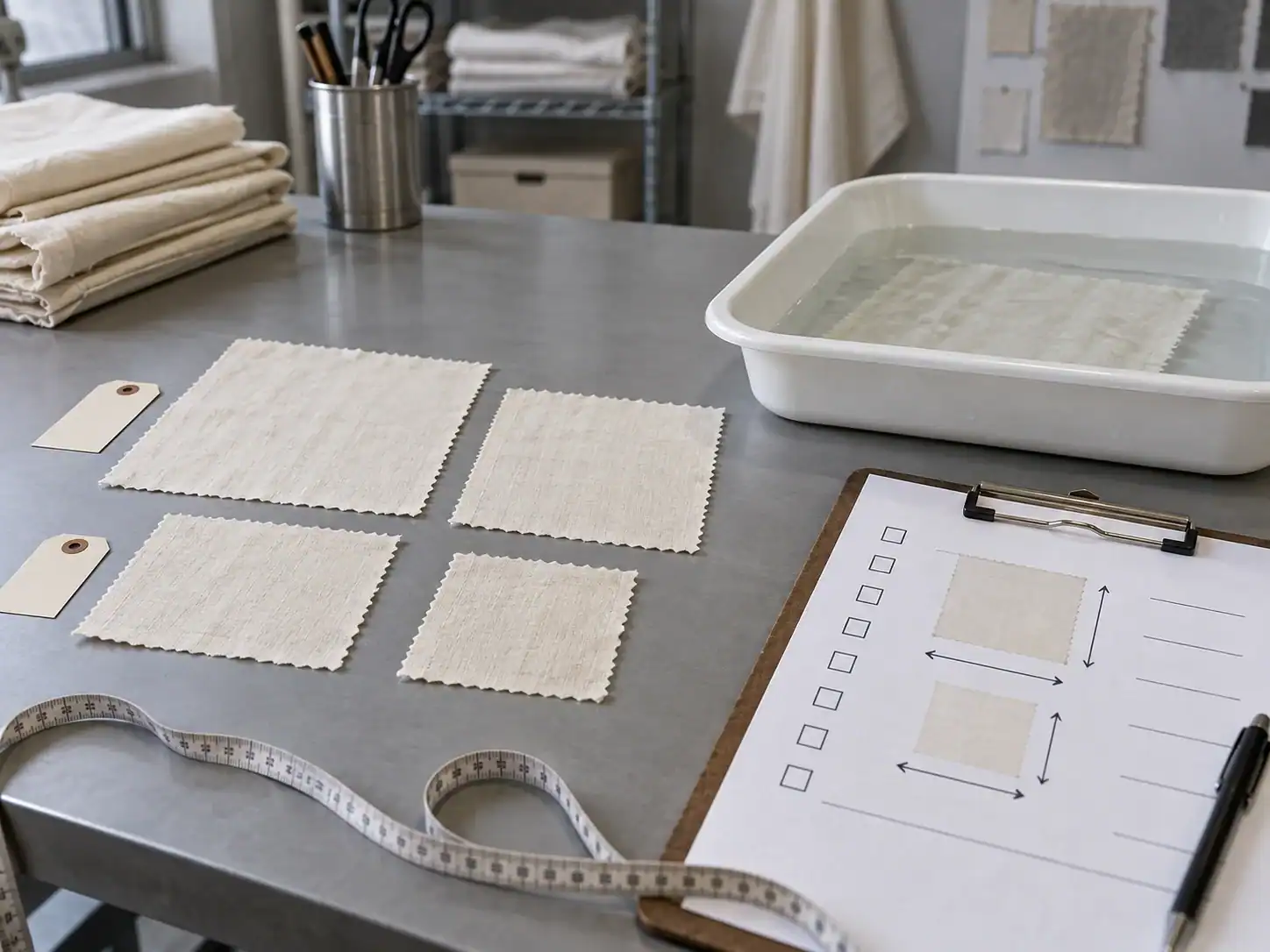
Cotton muslin can change in length, width, hand, and surface after washing or steaming. Open constructions may move more than dense ones, and a soft finish can relax or wash out. Record the care process used for the approval sample, because a sample washed by hand cannot be compared directly with a production standard based on machine laundering.
Before bulk approval, check length and width after the proposed care cycle, then review skew, seam appearance, surface fuzz, color change, and any layer separation. AATCC TM135 is a recognized reference for dimensional change after home laundering, while the buyer should still confirm the exact method, temperature, detergent, drying, and acceptance tolerance for the product.
Do not publish a fixed shrinkage promise for all muslin. Put the accepted result in the purchase specification and keep a retained swatch or signed approval standard for comparison during production.
How to Specify Muslin in a Tech Pack

The tech pack should describe the fabric in measurable fields instead of using “soft muslin” as the complete requirement. A clear specification reduces quotation questions and makes the sample review more objective.
| Tech pack field | Example instruction | Why it is needed |
|---|---|---|
| Fiber content | State the required percentage and blend tolerance | Supports labeling and material approval |
| Construction | Plain weave, single layer, or double layer | Aligns the supplier and pattern team |
| Finished GSM | Target value with permitted tolerance | Controls coverage, hand, and yield |
| Usable width | Measure after agreed finishing | Protects marker and consumption calculations |
| Finish | Bleached, unbleached, softened, or other finish | Prevents a hand-feel mismatch |
| Color | Pantone, lab dip, or approved physical standard | Controls shade across sampling and bulk |
| Care process | Wash and dry method for approval | Makes shrinkage data comparable |
| End use | Toile, shirt, lounge, lining, or final garment | Sets the relevant testing level |
Add a physical swatch whenever the hand or openness matters. Include photos of the face and reverse, a measured swatch weight if relevant, and a note about whether the sample represents the final production material.
For confidential projects, buyers can send a moodboard or specification through the tech pack customization service. The useful starting information is the target garment, final use, fabric preference, expected quantity, color direction, decoration, care label requirement, and delivery window.
What to Test Before Bulk Approval

The right test plan depends on whether the muslin is a toile, a casual final fabric, or a component of a layered garment. At minimum, compare the submitted lot with the approved swatch for composition, color, GSM, usable width, hand, and visible defects.
| Property | Why the buyer checks it | Possible reference or method |
|---|---|---|
| Fiber content | Confirms the declared material | Supplier declaration plus laboratory verification when required |
| Mass per unit area | Controls weight and garment yield | ASTM D3776/D3776M or agreed equivalent |
| Dimensional change | Predicts post-wash fit movement | AATCC TM135 or the approved care protocol |
| Colorfastness | Protects shade and staining performance | Relevant AATCC colorfastness method |
| Seam and tear behavior | Protects construction in use | Agreed woven-fabric seam or tear test |
| Airflow or moisture behavior | Supports a measurable comfort claim | AATCC method selected for the claim |
For a first sample, a practical check may be a conditioned swatch, a wash comparison, a tape-measured width check, and a garment inspection. For a bulk program, define the lot, sampling level, test laboratory, and tolerance before production begins. ASTM’s textile standards overview explains that textile methods cover physical, mechanical, and chemical properties and should be matched to the intended end use.
Do not report an unperformed test as a passed result. If a buyer needs a certificate, laboratory report, restricted-substance review, or market-specific compliance document, identify it as a required document and confirm its scope against the exact material and product.
A Practical Muslin Sampling Workflow
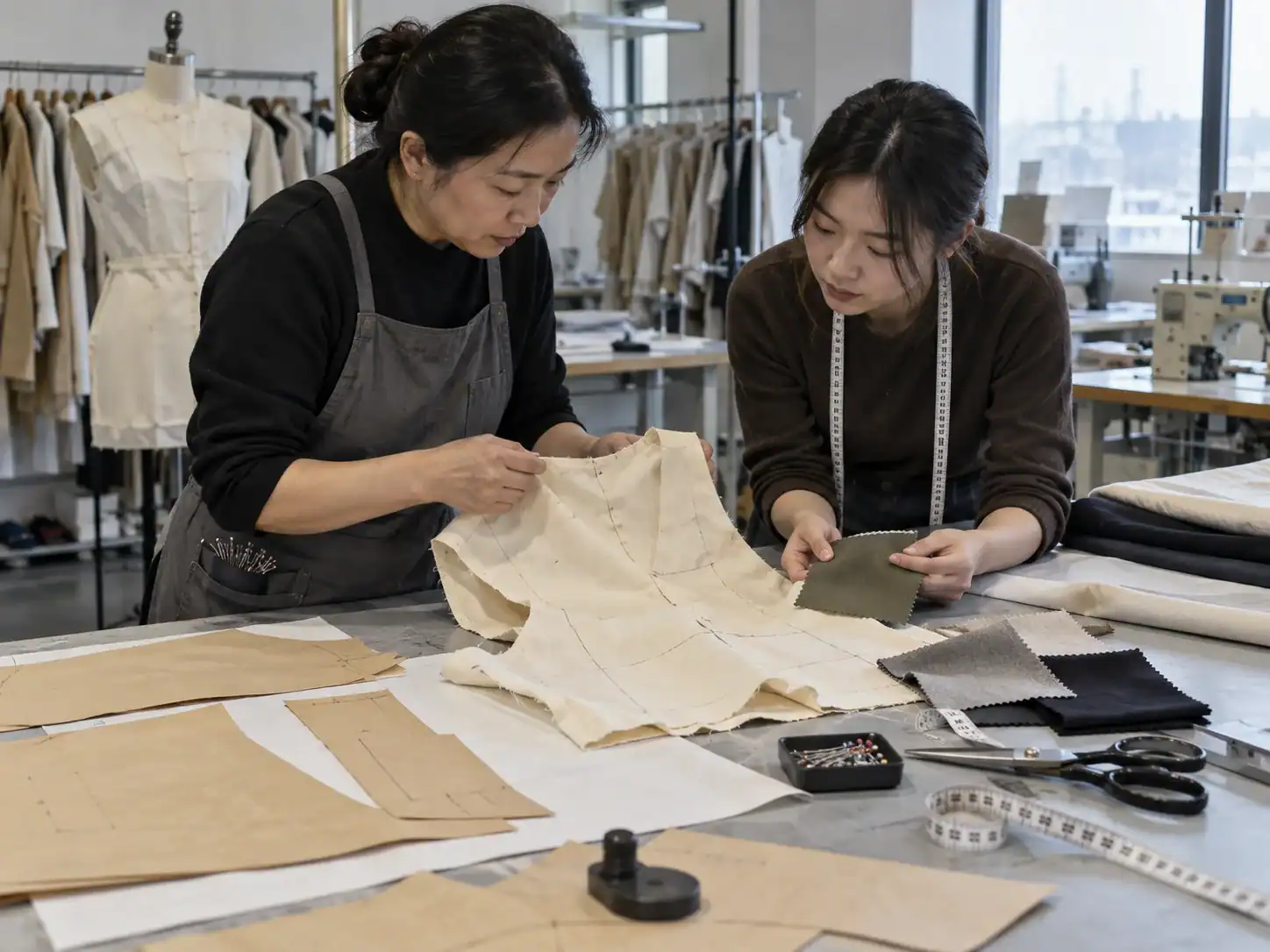
Start with the product decision, not the fabric name. A simple sampling path can keep the fabric, pattern, and production requirements aligned:
- Define the garment use, target fit, color, care route, and whether the muslin is a toile or final fabric.
- Request fabric swatches showing fiber content, construction, GSM, width, finish, and available colors.
- Wash or condition the swatch using the intended care process and record the measured change.
- Make the first toile or prototype, then review balance, ease, neckline, armhole, seam placement, and construction.
- Convert the approved decisions into a tech pack with tolerances, trim notes, decoration, labels, and packaging requirements.
- Approve the production-representative sample and retain the signed fabric standard before bulk cutting.
The sampling and prototyping service is the relevant next step when the buyer needs help converting an early concept into a measurable sample plan. A toile can answer fit questions quickly, but it should not be used as proof of final colorfastness, performance, or bulk consistency.
Common Muslin Sourcing Mistakes
The most common mistake is treating muslin as one fixed quality. Buyers may approve a photograph or a vague hand description and only discover later that the fabric is too open, too stiff, too transparent, or too unstable for the garment.
Avoid these problems by asking for the actual specification before sampling:
- Do not quote only “cotton muslin.” State fiber content, construction, GSM, width, finish, and intended use.
- Do not use a stiff toile to judge the final drape of a soft production fabric.
- Do not skip the wash test when the garment fit depends on a stable finished width.
- Do not compare two swatches without recording whether they were bleached, softened, or washed.
- Do not assume a breathable fabric is moisture-wicking or suitable for high-sweat activewear.
- Do not approve color from a screen image when the project needs a lab dip or physical shade standard.
- Do not lose the approved swatch, tolerance, or care route when the project moves from sample to bulk.
These controls are simple, but they give the supplier and buyer the same reference when a later sample needs correction.
Frequently Asked Questions
Muslin is usually a plain-weave cotton fabric made in different weights and finishes. In apparel, the name may describe a fine cloth, utility fabric, double gauze, or a toile material. Confirm fiber content, weave, GSM, width, finish, and intended use before approving it.
Traditional muslin is associated with cotton, but commercial listings can use the name differently. Ask the supplier for the declared fiber content and any blend tolerance. A cotton label alone does not define the weave, weight, finish, or garment performance.
Most muslin is woven in a plain weave, with warp and filling yarns crossing at regular intervals. It therefore behaves differently from jersey or other knits. Check the actual construction because double-layer and open structures can feel much softer or more flexible than firm utility muslin.
Standard muslin has little mechanical stretch. A loose weave or bias cut can provide some movement, but that is not the same as stretch recovery. If the garment needs controlled extension, specify a suitable blend or performance fabric and measure extension and recovery during approval.
Many lightweight muslins feel breathable because they use low mass or an open construction. Breathability varies with GSM, density, layers, finish, color, and garment design. Treat it as a property to compare or test rather than a universal promise for every muslin quality.
Muslin can work for relaxed shirts, lightweight tops, lounge pieces, sleepwear, linings, and prototypes. It is also useful for toiles and draping. For fitted activewear or high-sweat products, confirm stretch, recovery, opacity, durability, and moisture behavior before selecting it as the final fabric.
Muslin is a broad fabric name usually linked to plain-weave cotton, while double gauze describes two light layers joined at intervals. A double gauze can be sold as a muslin type, but the buyer should confirm layer construction, total GSM, seam bulk, and wash behavior.
Request fiber content, construction, finished GSM, usable width, finish, color standard, shrinkage result, care route, sample swatch, and any required test reports. Also state whether the fabric is for a toile or final garment, because the approval criteria are different.
Muslin Quote Checklist
Before requesting a muslin fabric or garment quote, send enough information for the supplier to price the same product you intend to approve. The following checklist keeps the conversation focused:
| Quote input | Minimum information to send |
|---|---|
| Product | Garment type, target wearer, and final or toile use |
| Fabric | Fiber content, construction, GSM target, finish, and width |
| Color | Reference image, Pantone, lab dip, or physical standard |
| Fit | Size range, measurement chart, ease, and grade rules |
| Construction | Seams, gathers, plackets, pockets, facings, and reinforcement |
| Decoration | Print, embroidery, wash, label, trim, or no decoration |
| Quantity | Sample quantity and estimated bulk quantity by color and size |
| Quality | Required tests, inspection points, and retained approval standard |
| Packaging | Folding, polybag, carton, barcode, and shipping marks |
| Timing | Sample deadline, approval date, and target delivery window |
If the project is still at moodboard stage, send the reference garment, sketch, or incomplete tech pack and clearly mark what is undecided. DTS Activewear can review the fabric direction alongside pattern, sampling, labels, decoration, and packaging requirements. Request a custom quote with the garment type, fabric brief, quantity, and target timing so the next step is specific.