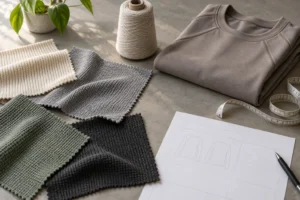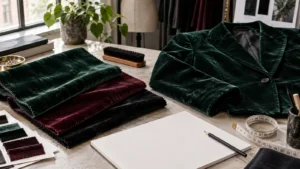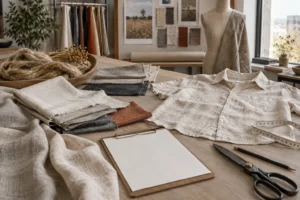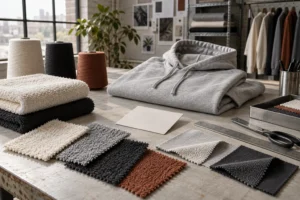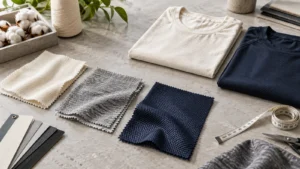
The phrase "types of fabric" can describe three different things: the fiber inside the yarn, the way the yarns are knitted or woven, and the finish applied to the surface. Cotton, polyester, and nylon are fiber families. Jersey, fleece, mesh, denim, and twill describe constructions or fabric categories. Brushing, coating, printing, and softening describe finishes.
For an apparel buyer, the useful fabric type is not a name on a swatch card. It is a complete specification that connects fiber content, construction, GSM, usable width, stretch and recovery, hand feel, finish, care route, decoration, and finished-garment testing to one product.
The short answer: how clothing fabrics are classified
Most clothing fabrics can be understood through five layers. Keeping the layers separate makes it easier to compare supplier quotes and prevents a buyer from treating a construction name as if it were a fiber composition.
| Layer | What it describes | Common examples | Buyer question |
|---|---|---|---|
| Fiber | The material used to make the yarn | Cotton, polyester, nylon, wool, rayon | What is the exact fiber content by weight? |
| Construction | How yarns become a textile surface | Knit, woven, nonwoven, jersey, twill | How will the fabric stretch, drape, and hold shape? |
| Weight and dimensions | The physical quantity and usable size | GSM, width, thickness, tube width | Does it suit the garment pattern and target hand? |
| Finish | A treatment that changes the surface or behavior | Brushed, peached, coated, printed, softened | What was applied, and how does it affect care and testing? |
| Garment context | The way the fabric is cut, sewn, decorated, and worn | Tee, tank, short, jogger, base layer | What happens at seams, high-friction zones, and after washing? |
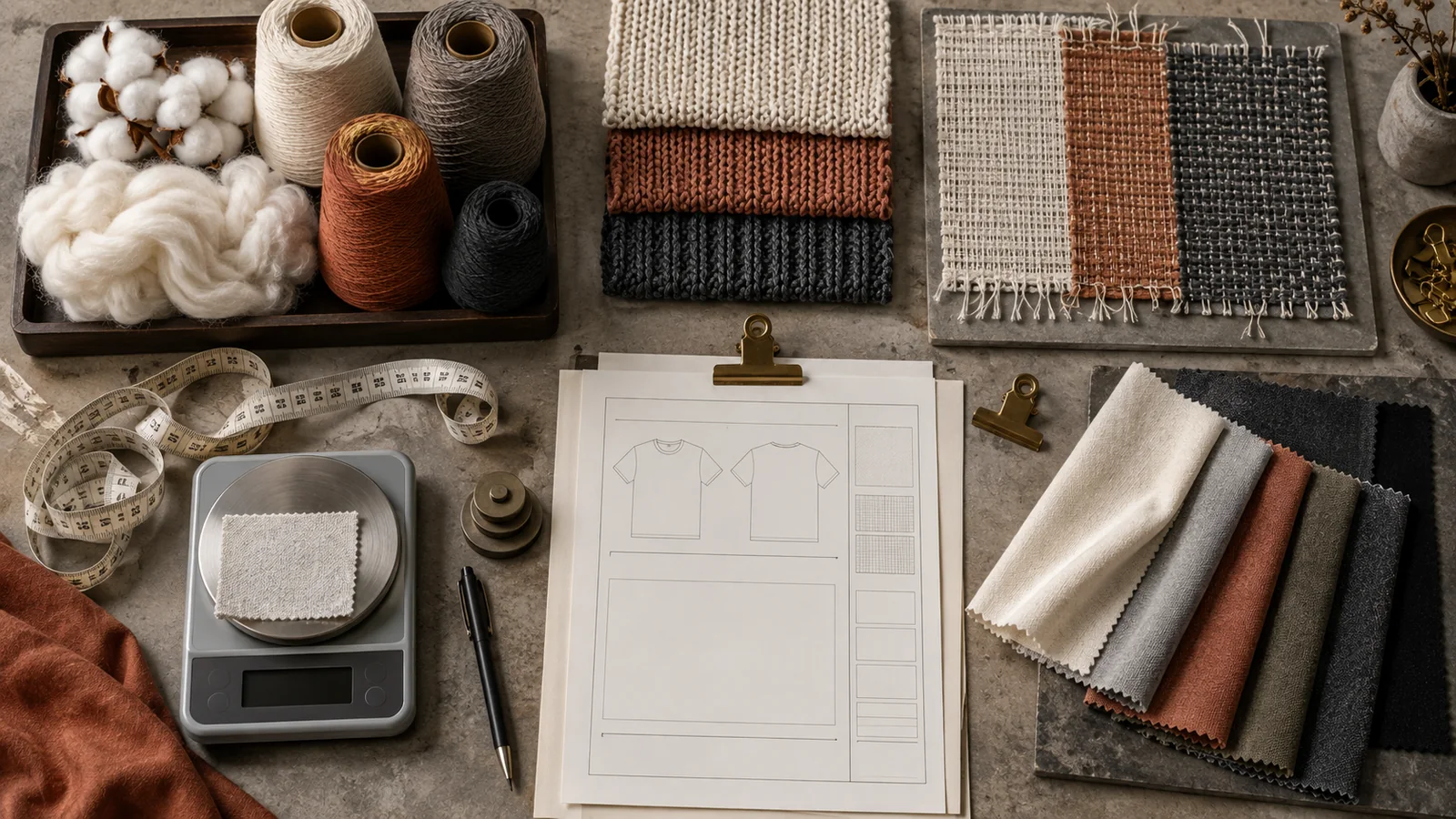
The Federal Trade Commission’s textile guidance treats fiber and fabric as related but different concepts. That distinction is useful in sourcing: a quote that says only "premium fabric" or "sports material" does not give a product team enough information to approve a sample.
24 types of fabric buyers see in clothing development
The list below groups fabric names by what they primarily describe. Several categories overlap. A cotton jersey, for example, combines a cotton fiber with a jersey knit construction. A polyester fleece combines a polyester fiber with a knitted and brushed surface. That is why two fabrics can share one name and still produce different garments.
Natural fiber fabrics
1. Cotton
Cotton is a natural cellulosic fiber commonly used in tees, sweatshirts, underwear, casualwear, and lightweight woven garments. It can feel comfortable next to the skin and can absorb moisture, but the final result depends on yarn quality, knit density, finishing, blend ratio, and care route. Record shrinkage, colorfastness, spirality, pilling, and print behavior on the actual construction.
2. Linen
Linen is made from flax and is often selected for an airy hand, visible texture, and warm-weather garments. It can crease readily and may need a different pattern and finishing approach from a smooth knit. For a quote, ask for fiber content, yarn size, slub level, usable width, opacity, shrinkage, and whether a linen blend is acceptable.
3. Wool
Wool is a protein fiber used for warmth, insulation, knitwear, outer layers, and some performance products. Merino and other wool grades can feel very different in fineness, strength, and next-to-skin comfort. Check the fiber grade, yarn count, construction, treatment, pilling expectation, care route, and whether the garment needs a lining.
4. Silk
Silk is a protein fiber known for a smooth hand and fluid appearance, but silk fabrics vary by weave, weight, luster, and finishing. It is more often relevant to fashion, lining, or premium comfort products than to high-abrasion training garments. Record the exact silk content, weave, colorfastness, snag risk, seam behavior, and care instructions.
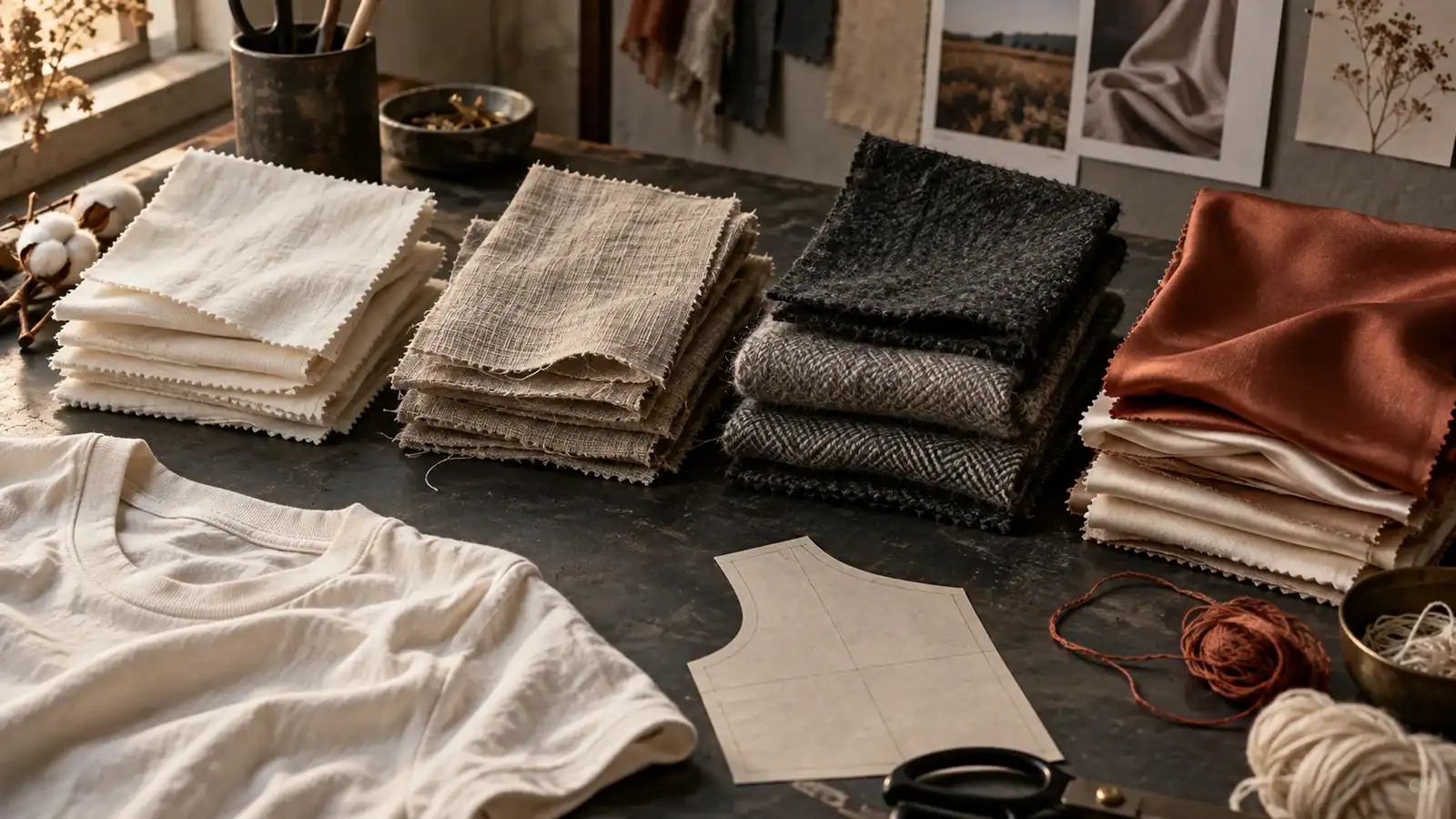
Natural does not mean automatically better for every garment. It only identifies the origin of the fiber. A buyer still needs to compare construction, finished weight, durability, care, and the intended activity.
Manufactured synthetic fiber fabrics
5. Polyester
Polyester is a widely used manufactured fiber for activewear, tees, shorts, outer layers, and blends. It can be engineered for color retention, durability, low moisture absorption, and drying behavior, but those properties vary by yarn, cross-section, knit, finish, and treatment. Ask for the exact composition and test the finished garment before describing it as quick-drying or moisture-wicking.
6. Nylon
Nylon is a polyamide fiber often used where a smooth hand, strength, abrasion resistance, or stretch-blend platform is useful. It appears in performance knits, swimwear, training garments, lightweight woven shells, and leggings. Ask for the nylon type, denier or yarn information where relevant, blend ratio, recovery, colorfastness, abrasion, and care route.
7. Elastane or spandex
Elastane, also called spandex in the United States, is commonly added in a small percentage to provide stretch and recovery. It is not a complete fabric category by itself. The result depends on the base fiber, yarn arrangement, knit structure, percentage, garment tension, and heat or chemical exposure. Measure extension and recovery at the actual waistband, neckline, hip, or compression zones.
8. Acrylic
Acrylic is a manufactured fiber often used as a wool-like alternative in sweaters, knit accessories, and some blended products. It may offer lightness and color options, but it can have different heat, pilling, static, and care considerations from wool. Check the product purpose and surface performance before using it in a high-friction activewear style.

Textile Exchange’s materials portfolio is a useful starting point for distinguishing material families and preferred-material terminology. A material-family description does not prove a product-level claim, so keep supplier declarations and test evidence with the exact fabric record.
Regenerated cellulosic and other manufactured cellulosic fabrics
9. Rayon or viscose
Rayon is a broad family term used for regenerated cellulosic fibers, while viscose is a specific generic fiber name used in many markets. Rayon or viscose fabrics can provide a soft hand and fluid drape in knit or woven forms. Record the generic fiber name, blend, wet strength behavior, dimensional change, surface finish, and care route rather than relying on the word "rayon" alone.
10. Modal
Modal is a regenerated cellulosic fiber often selected for soft next-to-skin products, lightweight tees, underwear, loungewear, and comfort-led layers. The same modal fiber can be knitted into jersey, rib, or interlock, and each construction changes the final feel and recovery. Ask whether the quote is for generic modal or a named branded fiber program.
11. Lyocell
Lyocell is another regenerated cellulosic fiber category used in soft apparel, shirting, dresses, lightweight layers, and some blended knits. It can produce a smooth hand and fluid drape, but the fabric still needs a review of construction, weight, surface, shrinkage, and care. Do not turn a fiber name into a sustainability claim without documentation for the exact supply chain and product.
12. Acetate
Acetate is a manufactured cellulosic fiber used in linings, dress fabrics, and products that need a smooth surface or drape. It can respond differently to heat, moisture, solvents, and ironing from cotton or polyester. Review the intended end use, care label, decoration route, and component compatibility before selecting it for a finished garment.

When a product page uses a branded material name, keep the trademark, generic fiber name, and supporting document together. A trademark is not a substitute for the generic composition disclosure required in the destination market.
Knit and specialty fabric constructions
13. Jersey
Jersey is a knit construction made from interconnecting loops. It is common in T-shirts, tanks, base layers, and casual tops because it can offer a flexible, comfortable surface. Cotton, polyester, rayon, nylon, and blends can all be made into jersey, so ask for fiber content, GSM, width, stretch direction, recovery, spirality, and shrinkage.
14. Interlock
Interlock is a double-knit construction that is generally more stable and has a smoother appearance on both sides than a lightweight single jersey. It can work for tops, leggings, base layers, and structured knit panels. Record thickness, weight, stretch, recovery, opacity, and whether the finished product grows or bags at high-tension zones.
15. Rib knit
Rib knit uses alternating knit and purl columns to create pronounced vertical ribs and useful crosswise stretch. It is common for neckbands, cuffs, waistbands, fitted tops, and body-hugging products. Measure rib ratio, recovery, relaxation, width after wash, and whether the trim is being quoted as a separate component from the body fabric.
16. French terry
French terry is a knit with a smooth face and looped yarns on the reverse. It is often used for sweatshirts, joggers, shorts, and midweight casual or training pieces. The reverse loop size, fiber blend, GSM, and finishing route affect warmth, bulk, pilling, and shrinkage, so approve the actual face and reverse.
17. Fleece
Fleece generally refers to a knitted fabric with a brushed or napped surface that creates a softer and warmer hand. It can be made with cotton, polyester, or blends and is used in sweatshirts, hoodies, joggers, and cold-weather layers. Review pile direction, GSM, shedding, pilling, shrinkage, colorfastness, and the effect of brushing on seam and print quality.
18. Mesh
Mesh is an open or engineered structure that allows more air movement or visual texture than a dense fabric. It may be knitted or woven and can be made from polyester, nylon, or other fibers. Because openness changes opacity, snag risk, stretch, and support, specify hole size, weight, recovery, edge stability, abrasion, and the body zones where mesh will be used.
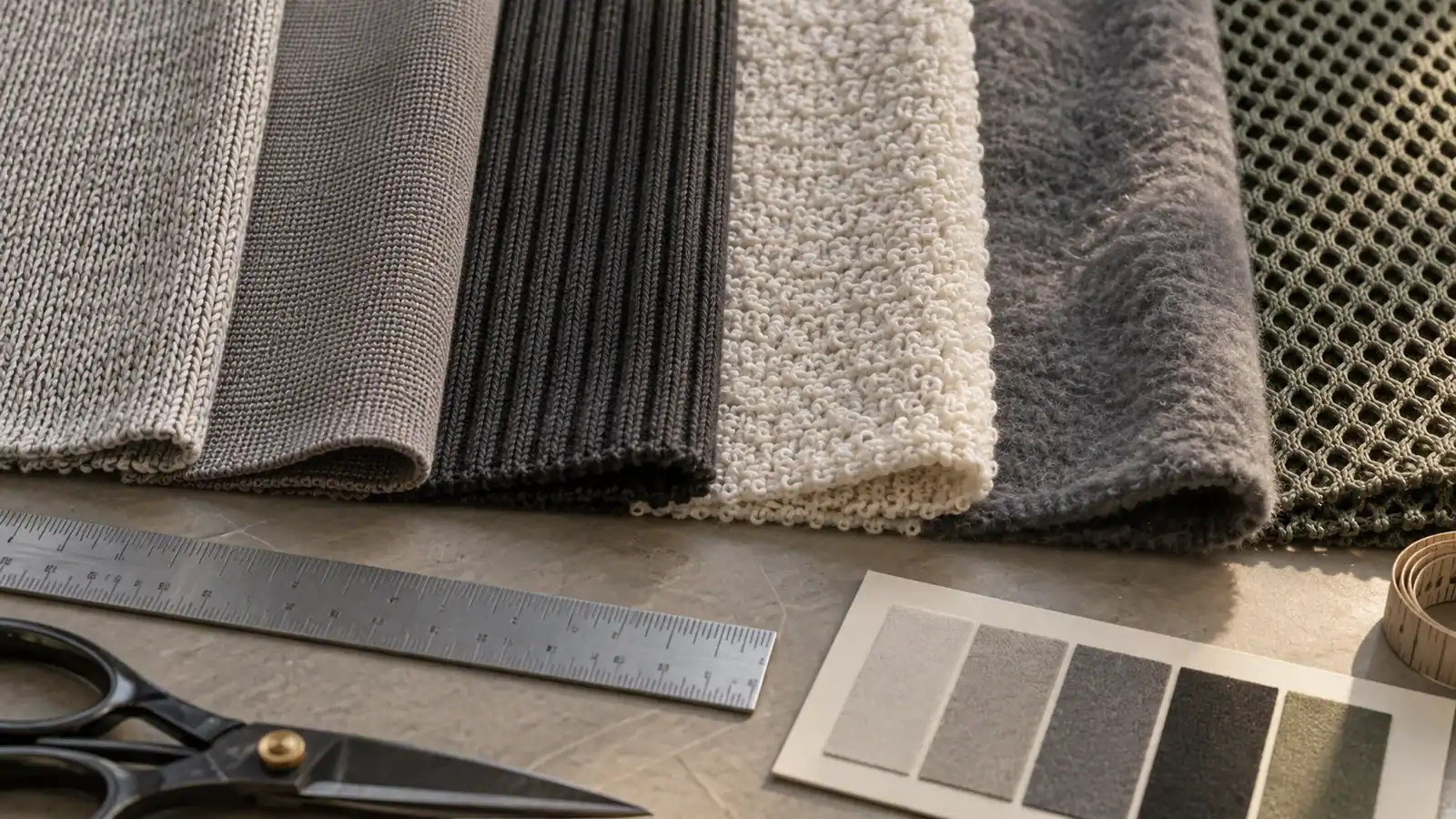
CottonWorks explains that knit structures are formed from loops and can offer mobility useful in sports and active garments. Its knit basics guide is a useful technical reference when a product team needs to discuss construction rather than only fiber content.
Woven and surface-defined fabric categories
19. Poplin
Poplin is commonly associated with a relatively smooth, closely woven shirt fabric. It can be made from cotton, polyester, blends, or other fibers, and its hand changes with yarn size, density, and finish. Check opacity, seam behavior, wrinkle expectation, usable width, and whether the garment needs mechanical stretch or elastane.
20. Twill
Twill is a woven structure with a diagonal surface pattern created by the weave. It can be made from cotton, polyester, nylon, linen, or blends and is used in pants, overshirts, workwear, and outer layers. Record weight, drape, abrasion, colorfastness, shrinkage, and the direction of the twill relative to the pattern.
21. Denim
Denim is typically a cotton-rich twill, but stretch denim and blended versions can use elastane or manufactured fibers. The final appearance depends on yarn, construction, weight, dye, wash, and finishing. Review the raw or washed state, shrinkage, shade variation, crocking, seam construction, and approved wash standard.
22. Satin
Satin describes a smooth, lustrous surface created by a satin weave or related construction. It can be produced from silk, polyester, acetate, nylon, or other fibers, so the name alone does not identify the fiber. Ask for face direction, snag risk, slippage during sewing, colorfastness, pressing temperature, and care requirements.
23. Canvas
Canvas is a sturdy woven category often used for bags, utility details, workwear, overshirts, and structured outerwear. Cotton, polyester, blends, and coated versions are all possible. Check weight, thickness, coating, stiffness, seam allowance, abrasion, water-repellent claim evidence, and the hardware or decoration that will be attached.
24. Corduroy
Corduroy is a woven fabric with raised wales or ribs on the surface. The wale width, pile direction, fiber content, weight, and finishing route change its appearance and hand. Record the wale count, nap direction, shade behavior, shrinkage, seam bulk, and whether the pattern must be cut in one direction.
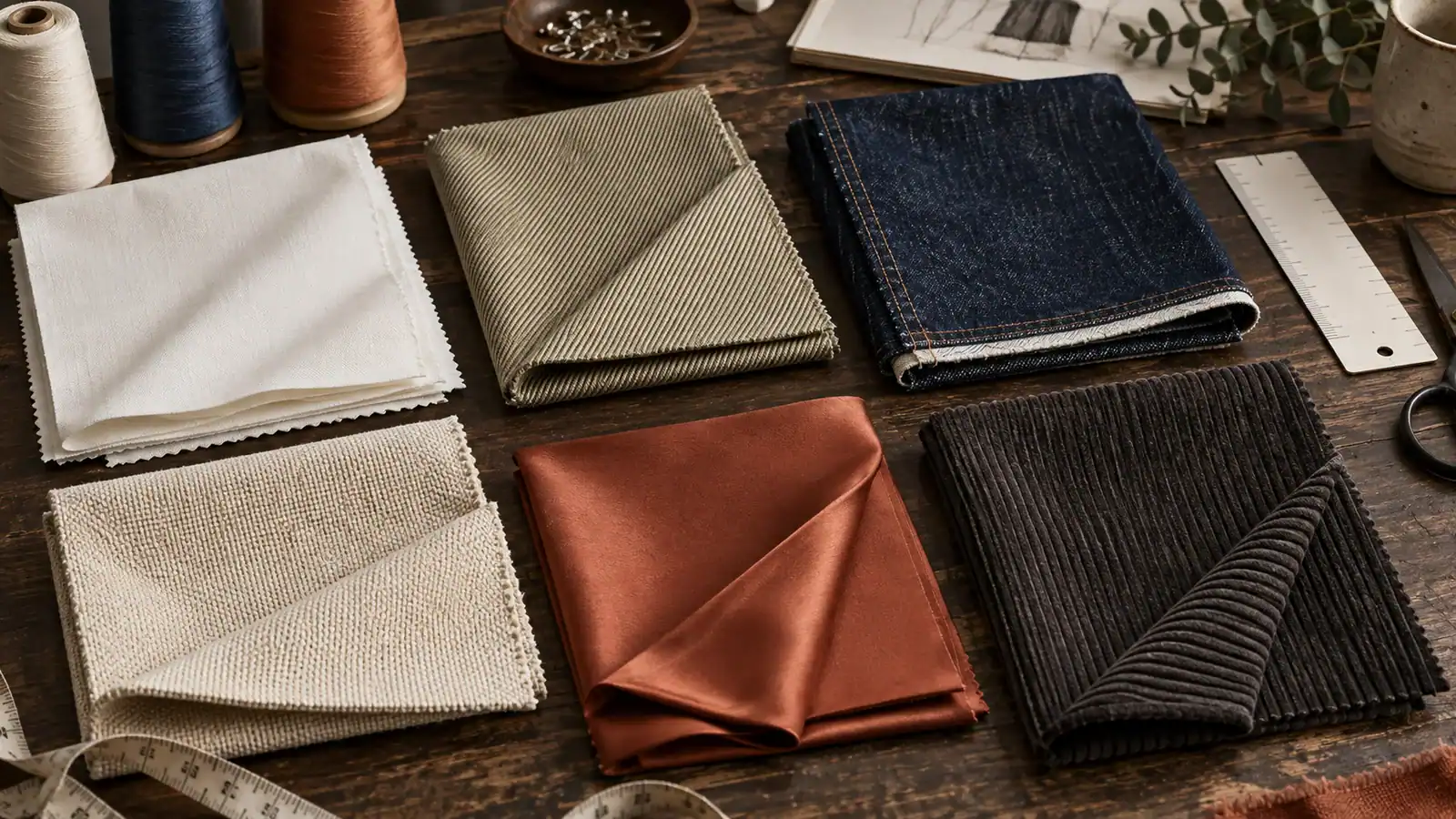
CottonWorks identifies plain, twill, and satin as three basic weave designs. Its weaving basics reference helps explain why the same fiber can produce a very different fabric when the weave changes.
Knit versus woven versus nonwoven fabric
The construction changes how a fabric behaves before fiber content is even considered. A knit is built from loops, a woven is built by interlacing yarn systems, and a nonwoven is made by bonding, entangling, or otherwise forming fibers without the usual yarn interlacing route. Most everyday apparel uses knits or wovens, while nonwovens appear more often in disposable, protective, interlining, or technical applications.
| Construction | Typical behavior | Clothing examples | Buyer checks |
|---|---|---|---|
| Knit | Flexible, comfortable, and often stretchable through loop structure | Jersey tee, rib top, fleece jogger, mesh panel | Stretch, recovery, spirality, growth, edge roll, pilling |
| Woven | More dimensionally stable in the base cloth and available in many weave patterns | Poplin shirt, twill pant, denim, canvas overshirt | Weave, width, seam slippage, abrasion, shrinkage, drape |
| Nonwoven | Formed without conventional woven or knit yarn interlacing | Interlining, protective layer, disposable component | Bond strength, tear, breathability, skin contact, compliance |
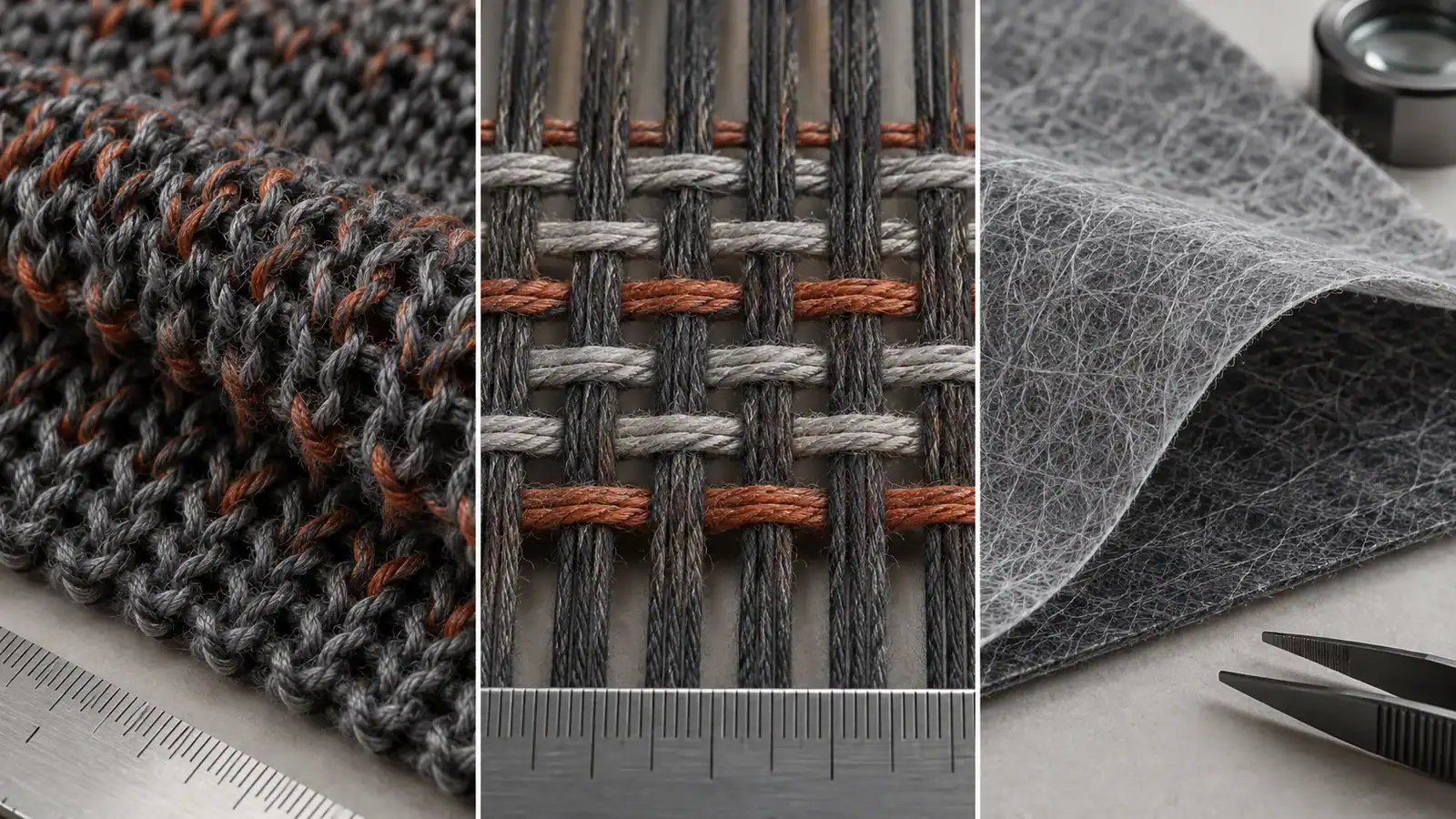
Construction is not a quality ranking. A lightweight knit may be right for a flexible tank, while a stable woven may be right for a pocket or cargo panel. Let the garment job decide which construction deserves a sample.
Fabric types by clothing product
There is no universal best fabric. The more useful question is which fabric route gives the product the intended hand, movement, opacity, durability, decoration, and care result at the target cost and order plan.
| Product direction | Fabric routes worth sampling | Main approval checks |
|---|---|---|
| T-shirts and oversized tees | Cotton jersey, cotton-poly jersey, polyester jersey, heavier jersey | GSM, shrinkage, spirality, opacity, print or embroidery, hand after wash |
| Tanks and stringers | Cotton jersey, polyester jersey, mesh, rib, stretch blends | Armhole recovery, opacity, stretch, edge stability, sweat and care route |
| Training shorts | Nylon or polyester woven, mesh, stretch woven, lightweight twill | Abrasion, tear, pocket stress, colorfastness, lining, drying behavior |
| Joggers and sweatpants | French terry, fleece, cotton-poly knit, heavier jersey | Pilling, GSM, shrinkage, waistband recovery, seam strength, hand after wash |
| Leggings and close-fit bottoms | Nylon-spandex or polyester-spandex knit, interlock, engineered jersey | Four-way stretch, recovery, opacity under tension, seam performance, colorfastness |
| Underwear and base layers | Modal or rayon blends, nylon-spandex, cotton jersey, rib | Next-to-skin hand, recovery, seam bulk, wash change, labeling, skin-contact requirements |
| Streetwear overshirts and utility garments | Twill, denim, canvas, poplin, coated woven | Weight, stiffness, seam bulk, hardware compatibility, wash and shade standard |
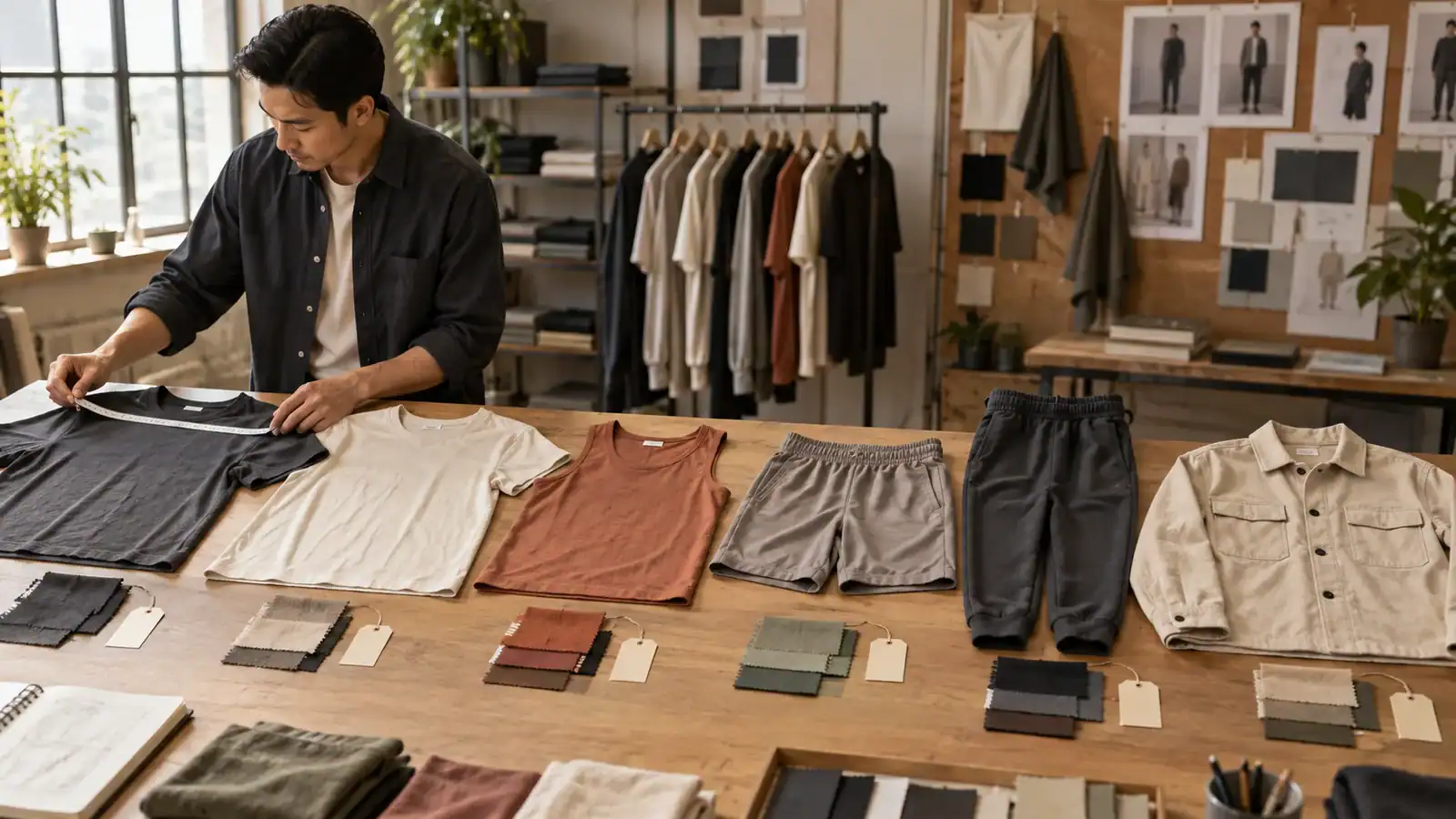
For activewear, the best fabric for activewear guide goes deeper into sweat, stretch, support, and recovery. This page has a broader role: help a buyer understand what the fabric name means before narrowing the choice to a specific product.
GSM, stretch, width, and finish: the fields a fabric name leaves out
GSM means grams per square meter and is a useful way to discuss fabric weight, but it does not define warmth, durability, opacity, or comfort by itself. Two fabrics with the same GSM can feel and perform differently because the fiber, yarn, construction, finish, and air space are different. Use the GSM meaning in clothing guide when a project needs a more detailed weight comparison.
Add these fields to the fabric section of a quote or tech pack:
- Exact fiber composition and blend tolerance.
- Generic fiber name for the destination market and any branded fiber name.
- Construction, face, reverse, knit gauge or weave description where relevant.
- Target GSM, usable width, thickness, tube width, and roll presentation.
- Stretch direction, target extension, recovery expectation, and growth limit.
- Hand feel, drape, opacity, shine, texture, and surface reference.
- Finish such as brushing, peaching, coating, wicking treatment, printing, or wash.
- Color standard, shade approval route, and colorfastness requirements.
- Decoration method, label placement, trims, lining, and seam construction.
- Care route, drying restrictions, country of sale, and label language.
The DTS fabric and trim library can be a useful starting point for organizing material conversations, but the final selection still needs the exact fabric record and garment sample.
Fabric tests before a buyer approves bulk production
The right test depends on the risk in the garment. A light printed tee, a compression legging, and a brushed jogger do not need the same acceptance plan.
Start with a risk-based review:
- Measure fabric width, GSM, thickness, stretch, and recovery on the submitted lot or swatch.
- Make a garment sample with the intended pattern, seams, trims, label, and decoration.
- Wash and dry it through the planned care route, then measure length and width again.
- Check pilling, abrasion, colorfastness, crocking, perspiration, and print adhesion when those exposures match the product.
- Inspect high-tension and high-friction zones such as waistbands, necklines, underarms, seat panels, pockets, and inner thighs.
- Record a method, sample condition, rating scale, and acceptance limit instead of writing only "pass quality."
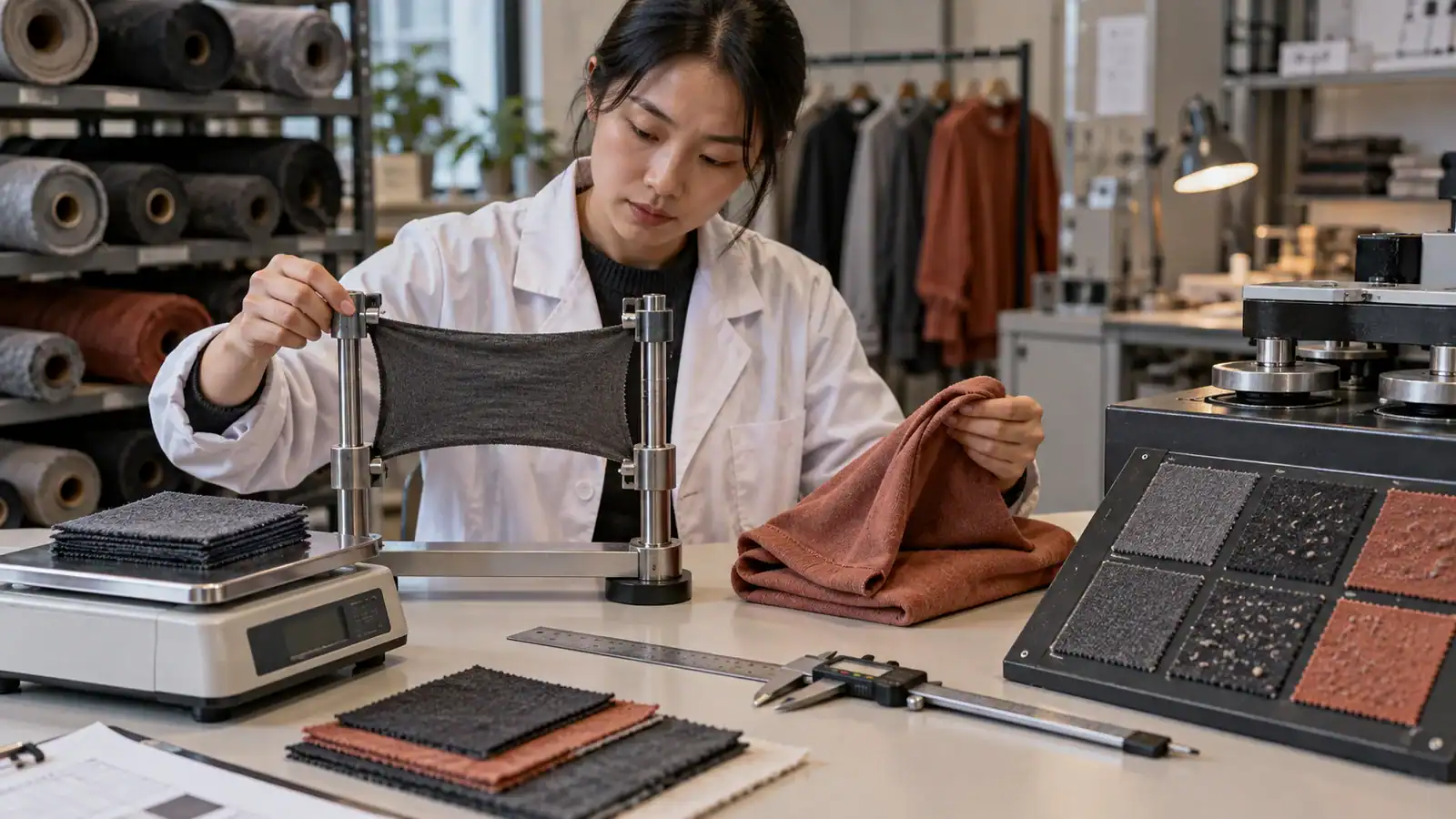
The AATCC testing standards index and the ASTM textile standards index can help a product team find relevant methods. A named method is not an acceptance limit, and a fabric swatch result does not guarantee that a finished garment will behave the same way.
Tech-pack and sample approval checklist
A supplier can quote more consistently when the material request and the garment request are connected. Use this checklist before sending the brief:
- Product type, wearer, activity level, fit, and garment zones.
- Reference image, sketch, moodboard, existing sample, or tech pack.
- Target fabric family and acceptable alternatives.
- Fiber composition, construction, GSM, width, stretch, recovery, and opacity.
- Surface finish, color standard, decoration, trims, labels, and packaging.
- Test methods and acceptance limits that matter for the product.
- Planned care route and destination-market labeling needs.
- Sample quantity, revision notes, measurement tolerance, and approval owner.
- Bulk quantity or range estimate, delivery window to confirm, and reorder expectations.

The DTS tech-pack customization page is the appropriate next step when fabric, fit, labels, decoration, or packaging details need to be organized before sampling. Exact feasibility, MOQ, timing, and testing scope should be confirmed from the submitted project information.
Labeling and care checks for US-bound clothing
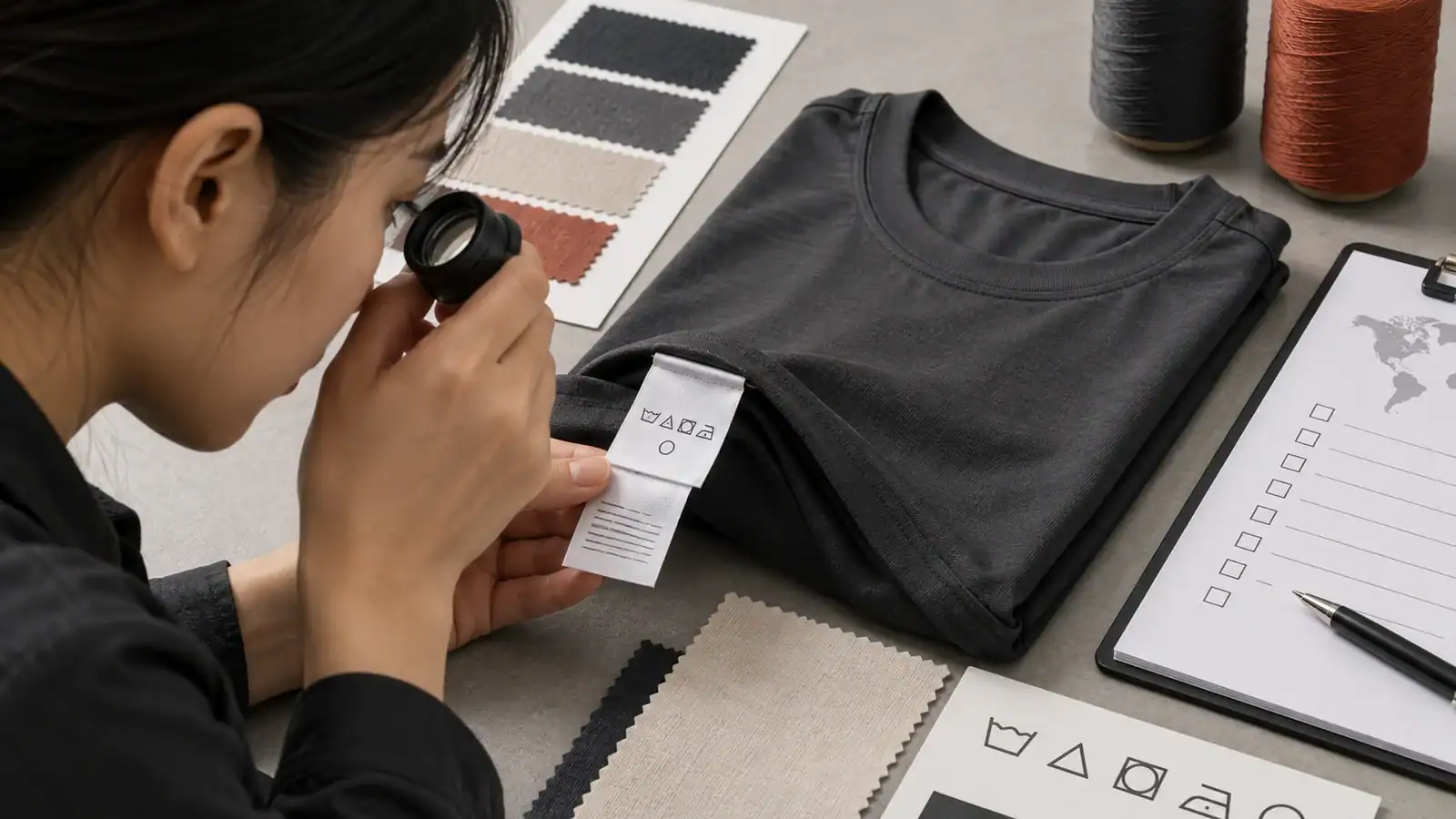
For many textile products sold in the United States, the FTC requires disclosures such as fiber content, country of origin, and the identity of the responsible company. The exact rule depends on the product and transaction, so treat this as a buyer checklist rather than legal advice.
Before approving the production label, confirm that:
- Fiber names and percentages match the final approved fabric and garment.
- Fibers are listed using the correct generic terminology for the destination market.
- Any trademark appears with the required generic fiber name where applicable.
- Country of origin and responsible company information are reviewed for the market.
- Care instructions reflect the whole garment, including trims, lining, decoration, and closures.
- Sustainability, recycled content, or performance wording is supported for the exact product.
The FTC labeling guide covers fiber content and related disclosures. The FTC care labeling rule explains why care instructions need a reasonable basis. Connect the approved swatch, supplier declaration, test record, care instruction, and final label artwork in the product file.
Frequently asked questions
The main fabric groups are natural fibers such as cotton, linen, wool, and silk; manufactured synthetics such as polyester, nylon, elastane, and acrylic; regenerated cellulosics such as rayon, viscose, modal, and lyocell; and construction categories such as jersey, interlock, rib, fleece, mesh, twill, denim, and canvas. A complete specification combines more than one group.
Cotton is a natural fiber. It can be made into many fabrics, including jersey, poplin, twill, fleece blends, and canvas. A quote should state the exact fiber content and the construction instead of using "cotton" as the entire fabric description.
Polyester is a manufactured synthetic fiber that can be knitted or woven into many fabric constructions. Polyester jersey, mesh, fleece, satin, and woven shorts fabric can behave differently, so the fiber name alone does not prove a quick-drying, breathable, or durable result.
No. Jersey describes a knit construction, while cotton describes a fiber. A jersey can use cotton, polyester, rayon, nylon, or a blend. The useful product specification is something such as a confirmed fiber blend plus jersey construction, GSM, width, stretch, and recovery.
Knits are made from loops and are often flexible, while wovens are made by interlacing yarn systems and are often more stable in the base cloth. Both can be made from many fiber types. Choose between them by the garment’s movement, fit, durability, drape, and seam requirements.
There is no single best type for every activewear product. Polyester, nylon, elastane blends, jersey, interlock, and mesh are common starting points, but the right choice depends on sweat level, support, stretch, abrasion, opacity, care, and decoration. Sample and test the finished garment against the actual brief.
GSM tells you the mass of fabric per square meter and helps compare weight. It does not independently tell you warmth, drape, opacity, durability, stretch, or drying behavior. Confirm GSM together with fiber, construction, width, finish, and garment-level checks.
Record fiber composition, construction, GSM, width, stretch, recovery, thickness, opacity, hand, finish, and care route. Handle both swatches in the same direction, make comparable garment samples when possible, and wash them through the intended route before approving a production standard.
Turn a fabric category into a quote-ready apparel brief
The best next step after reading about fabric types is to define the product job. Send the garment type, target fit, activity level, preferred hand, fiber direction, construction, GSM range, stretch and recovery needs, color, decoration, care route, destination market, and the tests that matter. Add a moodboard, existing sample, or tech pack when visual and measurement details affect approval.

Use the DTS inquiry and NDA path to request a fabric and product development review. The goal is to confirm a workable material route and sample plan for the actual garment, not to select a fabric from a name alone.