Canvas fabric is a firm woven material, usually built with a plain weave and selected by fiber content, finished GSM, usable width, finish, and end use. Cotton canvas is common, but a canvas quality can also use polyester, cotton-polyester, linen, or another blend. For apparel buyers, the word canvas is a starting point, not a complete specification.
This guide explains how canvas is constructed, how weight changes garment behavior, when canvas is a better choice than denim or twill, and what to put in a tech pack before sampling or bulk approval.
What Is Canvas Fabric?
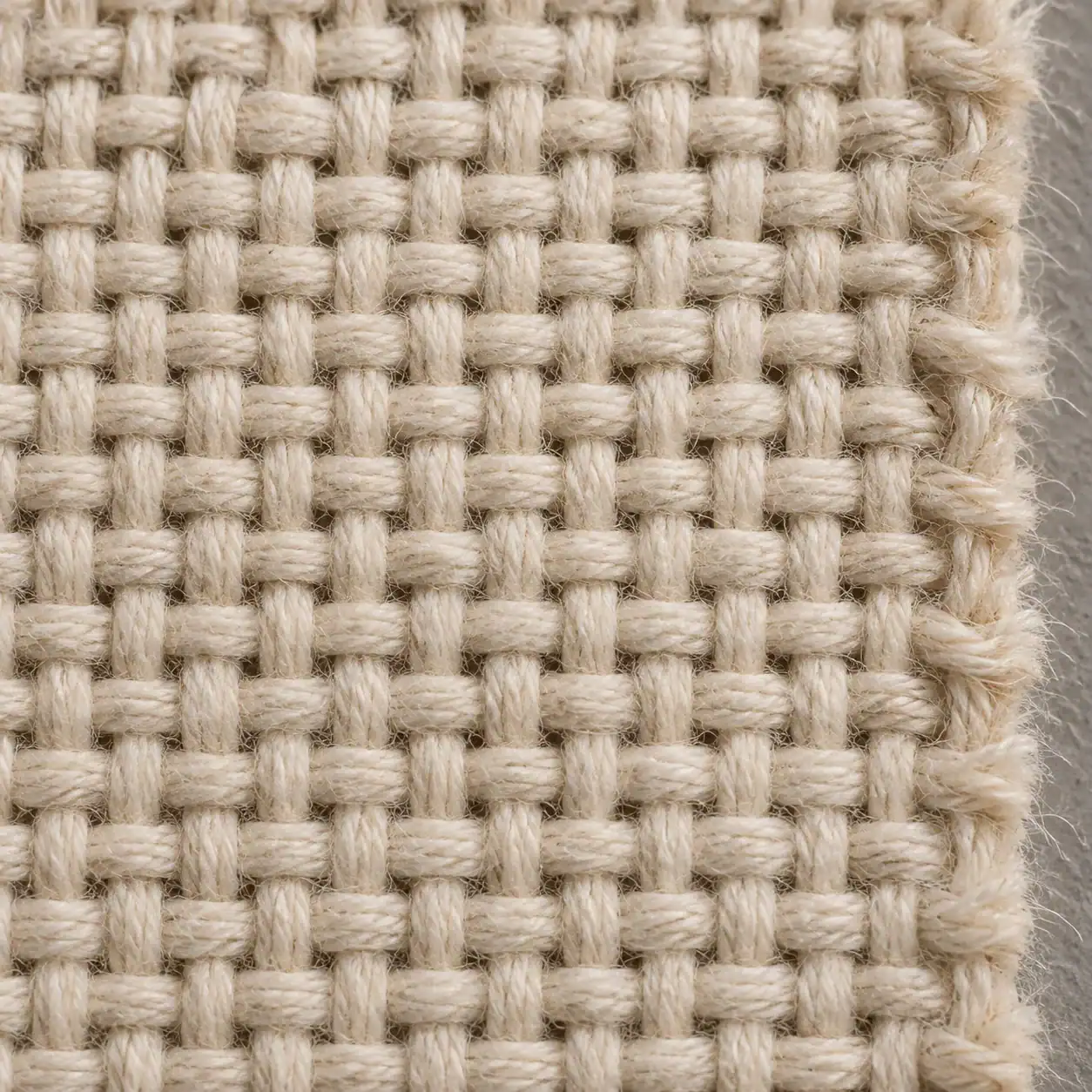
Canvas is a stable woven fabric known for a relatively firm hand, a flat surface, and resistance to everyday abrasion. Many canvas qualities use a 1/1 plain weave, where warp and filling yarns cross in a regular over-one, under-one pattern. That construction creates frequent interlacings and usually gives the cloth more stability than a comparable loose weave.
The name does not guarantee one fiber, weight, or finish. A light cotton canvas can work for a casual overshirt, while a dense duck canvas may be better for a structured bag or workwear jacket. A coated polyester canvas may suit an outdoor product but feel too stiff or warm for a garment worn next to the skin.
| Attribute | What the buyer should confirm | Why it matters |
|---|---|---|
| Fiber content | Cotton, cotton-polyester, polyester, linen, or another declared blend | Changes hand, care, labeling, drying, and price |
| Construction | Plain weave, duck or double-fill structure, yarn size, and density | Predicts stability, seam bulk, and surface character |
| Finished weight | GSM or ounce-per-square-yard basis after the agreed finish | Controls drape, coverage, sewing load, and yield |
| Usable width | Width after finishing, not only nominal loom width | Affects marker efficiency and consumption |
| Finish | Washed, brushed, pre-shrunk, coated, waxed, or untreated | Changes hand, shrinkage, color, and end-use suitability |
| Intended product | Garment, bag, workwear, soft good, toile, or final sample | Sets the right acceptance and test criteria |
Canvas is therefore best treated as a construction and application family. Before requesting a quote, define the fiber, weight, width, finish, color, and product purpose rather than sending only the phrase “cotton canvas.”
How Canvas Fabric Is Woven
In a plain weave, warp yarns run along the length of the roll and filling yarns pass across the width. Each warp yarn alternates over and under the filling yarns. The CottonWorks explanation of basic woven designs identifies canvas as a common plain-weave fabric and explains why frequent interlacing supports fabric stability.
That simple construction still allows a wide range of results. Yarn count, twist, density, balance, finishing tension, and whether the cloth uses a double-fill arrangement can change the surface. Two swatches may both be called canvas while one folds softly and the other stands almost by itself.
| Construction cue | Likely behavior | Question for the supplier |
|---|---|---|
| Balanced plain weave | Even face and back, stable cutting behavior | Are warp and filling densities balanced after finishing? |
| Dense plain weave | More body, coverage, and seam resistance | Does the finished hand still suit the garment? |
| Duck or double-fill canvas | Firm structure and higher surface durability | Which yarn direction carries the heavier fill and how does it affect sewing? |
| Loose or lightweight canvas | Easier drape and lighter garment weight | What are the opacity, skew, and wash-change results? |
| Coated canvas | More resistance to water or abrasion, often less breathability | Is the coating required for the product and can it be sewn cleanly? |
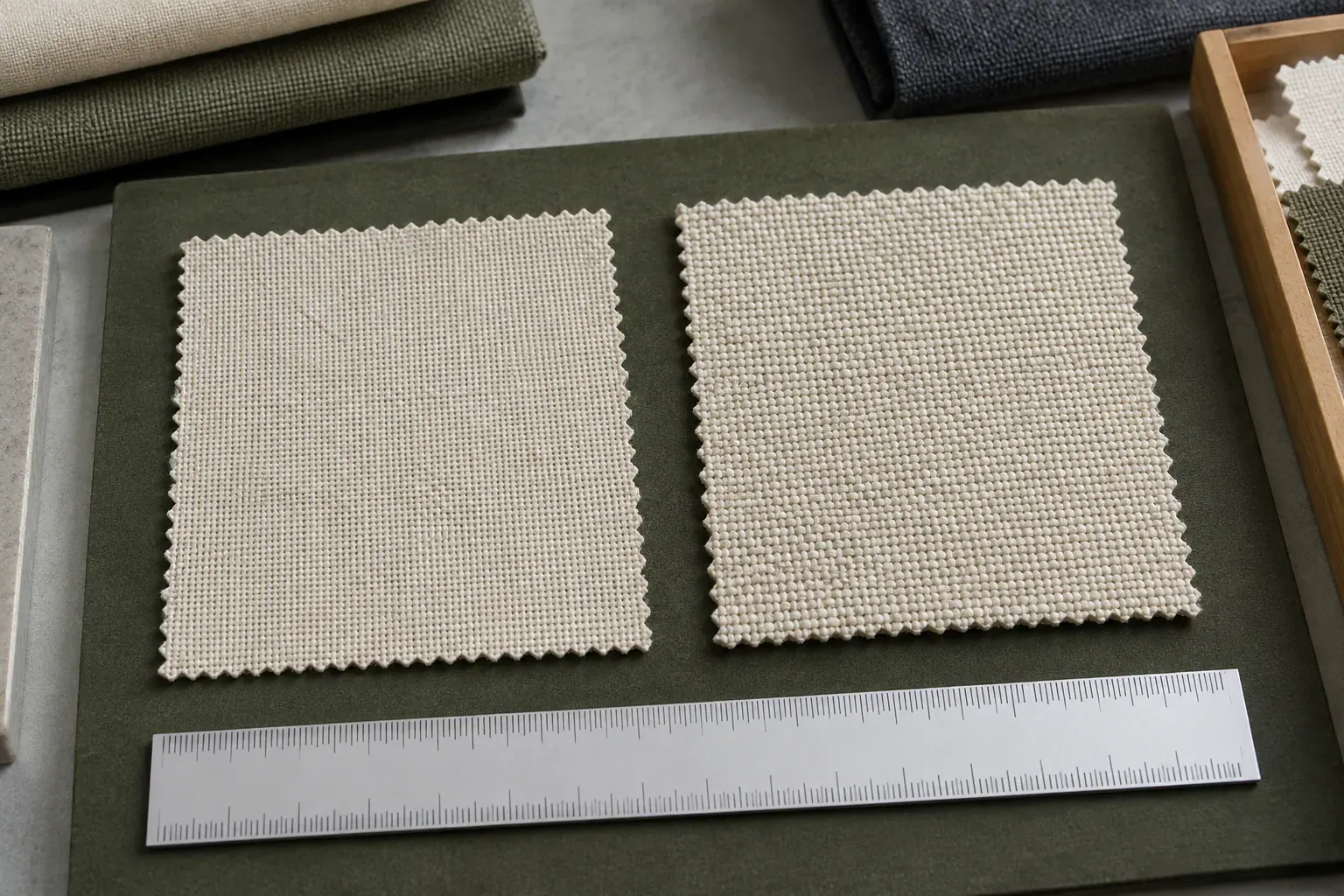
Inspect the face, reverse, selvedge, and cut edge of the physical swatch. A product photograph rarely shows whether the structure is balanced, whether the finish masks uneven yarns, or whether the cloth will fray during cutting.
Canvas Fabric Types: Cotton, Duck, Blends and Coated Options
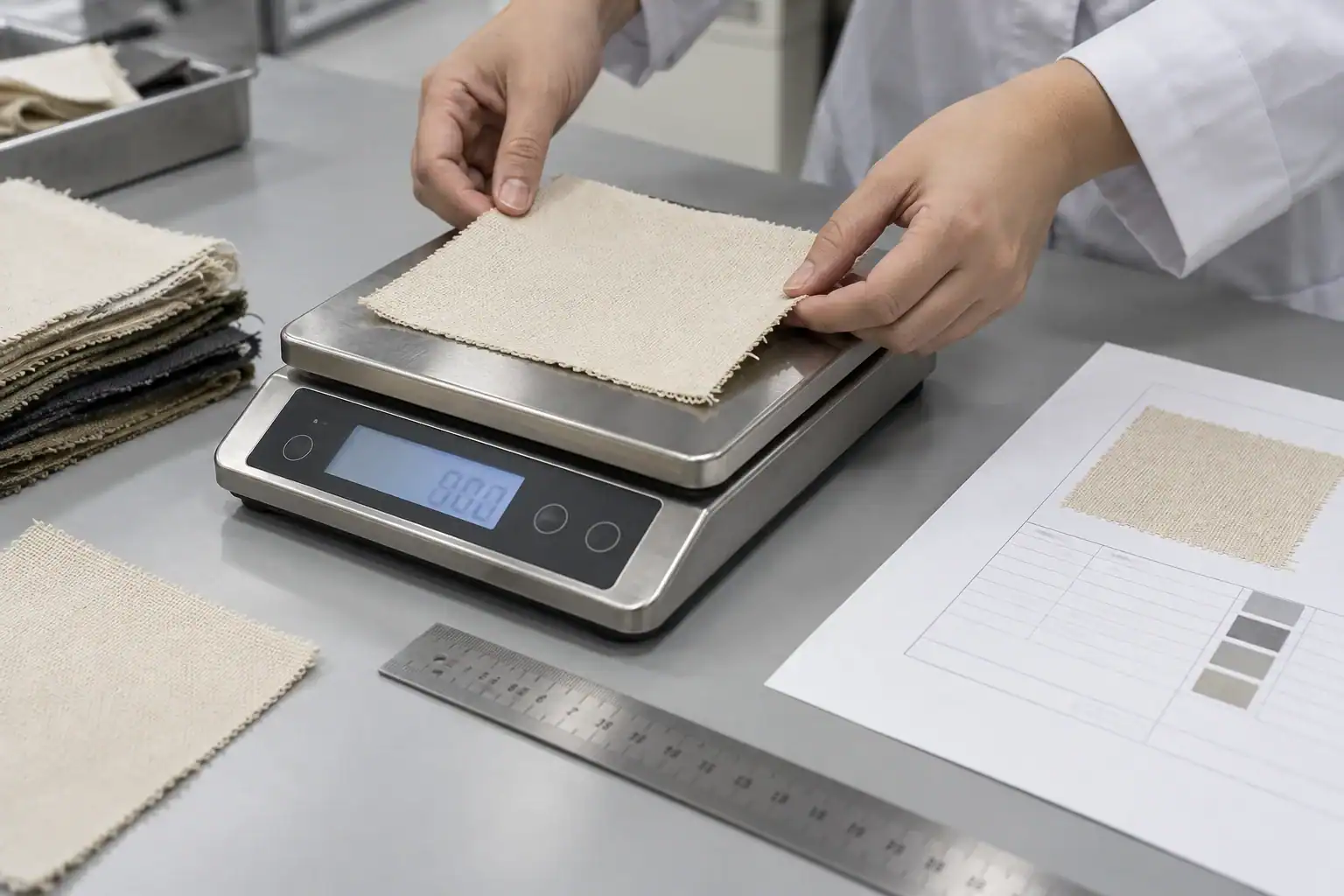
Canvas types are easier to compare when the buyer separates construction from fiber and finish. “Duck canvas” usually signals a denser or firmer canvas quality, while “cotton canvas” tells you more about fiber than about exact weight. A finished canvas may also be washed, brushed, waxed, laminated, or coated.
| Canvas type or trade description | Useful for | Main approval risk |
|---|---|---|
| Lightweight cotton canvas | Overshirts, casual jackets, aprons, light bags | It may still shrink or feel too crisp for a soft silhouette |
| Dense duck canvas | Workwear, structured jackets, backpacks, durable bags | Seam bulk, needle choice, stiffness, and high garment weight |
| Cotton-polyester canvas | Uniforms, utility garments, bags, cost-sensitive programs | Fiber ratio changes hand, care, dye behavior, and breathability |
| Polyester canvas | Outdoor panels, covers, technical accessories | Coating, heat sensitivity, static, and next-to-skin comfort |
| Linen or linen-blend canvas | Natural texture and lifestyle products | Creasing, slippage, shrinkage, and lot variation |
| Waxed or coated canvas | Weather-facing goods and selected outerwear | Reduced breathability, surface transfer, odor, and decoration limits |
If the material will be worn, test it as a garment rather than approving it as a flat swatch. Collar rolls, pocket openings, sleeve movement, lining, topstitching, and seam turn-ins can make a medium canvas feel much heavier than the same fabric used in a tote.
Canvas Fabric GSM, Weight and Ounce Conversion
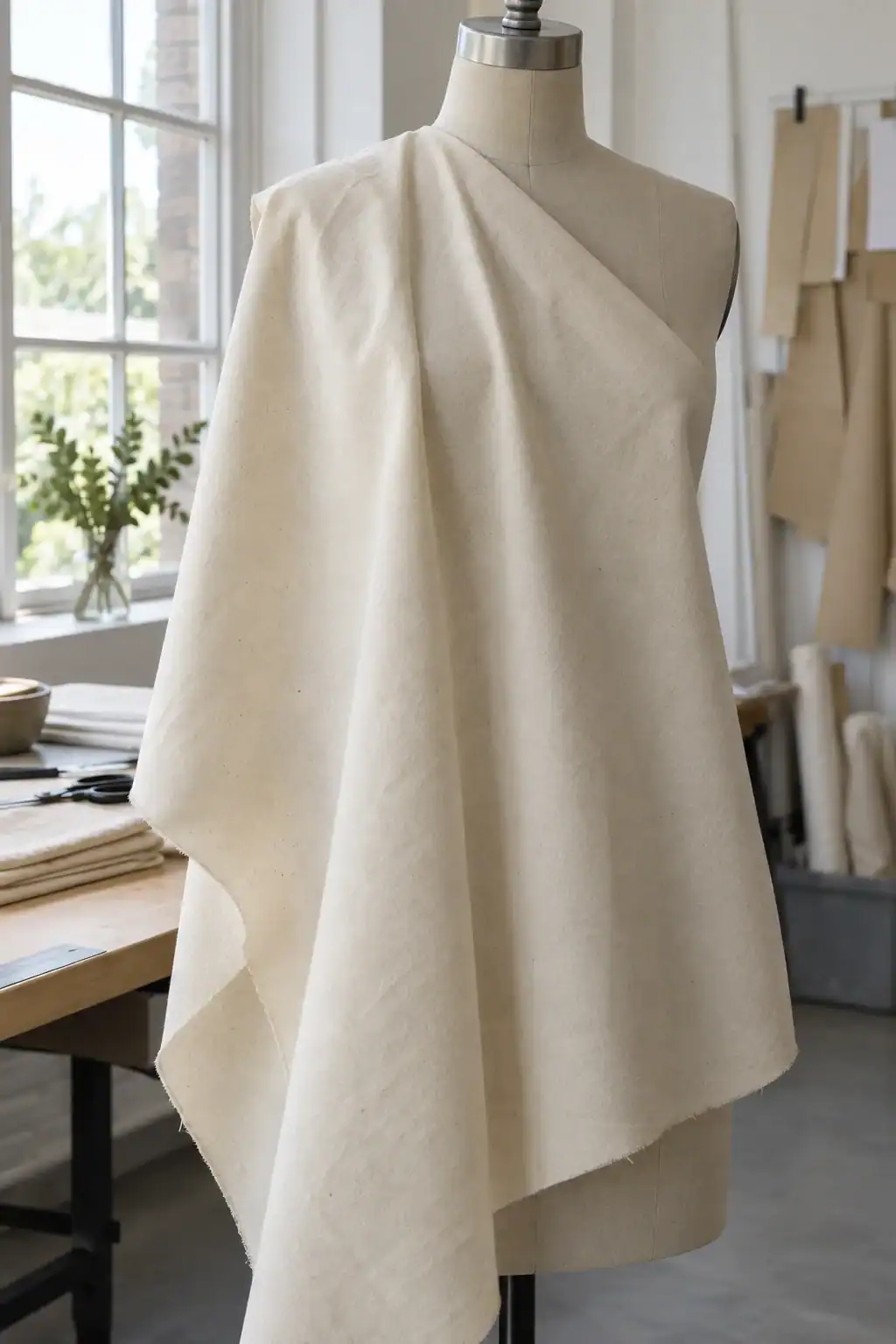
GSM means grams per square meter. North American buyers may also use ounces per square yard. As a planning conversion, 1 oz/yd² is approximately 33.9 GSM, but the purchase specification should state the unit, test basis, finished condition, and tolerance.
| Planning weight | Approximate ounce range | Typical behavior | Possible apparel or product use |
|---|---|---|---|
| Light | 6 to 9 oz, about 200 to 300 GSM | More flexible, easier to layer, lower seam bulk | Casual overshirts, light utility pieces, linings, light bags |
| Medium | 10 to 15 oz, about 340 to 510 GSM | Noticeable body and structure | Workwear, overshirts, jackets, totes, structured accessories |
| Heavy | 16 to 24 oz, about 540 to 815 GSM | Firm, high load on cutting and sewing | Heavy workwear, backpacks, equipment bags, outdoor panels |
| Custom or industrial | Above the normal garment range | May need special equipment or reinforcement | Covers, heavy-duty goods, and purpose-specific products |
These are planning bands, not universal grades. The ASTM D3776/D3776M fabric mass reference distinguishes different measurement bases, including full-piece, full-width, and small-swatch approaches. A buyer should state which basis applies before comparing a supplier result with an approved sample.
For apparel, weight must be read together with usable width. A heavier canvas with a narrow finished width can change consumption and landed cost more than the GSM number alone suggests. Request the finished width after washing or coating, not only the nominal width on a fabric list.
Is Canvas Fabric Stretchy and Breathable?
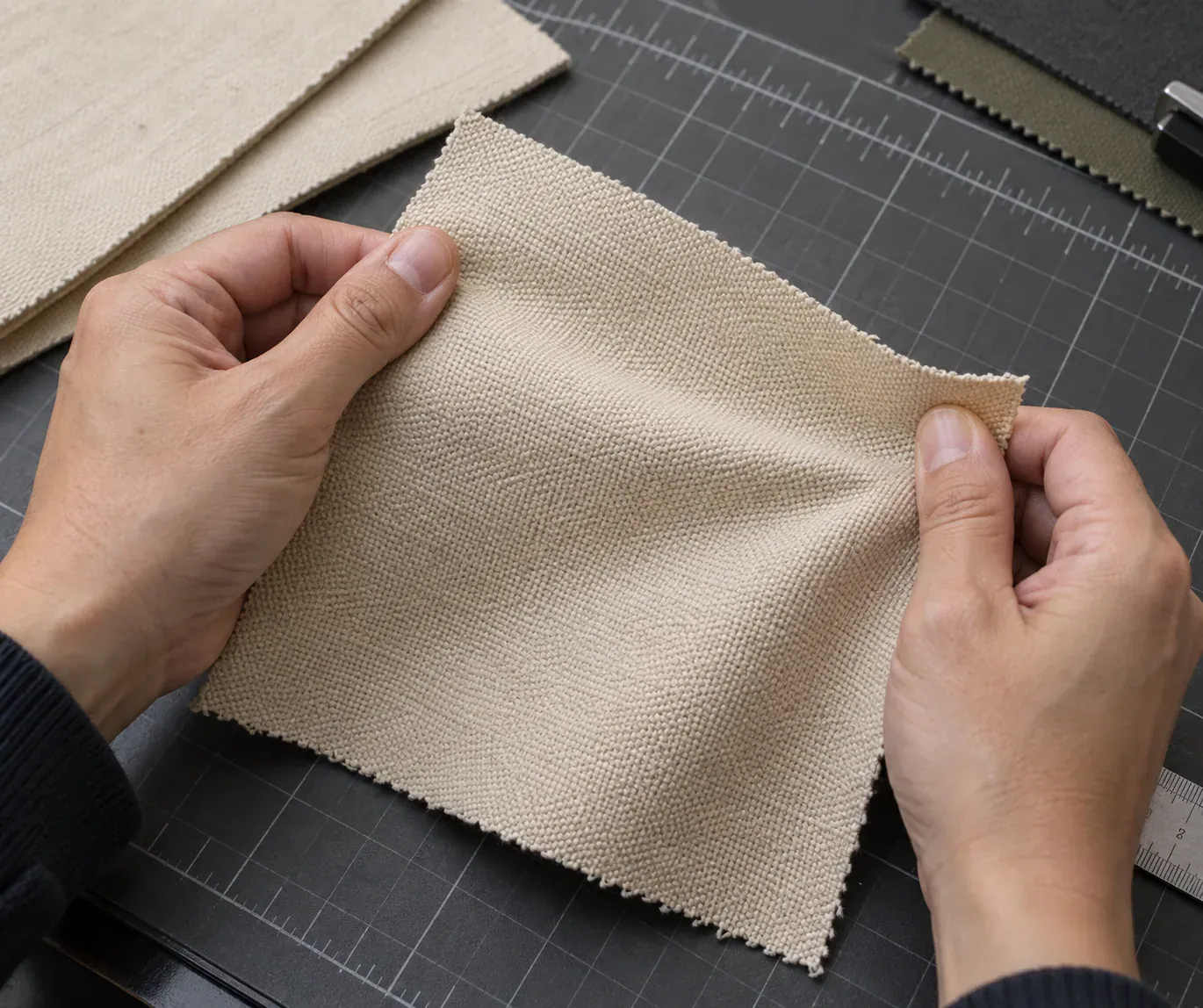
Standard canvas has little mechanical stretch because the plain weave locks the yarns into a stable grid. It may flex on the bias or relax slightly with wear, but that is not the same as the controlled extension and recovery expected from a knit or elastane performance fabric.
Breathability also depends on more than fiber name. A light, uncoated cotton canvas can feel more open than a dense coated canvas. Yarn density, GSM, finish, color, lining, garment ease, ventilation openings, and the layer next to the body all change comfort.
| Product requirement | Canvas may fit when | Reconsider or test further when |
|---|---|---|
| Stable shape | The garment needs body, pockets, or a structured panel | The pattern depends on close body stretch |
| Casual breathability | The quality is light, uncoated, and worn with ease | The cloth is dense, laminated, or heavily lined |
| Movement | Ease and pattern shaping provide the required room | The product needs repeated high extension and recovery |
| Moisture comfort | The brief accepts a natural woven hand and moderate drying | The product makes a measurable wicking or cooling claim |
For compression leggings, fitted sports bras, or high-sweat base layers, canvas is usually the wrong starting point. It can be useful for lifestyle, utility, outerwear, or structured streetwear, but the actual product brief should decide the material family.
Canvas vs Denim vs Twill: Which Woven Fabric Fits the Garment?

Canvas, denim, and twill can all be durable woven fabrics, but their construction and finish create different design choices. Canvas is commonly plain weave, denim is commonly a twill with a diagonal line, and twill is a broader construction family that includes many weights and fiber combinations.
| Comparison point | Canvas | Denim | Other twill |
|---|---|---|---|
| Common construction | Plain weave, sometimes dense or double-fill | Usually 2/1 or 3/1 twill | 2/1, 3/1, or other diagonal structures |
| Surface | Flat, even, sometimes dry or crisp | Diagonal texture, often softens with wash | Varies from smooth suiting to rugged workwear |
| Shape | Often stable and structured | Can soften and mold with wear | Depends strongly on yarns and finishing |
| Stretch | Usually low unless blended or specially finished | Can be rigid or stretch blended | May be rigid or contain elastane |
| Good starting uses | Utility garments, structured jackets, bags | Jeans, jackets, overshirts, workwear | Trousers, uniforms, jackets, tailored pieces |
| Main buyer risk | Too stiff or heavy for the intended silhouette | Wash shade, crocking, and fit change | Assuming all twill behaves like denim |
Use the twill fabric guide and denim fabric guide when the brief calls for diagonal texture, a softer break-in, or a different drape. Choose by garment behavior, not by the durability label alone.
Canvas Fabric Uses in Apparel, Bags and Structured Streetwear
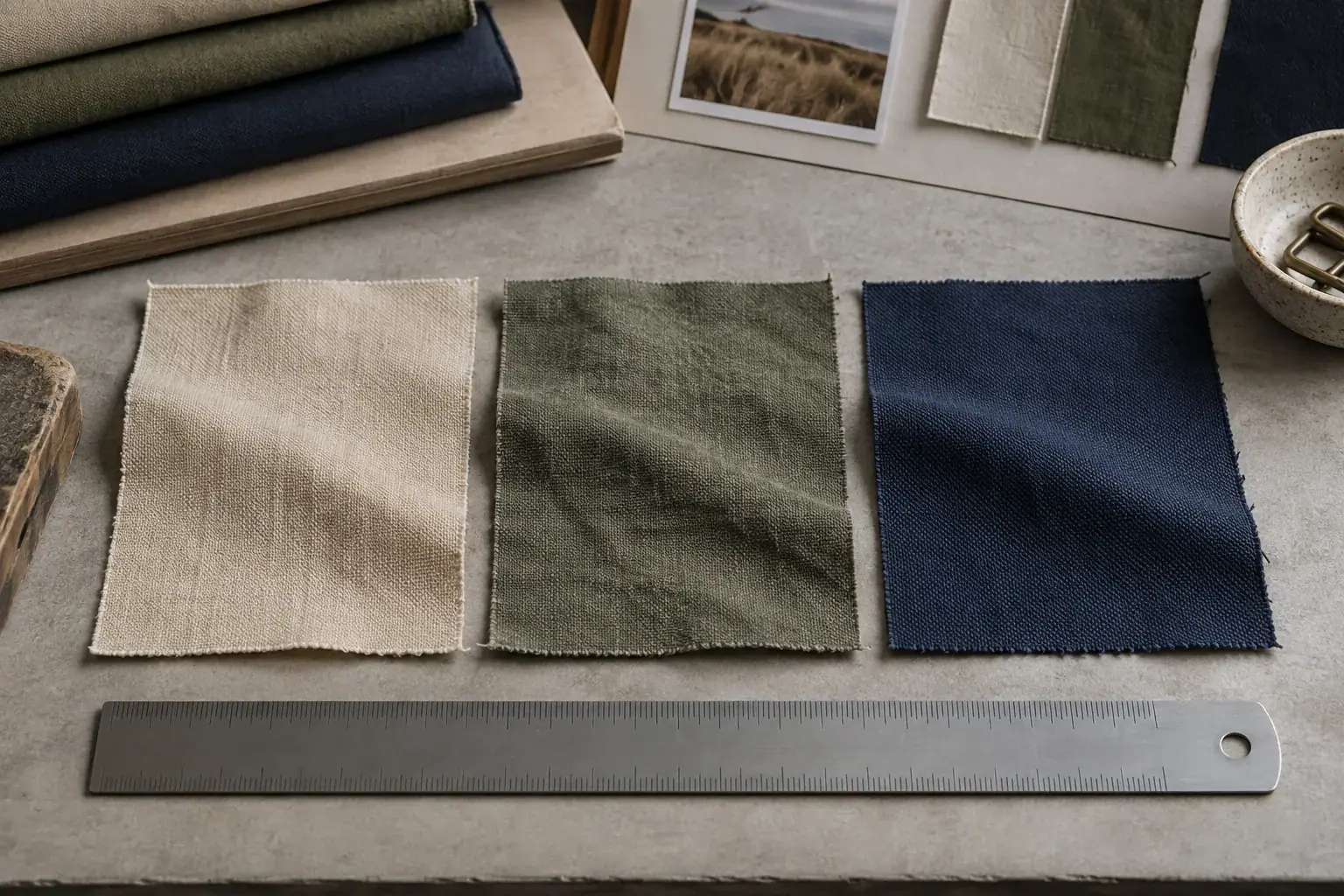
Canvas works best where the product benefits from body, abrasion resistance, a visible woven texture, or a stable surface for pockets and reinforcement. It is common in bags and utility goods, but apparel teams also use it for overshirts, chore jackets, work pants, aprons, structured skirts, vests, and selected streetwear panels.
| Project stage or product | Why canvas can help | What it cannot prove by itself |
|---|---|---|
| Early toile | Holds pocket, panel, collar, and seam shape for construction review | Final drape if production fabric has another weight or finish |
| Overshirt or chore jacket | Gives body and visible workwear character | Comfort after long wear without a garment test |
| Utility trousers or apron | Supports reinforcement and abrasion-focused design | Exact seam life without relevant testing |
| Tote or structured bag | Holds form and accepts selected decoration | Handle fatigue, coating durability, or final load rating |
| Lifestyle streetwear | Creates a firm contrast with knit or soft fabrics | Suitability for high-sweat performance use |
If canvas is being used only for a toile, say so in the tech pack. A heavy toile can make a pattern appear too boxy, while a very light toile may hide seam bulk or pocket stress that will appear in the final fabric. The first sample should be representative of the production quality when drape and comfort affect the buying decision.
How Fiber Content Changes Canvas Performance

Fiber content changes the way a canvas fabric feels, washes, dries, takes color, and behaves around the needle. It also affects the care label and the documentation a buyer may need for the target market.
| Fiber direction | Common advantage | Trade-off to check |
|---|---|---|
| 100% cotton | Natural hand, familiar care route, matte surface | Creasing, shrinkage, drying time, and lot-to-lot shade |
| Cotton-polyester blend | Can improve dimensional stability and wrinkle resistance | Less natural hand, blend labeling, and different dye behavior |
| 100% polyester | Consistent supply, lower moisture absorption, selected technical finishes | Heat response, static, surface shine, and next-to-skin comfort |
| Linen or linen blend | Natural texture and a distinctive lifestyle look | Crease recovery, slippage, and dimensional change |
| Elastane blend | Adds targeted movement to a stable woven | Recovery, heat, percentage tolerance, and long-term shape |
Do not replace a declared fiber specification with a color or trade name. If a supplier proposes a substitute blend, compare the actual swatch, finished GSM, width, care route, and test result before accepting the change.
Canvas Fabric Finishes: Washed, Brushed, Pre-Shrunk and Coated
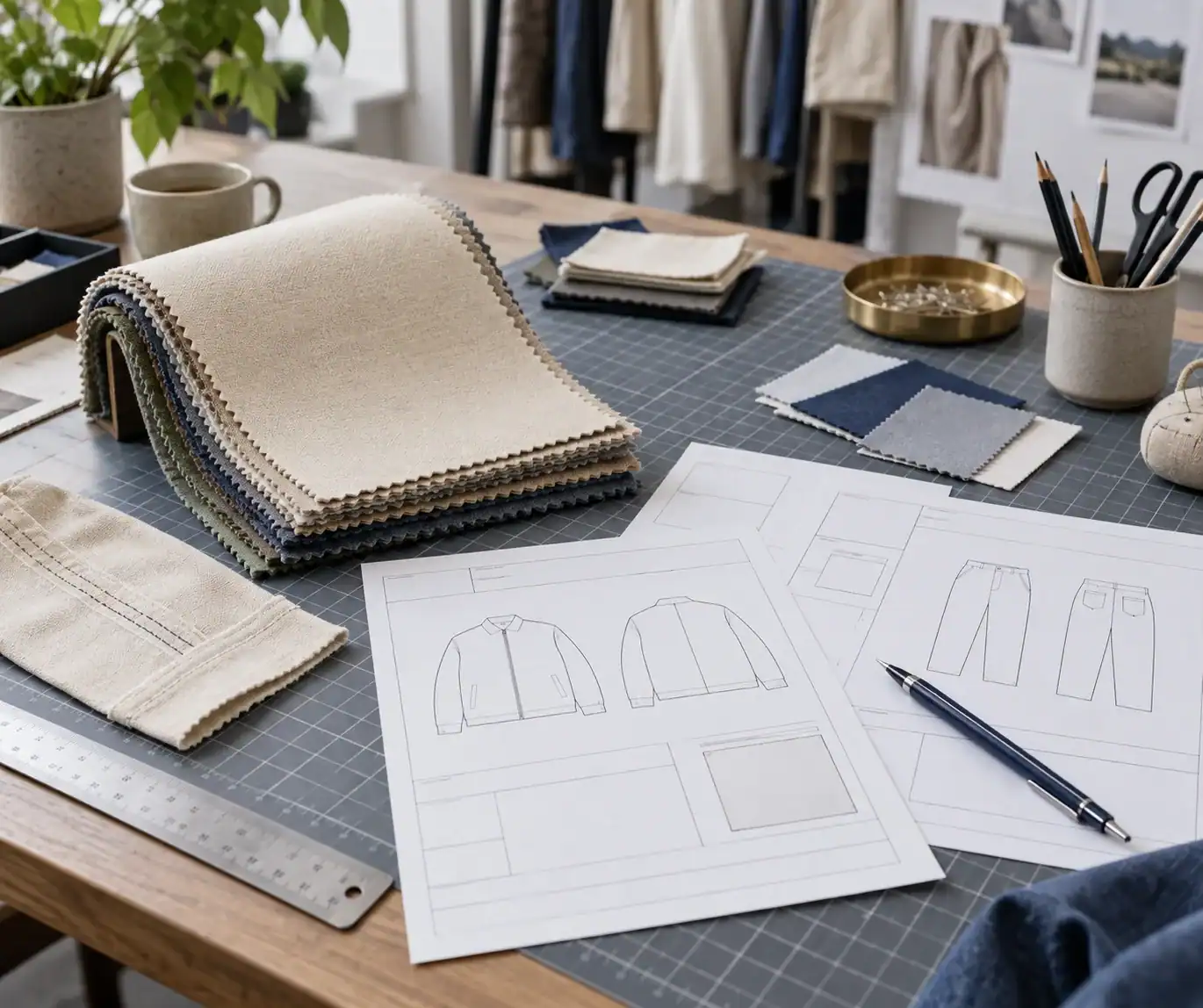
Finishing can change canvas more than a buyer expects. A washed canvas may feel softer and look broken-in. Brushing can raise the surface and reduce the crispness. Pre-shrinking can improve dimensional control, while wax, PU, PVC, or other coatings can add protection at the cost of breathability and decoration flexibility.
| Finish | Why a product team may choose it | What to verify |
|---|---|---|
| Washed or garment washed | Softer hand and less new-fabric stiffness | Shade variation, residual shrinkage, and edge fray |
| Brushed or peached | Warmer, softer surface | Pilling, color change, and surface transfer |
| Pre-shrunk or sanforized route | Better control of post-wash dimensions | The actual residual change after the agreed care cycle |
| Waxed or water-repellent | Protection and a stronger surface character | Breathability, odor, abrasion, seam sealing, and print adhesion |
| Laminated or coated | Barrier performance or structure | Flex cracking, heat, peeling, and end-use compliance |
Ask for the finish name, process stage, target hand, and care instructions. “Soft finish” is not measurable enough for a quote or approval. A retained swatch and a wash-tested garment give the factory and buyer a shared reference.
How to Specify Canvas in a Tech Pack
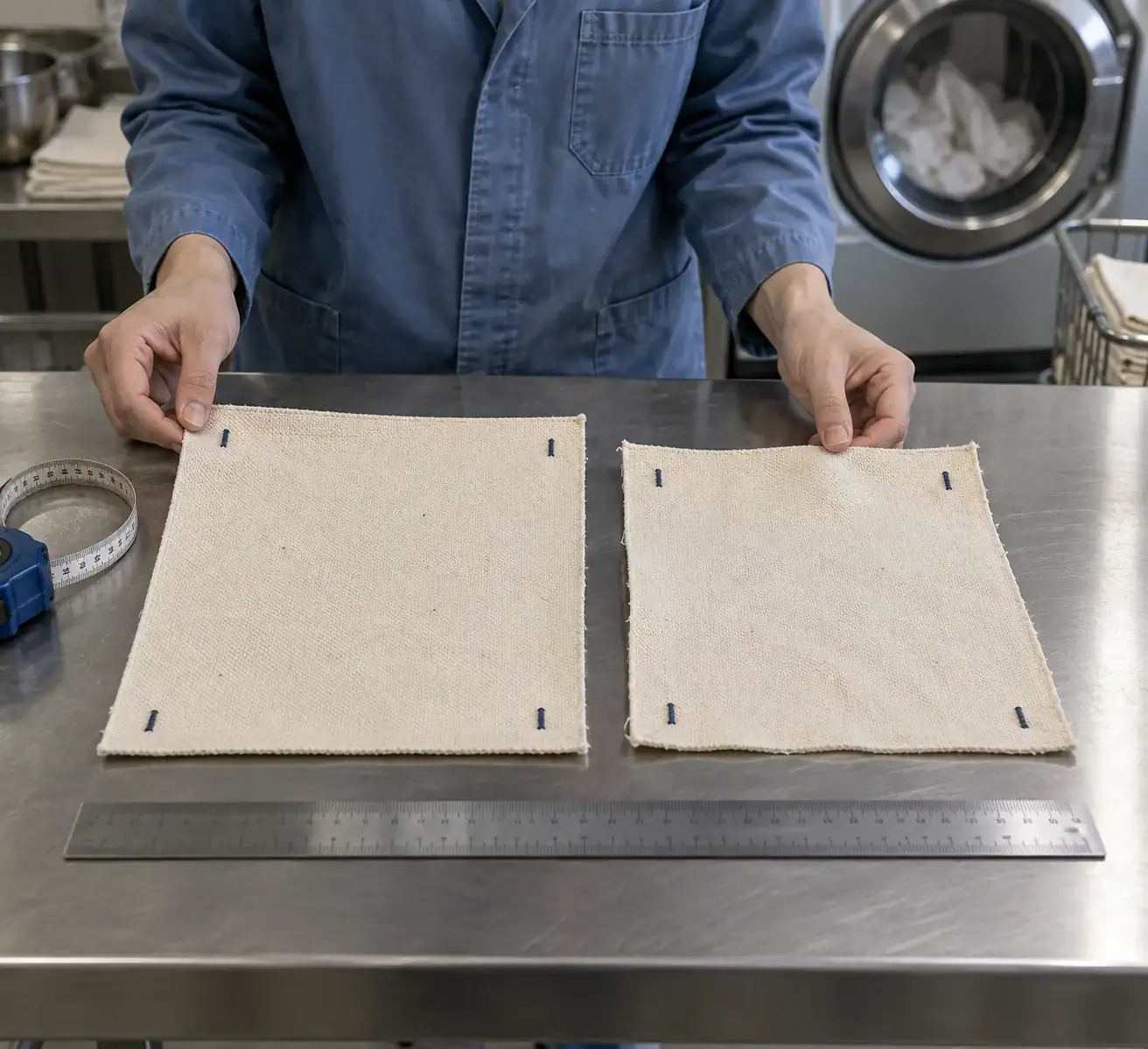
The tech pack should make the fabric decision reproducible. Replace broad phrases such as “heavy canvas” with fields that a supplier, pattern maker, and quality inspector can read in the same way.
| Tech pack field | Example instruction | Why it is needed |
|---|---|---|
| Fiber content | State the required percentage and allowed blend tolerance | Supports material approval and labeling |
| Construction | Plain weave, duck, double-fill, or another defined structure | Prevents a similar-sounding substitute |
| Finished GSM | Target mass with tolerance and test basis | Controls garment weight, hand, and yield |
| Ounce reference | Add oz/yd² only when the buyer uses that unit | Avoids silent conversion errors |
| Usable width | Measure after agreed wash or coating | Protects marker efficiency and consumption |
| Finish | Washed, brushed, pre-shrunk, coated, or untreated | Aligns hand, appearance, and care |
| Color | Pantone, lab dip, or approved physical standard | Reduces screen-based color disputes |
| Care route | Wash, dry, iron, and any special treatment | Makes shrinkage and hand comparisons valid |
| Garment use | Toile, overshirt, jacket, bag, trouser, or panel | Sets the relevant performance threshold |
Add a close-up photo of the approved face and reverse, a physical swatch, and notes on seam allowance, needle, thread, topstitching, and reinforcement. A tech pack customization review can help convert an early moodboard or sketch into fields that are easier to quote and sample.
When the fabric is still undecided, list the preferred option and an acceptable alternative separately. This lets the supplier explain the trade-off without silently changing the material.
What to Test Before Bulk Approval
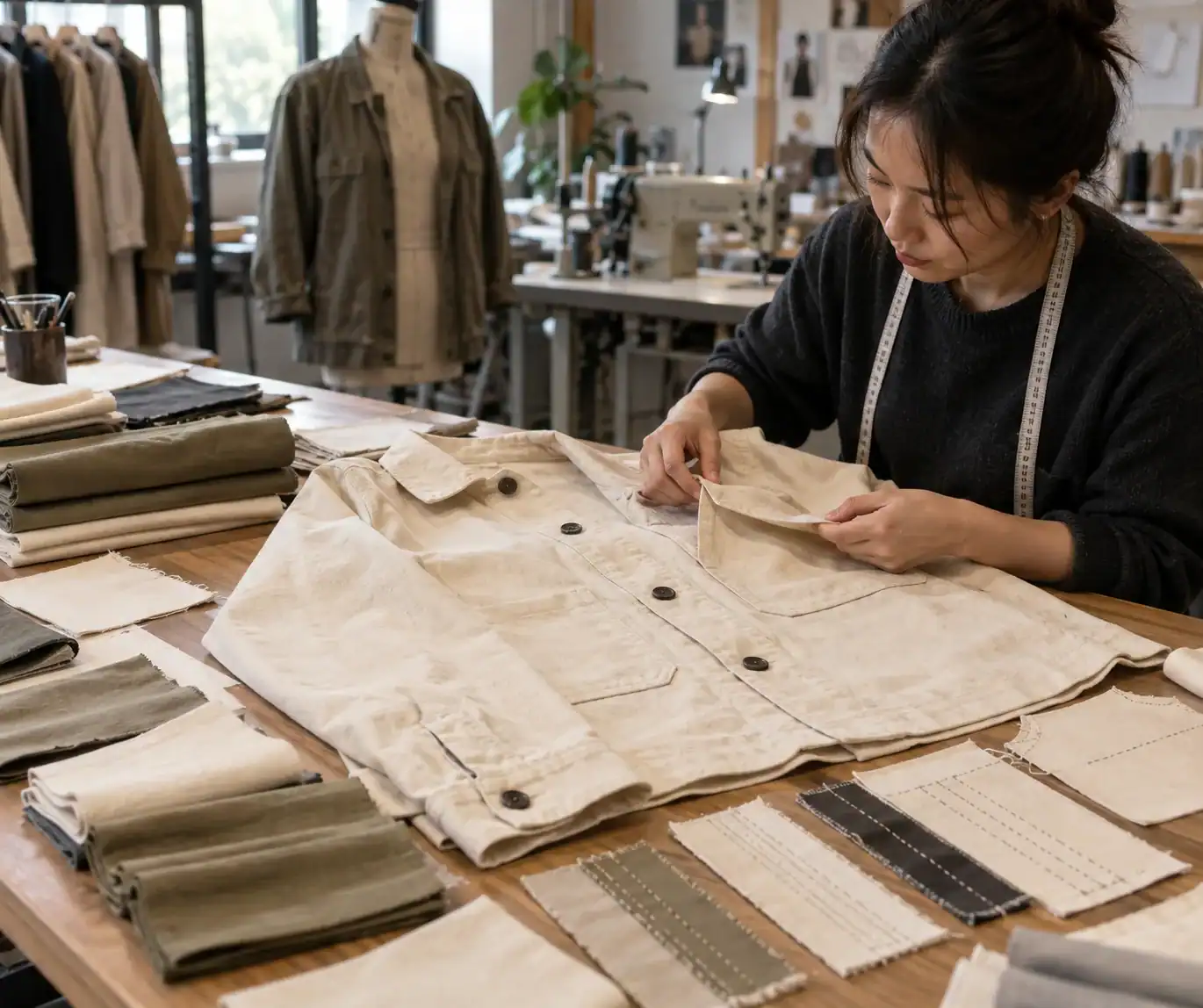
The test plan should match the end use. A first toile may need a controlled wash and dimensional review, while a workwear program may also need abrasion, seam, tear, colorfastness, and decoration checks.
| Property | Why the buyer checks it | Possible reference or agreed method |
|---|---|---|
| Fiber content | Confirms the declared material and blend | Supplier declaration plus laboratory verification when required |
| Mass per unit area | Confirms finished GSM and lot consistency | ASTM D3776/D3776M or an agreed equivalent |
| Dimensional change | Predicts post-wash length and width movement | AATCC TM135 or the approved care protocol |
| Skew and usable width | Protects grain, marker yield, and garment balance | Agreed measurement on conditioned fabric |
| Colorfastness and crocking | Protects shade, lining, and adjacent materials | Relevant AATCC or buyer-specified method |
| Seam, tear, or abrasion behavior | Matches the fabric to the load and end use | Agreed woven-fabric method and garment inspection |
| Finish or coating durability | Confirms the finish remains useful after care and use | End-use-specific test plan |
The AATCC TM135 dimensional-change method describes standardized laundering conditions for comparing length and width changes. The AATCC standards directory can help identify a method for a specific claim, but the buyer must still confirm the exact procedure and tolerance with the supplier.
Do not report a test as passed when it was not performed. If the buyer needs a laboratory report, restricted-substance review, or market-specific compliance document, identify the requirement and confirm that the document applies to the exact fabric, finish, and product.
A Practical Canvas Sampling Workflow

Use a staged process so fabric selection, pattern development, and bulk requirements stay connected:
- Define the garment or soft-good use, target fit, climate, care route, color, and whether the canvas is for a toile or final product.
- Request swatches with fiber content, construction, finished GSM, usable width, finish, and available color options.
- Compare the swatches by hand, drape, stiffness, surface, and edge fray. Record the sample condition before testing.
- Wash or condition the selected swatch with the intended care route, then measure length, width, skew, hand, and shade change.
- Make the first sample with the actual or production-representative canvas. Review pocket openings, collar roll, seam bulk, movement, and reinforcement.
- Update the tech pack with the accepted fabric, tolerances, trims, decoration, labels, packaging, and inspection points.
- Approve a retained fabric standard and a production-representative sample before bulk cutting.
The sampling and prototyping service is the relevant next step when a buyer needs help translating a sketch, moodboard, or incomplete specification into a measurable sample plan. A toile can answer shape questions quickly, but it cannot prove the final fabric’s colorfastness, coating durability, or bulk consistency.
Common Canvas Sourcing Mistakes
Canvas problems usually begin when a broad trade name is allowed to replace a measurable requirement. Avoid these errors:
- Do not quote only “cotton canvas.” State fiber content, construction, GSM, usable width, finish, color, and end use.
- Do not assume duck canvas and every other canvas quality have the same stiffness or sewing behavior.
- Do not compare a small swatch result with a full-width result without recording the test basis.
- Do not choose a heavy weight for a garment that needs drape, low seam bulk, or long-wear comfort.
- Do not treat slight bias movement as stretch and recovery for a fitted performance product.
- Do not skip the wash check when the pattern depends on finished length or width.
- Do not approve a coated surface before checking breathability, print adhesion, odor, flex cracking, and care.
- Do not let a toile made from a non-representative canvas decide the final garment balance.
- Do not accept a substituted blend without comparing the actual swatch, care route, and declared composition.
- Do not report a laboratory result, certification, capacity, MOQ, or lead time unless the project-specific evidence is confirmed.
These controls make the next quotation more useful because the supplier is solving the same product brief that the buyer intends to approve.
Frequently Asked Questions
Canvas is a firm woven fabric, usually built with a plain weave and specified by fiber content, construction, weight, width and finish. Cotton canvas is common, but polyester and blended versions are also available. The fabric name alone does not define the final garment behavior.
Many canvas qualities are made from cotton, but canvas is a construction and product category rather than a guaranteed fiber content. Confirm whether the quality is 100% cotton, cotton-polyester, polyester, linen, or another blend before approving the quote.
Standard canvas has little stretch because it is a stable woven fabric. A loose structure, bias cut, mechanical finish, or elastane blend can add movement, but do not treat that as activewear stretch and recovery without testing the actual quality.
Lightweight canvas around 200 to 300 GSM can suit overshirts, casual garments and light utility pieces, while heavier weights add structure for jackets, workwear and bags. The right range depends on the design, seam construction, drape, climate, wash route and sewing capability.
Breathability varies with fiber, yarn density, GSM, coating, finish and garment design. Lightweight uncoated cotton canvas can feel more breathable than dense coated canvas, but a buyer should compare swatches or request a relevant test instead of relying on the fabric name.
Canvas is commonly a plain weave, while denim is commonly a twill weave with a diagonal structure. Canvas often feels flatter and more stable; denim may offer more diagonal give and a softer break-in depending on weight, yarns and finish.
Canvas can work for structured lifestyle, utility or outerwear pieces, but it is usually a poor choice for close-fitting, high-stretch, high-sweat activewear. Confirm stretch, recovery, air permeability, abrasion, seam comfort and garment purpose before using it in a performance product.
Request fiber content, weave or duck construction, finished GSM, ounce conversion if needed, usable width, finish, coating, color standard, shrinkage, skew, test basis, sample yardage and care route. Also state the garment, seam load, decoration method and target quantity.
Canvas Quote Checklist
Before requesting a canvas garment or fabric quote, send the details that determine material choice, sample effort, and production risk.
| Quote input | Minimum information to send |
|---|---|
| Product | Garment, bag, accessory, panel, or toile; target wearer and end use |
| Fabric | Fiber, construction, GSM or ounces, usable width, finish, and color |
| Fit and pattern | Size range, measurement chart, ease, grain direction, and grade rules |
| Construction | Pockets, facings, reinforcements, seam type, topstitching, and hardware |
| Decoration | Print, embroidery, wash, coating, label, trim, or no decoration |
| Quantity | Sample quantity and estimated bulk quantity by color and size |
| Quality | Required tests, inspection points, tolerance, and retained standard |
| Packaging | Folding, polybag, carton, barcode, and shipping marks |
| Timing | Sample deadline, approval date, and target delivery window |
If the project is still at the moodboard stage, send the reference garment, sketch, or incomplete tech pack and identify what is undecided. Request a custom apparel quote with the product, canvas brief, quantity, and target timing so the next step is specific.