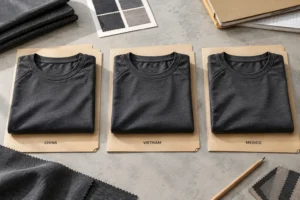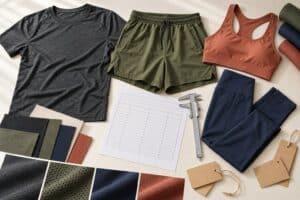
Short answer: To find garment manufacturers, define the garment and production model first, search by product specialty, shortlist three to five factories, send each the same RFQ, compare MOQ, sampling, quality, lead time, communication, and total cost, then approve a pre-production sample before ordering in bulk.
Many brand founders start with a long list of supplier names. That feels productive, but it often creates a different problem: every factory receives a different description, every quote uses different assumptions, and the lowest number looks better than it really is.
Finding a garment manufacturer is a buyer decision, not a directory search. The right partner needs to fit the garment construction, fabric route, order size, development stage, target market, and level of support you actually need. A factory that is excellent at knit basics may be a poor choice for compression leggings. A supplier that can produce a stock hoodie may not be set up for a fully custom jacket with taped seams and branded trims.
This guide gives you a repeatable way to move from a vague search to a defensible shortlist. It also shows what to send in the first inquiry so the replies can be compared without guessing.
What does a garment manufacturer actually do?
A garment manufacturer turns a product specification into finished clothing. Depending on the business model, that may include fabric sourcing, pattern development, grading, cutting, sewing, decoration, finishing, labeling, packing, and quality inspection.
The word manufacturer can describe several different routes:
- A cut-and-sew manufacturer builds a garment from a pattern, fabric, trims, and construction instructions. This is usually the route for custom styles.
- A private-label manufacturer offers existing or semi-custom styles that can be produced with your labels, colors, packaging, or selected adjustments.
- An ODM partner has existing product designs that can be adapted. The buyer may start from a factory-developed block rather than a blank page.
- A full-service development partner may help with design, tech-pack work, fabric selection, sampling, production, and packing. Confirm which steps are done in-house and which are subcontracted.
The best route depends on what you already have. If you only have a moodboard, ask whether the factory supports product development. If you have a complete tech pack, ask how the team reviews measurements, construction, grading, and material substitutions. If you want an existing style with your branding, ask for the limits of customization before you compare prices.
Start with a factory brief, not a supplier list
Before searching, write a one-page brief that describes the job. It does not need to look like a finished tech pack. It needs to remove the assumptions that make early quotes unreliable.
Include these fields:
- Garment category and intended use, such as training legging, running short, streetwear hoodie, lounge set, or performance bra.
- Construction details that affect production, such as bonded seams, flatlock seams, brushed fleece, mesh panels, pockets, zippers, lining, support level, or embroidery.
- Fabric direction, including fiber preference, stretch, weight or GSM target, finish, opacity, recovery, and whether the factory may propose alternatives.
- Estimated quantity by style, color, and size. A total order number alone is not enough.
- Target sample date and target bulk delivery window. Use a date range if the launch is not fixed.
- Destination market and shipping destination. Label, packaging, and import questions depend on the market.
- Branding and packaging needs, including woven labels, heat transfers, hangtags, polybags, cartons, and barcodes if applicable.
- Your starting asset: tech pack, reference garment, sketch, product photo, or only a concept.

The brief also needs a clear boundary around unknowns. If you do not know the final fabric, say that you want the manufacturer to recommend two or three options that meet the same performance requirement. If you do not know the correct size grading, ask the factory to flag what it needs before sampling. Clear unknowns are easier to price than hidden unknowns.
Where to search for garment manufacturers
Search by the product and production route, not only by the broad phrase clothing manufacturer. More specific searches produce a more useful first screen.
Try combinations such as:
cut and sew activewear manufacturercustom performance apparel manufacturerprivate label yoga clothing manufacturersmall batch knitwear manufacturercustom streetwear manufacturersports bra manufacturer with sampling
You can use several discovery channels:
- Search engines and manufacturer websites. Look for product-specific capabilities, process details, sample guidance, and a clear inquiry path. Treat polished photos as a lead, not proof.
- Referrals from designers, pattern makers, fabric suppliers, or other brands. Ask what product they made, what order size they placed, and whether they approved a sample before production.
- Trade shows and sourcing events. These can help you compare specialties quickly, but collect the same information from every booth.
- Industry directories and marketplaces. They can expand the starting list. You still need to verify whether the contact is a factory, a trading company, or a hybrid model.
- Product development consultants. A consultant may shorten the search when the product is technically difficult, but clarify whether the consultant represents a factory and how fees are handled.
Do not assume a manufacturer is suitable because it appears for a broad query. Search results often mix factories, wholesalers, agents, software companies, publishers, and directories. Your shortlist should contain businesses that can answer questions about the specific garment you want made.
Match the factory to the garment specialty
Capability fit should come before the first price comparison. Ask whether the factory regularly makes the type of garment you are buying, not whether it can theoretically make it.
Check the following:
- Similar fabric behavior: four-way stretch, recovery, low-shrinkage knit, woven structure, fleece, mesh, or coated fabric.
- Similar construction: seam type, waistband, cup or support structure, closures, pockets, bonded details, or decorative finishes.
- Similar size and fit requirements: extended grading, compression fit, relaxed fit, children sizes, or petite and tall proportions.
- Similar order model: small development run, private label, repeat basics, seasonal collection, or custom cut-and-sew.
- Similar decoration and trim: screen print, embroidery, heat transfer, silicone label, zipper, drawcord, elastic, or custom packaging.
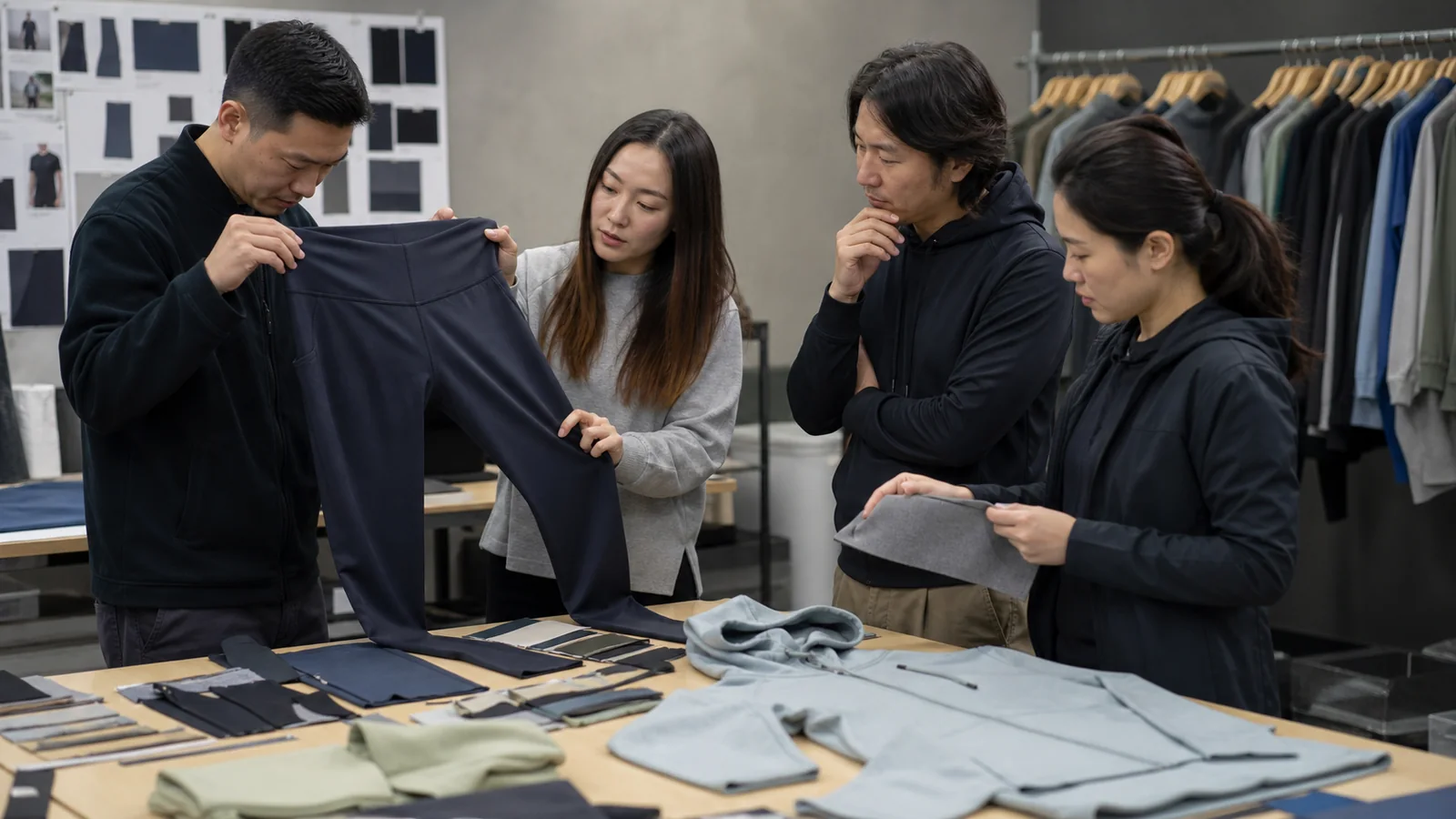
If the manufacturer shows only finished garments without construction or process information, ask for a technical conversation. A good early reply should include questions about fabric composition, measurements, seam requirements, quantity, and the approval process. A quick promise to make everything is less useful than a specific question that exposes a real constraint.
Build a shortlist of three to five factories
Three to five candidates are enough for a first comparison. A list of twenty factories usually creates inconsistent communication and shallow evaluation.
For each candidate, record:
- Legal or trading name shown on the quotation and invoice.
- Product specialty and a link to relevant work.
- Manufacturer, trading company, or mixed operating model.
- Development services included and services outsourced.
- MOQ structure and whether it is counted per style, color, fabric, or order.
- Sampling process, sample fee, sample revision policy, and expected timing.
- Bulk production lead-time assumptions.
- Quality control process and the documents the buyer can review.
- Communication contact and the technical questions asked in the first reply.
- Quote validity, payment terms, packaging assumptions, and freight basis.
Use the same evidence standard for every candidate. If one factory sends a detailed quotation and another sends only a unit price in a chat message, the numbers are not comparable yet.
The shortlist is not a ranking of the cheapest factories. It is a list of candidates that passed the product-fit and information-quality checks.
Ask the same RFQ questions to every factory
An RFQ, or request for quotation, gives the manufacturer a defined job to price. You do not need to disclose every commercial detail in the first message, but you should provide enough production information to receive an answer that can be compared.
Ask each factory to respond to the same fields:
- Can you make this garment construction and fabric route?
- Do you support custom development, private label, or both?
- What is the MOQ per style, color, fabric, and size range?
- What is the sample fee, and how many revision rounds are included?
- What information is required before the sample can start?
- What are the sample and bulk lead-time assumptions?
- Which materials and trims can you source, and can the buyer approve substitutions?
- How do you review measurements, fit comments, and grading changes?
- What inspections happen during production and before packing?
- Which labels, packaging, and destination-market documentation can you support?
- What payment terms, quote validity, and shipping assumptions apply?
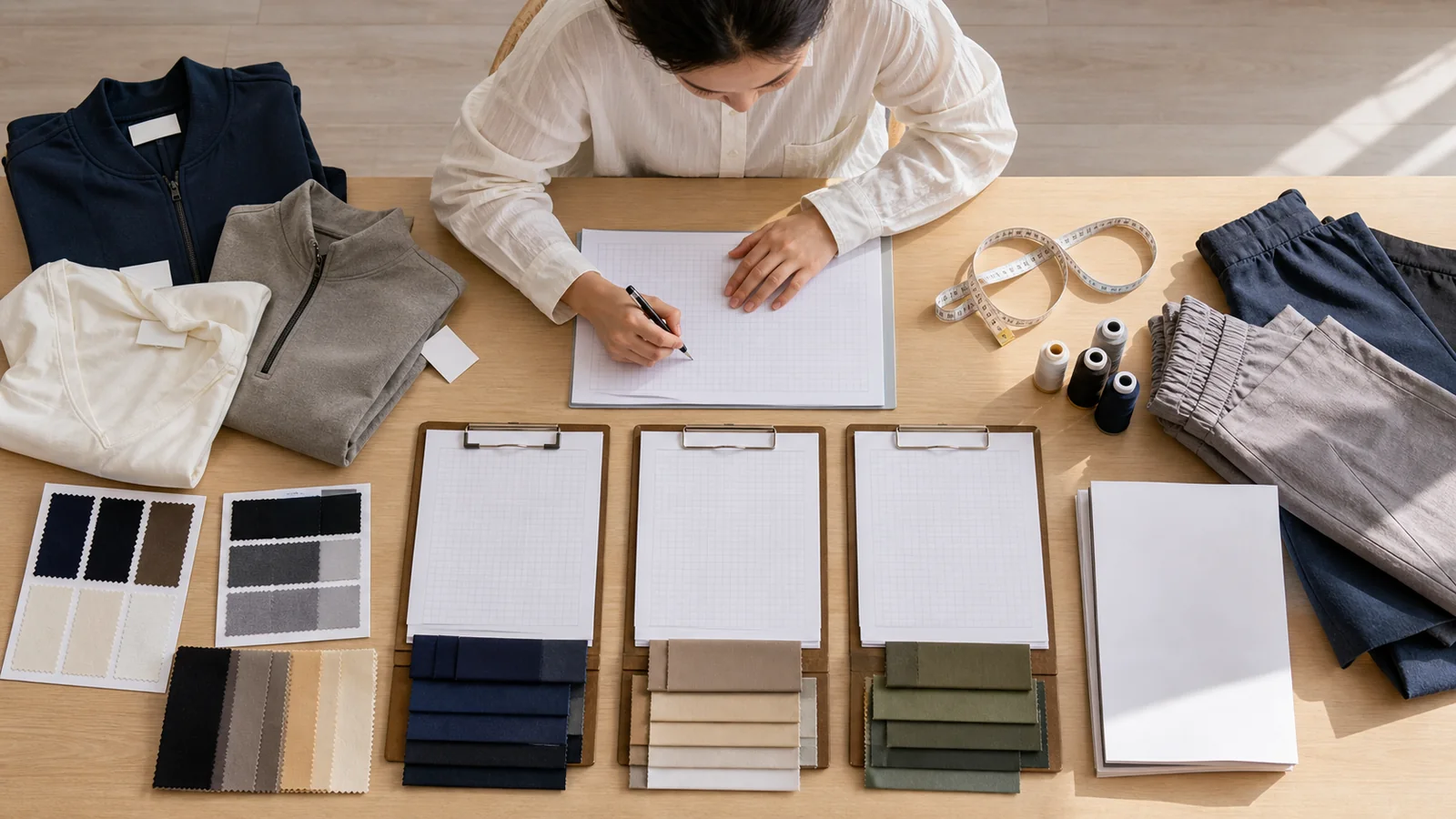
Ask for assumptions to be written down. A quote that excludes labels, packaging, sample revisions, freight, or duty may be lower than a quote that includes them. Neither is automatically better. The buyer needs to know which costs are inside the number.
Compare MOQ without misleading yourself
MOQ is rarely one simple number. A factory may quote a minimum per order, per style, per color, per fabric, or per size run. These structures create very different cash requirements.
For example, an order of 300 pieces can mean:
- 300 total pieces across one style and one color.
- 300 pieces per style, with three colors allowed inside the style.
- 300 pieces per color, which creates a 900-piece commitment for three colors.
- 300 pieces per fabric, even when several styles share the same material.
Ask the manufacturer to show MOQ in the same unit you use for the launch plan. If you are starting with two styles, three colors, and five sizes, ask for the minimum quantity and estimated cost for that actual structure.

Low MOQ is useful only when the product and price still work. A small order with an expensive special fabric, complex trim, or high sample development cost may have a higher unit cost. A larger MOQ may lower the unit price while creating inventory risk. Compare the cash committed before the first reorder, not just the number printed beside MOQ.
For a narrower low-order activewear route, see the existing guide on how to find a low MOQ activewear manufacturer. It covers a different, more specific search intent.
Send a tech pack or reference package
A tech pack makes a manufacturer’s job more concrete. It usually contains the information needed to develop and approve the garment, such as:
- Front, back, and detail views.
- Point-of-measure chart and tolerance direction.
- Construction notes, seam type, stitch, hem, and reinforcement details.
- Fabric composition, weight, stretch, recovery, finish, and color reference.
- Trim, label, zipper, elastic, cord, and packaging requirements.
- Artwork files and placement dimensions where decoration is required.
- Size range, grading direction, and fit comments.
- Sample version, revision date, and approval status.
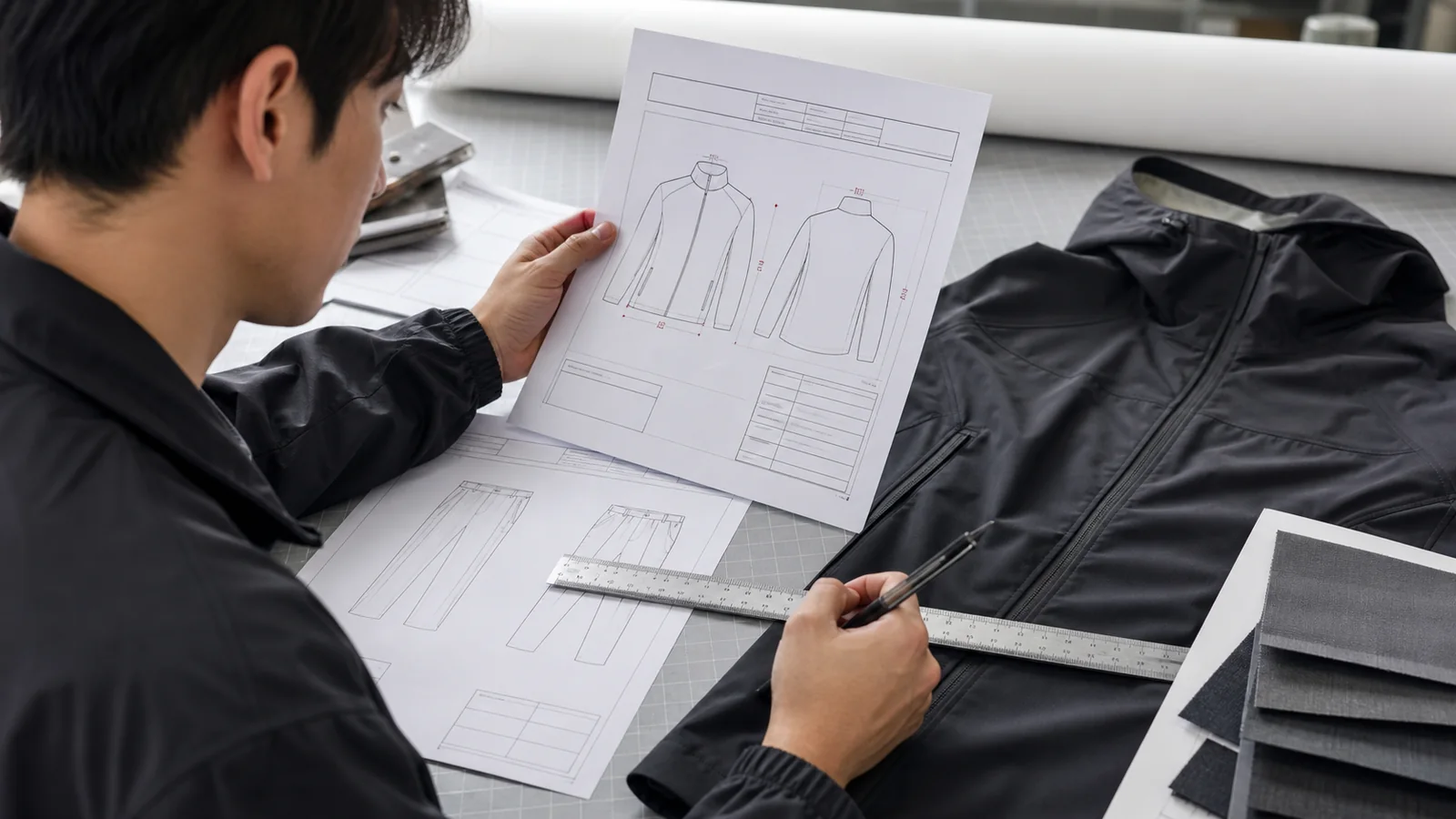
If you do not have a complete tech pack, send a reference garment or clear product photos with measurements. Explain what must stay the same and what the manufacturer may propose. The phrase "make it like this" leaves too much room for interpretation. A reference package should answer what the factory is allowed to change, what it must match, and what needs a sample decision.
DTS Activewear has a tech pack customization service for buyers who need help turning a product idea into a more workable production brief. The manufacturer still needs the buyer to approve the intended fit, materials, and construction.
Evaluate the first sample before bulk production
The first sample is not only a photo opportunity. It is the first physical test of whether the manufacturer understood the brief.
Review it in a fixed order:
- Confirm the sample version, fabric, color, trim, labels, and size.
- Measure the garment against the point-of-measure chart.
- Check fit on the intended body or fit form, including movement where the garment is performance-focused.
- Inspect seam construction, stitch quality, tension, symmetry, hems, closures, pockets, and reinforcement.
- Check stretch, recovery, opacity, hand feel, shrinkage risk, and color against the approved direction.
- Write specific comments with a location, requested change, and acceptance condition.
- Approve, reject, or request a revision in writing. Keep the version history.
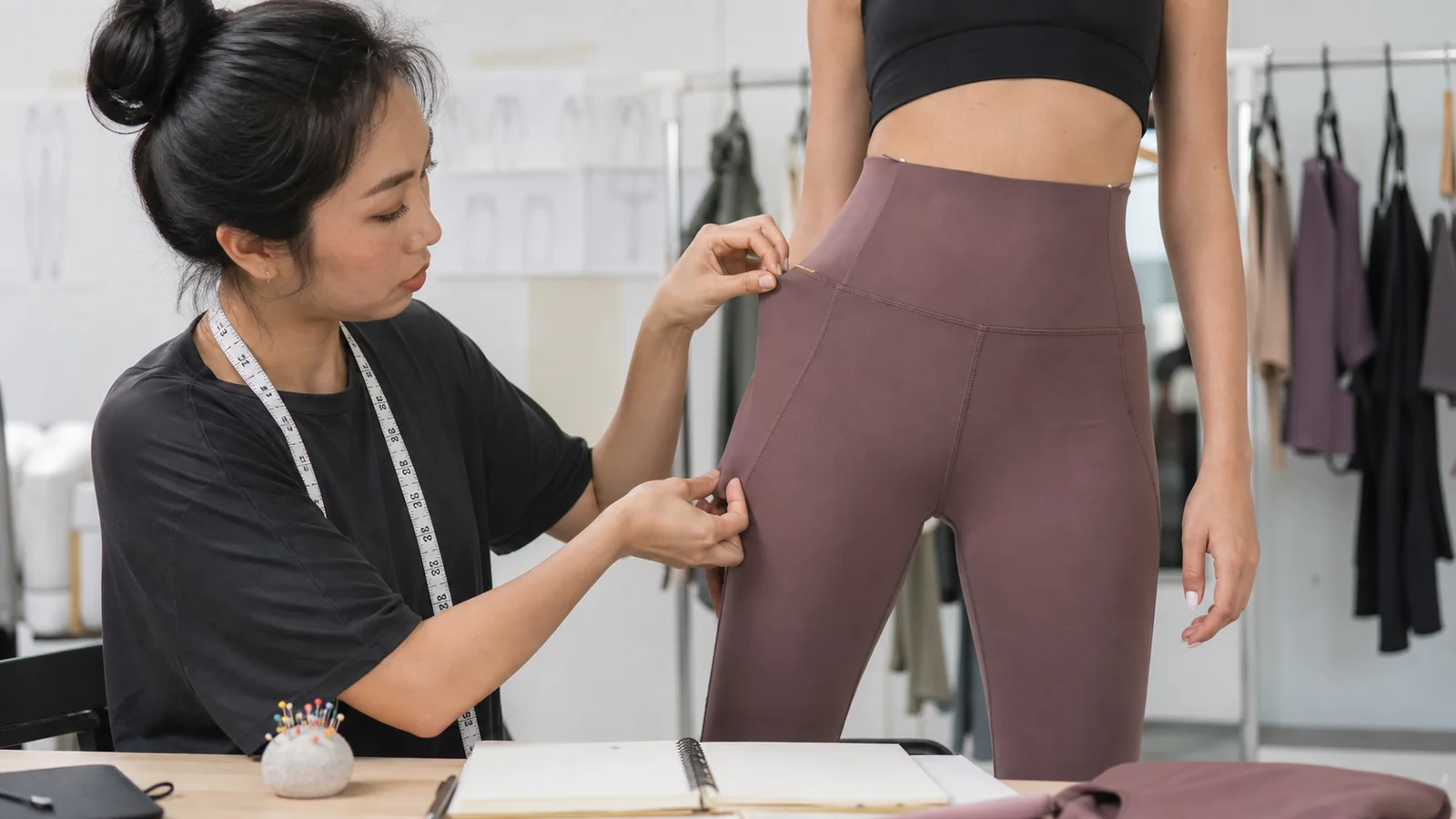
Avoid approving a sample with a general message such as "looks good." State what was approved: fabric, fit, measurements, color, construction, labels, and packaging. If the factory proposes a substitution later, treat it as a new approval question rather than an informal update.
If you need an organized development stage, review DTS Activewear’s sampling and prototyping support. The buyer remains responsible for confirming the final sample before bulk production.
Verify quality and production control
Ask how quality is checked, not only whether the factory has quality control. A useful answer identifies when checks happen and what happens when a result falls outside the agreed requirement.
Ask about:
- Incoming fabric and trim inspection.
- Pattern, cutting, and panel matching checks.
- In-line sewing inspection.
- Measurement checks against the approved specification.
- Color, print, embroidery, and wash or finish checks where relevant.
- Final inspection, packing inspection, and defect classification.
- Corrective action when a defect is found.
- How the buyer receives inspection findings or approval records.
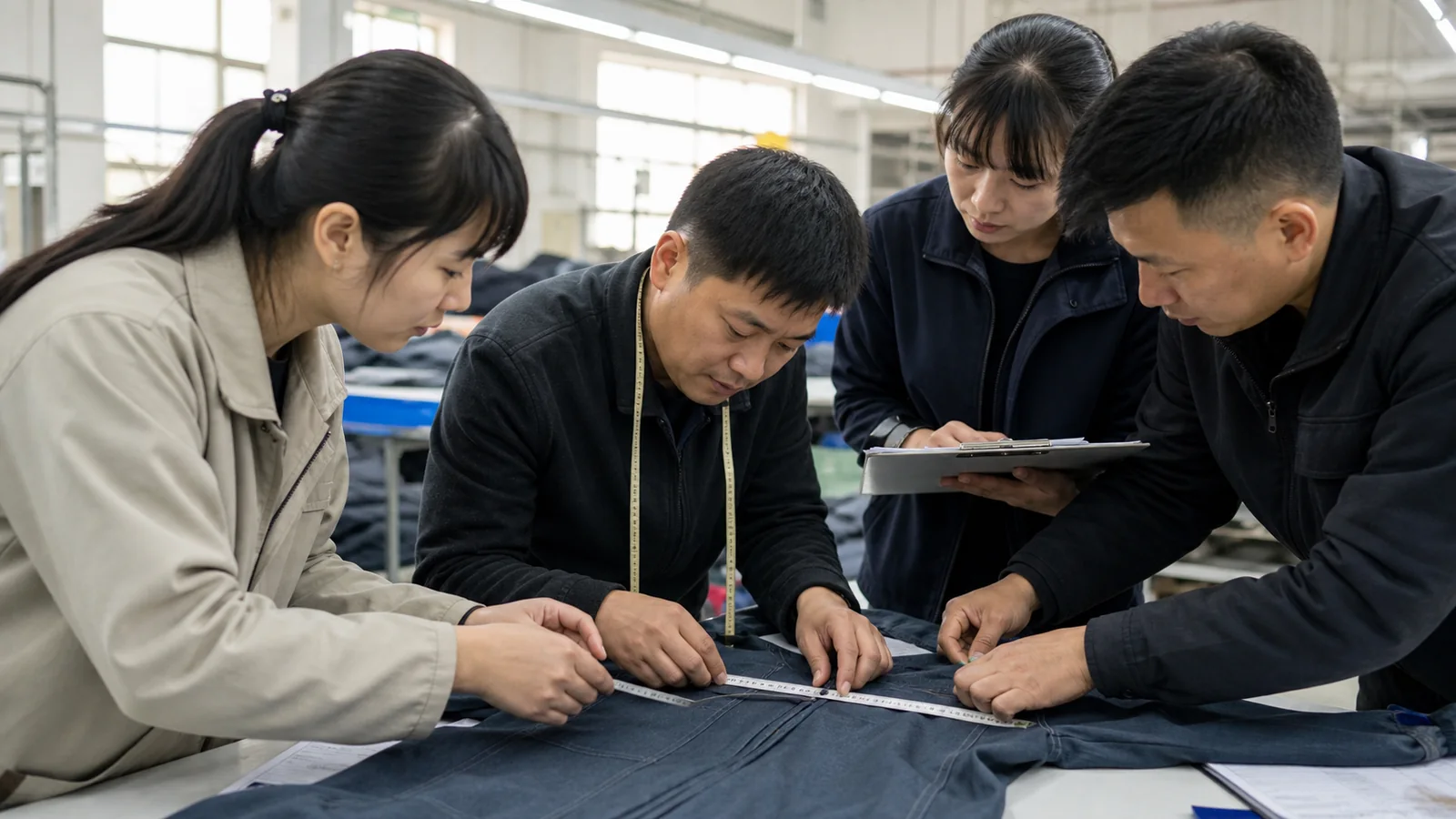
Do not assume a logo, certificate image, factory photograph, or inspection phrase proves a capability. Ask what the document covers, who issued it, which entity it names, and whether it is current for the product and destination market. If a certification or test is necessary for your product, verify the requirement with the relevant authority or a qualified compliance professional.
For US-bound textile products, the FTC apparel labeling guidance explains that most textile and wool goods generally need a fiber-content statement, a made-in location, and identification of the responsible business. Care instructions are covered by a separate rule. Confirm the label and packaging requirements for the market where the product will be sold.
Use communication as a technical test
Communication is not just a customer-service preference. It affects whether measurement changes, material substitutions, and approval decisions are understood before production starts.
Look at the first technical reply:
- Does the contact ask questions about the garment or only send a price?
- Does the factory distinguish sample lead time from bulk lead time?
- Does it explain MOQ by the unit that matters to your order?
- Does it flag a construction or material risk before promising a result?
- Does it repeat your assumptions accurately?
- Does it explain the next decision and what information it needs?
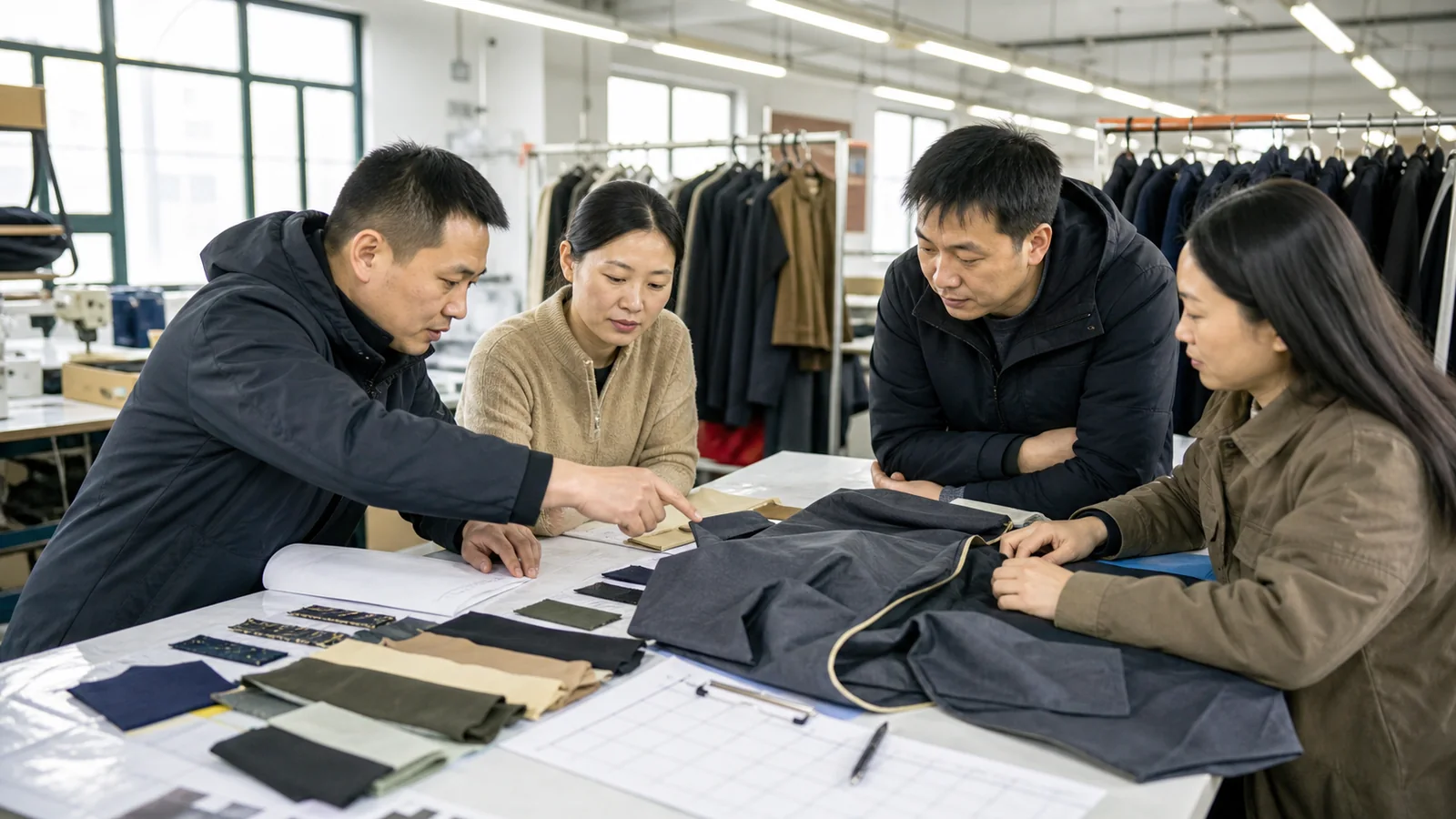
Do not treat a fast reply as proof of manufacturing quality. A useful reply can take longer if it includes a real technical review. What matters is whether the response reduces uncertainty and makes the next step clear.
Send one controlled revision after the first response. If the factory changes the interpretation of the garment every time, record that as a risk. If it asks precise questions and updates the quote or sample plan consistently, record that as positive evidence.
Compare total cost, not only unit price
The factory unit price is only one part of the cost of getting a sellable garment. Build a simple cost view with separate lines for:
- Pattern, grading, tech-pack, or development fees.
- Sample fees and sample revisions.
- Fabric, trims, labels, decoration, and packaging.
- Bulk unit price at the actual quantity and color structure.
- Inspection or testing requested by the buyer.
- Freight, duties, customs, and local delivery where applicable.
- Payment timing and the cash held before goods can be sold.
- Rework, rejected units, or replacement risk if the sample and bulk product differ.

Ask every factory to state what the quote includes and excludes. If one factory uses a delivered price and another uses an ex-factory price, do not compare the figures directly. Request the same basis or calculate the missing logistics separately.
Price also needs a quality boundary. A cheaper garment that requires a second sample round, rework, relabeling, or replacement may cost more by the time it reaches the customer. The useful comparison is the cost of an approved product at the required specification, not the lowest first message.
Red flags that should stop the process
One weak signal does not always disqualify a manufacturer. A pattern of weak signals should slow the process or stop it before money or confidential files are committed.
Stop and investigate when:
- The business will not identify the entity named on the quotation or invoice.
- The contact avoids answering product-specific questions.
- The factory promises any fabric, quantity, finish, or delivery date without reviewing the brief.
- MOQ changes after you provide colors, sizes, or fabric details.
- A sample arrives with major differences and the response is "bulk will be different."
- The quote excludes important costs but does not state the exclusions.
- The contact pressures you to pay before the sample, specification, or terms are clear.
- A certificate, audit, factory photo, or customer reference cannot be verified.
- Payment instructions change unexpectedly or do not match the contracted business entity.
Do not send a complete confidential tech pack or valuable original sample to a new contact before you understand who will receive it and how the file will be handled. You can begin with a controlled brief, then share deeper information after the manufacturer passes the first fit and process checks.
Use a simple shortlist scorecard
A scorecard keeps one impressive price or one attractive factory photo from dominating the decision. Score each candidate from 0 to 5 for:
- Product and construction fit: 25 percent.
- RFQ clarity and quote completeness: 15 percent.
- MOQ fit for the planned launch: 15 percent.
- Sampling and development process: 15 percent.
- Quality control evidence: 15 percent.
- Communication and technical response: 10 percent.
- Payment, packaging, and logistics clarity: 5 percent.
Multiply each score by its weight, then write one evidence note beside it. A score without an evidence note is only a feeling.
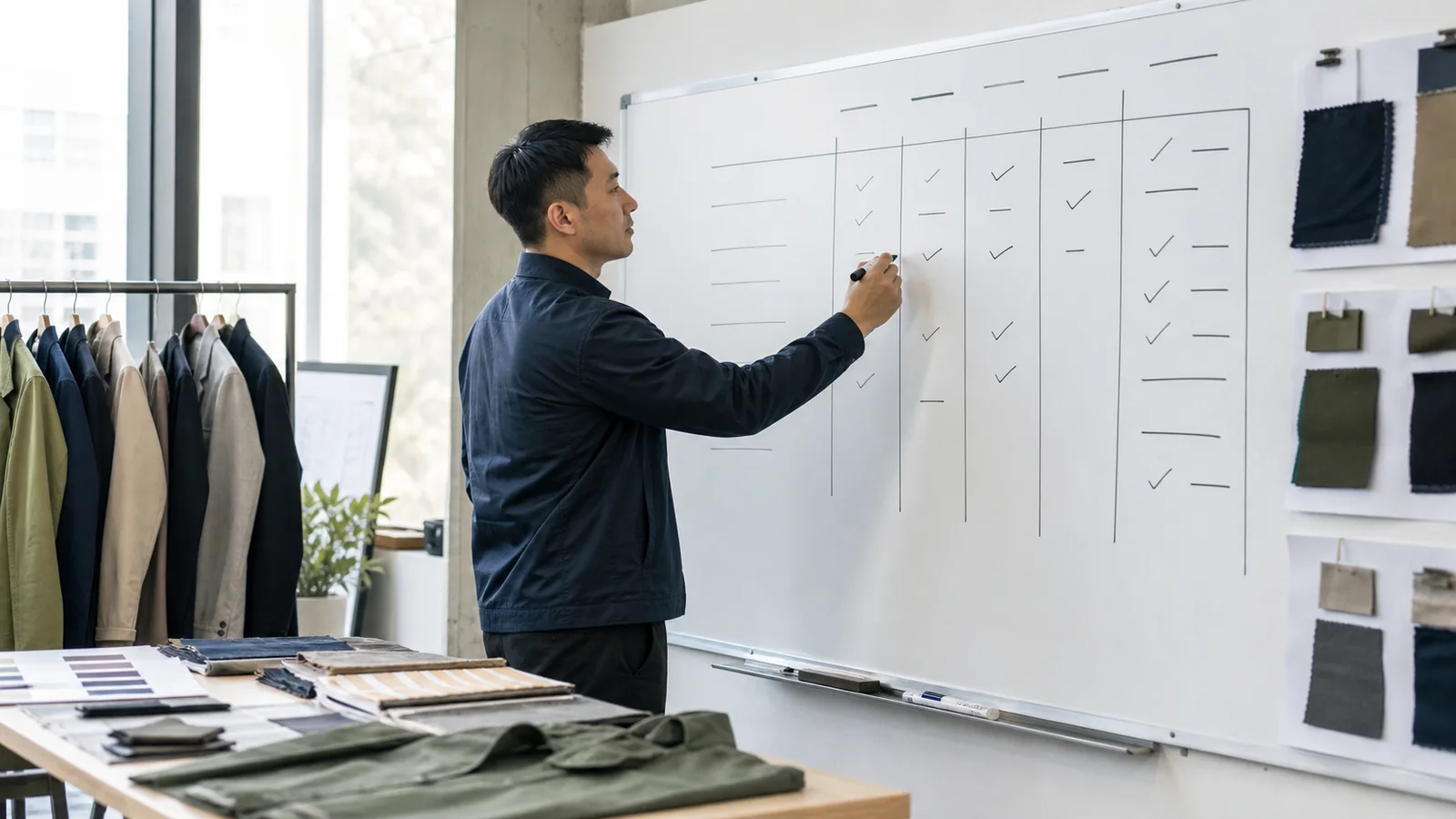
Set a stop rule before you compare the final candidates. For example, a factory cannot proceed to a paid sample if it scores zero on product fit, cannot explain MOQ, or refuses to state the sample and bulk assumptions. This prevents the team from overriding a serious risk because the unit price looks attractive.
The scorecard is a comparison tool, not a claim that one manufacturer is objectively best. The right choice depends on your garment, quantity, destination, timeline, and required proof.
Send the first manufacturer inquiry
Your first message should be short enough to read and specific enough to answer. Attach or link the reference package, then ask the factory to reply in the same structure.
Use this order:
- Introduce the brand stage and product category.
- State the garment, fabric direction, quantity range, colors, sizes, and destination market.
- Describe the construction details that affect cost or feasibility.
- Attach the tech pack, reference images, or sample photos.
- Ask for MOQ, sample fee, sample timing, bulk timing, quote basis, and payment terms.
- Ask which information the factory needs before it can confirm the quote.
- Request the next step, such as a technical review, material recommendation, or sample plan.

You can send a draft inquiry through DTS Activewear’s NDA inquiry page. Include enough technical detail for a meaningful review, but do not hide the decisions you still need help making.
What changes by product category and brand stage?
The search process stays the same, but the evidence you prioritize changes.
For activewear, focus on stretch and recovery, opacity, support, seam construction, gussets, pocket stability, and movement fit. A factory that makes casual tees may not have the same pattern and sewing experience.
For streetwear and basics, check fabric hand feel, shrinkage, wash effect, print or embroidery, rib recovery, and size grading. Ask whether the factory can reproduce the approved color and finish at bulk scale.
For lingerie and performance intimates, examine elastic, cup or lining construction, support level, fit testing, privacy handling, and labeling. Do not assume a general apparel factory has the right development experience.
For a small or new brand, cash timing and MOQ may matter more than the lowest unit price. A small first order, a clear sample process, and a manufacturer that will explain trade-offs can be more useful than a factory built only for very large repeat programs.
For a growing brand, add capacity planning, repeatability, color continuity, reorders, packaging control, inspection records, and escalation contacts. Your first order may be manageable by one person. A repeat program needs a process that another team member can follow.
Frequently asked questions
Start with three to five manufacturers that match the garment and production route. Contacting more only helps when the first shortlist lacks product fit or evidence. A smaller list with identical RFQ fields is easier to compare than a large list of vague replies.
Send the garment category, fabric direction, construction details, quantity by style and color, size range, destination market, target timing, and a tech pack or reference package. State what is fixed and what may be proposed. This gives the manufacturer a clear starting job without pretending every decision is final.
Ask for the legal or trading entity on the quote, the production scope, the services performed in-house, and the identity of any subcontractors involved. Compare the answers with the sample, technical response, documents, and payment instructions. Do not treat photos, logos, or a certificate image as independent proof.
There is no universal best MOQ. Start with the quantity your cash flow and sales plan can support, then ask how the minimum is counted per style, color, fabric, and size. A small MOQ is not useful if the sample, material, or unit cost makes the product unworkable.
You can begin with a sketch, reference garment, or product photos, but a tech pack usually improves quote and sample accuracy. If the tech pack is incomplete, label the unknowns and ask the manufacturer which details it needs before production development starts.
A manufacturer produces garments or manages the production process. A supplier may sell finished goods, source from factories, or operate as a trading company. Some businesses do both. Ask who will make the garment, who controls quality, and which entity will appear on the quotation and contract.
Yes. Approve the sample against measurements, fit, fabric, construction, trims, labels, and packaging requirements before bulk production. Record the approved version and require written approval for later substitutions or changes.
Compare product fit, MOQ, sample fees, revisions, lead times, material assumptions, inspection process, communication, payment terms, packaging, freight basis, and the risk of rework. A complete quote is more useful than a low number with missing assumptions.
Send a comparable RFQ to your shortlist
The fastest way to narrow the field is to give each candidate the same production brief and ask for the same reply fields. Then compare evidence, not enthusiasm. A manufacturer that asks precise questions, states constraints, and makes the sample process clear is easier to work with than one that simply says yes to everything.
If you already have a product idea, sample, or tech pack, send your garment RFQ to DTS Activewear for a technical review. Include your garment type, target quantity, fabric direction, size range, construction details, destination market, and target sample date.