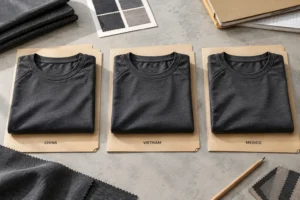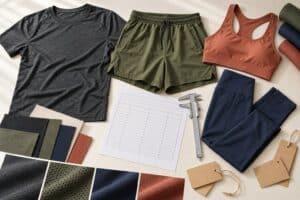
Chinese sportswear is not one product category or one supplier type. For a buyer, the phrase can mean domestic consumer brands, wholesale catalog sellers, OEM factories, ODM studios, or a custom activewear partner that develops a collection from a tech pack. The safest route is to separate those models first, then compare product capability, fabric behavior, sample control, testing, and order terms.
If you are sourcing for a fitness brand, teamwear program, e-commerce store, or private-label collection, begin with a product brief rather than a country label. Name the garment, intended activity, fabric behavior, size range, decoration, quantity, destination, and approval checks. That gives a Chinese sportswear supplier enough information to quote the same product you are actually planning to buy.
What Chinese sportswear means to a buyer
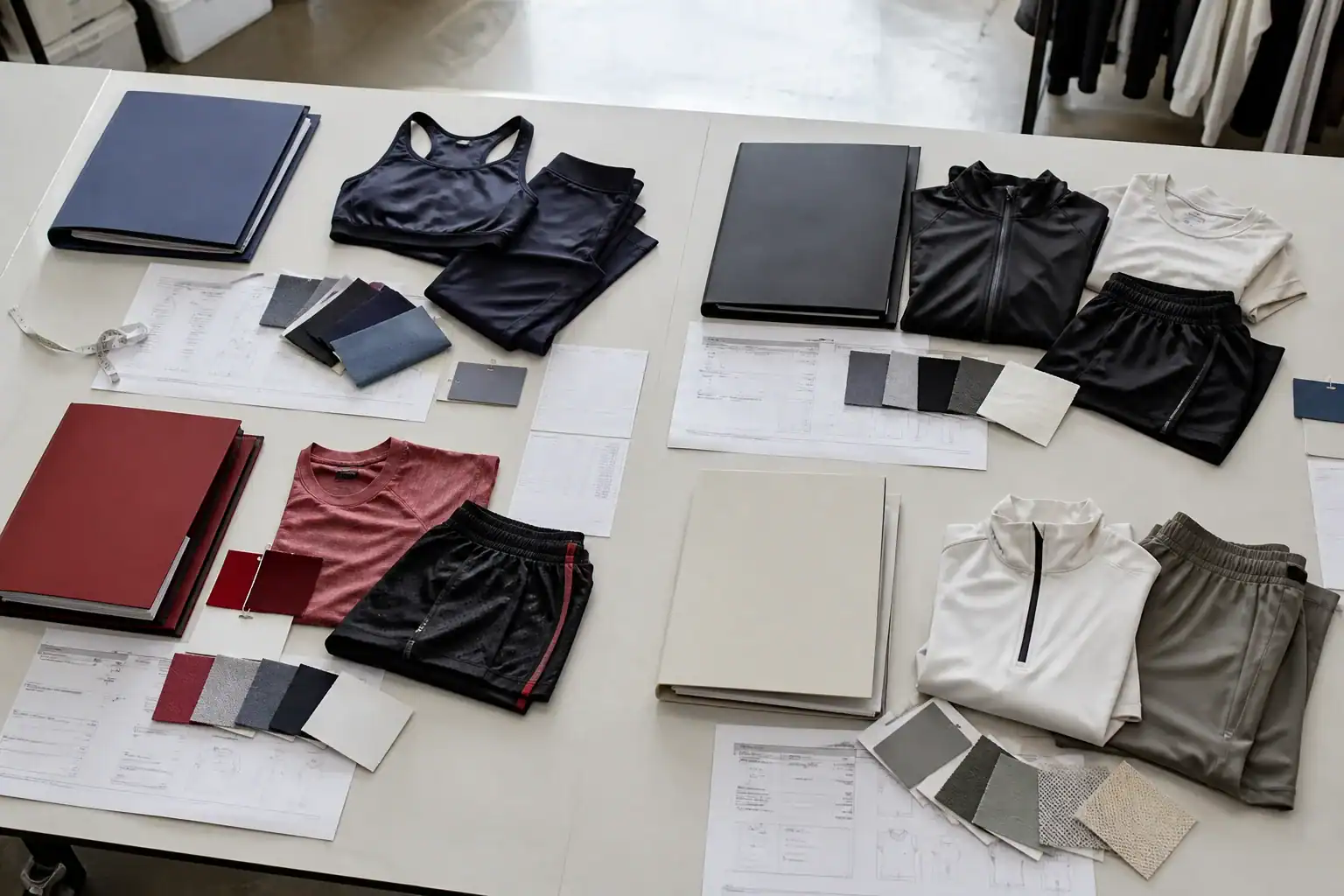
The term covers two different markets that are easy to confuse.
The first is the consumer brand market. A buyer may be researching Chinese sportswear brands such as ANTA, Li-Ning, Xtep, 361 Degrees, or smaller specialist labels to understand styling, price position, category gaps, and local demand. A brand list can help with market research, but it does not tell you which factory made a particular garment or whether that company accepts private-label production.
The second is the supply market. A buyer may be looking for ready-to-ship wholesale sportswear, private-label blanks, OEM cut-and-sew production, ODM styles, or a development partner for a new collection. Those options have different levels of control over fit, fabric, trims, artwork, labels, packaging, and minimum order quantity.
For sourcing, make the distinction explicit in the first inquiry:
- Consumer brand research: used to study silhouettes, price points, retail presentation, and category demand.
- Wholesale catalog sourcing: used when the buyer needs existing styles, limited changes, or quick product selection.
- Private label: used when a buyer wants a supplier style with custom labels, packaging, colors, or decoration.
- OEM: used when the buyer supplies the product direction or specifications and the factory makes the garment.
- ODM: used when the supplier contributes an existing design base, development input, or product architecture.
The last three routes can overlap. A supplier might offer stock styles and custom development, while another may be strong at production but weak at pattern development. Ask what the company actually controls. A polished catalog is not proof of in-house sampling, owned sewing capacity, fabric testing, or export documentation.
Choose the supply model before you compare factories
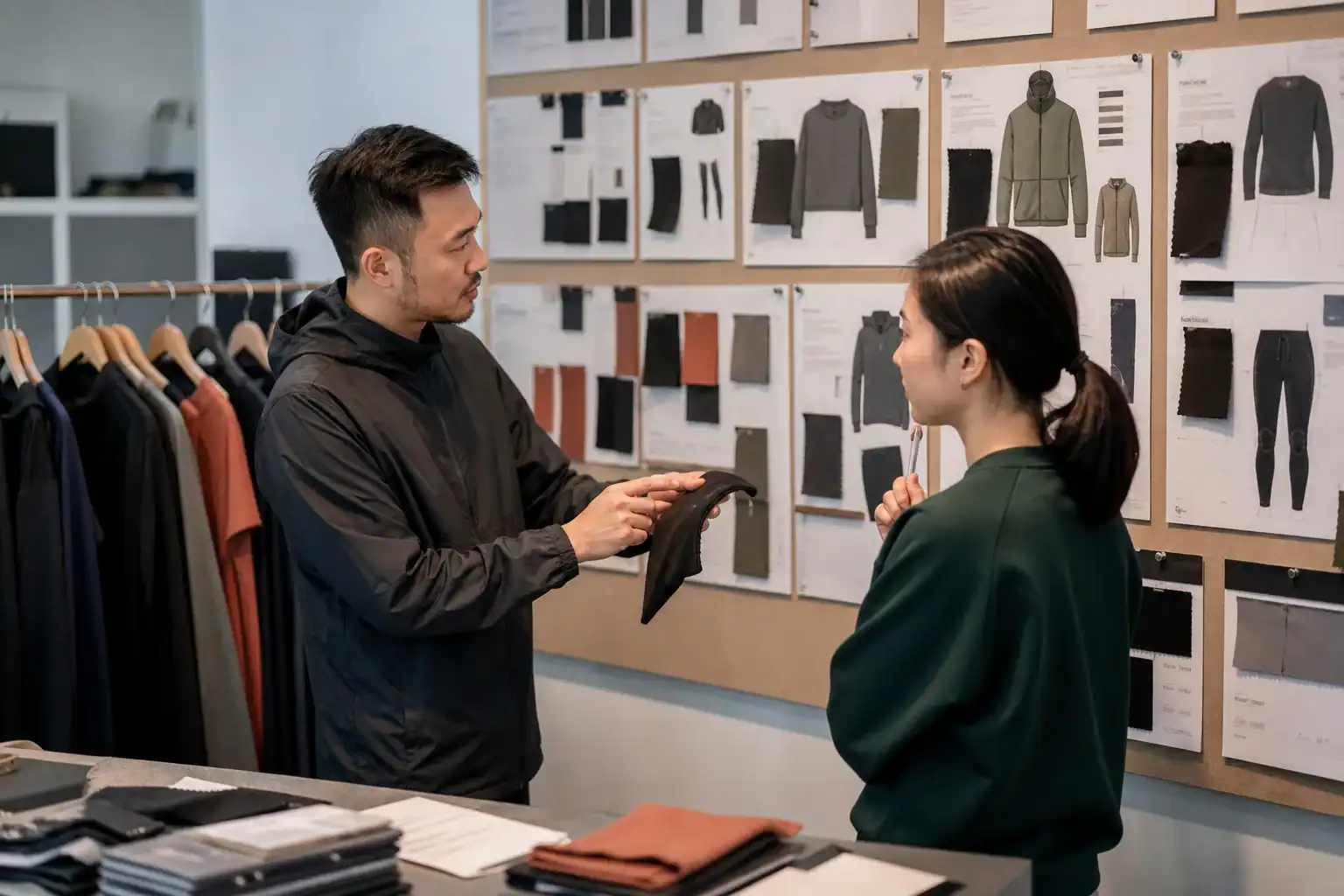
Country-level sourcing research becomes more useful when it is tied to the supply model. A factory that is a good fit for a 5,000-piece teamwear program may not suit a startup brand that needs several styles in a smaller pilot order. A supplier that can decorate stock garments quickly may not be able to revise a pattern or develop a new waistband.
Use the following questions to narrow the field:
- Do you need an existing style, a modified style, or a new pattern?
- Is the first order a test run, a seasonal capsule, a team program, or a repeat core item?
- Will the supplier source the fabric, or will you nominate a mill and material reference?
- Do you need one finished garment or a complete package with labels, packaging, and shipping documents?
- How many colors, sizes, and product types will be included in the first purchase order?
- Which approvals must happen before bulk cutting, printing, or packing?
This exercise also exposes a common mismatch. A company may call itself a manufacturer while acting only as a trading office for the requested product. That is not automatically a problem, but the buyer should know who will make the sample, who will approve fabric substitutions, who controls the production line, and who handles corrective action if the finished goods fail inspection.
For a supplier comparison, request a capability answer that is specific to your garment. "We make activewear" is too broad. Ask whether the team has produced the exact category, construction, decoration, and size range you are considering. If the answer is unclear, keep that supplier in a research pool rather than treating it as a production match.
Source by product lane, not by a generic sportswear label
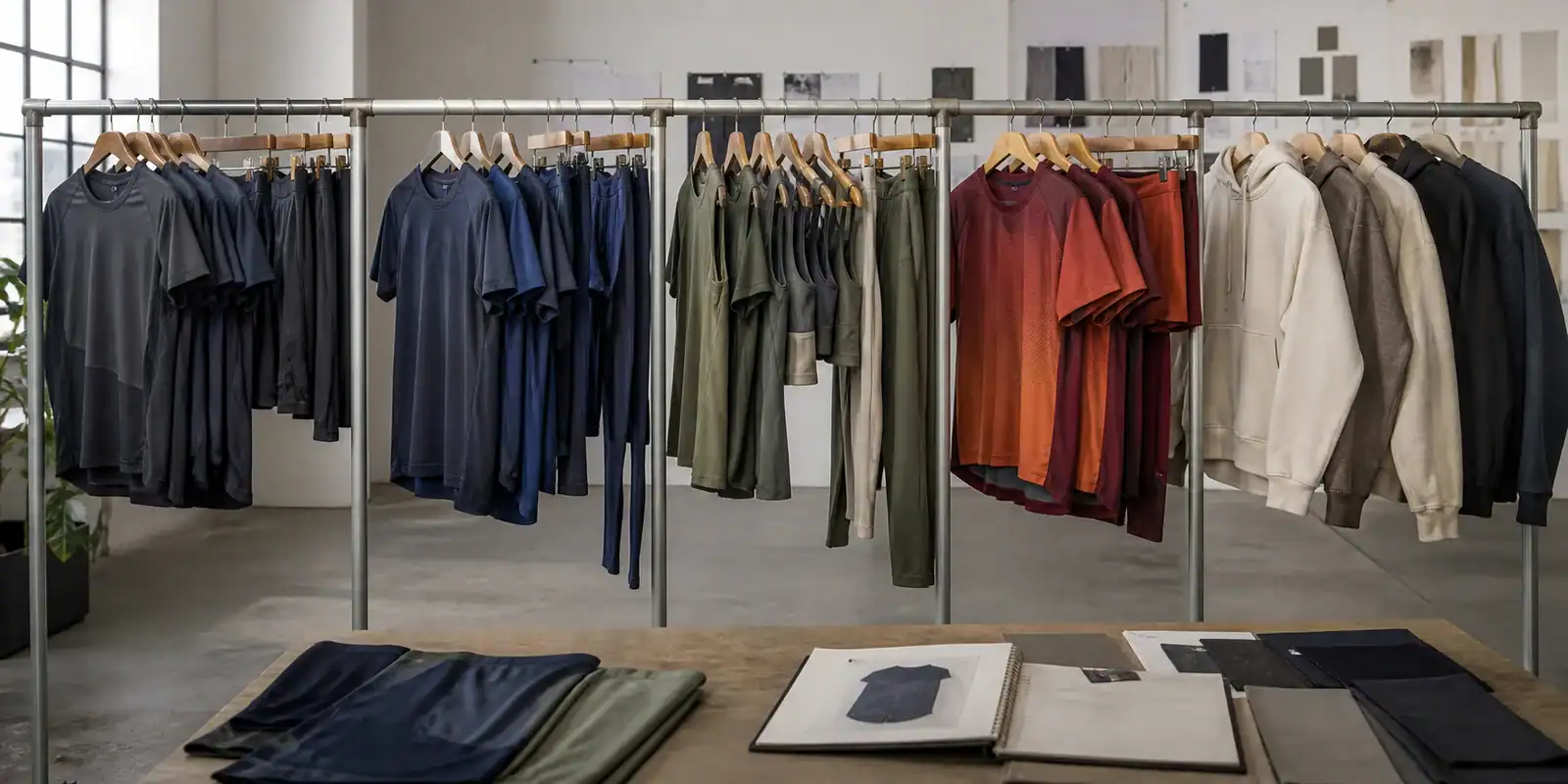
Sportswear categories carry different technical risks. A running top, a compression legging, a team jersey, and a heavyweight gym tee may all appear in the same catalog, but they do not share the same pattern, fabric, seam, decoration, or inspection priorities.
Running and training tops
Confirm body ease, sleeve or armhole movement, ventilation zones, sweat appearance, print route, and wash behavior. A lightweight knit may improve comfort but can also increase show-through, snagging, or print strike-through. Define the required balance before requesting color cards.
Yoga, studio and low-impact pieces
The buyer usually needs controlled stretch, recovery, opacity, a smooth surface, and clean seam placement. Ask whether the fabric stays opaque at the extension created by the final pattern. A fabric that looks dense on a relaxed swatch can behave differently when worn.
Gym and strength training garments
Check abrasion exposure, seam strength, armhole or crotch mobility, body length, pocket security, and decoration durability. A style that looks good on a flat lay may need extra reinforcement at high-load seams or repeated contact points.
Teamwear and event programs
The priority may shift toward size consistency, color repeatability, numbering, names, sponsor artwork, delivery grouping, and replacement orders. Specify how multiple decoration files will be checked and packed by team, size, or player list.
Streetwear and athleisure
Fit, weight, surface character, wash effect, labels, and packaging can matter more than a performance claim. Define the silhouette with measurements and reference photos. Words such as oversized, heavyweight, vintage, or relaxed do not create one shared standard.
The product lane should determine your first supplier questions. It should also determine your sample plan. A buyer who sends the same generic request to every factory usually receives quotes that cannot be compared.
Match the fabric and construction to the sport
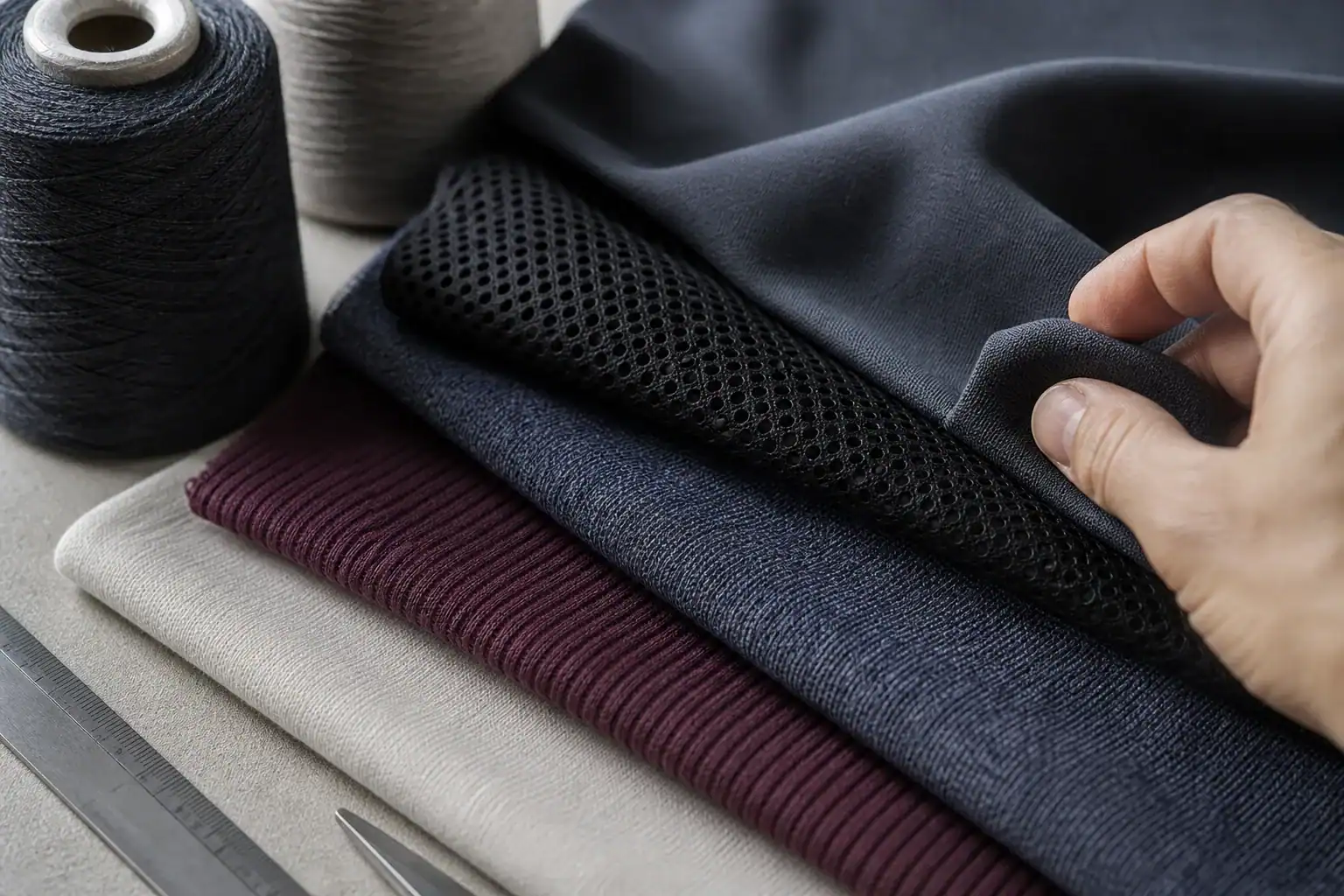
Fabric names are a starting point, not a performance guarantee. Polyester, nylon, cotton, elastane, mesh, jersey, interlock, rib, and French terry can all be useful, but their behavior changes with yarn, knit density, finish, weight, stretch, recovery, dyeing, and garment construction.
Ask for a fabric record that includes:
- fiber content and any required labeling basis;
- finished GSM with a tolerance and measurement condition;
- usable width and open-width or tubular format;
- stretch and recovery by direction, with the test method or internal procedure;
- opacity at the intended garment extension;
- pilling, abrasion, snagging, colorfastness, and wash expectations;
- surface finish such as brushed, peached, calendered, coated, or unbrushed;
- decoration compatibility for screen print, heat transfer, embroidery, or sublimation;
- care route and dimensional-change target;
- documentation for recycled content or other claims when required.
For moisture-management claims, do not infer a result from a fiber name. The fabric, finish, garment structure, body contact, and test method all affect the result. A buyer can use AATCC TM195 as one reference for liquid moisture management, but the project still needs to state the material, conditioning, test direction, target, and pass rule.
The same principle applies to stretch. ASTM D2594 is used for stretch properties of knitted materials with low power, yet it does not choose a universal target for every legging or top. Specify the extension, load, hold time, recovery time, and garment-level approval you need.
When the supplier proposes a substitute, compare the actual fabric record rather than only the composition. A small change in GSM, width, finish, or elastane behavior can alter the pattern, hand feel, opacity, print result, and final cost.
Screen suppliers with evidence that is easy to check

The first screening stage should be short and specific. Do not ask for every document a factory has ever produced. Ask for evidence that maps to the product you want to make.
Useful screening questions include:
- Which part of development is handled by your own team: pattern, sample sewing, fabric sourcing, grading, decoration, or packing?
- Can you show a recent sample or anonymized construction example in the same product family?
- Which fabric types and finished weights are routinely used for this category?
- Who approves a fabric or trim substitution during production?
- What is your sample revision process when fit or workmanship misses the brief?
- Which inspection points are recorded before shipment?
- Can you separate samples, bulk production, and packaging approval in the order timeline?
- Which destination labeling, care, and documentation requirements can you support?
Keep the evidence linked to the question. A factory tour photo may confirm that a workshop exists, but it does not prove that the pictured line will produce your order. A certificate logo may identify a standard or material program, but it does not automatically prove that the specific style or shipment is covered. Ask for the document scope, holder, dates, and applicability.
If a claim cannot be verified, write it as a question in the sourcing record. Do not upgrade a supplier description into a fact. This is especially important for capacity, certifications, export markets, lead time, MOQ, recycled content, and customer outcomes.
Turn a product idea into a tech pack
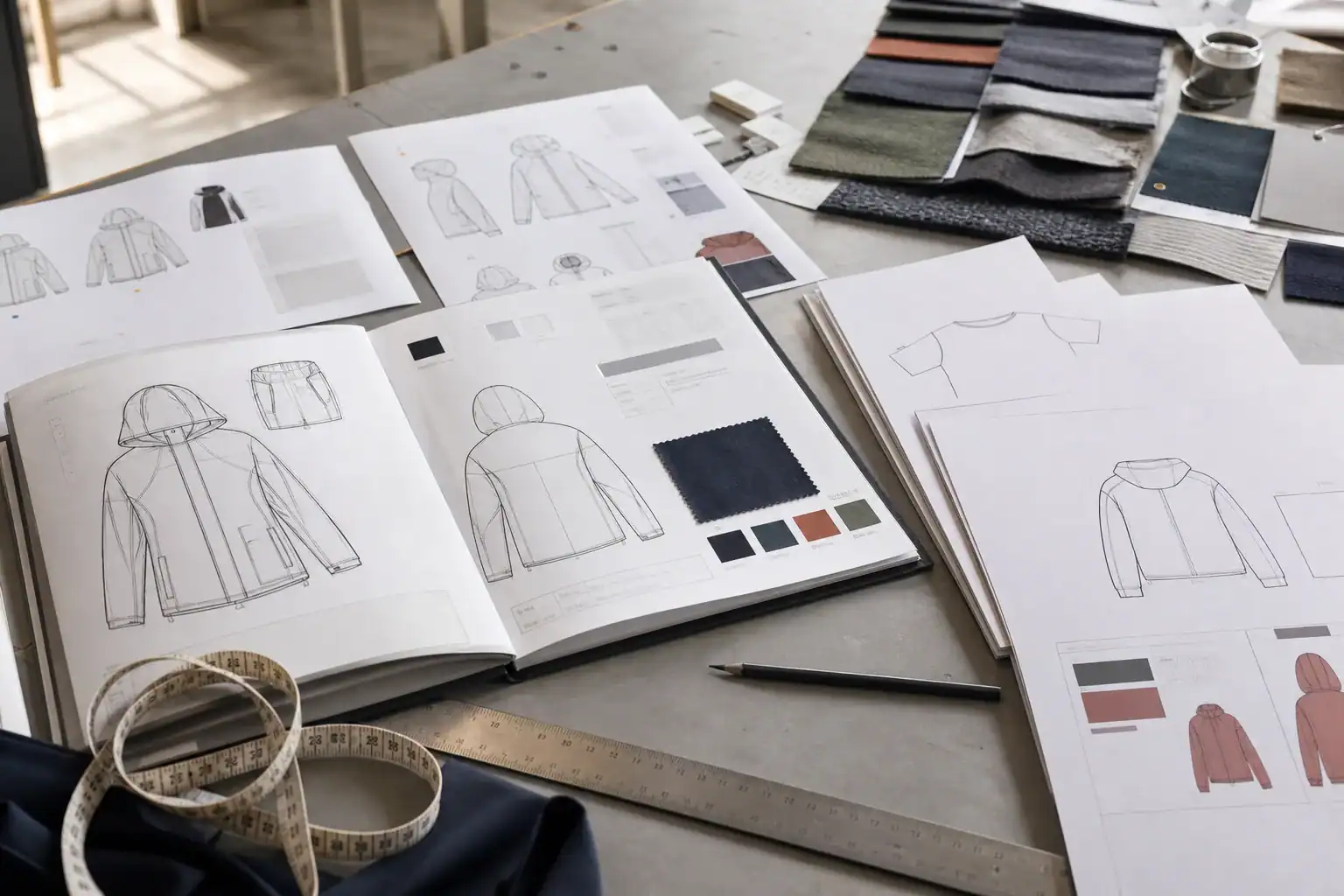
A supplier can price a clear specification. It cannot price a vague product consistently. Before requesting a final quote, build a short tech pack or structured brief for each style.
At minimum, include:
- front, back, and detail sketches or reference images;
- garment type, intended use, fit, and size range;
- finished measurements with tolerance by size;
- fabric composition, construction, GSM range, width, color, and approved swatch;
- stretch, recovery, opacity, and care requirements where relevant;
- seam, stitch, hem, binding, waistband, pocket, lining, and reinforcement details;
- artwork files, print method, embroidery size, placement, and color references;
- main label, size label, care label, hangtag, polybag, carton, and barcode needs;
- target quantity by style, color, and size;
- sample stages and approval owner;
- destination country and required documents.
The brief should identify what is fixed and what is open for recommendation. For example, a founder may fix the silhouette, logo placement, and target retail price while allowing the supplier to recommend two fabric options. That is more useful than asking for "the best material" without explaining the garment or customer.
DTS provides a tech pack customization process for buyers who need to turn sketches, references, and incomplete specifications into a clearer development file. The goal is not to make a long document. The goal is to remove the decisions that would otherwise be guessed during sampling or production.
Sample the garment before you treat a quote as comparable
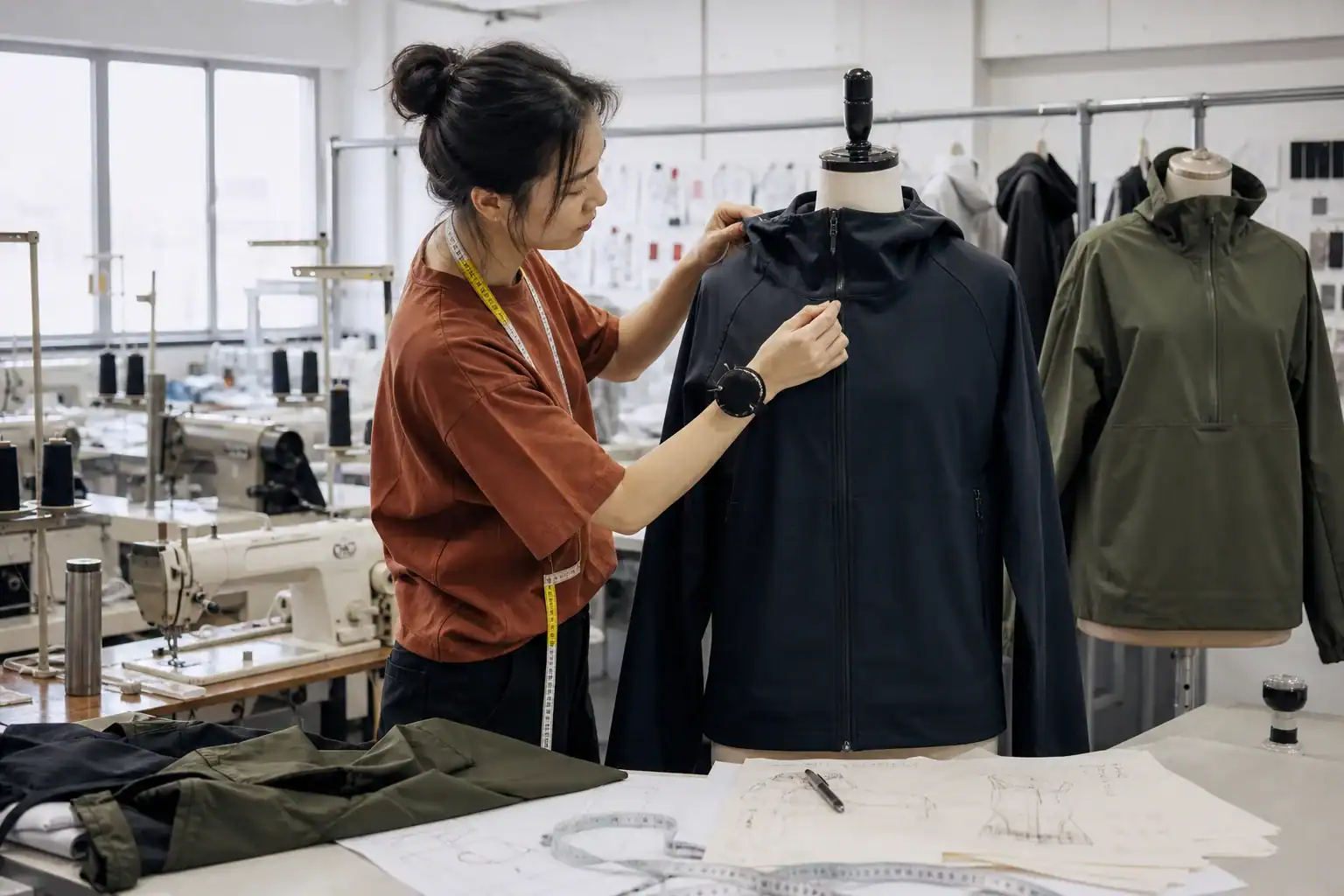
A price is only comparable when the quoted product is comparable. That means the same fabric route, pattern, decoration, label package, quantity basis, and shipment assumption should be used.
Use a staged sample process:
- Material review: check the proposed fabric for face, weight, width, stretch, recovery, opacity, surface, shade, and care behavior.
- First pattern sample: check silhouette, construction, measurements, balance, seam placement, and movement.
- Revised fit sample: record each change against the previous version instead of relying on memory or chat messages.
- Decoration sample: approve print, embroidery, transfer, sublimation, wash effect, or reflective detail on the actual fabric and color.
- Pre-production sample: confirm the final fabric, trims, labels, measurements, artwork, packaging, and workmanship before bulk cutting.
For fitted garments, review the sample at the body extension created by the pattern. For a team program, check a size spread rather than one model size. For a repeat item, keep an approved physical reference and a dated digital record. A supplier may be able to match a prior sample, but the reference still needs to be available.
DTS explains the broader sampling and prototyping workflow for moving from a concept or tech pack to a physical sample. The important sourcing habit is simple: assign an approval point to every change that could affect fit, appearance, performance, compliance, or cost.
Build a test plan around the garment risk
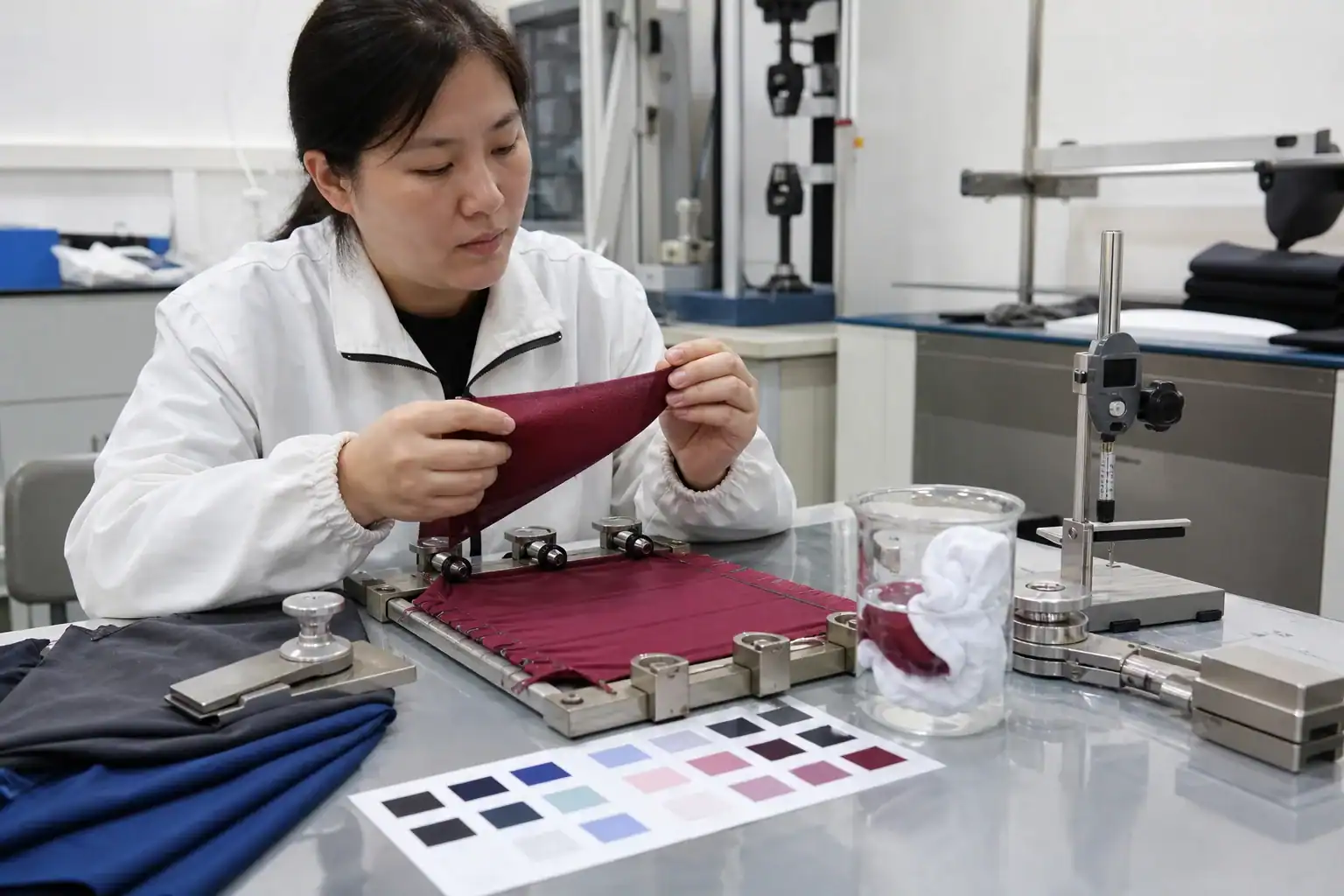
Testing should answer a product question. A long list of tests is not automatically a good quality plan. Select checks that match the garment, destination, claim, and failure cost.
For a fitted legging, the plan may include opacity under extension, stretch and recovery, pilling, abrasion, colorfastness, seam strength, dimensional change, and waistband behavior. For a printed team jersey, it may emphasize shade repeatability, artwork placement, print adhesion, wash durability, size consistency, and packing accuracy. For a heavyweight streetwear set, it may focus on GSM, hand feel, shrinkage, spirality, seam appearance, color change, and decoration after care.
Record the following for each check:
- sample or lot identification;
- test method or agreed internal procedure;
- conditioning and care route;
- measured result and permitted range;
- who reviews the result;
- what happens if the result misses the limit.
ASTM D3776/D3776M can be used as a reference for fabric mass per unit area. AATCC TM135 and ISO 6330 provide references for dimensional change and domestic washing or drying procedures. These sources help define a method, but they do not replace a project-specific acceptance rule.
For care labels and fiber disclosure, destination requirements must be reviewed before production. The FTC apparel labeling guidance is one United States reference for fiber content, country of origin, and responsible business information. A product shipped to another market may need a different review.
Compare quotes without hiding the real cost
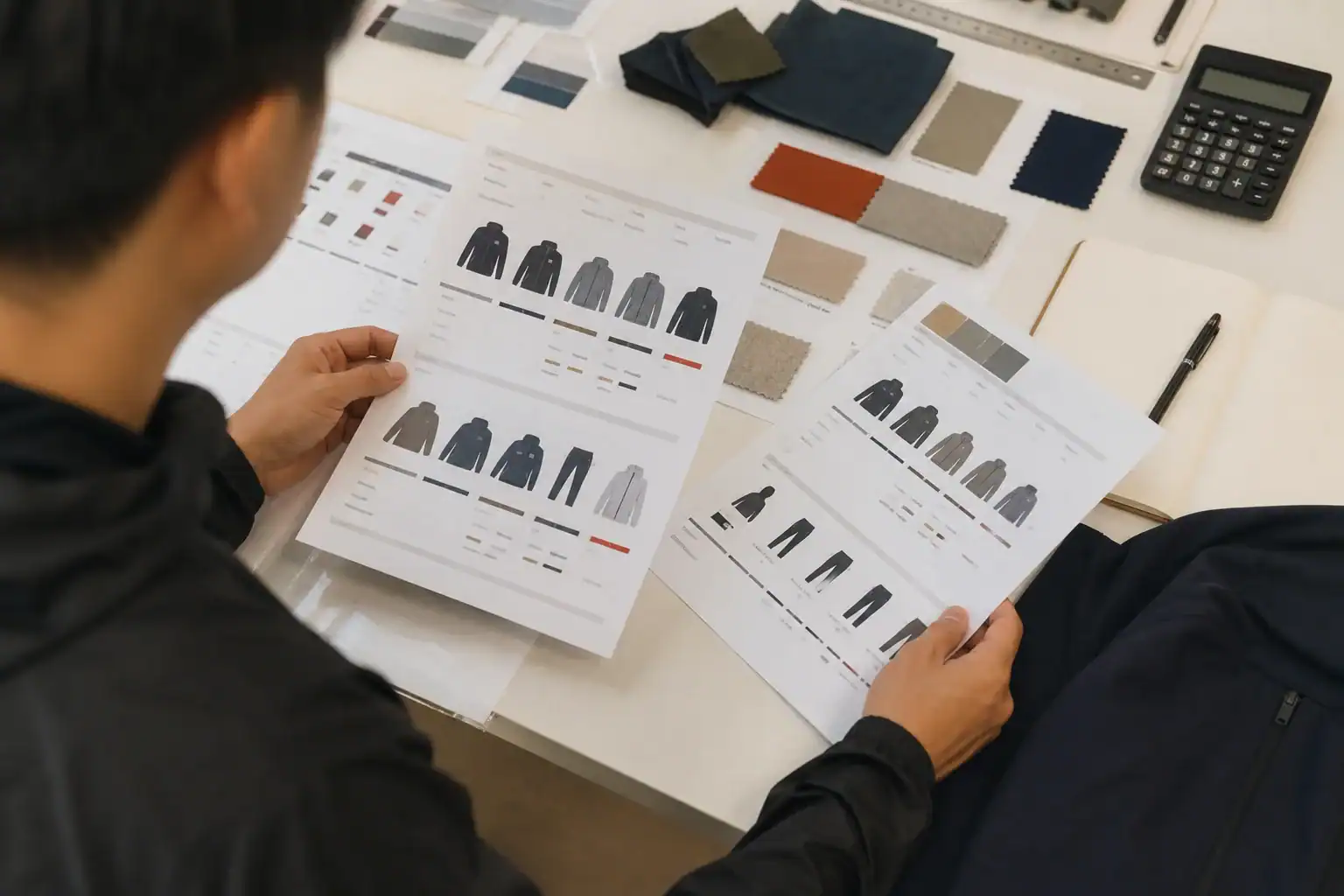
The lowest unit price is often not the lowest project cost. Compare the complete quote structure.
Ask each supplier to show, where applicable:
- sample fee and whether any part is refundable;
- pattern or development charges;
- fabric basis, GSM, width, and approved color route;
- decoration cost by method, size, placement, and quantity;
- labels, hangtags, packaging, and carton assumptions;
- price breaks by quantity, color, and size mix;
- MOQ per style, color, and fabric;
- payment stages and currency;
- estimated sample and bulk lead times;
- inspection responsibility and correction process;
- shipping terms, destination, and document assumptions.
If one quote includes custom pattern work and another uses a stock garment, put those lines side by side before choosing. If one supplier prices an approved fabric while another leaves the material open, request a second quote after swatch approval. If the price changes after every clarification, the original brief was not complete enough for a fair comparison.
Keep development cost separate from bulk garment cost. A low first quote may hide sample revisions, special trims, artwork adjustments, packaging changes, or a minimum fabric commitment. A transparent quote makes those decisions visible before the purchase order.
Protect artwork, labeling and packaging decisions
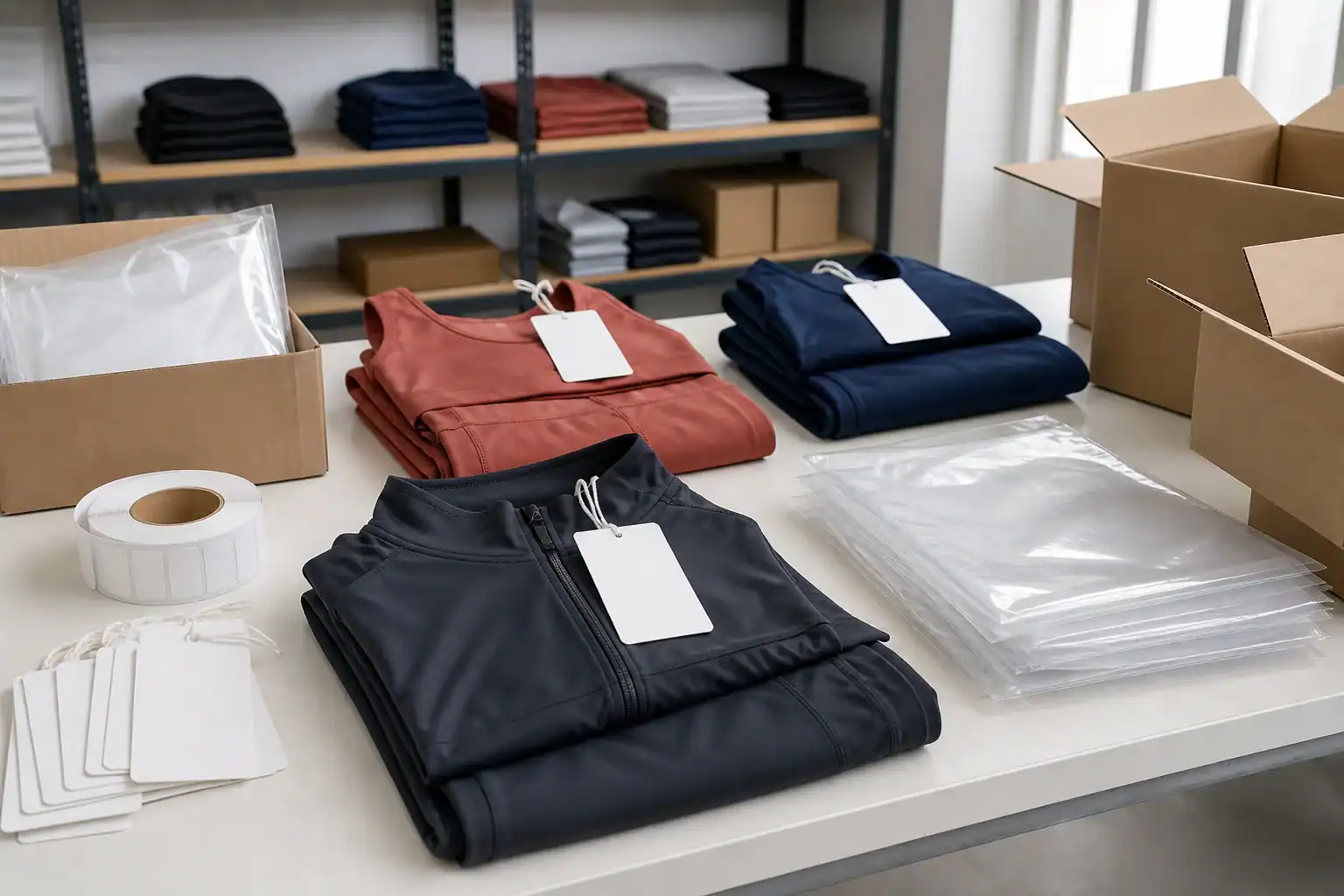
Brand control continues after the garment is sewn. Labels, print files, hangtags, folding, polybags, cartons, and size stickers influence the receiving process and the customer experience.
Provide artwork in the requested file format and define the approval color reference. Record print placement from a fixed measurement point. For embroidered logos, confirm thread color, backing, stitch density, size, and position. For heat transfer or sublimation, approve the result on the actual material because the surface and color can change the appearance.
Label details should include language, fiber content, care instruction, country of origin, size system, brand identity, and any destination-specific requirement. Do not copy care advice from a similar garment. The material, finish, decoration, and construction may require a different care route.
Packaging should be written as a packing instruction, not a casual message. State folding direction, garment-to-bag ratio, sticker position, carton assortment, carton marks, barcode format, spare quantity, and photo approval requirements. If an order serves several teams or e-commerce SKUs, require a packing list that matches the approved size and color breakdown.
These details also protect the quote. A supplier cannot price special packaging accurately if the packaging instruction arrives after bulk production has started.
Inspect production and shipment readiness
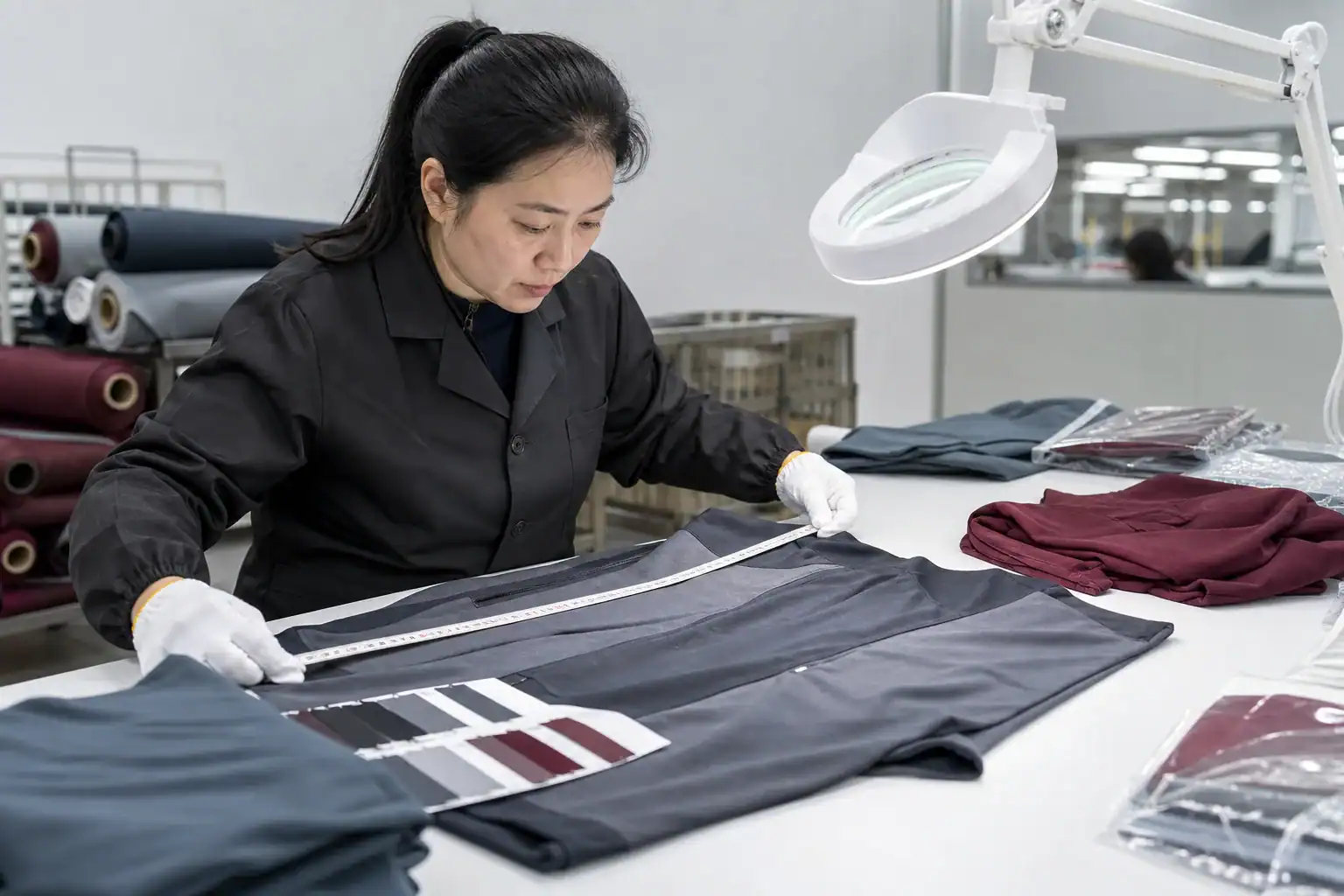
Quality control should compare production with the approved reference, not with a general idea of acceptable sportswear. A practical inspection file can cover four layers.
Material and color
Check fabric identity, weight, width, face, shade, roll variation, surface defects, and approved finish. If the garment uses multiple lots or panels, confirm that the shade rule is understood before cutting.
Garment construction
Check measurements, balance, seam alignment, stitch density, skipped stitches, raw edges, binding, elastics, pockets, hems, labels, and decoration placement. Review high-stress points first because small failures there can create returns or customer complaints.
Appearance and care
Check stains, holes, needle lines, shade marks, print defects, embroidery distortion, pilling or fuzzing, wash effect, spirality, and dimensional change where applicable. Use the approved sample and measurement chart as the reference.
Packing and quantity
Check size and color counts, labels, folding, polybags, carton marks, carton quantity, barcode readability, spare units, and shipping documents. Photograph any discrepancy before the goods leave the facility.
DTS has a quality control page covering fabric, fit, workmanship, finishing, and packing checkpoints. Buyers should still agree the exact inspection scope and acceptance limits for each order. A general quality statement is not a substitute for a signed reference.
Send a supplier brief that can produce a useful next step
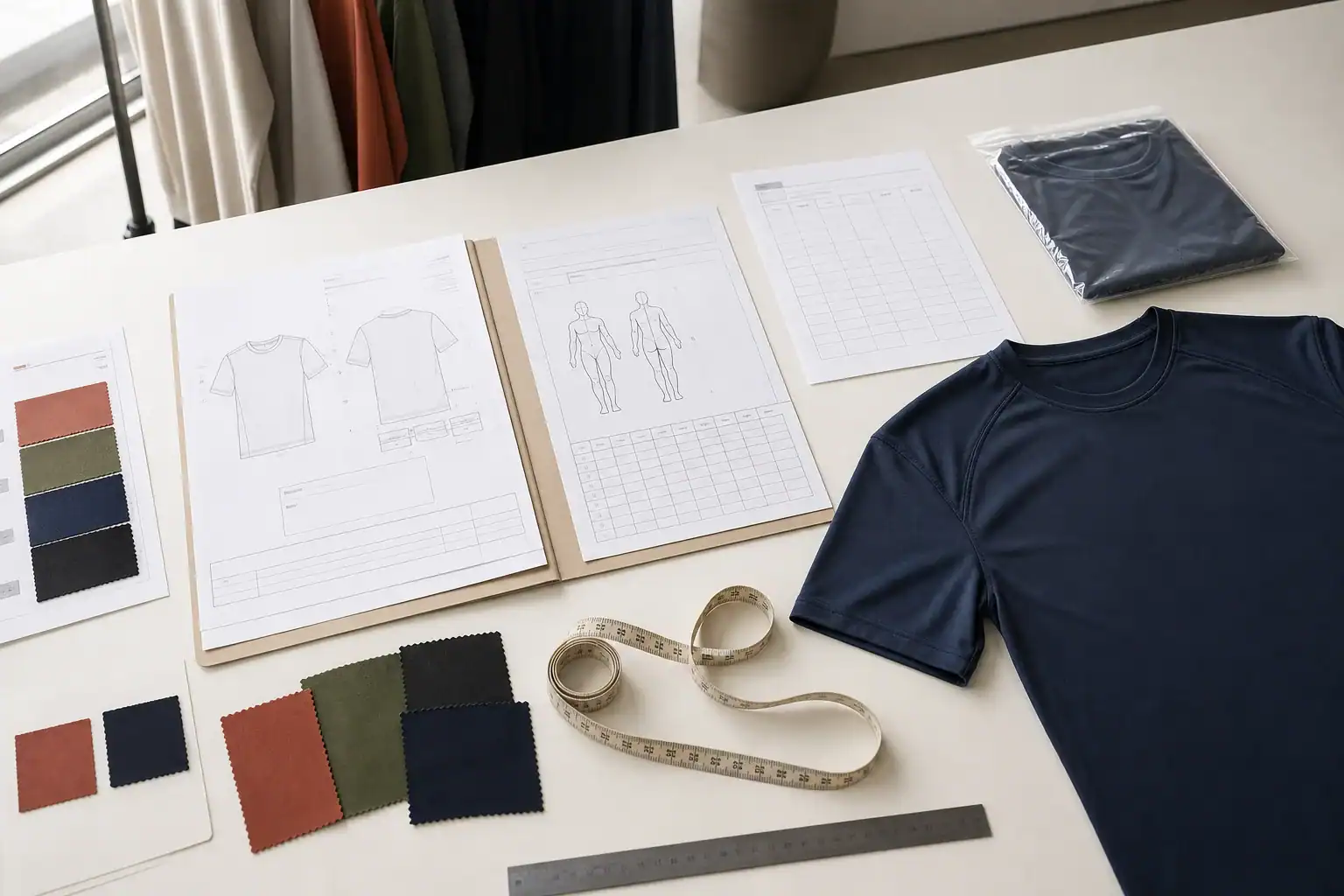
The best first inquiry is short enough to read and detailed enough to answer. Include the following in one folder or message:
- product name and intended activity;
- front, back, and detail references;
- fabric direction and any approved swatch;
- size range and measurement chart;
- quantity by style, color, and size;
- artwork and label requirements;
- target destination and delivery window;
- sample expectation and approval process;
- testing, certification, or labeling requirements;
- questions that are open for supplier recommendation.
Then ask for a structured reply. Request sample cost, sample lead time, MOQ, bulk price, material alternatives, production lead time, decoration options, packaging assumptions, and the information the supplier still needs. Ask the supplier to identify any item that is not included in the quote.
This process gives you a better signal than a long supplier list. It shows which companies read the brief, which ones ask useful questions, which ones disclose assumptions, and which ones answer with generic catalog language.
If you are ready to discuss a product, send your activewear inquiry and NDA request with the specification, reference images, quantity plan, and destination. DTS can then route the discussion around the actual garment instead of a broad "Chinese sportswear" label.
Frequently asked questions
No. Chinese sportswear can describe consumer brands, wholesale products, or a sourcing category. Sportswear made in China describes manufacturing location. A buyer should still identify the supplier model, product category, specifications, and approval process.
A brand develops and sells products under its own identity. A manufacturer produces garments for a brand, distributor, team, or private-label buyer. Some companies do both, while others only provide manufacturing or trading services. Confirm which role the company will perform for your order.
Private label can suit a buyer who wants an existing style with controlled branding. ODM can help when the supplier has a useful design base and the buyer accepts some shared structure. OEM is usually better when the buyer needs stronger control over fit, materials, construction, and artwork. The right route depends on how much of the product is already defined.
Polyester, nylon, elastane blends, jersey, interlock, mesh, rib, and other knitted or woven materials may all be used. There is no single best fabric. Choose by garment stress, stretch, recovery, opacity, surface, care, decoration, and target price, then approve the actual swatch.
Ask for product-specific evidence about development, sample sewing, material sourcing, decoration, inspection, labeling, and packaging. Check document scope and dates, keep an approved sample, and use a written quality plan. Do not treat catalog images or broad capability language as proof of every claim.
Include the garment type, intended use, sketches, measurements, fabric direction, decoration, labels, packaging, quantity by style and color, size range, destination, sample requirement, and target timing. Ask the supplier to list exclusions and assumptions in the reply.
For a custom, private-label, or fit-sensitive order, a sample is strongly recommended. Review material, measurements, construction, artwork, care behavior, and packing before bulk production. A stock item may need a different approval process, but its actual color, size, and decoration should still be checked.
DTS works with custom activewear, sportswear, gym wear, streetwear, and private-label apparel briefs. Send the product direction, references, specifications, quantity, and destination through the inquiry route so the next step can be based on the actual project requirements.
Turn a Chinese sportswear search into a controlled product brief
Chinese sportswear sourcing becomes easier to compare when the country label is replaced by a product specification. Separate brand research from manufacturing, choose the supply model, define the product lane, approve the fabric and fit, and record the inspection and packing rules before bulk production.
The useful next step is not collecting more generic supplier names. It is sending a brief that a suitable supplier can answer without guessing.