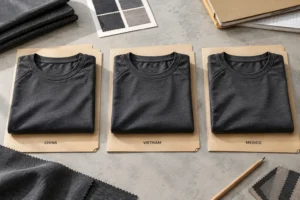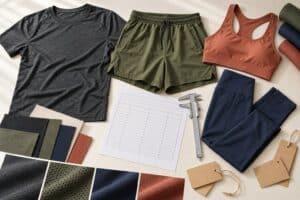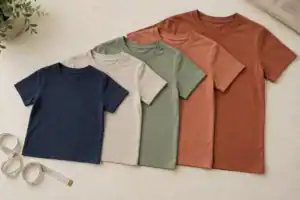
Jersey clothing material is a family of knitted fabrics, not a single fiber. The word describes how loops are formed. Cotton, polyester, nylon, viscose, modal, recycled fibers, and blends with elastane can all be made into jersey. That is why two fabrics sold under the same jersey name can differ sharply in weight, stretch, recovery, opacity, hand feel, shrinkage, and performance after care.
For an apparel buyer, the useful question is not simply "Is it jersey?" A quote-ready request identifies the knit construction, fiber content, finished GSM, usable width, stretch direction, recovery, color and finish, garment use, care route, and acceptance checks. This guide explains the main jersey options and turns the material name into a practical sourcing brief.
Jersey is a knit construction, not a fiber
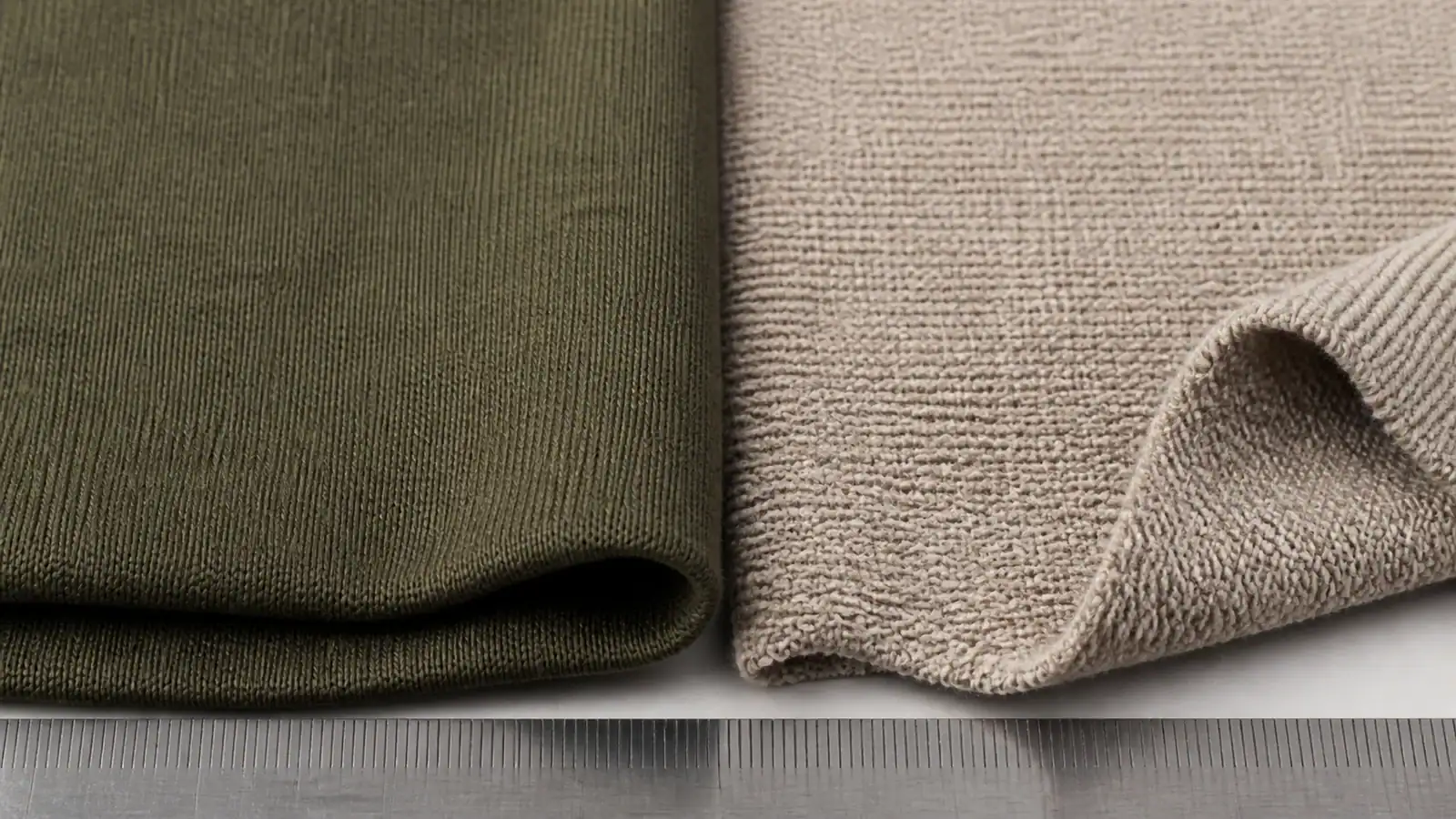
In basic single jersey, one set of needles forms a course of loops across the fabric. The face usually shows vertical lines of knit stitches, while the reverse has a more visibly looped texture. The two sides behave differently. The edges may curl, and an unbalanced construction can show twisting or spirality after relaxation and laundering.
Fiber answers a separate question. Cotton may add a familiar dry or soft hand. Polyester can support faster drying and color options. Nylon often gives a smooth, resilient surface. Viscose, modal, and lyocell can create fluid drape. Elastane is commonly added when a style needs more stretch and recovery. These are tendencies, not guarantees. Yarn type, knit density, finishing, dyeing, and garment construction also shape the result.
This distinction matters during quotation. A request for "cotton jersey" still leaves open the cotton type, blend ratio, yarn, knit gauge, weight, width, stretch, finish, shrinkage, spirality, color standard, and care requirement. If those details remain undefined, suppliers may quote materials that share a name but do not produce the same garment.
Main types of jersey clothing material
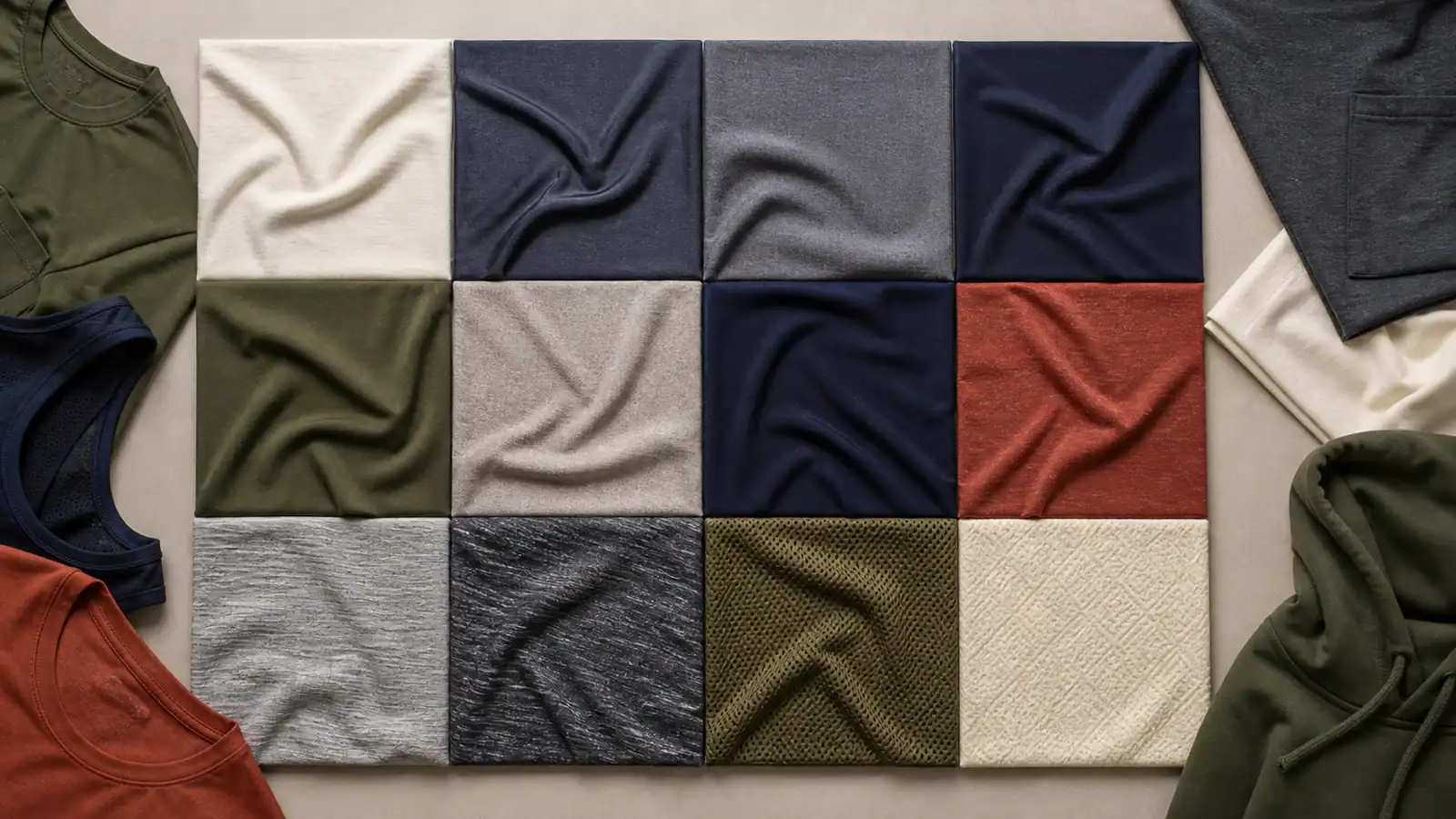
The following names are common starting points. They are not universal specifications, and mills may use some terms differently. Confirm each option with a swatch, a technical sheet, and a finished sample.
1. Cotton single jersey
Cotton single jersey is widely used for T-shirts, casual tops, lightweight dresses, loungewear, and some warm-weather active pieces. Its surface can feel soft and familiar, but dimensional change, spirality, pilling, opacity, and color behavior depend on the yarn and finish. Specify whether the fabric is conventional, combed, compact, organic, or another verified cotton route only when documentation supports the claim.
2. Cotton-elastane jersey
Adding elastane can give cotton jersey more widthwise stretch and better shape recovery. It is useful for fitted tops, leggings with modest compression, underwear, bodysuits, and close-fitting casual styles. The blend percentage alone does not define stretch. Record the tested stretch direction, extension, recovery, finished GSM, and dimensions after the agreed care cycle.
3. Polyester jersey
Polyester jersey can be engineered for sports tops, teamwear, linings, casual garments, and sublimation programs. Filament or spun yarn, cross section, knit density, finish, and surface all change the result. Polyester does not automatically prove moisture wicking or quick drying. Any performance claim needs a named test method, sample condition, target, and approval rule.
4. Polyester-elastane jersey
This blend is common in fitted active tops, training tights, dancewear, base layers, and athleisure. It can offer multidirectional movement when the construction is designed for it. Buyers should define weight, stretch in warp and weft directions as applicable to the knitted fabric, recovery, opacity under extension, surface shine, pilling risk, and heat sensitivity during printing or pressing.
5. Nylon-elastane jersey
Nylon-elastane jersey often has a smooth hand and is used for premium-feel leggings, bras, swim-adjacent pieces, fitted tops, and studio apparel. Different nylon yarns can feel cool, matte, lustrous, dense, or lightweight. Confirm abrasion expectations, colorfastness route, stretch, recovery, snagging risk, and whether the fabric remains opaque at the intended garment extension.
6. Viscose or rayon jersey
Viscose jersey is chosen for fluid drape in tops, dresses, skirts, sleepwear, and fashion-led pieces. It may grow under its own weight or change more noticeably after washing if the construction and finish are not controlled. Check hanging growth, dimensional change, spirality, seam support, garment length, and care before approving a long or bias-sensitive style.
7. Modal or lyocell jersey
Modal and lyocell jerseys can provide a smooth surface and soft drape for underwear, loungewear, fitted tops, and layering pieces. Commercial names and environmental claims should be backed by supply-chain documentation. From a product standpoint, approve hand feel, recovery, pilling, shrinkage, wet-care behavior, and stability at the intended garment weight.
8. Recycled-polyester jersey
Recycled-polyester jersey can support a documented recycled-content requirement while using a familiar synthetic knit route. The claim needs traceable evidence appropriate to the destination and buyer program. Performance should still be evaluated as fabric performance, not inferred from the recycled label. Confirm source documentation, fiber percentage, color, hand, stretch, recovery, pilling, and care.
9. Slub jersey
Slub jersey uses yarn or knitting effects that create intentional thick-and-thin visual texture. It can suit casual tops and fashion collections where a perfectly uniform surface is not the goal. The approval standard should define acceptable slub distribution, holes or weak points, shade appearance, spirality, and seam behavior so intentional character is not confused with a defect.
10. Melange or heather jersey
Melange jersey combines fibers or yarn colors to produce a mixed-tone surface. It is common in casual and athletic collections. The color standard must account for the visual blend rather than a flat solid shade. Approve the fabric under consistent light, define the heather ratio or reference, and test decoration because print colors and coverage can look different on a mixed background.
11. Mesh-effect performance jersey
Some suppliers use jersey broadly for lightweight sports knits with small mesh, bird-eye, or engineered ventilation effects. These are not always plain single jersey. Ask for the actual knit construction, hole size, opacity, snagging risk, usable face, stretch, and print compatibility. A clear construction name prevents a visually similar swatch from being substituted with a fabric that behaves differently.
12. Jacquard jersey
Jacquard jersey creates pattern or ventilation through the knit structure rather than only through surface printing. It can add engineered zones, tonal motifs, or branding effects. Define the repeat, artwork, usable orientation, weight variation, stretch, recovery, edge stability, and placement on the pattern pieces. Sampling should confirm that the knitted motif lands where the garment design expects it.
Choose the fiber route after the product need
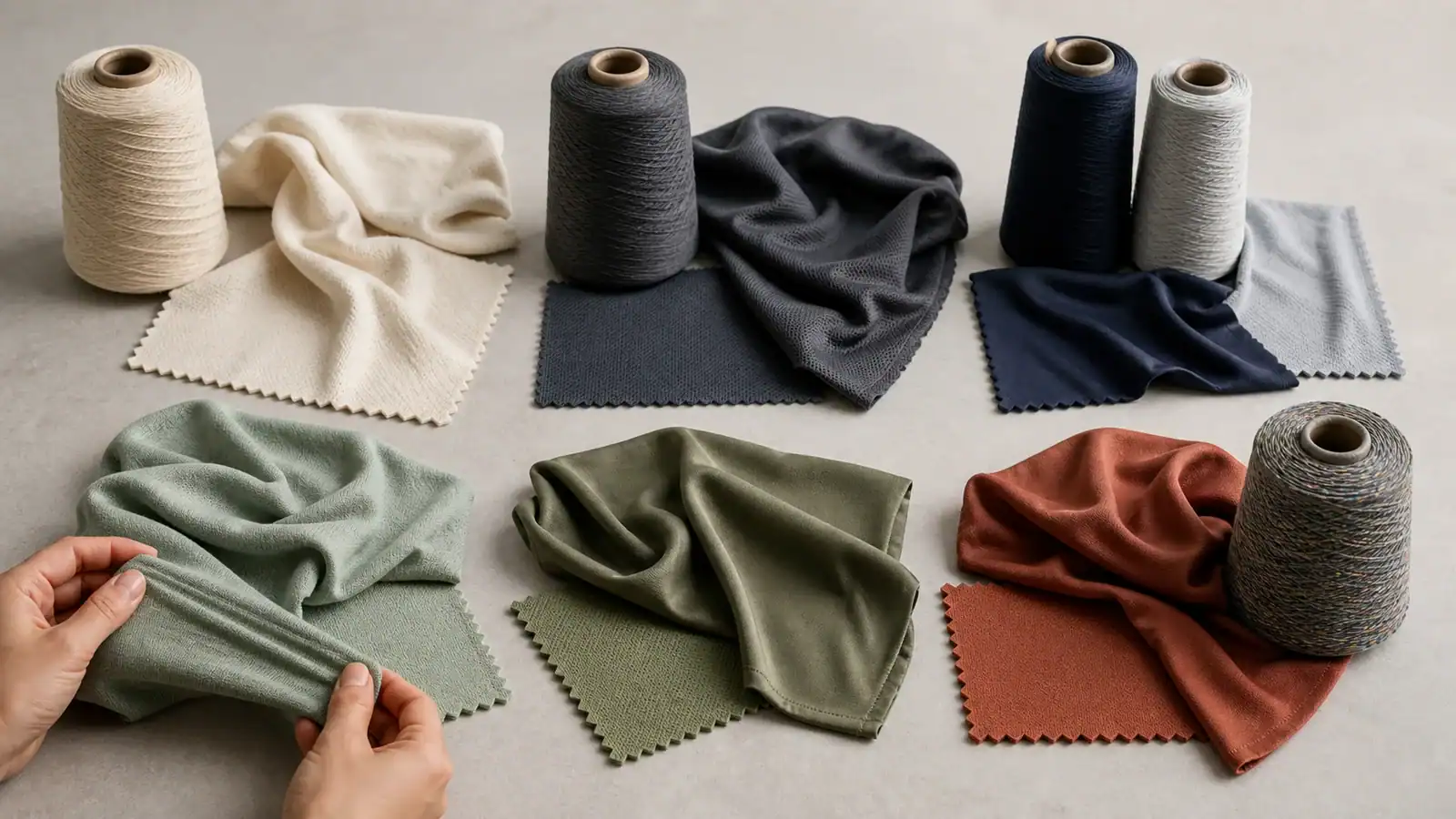
Fiber selection starts with the wearer’s climate, activity, skin contact, fit, care, color, decoration, and price position. Cotton-rich jersey can support a familiar casual hand. Polyester and nylon routes can be engineered for different drying, strength, surface, and color needs. Regenerated-cellulose jerseys can provide fluid drape. Elastane blends may improve extension and recovery for close fits.
None of those outcomes comes from the fiber name alone. Ask how the yarn, knit density, finish, and dye route create the required result. If a brief includes recycled content, organic status, branded fibers, or another sourcing claim, list the required documentation and chain-of-custody route before quotation. Keep marketing claims separate from the physical sample approval.
Jersey versus interlock, rib, and French terry
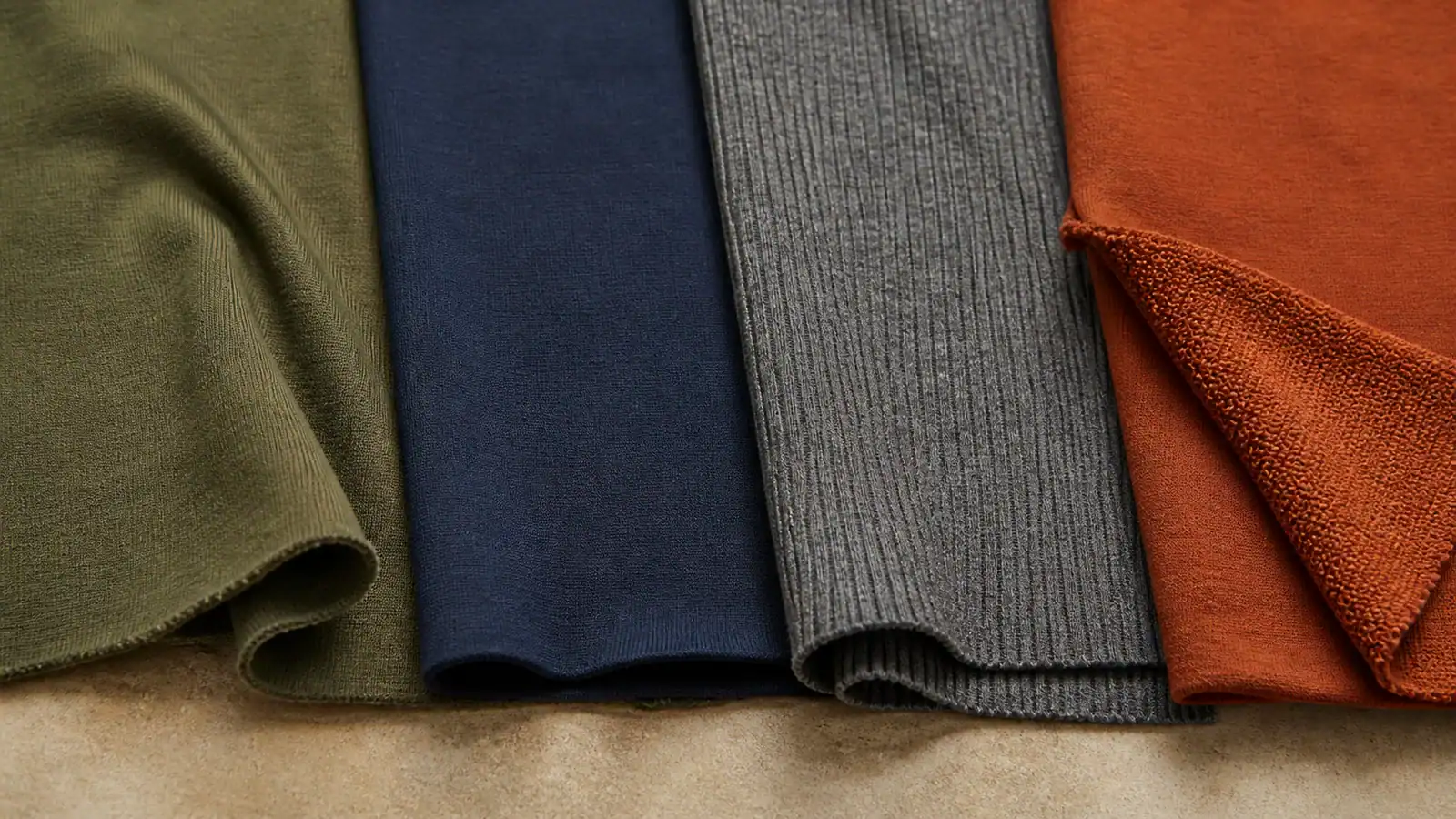
These materials all use knitted loops, but they should not be treated as interchangeable names.
- Single jersey normally has a distinct face and reverse, lighter structure, natural crosswise stretch, and a tendency for cut edges to curl.
- Interlock is a double-knit structure with a more similar appearance on both sides. It is often more stable, compact, and structured at a comparable fiber and finish.
- Rib knit has alternating knit and purl columns that allow strong widthwise extension. It is common at necks, cuffs, and hems, and can also be used for fitted garments.
- French terry has a smoother face and visible loops on the reverse. It is usually selected for sweatshirts, joggers, shorts, and other heavier layers rather than T-shirt-like drape.
The right comparison uses the intended garment. A lightweight top may need soft drape and low bulk. A fitted base layer may prioritize recovery and opacity. A sweatshirt needs enough body for seams, pockets, and rib. Review the broader best fabric for activewear guide when the project is still choosing between material families.
How GSM changes drape, opacity, and use
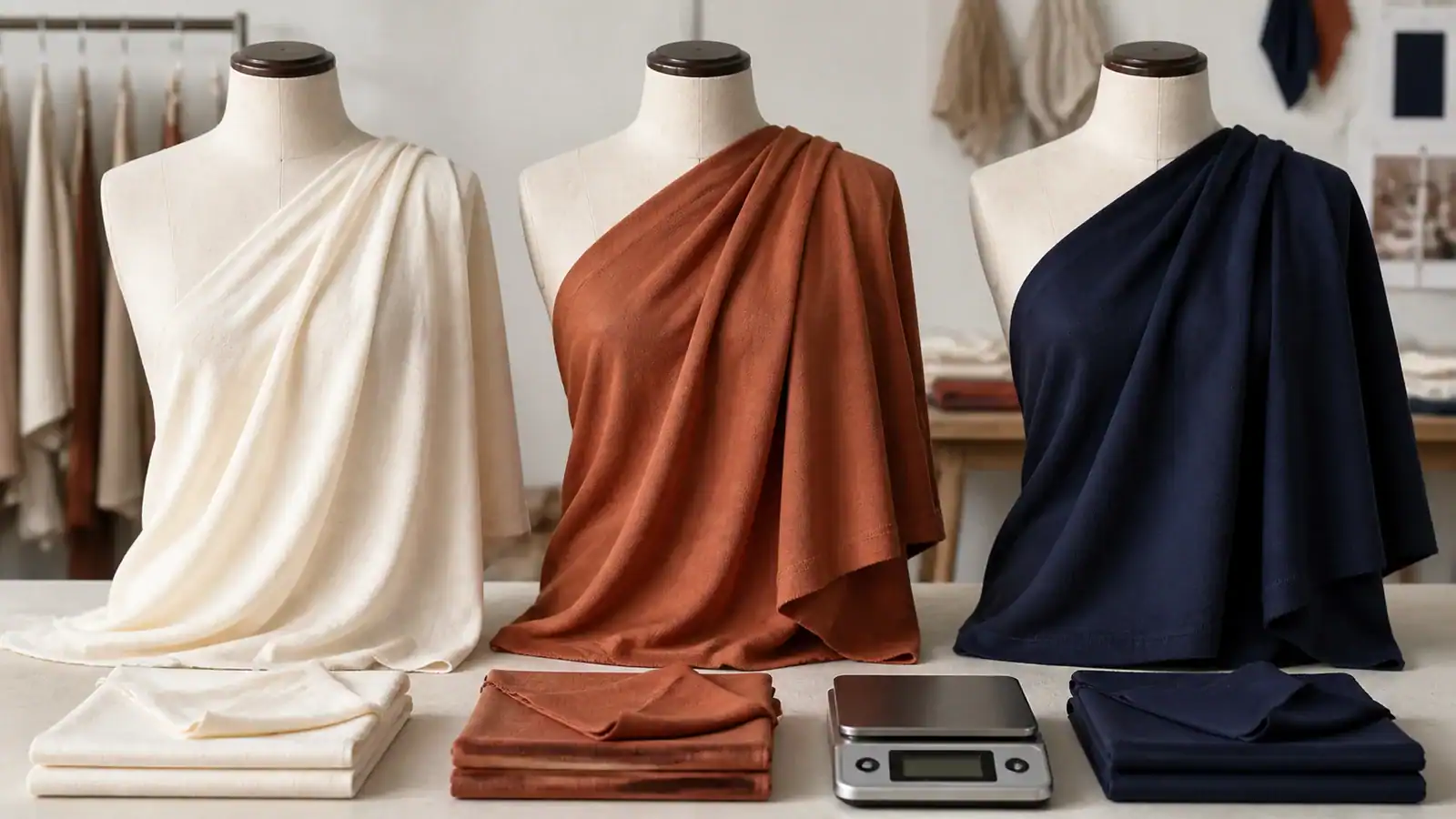
GSM means grams per square meter. It describes finished fabric mass per unit area, not thickness, warmth, durability, or quality by itself. Two jerseys at the same GSM can differ because of yarn size, density, fiber, finish, and loop structure. The DTS GSM meaning in clothing guide explains how to place this number in a complete fabric specification.
Planning ranges can help buyers request initial swatches, but they are not universal pass bands:
- Lightweight jersey: often considered for airy tops, linings, sleepwear, and warm-weather layers. Check show-through, seam distortion, and stability.
- Midweight jersey: a common starting area for T-shirts, fitted tops, casual dresses, and training shirts. The actual use depends on fiber, stretch, and hand.
- Heavier jersey: may provide more body and opacity for substantial tees, fitted bottoms, dresses, or structured casual styles. Check bulk, heat, drape, and drying behavior.
Do not approve a fabric from GSM alone. Ask for finished weight with a tolerance, measured after the agreed conditioning or care state. ASTM D3776/D3776M is one standard method for mass per unit area of fabric. The project still needs to define which procedure and result format apply.
Match the jersey to the garment
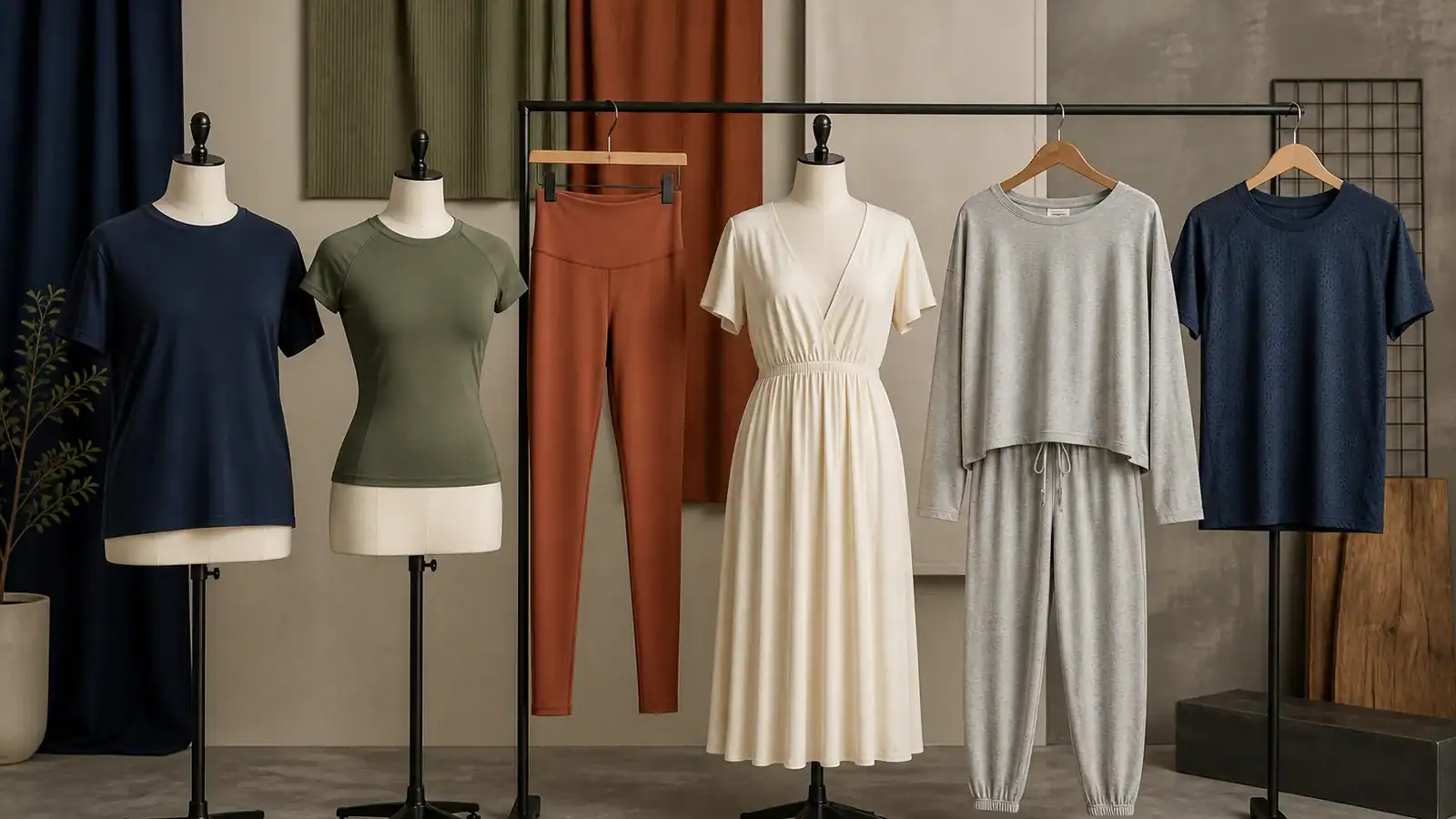
Start from garment stress, fit, coverage, and care rather than a trend name.
T-shirts and casual tops
Prioritize hand feel, drape, neck stability, spirality, shrinkage, pilling, and decoration compatibility. A light fabric may need a suitable collar construction and seam reinforcement. A heavy fabric may change the fit and make a small neck opening feel tighter.
Fitted tops and base layers
Define stretch by direction, recovery, opacity, seam extensibility, and body measurements at the intended wearing extension. Check whether the fabric rebounds after a full day of wear and the planned care cycle.
Leggings and fitted bottoms
Opacity under extension, recovery, abrasion, pilling, seam performance, surface shine, and colorfastness become central. The material should be tested at the extension created by the actual pattern, not only held loosely over a light box.
Dresses, skirts, and fluid silhouettes
Review drape, hanging growth, body length, spirality, hem behavior, and show-through. A viscose-rich jersey may move beautifully but require more careful pattern, hanging, and care decisions than a compact synthetic jersey.
Sports tops and teamwear
Check ventilation, sweat appearance, print or sublimation route, snagging, abrasion, colorfastness, and care. If a product will make a moisture-management claim, define how that claim will be supported instead of treating polyester as automatic evidence.
Loungewear and underwear
Skin feel, recovery, seam bulk, label comfort, dimensional change, and repeated washing matter. Softness at first touch is useful, but the approval should also consider how the surface and shape look after care.
Stretch, recovery, and growth are separate decisions
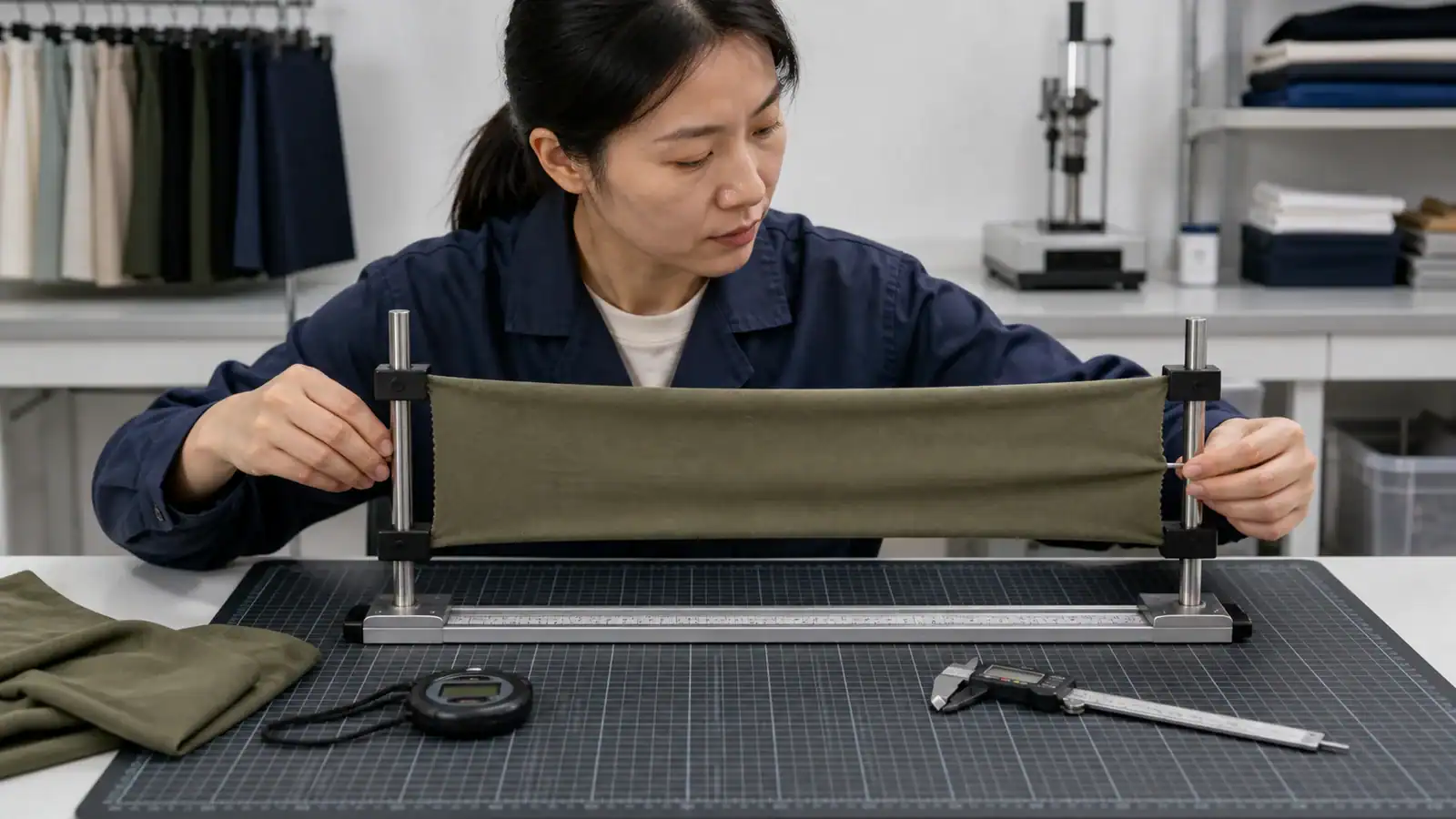
Stretch describes how far a fabric extends under a defined load. Recovery describes how much it returns after the load is removed. Growth is the remaining extension after a set period. A fabric can stretch easily but recover poorly, which may leave bagged knees, elbows, necklines, or seat areas.
Specify both directions and the test state. A simple note such as "four-way stretch" does not state the force, extension, hold time, recovery time, or result. ASTM D2594 is a standard used to assess stretch behavior in low-power knitted materials. It does not create one universal acceptance target for every garment. The buyer and supplier still need a project-specific requirement.
Pattern reduction must also match the fabric. A legging block developed for a high-recovery nylon-elastane jersey may not work in a softer viscose blend. Review fit, opacity, seam strain, waistband behavior, and movement using production-representative material.
Shrinkage, spirality, and appearance after care
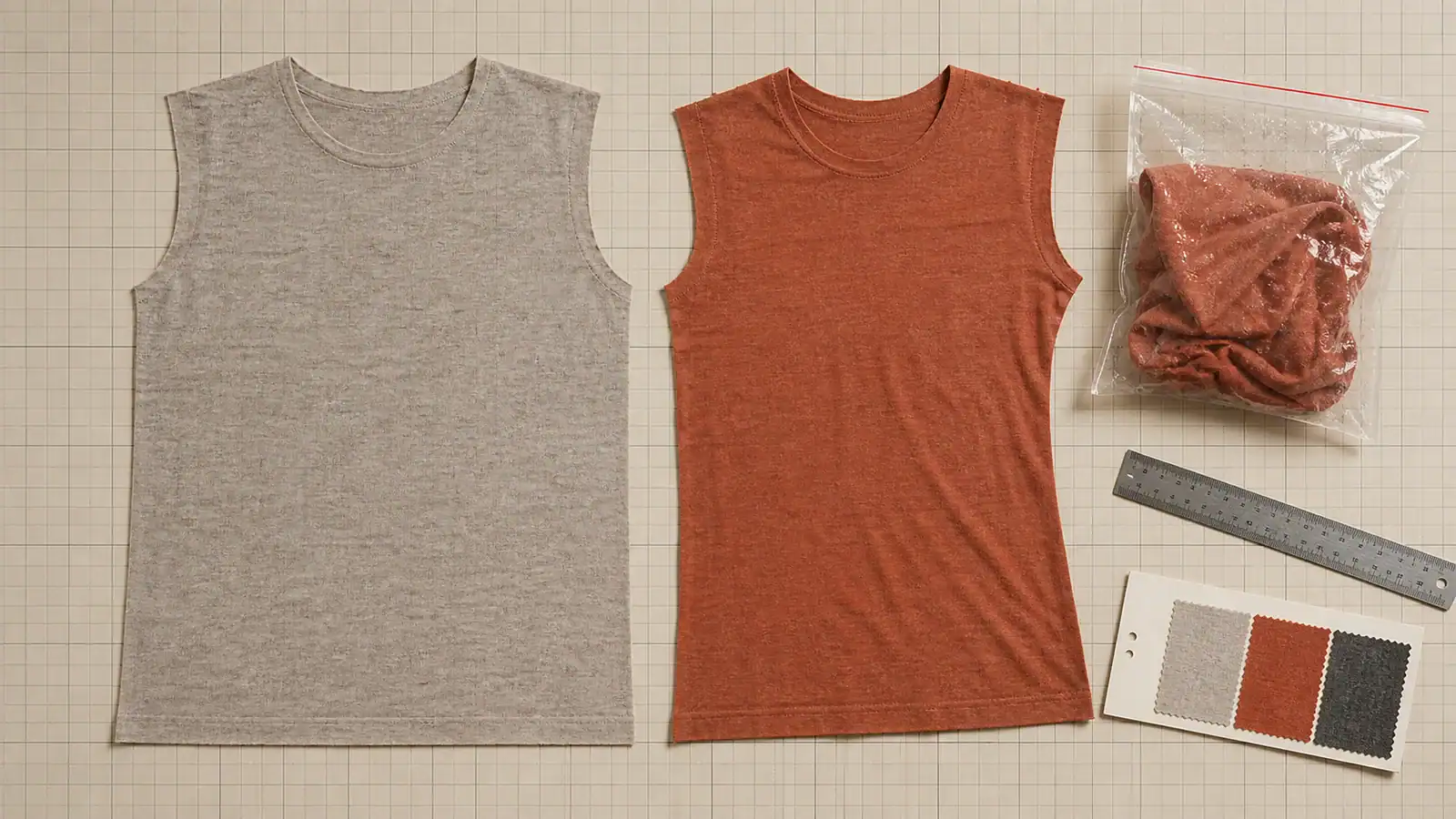
Single jersey can change in length and width after relaxation, dyeing, finishing, washing, drying, and wear. Spirality appears when the side seams or stitch columns rotate away from their intended position. The risk is influenced by yarn twist, knitting, finishing, fabric relaxation, cutting, and care.
Set the care route before approving dimensions. AATCC TM135 addresses dimensional changes of fabrics after home laundering, and ISO 6330 specifies domestic washing and drying procedures used for textile testing. A result only makes sense when the procedure, cycles, drying method, measurement points, and permitted change are recorded.
Check more than a flat fabric square. A garment combines fabric, neck rib, elastic, thread, print, labels, and seams that may react differently. Measure the sample before and after care, then review side-seam rotation, body balance, neckline, sleeve, hem, print, surface, shade, and hand feel.
What belongs in a jersey fabric specification
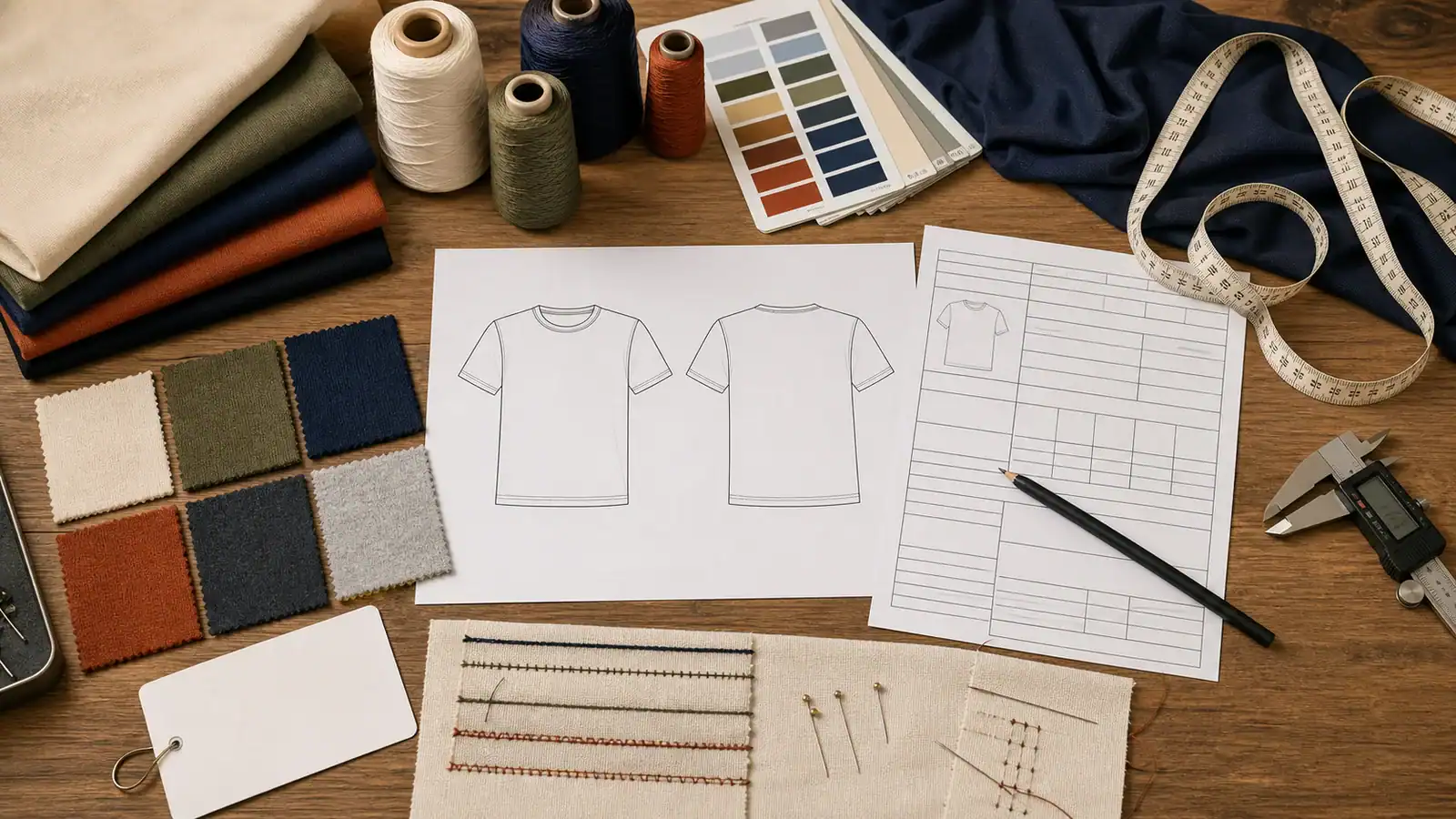
A useful material line in a tech pack can include:
- supplier or mill reference and approved swatch date;
- knit construction and intended face;
- fiber content with the applicable labeling route;
- finished GSM and tolerance;
- usable width and tube or open-width format;
- yarn or filament description when it affects the result;
- stretch direction, extension, recovery, and test method;
- finished color standard and viewing condition;
- surface, brushing, peaching, wicking, anti-pilling, or other finish;
- shrinkage and spirality route and target;
- pilling, abrasion, bursting, colorfastness, or other risk-led checks;
- printing, dyeing, embroidery, heat-transfer, or sublimation compatibility;
- care instruction and sample condition;
- certification or recycled-content documents only when required and verified.
The garment page should also record grain direction, nap or face, panel orientation, seam and needle choice, stitch extensibility, binding, rib or elastic, reinforcement, labels, decoration, and packaging. DTS outlines a separate tech pack customization process for organizing these decisions before a sample is cut.
For apparel sold in the United States, the FTC apparel-labeling guidance covers fiber content, country of origin, responsible business identity, and care information. The FTC Care Labeling Rule also requires a reasonable basis for care instructions. Other markets may have different requirements, so destination review belongs in the brief.
Sample approval workflow for jersey garments
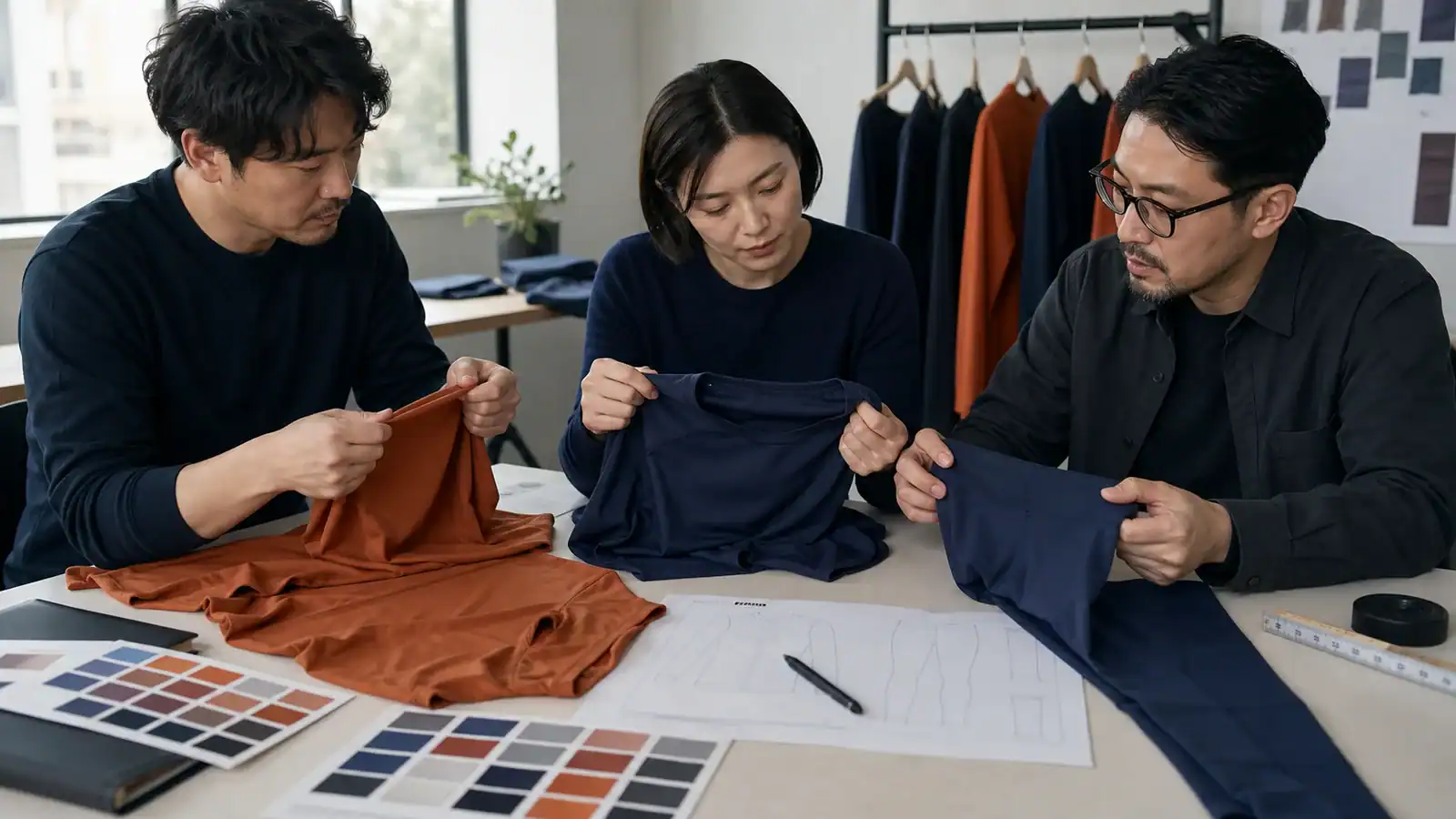
First, approve a fabric direction rather than a color chip alone. Review the swatch for construction, face, weight, width, stretch, recovery, opacity, surface, drape, and color. If the finish or dye route affects the result, use a representative finished swatch.
Second, cut a sample in the intended pattern. Check fit and movement on the target wearer. For a fitted product, pay attention to extension at the bust, seat, thigh, knee, elbow, and neckline. For a fluid garment, review hanging growth, hem level, and side seams. For a printed product, approve the artwork on the actual material and color.
Third, apply the agreed care route and remeasure. Record every comment against the sample version. Replace "too thin," "more stretch," or "better quality" with an observable target such as opacity at the intended extension, recovery after a defined procedure, finished GSM range, or a signed physical reference.
Fourth, confirm the final material, color, trim, print, labels, and measurements together. A fabric substitution can change fit, seam appearance, shade, care, and cost even when the fiber percentages look similar. The sampling and prototyping route provides a place to align the physical sample with the written brief.
Jersey quality-control checkpoints
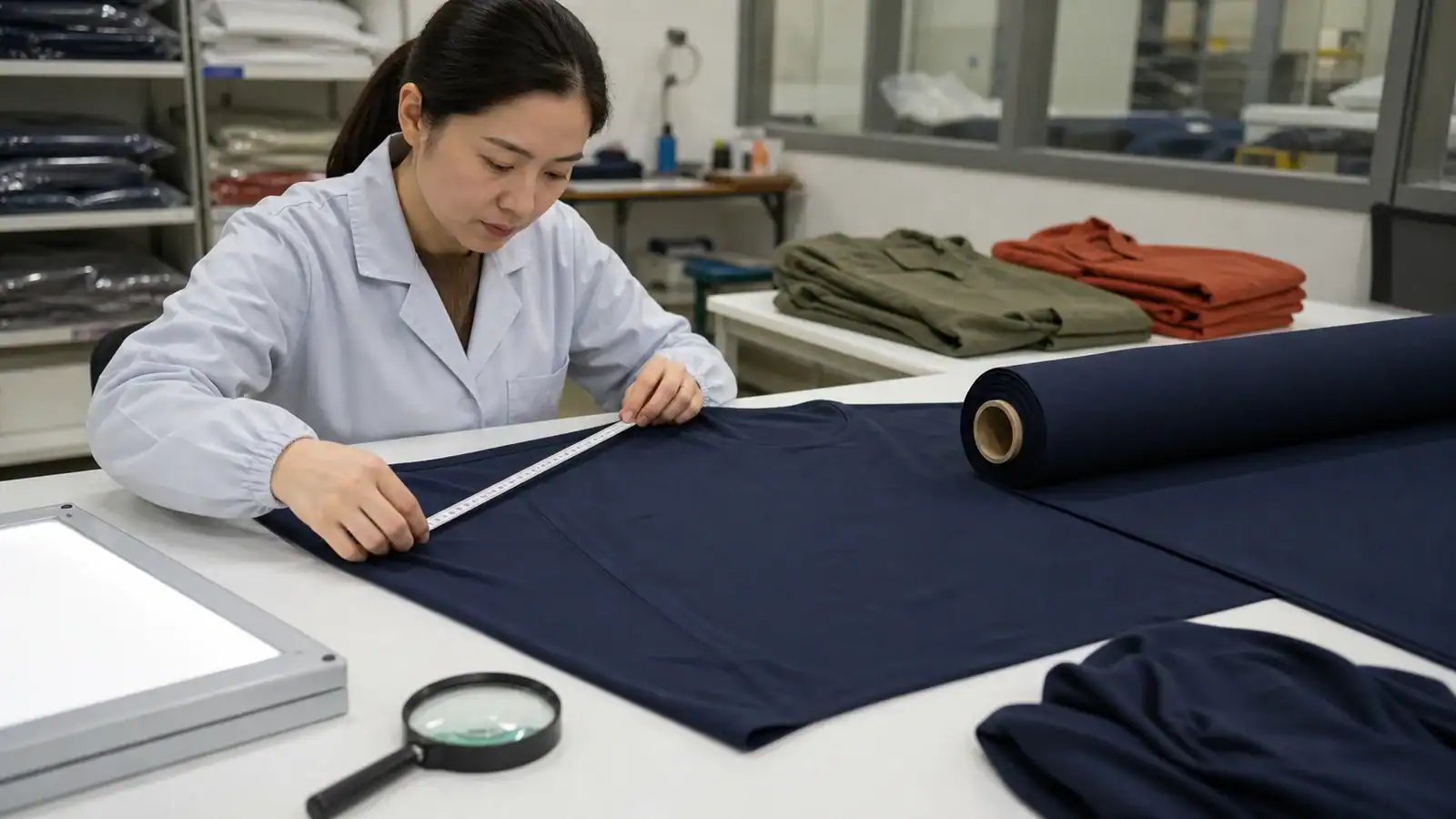
Inspection should follow the approved sample and project limits. Useful checkpoints can include:
- construction, fiber content, finished weight, width, face, color, and finish against the approved reference;
- roll shade, side-to-side shade, center-to-edge variation, stains, holes, barre, slubs, needle lines, and other surface observations;
- stretch, recovery, opacity, pilling, abrasion, bursting, snagging, or colorfastness where the product risk requires them;
- garment measurements before and after the agreed care procedure;
- side-seam rotation, panel torque, neckline shape, hem level, and overall balance;
- skipped stitches, seam grin, puckering, broken yarn, needle damage, reinforcement, and seam extensibility;
- print, transfer, embroidery, sublimation, or label appearance on the actual material;
- fiber, care, origin, size, brand, and other labels needed for the destination;
- folding, bagging, size marks, assortment, carton, and shipping information against the packing brief.
Do not turn this into the same test package for every jersey garment. A loose cotton T-shirt, a fitted nylon-elastane legging, and a sublimated polyester team top have different failure risks. DTS describes its general quality-control route, while exact methods, tolerances, inspection level, documents, cost, and timing should be confirmed for the order.
Frequently asked questions
Jersey clothing material is a knitted fabric family made from intermeshing loops. The name describes construction rather than fiber. Jersey can be made from cotton, polyester, nylon, viscose, modal, lyocell, recycled fibers, elastane blends, and other yarns.
Jersey usually has natural widthwise give because of its loop structure, but the amount and recovery vary. Elastane can increase extension and recovery, while yarn, density, finish, and direction also matter. Specify measured stretch and recovery instead of relying on the word stretchy.
No. Cotton is a fiber, while jersey is a knit construction. Cotton jersey uses cotton yarn, but polyester jersey, nylon jersey, viscose jersey, and blended jerseys are also common.
There is no universal best GSM. Lightweight jerseys can suit airy tops, midweight versions can suit T-shirts and training tops, and heavier versions can add body or opacity. Fiber, density, stretch, finish, garment fit, climate, and care must be reviewed with the number.
Single jersey normally has a distinct face and reverse and may curl at cut edges. Interlock is a double knit with a more similar appearance on both sides and often more stability and body. The final behavior still depends on fiber, weight, density, and finish.
Twisting can result from spirality related to yarn torque, knitting, finishing, relaxation, cutting, and care. A buyer should define the care procedure, measurement method, and acceptable result, then check the finished garment rather than only the raw fabric.
Record the test direction, load or procedure, extension, hold time, recovery time, and permitted growth. Also state the sample condition and care state. A label such as two-way or four-way stretch is not enough for repeatable development.
Send the garment type, target wearer, fit, reference size, tech pack or measurements, jersey construction, fiber direction, GSM, stretch and recovery needs, colors, artwork, labels, packaging, quantity, size range, destination, and timing. Mark any open decisions that need material development or supplier input.
Turn a jersey name into an approvable specification
Jersey is useful because it can be light or substantial, fluid or compact, natural-fiber-rich or performance-led. That variety is also why the fabric name cannot stand alone. Define the construction, fiber, finished weight, stretch, recovery, opacity, surface, color, care, and risk-led tests around the actual garment.
If you are preparing a custom jersey clothing program, send the garment references, tech pack or measurement chart, target quantity, colors, destination, and timing through the DTS Activewear inquiry route. The open material and sample decisions can then be identified before quotation or development.