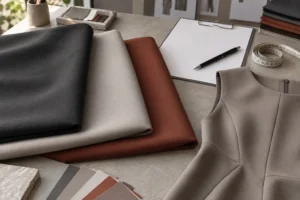
If you are asking what is satin fabric, the short answer is that satin describes a woven structure with long, deliberately spaced floats that create a smooth face and a characteristic sheen. Satin is not one fiber. Silk, polyester, nylon, rayon, acetate and blends can be engineered into a satin route, and the final fabric can behave very differently depending on the yarn, weight, density, finish and garment construction.
That distinction matters when a buyer compares samples or requests a quote. A satin blouse, a satin bomber, a lining, a dance costume and a lightweight fashion short may all use a shiny face, but they can require different fibers, back-side treatments, seam plans, care routes and acceptance tests.
This guide explains the satin weave in plain language, separates satin from silk and sateen, compares it with plain and twill structures, and gives buyers a practical way to specify, test and approve satin fabric before bulk production.
What is satin fabric?
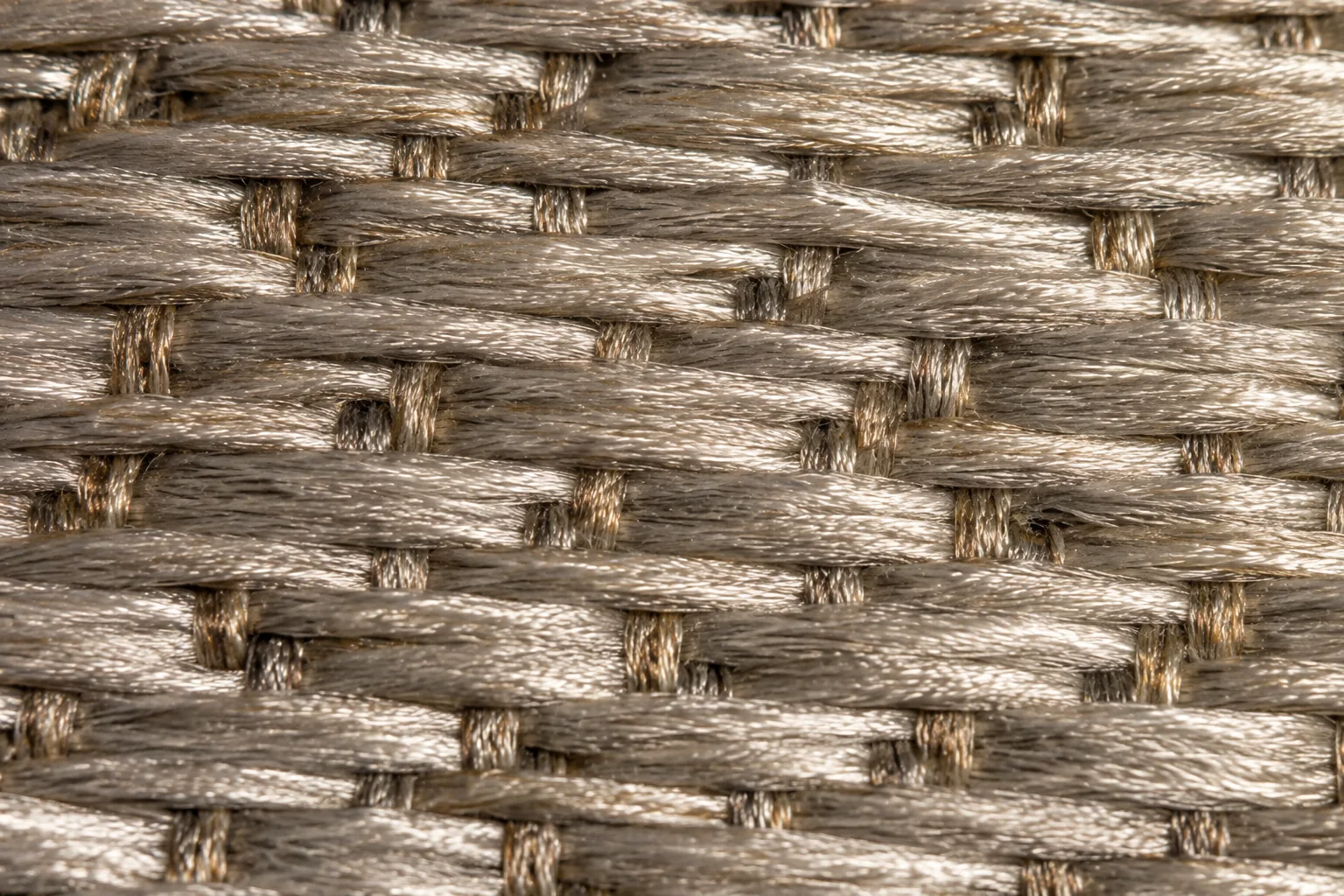
Satin is one of the three basic woven structures, alongside plain weave and twill. In a satin construction, warp or filling yarns pass over several yarns before the next binding point, and the binding points are distributed to avoid a regular diagonal line. The longer floats create a flat surface that can reflect light.
CottonWorks describes satin as a basic weave with long warp or filling floats, while the U.S. National Park Service explains that satin is a structure rather than a single kind of cloth. The useful buyer boundary is simple: satin identifies how yarns interlace; it does not identify the fiber percentage, GSM, width, stretch, snag resistance or care result.
| Term on a buyer document | What it identifies | What it does not prove |
|---|---|---|
| Satin weave | A woven interlacing structure with long, spaced floats | Fiber, weight, width, finish, snag performance or care response |
| Silk satin | A satin construction using a silk fiber route | That the fabric has one fixed weight, grade, luster or durability level |
| Polyester satin | A satin construction using polyester or a declared polyester blend | That it is automatically breathable, colorfast or easy to sew |
| Sateen | A smooth satin-weave fabric commonly made from spun yarns other than silk | One universal face, back, weight or fiber recipe |
| Satin-backed fabric | A fabric with a satin face and a different reverse construction or finish | That both sides have the same hand, friction or care behavior |
| Charmeuse, duchess or crepe-back satin | A trade or product name describing a particular hand, weight or surface route | A complete technical specification without a sample and construction record |
For a quotation, put the structure beside the material and end use. For example, write polyester satin, target GSM, usable width, face direction, reverse appearance, garment type and care route rather than asking for satin fabric as if it were a complete product specification.
How does a satin weave work?
Woven fabric uses two yarn directions. Warp yarns run along the length of the fabric, and weft or filling yarns run across the width. Satin increases the length of the visible float compared with plain weave and spaces the binding points so they do not form a regular twill line.
The exact draft, yarn size, density, float length, fiber, tension and finish all influence the result. A longer float can increase smoothness and shine, but it can also increase snag exposure. A heavier yarn or denser construction can change the hand and drape. This is why a close-up photograph is not enough to approve a satin material.
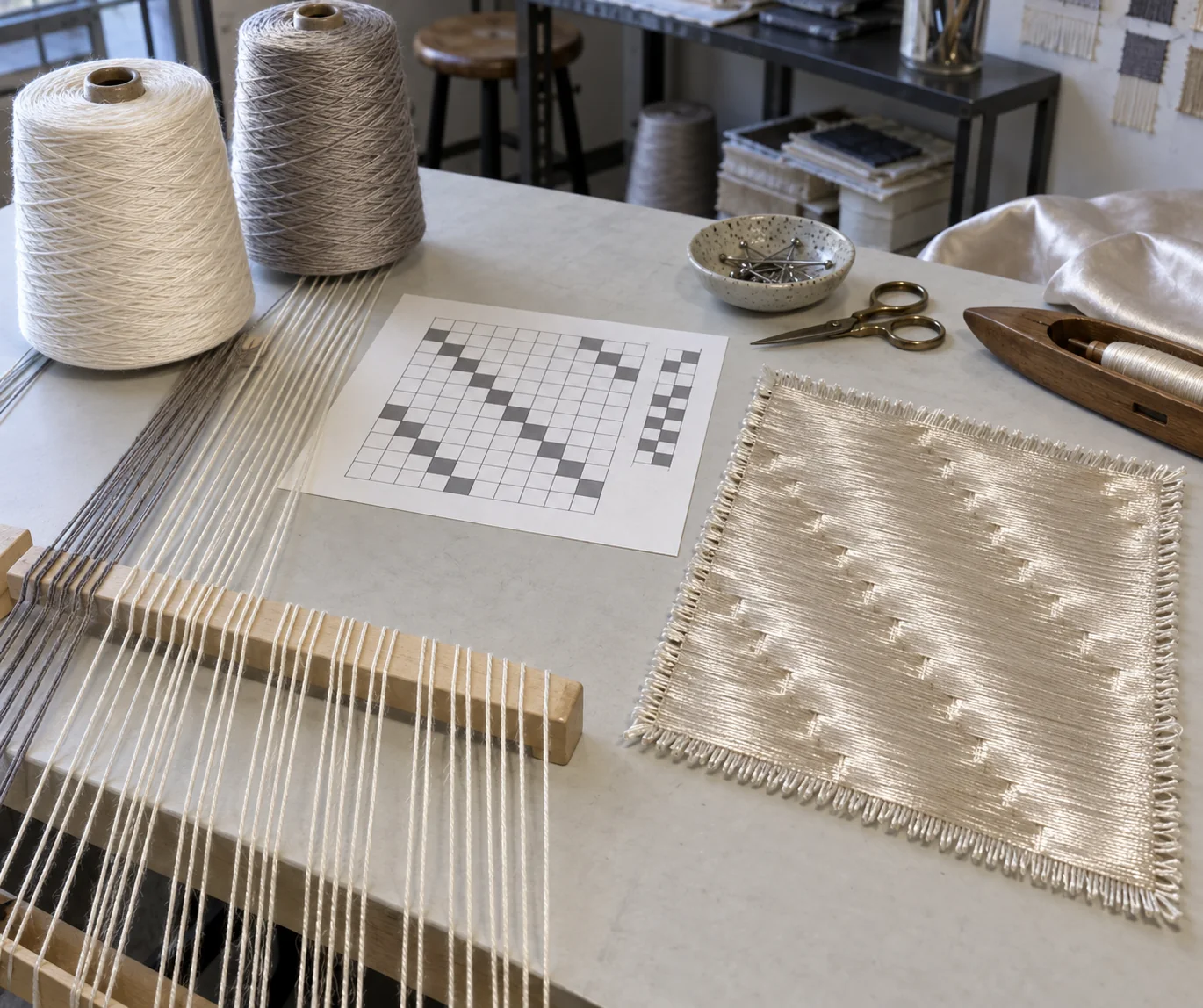
Satin specifications may refer to harness count, repeat, face direction, warp-face or filling-face construction, or the supplier’s own weave draft. The shorthand can be useful, but the buyer should request a physical swatch or construction record when the surface and reverse are critical.
| Construction route | Simplified description | Buyer question |
|---|---|---|
| Five-end satin route | A basic satin family using a repeat of at least five yarn positions | Does the face have the required smoothness, coverage and float stability? |
| Seven-end or eight-end route | A larger repeat can change the spacing of binding points and the surface reflection | Is the visual effect consistent across the usable width and after finishing? |
| Warp-face satin | Warp yarns dominate the visible face | Is the warp direction marked for cutting, nap control and panel matching? |
| Filling-face or sateen route | Filling yarns dominate the visible face | Does the reverse need a separate shade, hand or abrasion review? |
| Satin with a finish | Brushing, coating, softening, calendaring or other finishing changes the surface | Does the finish remain stable after laundering, pressing and sewing? |
The construction is not a durability score. A satin with long floats may be appropriate for a fashion surface, lining or performance costume, while a different satin route may be chosen for a structured jacket or decorative panel. Match the weave to the garment risk instead of choosing by shine alone.
What are the common types of satin fabric?
Satin names often combine weave, fiber, weight, finish and end use. Two materials can both be sold as satin while having different reverse sides, drape, opacity, stretch and care instructions.
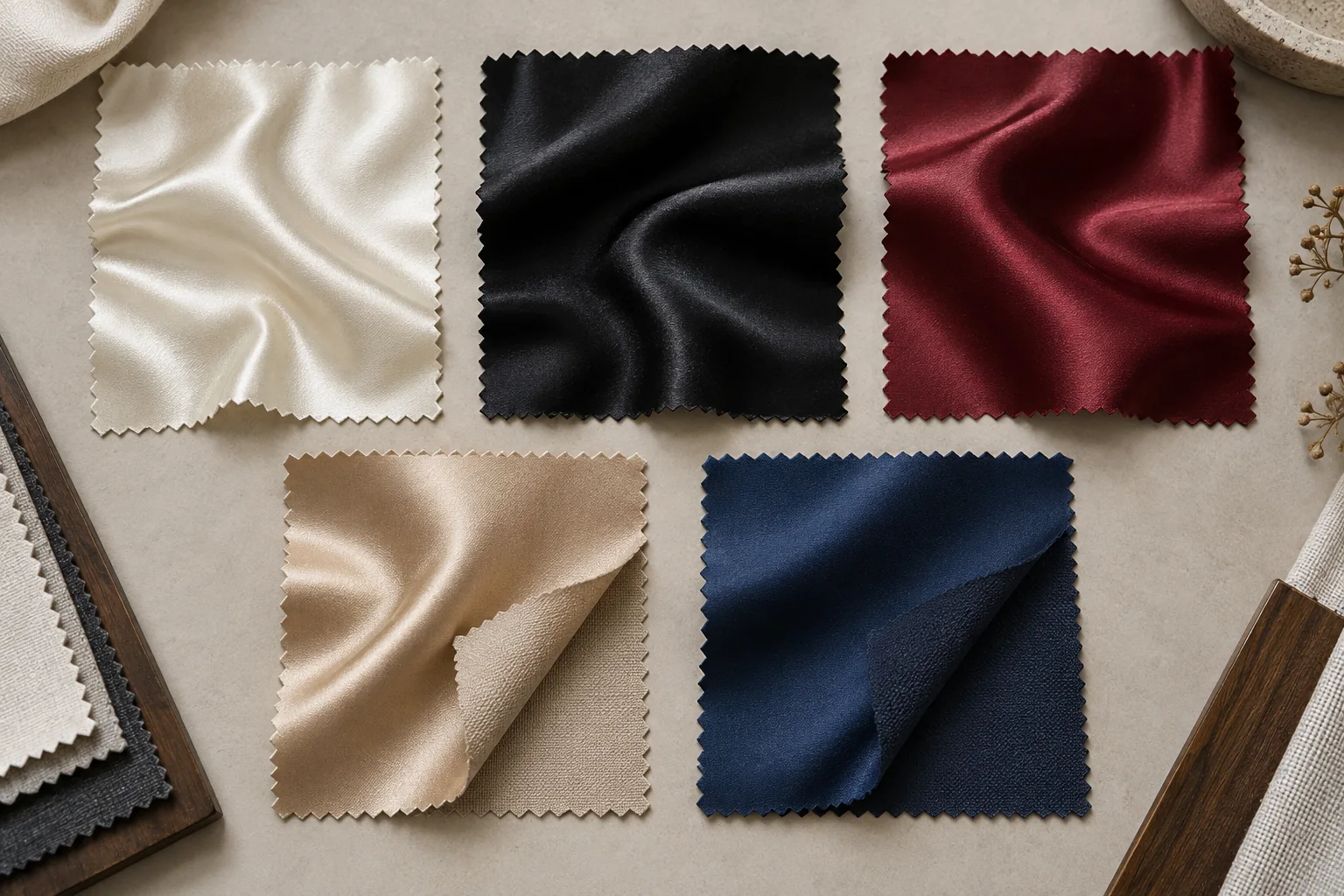
Common trade routes include:
- Charmeuse satin for a fluid hand and reflective face, often used where drape is more important than structure.
- Duchess satin for a heavier, more structured appearance where body and shape retention matter.
- Crepe-back satin for a satin face and a more textured or matte reverse that may provide a different styling option.
- Satin-backed fabric when one side is designed to be visible and the reverse is engineered for lining, comfort or construction.
- Stretch satin when elastane or another stretch route adds extension to a woven satin base.
- Matte satin when finishing or yarn choice reduces shine while keeping a smooth face.
- Printed or jacquard satin when pattern, artwork or a more complex surface is added to the base structure.
These labels are not interchangeable. Ask for the fiber declaration, finished weight, usable width, face and reverse photographs, stretch direction, finish, opacity and sample reference before comparing prices.
Which fibers can be used in satin fabric?
The fiber changes moisture interaction, heat response, color behavior, care and cost. The satin structure changes the surface, drape, face direction, float exposure and the way light reflects. The finished material is the combination of both.
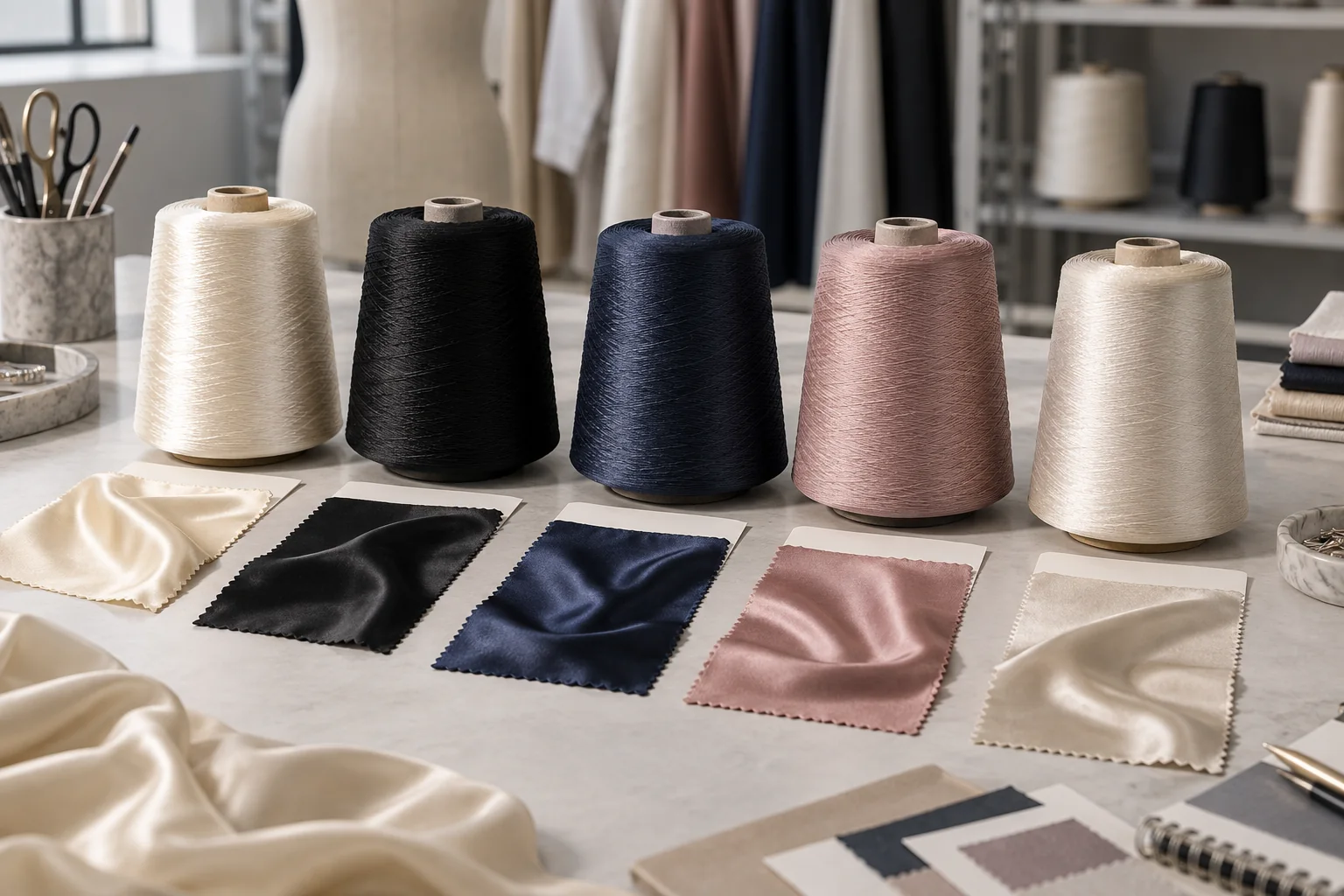
| Fiber direction | Why a buyer may consider it | Questions that remain open |
|---|---|---|
| Silk satin | Natural fiber route with a distinctive hand and fluid drape potential | Exact silk type, weight, shade consistency, snag risk, care and price basis |
| Polyester satin | Broad color range, repeatable synthetic route and many weight options | Heat comfort, static, pilling, snagging, finish durability and fiber disclosure |
| Nylon satin | Smooth hand and a technical synthetic route for selected lightweight products | Heat setting, abrasion, snagging, recovery, coating and laundering response |
| Rayon or acetate satin | Fluid drape and a soft fashion-oriented hand | Wet strength, dimensional change, care route, pilling and shade behavior |
| Stretch satin | Extension can support selected fitted or movement-led garments | Stretch direction, force, recovery, elastane percentage and heat exposure |
| Blended satin | A blend may balance hand, care, cost and appearance goals | Exact ratio, differential shrinkage, labeling, dye behavior and finish stability |
The phrase silk-like satin is not a fiber declaration. If a buyer needs silk, the purchase document should state the exact fiber and percentage. If a buyer needs a polyester satin with a similar visual effect, the target hand, luster, weight, reverse and care result should be specified separately.
Satin vs plain weave vs twill weave
Satin is not automatically more premium, delicate or suitable than plain or twill. The better structure depends on the product job, target hand, surface, stability, cost and care route.

| Characteristic | Plain weave | Twill weave | Satin weave |
|---|---|---|---|
| Surface clue | Frequent alternating interlacings and an even face | Diagonal line or rib | Smooth face with longer floats and sheen potential |
| Visual direction | Usually little face direction unless yarn or print creates one | A visible diagonal can affect cutting and panel matching | Face direction and light reflection can affect panel matching |
| Hand and drape | Can be crisp or stable depending on yarn and weight | Often has a directional surface and moderate body | Can be fluid or structured, depending on yarn, weight and finish |
| Typical apparel routes | Shirts, lightweight tops, linings and simple woven products | Trousers, utility garments, uniforms and structured streetwear | Blouses, linings, jackets, costumes, evening products and selected fashion details |
| Main buyer risk | Frequent interlacings do not guarantee low shrinkage or strength | A diagonal surface does not guarantee durability or comfort | Long floats do not guarantee snag resistance, stability or easy care |
Compare the structures for the product job, not in the abstract. Use actual swatches at a similar target weight, then review drape, opacity, seam behavior, surface damage, care change and finished-garment appearance.
Where is satin fabric used in apparel?
Satin is common in blouses, dresses, skirts, linings, bomber jackets, fashion panels, costumes, lingerie, sleepwear and accessories. It can also support streetwear or event garments when the shine, drape and snag risk fit the design.
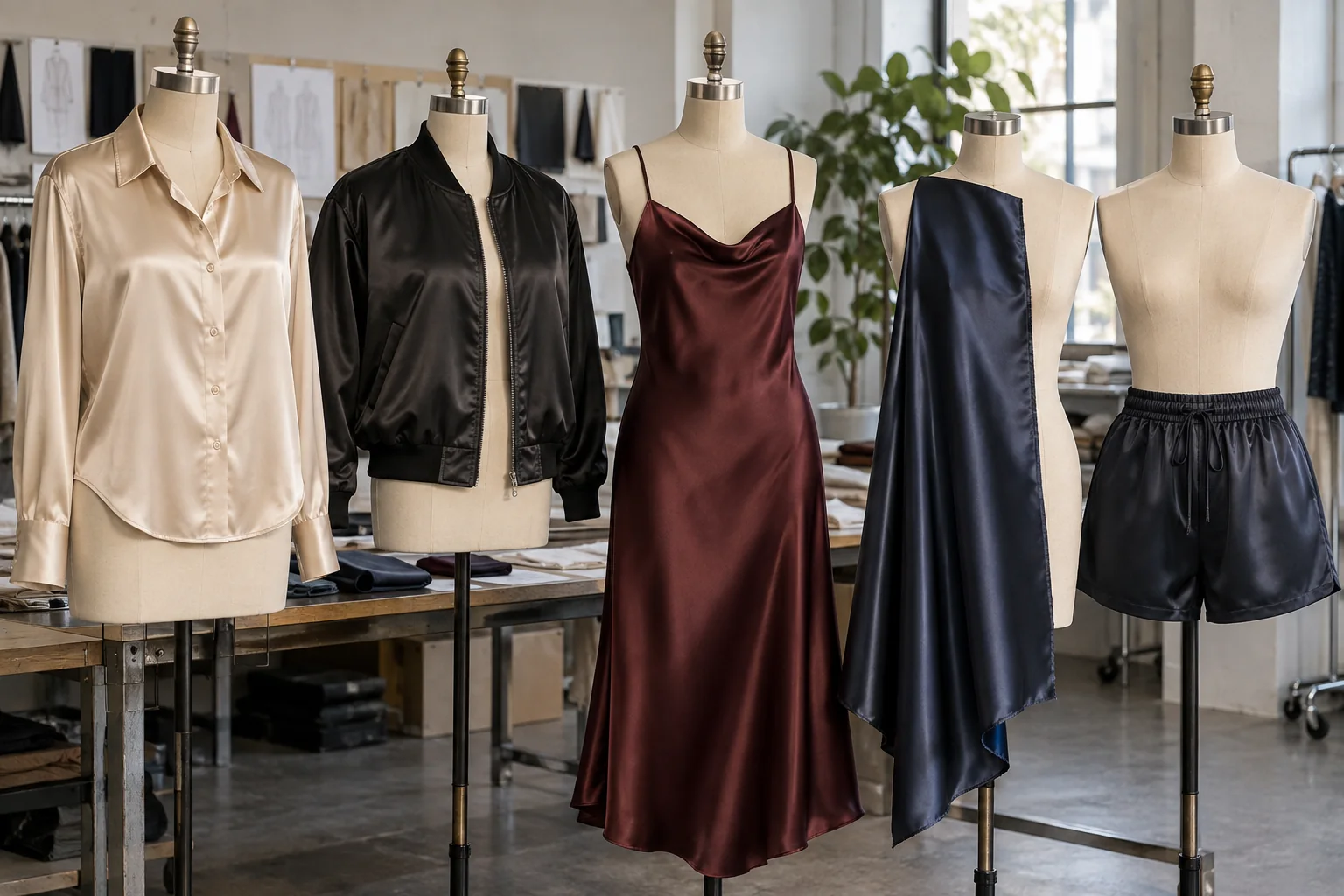
| Product direction | Why satin may fit | Main risk to check |
|---|---|---|
| Blouse or fluid top | A smooth face and drape can support a clean fashion silhouette | Snagging, transparency, seam puckering, pressing marks and care response |
| Slip dress or skirt | Face reflection and movement can support a fluid appearance | Bias stretch, shade variation, static, lining, hem behavior and fit change |
| Bomber or fashion jacket | A satin face can create a distinctive surface on outer panels or lining | Seam slippage, abrasion, coating, pocket loading and surface scratches |
| Lingerie or sleepwear | A soft, low-friction face may fit selected comfort goals | Skin comfort, sweat, care, seam bulk and fiber disclosure |
| Costume or performance garment | Shine can read clearly under stage or event lighting | Movement, snagging, lighting color shift, sweat, fasteners and repairability |
| Lining or decorative panel | A smooth face can support layering and visual contrast | Slipping, static, seam control, bonding, shade and friction against the shell |
Satin is often a stronger choice for a visual or drape-led garment than for a high-abrasion workwear product. If the item must handle repeated rubbing, heavy pocket loading or rough laundering, make abrasion, snag and dimensional stability part of the initial brief.
Is satin fabric suitable for activewear?
It can suit warm-up layers, stage fitness pieces, fashion-led teamwear, dance garments, lightweight jackets and active-lifestyle details when the material is tested for movement and care. It is not the automatic choice for a high-sweat base layer because a woven satin may have a different moisture, stretch and friction profile from a performance knit.
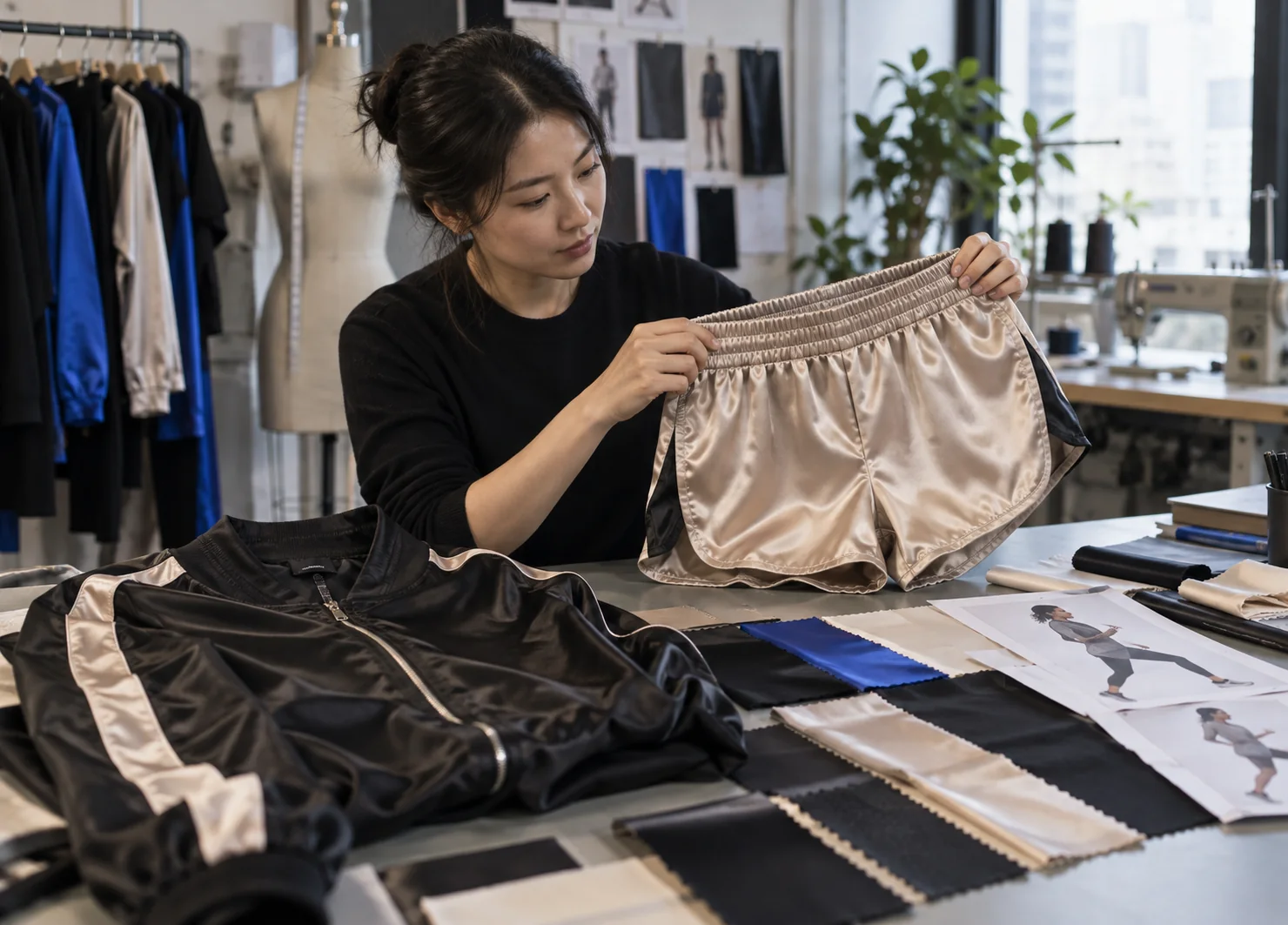
Use a decision rule based on the garment job:
- Choose a lightweight satin when the main need is a smooth face, low bulk and fluid movement.
- Choose stretch satin only after defining extension, force, recovery and the direction of stretch.
- Choose a synthetic satin route when color range, repeatability or easy-care potential matters, then verify heat comfort, static and surface damage.
- Choose a silk, rayon or acetate route when drape and hand are central, then confirm the care and wet-strength limits.
- Use a sewn sample for movement, seam comfort, lining interaction, pocket loading, decoration and laundering.
Do not use satin as shorthand for breathable, durable, quick drying or premium. Those are separate performance questions, and the answer belongs to the specified material and finished garment rather than the weave name.
What should a buyer specify for satin fabric?
The request satin fabric is too broad for a production order. A useful brief names the fiber, construction, face, reverse, target weight, width, finish, garment job and acceptance evidence.

| Tech pack field | What to record | Why it matters |
|---|---|---|
| Fiber content | Exact fiber percentages and any branded fiber requirement | Controls labeling, care, claims, hand and performance expectations |
| Satin construction | Harness or repeat information, warp-face or filling-face route and supplier reference | Makes the word satin technically useful instead of purely visual |
| Face and reverse | Face direction, reverse appearance, luster target, opacity and approved photographs | Supports cutting, panel matching, lining decisions and shade review |
| Finished weight and width | Target GSM, tolerance, usable width, edge condition and roll presentation | Supports yield, marker planning, cost and fit consistency |
| Stretch and recovery | Direction, extension, force, recovery time and repeated cycles | Connects the woven fabric to movement and size stability |
| Finish and color | Coating, softener, calendaring, print, shade standard and lot control | Finishing changes reflection, friction, hand, care and shade behavior |
| End use and care | Garment type, activity, climate, wash route, drying route and decoration | Makes testing reflect the real product rather than a generic swatch |
| Acceptance evidence | Sample ID, approved hand, test method, tolerance and change-control rule | Helps the bulk lot match the approved development standard |
If a field is unknown, leave it for confirmation. Do not fill missing GSM, opacity, lead time, MOQ or test results with a generic industry assumption. A clear inquiry helps a manufacturer propose a sample that can be evaluated against the actual product job.
How should satin fabric be tested?
Testing should follow the product risk. A delicate blouse, a lined bomber and a performance costume do not need identical acceptance limits. Screen the fabric first, then review a sewn sample for fit, seams, lining, decoration and care.

| Test area | Buyer question | Evidence to request |
|---|---|---|
| Mass per unit area | Is the material within the target weight and coverage? | Readings from agreed locations using the chosen method and conditioning |
| Width and construction | Can the marker and pattern use the usable width consistently? | Full-width readings, edge notes and construction or count record |
| Dimensional change | What happens to length and width after the planned care route? | Before and after measurements using an agreed laundering procedure |
| Snag and abrasion behavior | Will the face remain acceptable around fasteners, bags, seats or repeated movement? | Method, cycles, specimen photos and agreed visual or rating limit |
| Seam and tear behavior | Can the fabric handle neckline, waistband, zipper, pocket and panel loads? | Seam, tear or tensile evidence matched to the garment risk |
| Color and crocking | Will the face transfer or change during wear, pressing and care? | Wash, rubbing, perspiration, light or other relevant results |
| Surface and luster | Does the approved reflection remain consistent across the lot? | Controlled-light photos, shade cards, face-and-reverse review and lot notes |
| Stretch and recovery | Does a stretch satin return after movement and care? | Direction, extension force, recovery interval and repeat-cycle results |
ASTM D3776 provides a reference for measuring fabric mass per unit area. AATCC TM135 addresses dimensional changes after home laundering. Other methods may be relevant for snagging, abrasion, pilling, tear, colorfastness or surface change. The standard name is not a pass result: the edition, specimen, conditioning, cycles, rating scale and acceptance limit still need to be written into the buyer’s quality plan.
How should a buyer inspect satin during sampling and bulk?
Satin can look consistent in one photograph while varying across the roll. Inspect the face and reverse, the direction of reflection, the usable width, the edge, the hand, the luster, the shade and the behavior after relaxation or laundering.
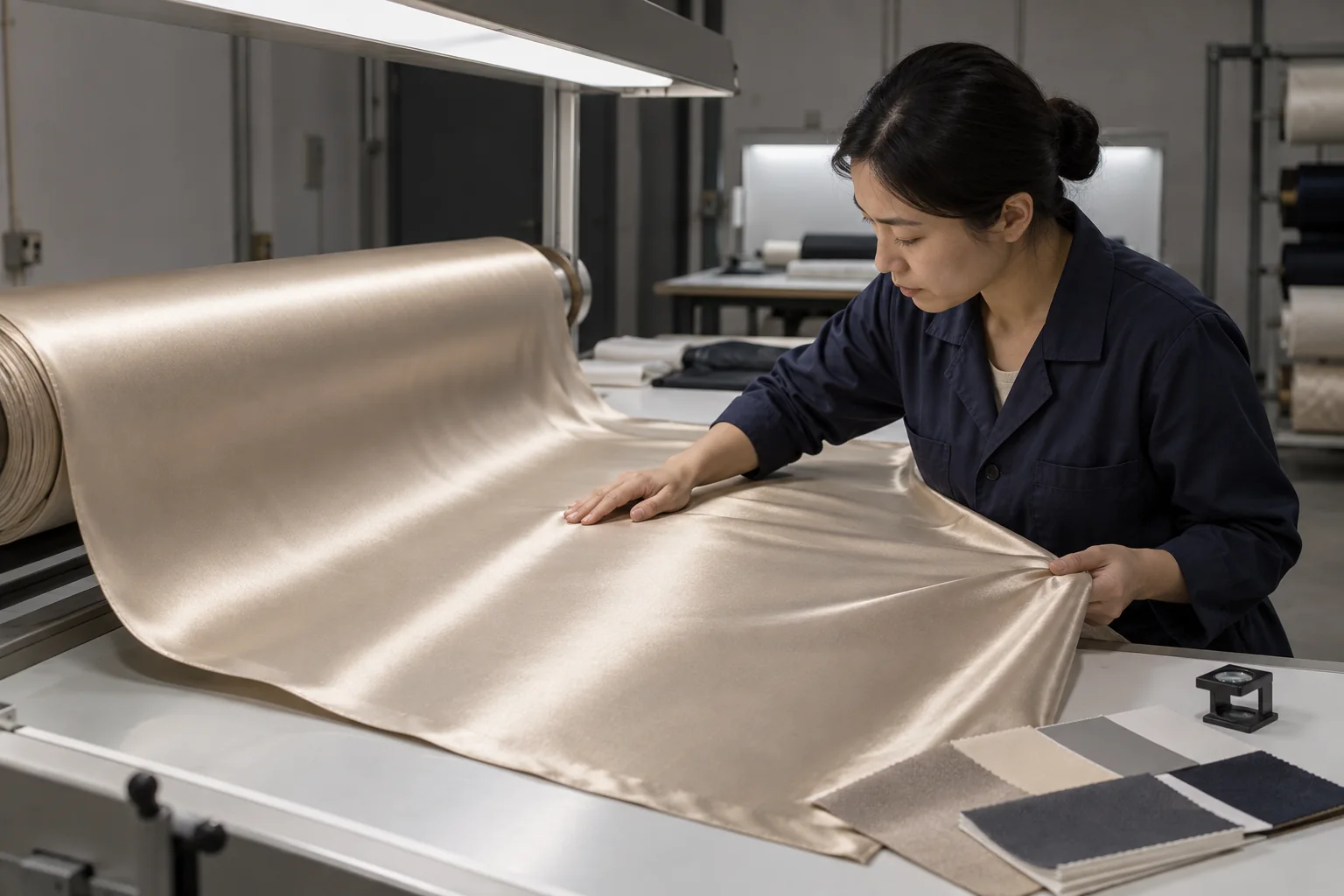
Use a repeatable inspection path:
- Compare the bulk roll with the approved swatch under the agreed light source and viewing angle.
- Check whether the face direction and reflection remain consistent across the usable width.
- Measure width and GSM at multiple points instead of relying on one center reading.
- Look for pulled floats, snags, broken yarns, streaks, shade bands, coating marks, creases and pressing damage.
- Review seam puckering, zipper interaction, lining movement, pocket openings, hems and topstitching on the sewn sample.
- Run the agreed care route before locking care instructions, grading or final packaging.
If the face becomes visibly dull, the reverse transfers color, or the garment shows snagging after normal handling, record the condition as a quality issue and connect it to the material, finish or garment route. Do not hide a construction problem by changing the product description.
How does satin fabric behave after care?
Care response depends on fiber, yarn, satin construction, dyeing, finish, garment pattern and the wash and dry route. Some satin materials soften, lose luster, shrink, relax, crease or change surface character after care. Blends can show differential movement, and elastane-containing satin may lose recovery under unsuitable heat.
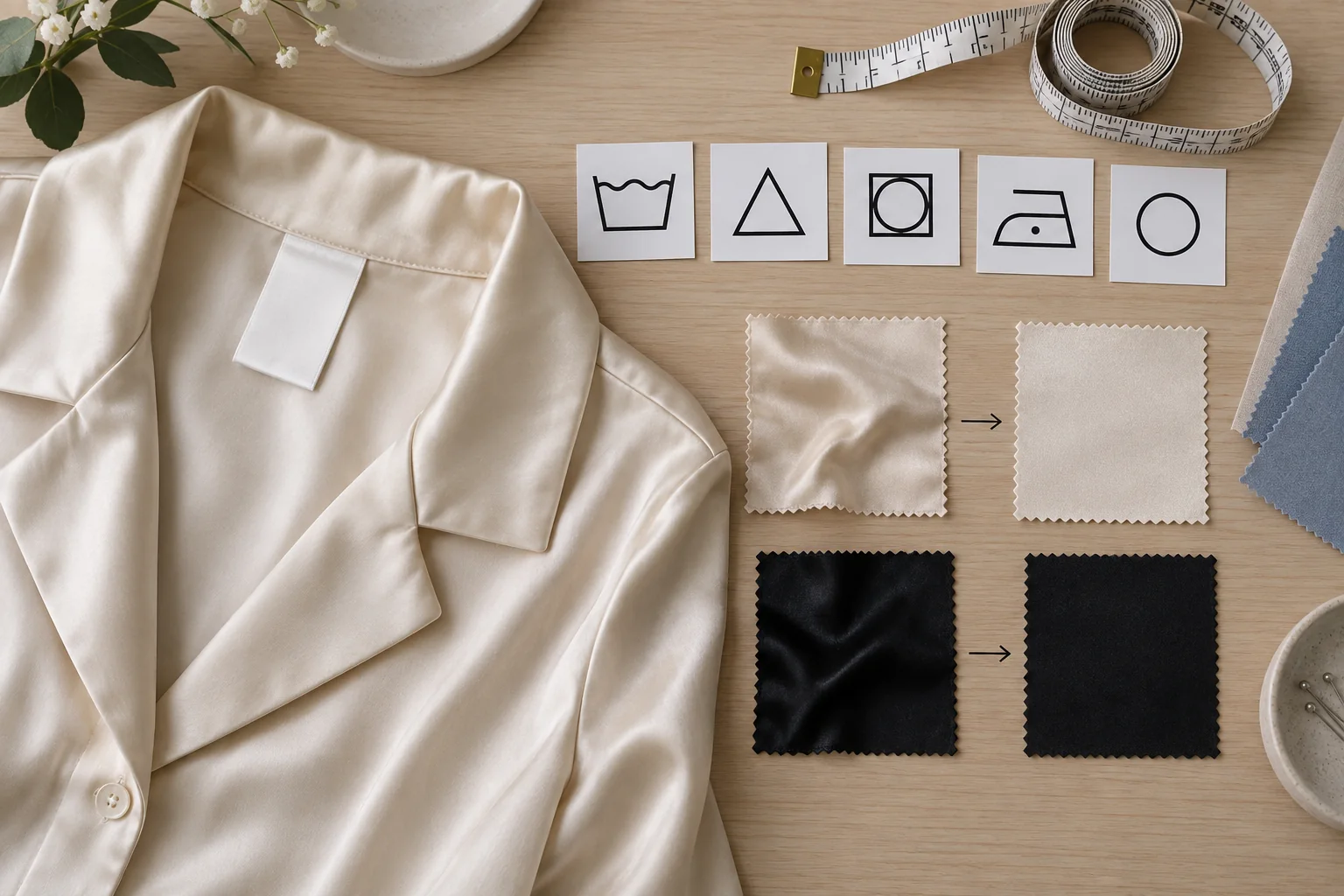
Before approving care copy:
- Measure fit-critical length and width before and after the agreed wash and dry route.
- Check luster, shade, crocking, seam twist, puckering, lining movement and surface change.
- Compare face direction and hand after care with the approved sample.
- Review heat exposure for elastane blends, coatings, prints, bonded details and fusible interlinings.
- Keep the actual fiber declaration and final care route aligned with the destination market.
The practical aim is to define a realistic care route and acceptance range for the finished garment. Satin may soften, relax or lose some luster, and the approved result should say how much change is acceptable.
How should a buyer decide whether satin is right?
Satin is a good starting point when the product needs a smooth face, controlled shine, fluid or structured drape, visual contrast or a fashion-led surface. It may be a poor fit when the main requirement is high abrasion resistance, rough industrial handling, very low snag risk or a soft next-to-skin knit hand.
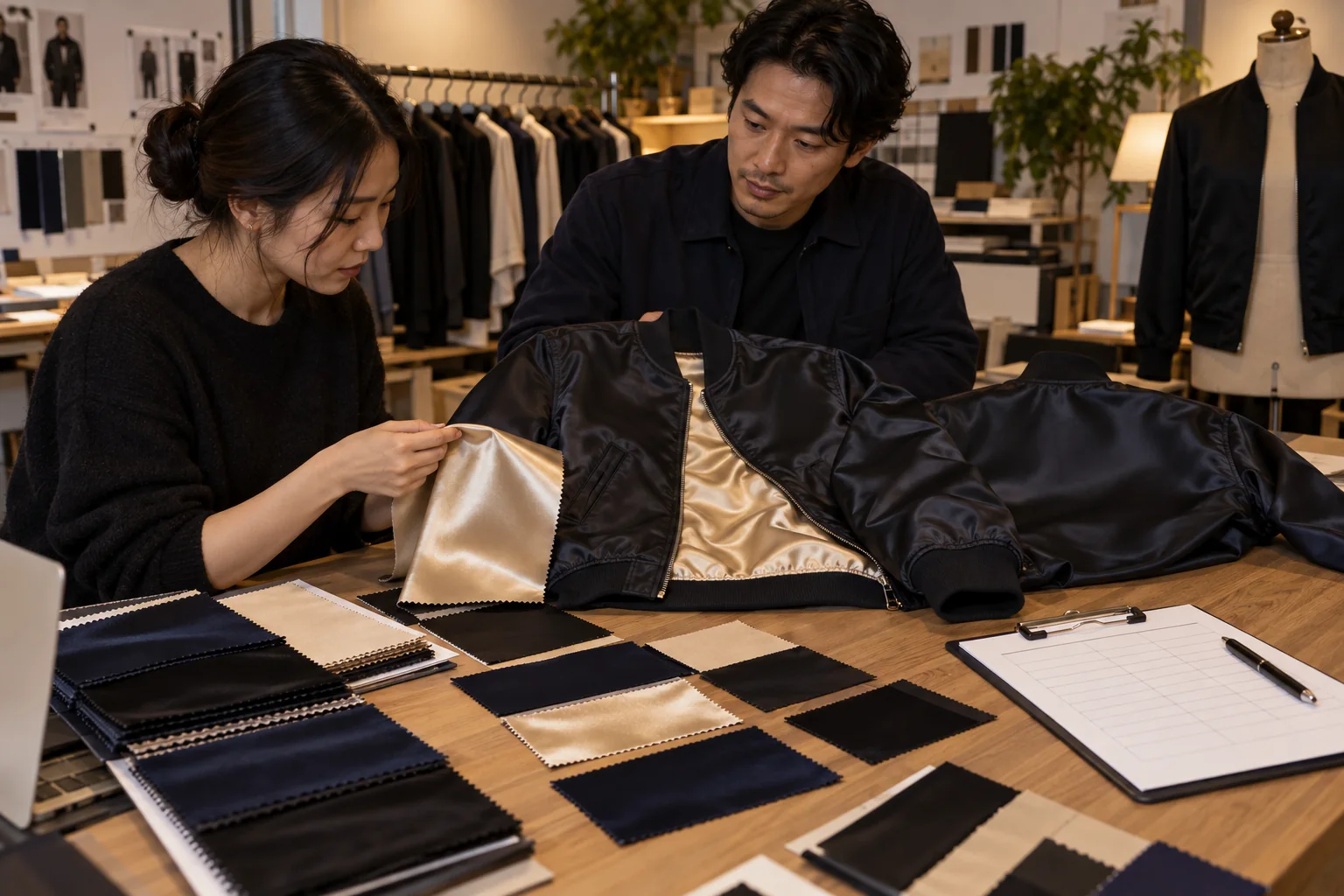
For a quote or sample request, send the garment type, target wearer, activity, fiber direction, blend percentage, satin construction, finished GSM, usable width, face and reverse requirement, stretch need, luster, color, decoration, care route, quantity and required evidence. You can also connect the request to the relevant fabric and trim library or tech pack customization service so the material decision is tied to the complete product brief.
Frequently asked questions
Not always. Satin describes a weave structure, while silk is a fiber. Polyester, nylon, rayon, acetate, cotton and blends can also be engineered into satin or satin-like routes. Confirm the exact fiber declaration before approving the material.
Satin is normally a woven construction made with warp and weft yarns. A knitted product may have a shiny finish, but it should not be called satin weave without a construction record that confirms the interlacing method.
Both terms relate to a satin weave structure. In common textile usage, satin often refers to a warp-face or filament-oriented route, while sateen commonly refers to a satin-weave fabric made with spun yarns other than silk. Confirm the supplier’s fiber, face direction and construction because trade usage can vary.
Durability depends on fiber, yarn, float length, density, finish, garment construction and exposure. Long floats can make a face more vulnerable to snagging, but a satin material may still be suitable for a selected product after the relevant abrasion, seam, tear and care checks.
Breathability is not guaranteed by the word satin. Air movement and moisture comfort depend on fiber, yarn, density, weight, finish, garment openings and fit. Use a defined test or a sewn-sample review for a comfort-led product.
Basic satin does not automatically stretch. Extension may come from elastane, a stretch yarn, a looser construction or garment engineering. Specify direction, extension, force and recovery instead of assuming stretch from the fabric name.
It can suit warm-up layers, stage fitness pieces, dance garments, fashion-led teamwear and selected active-lifestyle details. For high-sweat base layers, compare satin with suitable knits and verify drying, stretch, recovery, friction and comfort.
Ask for exact fiber content, satin construction, face and reverse photographs, finished GSM, usable width, luster target, opacity, stretch and recovery, finish, shade standard, care route, test plan, sample reference and acceptance tolerances. Also confirm which MOQ, lead time and bulk conditions apply to the exact material and garment.