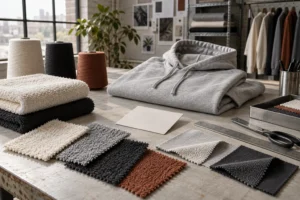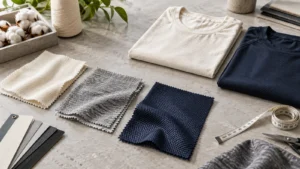
If you are asking what is pique fabric, the short answer is that pique is a textured textile construction, not one universal fiber. In polo and uniform sourcing, the term usually refers to a knitted fabric made with knit and tuck arrangements that create a raised cell, honeycomb, birdseye, or corded surface. Cotton, polyester, blends, and stretch blends can all be made into pique.
That distinction matters when you compare samples. Two fabrics can both be called pique while differing in fiber content, yarn, gauge, feed structure, weight, stretch, finish, and recovery. A buyer should therefore specify the construction and the required garment behavior, not only write cotton pique or polyester pique on a purchase brief.
This guide explains how pique is made, how single pique differs from double and six-feed structures, where the fabric is used, how it compares with jersey and interlock, and which measurements help a supplier quote the right material for a polo, uniform, golf shirt, or branded workwear program.
What is pique fabric?
In apparel, knitted pique is a fabric with a deliberate surface texture created by the arrangement of loops and tuck stitches. The face may look like small cells, diamonds, ribs, or fine cords, while the back is often flatter or shows a different loop pattern. The structure gives the fabric a more dimensional appearance than a basic single jersey.
The word can also describe woven piqué, sometimes written as pique or marcella. Woven piqué is a separate construction family and should not be assumed to behave like a knitted polo fabric. The CottonWorks pique reference is useful when a sourcing team needs to separate woven piqué terminology from the knitted structures used in many polo shirts.
For a buyer, the working definition is:
> Pique fabric is a textured knit or woven construction whose surface and performance depend on the stitch or weave structure, fiber content, yarn, weight, and finishing route.
| Specification layer | What it tells the buyer | Why it changes the decision |
|---|---|---|
| Fiber content | Cotton, polyester, blend, elastane, or another declared fiber | Affects hand, care response, moisture interaction, strength, and labeling |
| Yarn | Spun or filament yarn, fineness, twist, and texture | Changes surface clarity, softness, strength, and visual consistency |
| Construction | Single pique, double pique, six-feed pique, or a woven pique | Controls texture, thickness, stability, stretch, and drape |
| Weight and width | Finished GSM, usable width, and tolerance | Influences coverage, garment yield, cost, and seasonal suitability |
| Finish | Dyeing, softening, heat setting, wicking or other treatment | Can change hand, shrinkage, wetting, color, and wash behavior |
| Garment design | Collar, placket, seams, fit, trims, and decoration | Determines how the roll behaves in the finished product |
Pique is therefore a construction label that must be expanded into a full material specification before bulk production. If the quote uses only the phrase pique fabric, ask which structure, fiber percentage, finished weight, width, and sample reference are intended.
How is pique knit made?
Knitted pique is made on a machine that forms fabric from intermeshing loops. A tuck stitch holds a loop or places yarn into a different path instead of forming a simple knit loop in the same way as a plain jersey. Repeating those knit and tuck relationships creates the texture and visual relief associated with pique.
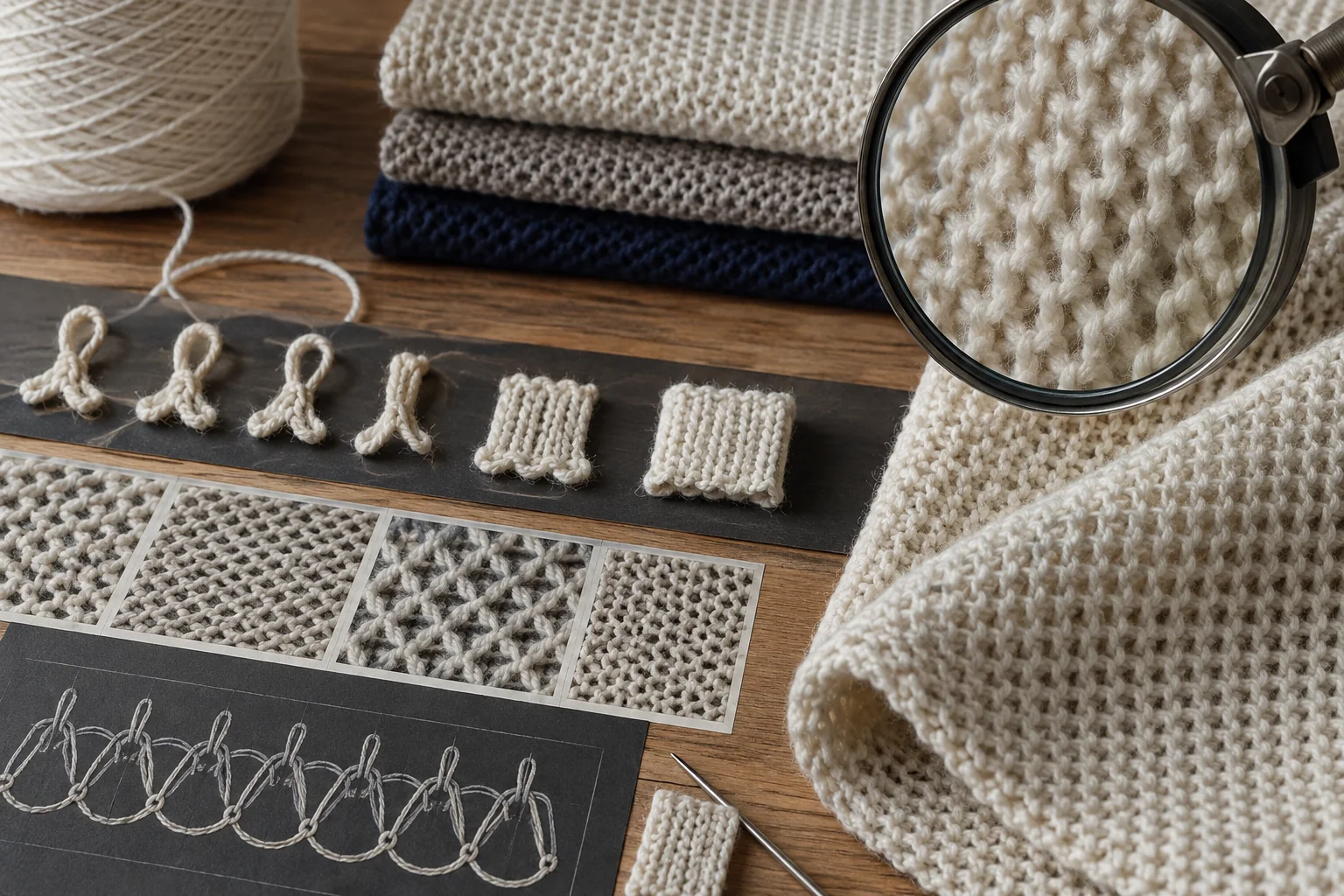
The exact appearance depends on machine gauge, yarn, stitch arrangement, feed selection, density, finishing, and whether the fabric is single or double knit. A swatch viewed from the face alone may not reveal why it has a particular stability or recovery. Buyers should look at both sides, stretch it in both directions, and compare the surface after washing.
The CottonWorks guide to single and double knits explains the role of knit structure in fabric behavior. It is a helpful technical reference, but a reference page cannot replace a signed sample specification for a particular order.
The practical manufacturing sequence is usually described in five layers:
- Select the fiber and yarn direction for the hand, strength, appearance, and use case.
- Set the knitting structure and machine parameters that create the intended pique texture.
- Knit a development sample and inspect face, back, width, weight, stretch, and defects.
- Dye, finish, relax, or heat set the fabric according to the color and performance brief.
- Recheck the finished fabric and the sewn garment before approving the bulk route.
Texture alone is not proof of quality. A clear texture can still come with excessive shrinkage, weak recovery, poor colorfastness, unacceptable skew, or a hand that does not suit the garment. This is why a buyer should approve a physical standard and record the measurements beside it.
What are the main types of pique?
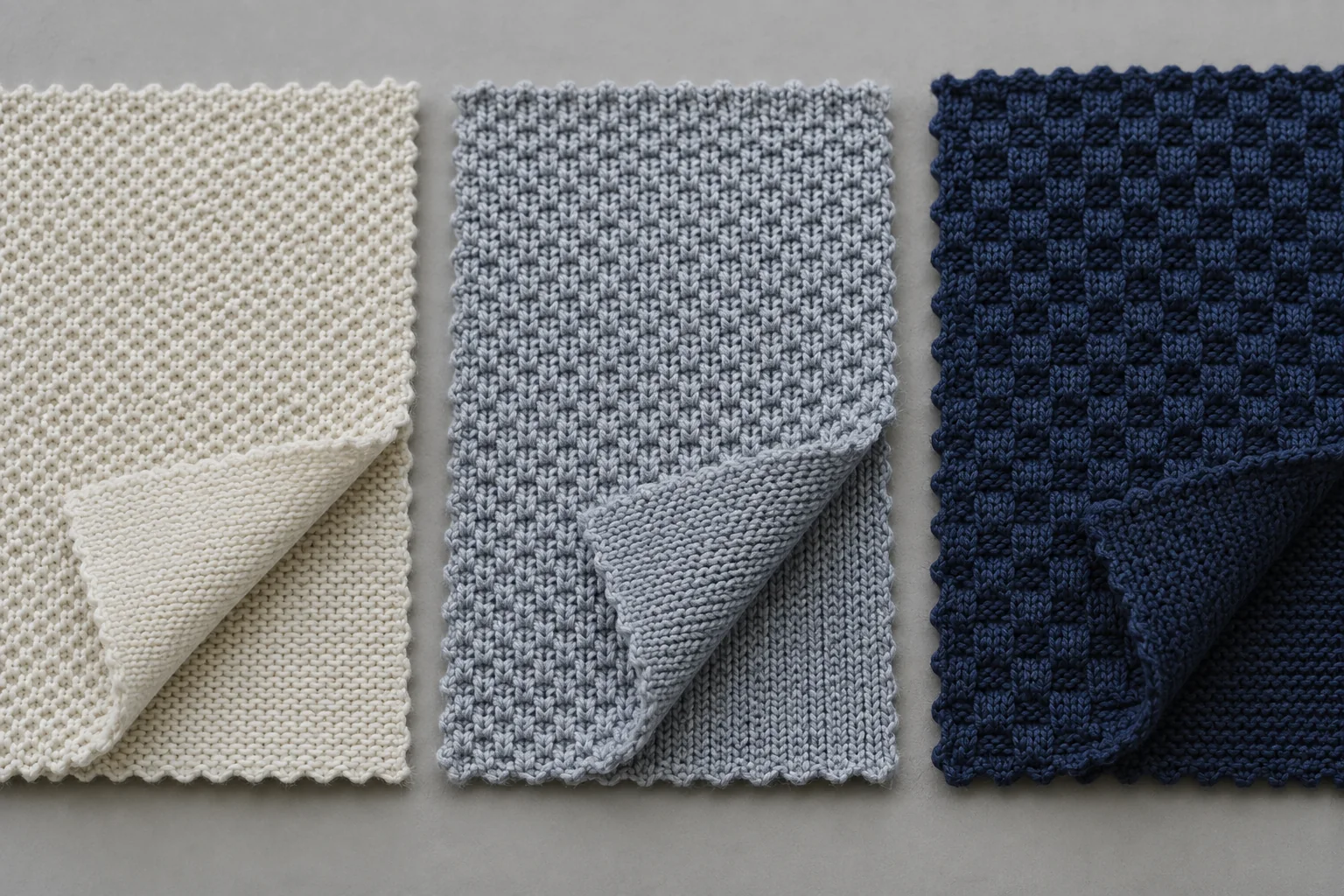
Pique names vary between mills and markets, so the word type should be tied to a sample or construction description. The following group is a practical starting point for a sourcing conversation.
| Pique structure | Typical construction idea | Buyer questions |
|---|---|---|
| Single pique | A single-knit structure with a textured face and relatively lighter build | Is the face texture clear after dyeing, and is the back acceptable for the garment? |
| Double pique | A denser double-knit structure with more substance and stability | Does the extra body improve coverage, and does it change heat, drape, or cost? |
| Six-feed pique | A textured knit made with a feed repeat that can create a more pronounced or stable surface | Is the quoted name tied to a physical sample and machine construction rather than a marketing label? |
| Birdseye or cellular pique | A small repeated surface pattern that may look like dots or cells | Does the pattern remain even across the usable width and after laundering? |
| Woven pique | A woven pique construction rather than a knitted polo structure | Is the buyer comparing a woven fabric with a knit by mistake? |
These labels are not interchangeable quality grades. A double pique is not automatically better than a single pique, and six-feed pique is not automatically the right choice for every polo. The correct option depends on target hand, coverage, stretch, climate, garment shape, decoration method, and cost.
When a supplier names a structure differently from your internal term, ask for a swatch, fiber declaration, finished weight, usable width, and construction notes. The physical standard should control approval.
Which fibers are used in pique fabric?
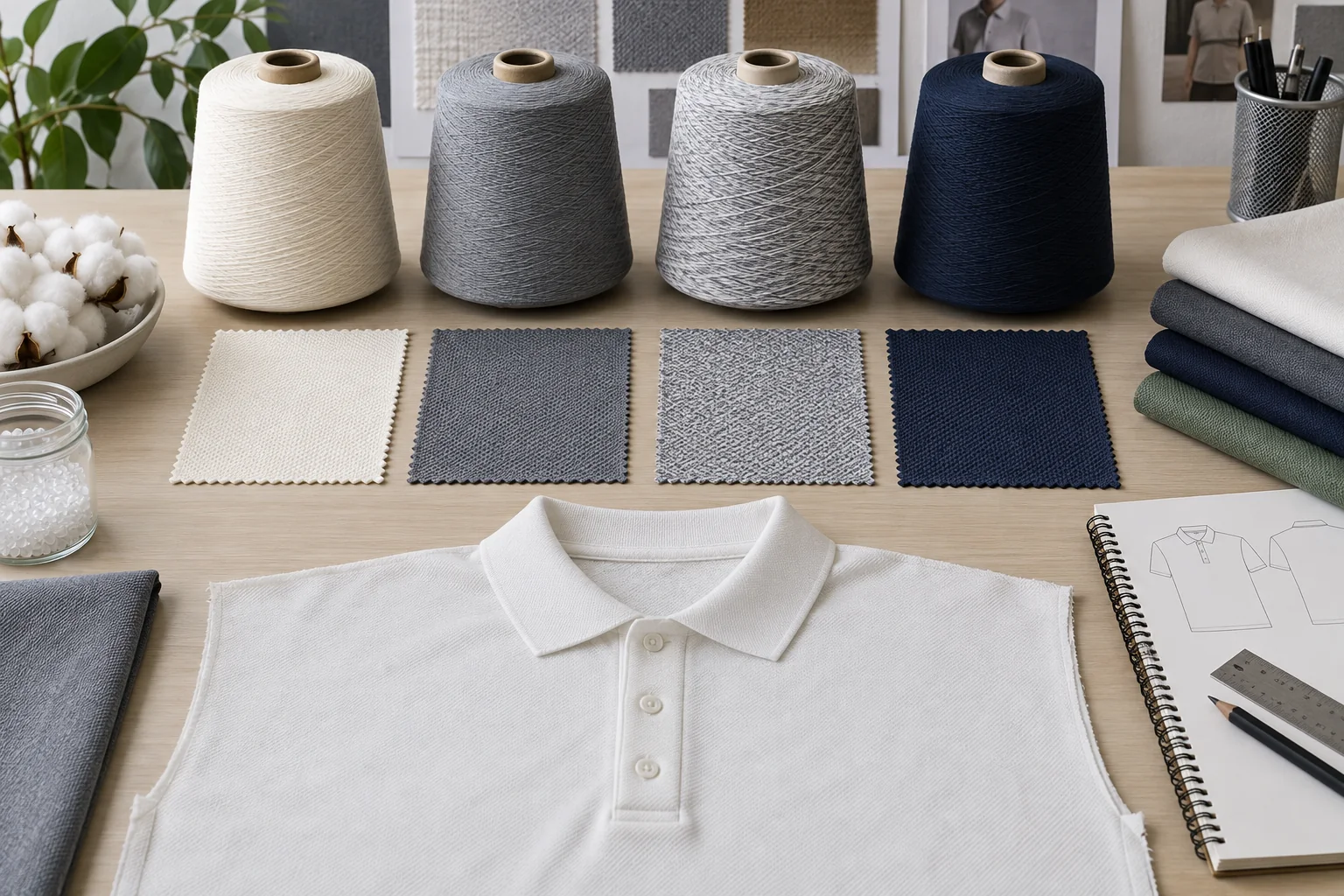
Pique describes the structure, while the fiber describes the raw material in the yarn. Cotton is common when a buyer wants a natural hand and familiar polo appearance. Polyester is common when the product needs color consistency, easy care, or a different moisture and durability profile. Cotton-polyester blends can balance hand and care requirements. Elastane may be added when the garment needs more extension and recovery.
| Fiber direction | Potential reason to consider it | Checks before approval |
|---|---|---|
| Cotton pique | Natural hand, familiar appearance, and comfort expectations for casual or uniform polos | Shrinkage, colorfastness, wet and dry hand, pilling, and post-wash dimensions |
| Polyester pique | Easy-care direction, durable color options, and suitability for some uniform or sport programs | Moisture behavior, static, heat comfort, snagging, pilling, and fiber declaration |
| Cotton-polyester pique | A blended route when hand, care, appearance, and durability need balancing | Blend percentage, dye route, shade consistency, shrinkage difference, and labeling |
| Pique with elastane | Added extension and recovery for movement or a closer fit | Stretch direction, recovery after repeated extension, heat setting, and size stability |
| Other declared fibers | A product-specific route for hand, drape, sustainability, or performance goals | Generic fiber name, percentage, claims evidence, care route, and target-market rules |
Do not assume a fiber gives a fixed result in every pique. Yarn form, blend ratio, stitch density, dyeing, finishing, and garment fit can change the final experience. If a product claim depends on fiber identity or percentage, use the applicable labeling requirements for the selling market. The FTC Textile Fiber Rule is a primary US reference for textile fiber disclosure; a supplier quote is not a substitute for compliance review.
The Cotton Incorporated textile glossary can also help teams align terms before they compare samples. Keep fiber content, construction, finish, and claim language as separate fields in the tech pack.
What does pique fabric feel like and how does it perform?
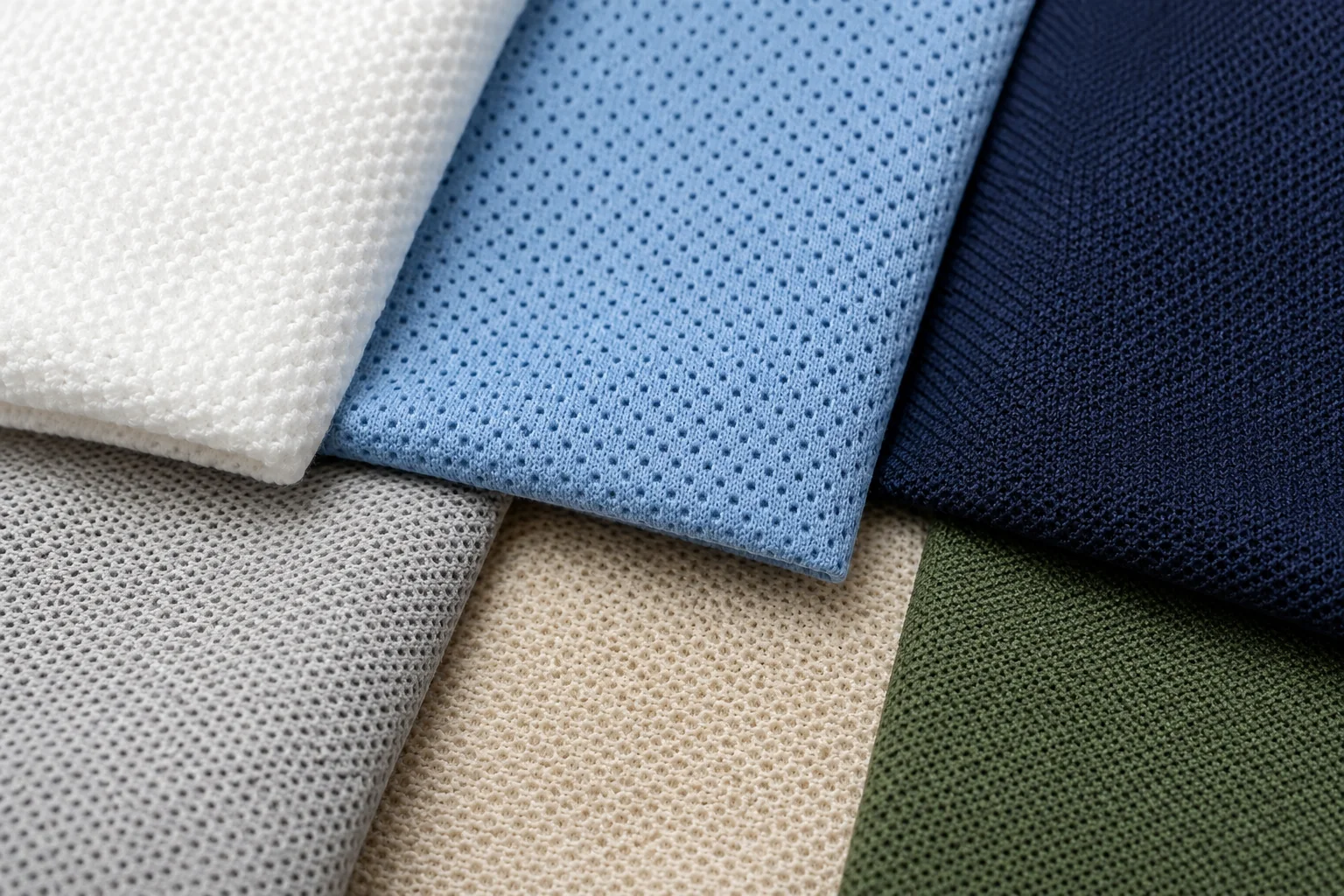
Pique usually feels more textured and structured than a smooth single jersey. The face can feel dry, pebbled, corded, or cellular depending on the construction and finish. Some pique fabrics are soft and flexible; others feel firmer and more stable. The surface texture can add visual depth, but it does not by itself prove breathability, quick drying, odor control, or durability.
| Buyer concern | What pique may offer | What still needs checking |
|---|---|---|
| Surface appearance | A more dimensional and recognizable surface than plain jersey | Texture evenness, snag risk, shade variation, and appearance after washing |
| Coverage | A denser or more substantial hand in some structures | Opacity on the finished garment, especially when stretched or wet |
| Breathability | Open or lighter structures may permit more air movement | Air permeability, fit, humidity, layering, and garment openings |
| Stretch | Knit construction can offer extension in one or more directions | Extension force, recovery, repeated cycles, and pattern tension |
| Moisture behavior | Fiber and finish can be selected for a desired liquid response | Wicking, absorption, drying, and vapor behavior are separate checks |
| Durability | Some structures and fibers can support workwear or uniform use | Abrasion, pilling, seam performance, snagging, and wash cycles |
The right question is not whether pique is good or bad. Ask whether the selected pique meets the job of the garment at the planned price and care route. A corporate polo, a golf shirt, a school uniform, and a close-fitting performance top can need different combinations of texture, weight, stretch, drying, and color performance.
What garments use pique fabric?
Pique is strongly associated with polo shirts because the textured surface gives a more structured appearance than a smooth jersey. It is also used for school uniforms, corporate work shirts, golf shirts, branded event apparel, casual tops, and some dresses or skirts. The best choice depends on the product brief, not on the garment name alone.
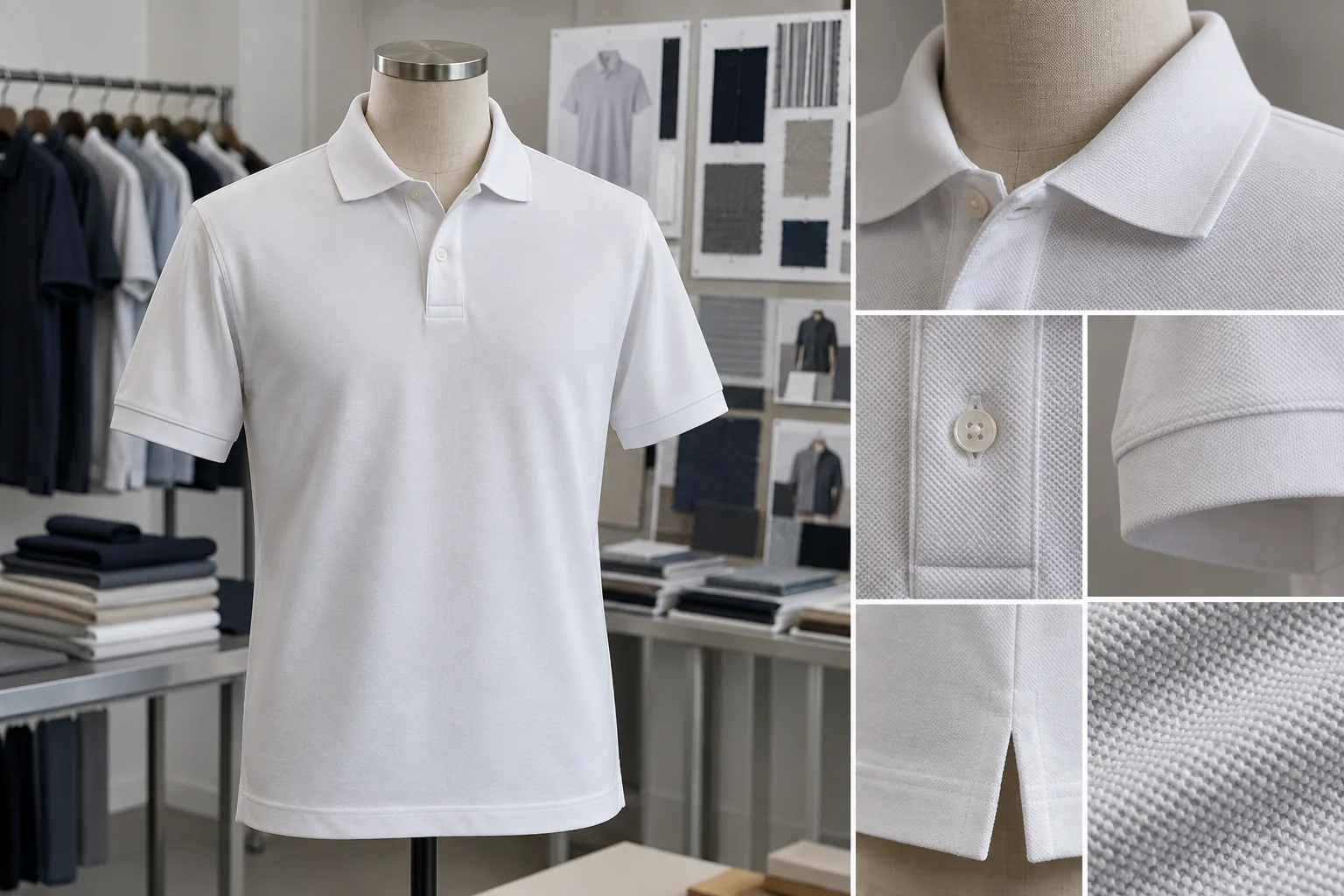
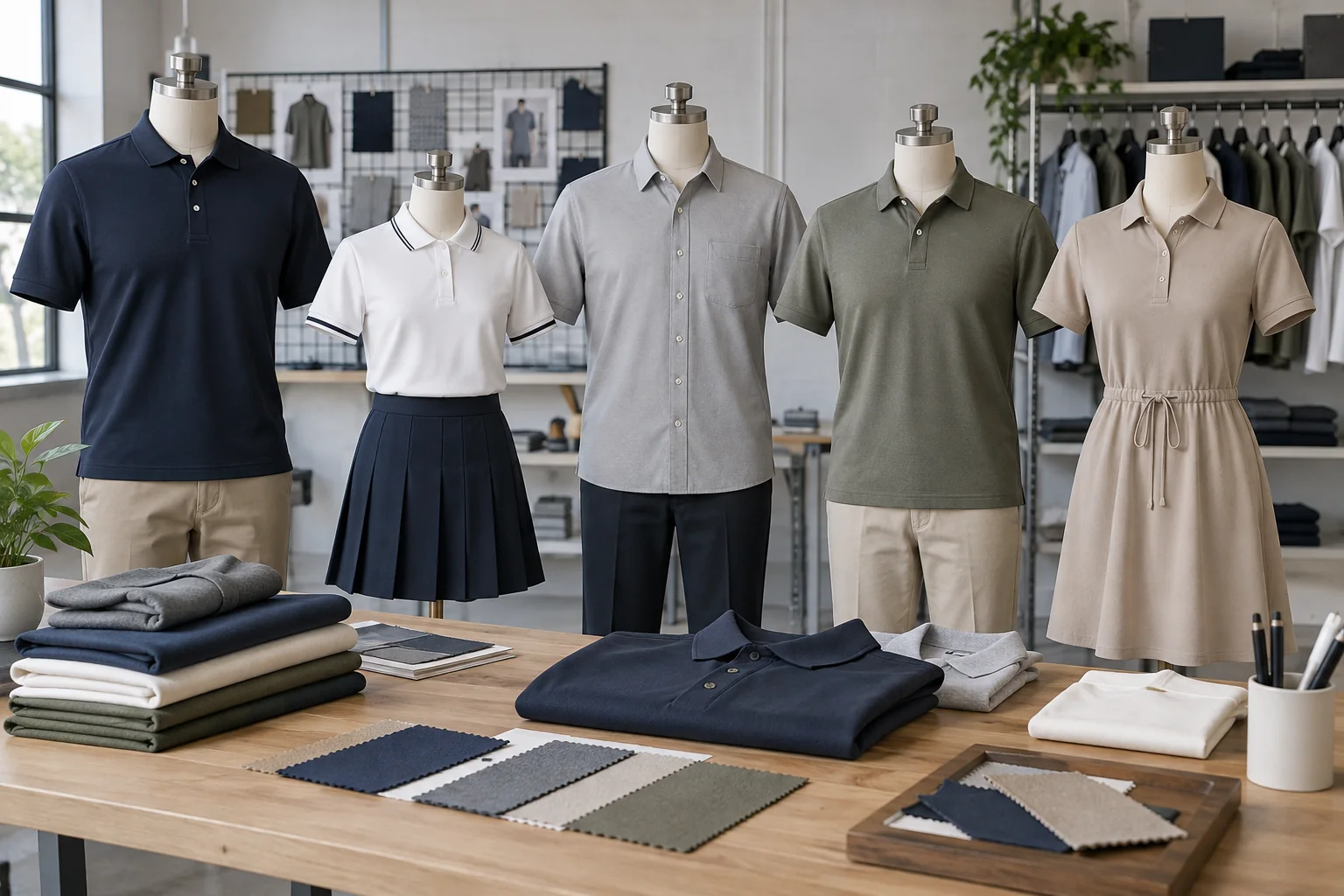
The pattern and trims matter as much as the fabric. A pique roll may look stable in a flat swatch but distort at a collar, placket, shoulder seam, or heat-transfer area. Approve the sewn sample, not just the fabric card.
Pique vs jersey vs interlock: what changes?
Buyers often compare pique with jersey and interlock because all three can be used for knit tops. The comparison should focus on the construction and the garment job. Jersey is often smoother and lighter in hand, interlock is commonly more balanced and stable across its faces, and pique is selected when surface texture and a more structured look matter. These are useful tendencies, not universal rules for every mill.
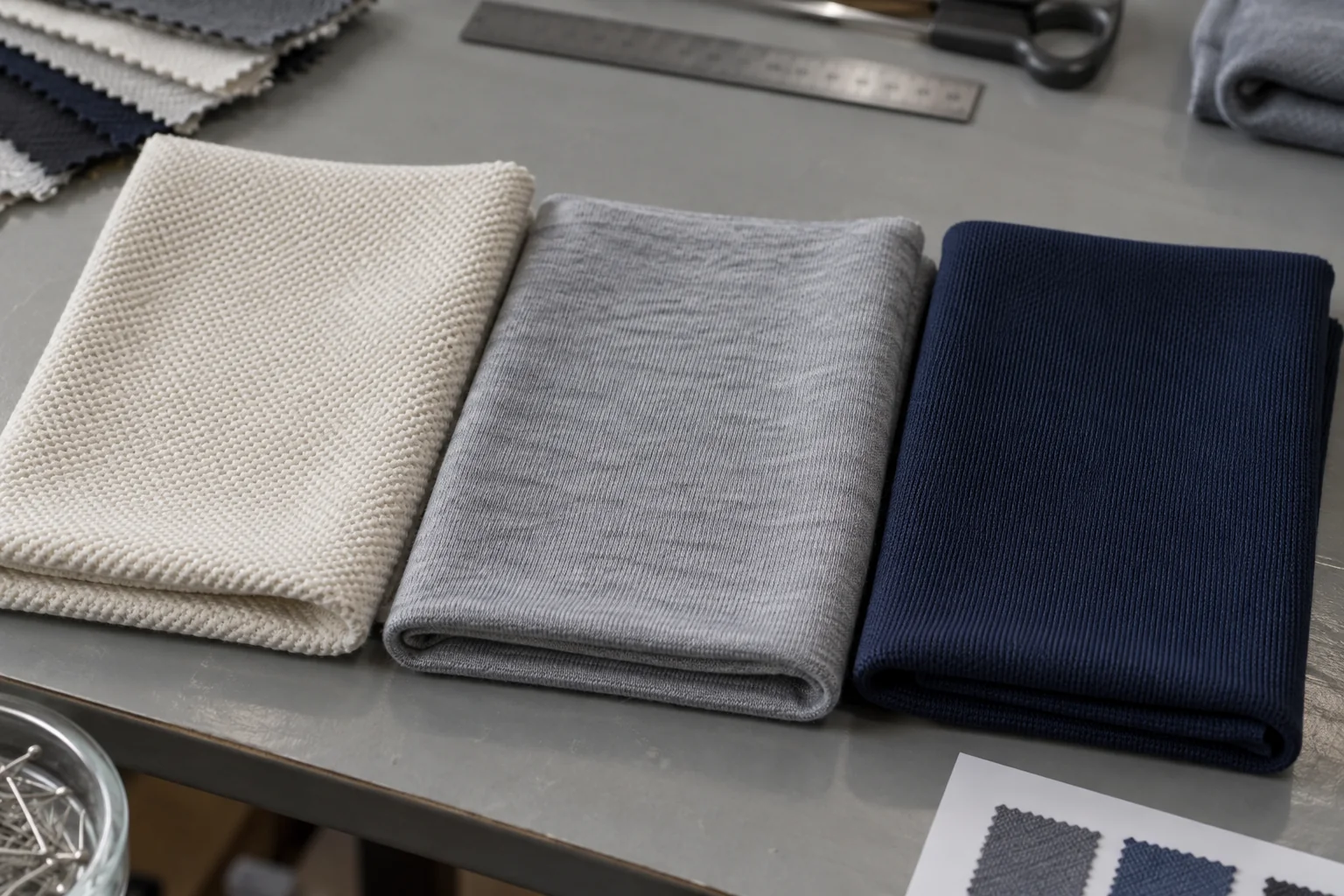
| Feature | Pique | Single jersey | Interlock |
|---|---|---|---|
| Surface | Textured, cellular, ribbed, or corded depending on the structure | Usually smoother and less dimensional | Often smoother with a more balanced double-knit face and back |
| Hand and drape | Can feel structured or dry; varies by weight and finish | Often softer and more fluid; can curl at cut edges | Often fuller and more stable; can feel warmer or heavier |
| Common visual use | Polos, uniforms, golf shirts, and textured tops | Tees, base layers, and lightweight casual tops | Premium tees, close-fitting tops, and stable knit garments |
| Stretch and recovery | Depends on structure, blend, and finishing | Depends strongly on yarn, density, and elastane | Often stable, but the actual result must be measured |
| Main buyer risk | Assuming the texture guarantees performance | Assuming a smooth surface means poor durability | Assuming double knit always suits a warm climate |
If the choice is between a smooth jersey and a textured pique, compare the finished garment under the same fit, color, decoration, wash route, and lighting. A material decision based only on a small loose swatch can miss rolling, show-through, collar behavior, and heat comfort.
What should a buyer specify for pique fabric?
The most useful pique brief is specific enough for a supplier to match or develop a fabric without guessing. Start with the garment, market, end use, and decoration method. Then record the fabric fields that affect cost, yield, construction, and risk.
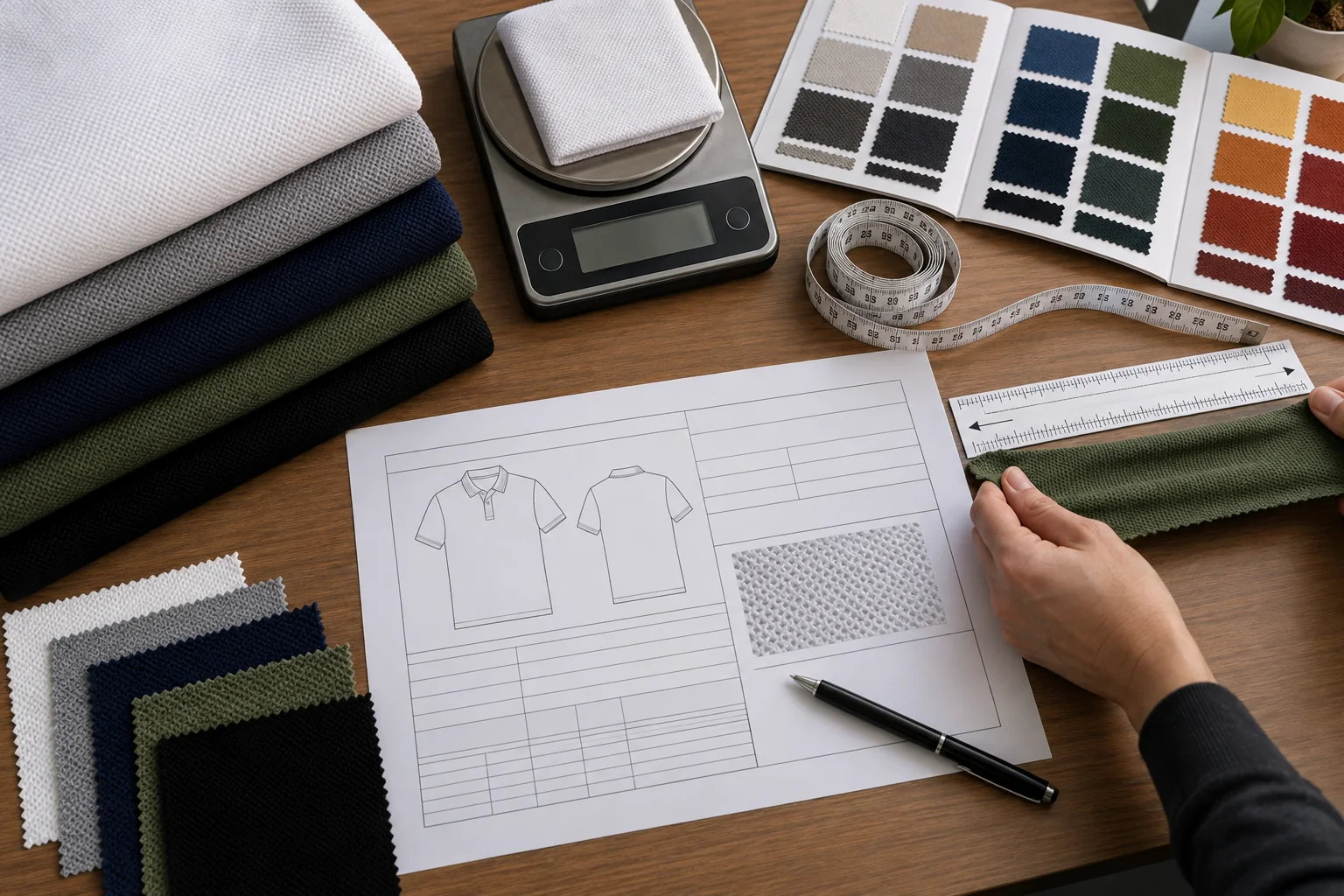
| Tech pack field | What to write | Example of a useful buyer instruction |
|---|---|---|
| End use | Garment, wearer, climate, activity, and sales channel | Textured polo for repeated uniform wear in a warm climate |
| Fiber | Generic fiber names and target percentages | Confirm the fiber declaration and blend tolerance before approval |
| Construction | Single, double, six-feed, birdseye, or another named route | Match the approved physical swatch and describe face and back |
| Finished weight | Target GSM and acceptable tolerance after finishing | Measure the finished lot and record the agreed tolerance |
| Usable width | Finished usable width and edge condition | Confirm marker planning against the finished width, not greige width |
| Stretch and recovery | Direction, force, extension, and recovery requirement | Test body width and length separately after the agreed cycles |
| Color and finish | Lab dip, shade standard, hand, softener, and treatment limits | Approve color and hand on the final construction, not a substitute knit |
| Care route | Wash temperature, drying, ironing, and commercial laundering if relevant | Test the same care instructions that will appear on the product |
| Decoration | Embroidery, screen print, heat transfer, or other branding | Check puckering, bleed, adhesion, and surface distortion on pique |
Ask the supplier to return the same fields on the quotation and sample card. This makes it easier to compare two fabrics that use similar names but have different weights or construction. If a field is not known, mark it for confirmation rather than silently filling it with an assumption.
How should pique fabric be tested?
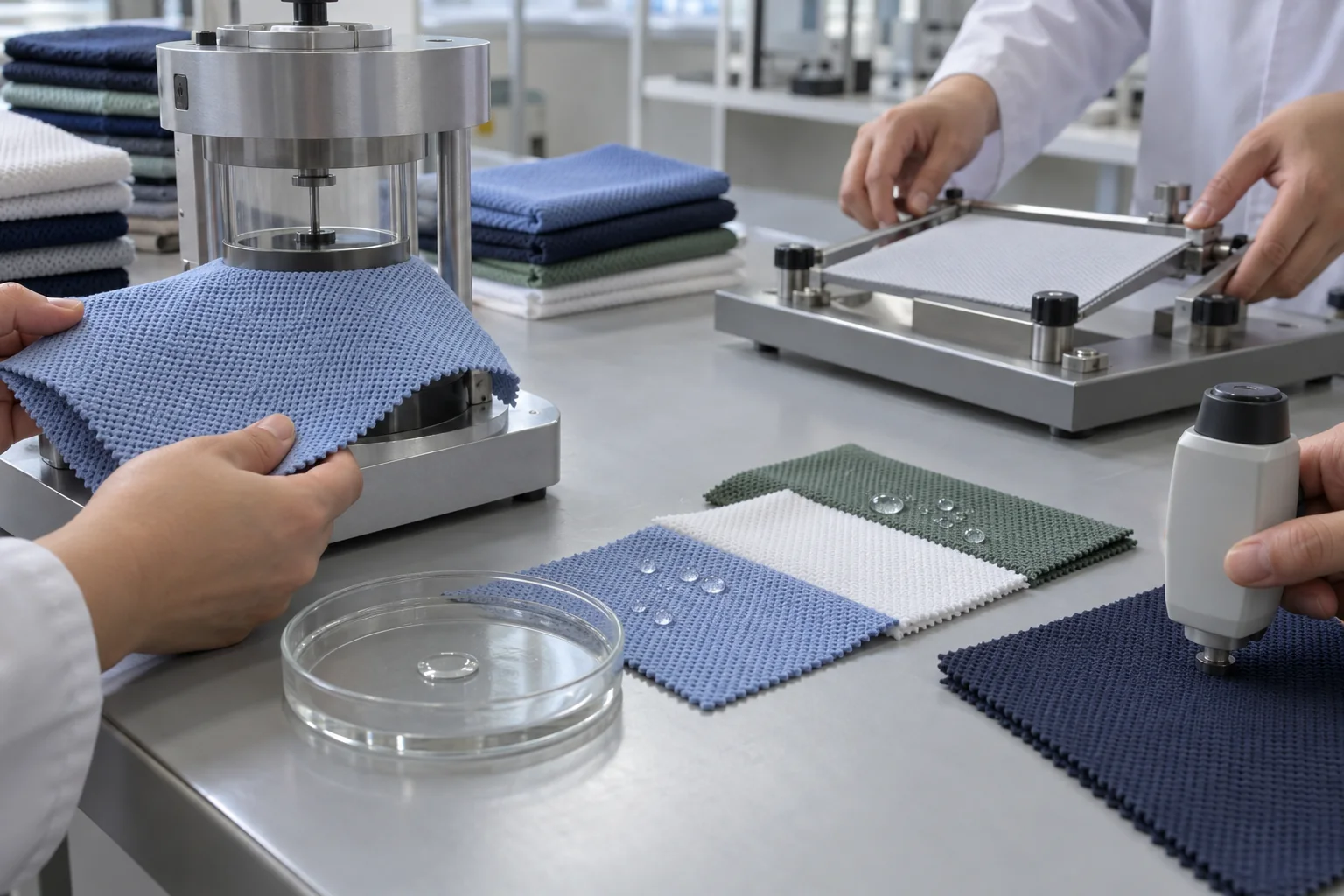
Testing should follow the risk of the product. A basic polo may need dimensions, shrinkage, colorfastness, pilling, and seam checks. A sport or outdoor style may need additional moisture, stretch, abrasion, or light exposure checks. The fabric test and finished-garment test answer different questions.
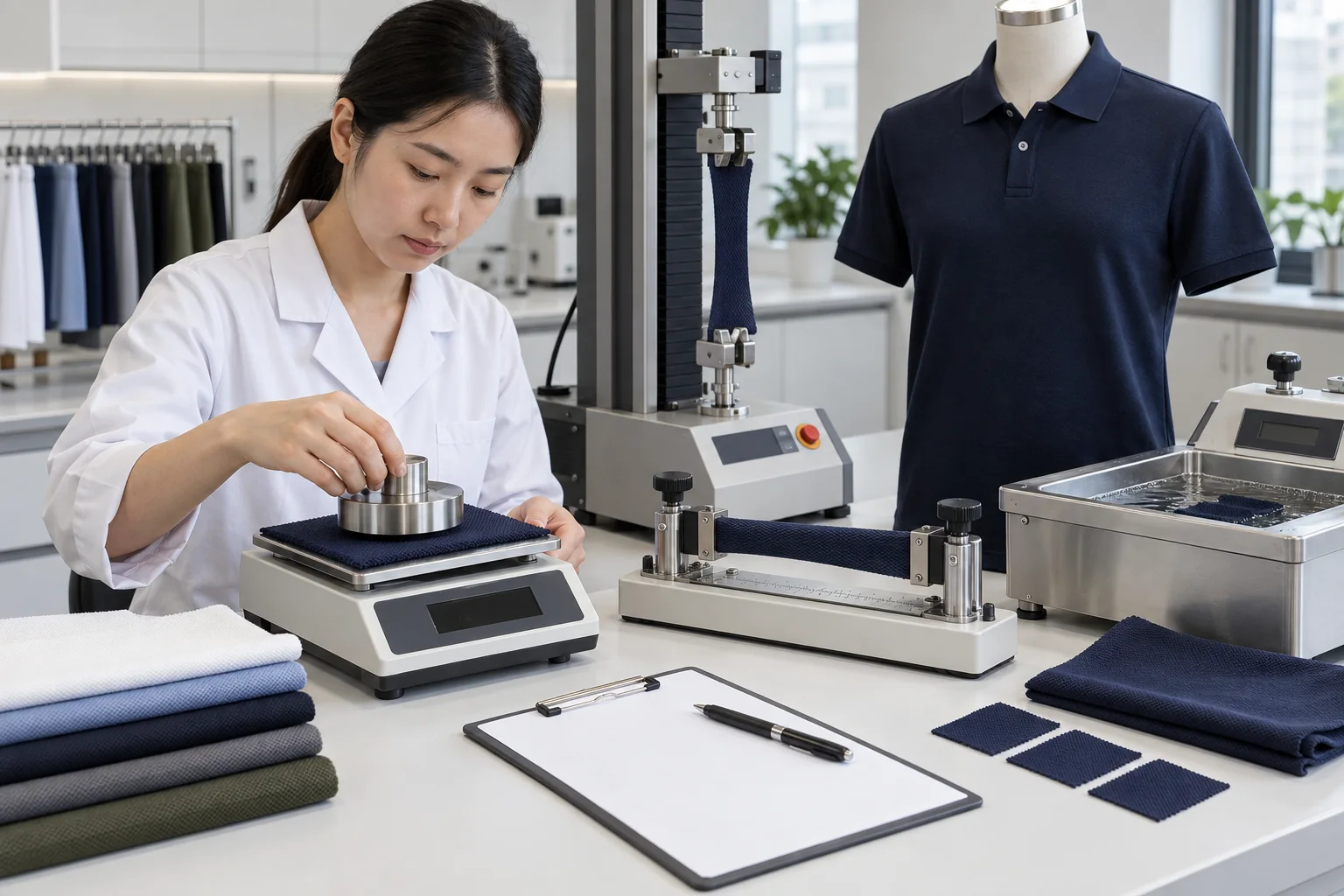
| Test or check | What it can help answer | Sampling note |
|---|---|---|
| GSM and usable width | Is the finished lot close to the approved material and usable for cutting? | Measure several points and record the fabric condition |
| Dimensional change | Will the body, collar, placket, and length change after care? | Test the finished construction and the actual care route |
| Stretch and recovery | Does the fabric return after movement or repeated extension? | Record direction, force, extension, interval, and cycles |
| Colorfastness | Will color transfer, fade, or change during expected use and care? | Select methods for wash, rubbing, perspiration, and the target product |
| Pilling and abrasion | Will the surface or garment show damage under rubbing? | Use an agreed method and interpret results for the actual garment |
| Moisture behavior | How does liquid spread, absorb, and leave the specimen? | AATCC TM195 is a reference for liquid moisture management; define the full test scope |
| Finished-garment review | Does the collar, placket, seam, logo, and fit remain acceptable? | Wash and inspect the sewn sample before bulk approval |
For abrasion discussions, ASTM D4966 is one named reference buyers may encounter. The method selected, specimen preparation, conditioning, cycles, and acceptance rule must be agreed before a result is used in a commercial claim. A test-method name alone is not a pass result.
How does pique fabric behave after care?
Care behavior depends on fiber, construction, dyeing, finishing, garment engineering, and the wash instructions given to the end customer. Texture can soften, flatten, or change slightly. A collar or placket can move differently from the body. Dark colors may show different rubbing or shade behavior from light colors. Test the actual sewn style instead of assuming the fabric roll predicts the garment.
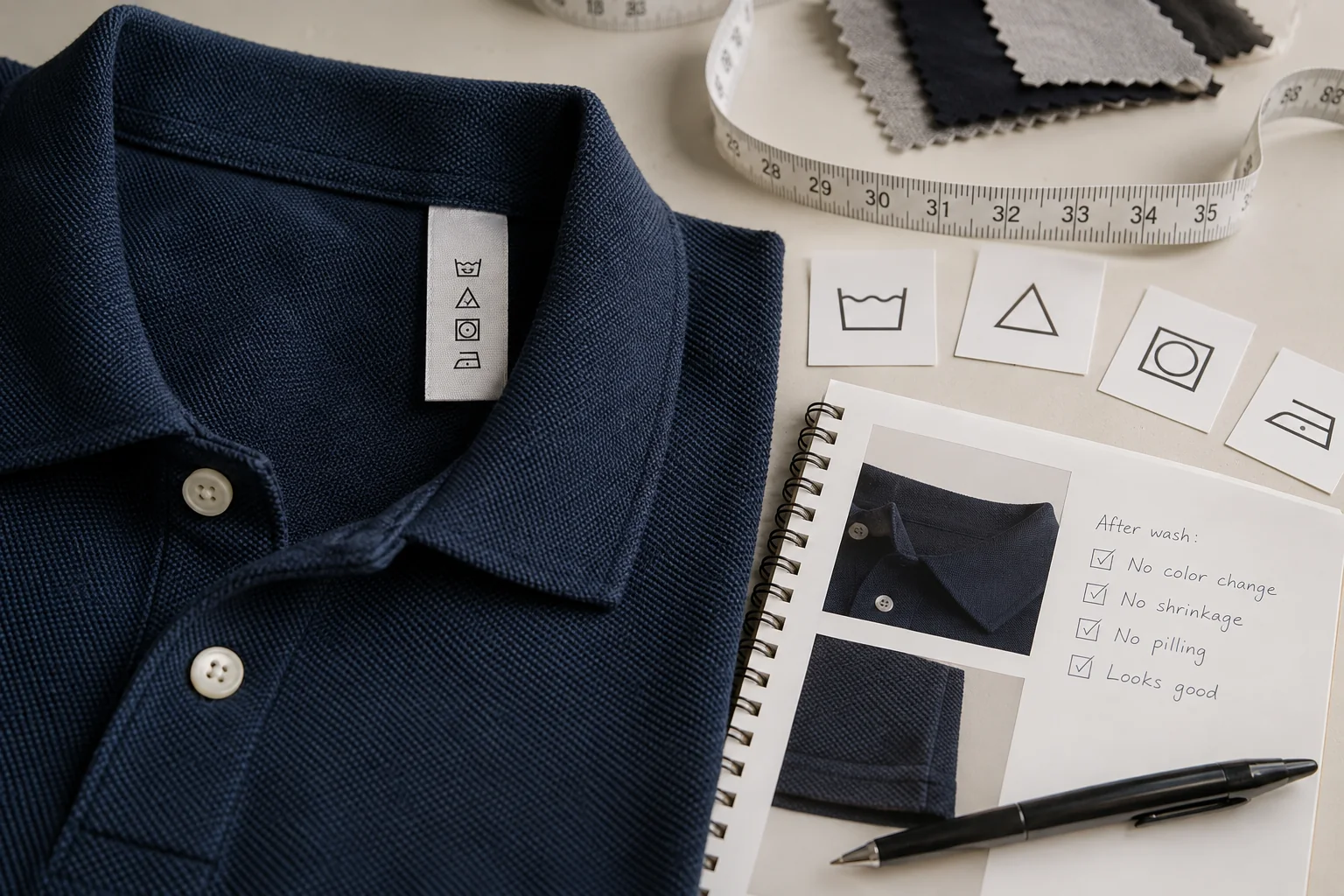
Before approval, compare the sample before and after the planned care route for:
- Body length, width, and skew.
- Collar, cuff, and placket shape.
- Texture definition and surface fuzz.
- Color change, rubbing, and shade contrast between panels.
- Pilling, snagging, seam puckering, and decoration adhesion.
- Hand, drape, and comfort when worn in the intended fit.
Care instructions should be based on the finished garment and confirmed through testing. Do not copy a generic polo care label when the fiber blend, finish, trim, or decoration is different. The label and product page should describe the approved care route for the actual style.
How to choose the right pique for a polo or uniform
Choose the construction by ranking the buyer’s non-negotiables. A uniform program may prioritize dimensional stability and color repeatability. A golf shirt may prioritize movement, drying, and comfort. A premium casual polo may prioritize hand, texture clarity, and drape. A stretch polo may need recovery at the body and collar as well as decoration compatibility.
Use this short decision path:
- Define the garment job, wearer, climate, activity, price position, and decoration.
- Select a construction direction and fiber range instead of a vague label such as premium pique.
- Request a physical swatch with fiber, finished GSM, usable width, and care information.
- Sew the intended garment with the actual collar, placket, trims, and decoration.
- Test the risks that could create returns or rejection, then document the approved standard.
- Confirm the bulk lot against the same standard before cutting.

A buyer-ready pique fabric decision
The best pique is not the fabric with the most impressive name. It is the fabric whose construction, fiber, weight, finish, garment engineering, and test evidence fit the product job. A clear brief helps the supplier propose a realistic material and helps the buyer compare samples without confusing texture with performance.
For a quote review, send the garment type, target fiber, preferred construction, finished weight, usable width, color, stretch need, decoration, care route, quantity, and delivery requirements. DTS can review a pique fabric brief and confirm the next sampling questions from the information provided.
Frequently asked questions
Not necessarily. Pique is a construction description, while cotton is a fiber. Cotton pique is common, but polyester, cotton-polyester blends, elastane blends, and other declared fibers can also be knitted into pique. Confirm the fiber percentage on the specification and label review.
It can be either. In polo sourcing, pique usually means a knitted textured fabric, but woven piqué is also a recognized construction. Ask whether the sample is single knit, double knit, another knit structure, or woven piqué before comparing it with a jersey or interlock.
No. Pique is one common fabric direction for polo shirts, but a polo can also use jersey, interlock, mesh, or another knit. The garment name does not define the fiber, weight, construction, or performance.
There is no universal answer. Breathability depends on yarn, stitch density, weight, finish, fit, and garment openings. Compare air movement and comfort on the finished styles under the same conditions rather than using the pique label as a guarantee.
Single pique generally uses a single-knit structure and can be lighter or more flexible, while double pique uses a denser double-knit construction and can feel fuller or more stable. These are tendencies, not fixed rules. Approve the physical sample and measurements for the intended garment.
It can be a suitable direction when easy care, color, durability, or a specific moisture profile matters, but the answer depends on the uniform job. Check comfort, static, pilling, colorfastness, dimensional stability, decoration, and care instructions on the finished style.
There is no single correct GSM for every polo. Target weight depends on climate, coverage, drape, price, fit, construction, and end use. Ask for a finished GSM target and tolerance, then compare it with usable width, hand, opacity, and post-wash dimensions.
Approve a physical fabric standard, make the intended garment, and test the risks that matter for the program. Common checks include GSM, width, shrinkage, colorfastness, pilling, abrasion, stretch and recovery, moisture behavior where relevant, collar and placket stability, and decoration after care.