
MEN’S UNDERWEAR PROJECT BRIEF
Custom men's underwear manufacturer for private label brands
Plan boxer briefs, trunks, branding and packaging around one confirmed technical brief.
If you are comparing a custom logo men’s underwear manufacturer, start with the product decisions that change fit, material, cost, and sampling. DTS can review your reference garment, tech pack, size chart, artwork, quantity, packaging needs, and destination market before confirming whether the project fits the current production scope.
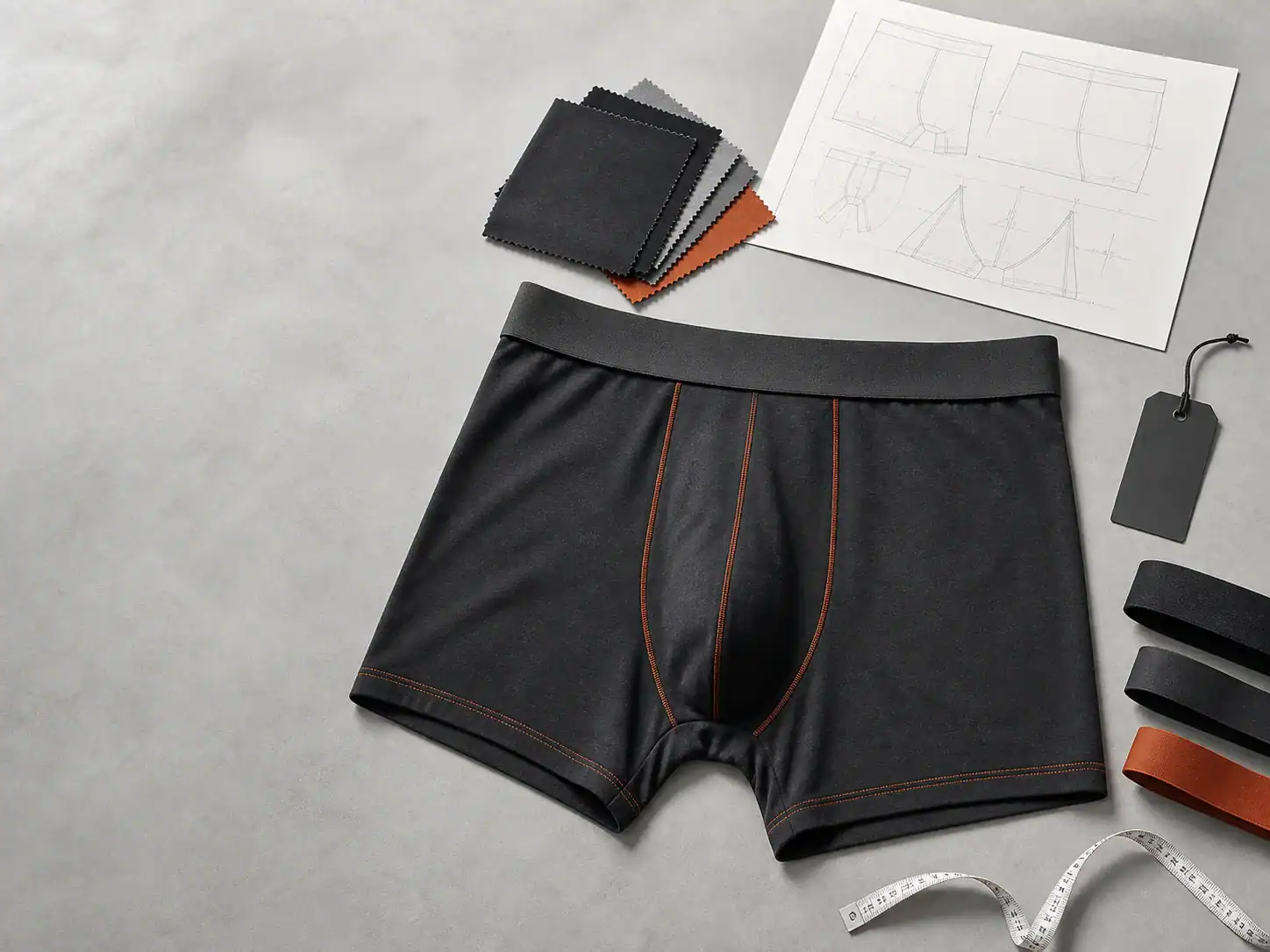
Concept visual only. Replace it with an approved DTS product photo before using the image as manufacturing proof.
SCOPE BEFORE PRICE
Confirm the product before you price it
This page is a scoping tool for a men’s underwear inquiry. Current public DTS evidence covers apparel design consultation, tech-pack review, sampling, production, and quality-control workflows. It does not yet verify every men’s underwear silhouette, fabric, waistband construction, decoration method, trim, test, or MOQ.
For a broader category view, use the lingerie manufacturers parent page. This page stays focused on the decisions that belong in a men’s underwear development brief.
Send one brief with the facts buyers can approve
- Target style and use case
- Reference garment, sketch, or technical drawing
- Size chart and target fit
- Fabric composition, weight, stretch, and hand-feel direction
- Waistband construction and logo placement
- Main label, care label, hangtag, and packaging plan
- Colorways, size breakdown, and estimated quantity
- Destination country and launch date
PRODUCT ARCHITECTURE
Which silhouette are you developing?
Choose the closest starting silhouette, then write down the measurements and construction details that make your version different. DTS still needs to confirm feasibility for the proposed style.
Boxer briefs
Share the target inseam, rise, pouch or front-panel construction, leg opening, waistband height, and required support. Ask DTS to confirm whether the construction and fabric direction can be sampled.
Trunks
Define the shorter leg length, front shape, side seam, hem finish, and intended wearing use. Shorter styles can be sensitive to leg opening and ride-up, so fit comments need to be specific.
Briefs
Provide the side width, front and back coverage, leg opening shape, elastic finish, and reference measurements. Confirm whether the requested elastic and binding can be sourced for the order quantity.
Performance base layers
Explain the sport or training use, compression target, seam placement, ventilation zones, length, and layering conditions. Material performance and testing requirements must be agreed for the destination market.
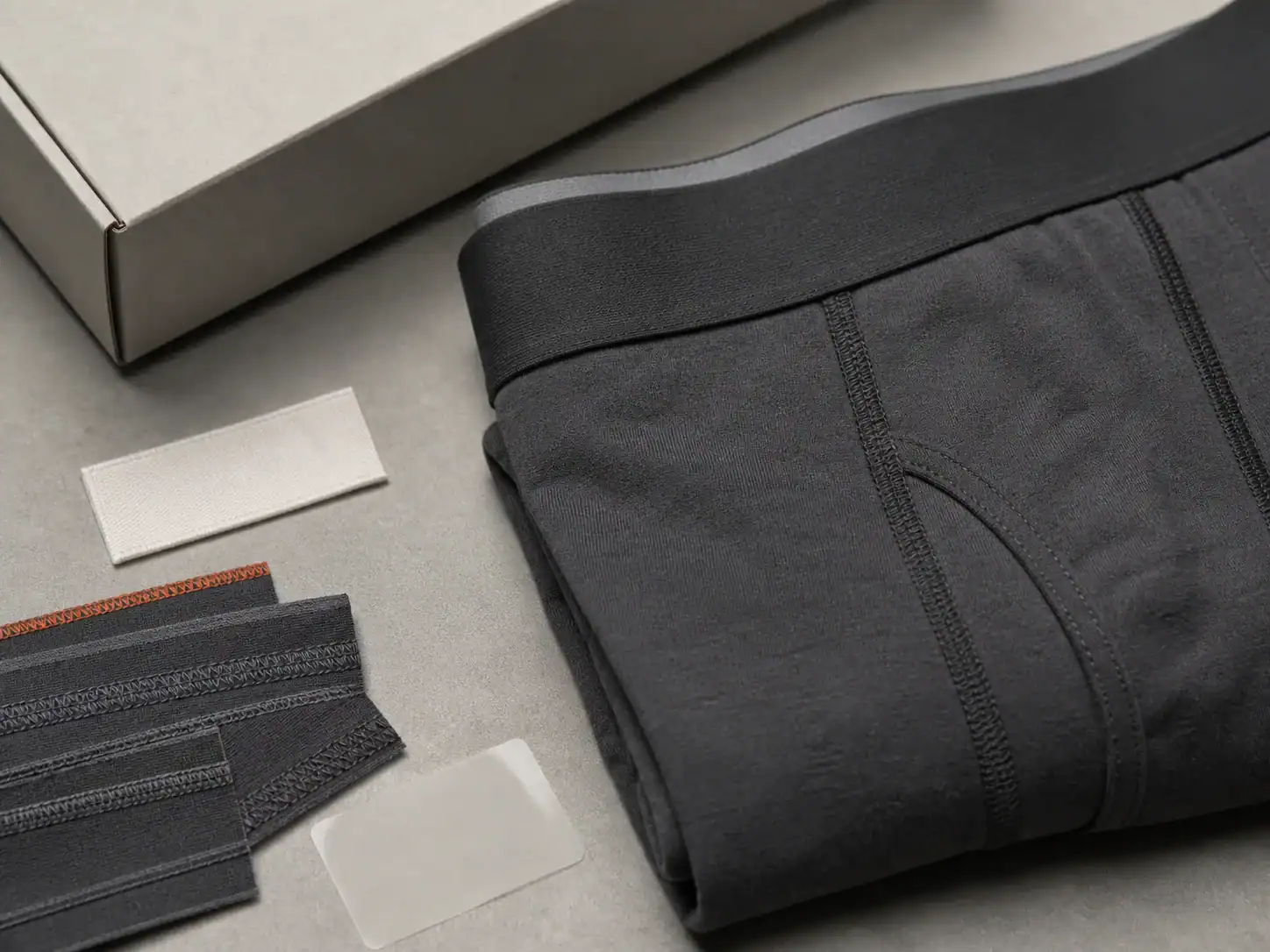
Branding detail concept. Waistband, label, print, trim, and packaging methods require project confirmation.
Put the logo where it belongs
The waistband is often the most visible brand area, but it is also a functional component. Your brief should separate the visual request from the fit requirement. State the finished waistband height, elastic feel, recovery target, logo repeat, color, inside finish, and allowed joining method.
Your artwork pack may ask DTS to review:
- A woven or jacquard logo direction for the elastic waistband
- A heat-transfer or printed logo position on the garment
- Woven main labels, printed labels, or care labels
- Size identification and destination-market care information
- Fold, polybag, paper band, box, barcode, or carton requirements
These are common buyer-requested routes, not a list of confirmed DTS capabilities for this product. Elastic supplier minimums, color matching, artwork limits, and packaging quantities can affect feasibility and cost. Ask for a written confirmation tied to your style.
Make material, fit, and market decisions together
A useful development brief connects the fabric request to the fit and the destination market. Treating those as separate conversations creates late changes.
Material brief
Cotton-elastane, modal-elastane, nylon-elastane, and polyester-elastane are possible directions a buyer may specify. Define hand feel, stretch direction, recovery, weight, opacity, moisture expectations, color, shrinkage target, and wash conditions. DTS should confirm actual fabric availability and any required test route.
Fit and construction brief
Provide a graded measurement chart or at least a base-size chart with tolerances. Call out waistband tension, rise, inseam, leg opening, front support, gusset or panel construction, seam type, label placement, and any irritation-sensitive areas.
Market and packaging brief
State the destination country, fiber-content labeling needs, care labeling, size notation, barcode format, packaging material, carton marks, and any retailer manual. Product-specific safety, chemical, labeling, and packaging requirements must be confirmed before bulk approval.
APPROVAL WORKFLOW
Use the sample to settle the expensive questions
Move through the project in recorded approval steps. This keeps material, fit, branding, and packaging decisions tied to the same version.
Project review
DTS reviews the silhouette, reference files, material direction, branding, quantity, delivery timing, and destination market. The first result should be a feasibility response, not an assumed quote.
Development brief
Confirm the measurement chart, construction notes, logo artwork, color references, labels, packaging, and approval points. Record missing information instead of leaving it to interpretation.
Sample review
Check fit, waistband comfort and recovery, leg opening, seam feel, logo placement, labels, measurements, color, and packaging. Send one consolidated comment list with photos and measurement notes.
Bulk approval
Approve the final sample, specifications, color, trims, labels, packaging, order breakdown, quality checkpoints, and shipping documents in writing. Lead time follows the milestone stated in the quotation.
Review what the wearer will notice
A men’s underwear sample can look correct on a table and still miss the fit brief. Ask the development team to record the checkpoints that matter to your style:
- Waistband height, tension, recovery, join, and logo alignment
- Front support, gusset or panel shape, and seam position
- Rise, body width, inseam, and leg opening
- Flat measurements compared with the approved chart and tolerance
- Fabric hand feel, stretch, opacity, surface appearance, and wash response
- Main label, care label, size mark, hangtag, barcode, and pack-out
The destination market may require product-specific tests or documents. A supplier page or a general certificate does not prove that a finished style meets those requirements. List the required checks in the project brief and confirm who performs them, which standard applies, and what result is needed.
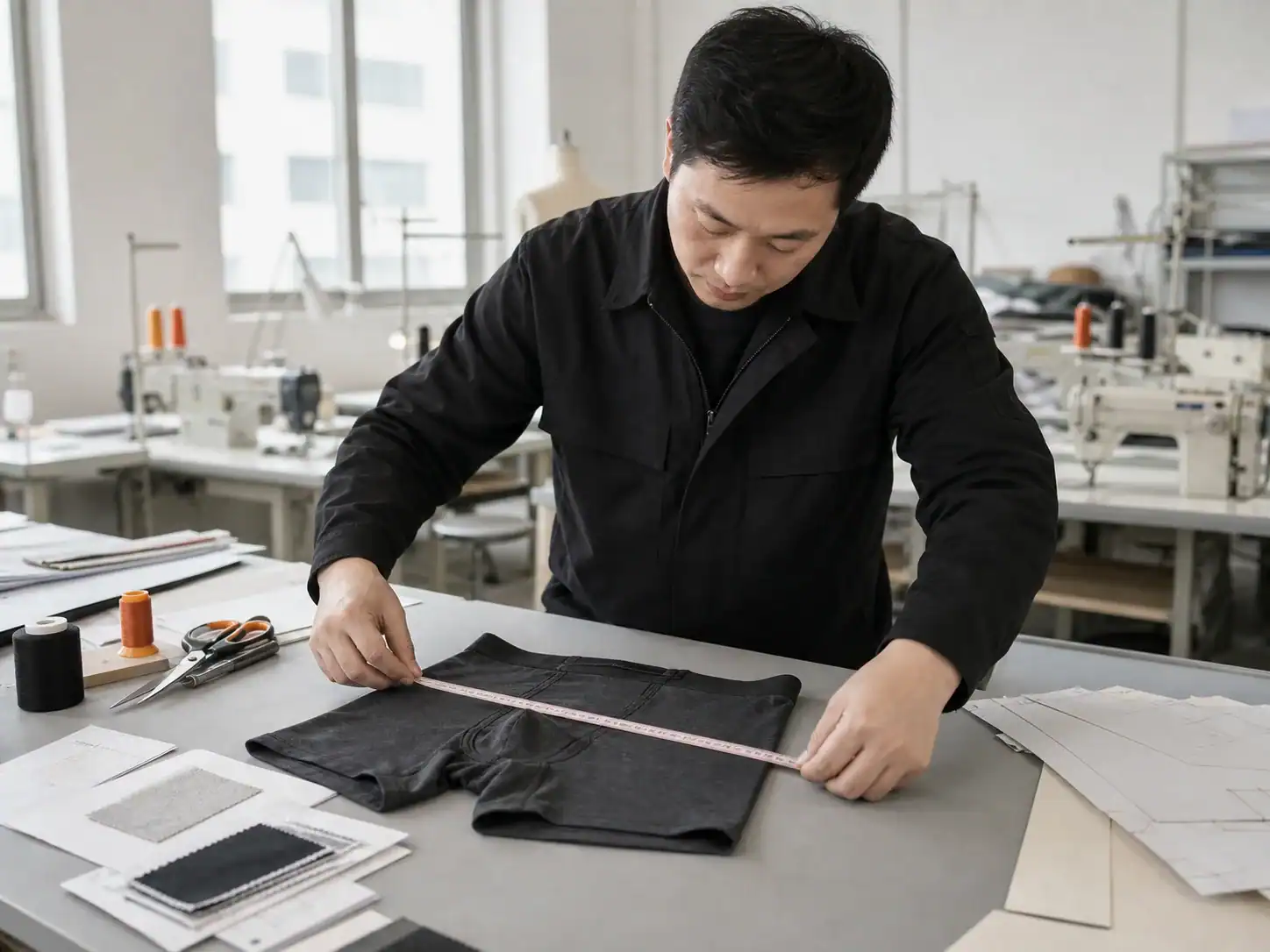
Sample measurement concept. Use approved DTS sample-room photography for project-specific proof.
Continue the sourcing path
Use these six DTS pages to move from category research to a complete inquiry.
Lingerie manufacturers
Review the broader performance-intimates scope and capability boundaries.
Designer consultation
Discuss silhouette, use, fit direction, and missing development inputs.
Tech pack customization
Record measurements, construction, artwork, labels, and approval details.
Fabric and trim library
Discuss material, elastic, label, and packaging component directions.
Sampling and prototyping
Plan the physical sample, review points, and consolidated revisions.
Quality control
Define inspection points and the records needed before bulk approval.
Frequently asked questions
Send a brief that can be reviewed
Share the target silhouette, reference garment or tech pack, size chart, fabric direction, waistband artwork, labels, packaging, order breakdown, destination country, and required delivery window. DTS can confirm the product scope and the next development step before quoting.