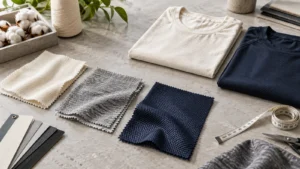
To start an activewear brand, validate a customer need, build a focused capsule, create technical specifications, test samples, budget production, and launch against measured demand.
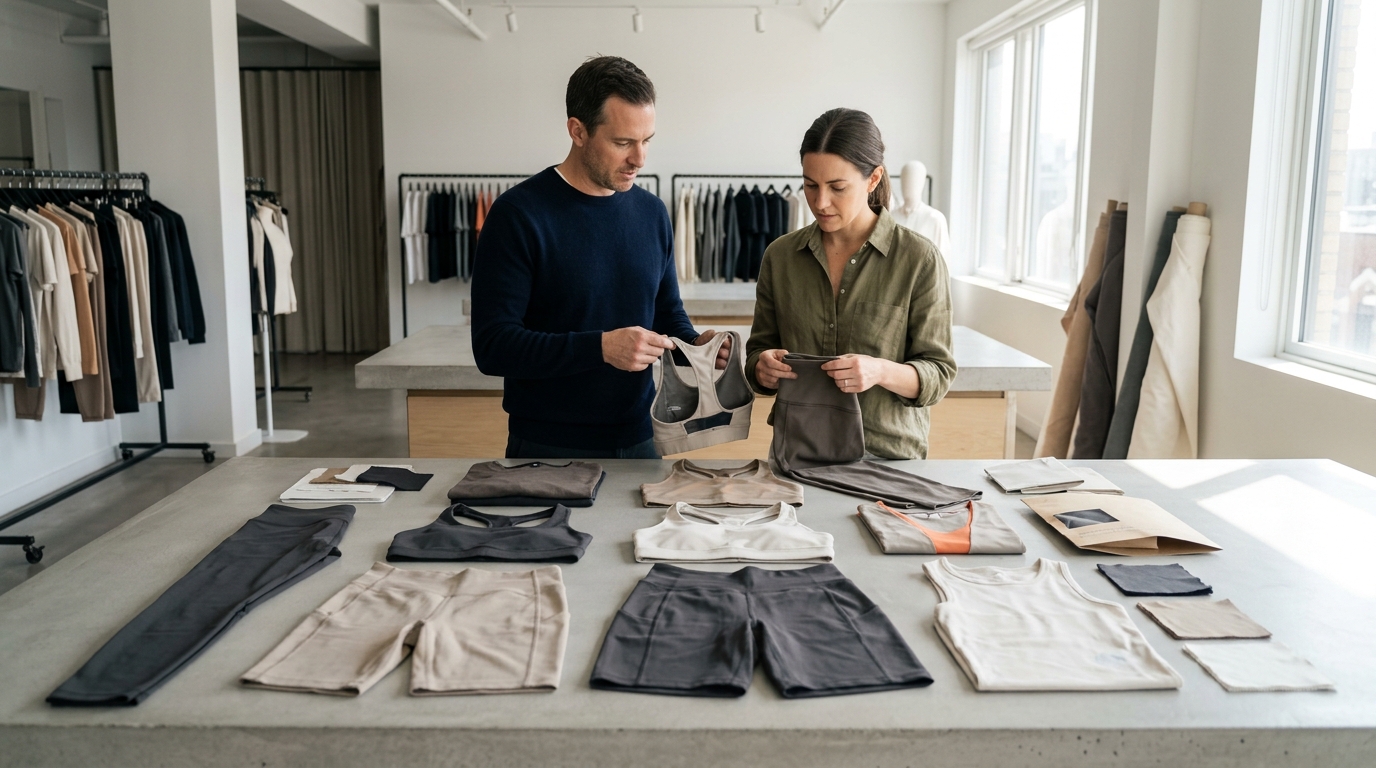
Most founders begin with a product idea: leggings that stay opaque during squats, running shorts that do not ride up, or studio wear cut for a customer ignored by bigger brands. The idea matters. The sequence that follows matters more.
Learning how to start an activewear brand means making product, financial, and operating decisions in the right order. If you approve bulk production before testing fit, you can own hundreds of garments with the same problem. If you choose six colors before checking the factory’s minimum order quantity, a small capsule can turn into dozens of slow-moving SKUs. If you spend heavily on content before confirming your landed cost, a busy launch can still lose money.
This guide takes the factory-side view. It explains what a founder must decide, what information an activewear manufacturer needs, what to inspect in each sample round, and which numbers should be settled before a purchase order is approved. The goal is not a perfect first collection. It is a controlled first collection that produces reliable customer feedback without putting the whole business at risk.
For anyone researching how to start an activewear brand, that controlled sequence is the difference between testing a business and simply buying stock.
What starting an activewear brand requires
An activewear brand needs a defined customer, a testable product, supplier-ready specifications, enough capital, and a repeatable path from sample approval to delivery.
There are three connected jobs inside this project. The first is brand work: customer definition, positioning, pricing, sales channels, and launch communication. The second is product work: fit, fabric, construction, color, sizing, trims, labels, and packaging. The third is operating work: supplier selection, purchase orders, quality control, freight, inventory, returns, and reorders.
A realistic answer to how to start an activewear brand has to cover all three jobs because a good sample cannot rescue broken pricing or unclear demand.
A manufacturer can help interpret a moodboard, recommend available fabrics, make patterns, sew samples, grade sizes, and produce an approved design. The factory cannot decide whether your customer will pay $78 for a legging, whether four colors are too many, or whether your return policy leaves enough margin. Those remain founder decisions.
This distinction prevents an expensive misunderstanding. “Can you build my brand?” is too broad for a useful quotation. A better request says who the product serves, what styles are planned, which features matter, what quantities you are considering, where the garments will be sold, and when you need them. The supplier can then answer with its capabilities, questions, cost structure, sample route, and production conditions.
Factory-side checkpoint: A quote is only comparable when each supplier receives the same style count, materials, artwork, size range, quantity assumptions, packaging scope, test requirements, and delivery destination.
Step 1: define a customer and use case narrow enough to test
Choose one identifiable wearer and one demanding use case before choosing fabrics, styles, or a manufacturer.
The phrase “women who work out” is too wide. A useful starting customer sounds more like “women who attend reformer Pilates three times a week and want studio sets that can be worn to work afterward” or “recreational runners who need phone storage without a bouncing waistband.” The second version gives the product team something to solve.
The U.S. Small Business Administration’s market research guidance suggests examining demand, market size, customer location, saturation, and the prices buyers pay for alternatives. You do not need a large research budget to begin. You need direct conversations with people who match the intended customer and evidence that their behavior supports the idea.
Interview 10 to 20 potential buyers before locking the collection. Ask them to show the activewear they use now. Watch where waistbands fold, where seams rub, and which pockets they use. Ask what they returned and why. A customer who says “I love it” is giving you encouragement. A customer who explains that she stopped buying a style because its light colors became transparent during training is giving you a requirement.
Translate those findings into product statements that can be checked:
- The pocket must hold a defined phone size during running without excessive movement.
- The waistband must remain flat through bending and seated movement.
- The selected light color must pass an agreed opacity review under stretch.
- The fabric must recover after repeated wear and the agreed wash procedure.
- The size range must match the measurements of the intended wearer, not a borrowed generic chart.
When founders ask how to start an activewear brand in a crowded market, this is the first useful answer: narrow the customer until the product problem becomes specific. A narrow launch does not permanently limit the brand. It gives the first collection a fair test.
Step 2: choose white label, private label, or custom development
Choose the development model that matches how much differentiation, time, product control, and inventory risk your first launch can carry.
There is no single correct manufacturing route. A founder with an audience and a modest testing budget may need a faster route. A technical running brand with a new pocket construction may need custom development. Problems begin when the founder expects custom differentiation from a stock product, or expects stock-product speed from a ground-up design.
The manufacturing model is one of the earliest choices in how to start an activewear brand because it changes the sample route, cash need, timing, and product control.
| Route | What you usually change | Main advantage | Main constraint | Best fit |
|---|---|---|---|---|
| White label | Logo, labels, packaging, and sometimes decoration | Fastest way to test branding and demand | Limited product difference | Audience-first launch or small demand test |
| Private label | Existing base style with selected fabric, color, trims, fit, or details | More brand control with less development | Changes remain within an existing construction | Focused capsule with moderate customization |
| Custom cut and sew | Pattern, construction, fit, materials, trims, and features | Highest control over product performance | More sampling, time, cost, and technical decisions | Product-led brand with a defined functional problem |
White label is not automatically cheap, and custom development is not automatically better. The right choice depends on what customers are buying from you. If the brand advantage is community, styling, and fast merchandising, a proven base product may be enough for the first test. If the advantage is fit for a neglected body shape or a sport-specific construction, the pattern and sample work are part of the business.
Ask a prospective supplier to show the boundary between these routes. Which patterns already exist? Which measurements can change? Can you select stock fabric and custom colors? Which trims require their own minimum? Who owns the final pattern? Can the same style be reordered with consistent materials? Put the answers in writing.
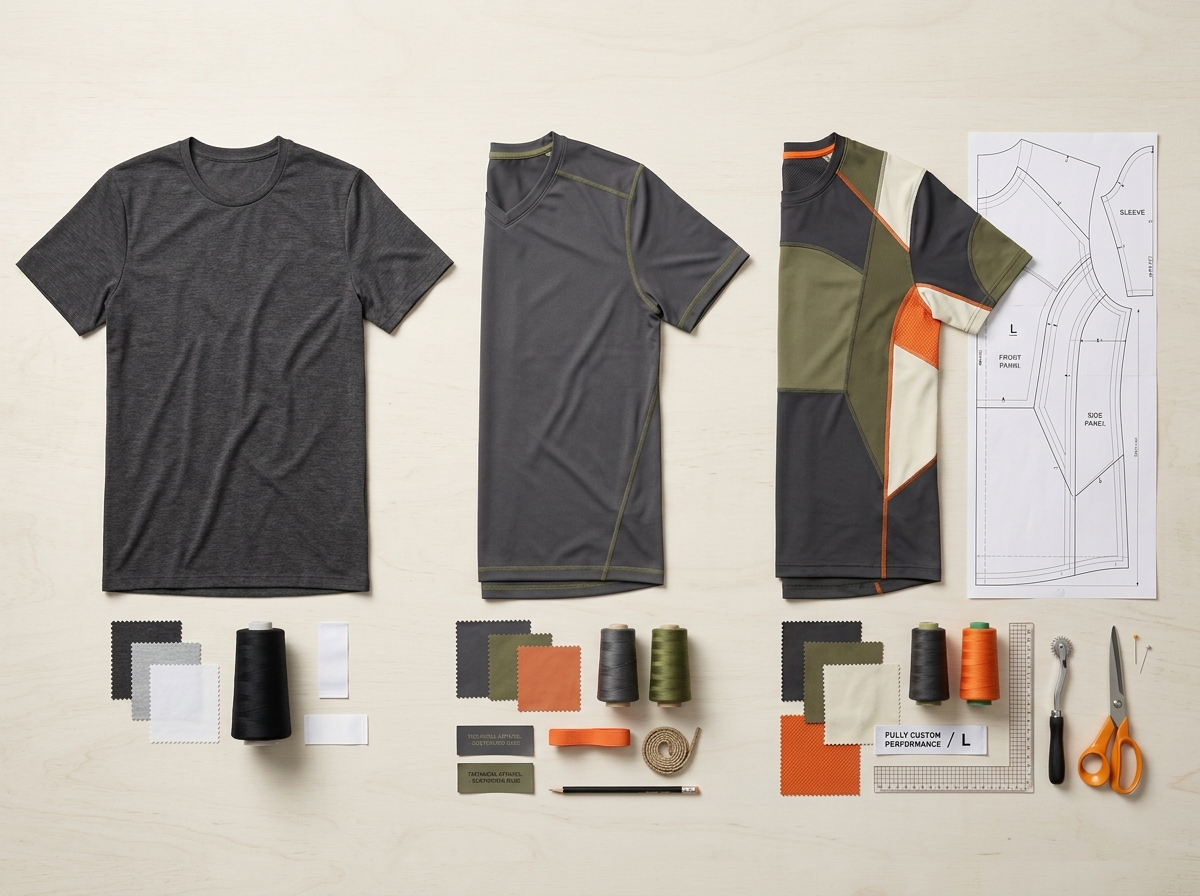
Factory-side checkpoint: A small visual change can trigger a new pattern, mold, print setup, or trim minimum. Ask whether every requested change affects sample cost, unit cost, MOQ, and production time.
Step 3: validate demand before committing to inventory
Use conversations, wear tests, sign-ups, deposits, or a controlled preorder to prove interest before approving a large first run.
Positive comments are easy to collect. Purchase intent is harder. A useful validation plan moves from low-commitment evidence to high-commitment evidence.
Demand validation belongs near the front of any plan for how to start an activewear brand, before the brand pays for a broad size and color assortment.
Start with customer interviews and competitor review. Next, show two or three clear product concepts and ask people to rank them. Then build a simple landing page with the intended price range, core benefit, delivery window, and a waitlist. If you have a credible sample, run private wear tests and collect structured feedback. A deposit or preorder provides stronger evidence, but only use that route when you can communicate timing, refund terms, and production risk honestly.
Set the decision rule before the test. For example, a founder might require 150 qualified waitlist sign-ups, 30 sample-test applications, or deposits covering a defined share of the first run. The numbers will differ by audience, price, and channel. What matters is deciding in advance what evidence is strong enough to proceed.
Do not ask only whether people like the design. Ask:
- Which existing product would this replace?
- When did you last buy that type of garment?
- What did you pay?
- Which feature would make you switch?
- Which color would you buy first?
- What would stop you from ordering online?
The final question often exposes sizing and return concerns. The National Retail Federation reported that retailers estimated 16.9% of annual sales would be returned in 2024. That figure covers retail broadly, not only activewear, but it shows why fit information and return costs belong in the launch model.
If the evidence is weak, change the offer before changing the ad creative. Reduce the capsule, adjust the customer, retest the price, or choose a simpler manufacturing route. Learning how to start an activewear brand includes learning when not to place the purchase order.
Step 4: build a focused first capsule
A first capsule should contain enough products to tell one clear story, but few enough to fit, fund, photograph, and replenish well.
Two to four styles are often easier to learn from than a wide collection, but there is no universal number. Build around one hero product, then add supporting pieces that share a customer, activity, fabric family, or styling purpose. A legging can pair with a sports bra and fitted layer. A running short can pair with a breathable top. The connection should help customers understand the range and help the factory control materials.
Many articles about how to start an activewear brand skip directly from a logo to a collection, but the SKU map is where inventory risk becomes visible.
SKU multiplication catches new founders by surprise. Two styles in three colors and five sizes create 30 SKUs. Add a second length to one style and the count grows again. Inventory does not sell evenly across those cells. One color-size combination may disappear in a day while another sits for months.
Before finalizing the range, map every style, color, size, and length. Then ask:
- Which style is the main reason the customer will visit?
- Can two styles share the same fabric and color standard?
- Which color has evidence behind it, and which exists because the moodboard looks empty?
- Does the size range reflect real customer measurements?
- Can the business afford a reorder while cash is tied up in slower SKUs?
Consider the factory’s MOQ structure. “100 pieces” may mean 100 per style, per color, per fabric, or per purchase order. It may also include a minimum per size. Ask for the complete rule and test it against the SKU map. A collection that appears small on a moodboard can be large at the cutting stage.
Product variety also increases sample work. Every new fabric needs performance and color review. Every new pattern needs fit approval. Every new print or embroidery location needs artwork and placement confirmation. The disciplined choice is often to remove a style, not rush its approval.
Step 5: budget the brand and check unit economics
Build the budget from landed product cost, selling costs, returns, and cash timing, not from the factory unit price alone.
The supplier quote is one line in the startup budget. Sampling, labels, packaging, testing, freight, duty, payment fees, photography, ecommerce software, marketing, fulfillment, returns, and damaged stock also consume cash. Some costs happen months before sales. Others arrive with every order.
Create three views of the numbers:
- Development cash needed before production approval.
- Landed cost per sellable unit.
- Contribution from each sale after variable selling costs.
The example below is planning math, not a DETOSUN quotation or a market promise. Replace every input with a real written quote for your styles and destination.
| Example input | Calculation | Illustrative result |
|---|---|---|
| Bulk garments | 240 units x $18 | $4,320 |
| Freight, duty, and inbound handling | Assumed 25% of garment cost | $1,080 |
| Labels and packaging | 240 units x $1.50 | $360 |
| Total landed inventory | Sum of the three lines | $5,760 |
| Landed cost per unit | $5,760 / 240 | $24 |
| Selling price | Founder assumption | $68 |
| Payment and fulfillment | Assumed $10 per order | $10 |
| Return and defect reserve | Assumed $5 per sale | $5 |
| Contribution before marketing and overhead | $68 minus $24, $10, and $5 | $29 |
The result changes quickly. If freight rises, if the product needs an expensive trim, or if returns concentrate in one size, the contribution falls. Do not use a single best-case forecast. Run at least three cases: expected sales, slower sales, and a delayed launch with extra sample work.
The deposit schedule matters too. A common production arrangement requires money before the garments can be sold, but the percentage and timing vary by supplier and order. Ask what triggers each payment, which approvals must be complete, and what happens if materials or delivery timing change. Keep enough cash for content, fulfillment, customer service, and the next order. Selling out can still create a cash problem if the business cannot fund the reorder.
When studying how to start an activewear brand with limited capital, focus on reversible decisions. A narrower capsule, stock-supported material, smaller validated run, or staged marketing test can preserve options. Custom molds, broad color ranges, and untested bulk inventory are harder to reverse.
Factory-side checkpoint: Before paying a production deposit, match the purchase order to the approved sample, material codes, colors, size breakdown, labels, packaging, inspection terms, delivery term, and destination.
Step 6: create a tech pack and supplier-ready brief
A tech pack converts the design idea into measurable instructions that a pattern maker, sample room, buyer, and inspector can all reference.
Reference images and a moodboard communicate direction. They do not define the product. A supplier still needs to know the finished measurements, points of measure, tolerances, seam types, stitch details, panel layout, fabric composition, weight or performance target, trims, artwork, label content, packaging, and size range.
If you want to know how to start an activewear brand that can be reordered consistently, document these decisions before bulk production rather than reconstructing them later.
A practical brief should include:
- Flat sketches showing front, back, and relevant internal views.
- A measurement specification with clear points of measure and tolerances.
- Construction notes for seams, hems, waistbands, pockets, gussets, closures, and reinforcement.
- Material requirements, including composition, hand feel, stretch direction, recovery, opacity, surface, color, and intended activity.
- Artwork files, color references, dimensions, placement, and decoration method.
- Main label, size label, care label, hangtag, barcode, packaging, and carton instructions.
- Target quantities by style, color, and size.
- Required sample stages, tests, inspection level, destination, and target date.
If a detail remains undecided, mark it as open. Do not let a placeholder look like an approval. Version the file so both sides know which issue is current. A filename such as legging-tech-pack-final-v7-revised2.pdf is a warning that document control has failed. Use a date, version number, and approval log.
The site’s Tech Pack Customization page is the right internal handoff when sketches, measurements, or construction notes need review. Founders who are still shaping the range can also use the In-House Design Team page to understand the design-support stage. These links describe services; exact scope, pricing, and timing should be confirmed for the project.
Factory-side checkpoint: Ask the sample room to record every substitution. A fabric, elastic, thread, pad, zipper, or print method used temporarily in sampling must not silently become the bulk specification.
Step 7: find and vet an activewear manufacturer
Select a manufacturer by product capability, communication quality, evidence, commercial fit, and repeatability, not by the lowest unit price.
Activewear manufacturing requires more than access to sewing machines. Stretch fabrics move during cutting and sewing. Seam selection affects comfort and extension. Light colors expose opacity problems. Waistband construction affects rolling. Pads, bonded details, prints, and elastic each introduce their own failure modes.
Begin with a short supplier brief. Send the same information to each candidate and ask the same questions:
- Which similar product types do you make regularly?
- Which processes are completed in-house and which are subcontracted?
- What are the MOQ rules by style, color, fabric, trim, and size?
- Which stock or repeatable fabrics suit the use case?
- What sample stages do you recommend, and what is included in each charge?
- How are patterns, grading, and revisions controlled?
- What inspection records can be shared for this type of product?
- How are approved colors and materials preserved for reorders?
- What payment, delivery, and claim terms appear on the purchase order?
Evidence should match the claim. A certificate needs a valid issuer, scope, site name, and date. A factory video should show the relevant operation, not a generic building. A sample should use the material and construction you are evaluating. If the supplier says it can run a specific seam or bonded process, ask to see a close example and inspect it under stretch.
Communication during quotation is also evidence. A capable supplier should ask technical questions. A quote that arrives instantly despite missing measurements, materials, quantities, and destination is usually built on assumptions. Low prices created by different assumptions are not comparable.
Use a scorecard. Weight product capability, sample quality, communication, documentation, MOQ fit, cost, timing, QC process, and reorder reliability. Record what was verified, what was stated but not verified, and what remains open. This prevents a polished sales call from outweighing weak product evidence.
For founders learning how to start an activewear brand, the supplier search can feel like the whole project. It is only one decision gate. Do not commit to bulk until the working relationship survives quotation, sampling, revision control, and a written production review.
Step 8: sample, fit-test, wash-test, and approve
Approve an activewear sample only after checking measurements, movement, opacity, recovery, seams, appearance, and care performance against written criteria.
Sampling is where the product becomes testable. The names differ by supplier, but a typical route may include an initial prototype, a fit sample, a revised fit sample, a size set, and a pre-production sample made with approved bulk materials. Confirm which stage you are receiving and what can still change afterward.
The sample process is the physical answer to how to start an activewear brand with a defensible product, because it turns design claims into observations and measurements.
Start with measurements. Measure the garment on a stable surface using the same points and method stated in the specification. Record actual values beside requested values. A sample can look acceptable on one model while missing the approved waist, rise, inseam, or opening measurement.
Then test movement with people who match the intended size and use case. A studio legging should be reviewed in deep flexion, seated positions, walking, and repeated transitions. Running shorts should be tested at pace with the intended pocket load. A sports bra needs review through the movement and impact level it claims to support. Record where fabric pulls, seams press, waistbands move, and openings gap.
Review the garment under realistic light. For light-colored bottoms, check opacity at rest and under stretch. Compare dry and damp appearance if sweat visibility matters. Stretch the print or logo with the fabric and inspect cracking, distortion, adhesion, and recovery. Look at seam extension before judging seam appearance.
Home wash tests are useful for early screening, but formal methods give repeatable instructions. ISO 5077 specifies a method for measuring dimensional change after defined washing and drying procedures. ISO 12945-1 covers a pilling-box method for assessing resistance to pilling, fuzzing, and matting. The correct method, cycle count, conditioning, rating, and acceptance level depend on the fabric, product, claim, and target market. Ask a qualified lab or testing specialist to define the program.
Use a sample review sheet with four statuses: approved, approved with recorded correction, revise and resubmit, or rejected. Photographs should show the issue, but they should not replace the measurement or written instruction. Put every change into the next tech-pack version.
The site’s Sampling page explains the internal path for prototype and approval work. Before ordering, confirm which sample rounds, fabrics, tests, courier charges, and revision limits are included.
Factory-side checkpoint: Never approve a sample with the phrase “fix this in bulk” unless the correction is measurable, documented, acknowledged by production, and verified before the full run continues.
Step 9: lock production, quality control, packaging, and delivery
Bulk production should begin only after the product specification, approved sample, materials, quantities, packaging, inspection plan, and delivery terms agree.
The pre-production review is a stop point. Compare the purchase order, bill of materials, approved sample, measurement chart, color standard, artwork, labels, and packaging file. Resolve contradictions before cutting. If the purchase order says one fabric code and the approved sample uses another, production does not have a single source of truth.
Any production-focused explanation of how to start an activewear brand should treat this review as an approval gate, not a routine meeting after decisions are already made.
Define inspection points for the risks in your product. Incoming fabric review may check color, width, weight, visible defects, stretch, or shade variation. In-line checks can catch panel alignment, seam problems, measurements, and workmanship before the order is complete. Final inspection can review quantity, assortment, measurements, appearance, labeling, packaging, carton marks, and documentation.
Do not use “good quality” as an acceptance standard. Write the defect examples and tolerance rules that matter. A slightly uneven internal stitch and an open seam do not carry the same risk. A logo placed outside the approved tolerance may be a branding defect even when the sewing is strong.
Packaging deserves the same control. Confirm folding, individual bags, warning marks where required, size stickers, barcodes, carton assortment, carton dimensions, and shipping marks. An accurate garment in the wrong size bag can still cause warehouse errors.
Before shipment, reconcile the final packing list with the purchase order. Confirm the delivery term, destination, freight responsibility, documents, and receiving contact. The Production and Quality Control pages provide useful internal context, but the exact inspection scope and shipping handoff must appear in the order documents.
Step 10: prepare labels, claims, store, and launch assets
Finish regulatory review, product information, size guidance, photography, policies, and customer-support procedures before sending paid traffic to the store.
Label requirements depend on where the product is sold, who imports it, its fiber content, and the claims made. In the United States, the FTC’s clothing and textile guidance explains that most textile products need fiber content, country of origin, and responsible business identification. The FTC Care Labeling Rule also requires manufacturers and importers to provide supported care instructions.
Compliance is part of how to start an activewear brand, even when the factory prepares the physical label, because the seller and importer still need market-specific review.
For the European Union, the official Your Europe textile label guidance states that textile products sold to consumers must show fiber composition and that required text must be available in the official languages of the countries where the product is offered. Requirements can change, and other markets add their own rules. Confirm the final label and product claims with a qualified compliance professional for each sales market.
Care instructions need evidence. A guess such as “machine wash cold” is not a test program. Review the complete garment, including transfers, pads, elastics, trims, and mixed colors. Environmental, antimicrobial, compression, sun-protection, recycled-content, and performance claims may require additional substantiation. Do not copy a competitor’s claim onto a similar-looking fabric.
The product page should answer the questions that otherwise become returns:
- Garment measurements and clear size-selection guidance.
- Model measurements and worn size, when real and verified.
- Fabric composition, feel, stretch, opacity, and intended use.
- Pocket, pad, closure, rise, inseam, and support details.
- Care instructions that match the label.
- Shipping, exchange, and return terms.
Photograph details buyers need to judge. Show the waistband, seams, pockets, inside construction, fabric surface, and fit from useful angles. A dramatic campaign image can attract attention, but it cannot replace an accurate product page.
Step 11: use a 90-day launch sequence with decision gates
A 90-day plan can organize the work, but sample results and material availability should control approval rather than a fixed marketing date.
The schedule below is a planning example. It is not a promised manufacturing lead time. Custom patterns, fabric development, print approvals, repeated sample rounds, testing, holidays, freight, and compliance work can extend the project. Confirm dates with every responsible party.
| Period | Founder work | Product and supplier work | Decision gate |
|---|---|---|---|
| Days 1 to 15 | Interview customers, define use case, review competitors | Share capability questions and available development routes | Is the customer problem specific and supported? |
| Days 16 to 30 | Choose capsule, price target, quantities, and validation method | Prepare sketches, measurements, materials, and initial quote | Is the brief complete enough to sample and budget? |
| Days 31 to 50 | Build waitlist and test positioning | Make and review initial sample; record revisions | Does the product solve the intended problem? |
| Days 51 to 65 | Refine product page, sizing, and launch economics | Complete revised fit, wash, movement, and appearance checks | Does the sample meet written acceptance criteria? |
| Days 66 to 75 | Confirm sales plan, support process, and cash reserve | Lock materials, labels, packaging, QC, purchase order, and pre-production approval | Are product and commercial documents consistent? |
| Days 76 to 90 | Prepare content, email, fulfillment, and customer communication | Begin approved production or controlled preorder route | Is demand strong enough and delivery communication realistic? |
Build buffer into public dates. A quiet internal deadline can move. A promised customer delivery date creates refund, chargeback, and trust risk. If the pre-production sample fails, move the launch rather than approving the defect.
Learning how to start an activewear brand also means sequencing tasks that can happen in parallel. You can prepare size guidance while a revised sample is being made, but you cannot publish final garment measurements until the approved product is measured. You can plan photography, but final photography should use the correct product and color.
Step 12: plan reorders and product expansion from real sales data
Use sales by style, color, and size plus returns and customer feedback to decide what to reorder, revise, discontinue, or add.
The first launch is an experiment with inventory attached. Track demand at SKU level. A style can appear successful while one color and two sizes carry most of the sales. Reordering every variant in the original ratio can recreate slow stock.
Set a reorder rule before the launch. Consider supplier production time, freight time, daily sales, available stock, open orders, return lag, and cash available. Confirm whether the original fabric, dye lot, trim, and packaging can be repeated. If consistency matters, keep approved swatches and records.
Returns need reason codes that lead to action. “Did not fit” is too vague. Record whether the garment ran small at the waist, loose at the opening, short in the rise, long in the inseam, or different from the size guide. Review product-page clarity separately from product fit. A buyer may choose the wrong size because the guidance was unclear even when the garment matches its specification.
Expand only after the first range teaches you something. Add the missing size, color, length, or companion style that customers repeatedly request. Avoid adding products simply to make the shop look larger. A small range with reliable fit, clear information, and repeatable supply is a better foundation than a busy range the business cannot replenish.
Frequently asked questions
These answers cover the budget, MOQ, tech pack, supplier, product count, timing, and sample-testing questions founders ask before placing an order.
How do I start my own activewear brand?
Start with a narrow customer problem, validate demand, choose a development model, prepare specifications, test samples, confirm the numbers, and approve controlled production.
Do those steps in order. Brand identity and content can develop alongside the product, but they should not hide missing fit, cost, or supply decisions. Write a one-page brief covering the wearer, activity, hero product, price target, quantity range, sales market, and launch window. Use it to guide customer interviews and supplier conversations. The practical bottom line: earn the right to order inventory by proving the customer, sample, and economics.
How much money do I need to start an activewear brand?
The required capital depends on development depth, style count, MOQ, unit cost, freight, testing, content, selling costs, and the cash buffer for delays and reorders.
Build the budget from written inputs instead of adopting a generic internet number. Include sample rounds, patterns, materials, trims, labels, packaging, bulk production, freight, duty, inspection, ecommerce, photography, fulfillment, returns, and marketing. Run a slower-sales case and an extra-sample case. The practical bottom line: the smallest safe budget is the amount that funds a validated capsule through delivery without leaving the business unable to sell or support it.
What is a realistic MOQ for a new activewear brand?
There is no universal MOQ because factories, fabrics, colors, trims, processes, and size assortments create different minimums.
Ask whether the stated minimum applies per order, style, color, fabric, print, trim, or size. Stock-supported fabric and existing patterns may allow a lower commitment than a custom material or construction, but the supplier must confirm. Map the rule across the complete SKU plan. The practical bottom line: treat MOQ as a structure, not one headline number.
Do I need a tech pack to start an activewear brand?
You need supplier-ready specifications; a structured tech pack is the clearest way to control measurements, construction, materials, artwork, labels, and revisions.
A white-label project may use a simpler specification because the base style already exists. A custom cut-and-sew product needs far more detail. In both cases, record what is approved and what the supplier may substitute. The practical bottom line: if two people could interpret the product differently, add enough written and visual information to remove that ambiguity.
How do I find a reliable activewear manufacturer?
Send a consistent brief, verify relevant capability, inspect samples, compare written assumptions, check documentation, and judge how the supplier handles technical questions and revisions.
Do not select from website presentation alone. Ask for evidence tied to your product type and process. Compare quotation scope, not only price. Complete at least one disciplined sample-and-revision cycle before trusting bulk repeatability. The practical bottom line: reliability is demonstrated through accurate work, clear records, and consistent communication over several steps.
How many products should I launch first?
Launch the smallest capsule that communicates one product story and gives buyers a useful choice without creating an unmanageable SKU count.
For many founders that may be two to four connected styles, but the right count depends on audience, capital, MOQ, channel, and product complexity. Calculate every style-color-size combination and the inventory required by each. The practical bottom line: remove any style that lacks a distinct job, evidence, or budget.
How long do sampling and production take?
Timing depends on design readiness, pattern work, material availability, revision rounds, testing, order size, factory schedule, holidays, and freight.
Ask for a stage-by-stage schedule and identify which dates depend on founder approval. Delayed feedback can move the whole path. Do not treat the first estimate as a guaranteed customer delivery date. The practical bottom line: publish a launch date only after product and supply risks are understood, with a buffer for correction.
What should I test before approving an activewear sample?
Check measurements, fit in motion, opacity, stretch and recovery, seam extension, pilling risk, dimensional change, color behavior, decoration durability, comfort, and care performance.
Match the test to the intended activity and claim. Use representative wearers, written review conditions, photographs, measurements, and clear acceptance criteria. Obtain qualified laboratory advice when a formal method or market claim requires it. The practical bottom line: approval should mean the sample met recorded requirements, not that it looked good during a short fitting.
Your next move: turn the idea into a supplier-ready brief
The next useful step is a short brief that lets a manufacturer identify missing decisions, suitable development routes, and the information needed for a quote.
Write down the target customer, activity, planned styles, reference images, required features, size range, quantity range, target sales market, price target, delivery destination, and preferred launch window. Add any sketches, measurements, artwork, fabric references, packaging needs, and test expectations you already have. Mark unknown items instead of guessing.
Then ask for a structured review. You want to learn which choices are feasible, which inputs are missing, what affects MOQ and cost, what the sample route would include, and which statements require verification. Keep the response connected to a versioned brief so later quotations and samples can be checked against the same source.
If you are ready to move from idea to product questions, send your activewear brief for review. Include your target quantity and destination, but treat every MOQ, price, sample scope, lead time, material, certification, and production claim as unconfirmed until it appears in the written project response.
Related Articles
These six pages cover the design, material, technical, sampling, and quality decisions that support a first activewear collection.