Corduroy fabric is a woven cut-pile fabric with raised lengthwise ribs called wales. Those ribs come from extra filling yarns that are cut after weaving. For apparel buyers, the word corduroy does not specify fiber content, wale count, finished weight, usable width, stretch, finish, or care behavior. Request those details and approve the fabric in a garment sample before bulk production.
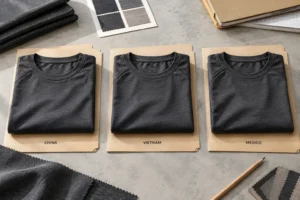
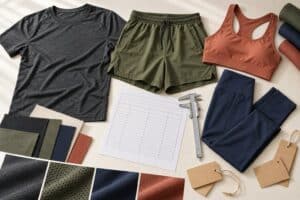
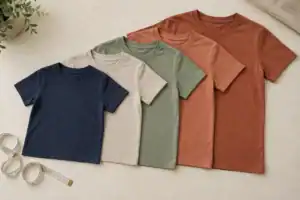
This guide explains corduroy construction, how to compare wale widths, what to ask when buying corduroy fabric, and how to check whether a particular sample suits trousers or another garment. The diagrams and garment images are AI-generated illustrations; they are not DTS inventory, supplier-approved samples, factory evidence, or test results.
All visuals in this article are AI-generated illustrations. They are not DTS inventory, supplier-approved samples, factory evidence, or test results.
What is corduroy fabric?
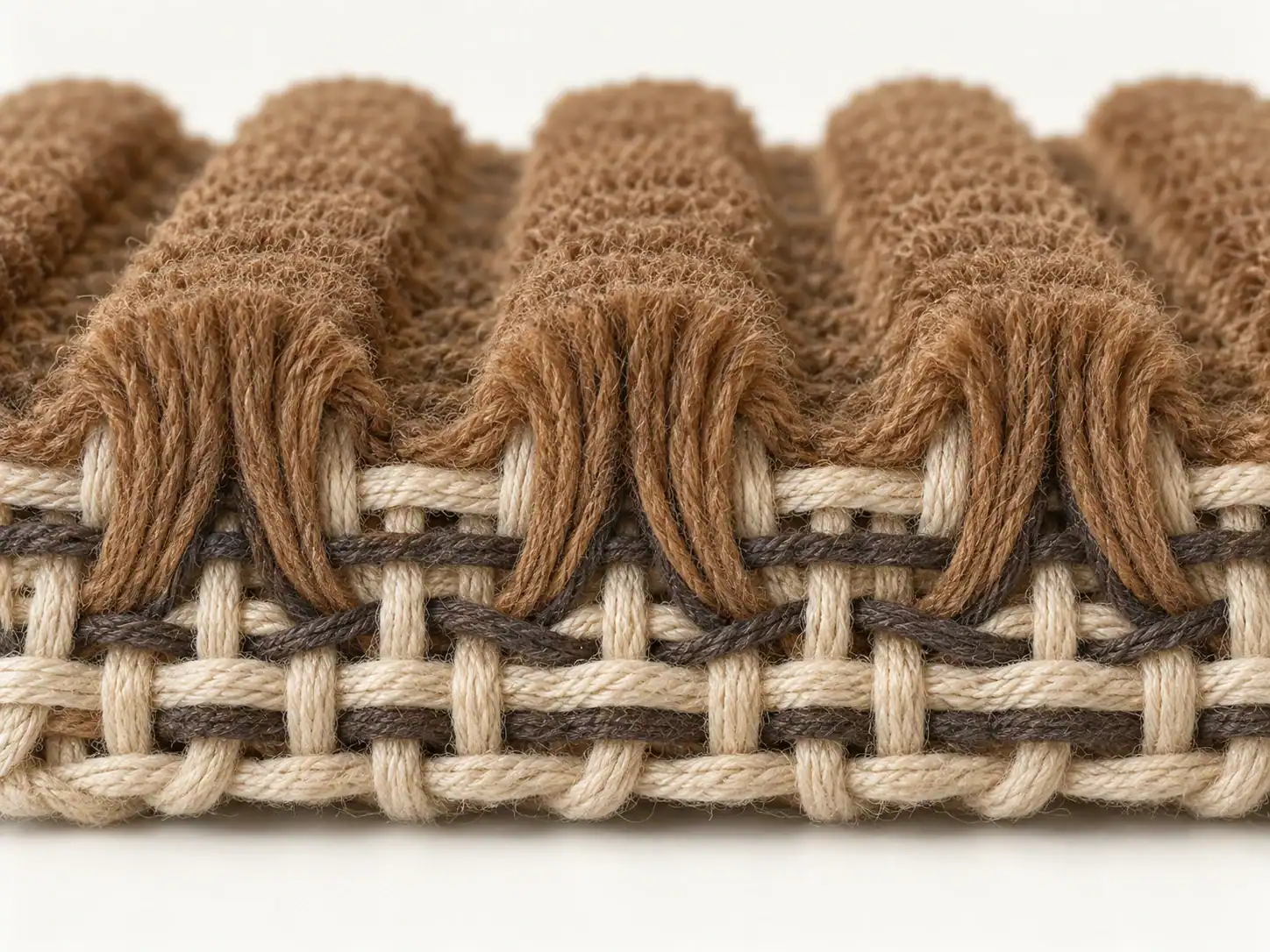
Corduroy is a woven pile fabric. Its face has parallel raised ribs, or wales, running in one direction. CottonWorks describes the surface as cut filling pile: extra filling yarns form floats during weaving, and cutting those floats after weaving creates the raised cords. The base weave and pile yarns work together, so the fabric name alone is not a complete construction specification. CottonWorks: Corduroy
That construction explains the feature buyers notice first: the ribbed face changes the way light falls across a garment. It also creates a pile direction that should be considered when cutting panels and comparing shade. Confirm the face, back, wale direction, and nap direction from the actual swatch rather than from a catalog photo.
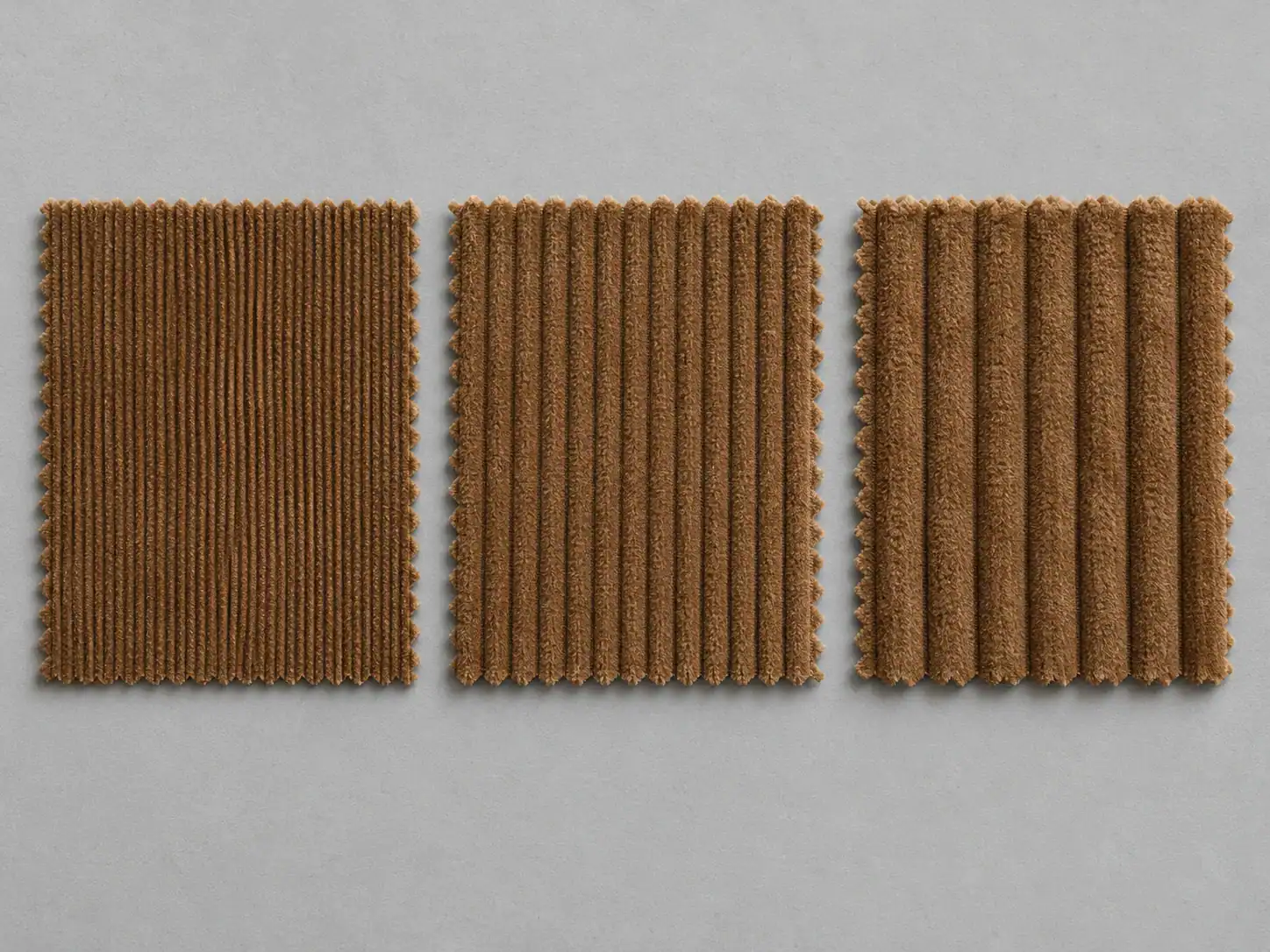
Corduroy wale types: compare the ribs by measurement
The raised cords are called wales. A useful way to compare their scale is wales per inch (WPI), counted across the fabric. CottonWorks describes corduroy examples ranging from 1 to 22 wales per inch; that broad range shows why a name such as pinwale, fine wale, or wide wale is not enough for a production brief. CottonWorks: Complex Woven Fabric Designs
Ask the supplier to state the WPI or provide a labeled reference swatch, then compare the surface under consistent light. Record the agreed sample because trade labels can be used loosely across different suppliers. Do not approve a replacement by color name alone if the wale scale changes the garment’s appearance.
How corduroy is made, and why pile construction matters
In a corduroy weave, filling yarns create the pile while other yarns hold the ground fabric together. After weaving, the pile picks are cut to make the ribs. CottonWorks notes that pile-binding constructions can differ: a V-shaped pile is simpler to cut, while a W-shaped pile has more interlacings with the ground warp. This is a construction distinction to ask about, not a stand-alone quality grade; judge the delivered sample and its agreed performance requirements.
For a buyer, the practical questions are: Is the face even? Do the ribs remain visually consistent across the usable width? Does the pile show a noticeable direction? Does the sample shed or change appearance during the care and wear checks required for the garment? Ask the supplier to identify the construction and provide any relevant test information instead of inferring those properties from a product title.

What is the best corduroy fabric for trousers?
There is no single best corduroy fabric for every trouser. Select it against the intended fit, climate, movement, price target, and care instructions. A comfortable casual trouser, a close-fitting fashion pant, and a structured jacket do not place the same demands on weight, drape, stretch, or pile appearance.
Use this decision sequence when comparing trouser samples:
- Choose the look: compare fine and broad wales on the actual garment scale, not only as tiny swatches.
- Check the hand and drape: handle a full-size sample and review the leg shape, pocket bulk, and crease behavior on a sewn sample.
- Confirm movement: if stretch is required, specify its direction and ask for recovery information. Do not assume that corduroy stretches because it looks soft.
- Inspect the pile: review the front, seat, knees, and high-contact areas after the agreed care and wear checks.
- Approve the finished sample: use the same fabric specification, color reference, and direction of pile that will be used for production.

Is corduroy for winter or summer?
Corduroy is often selected for cooler-weather clothing, but the name alone cannot tell you how warm a finished garment will feel. Fiber content, fabric weight, pile height, garment fit, lining, layering, and local climate all affect the result. A lighter corduroy can behave differently from a dense, heavy sample.
For a seasonal range, compare the actual candidate fabric with the intended garment and base layer. Review the fabric weight in a stated unit, drape, air-permeability or thermal data if the supplier has relevant results, and the finished garment under realistic use. Avoid promising warmth from a fabric name alone.

Why is corduroy fabric expensive?
Corduroy involves more than a flat woven surface: the pile yarns are woven and then cut to form the cords. CottonWorks explains that fine-wale corduroy can require a second cutting pass, adding another manufacturing step and increasing the chance of seconds. The source also notes that the construction and pile shape can affect cost and performance. These details help explain why two fabrics both called corduroy may not have comparable prices.
When you compare a quote, make the scope match. Put fiber content, WPI, finished weight, usable width, stretch, finish, shade, order quantity, inspection basis, and packaging in the same request. Ask whether the price includes the same fabric construction and whether the quoted sample and production lot will be controlled to the same approved reference. A fabric name without these details is not an apples-to-apples quote.
What to specify when buying quality corduroy fabric
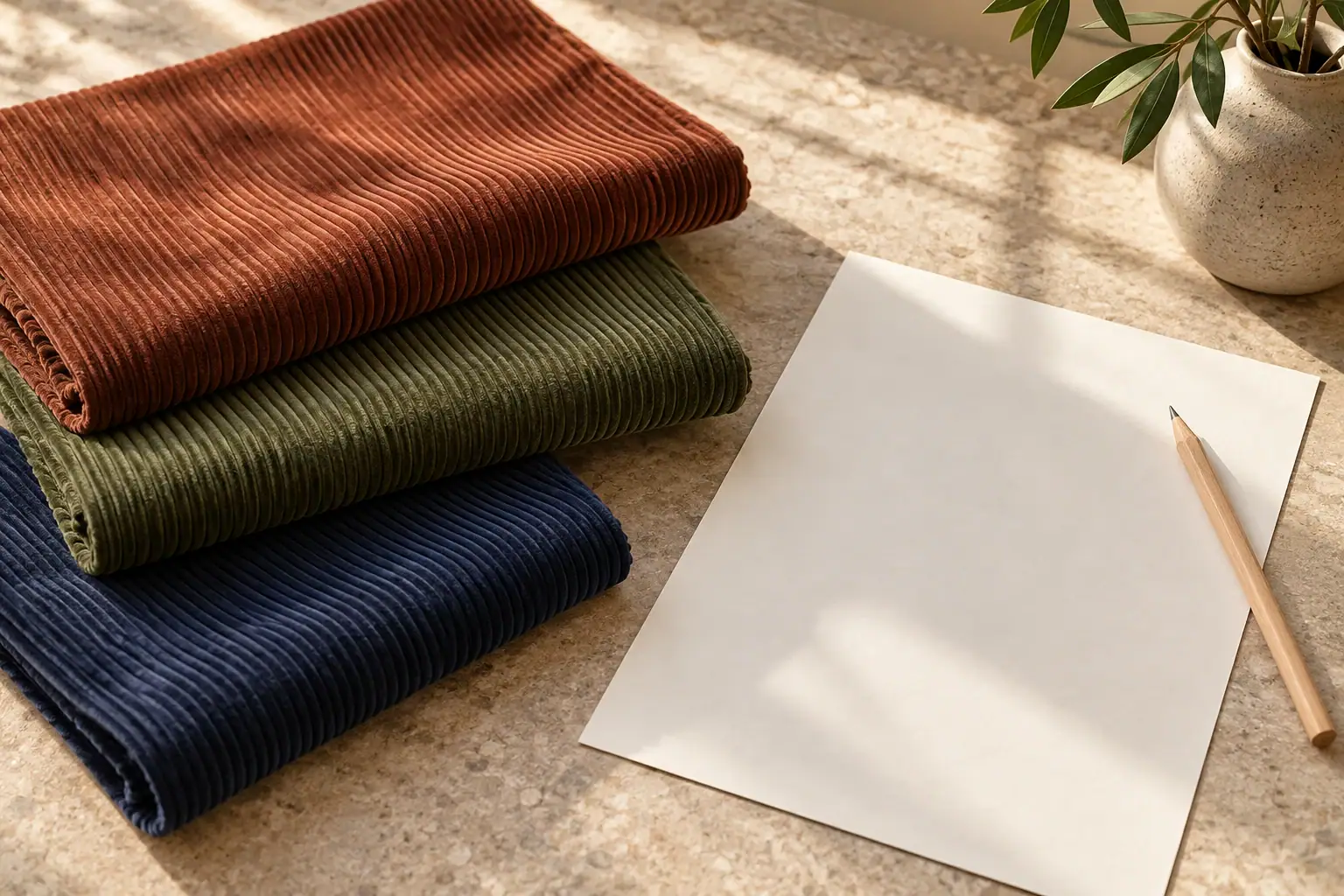
“Good quality” should be converted into requirements that a supplier can quote, sample, and check. Send a specification brief that answers the following questions:
Fiber content and fabric identification
Record the actual fiber names and percentages supplied for the fabric, along with the supplier’s construction description. Because corduroy names the pile surface and ribs, list fiber content separately. For covered U.S. textile products, FTC guidance explains fiber-content, country-of-origin, and responsible-business identification requirements, with scope and exceptions depending on the product. Confirm the labeling rules for the specific item and market. FTC textile and wool labeling guide
Wale count and usable width
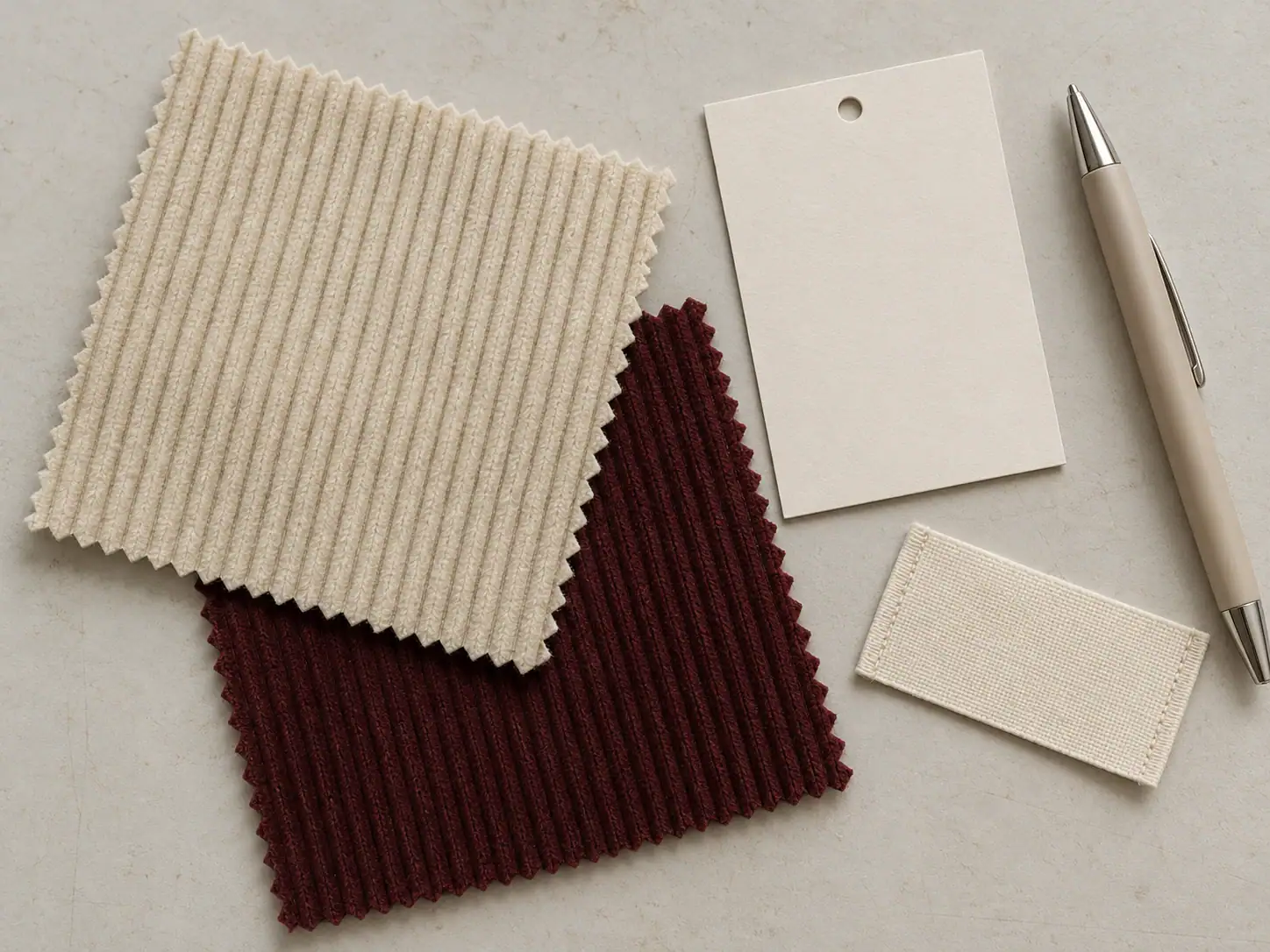
Write the target wale count or attach a signed reference sample. State whether the count is measured on finished fabric and how a tolerance will be agreed. Record usable width after any selvedge allowance so the pattern and fabric-yield review use a real dimension.
Finished weight, drape, and stretch
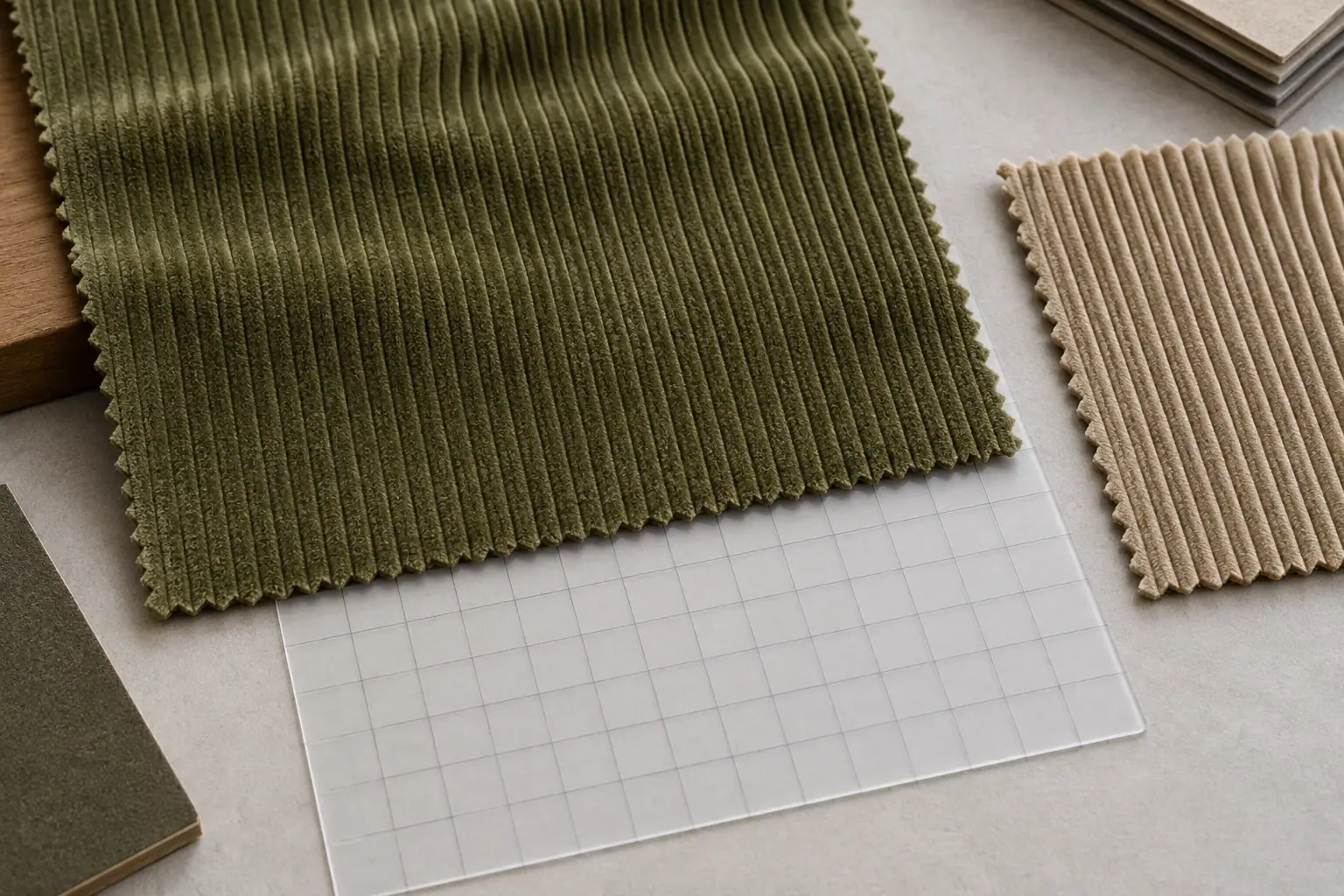
Specify the finished weight and its unit, measurement basis, acceptable range, stretch direction, and recovery expectation. If movement matters, request a sample with the same stretch construction and test it in a garment pattern that reflects the intended fit. A fiber blend or elastane claim should be documented, not guessed from hand feel.

Pile direction, shade, and finish
Agree how the nap will face on garment panels and whether all pieces must be cut in one direction. Compare color under the light conditions used for approval, and record the shade reference or lot-control method. Specify the finish and care instructions; ask for test results that match the intended use rather than accepting broad claims such as “durable” or “colorfast.”

How to check a corduroy sample before bulk production
Use one approval path from fabric sample to garment sample:
- Request the current fabric specification, color reference, and a sample large enough to judge wale scale and direction.
- Check the front and back under consistent light; note surface variation, obvious defects, and shade differences across the sample.
- Cut the garment with the agreed pile direction and review how the wales align at seams, pockets, waistbands, cuffs, and panel joins.
- Follow the intended care instructions on a representative sample. Record dimensional change, shade change, seam behavior, and any change in pile appearance against acceptance criteria agreed before testing.
- Keep an approved fabric swatch and garment sample with the versioned specification. Confirm that the bulk material, shade, quantity, and delivery plan match the approved brief before release.
These are buyer checks, not a claim that a particular fabric has passed them. Where a supplier provides laboratory results, check the method, test condition, sample identity, and date before relying on the numbers.

Where can I buy quality corduroy fabric?
For a prototype or one-off garment, a fabric retailer may sell cut lengths that let you handle the material before sewing. For a branded production run, compare fabric wholesalers, stock-service suppliers, or mills based on the quantity, repeatability, specification control, and delivery commitment your order needs. A product listing or the word premium does not prove that a later bulk lot will match your sample.
Before placing an order, ask for a current swatch, actual fiber content, WPI or a visual reference, finished width and weight, stretch details, color/lot controls, minimum order, available quantity, delivery estimate, and the supplier’s process for approving substitutions. Keep the answers with the purchase order and garment tech pack.

Corduroy fabric questions buyers ask
What is corduroy fabric?
Corduroy is a woven pile fabric with raised lengthwise ribs called wales. In the construction described by CottonWorks, filling-yarn floats are cut after weaving to create those cords. Fiber content and finished weight still need to be specified separately.
Is corduroy for winter or summer?
Corduroy is commonly considered for cooler-weather garments, but warmth depends on the exact fabric and finished garment. Compare fiber, weight, pile, lining, fit, and layering on a representative sample.
Why is corduroy so expensive?
Its pile surface requires additional weaving and cutting operations. CottonWorks notes that fine-wale versions may need a second cutting pass. Compare quotes only after matching wale count, fiber, weight, width, finish, order quantity, and inspection requirements.
What is the best corduroy fabric for trousers?
The best option is the sample that meets the trouser’s appearance, movement, weight, care, and price requirements. Approve wale scale, stretch direction, drape, pile behavior, and color on the finished trouser sample.
Where can I buy quality corduroy fabric?
Buy samples from a retailer for prototyping, or evaluate a wholesale, stock-service, or mill source for production quantities. Verify the actual specification and ask how the supplier will keep the bulk lot aligned with the approved swatch.
Turning a fabric idea into an apparel brief
If corduroy is one option for a custom apparel project, start with the garment and its use. Share a moodboard or tech pack, intended fit, target market, color, required wale appearance, composition, weight, stretch direction, quantity, and timing. DTS publicly offers apparel tech-pack review and sampling/prototyping; whether a particular corduroy construction can be sourced for a project must be confirmed after reviewing its requirements.
Share a corduroy apparel brief with DTS or review the apparel sampling process. Exact fabric availability, MOQ, cost, and timing require project-specific confirmation.