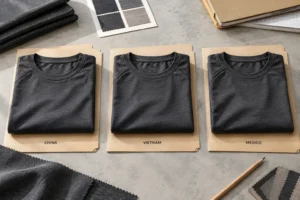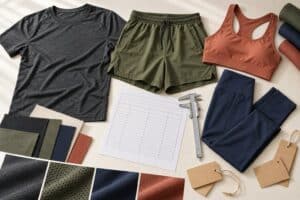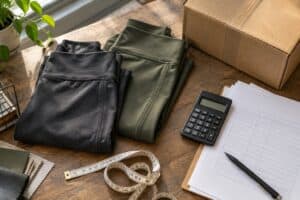
Before bulk packing a US Amazon FBA activewear order, approve the garment’s consumer labels, the barcode and protection on each sellable unit, and the shipment labels on the outer boxes. Scan a sealed sample against the exact style, color and size in Seller Central. Then reconcile each shipping box with the shipment plan.
A size M training tee can be sewn and packed correctly but still arrive as size L in inventory if the wrong barcode went on the bag. A photo can miss that mismatch. A scan at the packing bench catches it before the shipment leaves. The checks below are for apparel brands ordering custom goods and deciding which steps belong to the factory, the seller or a prep partner.

Illustrations show packing examples. Label areas are intentionally blank.
Which labels go on the garment, the unit and the box?
Each label has a different job. Shoppers read the garment label, receiving scans the sellable unit, and Amazon matches each physical box to its shipment. Approve those labels at three points in the order.
| Capa | Qué aprobar |
|---|---|
| Prenda | Approve the wording, label material and placement against the actual garment before sewing bulk. |
| Sellable unit | Approve the finished fold, protective pack, applicable warning and scan result for the exact variant. |
| Shipment box | Generate the box ID from the active shipment and match it to the physical carton and its recorded contents. |
When reviewing US textile label artwork, check three fields for most covered products. Verify the fiber composition, the country where the item was made, and the name or permitted identification of the responsible business. Applicable garments also need care instructions. Use the FTC’s apparel labeling guidance for the disclosure rules. If a folded or packaged garment hides its care information, 16 CFR § 423.6(a) explains how to make that information visible.
For a custom training top, confirm the label against the approved bill of materials. A mesh panel or lining can raise a disclosure question that a single shell-fabric specification leaves unanswered. Ask for a photo of the label attached to the preproduction sample, with the intended fold shown separately. That lets the buyer review the sewn label before it is hidden inside a finished pack.

When do you need an FNSKU label for clothing?
Confirm the barcode type on the actual Seller Central offer before sending files to the factory. Since March 31, 2026, US resellers need an Amazon barcode regardless of whether the unit already carries a UPC or another manufacturer code. A brand owner can use a qualifying manufacturer barcode when the selling account holds the Brand Representative role and the product is eligible. Verify the role and the offer setting before ordering printed packaging for a private-label launch. Amazon’s US manufacturer barcode guidance explains how those conditions apply.
If the offer uses an Amazon barcode, send the item-label file generated for that offer. Each separately sellable size and color should map to the intended item in the seller’s SKU sheet. When applying an Amazon barcode, follow Amazon’s barcode placement rules for competing visible codes and exceptions such as applicable Transparency codes. Keep the intended scan area flat, clear of a seal, and readable after the unit is packed.
An ASIN identifies a catalog item and a seller SKU identifies the offer in your own inventory. Put both in the spec sheet if useful, alongside the barcode that should actually scan. A readable size sticker can help a packer pick the right stack. The scan still needs to return the correct variant.

A six-variant scan test
Say you order 600 single training tees in black and slate, in sizes S, M and L. That gives you six sellable variants. Build six rows with the physical garment size, color, seller SKU, expected scan value, packaging revision and order quantity. Have the operator pack one of each from the real garment and label stacks before approving the run.
The line lead reads the sewn size and calls out the color. A second person scans the sealed bag and matches the result to the relevant row. A black M bag that scans as black L fails even if the barcode reads instantly. If two adjacent sizes have switched labels, isolate both stacks and check units packed since the last successful verification. Repeat the first-pack test at size, color or label-roll changeovers. These six units verify the setup. Set a separate inspection plan for the packed lot.
What should the polybag specification include?
For standard adult activewear, start with a protective package sized to the folded garment and confirm the required prep in Seller Central for the actual SKU. Amazon’s apparel, fabric and textiles guidance covers protective packing and apparel-specific conditions. If using a bag, specify its flat opening, film thickness, finished dimensions, closure, warning artwork and where the barcode will sit. Measure a filled sample before placing a packaging order.
Amazon’s general bagging guidance sets a minimum thickness of 1.5 mil, about 38 microns. It calls for a suffocation warning when the opening measures 5 inches or more with the bag laid flat. Amazon’s apparel guidance shows a warning on the sealed bag. Check the applicable apparel instructions and warning requirements for your SKU before approving the artwork. For a standard training tee, test whether the label scans on the smooth face of the clear bag after sealing. A bulky hoodie needs a fold and bag size that leave the seal intact without a long flap.
Choose the bag from the folded width, length and thickness of the garment. Test the smallest and largest variants that will share the bag. If the smallest slides far enough to wrinkle the scan area, or the largest puts tension on the adhesive, split the bag sizes or change the fold. Confirm that the warning and the barcode remain visible with the exact production fold. The two bags below illustrate fit. Add the applicable warning and identifier to the approved production pack.

How do you keep carton labels tied to the shipment?
Give every shipping box its own FBA Box ID label from the current shipment. For small-parcel delivery, apply the carrier label as well, with both on a flat face away from corners and seams. If the shipment is palletized, follow the pallet instructions for the active workflow in addition to the individual box requirements. See Amazon’s US shipping label requirements.
Agree on a carton reference the factory and seller can both use. Record the sealed box’s size, weight and actual unit count by SKU. Reconcile the physical boxes against Seller Central before labeling for pickup. If a mixed carton is reopened and repacked after the buyer changes the allocation, update the carton contents and reconcile the shipment before dispatch. A reference printed on a factory carton helps the team find the box. The FBA Box ID ties it to the Amazon shipment.

Who should prepare the shipment before pickup?
Amazon ended US FBA prep and item-labeling services on January 1, 2026. Plan for the seller, manufacturer or prep partner to complete the required work before the shipment reaches Amazon.
Factory prep makes sense when the final unit specifications and label files can be approved before packing. A prep partner can make sense when inventory will be split between channels, the FBA allocation may change, or you need an additional US inspection before forwarding the goods. You can also approve garment labels and protective packaging at the factory and have the party with the current SKU files apply the final FBA labels. Confirm that the packing choice leaves that party an accessible, flat label area.
Compare quotes by asking who supplies materials, who changes a bad label, and who pays to reopen a carton. A price per unit that includes bagging might leave barcode printing, scan verification and carton reconciliation as separate line items. Ask each party to list the work it will sign off.
Release bulk packing after the first pack passes
Use one versioned packing sheet to link the garment approval, the unit and the carton. The first pack should use production labels, actual film and the planned fold. Keep one signed sample or an equivalent photo and scan record where both teams can find it.
- Match garment label artwork and placement to the approved sample.
- Check the first sealed unit of each variant against the size, color and barcode map.
- Verify the closure, warning and readability on the finished pack.
- Record the approved revision. At a changeover, clear the previous labels from the bench and verify the next pack.
- Reconcile the carton contents, weights, dimensions and current shipment IDs before pickup.
If the scan returns an unexpected identifier, hold the affected units while you check the pack against the approved SKU map. Start with units packed since the last confirmed good scan and widen the check if you find earlier errors. A total carton count can still be right while a size split is wrong. Treat a relabel or carton substitution as a change that needs its own check. Our apparel quality-control process describes how packing checks fit alongside garment inspections.

Preguntas frecuentes
Can the same unit label be used for two sizes?
Give each separately sellable size the barcode specified for its exact offer. If two adjacent sizes scan to the same item when the plan expects separate variants, stop the line and check the artwork and garment size before packing more units.
Can a hangtag barcode be scanned through a clear bag?
Check the requirements for the barcode type and prep setting. Test the exact packed unit under typical handling. If the hangtag turns, is obscured by the fold, or exposes a competing barcode, approve an exterior scan location that follows Seller Central guidance.
How do I label a two-pack of training tees?
If the customer buys a two-pack as one unit, approve it as one sealed sellable pack with the identifier for the two-pack. Check Amazon’s set marking requirements and prevent loose single-item barcodes from being read as the outer unit. Two individually listed tees in the same shipping box are a different configuration.
Send your activewear packing specs for review
DTS Activewear reviews custom apparel for e-commerce sellers, including sample development, private-label packaging, barcode label placement and carton marks. For a US FBA project, send the garment type, quantities by color and size, approved label artwork, intended pack format and which party will perform the final prep. An annotated pack photo or drawing helps us review the fold, label position and packing scope before quoting. Include the relevant Seller Central files when available so both packing teams can work from the same revision.
Send Your Activewear Packing Specs