
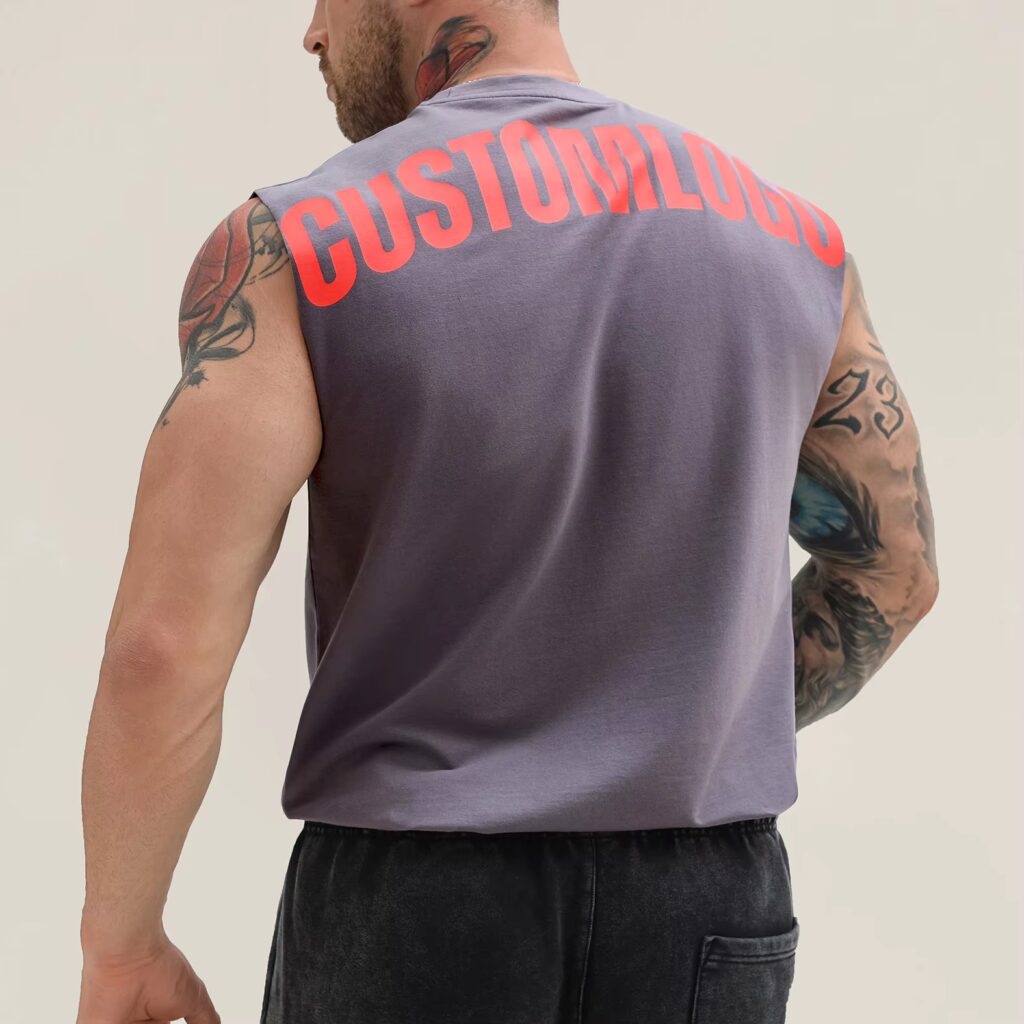
Maßgeschneiderte Oversized-Cargo-Jogginghosen
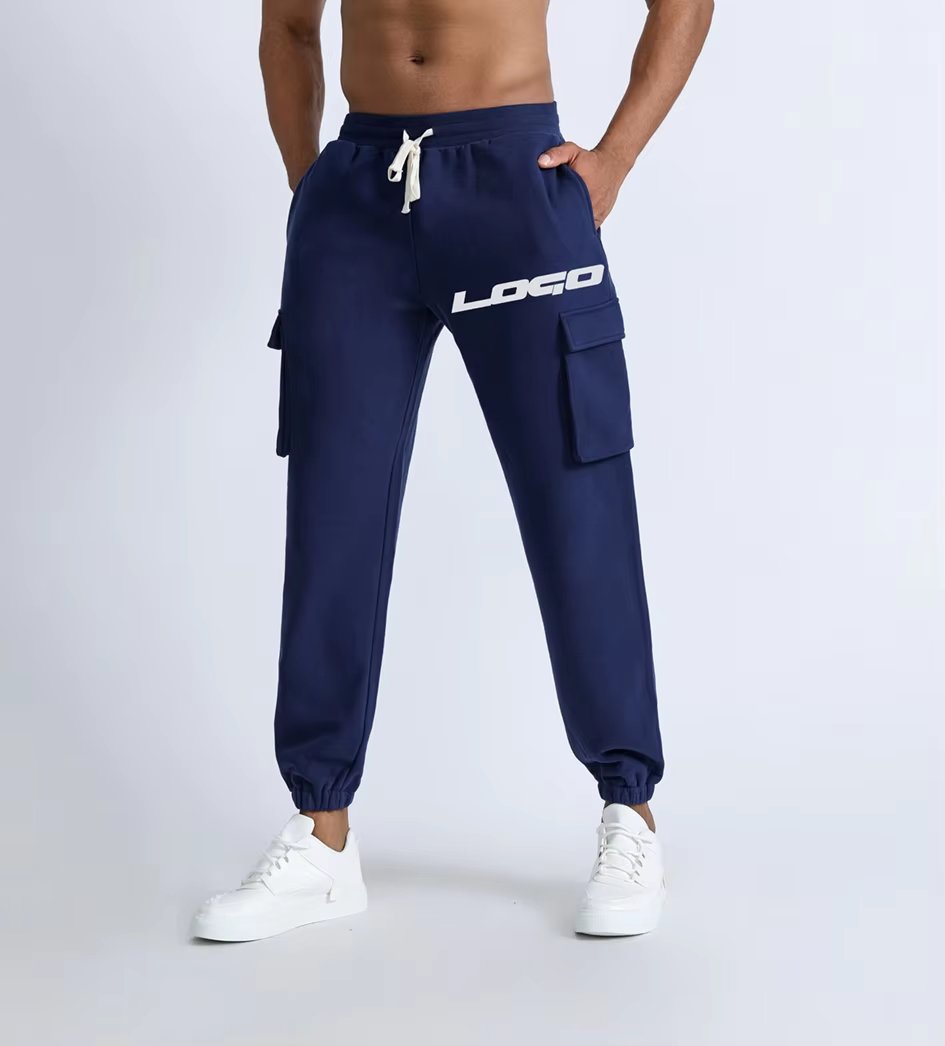
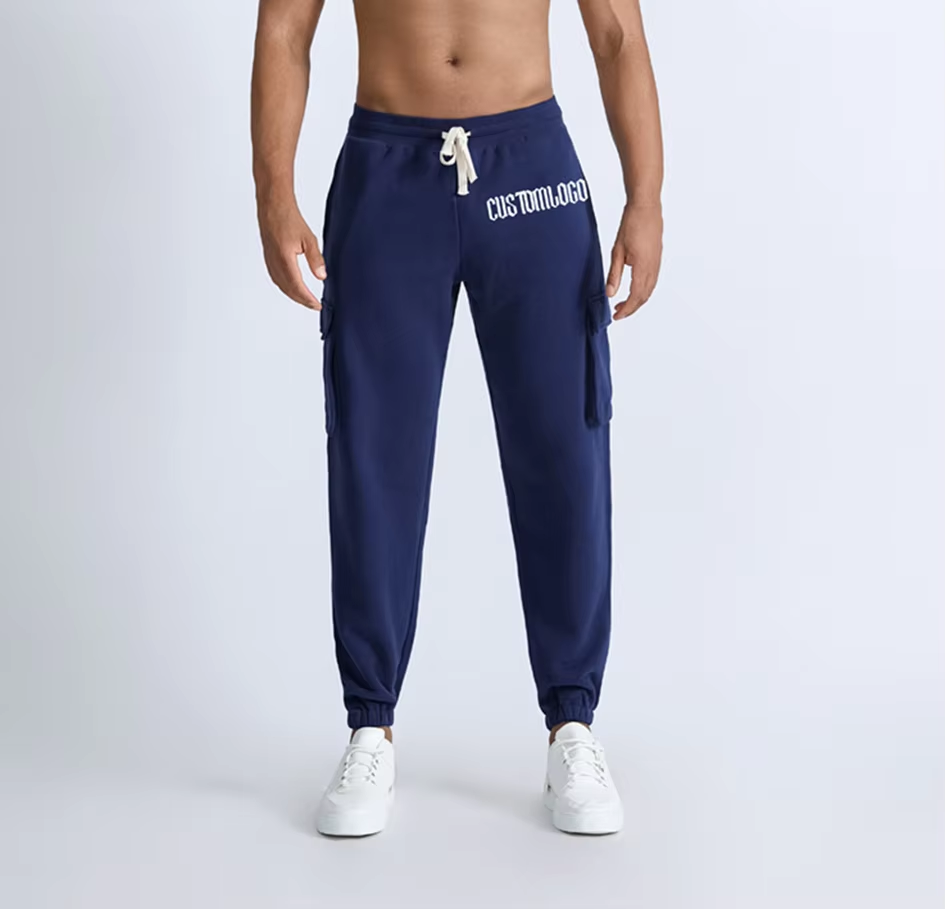
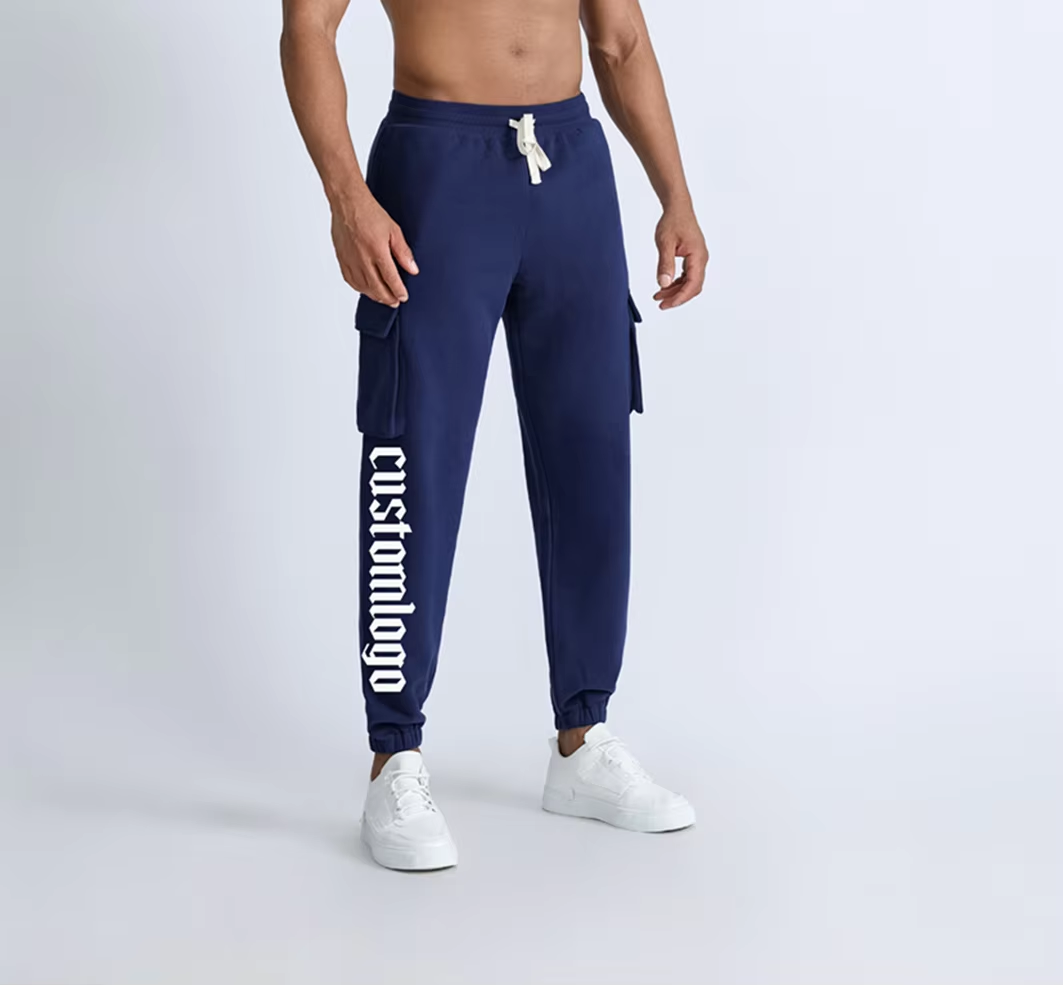
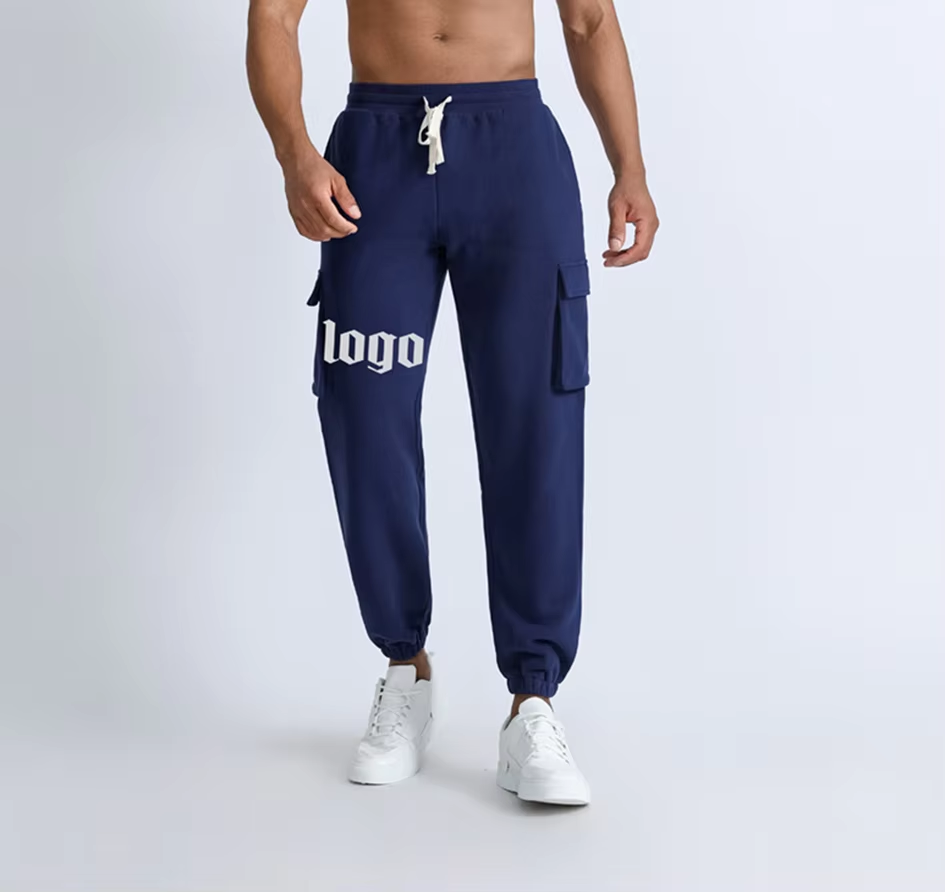
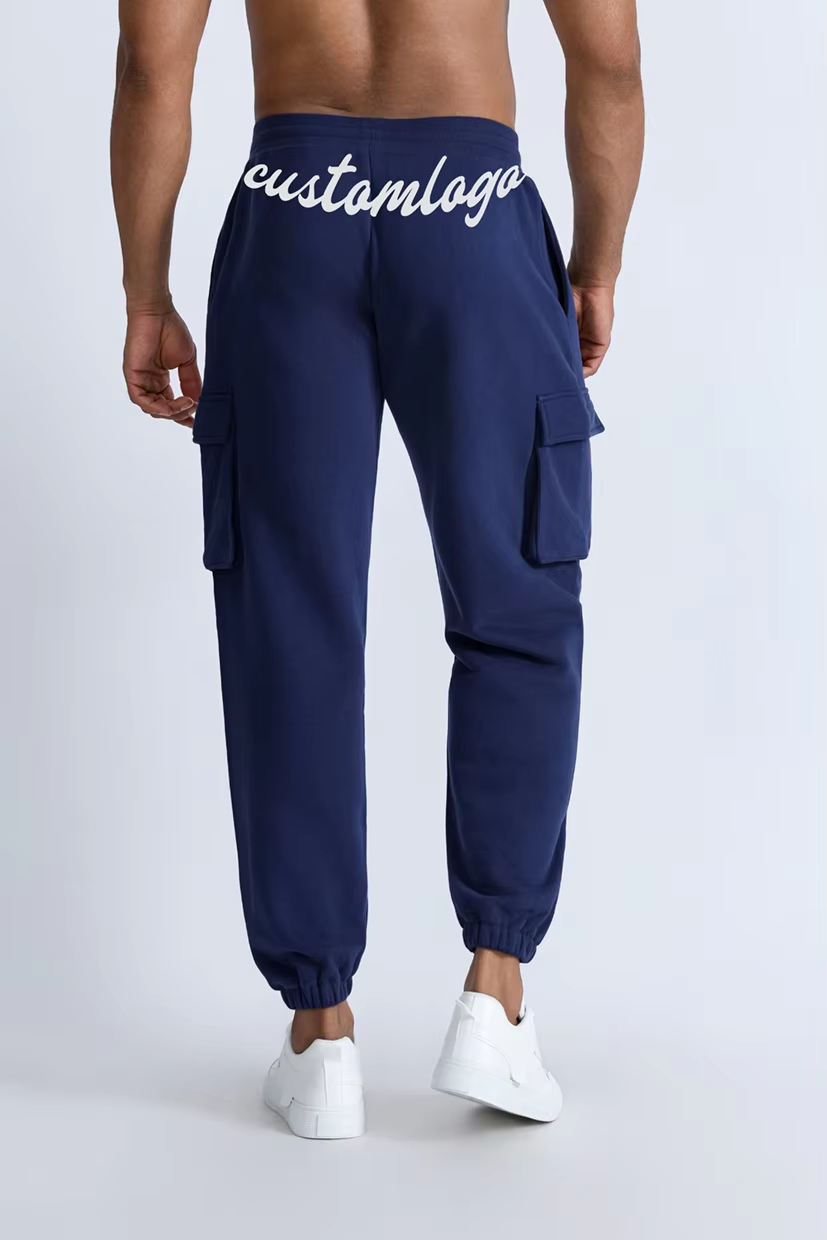
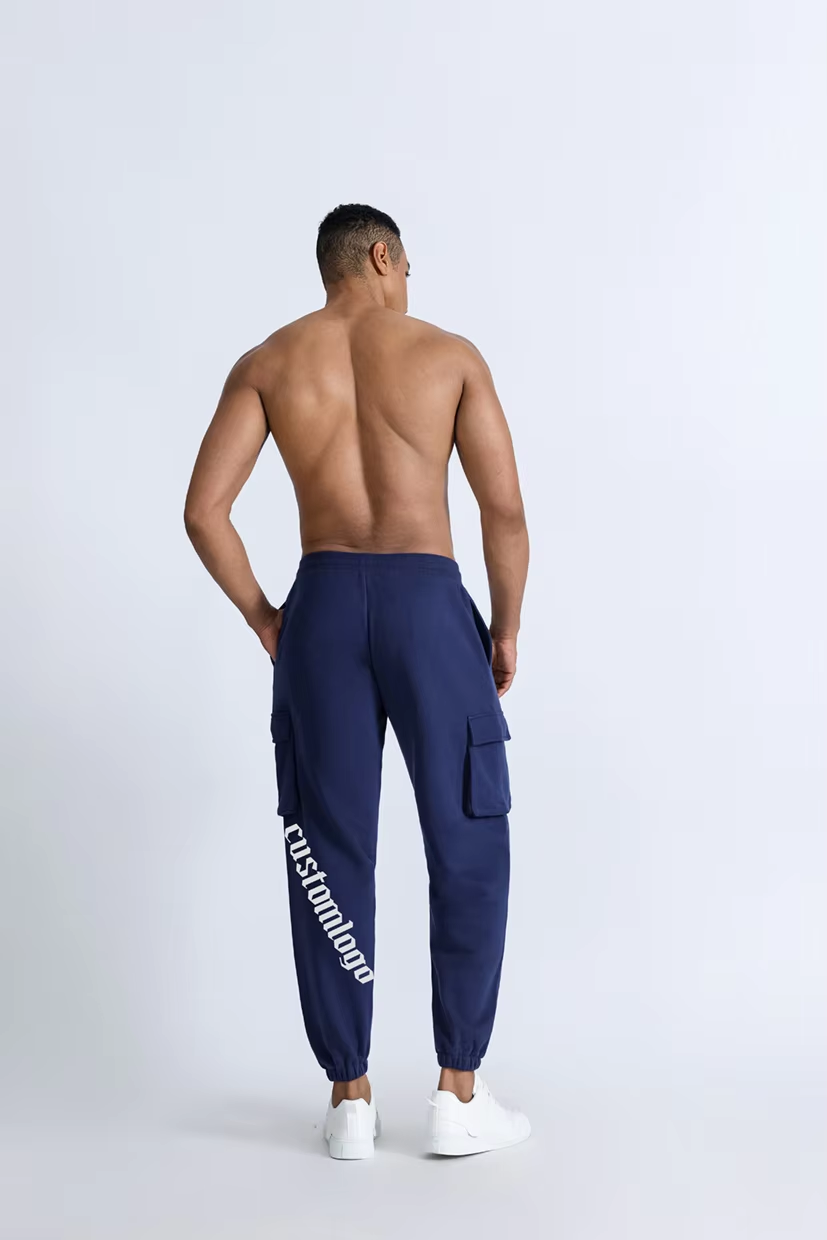
KUNDENSPEZIFISCHES BEKLEIDUNGSPRODUKT
Maßgeschneiderte Oversized-Cargo-Jogginghosen
Custom cargo joggers and oversized blank sweatpants for men’s streetwear and gym ranges. Source MOQ 50 and US$12.48–17.98; confirm fabric, pockets and print.
Artikelnummer:
DTS-ALB-JOGGERS-1601517872951
Kategorien: Cargo-Jogginghosen, Demnächst, Jogginghosen
Produktdetails
This B2B product record is for activewear brands, streetwear labels, private-label apparel teams, distributors, importers and buyers sourcing Cargo-Jogginghosen or oversized men’s sweatpants. The imported source listing uses the wording “Custom Men’s Oversized Streetwear Blank Sweatpants Gym Running Sport Breathable Cargo Jogger Pants Heat-Transfer Printing Jogger.” That wording sets the catalog direction; it does not replace a signed fabric specification, measurement chart, approved sample or current quotation.
Produktübersicht
Maßgeschneiderte Oversized-Cargo-Jogginghosen is presented as a sourcing record for men’s cargo joggers, oversized streetwear sweatpants and custom sports or gym ranges. The source title combines oversized, streetwear, blank, gym, running, sport, breathable, cargo and heat-transfer-printing language. Buyers can use this page to organize a quote around a cargo-jogger silhouette, but the final fabric, pocket layout, leg measurements, decoration, size range and private-label package must be written into the production file.
This page helps buyers compare Cargo-Jogginghosen, cargo joggers for men, men’s cargo joggers, individuelle Jogginghosen, blank sweatpants, oversized joggers und streetwear cargo pants without treating those search terms as identical specifications. A cargo direction depends on pocket construction, while an oversized fit depends on measurements and grading. A breathable or running direction requires a fabric and test plan. Confirm the intended product identity before approving a quote.
The accessible source snapshot does not confirm a GSM value, fiber percentage, knit or woven construction, size chart, pocket dimensions, waistband details, logo artwork, print durability, color range, label package, sample timing or lead time. The source snapshot also does not state a ready-to-ship status. Keep each missing field visible in the buyer brief rather than filling it with assumptions from another jogger or sweatpant record.
Source Specification Snapshot
The details below are retained from the imported source record available during the product audit. They are catalog-matching evidence, not a current landed-cost quotation, laboratory report or production approval.
- DTS product title: Custom Oversized Cargo Joggers.
- Quelllistungstitel: Custom Men’s Oversized Streetwear Blank Sweatpants Gym Running Sport Breathable Cargo Jogger Pants Heat-Transfer Printing Jogger.
- Quellenkategorie: Men’s Pants & Trousers.
- Source supplier shown: Xiamen Detosun Garment Co., Ltd.
- Source MOQ shown: 50 Pieces. Confirm whether this applies per style, color, size, artwork version, decoration method or complete mixed-size order.
- Public source price snapshot: US$12.48–17.98 per piece. Confirm the quantity tier, inclusions, currency, freight basis, payment terms and validity before quoting.
- Angezeigte Anpassungsfelder: Material (MOQ 50), Logo/graphic design (MOQ 50), and Logo position (MOQ 50). Confirm whether other changes carry a separate MOQ.
- Ready-to-ship flag: Not stated in the imported source snapshot. Confirm current stock, available colors, size mix and dispatch conditions.
- Material wording: “Blank sweatpants” and “breathable” appear in the source title, but the record does not confirm fiber content, GSM or a measured air-permeability result.
- Decoration wording: “Heat-Transfer Printing” appears in the source title. Confirm the actual transfer type, artwork limits, placement, adhesion and care instructions.
- Use wording: Streetwear, gym, running and sport language appears in the source title. These are application directions, not evidence of a product-specific performance test.
- Silhouette wording: Oversized cargo jogger appears in the source title. Confirm the rise, leg profile, hem, cargo-pocket arrangement and finished measurements.
- DTS SKU: DTS-ALB-JOGGERS-1601517872951.
- Quellen-Datensatz-ID: Alibaba product ID 1601517872951.
- DTS product terms: Cargo Joggers, Coming Soon and Joggers. These are catalog classifications; they do not substitute for a technical specification.
Keep this snapshot beside the approved tech pack, fabric swatch, measurement chart, artwork proof, quotation, packaging brief and inspection notes. Reconfirm the source title, 50-piece MOQ, price range and customization fields for the exact color, size mix and decoration route being purchased.
Cargo Jogger Fit And Pocket Direction
Define the cargo-jogger identity
Cargo joggers normally combine a jogger-style leg or hem with one or more utility-pocket details. This record uses cargo wording in both the source title and the product taxonomy, but the accessible snapshot does not state pocket count, pocket size, closure, gusset or placement. Put a front-and-back sketch in the buyer brief so “cargo” has a measurable meaning.
Separate oversized fit from a generic size label
Oversized is a fit direction, not a finished measurement. Set chest-style ease equivalents for the lower body through waist, hip, seat, thigh, knee, rise, inseam, outseam and leg opening. State the base size, grading rules and intended body-height range. Do not assume that a larger size label creates the same relaxed silhouette.
Set waist, rise and seat measurements
Record waist relaxed, waist extended, waistband height, front rise, back rise, hip, seat and thigh. State whether measurements are taken flat or around the garment and whether the sample is washed before measurement. These details control comfort and silhouette more reliably than a product image or the word oversized.
Control the jogger leg profile
Define whether the leg tapers from thigh to hem, stays relaxed through the knee, or follows another pattern. Record knee position, inseam, outseam, hem opening and cuff height for the base size and key extended sizes. If a stacked or baggy effect is not required for this SKU, keep those terms out of the approved product name.
Confirm cargo-pocket construction
Ask for a pocket map showing side, thigh, back and front-pocket positions, finished dimensions, opening direction, flap or zipper, closure method and reinforcement points. A cargo taxonomy does not prove that every pictured or expected pocket feature is part of the production version.
Check pocket access during movement
Review walking, sitting, squatting, stepping and a normal gym warm-up in the intended size. Check whether pocket openings remain accessible, whether contents pull the leg out of shape, and whether pocket bulk changes the drape. These are approval checks, not claims that the source garment has passed a movement test.
Choose the hem finish
Confirm whether the approved garment has elastic binding, a rib cuff, self-fabric cuff, open hem or another finish. Record cuff height, finished opening, stretch and seam construction. Do not call the item cuffed, straight-leg, flared or open-hem until the measurement sheet records that decision.
Oversized Streetwear And Blank Sweatpants
Use blank as a starting condition
In the source title, “blank sweatpants” can describe a base garment intended for later branding or decoration. Confirm whether the quoted version is undecorated, partially decorated or supplied with the stated heat-transfer-printing direction. The production file should identify the blank body, artwork version and decoration status separately.
Define the streetwear proportions
Streetwear buyers may prioritize a relaxed seat, longer inseam, lower rise, wider thigh, cargo pockets or a controlled ankle. Select the intended proportions using a fit sample and a measurement chart. Avoid using streetwear as a substitute for a size range, measurement tolerance or construction detail.
Protect the blank sample from decoration changes
Approve the blank garment’s fabric, color, fit and pocket construction before adding a large logo or transfer. Decoration can change hand feel, stiffness, drape, visual balance and care instructions. Keep the undecorated sample and decorated approval sample in the same development record.
Plan a coherent product range
When building a capsule, decide which elements stay fixed across colors and which are variable: leg profile, cargo-pocket layout, logo position, labels, drawcords and packaging. A shared base can simplify procurement, but every color and artwork combination still needs a clear approval reference.
Distinguish a sample from a blank program
A sample is a physical approval stage; a blank program is a commercial product direction. Confirm whether the buyer wants one development sample, a blank repeat order, a decorated private-label run or a mixed program. This distinction affects artwork, packaging, MOQ and production timing.
Keep private-label wording accurate
Custom logo or graphic design is shown in the imported source fields. Labels, hangtags, woven patches, care labels, polybags and carton marks are not confirmed in the source snapshot. List each private-label component as requested, quoted, sampled or approved so the order does not rely on the word custom alone.
Breathable Construction And Activity Use
Breathable is source-title wording
Breathable appears in the source title, but the imported record does not provide fiber composition, fabric construction, air-permeability data, moisture-management data or test conditions. Use breathable as a direction for fabric selection and buyer questions until the selected material is documented and tested.
Match the fabric to the activity
Gym, running and general sport use place different demands on stretch, recovery, abrasion, drying time, pocket security and waistband stability. Ask the buyer which activities matter most and how the garment will be layered. Do not promise running performance based only on the source title.
Choose knit or woven construction deliberately
Ask whether the proposal is fleece, French terry, jersey, interlock, a structured knit, woven nylon, woven polyester or another construction. Record face appearance, reverse appearance, stretch direction, recovery, drape, softness, abrasion expectation and care requirements on the fabric approval sheet.
Check airflow without overclaiming
If breathability is a buying requirement, agree on a test method, sample condition, measurement unit, acceptance range and test date. Test the selected color and finished construction, including cargo pockets and decoration where they may affect airflow. A general fabric description is not a product-specific result.
Review waistband and movement stability
For gym or running use, check waistband recovery, drawcord security, rise comfort, pocket bounce and hem position during representative movement. Record the wearer size, movement sequence and acceptance notes. Keep these observations separate from any unverified marketing claim.
Document care and end use
Set wash temperature, drying method, ironing limits and decoration-care instructions for the selected fabric. Confirm whether the garment is intended for casual streetwear, training, warm-weather activity or layered use. The source title does not establish a temperature range or care standard.
Heat Transfer Printing And Logo Placement
Heat transfer is source-title wording
The source title includes Heat-Transfer Printing, but the accessible record does not identify the transfer material, application temperature, pressure, dwell time, peeling method, finish or wash result. Ask DTS to confirm the proposed process in the quote and artwork approval.
Map every logo position
Mark front leg, back leg, side leg, pocket, waistband and lower-leg positions on a flat sketch. State whether the design is one position, multiple positions, repeat, all-over or panel-based. Include artwork size, placement tolerance, color references, orientation and the size range in which the graphic must remain balanced.
Check artwork around cargo pockets
A transfer placed across a pocket flap, seam, pleat or curved panel may need a different artwork boundary or application sequence. Show pocket openings, flap edges, bartacks and seam allowances on the artwork sheet. Approve the actual garment panel rather than a flat digital mockup alone.
Confirm hand feel and flexibility
Ask for the intended transfer thickness, softness, stretch, edge definition, adhesion and acceptable variation. Decoration can affect drape, pocket access, leg movement and the visual balance of an oversized garment. Approve the selected transfer on the selected fabric and color.
Review wash and rub resistance
Set wash cycles, drying conditions, rubbing method and acceptance criteria for peeling, cracking, lifting, color change and edge damage. Test the actual color, fabric, pocket panel and transfer combination. Do not transfer a result from a different T-shirt, jogger or decoration process.
Keep artwork files production-ready
Record file format, color references, dimensions, position, orientation, artwork version and approval date. If the buyer supplies a logo, confirm usage rights and whether the artwork may be used in samples, production, photography or marketing. Use the inquiry and NDA process when unreleased artwork or private-label information requires controlled handling.
Fabric, GSM And Hand Feel
No GSM is confirmed for this SKU
The imported source snapshot does not state GSM. Ask DTS to specify target fabric weight, tolerance, measuring method, usable width and whether the result changes by color, brushing, washing or transfer application. Do not borrow 220gsm, 280gsm or 400gsm from another DTS product page.
Do not infer composition from “sweatpants”
Sweatpants is a garment category, not a fiber composition. Request the fiber breakdown, yarn information, construction and labeling basis for the selected fabric. Composition from another cargo jogger or cotton sweatpant record must not be transferred here.
Set a fabric approval record
Record supplier fabric name, fiber composition, target GSM, tolerance, width, color, finish, lot reference, swatch date and approval owner. Link the Stoff- und Zubehörbibliothek for planning context, and use the Leitfaden zur Bedeutung von GSM in der Bekleidung to align terminology without treating it as product evidence.
Review shrinkage and recovery
Define wash conditions and acceptance criteria for dimensional change, waistband recovery, leg length and pocket alignment. Test the selected fabric and finished garment when the cargo silhouette is sensitive to shrinkage. A supplier’s general statement cannot replace a SKU-specific approval.
Check pilling, crocking and color change
Where relevant, set review conditions for pilling, dry and wet crocking, perspiration, washing and color appearance. Include fabric color, decoration and wash cycle in the record. Do not present an unrecorded inspection as a certification or laboratory result.
Align fabric choice with the buyer’s margin
Compare fabric cost, yield, usable width, pocket panels, transfer area, packaging and expected order quantity. A lighter fabric may change drape and pocket stability; a heavier fabric may change freight, drying time and price. The correct choice depends on the approved end use and target cost.
Size Range And Grading
Start from a measurement chart
Request the buyer’s target body measurements or garment measurements and define the base size. Record waist, hip, seat, thigh, knee, rise, inseam, outseam, hem and pocket dimensions. State tolerances and the measurement method before sampling.
Grade oversized proportions carefully
Oversized silhouettes do not always scale by the same increment as regular joggers. Decide how waist, seat, thigh, rise, leg length, pocket size and pocket position change across sizes. Check that the relaxed proportion remains intentional rather than becoming disproportionate at the ends of the range.
Check extended-size requirements separately
The source snapshot does not confirm a plus-size range. If extended sizes are needed, ask for a separate grading plan, fit sample or sample review. Do not describe this SKU as plus-size ready until the measurement chart and approval record support that claim.
Keep artwork aligned across sizes
Logo placement that works on a medium leg may look too high, too low or too close to a pocket on a larger or smaller size. Define whether placement is measured from the side seam, waistband, hem, pocket edge or another reference point. Approve representative sizes before bulk production.
Review fit in the intended use
Check standing, walking, sitting, squatting and stepping in the intended size range. Note waistband ride, rise comfort, cargo-pocket access, hem position and leg mobility. Record the wearer size and sample version so fit feedback can be reproduced.
Use the tech-pack workflow
Compile measurements, construction sketches, fabric details, artwork, labels, packaging, tolerances and inspection points in one file. The tech-pack customization guide helps organize the request, while the final approved document must contain the actual requirements for this SKU.
Cargo Pockets And Construction Details
Specify pocket dimensions
Record finished pocket width, height, depth, opening, flap overlap, gusset, placement and seam allowance. State whether dimensions are measured flat or around a three-dimensional pocket. Use a pocket sketch rather than assuming a standard cargo layout.
Choose a closure that fits the end use
Confirm open pocket, flap, snap, zipper, hook-and-loop, elastic or another closure. Consider hand access, noise, bulk, wash care and the buyer’s intended activity. Do not claim secure storage until the selected closure and sample have been reviewed.
Reinforce high-load points
Ask where bartacks, reinforcement tape, double stitching or seam binding are required around pocket corners, openings, drawcord exits and waistband joins. Record thread, stitch density and acceptable seam appearance in the construction sheet.
Inspect leg and pocket symmetry
Compare left and right pocket placement, flap alignment, transfer position, side seam balance and hem height. Set a tolerance that the buyer can inspect. A product photograph is not a substitute for a symmetry tolerance.
Confirm drawcord and trim details
Specify drawcord type, diameter, length, exit position, aglet or knot, eyelet, cord lock and safety requirement where applicable. If the buyer wants a clean blank look, state which trims remain visible and which are omitted.
Keep unverified construction items open
The source snapshot does not confirm pocket lining, zipper brand, thread composition, bartack count, drawcord specification or seam allowance. Mark those fields “confirm before approval” until DTS supplies or the buyer approves them.
Color, Trims And Private Label
Separate material from color
The imported source fields include Material with MOQ 50, but they do not provide a fabric specification or color list. Ask the buyer to approve both the material and each color reference. Avoid describing the item as black, neutral, acid-washed or pigment-dyed unless the specific version supports it.
Build a color approval path
Record color standard, lab-dip or swatch reference, approval date, lot tolerance and whether transfer colors need a separate proof. Review fabric, thread, drawcord, pocket trim and label colors together because contrast changes the streetwear appearance.
Confirm logo and graphic design scope
Logo/graphic design and Logo position are shown as source customization fields with MOQ 50. Confirm who supplies the artwork, who approves the placement, what revisions are included and whether digitizing, sampling or additional positions affect cost.
Specify labels and hangtags
List main label, size label, care label, fiber label, hangtag, woven patch or transfer label separately. Confirm artwork, dimensions, attachment method, language, country-of-origin requirements and packaging position. These details are not confirmed by the current source snapshot.
Plan packaging and carton marks
Record folding method, individual polybag, size sticker, barcode, carton quantity, carton dimensions, gross weight, shipping marks and any recycled-material requirement. Confirm whether packaging is included in the displayed price range or quoted separately.
Protect unreleased brand assets
Send only the artwork and brand information required for the agreed development stage. Confirm permitted use of samples and photography. Route confidential requests through the NDA and IP protection page when the buyer needs that process.
Wholesale MOQ, Pricing And Order Planning
Use the source price as a snapshot
The imported source record shows US$12.48–17.98 per piece. This is a public source snapshot, not a current quotation. Confirm quantity tier, fabric, color, pocket construction, decoration, labels, packaging, freight basis, payment terms and validity for the exact version.
Confirm the 50-piece MOQ basis
The source snapshot shows a minimum order quantity of 50 Pieces. Ask whether the MOQ is calculated per style, color, size, logo version, pocket configuration or complete order. A 50-piece source display does not guarantee that every customization combination uses the same MOQ.
Request separated cost lines
For a comparable quotation, request separate lines for garment body, fabric or material change, cargo-pocket construction, heat-transfer decoration, labels, packaging, sampling, freight and any setup cost. This makes it easier to compare a blank sweatpant program with a decorated private-label program.
Calculate landed-cost inputs
Record unit price, quantity, packaging, carton data, freight mode, destination, duties or taxes, payment fees and inspection cost. Keep the public source price separate from the buyer’s landed-cost model. Do not promise a final margin from the displayed range alone.
Check ready-to-ship status
Ready-to-ship is not stated in the imported source snapshot. Confirm whether the requested color, size mix, blank body and decoration are currently available, and ask for dispatch conditions. A custom logo or heat-transfer request may require a different production path from an undecorated item.
Align price with the approval stage
Ask DTS to label the price as sample, development, production, repeat-order or estimated bulk pricing. Record quotation date, currency, inclusions and expiry. If fabric, artwork, pocket details or packaging change, request a refreshed quote rather than reusing an earlier number.
Sampling And Approval Path
Send a complete development brief
Include target quantity, base size, full size range, fabric direction, target weight, color, cargo-pocket sketch, waistband, hem, artwork, logo positions, labels, packaging, destination and delivery window. A complete brief reduces back-and-forth and gives the supplier a defined basis for sample review.
Approve the blank body first
Review fabric, color, fit, measurements, pocket placement and construction on the undecorated body where possible. Record changes by sample version. Do not approve a transfer placement on a body whose leg or pocket measurements are still changing.
Approve the decorated sample
After the blank body is stable, review the actual heat-transfer printing, logo scale, placement, hand feel, edge definition and care label. Keep the approved artwork file and garment sample together so the production team can reproduce the same version.
Run representative size checks
Review at least the base size and any sizes where the pocket, hem or logo position may shift materially. Confirm grading, leg balance, pocket symmetry and graphic placement. Do not assume a single sample proves every size.
Record revisions clearly
Use a dated comment log with sample number, issue, requested action, owner and close-out evidence. Distinguish measurement revision, fabric revision, artwork revision, trim revision and packaging revision. This prevents a later sample from being mistaken for the approved version.
Move to bulk only after sign-off
Bulk production should reference the approved tech pack, fabric swatch, color, artwork proof, measurement chart, packaging brief and inspection criteria. Confirm current MOQ, unit price, lead time and availability at purchase because the source snapshot can change.
Quality Checkpoints For Buyer Review
Incoming fabric and trim check
Compare composition, color, target GSM, width, hand feel, stretch, recovery, drawcord, labels and pocket materials against the approved record. Keep lot references and inspection notes with the order file.
Measurement and grading check
Measure waist, hip, seat, rise, thigh, knee, inseam, outseam, hem and cargo pockets using the agreed method. Record actual values, tolerance, sample size, wash condition and inspector. Do not summarize a measurement result without its method and conditions.
Construction check
Inspect seams, waistband, drawcord exits, pocket openings, flaps, closures, bartacks, hems and symmetry. Confirm that construction matches the approved sketch and that pocket contents do not distort the leg beyond the agreed expectation.
Dekorationsprüfung
Inspect transfer position, size, color, edge, adhesion, surface defects, cracking and interaction with seams or pocket panels. Use the approved artwork and actual production color as the comparison reference.
Wash and care review
Where the buyer requires it, define representative wash, drying, rubbing and care checks. Record sample identity, conditions, cycles and acceptance criteria. Do not label a garment tested or certified unless the relevant evidence exists for this SKU.
Final packing and quantity check
Confirm size and color count, labels, individual packaging, barcode or sticker, carton marks, carton quantity and shipping documents. Keep any shortage, substitution or packaging deviation in the final inspection record.
Choose Cargo Joggers Versus Other Pant Shapes
Cargo joggers versus standard joggers
Standard joggers may focus on waist, leg and hem, while cargo joggers add pocket construction and utility details. Choose cargo joggers when the pocket map is part of the product identity. Choose a standard jogger brief when the buyer wants a cleaner body with no cargo-pocket development.
Cargo joggers versus straight-leg pants
Straight-leg pants are primarily defined by their leg width; cargo joggers are defined by the combination of leg direction, hem and pockets. Compare knee, hem, inseam, pocket volume and movement rather than using category names alone. The separate 100% cotton acid-wash straight-leg jogger record must not be used as evidence for this SKU.
Cargo joggers versus stacked pants
Stacked pants focus on the visual effect of fabric gathering or pooling, while cargo joggers focus on pocket and jogger construction. If the buyer needs stacking, specify it in the pattern and measurement sheet rather than transferring the claim from another product. The separate washed baggy stacked pants record is a different source.
Cargo joggers versus wide-leg training pants
Wide-leg training pants prioritize a wider lower-body profile and may use a different fabric or hem. Compare leg width, material, pocket direction and activity requirement before choosing. The separate polyester wide-leg jogger record should remain a comparison page, not evidence for this product.
Cargo joggers versus nylon sports pants
Nylon sports pants may be selected for a lighter woven direction, quick-dry brief or different surface feel. This product’s source snapshot does not confirm nylon, quick drying or a performance finish. Compare the material and test requirements in the quotation instead of borrowing claims from the separate nylon wide-leg training-pants record.
Choose by the buyer’s actual use
Use cargo joggers when the buyer needs a relaxed jogger silhouette plus specified pocket details for streetwear, casual or training ranges. Use another pant brief when the primary requirement is straight-leg structure, stacked length, wide-leg volume or a tested quick-dry construction. The selection should follow the approved measurements and use case.
Käuferfragen
Are these custom cargo joggers for men?
The product title and source listing present a men’s oversized cargo-jogger direction. The source fields show material, logo/graphic design and logo position customization with MOQ 50. Confirm the final fit, material, pocket layout, artwork and size range for the requested version.
What is the MOQ for this product?
The imported source snapshot shows 50 Pieces. Confirm whether that MOQ applies per style, color, size mix, artwork or decoration route before using it in a purchase plan.
What is the source price?
The imported source snapshot shows US$12.48–17.98 per piece. Confirm quantity tier, inclusions, freight basis, payment terms and quotation validity before treating it as a current price.
Are the joggers ready to ship?
Ready-to-ship is not stated in the imported source snapshot. Ask DTS to confirm current stock, color, size mix, blank-body availability and dispatch timing for the exact order.
What fabric are the sweatpants made from?
The accessible source snapshot does not confirm fiber percentage, GSM or construction. Request composition, target weight, fabric structure, finish, care instructions and any applicable test conditions before approval.
Are the joggers breathable for running?
Breathable, running and sport appear in the source title, but no product-specific performance result is provided. Treat them as application directions and confirm the fabric, fit and test requirements for the intended activity.
Do the pants include cargo pockets?
Cargo wording appears in the source title and product taxonomy, but the accessible snapshot does not define pocket count, dimensions or closures. Request and approve a pocket map before quoting the final version.
Can I add a logo or graphic?
Logo/graphic design and logo position are listed as customization fields with MOQ 50. Confirm artwork ownership, file requirements, placement, transfer method, sample approval and any additional setup or position cost.
Is heat-transfer printing confirmed?
Heat-transfer printing appears in the source listing title. The transfer material, application conditions and durability are not confirmed in the snapshot, so approve the actual print on the selected fabric, color and pocket layout.
Can I order blank sweatpants?
Blank sweatpants wording appears in the source title, but the exact undecorated version and current availability must be confirmed. Ask whether the blank body uses the same material, pocket construction, MOQ and price as the decorated version.
Can the oversized fit be changed?
Confirm the target waist, seat, thigh, rise, inseam, hem and pocket measurements in a tech pack. Oversized fit is not a single standard, and changes may affect grading, sample timing and price.
How should I request a sample?
Send quantity, base size, size range, material direction, color, pocket sketch, logo artwork, positions, labels, packaging, destination and delivery window. Use the Muster- und Prototyping-Prozess to organize the development request.
What should be checked before bulk production?
Approve the fabric, color, measurement chart, cargo-pocket map, blank body, decorated sample, artwork, labels, packaging, MOQ, price, inspection criteria and lead time. Keep source snapshot facts separate from the final signed production documents.
Verwandte Käuferressourcen
Use these resources to move from product discovery to a clearer sourcing brief:
- Explore the joggers collection for related men’s jogger directions.
- Review the sweatpants collection when comparing fabric and silhouette options.
- Browse the Cargo Joggers category for related pocketed streetwear products.
- Read the types of sportswear guide before selecting an activity direction.
- Review the fabric and trim library for material and trim questions.
- Compare activewear fabric considerations when breathability or movement matters.
- Review GSM terminology before requesting a measurable fabric-weight target.
- Prepare a customization brief with measurements, pockets, artwork and packaging.
- Start sampling and prototyping before committing to bulk quantities.
- Review delivery-support questions for packing, dispatch and logistics planning.
Quellenlistenreferenz
This product page preserves the source relationship for catalog matching. The live Alibaba detail page was protected by a verification prompt during the current audit, so the following facts should be reconfirmed with DTS before purchase: source title, seller, MOQ, price range, material wording, customization fields, availability, fabric specification, pocket construction, decoration method and lead time.
View the original Alibaba product detail page. The source record ID is 1601517872951.
Related Cargo Jogger And Sweatpant Products
Use the following product records for comparison only. Each is a separate source and should be quoted and approved independently:
- Maßgeschneiderte athletische Jogginghosen in Übergrößen — compare an explicit 280-gram cotton-polyester athletic direction.
- Personalisierte Schwergewichtige Baumwoll Sport Jogger — compare a separate heavyweight cotton sports record.
- Maßgeschneiderte Polyester Jogger mit weitem Bein — compare a polyester and wide-leg direction.
- Individuelle, gewaschene, weite Stacked Pants — compare washed, baggy and stacked styling questions.
- 100% Baumwolle Acid-Wash Gerade Jogginghose — compare a separate cotton, wash and straight-leg record.
- Individuelle, gewaschene Cargo-Jogginghosen — compare a washed cargo and winter-oriented direction.
- Individuelle Nylon-Trainingshosen mit weitem Bein — compare a nylon and lighter performance-oriented brief.
- Maßgeschneiderte 400gsm Jogger mit geradem Bein — compare a product with an explicit GSM direction.
- Individuelle Plus-Size Jogginghosen mit geradem Bein — compare plus-size and straight-leg planning.
- Personalisierte, lockere Baumwoll-Trainingsjogginghose — compare a separate cotton baggy training direction.
Request A Custom Cargo Jogger Quote
Send your target quantity, base size, size range, fabric or material requirement, target weight, color, oversized fit measurements, cargo-pocket sketch, logo artwork, heat-transfer positions, labels, packaging, destination and required delivery window. Ask DTS to confirm the material, breathability direction, pocket construction, sample path, MOQ basis, current unit price, availability, inspection checkpoints and lead time for the exact version you want to buy.
Contact DTS Activewear to request a custom quote, or review the inquiry and NDA process if the project includes unreleased artwork or private-label information.
Bereit, Ihr individuelles Bekleidungsprojekt zu prüfen?
Senden Sie Ihr Tech-Pack, Ihre Skizze, Zielmenge, Stoffanforderungen, Branding-Details oder Verpackungsbedarf. Unser Team prüft den Projektumfang und hilft Ihnen, den nächsten Schritt für Angebot oder Muster zu bestätigen.