The lowest-cost country for your activewear order is the one that delivers the approved specification at the lowest cost per saleable garment, within your cash and delivery limits. China, Vietnam and Mexico can each fit that brief. Compare matched factory quotes, input origins, duties, freight, rejected stock and replenishment requirements before moving production. A lower sewing price alone does not establish a saving.
For a US brand comparing China vs Vietnam clothing manufacturing, adding Mexico introduces another question: can a nearer production location improve replenishment without increasing fabric costs or creating an unsupported duty-preference claim? Use one quote-ready order as the basis for the comparison.
Reviewed October 21, 2026. The cost examples below are hypothetical planning exercises, not country price averages, supplier offers or tariff quotations. Generated illustrations explain the process; they do not depict DTS facilities, employees, actual supplier documents or test results.
Start with one activewear specification, not three country averages
Send the same specification to every shortlisted factory. A 180 GSM polyester-elastane training tee and a lighter polyester tee are different products, even if both quotations say “performance T-shirt.” A cheaper fabric substitution can change fit, opacity, drying behavior, decoration and customer returns.
For an initial comparison, freeze these fields:
- Garment construction, fabric composition, target weight and the approved fabric reference.
- Size measurements, grading, tolerances and the quantity by size and color.
- Seam type, reinforcement, trims, labels, decoration and packaging.
- Required performance checks, inspection scope and defect handling.
- Total quantity, repeat-order assumptions, delivery destination and quote validity.
- Trade term, named handover point, currency, payment stages and exclusions.
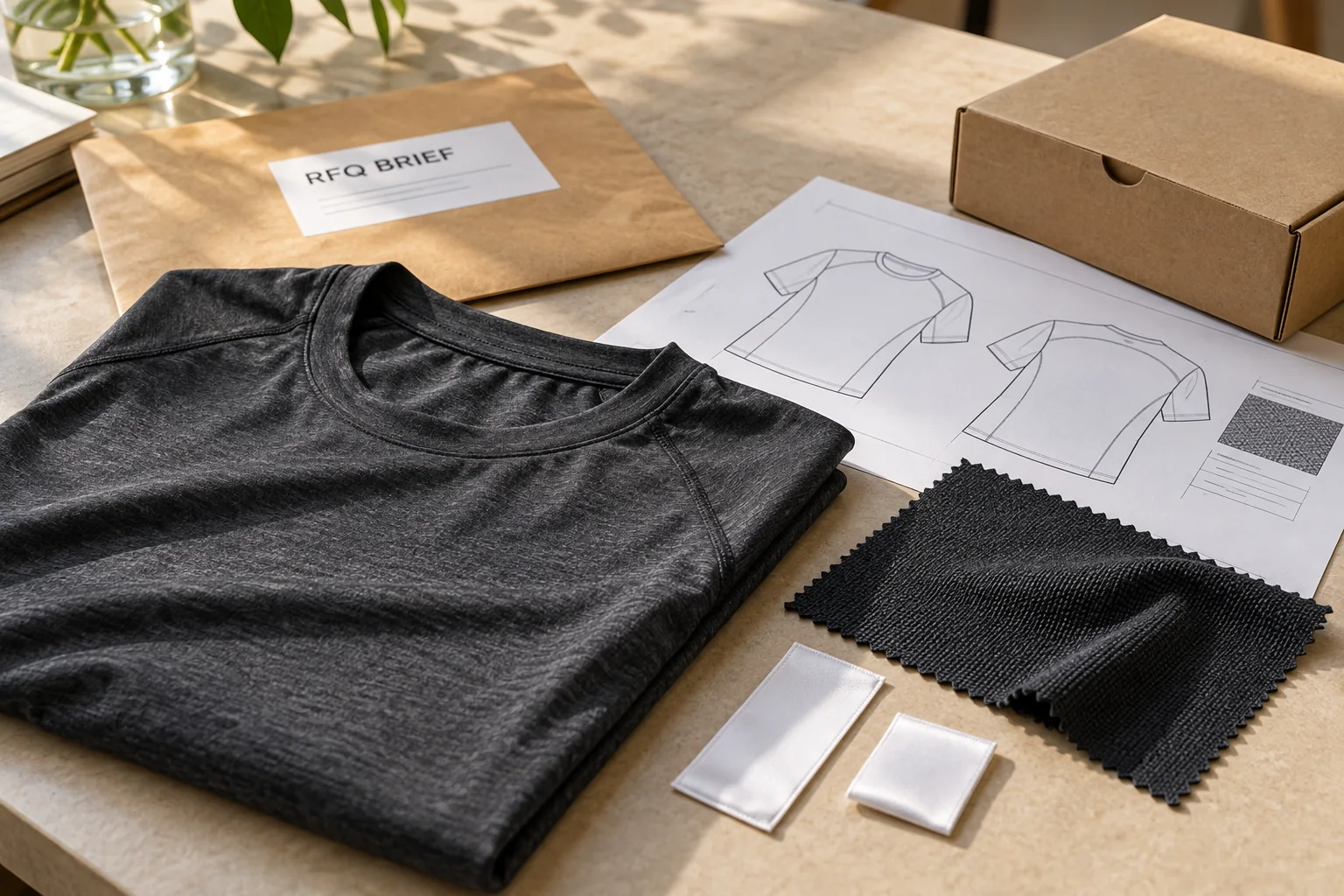
Also state whether the factory buys the fabric or receives nominated material. A cut-make-trim quote and a finished-garment quote cannot be compared on their headline prices. When the paperwork is incomplete, use a tech pack review to make the missing decisions visible before asking factories to price them.
Decision rule: if two suppliers have priced different fabric, quantities or handover responsibilities, resolve those differences before ranking the countries.
Which costs belong in a country comparison?
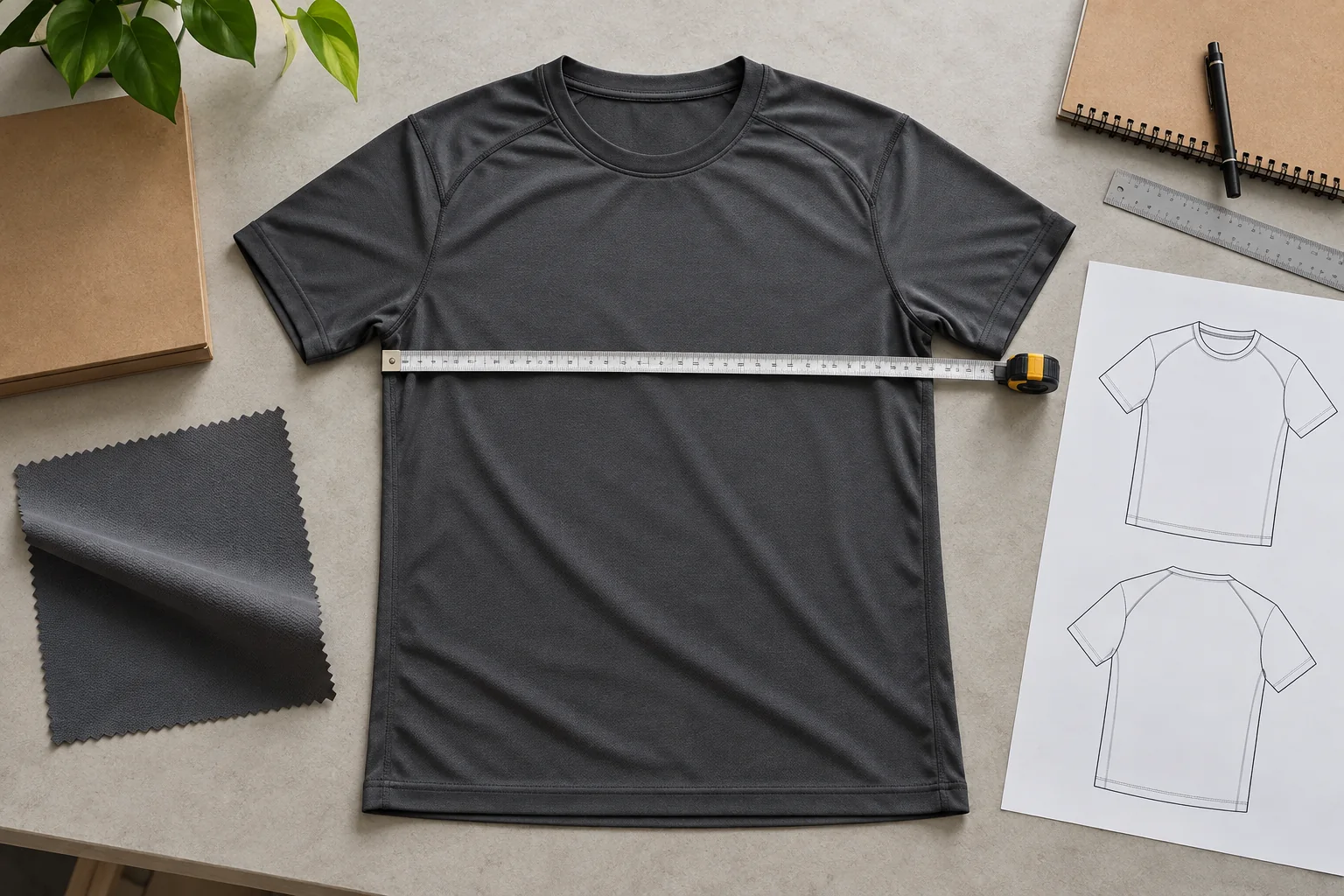
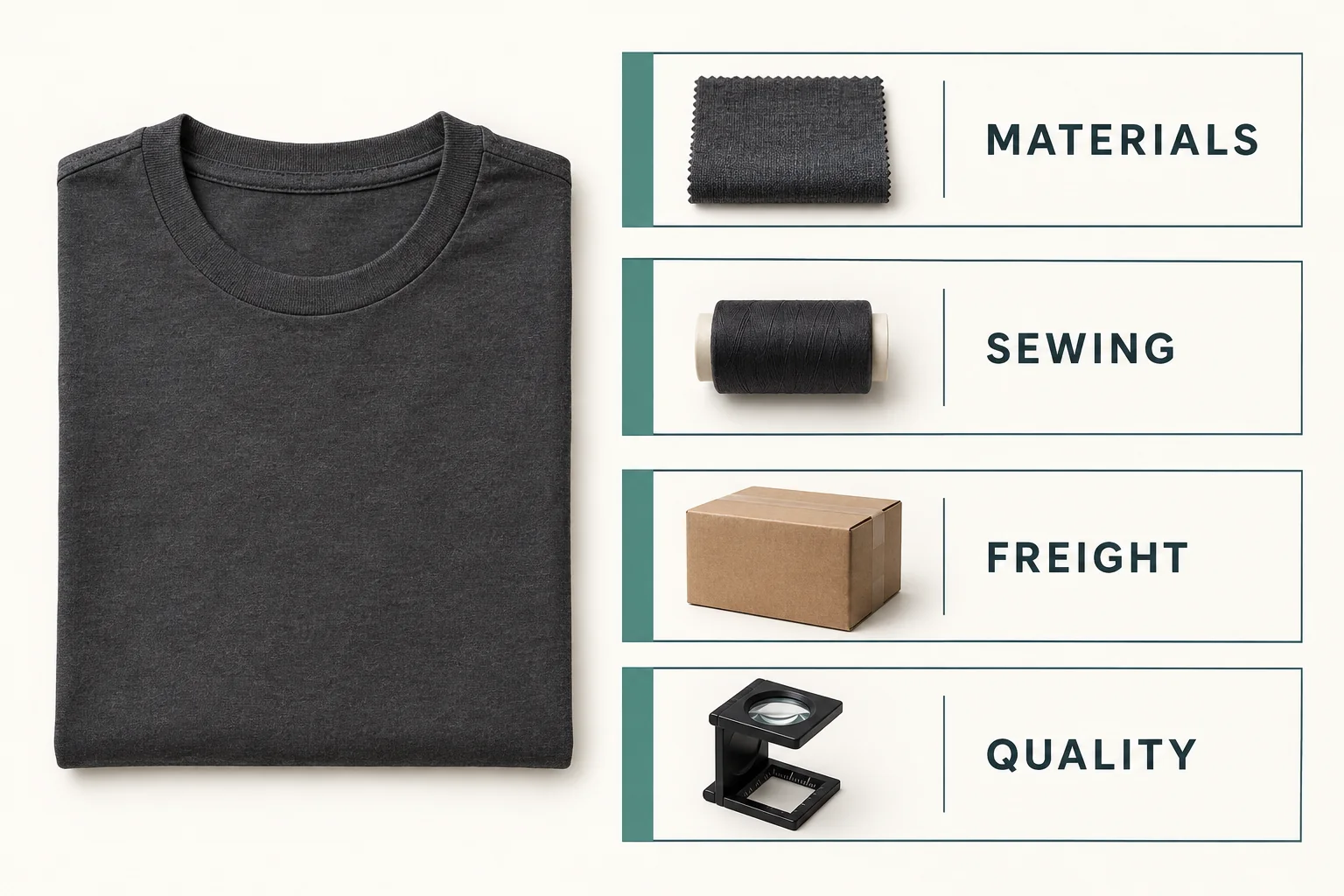
Record the cash required to receive the order and the cost per garment you can sell. Keep selling-channel commissions and outbound consumer fulfillment in a later contribution-margin calculation so they do not conceal an incomplete import budget.
Cost per saleable garment = total order acquisition cost ÷ accepted saleable units.
Here, acquisition cost includes the garments, order-specific development, agreed inspection, freight, insurance, entry charges, applicable duties and delivery to the same receiving point. Add rework and replacement costs when you expect to pay them. Do not count a cost again if it is already included in a delivered quote.
Labor matters, but an hourly wage is not the same as labor cost per completed garment. Sewing time, line setup, efficiency, supervision, rework and the product mix all affect what the factory must charge. An inexpensive sewing operation can still produce an expensive order if fabric has to move between countries or the run is repeatedly interrupted.
Il USFIA research program treats sourcing as a decision involving costs, flexibility and risk. Its surveys describe participating companies; they are not a price list for a small brand’s next leggings or training-top order.
China: test the value of the complete production package
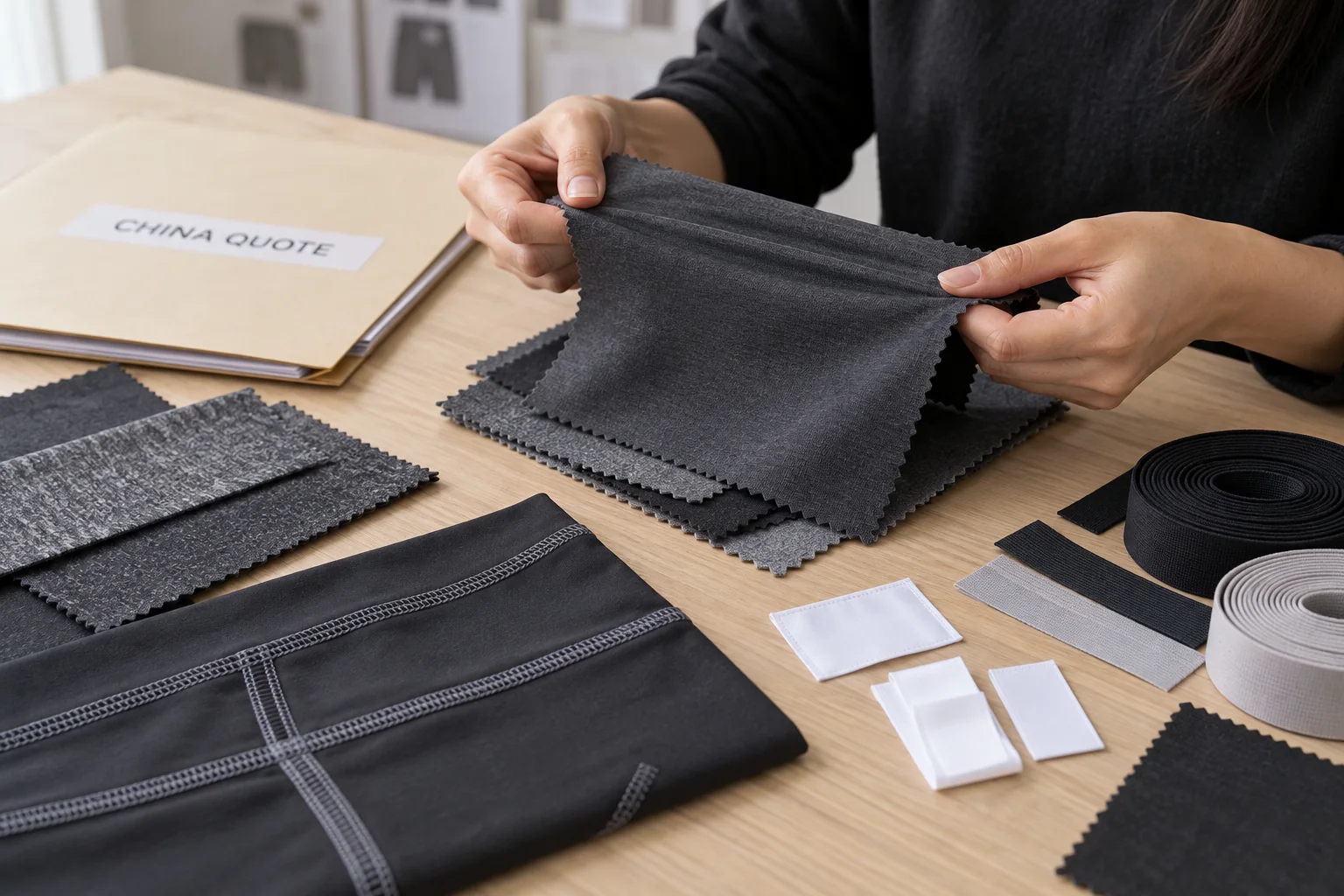
A China quotation deserves a close look when your order involves several fabric and trim decisions, multiple sample corrections or a small assortment that must stay consistent. Confirm those capabilities with the specific factory; low quantities and technical-fabric development are not available from every supplier.
Ask the supplier to identify which materials are available for this order, which need a new mill run, and which processes are subcontracted. Check whether the same fabric reference can support both the sample and the bulk order. A convenient sample made from leftover material has limited value if the production fabric changes later.
China should remain on the shortlist when a verified factory can meet the specification, quantity and development needs at an acceptable delivered cost. Reconsider the option when the real tariff exposure, documentation gaps or replenishment schedule defeats the product’s margin or launch plan. Country familiarity should not substitute for a current quote.
Useful RFQ question: “Which fabric, trim and decoration assumptions would change if we reduced the number of colors or placed a repeat order?” That separates a supplier’s actual price drivers from a generic country narrative.
Vietnam: verify the material route behind the sewing quote
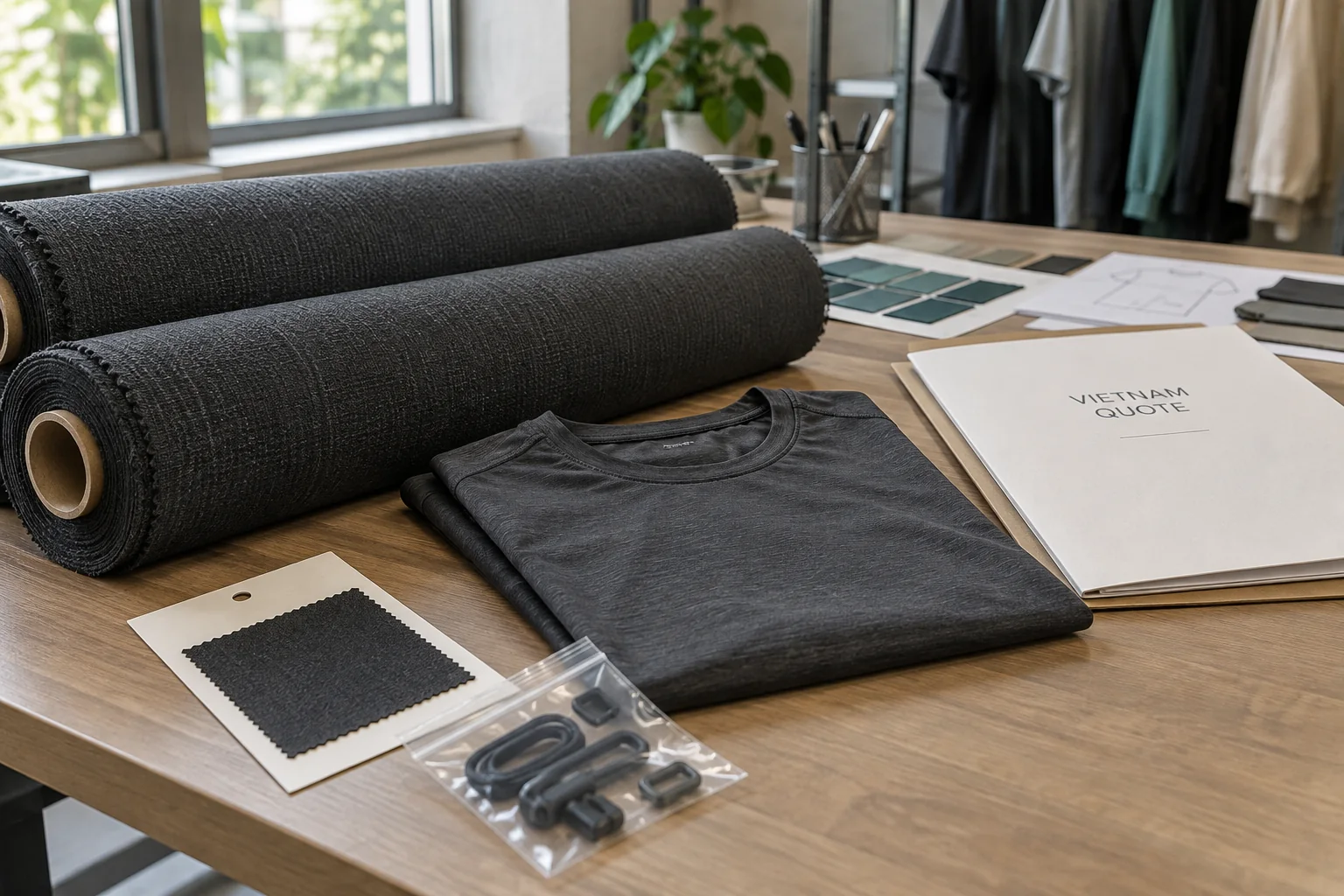
For a Vietnam option, establish where the approved fabric, elastic, thread and labels will be made and how they reach the sewing factory. Do not assume those materials are imported, and do not assume they are locally available. Obtain the answer for the actual style.
If a proposed factory must import your nominated fabric, ask who books that movement, pays the charges, owns unused rolls and carries the delay risk. Include that route in the sample and bulk schedule. If a local alternative is proposed, compare its physical performance with the approved reference rather than accepting a similar composition description.
Vietnam can be a sensible second-source candidate when a specific supplier passes the sample, quantity, input and commercial checks. It is a weaker switch when the lower sewing quote depends on unapproved fabric, a larger commitment or an unpriced material transfer. Those conditions can erase the saving before the finished garment ships.
Ask for a complete finished-garment offer alongside any cut-make-trim option. The difference shows which purchasing and coordination responsibilities the brand would inherit.
Mexico: cost the regional material plan before claiming a preference
Mexico is worth screening when US replenishment and a regional production plan matter to the order. Price the actual factory-to-warehouse route, including border handling and inland transport. Proximity creates an opportunity to test a shorter replenishment cycle; it does not guarantee a particular delivery time or lower total cost.
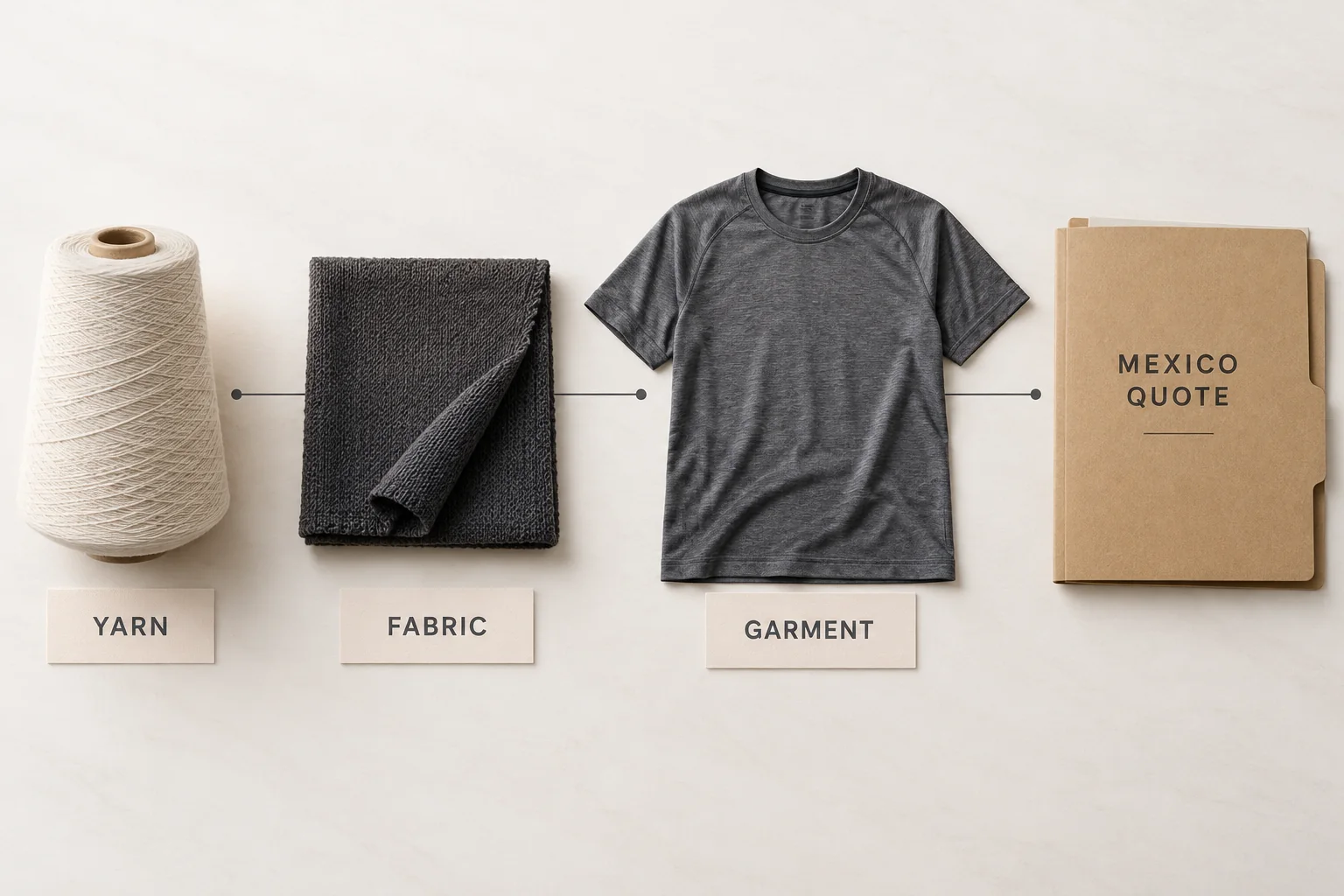
USMCA preference depends on the product and its qualifying production history. The International Trade Administration’s textile guidance describes yarn-forward rules for many apparel products, with exceptions and additional component rules. Sewing imported fabric in Mexico alone does not establish eligibility. The guidance also describes limited preference routes that have their own conditions; none should be assumed from a country label.
Before pricing a preference, ask the factory and broker to verify the tariff classification, relevant rule, material origins, production records and supporting certification. An activewear range may need several reviews because tees, leggings and sports bras are not interchangeable customs products.
Keep two Mexico scenarios if eligibility is unresolved: the confirmed commercial quote without an assumed preference, and a conditional preference case reviewed by the broker. Do not approve a sourcing move because the favorable case happens to make the spreadsheet work.
A worked comparison: 1,000 identical training T-shirts
Assume a US buyer needs 1,000 saleable, unbranded training tees with one fabric reference, one decoration method and an agreed size split. All three hypothetical suppliers price that same brief. To keep the arithmetic readable, the first comparison assumes every delivered garment is accepted.
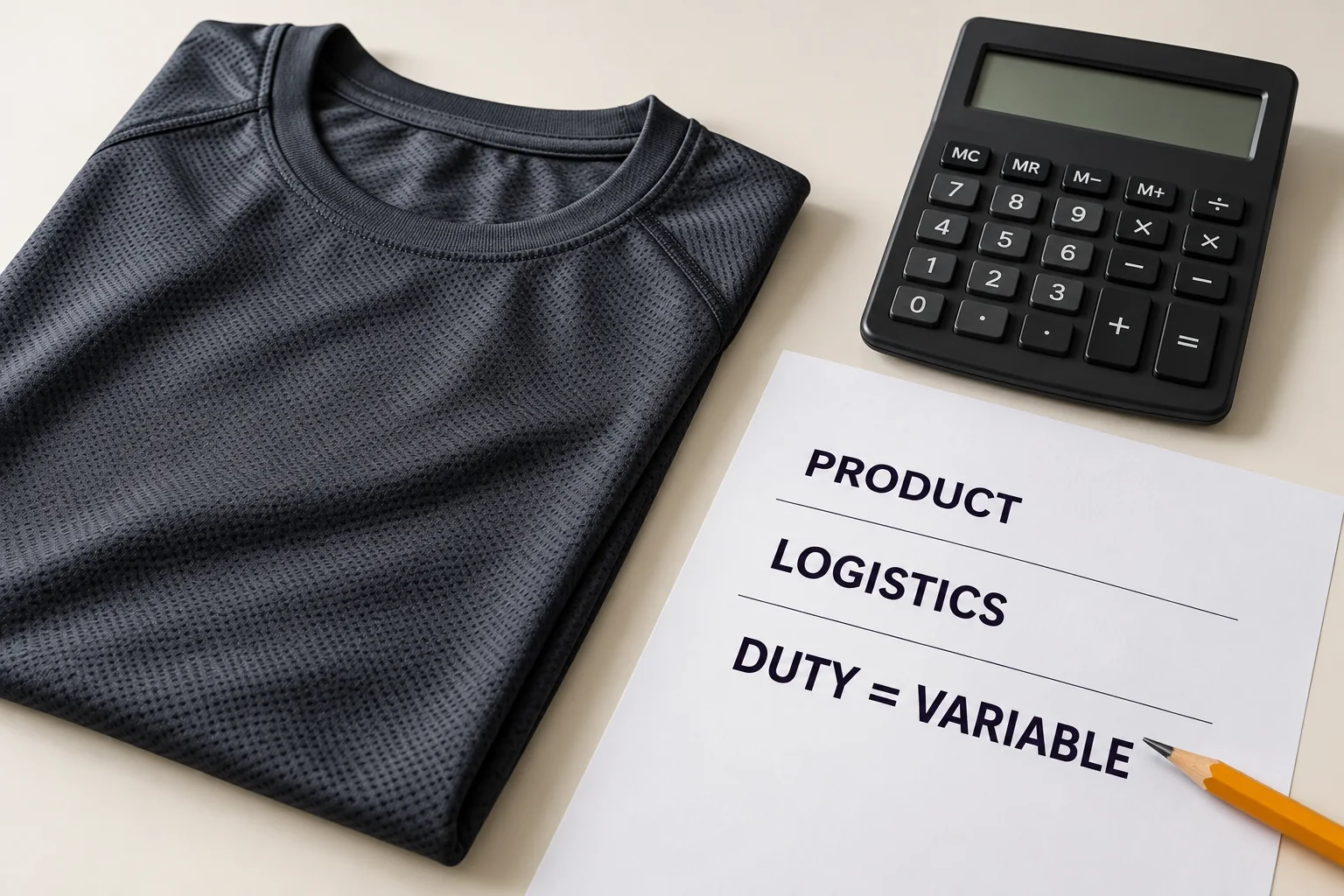
Every dollar amount here is invented for this exercise. These figures are not evidence that one country currently charges more or less than another. Development costs are assumed to be charged entirely to this order. Freight, handling and inspection are assumed to be separate, non-overlapping charges to the same US warehouse. Duties remain variables.
- China: garments $7,000; sampling and setup $300; freight and insurance $650; inspection, entry and inbound handling $400, excluding duty.
- Vietnam: garments $6,700; sampling and setup $450; freight and insurance $750; inspection, entry and inbound handling $450, excluding duty.
- Mexico: garments $8,400; sampling and setup $300; freight and insurance $350; inspection, entry and inbound handling $400, excluding duty.
| Percorso | Before duty | Per tee |
|---|---|---|
| China | $8,350 | $8.35 |
| Vietnam | $8,350 | $8.35 |
| Mexico | $9,450 | $9.45 |
The assumed Vietnam garment price is $300 below the China price, but other assumed order costs consume that difference. The two routes are equal before duty. The Mexico subtotal is $1,100 higher before duty; its lower assumed transport bill does not offset the higher assumed garment bill.
Write the final costs as ($8,350 + D-China) ÷ 1,000, ($8,350 + D-Vietnam) ÷ 1,000, e ($9,450 + D-Mexico) ÷ 1,000. Each D is the broker-confirmed total duty for that shipment, calculated from its actual facts. It is not a single percentage applied to every expense in the subtotal.
Replace every assumption with a written quote before making a purchase decision. The site’s clothing landed-cost guide can help organize the import budget; this comparison adds the location decision and its trade-offs.
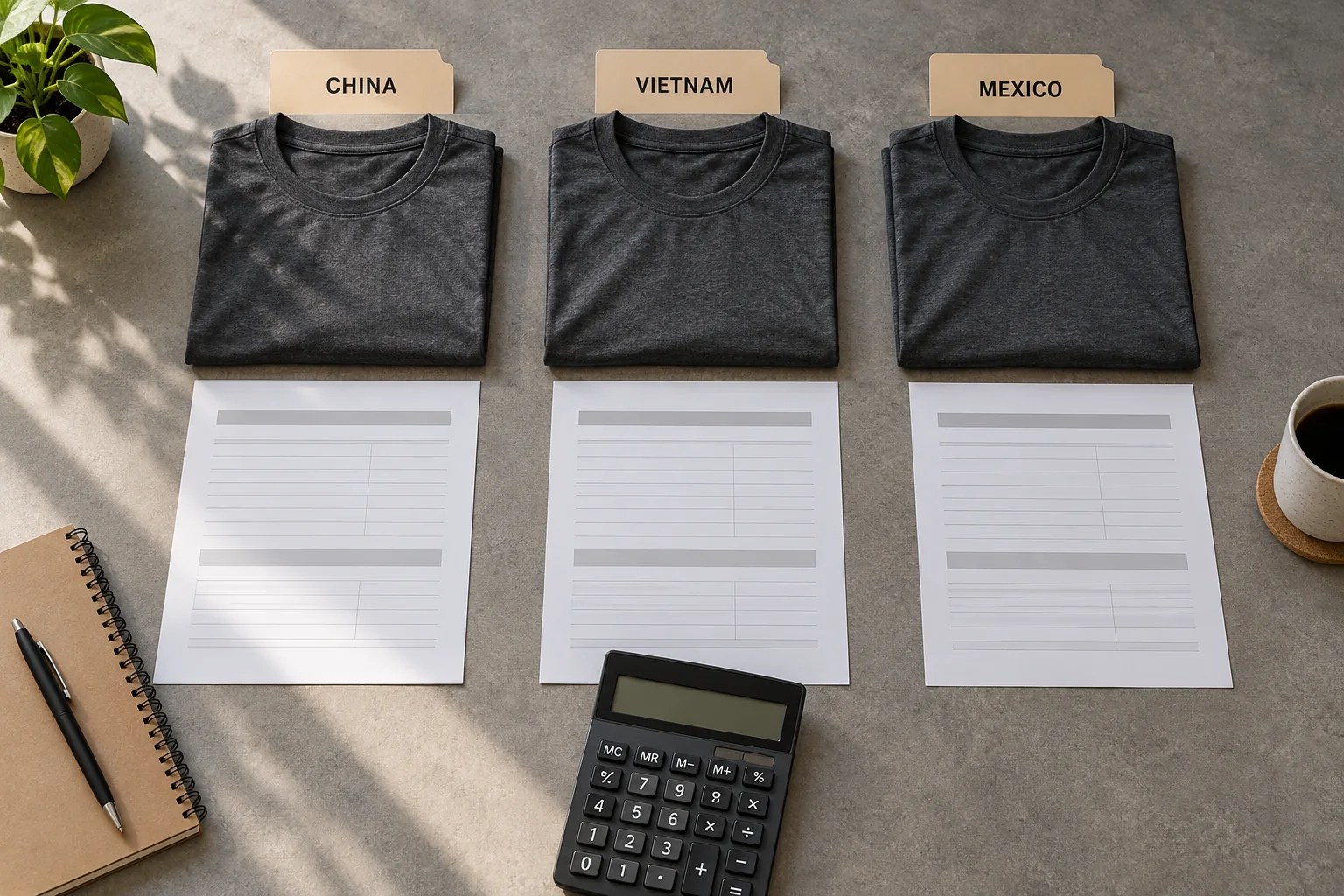
How much tariff difference would change the result?
In the worked example, Mexico reaches the same total as China when D-China minus D-Mexico equals $1,100. It reaches the same total as Vietnam when D-Vietnam minus D-Mexico equals $1,100. This is a break-even dollar difference derived from the invented order costs, not a claim about current tariffs.
Ask the broker whether the verified duty difference exceeds the pre-duty cost gap for this order. If it does not, any business case for Mexico needs to come from another documented benefit, such as a different stock commitment or replenishment schedule.
For a 2026 entry, use the applicable edition of the USITC Harmonized Tariff Schedule and tariff resources, then check the relevant additional measures and effective dates. Do not carry a rate from an earlier quotation into a later shipment without review. The same country can produce garments with different classifications and treatment.
Provide the broker with the construction, fiber percentages, intended garment category, manufacturing operations, input origins, customs value and expected entry date. The activewear HTS classification guide explains why a category name alone is insufficient. Obtain separate answers for classification, origin, preference and valuation; answering one does not settle the others.
Quality losses can reverse a small price advantage
Now change only the assumed acceptance rate. If the Vietnam example costs $8,350 before duty but yields 950 saleable tees, its pre-duty cost becomes $8,350 ÷ 950 = $8.79 per saleable tee, rounded. If the China example yields 980 saleable tees, its equivalent is $8,350 ÷ 980 = $8.52. Those acceptance rates are hypothetical and say nothing about the average quality of either country.
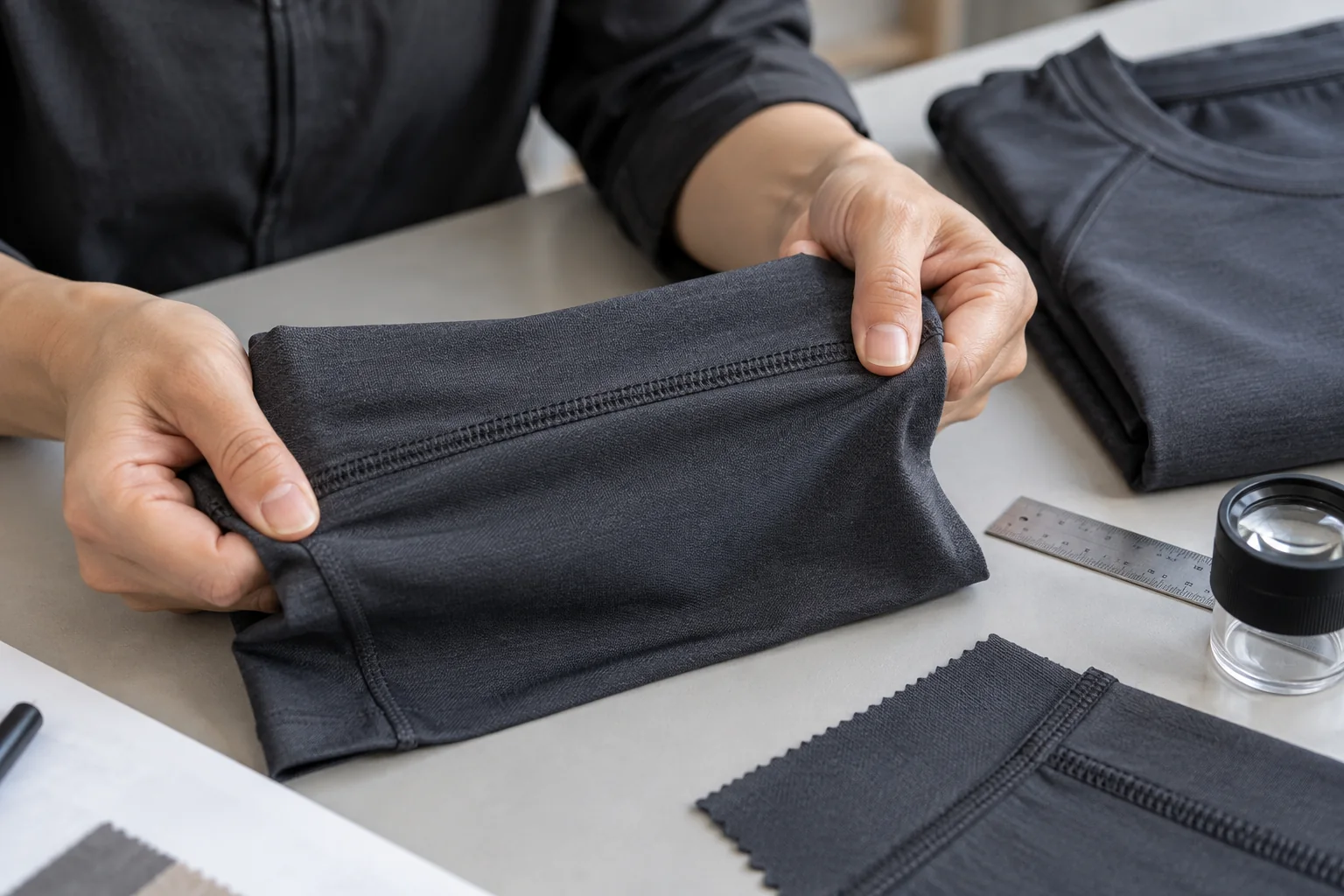
Compare suppliers against the same acceptance criteria. For activewear, define the required fit, measurement tolerances, seam behavior, stretch and recovery, opacity, color performance and decoration durability. Agree on the test methods, conditions and acceptance thresholds that matter for the actual use. A supplier saying “stretch tested” is not a comparable result without those details.
Use the same approved sample and inspection instructions across the shortlist. Record who pays for rework, replacements and repeat freight when a lot fails. Sampling inspection also leaves some uncertainty; it does not prove every garment in a shipment is defect-free.
Review the site’s quality-control scope when planning a DTS order, then confirm the project-specific inspection arrangement in writing. Factory country is not an acceptance criterion.
Compare the stock commitment as well as the unit cost
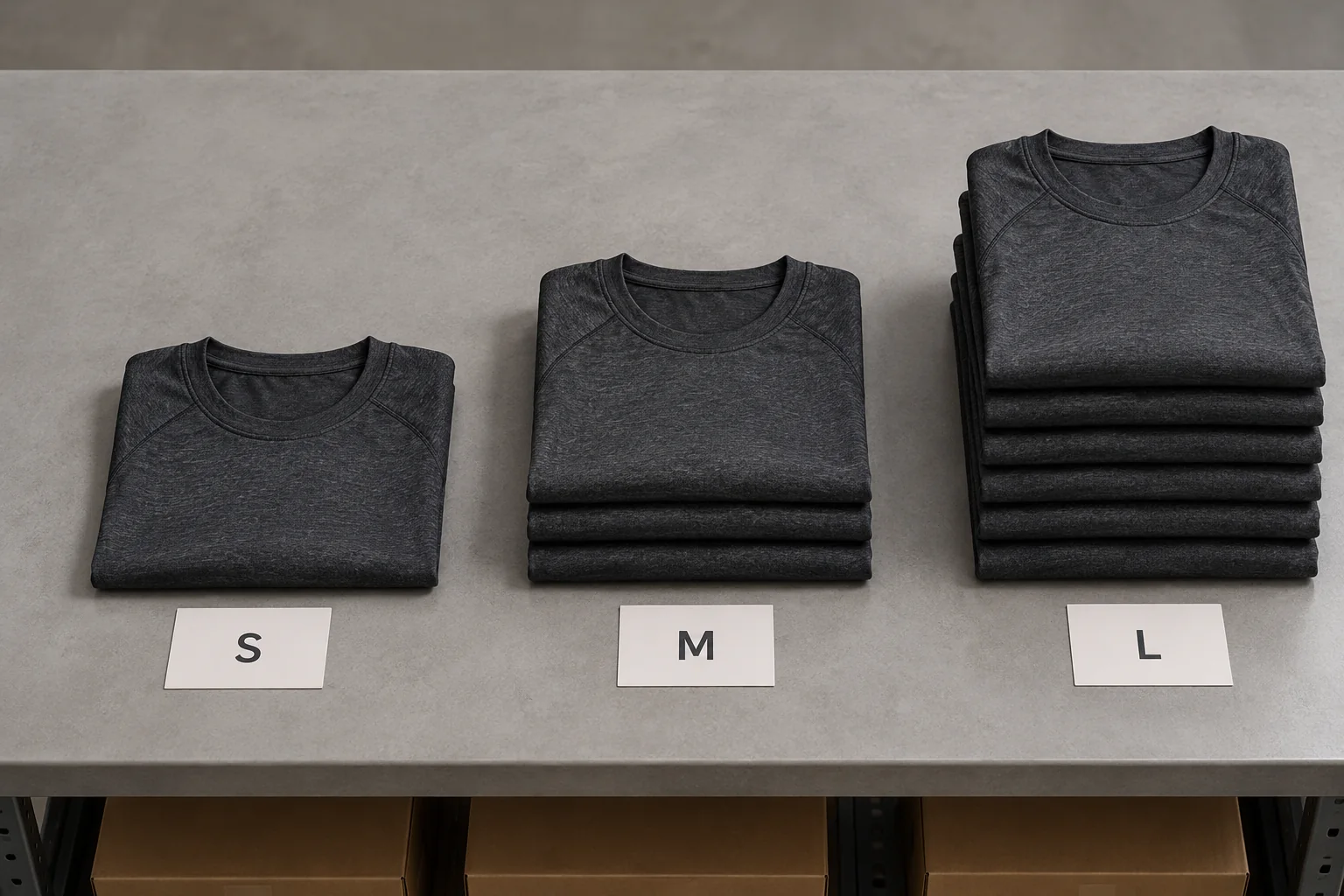
A lower unit price can require a larger order than the brand can sell. Compare MOQ at the style, fabric, color and size levels. An order minimum of 1,000 pieces does not tell you whether four colors are possible or whether each color needs a separate commitment.
Separate defective stock from good stock that has not sold. The acceptance calculation above measures saleable quality. It does not turn an unpopular size into a defect. For inventory planning, track expected demand, markdowns and cash tied up in the remaining good stock separately.
For example, an assumed $1 unit saving on 1,000 garments saves $1,000. If another route genuinely lets the buyer commit to 600 garments at the same quoted $8 unit acquisition cost, the initial inventory payment is $4,800 instead of $8,000. That releases $3,200 at the start, but it does not prove higher profit: later orders may cost more, stockouts may lose sales, and extra shipments may add charges.
Ask each shortlisted factory for comparable first-order and repeat-order options. Use a conservative sales case, especially for unfamiliar sizes and colors. The useful question is how much stock the business must finance before it learns what customers will reorder.
Packaging and handover are part of the manufacturing brief
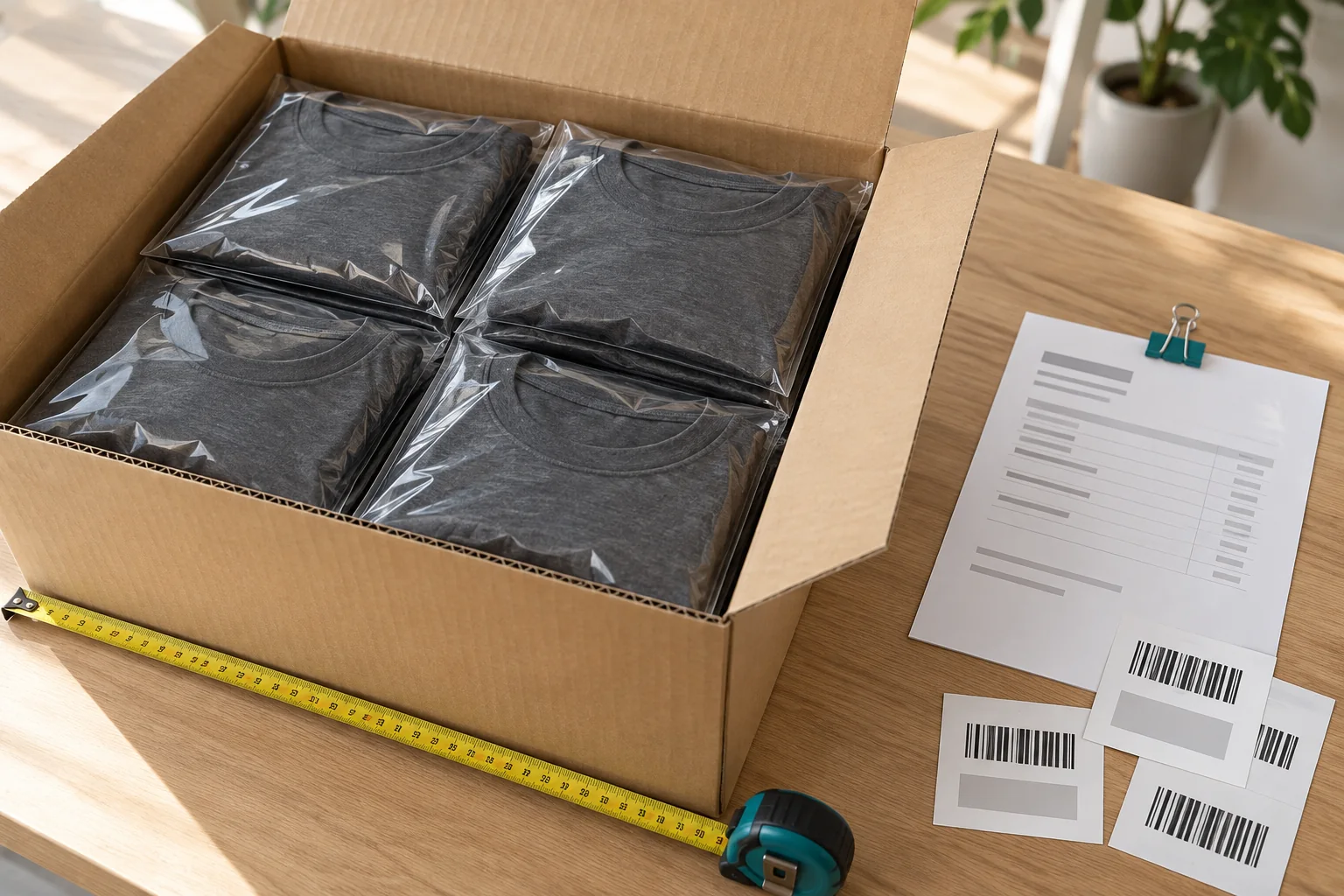
Compare garments delivered in the form your receiving operation needs. A quote for loose bulk packing and a quote for individually labeled, bagged and carton-sorted stock contain different work. The cheaper factory price can generate extra receiving labor if the warehouse must relabel or sort it.
Specify SKU and size identification, label position, bag dimensions, carton quantity, carton marks, mixed-size rules and the packing-list format. Ask the receiving warehouse to approve the instructions before production. If the route changes, review the shipping and handling requirements again rather than copying the previous carton plan.
Keep responsibility explicit at each handover. State who checks the packing, arranges freight, books receiving and resolves discrepancies. Use a named place with the trade term, and compare the full included scope. The DDP, DAP and FOB apparel guide explains why changing delivery responsibility can make two apparently similar quotes incomparable.
Use a pilot order before moving a collection
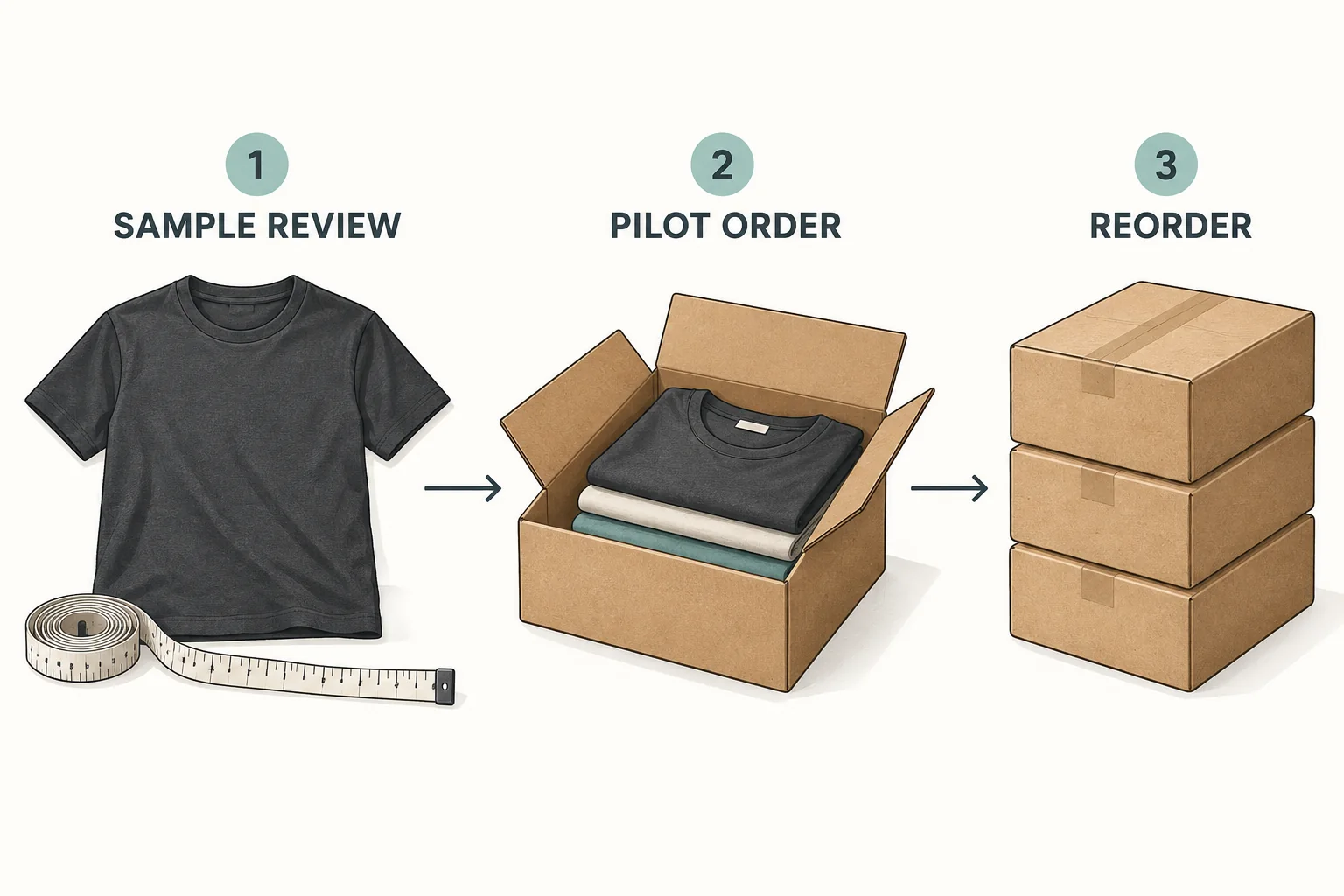
Before committing to a new location, review the factory and approve its physical sample. The country comparison only narrows the shortlist.
- Send the same specification and obtain quotes with exclusions stated.
- Review material availability, input records, subcontracting and payment terms.
- Approve physical samples against the same fit and performance requirements.
- Confirm origin and duty treatment with the broker before releasing the order.
- Place an agreed pilot quantity and inspect the delivered result.
- Compare actual saleable cost, timing, defects and customer feedback before expanding.
Keep the pilot small enough to limit an avoidable loss but large enough to exercise the intended bulk process. A hand-finished sample does not establish how a production line will perform. Confirm that the pilot uses the approved production fabric and relevant operations.
Preserve the measurement sheet, approved sample, color reference and packing file when adding a second source. Record any approved differences. Otherwise a sourcing change can quietly become a product redesign, leaving the brand unable to tell whether cost, fit or material caused the result.
Questions buyers ask before changing manufacturing countries
Is Vietnam always cheaper than China for activewear?
No. Compare the same finished garment, quantity and delivery scope. A lower sewing charge may be offset by fabric sourcing, setup, freight, duties or quality losses. Ask for the complete offer rather than treating country wage data as a quotation.
Does making activewear in Mexico automatically remove US import duty?
No. Preferential treatment requires a qualifying product and supporting facts. The classification, production operations and applicable material-origin rules need review. A Mexico address or sewing operation alone does not establish USMCA eligibility.
Can the same fabric be used by factories in all three countries?
Possibly, but confirm supply, minimums, delivery, ownership of leftover material and the effect on origin or preference. A nominated fabric helps control the comparison only if each supplier can obtain and process the approved material under the agreed conditions.
Which route is better for a small first collection?
Start with the suppliers that can meet the product requirements at a stock commitment and cash schedule the brand can support. Compare development, sample approval and repeat-order options. No country label guarantees a low MOQ, short lead time or successful launch.
Should a brand move its entire range at once?
Use a staged qualification when practical. One approved tee does not validate leggings, sports bras or a new fabric. Expand by product and process after the pilot demonstrates acceptable cost, quality and delivery.
Make the sourcing decision on a quote you can verify
Keep China, Vietnam or Mexico on the shortlist when a real supplier passes the product, commercial and documentation checks. Remove an option when its supposed saving depends on an unapproved substitution, an unfunded inventory commitment or a tariff assumption that has not been confirmed.
Rerun the comparison with slower sales, a less favorable duty outcome and a realistic quality allowance. If a modest change reverses the result, buy more evidence before buying more garments. A sample, a clarified material route or a written broker calculation can be more useful than another country-wide cost estimate.
Request a China production quote against the same brief
DTS can be one candidate in your China comparison. Its published services cover tech-pack support, sample development, custom apparel production coordination and packing preparation. That scope can help a buyer establish a comparable product baseline; it does not establish an overseas factory network or a guaranteed cost advantage.
Send the garment reference, fabric direction, size/color quantities, decoration, packaging rules, destination and target delivery window. Include the specification used for other country quotes and identify any acceptable substitutions. Confirm the sample, MOQ, production scope and commercial terms for your order. Use independent suppliers for Vietnam and Mexico quotes and a qualified broker for entry treatment.
Invia il tuo brief per l’abbigliamento sportivo