
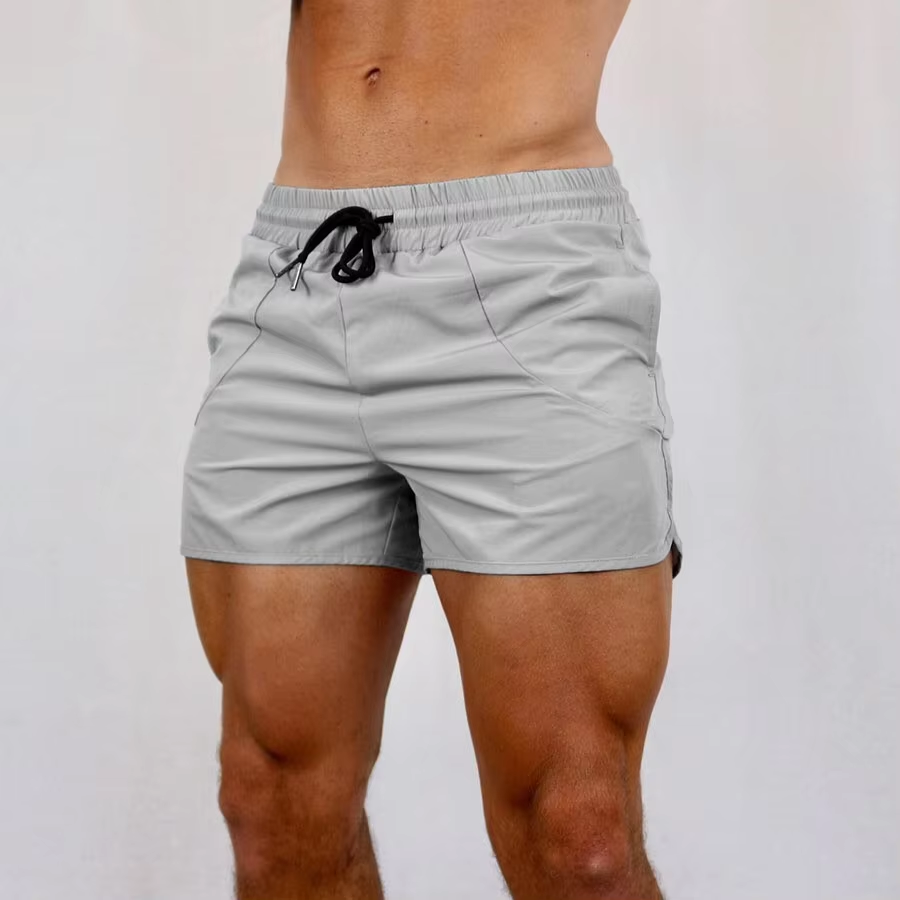
Individuelle schnelltrocknende Kompressionsshorts
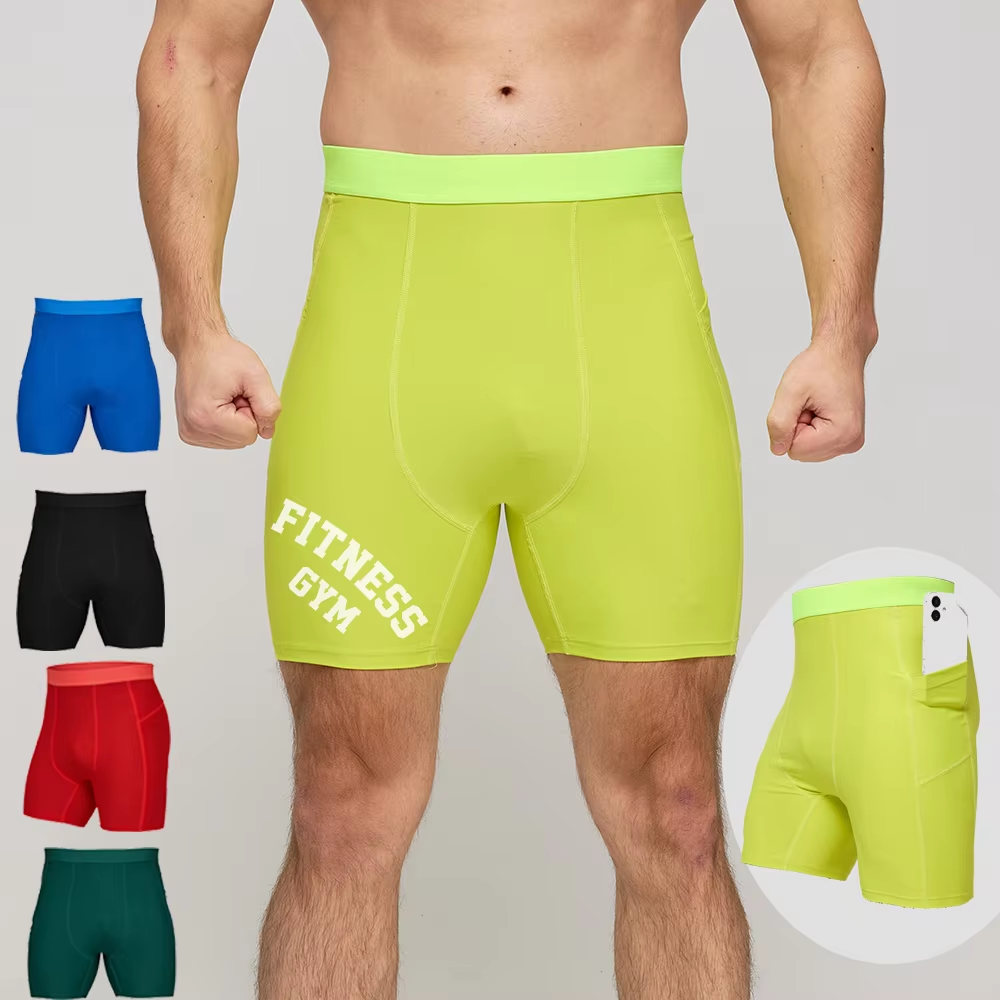
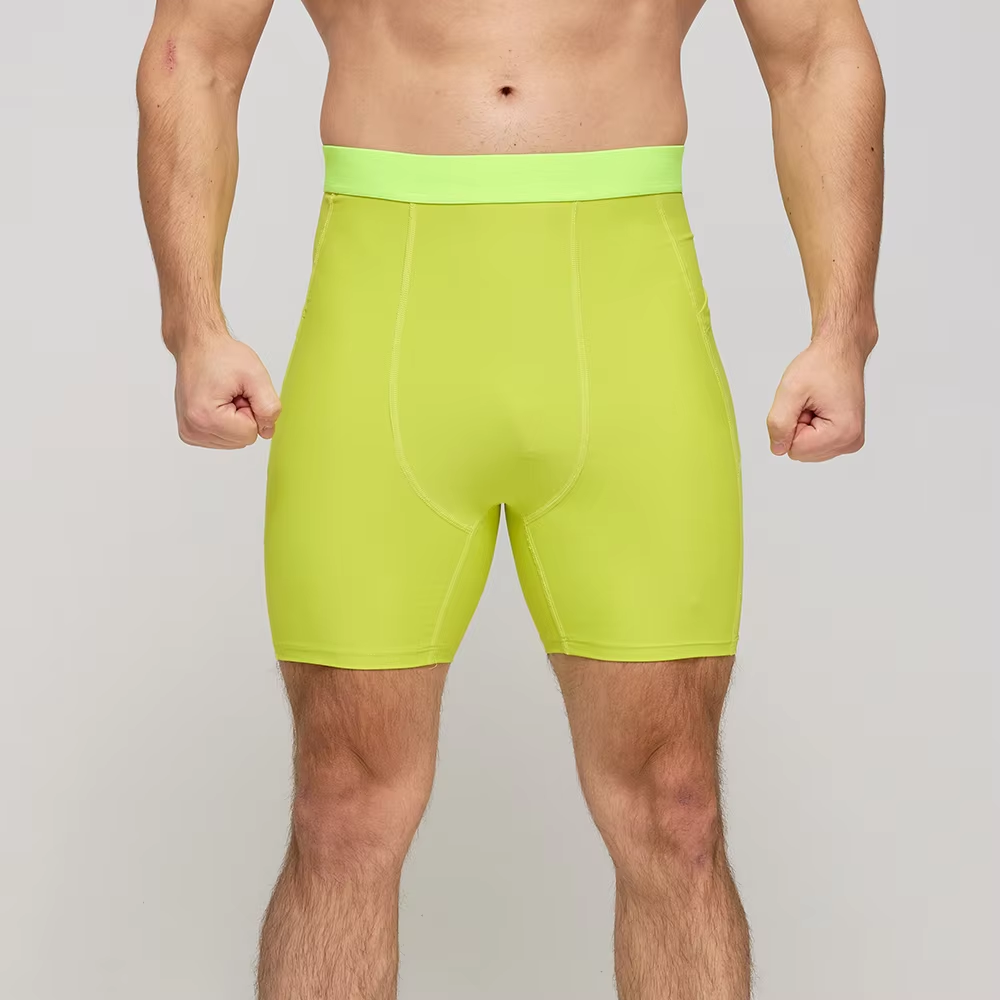
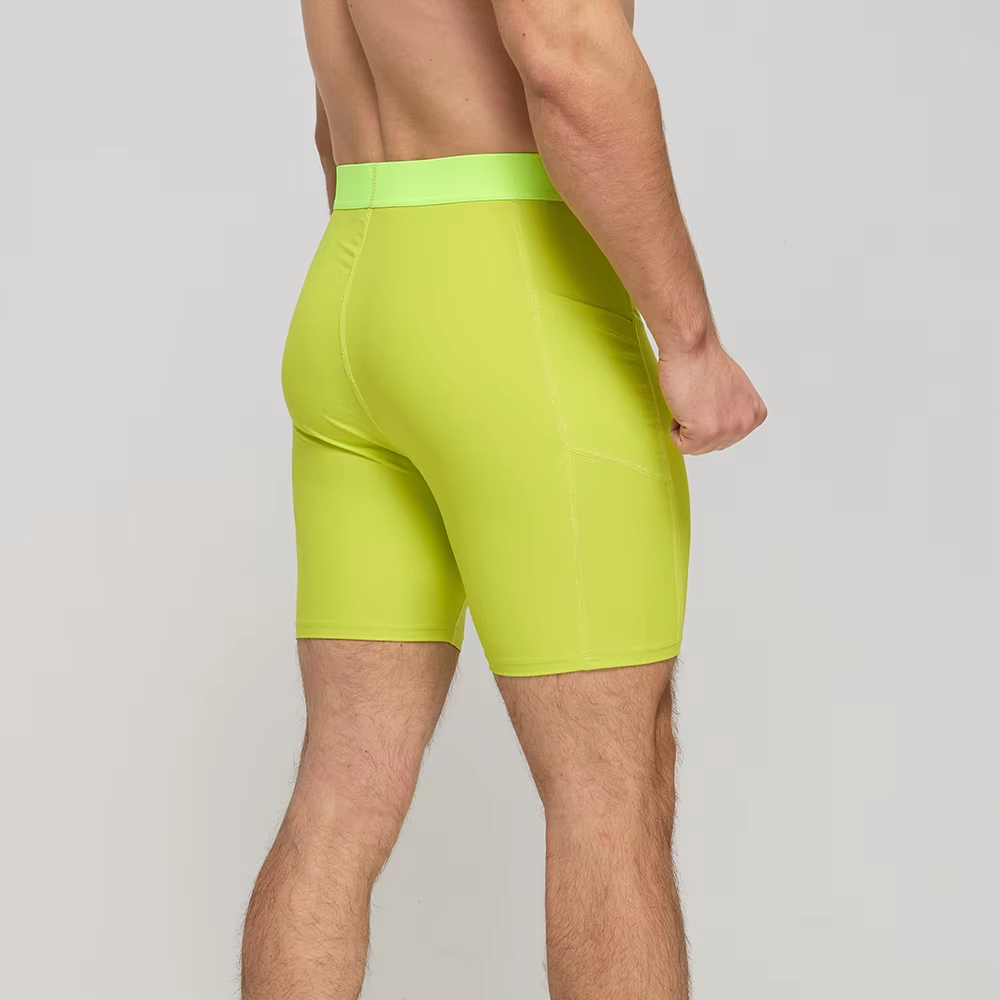
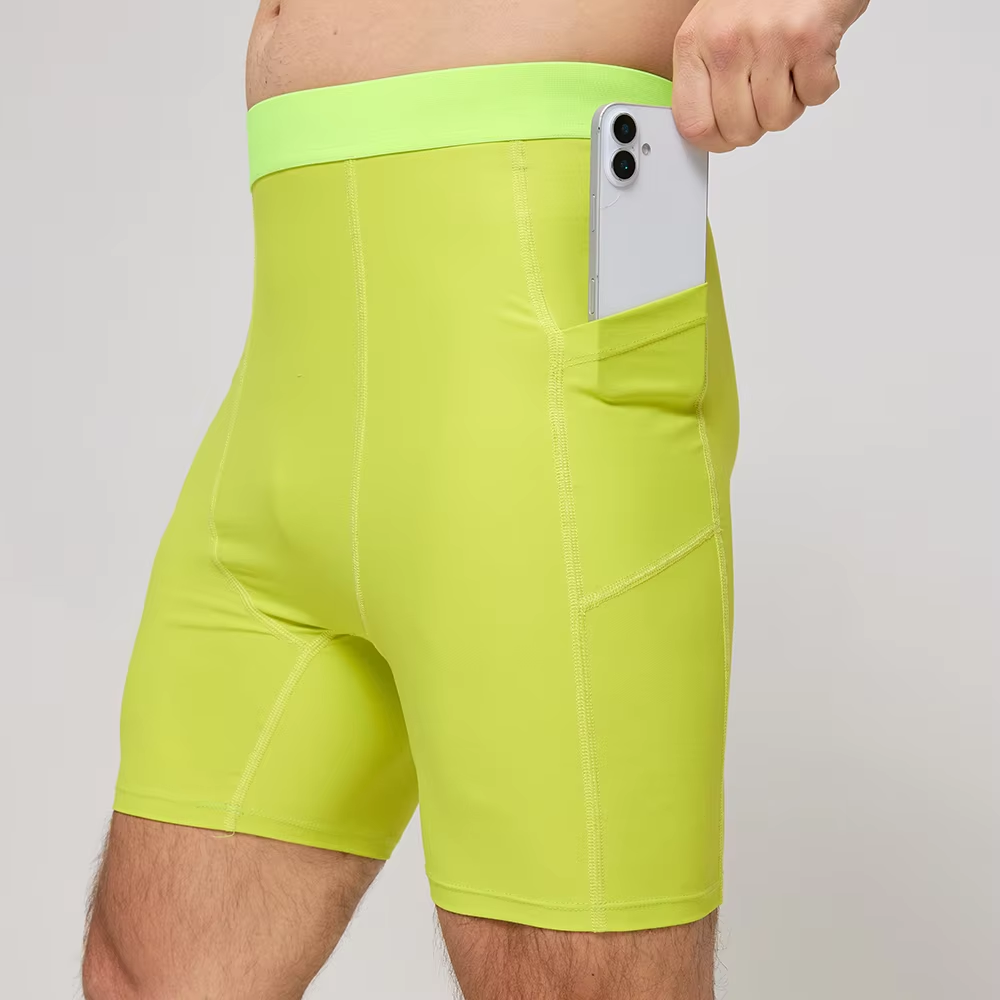
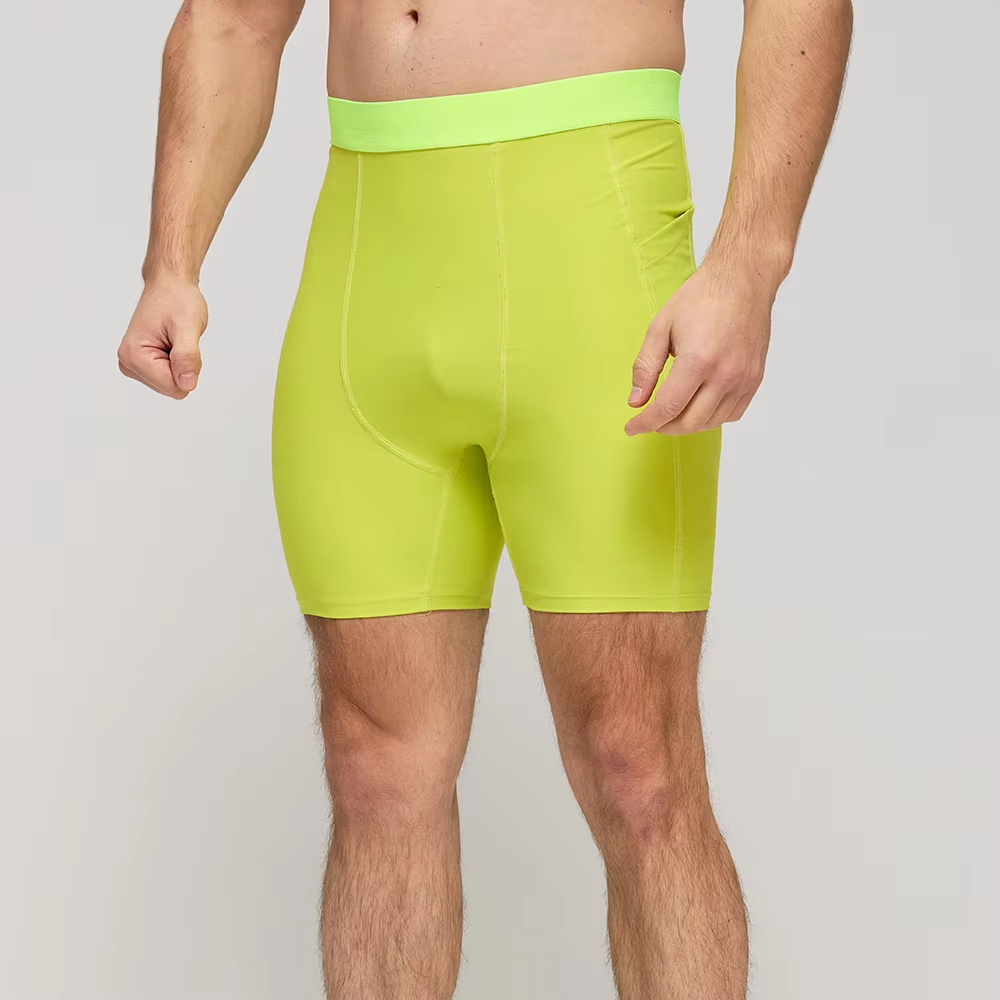
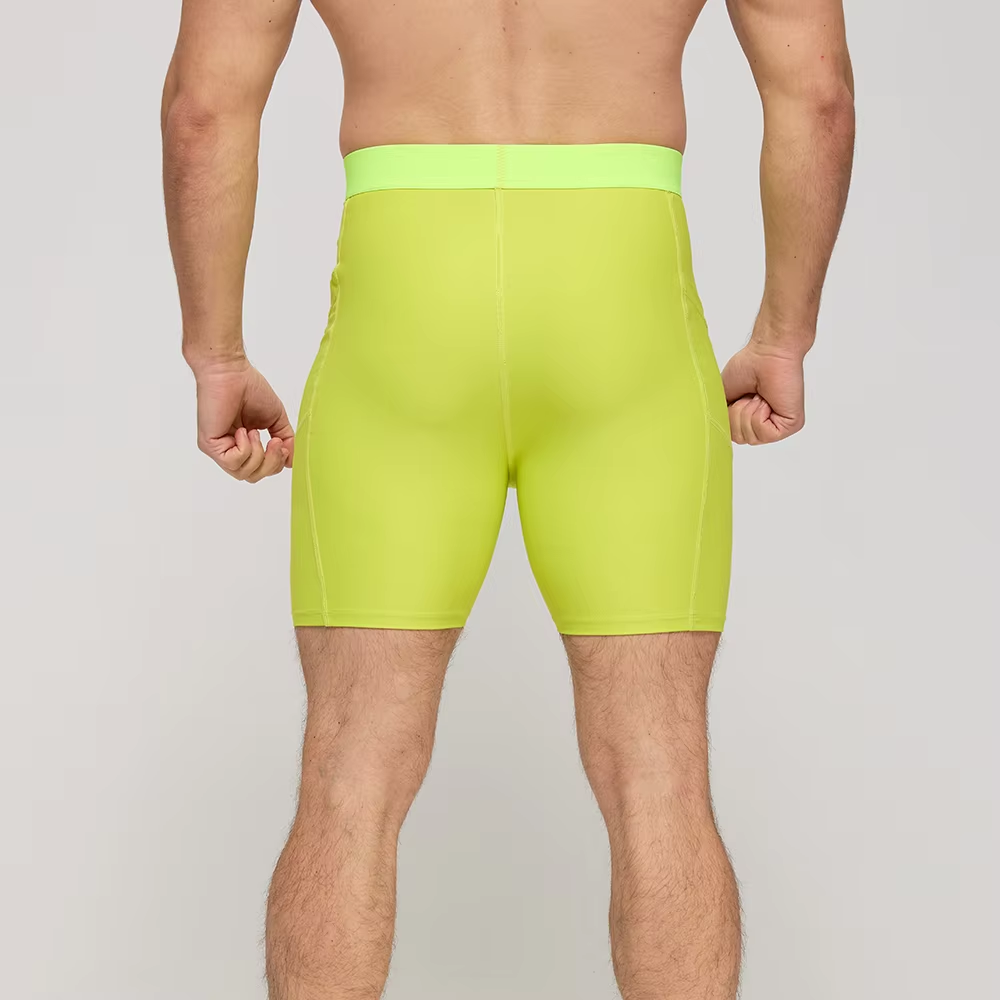
KUNDENSPEZIFISCHES BEKLEIDUNGSPRODUKT
Individuelle schnelltrocknende Kompressionsshorts
Custom compression shorts for men’s gym, running and sportswear collections. Source MOQ 50 and US$5.98–7.48 snapshot; confirm fabric, fit, logo and availability.
Artikelnummer:
DTS-ALB-TRAINING-SHORTS-1601659913223
Kategorien: Bestseller, Trainingsshorts
Produktdetails
This B2B catalog record is for apparel brands, private-label teams, gyms, running programs, sports clubs, importers and wholesale buyers evaluating custom compression shorts for men. The imported source listing uses compression, quick-dry, running, gym, boxer and sports wording. Those terms identify the source direction; the approved fabric, compression level, fit, construction, decoration route and commercial terms must be confirmed for the exact sample before bulk production.
Produktübersicht
Individuelle schnelltrocknende Kompressionsshorts is the current DTS catalog title. The product entity is a men’s custom compression-short and compression-boxer direction for gym, running, workout, training and sportswear collections. Buyers can use this page to organize a specification brief, compare a sample with the intended use and request a current quotation.
This is a B2B sourcing page, not a retail performance promise. The source title is useful for matching this product record to source ID 1601659913223, but it does not independently prove a pressure grade, moisture result, fabric composition, medical benefit, competition approval or current stock position. Use the product images as a visual starting point and convert every decision-critical attribute into an approved sample or document.
For a broader short assortment, see the DTS training shorts collection. For a complete brand brief, connect this product with the sports, fitness and yoga brand sourcing route.
Source Specification Snapshot
- Current DTS catalog title: Custom Quick-Dry Compression Shorts.
- Imported source listing title: Men’s Custom Compression Shorts Men’s Running Quick Dry Gym Boxer Shorts Compression Boxer Sports Shorts for Men Manufacturer.
- Quellenkategorie: Men’s Shorts.
- Supplier shown in the imported snapshot: Xiamen Detosun Garment Co., Ltd.
- Minimum order quantity shown: 50 Pieces.
- Angezeigter öffentlicher Preisbereich: US$5.98–7.48 / Pieces.
- Angezeigte Anpassungsfelder: Material, Technics and Color, each with MOQ 50 in the imported snapshot.
- Ready-to-ship flag: Not stated in the imported snapshot.
- Quellen-ID: 1601659913223.
The snapshot is a catalog reference captured for product matching. It does not supply a product-specific fiber report, GSM, pressure class, size chart, test report, decoration approval, packing specification or binding price validity. Confirm those details before they are used in a purchase order, line sheet, care label or advertising claim.
What Is Confirmed and What Requires Approval
Confirmed for this catalog record
- The target URL is a published DTS product page with the catalog title Custom Quick-Dry Compression Shorts.
- The source record is a men’s shorts listing with custom, compression, running, quick-dry, gym and boxer wording in the imported title.
- The imported snapshot shows MOQ 50 Pieces and a public price range of US$5.98–7.48 / Pieces.
- The imported snapshot lists Material, Technics and Color as customization fields with MOQ 50.
Approval items before a purchase order
- Confirm fiber composition, knit construction, GSM, stretch direction, recovery, hand feel and color standard.
- Confirm compression intent, fit block, rise, inseam, leg opening, waistband, gusset and coverage.
- Confirm whether the product is a single-layer short, a boxer-style base layer, or a shell with a separate liner.
- Confirm size range, men’s or unisex grading, measurement tolerances, size ratios and color ratios.
- Confirm logo method, artwork, placement, label set, packaging, inspection points, sample timing and bulk lead time.
- Reconfirm current MOQ, price, availability, shipping assumptions, payment terms and destination requirements.
Where a fact is not supported by a product-specific document or approved sample, it remains GESCHÄFTLICHER EINGANG ERFORDERLICH. This evidence boundary keeps a source title from becoming an unsupported performance or procurement promise.
Compression Shorts for Men: Define the Product Brief
Separate the product name from the performance claim
“Compression shorts” identifies the intended garment direction, while compression level is a technical requirement that still needs definition. Ask whether the buyer wants a close base-layer fit, a supportive training fit, a light stretch short or a specific measured pressure range. Do not publish a pressure class or medical/therapeutic benefit unless the exact product and method support it.
Describe the intended layer
Some buyers use men’s compression shorts as a first layer under a loose training short; others want a standalone short. State the intended layer, opacity requirement, hem coverage, waistband height and whether a separate outer short will be worn. The quotation should not assume a liner or a second garment is included.
Identify the buyer’s collection role
For a private-label activewear range, define whether this item is a hero product, team base layer, gym staple, running capsule, club uniform or sampling reference. The role affects the required size depth, color count, decoration, packaging and repeat-order plan.
Use the source title for matching only
The long imported title contains multiple search descriptors. It helps procurement teams find the correct catalog record, but the approved product name on a tech pack and purchase order should use the final material, silhouette and construction terms.
Quick-Dry and Compression Performance: Evidence Boundaries
Quick-dry needs a fabric and test context
The words “quick dry” appear in the source listing title and in the DTS catalog title. They are source descriptors, not a measured result on this page. If the buyer needs quick-dry or moisture-management language, confirm fiber blend, fabric construction, finishing treatment, wash condition, test method, sample identity and result before approving the claim.
Do not infer moisture wicking or breathability
Compression shorts may be used for running or gym workouts, but the product category alone does not prove moisture wicking, evaporation rate, breathability or cooling performance. Add those requirements to the technical brief only when the fabric and applicable test evidence are available.
Define stretch and recovery
Record stretch direction, extension range, recovery requirement, elastic specification and measurement method. A buyer who needs a stable close fit should review recovery after the intended movement and wash cycle. Do not infer a particular elastane percentage from the word compression.
Keep use claims non-medical
For sportswear marketing, describe the garment’s approved fit and use context. Do not claim injury prevention, circulation improvement, pain relief, therapeutic compression or medical suitability without product-specific regulatory review and evidence.
Document limitations with the result
A performance result should state the fabric or sample version, test method, condition, duration, result and not-suitable conditions. A number without those conditions is not complete proof and should not be transferred from another product page.
Application Planning for Running, Gym and Training
Running compression shorts
For running collections, review waistband hold, rise comfort, inseam, leg opening, seam placement, chafing risk, pocket security and layer compatibility. Confirm whether the buyer wants a standalone running short or a base layer under an outer short. If a technical running claim is needed, define the test and sample approval route.
Gym compression shorts
For gym and strength-training programs, review squat, lunge, hinge, step-up and seated movement on the approved sample. Check opacity, waistband stability, hip and thigh ease, seam pressure, equipment contact and the behavior of any pocket or liner. These are review criteria, not evidence that the current catalog item has passed a gym test.
Workout and fitness collections
For workout or fitness ranges, define the target intensity, session duration, indoor or outdoor use, layering and care routine. Ask the supplier to distinguish fabric behavior, construction and decoration requirements instead of treating every workout short as the same specification.
Teams, clubs and training programs
For team or club orders, confirm roster size, repeat-order timing, size and color ratios, logo locations, number assignments, label requirements and packaging. A team order may need a stable re-order standard even when the first run is only a sampling quantity.
Casual and lifestyle merchandising
If the garment will be sold as a lifestyle or streetwear layer, prioritize silhouette, opacity, color consistency, hand feel, logo scale and label presentation. State clearly when the buyer is moving from performance use to casual use so the collection description stays accurate.
Fabric, GSM and Hand-Feel Review
Confirm fiber composition
Request the exact fiber percentage and construction for this SKU. The imported source snapshot does not provide a composition report, so do not add a cotton, polyester, nylon or spandex percentage to a label or product specification without confirmation.
Record fabric weight and tolerance
GSM affects opacity, drape, coverage, hand feel and decoration behavior. Specify the target GSM and acceptable tolerance, then compare a swatch and the finished sample. A precise GSM claim is GESCHÄFTLICHER EINGANG ERFORDERLICH until the supplier confirms it for this product.
Review knit structure and surface
Ask whether the fabric is jersey, interlock, tricot, mesh or another construction, and record surface finish, sheen, brushed or unbrushed face, stretch direction and recovery. These attributes influence the fit and the appearance of screen print, heat transfer or embroidery.
Check color and dimensional change
Approve color against a buyer reference or lab dip where required. Confirm dimensional change, shade variation and colorfastness after the intended care method. Do not assume a source listing color is a fixed production colorway.
Align care instructions with the approved material
Final care-label wording should follow the actual fiber, construction, decoration and finishing route. Request the supplier’s recommended wash and dry instructions and review them against the buyer’s destination-market labeling needs.
Fit, Rise, Inseam and Waistband Decisions
Choose the fit block
Define close, supportive, regular or relaxed fit with a reference garment or measurement chart. “Men’s compression shorts” does not by itself define the finished pressure, ease or silhouette. If the buyer wants a unisex block, treat that as a separate grading decision.
Set critical points of measure
Record waist relaxed, waist stretched, front rise, back rise, hip, thigh, leg opening, inseam and outseam. Add gusset dimensions, pocket opening, pocket depth, liner length and logo position when those features affect the fit.
Approve waistband behavior
Specify waistband height, elastic width, relaxation, stretch, recovery, drawcord requirement and whether the branding sits inside or outside. Test the waistband through movement and sitting rather than checking only a flat measurement.
Confirm inseam and hem coverage
Inseam changes coverage, layer compatibility, mobility and merchandising proportions. Approve the finished length, hem construction, binding or coverstitch and the relationship between the hem and any inner liner.
Keep the size chart product-specific
Do not copy a chart from a different training short, jogger or tank. The approved size chart should identify the base size, grade rules, measurement tolerances and whether measurements are taken relaxed, stretched or laid flat.
Boxer Format, Liner and Coverage Checklist
Clarify what “boxer” means
The source title uses boxer and compression boxer wording, but the accessible snapshot does not define the construction. Ask whether this is a boxer-style short, an inner brief, a liner under an outer shell or a standalone compression layer. Use the approved construction name in the quote.
Specify liner requirements
If the buyer needs an inner brief or liner, record its fabric, coverage, gusset, leg opening, seam placement, attachment method and tolerance. Do not state that the current product includes a liner without product-specific confirmation.
Review opacity and movement
Check opacity in the intended color and under the intended movement, lighting and layer conditions. Review the front rise, gusset, hem and seam placement for the buyer’s use case. Document any issue and the sample revision instead of making a broad comfort claim.
Decide on pockets separately
The source snapshot does not confirm pockets. Request a pocket sketch with opening dimensions, bag depth, reinforcement, placement and intended item. A phone pocket, key pocket or no-pocket performance brief can each change pattern, material consumption and price.
Review stress points
Inspect rise seams, inseams, gusset joins, waistband attachment, pocket corners, bartacks and hem transitions. Mark critical points on the inspection sheet so a general “high quality” phrase is replaced by a repeatable review.
Custom Logo and Private-Label Branding
The imported source title includes custom wording, and the snapshot shows Material, Technics and Color as customization fields. It does not approve a particular logo method or decoration result. Confirm the decoration route against the actual fabric, surface, artwork and care requirement.
Choose a decoration method
Discuss screen print, DTF, heat transfer, sublimation, embroidery, woven label, patch or another method. State the artwork size, color count, thread or ink reference and sample-approval requirement. A custom logo request is not the same as approving the production process.
Set logo placement from stable points
Record front, back, thigh, side panel, waistband or liner placement with measurements from stable garment points. On a close-fit short, a small shift near a seam, gusset or hem can change the appearance, so approve the physical sample.
Prepare production artwork
Send vector artwork where available, identify color references and specify whether the artwork can be adjusted for the decoration method. Keep the approved artwork version and sample comments with the quotation revision.
Review decoration durability
Inspect adhesion, edge definition, stitch density, color, hand feel and care instructions on the decorated sample. Do not claim a wash-tested result unless the result applies to this product, decoration route and care condition.
Coordinate the private-label set
List main labels, size labels, care labels, hangtags, polybag marks, carton marks, barcodes and stickers separately. This prevents one logo placement approval from being mistaken for a complete private-label package.
Size Range, Grading and Order Ratios
Approve a base size
Select the base size and identify the reference body or garment measurements used for comparison. Approve the base sample before applying grade increments across the full range.
Set tolerance by measurement point
Define acceptable tolerance for waist, rise, hip, thigh, inseam, leg opening, liner, pocket and logo placement. A generic tolerance does not answer a buyer’s fit question for a close-fit compression short.
Review grading across the range
Check that waistband recovery, rise, thigh ease, gusset and liner proportions remain usable at every size. If men’s and unisex versions are requested, approve each block separately rather than assuming one grade applies to both.
Send size and color ratios
Provide the expected size and color breakdown with the RFQ. Ratios, number of colorways, decoration complexity, labels and packing can affect MOQ and price even when the source snapshot shows 50 Pieces.
Muster- und Freigabeprozess
1. Produktbrief senden
Start with the target customer, collection role, intended sport, reference garment, color direction, fit, size range and order quantity. Flag non-negotiable requirements such as compression intent, liner, gusset, pocket, waistband or logo placement.
2. Convert the brief into a tech pack
Include a measurement chart, construction notes, fabric request, trims, artwork, labels and packing instructions. The Tech-Pack-Anpassungsservice can help organize the information before quotation and sample review.
3. Approve fabric and first sample
Check fabric identity, GSM, hand feel, stretch, recovery, measurements, rise, inseam, waistband, liner, logo and finishing. Photograph deviations and track revisions by date and sample version.
4. Review the intended use
If the buyer needs running, gym, team or other sport suitability, define the movement review and any laboratory or inspection test before approval. Do not transfer test evidence from another product record.
5. Approve the corrected standard
Confirm the final measurement chart, fabric reference, decoration proof, labels, packaging and inspection notes. Use the Ablauf für Mustererstellung und Prototyping when multiple sample revisions need to be documented.
6. Release bulk production
Release production only after the quotation, size and color ratio, approved sample, artwork, labels, packing and inspection standard agree. Keep the approval record available for future reorders.
MOQ, Pricing and Availability
What the imported snapshot shows
The imported source snapshot shows MOQ 50 Pieces and a public price range of US$5.98–7.48 / Pieces. It lists Material, Technics and Color as customization fields with MOQ 50. The snapshot does not state a ready-to-ship flag. These are source-listing references, not a binding current quotation or a guarantee of stock.
What changes the final price
Request a line-item quotation that separates fabric, color count, size ratio, pattern changes, liner, pockets, waistband, decoration, labels, packaging, sample work, inspection, shipping terms and destination. A technical running version should not be priced by copying an unrelated casual short.
Clarify production status
Ask whether the item is an existing blank, a sample direction or made-to-order production. Confirm available colors and sizes, sample timing, bulk lead time, dispatch location, shipment assumptions and the date through which the price is valid.
Ask a complete RFQ
Send quantity, size and color matrix, fabric requirement, intended sport, compression intent, inseam, waistband, liner or pocket brief, logo artwork, labels, packaging, destination and target delivery window. Ask for MOQ, sample cost, lead time, price validity, payment terms and shipping assumptions in the reply.
Quality Inspection Before Bulk Production
Fabric and color inspection
Check fiber or material identity against the approved reference, GSM where specified, shade, surface, stretch and recovery. Record roll or lot information when the buyer’s quality system requires traceability.
Measurement and symmetry inspection
Measure waist relaxed and stretched, rise, hip, thigh, inseam, outseam and leg opening against the approved chart. Check left/right symmetry, leg twist, gusset position and the alignment of pockets, hems and logos.
Seam and workmanship inspection
Review stitch consistency, seam security, thread ends, skipped stitches, needle damage, bartacks, waistband attachment, liner joins, stains and pressing. Use agreed acceptance points and tolerances rather than a generic inspection statement.
Decoration and label inspection
Compare logo size, placement, color, edge definition and attachment with the approved artwork. Check main label, size label, care label, hangtag, barcode and packing mark against the buyer’s file.
Pack-out review
Confirm folding, individual polybag, size sticker, carton quantity, carton mark, assortment and destination requirements. Packaging is part of the delivered specification and can affect the final quote.
Private-Label Packaging and Repeat Orders
Build a reusable product standard
Keep the approved fabric reference, measurement chart, grade rules, artwork, label files, packing instructions, inspection points and quotation revision together. This reduces ambiguity when a buyer repeats the same compression shorts design.
Separate design changes from reorders
A repeat order should identify whether it follows the approved standard or changes the fabric, color, logo, waistband, liner, pocket or size range. A change should trigger a new sample or approval decision when it can affect fit or performance.
Plan stock and color continuity
Do not assume the source listing’s color or availability remains unchanged. Confirm color continuity, fabric lot, replacement options, size ratios and the timing of the next order with the supplier.
Protect the approved artwork
Use the buyer’s approved artwork and label files for the correct brand and product revision. If confidentiality or design protection is required, review the NDA and IP protection process before exchanging sensitive files.
Lead Time, Shipping and Procurement Questions
Define the lead-time start point
Ask whether lead time starts after deposit, fabric approval, artwork approval, size-set approval or final purchase-order confirmation. Sample and bulk timelines should be quoted separately.
Confirm shipping assumptions
Provide destination, delivery window, carton requirements and preferred shipping method. Ask which party handles export documentation, freight, duties, insurance and last-mile delivery. Use the delivery support route for shipment planning.
Record communication and revisions
Keep the quotation number, sample version, approval date, artwork version, fabric reference and packing file with the order. This gives procurement a clear reference if the buyer requests the same item again.
How This Product Compares With Related DTS Options
Compression shorts versus cotton training shorts
Choose this compression-short direction when the brief centers on a close-fit layer and performance-oriented construction questions. Choose the custom 340gsm cotton training shorts when the buyer’s brief centers on a heavier cotton short, casual gym silhouette or a different hand feel. Confirm the actual material and fit for either product before quoting.
Compression shorts versus joggers
Use this page for a short-length, close-fit or base-layer discussion. Use the custom training joggers page when the buyer needs a long-leg garment, pocket plan or different seasonal weight. Do not combine the two product entities in one specification.
Compression shorts versus oversized tops
For a coordinated collection, pair the approved short brief with a separate top specification such as the custom cotton gym T-shirt. The top’s cotton or oversized attributes do not prove anything about this short’s fabric or performance.
When to request a different product direction
If the buyer needs a loose basketball short, swim construction, heavy cotton casual short, lined running short or a particular team uniform block, describe that requirement separately. A source title with several sports words is not a substitute for selecting the correct product entity.
Verwandte Käuferressourcen
Use the following DTS resources to keep the product conversation connected to a practical B2B workflow:
- Stoff- und Zubehörbibliothek for material and trim discussions.
- Advanced techniques for decoration and construction options.
- Sampling workflow for sample review and approval questions.
- Production workflow for moving an approved standard into bulk production.
- Qualitätskontrolle for inspection and acceptance-point discussions.
- Startups and new brands for early collection planning.
- Ecommerce sellers for repeatable product and packaging requirements.
- Contact DTS for a current product review.
Käuferfragen
Are these custom compression shorts for men ready to ship?
The imported source snapshot does not state a ready-to-ship flag. Confirm whether the current item is a blank, a sample or made-to-order production, together with available colors, sizes, quantity and dispatch timing.
Wie hoch ist die Mindestbestellmenge?
The imported snapshot shows MOQ 50 Pieces. Reconfirm MOQ for the requested fabric, color, size ratio, logo, labels and packaging before approving the quotation.
What is the current price for these compression shorts?
The imported snapshot shows US$5.98–7.48 / Pieces. This is a source reference, not a binding current quote. Send the complete specification and destination so the supplier can confirm price validity and shipping assumptions.
Does the product include a liner or inner brief?
The accessible source snapshot does not confirm a liner or inner brief. State whether the buyer needs a single-layer short, boxer-style construction, inner brief or separate outer shell and approve the sample accordingly.
What compression level is available?
The source title uses compression wording but does not provide a pressure grade or test result. Confirm the intended fit, pressure requirement, test method and applicable limitation before using a measured compression claim.
Are the shorts quick-dry or moisture-wicking?
Quick-dry wording appears in the source title and catalog title, but no product-specific test result is recorded here. Confirm fiber, construction, finish, care condition and test result before publishing moisture-management claims.
Can a brand add a custom logo?
The source listing uses custom wording and shows Material, Technics and Color customization fields. Confirm the logo method, placement, artwork, color count, sample approval and care requirement for the exact fabric.
Can I request private-label labels and packaging?
Yes, include main label, size label, care label, hangtag, barcode, polybag and carton requirements in the RFQ. They must be quoted and approved separately from the logo decoration.
What size range can be produced?
The current source snapshot does not provide a product-specific size chart. Send the buyer’s chart or reference garment and confirm the base size, grading block, tolerance and size ratios before production.
Can these be used for running or gym collections?
The imported source title includes running and gym wording. Treat those as intended-use directions to review, not proof of a completed running or gym performance test. Confirm the movement, layer, fit, fabric and inspection requirements for the collection.
How long do samples and bulk orders take?
The source snapshot does not provide a product-specific sample or bulk lead time. Ask for separate sample and production timelines, with the event that starts each timeline and the destination shipping assumptions.
What should I send for a quotation?
Send quantity, size and color matrix, fabric requirement, compression intent, fit and measurement chart, inseam, waistband, liner or pocket brief, artwork, labels, packaging, destination and target delivery window. Use the custom inquiry route or contact DTS to request a current review.
Quellenlistenreferenz
This DTS page is matched to Alibaba source ID 1601659913223. The imported source title, MOQ, public price range and customization fields above were recorded from the catalog snapshot. The live source detail page may require a platform verification step, so current material, fit, decoration, price, availability and lead time must be re-confirmed before quoting.
View the original Alibaba product detail page.
Request a Custom Compression Shorts Quote
Send the target quantity, size and color matrix, intended use, compression or base-layer brief, fabric requirement, GSM target if known, rise and inseam measurements, waistband, liner or pocket details, logo artwork and placement, labels, packaging, destination and delivery window. If the buyer is comparing running compression shorts, gym compression shorts, workout compression shorts or compression boxer shorts, state the preferred construction so the quotation does not merge different product decisions.
Request a custom quote or contact the DETOSUN team to confirm current MOQ, price, material, sample route, availability and lead time.
Bereit, Ihr individuelles Bekleidungsprojekt zu prüfen?
Senden Sie Ihr Tech-Pack, Ihre Skizze, Zielmenge, Stoffanforderungen, Branding-Details oder Verpackungsbedarf. Unser Team prüft den Projektumfang und hilft Ihnen, den nächsten Schritt für Angebot oder Muster zu bestätigen.