
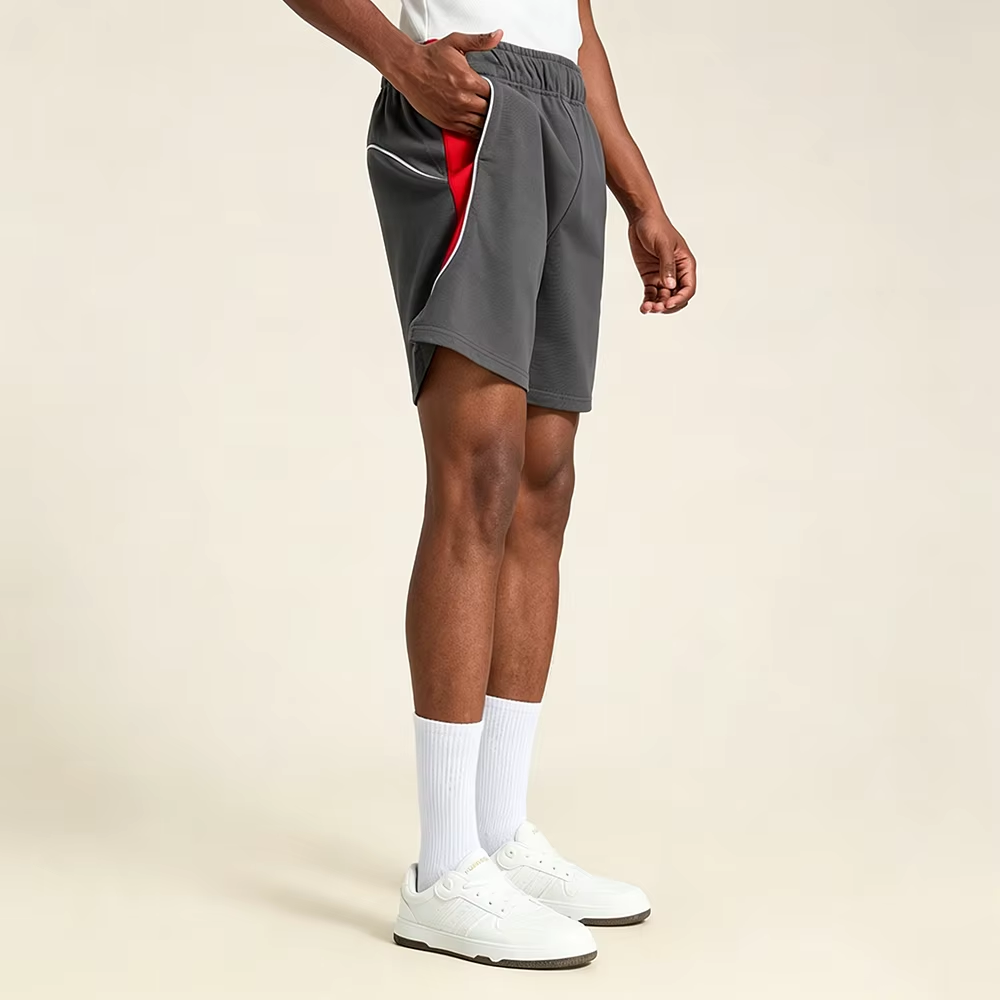
Individuelle 340gsm Baumwoll-Trainingsshorts
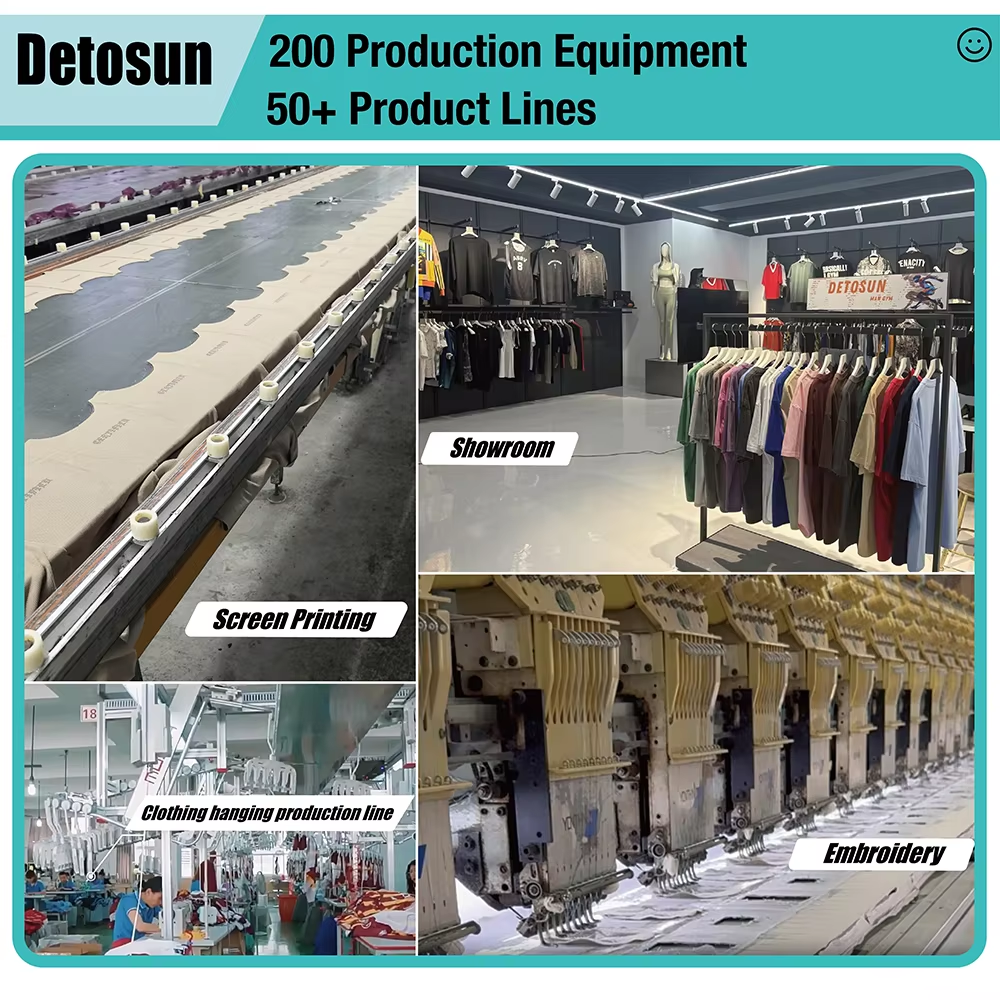
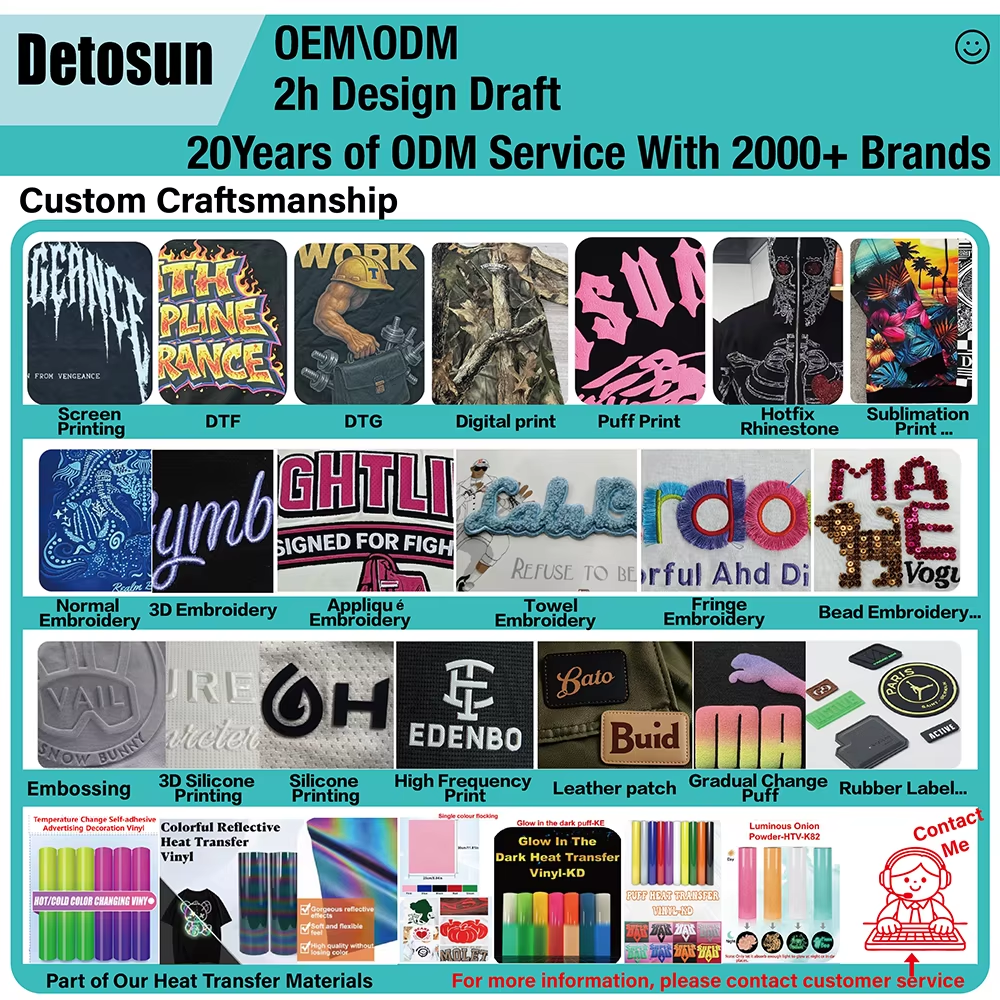
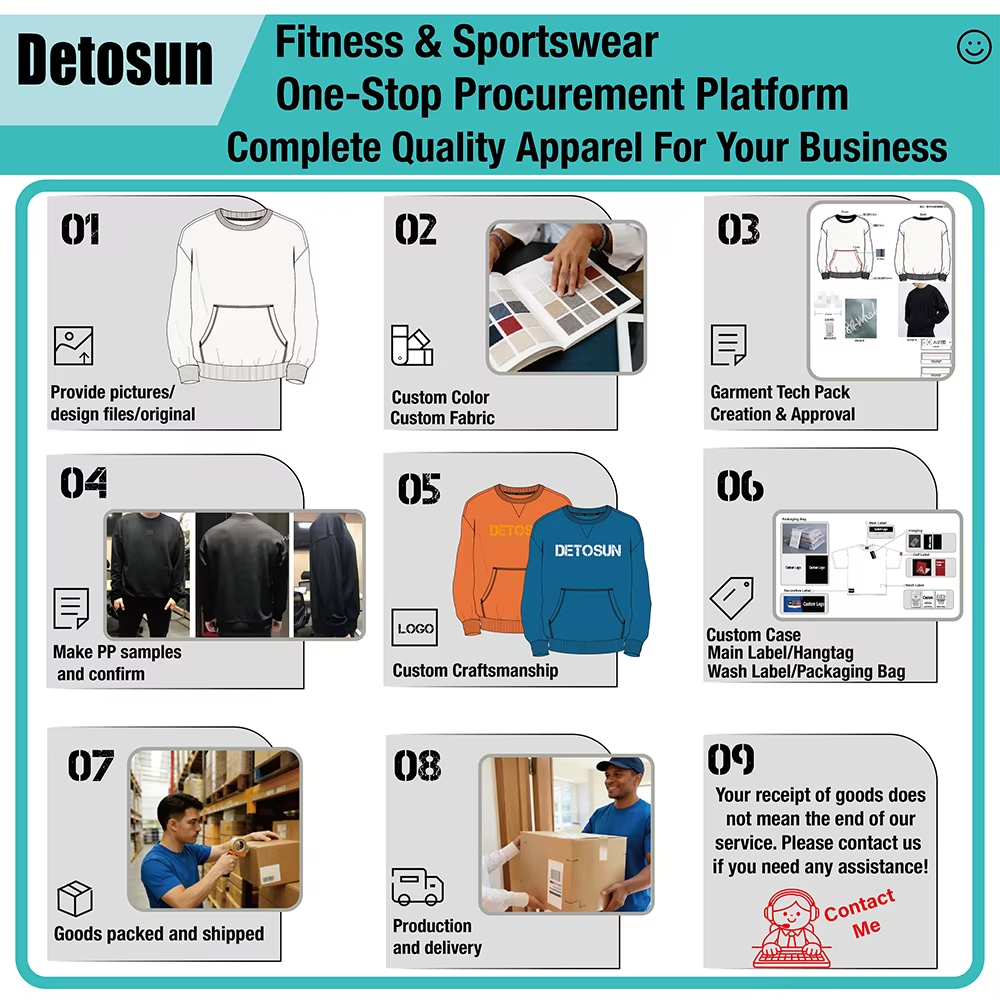
KUNDENSPEZIFISCHES BEKLEIDUNGSPRODUKT
Individuelle 340gsm Baumwoll-Trainingsshorts
Custom OEM/ODM heavyweight cotton shorts for training, gym and casual ranges. Source title identifies 340gsm; MOQ 50 and US$7.58–9.80 shown. Confirm fabric, fit, logo and lead time.
Artikelnummer:
DTS-ALB-TRAINING-SHORTS-1601830611807
Kategorie: Trainingsshorts
Produktdetails
This B2B product page covers a heavyweight cotton shorts direction for activewear brands, streetwear labels, sports retailers, importers, gyms and sourcing teams. The current DTS catalog title is Individuelle 340gsm Baumwoll-Trainingsshorts. The imported source listing describes heavyweight 340gsm cotton shorts for gym, casual and outdoor use, with custom print and an oversize direction. Those are source-listing descriptors, not a substitute for an approved fabric sheet, measurement chart or test record.
Produktübersicht
Use this page to evaluate a custom cotton training shorts program and prepare a comparable RFQ. The product can be discussed as a men’s heavyweight short for training, gym, casual or outdoor ranges, but the final garment still needs an approved material, fit block, colorway, decoration route, labels, packaging and inspection plan. A detailed brief makes the next sample and quotation easier to compare.
Who can use this product brief
- Activewear, gymwear and streetwear brands planning heavyweight cotton shorts for a seasonal or core range.
- Wholesale buyers and importers comparing cotton gym shorts, custom sports shorts or men’s casual shorts.
- Gyms, clubs, teams and creators preparing a custom print short with a defined logo and size block.
- Product developers working from a reference garment, sketch, artwork file or technical package.
What the catalog record identifies
The published DTS record is in the Trainingsshorts category and is tied to source ID 1601830611807. The source title includes heavyweight, 340gsm, cotton, gym, casual, outdoor, athletic, custom print and men’s oversize wording. These terms help a buyer find the style direction; the approved sample and order documents control what is actually produced.
What this page does not promise
The accessible source snapshot does not provide a complete fiber percentage, finished GSM report, width, hand-feel standard, measurement chart, inseam, rise, pocket construction, shrinkage result, colorfastness result, abrasion result, certification, lead time, shipping term or full availability schedule. This page therefore does not promise a fixed fit, a guaranteed 340gsm test result, a specific cotton blend, a performance rating, a certification, or ready-to-ship stock. Those decision-critical items remain GESCHÄFTLICHER EINGANG ERFORDERLICH until DTS confirms them for the exact material, sample and order.
Source Specification Snapshot
The following information comes from the imported source snapshot associated with this product. It is useful for matching the catalog listing and starting a conversation, but it is not a binding current quotation. Confirm the commercial and technical details again with DTS before issuing a purchase order.
Source facts shown in the snapshot
- DTS catalog title: Custom 340gsm Cotton Training Shorts.
- Imported source listing title: Wholesale Men’s Heavyweight 340gsm Cotton Shorts Gym Casual Outdoor Men’s Shorts Athletic Custom Print Men’s Oversize Shorts.
- Quellenkategorie: Men’s Shorts.
- Supplier shown in the imported snapshot: Xiamen Detosun Garment Co., Ltd.
- Minimum order quantity shown: 50 Pieces.
- Angezeigter öffentlicher Preisbereich: US$7.58–9.80 / Pieces.
- Angezeigtes Anpassungsfeld: Color, with MOQ 60.
- Ready-to-ship flag: Not stated in the imported snapshot.
- Quellen-ID: 1601830611807.
How to read the source title
The source title is a merchandising and discovery descriptor. It names 340gsm and cotton, but the accessible summary does not expose a separate fabric report or measurement specification. Treat “heavyweight cotton shorts” as the product direction and confirm fiber content, fabric weight, construction and tolerance on the approved swatch or sample.
Source price versus a custom quote
The public US$7.58–9.80 range is a source snapshot. It should not be copied into a purchase order without confirming quantity, color, size ratio, fabric, construction, decoration, labels, packaging, freight, duties, payment terms and delivery destination. A custom logo, new colorway or changed fit can alter the quote.
Bestätigte Fakten und geschäftliche Angaben erforderlich
A useful B2B page separates what is visible in the source record from what only the supplier or buyer can approve. This keeps the product description credible while still giving procurement a clear checklist.
Confirmed for this catalog record
- The target is a published DTS product page with the existing product title, URL, SKU and gallery preserved.
- The source record identifies men’s shorts with heavyweight 340gsm cotton wording and gym, casual, outdoor and athletic use language.
- The source snapshot shows MOQ 50 Pieces and a public price range of US$7.58–9.80 per piece.
- The source snapshot shows color customization with MOQ 60 and does not state ready-to-ship availability.
Technical details to confirm
- Fiber composition, permitted tolerance, fabric construction, usable width, GSM method and acceptable hand feel.
- Silhouette, rise, waistband, drawcord, inseam, outseam, leg opening, pockets, liner and reinforcement.
- Base size, full size range, points of measure, grading rules and measurement tolerances.
- Color standard, shade tolerance, panel matching, print route, label content and packaging configuration.
Commercial details to confirm
Ask DTS to confirm current MOQ by color and size, quantity breaks, sample charge, sample timing, production lead time, inspection scope, packing count, shipping method and destination terms. If the buyer needs a testing or compliance document, name the exact product scope, method, laboratory or responsible party, sample condition and acceptance limit. A generic “high quality” statement cannot replace that evidence.
Why Choose Heavyweight Cotton Shorts for a Training Range
Heavyweight cotton shorts can give a range a more substantial hand feel and a structured casual appearance than a lightweight woven short, but the right choice depends on the activity, climate, fit and care expectations. Use the keyword heavyweight cotton shorts to describe the sourcing direction, then use the specification brief to decide whether this 340gsm style fits the intended program.
Hand feel and visual position
A heavier fabric direction may support a structured gymwear or streetwear silhouette and can read as more substantial in a line sheet. The final hand feel still depends on fiber content, knit or woven construction, finishing, wash treatment and color. Request a physical swatch and sample before using “soft,” “structured,” “premium” or similar claims in retail copy.
Choose by buyer job
For a gym or training range, review movement ease, waistband comfort, pocket access and care. For casual or streetwear, review drape, silhouette, print surface and shade consistency. For outdoor use, review weather, abrasion, drying, pocket security and care requirements. The source title mentions several uses, but it does not prove that one unmodified construction satisfies all of them.
Keep the range architecture clear
Use this product as the heavyweight cotton short reference. Keep a lightweight nylon training short, a breathable gym short, a compression layer and an acid-wash fashion short as separate product blocks. Clear product ownership helps buyers compare the actual construction instead of mixing material and fit claims across unrelated pages.
340gsm Weight and Fabric Approval
The source title identifies 340gsm, which makes weight a central buying question. GSM should be confirmed for the actual approved fabric and production lot; a title-level number is not the same as a laboratory or factory measurement record. Record the method and tolerance if the weight is important to the product position.
Confirm what 340gsm means
- Ask whether the stated 340gsm applies to the finished fabric, greige fabric, washed fabric or another condition.
- Record the measurement method, sample location, number of readings and permitted range.
- Confirm whether the same weight applies across colors, panels, rib, pocket bags and any lining.
- Check whether printing, washing or finishing changes the hand feel, shrinkage or finished measurement.
Compare swatches under the same conditions
Compare candidate fabrics for thickness, drape, opacity, stretch, recovery, surface texture, seam bulk and decoration behavior. Review a swatch in the selected color and after the intended wash or finish when those conditions matter. A heavier GSM alone does not prove better durability, comfort, moisture control or suitability for a specific sport.
Document limitations and conditions
If a buyer needs a measurable weight, shrinkage or durability statement, attach the applicable report to the style file and state the test condition. Do not convert the source title into a guaranteed performance claim. At present, the product page records the 340gsm source descriptor and keeps final confirmation with DTS and the approved order materials.
Cotton Composition and Construction
The imported title contains cotton wording, but the accessible summary does not give a fiber percentage or construction sheet. Cotton shorts can be made with different fibers, yarns, surfaces and finishes, so the buyer should approve the material rather than infer a blend from the title.
Confirm fiber content
Request the target composition, permitted tolerance and documentation route. If the buyer requires 100% cotton, state that as a purchase requirement and confirm it on the approved fabric record. If a blend is acceptable for recovery, drying, stability or cost, record the percentage and why it is needed. The current page does not assign a percentage.
Confirm fabric construction
Record whether the material is knit, woven, French terry, fleece, jersey or another construction, together with GSM, width, stretch direction, recovery, surface treatment and color options. The source title alone cannot identify those properties. Ask for a swatch, fabric card or supplier specification before approving the pattern.
Match construction to use
Training, gym, casual and outdoor programs may prioritize different combinations of movement ease, abrasion, drying, warmth, pockets, care and print behavior. Select the fabric and pattern together. If the intended use changes from casual training to a technical performance activity, restart the suitability review instead of carrying over an untested claim.
Fit, Rise, Inseam and Leg Opening
The source title includes men’s oversize wording, but the imported snapshot does not provide a finished measurement chart or a fixed fit block. Treat “oversize” as a design direction until the base size, ease and points of measure are approved.
Set the intended silhouette
- Choose regular, relaxed, loose, oversized, athletic or another named fit and define the intended wearer.
- Set rise, hip ease, thigh ease, inseam, outseam and leg opening at the base size.
- Confirm straight, curved, split or other hem details and how the leg should fall over footwear.
- State whether the short is intended as a standalone garment, a gym layer or a casual bottom.
Build a measurable fit block
Provide a reference garment or tech pack with points of measure, units, relaxed or stretched conditions and tolerances. Identify the base size and grading rules. A model photo can help communicate proportion, but it cannot replace a measurement chart for bulk production.
Review fit in the intended movement
Evaluate sitting, squatting, walking, training and the other movements relevant to the program. Check waistband stability, rise comfort, thigh ease, hem balance and pocket access. Record any correction on the dated sample comments and update the pattern before approving the graded range.
Waistband, Pockets and Reinforcement
Construction details determine whether a short feels usable in training and dependable in daily wear. The current source summary does not list the waistband, pocket or reinforcement configuration, so these are approval items rather than included specifications.
Define the waistband
Confirm waistband height, elastic width, elastic recovery, drawcord type, eyelets, cord exits, stitch construction and whether the cord is internal or external. Check comfort against the intended rise and body block. If a logo or label touches the waistband, review the placement for comfort and durability.
Define pocket function
State the number, position, opening, depth, bag material and reinforcement for each pocket. If the short is for outdoor or training use, confirm whether the pocket is intended for keys, a phone, cards or light personal items; do not imply secure storage without an approved construction and test. Review pocket opening distortion during movement.
Review stress points
Inspect crotch seams, pocket corners, waistband joins, drawcord exits, side seams and hem during sample review. Agree seam type, seam allowance, bartacks, overlock or coverstitch details and any reinforcement. No product-specific tear, abrasion, seam or wash test result is published for this SKU.
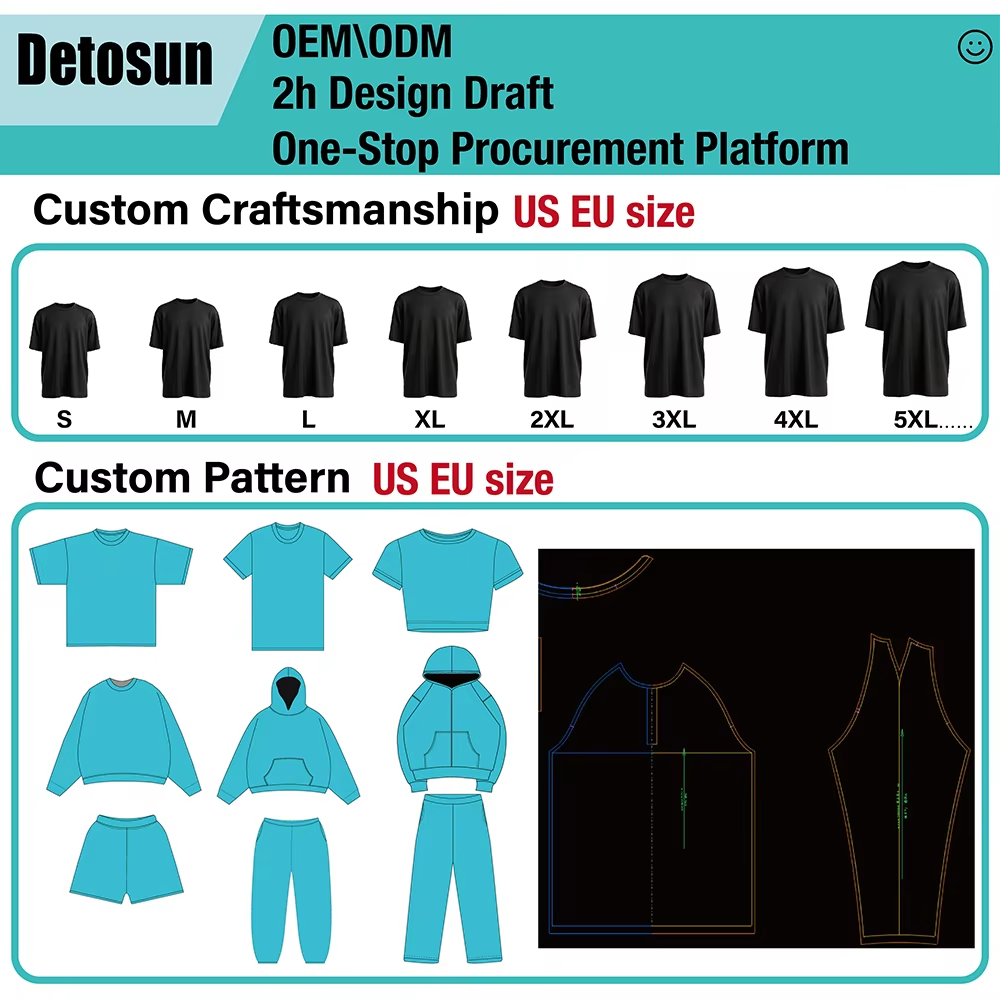
Größenbereich und Gradierung
The product is described as men’s shorts, but the source snapshot does not provide a complete size range or chart. A buyer should provide the intended body or garment measurements so the supplier can confirm the size block instead of treating the title as a grading promise.
Inputs for the first size chart
- Send the brand body-measurement chart or a reference garment in the required base size.
- Identify the base size, fit intention, units and tolerance for every point of measure.
- Confirm grade increments for waist, hip, rise, thigh, inseam and leg opening.
- Review a physical sample and record corrections before grading the full range.
- Approve the graded measurement report before bulk cutting.
State the measurement condition
Clarify whether measurements are taken laid flat, relaxed, stretched or along a seam. Elastic waist measurements need a defined condition, and cotton fabric may change after washing or finishing. Keep the measurement method next to the chart so a buyer, factory and inspector are reading the same specification.
Prepare retailer-facing fit information
Once approved, a wholesale line sheet can include fit name, sample size, inseam, size range, model information and measurement method. Until those details are confirmed, describe the item as a custom development direction and avoid publishing a fixed fit or range that the source record does not support.
Gym, Casual and Outdoor Applications
The source title mentions gym, casual and outdoor use. These are useful range-planning directions, not a formal performance classification. Select the application first, then approve the construction and claims that belong to it.
Gym and training ranges
Prioritize movement ease, waistband comfort, rise, thigh and hem balance, pocket access and decoration placement. Decide whether the product is casual gymwear, a warm-up layer, a training short or lifestyle sportswear. If moisture, drying, abrasion or repeated-wash performance matters, define the method and acceptance condition before making the claim.
Casual and streetwear ranges
Prioritize silhouette, hand feel, color depth, print surface, label system and repeat-order consistency. Review how the heavyweight fabric drapes with the approved rise and leg opening. If an acid wash, vintage finish or garment dye is required, treat that as a separate process and confirm shade, shrinkage and decoration behavior.
Outdoor and travel ranges
Define climate, movement, pocket function, care, abrasion exposure and expected layering. Cotton wording alone does not prove water resistance, fast drying, UV protection, temperature control or technical outdoor suitability. Ask DTS to confirm whether the final fabric and construction match the specific outdoor brief.
Colorways and Custom Print Planning
The imported snapshot shows color customization with MOQ 60 and the source title includes custom print wording. It does not specify current colorways, print technology, artwork limits or shade tolerance. Treat customization as an inquiry route and approve the details on a sample.
Build a color brief
- List base shade, contrast shade, waistband, drawcord and trim colors using a physical reference or recognized code.
- Show the panel map and identify which sections should match, contrast or remain in the base color.
- Define acceptable shade variation, panel-to-panel tolerance and lot-to-lot approval.
- Review the color on the approved 340gsm fabric, not only on a digital screen.
Prepare print artwork
Send vector or high-resolution artwork with version name, color count, finished size, placement, orientation and permitted tolerance. Identify whether the artwork is screen print, digital print, heat transfer, puff, embroidery or another method. The source snapshot does not select a print route for the buyer.
Approve print behavior
Request a strike-off or decorated sample on the actual fabric and colorway when edge definition, hand feel, stretch, wash durability or opacity matters. Check print placement against seams, pockets, waistband and high-movement areas. Confirm curing, backing, care instructions and inspection criteria with DTS.
Labels, Care and Destination Requirements
Care and label instructions depend on the approved composition, finish, print, construction and destination market. Do not copy generic cotton-care or compliance language into a purchase order without confirming the exact product.
Care information
- Confirm washing, drying, ironing and decoration-care instructions after the fabric and print route are approved.
- Review dimensional change, shade change, crocking, pilling or decoration durability if relevant to the range.
- Use the confirmed fiber content and care instruction on the final label and line sheet.
Destination requirements
Tell DTS the destination market and any required labeling, packaging, restricted-substance, testing or documentation standard. Do not infer legal compliance from the product category, source marketplace listing or a fabric adjective. The buyer and responsible compliance team should confirm the applicable requirement.
Protect unreleased brand information
Keep tech packs, artwork, label files, measurement charts and commercial terms in the agreed inquiry workflow. For unreleased designs or sensitive product information, review the NDA- und Anfrageweg before sending files.
Mindestbestellmenge, Preis und Verfügbarkeit
The imported source snapshot shows a minimum order quantity of 50 Pieces, a public range of US$7.58–9.80 / Pieces and color customization with MOQ 60. It does not state ready-to-ship availability. These are source-snapshot values, not a binding current offer.
What the source MOQ tells a buyer
The shown MOQ is a starting point for an inquiry. Confirm whether 50 pieces applies per style, color, size, artwork or total order, and whether the color customization MOQ 60 applies per color or to another order unit. Ask for current quantity breaks and any sample or development minimum before comparing suppliers.
What can change the quotation
- Fiber composition, construction, confirmed GSM, finishing, colorway and shade tolerance.
- Pattern, grading, waistband, drawcord, pockets, liner, hem and reinforcement decisions.
- Print or embroidery method, artwork complexity, number of placements and decoration colors.
- Labels, hangtags, polybags, carton assortment, inspection, shipping and destination documents.
- Quantity, size/color ratio, sample approval stage and repeat-order requirements.
What to confirm about stock
Ready-to-ship status is not stated in the imported snapshot. Ask whether the shown garment is a stock sample, a make-to-order base or a custom development starting point. Confirm current colors, sizes, quantity, dispatch timing and whether a color or logo change affects production lead time.
Muster- und Freigabeprozess
A sample turns a source descriptor into a product decision. Use DTS Mustererstellung und Prototypenbau support with a tech pack so every change to fabric, fit, color, print, labels or packing is traceable.
Recommended development sequence
- Send the reference garment, sketch, fabric direction, artwork or tech pack and state the intended use.
- Confirm composition target, 340gsm requirement, fit, size block, colorway, print route and packaging assumptions.
- Review the first sample for measurements, hand feel, drape, color, print placement, pocket function and construction.
- Record corrections in a dated sample comment sheet and request a revised sample when needed.
- Approve the final sample, measurement chart, material reference, artwork, labels and packing instructions before bulk production.
Sample review questions
- Does the fabric match the approved weight direction, surface, hand feel and composition requirement?
- Do waist, rise, hip, thigh, inseam and leg opening match the measurement block?
- Are waistband, drawcord, pockets, seams and hem suitable for the intended use?
- Is the print legible, comfortable and correctly placed on the 340gsm surface?
- Does the color match the approved reference under consistent lighting?
- Have care, shrinkage, shade, decoration and inspection requirements been recorded?
Keep approvals version-controlled
Name each sample, artwork, measurement chart, color reference and comment sheet consistently. A repeat order should identify which approved version it follows and list every intentional change. This reduces the risk of an old print file, size chart or color reference being used by mistake.
Quality Review Before Bulk Production
Quality control should be tied to the approved specification, not to a generic “high-quality” label. Use the DTS quality control process as the discussion point, then confirm the inspection scope for this exact product, fabric, colorway and order.
Pre-production checks
- Approved fabric composition, construction, GSM condition, color, shade tolerance and finishing.
- Approved pattern, size chart, grading rules, measurement tolerances and sample corrections.
- Approved artwork, print strike-off, label files, care information and packaging proof.
- Purchase order quantity, size/color ratio, destination and document requirements.
In-line checks
Review fabric and shade consistency, panel matching, waistband attachment, pocket position, seam construction, hem, print placement and measurement points at agreed sizes. Define how deviations are recorded and when production must pause for approval. No in-line inspection result is implied by this page.
Final inspection questions
Agree the inspection method, sampling level, defect classification, measurement points, packing count and photo or report requirements. If the buyer needs a shrinkage, colorfastness, pilling, abrasion or decoration test, name the exact method, sample condition and acceptance limit. Keep the report with the product file.
Packaging, Private Label and Reorders
Packaging is part of a B2B product specification. It affects receiving, barcode scanning, carton planning, shipping cost and the customer’s retail presentation. The source snapshot does not confirm a packaging configuration, so record it in the quote and approval pack.
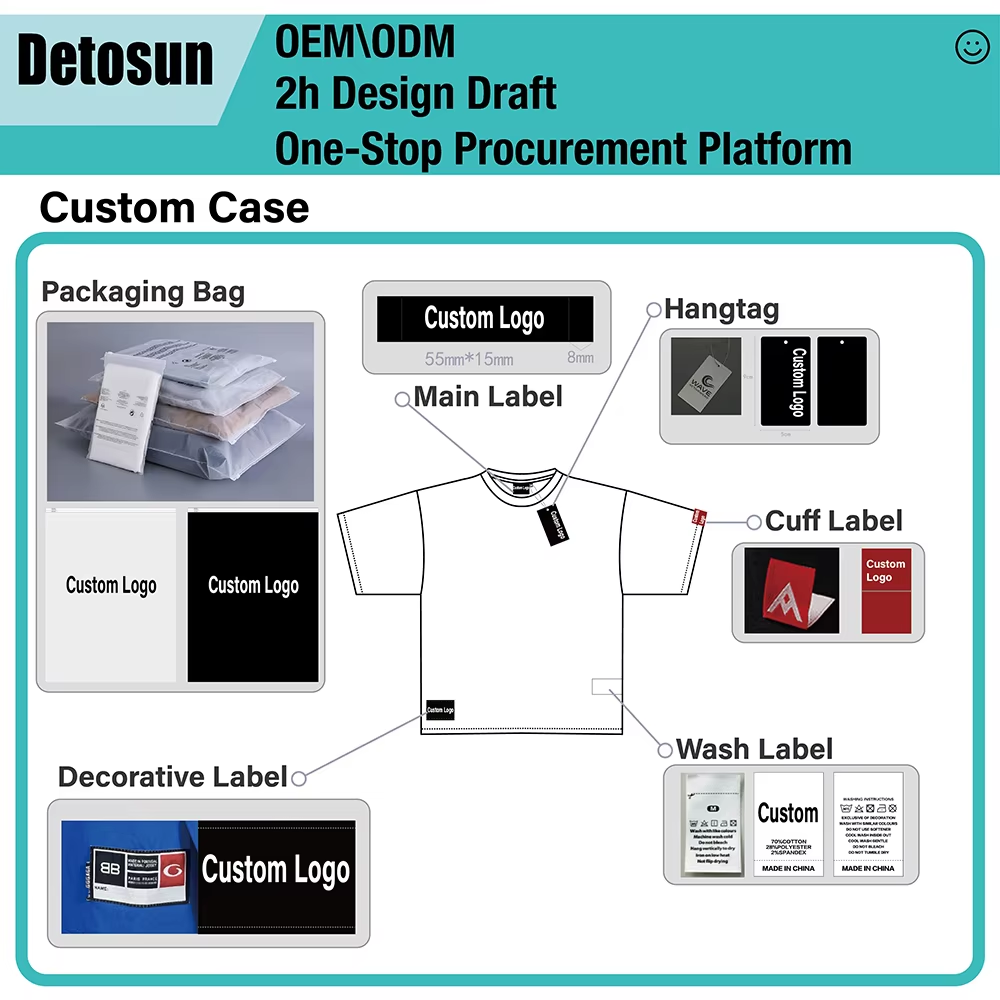
Garment-level requirements
- Main label, size label, care label and confirmed fiber-content information.
- Hangtag, barcode, SKU, color code and size code if the buyer uses a retail system.
- Folding method, tissue, sticker, polybag marking and destination warning or recycling mark where required.
Carton-level requirements
- Carton dimensions, gross and net weight, carton count, size/color ratio and shipping marks.
- Assortment rules for mixed sizes or colors and how over- or under-quantities are handled.
- Destination, delivery term and document requirements for the shipment.
Repeat-order control
Keep the approved sample, measurement chart, fabric reference, color approval, artwork version, label file and packaging proof in one order record. A repeat order should state what is unchanged and what is revised, including any change to GSM, finish, waistband, fit, print or color.
B2B Range Planning and Buyer Fit
This product can support several commercial ranges, but the buyer job should be explicit. A clear application and decision rule helps DTS return a more useful sample or quote.
Activewear and gymwear brands
Specify the activity, fit, movement needs, pocket function, decoration, size block and care expectation. Link the short to the brand’s existing tops or outer layers only after color, fabric weight and silhouette have been approved.
Wholesale and e-commerce buyers
Prepare the size chart, fabric story, color naming, photography requirements, packaging, SKU system and reorder assumptions. Do not publish the source price as a permanent wholesale price; use a current quote with the order conditions attached.
Gyms, clubs and team programs
Confirm quantity, color, personalization fields, logo placement, size matrix, delivery window and repeat-order plan. If shade or logo consistency is critical across several sizes, put the tolerance and inspection requirement in the approval file.
Compare Related Training Shorts
DTS has several shorts records with different material and use directions. These links help a buyer choose the construction that matches the brief instead of assigning every shorts keyword to one page.
Lightweight nylon training short
Die custom lightweight nylon training shorts record is a better comparison when low weight, a nylon direction or quick-dry discovery language is the starting point. Confirm the actual construction and performance conditions on that product page.
Breathable gym short
Nutzen Sie die quick-dry breathable gym shorts record when breathability, elastic comfort or fitness positioning is the primary buyer question. It should not be treated as proof for this heavyweight cotton product.
Compression and base-layer short
Die custom compression shorts page serves a different fit and layer intent. Do not merge compression requirements with a relaxed heavyweight cotton short.
Fashion and multi-sport variants
For a washed fashion direction, review the custom cotton acid-wash gym shorts. For a logo-led multi-sport range, compare the custom logo multi-sport training shorts. Each page should retain its own material, finish and intent boundary.
Käuferfragen
Use these answers as a pre-quote checklist. Where the source record is silent, the answer is intentionally a confirmation step rather than an invented specification.
Are these 100% cotton shorts?
The source title identifies cotton but does not expose a fiber percentage in the accessible summary. Confirm the composition, tolerance and supporting fabric document with DTS before using 100% cotton wording.
Is 340gsm confirmed for the finished garment?
The source listing title uses 340gsm. Confirm the measurement condition, method, tolerance and whether the number applies across colors and components on the approved fabric or sample.
What MOQ is shown?
The imported source snapshot shows 50 Pieces. Confirm whether that applies per style, color, size, artwork or order, and confirm the color customization MOQ of 60.
What is the current price?
The source snapshot shows US$7.58–9.80 per piece. It is not a binding quote. Request current pricing with quantity, material, fit, color, decoration, labels, packaging, shipping and destination stated.
Are the shorts ready to ship?
Ready-to-ship availability is not stated in the imported snapshot. Ask whether the listing represents stock, a sample or a made-to-order base and confirm current colors, sizes, quantity and dispatch timing.
Can the fit be made oversized?
The source title includes men’s oversize wording, but no fixed measurement chart is exposed. Send a reference block or tech pack and approve rise, ease, inseam and leg opening before grading.
Can a brand add a custom logo?
The source title includes custom print wording and the snapshot shows color customization. Confirm the artwork route, placement, finished size, color count, sample method, durability expectation and packaging labels for the exact order.
Are these suitable for outdoor sports?
Outdoor is a source-listing use descriptor, not a test result. Confirm the activity, climate, abrasion, pocket, care and any drying or weather requirement before using technical outdoor claims.
Does the product include pockets or a liner?
The accessible source summary does not specify pockets or liner construction. Put the required number, position, material, depth and reinforcement in the tech pack and approve them on the sample.
How should a buyer request a quote?
Send target quantity, size/color matrix, fabric direction, fit, artwork, labels, packaging, destination and delivery window. For a faster comparison, include the approved reference garment, measurement chart or tech pack.
Related Training Shorts and Activewear Products
Use these product records to build a focused buyer journey across shorts constructions and activewear layers.
Other training short constructions
- Custom plus-size breathable gym shorts for a plus-size and breathable sportswear comparison.
- Quick-dry mesh beach shorts for a mesh, beach and warm-weather construction direction.
Build a coordinated logo range
For a broader custom sportswear assortment, compare this bottom with relevant DTS sports, fitness and yoga brand support and keep fabric, color and logo decisions linked across the range.
Keep material ownership clear
The heavyweight cotton focus belongs to this product. Nylon, mesh, compression, acid wash and multi-sport logo variants should remain separate comparison choices with their own specifications and approval conditions.
Verwandte Käuferressourcen
These DTS resources help turn the product idea into an order-ready brief.
Tech pack and material planning
Verwenden Sie Tech-Pack-Anpassung to organize measurements, construction, material, artwork, labels and packaging. The Stoff- und Zubehörbibliothek can support material and component discussions, subject to current availability confirmation.
Sampling and production
Bewertung Stichprobenahme und Produktion routes so the approved sample, bulk instructions and revision history stay connected.
Support for new and e-commerce brands
New labels can use the startup and new-brand sourcing route. Online sellers can review E-Commerce-Verkäuferunterstützung for product information, SKU planning, photography and packing questions.
Delivery and inquiry coordination
Confirm the delivery workflow through Lieferunterstützung and send the finished brief through Kontakt. Include destination, required documents and the requested delivery window.
Keep evidence with the product file
Store the approved fabric reference, sample comments, measurement chart, artwork, care instructions, inspection requirements and quote version together. This gives procurement and production one source of truth for the next order.
Quellenlistenreferenz
The original external listing is retained as a source reference for this catalog record. It is not presented as independent verification of the product’s technical or commercial claims.
Open the source record
View the original Alibaba product detail page or use the canonical Alibaba source URL.
Source limitation
The publicly accessible source snapshot supplies the listing title, category, supplier label, MOQ, price range and color customization field. Alibaba verification may vary by session. Confirm any changed field directly with DTS and do not treat a marketplace display as a current purchase contract.
Request a Custom Heavyweight Cotton Shorts Quote
To request pricing or a sample for this heavyweight cotton shorts direction, send the target quantity, color and size matrix, 340gsm requirement, composition target, fit block, waistband and pocket brief, print artwork, labels, packaging, destination and delivery window.
RFQ information to send
- Reference product, sketch, tech pack or existing garment with the intended fit and base size.
- Fabric composition, 340gsm condition, color standard, finish and care expectation.
- Size range, points of measure, tolerances, quantity by color and quantity by size.
- Artwork file, decoration method, placement, finished dimensions and approval requirement.
- Label, hangtag, polybag, carton, inspection, destination and delivery requirements.
Next step
Nutzen Sie die DTS contact route to request a current quote, confirm the MOQ and lead time, or ask for a sample review. DTS should confirm every business-input item before the buyer approves a purchase order.
Bereit, Ihr individuelles Bekleidungsprojekt zu prüfen?
Senden Sie Ihr Tech-Pack, Ihre Skizze, Zielmenge, Stoffanforderungen, Branding-Details oder Verpackungsbedarf. Unser Team prüft den Projektumfang und hilft Ihnen, den nächsten Schritt für Angebot oder Muster zu bestätigen.